European Laboratories for Accelerator Based Sciences (EURO-LABS) aims to provide unified transnational access to leading research infrastructures across Europe. Taking over from previously running independent programmes, it brings together the nuclear physics, the high-energy accelerator, and the high-energy detector R&D communities. With 33 partners from European countries, EURO-LABS forms a large network of laboratories and institutes ranging from modest sized test infrastructures to large-scale ESFRI facilities such as SPIRAL2. Its goal is to enable research at the technological frontiers in accelerator and detector development and to open wider avenues in both basic and applied research in diverse topics, from optimal running of reactors to mimicking reactions in the stars. Within this large network, EURO-LABS will ensure diversity and actively support researchers from different nationalities, gender, age, grade, and variety of professional expertise.
Sharing information to support users at test facilities is pivotal. Targeted improvements such as new isotope-enriched targets for high-quality standard medical radioisotope production, improved beam- profile monitors, or magnetic-field measurement instruments in cryogenic conditions will further enhance the capabilities of facilities to address the challenges of the coming decades. Through an active and open data management plan following the FAIR principle, EURO-LABS will act as a gateway for information to facilitate research across disciplines and provide training for young researchers.
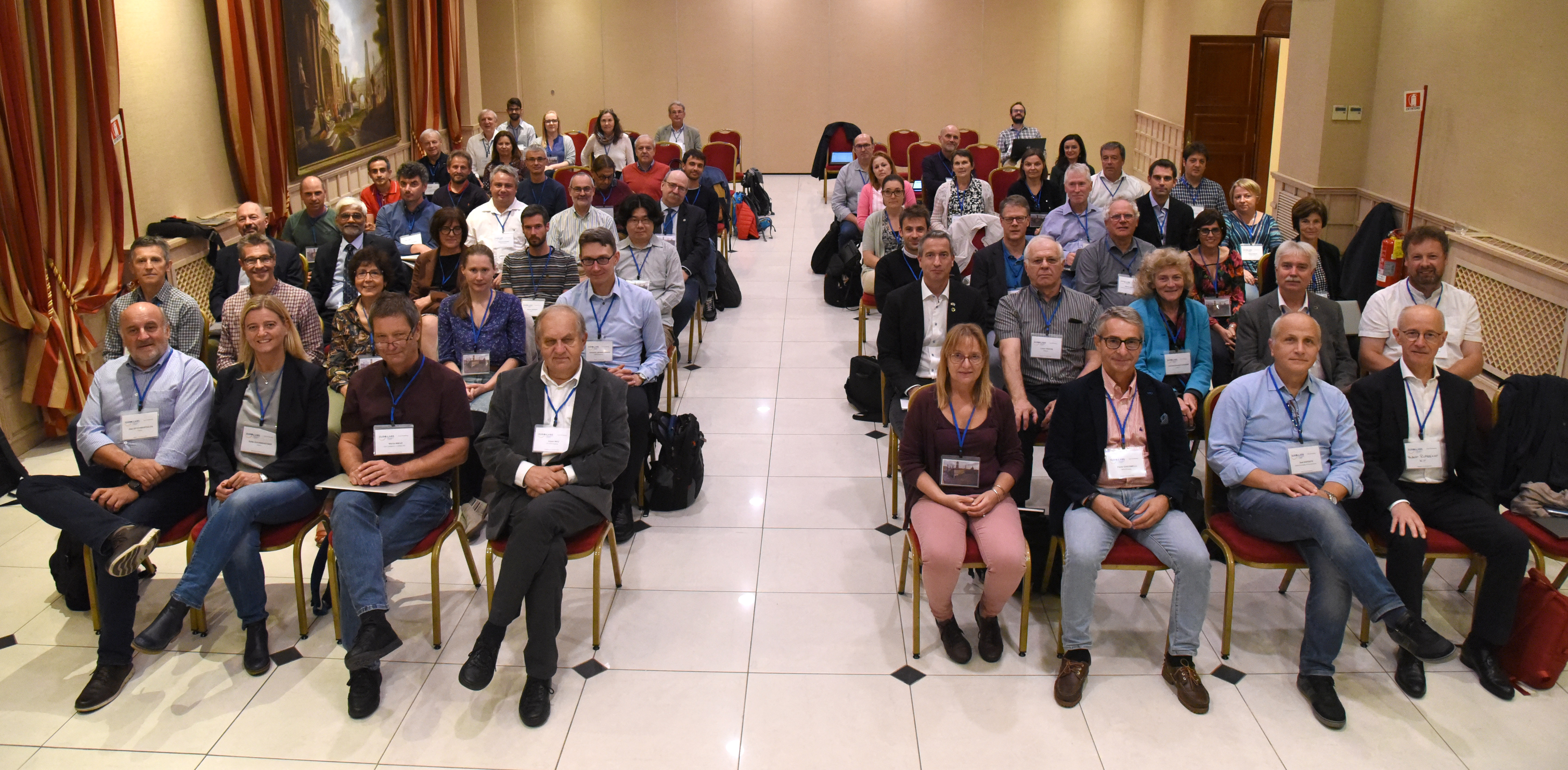
Funded by the European Commission, EURO-LABS started on 1 September and will run until August 2026. At the kick off meeting, held in Bologna from 3 to 5 October, presentations offered a detailed overview of the research infrastructures and facilities providing particle and ion beams at energies from meV to GeV. Exchanges during the meeting gave participants a view of the strengths and synergies on offer, planting the seeds for fruitful collaborations.
Prospects for testing and developing techniques for present and future accelerators were among the highlights of the meeting. In the high-energy accelerator sector, this requires state of the art test benches for cryogenic equipment such as magnets, superconducting cavities and associated novel materials, electron and plasma beams, as well as specialised test-beam facilities. Facilities at CERN, DESY and PSI, for example, allow the study of performances and radiation effects on detectors for the HL-LHC and beyond while also enabling nuclei to be explored under extreme conditions. Benefiting from past experiences, a streamlined procedure for handling transnational-access applications to all research infrastructures across the different fields of EURO-LABS was defined.
On the last day of the meeting, the consortium’s governing board, chaired by Edda Gschwendtner (CERN), met for the first time. The governing board further appointed Navin Alahari (GANIL, France) as EURO-LABS scienfitic coordinator, Paolo Giacomelli (INFN-BO, Italy) as project corodinator, Maria Colonna (INFN-LNS, Italy), Ilias Efhymiopoulos (CERN) and Marko Mikuz (Univ.Lubljana, Slovenia) as deputy scientific coordinator and work-package and Maria J G Borge (CSIC, Spain) and Adam Maj (IFJ, Poland) as work-package leaders.
With all facilities declaring their readiness to receive the first transnational users, the next annual meeting will be hosted by IFJ-PAN in Krakow, Poland.
Announced on 4 October, the 2022 Nobel Prize in Physics has been awarded to Alain Aspect, John Clauser and Anton Zeilinger for groundbreaking experiments with entangled photons that open a path to advanced quantum technologies. Working independently in the 1970s and 1980s, their work established the violation of Bell inequalities – as formulated by the late CERN theorist John Bell – and pioneered the field of quantum information science.
First elucidated by Schrödinger in 1935, entanglement sparked a long debate about the physical interpretation of quantum mechanics. Was it a complete theory, or was the paradoxical correlation between entangled particles due to hidden variables that dictate in which state an experiment will find them? In 1964 John Bell proposed a theorem, known as Bell’s inequalities, that allowed this question to be put to the test. It states that if hidden variables are in play, the correlation between the results of a large number of measurements will never exceed a certain value; conversely, if quantum mechanics is complete, this value can be exceeded, as measured experimentally.
John Clauser (J F Clauser & Associates, US) was the first to investigate Bell’s theorem experimentally, obtaining measurements that clearly violated a Bell inequality and thus supported quantum mechanics. Alain Aspect (Université Paris-Saclay and École Polytechnique, France) put the findings on even more solid ground by devising ways to perform measurements of entangled pairs of photons after they had left their source, thus ruling out the effects of the setting in which they were emitted. Using refined tools and a long series of experiments, Anton Zeilinger (University of Vienna, Austria) used entangled states to demonstrate, among other things, quantum teleportation.
These delicate, pioneering experiments not only confirmed quantum theory, but established the basis for a new field of science and technology that has applications in computing, communication, sensing and simulation. In 2020 CERN joined this rapidly growing global endeavour with the launch of the CERN Quantum Technology Initiative.
Foundational work in quantum-information science was also the subject of the 2023 Breakthrough Prize in Fundamental Physics, announced in September, for which Charles H Bennett (IBM), Gilles Brassard (Montréal), David Deutsch (Oxford) and Peter Shor (MIT) will receive $3 million each.
Collaboration, applied research services and innovation networks: these are the reference points of an evolving business development strategy that’s building bridges between DESY’s large-scale research infrastructure and end-users across European industry. The goal: to open up the laboratory’s mission in basic science to support technology innovation and, by extension, deliver at-scale economic and societal impact.
As a German national laboratory rooted in physics, and one of the world’s leading accelerator research centres, DESY’s scientific endeavours are organised along four main coordinates: particle physics, photon science, astroparticle physics and the accelerator physics division. Those parallel lines of enquiry, pursued jointly with an established network of regional and international partners, make DESY a magnet for more than 3000 guest scientists from over 40 countries every year.
In the same way, the laboratory is a coveted research partner for industry and business, its leading-edge experimental facilities offering a unique addition to the R&D pipeline of Europe’s small and medium-sized enterprises as well as established technology companies.
Technology transfer pathways
Industry collaboration with DESY is nothing if not diverse, spanning applied R&D and innovation initiatives across topics such as compact next-generation accelerator technologies, advanced laser systems for quality control in semiconductor-chip production, and the 3D printing of custom resins to create parts for use in ultrahigh-vacuum environments. While such cooperative efforts often involve established companies from many different industries, partners from academic science play an equally significant role – and typically with start-up or technology transfer ambitions as part of the mix.
This is the case for an envisaged spin-off project in which scientists from the University of Hamburg and DESY are working together on a portable liquid biopsy device for medical diagnostics applications (for example, in cancer screening and treatment evaluation). Reciprocity is the key to success here: the university researchers bring their background in nanoanalytics to the project, while DESY physicists contribute deep domain knowledge and expertise on the development of advanced detector technologies for particle physics experiments. As a result, a prototype test station for high-sensitivity in-situ analysis is now in the works, with the interaction of the nanochannels and the detector in the test device representing a significant R&D challenge in terms of precision mechanics (while the DESY team also provides expertise in pattern recognition to accelerate the readout of test results).
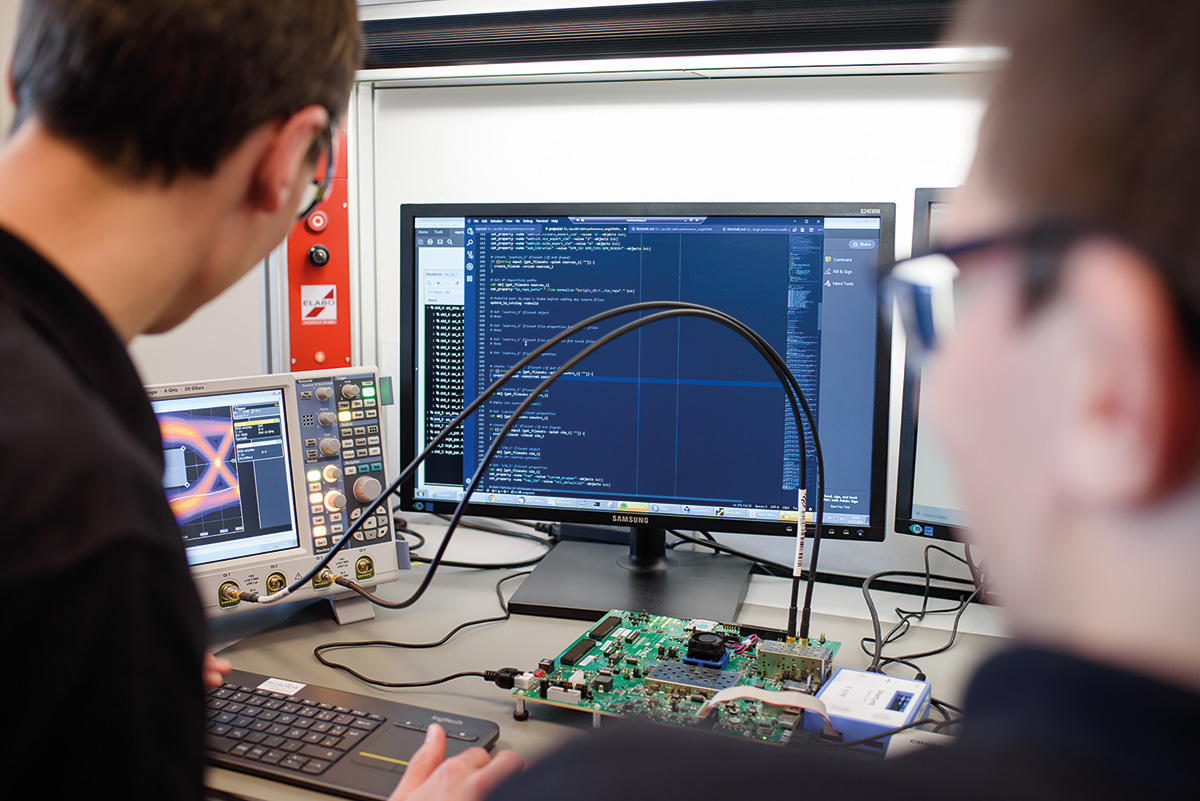
Elsewhere, DESY’s MicroTCA Technology Lab (TechLab) represents a prominent case study of direct industry collaboration, fostering the uptake of the MicroTCA.4 open electronics standard for applications in research and industry. Originally developed for the telecommunications market, the standard was subsequently adapted by DESY and its network of industrial partners – among them NAT (Germany), Struck (Germany) and CAENels (Italy) – for deployment within particle accelerator control systems (enabling precision measurements of many analogue signals with simultaneous high-performance digital processing in a single controller).
As such, MicroTCA.4 provides a core enabling technology in the control systems of the European X-ray Free Electron Laser (European XFEL), which runs over a 3.4 km span from DESY’s Hamburg location to the main European XFEL campus in the town of Schenefeld. Another bespoke application of the standard is to be found in the ground-based control centre of the Laser Interferometer Space Antenna (LISA), a space-based gravitational wave detector jointly developed by NASA and the European Space Agency.
Underpinning this technology transfer success is a parallel emphasis on knowledge transfer and education. This is the reason why TechLab, which sits as part of the business development office at DESY, offers a programme of annual workshops and seminars for current and prospective users of MicroTCA.4. The long-term vision, moreover, is to develop a commercially self-sustaining TechLab spin-off based on the development and dissemination of MicroTCA into new applications and markets.
Industry services to fast-track innovation
One of the principal drivers of industrial engagement with DESY is the laboratory’s PETRA III synchrotron light source (comprising a 2.3 km-circumference storage ring and 25 experimental beamlines). This high-brilliance X-ray facility is exploited by academic and industrial scientists to shed light on the structure and behaviour of matter at the atomic and molecular level across a range of disciplines – from clean-energy technologies to drug development and healthcare, from structural biology and nanotech to food and agricultural sciences.
DESY photon scientists and engineers ensure that industrial users are in a position to maximise the return on their PETRA III beam time
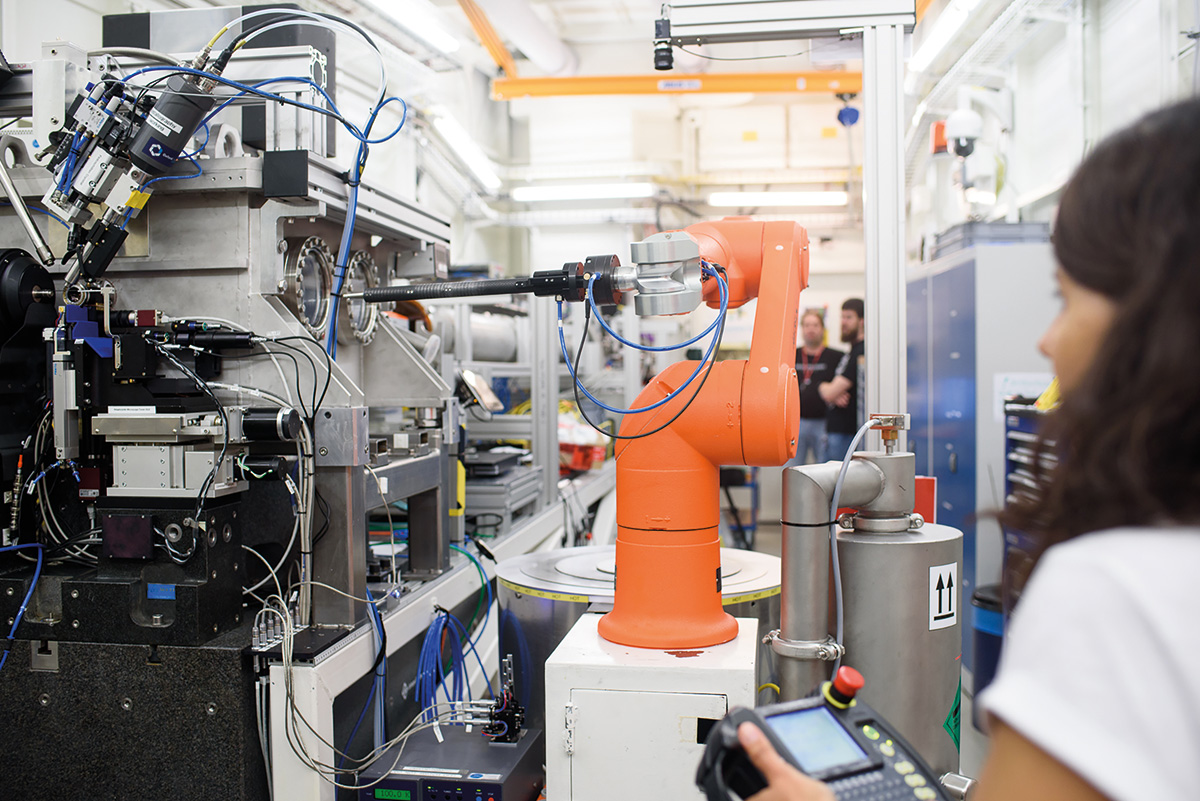
Operationally, DESY photon scientists and engineers ensure that industrial users are in a position to maximise the return on their PETRA III beam time, offering a portfolio of services that includes feasibility studies, sample preparation, execution of measurements, as well as downstream analysis of experimental data. Industry customers can request proprietary access to PETRA III via the business development office (under a non-disclosure agreement if necessary), while clients do not even need to come to DESY themselves, with options for a mail-in sample service or even remote access studies in certain circumstances. Publication is not required under this access model, though discounted fees are available to industry users willing to publish a “success story” or scientific paper in partnership with DESY.
Alongside the proprietary route, companies are able to access PETRA III beam time through academic partners. This pathway is free of charge and based on research proposals with strong scientific or socioeconomic impact (established via a competitive review process), with a requirement that results are subsequently published in the formal scientific literature. Notwithstanding the possibilities offered by DESY itself, the laboratory’s on-campus partners – namely the Helmholtz Centre Hereon and the European Molecular Biology Laboratory (EMBL) – use PETRA III to deliver a suite of dedicated services that help industry customers address diverse problems in the applied R&D pipeline.
The German biotech company BioNTech is a case in point. Best known for its successful mRNA vaccine against SARS-Cov-2 infections, BioNTech conducted a programme of X-ray scattering experiments at EMBL’s PETRA III beamline P12. The results of these investigations are now helping the company’s scientists to better package mRNA within nanoparticles for experimental vaccines and drugs. Along an altogether different R&D track, PETRA III has helped industry users gain novel insights into the inner life of conventional AAA batteries – studies that could ultimately lead to products with significantly extended lifetimes. Using non-invasive X-ray diffraction computer tomography, applied under time-resolved conditions, the studies revealed aspects of the battery ageing process by examining phase transformations in the electrodes and electrolyte during charging and discharge.
Building an innovation ecosystem
While access to DESY’s front-line experimental facilities represents a game-changer for many industry customers, the realisation of new commercial products and technologies does not happen in a vacuum. Innovators, for their part, need specialist resources and expert networks to bring their ideas to life – whether that’s in the form of direct investment, strategic consultancy, business and entrepreneurship education, or access to state-of-the-art laboratories and workshops for prototyping, testing, metrology and early-stage product qualification.
DESY is single-minded in its support for this wider “innovation ecosystem”, with a range of complementary initiatives to encourage knowledge exchange and collaboration among early-career scientists, entrepreneurs and senior managers and engineers in established technology companies. The DESY Start-up Office, for example, offers new technology businesses access to a range of services, including management consultancy, business plan development and networking opportunities with potential suppliers and customers. There’s also the Start-up Labs Bahrenfeld, an innovation centre and technology incubator on the DESY Hamburg campus that provides laboratory and office space to young technology companies. The incubator’s current portfolio of 16 start-ups reflects DESY’s pre-eminence in lasers, detectors and enabling photonic technologies, with seven of the companies also targeting applications in the life sciences.
A more focused initiative is the CAROTS 2.0 Startup School, which provides scientists with the core competencies for running their own scientific service companies (intermediary providers of analytical research services to help industry make greater use of large-scale science facilities like DESY). Longer term, the DESY Innovation Factory is set to open in 2025, creating an ambitious vehicle for the commercial development of novel ideas in advanced materials and the life sciences, while fostering cooperation between the research community and technology companies in various growth phases. There will be two locations, one on the DESY campus and one in the nearby innovation and technology park Vorhornweg.
Basic science, applied opportunities
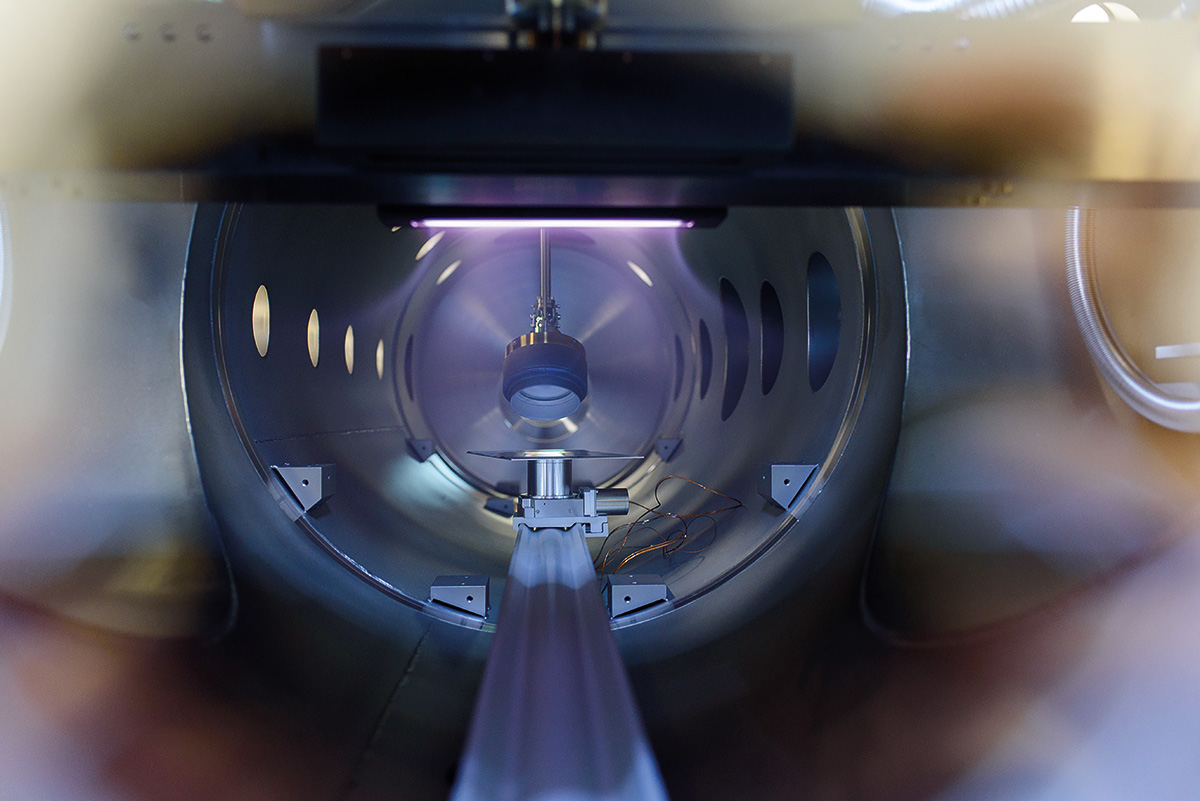
If the network effects of DESY’s innovation ecosystem are a key enabler of technology transfer and industry engagement, so too is the relentless evolution of the laboratory’s accelerator R&D programme. Consider the rapid advances in compact plasma-based accelerators, offering field strengths in the GV/m regime and the prospect of a paradigm shift to a new generation of user-friendly particle accelerators – even potentially “bringing the accelerator to the problem” for specific applications. With a dedicated team working on the miniaturisation of particle accelerators, DESY is intent on maturing plasma technologies for its core areas of expertise in particle physics and photon science while simultaneously targeting medical and industrial use-cases from the outset.
Meanwhile, plans are taking shape for PETRA IV and conversion of the PETRA storage ring into an ultralow-emittance synchrotron source. By generating beams of hard X-rays with unprecedented coherence properties that can be focused down to the nm regime, PETRA IV will provide scientists and engineers with the ultimate 3D process microscope for all manner of industry-relevant problems – whether that’s addressing individual organelles in living cells, following metabolic pathways with elemental and molecular specificity, or observing correlations in functional materials over mm length scales and under working conditions.
Fundamental science never stops at DESY. Neither, it seems, do the downstream opportunities for industrial collaboration and technology innovation.
One hundred years ago, Otto Stern and Walther Gerlach performed their ground-breaking experiment shooting silver atoms through an inhomogeneous magnetic field, separating them according to their spatially quantised angular momentum. It was a clear victory of quantum theory over the still widely used classical picture of the atom. The results also paved the way to the introduction of the concept of spin, an intrinsic angular momentum, as an inherent property of subatomic particles.
The idea of spin was met with plenty of scepticism. Abraham Pais noted in his book George Uhlenbeck and the Discovery of Electron Spin that Ralph Kronig finishing his PhD at Columbia University in 1925 and travelling through Europe, introduced the idea to Heisenberg and Pauli, who dryly commented that “it is indeed very clever but of course has nothing to do with reality”. Feeling ridiculed, Kronig dropped the idea. A few months later, still against strong resistance by established experts but this time with sufficient backing by their mentor Paul Ehrenfest, Leiden graduate-students George Uhlenbeck and Samuel Goudsmit published their seminal Nature paper on the “spinning” electron. “In the future I shall trust my own judgement more and that of others less,” wrote Kronig in a letter to Hendrik Kramers in March 1926.
Spin crisis
Spin quickly became a cornerstone of 20th-century physics. Related works of paramount importance were Pauli’s exclusion principle and Dirac’s description of relativistic spin-1/2 particles, as well as the spin-statistics theorems (namely the Fermi–Dirac and Bose–Einstein distributions for identical half-integer–spin and integer–spin particles, respectively). But more than half a century after its introduction, spin re-emerged as a puzzle. By then, a rather robust theoretical framework, the Standard Model, had been established within which many precision calculations became a comfortable standard. It could have been all that simple: since the proton consists of two valence-up and one valence-down quarks, with spin up and down (i.e. parallel and antiparallel to the proton’s spin, respectively), the origin of its spin is easily explained. The problem dubbed “spin crisis” arose in the late 1980s, when the European Muon Collaboration at CERN found that the contribution of quarks to the proton spin was consistent with zero, within the then still-large uncertainties, and that the so-called Ellis–Jaffe sum rule – ultimately not fundamental but model-dependent – was badly violated. What had been missed?
Today, after decades of intense experimental and theoretical work, our picture of the proton and its spin emerging from high-energy interactions has changed substantially. The role of gluons both in unpolarised and polarised protons is non-trivial. More importantly, transverse degrees of freedom, both in position and momentum space, and the corresponding role of orbital angular momentum, have become essential ingredients in the modern description of the proton structure. This description goes beyond the picture of collinearly moving partons encapsulated by the fraction of the parent proton’s momentum and the scale at which they are probed; numerous effects, unexplainable in the simple picture, have now become theoretically accessible.
Understanding the mysteries
The HERMES experiment at DESY, which operated between 1995 and 2007, has been a pioneer in unravelling the mysteries of the proton spin, and the experiment is the protagonist in a new book by Richard Milner and Erhard Steffens, two veterans in this field as well as the driving forces behind HERMES. The subtitle and preface clarify that this is a personal account and recollection of the history of HERMES, from an emergent idea on both sides of the Atlantic to a nascent collaboration and experiment, and finally as an extremely successful addition to the physics programme of HERA (the world’s only lepton–proton collider, which started running at DESY 30 years ago for one and a half decades).
Milner and Steffens are both experts on polarised gas targets, with complementary backgrounds leading to rather different perspectives. Indeed, HERMES was independently developed within a North American initiative, in which Milner was the driving force, and a European initiative around the Heidelberg MPI-K led by Klaus Rith, with Erhard Steffens as a long-time senior group member. In 1988 two independent letters of intent submitted to DESY triggered sufficient interest in the idea of a fixed-target experiment with a polarised gas target internal to the HERA lepton ring; the proponents were subsequently urged to collaborate in submitting a common proposal. In the meantime, HERMES’ feasibility needed to be demonstrated. A sufficiently high lepton-polarisation had to be established, as well as smooth running of a polarised gas target in the harsh HERA environment without disturbing the machine and the main HERA experiments H1 and Zeus.
By summer 1993, HERMES was fully approved, and in 1995 the data taking started with polarised 3He. The subsequently used target of polarised hydrogen or deuterium employed the same concepts that Stern and Gerlach had already used in their famous experiment. The next decade saw several upgrades and additions to the physics programme, and data taking continued until summer 2007. In all those years, the backbone of HERMES was an intense and polarised lepton beam that traversed a target of pure gas in a storage cell, highly polarised or unpolarised, avoiding extensive and in parts model-dependent corrections. This constellation was combined with a detector that, from the very beginning, was designed to not only detect the scattered leptons but also the “spray” produced in coincidence. These features allowed a diverse set of processes to be studied, leading to numerous pioneering measurements and insights that motivated, and continue to motivate, new experimental programmes around the world, including some at CERN.
Richard Milner and Erhard Steffens provide extensive insights, in particular into the historic aspects of HERMES, which are difficult to obtain elsewhere. The book gives an insightful discussion of the installation of the experiment and of the outstanding efforts of a group of highly motivated and dedicated individuals who worked too often in complete ignorance of (or in defiance of) standard working hours. Their account enthrals the reader with vivid anecdotes, surprising twists and personal stories, all told in a colloquial style. While clearly not meant as a textbook – indeed, one might notice small mistakes and inconsistencies in a few places – this book makes for worthwhile and enjoyable reading, not only for people familiar with the subject but equally for outsiders. In particular, younger generations of physicists working in large-scale collaborations might be surprised to learn that it needs only a small group and little time to start an experiment that goes on to have a tremendous impact on our understanding of nature’s basic constituents.
Released in March 2022 on Disney+, Parallels merges two of the most popular concepts in science fiction: time travel and the multiverse. The series, in French, created by Quoc Dan Trang and directed by Benjamin Rocher and Jean-Baptiste Saurel, is set in a village in the mountains of the French–Swiss border where a particle-physics laboratory called “ERN” and a collider strongly resembling the LHC have a major role.
The story begins with a group of four friends who recently graduated from middle school celebrating one of their birthdays near an area where, 10 years earlier, a kid called Hugo disappeared. At the same time, ERN is performing an experiment with its particle accelerator. However, something goes wrong. The lights go out in the village, while a strange space–time phenomenon unfolds, transporting the teenagers to different timelines once the lights are restored. Does this have anything to do with the particle accelerator? Where, or rather “when” are they? Each of the teenagers tries to unravel their temporal confusion in an attempt to return to their original timeline.
Parallels offers a chance to go beyond fiction and explore the often even more incredible ideas explored for real in particle physics
Although the age of the main characters targets younger audiences, Parallels addresses topics such as depression, regret and family issues, which, combined with some humour, make it relevant to other age groups. The visual effects and music create a suspenseful atmosphere and the compact nature of the series (six episodes of around 35 minutes each) draws the viewer into watching it in a single session.
CERN’s experiments and locations are referenced several times throughout, ranging from visual details in the ERN buildings to mentions of ATLAS, CMS and the Antiproton Decelerator – going so far as to reference an “FCC scheduled for operations in October 2025”. The Globe of Science and Innovation and the CMS silicon tracker are also represented.
Many of the concepts introduced, especially those related to the LHC experiments, are not scientifically accurate. The clear depiction of CERN in all but name may also make some physicists feel uncomfortable, given that the plot plays on YouTube-based conspiracy theories about what CERN’s experiments are capable of. For young science-fiction lovers, however, and especially for those who love to unravel temporal paradoxes, as in the popular Netflix series Stranger Things, Parallels is worth a look. For the more inquisitive and open-minded viewer, it also offers a chance to go beyond fiction and explore the often even more incredible ideas explored for real in particle physics.
Involving around 1500 participants, 17 parallel sessions, 900 talks and 250 posters, ICHEP2022 (which took place in Bologna from 6 to 13 July) was a remarkable week of physics, technology and praxis. The energy and enthusiasm among the more than 1200 delegates who were able to attend in person was palpable. As the largest gathering of the community since the beginning of the pandemic – buoyed by the start of LHC Run 3 and the 10th anniversary of the Higgs-boson discovery – ICHEP2022 served as a powerful reminder of the importance of non-digital interactions.
Roberto Tenchini’s (INFN Pisa) heroic conference summary began with a reminder: it is 10 years since ICHEP included a session titled “Standard Model”, the theory being so successful that it now permeates most sessions. As an example, he highlighted cross-section predictions tested over 14 orders of magnitude at the LHC. Building on the Higgs@10 symposium at CERN on 4 July, the immense progress in understanding the properties and interactions of the Higgs boson (including legacy results with full Run 2 statistics in two papers by ATLAS and CMS published in Nature on 4 July) was centre stage. CERN Director-General Fabiola Gianotti gave a sweeping tour of the path to discovery and emphasised the connections between the Higgs boson and profound structural problems in the SM. Many speakers highlighted the concomitant role of the Higgs boson in exploring new physics, dashing notions that future precision measurements are “business as usual”. Chiara Mariotti (INFN Torino) pointed out that only 3% of the total Higgs data expected at the LHC has been analysed so far.
Hot topics
Another hot electroweak topic was CDF’s recent measurement of the mass of the W boson, as physicists try to understand what could cause it to lie so far from its prediction and from previous measurements. Andrea Rizzi (Pisa) confirmed that CMS is working hard on a W-mass analysis that will bring crucial information, on a time-scale to be decided. Patience is king with such a complex analysis, he said: “we are really trying to do the measurement the way we want to do it.”
CMS presented a total of 85 parallel talks and 28 posters, including new searches related to b-anomalies with taus, and the most precise measurement of Bs→ μ+μ–. Among new results presented by ATLAS in 71 parallel talks and 59 posters were the observation of a four charm–quark state consistent with one seen by LHCb, joint-polarisation measurements of the W and Z bosons, and measurements of the total proton–proton cross section and the ratio of the real vs imaginary parts of the elastic-scattering amplitude. ATLAS and CMS also updated participants on many searches for new particles, in particular leptoquarks. Among highlights were searches by ATLAS for events with displaced vertices, which could be caused by long-lived particles, and by CMS for resonances decaying to Higgs bosons and pairs of either photons or b quarks, which show interesting excesses. “Se son rose fioriranno!” said Tenchini.
The sigmas are rather higher for exotic hadrons. LHCb presented the discovery of a new strange pentaquark (with a minimum quark content ccuds) and two tetraquarks (one corresponding to the first doubly charged open-charm tetraquark with csud), taking the number of hadrons discovered at the LHC so far to well over 60, and introducing a new exotic-hadron naming scheme for “particle zoo 2.0” (Exotic hadrons brought into order by LHCb). LHCb also reported the first evidence for direct CP violation in the charm system (LHCb digs deeper in CP-violating charm decays) and a new precise measurement of the CKM angle γ. Vladimir Gligorov (LPNHE) described how, in addition to the flavour factories LHCb and Belle II, experiments including ATLAS, CMS, BESIII, NA62 and KOTO will be crucial to enable the next level of understanding in quark mixing. Despite no significant new results having been presented, the status of tests of lepton flavour universality (LFU) in B decays by LHCb generated lively discussions, while Toshinori Mori (Tokyo) described exciting prospects for LFU tests in charged-lepton flavour experiments, in particular MEG-II, which has just started operations at PSI, and the upcoming Mu2e and MUonE experiments.
ICHEP2022 served as a powerful reminder of the importance of non-digital interactions
Moving to leptons that are known to mix, neutrinos continue to play very important roles in understanding the smallest and largest scales, said Takaaki Kajita (Tokyo) via a link from the IUPAP Centennial Symposium taking place in parallel at ICTP Trieste. Status reports on DUNE, Hyper-K, JUNO, KM3NeT and SNB showed how these detectors will help constrain the still poorly-known PNMS matrix that describes leptonic mixing, while new results from NOvA and STEREO further reveal anomalous behaviour. Among the major open questions in neutrino physics summed-up by theorist Joachim Kopp (Mainz and CERN) were: how do neutrinos interact? What explains the oscillation anomalies? And how do supernova neutrinos oscillate?
Several plenary presentations showcased the increasing complementarity with astroparticle physics and cosmology, with the release of the first-science images from the James Webb Space Telescope on 12 July adding spice (Webb opens new era in observational astrophysics). Multiband gravitational-wave astronomy across 12 or more orders of magnitude in frequency will bloom in the next decade, predicted Giovanni Andrea Prodi (Trento), while larger datasets and synchronisation of experiments offer a bright future in all messengers, said Gwenhael De Wasseige (Louvain): “We are just at the beginning of the story.” The first results from the Lux–Zeplin experiment were presented, setting the tightest limits on spin-independent WIMP–nucleon cross-sections for WIMP masses above 9 GeV (CERN Courier September/October 2022 p13), while the increasingly crowded plot showing limits from direct searches for axions illustrate the vibrancy and shifting focus of dark-matter research. Indeed, among several sessions devoted to the exploration of high-energy QCD in heavy-ion, proton–lead and proton–proton collisions, Andrea Dainese (INFN Padova) described how the LHC is not only a collider of nuclei but an (anti-)nuclei factory relevant for dark-matter searches.
The unique ability of theorists to put numerous results and experiments in perspective was on full display. We should all renew the enthusiasm that built the LHC, and be a lot more outspoken about the profound ideas we explore, urged Veronica Sanz (Sussex); after all, she said, “we are searching for something that we know should be somewhere.” A timely talk by Gavin Salam (Oxford) summarised the latest understanding of QCD effects relevant to the muon g-2 and W-mass anomalies and also to future Higgs-boson measurements, concluding that, as we approach high precision, we should expect to be confronted by conceptual problems that we could, so far, ignore.
The unique ability of theorists to put numerous results and experiments in perspective was on full display
Accelerators (including a fast-paced summary of the HL-LHC niobium-tin magnet programme from Lucio Rossi), detectors (68 talks and posters revealing an increasingly holistic approach to detector design), computing (highlighting a period of rapid evolution thanks to optimisation, modernisation, machine-learning algorithms and increasing hardware diversity), industry, diversity and outreach were addressed in detail. A highly acclaimed outreach event in Bologna’s Piazza Maggiore on the evening of 12 July saw thousands of people listen to Fabiola Gianotti, Guido Tonelli, Gian Giudice and Antonio Zoccoli discuss the implications of the Higgs-boson discovery.
Only the narrowest snapshot of proceedings is possible in such a short report. What was abundantly clear from ICHEP2022 is that, following the discovery of the Higgs boson and as-yet no new particles beyond the SM, the field is in a fascinating and challenging period where confusion is more than matched by confidence that new physics must exist. The strategic direction of the field was addressed in two wide-ranging round-table discussions where laboratory directors and senior physicists answered questions submitted by participants. Much discussion concerned future colliders, and addressed a perceived worry in some quarters that the field is entering a period of decline. For anyone following the presentations at ICHEP2022, nothing could be further from the truth.
Do you remember the first time you heard about CERN? The first time someone told you about that magical place where bright minds from all over the world work together towards a common goal? Perhaps you saw a picture in a book, or had the chance to visit in person as a student? It is experiences like these that motivate many people to pursue a career in science, whether in particle physics or beyond.
In 2016 I had the pleasure of visiting CERN on a school trip. We toured the Synchrocyclotron and the SM18 magnet test facility. I was hooked. The tour guides talked with passion about the laboratory, the film presenting CERN’s first particle accelerator and the laboratory’s mission, and all those big magnets being tested in SM18. It was this experience that motivated me to study physics at university and to try to come back as soon as I could.
Accreditation
That chance arrived in September 2021 when I started a one-year technical studentship as editorial assistant on the Courier. From the first day I was eager to see as much as I could. During the final months of Long Shutdown 2, my supervisor and I visited the ATLAS cavern. The experience motivated me to ask one of my newly made friends, also a technical student who had recently become a tour guide, how to apply. The process was positive and efficient. After completing all the required courses from the learning hub and shadowing experienced guides, I became a certified ATLAS underground guide in November 2021 and gave my first tour soon after. I was nervous and struggled with the iris scanner when accessing the cavern, but all ended well, and further tours were scheduled. Then, in mid-December, all in-person tours were cancelled due to COVID-19 restrictions. I needn’t have worried, as CERN was fully geared up to provide virtual visits. Among my first virtual audience members were students from the high school that brought me to CERN five years earlier and from my university, Nottingham Trent in the UK.
The most satisfying thing is people’s enthusiasm and their desire to learn more about CERN and its mission
The virtual visits were quite challenging at first. It was harder to connect with the audience than during an in-person visit. But managing these difficulties helped me to improve my communication skills and to develop self-confidence. During this period, I conducted more than 10 virtual visits for different institutes, universities, family and friends, in both English and Spanish.
At the beginning of March 2022, CERN moved into “level yellow” and in-person visits were resumed. Although only possible for a short period, I had the chance to guide visitors underground and had the honour of guiding the last in-person visit into the ATLAS cavern on 23 March before preparations for LHC Run 3 got under way. With the ATLAS cavern then off-limits, I signed up to present at as many CERN visit points as possible. At the time of writing, I am a guide for the Synchrocyclotron, the ATLAS Visitor Centre, Antimatter Factory, Data Centre, Low Energy Ion Ring and CERN Control Centre.
Get involved
The CERN visits service always welcomes new guides and is working towards opening new visit points. Anyone working at CERN or registered as a user can take part by signing up for visit-point training on the tour-guide website: guides.web.cern.ch. General training for new guides is also available. All you need to show CERN to the public is passion and enthusiasm, and you can sign up for as many or as few as your day job allows. Diversity is encouraged and those who are multilingual are also highly valued.
Today, visits are handled by a dedicated section in the Education, Communications and Outreach group. The number of visitors has gradually increased over recent years, with 152,000 annual visitors before the pandemic started, excluding special events such as the CERN Open Days. The profile of visitors ranges from school pupils and university students to common-interest groups such as engineers and scientists, politicians and VIPs, and people with a wide range of interests and educational levels.
The benefits of becoming a CERN guide are immense. It gives you access to areas that would otherwise not be possible, the chance to experience important events in-person and to see your work at CERN, whatever it involves, from a fresh perspective. My personal highlight was watching test collisions at 13.6 TeV before the official start of Run 3 while showing Portuguese high-school students the ATLAS control room. The most satisfying thing is people’s enthusiasm and their desire to learn more about CERN and its mission. I particularly remember how a small child asked me a question about the matter–antimatter asymmetry of the universe, and how another young visitor ran from Entrance B at the end of a tour just to tell me how much she loved the visit.
The visits service makes it as easy as possible to get involved, and exciting times for guides lie ahead with the opening of the CERN Science Gateway next year, which will enable CERN to welcome even more visitors. If a technical student based at CERN for just one year can get involved, so can you!
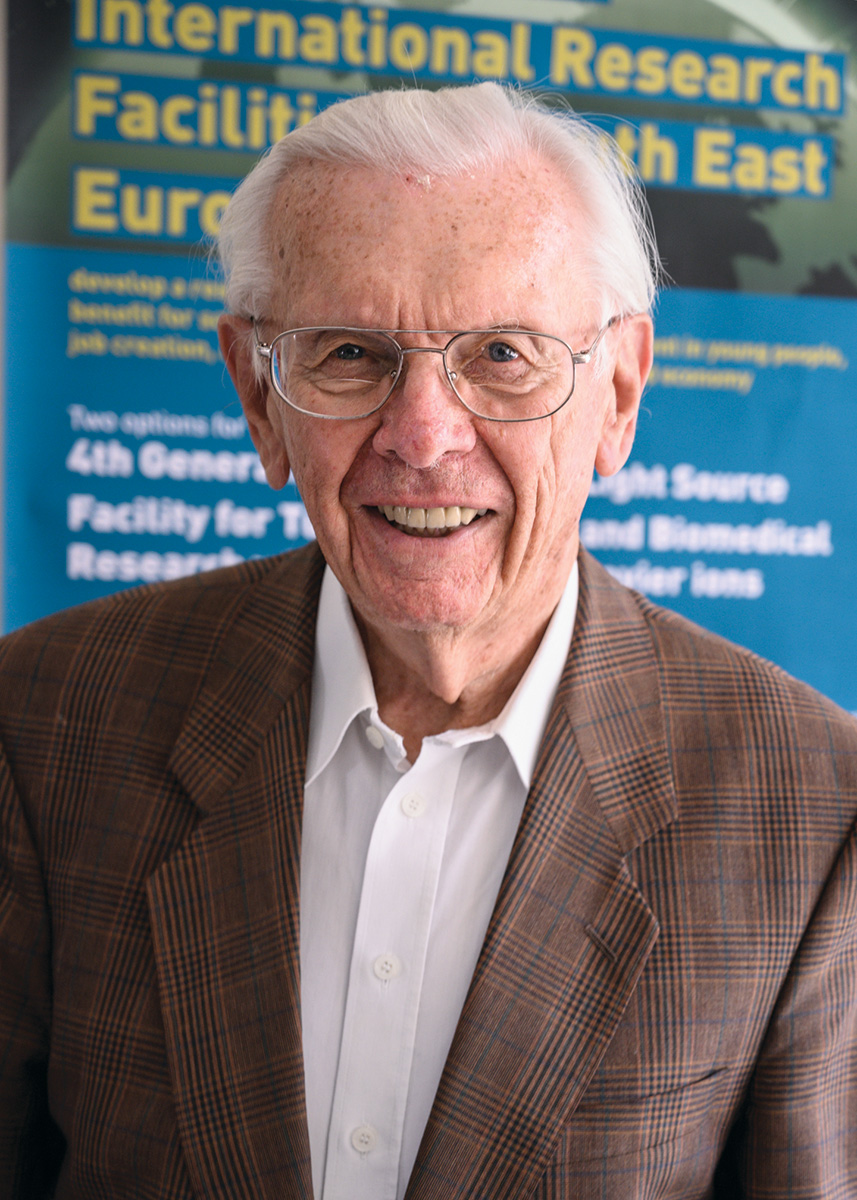
What happened? A tragedy fell upon Ukraine and found many in despair or in a dilemma. After 70 mainly peaceful years for much of Europe, we were surprised by war, because we had forgotten that it takes an effort to maintain peace.
Having witnessed the horrors of war first hand, several years as a soldier and then as a displaced person, I could not imagine that humanity would unleash another war on the continent. As one of its last witnesses, I wonder what advice should be passed on, especially to younger colleagues, about what to do in the short term, and perhaps more importantly, what to do afterwards.
Scientists have a special responsibility. Fortunately, there is no doubt today that science is independent of political doctrines. There is no “German physics” any more. We have established human relationships with our colleagues based on our enthusiasm for our profession, which has led to mutual trust and tolerance.
This has been practised at CERN for 70 years and continued at SESAME, where delegates from Israel, Palestine, Iran, Cyprus, Turkey and other governments sit peacefully around a table. Another offshoot of CERN, the South East European International Institute for Sustainable Technologies (SEEIIST), is in the making in the Balkans. Apart from fostering science, the aim is to transfer ethical achievements from science to politics: science diplomacy, as it has come to be known. In practice, this is done, for example, in the CERN Council where each government sends a representative and an additional scientist who work effectively together on a daily basis.
In the case of imminent political conflicts, “Science for Peace” cannot of course help immediately, but occasionally opportunities arise even for this. In 1985, when disarmament negotiations between Gorbachev and Reagan in Geneva reached an impasse, one of the negotiators asked me to invite the key experts to CERN on neutral territory, and at a confidential dinner the knot was untied. This showed how trust built up in scientific cooperation can impact politics.
Hot crises put us in particularly difficult dilemmas. It is therefore understandable that the CERN Council has to follow, to a large extent, the guidelines of the individual governments and sometimes introduce harsh sanctions. This leads to considerable damage for many excellent projects, which should be mitigated as much as possible. But it seems equally important to prevent or at least alleviate human suffering among scientific colleagues and their families, and in doing so we should allow them tolerance and full freedom of expression. I am sure the CERN management will try to achieve this, as in the past.
Day after
But what I consider most important is to prepare for the situation after the war. Somehow and sometime there will be a solution to the Russian invasion. On that “day after”, it will be necessary to talk to each other again and build a new world out of the ruins. This was facilitated after World War II because, despite the Nazi reign of terror, some far-sighted scientists maintained human relations as well as scientific ones. I remember with pleasure how I was invited to spend a sabbatical year in 1948 in Sweden with Lise Meitner. I was also one of the first German citizens to be invited to a scientific conference in Israel in 1957, where I was received without resentment.
CERN was the first scientific organisation whose mission was not only to conduct excellent science, but also to help improve relations between nations. CERN did this initially in Europe with great success. Later, during the most intense period of the Cold War, it was CERN that signed an agreement with the Russian laboratory in Serpukhov in the 1960s. Together with contacts with JINR in Dubna, this offered one of the few opportunities for scientific West–East cooperation. CERN followed these principles during the occupation of the Czechoslovak Socialist Republic in 1968 and during the Afghanistan crisis in 1979.
The aim is to transfer ethical achievements from science to politics
CERN has become a symbol of what can be achieved when working on a common project without discrimination, for the benefit of science and humanity. In recent decades, when peace has reigned in Europe, this second goal of CERN has somewhat receded into the background. The present crisis reminds us to make greater efforts in this direction again, even more so when many powers disregard ethical principles or formal treaties by pretending that their fundamental interests are violated. Science for Peace tries to help create a minimum of human trust between governments. Without this, we run the risk that future political treaties will be based only on deterrence. That would be a gloomy world.
A vision for the day after requires courage and more Science for Peace than ever before.
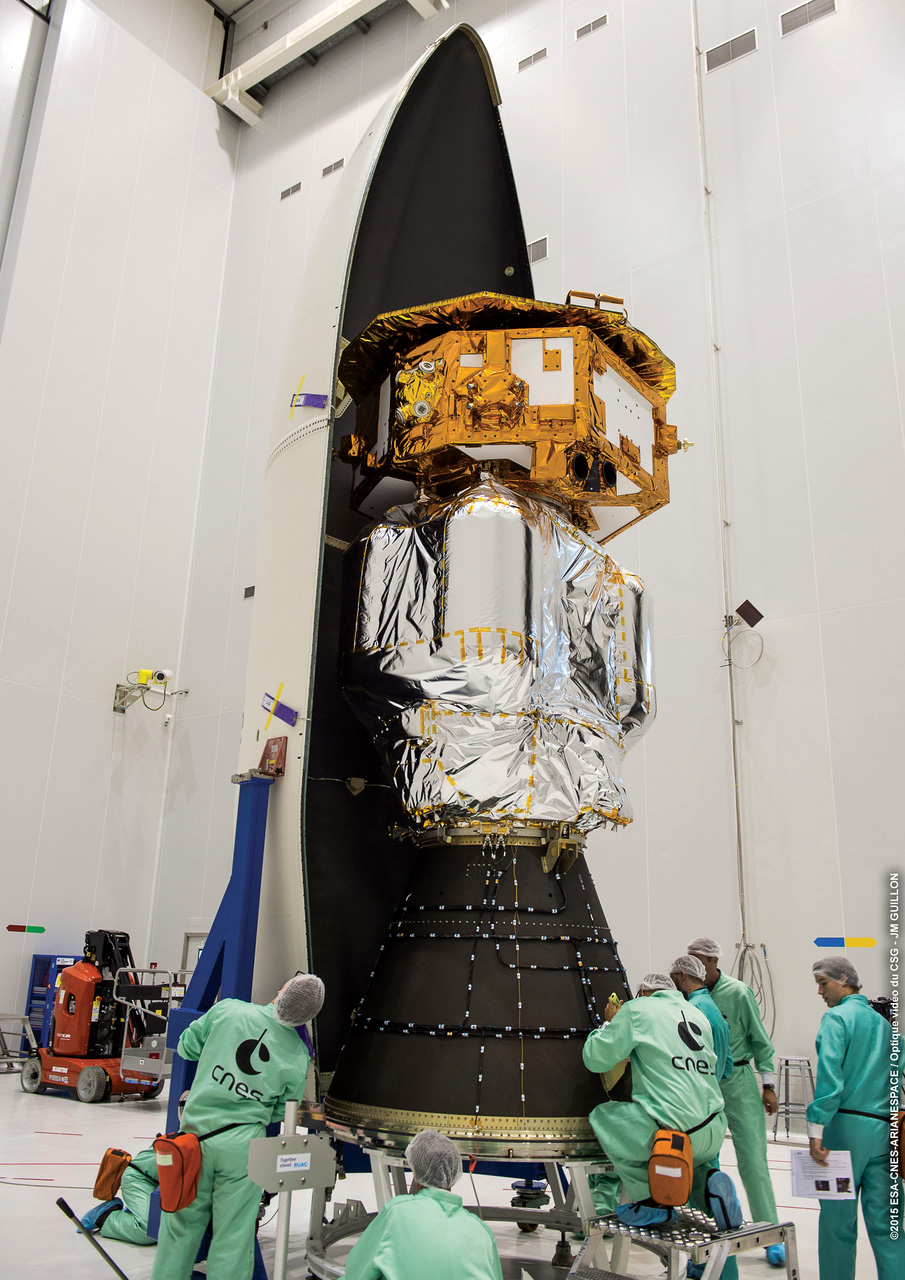
LISA (Laser Interferometer Space Antenna) is a giant Michelson interferometer comprising three spacecraft that form an equilateral triangle with sides of about 2.5 million km. You can think of one satellite as the central building of a terrestrial observatory like Virgo or LIGO, and the other two as the end stations of the two interferometer arms. Mirrors at the two ends of each arm are replaced by a pair of free-falling test masses, the relative distance between which is measured by a laser interferometer. When a gravitational wave (GW) passes, it alternately stretches one arm and squeezes the other, causing these distances to oscillate by an almost imperceptible amount (just a few nm). The nature and position of the GW sources is encoded in the time evolution of this distortion. Unlike terrestrial observatories, which keep their arms locked in a fixed position, LISA must keep track of the satellite positions by counting the millions of wavelengths by which their separation changes each second. All interferometer signals are combined on the ground and a sophisticated analysis is used to determine the differential distance changes between the test masses.
What will LISA tell us that ground-based observatories can’t?
Most GW sources, such as the merger of two black holes detected for the first time by LIGO and Virgo in 2015, consist of binary systems; as the two compact companions spiral into each other, they generate GWs. In these extreme binary mergers, the frequency of the GWs decrease both with the increasing mass of the objects and with increasing distance from their final merger. GWs with frequencies down to about a few Hz, corresponding to objects with masses up to a few thousand solar masses, are detectable from the ground. Below that, however, Earth’s gravity is too noisy. To access milli-Hertz and sub-milli-Hertz frequencies we need to go to space. This low-frequency regime is the realm of supermassive objects with millions of solar masses located in galactic centres, and also where tens of thousands of compact objects in our galaxy, including some of the Virgo/LIGO black holes, emit their signals for years and centuries as they peacefully rotate around each other before entering the final few seconds of their collapse. The LISA mission will therefore be highly complementary to existing and future ground-based observatories such as the Einstein Telescope. Theorists are excited about the physics that can be probed by multiband GW astronomy.
When and how did you get involved in LISA?
LISA was an idea by Pete Bender and colleagues in the 1980s. It was first proposed to the European Space Agency (ESA) in 1993 as a medium-sized mission, an envelope that it could not possibly fit. Nevertheless, ESA got excited by the idea and studies immediately began toward a larger mission. I became aware of the project around that time, immediately fell in love with it and, in 1995, joined the team of enthusiastic scientists, led by Karsten Danzmann. At the time it was not clear that a detection of GWs from ground was possible, whereas unless general relativity was deadly wrong, LISA would certainly detect binary systems in our galaxy. It soon became clear that such a daring project needed a technology precursor, to prove the feasibility of test-mass freefall. This built on my field of expertise, and I became principal investigator, with Karsten as a co-principal investigator, of LISA Pathfinder.
Pathfinder essentially squeezed one of LISA’s arms from millions of kilometres to half a metre and placed it into a single spacecraft: two test masses in a near-perfect gravitational freefall with their relative distance tracked by a laser interferometer. It launched in December 2015 and exceeded all expectations. We were able to control and measure the relative motion of the test masses with unprecedented accuracy using innovative technologies comprising capacitive sensors, optical metrology and a micro-Newton thruster system, among others. By reducing and eliminating all sources of disturbance, Pathfinder observed the most perfect freefall ever created: the test masses were almost motionless with respect to each other, with a relative acceleration less than a millionth of a billionth of Earth’s gravitational acceleration.
What is LISA’s status today?
LISA is in its final study phase (“B1”) and marching toward adoption, possibly late next year, after which ESA will release the large industrial contracts to build the mission. Following Pathfinder, many necessary technologies are in a high state of maturity: the test masses will be the same, with only minor adjustments, and we also demonstrated a pm-resolution interferometer to detect the motion of the test masses inside the spacecraft – something we need in LISA, too. What we could not test in Pathfinder is the million-kilometre-long pm-resolution interferometer, which is very challenging. Whereas LIGO’s 4 km-long arms allow you to send laser light back and forth between the mirrors and reach kW powers, LISA will have a 1 W laser: if you try to reflect it off a small test-mass 2.5 million km away, you get back just 20 photons per second! The instrument therefore needs a transponder scheme: one spacecraft sends light to another, which collects and measures the frequency to see if there is a shift due to a passing GW. You do this with all six test masses (two per spacecraft), combining the signals in one heck of an analysis to make a “synthetic” LIGO. Since this is mostly a case of optics, you don’t need zero-g space tests, and based on laboratory evidence we are confident it will work. Although LISA is no longer a technology-research project, it will take a few more years to iron out some of the small problems and build the actual flight hardware, so there is no shortage of papers or PhD theses to be written.
How is the LISA consortium organised?
ESA’s science missions are often a collaboration in which ESA builds, launches and operates the satellite and its member states – via their universities and industries – contribute all or part of the scientific instruments, such as a telescope or a camera. NASA is a major partner with responsibilities that include the lasers, the device to discharge the test masses as they get charged up by cosmic rays, and the telescope to exchange laser beams among the satellites. Germany, which holds the consortium’s leadership role, also shares responsibility for a large part of the interferometry with the UK. Italy leads the development of the test-mass system; France the science data centre and the sophisticated ground testing of LISA optics; and Spain the science-diagnostics development. Critical hardware components are also contributed by Switzerland, the Netherlands, Belgium, the Czech Republic, Denmark and Poland, while scientists worldwide contribute to various aspects of the preparation of mission operation, data analysis and science utilisation. The LISA consortium has around 1500 members.
What is the estimated cost of the mission, and what is industry’s role?
A very crude estimate of the sum of ESA, NASA and member-state contributions may add up to something below two billion dollars. One of the main drivers of ESA’s scientific programme is to maintain the technological level of European aerospace, so the involvement of industry, in close cooperation with scientific institutes, is crucial. After having passed the adoption phase, ESA will grant contracts to prime industrial contractors who take responsibility for the mission. To foster industrial competition during the study phase, ESA has awarded contracts to two independent contractors, in our case Airbus and Thales Alenia. In addition, international partners and member-state contributions often, if not always, involve industry.
What scientific and technological synergies exist with other fields?
LISA will look for deviations from general relativity, in particular the case where compact objects fall into a supermassive black hole. In terms of their importance, deviations in general relativity are a very close cousin of deviations from the Standard Model of particle physics. Which will come first we don’t know, but LISA is certainly an outstanding laboratory for fundamental gravitational physics. Then there are expectations for cosmology, such as tracing the history of black-hole formation or maybe detecting stochastic backgrounds of GWs, such as “cusps” predicted in string theory. Wherever you push the frontiers to investigate the universe at large, you push the frontiers of fundamental interactions – so it’s not surprising that one of our best cosmologists now works at CERN! Technologically speaking, we just started a collaboration with CERN’s vacuum group. In LISA we have a tiny vacuum volume in the region where the test masses are located, and it is full of components and cables. It was a big challenge for Pathfinder, but for LISA we definitely need to understand more. The CERN vacuum group is really interested in understanding this, so we are very happy with this new collaboration. As with LIGO, Advanced Virgo and the Einstein Telescope, LISA is a CERN-recognised experiment.
There is no other space mission with as many papers published about its science expectations before it even leaves the ground
What’s the secret to maintaining the momentum in a complex, long-term global project in fundamental physics?
The LISA mission is so fascinating that it is “self-selling”. Scientists liked it, engineers liked it, industry liked it, space agencies like it. Obviously Pathfinder helped a lot – it meant that even in the darkest moments we knew we were “real”. But in the meantime, our theory colleagues did so much work. As far as I know, there is no other space mission with as many papers published about its science expectations before it even leaves the ground. It’s not just that the science is inspiring, but the fact that you can calculate things. The instrumentation is also so fascinating that students want to do it. With Pathfinder, we faced many difficulties. We were naïve in thinking that we could take this thing that we built in the lab and turn it into an industrial project. Of course we needed to grow and learn, but because we loved the project so much, we never ever gave up. One needs this mind-set and resilience to make big scientific projects work.
When do you envision launch?
Currently it’s planned for the mid-2030s. This is a bit in the future at my age, but I am grateful to have seen the launch of LISA Pathfinder and I am happy to think that many of my young colleagues will see it, and share the same emotions we did with Pathfinder, as a new era in GW astronomy opens up.
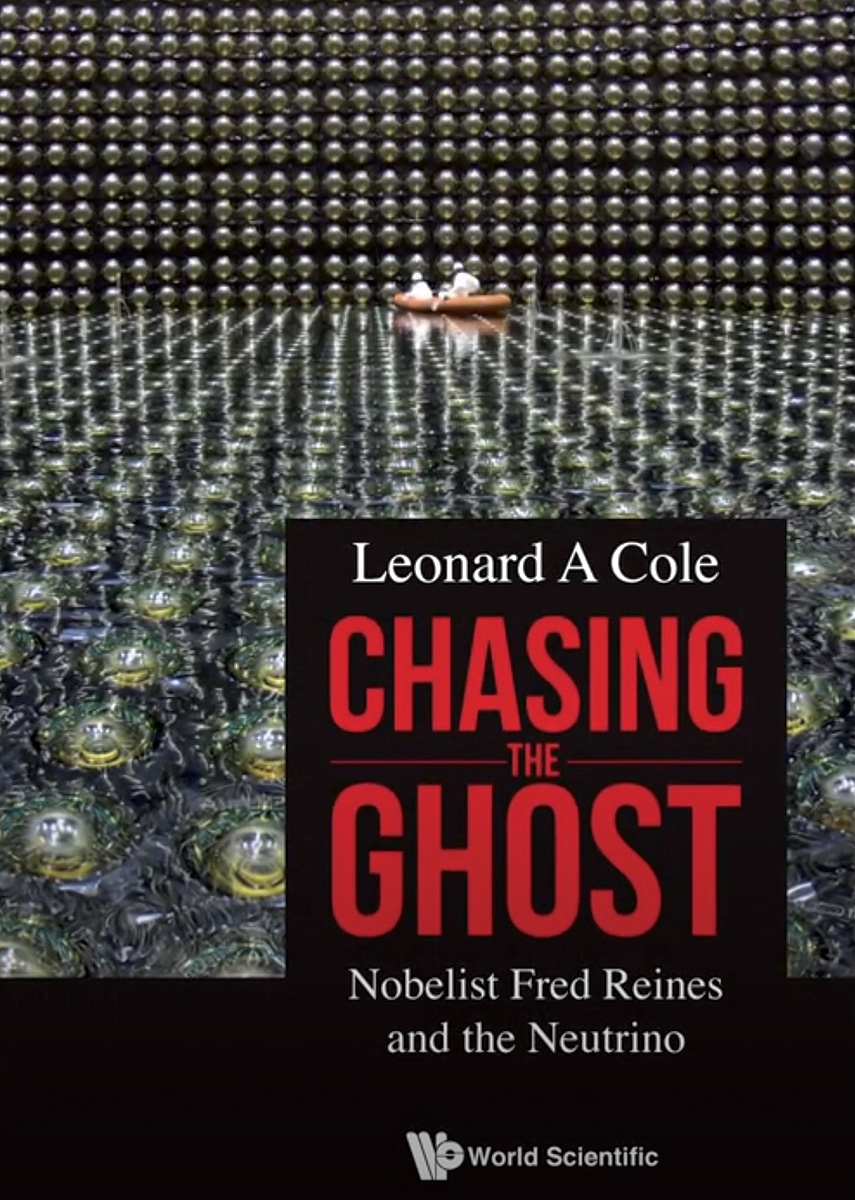
Every Nobel Prize comes with a story, and Leonard A Cole’s Chasing the Ghost offers a new perspective on that of Fred Reines, best known for discovering the electron neutrino with Clyde Cowan in 1956. While Cowan passed away in 1974, Reines went on to win the Nobel Prize in Physics for their discovery in 1995. Cole, Reines’s cousin, describes the life of Fred Reines – focusing on both his scientific career and extracurricular interests – in a personal way, showing obvious admiration for his elder cousin.
After participating in the Manhattan Project and assisting in developing nuclear weapons in the 1940s, Reines pivoted to study neutrinos, the fundamental particles emitted in nearly every nuclear reaction, which he describes as “the tiniest quantity of reality ever imagined by a human being”. While being tiny quantities, neutrinos are abundant, yet mysterious, and Reines’s work opened the door to better understand these particles. His research spanned the next five decades, and positions at universities and laboratories across the US, and the techniques that he developed to study neutrinos are used to this day.
Rainbows and Things
Throughout Chasing the Ghost, Cole splits his time between describing Reines’s career and his extracurricular pursuits. Even among his colleagues, Reines was known to be a prolific singer, performing with groups including the Los Alamos Light Opera Association and the Cleveland Orchestra Chorus. Time spent pondering these activities allowed Reines to connect better with non-science-major students when lecturing at universities. Reines famously taught his course “Rainbows and Things” to much acclaim at the University of California, Irvine, where he encouraged students to think deeply about the connection between classroom physics and the natural world. Cole explains that the course name, and much of its philosophy, stems from the play Finian’s Rainbow, which Reines performed in 1955.
Throughout his later life, it became apparent that Reines thought his accomplishments deserved more praise than they had received. In fact, it was only after he gave up hope of winning the Nobel Prize that he won it in 1995. Reines had been passed up on many occasions, including in 1988 when the team that discovered the second type of neutrinos was awarded the prize before him. Cole shares a humorous anecdote (in hindsight): at a CERN conference with both Reines and 1988 laureate Leon Lederman in attendance, a speaker suggested an experiment to search for the third type of neutrino, the tau neutrino. However, as the speaker lamented, it seemed as if no one would perform this type of experiment, “because evidently they only give a Nobel Prize for the detection of every other neutrino.” While the room may have burst into laughter, Fred Reines didn’t budge.
Regardless, Reines’s dedication to understand neutrinos persisted until the end of his life. Shortly before passing, when he heard of the ground-breaking news from Super-Kamiokande that neutrinos oscillate, he astutely asked “What’s the mass?”, understanding the implications of this result.
The work spearheaded by Reines and his contemporaries has made a lasting impact on the field of particle physics, that continues today. As Cole explains, the subfield of neutrino physics has blossomed to include large, international experimental collaborations, which have found even more unexpected results. Those results have spurred investigators to plan ambitious projects, such as the IceCube experiment in Antarctica, the DUNE experiment in the US, and Hyper-Kamiokande in Japan.
Inspiration
Today’s neutrino detectors are getting bigger and bigger. However, their forerunners can still serve a purpose: inspiration. Several detectors from Reines’s era are now exhibited, such as the Gargamelle detector at CERN. After discovering the electron neutrino, the race was on to build experiments to better understand neutrino properties, and Gargamelle was one such detector. Today, it is on display at the CERN Microcosm, perhaps inspiring a new generation of neutrino physicists.
Overall, Leonard A Cole’s Chasing the Ghost will inspire readers, especially those new to thinking about neutrino physics. Fred Reines’s work, with its focus on a deep understanding of these mysterious, abundant particles, continues to bear fruit to this day. There is no telling what the next neutrino experiments will uncover, but it’s a guarantee that sharp thinkers like Reines will be necessary in this field in the generations to come.
To provide the best experiences, we use technologies like cookies to store and/or access device information. Consenting to these technologies will allow us to process data such as browsing behavior or unique IDs on this site. Not consenting or withdrawing consent, may adversely affect certain features and functions.
Functional
Always active
The technical storage or access is strictly necessary for the legitimate purpose of enabling the use of a specific service explicitly requested by the subscriber or user, or for the sole purpose of carrying out the transmission of a communication over an electronic communications network.
Preferences
The technical storage or access is necessary for the legitimate purpose of storing preferences that are not requested by the subscriber or user.
Statistics
The technical storage or access that is used exclusively for statistical purposes.The technical storage or access that is used exclusively for anonymous statistical purposes. Without a subpoena, voluntary compliance on the part of your Internet Service Provider, or additional records from a third party, information stored or retrieved for this purpose alone cannot usually be used to identify you.
Marketing
The technical storage or access is required to create user profiles to send advertising, or to track the user on a website or across several websites for similar marketing purposes.







 What happened? A tragedy fell upon Ukraine and found many in despair or in a dilemma. After 70 mainly peaceful years for much of Europe, we were surprised by war, because we had forgotten that it takes an effort to maintain peace.