Since its first revolution in the 1980s, string theory has been proposed as a framework to unify all known interactions in nature. As such, it is a perfect candidate to embed the standard models of particle physics and cosmology into a consistent theory of quantum gravity. Over the past decades, the quest to recover both models as low-energy effective field theories (EFTs) of string theory has led to many surprising results, and to the notion of a “landscape” of string solutions reproducing many key features of the universe.
Initially, the vast number of solutions led to the impression that any quantum field theory could be obtained as an EFT of string theory, hindering the predictive power of the theory. In fact, recent developments have shown that quite the opposite is true: many respectable-looking field theories become inconsistent when coupled to quantum gravity and can never be obtained as EFTs of string theory. This set is known as the “swampland” of quantum field theories. The task of the swampland programme is to determine the structure and boundaries of the swampland, and from there extract the predictive power of string theory. Over the past few years, deep connections between the swampland and a fundamental understanding of open questions in high-energy physics ranging from the hierarchy of fundamental scales to the origin and fate of the universe, have emerged.
The workshop Back to the Swamp, held at Instituto de Física Teórica UAM/CSIC in Madrid from 26 to 28 September, gathered leading experts in the field to discuss recent progress in our understanding of the swampland, as well as its implications for particle physics and cosmology. In the spirit of the two previous conferences Vistas over the Swampland and Navigating the Swampland, also hosted at IFT, the meeting featured 22 scientific talks and attracted about 100 participants.
The swampland programme has led to a series of conjectures that have sparked debate about how to connect string theory with the observed universe, especially with models of early-universe cosmology. This was reflected with several talks on the subject, ranging from new scrutiny of current proposals to obtain de Sitter vacua, which might not be consistently constructed in quantum gravity, new candidates for quintessence models that introduce a scalar field to explain the observed accelerated expansion of the universe, and scenarios where dark matter is composed of primordial black holes. Several talks covered the implications of the programme for particle physics and quantum field theories in general. Topics included axion-based proposals to solve the strong-CP problem from the viewpoint of quantum gravity, as well as how axion physics and approximate symmetries can link swampland ideas with experiment and how the mathematical concept of “tameness” could describe those quantum field theories that are compatible with quantum gravity. Progress on the proposal to characterize large field distances and field-dependent weak couplings as emergent concepts, general bounds on supersymmetric quantum field theories from consistency of axionic string worldsheet theories, and several proposals on how dispersive bound and the boostrap programme are also relevant for swampland ideas. Finally, several talks covered more formal topics, such as a sharpened formulation of the distance conjecture, new tests of the tower weak gravity conjecture, the discovery of new corners in the string theory landscape, and arguments in favour of and against Euclidean wormholes.
The new results demonstrated the intense activity in the field and highlighted several current aspects of the swampland programme. It is clear that the different proposals and conjectures driving the programme have sharpened and become more interconnected. Each year, the programme attracts more scientists working in different specialities of string theory, and proposals to connect the swampland with experiment take a larger fraction of the efforts.
What is the origin of neutrino masses and oscillations? What is the nature of Dark Matter? What mechanism generated matter-antimatter-asymmetry? What drove the inflation of our Universe and provides an explanation to Dark Energy? What is the origin of the hierarchy of scales? These are outstanding questions in particle physics that still require an answer.
So far, the experimental effort has been driven by theoretical arguments that favoured the existence of new particles with relatively large couplings to the Standard Model (SM) and masses commensurate the mass of the Higgs boson. Searching for these particles has been one of the main goals of the physics programme of the LHC. However, several beyond-the-SM theories predict the existence of light (sub-GeV) particles, which interact very weakly with the SM fields. Such feebly interacting particles (FIPs) can provide elegant explanations to several unresolved problems in modern physics. Furthermore, searching for them requires specific and distinct techniques, creating new experimental challenges along with innovative theoretical efforts.
FIPs are currently one of the most debated and discussed topics in fundamental physics and were recommended by the 2020 update of the European strategy for particle physics as a compelling field to explore in the next decade. The FIPs 2022 workshop held at CERN from 17 to 21 October was the second in a series dedicated to the physics of FIPs, attracted 320 experts from collider, beam-dump and fixed-target experiments, as well as from the astroparticle, cosmology, axion and dark-matter communities gathered to discuss the progress in experimental searches and new developments in underlying theoretical models.
The main goal of the workshop was to create a base for a multi-disciplinary and interconnected approach. The breadth of open questions in particle physics and their deep interconnection requires a diversified research programme with different experimental approaches and techniques, together with a strong and focused theoretical involvement. In particular, FIPs 2022, which is strongly linked with the Physics Beyond Colliders initiative at CERN, aimed at shaping the FIPs programme in Europe. Topics under discussion include the impact that FIPs might have in stellar evolution, ΛCDM cosmological-model parameters, indirect dark-matter detection, neutrino physics, gravitational-wave physics and AMO (atoms-molecular-optical) physics. This is in addition to searches currently performed at colliders and extracted beam lines worldwide.
The main sessions were organised around three main themes: light dark matter in particle and astroparticle physics and cosmology; ultra-light FIPs and their connection with cosmology and astrophysics; and heavy neutral leptons and their connection with neutrino physics. In addition, young researchers in the field presented and discussed their work in the “new ideas” sessions.
FIPs 2022 aimed not only to explore new answers to the unresolved questions in fundamental physics, but to analyse the technical challenges and necessary infrastructure and collaborative networks required to answer them. Indeed, no single experiment or laboratory would be able by itself to cover the large parameter space in terms of masses and couplings that FIPs models suggest. Synergy and complementarity among a great variety of experimental facilities are therefore paramount, calling for a deep collaboration across many laboratories and cross-fertilisation among different communities and experimental techniques. We believe that a network of interconnected laboratories can become a sustainable, flexible and efficient way of addressing the particle physics questions in the next millennium.
The next appointment for the community is the retreat/school “FIPs in the ALPs” to be held in Les Houches from 15 to 19 May 2023, to be followed by the next edition of the FIPs workshop at CERN in autumn 2024.
When the W and Z bosons were predicted in the mid-to-late 1960s, their masses were not known. Experimentalists therefore had no idea what energy they needed to produce them. That changed in 1973, when Gargamelle discovered neutral-current neutrino interactions and measured the cross-section ratio between neutral- and charged-current interactions. This ratio provided the first direct determination of the weak mixing angle, which, via the electroweak theory, predicted the W-boson mass to lie between 60 and 80 GeV, and the Z mass between 75 and 95 GeV – at least twice the energy of the leading accelerators of the day.
By then, the world’s first hadron collider – the Intersecting Storage Rings (ISR) at CERN – was working well. Kjell Johnsen proposed a new superconducting ISR in the same tunnel, capable of reaching 240 GeV. A study group was formed. Then, in 1976, Carlo Rubbia, David Cline and Peter McIntyre suggested addingan antiproton source to a conventional 400 GeV proton accelerator, either at Fermilab or at CERN, to transform it into a pp collider. The problem was that the antiprotons had to be accumulated
and cooled if the target luminosity (1029 cm–2s–1, providing about one Z event per day) was to be reached. Two methods were proposed: stochastic cooling by Simon van der Meer at CERN and electron cooling by Gersh Budker in Novosibirsk.
CERN Director-General John Adams wasn’t too happy that as soon as the SPS had been built, physicists wanted to convert it into a pp collider. But he accepted the suggestion, and the idea of a superconducting ISR was abandoned. Following the Initial Cooling Experiment, which showed that the luminosity target was achievable with stochastic cooling, the SppS was approved in May 1978 and the construction of the Antiproton Accumulator (AA) by van der Meer and collaborators began. Around that time, the design of the UA1 experiment was also approved.
A group of us proposed a second, simpler experiment in another interaction region (UA2), but it was put on hold for financial reasons. Then, at the end of 1978, Sam Ting proposed an experiment to go in the same place. His idea was to surround the beam with heavy material so that everything would be absorbed except for muons, making it good at identifying Z → μ+μ– but far from good for W bosons decaying to a muon and a neutrino. In a tense atmosphere, Ting’s proposal was turned down and ours was approved.
First sightings
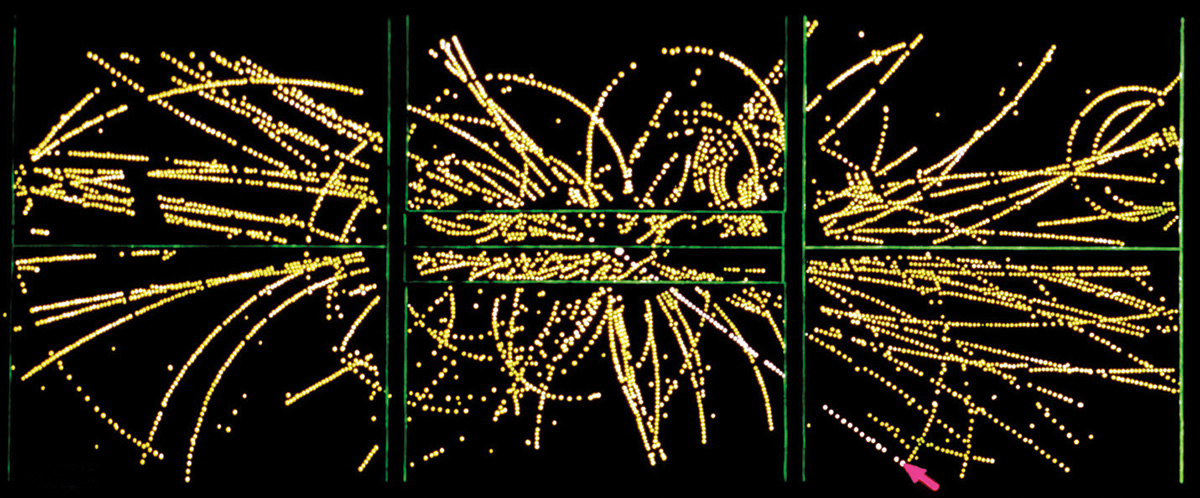
The first low-intensity pp collisions arrived in late 1981. In December 1982 the luminosity reached a sufficient level, and by the following month UA1 had recorded six W candidates and UA2 four. The background was minimal; there was nothing else we could think of that would produce such events. Carlo presented the UA1 events and Pierre Darriulat the UA2 ones at a workshop in Rome on 12–14 January 1983. On 20 January, Carlo announced the W discovery at a CERN seminar, and the next day I presented the UA2 results, confirming UA1. In UA2 we never discussed priority, because we all knew that it was Carlo who had made the whole project possible.
The same philosophy guided the discovery of the Z boson. UA2 had recorded a candidate Z → e+e– event in December 1982, also presented by Pierre at the Rome workshop. One electron was perfectly clear, whereas the other had produced a shower with many tracks. I had shown the event to Jack Steinberger, who strongly suggested we publish immediately; however, we decided to wait for the first “golden” event with both electrons unambiguously identified. Then, one night in May 1983, UA1 found a Z. As with ours, only one electron satisfied all electron-identification criteria, but Carlo used the event to announce a discovery. The UA1 results (based on four Z → e+e– events and one Z → μ+μ–) were published that July, followed by the UA2 results (based on eight Z → e+e– events, including the 1982 one) a month later.
The SppS ran until 1990, when it became clear that Fermilab’s Tevatron was going to put us out of business. In 1984–1985 the energy was increased from 546 to 630 GeV and in 1986 another ring was added to the AA, increasing the luminosity 10-fold. Following the 1984 Nobel prize to Rubbia and van der Meer, UA1 embarked on an ambitious new electromagnetic calorimeter that never quite worked. UA2 went on to make a precise measurement of the ratio mW/mZ, which, along with the first precise measurement of mZ at LEP, enabled us to determine the W mass with 0.5% precision and, via radiative corrections, to predict the mass of the top quark (160+50–60 GeV) several years before the Tevatron discovered it.
Times have certainly changed since then, but the powerful interplay between theory, experiment and machine builders remains essential for progress in particle physics.
From 1 to 4 November, the first International Conference on Quantum Technologies for High-Energy Physics (QT4HEP) was held at CERN. With 224 people attending in person and many more following online, the event brought together researchers from academia and industry to discuss recent developments and, in particular, to identify activities within particle physics that can benefit most from the application of quantum technologies.
Opening the event, Joachim Mnich, CERN director for research and computing, noted that CERN is widely recognised, including by its member states, as an important platform for promoting applications of quantum technologies for both particle physics and beyond. “The journey has just begun, and the road is still long,” he said, “but it is certain that deep collaboration between physicists and computing experts will be key in capitalising on the full potential of quantum technologies.”
The conference was organised by the CERN Quantum Technology Initiative (CERN QTI), which was established in 2020, and followed a successful workshop on quantum computing in 2018 that marked the beginning of a range of new investigations into quantum technologies at CERN. CERN QTI covers four main research areas: quantum theory and simulation; quantum sensing, metrology and materials; quantum computing and algorithms; and quantum communication and networks. The first day’s sessions focused on the first two: quantum theory and simulation, as well as quantum sensing, metrology and materials. Topics covered included the quantum simulation of neutrino oscillations, scaling up atomic interferometers for the detection of dark matter, and the application of quantum traps and clocks to new-physics searches.
Building partnerships
Participants showed an interest in broadening collaborations related to particle physics. Members of the quantum theory and quantum sensing communities discussed ways to identify and promote areas of promise relevant to CERN’s scientific programme. It is clear that many detectors in particle physics can be enhanced – or even made possible – through targeted R&D in quantum technologies. This fits well with ongoing efforts to implement a chapter on quantum technologies in the European Committee for Future Accelerators’ R&D roadmap for detectors, noted Michael Doser, who coordinates the branch of CERN QTI focused on sensing, metrology and materials.
For the theory and simulation branch of CERN QTI, the speakers provided a useful overview of quantum machine learning, quantum simulations of high-energy collider events and neutrino processes, as well as making quantum-information studies of wormholes testable on a quantum processor. Elina Fuchs, who coordinates this branch of CERN QTI, explained how quantum advantages have been found for toy models of increased physical relevance. Furthermore, she said, developing a dictionary that relates interactions at high energies to lower energies will enhance knowledge about new-physics models learned from quantum-sensing experiments.
The conference demonstrated the clear potential of different quantum technologies to impact upon particle-physics research
The second day’s sessions focused on the remaining two areas, with talks on quantum-machine learning, noise gates for quantum computing, the journey towards a quantum internet, and much more. These talks clearly demonstrated the importance of working in interdisciplinary, heterogeneous teams when approaching particle-physics research with quantum-computing techniques. The technical talks also showed how studies on the algorithms are becoming more robust, with a focus on trying to address problems that are as realistic as possible.
A keynote talk from Yasser Omar, president of the Portuguese Quantum Institute, presented the “fleet” of programmes on quantum technologies that has been launched since the EU Quantum Flagship was announced in 2018. In particular, he highlighted QuantERA, a network of 39 funding organisations from 31 countries; QuIC, the European Quantum Industry Consortium; EuroQCI, the European Quantum Communication Infrastructure; EuroQCS, the European Quantum Computing and Simulation Infrastructure; and the many large national quantum initiatives being launched across Europe. The goal, he said, is to make Europe autonomous in quantum technologies, while remaining open to international collaboration. He also highlighted the role of World Quantum Day – founded in 2021 and celebrated each year on 14 April – in raising awareness around the world of quantum science.
Jay Gambetta, vice president of IBM Quantum, gave a fascinating talk on the path to quantum computers that exceed the capabilities of classical computers. “Particle physics is a promising area for looking for near-term quantum advantage,” he said. “Achieving this is going to take both partnership with experts in quantum information science and particle physics, as well as access to tools that will make this possible.”
Industry and impact
The third day’s sessions – organised in collaboration with CERN’s knowledge transfer group – were primarily dedicated to industrial co-development. Many of the extreme requirements faced by quantum technologies are shared with particle physics, such as superconducting materials, ultra-high vacuum, precise timing, and much more. For this reason, CERN has built up a wealth of expertise and specific technologies that can directly address challenges in the quantum industry. CERN strives to maximise the impact of all of its technologies and know-how on society in many ways to ease the transfer of CERN’s knowledge to industry and society. One focus is to see which technologies might help to build robust quantum-computing devices. Already, CERN’s White Rabbit technology, which provides sub-nanosecond accuracy and picosecond precision of synchronisation for the LHC accelerator chain, has found its way to the quantum community, noted Han Dols, business development and entrepreneurship section leader.
Several of the day’s talks focused on challenges around trapped ions and control systems. Other topics covered included the potential of quantum computing for drug development, measuring brain function using quantum sensors, and developing specialised instrumentation for quantum computers. Representatives of several start-up companies, as well as from established technology leaders, including Intel, Atos and Roche, spoke during the day. The end of the third day was dedicated to crucial education, training and outreach initiatives. Google provided financial support for 11 students to attend the conference, and many students and researchers presented posters.
Marieke Hood, executive director for corporate affairs at the Geneva Science and Diplomacy Anticipator (GESDA) foundation, also gave a timely presentation about the recently announced Open Quantum Institute (OQI). CERN is part of a coalition of science and industry partners proposing the creation of this institute, which will work to ensure that emerging quantum technologies tackle key societal challenges. It was launched at the 2022 GESDA Summit in October, during which CERN Director-General Fabiola Gianotti highlighted the potential of quantum technologies to help achieve key UN Sustainable Development Goals. “The OQI acts at the interface of science and diplomacy,” said Hood. “We’re proud to count CERN as a key partner for OQI, its experience of multinational collaboration will be most useful to help us achieve these ambitions.”
The final day of the conference was dedicated to hands-on workshops with three different quantum-computing providers. In parallel, a two-day meeting of the “Quantum Computing 4HEP” working group, organised by CERN, DESY and the IBM Quantum Network, took place.
Qubit by qubit
Overall, the QT4HEP conference demonstrated the clear potential of different quantum technologies to impact upon particle-physics research. Some of these technologies are here today, while others are still a long way off. Targeted collaboration across disciplines and the academia–industry interface will help ensure that CERN’s research community is ready to maximise on the potential of these technologies.
“Widespread quantum computing may not be here yet, but events like this one provide a vital platform for assessing the opportunities this breakthrough technology could deliver for science,” said Enrica Porcari, head of the CERN IT department. “Through this event and the CERN QTI, we are building on CERN’s tradition of bringing communities together for open discussion, exploration, co-design and co-development of new technologies.”
When did you first know you had a passion for pure mathematics?
I have had a passion for mathematics since my first year in school. At that time I did not realise what “pure mathematics” was, but maths was my favourite subject from a very early age.
What is number theory, in terms that a humble particle physicist can understand?
In fact, “number theory” is not well defined and any interesting question about numbers, geometric shapes and functions can be seen as a question for a number theorist.
What motivated you to work on sphere-packing?
I think it is a beautiful problem, something that can be easily explained. Physicists know what a Euclidean space and a sphere are, and everybody knows the problem from stacking oranges or apples. What is a bit harder to explain is that mathematicians are not trying to model a particular physical situation. Mathematicians are not bound to phenomena in nature to justify their work, they just do it. We do not need to model any physical situation, which is a luxury. The work could have an accidental application, but this is not the primary goal. Physicists, especially theorists, are used to working in multi-dimensional spaces. At the same time, these dimensions have a special interpretation in physics.
What fascinates you most about working on theoretical rather than applied mathematics?
My motivation often comes out of curiosity and my belief that the solutions to the problems will become useful at some point in the future. But it is not my job to judge or to define the usefulness. My belief is that the fundamental questions must be answered, so that other people can use this knowledge later. It is important to understand the phenomena in mathematics and in science in general, and the possibility of discovering something that other people have not yet. Maybe it is possible to come up with other ideas for detectors, which become interesting. When I look at physics detectors, for example, it fascinates me how complex these machines are and how many tiny technical solutions must be invented to make it all work.
How did you go about cracking the sphere-stacking problem?
I think there was an element of luck that I could find the correct idea to solve this problem because many people worked on it before. I was fortunate to find the right solution. The initial problem came from geometry, but the final solution came from Fourier analysis, via a method called linear programming.
I think a mathematical reality exists on its own and sometimes it does describe actual physical phenomena
In 2003, mathematicians Henry Cohn and Noam Elkies applied the linear programming method to the sphere-packing problem and numerically obtained a nearly optimal upper bound in dimensions 8 and 24. Their method relied on constructing an auxiliary, “magic”, function. They computed this function numerically but could not find an explicit formula for it. My contribution was to find the explicit formula for the magic function.
What applications does your work have, for example in quantum gravity?
After I solved the sphere-packing problem in dimension 8 in 2016, CERN physicists worked on the relation between two-dimensional conformal field theory and quantum gravity. From what I understand, conformal field theories are mathematically totally different from sphere-packing problems. However, if one wants to optimise certain parameters in the conformal field theory, physicists use a method called “bootstrap”, which is similar to the linear programming that I used. The magic functions I used to solve the sphere-packing problem were independently rediscovered by Thomas Hartman, Dalimil Mazác and Leonardo Rastelli.
Are there applications beyond physics?
One of the founders of modern computer science, Claude Shannon, realised that sphere-packing problems are not only interesting geometric problems that pure mathematicians like me can play with, but they are also a good model for error-correcting codes, which is why higher-dimensional sphere packing problems became interesting for mathematicians. A very simplified version of the original model could be the following. An error is introduced during the transmission of a message. Assuming the error is under control, the corrupted message is still close to the original message. The remedy is to select different versions of the messages called codewords, which we think are close to the original message but at the same time far away from each other, so that they do not mix with each other. In geometric language, this situation is an exact analogy of sphere-packing, where each code word represents the centre of the sphere and the sphere around the centre represents the cloud of possible errors. The spheres will not intersect if their centres are far away from each other, which allows us to decode the corrupted message.
Do you view mathematics as a tool, or a deeper property of reality?
Maybe it is a bit idealistic, but I think a mathematical reality exists on its own and sometimes it does describe actual physical phenomena, but it still deserves our attention if not. In our mathematical world, we have chances to realise that something from this abstract mathematical world is connected to other fields, such as physics, biology or computer science. Here I think it’s good to know that the laws of this abstract world often provide us with useful gadgets, which can be used later to describe the other realities. This whole process is a kind of “spiral of knowledge” and we are in one of its turns.
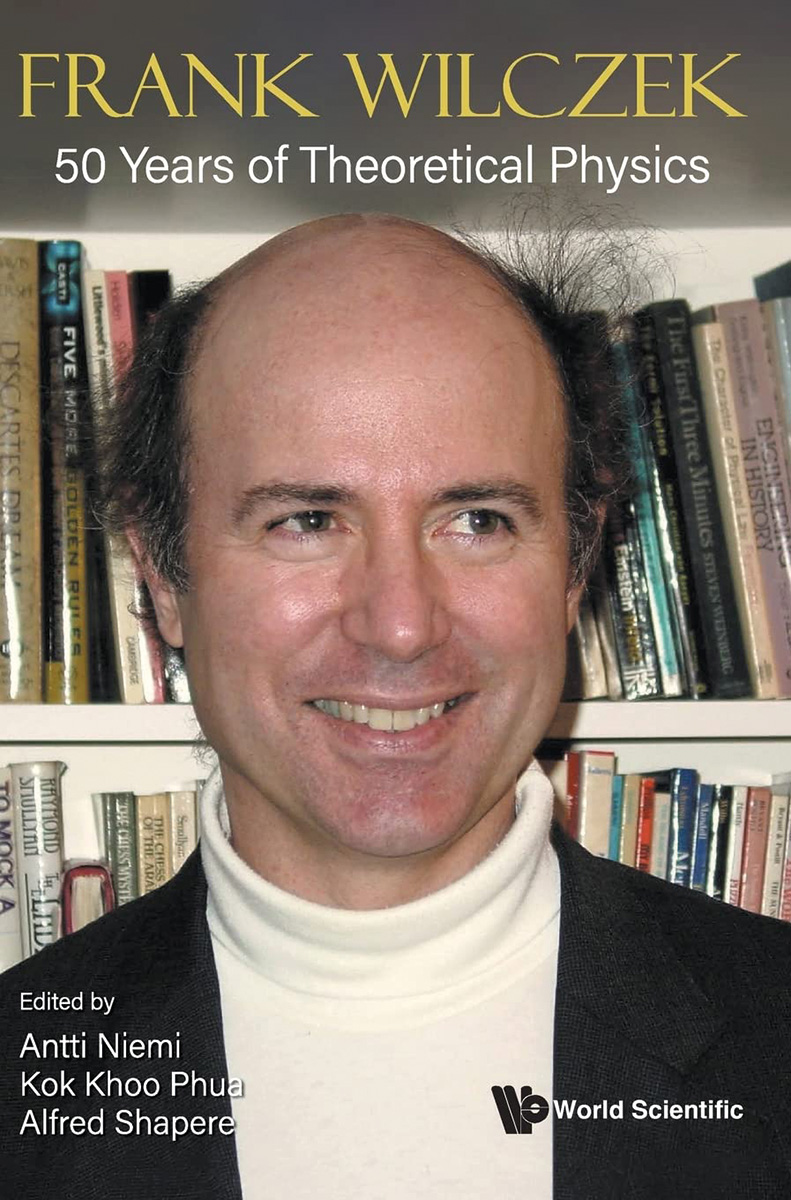
This carefully crafted edition highlights the scientific life of 2004 Nobel laureate Frank Anthony Wilczek, and the developments of theoretical physics related to his research. Frank Wilczek: 50 Years of Theoretical Physics is a collection of essays, original research papers and the reminiscences of Wilczek’s friends, students and followers. Wilczek is an exceptional physicist with an extraordinary mathematical talent. The 23 articles represent his vivid research journey from pure particle physics to cosmology, quantum black holes, gravitation, dark matter, applications of field theory to condensed matter physics, quantum mechanics, quantum computing and beyond.
In 1973 Wilczek discovered, together with his doctoral advisor David Gross, asymptotic freedom through which the field theory of the strong interaction, quantum chromodynamics (QCD), was firmly established. Independently that year, the same work was done by David Politzer, and all three shared the Nobel prize in 2004. Wilczek’s major work includes the solution of the strong-CP problem by predicting the hypothetical axion, a result of the spontaneously broken Peccei–Quinn symmetry. In 1982 he predicted the quasiparticle “anyon”, for which evidence was found in a 2D electronic system in 2020. This satisfies the need for a new variant for 2D systems as the properties of fermions and bosons are not transferable.
Original research papers included in this book were written by pioneering scientists, such as Roman Jackiw and Edward Witten, who are either co-inventors or followers of Wilczek’s work. The articles cover recent developments of QCD, quantum-Hall liquids, gravitational waves, dark energy, superfluidity, the Standard Model, symmetry breaking, quantum time-crystals, quantum gravity and more. Many colour photographs, musical tributes to anyons, memories of quantum-connection workshops and his contribution to the Tsung-Dao Lee Institute in Shanghai complement the volume. The book ends with Wilczek’s publication list, which documents the most significant developments in theoretical particle physics during the past 50 years.
Wilczek is an exceptional physicist with an extraordinary mathematical talent
Though this book is not an easy read in places, and the connections between articles are not always clear, a patient and careful reader will be rewarded. The collection combines rigorous scientific discussions with an admixture of Wilczek’s life, wit, scientific thoughts and teaching – a precious and timely tribute to an exceptional physicist.
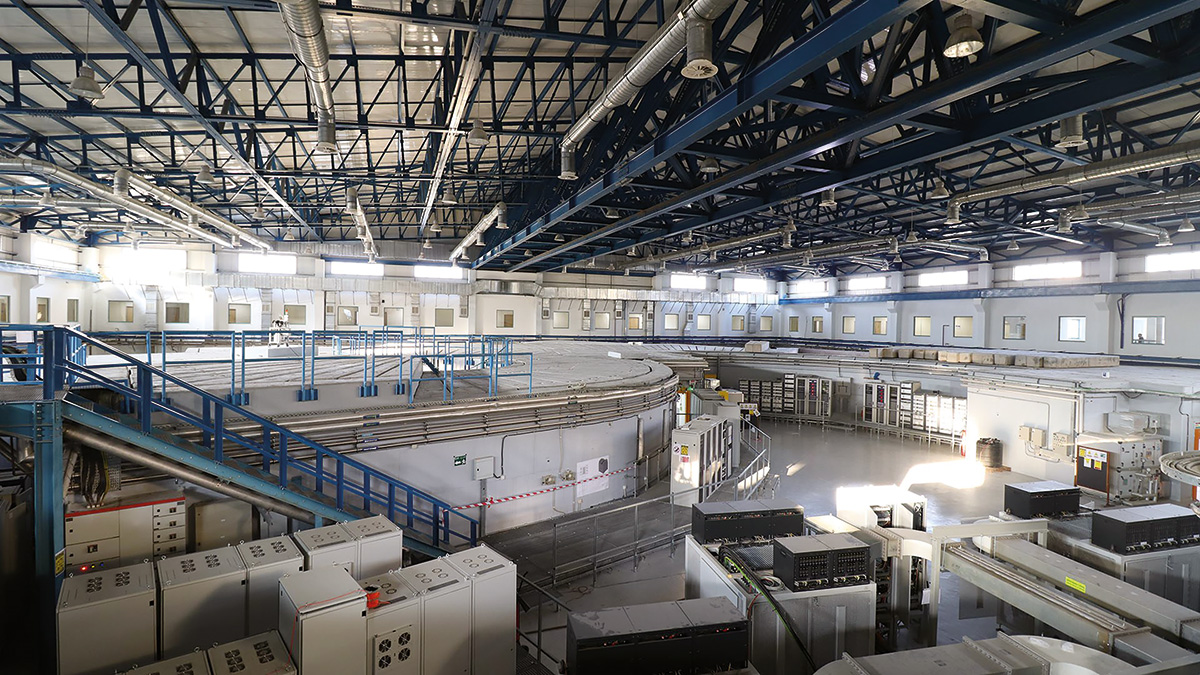
SESAME (Synchrotron-light for Experimental Science and Applications in the Middle East) is the Middle East’s first major international research centre. It is a regional third-generation synchrotron X-ray source situated in Allan, Jordan, which broke ground on 6 January 2003 and officially opened on 16 May 2017. The current members of SESAME are Cyprus, Egypt, Iran, Israel, Jordan, Pakistan, Palestine and Turkey. Active current observers include, among others: the European Union, France, Germany, Greece, Italy, Japan, Kuwait, Portugal, Spain, Sweden, Switzerland, the UK and the US. The common vision driving SESAME is the belief that human beings can work together for a cause that furthers the interests of their own nations and that of humanity as a whole.
The story of SESAME started at CERN 30 years ago. One day in 1993, shortly after the signature of the Oslo Accords by Israel and the Palestine Liberation Organization, the late Sergio Fubini, an outstanding scientist and a close friend and collaborator, approached me in the corridor of the CERN theory group. He told me that now was the time to test what he called “your idealism”, referring to future joint Arab–Israeli scientific projects.
CERN is a very appropriate venue for the inception of such a project. It was built after World War II to help heal Europe and European science in particular. Abdus Salam, as far back as the 1950s, identified the light source as a tool that could help thrust what were then considered “third-world” countries directly to the forefront of scientific research. The very same Salam joined our efforts in 1993 as a member of the Middle Eastern Science Committee (MESC), founded by Sergio, myself and many others to forge meaningful scientific contacts in the region. By joining our scientific committee, Salam made public his belief in the value of Arab–Israeli scientific collaborations, something the Nobel laureate had expressed several times in private.
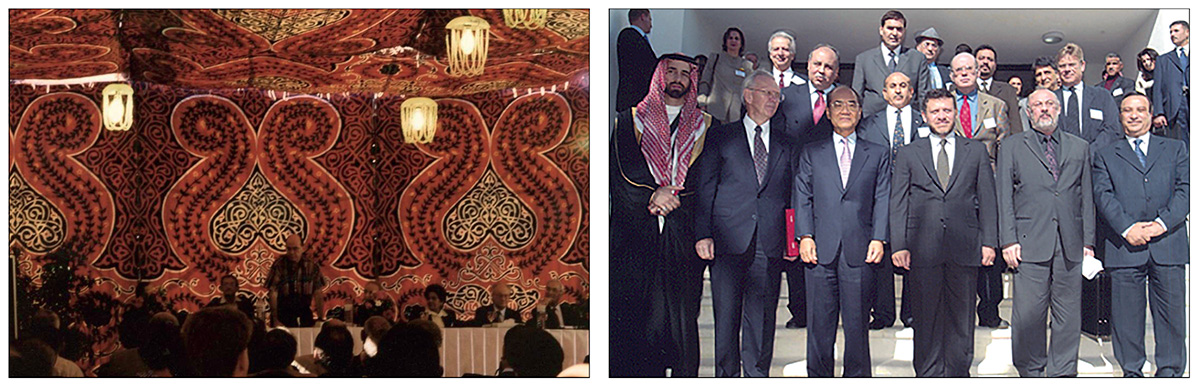
To focus our vision, that year I gave a talk on the status of Arab–Israeli collaborations at a meeting in Torino held on the occasion of Sergio’s 65th birthday. Afterwards we travelled to Cairo to meet Venice Gouda, the Egyptian minister for higher education, and other Egyptian officials. At that stage we were just self-appointed entrepreneurs. We were told that president Hosni Mubarak had made a decision to take politics out of scientific collaborations with Israel, so together we organized a high-quality scientific meeting in Dahab, in the Sinai desert. The meeting, held in a large Bedouin tent on 19-26 November 1995, brought together about 100 young and senior scientists from the region and beyond. It took place in the weeks after the murder of the Israeli prime minister Yitzhak Rabin, for whom, at the request of Venice Gouda, all of us stood for a moment of silence in respect. The silence echoes in my ears to this day. The first day of the meeting was attended by Jacob Ziv, president of the Israeli Academy of Sciences and Humanities, which had been supporting such efforts in general. It was thanks to the additional financial help of Miguel Virasoro, director-general of ICTP at the time, and also Daniele Amati, director of SISSA, that the meeting was held. All three decisions of support were made at watershed moments and on the spur of the moment. The meeting was followed by a very successful effort to identify concrete projects in which Arab–Israeli collaboration could be beneficial to both sides.
But attempts to continue the project were blocked by a turn for the worse in the political situation. MESC decided to retreat to Torino, where, during a meeting in November 1996, there was a session devoted to studying the possibilities of cooperation via experimental activities in high-energy physics and light-source science. During that session, the late German scientist Gus Voss suggested (on behalf of himself and Hermann Winnick from SLAC) to bring the parts of a German light source situated in Berlin, called BESSY, which was about to be dismantled, to the Middle East. Former Director-General of CERN Herwig Schopper also attended the workshop. MESC had built sufficient trust among the parties to provide an appropriate infrastructure to turn such an idea into something concrete.
Targeting excellent science
A light source was very attractive thanks to the rich diversity of fields that can make use of such a facility, from biology through chemistry, physics and many more to archaeology and environmental sciences. Such a diversity would also allow the formation of a critical mass of real users in the region. The major drawback of the BESSY-based proposal was that there was no way a reconstructed dismantled “old” machine would be able to attract first-class scientists and science.
Around that time, Fubini asked Schopper, who had a rich experience in managing complex experimental projects, to take a leadership position. The focus of possible collaborations was narrowed down to the construction of a large light source, and it was decided to use the German machine as a nucleus around which to build the administrative structure of the project. The non-relations among several of the members presented a serious challenge. At the suggestion of Schopper, following the example of the way CERN was assembled in the 1950s, the impasse was overcome by using the auspices of UNESCO to deposit the instruments for joining the project. The statutes of SESAME were to a large extent copied from those of CERN. A band of self-appointed entrepreneurs had evolved into a self-declared interim Council of SESAME, with Schopper as its president. The next major challenge was to choose a site.
On 15 March 2000 I flew to Amman for a meeting on the subject. I met Khaled Toukan (the current director-general of SESAME) and, after studying a map sold at the hotel where we met, we discussed which site Israel would support. We also asked that a Palestinian be the director general. Due to various developments, none of which depended on Israel, this was not to happen. The decision on the site venue was taken at a meeting at CERN on 11 April 2000. Jordan, which had and has diplomatic relations with all the parties involved, was selected as the host state. BESSY was dismantled by Russian scientists, placed in boxes and shipped with assembly instructions to the Jordanian desert to be kept until the appropriate moment would arise. This was made possible thanks to a direct contribution by Koichiro Matsuura, director-general of UNESCO at the time, and to the efforts of Khaled Toukan who has served in several ministerial capacities in Jordan.
With the administrative structure in place, it was time to address the engineering and scientific aspects of the project. Technical committees had designed a totally new machine, with BESSY serving as a boosting component. Many scientists in the region were introduced via workshops to the scientific possibilities that SESAME could offer. Scientific committees considered appropriate “day-one” beamlines, yet that day seemed very far in the future. Technical and scientific directors from abroad helped define the parameters of a new machine and identified appropriate beamlines to be constructed. Administrators and civil servants from the members started meeting regularly in the finance committee. Jordan began to build the facility to host the light source and made major additional financial contributions.
Transformative agreements
At this stage it was time for the SESAME interim council to transform into a permanent body and in the process cut its umbilical cord from UNESCO. This transformation presented new hurdles because it was required of every member that wished to become a member of the permanent council that its head of state, or someone authorised by the head of state, sign an official document sent to UNESCO stating this wish.
By 2008 the host building had been constructed. But it remained essentially empty. SESAME had received support from leading light-source labs all over the world – a spiritual source of strength to members to continue with the project. However, attempts to get significant funding failed time and again. It was agreed that the running costs of the project should be borne by the members, but the one-time large cost needed to construct a new machine was outside the budget parameters of most of the members, many of whom did not have a tradition of significant support for basic science. The European Union (EU) supported us in that stage only through its bilateral agreement with Jordan. In the end, several million Euros from those projects did find their way to SESAME, but the coffers of SESAME and its infrastructure remained skeletal.
Changing perceptions
In 2008 Herwig Schopper was succeeded by Chris Llewellyn Smith, another former Director-General of CERN, as president of the SESAME Council. His main challenge was to get the funding needed to construct a new light source and to remove from SESAME the perception that it was simply a reassembled old light source of little potential attraction to top scientists. In addition to searching for sources of significant financial support, there was an enormous amount of work still to be done in formulating detailed and realistic plans for the following years. A grinding systematic effort began to endow SESAME with the structure needed for a modern working accelerator, and to create associated information materials.
Llewellyn Smith, like his predecessor, also needed to deal with political issues. For the most part the meetings of the SESAME Council were totally devoid of politics. In fact, they felt to me like a parallel universe where administrators and scientists from the region get to work together in a common project, each bringing her or his own scars and prejudices and each willing to learn. That said, there were moments when politics did contaminate the spirit forming in SESAME. In some cases, this was isolated and removed from the agenda and in others a bitter taste remains. But these are just at the very margins of the main thrust of SESAME.
The empty SESAME building started to be filled with radiation shields, giving the appearance of a full building. But the absence of the light-source itself created a void. The morale of the local staff was in steady decline, and it seemed to me that the project was in some danger. I decided to approach the ministry of finance in Israel. When I asked if Israel would make a voluntary contribution to SESAME of $5 million, I was not shown the door. Instead they requested to come and see SESAME, after which they discussed the proposal with Israel’s budget and planning committee and agreed to contribute the requested funds on the condition that others join them.
Each member of the unlikely coalition – consisting of Iran, Israel, Jordan and Turkey – pledged an extra $5 million for the project in an agreement signed in Amman. Since then, Israel, Jordan and Turkey have stood up to their commitment, and Iran claims that it recognises its commitment but is obstructed by sanctions. The support from members encouraged the EU to dedicate $5 million to the project, in addition to the approximately $3 million directed earlier from a bilateral EU–Jordan agreement. In 2015 the INFN, under director Fernando Ferroni, gave almost $2 million. This made it possible to build a hostel, as offered by most light sources, which was named appropriately after Sergio Fubini. Many leading world labs, in a heartwarming expression of support, have donated equipment for future beam lines as well as fellowships for the training of young people.
Point of no return
With their help, SESAME crossed the point of no return. The undefined stuff dreams are made of turned into magnets and girdles made of real hard steel, which I was able to touch as they were being assembled at CERN. The pace of events had finally accelerated, and a star-studded inauguration including attendance by the king of Jordan took place on 16 May 2017. During the ceremony, amazingly, the political delegates of different member states listened to each other without leaving the room (as is the standard practice in other international organisations). Even more unique was that each member-state delegate taking the podium gave essentially the same speech: “We are trying here to achieve understanding via collaboration.”
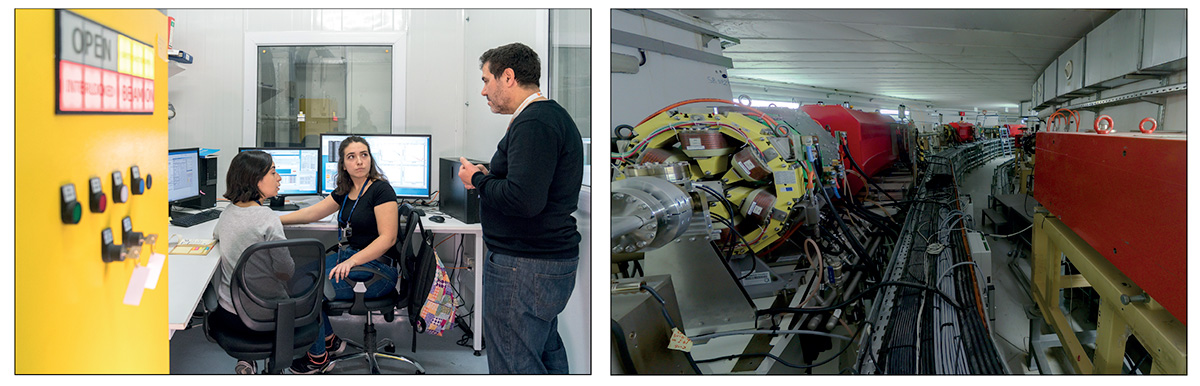
At that moment the SESAME Council presidency passed from Chris Llewellyn Smith to a third former CERN Director-General, Rolf Heuer. The high-quality 2.5 GeV electron storage ring at the heart of SESAME started operation later that year, driving two X-ray beamlines: one dedicated to X-ray absorption fine structure/X-ray fluorescence (XAFS/XRF) spectroscopy, and another to infrared spectro-microscopy. A third powder-diffraction beamline is presently being added, while a soft X-ray beamline “HESEB” designed and constructed by five Helmholtz research centres is being commissioned. In 2023 the BEAmline for Tomography at SESAME (BEATS) will also be completed, with the construction and commissioning of a beamline for hard X-ray full-field tomography.
The unique SESAME facility started operating with uncanny normality. Well over 100 proposals for experiments were submitted and refereed, and beam time was allocated to the chosen experiments. Data was gathered, analysed and the results were and are being published in first-rate journals. Given the richness of archaeological and cultural heritage in the region, SESAME’s beamlines offer a highly versatile tool for researchers, conservators and cultural-heritage specialists to work together on common projects. The first SESAME Cultural Heritage Day took place online on 16 February 2022 with more than 240 registrants in 39 countries (CERN Courier July/August 2022 p19).
Thanks to the help of the EU, SESAME has also become the world’s first “green” light source, its energy entirely generated by solar power, which also has the bonus of stabilising the energy bill of the machine. There is, however, concern that the only component used from BESSY, the “Microtron” radio-frequency system, may eventually break down, thus endangering the operation of the whole machine.
SESAME continues to operate on a shoe-string budget. The current approved 2022 budget is about $5.3 million, much smaller than that of any modern light source. I marvel at the ingenuity of the SESAME staff allowing the facility to operate, and am sad to sense indifference to the budget among many of the parties involved. The world’s media has been less indifferent: the BBC, The New York Times, Le Monde, The Washington Post, Brussels Libre, The Arab Weekly, as well as regional newspapers and TV stations, have all covered various aspects of SESAME. In 2019 the AAAS highlighted the significance of SESAME by awarding five of its founders (Chris Llewellyn Smith, Eliezer Rabinovici, Zehra Sayers, Herwig Schopper and Khaled Toukan) with its 2019 Award for Science Diplomacy.
SESAME was inspired by CERN, yet it was a much more challenging task to construct. CERN was built after the Second World War was over, and it was clear who had won and who had lost. In the Middle East the conflicts are not over, and there are different narratives on who is winning and who is losing, as well as what win or lose means. For CERN it took less than 10 years to set up the original construct; for SESAME it took about 25 years. Thus, SESAME now should be thought of as CERN was in around 1960.
On a personal note, it brings immense happiness that for the first time ever, Israeli scientists have carried out high-quality research at a facility established on the soil of an Arab country, Jordan. Many in the region and beyond have taken their people to a place their governments most likely never dreamt of or planned to reach. It is impossible to give due credit to the many people without whom SESAME would not be the success it is today.
The non-relations among several of the members presented a serious challenge
In many ways SESAME is a very special child of CERN, and often our children can teach us important lessons. As president of the CERN Council, I can say that the way in which the member states of SESAME conducted themselves during the decades of storms that affect our region serves as a benchmark for how to keep bridges for understanding under the most trying of circumstances. The SESAME spirit has so far been a lighthouse even to the CERN Council, in particular in light of the invasion of Ukraine (an associate member state of CERN) by the Russian Federation. Maintaining this attitude in a stormy political environment is very difficult.
However SESAME’s story ends, we have proved that the people of the Middle East have within them the capability to work together for a common cause. Thus, the very process of building SESAME has become a beacon of hope to many in our region. The responsibility of SESAME in the next years is to match this achievement with high-quality scientific research, but it requires appropriate funding and help. SESAME is continuing very successfully with its mission to train hundreds of engineers and scientists in the region. Requests for beam time continue to rise, as do the number of publications in top journals.
If one wants to embark on a scientific project to promote peaceful understanding, SESAME offers at least three important lessons: it should be one to which every country can contribute, learn and profit significantly from; its science should be of the highest quality; and it requires an unbounded optimism and an infinite amount of enthusiasm. My dream is that in the not-so-distant future, people will be able to point to a significant discovery and say “this happened at SESAME”.
The latest edition of the CERN Alumni Network’s “Moving out of academia” series, held on 21 October, focused on how to successfully manage a transition from academia to the big- tech industry. Six panellists who have started working in companies such as Google, Microsoft, Apple and Meta shared their advice and experience on how to successfully start a career in a large multinational company after having worked at large scale-research infrastructures such as CERN.
In addition to describing the nature of their work and the skills acquired at CERN that have helped them make the transition, the panellists explained which new skills they had to develop after CERN for a successful career move. The around 180 participants who attended the online event received tips for interviews and CV-writing and heard personal stories about how a PhD prepares you for a career outside academia.
The panellists agreed that metrics used in academia to qualify a person’s success, such as a PhD, the h-index, or the number of published papers, do not necessarily apply to roles outside of academia, except for research positions. “You don’t need to have a PhD or a certificate to demonstrate that you are a good problem solver or a good programmer – you should do a PhD because you are interested in the field,” said Cristina Bahamonde, who used to work in accelerator operations at CERN and now oversees and unblocks all Google’s network deployments as regional leader for its global network delivery team in Europe, the Middle East and Africa. She considers her project-management and communication skills, which she acquired during her time at CERN while designing solution and mitigation strategies for operational changes in the LHC, essential for her current role.
General skills needed for big-tech companies include the ability to learn and adapt fast, project and product-management skills, as well as communicating effectively to technical and non-technical audiences. Some participants were unaware that skills that they sharpened intuitively throughout their academic career are vital for a career outside.
“CERN taught me how to be a generalist,” says James Casey, now a group programme manager at Microsoft. “I was not working as a product manager at CERN, but you do very similar work at CERN because you write documents, build customer relationships and need to communicate your work in an understandable way as well as to communicate the work that needs to be done.” At CERN in 1994, Casey worked as a summer student alongside the original team that developed the web. After having worked in start-ups, he returned to CERN for a while and then moved back to industry in 2011.
Finding the narrative
Finding your own narrative and presenting it in the right way on a resumé is not always easy. “When I write my resumé, it looks really straight forward,” said Mariana Rihl, former LHCb experimentalist and now Meta’s product-system validation lead for verifying and validating Oculus VR products. “But only after a certain time, I realised that a common theme emerged — testing hardware and understanding users’ needs.” Working on the LHCb beam-gas vertex detector and especially ensuring the functionality of detector hardware prepared her well, she said.
Former CERN openlab intern Ritika Kanade, who now works as a software engineer at Apple, shared her experience of interviewing people applying for software engineering roles. “What I like to see during an interview is how the applicant approaches the tasks and how he or she interacts with me. It’s ok if someone needs help. That’s normal in our job,” she adds. “Time management is one thing I see many candidates struggle with.” Other skills needed in industry as well as in academia are tenacity and persistence. Often, candidates need to apply more than three times to land a job at their favourite company. “I applied six or seven times before I was invited for an interview at Google,” emphasised Bahamonde.
The Moving out of academia series provides a rich source of advice for those seeking to make a career change, with the latest event followingothers dedicated to careers in finance, industrial engineering, big data, entrepreneurship, the environment and medical technologies. “This CERN Alumni event demonstrated once more the impact of high-energy physics on society and that people transitioning from academia to industry bring fresh insights from another field,” said Rachel Bray, head of CERN Alumni relations.
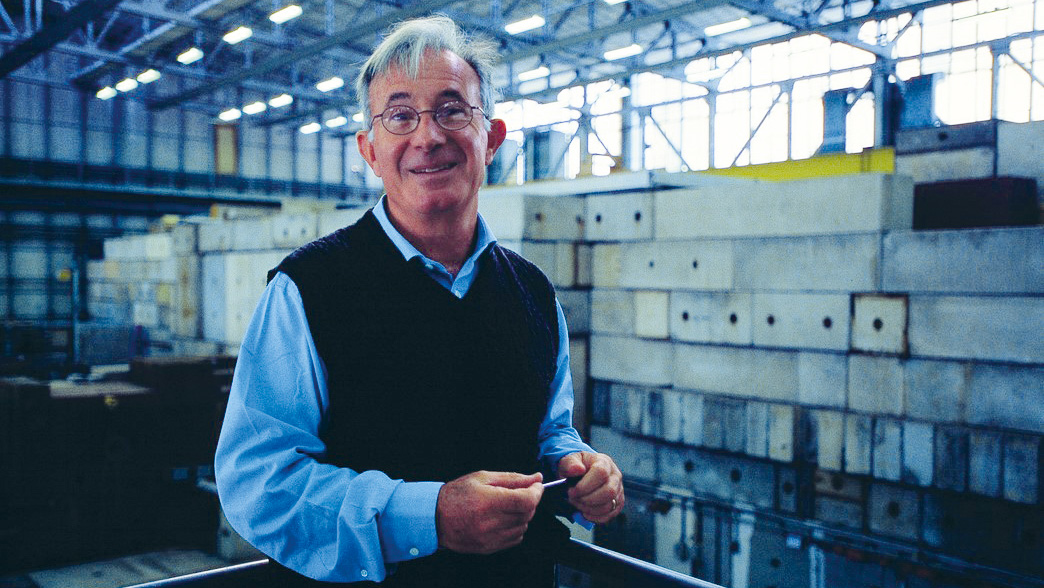
Experimentalist Volker Soergel passed away on 5 October at the age of 91. Born in Breslau in March 1931, Soergel was a brilliant experimental physicist and an outstanding leader, shaping particle physics for many years.
Receiving a doctorate from the University of Freiburg in 1956 under the tutelage of Wolfgang Gentner, Soergel remained at Freiburg until 1961, with a year at Caltech in 1957–1958. He then joined CERN as a research associate, working with Joachim Heintze on the beta decay of elementary particles, especially very rare decays of mesons and hyperons. Their results became milestones in the development of the Standard Model, resulting in the award of the German Physical Society’s highest honour in 1963.
In 1965 Soergel became a professor at the University of Heidelberg. He continued his research at CERN while taking on important roles at the university: as director of the Institute of Physics, as dean and as a member of the university’s administrative council. With vision and skill, he played a major role in shaping the university.
Important tasks outside Heidelberg followed. From 1976–1979 he chaired the DESY Scientific Council through a period that saw work begin on the electron–positron collider, PETRA. Under his leadership, the council played an important role in DESY’s transition from national to international laboratory. In 1979 and 1980 he served as research director at CERN, helping pave the way for the collider experiments of the 1980s.
From 1981–1993 Soergel headed DESY, overseeing construction of the electron–proton storage ring, HERA, together with Björn Wiik and Gustav-Adolph Voss. HERA and its experiments benefited from large international contributions, mainly in the form of components and manpower: an approach that became known as the HERA model. Soergel’s powers of persuasion, his reputation, and his negotiating skills led to support from institutes in Western Europe, Israel and Canada, as well as from Poland, Russia and China. From 1996–2000 he headed the Max Planck Institute for Physics in Munich. Under his guidance, photon science became an important pillar of DESY research, first as a by-product of accelerators used for particle physics, then, with the inauguration of HASYLAB in 1981 and the conversion of DORIS, as an established research field that continues strongly to this day.
Soergel’s time at DESY coincided with German reunification. He enabled the merger of the Institute for High Energy Physics in Zeuthen, near Berlin, with DESY and, together with Paul Söding, made Zeuthen a centre for astroparticle physics. Even before the Iron Curtain fell, Soergel personally ensured that Zeuthen scientists could work at DESY.
Volker Soergel received many honours. He was awarded the Federal Cross of Merit, 1st class, and honorary doctorates from the universities of Glasgow and Hamburg. He has left a lasting legacy. His love for physics was similar in intensity to his love for music. A gifted violin and viola player, he enjoyed making music with his wife and children, friends and colleagues. All who worked with him remain grateful for all they learned from him and will not forget his support and guidance.
Renowned high-energy theorist Nicola Najib Khuri died on 4 August 2022 in New York City. Born in 1933 in Beirut, Lebanon he was the eldest of four siblings and a precocious student. He graduated from the American University of Beirut (AUB) in 1952 at the age of 19, then travelled to the US for his graduate studies in physics. He received his MA and PhD from Princeton University and was a fellow of Princeton’s Institute for Advanced Study. While in graduate school, he met Elizabeth Tyson, the love of his life and wife of over 60 years. Upon receiving his doctorate in 1957, Nicola returned to Lebanon and joined the faculty at AUB. In 1964 he went back to the US and accepted a position at The Rockefeller University, New York, where he founded a lab and remained for the rest of his career.
Nicola was a leading authority on the use of mathematics in high-energy theoretical physics. At Rockefeller, his research focused on the mathematical description of elementary-particle collisions. Among his most notable achievements were the introduction of a new method to study the Riemann hypothesis, one of the last unsolved problems in mathematics, and the foundation of the field of potential scattering theory, which led to the development of important concepts such as Regge poles and strings.
In addition to his post at Rockefeller, he held visiting appointments and consulting roles at CERN, Stanford University, Columbia University, Lawrence Livermore National Laboratory, Brookhaven National Laboratory and Los Alamos National Laboratory. He was also a member of the panel on national security and arms control of the Carnegie Endowment for International Peace and a fellow of the American Physical Society.
Nicola and Liz, along with their two children, built a beautiful life in New York. Their homes had a revolving door for friends, family, colleagues and mentees who came from far and wide to hear Nicola’s remarkable stories, take in his sage advice, and enjoy his timeless, occasionally risqué jokes. A true cosmopolitan, he relished the vibrancy and possibility of New York. When not at home, he could be found ordering mezze for the table at one of his favourite Lebanese restaurants, exploring his interest in international politics at the Council on Foreign Relations, or making a toast at the Century Association. He retained an enduring love for, and a fundamental commitment to, Lebanon. He was a passionate supporter of his alma mater, a mentor to generations of young scientists from the Middle East, and was instrumental in establishing the university’s Center for Advanced Mathematical Sciences, among many other contributions.
There are many things we will miss about Nicola: his character; the way he commanded a room; his childlike sense of humour; the happy gleam in his eye when he told a story from his adventurous life; and his sneaky determination in old age to satisfy a lifelong appetite for good wine, good cheese and excellent chocolate over the protests of doctors, caregivers and his daughter, Suzanne. Above all, we will miss the way he treated others.
To provide the best experiences, we use technologies like cookies to store and/or access device information. Consenting to these technologies will allow us to process data such as browsing behavior or unique IDs on this site. Not consenting or withdrawing consent, may adversely affect certain features and functions.
Functional
Always active
The technical storage or access is strictly necessary for the legitimate purpose of enabling the use of a specific service explicitly requested by the subscriber or user, or for the sole purpose of carrying out the transmission of a communication over an electronic communications network.
Preferences
The technical storage or access is necessary for the legitimate purpose of storing preferences that are not requested by the subscriber or user.
Statistics
The technical storage or access that is used exclusively for statistical purposes.The technical storage or access that is used exclusively for anonymous statistical purposes. Without a subpoena, voluntary compliance on the part of your Internet Service Provider, or additional records from a third party, information stored or retrieved for this purpose alone cannot usually be used to identify you.
Marketing
The technical storage or access is required to create user profiles to send advertising, or to track the user on a website or across several websites for similar marketing purposes.