Like many physicists, Valeria Pettorino’s fascination with science started when she was a child. Her uncle, a physicist himself, played a major role by sharing his passion for science fiction, strings and extra dimensions. She studied physics and obtained her PhD from the University of Naples in 2005, followed by a postdoc at the University of Torino and then SISSA in Italy. In 2012 her path took her to the University of Geneva and a Marie Curie Fellowship, where she worked with theorist Martin Kunz from UNIGE/CERN – a mentor and role model ever since.
Visiting CERN was an invaluable experience that led to lifelong connections. “Meeting people who worked on particle-physics missions always piqued my interest, as they had such interesting stories and experiences to share,” Valeria explains. “I collaborated and worked alongside people from different areas in cosmology and particle physics, and I got the opportunity to connect with scientists working in different experiments.”
After the fellowship, Valeria went to the University of Heidelberg as a research group leader, and during this time she was selected for the “Science to Data Science” programme by the AI software company Pivigo. Working on artificial intelligence and unsupervised learning to analyse healthcare data for a start-up company in London, it presented her with the opportunity to widen her skillset.
Valeria’s career trajectory turned towards space science in 2007, when she began working for the Euclid mission of the European Space Agency (ESA) due to launch this year, with the aim to measure the geometry of the universe for the study of dark matter and energy. Currently co-lead of the Euclid theory science working group, Valeria has held a number of roles in the mission, including deputy manager of the communication group. In 2018 she became the CEA representative for Euclid–France communication and is currently director of research for the CEA astrophysics department/CosmoStat lab. She also worked on data analysis for ESA’s Planck mission from 2009 to 2018.
Mentoring and networking
In both research collaborations, Valeria worked on numerous projects that she coordinated from start to finish. While leading teams, she studied management with the goal of enabling everyone to reach their full potential. She also completed training in science diplomacy, which helped her gain valuable transferrable skills. “I decided to be proactive in developing my knowledge and started attending webinars, and then training on science diplomacy. I wanted to deepen my understanding on how science can have an impact on the world and society.” In 2022 Valeria was selected to participate in the first Science Diplomacy Immersion Programme organised by the Geneva Science and Diplomacy Anticipator (GESDA), which aims to take advantage of the ecosystem of international organisations in Geneva to anticipate, accelerate and translate emerging scientific themes into concrete actions.
I wanted to deepen my understanding on how science can have an impact on the world and society
Sharing experience and building connections between people have been a theme in Valeria’s career. Nowhere is this better illustrated than her role, since 2015, as a mentor for the Supernova Foundation – a worldwide mentoring and networking programme for women in physics. “Networking is very important in any career path and having the opportunity to encounter people from a diverse range of backgrounds allows you to grow your network both personally and professionally. The mentoring programme is open to all career levels. There are no barriers. It is a global network of people from 53 countries and there are approximately 300 women in the programme. I am convinced that it is a growing community that will continue to thrive.” Valeria has also acted as mentor for Femmes & Science (a French initiative by Paris-Saclay University) in 2021–2022, and was recently appointed as one of 100 mentors worldwide for #space4women, an initiative of the United Nations Office of Outer Space Affairs to support women pursuing studies in space science.
A member of the CERN Alumni Network, Valeria thoroughly enjoys staying connected with CERN. “Not only is the CERN Alumni Network excellent for CERN as it brings together a wide range of people from many career paths, but it also provides an opportunity for its members to understand and learn how science can be used outside of academia.”
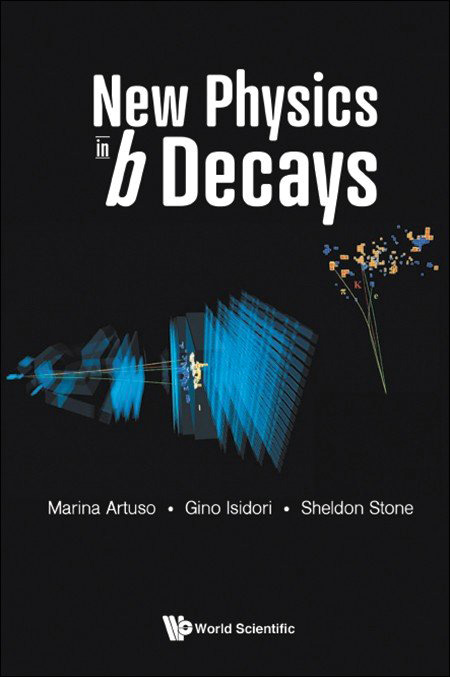
There are compelling reasons to believe that the Standard Model (SM) of particle physics, while being the most successful theory of the fundamental structure of the universe, does not offer the complete picture of reality. However, until now, no new physics beyond the SM has been firmly established through direct searches at different energy scales. This motivates indirect searches, performed by precision examination of phenomena sensitive to contributions from possible new particles, and comparing their properties with the SM expectations. This is conceptually similar to how, decades ago, our understanding of radioactive beta decay allowed the existence and properties of the W boson to be predicted.
New Physics in b decays, by Marina Artuso, Gino Isidori and the late Sheldon Stone, is dedicated to precision measurements in decays of hadrons containing a b quark. Due to their high mass, these hadrons can decay into dozens of different final states, providing numerous ways to challenge our understanding of particle physics. As is usual for indirect searches, the crucial task is to understand and control all SM contributions to these decays. For b-hadron decays, the challenge is to control the effects of the strong interaction, which is difficult to calculate.
Both sides of the coin
The authors committed to a challenging task: providing a snapshot of a field that has developed considerably during the past decade. They highlight key measurements that generated interest in the community, often due to hints of deviations from the SM expectations. Some of the reported anomalies have diminished since the book was published, after larger datasets were analysed. Others continue to intrigue researchers. This natural scientific progress leads to a better understanding of both the theoretical and experimental sides of the coin. The authors exercise reasonable caution over the significance of the anomalies they present, warning the reader of the look-elsewhere effect, and carefully define the relevant observables. When discussing specific decay modes, they explain their choice compared to other processes. This pedagogical approach makes the book very useful for early-career researchers diving into the topic.
The book starts with a theoretical introduction to heavy-quark physics within the SM, plotting avenues for searches for possible new-physics effects. Key theoretical concepts are introduced, along with the experiments that contributed most significantly to the field. The authors continue with an overview of “traditional” new-physics searches, strongly interleaving them with precision measurements of the free parameters of the SM, such as the couplings between quarks and the W boson. By determining these parameters precisely with several alternative experimental approaches, one hopes to observe discrepancies. An in-depth review of the experimental measurements, also featuring their complications, is confronted with theoretical interpretations. While some of the discrepancies stand out, it is difficult to attribute them to new physics as long as alternative interpretations are not excluded.
The second half of the book dives into recent anomalies in decays with leptons, and the theoretical models attempting to address them. The authors reflect on theoretical and experimental work of the past decade and outline a number of pathways to follow. The book concludes with a short overview of searches for processes that are forbidden or extremely suppressed in the SM, such as lepton-flavour violation. These transitions, if observed, would represent an undeniable signature of new physics, although they only arise in a subset of new-physics scenarios. Such searches therefore allow strong limits to be placed on specific hypotheses. The book concludes with the authors’ view of the near future, which is already becoming reality. They expect the ongoing LHCb and Belle II experiments to have a decisive word on the current flavour anomalies, but also to deliver new, unexpected surprises. They rightly conclude that “It is difficult to make predictions, especially about the future.”
The remarkable feature of this book is that it is written by physicists who actively contributed to the development of numerous theoretical concepts and key experimental measurements in heavy-quark physics over the past decades. Unfortunately, one of the authors, Sheldon Stone, could not see his last book published. Sheldon was the editor of the book B decays, which served as the handbook on heavy-quark physics for decades. One can contemplate the impressive progress in the field by comparing the first edition of B decays in 1992 with New Physics in b decays. In the 1990s, heavy-quark decays were only starting to be probed. Now, they offer a well-oiled tool that can be used for precision tests of the SM and searches for minuscule effects of possible new physics, using decays that happen as rarely as once per billion b-hadrons.
The key message of this book is that theory and experiment must go hand in hand. Some parameters are difficult to calculate precisely and they need to be measured. The observables that are theoretically clean are often challenging experimentally. Therefore, the searches for new physics in b decays focus on processes that are accessible both from the theoretical and experimental points of view. The reach of such searches is constantly being broadened by painstakingly refining calculations and developing clever experimental techniques, with progress achieved through the routine work of hundreds of researchers in several experiments worldwide.
The first edition of the International Workshop on the Origin of Matter–Antimatter Asymmetry (CP2023), hosted by École de Physique des Houches, took place from 12 to 17 February. Around 50 physicists gathered to discuss the central problem connecting particle physics and cosmology: CP violation. Since one of the very first schools dedicated to time-reversal symmetry in the summer of 1952, chaired by Wolfgang Pauli, research has progressed significantly, especially with the formulation by Sakharov of the conditions necessary to produce the observed matter–antimatter asymmetry in the universe.
The workshop programme covered current and future experimental projects to probe the Sakharov conditions: collider measurements of CP violation (LHCb, Belle II, FCC-ee), searches for electric dipole moments (PSI, FNAL), long-baseline neutrino experiments (NOvA, DUNE, T2K, Hyper-Kamiokande, ESSnuSB) and searches for baryon- and lepton-number violating processes such as neutrinoless double beta decay (GERDA, CUORE, CUPID-Mo, KamLAND-Zen, EXO-200) and neutron–antineutron oscillations (ESS). These were put in context with the different theoretical approaches to baryogenesis and leptogenesis.
With the workshop’s aim to provide a discussion forum for junior and senior scientists from various backgrounds, and following the tradition of the Ecole des Houches, a six-hour mini-school took place in parallel with more specialised talks. A first lecture by Julia Harz (University of Mainz) introduced the hypotheses related to baryogenesis, and another by Adam Falkowski (IJCLab) described how CP violation is treated in effective field theory. Each lecture provided both a common theoretical background, and an opportunity to discuss the fundamental motivation driving experimental searches for new sources of CP violation in particle physics.
In his summary talk, Mikhail Shaposhnikov (EPFL Lausanne) explained that it is impossible to identify which mechanism leads to the existing baryon asymmetry in the universe. He added that we live in exciting times and reviewed the vast number of opportunities in experiment and theory lying ahead.
Most popular science books are written to reach the largest audience possible, which comes with certain sacrifices. The assumption is that many readers might be deterred by technical topics and language, especially by equations that require higher mathematics. In physics one can therefore usually distinguish textbooks from popular physics books by flicking through the pages and checking for symbols.
The Biggest Ideas in the Universe: space, time, and motion, the first in a three-part series by Sean Carroll, goes against this trend. Written for “…people who have no mathematical experience than high-school algebra, but are willing to look at an equation and think about what it means”, there is no point in the book at which things are muddied because the maths becomes too advanced.
Concepts and theories
The first part of the book covers nine topics including conservation, space–time, geometry, gravity and black holes. Carroll spends the first few chapters introducing the reader to the thought process of a theoretical physicist: how to develop a sense for symmetries, the conservation of charges and expansions in small parameters. It also gives readers a fast introduction to calculus using geometric arguments to define derivatives and integrals. By the end of the third chapter, the concepts of differential equations, phase space and the principle of least action have been introduced.
The centre part of the book focusses on geometry. A discussion of the meaning of space and time in physics is followed by the introduction of Minkowski spacetime, with considerable effort given to the philosophical meaning of these concepts. The third part is the most technical. It covers differential geometry, a beautiful derivation of Einstein’s equation of general relativity and the final chapter uses the Schwarzschild solution to discuss black holes.
It is a welcome development that publishers and authors such as Carroll are confident that books like this will find a sizeable readership (another good, recent example of advanced popular physics texts is Leonard Susskind’s “A Theoretical Minimum” series). Many topics in physics can only be fully appreciated if the equations are explained and if chapters go beyond the limitations of typical popular science books. Carroll’s writing style and the structure of the book help to make this case: all concepts are carefully introduced and even though the book is very dense and covers a lot of material, everything is interconnected and readers won’t feel lost while reading. Regular reference to the historical steps in discovering theories and concepts loosen up the text. Two examples are the correspondence between Leibniz and Clarke about the nature of space and the interesting discussion of Einstein and Hilbert’s different approaches to general relativity. The whole series of books, of which two of the three parts will be published soon, is accompanied by recorded lectures that are freely available online and present the topic of every chapter, along with answers to questions on these topics.
It is difficult to find any weaknesses in this book. Figures are often labelled with symbols that readers not used to physics notation can find in the text, so more text in the figures would make them even more accessible. Strangely, the section introducing entropy is not supported by equations and, given the technical detail of all other parts of the book, Carroll could have taken advantage of the mathematical groundwork of the previous chapters here.
I want to emphasise that every topic discussed in The Biggest Ideas in the Universe is well established physics. No flashy but speculative theories or unbalanced focus on science-fiction ideas, which are often used to attract readers to theoretical physics, appear. It stands apart from similar titles by offering insights that can only be obtained if the underlying equations are explained and not just mentioned.
Anyone who is interested in fundamental physics is encouraged to read this book, especially young people interested in studying physics because they will get an excellent idea of the type of physical arguments they will encounter at university. Those who think their mathematical background isn’t sufficient will likely learn many new things, even though the later chapters are quite technical. And if you are at the other end of the spectrum, such as a working physicist, you will find the philosophical discussions of familiar concepts and the illuminating arguments included to elicit physical intuition most useful.
“Now I know what the atom looks like!” Ernest Rutherford’s simple statement belies the scientific power of reductionism. He had recently discovered that atoms have substructure, notably that they comprise a dense positively charged nucleus surrounded by a cloud of negatively charged electrons. Zooming forward in time, that nucleus ultimately gave way further when protons and neutrons were revealed at its core. A few stubborn decades later they too gave way with our current understanding being that they are comprised of quarks and gluons. At each step a new layer of nature is unveiled, sometimes more, sometimes less numerous in “building blocks” than the one prior, but in every case delivering explanations, even derivations, for the properties (in practice, parameters) of the previous layer. This strategy, broadly defined as “build microscopes, find answers” has been tremendously successful, arguably for millennia.
Natural patterns
While investigating these successively explanatory layers of nature, broad patterns emerge. One of which is known colloquially as “naturalness”. This pattern essentially asserts that in reversing the direction and going from one microscopic theory, “the UV-completion”, to its larger-scale shell, “the IR”, the values of parameters measured in the latter are, essentially, “typical”. Typical, in the sense that they reflect the scales, magnitudes and, perhaps most importantly, the symmetries of the underlying UV completion. As Murray Gell-Mann once said: “everything not forbidden is compulsory”.
So, if some symmetry is broken by a large amount by some interaction in the UV theory, the same symmetry, in whatever guise it may have adopted, will also be broken by a large amount in the IR theory. The only exception to this is accidental fine-tuning, where large UV-breakings can in principle conspire and give contributions to IR-breakings that, in practical terms, accidentally cancel to a high degree, giving a much smaller parameter than expected in the IR theory. This is colloquially known as “unnaturalness”.
There are good examples of both instances. There is no symmetry in QCD that could keep a proton light; unsurprisingly it has mass of the same order as the dominant mass scale in the theory, the QCD scale, mp ~ ΛQCD. But there is a symmetry in QCD that keeps the pion light. The only parameters in UV theory that break this symmetry are the light quark masses. Thus, the pion mass-squared is expected to be around m2π ~ mqΛQCD. Turns out, it is.
There are also examples of unnatural parameters. If you measure enough different physical observables, observations that are unlikely on their own become possible in a large ensemble of measurements – a sort of theoretical “look elsewhere effect”. For example, consider the fact that the Moon almost perfectly obscures the Sun during a lunar eclipse. There is no symmetry which requires that the angular size of the Moon should almost match that of the Sun to an Earth-based observer. Yet, given many planets and many moons, this will of course happen for some planetary systems.
However, if an observation of a parameter returns an apparently unnatural value, can one be sure that it is accidentally small? In other words, can we be confident we have definitively explored all possible phenomena in nature that can give rise to naturally small parameters?
From 30 January to 3 February, participants of an informal CERN theory institute “Exotic Approaches to Naturalness” sought to answer this question. Drawn from diverse corners of the theorist zoo, more than 130 researchers gathered, both virtually and in person, to discuss questions of naturalness. The invited talks were chosen to expose phenomena in quantum field theory and beyond which challenge the naive naturalness paradigm.
Coincidences and correlations
The first day of the workshop considered how apparent numerical coincidences can lead to unexpectedly small parameters in the IR due to the result of selection rules that do not immediately manifest from a symmetry, known as “natural zeros”. A second set of talks considered how, going beyond quantum field theory, the UV and IR can potentially be unexpectedly correlated, especially in theories containing quantum gravity, and how this correlation can lead to cancellations that are not apparent from a purely quantum field theory perspective.
The second day was far-ranging, with the first talk unveiling some lower dimensional theories of the sort one more readily finds in condensed matter systems, in which “topological” effects lead to constraints on IR parameters. A second discussed how fundamental properties, such as causality, can impose constraints on IR parameters unexpectedly. The last demonstrated how gravitational effective theories, including those describing the gravitational waves emitted in binary black hole inspirals, have their own naturalness puzzles.
The ultimate goal is to now go forth and find new angles of attack on the biggest naturalness questions in fundamental physics
Midweek, alongside an inspirational theory colloquium by Nathaniel Craig (UC Santa Barbara), the potential role of cosmology in naturalness was interrogated. An early example made famous by Steven Weinberg concerns the role of the “anthropic principle” in the presently measured value of the cosmological constant. However, since then, particularly in recent years, theorists have found many possible connections and mechanisms linking naturalness questions to our universe and beyond.
The fourth day focussed on the emerging world of generalised and higher-form symmetries, which are new tools in the arsenal of the quantum field theorist. It was discussed how naturalness in IR parameters may potentially arise as a consequence of these recently uncovered symmetries, but whose naturalness would otherwise be obscured from view within a traditional symmetry perspective. The final day studied connections between string theory, the swampland and naturalness, exploring how the space of theories consistent with string theory leads to restricted values of IR parameters, which potentially links to naturalness. An eloquent summary was delivered by Tim Cohen (CERN).
Grand slam
In some sense the goal of the workshop was to push back the boundaries by equipping model builders with new and more powerful perspectives and theoretical tools linked to questions of naturalness, broadly defined. The workshop was a grand slam in this respect. However, the ultimate goal is to now go forth and use these new tools to find new angles of attack on the biggest naturalness questions in fundamental physics, relating to the cosmological constant and the Higgs mass.
The Standard Model, despite being an eminently marketable logo for mugs and t-shirts, is incomplete. It breaks down at very short distances and thus it is the IR of some more complete, more explanatory UV theory. We don’t know what this UV theory is, however, it apparently makes unnatural predictions for the Higgs mass and cosmological constant. Perhaps nature isn’t unnatural and generalised symmetries are as-yet hidden from our eyes, or perhaps string theory, quantum gravity or cosmology has a hand in things? It’s also possible, of course, that nature has fine-tuned these parameters by accident, however, that would seem – à la Weinberg – to point towards a framework in which such parameters are, in principle, measured in many different universes. All of these possibilities, and more, were discussed and explored to varying degrees.
Perhaps the most radical possibility, the most “exotic approach to naturalness” of all, would be to give up on naturalness altogether. Perhaps, in whatever framework UV completes the Standard Model, parameters such as the Higgs mass are simply incalculable, unpredictable in terms of more fundamental parameters, at any length scale. Shortly before the advent of relativity, quantum mechanics, and all that have followed from them, Lord Kelvin (attribution contested) once declared: “There is nothing new to be discovered in physics now. All that remains is more and more precise measurement”. The breadth of original ideas presented at the “Exotic Approaches to Naturalness” workshop, and the new connections constantly being made between formal theory, cosmology and particle phenomenology, suggest it would be similarly unwise now, as it was then, to make such a wager.
I was on detachment at the European Southern Observatory (ESO) in Garching when I was called back to CERN in 2017. The idea for a flagship education and outreach project was already quite advanced, and since I had triggered the construction of ESO’s Supernova planetarium and visitor centre during my mandate as director of administration, the CERN Director-General (DG) thought I could build on this for CERN. There had been various projects for buildings based around the Globe in the past, but they never quite took off. However, the then-new directorate wanted to create a new space for education and outreach targeting the general public of all ages. The DG also made it clear that a large auditorium for CERN events should be part of any plan, and that the entire construction should be financed by donations. I started to work on the concept.
The Italian architect Renzo Piano had visited CERN independently and fell in love with our values. When he left, he said: “If one day I can do something for you, don’t hesitate.” A few months later he proposed to draw the building. In June 2018 he showed us his first mockup, the “space station” design you see today. It crossed the Route de Meyrin and encroached on land designated for agricultural use on the north side and the CERN kindergarten on the south side. The design complicated matters, but on the other hand it was really inspiring. My first thought was that the budget I had will not be sufficient because what is expensive when you do construction are the facades, and here we had five buildings, complicated ones, with some parts suspended. But it was so original, so much in the DNA of CERN, that we thought, okay, let it be five.
What will be in the buildings?
There are three “pavilions” and two “tubes”. On the north side of the Science Gateway, we have a 900-seat auditorium where we can host large CERN meetings such as collaboration weeks, as well as hiring the venue out. It’s modular so we can split it in up to three different rooms and host independent events if needed. This element of the building caused most of the headaches. The second pavilion will house the reception, shop and restaurant. On the upper floor we have the two large lab spaces, where we will have two school groups at a time. Between the restaurant and the auditorium we have a natural amphitheatre where we can also hold events.
Then we enter the two tubes straddling the Route de Meyrin, which are exhibition areas. The first is about CERN – engaging visitors with accelerators, detectors, data acquisition and IT, etc. In the second tube, one half is a journey back to the Big Bang and the other is about open questions such as dark matter, dark energy, extra dimensions and such topics, where we will have art pieces to engage visitors. The third pavilion is an exhibition about the quantum world. The bridge linking the buildings is 220 m long and you can walk from one side to the other unimpeded.
How was the construction managed, and when will the building be open to the public?
The first problem was that the north side of the Science Gateway, previously a temporary car park, was on agricultural land. We had to reclassify that piece of land for it to be authorised to build on, which is extremely complicated in Geneva. The process usually takes at least 10 years if it is successful at all, and we got it done in one. We had a very constructive process with our host authorities, whom I would like to thank warmly for their support, and the Renzo Piano team had made a case with drawings and models to help communicate our vision. We got the building permit in September 2019 and launched a procurement process for the construction and for the scenographers regarding the exhibitions. In November 2020 we signed the contract with the construction companies and they started to erect the site barracks at the end of 2020. The construction is due to be completed this summer. It was an extremely aggressive schedule, made more difficult by the pandemic and factors relating to Russia’s invasion of Ukraine. The inauguration will very likely be in the first week of October, with first visitors in the next day. I would like to thank the competent and dedicated work of all CERN’s departments and services that have contributed to the success of this project.
Who is the Science Gateway for?
The main objective is to inspire the next generation to engage in STEM (science, technology, engineering, mathematics) studies and careers. To do that, first you need to have a programme for different age ranges. Whereas traditionally we target 16 years and above, Science Gateway will start with workshops for visitors as young as five. The exhibitions are suited to all ages above eight. Ideally, we want to engage visitors before they reach high school because that’s typically when girls start to think that STEM subjects are not for them. Another important audience is parents, so Science Gateway is also geared towards families and to show adults what it means to be a scientist along with showing diverse role models. The exhibits and installations are developed by a mix of in-house and outside expertise. For the labs, we rely on our education team, which has the experience of S’Cool LAB, but now that we have extended the age range of our audiences, we will also work closely with, for instance, the LEGO foundation, one of our donors, who are very strong in education programmes for children aged 5 to 12. Finally, Science Gateway is an opportunity for us to engage with VIPs and decision makers, to bring support to fundamental research and explain its impact on society.
How many visitors do you expect?
A lot! Currently we have more than 300,000 demands for guided tours per year and we can only satisfy about half of them. From those 300,000, more than 70% are based more than 800 km away. The Science Gateway will allow us to welcome up to 500,000 people per year, which is more than 1000 per day on average. We will continue to attract schools and visitors from all CERN member states and beyond, that’s for sure, and increase capacity for hands-on lab activities in particular. We also expect many more local visitors. Entry will be free, and we will be open to visitors all year, every day except Mondays. The Science Gateway will only be closed on 24, 25 and 31 December, and 1 January. For groups of 12 or more, people have to book in advance. But individuals and families can just show up on the day and access the auditorium, exhibition tubes, restaurant and the quantum-world pavilion. On the campus, they will also find temporary exhibitions in the Globe, and Ideasquare will also propose activities. Visitors can book a guided tour in the morning for that same day. Guided tours will remain at the same level as today, and we are trying to reduce pressure on existing restaurants on the Meyrin site with the new Science Gateway restaurant.
How is the Science Gateway funded?
The construction, landscaping, exhibitions and everything you will see in the building on day one are all funded from donations, with the main ones comings from Stellantis Foundation and a private foundation in Geneva. CERN is very grateful to all donors for their generosity. It’s about CHF 90 million in total, with some donors sponsoring particular exhibits or spaces. For the operations, the cost is estimated at around CHF 4 million per year. This will be funded from a mix of income from the infrastructure (for example, the shop, restaurant, parking and auditorium) and some limited CERN budget. The operational costs are for staffing in addition to maintenance of the equipment, cleaning and maintaining the forest that surrounds the building.
What is the operational model?
A Science Gateway operations group has been created from the former visits service. With the exception of a small increase in industrial services contracts and two fellows, there are basically no recruitments. We will heavily rely on volunteers, from members of the personnel to users and other people linked with CERN. We already have a pool of guides who provide on average 16,000 hours per year on guided tours and we need to double that amount to ensure the Science Gateway operates as required. We will encourage more people to become guides and start training in July. We want to emphasise that, in addition to the rewards of engaging visitors with CERN’s science, this experience will be useful to their professional lives. We are also considering giving certificates and possibly accreditations. Ideally we should have about 650 guides each giving 48 hours per year.
What is the environmental philosophy behind Science Gateway?
We want to pass on the message that we’re sustainable. We’ll be carbon neutral when we are in the operations phase, and solar panels on the roof of the three pavilions will produce much more energy than we need, with 40% going back into the CERN grid. The use of geothermal probes was explored but had to be abandoned due to local geology. Heating and cooling will be provided by heat exchangers powered by our solar panels. In the restaurant we will avoid single-use plastics, and lights will be dimmed in the evening and switched off at night. There will also be a charge for parking to encourage visitors to come by public transport. We wanted to show the link between science and nature, and that’s why we have the forest, with 400 trees and 13,000 shrubs.
How does it feel to see the project coming to completion?
When we started discussions six or so years ago, I thought I had less than a 10% chance of success because the project was so ambitious and had to be completely funded by donations. . However, it was strongly supported by the directorate, which was also very active in raising funds. The fact that it was to be built on agricultural land was another factor. There were more reasons for it to fail than to succeed. But the challenge was worth it. The phase during which we were doing the design of the construction with the architects was really interesting. I think we had 50 different versions, trying to define a design that would fit both the architects’ vision and our programme. With the construction, things start to become less fun. But we are almost there now and the Science Gateway will be a game changer for CERN, so I’m pretty proud of it. I had planned to retire at the end of the construction, but now I’ve decided to stay a bit longer and see the first steps of CERN’s new big baby.
Quarks change their flavour through the weak interaction, and the strength of the flavour mixing is parametrised by the Cabibbo–Kobayashi–Maskawa (CKM) matrix, which is an essential part of the Standard Model. This year marks the 60th anniversary of Nicola Cabibbo’s paper describing the mixing between down and strange quarks. It also marks the 50th anniversary of the paper by Makoto Kobayashi and Toshihide Maskawa, published in February 1973, which explained the origin of CP violation by generalising the quark mixing to three generations. To celebrate the magnificent accomplishments of quark-flavour physics during the past 50 years and to discuss the future of this important topic, a symposium was held at KEK in Tsukuba, Japan on 11 February, attracting about 150 participants from around the globe, including Makoto Kobayashi himself.
Opening the event, Masanori Yamauchi, director-general of KEK, summarised the early history of Kobayashi-Maskawa (KM) theory and the ideas to test it as a theory of CP violation. He recalled his time as a member of the Belle collaboration at the KEKB accelerator, including the memorable competition with the BaBar experiment at SLAC during the late 1990s and early 2000s, which finally led to the conclusion that KM theory explains the observed CP violation. Kobayashi and Maskawa shared one half of the 2008 Nobel Prize in Physics “for the discovery of the origin of the broken symmetry which predicts the existence of at least three families of quarks in nature”.
The scientific sessions were initiated by Amarjit Soni (BNL), who summarised various ideas to measure CP violation from cascade decays of B mesons including the celebrated papers by A I Sanda and co-workers in 1980–1981, which gave a strong motivation to build B factories. Stephen Olsen (Chung Ang University), who was one of the leaders of the Belle collaboration, looked back at the situation in the early 1980s when B-meson mixing was first observed, and emphasised the role of the accelerator physicists who achieved the 100-fold increase in luminosity that was necessary to measure CP angles. Adrian Bevan (Queen Mary University of London) added a perspective from the BaBar experiment, while the more recent impressive development by the LHCb experiment was summarised by Patrick Koppenburg (Nikhef).
Theoretical developments remain an integral part of quark-flavour physics. Matthias Neubert (University of Mainz) gave an overview of the theoretical tools developed to understand B-meson decays, which include heavy-quark symmetry, heavy-quark effective field theory, heavy-quark expansion and QCD factorisation, and Zoltan Ligeti (LBNL) summarised concurrent developments of theory and experiment to determine the sides of the CKM triangle. Lattice QCD also played a central role in the determination of the CKM matrix elements by providing precision computation of non-perturbative parameters, as discussed by Aida El-Khadra (University of Illinois).
There are valuable lessons from the KM paper when applied to the search beyond the Standard Model
The B sector is not the only place where CP violation is observed. Indeed, it was first observed in kaon mixings, and important pieces of information have been obtained since then. A number of theoretical ideas dedicated to the study of kaon CP violation were discussed by Andrzej Buras (Technical University of Munich), and experimental projects were overviewed by Taku Yamanaka (Osaka University).
There are still unsolved mysteries around quark-flavour physics. The most notable is the origin of the fermion generations, which may only be understood by accumulating more data to find any discrepancy with the Standard Model. SuperKEKB/Belle II, the successor of KEKB/Belle, plans to accumulate 50 times more data in the coming decades, while LHCb will continue to improve the precision of measurement in hadronic collisions. Nanae Taniguchi (KEK) reported the current status of SuperKEKB/Belle II, which has been in physics operation since 2019 and has already broken peak-luminosity records in e+e– collisions. Gino Isidori (University of Zurich) gave his view on the possible shape of physics to come. “There are valuable lessons from the KM paper, which are still valuable today, when applied to the search beyond the Standard Model,” he concluded.
As a closing remark, Makoto Kobayashi reminisced about the time when he built the theory as well as the time when the KEKB/Belle experiment was running. “I was able to watch the development of the B factory so closely from the very beginning,” he said. “I am grateful to the colleagues who gave me such a great opportunity.”
Since its inception in 2013, the CERN Neutrino Platform has evolved into a worldwide hub for both experimental and theoretical neutrino physics. Besides its multifaceted activities in hardware development – including most notably the ProtoDUNE detectors for the international long-baseline neutrino programme in the US – the platform also hosts a vibrant group of theorists.
From 13 to 17 March this group once again hosted the CERN Neutrino Platform Pheno Week, after a COVID-related hiatus of more than three years. With about 100 in-person participants and 200 more on Zoom, the meeting has become one of the largest in the field – a testament to the ever-growing popularity of neutrinos among particle physicists, even though neutrinos are the most elusive among all known elementary particles.
Talks at the March event reflected the full breadth of the subject, with the first days devoted to novel theoretical models explaining the peculiar relations observed among neutrino masses and mixing angles, and to understanding the way in which neutrinos interact with nuclei. The latter topic is particularly complex, given the vast range of energies in which neutrinos are studied – from non-relativistic cosmic background neutrinos with sub-meV energies to PeV-scale neutrinos observed in neutrino telescopes. An especially popular topic has also been the possibility of discovering physics beyond the Standard Model in the neutrino sector. In fact, because of their ability to mix with hypothetical “dark sector” fermions – that is, fermions potentially related to the physics of dark matter, or even dark matter itself – neutrinos offer a unique window to new physics.
The second part of the workshop was devoted to the neutrino’s role in astrophysics and cosmology. “There’s actually a two-way relationship between neutrinos and the cosmos,” explained invited speaker John Beacom (Ohio State University). “On the one hand, astrophysical and cosmological observations can teach us a lot about neutrino properties. On the other, neutrinos are unique cosmic messengers, and from observations at neutrino telescopes we can learn fascinating things about stars, galaxies and the evolution of the universe.” In recent years, for instance, neutrinos have allowed physicists to shed new light on the century-old problem of where ultra-high-energy cosmic rays come from. And the next galactic supernova – an event that happens on average every 30 to 100 years – will be a treasure trove of new information, given that we expect to observe tens of thousands of neutrinos from such an event. At the same time, cosmology sets the strongest upper limits on the absolute scale of neutrino masses, and with the next generation of cosmological surveys we have every expectation to achieve an actual measurement of this quantity. This is interesting because neutrino oscillations, while establishing that neutrinos have non-zero mass, are only sensitive to differences of squared masses, not to the absolute mass scale.
The programme of the Neutrino Platform Pheno Week closed with a tour of the ProtoDUNE experiments, giving the mostly theory-oriented audience an impression of how the magnificent machines testing our theories of the neutrino sector are being developed and assembled.
The 57th Recontres de Moriond conference on electroweak interactions and unified theories, which took place from 18 to 25 March on the Alpine slopes of La Thuile in Italy, saw over 150 physicists meet in person for week packed with physics. More than 100 talks on the latest experimental results and theoretical ideas were actively debated, not only during the sessions but also during the breaks and meal times, in a stimulating and congenial atmosphere. The talks covered all the important areas of electroweak physics, with experiment and theory providing complementary approaches to some of the most pressing problems in particle physics and cosmology.
Neutrinos first Neutrino masses and mixing provide a unique window on the only new physics so far seen beyond the Standard Model. The measured mass differences and mixing parameters provide a consistent picture suggesting the presence of a new scale potentially at approximately 1015 GeV. However, to complete this picture two fundamental elements are missing: the absolute mass scale of neutrinos and the determination, via neutrinoless double beta decay, of whether neutrinos have a Majorana nature. Also of fundamental importance are the mass-squared ordering of neutrinos, the maximality (or not) of atmospheric mixing, and the measurement of leptonic CP violation. All these questions were addressed by a range of new experimental results, many of which were presented for the first time.
NOvA and T2K presented a very consistent picture of the PMNS framework with a slight preference of the normal over the inverted ordering
The KATRIN collaboration reported an absolute upper limit on the electron-neutrino mass of 800 meV and is expected to reach a limit of 200 meV eventually. With a detailed analysis of their tritium decay spectrum, the team was also able to exclude rapid oscillations of electron neutrinos with potential sterile neutrinos and to set a limit on cosmic-neutrino local over-densities. The KamLandZEN, CUPID-Mo and Majorana Demonstrator experiments showed first results on neutrinoless double-beta decay searches in different systems. KamLandZEN had the largest number of radionuclei, providing upper limits on the effective electron neutrino mass between 36 and 156 meV (depending on model assumptions) and is expected to reach 20 meV with more data. CUPID-Mo and Majorana Demonstrator experiments are expected to eventually reach stronger limits down to approximately 10 meV. The latter experiment, based on germanium detectors, also reported interesting bounds on models for wave-function collapse.
The long-baseline νμ oscillation experiments NOvA and T2K presented analyses of their latest intermediate dataset, showing a very consistent picture of the PMNS framework with a slight preference (at the one or two standard-deviation level) of the normal over the inverted ordering and the upper over the lower octant for θ23. Both experiments are sensitive to electron-neutrino appearance. NOvA, however, provided the first evidence for electron anti-neutrino appearance and a first long-baseline measurement of sin2θ23, in very good agreement with the reactor neutrino data. Both experiments exclude CP conserving values of δCP of 0 or π at 90% confidence. IceCUBE with its DeepCORE extension also presented stunning atmospheric neutrino-oscillation results comparable with SuperKamiokande and long-baseline experiment sensitivities. All these experiments provide strong supporting evidence of the validity of the three neutrino-flavour paradigm.
Longstanding neutrino anomalies were discussed in detail. The reactor-neutrino deficit interpretation in terms of the existence of a sterile neutrino species is incompatible with several short baseline data. The significance of the LSND and MiniBooNE short-baseline low-energy excess was revisited in the light of new backgrounds. The long-standing gallium anomaly was further verified and confirmed by the independent experiment BEST. The BEST observations are, however, also not compatible with a simple sterile-neutrino oscillation pattern. The PROSPECT reactor-neutrino experiment also showed first results excluding the gallium anomaly in terms of an oscillation with a sterile neutrino. Finally, a peaking anomaly, in the range 5-7 MeV, was observed by several experiments (including RENO, DayaBay, NEOS, Chooz and PROSPECT). This anomaly cannot be easily interpreted in terms of fundamental neutrino physics. Instead, nuclear models have been discussed in detail and should be looked at carefully.
Finally, the results of CONUS, a Coherent neutrino scattering experiment based on high precision germanium detectors, set limits on light vector mediators and the neutrino magnetic moment.
The three-neutrino paradigm is standing tall with some anomalies that need to be further clarified, in particular the BEST gallium anomaly.
On the theoretical side, it was shown that leptogenesis is possible for any right-handed neutrino masses above about 0.1 GeV, which, if light enough, can be probed by the proposed SHiP experiment at CERN, as well as FCC-ee and HL-LHC. Neutrino experiments such as COHERENT were analysed in the framework of Standard Model Effective Field Theory.
The IceCUBE experiment also showed splendid multi-messenger results from high- and ultrahigh-energy neutrino observations and pointed out their ability to probe the Standard Model with ultrahigh-energy neutrinos that have travelled cosmic distances. These neutrinos are expected to be even mixtures of the three neutrino species; any deviation would be a clear sign of new physics. The cosmic-neutrino data also highlighted the missing data in neutrino-nucleon interactions in the range of a few 100 GeV to 10 TeV. At this year’s Moriond conference, the birth of collider neutrino physics was also presented, with the first results from the FASERν and SND experiments. FASERν showed the first unambiguous observation of neutrinos from proton-proton collisions at LHC point 1.
Overall the three neutrino paradigm is standing tall with some anomalies that still need to be further clarified, in particular the BEST gallium anomaly.
From neutrinos to quarks
From a theoretical point of view, neutrino and heavy-quark physics are two sides of the same coin: they provide information related to the flavour problem, namely the unexplained origin of quark and lepton families, masses and mixings. The fact that in the Standard Model fermion mass hierarchies arise from Yukawa couplings does not make it more satisfactory. The recently observed anomalies in semi-leptonic B decays exhibiting unexpected lepton-flavour patterns have raised numerous speculations and have in particular suggested that the flavour scale might be right around the corner at the TeV scale, motivating models discussed at the conference involving a new Z’ gauge boson or a scalar or a vector leptoquark from a twin Pati-Salam theory of flavour.
However, the recent results from LHCb on the main anomalies have shed new light on the question. LHCb discussed their recent reanalysis of the R(K) and R(K*) ratio of decay rates of B→K(*)μμ /ee with the inclusion of an additional background from misidentified electrons are now in excellent agreement with the Standard Model. LHCb also presented a new result on the measurement of the R(D*) ratio of decay rates including fully hadronic τ decays and a new combined measurement of the R(D) and R(D*) ratios. With these new measurements from LHCb the R(D*) ratio agrees with the Standard Model predictions. A tension at the 3 standard deviations level is still observed, mostly due to the R(D) ratio.
Alternatively, D-meson decays were extensively discussed as a promising new playground for discovering new physics due to the richness of new data available, and the efficiency of the GIM mechanism for the charm quark and SU(3) flavour symmetry leading to easily verifiable null tests of the Standard Model.
Results of various rare decay and new resonance searches were presented by LHC experiments, with for example the ambitious searches of the extremely rare decay mode of the D meson in two muons, the observation by the CMS experiment of the decay of the η meson to four muons and the search for states decaying to di-charmonium states as J/ψ/J/ψ or J/ψ/ψ2S to four muons, which could correspond to four charm tetra-quark states.
Leaving no stone unturned, the LHC experiments have presented a whole host of new results of searches for new phenomena beyond the Standard Model
A highlight of the conference was the strong contribution from the Belle II experiment in all areas of heavy flavour physics, including: several measurements of b→s transitions, including a fully inclusive measurement; several time dependent CP-violation observables, which yield precisions on the CKM parameter sin(2β) on a par with the current world’s best measurements in those channels; as well as new input to the |Vub| and |Vcb| puzzle (the tension between exclusive and inclusive measurements which suffer from different theoretical uncertainties), with an exclusive measurement in the golden B→πlν mode and an inclusive measurement of the B→D*lν decay.
LHCb presented nice new results in the b→sss transition in the φφ channel showing that no CP- violating effect is seen, with results separated in different polarisation modes. LHCb also presented a new measurement of the CKM angle γ in the B±→D[K∓π±π∓π±]h±(h = π, K) channel and an overall combination yielding a precision of approximately 3.7º.
Finally, a status report was given by the KOTO experiment which is searching for the extremely rare KL→πνν process. The two first runs (starting in 2015 until 2018) have allowed the collaboration to identify two new backgrounds and provide methods to mitigate them since 2019. With these improvements the KOTO experiment should reach sensitivities at the 10-10 level, close to the expected branching fraction in the Standard Model of 3×10-11. All measurements shown so far are compatible with the CKM paradigm.
Also in the quark sector, the latest measurements and the prospects in measurements of the neutron electric dipole moment were presented, providing strong constraints on new physics scenarios at high energy scales.
Lattice-QCD studies have made remarkable progress in recent years, with hadronic contributions to muon g-2 being more or less under control, more so in the case of light-by-light contributions, which agree well with other results, and less so regarding the hadronic vacuum polarisation with errors being driven down by the BMW collaboration, which by itself seems to lead to more consistency with the FNAL and BNL results. However, the BMW results are not yet fully confirmed either by other lattice groups or the R-ratio from experiment, with the recent VEPP data being out of line with previous experiments.
Higher precision from lattice calculations has also led to the so-called Cabibbo anomaly reported at Moriond, whereby the unitarity of the first row of the CKM matrix seems to be violated by 2.7σ. If confirmed by future experiments and lattice calculations, this could be a signal for new physics.
In addition, in the lepton flavour sector Belle II presented their first and already the world’s most precise tau-mass measurement, which agrees with previous measurements. With only approximately half the luminosity accumulated by the Belle experiment, Belle II presented measurements surpassing the Belle precision, thus displaying the excellent performance of the experiment.
Dark searches
A variety of dark-matter candidates were discussed including: primordial black hole with improved limits using 21 cm hydrogen astronomy; weakly interacting massive particles (WIMPs) from new electroweak fermion multiplets with heavier masses; heavy singlet dilaton-like scalars; keV neutrinos from an inverse seesaw model; axions or axion-like particles with an extended window of masses arising from non-standard cosmology; and ultralight dark matter such as dark photons whose interactions with the detector could be simulated by the software package DarkELF. An interesting proposal for axion detectors that can double up as high-frequency gravitational wave detectors was also discussed.
A flurry of results of searches for dark-sector particles at the LHC, Belle II, Babar, NA62, BES and PADME were shown.
The XENONnT collaboration presented new results, unblinded for the occasion, with an exposure of 95.1 days corresponding to 1.1 tonne-year. LZ also presented their latest results with a similar exposure. The two experiments, along with the PandaX xenon-based experiment, are now exploring new territory at low WIMP-nucleon cross sections.
These very low cross sections motivate further searches for the existence of a dark sector with dark photons or axion-like particles. A flurry of results of searches for dark-sector particles at the LHC, Belle II, Babar, NA62, BES and the PADME experiment were shown. PADME, a fixed-target e+e– experiment, also presented their ability to directly probe an anomaly which was also seen in 12C and 4He.
Theories of new heavy particles were also discussed, ranging from an analysis of the minimal supersymmetric Standard Model which showed that gluinos of 1 TeV and stop squarks of 500 GeV could still have escaped detection, to theories of two Higgs-doublet models plus a Higgs singlet, which might be responsible for the 95 GeV diphoton events, to the observation that vector-like fermions (which come in opposite chirality pairs) have the right properties to avoid a metastable universe.
Electroweak searches at the LHC
The LHC experiments presented results from a host of searches for new phenomena beyond the Standard Model, leaving no stone unturned. These looked for signatures of models motivated by theories addressing the shortcomings of the Standard Model, astrophysical and cosmological observations such as dark matter that could be interpreted as the existence of a fundamental field, and experimental anomalies observed such as in the lepton-flavour or muon g-2 anomalies. These searches place very important limits on the presence of new phenomena up to the few-TeV scale. With 20 times more data, the High-Luminosity LHC (HL-LHC) will provide invaluable opportunities to significantly increase the search domain and bring potential for discoveries.
The LHC experiments also presented a series of new results based on W and Z production, coinciding very well with the 40th anniversary of the W and Z boson discoveries at the CERN SppS. The CMS collaboration showed a measurement of the τ polarisation. This measurement can be directly translated in terms of a measurement of the weak mixing angle with a precision of approximately 10%, which is close to the precision reached by e+e– experiments. The CMS collaboration also presented a measurement of the invisible width of the Z boson that is more precise than the direct invisible-width measurements performed at LEP. ATLAS showed the precise measurement of the Z boson transverse momentum differential cross section integrated over the full phase space of leptons produced in the Z decay, and with it was able to provide the current most precise measurement of αS with a precision comparable to the current world average or estimates using lattice QCD. ATLAS also presented a new measurement of the W-boson mass using a re-analysis of 7 TeV data collected in 2011, yielding a value slightly lower (by 10 MeV) and with a precision improved to 16 MeV, thus increasing the experimental tension with the recently published CDF measurement.
The LHC results have already obtained precision and sensitivity to processes that were thought to be unreachable prior to the start of operations.
ATLAS and CMS also showed results for more complex and rare processes equally highlighting the remarkable progresses made at the precision frontier. Both experiments showed an observation of the four top quarks production process and ATLAS presented the observation of two new tri-boson production processes, WZγ and Wγγ. ATLAS also presented a new measurement of the associated production of a W boson in association with a pair of top quarks which is a key background to numerous very important processes, as for instant the associated production of a Higgs boson with a pair of top quarks.
The results presented at this year’s Moriond elctroweak session show how LHC results have already obtained precision and sensitivity to processes that were thought to be unreachable prior to the start of operations. An outstanding example discussed in detail was the progress made in the search for di-Higgs production by ATLAS and CMS, a cornerstone of the HL-LHC physics programme to constrain the Higgs boson trilinear self-coupling. These results showed that combined, experiments should reach the sensitivity for the observation of this process at the LHC. Another example which was also discussed is the race to reach sensitivity to the Higgs-boson decays to charm quarks, where new methods based on deep learning techniques are making significant progress.
To further improve on the expected precision reach at the HL-LHC, intermediate goals at Run 3 are extremely important. Both ATLAS and CMS presented new results on measurements of Z boson, top, and Higgs boson production with LHC Run 3 data taken in 2022.
This year’s Moriond conference showed an extraordinary harvest of new results, giving an opportunity to take stock on the open questions and see the remarkable progress made since last year.
The 11th General Conference of the Balkan Physical Union (BPU11 Congress) took place from 28 August to 1 September 2022 in Belgrade, with the Serbian Academy of Science and Arts as the main host. Initiated in 1991 in Thessaloniki, Greece, and open to participants globally, the series provides a platform for reviewing, disseminating and discussing novel research results in physics and related fields.
The scientific scope of BPU11 covered the full landscape of physics via 139 lectures (12 plenary and 23 invited) and 150 poster presentations. A novel addition was five roundtables dedicated to high-energy physics (HEP), widening participation, careers in physics, quantum and new technologies, and models of studying physics in European universities with a focus on Balkan countries. The hybrid event attracted about 476 participants (325 on site) from 31 countries, 159 of whom were students, and demonstrated the high level of research conducted in the Balkan states.
Roadmaps to the future
The first roundtable “HEP – roadmaps to the future” showed the strong collaboration between CERN and the Balkan states. Four out of 23 CERN Member States come from the region (Bulgaria, Greece, Serbia and Romania); two out of three Associate Member States in the pre-stage to membership are Cyprus and Slovenia; and two out of seven Associate Member States are Croatia and Turkey. A further four countries have cooperation agreements with CERN, and more than 400 CERN users come from the Balkans.
Kicking off the HEP roundtable discussions, CERN director for research and computing Joachim Mnich presented the recently launched accelerator and detector R&D roadmaps in Europe. Paris Sphicas (CERN and the University of Athens) reported on the future of particle-physics research, during which he underlined the current challenges and opportunities. These included: dark matter (for example the search for WIMPs in the thermal parameter region, the need to check simplified models such as axial-vector and di-lepton resonances, and indirect searches); supersymmetry (the search for “holes” in the low-mass region that will exist even after the LHC); neutrinos (whether neutrinos are Majorana or Dirac particles, their mass measurement and exploration of a possible “sterile” sector); as well as a comprehensive review of the Higgs sector.
CERN’s Emmanuel Tsesmelis, who was awarded the Balkan Physical Union charter and honorary membership in recognition of his contributions to cooperation between the Balkan states and CERN, reflected on the proposed Future Circular Collider (FCC). Describing the status of the FCC feasibility study, due to be completed by the end of 2025, he stressed that the success of the project relies on strong global participation. His presentation initiated a substantial discussion about the role of the Balkan countries, which will be continued in May 2023 at the 11th LHCP conference in Belgrade.
The roundtable devoted to quantum technologies (QTs), chaired by Enrique Sanchez of the European Physical Society (EPS), was another highlight with strong relevance to HEP. Various perspectives on the different QT sectors – computing and simulation, communication, metrology and sensing – were discussed, touching upon the impact they could have on society at large. Europe plays a leading role in quantum research, concluded the panel. However, despite increased interest in QTs, including at CERN, issues such as how to obtain appropriate funding to enhance European technological leadership, remain. Discussions highlighted the opportunities for new generations of physicists from the Balkans to help build this “second quantum revolution”.
In addition to the roundtables, four high-level scientific satellite events took place, attracting a further 150 on-site participants: the COST Workshop on Theoretical Aspects of Quantum Gravity; the SEENET–MTP Assessment Meeting and Workshop; the COST School on Quantum Gravity Phenomenology in the Multi-Messenger Approach; and the CERN–SEENET–MTP–ICTP PhD School on Gravitation, Cosmology and Astroparticle Physics. The latter is part of a unique regional programme in HEP initiated by SEENET–MTP (Southeastern European Network in Mathematical and Theoretical Physics) and CERN in 2015, and joined by the ICTP in 2018, which has contributed to the training of more than 200 students in 12 SEENET countries.
The BPU11 Congress, the largest event of its type in the region since the beginning of the COVID-19 pandemic, contributed to closer cooperation between the Balkan countries and CERN, ICTP, SISSA, the Central European Initiative and others. It was possible thanks to the support of the EPS, ICTP and CEI-Trieste, CERN, EPJ, as well as the Serbian ministry of science and institutions active in physics and mathematics in Serbia. In addition to the BPU11 PoS Proceedings, several articles based on invited lectures will be published in a focus issue of EPJ Plus “On Physics in the Balkans: Perspectives and Challenges”, as well as in a special issue of IJMPA.
To provide the best experiences, we use technologies like cookies to store and/or access device information. Consenting to these technologies will allow us to process data such as browsing behavior or unique IDs on this site. Not consenting or withdrawing consent, may adversely affect certain features and functions.
Functional
Always active
The technical storage or access is strictly necessary for the legitimate purpose of enabling the use of a specific service explicitly requested by the subscriber or user, or for the sole purpose of carrying out the transmission of a communication over an electronic communications network.
Preferences
The technical storage or access is necessary for the legitimate purpose of storing preferences that are not requested by the subscriber or user.
Statistics
The technical storage or access that is used exclusively for statistical purposes.The technical storage or access that is used exclusively for anonymous statistical purposes. Without a subpoena, voluntary compliance on the part of your Internet Service Provider, or additional records from a third party, information stored or retrieved for this purpose alone cannot usually be used to identify you.
Marketing
The technical storage or access is required to create user profiles to send advertising, or to track the user on a website or across several websites for similar marketing purposes.