edited by Jeremy J Gray, Oxford University Press ISBN 0 19 850088 2.
At the Second International Congress of Mathematicians, held in Paris in 1900, David Hilbert presented a list of 23 outstanding problems in mathematics that, in his opinion, needed to be addressed. The sixth congress prophetically called for a greater interplay between geometry and physics.
The bridge from 19th to 20th-century physics has characterized new physics insights. Relativity, with its multidimensional spaces, ushered in new developments. Some of the greatest minds in physics and mathematics focused on these new goals. This is a fascinating collection of papers presented at a 1996 conference at the UK Open University.
by Fridolin Weber, Institute of Physics Publishing ISBN 0 7503 03328 (hbk £99/$180, 682 pages).
Pulsars were discovered by J Bell and A Hewish in 1967 and were identified as rapidly rotating neutron stars. The physics of neutron stars of which there are estimated to be about one billion in the Milky Way alone is covered, along with Strange quark matter when additional quarks come into play beyond the “up” and “down” varieties constituting normal nuclear matter. This physics is also receiving a terrestrial boost with the start of the programme at Brookhaven’s RHIC.
The Laboratory of Particle Physics (LPP) of the Joint Institute for Nuclear Research (JINR), Dubna, Russia, is celebrating its 10th anniversary. The lab was established to carry out experiments in high-energy physics at the most advanced accelerators. Its first director was Igor Savin, who played a major role in promoting particle physics at JINR.
The early days of the laboratory were marked by its participation in the NA4 and SMC experiments at CERN and in the large experimental programme at the 70 GeV accelerator at IHEP, Protvino. Now LPP physicists, headed by Vladimir Kekelidze, are participating in the CERN NA48 and NA58 (COMPASS) experiments; the H1, HERMES and HERA-B projects at DESY; the STAR experiment at Brookhaven; and the Borexino project at Gran Sasso.
The LPP physicists are actively involved in both the CMS experiment being one of the founders of the RDMS (Russia and Dubna member states) collaboration and the ATLAS project at CERN’s LHC collider.
Special attention is paid to the development of new detectors and detector technologies. From the outset, accelerator physics has been one of the main activities of LPP. Now it covers participation in projects at CERN and DESY, the development of accelerators for radiation technology and the study of some conceptual aspects of the future “two-beam” colliders.
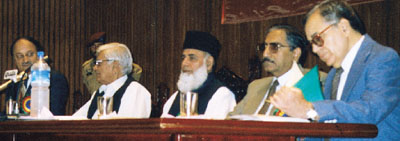
The summer heat presses down relentlessly on the plains of Pakistan, but the hills overlooking the capital city of Islamabad from the north perch above the worst of the steamy blanket, and in only an hour and a half’s drive the mercury drops from 40 to 25 °C. Historically, towns in the Murree Hills have been the traditional summer retreat for local administrations, but with improved communications they now throng with plains-dwellers eager to escape the oppressive heat below.
Since 1974 the Murree Hills have also been the scene of a notable annual physics event. In Pakistani physics, the influence of the late Abdus Salam, the first Pakistani to be awarded a Nobel Prize, is everywhere. Throughout the world, Salam is remembered for his physics contributions and for founding the International Centre for Theoretical Physics in Trieste, Italy, which now bears his name. In 1974 he also suggested setting up a regular international forum in Pakistan, to attract scientists from all over the world, particularly from the developing countries. Salam knew that these scattered scientists can easily become isolated and often lack the contact so necessary to keep pace with, and contribute to, contemporary research.
The summer college was established at the leafy haven of Nathiagali (at 2600 m), the former site of the summer residence of the North West Frontier Province. More recently the College has moved to a modern tourist complex in Bhurban, overlooking the Jhelum Valley and facing the foothills of Kashmir.
The summer colleges have attracted a prestigious list of speakers, each year having special keynote topics. This year the 25th International Nathiagali Summer College on Physics and Contemporary Needs focused on three themes: high-energy physics and accelerator-driven fission in the first week; and laser cooling, quantum computing and nanotechnology during the second week. Students came from all over Pakistan and from neighbouring countries in Central Asia.
Pakistan’s increasing involvement in experimental particle physics was reflected in the lectures on high-energy physics. Presentations were given by Hafeez Hoorani of CERN on the subject of W Physics at LEP, Felicitas Pauss of ETH Zurich on Physics at the LHC, Daniel Treille of CERN on the Standard Model and Physics at LEP, Tejinder Virdee of CERN and London’s Imperial College on LHC Detectors, and Oswald Gröbner of CERN on the LHC machine.
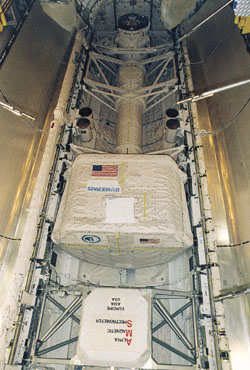
In the lectures on accelerator-driven fusion, Jean-Pierre Revol of CERN described experiments by Carlo Rubbia’s group and spoke of future plans at CERN, while Günter Bauer and Sandro Pelloni of the Swiss PSI Institute covered accelerator-driven reactors and neutron reaction rates respectively. Giovanni Ambrosi of Geneva spoke on the AMS particle physics experiment in space, and CERN Courier editor Gordon Fraser surveyed some recent history in “Physics and the 20th century”.
Since Salam’s death in 1996, the college has featured a Salam Memorial Lecture, which this year was given by distinguished theorist Sergio Ferrara of CERN, speaking on “Superspace and supergravity the quest for unification”.
At the official inauguration of the summer college, held at the National Library in Islamabad, a new collaboration agreement was signed between CERN and Pakistan’s recently established National Centre for Physics (CERN Courier March). Pakistan’s President, Muhammad Rafiq Tarar, said he hoped that the collaboration would flourish and that such international ventures would strengthen contacts between Pakistan and the rest of the world.
Jupiter Scientific Publishing Co, New York, ISBN 0 9655176 9 1
Putting the word “God” in the title of a popular science book is a sure-fire way of boosting the sales figures. Now an anonymous group of authors has gone one better in producing The Bible According to Einstein. This is a curious book, from its sombre black cover, complete with Star of Bethlehem (or is that just a symbol of scientific enlightenment?) to its chapter-and-verse structure. In place of authors, the book has a spokesman, Stuart Samuel, a New York-based physicist. Why no authors? “The publisher decided not to list authors and contributors as a means of achieving two of the book’s goals: to mimic the Bible as much as possible in its style and structure while replacing religious issues with scientific ones and to create a feeling of awe.
There’s no doubt that the first goal has been achieved. “In the ‘beginning’, there was no beginning. Before the Planck time, there was no time and there was no space,” claims the opening line of Genesis I: The Planck Epoch. As for the second goal, I’m not so sure. It’s true that the book shares the Bible’s feeling of authority; this is no mere suggestion, this is the gospel truth. However, in that approach lies the book’s main shortcoming.
What attracted me to science was the realization that the universe is a mysterious place. There’s a great deal we don’t know about it and science is the great adventure of finding out. The book makes no attempt at analysis. It simply presents the whole canon of modern science as one fact after another, and that somehow takes away the excitement of finding out. So why did the anonymous authors choose the biblical style? Were they trying to provide a scientific alternative to the Christian Bible? According to Stuart Samuel, the book wasn’t written with scientific evangelism in mind. Rather it was designed to draw a distinction between the things that science is good at and the things that spirituality is good at. “When it comes to the universe that we observe with our senses, science is the best means of obtaining understanding,” said Samuel. “On the other hand, science cannot say anything about the purpose of life, about morality, nor about proper human conduct.” This point is driven home repeatedly throughout the book. The introduction notes that the moral code written down in the religious texts of all of the major religions hundreds of years ago is as valid today as it was then, while our scientific world view has changed beyond recognition.
Throughout history, storms of protest have greeted the gradual encroachment of science onto religion’s patch. This is no more than a misunderstanding, claims The Bible According to Einstein. “There is a line that exists between the domain of nature and the domain of God. People long ago drew the boundary by accident, not at the true line but in the land of science.” The obvious implication is that, once that misunderstanding is cleared up and the boundary finally fixed in its rightful place, science and religion will coexist in harmony.
The Bible According to Einstein is an extremely ambitious project. It contains an overview not only of every branch of science known to man, but also of the more traditional gospels. There are biographies of Moses, Christ, Muhammad and Gotama the Buddha. These are written in the same style as the rest of the book, as one fact after another. They tell the stories of some exceptional lives without developing the equally exceptional philosophies that those lives produced.
All that said, it is an enjoyable book to dip into, if only to see familiar ideas expressed in an unfamiliar way and Stuart Samuel does have a point the Biblical style does confer authority. It’s a quirky book, but there’s a lot of enjoyable reading in The Bible According to Einstein. Keep it next to your Bible, or whatever moral text you happen to subscribe to.
Addressing fundamental physics questions in space is far from a new idea. In particular, the fascinating prospects of testing Einstein’s theory to an unprecedented accuracy using the quietness of space environment and long observation times have long been considered. However, it was soon realized that flight conditions would have to be controlled to a very high precision.
In Europe, the 1971-1979 Fundamental Physics Panel, chaired by Herman Bondi, fully recognized the great interest of such missions but concluded that they were “projects for the 21st century”. We are now at the eve of that century.
European plans
In 1989 the European Space Agency (ESA) announced a call for mission proposals also open to fundamental physics. By 1993, fundamental physics proposals represented close to one-third of all of those received. ESA dealt with them via ad hoc committees, and in 1994 a major project, Laser Interferometer Space Antenna (LISA), was listed among the key “cornerstone” elements of the Horizons 2000 programme (the ESA equivalent of CERN’s LHC programme). Horizons 2000 projects ESA scientific activities up to and beyond the year 2010.
In 1994, ESA created a special Fundamental Physics Advisory Group (FPAG) to complement the established Astronomy Working Group and the Solar System Working Group.
In 1996, COSPAR (the international Committee for Space Research) created a new commission for fundamental physics, Commission H. In 1997 the Alpbach Summer School provided a useful and extensive overview of prospects as seen from Europe. The proceedings (ESA-SP-420) are a reference document for the new community working in that domain. So is the more recent Fundamental Physics Road Map established by NASA.
US fundamental physics in space started with microgravity research associated with manned space flights and, in particular, the study of helium superfluidity, to be complemented by the study of laser-cooled atoms. This was eventually extended to gravity. The important mission Gravity Probe B, testing the frame-dragging effect around the rotating earth, is soon to fly. This domain of research is monitored by NASA’s Fundamental Physics Discipline Working Group.
While fundamental physics at ESA did not initially include microgravity, things have developed in that direction with FPAG interest for the ACES mission. With its combination of a laser-cooled caesium clock and an H-maser, this should provide the most precise clock ever (accurate to 10-16). This is now approved for the International Space Station.
Interest developed for Satellite Test of the Equivalence Principle (STEP) to achieve 10-18 accuracy (the present ground-based limit is 10-12) with a cryogenic system orbiting the Earth. There was also considerable ESA interest and, if everything goes well, this mission could fly in around 2004 as a NASA-led project with strong ESA participation. In the opposite transatlantic direction, there is now a strong US interest in LISA. An ESANASA collaboration on LISA could advance the project by a decade to around 2009.
Ground-based detectors are blind to anything below about 10 Hz because of gravitational noise
At present, LISA is the flagship fundamental physics experiment. The LIGO terrestrial search for gravitational waves using laser interferometry aims for phenomenal accuracy and was described by Riccardo DeSalvo in the March issue (“The quest for gravitational waves”).
A space experiment is in principle very similar, but could extend over several millions of kilometres and would focus on low frequencies (10-2 to 10-4 Hz). Ground-based detectors are blind to anything below about 10 Hz because of gravitational noise, and they have to focus on high frequencies (102 to 104 Hz) looking for signals from supernovae and the demise of compact binary stars.
Gravity waves in space
A spaceborne experiment would be sensitive to permanent emission from compact binaries (of the HulseTaylor type). Thousands of these (black hole, neutron star and white dwarf binaries) should be detectable in our galaxy. Other viewable phenomena would include the formation, accretion and merging associated with the very massive black holes (1 to 10 million solar masses) known to exist at the centre of most galaxies.
The typical emission frequency of a black hole is inversely proportional to its mass, and very large ones should be within range of LISA anywhere in the universe. Spaceborne experiments could thus study the strong gravity of very compact objects, while ground-based studies will be looking for effects resulting from the Big Bang, cosmic strings, etc. Both terrestrial and spaceborne studies open a new window to astronomy.
Whether or not gravitational waves are soon detected on Earth, they also have to be sought in space. A LISA mission at the end of the next decade would be particularily timely. Three satellites would provide two independent laser interferometers on a heliocentric orbit trailing the earth at 20°. The LISA Pre-Phase A Report (MPQ 233) is a detailed description of the mission, which has now entered industrial study.
However, such a mission relies on technology that has still to be proven in space (exhibiting, for example, very precise accelerometry, drag-free control and very stable laser interferometry). A small dedicated mission is planned in Europe under the codename ELITE and is entering industrial study. However, the most efficient route is probably via an ESANASA collaboration, as will also be the case for LISA. This, like other projects, will also benefit from positioning using an electric propulsion engine, which is soon to be tested by an other small ESA mission.
Particle physics and space science
Some particle physicists are following with great interest the development of space projects. This is in particular the case for PLANCK, an ESA Horizons 2000 project, which should improve the COBE results on the cosmic microwave background by two orders of magnitude.
The past two decades have seen increased symbiosis between particle physics, astrophysics and cosmology, and this new field of astroparticle physics is now thriving. Probing the deep structure of matter through very-high-energy laboratory collisions reveals physics such as prevailed in the early universe. Today’s laboratory experiments simulate conditions10-10 s after the Big Bang.
With laboratory energies necessarily limited, the universe provides a fantastic range of extraterrestrial particle accelerators. The cosmic-ray spectrum extends up to 1012 GeV, so that a cosmic-ray proton colliding with a stationary nuclear proton gives a collision energy of about 106 GeV about a hundred times that of CERN’s LHC collider. However, collecting 100 cosmic-ray events per year at LHC collision energies would require a 104 sq. m detector. The LHC will provide 108/s.
High-energy physics techniques have been developed for and applied to astrophysics. Examples include detectors of high-energy gamma rays and high-energy neutrinos. This work demands extensive data collection and data handling, in particular for the study of otherwise invisible astronomical objects via gravitational lensing. Other examples include the study of neutrino oscillations and the search for dark matter.
Spaceborne detectors
The pioneer major spaceborne particle physics detector is Alpha Magnetic Spectrometer (AMS), which was designed to search for antimatter in space but which also gives valuable information on the composition and distribution of cosmic rays (June). This information is welcome for the analysis of information on atmospheric neutrinos, where there are strong hints for neutrino oscillations.
AMS will be deployed on the International Space Station but has already had a test flight on the Space Shuttle and is preparing for a second. In the US the detector project involves a special collaboration between NASA’s space responsibilities and the Department of Energy, traditional paymasters of US particle physics. It relies on a worldwide collaboration of particle physics research centres with a strong European contribution.
More such experiments could appear soon, but their aims should be very specific because of cost. Examples include searches for new forces and probing gravity at small distances. In particular, a mission like STEP should provide checks on the sensitivity that should be attainable in future studies.
Another interesting direction involves searching for heavy stable remnants of the Big Bang, looking in particular for particleantiparticle annihilations into gamma rays. Candidates are the lightest supersymmetric particles. However, there is little to say about the energy of the expected gamma ray and its intensity. Physicists should look out for other missions providing a ride.
The trail-blazing experiments cover cosmic rays, such as AMS, and X-ray and gamma-ray detectors, such as the Gamma Ray Large Area Space Telescope (GLAST), and particle physicists will enter space research via cross-fertilization between different fields, as has been the case for AMS and GLAST.
More extensive collaborations would ensure new experiments and missions
I see the future of high-energy physics in space more in terms of physicists than in terms of physics. Know-how developed in particle physics, and in particular for the LHC, is likely to find good use in space research: new tracking chambers, silicon detectors, radiation-hard electronics, bolometers and new photomultipliers. Also, the LHC experiments are likely to trigger a breakthrough in data collection and data handling – 1015 bytes per year, a million times the information stored in the human genome. Ingenious particle physicists, at ease with these new techniques, will be eager to apply them in space research.
In this spirit, the Joint Astrophysics Division of the European Physical Society and the European Astronomical Society is organizing a workshop on Fundamental Physics in Space and Related Topics at CERN next year under the joint sponsorship of ESA and CERN.
More collaboration
Researchers always complain about funding for basic research. In the post-cold-war era, governments seem to be saying: “What you do is interesting, but what is the rush? Couldn’t you do it more slowly with smaller annual budgets?”
A minimum momentum has to be maintained, otherwise young people would cease to be attracted. More extensive collaborations would ensure new experiments and missions. This is particularily the case for fundamental physics, where the chance to fly a mission depends much on the cost to each partner.
Recent transatlantic contacts have involved compromise, but a door could be opening for extended EuropeUS collaboration. ESA has endorsed the principle of such collaborations for fundamental physics. The dawn of a new millennium is a golden opportunity to embark on a new voyage of scientific discovery.
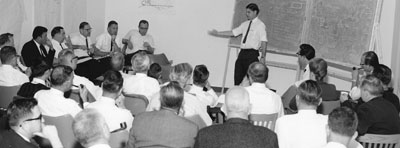
Present at the beginnings of a great adventure in high-energy physics, former laboratory deputy director Ned Goldwasser will not forget the long hot summers of the mid-1960s: a formative time for Fermi National Accelerator Laboratory and an era when turmoil raged from coast to coast in the US.
There were major fires and riots in Watts (Los Angeles), Detroit, Washington DC (where the National Guard had tanks in the streets) and the South Bronx and Bedford-Stuyvesant areas of New York City.
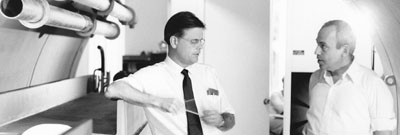
Before a building had been raised on the 6800 acre laboratory site in March 1967, newly named director Robert R Wilson telephoned Goldwasser, then at Illinois, asking him to come on board the project.
Goldwasser, who had served on the committee that recommended potential sites for the new laboratory to the US Atomic Energy Commission, took the job and agreed to visit Wilson at Cornell. When they met, they spoke not only about relationships in particle physics but also about relationships among people.
At The Early Days of Fermilab, a mini-symposium honouring his 80th birthday, Goldwasser recalled: “We spent a large fraction of that meeting discussing our independent but similar notions that the opportunity of building a lab at that time, with what was happening in the country, was an opportunity that shouldn’t be missed.
“We wanted to demonstrate that such a project could be started and run in a manner sensitive to some of the racial problems the country was suffering from. Cities were burning. There were large-scale protests against discrimination. Bob felt, and I agreed, that we could and should do something to address those problems.”
Beam or bust
The first speaker at the symposium was Norman Ramsey, 1989 Nobel Prizewinner for his invention of the separated oscillatory fields method and its use in the hydrogen maser and other atomic clocks. Ramsey was the first president of the Universities Research Association, the consortium that manages Fermilab for the US Department of Energy.
Bill Fowler, currently associate project manager for Fermilab’s Main Injector, joined Fermilab in 1970 to construct the 15 ft hydrogen bubble chamber. He later served as Wilson’s deputy project leader in developing the Tevatron. Fowler summed up the feeling of the lab’s early days as: “Co-operation we had it at that time.”
However, those early days are also characterized by the crisis management, “beam or bust” outlook described by Rich Orr, who served the lab in many capacities over 20 years. Orr lauded Wilson and Goldwasser as being “responsible for how Fermilab became Fermilab, as opposed to what it set out to become”.
In those early days, buildings were put up before funds were authorized. “We try to start before we’ve been approved so we know we can finish,” joked current director John Peoples.
We worked all night, but we didn’t get it
Ned Goldwasser
Even in the winter of the Cold War, researchers were welcomed from the Soviet Union. Physics experiments transcended international politics. “Experiments were open to users from all areas,” said Yoshio Yamaguchi, a former president of the International Union of Pure and Applied Physics.”I’m very glad that high-energy physics started such a wonderful idea.”
Goldwasser remembers a Soviet VIP visit. The new lab’s goal was to have beams circulating around the entire Main Ring. “We worked all night, but we didn’t get it,” Goldwasser said. “The whole Soviet entourage was there and we said we were sorry, but we weren’t able to get it done. Later, the Soviet commissioner told Bob Wilson such an admission had been very stupid. ‘In the Soviet Union,’ he said, ‘we have learned that it doesn’t matter. They don’t know if it’s a full turn or not. We just tell them we made a full turn and that’s just as good.’ ”
Civil rights
Those early days were full of hope for the future of physics. However, with the cities burning, the civil rights struggle and national politics were uppermost in people’s minds.
“My feeling,” Goldwasser said, “is that President Lyndon Johnson made the decision at least in some measure as a trade-off with Illinois Senator Everett Dirksen.”
Democrat Johnson, who became President in 1963 following the assassination of John F Kennedy, set great store by passing civil rights legislation to heal the country. He also held a longstanding interest in Big Science from his years as vice-president. NASA had been his particular area of responsibility, and the Johnson Space Flight Center, in his native state of Texas, is named in his honour.
“The Federal Open Housing Bill [to desegregate housing officially] was before Congress,” said Goldwasser. “Everyone knew that the vote in the Senate would be very close. What surprised everyone was that [Republican] Dirksen, who had a long record of strong positions against anything in the nature of open housing, withheld his vote to the end, then he cast in favour of the bill, to break a tie.”
Although open housing became the law of the land, its implementation was not immediate everywhere. The Revd Martin Luther King, angry that at the state level Illinois soundly rejected a similar bill, threatened to lead demonstrations blocking the construction of the laboratory in Illinois. The subject of racial tensions dominated the first official meeting of the National Accelerator Laboratory on 15 June 1967 at the design offices in Oak Brook.
Affirmative action
Goldwasser recalled: “Bob asked me to take on the job of going into Chicago and meeting with the leaders of minority groups in an effort to persuade them that we intended to have a very active programme for what would now be called affirmative action. There was no such thing in those days, but we told them we expected to find employment for minority people and we expected to try to recruit many of them from among the inner-city gangs in Chicago.
“Those were some of my interesting days. I met with leaders of the Urban League and the National Association for the Advancement of Colored People, but I also met with leaders of the Black Panthers, as well as with gangs in Chicago. I told them what our intentions were and asked them to give us ideas about how we might proceed.”
Soon the informal affirmative action programme managed to take a major step forward when Ken Williams joined the lab from one of the local hospitals. He headed the lab’s affirmative action efforts for many years.
“The first thing he did was a great relief to me,” said Goldwasser. “He took over the responsibility of going into the city and meeting with the gangs. In those meetings he interviewed individual gang members, trying to evaluate who was really serious about getting out of gang life and getting a real job in the outside world. I felt he had unerring taste and judgement in the people he chose.”
The lab and community leaders cobbled together a programme taking kids out of city gangs and sending them to a six-month technical training programme. Those who stayed the course would return to the lab with jobs as technicians. Training was at Oak Ridge, and spending six months in Tennessee in the 1960s might have seemed daunting to young black men from Chicago, but it worked. “Around the time I left the lab [in 1978], I think we were about 90% successful in retaining those trainees. And most of the people who left had gone on to better jobs. Ken Williams made an enormous contribution to the laboratory,” Goldwasser said.
Within the first year of the lab’s operation, Wilson and Goldwasser had also issued a policy statement on human rights. Goldwasser read from its final paragraph: “Our support of the rights of the members of minority groups in our laboratory and in its environs is inextricably intertwined with our goal of creating a new centre of technical and scientific excellence.”
Against a background of racial turmoil, the human rights focus of Goldwasser, Robert Wilson and all of those involved at the start of what was to become Fermilab demonstrated clearly their commitment to principles beyond science.
The prestigious Pomeranchuk prize, which is administered by Moscow’s Institute for Theoretical and Experimental Physics (ITEP), is awarded this year to Karen Avetovich Ter-Martirosyan (ITEP, Moscow) and Gabriele Veneziano (CERN).
Prof. Ter-Martirosyan receives the prize for his pivotal contribution to quantum mechanics and quantum field theory. Born in 1922, he was a pupil of L D Landau and a close collaborator of I Ya Pomeranchuk. Among Ter-Martirosyan’s students have been V N Gribov, A A Anselm, A M Polyakov, A A Migdal, A B Zamolodchikov and A B Kaidalov. He is an author of more than 250 articles and the book Theory of Gauge Interactions of Elementary Particles (1984) with M B Voloshin. His papers include “Theory of coulomb exitation of nuclei” (1952), “Theory of three body systems” (1956), “Development of the Regge pole theory for high energy scattering and theory of Regge cuts” (with V N Gribov and I Ya Pomeranchuk (1964-1976), and “QCD inspired model of quarkgluon strings” (with A B Kaidalov).
The prize is awarded to Gabriele Veneziano for his outstanding contributions to quantum field theory and the theory of strings. Born in 1942, he has been a staff member at CERN since 1977. His famous 1968 construction of a hadron amplitude satisfying the requirements of crossing symmetry and analyticity triggered the development of dual theory of strong interactions and string theory. His 1974 elaboration of large N expansion in dual models and QCD remains a cornerstone in strong interaction theory. His major contributions also include “Jet calculus in QCD”, “Analysis of symmetry violation in QCD and its phenomenological consequences”, “the Di Vecchia-Veneziano and Veneziano-Witten relations”, “Construction of the effective supersymmetric action and formulation of the nonperturbative aspects of SUSY theory”, and latterly “String cosmology”.
Nominations for next year’s Pomeranchuk prize should be send to pomeron@heron.itep.ru no later than 1 February 2000.
New chairmen appointed to DESY committees
Ministerialdirigent (assistant secretary) Hermann Schunck from the Federal Ministry for Education and Research (BMBF) becomes the new head of DESY Administrative Council. He replaces MinDirig Hans C.
Eschelbacher has been the head of the council for five years and is now president of CERN Council.
Ralph Eichler from Villingen becomes the new head of the Scientific Council, replacing Dietrich Wegener, who has been in office for three years.
Thies Behnke becomes the new head of the Scientific Committee, replacing Wilhelm Bialowons, who has held the position for a year.
LETTERS
CERN Courier welcomes feedback but reserves the right to edit letters. Please e-mail “cern.courier@cern.ch“.
Free electron lasers
With reference to the CERN Courier article entitled “Expo 2000”, which was published in the May issue, I should like to mention two points.
The self-amplified, spontaneous emission, free electron laser (SASE-FEL) concept originated in the early 1980s (Derbenev et al., 1982; Bonifacio et al. 1984). The first detailed proposal and study to use this concept for an X-ray FEL goes back to 1985 (Murphy and Pellegrini 1985).
During the past two years, several groups at UCLA, SLAC/SSRL, Brookhaven and Los Alamos have performed experiments proving this concept (Hogan et al. 1998; Babzien et al. 1998; Nguyen et al. 1998).
The most comprehensive experiment has been carried out by a UCLALos AlamosSSRL group that has measured the FEL photon statistics and a gain of 3 x 10⁵ over the spontaneous undulator radiation (Hogan et al. 1998). Both sets of experimental results are in excellent agreement with the theoretical predictions.
These results, and the strong interest in the unique properties of the radiation generated by an X-ray SASE-FEL, are the foundation for the Linac Coherent Light Source project at SLAC (LCLS Design Study Report 1998). The Basic Energy Science Division of the US Department of Energy recently endorsed a research and development programme of the LCLS for the period 1999-2002, with a view to start construction in the financial year 2003.
Claudio Pellegrini, Department of Physics, UCLA
Further reading
Y Derbenev, A Kondratenko and E Saldin 1982 Nucl. Instr. and Meth. Phys. Res.A193 415.
R Bonifacio, C Pellegrini and L Narducci 1984 Opt. Comm.50 373.
J Murphy and C Pellegrini 1985 Nucl. Instr. and Meth. Phys. Res.A237 159.
J Murphy and C Pellegrini 1985 J. Opt. Soc. AmericaB2 259.
M Hogan et al. 1998 Phys. Rev. Lett.80 292.
M Babzien et al. 1998 Phys. Rev.E57 6093.
D Nguyen et al. 1998 Phys. Rev. Lett.81 810.
M Hogan et al. 1998 Phys. Rev. Lett.81 4867.
1998 LCLS Design Study Report SLAC-R-521.
DESY replies:
We thank you for informing us of the UCLA, SLAC/SSRL, Brookhaven SLAC and Los Alamos achievements concerning the
SASE-FEL, which we did not intend to underestimate in any way.
The “EXPO 2000” article in the May issue of CERN Courier was meant to be a presentation of DESY’s next major public relations project, the EXPO 2000 exhibition, entitled “Light for the New Millennium”, to a broad audience. This was a very welcome opportunity provided for us by CERN Courier. It was not intended as a scientific publication and we thought that this would be obvious from both its style and content.
Indeed, we consider that the task of introducing the public to the fascination of science is of major importance, and it is not always easy in such an article to give credit to all relevant research work. That is why the SASE-FEL principle was mentioned only rather briefly, and in a way that could indeed have been interpreted as if it were solely a DESY development. This was not our intention, however, and we apologize if it has been construed in such a way.
This year’s goal at DESY is the proof-of-principle of a SASE-FEL at a wavelength of less than 100 nm more than two orders of magnitude in wavelength less than the result published by the UCLA/Los Alamos/SSRL group last year. The FEL pilot facility, on display at EXPO 2000, is under construction at DESY.
From 2003 it will deliver radiation at a wavelength of 6 nm for the international user community, which will make it the first SASE-FEL facility to go into research operation.
Petra Folkerts, Project Leader DESY-EXPO.
MEETINGS
An international summer school entitled Experimental Physics Of Gravitational Waves will be held in Urbino, Italy, on 618 September. Supported by the Institute of Physics, Urbino University and INFN Florence Section, it is aimed at graduate and postdoctoral students.
The annual DESY Theory Workshop, to be held this year on 29 September 1 October, has the theme *ews from the Universe and will cover neutrino masses and oscillations, baryon and lepton number violation, the cosmological constant, and the structure in the universe. The speakers will include many distinguished names from all over the world.
Parallel sessions are mainly reserved for young researchers. Contributions should be sent before 1 August, together with registration. Limited financial support for young physicists is possible.
Registration via Mrs S Günther, DESY-Theorie, Postfach, D-22603 Hamburg, Germany, fax +49 40 8998 2777.
Information is available from C Wetterich, Institut für Theoretische Physik, Universität Heidelberg, Philosophenweg 16, D-69120 Heidelberg, Germany or “http://www.desy.de/desy-th/workshop.99/“.
XI ISVHECRI, the XI International Symposium of Very High Energy Cosmic Ray Interactions, will be held in Campinas in Brazil on 17-21 July 2000. It will celebrate the centennial of Gleb Wataghin.
With great sadness we learned on 18 May that Bianca Monteleoni-Conforto had left us.
Bianca first came to CERN in 1962 after working in Rome on antiproton interactions in emulsions. The 81 cm bubble chamber had been exposed to the first CERN antiproton beams and Bianca plunged into the analysis of a low-energy scattering experiment, displaying from the outset her personal qualities a preference for solid work, producing numbers and facts. Her perseverance overcame all obstacles, and she took pride in the eventual result. Her enthusiasm led others to collaborate, at which point she would step back, except when it was vital to intervene.
The wide-ranging antiproton study, extending to kaon production, laid the ground for subsequent LEAR studies. Kaon interactions retained Bianca’s interest in Chicago, where she spent two years, and later at the UK Rutherford Laboratory. Back in Rome, she turned to CERN’s SPS and neutrino physics, for the beam dump experiment, which brought the first observation of charm production in hadronic interactions. She continued heavy flavour studies in a photoproduction experiment with the Omega spectrometer, later joining the Crystal Ball experiment at DESY.
In 1980 Bianca moved to a research position in Florence, where she displayed her qualities for organizing and for driving a team of young researchers, and embarked on the construction of the Muon Filter for the L3 experiment at CERN’s LEP.
Increasingly involved in INFN activities (she became a director in Florence in 1987) and teaching (19 theses supervised), Bianca continually followed new developments. She and her group joined the LVD experiment at Gran Sasso, and pushed the NESTOR underwater neutrino experiment in Pylos, Greece. Her work thus covered a variety of experimental particle physics and even astrophysics.
Bianca was respected and loved by all of us. Besides her standing as a scientist, she had great human qualities, open to the beauty of physics as well as music and arts. It was not only good to work with her, but also to walk in Rome or hear an opera with her, to feel, in life as in physics, her solidity and fidelity, and to share her humour. We will miss her greatly.
Leading Russian theoretical physicist Rostislav Mikhailovich Ryndin passed away on 23 March after a protracted illness.
Born in Leningrad in 1929 into the family of a university lecturer, R M (Slava to his numerous friends), like all of his contemporaries, he spent his early life in difficult times. He remained in Leningrad throughout the worst of the siege until September 1942, his father dying of starvation in his arms. Later he endured evacuee hardships and could hardly stand following severe typhoid.
Returning to Leningrad, he graduated in 1952 and started work in Novo-Ivan’kovo (now Dubna), in the Hydrotechnical Laboratory, at that time top secret before becoming the Institute for Nuclear Problems, and then later the Joint Institute for Nuclear Research.
Ryndin had a deep understanding and wide knowledge of physics, particularly the physics of spin. His initial interests at Dubna were in nucleon and pion scattering. For a complete reconstruction of scattering amplitudes, he and his coauthors made a deep study of polarization effects. This classic work, which formed the basis for his PhD (1958), is still applied and referred to. Then he investigated the detailed relations between polarization effects and interaction symmetries, becoming a doctor of science in 1966.
He was able to visit CERN for the first time as early as 1956. During a year at CERN in 19591960, he collaborated with a US visitor of Russian origin, Boris Jacobsohn, on parity tests for particles. At CERN he gained a fine reputation, retaining numerous contacts till the end of his life.
In 1970, by now world renowned, he moved to the Theory Group of the Leningrad Physico-Technical Institute, subsequently the Theory Division of the Leningrad (now Petersburg) Nuclear Physics Institute. There his best-known publications were on atomic parity violation, followed by investigations of possible macroscopic parity-violating effects in media or wave guides. His final work focused on the motion of spinning particles in electromagnetic fields producing so-called topological effects.
Ryndin was very attentive to young physicists and gave frequent lectures at schools. From a family of intellectuals, he was an intellectual in the best sense of the word, with wide interests, and he had the rare gift of becoming an acknowledged authority and opinion leader in his various spheres of interest. He did not hesitate from being critical.
He was influential in shaping the image of the Theory Division of PNPI. His death is a hard loss for his family, his friends and his collaborators, and the whole physics community, particularly in Russia and at CERN.
by Stephen Wolfram, Wolfram Research, Cambridge University Press 0521 643147 (£35/$49.95).
Mathematica is one of the most important programs for algebraic (in contrast to numeric) calculations. It is an indispensable tool in particular for theoretical particle physicists, who use it, for example, for computing Feynman diagrams and analysing the geometry of superstring compactifications. It is also extremely useful for graphical representations of data.
One of the most convenient features is the notebook interface, which allows WYSIWYG formula editing and evaluating. The electronic notebooks are highly editable and programmable, plus they allow for hyperlinks, can contain any graphics and are easily cross-platform transportable.
Wolfram Research has now announced release 4.0 of the popular program. It offers a series of improvements, like enhancements of built-in functions, algorithms, graphic format handling, document publishing, and improvements in speed and efficiency as well as in the notebook interface. While all of these features are very welcome, the difference between the previous version, Mathematica 3.0, is nowhere near as significant as the that between Mathematica 3.0 and 2.2. One hopes that this upgrade provides a thorough fix of all of the new bugs that appeared in Mathematica 3.0. Further information is available at “http://www.wri.com”.
To provide the best experiences, we use technologies like cookies to store and/or access device information. Consenting to these technologies will allow us to process data such as browsing behavior or unique IDs on this site. Not consenting or withdrawing consent, may adversely affect certain features and functions.
Functional
Always active
The technical storage or access is strictly necessary for the legitimate purpose of enabling the use of a specific service explicitly requested by the subscriber or user, or for the sole purpose of carrying out the transmission of a communication over an electronic communications network.
Preferences
The technical storage or access is necessary for the legitimate purpose of storing preferences that are not requested by the subscriber or user.
Statistics
The technical storage or access that is used exclusively for statistical purposes.The technical storage or access that is used exclusively for anonymous statistical purposes. Without a subpoena, voluntary compliance on the part of your Internet Service Provider, or additional records from a third party, information stored or retrieved for this purpose alone cannot usually be used to identify you.
Marketing
The technical storage or access is required to create user profiles to send advertising, or to track the user on a website or across several websites for similar marketing purposes.