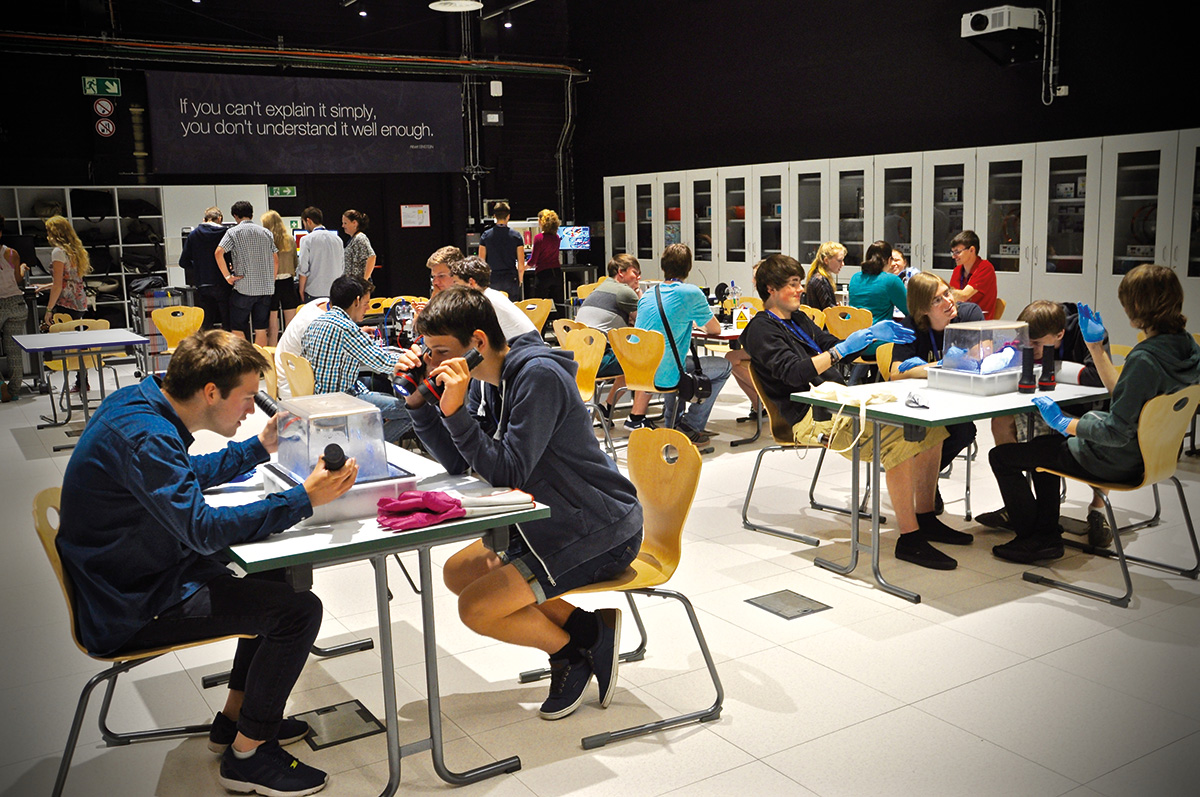
“The reason I want to talk to you today is that I myself had a very good physics teacher, which is why I’m now here at CERN. So, thank you for the important work you are all doing. You really make a difference!” This heartfelt sentiment, echoing the gratitude often expressed by CERN scientists when addressing visiting high-school teachers, encapsulates the essence of CERN’s teacher programmes.
Over the past quarter-century, CERN’s teacher programmes have played a vital role in bridging the gap between particle physics and educators from across the globe. What started originally in 1998, when the first International High School Teacher Programme took place with a small group of teachers, has grown into one of CERN’s many success stories. Today, CERN’s teacher programmes run on an almost weekly basis, welcoming about 1000 teachers from more than 60 countries every year, which makes them one of the largest and most successful professional development offers for in-service high-school science teachers worldwide.
The vast bulk are week-long programmes for teachers from one country or from one language group, predominantly targeting teachers from CERN’s member states, associate member states and the occasional non-member state. In addition, two international teacher programmes take place every year in the summer, significantly broadening the reach. Each international teacher programme lasts two weeks and hosts up to 48 teachers from around the world. So far, about 14,500 teachers from 106 countries have participated in CERN’s national and international teacher programmes, and every year another 1000 teachers travel to CERN to attend lectures, on-site visits, hands-on workshops, discussions and Q&A sessions.
Multifaceted
Teacher programmes at CERN serve multiple purposes. First and foremost, they are professional development programmes that enable high-school teachers to keep up to date with the latest developments in particle physics and related areas, and to experience a dynamic, international research environment. As such, they answer the call to bring more modern science into the classroom, which goes hand in hand with a slow yet steadily increasing change in curriculum development (see Particle physics in school curricula). Second, teacher programmes are an acknowledgement of the critical role that teachers play in preparing the future of humanity. They inspire and empower teachers and, through them, their students. Last but not least, teacher programmes showcase the importance of science diplomacy – colloquially referred to as a soft power in the world of international relations. For instance, before joining CERN as associate member states, several countries already brought high-school teachers to CERN for dedicated national teacher programmes; these, in turn served as door-openers in the respective ministries and supported the country’s application to join CERN. The same is true for distant countries, with which CERN has no other connections than teachers who took part in one of the international teacher programmes.
High impact
But what about the impact of CERN’s teacher programmes? Is it possible to measure the effectiveness of such a variety of programmes and perform an evaluation that goes beyond documenting teachers’ feedback? Combined with anecdotal data from alumni teachers, who frequently return to CERN with their students or take part in other education activities such as the Beamline for Schools (BL4S) competition, and the fact that CERN’s teacher programmes are heavily overbooked, the overall picture is clear: teachers’ satisfaction with CERN’s teacher programmes is extremely high.
The overall picture is clear: teachers’ satisfaction with CERN’s teacher programmes is extremely high
To deepen the level of evaluation of CERN’s teacher programmes and to allow for further development in the future, in 2021 a multi-stakeholder study was performed to document and illustrate the goals of professional development programmes at particle-physics laboratories. This study led to a hierarchical list of the 10 most important learning goals, such as enhancing teachers’ knowledge of scientific concepts and models, and enhancing their knowledge of curricula, which now represent the baseline for future evaluations of teachers’ learning. Here, a large-scale study is currently ongoing to assess their knowledge in a pre-post setting by using concept maps. The aim of this approach is not only to study the learning progression throughout a teacher programme but also to support teachers in constructing meaningful mental models and knowledge structures, which are key indicators of successful educators. Indeed, CERN’s teacher programmes continue to serve as a prime testbed for the Organization’s physics-education research efforts, with one doctoral research project already successfully completed and a second on its way. Future research projects will aim to evaluate teachers’ use of their new knowledge and skills after their participation in CERN’s teacher programmes and consequently their students’ learning outcomes.
The most important dimension of CERN’s teacher programmes, however, is the social one. Over the past 25 years, teachers from different parts of the world have met at CERN, became friends and remained in touch with one another. This has led to several cross-border Erasmus projects, combined school events and even tri-national proposals for the BL4S competition.
Today, CERN’s teacher programmes are more popular than ever, with teachers from all around the world being more than eager to apply for one of the limited spots. One participant of this year’s International High School Teacher Programme even had to move his wedding date, which originally coincided with the programme dates. Luckily, his fiancée was understanding and not only agreed to the postponed date but also smiled when he put on his CERN helmet for the wedding picture.
In big science, long-term planning for future colliders is a careful process of consensus building. Particle physics has successfully institutionalised this discourse in the many working groups and R&D projects that contribute, for example, to the European strategy updates and the US Snowmass exercise. But long timescales and political dimensions can render these processes impersonal and uninspiring. Ultimately, a powerful vision that captures the imagination of current and future generations must go beyond consensus building; it should provide a crisp, common intellectual denominator of how we talk about what we are doing and why we are doing it.
A lack of uniqueness
For several decades, the hunt for the Higgs boson has been central to such a captivating narrative. Today, 11 years after its discovery, all other fundamental open questions remain open, and questions about the precise nature of the Higgs mechanism have become newly accessible to experimentation. What the field is facing today is not a lack of long-term challenges and opportunities, but a lack of uniqueness of one scientific hypothesis behind which a broad and intrinsically heterogeneous international research community could be assembled most easily.
We need to learn how to communicate this reality more effectively. Particle physics, even if no longer driven by the hypothesis of a particular particle within guaranteed experimental reach, continues to have a well-defined aim in understanding the fundamental composition of the universe. From discussions, however, I sense that many of my colleagues find it harder to develop long-term motivation in this more versatile situation. As a theorist I know that nature does not care about the words I attach to its equations. And yet, our research community is not immune to the motivational power of snappy formulations.
The exploration of the Higgs sector provides a two-decade-long perspective for future experimentation at the LHC and its high-luminosity upgrade (HL-LHC). However, any thorough exploration of the Brout–Englert–Higgs mechanism exceeds the capabilities of the HL-LHC and motivates a new machine. Why is it then challenging to communicate to the greater public that collecting 3 ab–1 of data by the end of the HL-LHC is more than filling-in details on a discovery made in 2012? How can our narrative better reflect the evolving emphasis of our research? Should we talk, for example, about the Higgs’ self-interaction as a “fifth force”? Or would this be misleading cheerleader language, given that the Higgs self-coupling, unlike the other forces in the Standard Model Lagrangian, is not gauged? Whatever the best pitch is, it deserves to be sharpened within our community and more homogeneously disseminated.
Another compelling narrative for a future collider is the growing synergy with other fields. In recent decades, space-based astrophysical observatories have started to reach a complexity and cost comparable to the LHC. In addition, there is a multitude of smaller astrophysical observatories. We should welcome the important complementarities between lab-based experimental and space-based observational approaches. In the case of dark matter, for example, there are strong generic reasons to expect that collider experiments can constrain (and finally, establish) the microscopic nature of dark matter and that the solution lies in experimentally unchartered territory, such as either very massive or very feebly interacting particles.
What makes the physics of the infinitesimally small exciting for the public is also what makes it difficult to communicate
What makes the physics of the infinitesimally small exciting for the public is also what makes it difficult to communicate, starting with subtle differences in the use of everyday language. For a lay audience, for instance, a “search for something” is easy to picture, and not finding the something is a failure. In physics, however, particles can reveal themselves in quantum fluctuations even if the energy needed to produce them can’t be reached. Far from being a failure, not-finding with increased precision becomes an intrinsic mark of progress. When talking to non-scientists, should we try to bring to the forefront such unique and subtle features of our search logic? Could this be a safeguard against the foes of our science who misrepresent the perspectives and consequences of our research by naively equating any unconfirmed hypothesis with failure? Or is this simply too subtle and intellectual to be heard?
Clearly, in our everyday work at CERN, getting the numbers out is the focus. But going beyond this operational attitude and fighting for the most adequate words and pictures that give meaning to what we are doing is crucial to keep the community focused and motivated for the long march ahead.
• Adapted from text originally published in the CERN Staff Association newsletter.
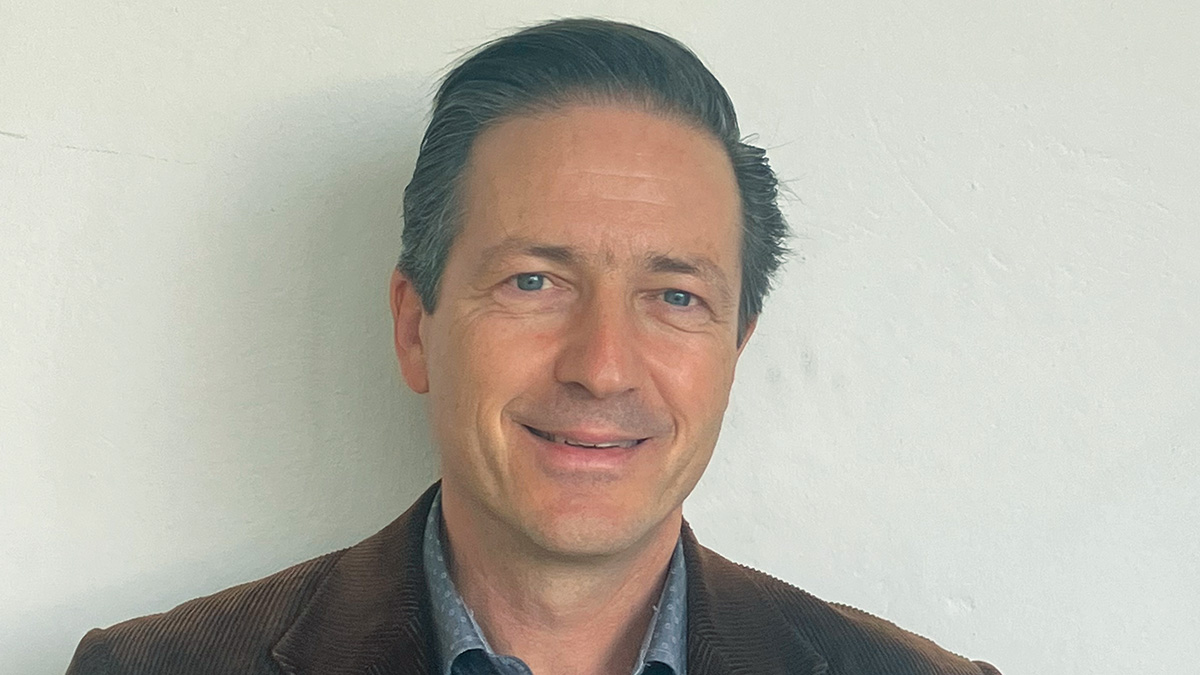
Guide since: October 2022 Position: Masters student for VITO at ISOLDE (User, University of Oldenburg) Languages: German, English
One thing that makes being a CERN guide so interesting and exciting is the diversity of our visitors. You might have a super-interested 10 year-old, for whom the visit to CERN is his birthday present, or you could find yourself discussing the connection between Buddhism and the Higgs boson with a monk.
One visit that I remember vividly was with a group of Swiss–German retirees. All of the visitors were hard of hearing, with the majority of them being deaf. To facilitate communication they brought two sign-language translators with them. Before the start of the tour some of the visitors were concerned that their cochlear implants, which can restore some hearing, might be influenced by CERN’s equipment. Luckily, I studied medical physics and audiology before coming to CERN, so I was able to reassure them that everything will be fine. On that day we were showing the group the Synchrocyclotron and the ATLAS Visitor Centre. Communicating via the translators was something that was completely new for me, as I am sure terms such as muon spectrometer or superconducting magnet were to them. Due to the translation, it naturally took a few seconds longer than usual to see the audience’s reaction. In most cases, however, it was full of excitement and often more effusive than with a group of hearing visitors. Many questions were asked and a lot of photos were taken, later to be shown to their grandchildren.
Although the tour took much longer than planned, I do not regret a single second I got to spend with them. When the group finally left CERN, there was not only a bright smile on their faces but on mine as well. Engaging people in our research and making it accessible to everybody regardless of their background, age or impairments is something which to me is a vital part of CERN’s mission.
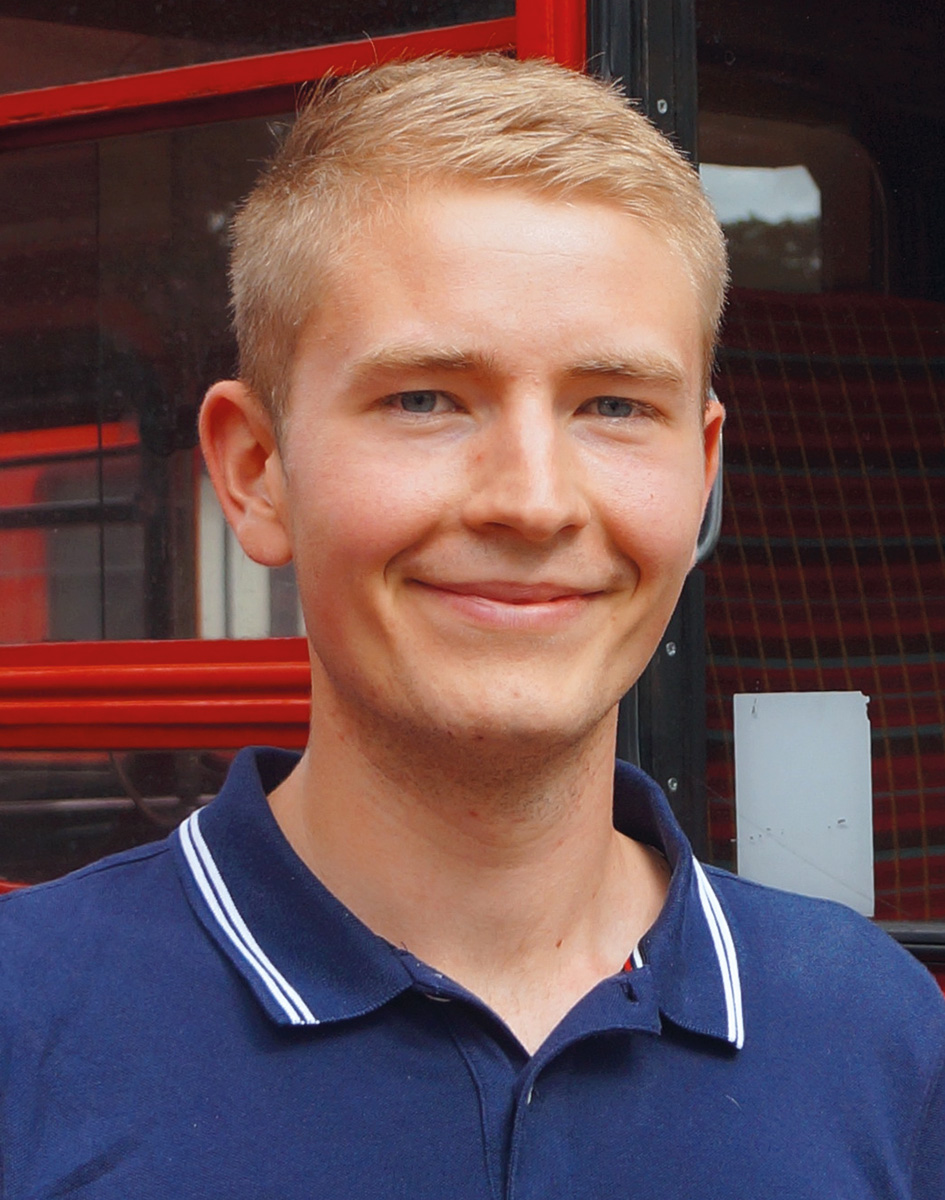
Guide since: 2013 Position: Electronics engineer at CMS (User, NCIP Estonia) Languages: English
I’ve been guiding for nearly a decade, and during this time have had plenty of exciting tours. When I first started, I helped my supervisor as a translator. I joined her at the virtual CMS visits for Pakistani prisoners in a jail in Athens.
For in-person tours I like to take visitors to the Synchrocyclotron, ATLAS Visitor Centre, CERN Control Centre, SM18 (currently under renovation) and CMS. There they get a good overview of how accelerators and detectors work. One of the typical questions I get is about the power consumption of CERN.
Weekends are busy times. The visitors are always curious and come with many questions. Besides power consumption, they want to know about quantum computers, how data gets stored and handled, and the technologies that are used for electronics, vacuum, magnets and cryogenic cooling. Of course, the Higgs boson as well as future goals are always of interest, too. As we give guided tours in radiation surveillance areas, people also have questions about safety risks.
I like guiding very much. It is very rewarding to represent CERN in this way, especially when the visitors appreciate it with their compliments and applauds. The loveliest I heard was when a girl told me that she had taken a tour with me a few years before and that it had motivated her to become a CERN technical student.
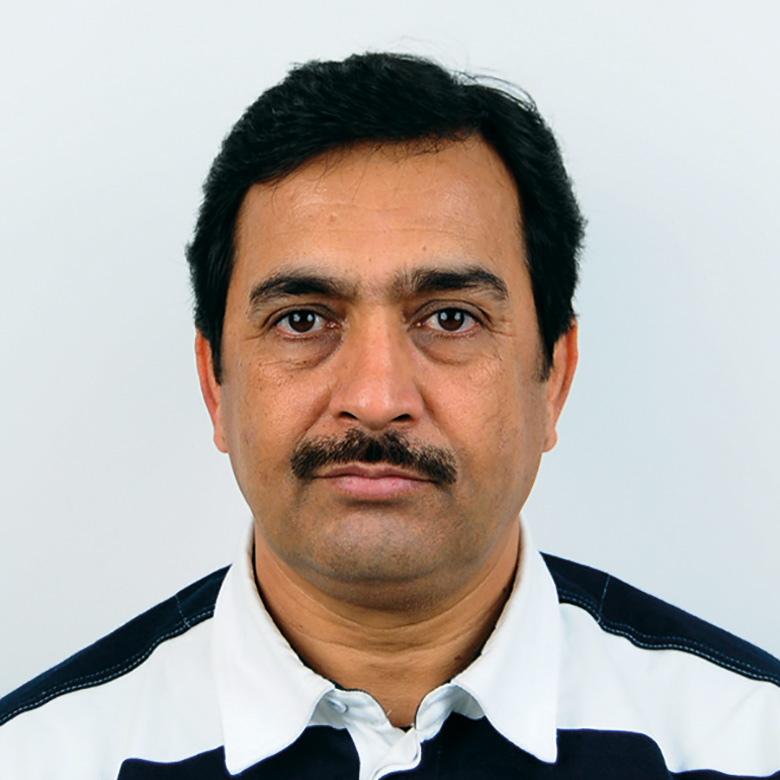
Guide since: 2017 Position: Senior fellow for the Muon Collider study Languages: French, English
In 2008, I had the great opportunity to undertake a one-week middle-school internship at CERN, during which I discovered the contagious passion for science and technology I saw in my supervisors. Today, it’s my turn to try and pass on that passion to everyone, especially young people.
Whether it’s showing visitors around the most iconic places at CERN or at events such as Science Night, I’ve been able to meet and talk to people of all ages and backgrounds. Many visitors initially feel that what is done at CERN and in physics research in general is too difficult to understand. However, after a few discussions and by making connections with everyday phenomena or objects, people become interested and grasp the value of such research, and often want to find out more or come back to CERN.
I also particularly enjoy guiding school classes and taking part in activities aimed at children. Whether it’s working with schools when their classes come to visit us, or taking part in science shows such as “Fun with Physics”, I always see a sense of wonder and a “wow” effect, not just in the children’s eyes but also those of the teachers and adults who accompany them.
Children are curious about everything and ask lots of questions about the world around them and how we study it. This requires that we, as guides, question ourselves and stay curious, because some questions, such as “How does the Higgs boson work?” are not easy to answer. This offers an opportunity to involve everyone: the group of children act as the Higgs field, their parents or teachers then try to make their way through while the kids can gently heckle the adults, giving the “particles” mass. Together they reconstruct the Higgs mechanism!
Being a guide at CERN brings a dimension to one’s work that I think is necessary to our profession: that of sparking curiosity. For example, I remember a 12-year-old girl from nearby Meyrin who told me that she wanted to understand the world around us by becoming a physicist and then go into politics to better protect it.
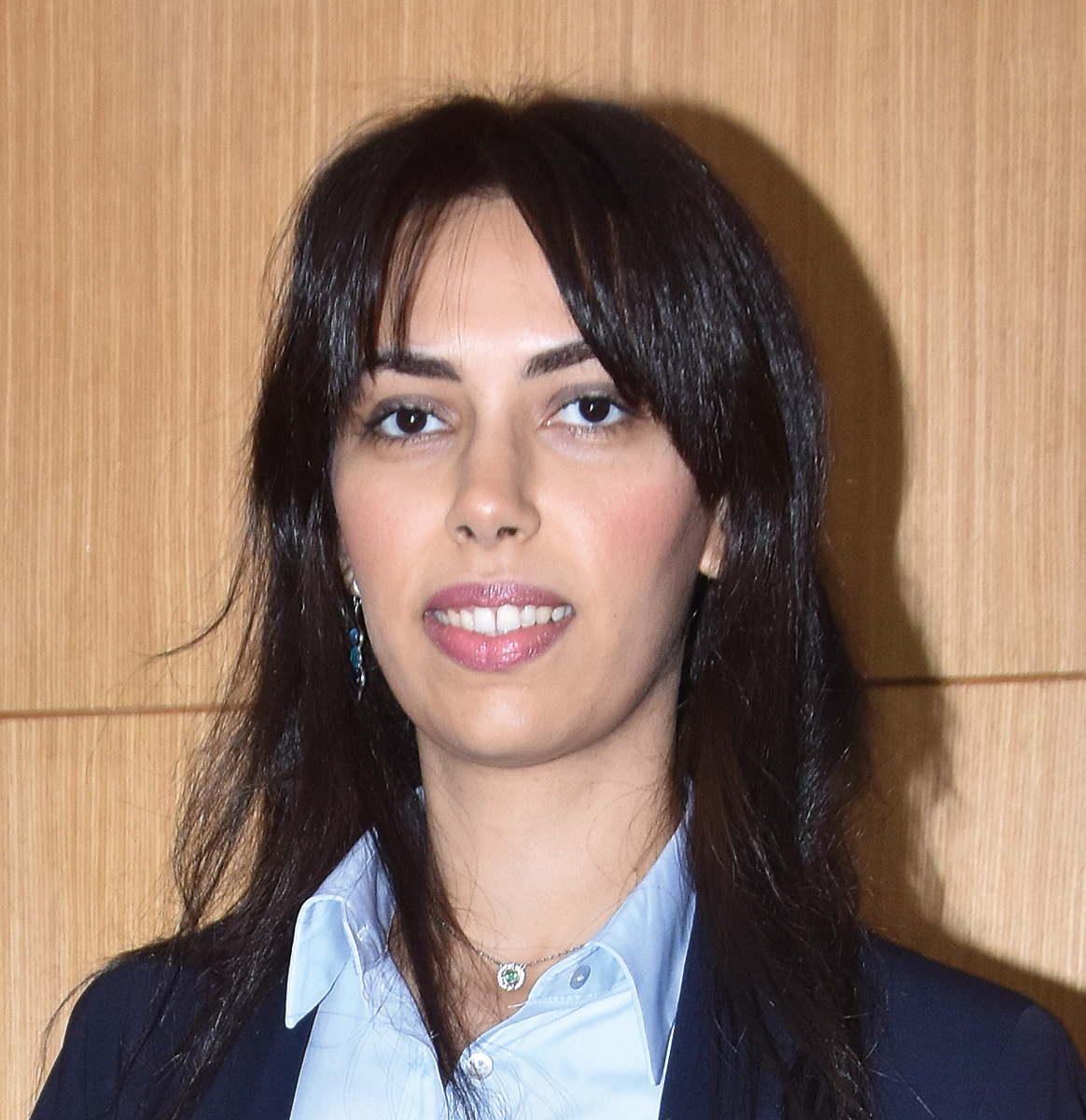
Guide since: October 2021 Position: CERN Research Fellow in Experimental Physics Languages: English, French, Arabic
I became a CERN guide because I wanted to expand my knowledge beyond my research topic and to explore other experimental sites. Little did I know how much excitement and challenges await me each time I lead a group of visitors.
At CERN, the diverse range of visitors creates a unique cultural experience as people come from different backgrounds and with varying scientific interests. They are often curious to verify information they have heard about CERN in the media and elsewhere. However, language barriers can occasionally lead to amusing situations. For example, I once had a group of visitors who spoke neither English nor French, so I had to use my imagination to create a universal scientific language to guide them through the Synchrocyclotron and ATLAS Visitor Centre facilities.
Throughout my time as a CERN guide, I have had many unforgettable moments that have only deepened my appreciation for the work that we do. One experience that stands out is when I had the pleasure of meeting a five-year-old boy and his parents who were visiting for his birthday. Despite his young age, this child had an impressive understanding of particle physics and the activities taking place at CERN. I couldn’t help but wonder if he was one of those rare geniuses who start university at a young age. To my surprise, his parents informed me that they don’t have any physics books at home and that his knowledge has solely come from the internet. His enthusiasm for the subject was truly inspiring and I couldn’t help but think that I may have been in the presence of a future physicist.
Another vivid memory was when an American father approached me after his visit and asked if I could help him get in touch with his high-school daughter in the US. She was interested in physics but lacked a female role model to explore and pursue her passion. We are still exchanging emails whenever she needs guidance or information. Her father has even promised to bring her to CERN at the first opportunity.
I was also part of the ATLAS virtual visits and initiated a programme dedicated to Moroccan universities and high schools. These virtual visits proved to be an effective means of promoting not only the ATLAS experiment but also CERN’s overall activities to a wider audience, resulting in an increased number of Moroccan students and visitors at CERN.
I have the honour of wearing two hats: that of a scientist and a guide. As a CERN physicist, I have long believed that one of my core missions is to contribute to raise awareness about the different activities and research projects carried out at CERN. By doing so, we dispel fear and create opportunities to educate people about the significance of scientific research.
Guiding young students, especially those from high school, is where my heart finds joy. When students interact with scientists at CERN, they often feel intimidated, perceiving them as superhuman figures. However, as their guide, I consistently receive comments expressing relief and surprise when they realise that scientists are just ordinary individuals like themselves. This relief often sparks a sense of confidence, which makes them realise that pursuing a career in science is within their reach – often at a crucial juncture in their education, having to decide which field of study to pursue. My impact may be just one jigsaw piece in their decision, yet, in some sense, I feel a certain level of responsibility for their future choices.
One heartfelt tale involved a girl who expressed her fear of pursuing research, believing it to be a field dominated by men. I told her stories of incredible women who have made significant contributions to science, and I shared with her my own experience: woman, mother, physicist. I saw her eyes glimmer with a fresh sense of hope and determination. Imagine my overwhelming joy when a few years later I received an email from her, revealing that she had started university in a scientific field and had a strong desire to pursue a PhD. She expressed how our conversation had ignited a fire within her, dispelling her doubts and fuelling her ambition.
These rich and fulfilling experiences as a guide at CERN not only underscore the significance of outreach but also serve as a rewarding testament to the impact of our efforts in nurturing young minds.
Guide since: 1999 Position: Visits service operations manager (staff) Languages: French, English
In 2015 I was contacted by the president of a local association, Les Enfants de la lune (“Moon children”), which helps families and children who suffer from a rare but serious and restrictive disease that forbids them from exposure to ultraviolet (UV) radiation under risk of developing skin or eye cancer. The president wanted to organise a visit to CERN to show them science in a fun way if possible. I immediately responded, taking care to check with the medical service and colleagues from HSE that the site we were visiting offered no or very little UV light, and measuring UV levels in the main auditorium. Together with the visits service we were able to invite about 40 children accompanied by adults to the afternoon event. They arrived by bus, with windows protected by an anti-UV film, equipped with anti-UV suits, resembling astronaut masks and gloves. As soon as they disembarked, they were accompanied to the auditorium in which they were able to remove their suits and helmets in complete safety. I performed several demonstrations that delighted the youngest visitors (from age five) and their parents alike – especially when they were able to taste a few marshmallows immersed in liquid nitrogen! After being re-equipped, they toured the Synchrocyclotron, which is safe from UV exposure. When the visit was over, I met looks, smiles and the sparkling eyes of all these children.
During the following weeks I organised a meeting with physicists and engineers from CERN who proposed a hackathon to improve the daily lives of the children. This resulted in more efficient, lighter and better ventilated helmets at a much lower cost than existed on the market. The group also worked on a more sensitive and cheaper UV detector to help children know if they can safely remove their protective gear.
I received a message from the group soon after: “We would like to thank you again for this magnificent visit. We were able to feel your passion and enthusiasm for CERN. Very happy to visit CERN with such young children, discovering some aspects allowed us to understand how fantastic this place is. I can say the children of the Moon left with lots of stars in their eyes.”
Whether it is grasping the intricate workings of the Higgs mechanism, catching a glimpse of how gravitational waves propagate or contemplating the profound interconnectedness of these phenomena, fundamental physics awakes excitement in scientists and non-scientists alike. Curiosity and the endeavour to fulfil it transcends the constraints of physical, neurological and cultural boundaries, uniting us all in the pursuit of knowledge.
Yet, physics is inherently abstract, and the complex series of interconnected cause-and-effect reasoning is often not straightforward to grasp. The challenge becomes even more daunting when the audience does not share the visual or neurological setup typical to the majority. The main bottleneck is the traditional mode of visual physics communication, which relies mostly on 2D descriptions. We are all familiar with such examples: screens or slides full of overwhelming text with occasional images and graphs. Clearly, such descriptions are not accessible to the visually impaired. Moreover, they usually fall short of creating intuitive understanding, even in people with regular visual perception.
Tangible representations
The key to unlock accessibility is to broaden the number of dimensions and directions through which physics is communicated. Tactile models are the foremost example. They transform abstract concepts into tangible representations, offering a hands-on, immersive and engaging learning experience. The structures of complex entities such as an atom, a gravitational wave, an LHC detector and how particles interact with it are best “visualised” by “feeling” their 3D models. Yet, these are relatively concrete concepts that are straightforward to model. Much more fascinating is to extend this idea and build models to represent the workings of more abstract phenomena. For example: how are the LHC magnets cooled? How does wakefield acceleration work? How are particles reconstructed in a detector? And how does a data analysis searching for new particles progress?
Designing models for these concepts requires more than simply adding an extra dimension to a visual representation. It involves discerning the core aspects of the physical concept that hold the most significance, simplifying them without diluting their essence, and weaving them into a tangible story – a story that takes into account the perception spectrum of the intended audience and aligns with their lived experiences. We can all share a part in this process: physicists, educators, accessibility experts and the target audience itself. Thanks to amazing improvements in 3D printing, realising the models is now much easier, which gives us the freedom to imagine and build with boundless creativity.
Fresh perspectives
It is highly worthwhile for all of us to attempt this expansion of expression in what we are experts at. In the realm of accessibility initiatives, what proves beneficial for one audience usually translates into advantages for all. For instance, tactile content originally tailored for the visually impaired resonates with children who possess an innate curiosity for tactile experiences. Enhancing access to captivating physics, as is done by the informal science-learning encounters at CERN Science Gateway, can make a great impact. Another pioneering example, specifically designed for the visually impaired, is Tactile Collider, an immersive workshop developed by particle physicists in the UK that allows participants to explore the science of particle accelerators and the Higgs boson through touch, sound and embodied learning techniques (CERN Courier January/February 2020 p33).
The thorough internalisation and fresh perspectives brought whilst sculpting a tangible 3D story out of a physics theme and seeking connections to familiar daily concepts can also amplify our own intuition. Most rewarding would be to share our models in festivals of 3D learning wherever curiosity dwells, from classrooms to exhibitions and public scientific discussions, to inspire and encourage brilliant ideas born through “feeling physics”.
One of the key challenges of communicating particle physics – particularly when preserving and presenting tangible artefacts – is the sheer scale of the endeavour. The infrastructure of particle physics has frequently been likened to cathedrals: great vaulted caverns built by the hands of many in search of truths about our universe. And even the major facilities are only one part in the international network of particle physics. Museums, which are also often likened to cathedrals, weren’t typically designed with gigantic and internationally distributed artefacts in mind. And that’s before we consider the objects of study: you can’t display a particle in a glass case. So how can we find tangible ways to represent abstract physical phenomena? What does it mean to represent the work of the thousands of people involved in today’s particle-physics projects? And is it possible to capture a fleeting moment of discovery for posterity?
Sometimes, those fleeting moments are best captured by ephemeral objects. Something that might seem mundane or throwaway can provide eloquent insights into the real life of physics. The announcement of the discovery of the Higgs Boson at CERN on 4 July 2012 was recorded in several formats, notably the film footage of Peter Higgs wiping away a tear in CERN’s main auditorium as the ATLAS and CMS teams announced the discovery of the particle whose existence he, François Englert and Robert Brout had predicted decades before.
A material memorial of the Higgs-boson discovery is the champagne bottle emptied by Higgs and John Ellis the night before the announcement. In fact, the quiet and modest Higgs usually prefers London Pride beer; unfortunately, the can that he drank on his flight home from Geneva after the announcement was not saved for posterity. But the champagne bottle also speaks to a common practice at CERN: around the site, particularly in the CERN Control Centre, there are arrays of empty bottles, opened in celebration of events including the LHC start-up, first physics collisions, major publications and other milestones.
Familiar yet unexpected objects such as the champagne bottle in the context of a display about physics can pique visitors’ interest and encourage them to move on to more complex-looking displays that they might otherwise pass by. As such, Higgs’ champagne bottle featured in the Collider exhibition (see above picture) produced by the London Science Museum in 2013 and another bottle is part of CERN’s heritage collection – a curated assortment of more than 200 objects that encapsulate CERN’s history.
Magic moments
Connecting to newsworthy moments or well-known people is usually a successful draw for visitors. Capitalising on the global success of the movie Oppenheimer, this year the Bradbury Science Museum at Los Alamos developedan exhibition of Oppenheimer-related artefacts, including his own copy of the Bhagavad Gita. At CERN Science Gateway, Tim Berners-Lee’s NeXT computer – used to host the first website – creates an immediate talking point for visitors who can barely imagine life without the web, despite the object itself being literally a black box.
That said, it is rare for a scientific or technological artefact to be a “show piece” that would attract visitors in its own right, in the same way that they would queue to see a famous artwork. The Antikythera mechanism at the National Archaeological Museum in Athens, Galileo’s telescopes at the Museo Galileo in Florence, or the Apollo 11 command module at the National Air and Space Museum in Washington are not representative of the types of material generally found in science heritage collections. Most science-related objects are not that easy for non-specialists to engage with; to the uninitiated eye the tools of particle physics mostly look like wiring and plumbing. Exhibition developers therefore usually adopt the “key pieces” approach advocated by Dutch curator Ad Maas: setting objects in the context of an overall narrative and a rich array of materials including photographs, documents, film, audio and personal testimony brings them to life and allows developers to layer information for different audience tastes and interest levels. Thanks to CERN’s archives and heritage collection, there is a wide range of material to draw from.
Using the key-pieces approach, a single small part can be revealing of a much larger whole: for example, by following the “life story” of a lead tungstate crystal used in the CMS electromagnetic calorimeter – which was also featured at the Collider exhibition – we gain insights into the decades-long design and planning process for the CMS detector, and an adventure in production and testing that takes us on a journey via Moscow, Shanghai and Rome (with a detour to the UBS bank vaults in Zurich). The physical nature of the object itself reflects its design and production history, while also illustrating the phenomena of particle decay and scintillation. At CERN, you’ll find displays of crystals like these around the site, in public and private spaces.
Much of the scientific heritage of the 20th and 21st centuries was originally preserved by practitioners with a sixth sense of “this might be useful someday” rather than by professional curators. Today, CERN has detailed archival and heritage collection policies that offer guidance as to what kinds of material might be worth keeping for posterity. Of course it’s impossible to keep everything; we can’t predict for certain what avenues future historians might be interested in exploring, or what kinds of objects will be used to popularise science. But by preserving storehouses of memories, we might be keeping some building blocks for the cathedrals of a future age.
Summer means holidays, beaches, long evenings outside and, for many, attending an outdoor festival. Music festivals in particular have expanded all over the world, and the competition to offer new experiences to curious festival goers has created opportunities to share CERN’s work and science with this untapped audience, many of whom never normally go to science events. Based on the success of CERN’s first Science Pavilion at Peter Gabriel’s world music festival WOMAD in 2016, the project has grown to become a highly successful outreach effort known as the CERN Festival Programme. The generally three-day programme offers a variety of shows, presentations, talks and hands-on workshops tailored to each country and demographic. The Pavilions are a real collaboration, a partnership between CERN, collaborating institutes in each country and the festival itself, each sharing costs and person power.
In 2019, four Science Pavilions were held in four different music and culture festivals in four different countries: the Big Bang Stage at the Ostrava festival in the Czech Republic, produced in partnership with Charles University and the Czech Technical University; the Magical Science Pavilion at the Pohoda Festival in Slovakia – an incredible space produced with Comenius University; the World of Physics at WOMAD in the UK, going strong year after year thanks to an enduring collaboration with Roger Jones of Lancaster University; and the Science Pavilion at the Roskilde Festival in Denmark, a highly successful relationship with Jørgen Beck Hansen at the Niels Bohr Institute in Copenhagen. More than 20,000 people came to the four spaces in 2019!
Workshops give people a chance to interact in a direct way with science and technology, as well as with physicists working on different experiments at CERN. They often can’t believe that these people who work for CERN have actually come to the festival to talk to them. A variety of topics are covered ranging from what’s new in physics to technological and scientific advances in the news that touch on people’s everyday lives, such as artificial intelligence. For 2023 we introduced a successful “scientific speed dating” with the young audience at Roskilde. A talk from CERN’s director for accelerators and technology Mike Lamont on physics and medicine and an informal “Chat with the AI experts” in the sunshine also proved incredibly popular at WOMAD this year. Between 4000 and 6000 people come to each Science Pavilion in each festival every year. Requests for new collaborations in other countries are coming in, and as a result there are currently ongoing discussions for Pavilions at festivals in the Netherlands and Spain. Physicists love the idea and their students are always an important asset to the event, with the most forward-thinking institutes keen to be part of the programme.
The feedback from visitors is clear: people love finding science at a music festival. The fact that the science is taken to them, where they are at their most comfortable, relaxed and receptive to new things, is key to the programme’s success. Comments range from “It’s a welcome break to sit in a cool space and learn something interesting and talk about stuff other than drinking and partying” to “I never liked science at school, I found it so boring and complicated, but here you make it fun and I’ve come back every year, I love it!”.
Recently, the Festival Programme was approved to be part of the CERN and Society Foundation. This means that an individual wishing to support this fantastic form of outreach and communication, or a company that understands the benefit of the programme and would like to have their logo at the festival next to ours, can now do so. It’s a great opportunity to reach new audiences, and especially to engage in those countries whose people are actually funding CERN.
As recently as 10 years ago, scientists had to work hard to convince conference organisers of the value of sessions on communication, education and outreach. Today, major conferences such as ICHEP, EPS-HEP and LHCP not only offer parallel sessions, but also plenary talks where the state of the art in the field is reviewed. Abstracts from around the world describe events organised in multiple contexts and languages, via formal and informal partnerships between scientists and local communities, artists, teachers and many others. Each of the major LHC experiments now has a dedicated outreach group that, with the help of a few professional communicators, develops material and shares best practice within the collaboration. Institutes and funding agencies are on board, and younger generations are increasingly encouraged to include outreach on their CVs. A fraction of this energy and creativity is captured in reports, such as the one presented each year to the CERN Council by the International Particle Physics Outreach Group (IPPOG) – a collaboration initiated by former CERN Director-General Chris Llewellyn-Smith in the early days of the LHC project, and that now counts 33 countries, seven experiments and three large laboratories.
Reaching out to the world
Workshops and hands-on activities have multiplied in recent years. Cloud-chamber building is one of the most popular, and is used by a growing number of institutes when they host students for a day. Created in 2005, the International Masterclasses programme brings another level of activity, offering guests the chance to analyse data from contemporary experiments with direct help from the physicists involved. Each year, more than 10,000 teachers and 15–19-year-old students have been given this opportunity. Initially organised in the EU time zone with a scientist at CERN, the programme now also runs in US and Japanese time zones. The range of analyses offered encompasses the four LHC experiments, Belle II, particle therapy, the Pierre Auger cosmic-ray detector and neutrino experiments in the US. During the pandemic, masterclasses were made available online, and the tools developed now help to reach people in countries and regions that do not yet have any high-energy physics institutes.
The large number of CERN visitors is proof of public interest in face-to-face interactions. But what about those who can’t come in person? What about teachers who want to inspire their students by inviting a scientist into their classrooms? Or institutes that would like to show a detector their teams have built and where the data come from? Pioneered by ATLAS in 2010, the LHC experiments virtual-visit programme breaks down geographical barriers. Thanks to a video conference tool, a scientist working on an experiment can walk audiences through underground installations or control rooms, the diversity of international-collaboration members offering a wide range of languages to let the public meet and engage with “one of theirs”. The most important part of the event is a lengthy Q&A session, which has allowed tens of thousands of children and adults to share the scientific experience.
Coming together
Organised by interactions.org, a network that groups the communications activities of the world’s particle-physics labs, Dark Matter Day offers a scientific twist to Halloween. Since 2017, more than 350 global, regional and local events have been held on and around 31 October. Institutions and individuals engage the public in discussions about what is known and what mysteries experiments are seeking to solve. International Cosmic Day, where students, teachers and scientists come together to talk and learn about cosmic rays, follows each November. Activities range from the construction of a detector to data analysis, and the coordination of such events is kept light, to let the primary actors – the scientists who proposed and built the 17 presently listed activities – be as creative and engaged as they are in everyday life. As with all community-driven outreach activities, that authenticity is hard to beat.
The new labs and exhibitions in Science Gateway offer children as young as five and eight, respectively, the opportunity to have fun with science. Why would CERN target such young audiences? And what CERN-related content could possibly be accessible to such an age group?
CERN has traditionally tailored education and outreach material predominantly towards high-school students, in particular those already expressing an interest in science.For this age group, it is relatively easy to find overlaps between school curricula and work at CERN. Such visitors will continue to find engaging content in our exhibitions. However, if CERN is to connect to a broader section of the public and attract a more diverse cohort of future scientists, it needs to reach out beyond existing science fans, attracting younger audiences before stereotypes set in.
Positive contacts
Over the decades, communication best-practice has evolved from the idea that to inspire children to choose a career in science, you just need to make it sound interesting. Now, it is recognised that there are multiple factors influencing choice. The Aspires research project at University College London, for example, has highlighted the importance of “science capital”, a notion based on the variety of positive contacts with science that children experience. This includes knowing people who work in science, talking with family and friends, doing science-based activities outside school and there being a generally positive attitude towards science within the family setting.
At schools, careers information often comes once choices to drop science subjects have already been made. And without role models to identify with, or contact with science or science-related professions through family and friends, it can be extremely difficult for some students to imagine themselves as future scientists. Hence the drop in pupils expressing such aspirations from the end of primary education onwards that occurs in many countries. By offering younger students the opportunity to experiment and play in a scientific environment, Science Gateway seeks to counter this drop. In addition to the existing science-fan visitors, it aims to reach those with less science capital at home, so that children can discover new opportunities.
There is a slogan in the exhibitions world: “hands on, minds on”. A good exhibit creates memorable experiences that empower visitors to explore and engage, rather than simply transmitting knowledge in a unidirectional way. Science Gateway offers activities – such as designing a detector or collaborating to lower equipment into a cavern – where children are encouraged to think logically, and exhibits that encourage them to make their own deductions, helping them to become more confident that science is for them. Here the exhibition guides play a key role in encouraging interaction and play.
Sometimes in a hands-on science centre, one can have the impression that children are having so much fun racing from exhibit to exhibit that there is no valid experience. This is countered by research which shows that learning comes in a broad variety of forms. Informal learning experiences, such as those at Science Gateway, can have just as much impact as in-school learning.
The exhibitions offer a variety of different environments – playful areas and beautiful spaces, including artworks, that can be enjoyed by simply sitting back and reflecting.The exhibitions team has also collaborated with community groups to develop tactile content and ensure the exhibits are accessible to wheelchair users. Not all exhibits will be accessible for younger children, or for the visually impaired, but throughout there is a spread of different experiences that give something for everyone to enjoy.
The ambition is for CERN to become a popular destination for a fun day out, attracting a broad section of the public, both those who might one day become scientists themselves and those who might never choose that path, but who are curious to explore the new buildings that have popped up in their local area. Successful outcomes can be as simple as visitors having fun in a scientific environment. This is a first step towards being open to scientific ideas and methods – a valid goal in today’s world of misinformation and distrust, where science is sometimes talked of as something you might or might not choose to believe in.
In 1826, the Swiss pedagogue and educational reformer Johann Heinrich Pestalozzi advocated for a natural and meaningful education through a holistic learning approach that engaged “the hands, head and heart”. One prime example of such an approach is found in science education, where experiments allow learners to experience scientific phenomena while manipulating ideas about experiments in their minds. Experiments are also associated with high affective value, as school students generally enjoy practical tasks and often rank them as preferred learning activities in school. As a result, experiments have long been considered an essential part of teaching the nature of science, and only very few science educators have questioned their necessity.
Consequently, it was long overdue for CERN to offer opportunities for visiting high-school students to get hands-on with particle physics. In 2014, CERN inaugurated its first particle-physics learning laboratory for high-school students. During its eight years of operations, “S’Cool LAB” gave nearly 40,000 visitors a unique opportunity to make discoveries independently, work scientifically and gain insight into modern science in the making.
A major factor in S’Cool LAB’s success was its connection to the latest thinking in physics education research. Interestingly, learning from hands-on experiments is (still) one of the central problems of physics education research. Even though students often enjoy doing experiments, various factors influence what and how much students learn from the exercise. To address this research gap, educational activities at S’Cool LAB were continually developed and improved through accompanying physics education research projects. For example, experimental tasks were designed to challenge scientifically inaccurate mental models (such as bar magnets having electrically charged poles) by allowing students to compare their predictions with surprising observations and thus foster conceptual understanding. Moreover, empirical research carried out based on questionnaires from students before and after taking part in lab workshops confirmed significant positive effects on high-school students’ interest in physics and their beliefs in their physics-related capabilities, and a surprisingly high correlation between these affective outcomes and students’ perceived level of cognitive activation. Remarkably, girls benefited more from S’Cool LAB with respect to their interest and self-beliefs. Consequently, the initial gender gap (with girls reporting slightly lower interest and self-beliefs than boys) was closed.
New incarnation
On 12 January 2023, excavators arrived to dismantle S’Cool LAB to make space for the new educational labs at CERN Science Gateway. Several considerations went into the design of the new labs. Firstly, they have a broader scope, catering not only to high-school students and their teachers but also to school students as young as five, as well as the general public. Indeed, Science Gateway offers regular workshops open to individual visitors, tourists and families. Moreover, workshops are adapted to different age groups and cover many different topics such as engineering challenges, different technologies, detection principles, or medical applications of particle physics. This diversity allows for better adaptation to the needs of students and teachers, who often prefer workshops that can be easily integrated into their science curriculum.
When designing labs for young learners, a critical choice involves balancing the level of openness and guidance. While open exploration is considered to be the ideal form of experimentation, young students can feel overwhelmed by the choices involved in developing research questions, experiment design and the interpretation of evidence. At the same time, giving students a choice in their learning can foster a sense of ownership and autonomy, leading to increased engagement and motivation to explore topics of personal interest. Providing the right level of guidance and support is therefore crucial to meaningful experimentation and a key element of the education labs at Science Gateway. It helps students enjoy hands-on activities while freeing up mental capacity to process new information effectively. To help teachers prepare their students for the new lab workshops, they now receive detailed information about its planned content and suggestions on how to integrate their experience at CERN into their classroom practice.
The impact of volunteers on students’ interest and self-beliefs was a striking result from physics education research at S’Cool LAB
Despite the variety of lab workshops offered, all activities are anchored in authentic CERN contexts and can even be linked to real objects and authentic equipment in the interactive exhibitions at Science Gateway. This approach helps foster students’ interest in science and provides them with an accurate image of science and scientists. For instance, one lab workshop for students aged 8–15 – the “Power of Air” – allows students to use 3D-printed components and toy balloons to investigate balloon hovercrafts on different surfaces, drawing connections with how engineers at CERN move massive slices of the LHC detectors via air pads.
Community input
To enhance the authenticity of lab workshops, volunteers from CERN’s scientific community accompany students during their learning process and engage in discussions about their findings. The impact of volunteers on students’ interest and self-beliefs was a striking result from physics education research at S’Cool LAB. Students were inspired by the enthusiasm displayed by their guides and appreciated the opportunity to ask questions in an enjoyable learning atmosphere. Therefore, the education labs at Science Gateway will continue to rely on volunteers to facilitate workshops and inspire the next generation of engineers and scientists. To address new challenges related to groups of very young learners, heterogeneous audiences, the diverse collection of lab workshops and the high volume of workshops held each year, a team of professional science educators provides continuous support and guidance to volunteers.
In conclusion, the educational labs at CERN Science Gateway have been designed to provide a wide range of hands-on learning experiences for learners of all ages. These labs aim to not only promote scientific understanding but also foster curiosity, interest and positive self-beliefs in students, empowering them to explore the world of science by demonstrating that science is for everyone.
Henri Navelet died on 3 July 2023 in Bordeaux, at the age of 84. Born on 28 October 1938, he studied at the École Normale Supérieure in Paris. He went on to become a specialist in strong interactions and was a leading member of the Service de Physique Théorique (SPhT, now Institut de Physique Théorique) of CEA Saclay since its creation in 1963. Henri stood out for his theoretical rigour and remarkable computational skills, which meant a great deal to his many collaborators.
In the 1960s, Henri was a member of the famous “CoMoNav” trio with two other SPhT researchers, Gilles Cohen-Tannoudji and André Morel. The trio was famous in particular for introducing the so-called Regge-pole absorption model into the phenomenology of high-energy (at the time!) strong interactions. This model was used by many physicists to untangle the multitude of reactions studied at CERN. Henri’s other noteworthy contributions include his work with Alfred H Mueller on very-high-energy particle jets, today commonly referred to as “Mueller-Navelet jets”, which are still the subject of experimental research and theoretical calculations in quantum chromodynamics.
Henri had a great sense of humour and human qualities that were highly motivating for his colleagues and the young researchers who met him during his long career. He was not only a great theoretical physicist, but also a passionate sportsman, training the younger generations. In particular, he ran the marathon in two hours, 59 minutes and 59 seconds. A valued researcher and friend has left us.
To provide the best experiences, we use technologies like cookies to store and/or access device information. Consenting to these technologies will allow us to process data such as browsing behavior or unique IDs on this site. Not consenting or withdrawing consent, may adversely affect certain features and functions.
Functional
Always active
The technical storage or access is strictly necessary for the legitimate purpose of enabling the use of a specific service explicitly requested by the subscriber or user, or for the sole purpose of carrying out the transmission of a communication over an electronic communications network.
Preferences
The technical storage or access is necessary for the legitimate purpose of storing preferences that are not requested by the subscriber or user.
Statistics
The technical storage or access that is used exclusively for statistical purposes.The technical storage or access that is used exclusively for anonymous statistical purposes. Without a subpoena, voluntary compliance on the part of your Internet Service Provider, or additional records from a third party, information stored or retrieved for this purpose alone cannot usually be used to identify you.
Marketing
The technical storage or access is required to create user profiles to send advertising, or to track the user on a website or across several websites for similar marketing purposes.