Bill Bryson simply could not write another paragraph about being presented with a disappointing dish of food, he explained on a book tour in May. Fortunately, he had other ideas. The writer best known for his humorous travel accounts was struck by how little he really knew about the planet he called home. The result is the modestly titled A Short History of Nearly Everything.
Any scientist – or for that matter science journalist – inclined to resent Bryson’s hubris will find much to feel smug about in this book. There are a number of errors, some of them cringeworthy, and Bryson draws from popular sources such as The Economist at least as frequently as he does from scientific papers or his own reporting.
But to dwell on such technicalities would be to overlook the fact that Bryson has written an entertaining and informative 500-page book about science, which in itself is an accomplishment. Quirky characters from the history of science make up a large part of Bryson’s material, but a larger theme is his sense of wonder at details of this universe we are lucky enough to inhabit. He spurns scientific notation, instead illustrating very large and very small amounts with passages such as: “If you could fly backwards into the past at the rate of one year per second, it would take you about half an hour to reach the time of Christ, and a little over three weeks to get back to the beginnings of human life. But it would take you 20 years to reach the dawn of the Cambrian period. It was, in other words, an extremely long time ago and the world was a very different place.”
From analogies like this, as well as from Bryson’s apocalyptic depictions of the havoc that supervolcanoes, meteor impacts, or climate change would wreak on civilization as we know it, the reader is left with a sense of mankind’s rare and precarious place in the universe. We are here only because our ancestors (human and otherwise) were in the right place at the right time; we are anomalous inhabitants of a bacteria-dominated planet; we have existed as a species for a pitifully brief period of time. This thread runs through the book, weaving a coherent whole from what otherwise might have been nothing more than a motley assemblage of big numbers, interesting facts and comically eccentric scientists.
The book is at its best when Bryson goes into the field (or the lab or museum). Through him we meet the Reverend Robert Evans, an Australian “titan of the skies” who hunts supernovae from his back sun deck; Paul Doss, a Harley-Davidson-riding Yellowstone National Park geologist; and Len Ellis, who has studied mosses behind the scenes at London’s Natural History Museum for the past 27 years. With these conversations, Bryson paints a picture of what day-to-day science is like.
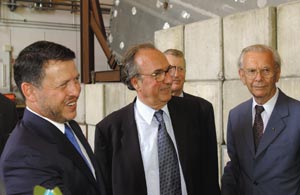
A memorandum of understanding that provides for co-operation between the new international centre for Synchrotron light for Experimental Science and Applications in the Middle East (SESAME), CERN and Jordan has been signed. During the visit of King Abdullah II of Jordan to the laboratory on 12 June, Luciano Maiani, CERN’s director-general, Herwig Schopper, president of the SESAME Council, and Khaled Toukan, Jordanian education minister, signed the memorandum, which covers the exchange of scientific personnel, fellows and equipment.
The organizational structure of SESAME is based on the model of CERN. At the suggestion of Schopper – who is a former director-general of CERN – SESAME was created under the umbrella of UNESCO in the same way that CERN began some 50 years ago. The SESAME Council now comprises nine founder members: Bahrain, Egypt, Iran, Israel, Jordan, Palestinian Authority, Pakistan, Turkey and the United Arab Emirates – who will fund the centre’s annual budget. Other states are expected to join in the coming months. The Jordanian government will provide $12 million for the construction of the centre.
There are close to 50 synchrotron radiation sources in the world, but very few are located in developing countries. SESAME, which is being built on the site of the Al-Balqa Applied University, 30 km from Amman in Jordan, will be the Middle East’s first synchrotron. Based on components from the BESSY 1 synchrotron in Berlin, SESAME should be up and running in 2006. It will produce synchrotron radiation over a broad range of wavelengths from the infrared to X-rays, and will therefore have various fields of application. The facility, which should attract scientists from numerous disciplines and nationalities, is a good example of collaboration between countries in the grip of political tensions. As Schopper underlines, SESAME is opening the way for technological progress and peaceful scientific development in the Middle East.
The bubble chamber, which was invented by Donald Glaser in 1952, made its major contributions to particle physics over three decades, from the late 1950s until the 1980s. This period saw chambers of increasing size, particle beams of increasing energy, more and more automatic measuring machines, and increasingly powerful computers. The initial era was pioneered by groups in the US, in particular the Alvarez group at the Lawrence Berkeley Laboratory. Later, major contributions came from European groups, with CERN playing a central role. In Italy the bubble-chamber technique provided the opportunity to revitalize the field of particle physics, bringing together a large number of physicists from many Italian universities. This was coordinated by INFN, which also created a national centre called the Centro Nazionale Analisi Fotogrammi (CNAF) in Bologna.
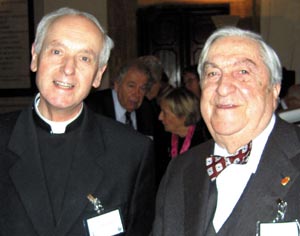
It was against this background that the Bologna Academy of Sciences organized a meeting on 18 March entitled “30 years of bubble chamber physics”. Around 100 physicists from 28 different institutions attended the meeting, which was sponsored by the Bologna Academy of Sciences, the University of Bologna and the Department of Physics, and the INFN (CNAF and Sezione di Bologna). The programme included talks on the beginning of bubble chambers, the first instruments and the first results, the impact of bubble chambers on particle physics, and hydrogen, helium and heavy-liquid bubble chambers.
The early bubble chambers were very small, but over the years they increased in size by a factor of around one million, with the largest chambers containing 40 m3 of liquid. More than 100 bubble chambers were built throughout the world, and more than 100 million stereo pictures were taken. The 80 cm Saclay bubble chamber at CERN, the 2 m CERN bubble chamber and the Big European Bubble Chamber (BEBC) took more than half of these pictures.
The sociology of bubble-chamber collaborations is an interesting one. In the initial period, many small chambers took pictures that were analysed by in-house groups. Later, bigger bubble chambers were built and run by experts in large laboratories using refined beams at accelerators of increasing energy. These chambers were considered facilities that could be used by internal and external groups, and this increased the number of international collaborations, with several groups from different countries and around 20-50 physicists per experiment. The role of large laboratories like CERN was always a central one.
One of the earliest bubble-chamber papers, “Demonstration of parity non conservation in hyperon decay”, which was published in 1957, was signed by physicists from four teams: the Columbia- BNL team that was headed by Jack Steinberger, the Bologna team headed by Giampietro Puppi, the Pisa team headed by the late Marcello Conversi and the Michigan team led by Donald Glaser (F Eisler et al. 1957).
It is worth recalling that in the beginning every team had to scan and measure bubble-chamber photographs with very primitive equipment. Eventually, digitized tables were made and one started to hear of “Mangiaspagos” in Italy, of more elaborate semiautomated or fully automated “Frankensteins” and “PEPRs” in the US, and of “MYLADYs” and “HPDs” in Europe. A large number of scanners was needed to cope with the increasing number of photographs, making measurements and pre-measurements more precise.
Computer technology grew in parallel with the increase in size and automation of the bubble chambers. At the beginning of the bubble-chamber era, slide rules and electromechanical calculators were used. But soon the IBM650 computer began to be used, and this was followed by even more powerful machines. Similarly, the measured co-ordinates of points along the tracks were initially punched onto cards manually, but then semiautomatic projectors took over this task. The installation of mainframe computing capacity was driven by the demands of bubble-chamber physics. For example, the CERN mainframe central computers increased their speed and capacity by a factor of more than 1000 during the bubble-chamber era.
The meeting also reviewed several areas of physics where bubble chambers have had an impact, for example, parity violation in hyperon decay, the weak neutral current, baryon resonances, charm particles and multihadronic production. In the round-table discussion on “The legacy of 30 years of bubble chamber physics”, several participants completed the overall view of the field, with an emphasis on topics such as the neutrino field and some of the special bubble chambers.
The main scientific legacy of the bubble chamber towards our understanding of the microworld of particle physics forms an impressive list that includes: strange particles, such as the omega-minus; meson and hadron resonances, leading to the hadron spectrum, SU(3) and constituent quarks; neutral weak currents and electroweak unification; and scaling in neutrino-nucleon deep inelastic scattering, leading to partons and therefore to dynamical quarks (“Bubbles 40” 1994).
The final session at the meeting dealt with particle physics and society, and with the popularization of science. In this respect, selected bubble-chamber pictures can provide a global and intuitive view of particle-physics phenomena. They allow an untutored audience to realize that our field is based on simple and intelligible experimental facts. A large number of photographs of bubble-chamber events was on show to participants as part of a small historical exhibit, which included an early propane chamber that was built in Padova in 1955, early instruments and the central part of a Mangiaspago measuring projector.
To paraphrase Tolstoy’s introduction to Anna Karenina, every developing country is developing in its own way. It is for each developing country to define its own needs and set its own agenda. So in this context, what is, or what should be, the relationship of CERN to developing countries? In what ways do they already benefit from the work at CERN, and how might they benefit from further collaboration?
CERN’s original raison d’être was to provide a vehicle for European integration and development, whilst also enabling smaller countries to participate in cutting-edge research, and to reduce the brain drain of young European scientists to the United States. Nowadays, CERN is internationally recognized for setting the standard of excellence in a very demanding field, and serves as a beacon of European scientific culture. CERN is open to qualified scientists from anywhere in the world, and beyond its 20 European member states currently has co-operation agreements with 30 countries. Prominent among these – beyond North America and Japan – are Brazil, China, India, Iran, Mexico, Morocco, Pakistan, Russia and South Africa, and more than 1000 people from these countries are listed in the database of scientists as using CERN for their experiments.
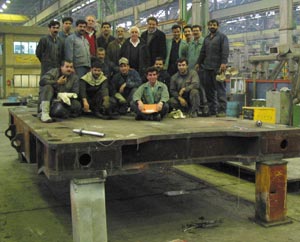
Experimental groups from developing nations are not asked to make large cash contributions to the construction of detectors, but rather to produce components. These are valued according to European prices, and if the developing countries can produce them more cheaply using local resources, then more power to their elbows. In Russia’s case, European and American funds were important in helping to convert military institutes into civilian work.
In addition to participating in experiments, some of these countries, notably Russia and India, have also contributed to the construction of accelerators at CERN. Russia and India are now making important contributions to the Large Hadron Collider (LHC) that is being constructed at CERN, and Pakistan has also offered to contribute. Again, CERN does not require these countries to pay any money towards the construction or operation of its accelerators. Indeed, CERN pays cash for the accelerator components that Russia and India provide, which these countries use to support their own scientific activities.
What, then, are the main benefits for developing countries in collaborating with CERN? It certainly provides them with a way to participate in research at the cutting edge, just as it always has for physicists from smaller European countries. In general, these users spend limited periods at CERN, preparing experiments, taking data and meeting other scientists. Thanks to the Internet, and to CERN’s World Wide Web in particular, particle physicists were the first to make remote collaboration commonplace, and this habit has spread to many other fields beyond the sciences. It is now relatively easy for scientists working on an experiment at CERN to maintain contact with their colleagues around the world, and they can even contribute to software development, data analysis and hardware construction from their home institute. The Web has enabled Indian experimentalists to access LEP data, and their theoretician colleagues to access the latest scientific papers from around the world, all while sitting at their home desks.
CERN is now also a leading player in European Grid computing initiatives. These will benefit many other scientific fields, for which applications are already being developed. Grid projects involve writing a great deal of software and middleware, which is split up into many individual work packages. CERN is keen to share the burden of preparing the Grid with developing countries. For example, several LHC Grid work packages have been offered to India, and other countries such as Iran and Pakistan have expressed an interest and would be welcome to join. In this way, such countries can become involved in developing the technology themselves, thus avoiding the negative psychological dependency on technological “hand outs” (as in the “cargo cults” in New Guinea after the Second World War).
The everyday acts of collaborating with colleagues in more developed nations exposes physicists from developing countries to the leading global standards in technology, research and education. Collaborating universities and research institutes are therefore provided with applicable standards of comparison and excellence, as well as training opportunities for their young scientists. These may be particularly valuable when educational values are threatened by a combination of increasing demand, insufficient resources and inefficiencies. One country where this is currently a concern is Pakistan. Its chief executive, Pervez Musharraf, has clearly stated his interest in encouraging scientific and technological development in Pakistan, and has exhorted other Islamic countries to do likewise.
How might such “ISO 9000” educational and academic standards be transferred to the wider society? Their value is limited if only a few élite institutions in each country benefit from the international contacts and they are not available throughout the educational system. This is essentially an issue for the internal organization within the country concerned, but CERN is happy to help out. The laboratory has archives of lectures in various formats available through the Web, offering resources for remote learning.
In India, for example, the benefits of collaborating with CERN increase to the extent that physicists from smaller universities outside the main research centres are brought into particle-physics research. In South Africa there are clear priorities in human development. However, a South African experimental group has joined the ALICE collaboration and CERN has welcomed a number of South Africans to its summer student programme, as well as a participant to its high-school teacher programme.
The information technologies that CERN has available should be of benefit to wider groups in developing societies. For example, could video archiving and data-distribution systems be used to disseminate public health information? This exciting idea was proposed to CERN by Rajan Gupta from the Los Alamos National Laboratory, and Manjit Dosanjh of CERN is now developing a pilot project in collaboration with the Ecole Superieure des Beaux Arts de Genève, supported by the foundation “Project HOPE” (see “Project HOPE” box).
This project will be demonstrated at the conference on The Role of Science in the Information Society (RSIS) that CERN is organizing in December 2003 as a side event of the World Summit on the Information Society (WSIS) (see “The Role of Science in the Information Society” below). Other sessions at this event will explore the potential of scientific information tools for aiding problems related to health, education, the environment, economic development and enabling technologies.
In 1946 Abdus Salam left his native Pakistan to pursue his scientific dreams in the West – dreams that were more than fulfilled with the award of the Nobel Prize for Physics in 1979. However, his dream of bridging the gap between rich and poor through science and technology remained largely unfulfilled, as Riazuddin has described. If the world can develop its information society properly, a future Salam might not have to leave his – or her – country in order to do research in fundamental physics at the highest level. Moreover, a country’s participation in research at CERN might benefit not only academics and students, but also the wider society at large.
The Role of Science in the Information Society
On 10-12 December 2003, the first phase of the World Summit on the Information Society (WSIS) will take place in Geneva. The aim is to bring together key stakeholders to discuss how best to use new information technologies, such as the Internet, for the benefit of all. The International Telecommunications Union, under the patronage of UN secretary-general Kofi Annan, is organizing WSIS, and the second phase will take place in Tunis in November 2005.
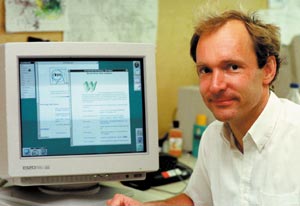
The “information society” was made possible by scientific advances, and many of its enabling technologies were developed to further scientific research and collaboration. For example, the World Wide Web was invented at CERN to enable scientists from different countries to work together. It has gone on to help break down barriers around the world and democratize the flow of information.
For these reasons, science has a vital role to play at WSIS. Four of the world’s leading scientific organizations: CERN, the International Council for Science (ICSU), the Third World Academy of Science (TWAS) and UNESCO, have teamed up to organize a major conference on The Role of Science in the Information Society (RSIS), as a side event to WSIS. The conference will take advantage of CERN’s location close to Geneva to play a full role at the Summit.
Through an examination of how science provides the basis for today’s information society, and of the continuing role for science, the conference will provide a model for the technological underpinning of the information society of tomorrow. Parallel sessions will examine science’s future contributions to information and communication issues in the areas of education, healthcare, environmental stewardship, economic development and enabling technologies, and the conference’s conclusions will be discussed at the UNESCO round table on science at the Summit itself.
ICSU, TWAS and UNESCO have a long tradition of scientific, political and cultural collaboration across boundaries. CERN produces knowledge that is freely available for the benefit of science and society as a whole – the World Wide Web was made freely available to the global community and revolutionized the world’s communications landscape. Working together, these organizations are providing a meeting place for scientists of all disciplines, policy makers and stakeholders to share and form their vision of the developing information society.
The RSIS conference will take place on 8-9 December. Its conclusions will feed in to the UNESCO round table at WSIS, and it will set goals and deliverables that will be reported on at Tunis in 2005. The scientific community’s commitment is long-term.
Participation at the RSIS conference will be by invitation and is limited to around 400. However, anyone who feels they have something to contribute to the debate can do so via a series of on-line forums that are accessible through the conference website. These forums will have the same themes as the parallel sessions at the conference and will be moderated by the session convenors. Their conclusions will provide valuable input to the conference itself, and as an added incentive, CERN is offering up to 10 expenses-paid invitations to the conference for those making the most valuable on-line forum contributions.
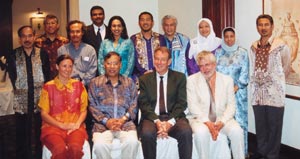
Within the framework of the CERN-Asia Fellows and Associates Programme, CERN offers three grants every year to East, Southeast and South Asia* postgraduates under the age of 33, enabling them to participate in its scientific programme in the areas of experimental and theoretical physics and accelerator technologies. The appointment will be for one year, which might, exceptionally, be extended to two years.
Applications will be considered by the CERN Associates and Fellows Committee at its meeting on 18 November 2003. An application must consist of a completed application form, on which “CERN-Asia Programme” should be written; three separate reference letters; and a curriculum vitae including a list of scientific publications and any other information regarding the quality of the candidate. Applications, references and any other information must be provided in English only.
Application forms can be obtained from: Recruitment Service, CERN, Human Resources Division, 1211 Geneva 23, Switzerland. E-mail: Recruitment.Service@cern.ch, or fax: +41 22 767 2750. Applications should reach the Recruitment Office at CERN by 17 October 2003 at the latest.
The CERN-Asia Fellows and Associates Programme also offers a few short-term Associateship positions to scientists under 40 years of age who are on a leave of absence from their institute. These are open either to scientists who are nationals of the East, Southeast and South Asian* countries who wish to spend a fraction of the year at CERN, or to researchers at CERN who are nationals of a CERN Member State and wish to spend a fraction of the year at a Japanese laboratory.
• Candidates are accepted from: Afghanistan, Bangladesh, Bhutan, Brunei, Cambodia, China, India, Indonesia, Japan, Korea, the Laos Republic, Malaysia, the Maldives, Mongolia, Myanmar, Nepal, Pakistan, the Philippines, Singapore, Sri Lanka, Taiwan, Thailand and Vietnam.
by Bryce DeWitt, Oxford University Press. Hardback ISBN 0198510934, £115.
This work in two volumes covers classical field theory, quantum mechanics and all major theoretical aspects of quantum field theory, and shows how they are related. Fields are viewed as global entities in spacetime, rather than as systems evolving from one instant of time to the next. The book should be particularly useful for quantum field theorists (especially students), theoretical physicists and mathematicians with an interest in physics.
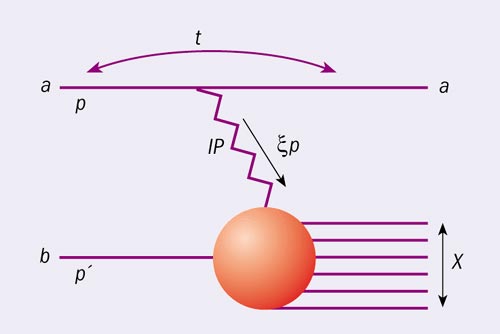
Just as in the diffraction of light, beams of elementary particles diffract off each other in scattering experiments at high energies. The resulting diffraction pattern contains crucial information on the nature of the strong force and, in particular, on the pomeron.
For more than 40 years now, particle physicists have been trying to understand the physics of particle scattering at high beam energies. Central to the theory is the notion of complex angular momentum pioneered by Tulio Regge, where single particle exchange is generalized to the exchange of a collaboration of many particles that collectively look like a single particle carrying complex angular momentum. The pomeron, named after Isaak Pomeranchuk, is the collective exchange that is dominant at high-enough beam energies.
This book carefully collects the key theoretical ideas and confronts them with the available data in a systematic way. Given that there is, as yet, no consensus on the exact nature of the pomeron and that the literature is often quite confused, such a well written and accessible book as this is most welcome. The authors present an approach based firmly on the theory of Regge and make very good use of both perturbative and non-perturbative QCD to help develop and support their ideas. The authors have considerable expertize and experience, which they particularly bring to bear when presenting their ideas on the use of non-perturbative techniques to study the pomeron. They are also the principal advocates of the idea that there may be two pomerons, with one pomeron dominant in soft interactions and the other dominant in hard interactions. Within this framework they succeed in presenting a rather coherent picture of the physics, notwithstanding that there are a few areas where the theory remains to be developed.
The book is quite pedagogical and is written at a level suitable for those who already have a good grasp of the basic elements of quantum field theory and elementary particle physics. There is a self-contained introduction to S-matrix theory and Regge poles, which provides the necessary foundation for the remainder of the book. Although there is a brief introduction to QCD, a prior exposure to QCD as a quantum gauge field theory would be helpful, particularly if one is to appreciate fully the sections that present the authors’ ideas in non-perturbative QCD.
Over the past 10 years, data from the HERA and Tevatron colliders have allowed us to make substantial advances in our understanding of high-energy processes. Continued understanding can be expected in the light of data that will come from future colliders and this book will, I suspect, continue to provide an excellent introduction to the subject.
by Alfredo Bellen and Marino Zennaro, Oxford University Press. Hardback ISBN 0198506546, £59.95.
The latest in a series on numerical mathematics and scientific computation, this book by Bellen and Zennaro provides an introduction to the Cauchy problem for delay differential equations. It is aimed at mathematicians, physicists, engineers and other scientists interested in this area of numerical methods.
by David Caldwell (ed.), Springer-Verlag. ISBN 3540410023, €79.95, £56.00.
When, almost 70 years ago, Wolfgang Pauli wrote “I have done a terrible thing, I have postulated a particle that cannot be detected,” he could not have anticipated that even now that particle, albeit detected, would continue to be the most elusive, and also the most astonishing, paradoxical and intriguing of elementary objects. We now know that it appears as (at least) three different species, possibly some of them massive, all uncharged, spinning and blind to strong interactions, and all playing the most crucial role in modern theories of the history and structure of the universe – from the smallest to the largest scales.
Indeed, few things in recent years have had as much of an impact on our view of particle physics as the recent impressive developments in neutrino physics. Experiments in this field are challenging due to the very small neutrino interaction cross-section. As Haim Harari put it: “Neutrino physics is largely an art of learning a great deal by observing nothing.” Today, new technologies and ideas have allowed us to conceive projects that may soon bring us to a much better understanding or even to a solution of the neutrino puzzle. Neutrino physics, interplaying between elementary particles and astrophysics, is currently one of the hottest subjects in physics.
The fast development of neutrino physics is – paradoxically – a reason for the small number of textbooks on the subject. Proceedings of conferences and schools are too advanced and detailed, and thus do not make up this deficiency, while standard textbooks on particle physics cannot afford to expand the subject of neutrinos. We are therefore left with a “literature hole”, a hole that is well known to graduate and postgraduate university teachers. This book, edited by David Caldwell, seems to meet these needs. It comprises a set of purpose-written, up-to-date, advanced reviews, which also offer a comprehensive view of the field – a rare but fundamental feature of a textbook – and it is aimed at both specialists and beginners.
The book begins with a concise history of neutrino physics, and is followed by a theoretical discussion of the nature of massive neutrinos. The ensuing chapters review our experimental knowledge, interleaved with a guiding theoretical framework: measurements of the neutrino masses, their flux from the Sun and the atmosphere, studies of neutrinos at reactors and accelerators, and finally double beta decay searches. The next two chapters contain phenomenological and theoretical interpretations of this empirical knowledge, and the last three chapters refer to cosmological scales and review the neutrino’s role in supernovae, in the early universe and finally in astronomy. Each chapter starts with a very good introduction and closes with a superb summary. Reference lists, compiled separately for each chapter, are extensive and up-to-date until the time the book was edited. They often contain popular and review articles.
The authors, one of whom is the editor, are recognized authorities on the topic of each chapter. The only surprise is their geographic bias: all 16 are from the United States and six of them come from California. A newcomer to the field may suspect that neutrino physics blossoms mainly along the west coast of America. The important role played by the neutrino experimental communities in Japan and Europe should have been better reflected in the choice of book contributors.
A more detailed presentation of forthcoming experiments and facilities, such as MINOS, ICARUS, OPERA, and neutrino factories, could have been included in the book. It is also unfortunate that the traditional role of neutrinos as probes of the structure of matter and interactions was completely neglected. The editor is aware of this shortcoming and states: “While they [neutrinos] have been important tools for studying particle properties, such as structure functions and the nature of weak interactions, at present this is not the thrust of most research and hence is not covered in this book.” While this is indisputably true, a short account of those efforts could have been given for completeness; after all they are still being undertaken, for example in the CCFR and NuTeV measurements of ν(νbar)-nucleon cross-sections. An appendix with Web addresses for databases or for websites where the reader can find updated or more detailed information would also be useful.
The book appears to have been carefully proofread, but the index is surprisingly poor. The names of future experiments and facilities discussed in the text are missing and some of the page numbers are wrong.
Most of the book was completed before the results of the SNO experiment were published in mid-2001, but because of their anticipated importance publication was delayed so that the results could be summarized in an addendum. Since then, KamLAND has confirmed the disappearance of the electron antineutrinos. There is always a risk that reviews have a short life-time, especially now in neutrino physics as it is developing rapidly. However, this book should be useful for a long time yet, both as a reference and a textbook, due to its comprehensive content, clear logic in ordering the material, and extremely good oversight of most aspects of neutrino physics.
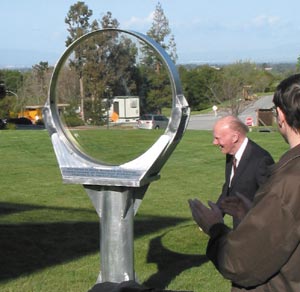
The new Kavli Institute for Particle Astrophysics and Cosmology has been inaugurated at SLAC. It is named after physicist and philanthropist Fred Kavli, whose Kavli Foundation pledged $7.5 million to establish the new institute. The institute, which will focus on recent developments in astrophysics, high-energy physics and cosmology, will eventually be located in a new building at SLAC between the research office building and the auditorium, and will open its doors in 2005. At the site of the future institute, Kavli unveiled a 2 m tall, steel and glass sculpture that incorporates a piece of SLAC history in the form of the window from the 1 m (40 inch) bubble chamber.
Roger Blandford, who will become the institute’s director in October, was one of the speakers at the ceremony. He said that initially he intends to follow a roadmap that balances theory, computational astrophysics and phenomenology on one side, and experimental astrophysics and high-energy observing on the other. It will draw upon existing strengths in theoretical physics and astrophysics, gravitational physics and underground physics at Stanford. As Blandford noted, “Part of the excitement of the field is that it is impossible to predict where it will be in five years’ time and what its scientific focus will be”.
To provide the best experiences, we use technologies like cookies to store and/or access device information. Consenting to these technologies will allow us to process data such as browsing behavior or unique IDs on this site. Not consenting or withdrawing consent, may adversely affect certain features and functions.
Functional
Always active
The technical storage or access is strictly necessary for the legitimate purpose of enabling the use of a specific service explicitly requested by the subscriber or user, or for the sole purpose of carrying out the transmission of a communication over an electronic communications network.
Preferences
The technical storage or access is necessary for the legitimate purpose of storing preferences that are not requested by the subscriber or user.
Statistics
The technical storage or access that is used exclusively for statistical purposes.The technical storage or access that is used exclusively for anonymous statistical purposes. Without a subpoena, voluntary compliance on the part of your Internet Service Provider, or additional records from a third party, information stored or retrieved for this purpose alone cannot usually be used to identify you.
Marketing
The technical storage or access is required to create user profiles to send advertising, or to track the user on a website or across several websites for similar marketing purposes.