Nonrelativistic Quantum Mechanics World Scientific. Paperback ISBN 981024651X, £33 ($48); hardback ISBN 981024634X, £53 ($78) and Problems & Solution in Nonrelativistic Quantum Mechanics by Anton Z Capri, World Scientific. Paperback ISBN 9810246501, £33 ($48); hardback ISBN 9810246331, £58 ($86).
Now in its third edition, Capri’s textbook is suitable for advanced undergraduate students as well as graduate students. The new study guide, in its first edition, has grown out of popular demand. The problems, most of which have been tested on the author’s students, vary in difficulty from very simple to research level.
by Julien Clinton Sprott, Oxford University Press. Paperback ISBN 0198508409, £24.95; hardback ISBN 0198508395, £49.95.
Aimed at students, scientists or engineers who want to use the ideas in a practical setting, this book introduces new developments in chaos and related topics in nonlinear dynamics. The emphasis is on physical concepts and useful results.
by the RIKEN Institute, Japan. English version ¥3000 NTSC format, ¥4000 PAL/SECAM format.
A flapping butterfly, the songs of birds, the colours of flowers, mountains and oceans – all are relics of the stars, for the ashes of stars are the building blocks of all we can see and touch. On Earth, the ashes must have been recycled, because we can find nearly all the elements present. It is only half a century since we began to understand that the genesis of the elements lies in the stars. They are the factories and, depending on their fuel, mass and age, they produce their specific elements.
RIKEN, the Institute of Physical and Chemical Research in Japan, has taken the initiative to produce a video of the processes involved in the synthesis of elements in the stars. The film begins with a gentle introduction, but soon the audience must be alert as they will be informed about the basics of radioactivity and the structure of atomic nuclei, in subtle detail. The video continues with the synthesis of elements, first in a star like the Sun, then during the Big Bang, and then in massive stars, and ends with the production of thorium and uranium in a supernova explosion. Back on Earth, RIKEN argues that its research using radioactive ion beams is important for unravelling the mysteries of element synthesis, with supporting statements from scientists from other countries.
The video lasts for 35 minutes and is a complete lesson in nuclear synthesis. It is excellent material for high-school and university students who already have a background knowledge of this subject matter. Despite the long duration of the film, it can be used to support lessons on this topic. However, there are also some cautionary remarks. As mentioned before, the information given within the first six minutes about the basics of radioactivity and the structure of atomic nuclei is so compact and detailed that even the most attentive students will be exhausted, especially as the information comes both from a voice-over and simultaneously from three or four different places in an animation. This could be simply avoided.
Fortunately, the movie then slows down and the alternation of the narrator with comments from Japanese scientists works very well. If the “man in the street” understands that thermal motion of two hydrogen nuclei by quantum-electrotunnelling through the barrier created by electric repulsion leads to fusion into deuterium, a positron and a neutrino, then the video would also be suitable for the general public. Otherwise, it would probably be better to make a special, more simplified version, which could give an overview of the birth and death of the (massive) stars that 5 billion years ago resulted in the birth of our solar system.
In summary, this is an attractive and interesting video on nuclear synthesis and nuclear structure, and could be useful for supporting lectures and classes.
by Michelle Schatzman, Oxford University Press. Paperback ISBN 0198508522, £24.95; hardback ISBN 0198502796, £49.95.
Written for advanced undergraduate mathematics students who are interested in the “spice and spirit” of numerical analysis, this is an English translation of an updated version of Schatzman’s book, which first appeared in French in 1991.
by Timothy Paul Smith, Princeton University Press. ISBN 0691057737, £17.95 ($24.95).
The world of subatomic particle physics is often portrayed to the non-specialist as solely the business of large “atom smashing” particle accelerators. But the mysterious quarks are very much the basis of familiar matter in the world about us, as Timothy Paul Smith explains in his book Hidden Worlds.
Smith, a research scientist at the Massachusetts Institute of Technology Bates Linear Accelerator Center and research professor at Dartmouth College, has produced a clear and concise journey through the wonders of subatomic physics for the student. His background as a teacher is soon apparent, as he uses common experiences to help relate the physical scale, details and concepts he wishes to convey. This skill makes the story and its comprehension easy for the lay reader.
Smith quickly introduces his target area and focuses on his quark story. The early pages lead us through the requirement for high-energy accelerators and for their ever-increasing power to explore smaller and smaller particles as the atom, nucleus and nucleons are unwrapped.
The regular comparison and relation of physics concepts to chemistry provides an additional base for the reader’s understanding. The use of quick resumés at the start of each chapter also enables the reader to progress through the book with some certainty – and is helpful for those who cannot complete the book in one go.
Smith uses his own experiences at research laboratories to describe both the scientific method and research team challenge in technical and organizational arenas. His obvious excitement and dedication to the research challenge are very clear, and no high-school student should miss such an invitation to a career.
The book should give the reader confidence in the use of the concepts of – among others – the nucleus, nucleon, charge, spin, color, quark, antiquark and gluon. Smith’s good use of analogies using everyday systems also means that the reader can quickly become confident with the constituent quark and quantum chromodynamics. However, this should not be misinterpreted as gaining a full understanding; this is a small book covering a wide subject area and simply gives an overview in preparation for more advanced work.
The chapter “Particle Taxonomy and Quark Soup” brings us into the Greek alphabet soup, which usually sinks lone attempts at the quark world. Smith’s attitude appears to be that the reader should be exposed to this, but not overwhelmed. Patterns and overview are extracted and we proceed to further discoveries without exhaustion. However, Smith should have expanded more here, as this is the area in which readers are likely to be short of knowledge.
Next, Smith delves into the quark/gluon world, where there is a good use of clear text and diagrams. Having reviewed the quark’s history and the current theories, Smith completes his story with some outstanding questions and current research proposals.
For those of you who flip through a book looking at the ratio of diagrams to text, Smith certainly passes the test, including Feynman diagrams, scale charts, quark and nucleon diagrams, accelerator exploded views and ample graphical charts. A glossary that gives an adequate description of technical terms is also provided, enabling easy reference without having to search through previous chapters.
In all, Hidden Worlds provides a short introduction and overview of the subject area. Students should use it as such and expect to follow up with a more rigorous technical book. It is written in an attractive and easy to read style, which gives the reader the confidence to attack this difficult subject. In my opinion, a copy should be placed in every public library.
Flash! The Hunt for the Biggest Explosions in the Universe by Govert Schilling, Cambridge University Press, ISBN 0521800536, £18.95 ($28.00).
The Biggest Bangs: The Mystery of Gamma-Ray Bursts, The Most Violent Explosions in the Universe by Jonathan I Katz, Oxford University Press, ISBN 0195145704, £18.95 ($28.00).
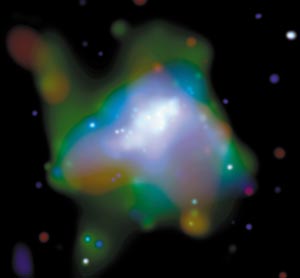
Our understanding of fundamental physics has historically been closely tied to observations of the cosmos. These two books tell the unfinished story of one of the greatest challenges in contemporary astrophysics: the origin of gamma-ray bursts (GRBs), which appear to be the most energetic events in the universe. It’s an exciting story and well worth telling, especially to the lay public.
In 1687, Isaac Newton published his universal theory of gravitation. For well over 200 years it reigned supreme, because it appeared to describe completely all of the observed motions of the planets and other astronomical objects in the heavens. As it turned out, of course, even this enormous advance – achieved by “standing on the shoulders of giants”, as Newton famously remarked – is by no means the entire story. And what a story it has turned out to be. For even though Newtonian dynamics works most of the time, it lacks the capacity to describe – let alone predict – many of the gravitational phenomena that are at the frontiers of research in astrophysics today.
In 1915, Einstein published his general theory of relativity. In attempting to explain a discrepancy between theory and observation in the perihelion of Mercury, and by incorporating into Newtonian dynamics his special theory of relativity, Einstein created a dynamics that revolutionized our understanding of the universe. Earlier, in 1905, Einstein taught us that energy and mass are equivalent, and he introduced the concept of space-time. Then in 1915, he showed that the stress-energy tensor of space-time was a response to its curvature – or, in John Wheeler’s phrase, “matter tells space-time how to bend, and curved space-time tells matter how to move.” Einstein’s theory went on to predict the existence of phenomena such as the bending of light in a gravitational field, gravitational radiation, neutron stars and black holes, among others. Here, as in much of modern science, the truth really is stranger than fiction.
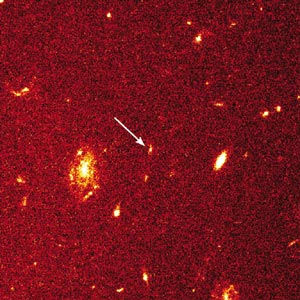
Gamma-ray bursters are one of the strangest phenomena of all. They were discovered by accident in the late 1960s, using satellites created to search for violations of the nuclear test-ban treaty. Since then they have been a source of great mystery, and have had their share of scientific competition and controversy. We now know that GRBs, which occur at a rate of about one per day and are uniformly distributed over the sky, are at cosmological distances and must be by far the most energetic phenomena in the universe since the Big Bang itself. However, reaching these conclusions took 30 years and the combined efforts of the worldwide astrophysical community, using a panoply of the most modern instruments and theoretical developments, as well as rapid communication via the Internet and the Web.
Visual and highly accessible, Schilling’s book is a masterpiece of lay scientific reporting. He is the author of more than 20 previous books and hundreds of articles on astronomical subjects (it shows; the prologue alone is almost worth the price of the book). Beginning with the initial discovery of GRBs by Ray Klebesadel and Roy Olson circa 1970, the reader is artfully led down the path that science often takes – one of tantalizing data, missteps, blind alleys, wishful thinking, raging competition, broken dreams – and for some, great success. Along the way we meet all of the major players in the GRB drama, and are skillfully introduced to all of the relevant scientific history, theoretical concepts and experimental findings. By the end, we’ve learned how it was determined that GRBs are uniform across the sky (from the BATSE detector on the Compton Gamma Ray Observatory), how it was determined that GRBs are at cosmological distances (by learning, using the BeppoSAX satellite, how to observe GRB afterglows at optical and radio wavelengths, which in turn allowed the determination of redshifts), and how it was concluded that these objects are so enormously energetic.
On these last issues, the fact that GRBs wink in and out of existence so quickly made it imperative to share the position data from BATSE and BeppoSAX as rapidly and broadly as possible, so that the afterglows would be bright enough for spectral analysis. The Internet and the Web provided the means to do this, and the data provided the basis for the fully automatic wide-angle optical search systems known as LOTIS and ROTSE. The theoretical constructs discussed include the relativistic fireball model and magnetars, among others. My only quibble is that given the obvious care that the author devoted to his task, it’s too bad the proof-reading was not better, as there are quite a few typos. However, the book is very well translated from the Dutch, and makes for superb reading.
Jonathan Katz’s book is differently oriented. Rather than spend as much time on the historical aspects, he devotes a great deal of effort to elucidating the science surrounding GRBs, as well as the technical details of various detection systems. My opinion is that while these parts are very well done, it is all rather too much for a lay reader. Instead it might be very useful for classes of undergraduate physics or astronomy students. The kinds of explanations that Katz provides are not often found in the textbooks, and would provide excellent supplementary information. However, there is a significant amount of complaining about NASA and NSF decision-making, as well as gratuitous remarks about other people’s careers. This material does nothing to advance the book’s main purpose, and would have been much better left out.
Both books contain very useful glossaries, guides to other sources and literature, and are well indexed. Each has a great deal to offer to its respective audience.
The Linac Coherent Light Source (LCLS) project at the Stanford Linear Accelerator Center (SLAC), which passed the US Department of Energy’s “Critical Decision 1” process in October 2002, has been allocated $6 million (€5.5 million) in the budget for fiscal year 2003 to start engineering design activities. The project is a proposed multi-institutional collaboration for an X-ray free-electron laser (XFEL) using electron beams from the SLAC linac, and operating in the 0.15-1.5 nm wavelength region.
The XFEL will receive a beam of electrons accelerated through the final third of the SLAC linac. The electron beam will then make a single pass through a 122 m undulator, to generate a laser-like X-ray beam 10 billion times brighter than the light currently produced at the Stanford Synchrotron Radiation Laboratory. The design and construction cost for the LCLS project is estimated at around $220 million, and the construction schedule calls for full operation by September 2008.
In Europe meanwhile, the German Science Council has recommended DESY’s TESLA project as worthy of support, in a report that assessed nine large-scale facilities for basic research in the natural sciences. In a previous evaluation statement, the Science Council had asked for further details on the superconducting electron-positron linear collider with respect to international funding and co-operation, and also for a revised technical proposal for the TESLA X-ray laser with a separate linear accelerator. DESY sent the corresponding papers to the Science Council in October.
In response to the latest report, Albrecht Wagner, chairman of the DESY Directorate, said: “We are very glad that the Science Council changed its first positive statement about TESLA to the German federal government to a recommendation, and we are looking forward to hearing the upcoming evaluations, since we have complied with the conditions posed by the Science Council.” The final decision of the federal government regarding the TESLA project is expected this year.
The Joint Accelerator Conferences Website, (JACoW) is a website located at CERN with a mirror site at KEK, where the proceedings of accelerator conferences are published. It is also an international collaboration in the electronic publication of accelerator conference proceedings, which has led to the development and maintenance of templates for the preparation of electronic contributions to conference proceedings. Through editor and author education, it has contributed greatly to facilitating and speeding up the publication of electronic versions of conference proceedings.
JACoW came into being following the Web publication of the proceedings of the fifth European Particle Accelerator Conference (EPAC’96) when Ilan Ben-Zvi, chair of the US Particle Accelerator Conference (PAC’99) Program Commit- tee, proposed the idea of a joint PAC/EPAC website for the publication of the proceedings. Since then it has pioneered electronic publications in the accelerator field. The CYCLOTRONS, DIPAC, ICALEPCS and LINAC series of conferences have all joined the collaboration, with more in the pipeline. While the number of published proceedings now stands at 17, the project for scanning PAC conference proceedings from the pre-electronic era is rapidly swelling this number.
Because JACoW is not simply a list of URLs to other websites, each conference series is required to deliver a full set of files prepared in portable document format (PDF), according to JACoW specifications. A unique feature of the JACoW site is the custom interface that allows full Boolean searches in the metadata (the hidden fields in the PDF files), in addition to the standard full text search, across all papers presented at all major accelerator conferences.
The JACoW collaboration is now turning its attention to the database infrastructure requirements to run the scientific programmes of conferences – covering all actions from submission of abstracts through to submission of papers, with automated procedures for the preparation of files for publication on the Internet.
In collaboration with Institute of Physics Publishing (IOPP), the International School for Advanced Studies (SISSA) has launched the Journal of Cosmology and Astroparticle Physics (JCAP). The new electronic journal is a sibling of JHEP, the Journal of High Energy Physics, which has proved highly successful as a modern paperless peer-reviewed journal. With distinguished advisory and editorial boards, the aim is for JCAP to emulate JHEP’s success.
The procedure for submitting a paper to JCAP is simple and straightforward, and is identical to that of JHEP. Software performs all the steps in the editorial procedure: the submission of papers, their assignment to the appropriate editors, the review by referees, the contacts between editors, referees and the Executive Office, the revision, proofreading and publication of papers, and the administration of the journal. Editors, referees and authors have personal Web pages, where they run the editorial procedure or check the status of the papers. The editorial work is carried out by the Executive Office based at SISSA. Accepted papers are then published on the IOPP website.
For the first year JCAP will be free for everyone, and will then be made available at a low subscription rate. In the case of JHEP, recent changes with the introduction of a low-cost subscription for institutions, mean that the costs of the journal will be spread over all countries that can contribute to its publication. ICTP pays a modest sum to ensure that developing countries get access to JHEP for free.
Last September, the European Committee for Future Accelerators (ECFA) visited Bulgaria for the first time, as part of an ECFA mission to survey at first hand the status of particle physics in CERN member states. The visit was to Sofia, beautifully situated in a valley overlooked by Mount Vitosha and the Balkan range. Sofia has a history going back thousands of years, and counts the Thracian Serdi tribe, the Romans and the Byzantines among its previous occupants.
The academician Blagovest Sendov, a renowned mathematician and vice-president of the Bulgarian parliament, welcomed the committee. He recalled his own first contact with CERN; in 1986, as chair of the Bulgarian Science Foundation, he approved a grant of SwFr3 million (€2 million) for the participation of Bulgarian scientists and engineers in the L3 experiment at CERN. Sendov explained his appreciation of CERN’s important role in the development of science and technology in the modern world, particularly in Bulgaria. While praising the laboratory’s remarkable contributions in the domain of information technology, he recalled that the very first electronic digital computer was actually invented by an American of Bulgarian origin. John Vincent Atanasoff, who lived from 1903 to 1995, received a PhD in theoretical physics and went on to collaborate with electrical engineering student Clifford Berry, building what later came to be called ABC (the Atanasoff-Berry computer).
Following the welcoming ceremony, the status of particle physics and closely related areas was presented in a number of talks by Bulgarian scientists. A key player in the scientific research sector is the Bulgarian Academy of Sciences (BAS), which was formally established in 1911, but has its roots in a society founded in 1869. Today it is an autonomous national association, and runs a number of institutes, laboratories and other independent research centres. It funds and carries out research in collaboration with universities (primarily the University of Sofia) as well as independently. Its activities are organized in 11 departments, including physical, chemical, mathematical and engineering sciences.
Jordan Stamenov, director of the Institute for Nuclear Research and Nuclear Energy (INRNE) of the BAS, gave an overview of experimental high-energy physics in Bulgaria. The study of cosmic rays began as early as the 1950s by placing nuclear emulsions at an observatory situated on Mussala, the highest peak on the Balkan Peninsula (2925 m above sea level). Later, extended air showers in the energy range 1013-1017 eV were studied high in the Tien-Shan Mountains of Kazakhstan. The Mussala and Tien-Shan sites are still used for a variety of cosmic-ray and astroparticle physics experiments.
Bulgarian particle physicists initially carried out their research primarily using facilities in the former Soviet Union. Bulgaria was one of the founding states of the Joint Institute for Nuclear Research (JINR) in Dubna in 1956, and has been an active partner in many experiments there. From the early 1970s, Bulgarian scientists also began participating in experiments at CERN, mainly through JINR. For example, three Bulgarian physicists and one mathematician took part in the NA4 deep-inelastic muon scattering experiment in the 1980s, as members of the JINR group in the Bologna-CERN-Dubna-Munich-Saclay (BCDMS) collaboration.
Vladimir Genchev described Bulgarian involvement with the CMS experiment in preparation for the Large Hadron Collider (LHC). Bulgarians have been involved with CMS since the beginning, initially concentrating on the software. Bulgarian physicists did the Monte Carlo simulation of the CMS hadron calorimeter, and also took part in the optimization of its design and performance. Later they oversaw the production of the calorimeter’s brass absorber plates by Bulgarian industry. Bulgarians also took on major responsibility for the production, assembly and testing of 125 so-called resistive plate chambers. This is partially funded by the Bulgarian Ministry of Education and Science. Some 27 Bulgarian physicists and engineers have been involved in these efforts. Bulgarians also participate in the ATLAS project, as part of the JINR group.
Leander Litov of the University of Sofia reviewed Bulgarian participation in fixed-target experiments at CERN, such as NA48, NA49 and HARP. The Bulgarian group in HARP, for example, includes 12 people, and there are as many students participating in the experiments. Bulgarians also participate in the COSY experiments at Germany’s Jülich laboratory, where they study collisions between protons and light ions. This work has been partially funded through a bilateral agreement between Germany and Bulgaria.
Fulfilling potential
Bulgaria is a young nation in terms of higher education. The St Kliment Ohridski University of Sofia was founded as a Higher Pedagogical School in 1888. In 1904, by a royal decree from Prince Ferdinand, grandfather of the current prime minister of Bulgaria, the school was transformed into Bulgaria’s first state university. The University of Sofia is a leading institution for the education of young scientists, as well as for fundamental and applied physics research. ECFA delegates were impressed by the high level of scientific education of Bulgarian physicists, and by the quality as well as quantity of work they perform, in spite of a lack of resources. It was felt that there is a great deal of potential in the Bulgarian particle physics community, but not enough resources to realize it.
Matters related to LHC computing and the GRID project, from a Bulgarian point of view, were presented by Vladimir Dimitrov of the Faculty of Mathematics and Informatics at Sofia University. Bulgaria will not build a Tier 1 centre; a possibility that is being discussed is to create two Tier 2 centres for the Balkan countries – one in Greece and one in Bulgaria. One piece of good news is that there will soon be a 6 Mb/s data transfer line to the BAS, with the possibility of an increase to 622 Mb/s at a relatively small cost later on. It is very likely that all Bulgarian universities and research institutes will be optically connected to one another in the near future.
A a mutual smooth collaboration between CERN and the Bulgarian Ministry of Education and Science is of vital importance.
In Bulgaria, there are a number of small accelerators for industrial and medical applications. There is substantial know-how in accelerator physics, but funding is meagre. Furthermore, the facilities for medical physics and radiotherapy are inadequate given the health needs of the country. There is a strong wish to construct a neutron therapy facility, but this would mean overcoming obstacles related to the widespread fear of radiation in officialdom.
Matey Mateev, head of the Department of Theoretical Physics at the University of Sofia, reported on the status of theoretical physics in Bulgaria. Historically, almost all of the staff members in the field were trained at the Dubna, Moscow or St Petersburg theory schools. Research in theoretical particle physics is carried out at the University of Sofia, the BAS, the University of Plovdiv and the University of Shumen. The range of topics covered is broad, ranging from mathematical physics (for example conformal field theory) to topics directly applicable to experiments, such as the partonic spin content of the nucleon, or calculation of energy levels of the antiprotonic helium atom (studied experimentally by the ASACUSA collaboration at CERN). The Bulgarian theoretical particle physics community has strong ties with those in several other countries, in particular France, Germany, Italy, the UK and the US, as well as with CERN. Many theorists are grateful to Ivan Todorov for his pioneering leadership in creating a strong school of theoretical physics in Bulgaria.
Joining CERN in 1999 was a milestone for Bulgaria – it was essential not only for the development of high-energy physics in the country, but also for nuclear physics, electronics, informatics and other disciplines of importance for the future of the Bulgarian scientific community. This point was raised many times during the ECFA visit. The student representative, Stefan Piperov, also emphasized how he had been attracted to particle physics not only because of the fundamental nature of the subject, but also because of the opportunity to visit CERN. However, there was also a general feeling of discontent that promises given to Bulgarian physicists by the authorities had not been fulfilled. It was clear that the government faces a difficult economical situation. Nonetheless, it was also obvious that with more support, Bulgarian physicists, engineers and technicians could reach their full potential. To this end, a mutual smooth collaboration between CERN and the Bulgarian Ministry of Education and Science is of vital importance. The existing link between advanced technology and particle physics would then stimulate Bulgarian industry and technology, and be a valuable investment in the future economic development of the country.
To provide the best experiences, we use technologies like cookies to store and/or access device information. Consenting to these technologies will allow us to process data such as browsing behavior or unique IDs on this site. Not consenting or withdrawing consent, may adversely affect certain features and functions.
Functional
Always active
The technical storage or access is strictly necessary for the legitimate purpose of enabling the use of a specific service explicitly requested by the subscriber or user, or for the sole purpose of carrying out the transmission of a communication over an electronic communications network.
Preferences
The technical storage or access is necessary for the legitimate purpose of storing preferences that are not requested by the subscriber or user.
Statistics
The technical storage or access that is used exclusively for statistical purposes.The technical storage or access that is used exclusively for anonymous statistical purposes. Without a subpoena, voluntary compliance on the part of your Internet Service Provider, or additional records from a third party, information stored or retrieved for this purpose alone cannot usually be used to identify you.
Marketing
The technical storage or access is required to create user profiles to send advertising, or to track the user on a website or across several websites for similar marketing purposes.