The first ICFA Beam Dynamics workshop on Cold Copper Accelerator Technology and Applications was held at Cornell University from 31 August to 1 September 2023. Nearly 100 people came together to discuss the technology and explore next directions for R&D. Originally conceived at SLAC as an attractive approach to a linear-collider Higgs factory (dubbed the Cool Copper Collider, C3), interest in the technology has expanded to other areas.
Following opening presentations by Julia Thom-Levy (Cornell associate vice provost for research and innovation) and Jared Maxson (who leads the cold copper programme at Cornell), Emilio Nanni (SLAC) presented an overview of radio-frequency (RF) breakthroughs using cold copper cavities. He described three major advantages over conventional materials such as superconducting niobium: increased material conductivity at cryogenic temperatures (a reduction in resistance by a factor of three), significant reduction in pulsed heating, and improved yield strength and thermal diffusion. Combined, these lead to a high potential acceleration gradient of 70–120 MV/m, and an estimated 8 km footprint for a 550 GeV Higgs factory.
The optimised C-band cavity design enables a novel coupling of RF signals into each of the 40 cells along the cavity. A 9 m-long cryomodule would provide 1 GeV of acceleration. Some challenges identified for future R&D in the coming years are vibration control, meeting linac alignment specifications of 10 microns, and reducing the cost via optimised RF. Other applications of cold-copper technology include an ultra-compact free-electron laser (FEL) with 10–100 fs timing resolution as well as synergies with other proposed colliders such as ILC and FCC, where it could be used for positron production or as an injector, respectively. Walter Wuensch (CERN) summarised the extensive work over the past two decades on high-field limitations to copper performance. Breakdowns, field emission current and pulsed heating are fundamental limitations to performance, along with some practical ones such as limited RF power, conditioning time, small-aperture requirements, wakefields, power feeds and cooling capacity. Wuensch concluded that the community has a reasonably good understanding of copper, but that the demands for higher gradients and more performant cavities require careful optimisation.
The accelerator R&D community has a reasonably good under-standing of copper, but the demands for higher gradients and more performant cavities require careful optimisation
The workshop also delved into the details of cryomodule design, fabrication and damping, as well as the progress of relevant developments at LANL and INFN Frascati. Numerous industry participants gave presentations, including researchers from Radiabeam, Scandinova, Canon, EEC Permanent Magnets and Calabazas Creek.
Day two started with Caterina Vernieri (SLAC) presenting the C3 ambition for a Higgs factory based on extensive, recently published studies. Jamie Rosenzweig (UCLA) presented the design for an ultra-compact FEL and Paul Gueye (Michigan State) provided an overview of a potential high-gradient linac at the Facility for Rare Isotope Beams. Sami Tantawi (SLAC) presented potential medical applications of the technology, aimed at FLASH and very-high-energy-electron treatment modalities. Xi Yang (BNL) reviewed ultrafast electron diffraction devices and how moving from keV to MeV energies using compact copper accelerators could open new research opportunities. A session devoted to sustainability at CERN was covered by Maxim Titov (CEA Saclay), while Sarah Carsen (Cornell) presented the renewable programme at Cornell, which includes lake-source cooling of the campus and CESR accelerator complex, 28 MW of installed solar power, as well as geothermal plans. The successful mini-workshop concluded with a request to complete a report summarising the R&D discussions and post them on the Indico workshop site.
The accelerator R&D community awaits the P5 report (see p7) and the resulting strategies of the Department of Energy and National Science Foundation for accelerator research over the next decade.
Forty years ago, the accelerator world looked quite different to what it is now. With the web yet to be invented, communication relied on telephones and written texts received via faxes or letters. Available information existed in the form of published books, conference proceedings or scripts from university lectures. Accelerator-physics models were essentially based on approximate solutions of differential equations, or on even simpler linearisation of the problem at hand. Technologies relied on experience from accelerators that had previously worked well, with new concepts tested after sometimes cumbersome calculations and usually by building prototypes. Completely new accelerator technologies such as superconducting magnets required the construction of full-size accelerators (such as the Tevatron at Fermilab) to learn, often painfully, about the phenomenon and impact of persistent current decays.
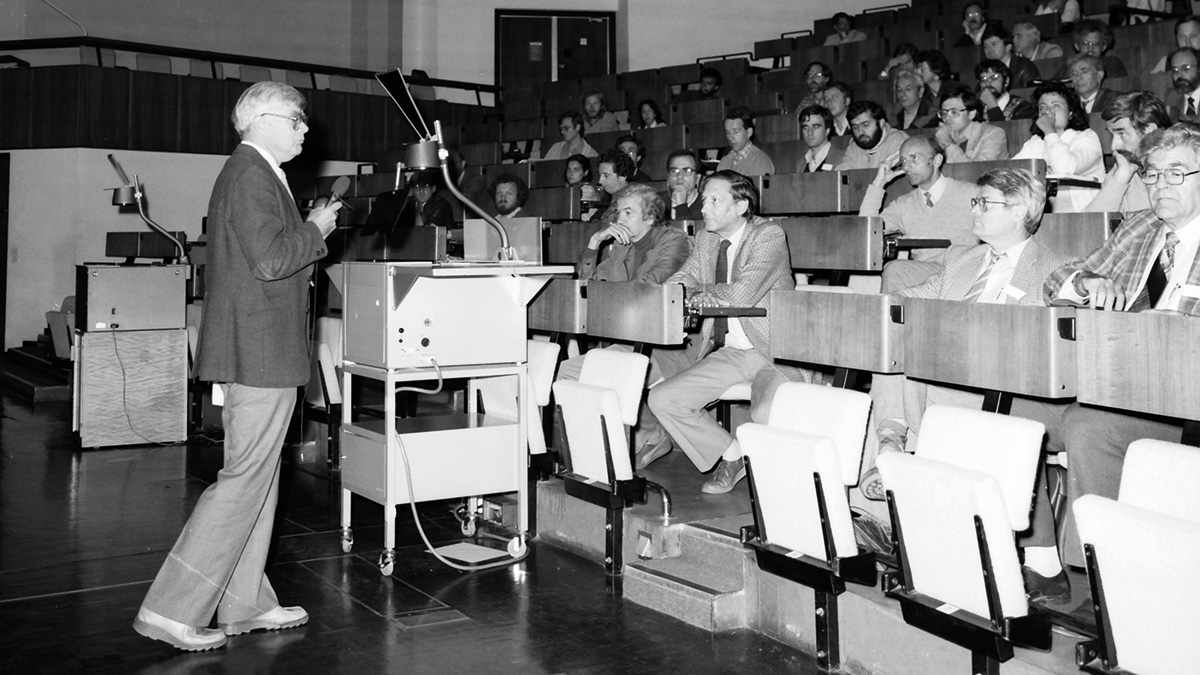
It is into this landscape that the CERN Accelerator School (CAS) was born in 1983. CAS lectures at that time were based on hand-written transparencies, sometimes pictures and sketches, or transparency copies from books. On some occasions, the transparencies were “hot off the press”, edited only the night before the presentation, using whisky as a solvent for the ink, with some traces remaining quite visible. The CAS lectures had to fulfil several objectives, notably the communication of deep knowledge and how to team-build at a time when significant progress could still be achieved by a single inventive scientist.
During the decades since, there has been a continuous evolution of the field of accelerators, driven by the rapid development of computing and telecommunications, and by the need for higher performance, leading to tighter tolerances or even novel acceleration technologies. Nowadays, much of the necessary information is only a mouse-click away, at any moment, at any location. Video, telephone and messenger exchanges are part of daily practice. The available computing power allows researchers to carry out complex simulations of beam behaviour by tracking thousands of particles over millions of turns in a reasonable time. No single accelerator component is built without extensive computer simulations beforehand, and the available simulation tools are extremely powerful and reliable. They do not yet, however, replace an innovative mind.
Collaboration
In this context, the present-day CAS has to play a new and even more demanding role. Knowledge about accelerators is available to every participant well before a CAS course begins. The multitude of information is enormous, which means that each CAS course, in particular the annual introductory course on accelerator physics, has to concentrate on the essential elements. Lecturers certainly have to be experts in their domain, but they also must have the capacity to explain their topic in simple terms.
The concept of the ingenious physicist designing an accelerator all by themselves also belongs in the past. Today, any new accelerator is the result of international collaborations featuring many individual contributions. CAS supports this development concept by fostering collaboration right from the start of the initial courses, ensuring that the students work in teams and that the links established during the courses are maintained throughout their professional lives.
The 40th anniversary of CAS offers an ideal opportunity to reflect on the school’s history, its educational approach, its impact and its bright future.
The seeds for the CERN Accelerator School were sown in the early 1980s by a group of visionary scientists and engineers at CERN. Driven by the high specialisation of the field, this group recognised the need for a dedicated educational programme that could provide comprehensive training in the rapidly evolving field of accelerator physics and technology. Textbooks on accelerator physics were sparse at the time, and courses at universities were practically non-existent. As Herwig Schopper, CERN Director-General at the time, put it: “An enormous amount of expertise is stored in the brains of quite a number of people […]. However, very little of this knowledge has so far been documented or published in book form.”
The first CAS course took place in Geneva in 1983 and attracted an impressive 107 participants. It focused on the special topic of colliding antiprotons. The W and Z bosons had just been discovered at CERN’s Super Proton–Antiproton Synchrotron (SppS), making this topic fully justified, as Kjell Johnson, the first CAS head, noted in his opening speech. This course was followed just a year later by a general one in accelerator physics, which is a classic today and remains one of the pillars of CAS. The general physics course covers topics such as beam dynamics, magnet technology, beam diagnostics, radiofrequency and vacuum systems. In this way, the school represents various types of accelerators and different accelerator components.
As the demand for specialised knowledge in accelerator physics grew, so did the CAS curriculum. While historically courses were more focused on high-energy colliders for particle physics, the scope broadened due to the development of applications in other fields, such as light sources, industry use and medicine. Over the years, the school has introduced a wide range of new topical courses to its portfolio, including radiofrequency systems, beam diagnostics, normal- and superconducting magnets, general superconductivity and cryogenics, vacuum systems and technology, high-gradient wakefield acceleration, high-intensity accelerators, medical accelerators and many more. This diversification has ensured that all participants are provided with up-to-date training in the latest developments. The curricula of the courses in “General Introduction to Accelerator Physics” and “Advanced Accelerator Physics” are also constantly adapting to the evolving landscape.
The success of CAS in Europe quickly caught the attention of the global accelerator community, leading to a surge in demand for its courses. To accommodate this growing interest, CAS began organising courses outside Europe from 1985 in collaboration with other institutions and organisations working in accelerator physics, such as the US Particle Accelerator School (USPAS), as well as the Joint Institute for Nuclear Research (JINR) in Russia and the High Energy Accelerator Research Organization (KEK) in Japan. Since then, these joint schools have trained more than 1000 participants via 16 courses in Asia, Europe and the Americas.
Educational approach
A key factor to the school’s success has been its innovative educational approach and the flexibility to adapt to new learning processes. Participants attend lectures delivered by selected lecturers, including some of the world’s foremost experts in accelerator physics, who willingly share their knowledge and insights in an engaging and accessible manner. By recognising the diverse backgrounds and needs of its participants, CAS offers courses at both the introductory and advanced physics levels. The former provide a solid foundation in the fundamental concepts of accelerator physics and technology, while the latter cater to participants with prior experience, act as a motivating refresher, or offer a deeper dive into specialised topics and the latest developments.
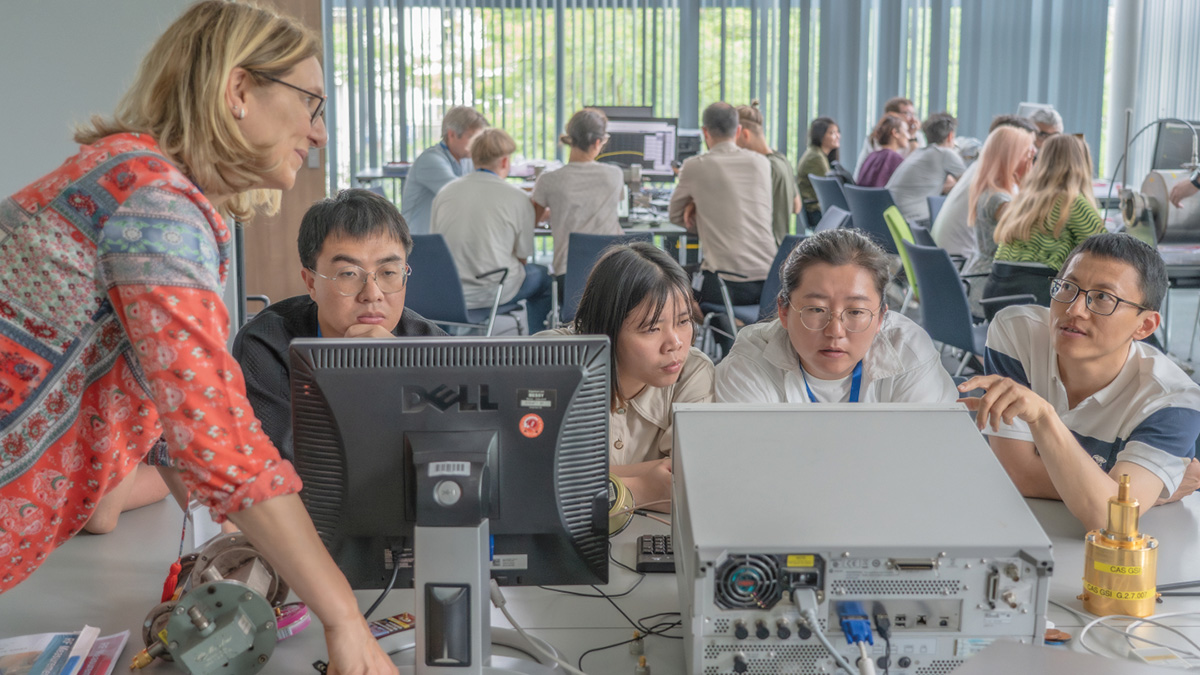
Today’s CAS experience is not limited to classroom lectures. The extensive availability of powerful computational tools has led to the introduction of hands-on sessions, first introduced in 2001, during which participants are not only put in touch with experimental set-ups but also dedicated expert-tool programmes. Particle-tracking codes or numerical-simulation programmes are examples where the participants are exposed to case studies and challenged to solve actual problems with expert guidance. Today, the introductory course offers hands-on software training in transverse and longitudinal beam dynamics as a regular course session. The advanced course, on the other hand, offers practical insight into beam optics as well as accelerator components from radiofrequency to beam diagnostics. Truckloads of equipment are shipped to the course venues, and the most recent topical CAS course on normal and superconducting magnets brought set-ups to perform superconducting experiments cooled down with liquid nitrogen to provide a real laboratory frame for teaching.
The heart of the CAS educational approach is clearly beating for an emphasis on problem-solving and collaborative learning. Participants are encouraged to work together on exercises and projects, fostering a sense of community and teamwork that extends beyond the classroom. It is the CAS spirit to work hand-in-hand with colleagues from different fields to solve a given task, very much as in a real work setting. This collaborative atmosphere not only enhances the learning experience but also offers the opportunity to build lasting relationships and to lay the ground for professional networks among participants. Throughout the CAS courses, participants profit from direct contact with the lecturers and their availability. Almost every lecturer has fond memories of long evening discussions with particularly interested participants – often fruitful for both sides. Equally legendary are the midnight hands-on sessions, carried out on request when all of a sudden another interest peak is sparking.
More to come
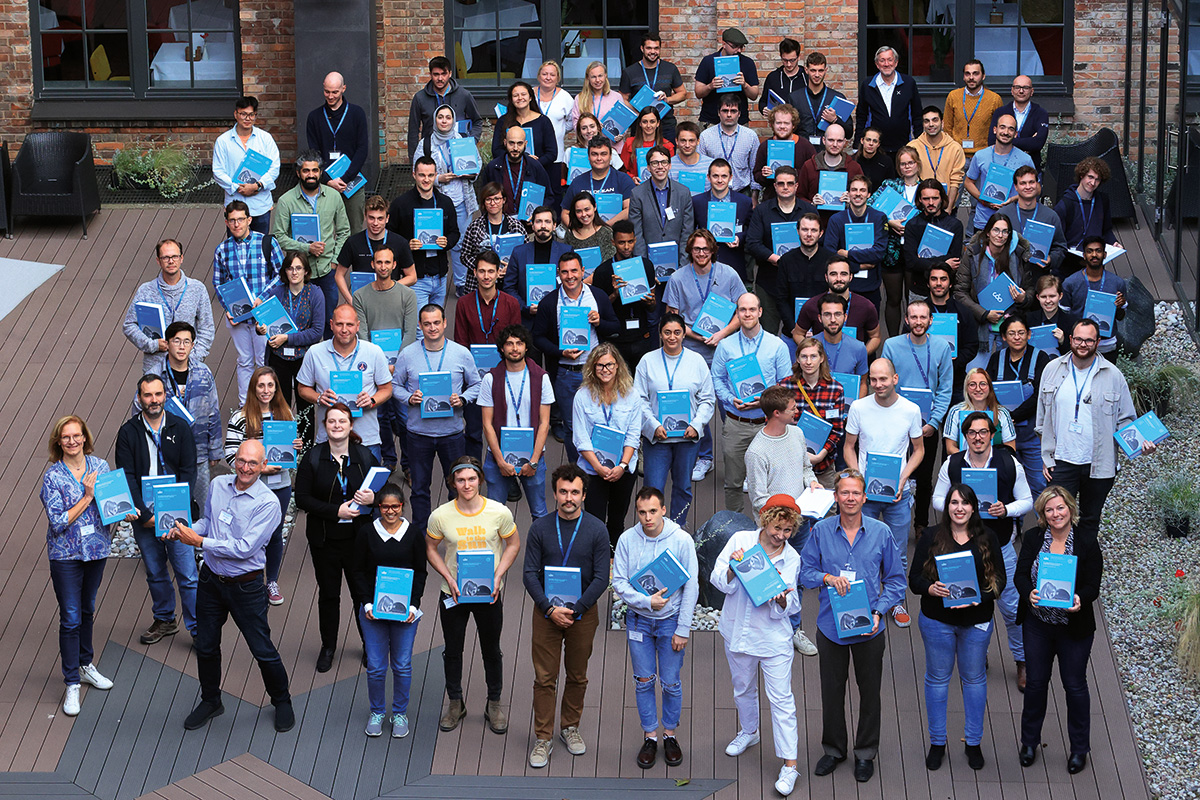
As the CERN Accelerator School celebrates its 40th anniversary, it is clear that its legacy of excellence, innovation and collaboration has left an indelible mark on the world of accelerator physics and technology. CAS has been instrumental in nurturing generations of experts who are continuing to push the boundaries of scientific knowledge, contributing significantly to our understanding of the universe. Over its 40 year-long history, more than 6000 participants from across the globe have been trained. Many of its alumni have gone on to play crucial roles in the development, construction and operation of particle accelerators around the world, including the LHC, to date still the largest machine ever built. However, no celebration would be complete without a projection into an even more promising future.
The variety of accelerator technologies, as much as the diversity and complexity of accelerator theory, will continue to grow. While the pre-education at European universities concerning basics in mathematics, electronics or computing already varies significantly between countries, worldwide collaborations make this aspect even more of a challenge. Over the years, the CAS teams have noticed, in particular in the introductory physics course, an ever-increasing spread in the basic accelerator-related knowledge that participants bring. Consequently, the CAS curriculum has been revised, but the problem persists: some participants are overwhelmed by the complexity of the course materials, whereas another large fraction is happily satisfied with the course and the progress they are able to make. As a first measure, the presently non-residential one-week “basic” CAS course on accelerator physics and technology will now be held on a yearly basis, and future participants of the introductory physics course will be strongly recommended to follow the basic CAS course first. If required, further adjustments for the general physics course will be made in the years to come.
With the ever-increasing diversity in technological disciplines and related scientific descriptions, CAS has stepped up the number of courses from two to four per year and, in addition, to offer at least two topical CAS courses per year. This allows the school to keep pace with the fast technological progress by teaching the major accelerator technologies (beam instrumentation, accelerator magnets, radiofrequency and superconductivity) roughly every five years, compared to every 10 years previously. While from a financial and organisational point of view four courses per year seem to be the maximum that can be offered, with the strong support of the CERN management this established rhythm can be maintained. In keeping with the long CAS tradition of publishing comprehensive proceedings for most of the courses, the higher frequency of courses has significantly increased the associated workload for authors and editors. Nevertheless, experience shows that these proceedings are vital to support the “post learning-process” of the CAS participants.
CAS has been instrumental in nurturing generations of experts who are continuing to push the boundaries of scientific knowledge
Finally, two years ago, a project called CASopedia was launched to record the CAS lectures. Fully in line with the CAS spirit, CASopedia aims to complement the regular written proceedings with a new learning approach where all recorded CAS lectures will be equipped with a catalogue of keywords and associated software with competent markers that allows topics to be searched via a keyword marker directly in the video material. Although a lot of work on this has already been done, significant effort is still needed to insert the many video-markers and to link them with the keyword database and the related time-code marker.
With these prospects in mind, and a rich legacy to build on, the school will undoubtedly continue to play a crucial role in the development of accelerator science by ensuring that future generations of physicists, engineers and technicians are well-equipped to tackle the ongoing challenges as well as the vast opportunities that always lie ahead. In this sense: happy birthday CAS, with hopes for an even bigger party to come in 10 years’ time!
Located in Kharkiv, the Institute for Scintillation Materials (ISMA) of Ukraine has both a large scientific base and technological facilities for the production of scintillation materials and detectors. It has been a member of the CMS collaboration for about 20 years, including participation in the production of scintillation tiles for the current calorimeter and as a potential manufacturer of tiles for the HGCAL upgrade. Since 2021, ISMA has also been a technical associate member of LHCb hosted by the University of Bologna, where we participate in the PLUME (probe for luminosity measurement) project. ISMA is also a member of the Crystal Clear Collaboration at CERN and, since 2019, of the 3D printed detectors (3DET) project (see p8). In addition, ISMA is a supplier of scintillation materials and detectors for projects outside CERN.
With the outbreak of the war in Ukraine, the Institute became a home for many. In the months following March 2022, about 50 staff members lived in the basement with their families and pets. In addition, some 300 people who were living nearby moved into the Institute’s bomb shelter, where staff provided food and helped people to adapt.
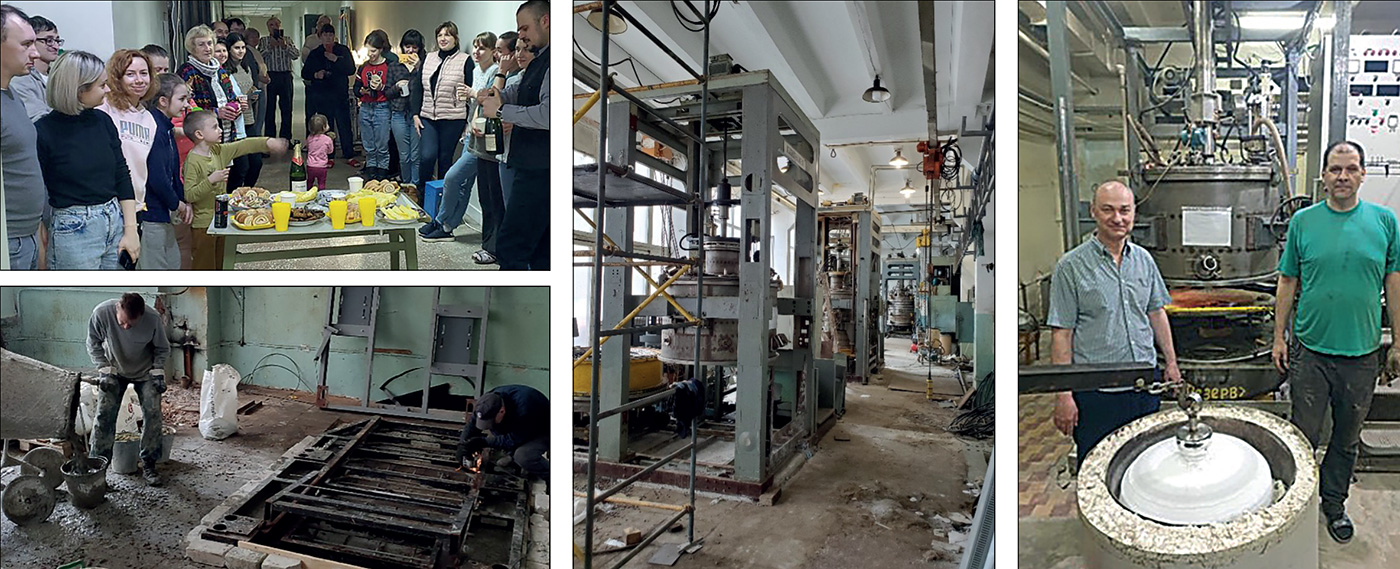
At the beginning of March 2022, one of our processing areas for crystal growth was damaged due to an air raid. This was shocking not only to us, but also for our partners for whom we serve as the main supplier of products. It was necessary to make a quick and important decision: wait until the end of active hostilities and then reconstruct infrastructure and technology, or start doing something now. We realised that technological downtime would result in the loss of a market that had been developed over decades and would also make it economically impossible for us to restart production cycles with the necessary volumes. We got together with our staff, who were living on the Institute’s territory. Some people even came to besieged Kharkiv from other cities to help. Between alarms and artillery shelling, the guys were coming out of the bomb shelters to go to work. Just one month after the war started, products were already being shipped to our customers. Once temperatures started to rise above zero, we started to move the processing equipment and growth units out of the damaged processing area. Not only did we have to repair these, but we also had to clear the premises of other equipment, calculate and pour new foundations, hook up the entire infrastructure and lay the lines for services – all in a period of a few months. By May 2022, we had already started growing large crystals of up to 500 mm in diameter at the new location. Some of our partners did not even notice the delays in delivery and we were able to meet our delivery commitments for 2022 in full.
We are very grateful to our colleagues, and to our friends at CERN, who offered their help and supported us from the early days of the war. They were not only CERN staff members, but also people from other institutes and organisations who called and wrote letters every day. They even organised a special programme to welcome families who had to leave Kharkiv at that time, and helped to persuade those who did not want to leave to move to safer cities in Ukraine or in Europe, at least temporarily.
By mid-summer, ISMA resumed the production of experimental scintillator tiles for CMS
In April 2022 we started discussions on future cooperation with our colleagues at CERN. Unfortunately, it was impossible to continue any work during the first two months of the war. However, we agreed that work should not stop and that some of it could be carried out in the organisations of our partners. We collected all the materials from Kharkiv that our colleagues needed and sent it to them. Some female colleagues, who could leave Ukraine, were also invited temporarily to continue their work abroad in these organisations. This allowed us to continue joint research programmes with our European partners. All our R&D projects were maintained either in Kharkiv or at the partner institutes abroad.
In May 2022 we were informed that ISMA, together with CNRS, Université Claude Bernard Lyon 1 and CERN, had won a project financed from the European Union’s Horizon Europe programme to develop inorganic scintillation crystals for innovative calorimeters for high-energy physics. By mid-summer, ISMA resumed the production of experimental scintillator tiles for CMS. We also continued work on developing technology for the synthesis of scintillation granules based on inorganic crystals. At the end of summer 2022, the crystals had already been shipped to our partners. Work on the 3D printing of scintillators in Kharkiv continued unabated.
Despite the war and its impact on life in Kharkiv and work at our Institute, over the past 18 months ISMA was able to contribute to all of the ongoing projects at CERN, and even expanded its capacity by transferring some work to other European institutes – strengthening our capabilities to do world-class research. The technological aspect of scintillator production has been restored and ISMA is receiving new requests to design and manufacture scintillators for international projects. We are grateful to our partners for their support and cooperation.
Andriy Boyaryntsev deputy director ISMA.
Taras Shevchenko National University of Kyiv
Our group at Kyiv has cooperation with many European universities and groups. We collaborate on LHCb and on the proposed SHiP experiment at CERN, and the International Large Detector – a general-purpose detector for an electron–positron collider, primarily the ILC. The group has many scientific contacts with IJCLab at Paris-Saclay and cooperates with ETH Zurich on the study of perovskite materials. Before the war and COVID periods, our students had many internships in various European institutes and staff travelled regularly to Europe.
In the first weeks of the war, there was a serious disruption to life and to hopes for the future. Many of the women and girls were evacuated from Kyiv to the west of Ukraine and abroad. With the help of our graduates and foreign colleagues, I sent 17 female students to various European cities for long-term internships. Many other teachers also helped some travel to Europe.
At that time, we were really expecting a nuclear strike from a maddened neighbour. Thanks to our colleagues abroad, the registration of internships took place instantly, in just a few days. Meanwhile, the men in Kyiv were preparing for battles on the streets. I actively read how to use various types of weapons, even though I was not accepted due to my age. I was sure that I would find weapons on the streets during the fighting, and I collected equipment and materials for actions after a nuclear explosion (nuclear physics is our department specialty). Now it already looks childish, but at the beginning of March 2022 I said goodbye to my wife, who was evacuated to Europe to join her daughter, because we thought that we would never meet again.
I was not afraid: there were almost only men left in the city, and those who remained were ready to stand to the death. The general feeling of a joint struggle united us and supported our spirit. It was clear in those weeks that this was not the time for science. I did some volunteering, first buying body armour and other military equipment, then collecting money for the purchase of jeeps for the front line and prostheses for crippled soldiers. We (with the alumni of our department in Ukraine and abroad) collected for the army very quickly, raising the necessary several thousand euros in a few days.
Since autumn 2022, we have resumed our scientific work and the connections with students
After the defeat of the Russian forces near Kyiv and Kharkiv, and especially after the return of Kherson, it became a little easier and we began to implement grants for students. This partially compensated for the decrease in real salaries and scholarships, and the high inflation of the hryvnia. Since autumn 2022, we have resumed our scientific work and the connections with students. We also have a lot of volunteer work as physicists and engineers. Many of the women and children have returned home – as has my wife. The main problem now is a more than two-fold drop in wages, taking into account inflation.
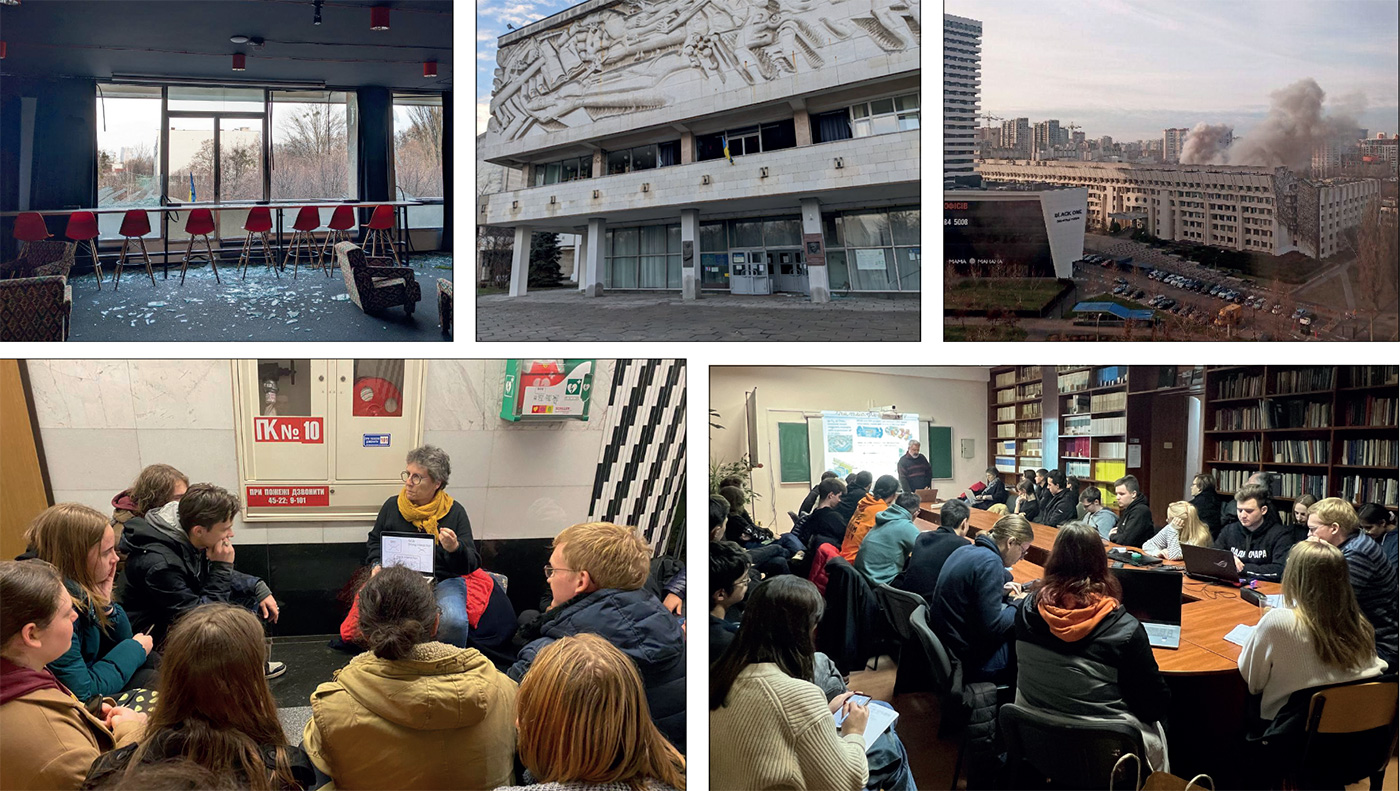
On 31 December 2022 a large Russian missile exploded between the buildings of the university. The explosion occurred at a height of several metres (the rocket had impacted a large tree), completely or partially destroying more than 500 large windows in seven buildings, including two thirds of the windows in our building.
Our small group now has acceptable working conditions. Currently, quite a lot of European and partial US grants are provided to our students for remote work. However, the necessary restriction during the war period on trips abroad for boys and men of conscription age has greatly hindered both scientific work and effective teaching. There has been a rapid washout of qualified personnel from scientific groups, especially young people who have been driven to look elsewhere for acceptable wages in Ukraine or abroad. After the end of the war, it will be difficult (or even impossible in some areas) to restore an effective group composition. Obtaining scientific grants during the war can significantly stop this degradation of science in our country.
Ukrainian science has been seriously affected due to the constant bombing of buildings and scientific facilities, the large outflow of personnel (especially women) to institutes and universities abroad, the decrease in real salaries, and the blocking of international internships and scientific travel for male scientists. I am sure that, step by step, we will restore lost contacts with foreign scientific centres and rebuild the scientific and educational resources of Ukraine that have been destroyed by the Russian invasion.
Oleg Bezshyyko associate professor, Taras Shevchenko National University of Kyiv.
Odesa National University
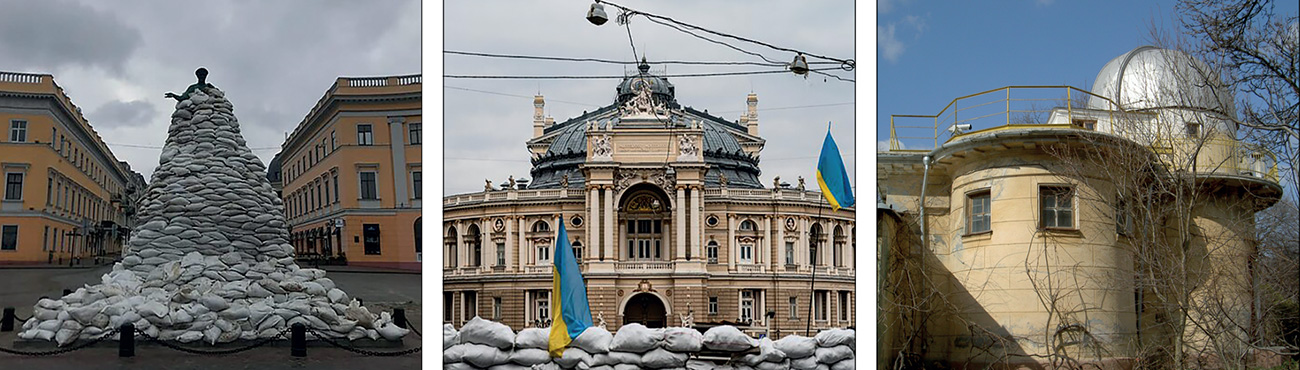
When the war started on 24 February 2022, I was with my family in Odesa. At around 4 a.m. I saw from the window in my flat how Russia had bombed Odesa port. In that moment, it was very difficult to understand what was going on and how to act. Yet, within a week, when it became clear that this was a real war, I received invitations from people in the physics department of the Jagiellonian University in Krakow, Poland, to visit them in the capacity of a visiting professor. I drove with my family through Moldova, Romania, Hungary, Slovakia and finally arrived in Krakow, where the people from the department adopted us. The children went to school the next day. There is only a small difference in language between Polish and Ukrainian, so it was not too difficult for them to adapt. Two months later I received an invitation from a new institute near Dresden called the Сenter for Advanced System Understanding (CASUS), where I have been based ever since.
As a theoretical physicist, and a frequent visitor to the CERN theory department, it’s much easier for me to move than it is for those who are connected to an experiment. Many of the laboratories in Ukraine have been completely destroyed. How they manage is difficult for me to comprehend. Odesa was not occupied, so it was possible to remain there. But in winter there was no electricity or heating, and during the day there were often air alarms when residents had to go to shelters. We were also worried about our grandchildren. A few weeks after the war started, a rocket fell a couple of hundred metres from my apartment.
Prior to the invasion, I would travel to Russia for conferences but I didn’t have any collaborations with Russian institutes. For me to work abroad is quite a normal situation. But I thought it was just my own will. Now I will stay here because of the war. But I also miss Ukraine and Odesa. The question is what will happen when we win? The answer is not so simple.
Without investing money into science it is impossible to build a strong country
Without investing money into science it is impossible to build a strong country. But to have that requires a good level of education, and that’s not easy because many young people are abroad. Will they go back, and how? If we have a good scientific climate, I think many would like to return. But if there is no money for science, then no. The government situation is not easy. The eastern part of the country is completely destroyed. Up to now only a small percent of the nation’s budget goes to science. The level of education and science in Ukraine already went down in the 1990s compared to when it was part of the Soviet Union. Many good scientists went abroad and have not returned.
We are currently living in a state of stress and uncertainty. Our minds are completely occupied by the news. The situation is even worse for those who stay in Ukraine. Many young scientists would like to go to foreign institutions and many foreign universities and institutes have adopted Ukrainian people, especially female scientists. But for boys it is forbidden. The border is closed. How many cross it illegally is probably only a small percentage. They stay mainly inside of Ukraine, often to fight against Russia. I know many people who were killed, including a former astronomy student who was educated at Odesa University.
The second year of the war is ending. A difficult winter is ahead. Russia will again try to destroy infrastructure with missiles and drones, so that people have neither heat nor light, so that they lose the will to win. The situation is very difficult. I don’t know what will happen next year or the year after. I can’t imagine where my family and I will live. I really want to return to Odesa. But for this, Ukraine must win.
Oleksandr Zhuk Odesa National University; currently CASUS Germany.
Uzhhorod National University
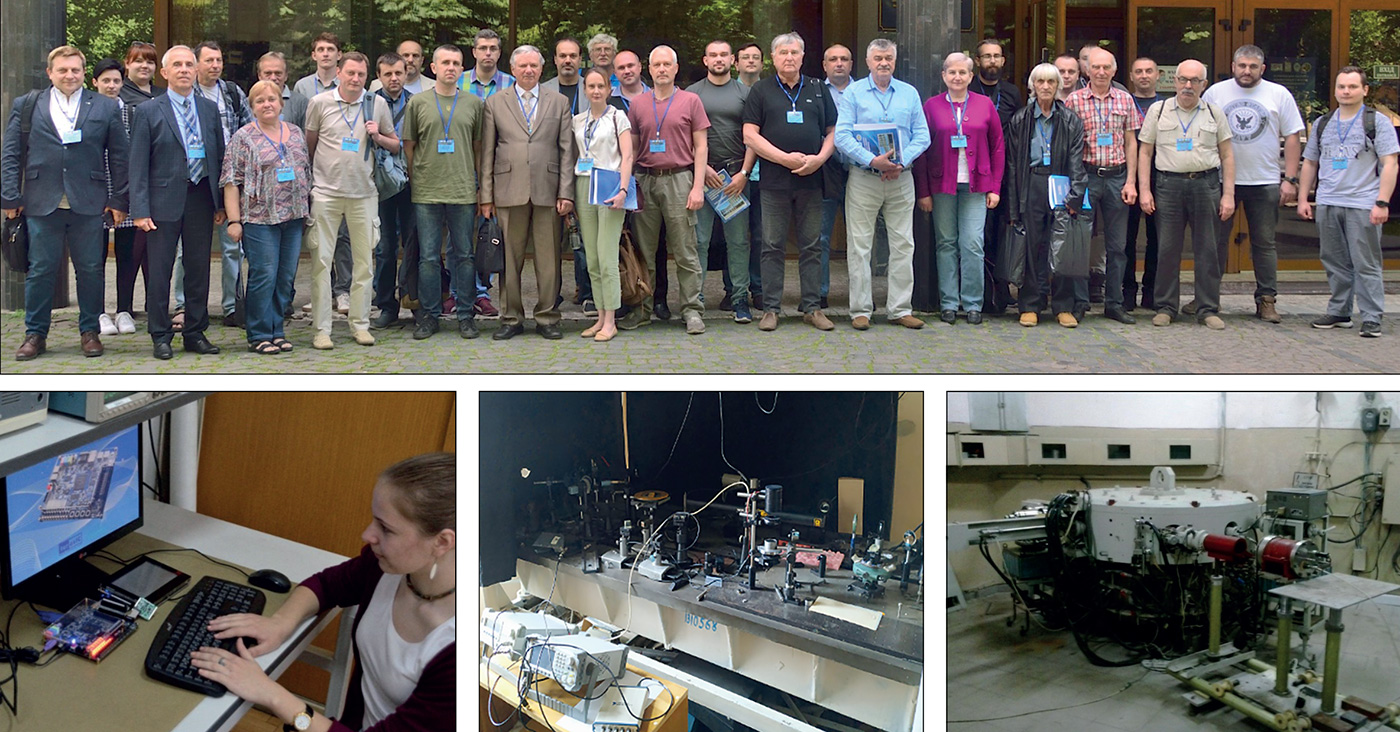
Uzhhorod National University was established in 1945, and five years later the faculty of physics and mathematics began its work. Today, the university has cooperation with around 90 institutions worldwide. We have activities in solid-state physics, optics and laser physics, physics of electron–atom collisions and plasma, quantum theory of scattering, and astrophysics and astronomy. For the past five years our group (comprising 10 engineers, technicians, senior scientists and PhD students) has been cooperating with the ISOLDE facility at CERN. At the beginning this was a multidisciplinary project to investigate materials that have spontaneous magnetisation and polarisation. We have published several articles in this area and in particular have proposed layered van-der-Waals crystals – a promising field for applications that can be further investigated with ISOLDE.
Uzhhorod is located just at the western Ukrainian border towards Slovakia and 20 km to the border with Hungary. While there were a few attacks from Russian forces, the situation here is relatively okay compared to other parts of Ukraine. We have the possibility to work, although there were times where we wouldn’t have electricity, so we couldn’t do any measurements or calculations. When the war started I immediately received calls from many colleagues outside Ukraine, who asked me to come to their labs. I did not expect this at all. Generally, many scientists left, especially from Kharkiv. Many of them came to Uzhhorod, others went abroad, for example to Poland, the US, the UK or France. For many who are from highly bombarded regions, this was certainly the correct decision; otherwise, they could have been killed. We keep in touch and continue our work.
After the first week of the invasion, we evaluated the situation and hoped that Kyiv would remain unoccupied. After about a month, we fully resumed work. It took some time to get back to a reality where you can concentrate. Looking back, it felt like a state of hypnosis, because the situation was so bad. Now, it’s better. I have published three papers in Physical Review since the beginning of the war. I hope we continue to receive support from European countries, the US, Canada, Australia and Japan.
Long before the invasion, I often participated in meetings and worked with Russian scientists. After the annexation of Crimea in 2014, I stopped. Many others continued to collaborate after 2014. We are academics after all, and we work in science. Maybe after the war, some peace regulation will make scientific and diplomatic co-operations possible again. To use an analogy from solid-state physics, the 2014 invasion of Crimea was a first-order transition whereas this one was a second-order transition that continues with a modulated phase.
It took some time to get back to a reality where you can concentrate
Since the invasion, we have prepared and submitted a proposal to the European Union Horizon programme. After successful evaluation at the beginning of October, together with scientists from Portugal, Spain, Denmark, Poland and from Kyiv, we have started the Piezo2D project to investigate piezoelectricity in 2D materials and their relevant device performance.
It is crucial to have Ukrainian universities participate in academic European programmes, not just formally on paper but to be actively involved. We don’t ask for any preference. We want to have the same possibilities as any other country to participate and for our people have the experience to be part of it.
As I am over 60 years old, I am allowed to leave the country. But younger male scientists can’t leave unless they have a permit for special services or duties. Some find special permission to study abroad as PhD students. Many others went to join the Ukrainian army. Some of us, especially physicists and chemists, are involved in special technology R&D programmes.
I’m sure that Ukraine will win the war. Then we will rebuild the economy, society and science. The latter will be especially important. Our government understands that science produces knowledge, and now is the time for it. For now, however, we must hope and work with the situation at hand. And here goes a big “thank you” from me and my colleagues to all those helping and supporting us at CERN and beyond.
Yulian Vysochanskii head of the semiconductor physics department, Uzhhorod National University.
Kharkiv Institute of Physics and Technology
Our institute, founded in 1928, has a long connection with high-energy physics and with CERN. Theorists Dmitrij Volkov and Vladimir Akulov played a crucial role in the development of supergravity and supersymmetry, for example, and for more than 20 years researchers at Kharkiv Institute of Physics and Technology (KIPT) have been actively working with the LHC experiments. In CMS, for which we contributed to the endcap hadron calorimeters, we host a Tier-2 computational cluster that is considered one of the best; in LHCb we have participated in the calorimeter system maintenance and support. In collaboration with colleagues at Bogolyubov Institute for Theoretical Physics in Kyiv, we participate in the inner tracking project for ALICE and are working on ITS3 upgrade. We also have collaborations with CERN concerning new theoretical and experimental proposals, for instance on the interaction of half-bare particles with matter. The first electron accelerator with an energy of 2 GeV in Europe was created and launched at KIPT in 1965. Before February 2022, the institute continued to operate a number of electron accelerators of lower energies and several large installations, such as the stellarator and quasi-stationary plasma accelerator.
Prior to the Russian invasion, our institute had a staff of more than 2000 people. In former Soviet Union times it was three times larger, and subordinate to the ministry within which the atomic project was performed (our institute had the status of laboratory no. 1). It was not so well known at the time because we were a closed-regime facility. In 1993 our institute became the first national scientific centre of Ukraine, with the full name National Science Centre “Kharkiv Institute of Physics and Technology” (NSC-KIPT), and our scientists started to cooperate actively with CERN and other international centres. NSC KIPT consists of institutes devoted to theoretical physics, high-energy and nuclear physics, solid-state physics, plasma physics, plasma electronics and new methods of acceleration, in addition to a number of quite large scientific complexes. A significant portion of the institute’s work centres around the Neutron Source facility (which is being created jointly with the US Department of Energy) and R&D into fuels for nuclear power plants. Based on this setup we are promoting the creation of an international centre for nuclear physics and medicine, a preliminary proposal for which has been supported by the US and the IAEA. COVID, followed by the full-scale invasion of the Russian army, have temporarily put this project on hold.
The institute has sharply increased cooperation with major international scientific centres
At the beginning of the invasion, an idea was spread quickly by Russian media that our institute was still working on the creation of nuclear weapons. It was a lie. Similar things were also said by the Russian media, incorrectly, to be taking place at Chernobyl. On 6 March 2022 we got together with the head of the institute of safety operations for nuclear power plants in Kyiv and made a joint declaration rejecting these accusations. Since 1994, and especially lately (even during the war), the institute has been regularly inspected by the IAEA. Of course, no violations were discovered, nor was any work on the creation of nuclear weapons discovered.
Our institute is located around 30 km from the border of Russia. Since 24 February 2022, it has been repeatedly shelled and has suffered significant damage. More than 100 shells, rockets and bombs fell on its territory. At the very beginning, Russian troops started their movement to Kharkiv along the road near our institute; it was stopped by our soldiers. About one month later, Russia made a second attempt to take Kharkiv, which came within 500 m of our institute before being stopped. Outside the institute in a residential area called Piatykhatky, where many staff members live, multiple buildings were destroyed. For 40 days following the shelling of 31 March 2022, the entire area didn’t have water, electricity or phone networks. Thanks to the hard work of the staff who remained, we managed to restore everything, often while bombs were falling.
With the start of military activity, many specialists from the institute left Kharkiv and continued to work remotely. Some large installations intended for conducting physical experiments have remained operational. The institute has sharply increased cooperation with major international scientific centres such as CERN, DESY, Orsay, the Italian centres at Frascati and Ferrara, and others.
With great hope, enthusiasm and optimism we believe that it will be possible to defend the territorial integrity of Ukraine and look to reviving its economic and scientific potential.
Mykola Shulga director-general National Science Centre Kharkiv Institute of Physics and Technology.
Wrapping up a two-day state visit to Switzerland, president of the French Republic, Emmanuel Macron (right) came to CERN on 16 November accompanied by the president of the Swiss Confederation Alain Berset (left). CERN Director-General Fabiola Gianotti took the host-state leaders on a tour of the ATLAS cavern and to the recently inaugurated Science Gateway. Speaking to journalists during the visit, Macron said: “If I came here today, it is to reiterate my confidence in the scientific community and our ambition to maintain our leadership in this domain.” (translated)
CERN’s third environment report, published on 4 December, chronicles progress made in various high-priority environmental domains during the years 2021 and 2022, and reflects a proactive approach to environmental protection across the laboratory.
CERN’s strategy with respect to the environment is based on three pillars: minimise the lab’s impact on the environment, reduce energy consumption and increase energy reuse, and develop technologies that can help society to preserve the planet. For a large part of the latest reporting period, CERN’s accelerator complex was undergoing a long shutdown that ended in July 2022 with the start of Run 3 (scheduled to end in 2025). The report charts progress made in domains such as waste, noise, ionising radiation and biodiversity, land use and landscape change. It specifically covers measures taken to reach objectives set out in the first report published in 2020: limiting the rise in electricity and water consumption and reducing direct emissions (“Scope 1”) of fluorinated gases from large experiments.
CERN is committed to limiting the rise in electricity consumption to 5% up to the end of Run 3 compared to the 2018 baseline year (which corresponds to a maximum target of 1314 GWh), while delivering significantly increased performance of its facilities. It is also committed to increasing energy reuse. A total of 1215 GWh was consumed in 2022, and the accelerator complex is now more efficient, delivering more data per unit of energy consumed (CERN Courier May/June 2022 p55). In light of the energy crisis, CERN implemented additional energy-saving measures as a mark of social responsibility, and further explored diversification of energy sources and heat-recovery projects. The process to obtain the internationally recognised ISO 50001 energy-management certification was also undertaken in the reporting period, and has since been awarded.
CERN’s objective is to reduce direct greenhouse-gas emissions by 28% by the end of Run 3 compared to 2018, which corresponds to a maximum target of 138,300 tCO2e. In 2022, 184,300 tCO2e direct emissions were generated, with a comprehensive programme to ensure progress towards the objective. For example, the experiments have increased efforts to repair leaks in gas systems and worked towards replacing current gases with more environmentally friendly ones. With respect to indirect greenhouse-gas emissions (“Scope 3”), CERN first reported these in the second environment report (2019–2020) spanning catering, commuting and duty travel. This third report now includes scope 3 emissions arising from procurement, which represent 92% of this total, and details the main sources of related emissions.
Regarding water consumption, CERN is committed to keeping the increase in its water consumption below 5% up to the end of Run 3 compared to 2018 (which corresponds to a maximum target of 3651 ML) despite a growing demand for water cooling at the upgraded facilities. Since 2000, CERN has radically decreased its water consumption by about 80%. The report also explores how waste is managed. CERN’s aim over the reporting period has been to increase its recycling rate for non-hazardous waste, which represents over 70% of the total waste generated. In 2022 this recycling rate was 69% compared to 56% in 2018.
Biodiversity, land use and landscape change are another important focus of the report, as is the latest on how CERN’s technology and knowledge benefit society, notably with the new CERN Innovation Programme on Environmental Applications launched in March 2022.
Benoît Delille, head of the CERN Occupational Health and Safety and Environmental Protection unit, concludes: “Over the years since we embarked on our first environment report, we have learned a great deal about our footprint, implemented mechanisms to better understand and control it, and increased our efforts to identify and develop technologies stemming from our core research that have the potential to benefit the environment.”
On 8 December, the high-energy physics advisory panel to the US Department of Energy and National Science Foundation released a 10-year strategic plan for US particle physics. The Particle Physics Project Prioritization Panel (P5) report recommends projects across high-energy physics for different budget scenarios. Extensive input from the 2021 Snowmass exercise and other community efforts was distilled into three overarching themes: decipher the quantum realm; explore new paradigms in physics; and illuminate the hidden universe, each of which has been linked to science drivers that represent the most promising avenues of investigation for the next 10 years and beyond.
“The Higgs boson had just been discovered before the previous P5 process, and now our continued study of the particle has greatly informed what we think may lie beyond the standard model of particle physics,” said panel chair Hitoshi Murayama (UCB). “Our thinking about what dark matter might be has also changed, forcing the community to look elsewhere – to the cosmos. And in 2015, the discovery of gravitational waves was reported. Accelerator technology is changing too, which has shifted the discussion to the technology R&D needed to build the next-generation particle collider.”
Independent of the budget scenario, realising the full scientific potential of existing projects is the highest P5 priority, including the High-Luminosity LHC, DUNE and PIP-II, and the Vera C Rubin Observatory. In addition, the panel recommends continued support for the medium-scale experiments NOvA, SBN, T2K and IceCube; DarkSide-20k, LZ, SuperCDMS and XENONnT; DESI; Belle II and LHCb; and Mu2e.
On the hot topic of future colliders, the P5 report endorses an off-shore Higgs factory, naming FCC-ee and ILC, to advance studies of the Higgs boson following the HL-LHC. The US should actively engage in design studies to establish the technical feasibility and cost of Higgs factories and convene a targeted panel to make decisions in US accelerator physics at the time when major decisions concerning an off-shore Higgs factory are expected, at which point the US should commit funds commensurate with its involvement in the LHC and HL-LHC. Looking further into the future “and ultimately aim to bring an unparalleled global facility to US soil”, the P5 report supports vigorous R&D toward a 10 TeV parton-centre-of-momentum collider, including a targeted programme to establish the feasibility of a 10 TeV muon collider at Fermilab – dubbed “our Muon Shot”.
Astro-matters
Looking outward, the panel identified several critical areas in cosmic evolution, neutrinos and dark matter where next-generation facilities could make a dramatic impact. Topping the list are: CMB-S4, which will use telescopes in Chile and Antarctica to study the cosmic microwave background (CERN Courier March/April 2022 p34); early implementation of a planned accelerator upgrade at Fermilab to advance the timeline of DUNE (in addition to a re-envisioned second phase of DUNE and R&D towards an advanced fourth detector); and a comprehensive Generation-3 dark-matter experiment to be coordinated with international partners and preferably sited in the US. Here, states the report, the impact of the more constrained budget scenario is severe, and could force the US to cede leadership in Generation-3 and to descope or delay elements of DUNE: “Limiting of DUNE’s physics reach would negatively impact the reputation of the US as an international host, and more limited contributions to an off-shore Higgs factory would tarnish our standing as a partner for future global facilities.”
Multi-messenger observatories with dark-matter sensitivity, including IceCube Gen-2 for the study of neutrino properties, and small-scale dark-matter experiments employing innovative technologies, are singled out for support. In addition, the panel recommends that the Department of Energy create a new competitive programme to support a portfolio of smaller, more agile experiments in high-energy physics.
The P5 report supports vigorous R&D toward a 10 TeV parton-centre-of-momentum collider
Investing in the scientific workforce and enhancing computational and technological infrastructure are described as “crucial”, with increased support for theory, general accelerator R&D, instrumentation and computing needed to bolster areas where US leadership has begun to erode. The report also urges broader engagement with and support for the workforce, suggesting that all projects, workshops, conferences and collaborations incorporate ethics agreements that detail expectations for professional conduct and establish mechanisms for transparent reporting, response and training.
“In the P5 exercise, it’s really important that we take this broad look at where the field of particle physics is headed, to deliver a report that amounts to a strategic plan for the US community with a 10-year budgetary timeline and a 20-year context,” said P5 panel deputy chair Karsten Heeger (Yale). “The panel thought about where the next big discoveries might lie and how we could maximise impact within budget, to support future discoveries and the next generation of researchers and technical workers who will be needed to achieve them.”
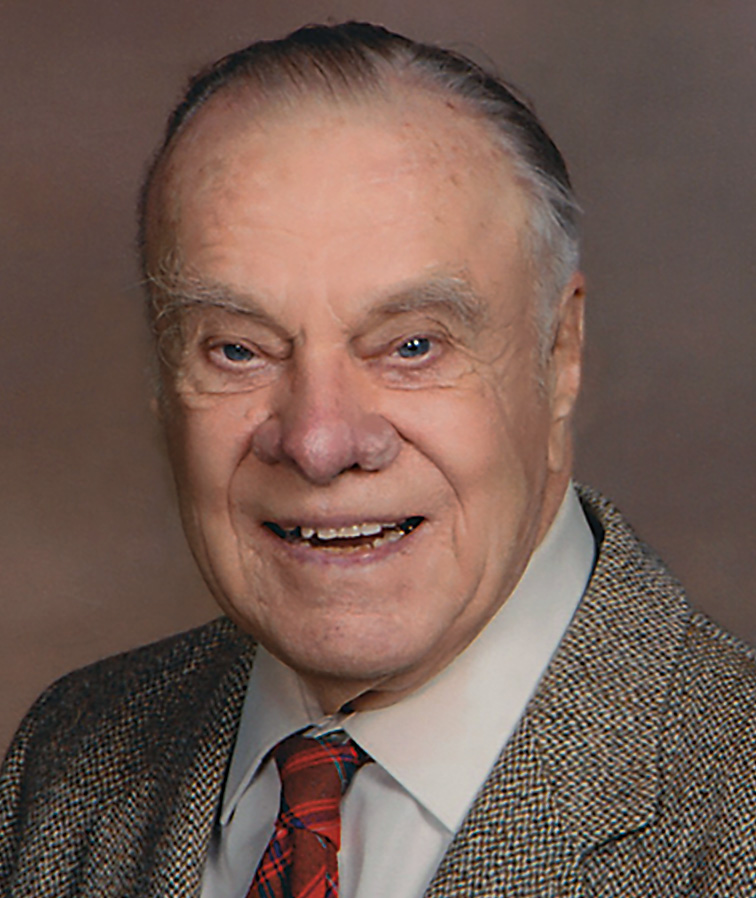
Experimental particle physicist Lawrence W Jones, a well-respected mentor and educator who contributed to important developments in accelerators and detectors, passed away on 30 June 2023.
Born in Evanston, Illinois on 16 November 1925, he enrolled at Northwestern University in autumn 1943 but was drafted into the US army a few months later. He served in Europe during World War II in 1944 and 1945, returning to Northwestern to complete a BSc in zoology and physics in 1948, followed by an MSc in 1949. After completing a PhD from the University of California, Berkeley in 1952, Jones went to the University of Michigan to begin a lifetime career in the physics faculty. In 1962 he acted as dissertation adviser to future Nobel laureate Samuel Ting and was promoted to full professor in 1963. He served as the physics department chair from 1982 to 1987 and was named professor emeritus in 1998.
Jones collaborated in the 1950s in the Midwestern Universities Research Association, a collaboration of US universities that developed key concepts for colliding beams, and built the first fixed-focus alternating gradient accelerator. Over the course of his career, Jones also contributed to the development of scintillation counters, optical spark chambers and hadron calorimeters. He participated in experiments designed to measure inelastic and elastic scattering, particle production, dimuon events, neutrino physics and charm production.
Jones came to CERN as a Ford Foundation Fellow (1961–1962) and as a Guggenheim Fellow (1964–1965), and then contributed to cosmic-ray experiments on Mount Evans, Colorado and nearby Echo Lake. In 1983 he joined the L3 experiment at LEP, which was led by his former student Ting. The Michigan team, led by Byron Roe, helped to design, construct and install the experiment’s hadron calorimeter – a key component used to determine the number of elementary neutrino families. Jones also contributed to the construction of L3 cosmics, a programme to trigger on and measure cosmic rays using the detector’s precision muon detector and surrounding solenoidal magnet.
Jones’ interest in entomology led to a species of beetle (Cryptorhinula jonsi) being named after him. On the first Earth Day, in 1970, Jones introduced the term “liquid hydrogen fuel economy” and, in 1976, he joined the advisory board of the International Association for Hydrogen Energy. He had a long involvement with the Ann Arbor Ecology Center, which he led in 1974–1975, and became co-chair of the Michigan Environmental Council’s Science Advisory Committee in 2000.
What’s not to like about particle physics? Exploring the fundamental workings of the universe at international laboratories such as CERN is an inspiration to all, and regularly attracts media attention. However, despite the abundance of wonderful outreach activities by physicists and professional communicators, and science centres such as CERN’s new Science Gateway, it is important that we also take a critical look at our attitude towards science communication (and colleagues who engage in it) to see where we can improve.
Like many of my colleagues, I have always devoted a significant fraction of my time to share my passion for the field with diverse audiences. Society funds our research, so we have a fundamental duty to report back about our discoveries, act as an advocate for science in general, and educate and inspire the next generation. Doing outreach is not only enjoyable but also a valuable exercise that forces you to look at your own work from an outside perspective and to adapt your story for different audiences. Given the collective responsibility of particle physicists for garnering societal support for fundamental science, one might expect the entire field to support individuals involved in outreach activities. Regrettably, this is not always the case.
A new programme at the Leiden Institute of Physics, in collaboration with colleagues from the science communication research group, is investigating how we approach physics communication. When studying our attitudes, certain “points of attention” become rapidly apparent.
Critical points
One concerns cultural appreciation and the role of the scientist. Outreach is often still perceived as something someone does in their spare time and not a valuable activity for “serious” scientists. Many young researchers are all too aware of this attitude, and given the limited number of permanent positions and the emphasis on leadership roles and scientific output for career advancement, outreach often gets reduced priority. This means we’re missing out on an enormous potential of energy and ideas to connect with society. It is important that scientists realise that good communication skills are indispensable for an academic career, which, after all, includes teaching and grant writing. While professional communicators do great work, it’s crucial that more physicists are directly involved as they inherently radiate their passion and drive.
A second point is public relations versus the role of science in society. While every country can simultaneously benefit from new discoveries, communication departments within universities and research institutes – including CERN – often struggle to move beyond the frame of public relations and the latest scientific breakthroughs. In doing so, there is an increasing tendency to project a polished image and to be too self-focused while neglecting opportunities to provide insights into laboratory life – including failure, which is an inevitable aspect of the scientific process – and the stories behind the publications.
Impact assessment is a third factor where we could do better. Despite the increasing encouragement from funding agencies to make societal engagement an integral component of research proposals, we frequently fall short when it comes to conducting impact assessments. While researchers invest years in writing academic papers and scrutinise collaborators for failing to cite the most recent articles, we seem perfectly happy to ignore the literature on science-communication research and input from experts when developing outreach initiatives. Moreover, owing to our lack of collective memory, we do not have a systematic way to learn from good and bad practices.
Last but not least, developing effective communication skills is also critical in peer-to-peer interactions. We don’t often talk about it openly, but it is remarkable how physicists perpetuate the poor quality of presentations and seemingly endless meetings, and how increasingly challenging it is to understand developments in other sub-fields. With proper attention given to our internal communication, we would all stand to benefit significantly.
A change in culture does not happen overnight. Nevertheless, given the ongoing discussions about the future of the field, for example about a future collider at CERN, it is vital that we develop a stronger, broader and especially more open science communication strategy. It should be centred around curiosity and the amazing people in our field, as that is how we can connect with society to start a dialogue, while at the same time finding ways to support and acknowledge the work of colleagues who engage in outreach activities. Particle physics is a wonderful adventure. Let’s make sure the world knows about it.
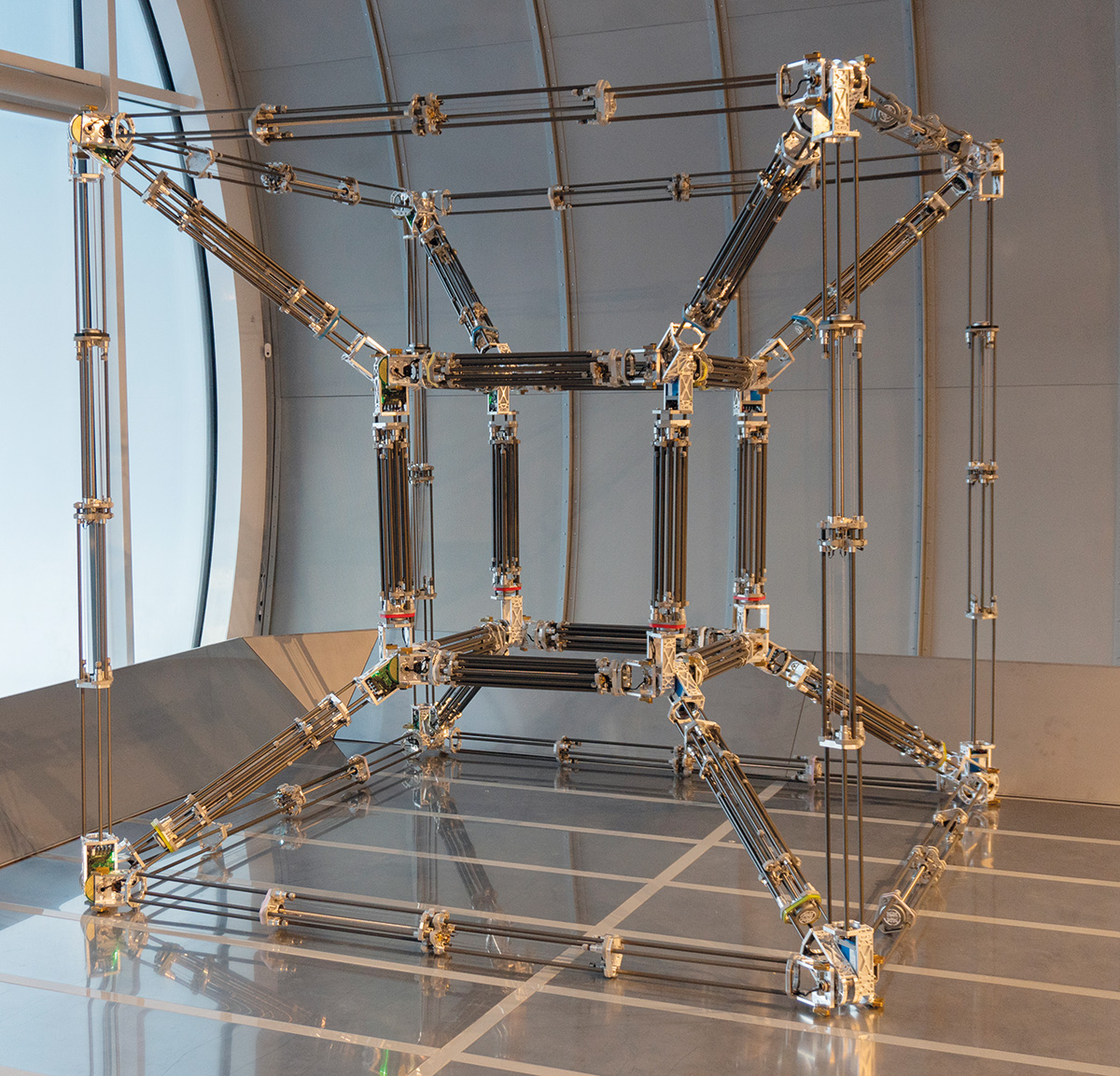
Within the naturally lit expanse of the Exploring the Unknown exhibition at CERN Science Gateway, an artwork both intrigues and challenges: Julius von Bismarck’s Round About Four Dimensions, commonly referred to as the “tesseract”. As light interacts with its surfaces, the tesseract – a 3D representation of a 4D cube – unfolds and refolds, turning inside out in a hypnotic sequence that draws viewers into its rhythm (see “Round About Four Dimensions” image). This kinetic piece not only captivates with movement but also signifies the deep-rooted relationship between art and science.
Organised around themes of space and time, dark matter, and the quantum vacuum, the Exploring the Unknown exhibition becomes a meeting point, inviting spectators to dive into the collective curiosity of both artists and scientists. In particular it channels the imaginative spirit of CERN’s theoretical physicists, including Joachim Kopp, who remarked during an encounter with a visiting artist: “I try to visualise the maths. So, whenever I work on something, I need to have some pictures in my head, even when it’s mathematical concepts.” This sentiment illuminates the profound visual connection artists and scientists alike experience when confronted with complex ideas.
Rich dialogue
Born from the collaborative efforts between the Arts at CERN programme and the CERN exhibitions section, this display vividly encapsulates the synergy between art and science. By championing artist residencies, commissioning distinct art pieces and curating exhibitions, a rich dialogue is fostered between two seemingly distinct worlds. For the first time, Science Gateway will spotlight works born from residencies and commissions, proudly featuring creations from celebrated resident artists including Yunchul Kim, Chloé Delarue, Ryoji Ikeda and Julius von Bismarck.
Within CERN’s corridors, serendipitous dialogues emerge. An artist might gain fresh inspiration from a casual chat about the universe, looking at their work through a new lens. On the other hand, physicists can discover a fresh perspective on their familiar theories through the artist’s interpretation. As former CERN theorist Tevong You insightfully shared during one such discussion, “In the quantum world of particles and waves, there’s a beauty that artists instinctively grasp. They bring to life the equations we scribble on paper.”
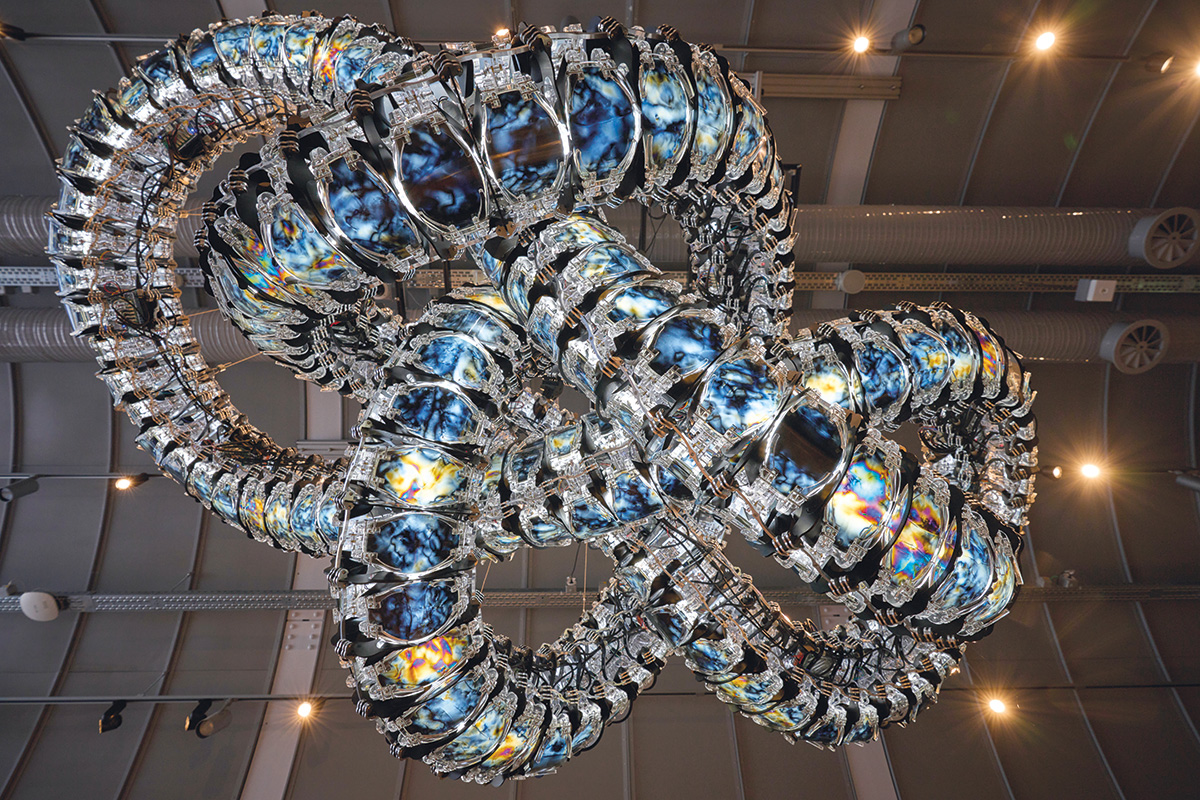
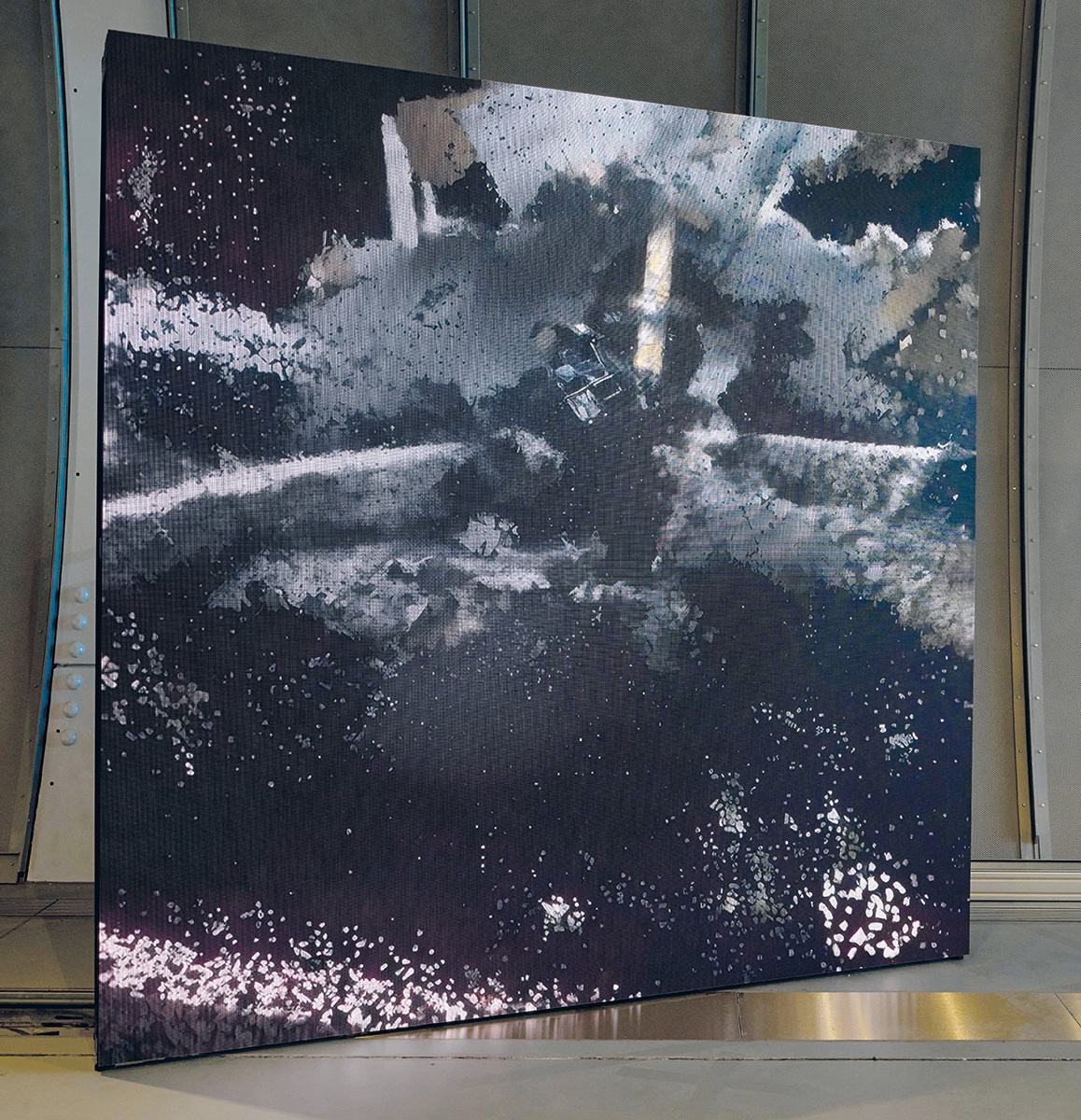
The dialogue between diverse minds takes centre-stage at Science Gateway. Yunchul Kim harnesses the intricacies of fluid dynamics (see “Chroma VII” image), capturing space and time and the elusive nature of dark matter in his sculptures. Chloé Delarue crafts tangible experiences around the mystery and the uncertainty of the unknown (see “TAFAA” image), while the avant-garde audiovisual installations of Ryoji Ikeda breathe life into the elusive quantum vacuum (see “data.gram [n°4]” image). As artists immerse in these scientific domains, they unearth fresh inspiration and, in return, challenge scientists to see their own work through a different prism. This unconventional collaboration amplifies both fields: artists distill vast, abstract concepts into evocative forms, and scientists, inspired by this artistic partnership, discover enriched avenues through which to communicate their research.
Navigating the confluence of art and science is no straightforward journey. For every moment of synergy, there are hurdles to clear – terminology gaps, differing methodologies and the occasional skepticism from both sides. However, through the many interactions we’ve experienced between scientists and artists, it’s clear that these challenges can be overcome. Artists, through their residencies at CERN, have cultivated an understanding of complex scientific narratives. Conversely, CERN scientists have come to appreciate the evocative power of art, expanding beyond their traditional vocabulary. This endeavour is about building bridges, recognising the need for compromise, and ultimately celebrating the beauty that emerges when diverse worlds collide.
Finding equilibrium between artistic liberty and scientific truthfulness is also a delicate dance. In the vast realm of creativity, an artist might sometimes venture far from the core scientific concepts in their pursuit of artistic expression. In Exploring the Unknown, such balances are impressively maintained by von Bismarck’s tesseract and Ikeda’s audiovisual installation data.gram [n°4]. The exhibition shows that neither art’s freedom nor science’s precision need to be sacrificed; when approached with mutual respect, they can coexist, each enhancing the other’s message.
When CERN was founded in 1954, four missions were given to the new organisation: performing fundamental research at the frontier of knowledge; development of innovative technologies to pursue fundamental research; international collaboration for the good of humanity; and education and inspiration for future generations of scientists, engineers and the public at large. The latter mission has been given a powerful new platform in the form of the CERN Science Gateway.
CERN is well known for outreach, most recently via the switch-on of the LHC and the search for and discovery of the Higgs boson. It also trains thousands of people through a variety of student and graduate programmes, ranging from internships, studentships and fellowships to professional training, such as at the CERN Accelerator School, the CERN School of Computing, and several physics and instrumentation Schools. Less well known, perhaps, is CERN’s influential work in science education.
Growth initiatives
CERN offers many professional-development programmes for teachers (see Inspiring the inspirers), as well as dedicated experiment sessions at the former “S’Cool LAB” (reincarnated in the Science Gateway educational labs, see Hands on, minds on, goggles on!) and the highly popular Beamline for Schools competition. These efforts are also underpinned by an education-research programme that has seen seven PhD theses produced during the past five years as well as 82 published articles since the programme began in 2009. This is made possible by the significant contributions of doctoral students, who make up much of the team, and cooperation with their almae matres in CERN’s member states. In addition, CERN is the publisher of the multilingual international journal Progress in Science Education.
The question “what is science education?” probably has more answers than the number of science educators in Europe. Nevertheless, the nature of science – the scientific method itself, without which we could not formulate science correctly, reproducibly and understandably – is a basic principle. Teaching the nature of science as the basis and conveying scientific results as examples is widely regarded as the best way to inspire learners young and old, although methods vary. A frequently asked question in this respect is: what to educate?
The traditional answer, which will be familiar to people who went to school in the 1970s or earlier, is “pure knowledge”. Later, it was realised that “skills” were important, too. While both remain core to science curricula, “competencies” are now seen as an effective way to advance society. In terms of physics, key topics in this regard are education for sustainable development, quantum physics and its applications, radiation and artificial intelligence.
Fulfilling its mission, CERN strives to reach everyone with its education programmes. The CERN Science Gateway offers exhibitions, large education labs, as well as educational science shows for audiences aged five and above. Education is key to sustainability, and thus to society, so let’s all work together. The CERN team is open to your proposals!
To provide the best experiences, we use technologies like cookies to store and/or access device information. Consenting to these technologies will allow us to process data such as browsing behavior or unique IDs on this site. Not consenting or withdrawing consent, may adversely affect certain features and functions.
Functional
Always active
The technical storage or access is strictly necessary for the legitimate purpose of enabling the use of a specific service explicitly requested by the subscriber or user, or for the sole purpose of carrying out the transmission of a communication over an electronic communications network.
Preferences
The technical storage or access is necessary for the legitimate purpose of storing preferences that are not requested by the subscriber or user.
Statistics
The technical storage or access that is used exclusively for statistical purposes.The technical storage or access that is used exclusively for anonymous statistical purposes. Without a subpoena, voluntary compliance on the part of your Internet Service Provider, or additional records from a third party, information stored or retrieved for this purpose alone cannot usually be used to identify you.
Marketing
The technical storage or access is required to create user profiles to send advertising, or to track the user on a website or across several websites for similar marketing purposes.



![data.gram [n°4]](https://cerncourier.com/wp-content/uploads/2023/10/CCNovDec23_BEAUTIFUL_datagram2.jpg)