Comsol -leaderboard other pages

Topics

Modern Cosmology and Particle Astrophysics

Modern Cosmology by Scott Dodelson, Academic Press. ISBN 0122191412, £39.95 ($70).

Particle Astrophysics by Donald Perkins, Oxford University Press. Hardback ISBN 0198509510, £44.95 ($74.50). Paperback ISBN 0198509529, £22.95 ($39.50).
cernboo1_10-03

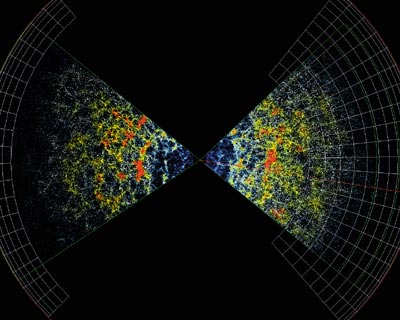
It is widely and justifiably stated that we are in a golden age for cosmology. Certainly, in just the past five years our knowledge of the universe has increased in leaps and bounds by virtue of new data concerning the cosmic microwave background (CMB), the study of very distant Type-1a supernovae (SNe1a), and surveys of large-scale structure (LSS). Cosmic parameters that five years ago were uncertain by a factor of two, are now known to a few per cent. The cosmic concordance of the three data sets for CMB, SNe1a and LSS leads us to our present understanding of the universe as flat with a total energy very close to the critical density, and containing (with quite small errors) 4% baryonic material, 23% nonbaryonic dark matter and 73% dark energy.

Other areas of fundamental theoretical physics have also made progress. In particular, again in the past five years, the Standard Model of particle phenomenology has been shown to be inadequate by the experimental demonstration of neutrino masses. Particle phenomenology and theoretical cosmology have become even more closely intertwined. String theory, though not yet supported by any experimental test, is a constant source of ideas concerning both particle phenomenology and the principal issues of theoretical cosmology. It is an interesting question whether the first support for string theory will come from the very small or the very large.

If we go back further, say 20 years, cosmological data were so inaccurate that the field was treated with some condescension by particle theorists who were accustomed to reproducible precision data from the large accelerators. This situation gradually changed due to the heroic efforts of people like the late Dave Schramm. Now, with the release by NASA of the WMAP data on CMB in February 2003, we have entered what can be called, without hesitation, the era of precision cosmology. In a book on precision cosmology, after the necessary introduction to the mathematics of an expanding space-time, the topics that could very reasonably be included are: 1. cosmic microwave background, 2. nucleosynthesis, 3. inflation, 4. dark matter, 5. dark energy, 6. structure formation, and 7. black holes and other extreme events such as supernovae and, what may be a subset, gamma-ray bursters. It is with this preconceived menu in mind that I review these two books.

Modern Cosmology by Scott Dodelson is intended for beginning graduate students. This book is very up to date and gives excellent treatments of structure formation, and especially of the CMB, including its polarization and details of its statistical analysis. This provides what is the most complete such description in any textbook. The topic of weak gravitational lensing is also handled well. The young author is an active researcher in theoretical cosmology whose enthusiasm for the subject is evident throughout, and whose selection of topics reflects his areas of greatest expertise. The inclusion of many worked examples will make this book a very good choice for a graduate course.

For researchers, the treatment of data analysis will be particularly valuable. For both CMB, from WMAP and the future more data intensive Planck mission, and for LSS from the Sloan Digital Sky and 2dF surveys, as well as even larger galaxy surveys in the future, the quality and quantity of the raw data set are such that straightforward algorithms are too slow even with the fastest available computers. Thus considerable creativity and intelligence are needed to optimize such an analysis. It is interesting that a similar situation must exist for raw data from high-energy particle colliders such as from the Tevatron at Fermilab and the future LHC collider at CERN. It is therefore very welcome that, for both CMB and galaxy surveys, Dodelson leads us masterfully through the likelihood function and sophisticated mathematical techniques for its evaluation.

A comparison of Dodelson’s book according to my menu of topics, reveals that topics 1 and 6 are thoroughly treated, while items 2, 3, 4, 5 and 7 are only relatively briefly described. Thus the treatment is very strong in only some of the areas. To be fair, the author is well aware of this and provides copious and generous references to other books, which should fill in the gaps.

One minor complaint is that the typesetting is not adequately checked, for example the headings of subsections 7.2.2 and 7.3.2 are at the foot of the previous page. But this is nitpicking and I liked this book and believe that it, together with the other referenced publications, could form the basis for a very interesting postgraduate course in cosmology, as well as being useful for active researchers to have in their personal library.

Donald Perkins’ Particle Astrophysics is intended for the different audience of advanced undergraduates. The author is a senior high-energy experimentalist, and two of the seven chapters are on topics in particle theory. This book contains elementary discussions of expanding space-time, dark matter, dark energy and structure formation. There is also a chapter each on cosmic rays, the author’s forte, and stellar evolution. One attractive feature of Perkins’ book is that each chapter ends with a concise summary of its most important items. Perkins writes exceptionally clearly and includes a significant number of worked examples, making this an ideal textbook for use in a junior or senior course that introduces particle theory and cosmology and their strong interrelationship.
Gran Sasso puts its troubles in order

cernnews2_9-03

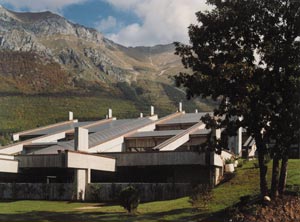
After a difficult year, it seems that an air of optimism is back in the INFN laboratories at Gran Sasso. On 17 June the competent court of the city of Teramo agreed to certain scientific activities starting up again in Hall C, as requested by INFN. In particular, the installation of the OPERA experiment in Hall C, which began in March 2003 but was suspended in early June, will be able to resume. This decision is a sign that the competent authorities recognize the importance of the research being done at the Gran Sasso Laboratories and on the CERN Neutrinos to Gran Sasso (CNGS) programme in particular.

The problems began on 16 August 2002 when, following a series of unfortunate errors in Hall C, the team from the BOREXINO experiment caused 50 litres of trimethylbenzene to be discharged into the environment. The accident occurred at the very moment when a local debate on a safety tunnel designed to provide the underground laboratory complex with access independent from the adjacent road tunnel – very necessary in case of a disaster in the road tunnel – was beginning to become acrimonious. In such a tense atmosphere, even though no damage was caused by the accident, the fact that it could have done was enough to trigger a judicial enquiry.

In October 2002, the BOREXINO detector was therefore placed under a sequestration order by the Teramo public prosecutor. Subsequently, as the release of information by the regional government cast serious doubts on the water-tightness of the Gran Sasso Laboratories’ drainage system, INFN took the precautionary measure of suspending all activities requiring the handling of any kind of fluid throughout the underground laboratories on 5 June 2003. INFN then requested the immediate intervention of the competent government authorities, and at the same time, undoubtedly for the same reasons, the whole of Hall C was placed under a sequestration order.

Rapid and effective action from the Civil Defence Department is now awaited following the Italian government’s decision on 27 June 2003 to declare a state of environmental emergency with regard to the entire Gran Sasso facility, that is, the laboratories, the road tunnels, the environment in general and the water system in particular. This intervention by the government should allow the laboratory’s activities to return to normal and guarantee the complete safety of the citizens of the region of Abruzzo. These measures are fundamental to ensure that all of Gran Sasso’s activities can begin again in an atmosphere of complete trust between the scientists and the local population.

CERN offers grants to young Asian postgraduates

Within the framework of the CERN-Asia Fellows and Associates Programme, CERN offers three grants every year to young East, Southeast and South Asia postgraduates under the age of 33, enabling them to participate in its scientific programme in the areas of experimental and theoretical physics and accelerator technologies. The appointment will be for one year, which might, exceptionally, be extended to two years.

Applications will be considered by the CERN Associates and Fellows Committee at its meeting on 18 November 2003. An application must consist of a completed application form, on which “CERN-Asia Programme” should be written; three separate reference letters; and a curriculum vitae including a list of scientific publications and any other information regarding the quality of the candidate. Applications, references and any other information must be provided in English only.

Application forms can be obtained from: Recruitment Service, CERN, Human Resources Division, 1211 Geneva 23, Switzerland. E-mail: Recruitment.Service@cern.ch, or fax: +41 22 767 2750. Applications should reach the Recruitment Office at CERN by 17 October 2003 at the latest.

The CERN-Asia Fellows and Associates Programme also offers a few short-term associateship positions to scientists under 40 years of age who are on a leave of absence from their institute. These are open either to scientists who are nationals of the East, Southeast and South Asian countries who wish to spend a fraction of the year at CERN, or to researchers at CERN who are nationals of a CERN member state and who wish to spend part of the year at a Japanese laboratory.

• The CERN-Asia Programme accepts candidates from: Afghanistan, Bangladesh, Bhutan, Brunei, Cambodia, China, India, Indonesia, Japan, Korea, the Laos Republic, Malaysia, the Maldives, Mongolia, Myanmar, Nepal, Pakistan, the Philippines, Singapore, Sri Lanka, Taiwan, Thailand and Vietnam.

Advances in non-linear dynamos

by Antonio Ferriz-Mas and Manuel Núnez (eds), Taylor and Francis. Hardback ISBN 041528788X, £80.

9780415287883

The latest in a series on the fluid mechanics of astrophysics and geophysics, this book presents an updated and coherent view of recent advances in the field, with contributions from leading authors. A useful reference book for postgraduates and researchers, it covers both kinetic and dynamo approaches to the subject.

Towards a nonlinear quantum physics

by J R Croca, World Scientific. Hardback ISBN 9812382100, £31 ($46).

41l5dGhv+OL._SX333_BO1,204,203,200_

The author presents evidence that Heisenberg’s uncertainty relations are not valid in all cases, and goes on to derive a more general set of uncertainty relations.

Universal fluctuations

by Robert Botet and Marek Ploszajcak, World Scientific. Hardback ISBN 9810248989, £46 ($68). Paperback ISBN 9810249233 £24 ($36).

411CebPwCEL

In this book, the authors present the appearance of universal limit probability laws in physics and their connections with the recently developed scaling theory of fluctuations. They conclude by describing how a new description of hadronic matter is appearing as the consequence of this approach.

Fundamentals of Electroweak Theory

by Jiri Horejsi, Charles University Prague, The Karolinum Press. ISBN 8024606399, €50 ($50).

41YlDTeogQL._SX351_BO1,204,203,200_

This book is an introduction to electroweak theory at the graduate-student level. The first 100 or so pages are dedicated to the old weak interaction theory, from Enrico Fermi to Nicola Cabibbo. The remainder of the book then goes on to describe the modern standard gauge theory of electroweak interactions.

Overall, I had a favourable impression on reading this book. The main qualities are clarity, formal simplicity and a good sense of physics. Tree-level unitarity constraints and the good behaviour of amplitudes at large energies are often used as guiding principles for the discussion of Standard Model couplings. A number of exercises are proposed at the end of each chapter.

One drawback is the absence of an adequate discussion of the experimental tests of electroweak theory and, in general, of the phenomenological aspects that are currently of interest. There is not even a summary or any basic calculations about the properties of the W, the Z and the Higgs particles. One or two further chapters on modern collider physics, covering the past 20 years of electroweak phenomenology, would provide a useful completion to this book.

Quantum Chromodynamics – High Energy Experiments and Theory

by Günther Dissertori, Ian G Knowles and Michael Schmelling, Oxford University Press. ISBN 0198505728, £60.

5b98b56a0b7da06a0d1d2599b071cde73b6c3088_BF2000-2000

Thirty years have passed since quantum chromodynamics (QCD) was introduced, and it has now become the generally accepted theory of strong interactions. This book is intended to give an overview of the various aspects of QCD in lepton-nucleon scattering, in e+e annihilation and in hadron-hadron scattering.

The authors begin with a general introduction to the quark model and its features, such as the colour quantum number. This ends with a demonstration of the QCD Lagrangian, and the theory is then presented in detail, followed by applications to in e+e annihilation, to lepton-hadron scattering and to purely hadronic reactions. In particular, there is a detailed description of the integro-differential DGLAP equations for describing scaling violations. The various aspects of the renormalization group equations are also described, including the quark mass terms. Deep-inelastic scattering is discussed, to leading order and next-to-leading order, together with the BFKL equations, the Drell-Yan process and a number of hadronization models.

A description of the related experimental work follows, starting with accelerator systems and ending with the detectors, in particular the ALEPH detector at LEP. The authors then move on to describe the general concepts of QCD analysis in in e+e annihilation, in lepton-nucleon scattering and for hadron colliders. The discussion centres on structure functions and distribution functions. The HERA results are described, both for neutral and charged-current interactions, along with results from neutrino-nucleon scattering. Here, the gluon distribution in the nucleon and the strange quark distribution are also considered, as well as the various sum rules (Adler sum rule, Gross-Llewellyn Smith sum rule, Gottfried sum rule, sum rules for polarized structure functions). This is followed by a description of aspects of hadronic processes, such as the Drell-Yan process, and the production of direct photons.

The authors devote a special chapter to a detailed discussion of the strong coupling constant. This is deduced from the ratio R, measured in in e+e annihilation, from Rτ, from sum rules, from the physics of heavy flavours and from measurements at hadronic colliders. Tests of the gauge structure of QCD, and especially of the colour factors, are considered next, followed by an analysis of the leading-log results of QCD.

The final chapters look at the difference between quark and gluon jets, and various aspects of fragmentation (multiplicities, momentum spectra, string effects, colour coherence, Bose-Einstein correlations and colour reconnection). Appendices on elements of group theory, dimensional regularization and scaling violations in fragmentation functions are also included. Exercises are provided after each chapter and the solutions are described at the end of the book.

The book concentrates on those aspects of QCD that have been tested in experiments. The largely unknown features of the theory, when it comes to the low-energy properties and confirmation, are only superficially discussed. Aimed at graduate students, post-doctoral physicists and professional researchers in particle physics, this book can be recommended to both experimentalists and theorists interested in QCD.

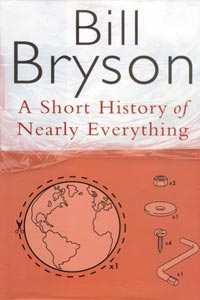
A Short History of Nearly Everything

by Bill Bryson, Doubleday. ISBN 0385408188, £20. (Broadway, ISBN 0767908171, $27.50 in the US.)

cernboo1_9-03

Bill Bryson simply could not write another paragraph about being presented with a disappointing dish of food, he explained on a book tour in May. Fortunately, he had other ideas. The writer best known for his humorous travel accounts was struck by how little he really knew about the planet he called home. The result is the modestly titled A Short History of Nearly Everything.

Any scientist – or for that matter science journalist – inclined to resent Bryson’s hubris will find much to feel smug about in this book. There are a number of errors, some of them cringeworthy, and Bryson draws from popular sources such as The Economist at least as frequently as he does from scientific papers or his own reporting.

But to dwell on such technicalities would be to overlook the fact that Bryson has written an entertaining and informative 500-page book about science, which in itself is an accomplishment. Quirky characters from the history of science make up a large part of Bryson’s material, but a larger theme is his sense of wonder at details of this universe we are lucky enough to inhabit. He spurns scientific notation, instead illustrating very large and very small amounts with passages such as: “If you could fly backwards into the past at the rate of one year per second, it would take you about half an hour to reach the time of Christ, and a little over three weeks to get back to the beginnings of human life. But it would take you 20 years to reach the dawn of the Cambrian period. It was, in other words, an extremely long time ago and the world was a very different place.”

From analogies like this, as well as from Bryson’s apocalyptic depictions of the havoc that supervolcanoes, meteor impacts, or climate change would wreak on civilization as we know it, the reader is left with a sense of mankind’s rare and precarious place in the universe. We are here only because our ancestors (human and otherwise) were in the right place at the right time; we are anomalous inhabitants of a bacteria-dominated planet; we have existed as a species for a pitifully brief period of time. This thread runs through the book, weaving a coherent whole from what otherwise might have been nothing more than a motley assemblage of big numbers, interesting facts and comically eccentric scientists.

The book is at its best when Bryson goes into the field (or the lab or museum). Through him we meet the Reverend Robert Evans, an Australian “titan of the skies” who hunts supernovae from his back sun deck; Paul Doss, a Harley-Davidson-riding Yellowstone National Park geologist; and Len Ellis, who has studied mosses behind the scenes at London’s Natural History Museum for the past 27 years. With these conversations, Bryson paints a picture of what day-to-day science is like.

CERN establishes formal links with SESAME

cernnews7_7-03

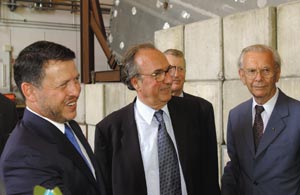
A memorandum of understanding that provides for co-operation between the new international centre for Synchrotron light for Experimental Science and Applications in the Middle East (SESAME), CERN and Jordan has been signed. During the visit of King Abdullah II of Jordan to the laboratory on 12 June, Luciano Maiani, CERN’s director-general, Herwig Schopper, president of the SESAME Council, and Khaled Toukan, Jordanian education minister, signed the memorandum, which covers the exchange of scientific personnel, fellows and equipment.

The organizational structure of SESAME is based on the model of CERN. At the suggestion of Schopper – who is a former director-general of CERN – SESAME was created under the umbrella of UNESCO in the same way that CERN began some 50 years ago. The SESAME Council now comprises nine founder members: Bahrain, Egypt, Iran, Israel, Jordan, Palestinian Authority, Pakistan, Turkey and the United Arab Emirates – who will fund the centre’s annual budget. Other states are expected to join in the coming months. The Jordanian government will provide $12 million for the construction of the centre.

There are close to 50 synchrotron radiation sources in the world, but very few are located in developing countries. SESAME, which is being built on the site of the Al-Balqa Applied University, 30 km from Amman in Jordan, will be the Middle East’s first synchrotron. Based on components from the BESSY 1 synchrotron in Berlin, SESAME should be up and running in 2006. It will produce synchrotron radiation over a broad range of wavelengths from the infrared to X-rays, and will therefore have various fields of application. The facility, which should attract scientists from numerous disciplines and nationalities, is a good example of collaboration between countries in the grip of political tensions. As Schopper underlines, SESAME is opening the way for technological progress and peaceful scientific development in the Middle East.

bright-rec iop pub iop-science physcis connect