Comsol -leaderboard other pages

Topics

Forty years of high-energy physics in Protvino

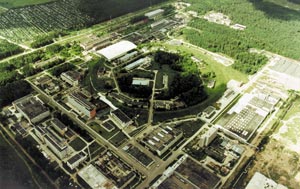
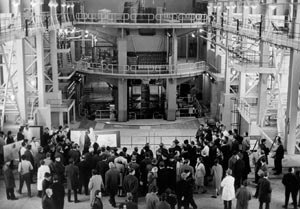
In March 1958 the government of the USSR took the decision to create a new scientific centre for high-energy physics, which included the construction of an accelerator and experimental facilities. The design and geological search for a site were soon started, and after considering some 40 places, a site on the left bank of the Protva river 15 km from Serpukhov in Moscow Region, Russia, was chosen. The project concept was developed under the leadership of Vassily Vladimirsky, and in 1960 the construction of the 70 GeV proton synchrotron (U-70) began. At the time, it was the biggest proton accelerator under construction.
cernihep1_11-03

On 15 November 1963 the Institute for High Energy Physics (IHEP) received separate institute status, with Anatoli Logunov appointed its director a month earlier. The creation of an efficient team of scientists and specialists from Dubna, Moscow and Kharkov became a decisive factor in pushing forward the construction of the machine, the experimental area and the infrastructure of the new centre.

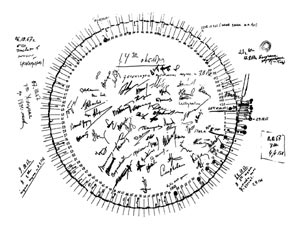
The research programme was determined by the Scientific Coordinating Committee that was created at IHEP in 1964. It was composed of leading scientists from IHEP and other institutes in the USSR: the Institute for Theoretical and Experimental Physics (ITEP), the Joint Institute for Nuclear Research (JINR), the Institute for Nuclear Research (INR), the Lebedev Physical Institute (LPI), Moscow State University (MSU), Moscow Engineering Physics Institute (MEPhI), the Kurchatov Institute (KIAE) and the Budker Institute for Nuclear Physics (BINP). The timely formation of the first priority research programme and the construction of the experimental facilities allowed experiments to begin at U-70 immediately after the machine’s commissioning, and new results in particle physics were soon obtained.
cernihep2_11-03

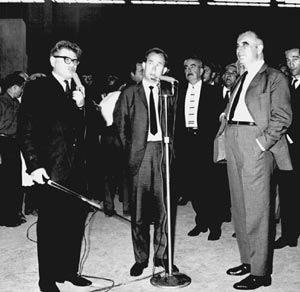
Another mission to be accomplished was the establishment of wide-ranging international collaboration. The construction of the biggest proton accelerator in the world opened up new possibilities in studying the microcosm, and many foreign physicists expressed an interest in taking part in the future research programme. However, it was not a simple task to organize international collaboration under the conditions of the time. Physicists from IHEP held talks with scientists from CERN and Saclay in France, and CERN director-generals Victor Weisskopf and Bernard Gregory played a significant role in helping to establish IHEP’s international collaboration with CERN.

IHEP signed the following agreements as early as 1966/7:

• The agreement concerning scientific and technical co-operation between CERN and the State Committee of the USSR on the Utilization of Atomic Energy (4 July 1967).

• The agreement between the State Committee of the USSR on the Utilization of Atomic Energy and the Commissariat on Atomic Energy of France concerning joint scientific research in high-energy physics at the 70 GeV accelerator (11 October 1966).

• The agreement concerning scientific collaboration between IHEP, Serpukhov and JINR, Dubna (16 April 1966).

The agreement with CERN assumed the fulfilment of a joint programme, which included the design and construction of a fast extraction system and RF separator, as well as the preparation and execution of joint experiments. The CERN-USSR Joint Scientific Committee was formed to coordinate and review this programme.

Commissioning and first experiments

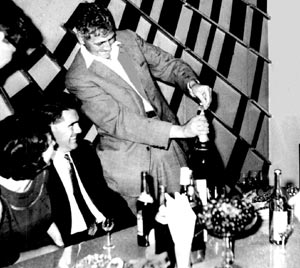
The injector – a 100 MeV linac (L-100) – was put into operation in July 1967, and tuning the proton beam in U-70 began on 29 August. A circulating beam was achieved on 17 September and on 12 October a proton beam was accelerated up to the critical energy (8 GeV). The CERN delegation at IHEP, headed by Bernard Gregory, congratulated IHEP on this success, but expressed the opinion that more work and more time would be needed to pass the critical energy and reach the design energy of 70 GeV. However, on the night of 14 October, a record proton energy of 76 GeV was achieved in U-70.
cernihep3_11-03

One of the first experiments on the U-70 accelerator, which was carried out by a joint IHEP-CERN team of physicists, was the measurement of the yield of secondary particles produced by 70 GeV protons on internal targets. This work involved high-resolution gas-differential Cerenkov counters with very low background (~10-6), and it allowed the study of pion, kaon and anti-proton yields up to momenta of 65 GeV/c. As a result, the new phenomenon of scale invariance was discovered in hadronic interactions at IHEP.

Immediately after the measurements of secondary particle yields, the IHEP-CERN team began to study the energy dependence of total cross-sections in hadron interactions. The results of studies of total cross-sections in the energy range below 30 GeV confirmed the well known data obtained at the Brookhaven National Laboratory in the US and at CERN. However, at energies higher than 30 GeV, while the total cross-sections for π+/, K mesons and protons remained constant, cross-sections for K+ mesons began to rise. The rise of the total cross-sections for K+p interactions in the range 15-55 GeV/c was equal to a few per cent. A number of international conferences in high-energy physics focused on this new phenomenon and the discovery became known as the “Serpukhov effect”. The measurements of total cross-sections at higher energies at CERN and at Fermilab confirmed the results that the IHEP-CERN team had obtained at U-70, and the rise in total cross-section was found to be a universal phenomenon for all hadrons.
cernihep4_11-03

The agreement with France assumed the production and delivery to IHEP of a large hydrogen bubble chamber for experiments with separated hadron beams. Installed at the 70 GeV accelerator in 1970/1, the chamber, which was called Mirabelle, took more than three million pictures and produced a number of excellent physics results.

Continuing collaboration

The joint research programme at U-70 with physicists from JINR, CERN, the US and Japan has continued to the present day. The most well known physics results concern high spin mesons, glueballs and hybrids, while in detector and accelerator techniques important work has been done on polarization effects at high energies, GAMS-type spectrometers, liquid-argon spectrometers, lead-tungstate crystals for electromagnetic calorimetry and beam extraction by bent crystals. Of particular note are the invention of RFQ focusing and the construction of the first RFQ linac, URAL-30, at IHEP.

After the commissioning of the larger accelerators at Fermilab and at CERN, the physicists at IHEP began to take an active part in the experiments at higher energies. These included the neutrino experiments with the 15 ft bubble chamber; polarization experiments and experiments with D0 at Fermilab; experiments with GAMS-4000, EHS and BEBC at CERN’s Super Proton Synchrotron; and experiments with DELPHI at LEP and with PHENIX at RHIC, Brookhaven.
cernihep5_11-03

Nowadays, physicists from IHEP, together with those from JINR, CERN, INR, ITEP, MSU, MEPhI, LPI, KEK and the University of Michigan, are continuing their research programmes at U-70 in the fields of meson spectroscopy, K-meson rare decays, polarization effects and neutrino interactions. A unique channel of separated K-mesons is under construction at IHEP, the basic elements of which are two superconducting deflectors received from CERN. Among the latest results that have been obtained at U-70 are high-precision measurements of charged kaon decays, spin asymmetries in inclusive reactions and new data on the search for exotic mesons.

Collaboration between IHEP and CERN remains strong to this day, with physicists from IHEP participating in the ALICE, ATLAS, CMS and LHC-B experiments at the Large Hadron Collider (LHC), as well as in the design and production of equipment for the LHC. The most notable contributions made by the physicists from IHEP are septum magnets for beam injection and extraction systems, DC circuit breakers, dump resistors and components for the CMS forward hadron calorimeter and the ATLAS muon system.
World crises cast a long shadow on science

cernvie1_11-03

The free circulation of scientists, the freedom to pursue science, to communicate among scientists and to disseminate scientific information, are generally taken for granted in the regions we commonly refer to as the free world. The guarantee of those freedoms is the most important goal of IUPAP, the International Union of Physics and Applied Physics. Unfortunately, the events of the past few years have led to the curtailment of those freedoms. Visa problems have restricted travel to the US and have had a severe impact on the ability of scientists from many countries to continue their collaboration with scientists in the US.

While there have been difficulties in obtaining US visas in the past, these problems have become much more severe due to new rules and procedures. These procedures were introduced as part of the security measures to prevent illegal immigration, the infiltration of terrorists and the transfer of information that might lead to the design of weapons or their illegal import. Consular officers now have to interview all applicants and are held responsible for the consequences of their decisions. This has led to long delays in approvals and some denials of visas to bona fide scientists from many countries, primarily Russia and China. For them the visa application process has been drawn out from a few days to many months. On average, applicants wait for more than four months without any indication of when a decision may be made. Also, while the application is pending, the applicant’s passport is held at the consulate, thus preventing him or her from travelling to any other country.

A recent consequence has been that the attendance at the IUPAP-sponsored International Lepton Photon Symposium held at Fermilab was significantly affected. Realizing that the chances of obtaining approval in time were slim, many of the invitees withdrew their application; others did not want to subject themselves to the application process. This was apparently true not only for scientists from countries that have visa restrictions, but also from some Western European countries. While four years ago 46% of the invitees from countries with visa restrictions attended the Lepton Photon Symposium at Stanford, this was down to 27% at this year’s meeting. Almost all the Russian scientists travelled on multi-entry visas or were already in the US. The Chinese delegation was reduced to a single scientist, compared with 12 at Stanford in 1999. Their invited speaker, Lioyuan Dong, was denied a visa. Hesheng Chen, the director of IHEP in Beijing and a member of ICFA, received approval for a visa, but too late to allow him to travel. He wrote a letter of protest to the chair of IUPAP’s Commission on Particles and Fields, pointing out that he and his senior colleagues had repeatedly been prevented from travelling to the US. Indeed, IUPAP will discuss the overall situation at a forthcoming meeting.

Probably a wider impact than restricted attendance at an annual conference is the irrevocable harm caused to the US science community’s international collaborative efforts. For many decades particle physicists have been working at large laboratories, travelling frequently from country to country and sharing equipment and funds. An example is the D0 experiment at the Tevatron. To a very large degree, the D0 muon tracking system was designed and built by Russian groups. The visa denials and delays are threatening the full realization of the enormous investments by these scientists and their home institutions, and as a result the funds committed by the Russian government to support this project are likely to be redirected. The fact that this and many other activities involving our Russian and Chinese colleagues are performed under the auspices of government-to-government agreements stresses the irony and seriousness of the current situation.

The American Physical Society, the organizers of the Lepton Photon Symposium, several prominent scientists, and I as chair of the Commission of Particles and Fields of IUPAP, have tried through the US National Academy of Sciences (NAS) to intervene at the State Department, at the Department of Energy and at other government agencies. The NAS, which is recognized by the US government as the adhering body for international science unions, has increased its efforts to report on these impediments to the Bureau for Consular Affairs, to develop procedures to account for reported delays and refusals, and to coordinate the reporting with other professional societies. But despite recent pronouncements by the State Department, the situation has worsened.

While I understand the need for tighter security and controls of the borders in these troubling times, I am convinced that the visa restrictions for scientists do not serve that purpose. To the contrary, collaborations among scientists have in the past been highly beneficial in times of crisis – they have helped to reduce international tensions rather than impeded security. I personally fear that unless there is clear evidence that the imposed measures have a truly damaging impact on the US, it will be difficult to attract the attention of the US Congress or government. Thus, it is my hope that the international community in Europe and Asia may be able to raise these issues at the highest levels and delineate the current procedures as deleterious not just to science, but to international relations in general.

CERN and Pakistan: a personal perspective

cernpak1_10-03

From its inception, CERN was international in character. The construction of its first 600 MeV accelerator was a fine example of international co-operation. After the Second World War, a group of European scientists realized that the brain drain during the war was a serious problem, which was continuing even after the war had ended. This realization gave birth to the idea of a European laboratory funded by several European nations. These scientists had a strong will, considerable political influence in their own countries and a commitment to do basic research, while recognizing that no single country had sufficient resources to build a large accelerator. CERN owes its creation to the dynamism and indomitable will of scientists such as Isidor Rabi, Eduardo Amaldi, Pierre Auger, John Cockroft and others. Thanks to their efforts, CERN, when it became operational, was gradually able to reverse the brain drain.

cernpak2_10-03

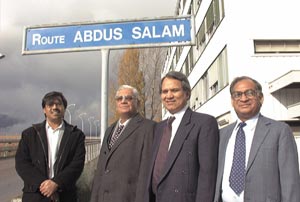
The informal scientific co-operation between CERN and Pakistan dates back to the 1960s, when Pakistan was introduced to CERN through Abdus Salam, the country’s only Nobel Laureate. Salam had a desire that a group of Pakistani scientists commit themselves to both theoretical and experimental high-energy physics. On the suggestion of Salam, stacks of nuclear emulsion exposed at CERN were provided to Pakistan for the study of pions, kaons and antiprotons. In this informal co-operation, Owen Lock from CERN and the newly created Pakistan Atomic Energy Commission (PAEC) played an important role. Nuclear emulsions were later superseded by newer particle-detection techniques, and gradually this activity faded away. Meanwhile, some theoretical physicists from Pakistan had the opportunity to work at CERN through short visits. During the 1980s, some of the experimental physicists from Pakistan, specializing in the technique of Solid State Nuclear Track Detectors (SSNTD), also benefited from CERN by exposing the stacks in the beam at the Super Proton Synchrotron (SPS).

In 1994 I visited CERN as chairman of PAEC. The visit took place on the initiative of Pakistani physicist Ahmed Ali, who works at DESY. It brought back good memories of my earlier visits, which date back to 1962 when I came to CERN as a young post-doctoral fellow working at the University Institute of Theoretical Physics in Copenhagen (now the Niels Bohr Institute) to perform a nuclear emulsion experiment. During my visit in 1994, I was fascinated to see the exciting developments in physics that were taking place at CERN, and I had only one wish – that my own country, Pakistan, should somehow become involved in scientific collaboration with CERN, and that our physicists and engineers could also become part of the most advanced, challenging and rewarding scientific endeavour: the Large Hadron Collider (LHC).

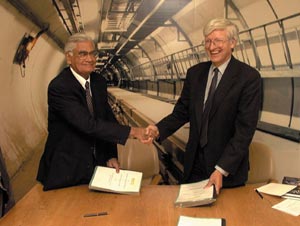
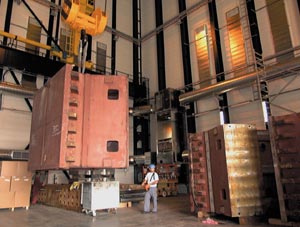
On my return to Pakistan, I kept my contacts with CERN, and a few months later a co-operation agreement was approved by the government of Pakistan, which was signed by me, as chairman of PAEC, and the then director-general of CERN, Chris Llewellyn Smith, who has now been appointed as director of the UK Atomic Energy Authority’s fusion programme. In 1997, PAEC signed an agreement for an in-kind contribution worth one million Swiss francs for the construction of eight magnet supports for the CMS detector. The signing of the agreement was followed by the visit of Llewellyn Smith to Pakistan in 1998. The agreement provided an entry point for Pakistani scientists and engineers into the CMS collaboration.

cernpak3_10-03

In 2000, CERN’s new director-general, Luciano Maiani, visited Pakistan, and during this visit another agreement was signed, which doubled the Pakistani contribution from one to two million Swiss francs. This new agreement covered the construction of the resistive plate chambers required for the CMS muon system. Recently, a protocol has been signed enhancing Pakistan’s total contribution to the LHC programme to $10 million. I very much hope and wish that these developments may eventually lead to Pakistan becoming an observer state at CERN.

A source of inspiration

One of the inspirations for scientific co-operation with CERN was Salam’s theories, which were always at the forefront of CERN’s scientific programme. Salam, Sheldon Glashow and Steven Weinberg formulated the theory that unified the electromagnetic and weak interaction and predicted the existence of weak neutral currents. In 1973, neutral currents were observed at CERN, verifying the theory. The discovery created quite a lot of excitement in Pakistan because of Salam. A later important breakthrough was the discovery of the intermediate vector bosons, W and Z, at CERN’s SPS in 1983. This provided yet another verification of the theory of Glashow, Salam and Weinberg.

The Large Electron Positron (LEP) collider was built at CERN to study electroweak theory and the Standard Model in more detail. It started up in 1989 and operated for 11 years, making precision tests of different aspects of the Standard Model. In particular, LEP experiments measured the number of neutrinos, and for the first time the mass of the Z boson was measured to an accuracy better than 2 MeV. However, one important ingredient of the Standard Model that is still missing is the Higgs boson, which is the elusive particle that in the Standard Model is responsible for giving masses to elementary particles.

It is hoped that the LHC, now under construction at CERN, will discover the Higgs boson, not withstanding the bet of famous physicist Stephen Hawking, and possibly physics beyond the Standard Model. The LHC will be able to explore physics at the TeV scale, where it is certain that some new physics will be found, most probably supersymmetry. Supersymmetry may explain a number of unsolved problems in the Standard Model, such as why masses differ by an order of magnitude as one moves from one quark family to another; why there are three families of quarks and three families of leptons; and how to explain the dark matter predicted by astrophysical models.

The importance of the Grid

The amount and size of experimental data generated at the LHC will pose the greatest challenge to the physicists. The collection, storage, retrieval and analysis of LHC data will require novel techniques in the field of information technology. The physicists working in different institutions around the globe will access LHC data; this implies a need for distributed computing. In recent years, a new approach in computing is emerging, called the Grid. The Grid is a natural evolution of the World Wide Web, which was invented at CERN in 1991. While the Web made information retrieval via the Internet extremely easy and simple, the proper implementation of the Grid will allow information processing and the solving of complex problems that would otherwise require supercomputers, in a very simple manner. Grid computing will be particularly useful for developing countries, where the cost of a supercomputer is prohibitive and there are also political difficulties in their purchase. It is very important for Pakistan to establish the proper infrastructure for Grid computing to acquire the full benefits of its investment in the LHC.

cernpak4_10-03

Information technology, on which CERN is to hold an important conference, “The Role of Science in the Information Society (RSIS)”, in December this year, is going to have a tremendous effect on billions of human beings who are being increasingly exposed to pressures due to the unabated instinct of the poor to reproduce and the insatiable desire of the rich to consume. Our planet is, of course, limited in space and resources. The new interactive electronic communications will have a strong impact on society. The hope is that Grid technologies, like the Web, will be widely used in both developed and developing countries alike. In its wake, the Grid will bring many changes to the socio, economic and cultural fabric of society.

Coming back to Pakistan, it is important to note that due to the influence of Salam, a number of high-calibre Pakistani theoretical particle physicists were trained in the latter part of the 20th century. On the other hand, Pakistan has always lagged behind in experimental particle physics due to a lack of resources. It was strongly felt by the scientists of Pakistan that a national centre for physics of very high international standards was needed. In 1994, I led a group of physicists to meet the president of Pakistan to discuss this issue, and the president very kindly approved the concept of such a centre. So in 1998, during the inauguration ceremony of the 23rd International Nathiagali Summer College on Physics and Contemporary Needs, I announced the creation of the National Centre of Physics (NCP) and invited the well-known Pakistani theoretical physicist Riazuddin to head the centre, which he kindly accepted.

The NCP is the cradle and the focal point for all CERN-related activities in Pakistan. At present, the centre is involved in a number of LHC-related activities such as detector construction, detector simulation, physics analysis and Grid computing. Several other Pakistani institutes are also collaborating with CERN indirectly through the NCP. The activities of these institutes cover areas such as software development, manufacturing of mechanical equipment, alignment of the CMS tracker using lasers, and the testing of electronic equipment.

Former CERN director-general Victor Weisskopf wrote in his book The Joy of Insight that anybody who enters CERN should be regarded as European and no longer a citizen of any nation. Now CERN is open to any scientist from anywhere in the world. Moreover, beyond its 20 European member states, CERN currently has co-operation agreements with 30 countries. Had Weisskopf been alive today, he would probably have rephrased his remark by saying that “anybody who enters CERN is a citizen of the world”.

CERN’s teachers’ programme celebrates its sixth year

The idea of the High School Teachers’ (HST) programme originally emerged from discussions within CERN’s Academic Training Committee, and was inspired by similar initiatives in the US. The primary goals of the programme are: to promote the teaching of particle physics to high-school students, to promote the exchange of knowledge between cultures, to expose teachers to the world of research, to help stimulate the popularization of physics in the classroom, to create links between European schools, and to promote co-operation between CERN and existing programmes in the European Union.

The first HST programme was held in 1998, and since then has continued under the direction of Michelangelo Mangano and Mick Storr from CERN. In addition, Gron Jones from the University of Birmingham in the UK lectures on bubble chambers each year and is a workgroup director.

The increasing interest and success of the programme has helped to expand the number of participants from nine teachers in 1998 to 40 this year. Altogether, 170 teachers from 29 countries have participated over the six years. The programme is advertised by word of mouth, through national organizations and via CERN’s teachers’ website (see “Further reading”). During the past year, a total of 110 teachers applied to participate in the 2003 programme, with applications coming from CERN member states and from Algeria, Bahrain, China, India, Japan, Mongolia, Pakistan, Slovenia and the US. Among the non-member states, teachers from China, Mongolia, Slovenia and the US were then invited to attend HST 2003.

All of the applicants are high-school physics teachers who are selected on the basis of their English-language competency, their activity in scientific organizations and publications, and their skills in the use of a PC. They are selected by a committee, which also looks for a diversity of cultures, teaching experience and educational backgrounds in the screening process.

During the past five years of the HST programme, a group from the US has also joined as part of the Research and Education for Teachers (RET) initiative, sponsored by Northeastern University in Boston. The RET initiative was founded in 1999 by Steve Reucroft at Northeastern and is funded by the US National Science Foundation. The teachers participating under the RET initiative spend additional time with a researcher at CERN to learn about a specific project. This year six teachers attended, not only from the Boston area, but also from Texas and Washington State, and they “shadowed” researchers during the week following the programme.

This year’s programme, HST 2003, included attending lectures hosted by CERN’s summer student programme, special lectures specifically for the HST participants, projects created in small working groups, presentations of completed projects, site visits and cultural interchange events, the highlight of which was a final gathering featuring native culinary dishes.

A “hands on” workgroup was introduced for the first time this year, in which participants built demonstration accelerator models for the classroom. A second group helped in the organization of CERN’s “Ask an expert” website, and two other groups worked on organizing the materials produced by former HST groups and on producing formal lesson plans.

An additional feature in this year’s programme was the Alumni working group. Participants from previous years were invited to CERN and were asked to conduct a survey among their HST colleagues on the usefulness of the programme in their teaching and other related work. From the results of this survey, and from information provided by the returning workgroup members, suggestions were then made to the directors for improvements and for the future direction of the programme.

The HST programme has now ended for another year, but the results, like any teaching endeavour, will only be seen in time. This investment in the future by CERN and by the HST participants has the potential not only to sway popular opinion toward scientific endeavour, but also to sow the seeds for the development of some great future scientists.

Shared experiences

cernhst1_10-03

“Participating in the HST programme was a great experience. Being the only physics teacher at my school, I normally don’t have the opportunity to exchange all kinds of information concerning physics. Suddenly, I had the chance to share my experiences with more than 35 physics teachers from more than 20 nationalities!”

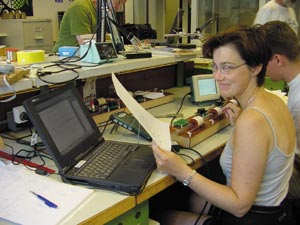
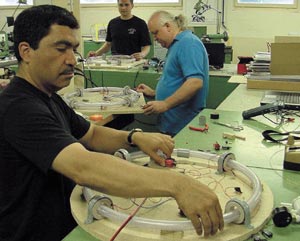
Vanessa van Engelen (HST 2002 and HST 2003) – seen here working on a demonstration model of a linear accelerator – teaches physics and mathematics at K A Schoten in Belgium. She also worked at the University of Antwerp for two years on a programme called “Brugproject”.

Broadening horizons

cernhst2_10-03

“My experience at CERN as a participant in HST 2001 has been, without doubt, one of the most important and memorable of my life! I am still processing the educational, scientific and cultural ramifications of those seven weeks, and probably will for years to come. For my own personal enjoyment and enrichment, the friendships made with people from other countries, and the opportunity to travel during free time, broadened my cultural horizons as much as the work at CERN itself expanded my view of major research enterprises.”

Alan Kaufman (HST 2001 and RET 2001) – seen here on the far right in the 2001 group photo – teaches at Malden Catholic High School in Malden, Massachusetts, US.

A unique opportunity

cernhst3_10-03

“Remarkable. That is the best description I can give to the CERN HST programme. I have been exposed to the most advanced physics laboratory in the world. The opportunity of being lectured by outstanding researchers in the field of particle physics is an experience that I will always tell my students in the years to come. I knew that this workshop would be a unique opportunity for me, but it has, in many ways, exceeded my expectations.”

Jesus Hernandez (HST 2003) – seen here during the workshop on building accelerator demonstration models – is a physics teacher at Lawrence High School, Lawrence, Massachusetts, US. Born in Venezuela, he has been living in the US for 12 years, and has a Masters degree in Physical Chemistry of Polymers. He decided to become a teacher when he learned about the Massachusetts Institute for New Teachers programme.

Transferring knowledge

cernhst4_10-03

“My feeling about the HST programme is that it must continue to be mainly addressed to young or inexperienced teachers, for three main reasons. It is a powerful way of transferring knowledge as it puts secondary school teachers and scientists in direct contact in real research surroundings; it addresses the most modern areas of physics, which are extremely interesting and challenging for everyone, and above all for youngsters of the 21st century; and it is a clever way of motivating teachers to transmit their knowledge and enthusiasm to their students.”

Anabela Bastos Tibúrcio Martins (HST 2003) from Portugal – seen here, on the left, with Margarita Lorenzo Cimadevila from Spain – has a PhD in Science Education, with In-service Science Teacher Training, at the Royal Danish School of Educational Studies, Copenhagen, Denmark.

Training benefits from basic research

cernvie1_10-03

In 1992-1993, the American Physical society, the European Physical Society and the Japanese Physical Society issued common position papers that were published simultaneously in their respective bulletins. One of the papers dealt with education and expressed concern about the trend observed in all industrialized countries, where fewer students are entering university to study physics as their main subject. This is becoming an increasingly serious problem. How can we obtain new physics knowledge if the number of physicists is sharply decreasing? How can we apply it if there are fewer knowledgeable people to do so? How can we avoid a two-tier society with too few people who know enough to judge the pros and cons of new technologies? This is a real challenge for a knowledge-based economy.

It may be argued that not so many people come to physics because they choose computer science or biology instead. These subjects are also very good at providing new practical knowledge. However, it is the whole of science that is suffering from a decrease in interest. We live in a society where there is nothing better than an MBA. Why suffer through difficult physics studies, as they are claimed to be, if the outcome of the effort does not look so promising?

To investigate the decline, surveys have been made of students who do enter university to study physics, asking them: “How come you chose physics?” The usual answer is: the attraction of mysterious and fundamental objects such as black holes, the Big Bang, quarks and so on.

This gives rise to the notion of “beacon science” – new developments in science that attract young people. It is of course to be hoped, and it is in practice the case, that once young students begin to study physics seriously they discover that there are many exciting things besides black holes and quarks, such as nanotubes and high-temperature superconductivity, and they turn to these topics with enthusiasm. However, black holes and quarks still have a special role to play.

This is important because physics studies at university are not only useful for training professional physicists. Learning how to master abstract concepts to apply them to practical problems, and learning how to appreciate orders of magnitudes and the values and limits of specific approximations are very useful for many activities. Having enough people trained that way is a prerequisite for a dynamic knowledge-based economy.

Consider particle physics. About half of the young people who receive PhDs in particle physics are working in industry within two years of acquiring their degree. The value of the wide range of training provided by such basic research should not be undermined – it is one of the obvious short-term economical returns. Our research with large detectors needs more young people than academia can absorb. Many of them come to research for training and leave it with much appreciated skills.

Indeed, industry does not care much about the research topics of new PhDs. What it appreciates is that people trained in particle physics have worked at the limits of knowledge and technology in large international collaborations, under severe time constraints, often becoming computer wizards in the process. The style of the research matters more than its subject. The great physicist Hendrik Casimir, who was for a long time head of research at Philips, said that: “It is so important to be confronted early in life with research of a greater depth, greater difficulty and greater beauty than one will find later during one’s career”. He also said: “I have heard statements that the role of academic research in innovation is slight. This is about the most blatant piece of nonsense it has been my fortune to stumble upon.”

The value of training through research within a large international research organization like CERN is such that some member states have agreed to also try it for young engineers and have found it very valuable. For several years Spain and Portugal have regularly sent young engineers to CERN so they could acquire valuable training. At the same time, CERN also finds this input of young people very valuable, even if they have to be trained. In 2002, for example, 23 Portuguese and 12 Spanish young engineers joined CERN, many to work on the Grid.

Research domains that make young people wonder and dream should be supported if we are to attract more people to physics and science in general. As Victor Weisskopf said: “We need basic science not only for the solution of practical problems, but also to keep alive the spirit of this great human endeavour. If our students are no longer attracted by the sheer interest and excitement of the subject, we have been delinquent in our duty as teachers.” Physics research, and particularly in the case of CERN, basic research, offers wonderful stimulation for innovation but also for the training of highly competent people for many walks of life – prerequisites for a dynamic knowledge-based economy.

• This is the second extract from the closing talk at a special workshop of Marie Curie Fellows on Research and Training in Physics and Technology, held at CERN in 2002. The first extract was in CERN Courier June p42.

Applied Partial Differential Equations

by John Ockendon et al., Oxford University Press. Hardback ISBN 198527705, £62.50 ($99.50). Paperback ISBN 198527713 £27.50 ($47.50).

71iXMqDSdDL

This is a revised edition of a book first published in 1999, which sought to present at a first-year graduate level the theory of partial differential equations from an applied perspective. The new edition contains many new sections and exercises on recent applications.

Ontological Aspects of Quantum Field Theory

edited by Meinard Kuhlmannm, Holger Lyre and Andrew Wayne, World Scientific. Hardback ISBN 9812381821, £56 ($82).

41QZXZU0NmL

This anthology on the foundations of quantum field theory (QFT) brings together 15 essays by researchers in physics, the philosophy of physics and analytic philosophy. It includes work on the role of measurement and experimental evidence, corpuscular versus field-theoretic interpretations of QFT, the interpretation of gauge symmetry and localization.

Transverse Spin Physics

by Vincenzo Barone and Philip G Ratcliffe, World Scientific. Hardback ISBN 9812381015, £39 ($58).

41I5n6Gb+6L._SX317_BO1,204,203,200_

Devoted to the theory and phenomenology of transverse-spin effects in high-energy hadronic physics, this book aims to assess the state of the art in this field, in which there has been much theoretical work over the past decade. Beginning with polarized deep-inelastic scattering, it covers the transverse spin structure of the proton, QCD and the structure function g2, Drell-Yan production, and inclusive leptoproduction and hadroproduction.

An Introduction to a Realistic Quantum Mechanics

by Giuliano Preparata, World Scientific. IBSN 9812381767 £16 ($24).

41+Q-gQXxhL

In this small book, Giuliano Preparata claims that all the conceptual difficulties of quantum mechanics are eliminated if one takes the broader framework of quantum field theory. I am not sure I agree with him completely. I belong to those who, following John Bell, sometimes feel uneasy about quantum mechanics but realize that absolutely no substitute works, in spite of the courageous efforts of people like S M Roy and others. I am not like Roland Omnès, who thinks that if one asks the right kind of question there is no problem. However, I agree completely with Preparata when he says that going to field theory eliminates a lot of problems and constitutes a considerable improvement. For instance, the transition between states with a fixed number of particles and coherent states is much clearer, and the structure of the vacuum easier to elucidate.

I find this book, published two years after Preparata’s death, constitutes a beautiful demonstration of the deep knowledge of quantum physics that Giuliano had. Sometimes during his life he took rather extreme positions against the main stream of particle theorists. There is hardly any trace of that in this book, just a demonstration of his immense culture and broadness of view. I am grateful to him for leaving us this document and can only recommend reading it.

Facts and Mysteries in Elementary Particle Physics

by Martinus Veltman, World Scientific. Hardback ISBN 9812381481, £33 ($48). Paperback ISBN 981238149X, £13 ($19).

cernboo2_10-03

I greatly enjoyed finally reading a book that goes into the details I always wanted. Not being a physicist myself, I have often attempted, in vain, to find a reasonably deep explanation of the current state of physics. Most books simply re-hash what the curious layperson already knows: relativity and quantum mechanics are weird, there are quarks in everything. They stop short of telling you how and why nature is strange. Veltman, however, has the courage to try a deeper level about what we understand and what is simply fact. He stubbornly and rightfully sticks to what has been experimentally verified. In his words: “space-time and the laws of quantum mechanics are like the decor, the setting of a play. The elementary particles are the actors, and physics is what they do. A door we see on stage is not a door until we see an actor go through it. Else it might be fake, just painted on.” For that reason, you should not expect anything on string theory or supersymmetry. Veltman ends his book with the remark “they are [so far] figments of the theoretical mind.” They are doors we have not seen used.

The narrative of the book suffers from bad English in many places, with irritating errors like “than” instead of “then” and awkward phrasing. There are some paragraph breaks missing and other indications of the impatience of the author. An attempt at explaining how “quadratic implies approximately doubling for percentage increases” completely fails, even though I do understand it.

More worrying are places where Veltman may confuse the reader by omitting forward references. On page 69 we are told that there are three quark colours and three anti-colours. That should make for nine corresponding gluons, which I immediately pictured in a square matrix of nine cells, but then he puzzles me by stating that “the white one” does not exist. On page 77 I find a reference to “diagonal gluons” (ah, my mental picture of the gluon matrix was perhaps not entirely wrong!), but it is only on page 114 that the white gluons are explained through mixing. My copy is now full of notes such as “see also page n”.

However, the amount explained in this book is truly impressive. To show how much effort went into discovering how nature works at the fundamental level, Veltman gives short biographical notes from a number of scientists. They appear in interesting vignettes, printed in a different colour, each on a full page. There are no fewer than 86 names. Veltman has a nice way of setting the historical record straight, tells amusing stories of his encounters with the personalities involved, and makes you smile at the vignette about Ernest Stückelberg.

Even if you have read books popularizing physics before, you have to read this one slowly. There is some maths (fortunately!), but nothing beyond high-school level, and there are many precise colour diagrams. Veltman often repeats what he explained before, and actually dares to say “forget about it” or “that’s the way it is”. This is refreshing as other accounts of physics are always vague about what can be explained in terms of more detailed theory and what we should accept as fact.

I have still not understood spin and attractive forces, but one should leave room for the second edition.

bright-rec iop pub iop-science physcis connect