par Constantin Piron, Presses Polytechniques et universitaires romandes. Broché ISBN 2880746116, 42CHF (7euro28).
Cet ouvrage constitue une introduction à la theacuteorie des champs quantiques très diffeacuterente des exposeacutes habituels le plus souvent formels. Reacutedigé par l’un des speacutecialistes francophones en la matière, il est particulièrement clair et didactique, illustré de nombreux exemples et exercices corrigeacutes.
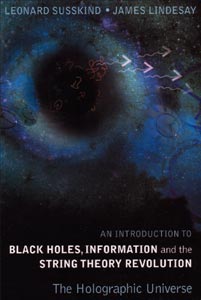
by Leonard Susskind and James Lindesay, World Scientific. Hardback ISBN 9812560831, £17 ($28). Paperback ISBN 9812561315, £9 ($14).
Black holes have attracted the imagination of the public and of professional astronomers for quite some time. The astrophysical phenomena associated with them are truly spectacular. They seem to be ubiquitous in the centre of galaxies, and they are believed to be the power engines behind quasars. There is little doubt of their existence as astronomical objects, but this very existence poses deep and unresolved paradoxes in the context of quantum mechanics when one tries to understand the quantum properties of the gravitational field.
For many readers, the title of this book may sound odd because the contents have little to do with the astrophysical or observational properties of black holes. If you look for nice pictures of galaxy centres and gamma-ray bursts, you will find none. If, however, you are looking for the deep paradoxes in our understanding of quantum-field theory in nontrivial gravitational environments, and the riddles encountered when trying to harness the gravitational force within the quantum framework, then you will find plenty.
At the end of the 19th century, Max Planck was confronted with serious paradoxes and apparent contradictions between statistical thermodynamics and Maxwell’s electromagnetic theory. The resolution of the puzzle brought the quantum revolution. When Albert Einstein asked himself what someone would observe when travelling at the same speed as a light beam, the answer revealed a fundamental contradiction between Newtonian mechanics and electromagnetic theory.
The resolution of these problems led to the relativity revolution, first with special and then general relativity. Sometimes experiment itself is not the only way towards progress in our understanding of nature. Conceptual paradoxes often provide the way to a deeper view of the world.
In the 1960s, largely due to Roger Penrose and Steven Hawking, it became understood that under very general conditions, very massive objects would undergo gravitational collapse. The end state would be a singularity of infinite curvature in space-time shrouded by an event horizon – the last light surface that did not manage to leave the region. The horizon is a profoundly non-local property of a black hole that cannot be detected by local measurements of an unaware, infalling observer.
Classically, black holes were supposed to be black. However, in the early 1970s Jacob Bekenstein and Hawking showed that black holes must necessarily have very unsettling properties. As Bekenstein argued, if the second law of thermodynamics is supposed to hold, then an intrinsic entropy must be assigned to a black hole. Since entropy measures the logarithm of the number of available states for a given equilibrium state, it is logical to ask what these states are and where they came from.The entropy in this case is proportional to the area of the black-hole horizon measured in Planck units (a Planck unit of length is 10-33 cm). This is vastly different from the behaviour of ordinary quantum-field theoretic systems.
Meanwhile, Hawking showed that if one considers the presence of a black hole in the context of quantum-field theory, it radiates thermally with a temperature inversely proportional to its mass, so the hole is not black after all. If the radiation is truly thermal, this raises a fundamental paradox, as Hawking realized. Imagine that we generate a gravitational collapse from an initial state that is a pure state quantum-mechanically. Since thermal radiation cannot encode quantum correlations, once the black hole fully evaporates it carries with it all the subtle correlations contained in a pure quantum state. Hence the very process of evaporation leads to the loss of quantum coherence and unitary time evolution, two basic features of quantum-mechanical laws.
These puzzles were formulated nearly 30 years ago and they still haunt the theory community. It was, nevertheless, realized that resolving these puzzles requires deep changes in our understanding of both quantum mechanics and general relativity, and also a profound modification of the sacrosanct principle of locality in quantum-field theory.
This book is precisely dedicated to explaining what we have learned about these puzzles and their proposed solutions. Assuming that some of the basic features of quantum mechanics (such as unitary evolution) and general relativity (such as the consistency of different observers’ observations, no matter how different they may be) do indeed hold, the authors analyse the conceptual changes that are required to accommodate strange phenomena such as black-hole evaporation.
In the process, they masterfully present a whole host of subjects including quantum-field theory in curved spaces; the Unruh effect and states; the Rindler vacua; the black-hole complementarity principle; holography; the Maldacena conjecture and the role of string theory in the whole affair; the notion of information in quantum systems; the no-cloning theorem for quantum states; and the general concept of entropy bounds.
A remarkable feature of this book is that relatively little specialized knowledge is required from the reader; a cursory acquaintance with quantum mechanics and relativity is sufficient. This is impressive, given that the authors cover some of the hottest topics in current research.
The technical demands are low, but conceptually the book is truly challenging. It makes us think about many ideas we take for granted and shakes the foundations of our understanding of basic physics. It provides a rollercoaster ride into the treacherous and largely uncharted land of quantum gravity. This book is highly recommended for those interested in these fascinating topics.
The authors end with the sentence: “At the time of the writing of this book there are no good ideas about the quantum world behind the horizon. Nor for that matter is there any good idea of how to connect the new paradigm of quantum gravity to cosmology. Hopefully our next book will have more to say about this.” We hope so too.
On 21-24 September, in co-operation with several other scientific institutions, the Masaryk University in Brno is organizing
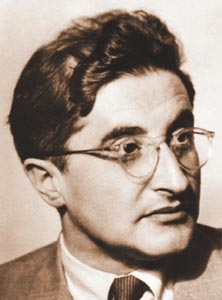
a memorial symposium in honour of the Czech physicist George Placzek, who was born on 26 September 1905 and died on 9 October 1955, soon after his 50th birthday. Placzek was an outstanding scientist who made substantial contributions to the fields of molecular physics, scattering of light from liquids and gases, the theory of the atomic nucleus and the interaction of neutrons with condensed matter. He belongs among the important physicists of the 20th century, setting an example not only through his discoveries, but also by the stimulating style of his scientific work.
George Placzek was born in Brno, Moravia, in what is now the Czech Republic but which in 1905 was part of Austro-Hungary. The oldest son of Alfred and Marianne Placzek, he spent his childhood in Brno and in Alexovice, where the family owned a textile factory, Skene & Co. He had a brother, Friedrich, one year younger and a sister, Edith, 12 years younger. The family was well integrated into the mixed Czech-German language environment around Brno. George studied in the Deutsches Staatsgymnasium in Brno between 1918 and 1924 and then went to the University of Vienna, with three semesters away in Charles University, Prague. He graduated in 1928, having defended his doctoral thesis, which dealt with the determination of density and shape of submicroscopic test bodies, with distinction.
Travels in Europe
In 1928, Placzek set off on several years of travel through the main scientific centres of Europe. This was usual for post-docs at the time, although Placzek later markedly avoided countries in which Adolf Hitler was increasingly encroaching upon civil liberties and human rights. He spent three years with Hendrik Kramers in Utrecht, followed in 1930-31 by a short time with Peter Debye and Werner Heisenberg in Leipzig. He then joined a group of young physicists led by Enrico Fermi in Rome, where Edoardo Amaldi became his closest colleague. Then, in 1932, Placzek joined Niels Bohr in Copenhagen where he remained until 1938, with periods of research fellowships or visiting professorships at the universities of Kharkov, Jerusalem, Paris and elsewhere.
Placzek’s first scientific interest was in the scattering of light from molecules and the Raman effect. With Lev Landau, he investigated the fine structure of a monochromatic wave in liquids and gases, and together they derived the Landau-Placzek formula for the ratio of intensities of Brillouin and Rayleigh scattering of light. Then in the early 1930s, the scattering of slow neutrons in matter became topical and Placzek was attracted to this problem, first in Rome and later in Copenhagen, where at Bohr’s suggestion he and Otto Frisch studied the capture of slow neutrons.
Placzek’s work in Copenhagen made him a leading authority on neutron scattering and absorption in matter. In a series of experiments, Placzek and Frisch discovered that the absorption of neutrons depends strongly on the atomic mass of the material and the velocity of the neutrons, while for slow neutrons and light elements the neutron-capture cross-section is inversely proportional to the velocity. He also worked with Hans Bethe on a theory of neutron absorption resonances, deriving important laws and selection rules, and publishing a seminal paper on resonance reactions in 1937. Papers published later by Placzek with Bohr and Rudolf Peierls dealt with the general theory of nuclear reactions and rank among the classics. For example, the well-known optical theorem, connecting the imaginary part of a scattering amplitude with the total cross-section, bears the names of Bohr, Peierls and Placzek. Using the optical theorem and Bohr’s drop model of the nucleus, the trio developed a fundamental theory of neutron-induced nuclear reactions.
Hitler’s preparations for a systematic occupation of all countries bordering Germany endangered some members of Bohr’s international team, including Placzek. The Anschluss of Austria in the spring of 1938 and the seizing of a large region from Czechoslovakia through the Munich treaty in September of that year left no-one in the dark. Bohr decided to move part of his Copenhagen Institute to the other side of the Atlantic. Placzek left Copenhagen for the US in January 1939 and in Princeton, at the beginning of February, he met Bohr, who had been waiting for him impatiently.
Across the Atlantic
Placzek’s first encounter with Bohr on the other side of the Atlantic provides an interesting illustration of their personal relationship and scientific collaboration. While sources (e.g. Moore 1966, Wheeler and Ford 2000) do not agree exactly on what was discussed during breakfast on 3 February 1939, they do seem to have the same opinion on the following. Bohr found Placzek – “the institute’s always stimulating Bohemian” – sitting with Leon Rosenfeld. Their discussion focused on some exciting news from Europe. First, Frisch and Lise Meitner had recently suggested that most of the transuranic elements were produced by a new type of nuclear reaction – the capture of neutrons from uranium fission. Second, Placzek had suggested to Frisch in Copenhagen how he might confirm the existence of fission in a straightforward way, which Frisch promptly did on 13 January 1939.
Bohr, listening attentively, looked up with a big smile: “For one good thing, we’re free of transuranic elements.” Placzek, the sceptic, 20 years younger than Bohr, commented: “Yes, but now you’re in a worse mess. How can you reconcile it with your view of nuclear reactions?”. How, he asked, was Bohr going to explain why slow rather than fast neutrons should cause uranium to fission? Why should slow neutrons induce a modest fissioning in uranium, but be captured in thorium?
Bohr suddenly went pale, took Rosenfeld and set off across the campus to his office. He went to the blackboard and worked rapidly, making some rough sketches. In about ten minutes he stopped; he had the answer to the problem posed by Placzek, related to the fissioning of the nuclei. The fission cross-section for slow neutrons must be due to the small amount of the isotope uranium-235, the cross-section increasing as the wavelength of the neutrons increases with decreasing energy.
From 1939 to 1942 Placzek was professor at Cornell University, Ithaca. Later he went to Montreal and Los Alamos, where he contributed to solving problems related to the moderation of neutrons in matter. He was apparently the only citizen of Czechoslovakia to take part in the Manhattan Project, being head of the Theory Group in Chalk River near Montreal, and then in Los Alamos from May 1945. Later he worked for some time in the General Electric Company in Schenectady and in 1948, he obtained a permanent position at the Institute for Advanced Study in Princeton.
In the last years of his life, Placzek went into more depth with his analysis of the elastic and inelastic scattering of light particles in liquids and crystals, aimed at investigating the physical properties of these media. Albert Messiah and Léon Van Hove were among his collaborators and friends in this period (Van Hove 1956, Messiah 1991). During this time, he also visited Europe to lecture on the moderation and diffusion of neutrons and in 1954, the book Introduction to the Theory of Neutron Diffusion, by K M Case, F de Hoffmann and Placzek appeared, based on a lecture course Placzek gave in Santa Monica and Los Angeles in the summer of 1949. In autumn 1955, Placzek died in Zurich while he was planning a several-month lecture tour through Italy for the academic year 1955-56.
During his scientific career, Placzek provided a quantum formulation of Raman light scattering, developed the ideas of molecular symmetry and its application in physics, and in collaboration with Bethe, Bohr and Peierls, contributed to the general theory of nuclear reactions. He systematically studied the behaviour of neutrons in nuclear reactions, neutron resonances, scattering and diffusion in matter, and the moderation and absorption of neutrons in crystals and liquids. He was among the first to suggest, independently of several others, that graphite might be used to moderate neutrons. Yet his name is not well known.
The importance of publication
Those who knew Placzek personally agree that his discoveries and results in physics, rich and important as they were, were not sufficiently published; only a small portion of his results appeared in print. As Van Hove points out, Landau’s and Placzek’s classic results on the scattering of a monochromatic wave in liquids were published in an incomplete form, and were only later discussed in more detail by Jacov Frenkel in his Kinetic Theory of Liquids. The same holds for the results on the general theory of nuclear reactions obtained by Bohr, Peierls and Placzek. Amaldi wrote about Placzek in 1956: “The redaction of an article represented an immense effort for him; even important results of his, which he had formulated clearly and in definite form, often remained unpublished.”
He was noted for strict moral principles and a great sense of tolerance
Edoardo Amaldi
This trait of Placzek’s corresponded to his desire always to deepen his analyses of the phenomena he studied. Moreover, many of his original ideas are implicitly contained in other papers. As an unmerciful critic, Placzek often served as the scientific conscience for his colleagues, stimulating their invention, criticizing their work and forcing them to formulate their scientific ideas clearly. He had a number of characteristics that made him a welcome collaborator and team member: a highly developed critical sense, an ability to understand new problems quickly and to confront them with relevant facts, an unselfish willingness to offer advice and, last but not least, a generous disinterest in participating in the result.
These attributes, as Amaldi explains, reflected Placzek’s character. He excelled in general erudition and in a culture anchored in fundamental ideas. He easily learned foreign languages and felt great affection for small nations. He was noted for strict moral principles and a great sense of tolerance.
What little remains
Despite Placzek’s long collaboration with Bohr there are only a few photographs and letters in the Niels Bohr Archive in Copenhagen. One possible explanation is that, before moving to America, Bohr obliterated all traces that could help the Nazis pursue the families of those who had fled from occupied countries. In Placzek’s fatherland, by the end of 2004, only a few documents had been found: a note in the register of births (containing the names of his parents and grandparents, the godfathers, the rabbi and the midwife), the regular notes of his studies in the Staatsgymnasium high school, and the distasteful entries in the book of the right of domicile. Placzek’s parents and his sister died in concentration camps during the Second World War, while his brother died eight days after the Nazis’ invasion of Czechoslovakia in March 1939. Recently, however, in connection with the double anniversary of Placzek’s birth and death, many interesting documents have been found about his relatives and the history of the whole family in Moravia and North America (Gottvald 2005). These will be presented at the symposium.
<textbreak=Acknowledgements>
The author is greatly indebted to Ugo Amaldi, Giuseppe Cocconi, Torleif Ericson, Ales Gottvald, André Martin, Michelle Mazerand, Jack Steinberger, Valentin Telegdi and Jenny Van Hove for providing valuable information relating to George Placzek.
One of the things we do well in particle physics is collaborate with each other and internationally to carry out our science. Of course, individual and small collaborations are a trademark of modern scientific research and many of us have developed lifelong colleagues and friends from different cultures through our scientific interactions. Even during times when political situations have been constraining, scientific contacts have been maintained that have helped to break down those barriers. For example, during the heat of the Cold War, personal interactions were greatly hampered, yet scientific bonds persevered and some of those connections provided crucial ongoing contacts between Western and Soviet societies.
When I was a student at the University of California, Berkeley, I did my PhD research at the “Rad Lab”, now called Lawrence Berkeley National Laboratory. I recall being immediately surprised both by the number of foreign or foreign-born scientists at the lab and by how little it seemed to matter. For me, having grown up as a local Californian boy, this was an eye-opening experience and a terrific opportunity to learn about other cultures, customs and views of the world. After a while, I pretty much took it for granted that we scientists accept and relate to each other in ways that are essentially independent of our backgrounds. However, it is worth reminding ourselves that this is not the case in most of society and that we are the exception, not the rule.
I have often wondered what it is that unifies scientists. How can we work together so easily, when cultural, political and societal barriers inhibit that for most of society? After all, hostilities between countries and cultures seem to continue as an almost accepted part of our modern existence. I won’t theorize here on what enables scientists to work together and become colleagues and friends without regard to our backgrounds. Instead, I would like to briefly explore whether the nature of how we collaborate will, or should, change.
Particle physics is increasingly focused on the programmes at our big laboratories that house large accelerators, detectors and support facilities. These laboratories have essentially come to represent a distributed set of centres for high-energy physics, from which the intellectual and technical activities emanate and where physicists go to interact with their colleagues. Fermi National Accelerator Laboratory (Fermilab), Stanford Linear Accelerator Center (SLAC), the High Energy Accelerator Research Organization (KEK) and Deutsches Elektronen-Synchrotron (DESY) are examples of national laboratories that play this role in the US, Japan and Germany. CERN is a different example of a successful regional laboratory that has provided Europe with what is arguably the leading laboratory in the world for particle physics and with a meeting place for physicists from Europe and beyond.
One essential ingredient in the success of particle physics is that the accelerator facilities at the large laboratories have been made open to experimentalists worldwide without charge. This principle was espoused by the International Committee on Future Accelerators (ICFA) and, I believe, it has been crucial to widening participation.
It is interesting to contemplate how international collaboration might evolve as we go beyond the regional concept to a global one, like the International Linear Collider (ILC). The organizational principles for building and operating the ILC are not yet defined, but the idea is to form a partnership between Asian, American and European countries. Such an arrangement is already in place for the accelerator and detector R&D efforts. The general idea is to site the ILC near an existing host laboratory, to take advantage of the support facilities. However, the project itself will be under shared management by the international stakeholders. The experiments are expected to consist of large collider detectors similar to those at present colliders, but with some technical challenges that will require significant detector R&D over the next few years.
As we plan for the ILC, we want to ensure that we create a facility that will be available to the world scientific community. What needs to be done to ensure that we maintain the strong collaborative nature of our research and how do we create a true centre for the intellectual activities of our community? What should we require of the host country to assure openness to the laboratory and its facilities? How can we best include the broad community in the decision-making that will affect the facilities that are to be built? Is it time to consider new forms of detector collaboration and/or should we contemplate making the data from the detectors available to the broader community after an initial period (as in astronomy)?
I raise such questions only as examples, not to imply that we should change the way we do business, but to encourage us to think hard about how we can create an exciting international facility that will best serve our entire community and enable productive and broad collaboration to continue in science.
With this issue, CERN Courier takes on a slightly different look, with the inclusion of articles in French. This is because CERN has, with regret, taken the decision to cease the publication of separate French and English editions. In the new bilingual edition, articles submitted in English will remain in English while French articles will be published in French. There will, however, be summaries of feature articles in the other language, and the news items, as here, will be listed in French.
During its meeting in Geneva on 17 June, the CERN Council agreed to take on the role of defining the strategy and direction of European particle-physics research, a task already present in the founding convention.
A strategic planning team is to be established in support of this role, consisting of the chair of the European Committee for Future Accelerators, the chair of CERN’s Scientific Policy Committee, CERN’s director-general, one member nominated by each of CERN’s member-state delegations, and representatives of the major European national laboratories. In spring 2006, the team will provide the CERN Council with a status report in Berlin, with a full report to follow later that year.
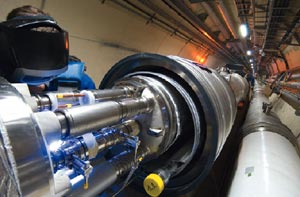
At the same meeting, the Council also heard from project leader of the Large Hadron Collider (LHC), Lyn Evans, who told attendees that all efforts are currently being made to ensure that the LHC will be ready for commissioning in the summer of 2007. CERN’s chief scientific officer, Jos Engelen, also reported that all the LHC’s experiments expect to be in a position to take data in 2007, and that the LHC computing grid is progressing according to plan.
In his presentation to the Council, CERN’s director-general, Robert Aymar, applauded the progress that is being made towards the LHC. However, while the laboratory is on course for LHC start-up in 2007, current expenditure profiles indicate that CERN’s budget could be entirely committed to paying for the project right through to the next decade. This subject will be discussed at the Council’s meeting in September.
On 24 May, Jonathan Dorfan, director of the Stanford Linear Accelerator Center (SLAC), announced a complete reorganization of the structure and senior management of the laboratory, which Stanford University has operated for more than 40 years for the US Department of Energy. The new organizational structure is built around four divisions: Photon Science, Particle and Particle Astrophysics, Linac Coherent Light Source (LCLS) Construction, and Operations.
“One thing that is recurrent in world-class scientific research is change,” Dorfan said. “Recognizing new science goals and discovery opportunities, and adapting rapidly to exploit them efficiently, cost-effectively and safely is the mark of a great laboratory. Thanks to the support of the Department of Energy’s Office of Science and Stanford University, SLAC is ideally placed to make important breakthroughs over a wide spectrum of discovery in photon science and particle and particle astrophysics. These fields are evolving rapidly, and we are remodelling the management structure to mobilize SLAC’s exceptional staff to better serve its large user community. The new structure is adapted to allow them to get on with what they do best – making major discoveries.”
Two of the new divisions – Photon Science, and Particle and Particle Astrophysics – encompass SLAC’s major research directions. As director of the Photon Science Division, Keith Hodgson has responsibility for the Stanford Synchrotron Radiation Laboratory, the science and instrument programme for the LCLS (the world’s first X-ray-free electron laser) and the new Ultrafast Science Center. Persis Drell, director of the Particle and Particle Astrophysics Division, oversees the B-Factory (an international collaboration studying matter and antimatter), the Kavli Institute for Particle Astrophysics and Cosmology, the International Linear Collider effort, accelerator research and non-accelerator particle-physics programmes.
Construction of the $379 million LCLS, a key element in the future of accelerator-based science at SLAC, started this fiscal year. A significant part of the laboratory’s resources and manpower are being devoted to building LCLS, with completion of the project scheduled for 2009. Commissioning will begin in 2008 and science experiments are planned for 2009. John Galayda serves as director of the LCLS Construction division.
To reinforce SLAC’s administrative and operational efficiency, and to stress the importance of strong and effective line management at the laboratory, a new position of chief operating officer has been created, filled by John Cornuelle. This fourth division, Operations, has broad responsibilities for operational support and R&D efforts that are central to the science divisions. Included in Operations will be environmental safety and health, scientific computing and computing services, mechanical and electrical support departments, business services, central facilities and maintenance.
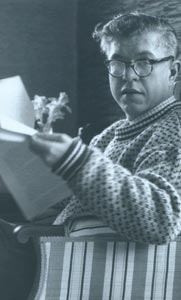
Fred Hoyle, the great cosmologist, nuclear astrophysicist and controversialist, was born 90 years ago in the beautiful county of Yorkshire in the north of England. Hoyle’s first science teacher was his father, who supplied the boy with books and apparatus for chemistry experiments. By the age of 15 he was making highly toxic phosphine (PH3) in his mother’s kitchen, and terrifying his young sister with explosions. In high school he excelled in mathematics, chemistry and physics, and in 1933 won a place at Cambridge to study physics.
On arrival at Cambridge he immediately demonstrated his fierce independence by telling his astonished tutor that he was switching from physics to applied mathematics. The future nuclear astrophysicist foresaw that Cambridge mathematics rather than laboratory physics would give him the right start as a theorist. The country boy displayed an astonishing talent at mathematics, even by the highest standards of the university. He skipped the second year completely, yet graduated with the highest marks in his year. That soaring achievement won him a position as a research student in the Cavendish Laboratory, where Ernest Rutherford held the chair of experimental physics. By the 1930s Rutherford had created for Cambridge the greatest nuclear physics laboratory in the world.
Hoyle identified Rudolph Peierls as a supervisor. Peierls, a German citizen and son of a Jewish banker, had studied quantum theory under the pioneer Werner Heisenberg. In 1933 Peierls and his young wife had escaped the anti-Jewish practices of the Nazi regime; they arrived in Cambridge via Stalin’s Russia. Peierls won a one-year fellowship from the Rockefeller Foundation, and by the time Hoyle tracked him down he had just returned from spending six months in Rome with Enrico Fermi. Peierls immediately set Hoyle the task of improving Fermi’s theory of beta decay, published in 1934. This led, in 1937, to Hoyle’s first research paper, “The generalised Fermi interaction”.
In 1938 Paul Dirac, who had won the Nobel prize in 1933, became Hoyle’s supervisor because Peierls had left Cambridge for a permanent position in nuclear physics at the University of Birmingham. Just one year under Dirac’s silent tutelage enabled Hoyle to produce two papers in quantum electrodynamics, both of them masterpieces.
The impending 1939-1945 war curtailed Hoyle’s career as a theoretical nuclear physicist. In January 1939 he read of Irène and Frédérick Joliot-Curies’ discovery that the fission of uranium by neutron bombardment produced a fresh flood of neutrons. The nuclear physicists in the Cavendish Laboratory immediately realized that a chain reaction could be used to create a nuclear bomb. Hoyle foresaw that war research would drain the UK universities of scientists and mathematicians. Wishing to avoid being drafted for weapons research, he changed his research interest to theoretical astronomy and offered his services to the nation as a weather forecaster. The British authorities declined this suggestion. Instead he found himself engaged in radar countermeasures for the war at sea, a field in which he worked with great distinction that was never publicly recognized.
In late 1944 the US Navy convened a secret meeting in Washington for the US and UK to share knowledge of radar research. Hoyle was one of two UK delegates. Outside of the meeting he used his time productively. He flew out to the US west coast to meet Walter Baade, one of the greatest observational astrophysicists of the 20th century. Baade introduced Hoyle to papers that he had missed during his war work, about the extremely high temperatures in supernovae. Baade taught him that a supernova is a nuclear explosion triggered by stellar collapse: “Maybe a star is like a nuclear weapon!” was how Baade put it.
Hoyle returned to England via Montreal, his itinerary allowing him to visit the Chalk River Laboratories. This Canadian facility had played host to British research on nuclear weapons since 1942. From a former Cavendish Laboratory contact, Hoyle learned some of Britain’s nuclear secrets first-hand. What particularly amazed him was how far the measurements of energy levels in nuclei had progressed. Hoyle now made an important connection: what would the nuclear chain reactions look like in an exploding star?
The post-war period
At the conclusion of the war in Europe, Hoyle walked out of his job as a radar scientist (he could have continued if he had wished), and returned to Cambridge as a lecturer. He immediately turned his mind to nuclear reactions in massive stars with central temperatures of around 3 x 10⁹ K. Astrophysicists had long known of the two stellar reactions that synthesize helium from hydrogen. Hoyle, following suggestions by his hero, Arthur Eddington, now asked himself if helium could be processed to the heavier elements via chain reactions. He studied tables giving the natural abundances of the chemical elements, picking up an important clue from the marked increase in abundances around iron, the so-called iron peak. From his solid grasp of nuclear physics and statistical mechanics he convinced himself that the iron nuclei were synthesized in stars at very high temperatures. He set himself the task of working out how stars do it.
He quickly became frustrated at the lack of data on nuclear masses and energy levels. Then, one afternoon in the spring of 1946, he bumped into Otto Frisch. Frisch had recently returned to the UK from Los Alamos, where he had worked on nuclear fission aspects of the Manhattan Project. Frisch directed Hoyle to a declassified compilation on nuclear masses that the British authorities had found in occupied Berlin. Drawing on these data from the wartime atomic-weapons programmes, he now worked alone in St John’s College (rather than the Cavendish Laboratory), searching for the answers to the origin of the elements from beryllium to iron.
A single page in a notebook he had first started in 1945 captures the moment when Hoyle cracked this problem. The notebook has a series of reactions, commencing with 12C capturing 4He, and concluding with Fe. Hoyle treated the problem as one of statistical equilibrium. For example, he wrote down a chain reaction connecting 16O and 20Ne in the following manner: 16O + 4He→←19F + 1H, 19F + 1H→←20Ne + hν. The double arrow symbol he used →← is to indicate that these reactions are occurring in equilibrium, with the action being read from right to left as well as left to right.
Using statistical mechanics, Hoyle calculated the proportions of each isotope that would arise under equilibrium conditions. This is not explosive nucleosynthesis, but a more mundane steady-state alchemy in the cores of red giant stars. Hoyle assumed, correctly as it turned out, that rotational instability and stellar explosions would release the heavier elements inside the star back to the interstellar medium. His scheme neatly matched reality, as its predicted distribution of the different elements corresponded well with their abundance in the natural environment. But there was barely a ripple of interest from the scientific community when Hoyle published his findings in 1946. At that stage he was far ahead of his time in applying nuclear physics to stellar interiors. In the 10 years following publication the paper received just three citations.
One spring afternoon in 1953 a young postdoc, Geoffrey Burbidge, gave a seminar in Cambridge that changed nuclear astrophysics forever. He described the proportions of chemical elements in a peculiar star (γ Gem) that his wife Margaret had just observed. The composition of this star seemed bizarrely different from that of the Sun. The rare earths, from 57La to 71Lu, were spectacularly over-represented: in γ Gem 57La has an abundance 830 times greater than in the Sun. The Burbidges appeared to have discovered a star with nuclear reactions taking place on the surface.
The results greatly excited Willy Fowler of Caltech who was in Cambridge as a Fulbright professor. He already knew of Hoyle’s work on synthesis through the iron peak. Now he introduced himself to the Burbidges saying that his particle accelerator in the Kellogg Radiation Lab could accelerate protons to the energies found in solar flares. He exclaimed: “Geoff, the four of us should attack the problems of nucleosynthesis together.”
Soon after the seminar Fowler and Hoyle joined up again at Caltech. Hoyle had a problem on his mind. His synthesis through to the iron peak started with 12C. Where had the 12C come from? Not from the Big Bang – that made only hydrogen and helium. The synthesis of elements with atomic masses 5 and 8 in stellar interiors was already known to be impossible because there are no stable isotopes with those masses. In the absence of these light isotopes to form a stepping-stone, how could three 4He become 12C? Calculations suggested that anything synthesized from three alpha particles (4He) would be absurdly short-lived. And there the matter rested until Hoyle goaded a reluctant Fowler into action.
One of Fowler’s associates, Edwin Salpeter, had found an enhanced energy level in 8Be that lasted just long enough to react with an alpha particle and make the prized 12C. However, when Hoyle looked at the nuclear physics more closely, he realized that the 12C resulting from Salpeter’s scheme would immediately react to 16O. However, in a flash of inspiration Hoyle tried to make Salpeter’s triple-alpha process work with an enhanced level in 12C. To his amazement he found that if the newly made 12C had a resonance at 7.65 MeV the reaction would proceed at just the correct rate.
Hoyle crashed into Fowler’s office without so much as a “by your leave” and urged him to measure the resonance levels in carbon. The experimentalist wasn’t going to embark on a quest that would take many weeks just because an exotic theorist from England asked him to. But Hoyle persisted and Fowler eventually relented. Hoyle had already returned to his teaching in Cambridge by the time Fowler’s group completed the experiment. They did find the resonance at 7.65 MeV, a discovery that Fowler found absolutely amazing. “From that moment we took Hoyle very seriously indeed,” he later said, because Hoyle had predicted a nuclear-energy level entirely on the basis of an anthropic argument.
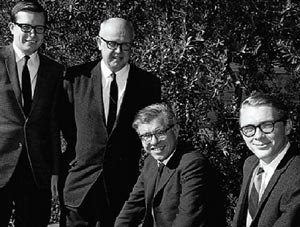
The Burbidges, Fowler and Hoyle – “B2FH” – now embarked on an enormous research programme to account for the origin of the elements in the entire Periodic Table. The Burbidges brought the observations to the collaboration, Fowler the nuclear data, and Hoyle and Geoff Burbidge many of the calculations (on hand-cranked machines). Their encyclopaedic paper, always referred to as B2FH, ran to 108 pages, appearing in Reviews of Modern Physics in 1957 (B2FH 1957). It has received 1400 citations, which is very high for a paper in astrophysics. It remains a key paper, which set out the physics of several different mechanisms of nucleosynthesis, including the explosive pathways in which supernovae build the elements beyond the iron peak. The paper led to a lifelong friendship between Fowler and Hoyle, both of whom made many further contributions to nucleosynthesis. Fowler was deeply disturbed and disappointed when Hoyle did not get a share of the 1983 Nobel prize, which went to Chandrasekhar and Fowler.
Fowler strongly supported Hoyle’s plans for an Institute of Theoretical Astronomy in Cambridge. This opened in 1968, with nuclear astrophysics at the heart of the programme. Hoyle used the institute as a platform to re-establish British expertise in all branches of theoretical astronomy. By example he pulled the subject out of the doldrums, inspiring a string of distinguished visitors and a legion of graduate students. His research papers (there are more than 500) show he was wrong more often than he was right. That did not trouble him at all. Among the papers in the “right” class, those on nuclear astrophysics still stand as a towering achievement of central importance to astrophysics.
From 5 to 19 March, 400 scientists from the four corners of the world gathered in La Thuile to discuss fundamental questions in high-energy physics and astrophysics, during four distinct one-week meetings. This was the 40th Rencontres de Moriond – an event that has grown from being a gathering of around 20 friends in 1966 to an annual institution for scientists everywhere.
In the early 1960s, scientific meetings in which theorists and experimenters discussed questions of mutual interest were rare. Even rarer were meetings in which participants of all ages talked to each other on an equal footing, in a climate insulated from day-to-day problems and far removed from the usual laboratory environment.
In 1965, Jean Tran Thanh Van, a young researcher at Orsay, decided to organize an unusual scientific meeting for January 1966. The subject itself – electromagnetic interactions – was not particularly unusual, but the organization was. The meeting was held in the French Alps in a group of chalets, with no catering help or assistance, few of the visual aids one associates with such meetings and, most importantly, without any telephone contact with the outside world. Tran Thanh Van was helped in this groundbreaking initiative by five colleagues: Bernard Grossetête, Fernand Renard, Michel Gourdin, Jean Perez Y Jorba and Pierre Lehmann.
This was not a conference or a school, but a gathering (“rencontre”) of minds. The name of what became a series of meetings reflects this original motivation. Held in Moriond village, the very first of the Rencontres de Moriond was a resounding success. The 20 participants included theorists and experimenters of all ages, from France, Italy (Frascati) and Germany (DESY). The time was well filled with fruitful but relaxed discussions, culinary experiments, skiing, and evenings spent listening to music performed by the scientists themselves.
The Rencontre was unusual in another respect. Half of the participants and organizers were young researchers, but their views and contributions were as significant as those of the senior members. At Moriond, all participants were equal, and none were more equal than others. Happily this tradition persists today.
For the past 39 years the meetings have not been held in Moriond, but they still take place in the mountains! The content has changed continuously, but the underlying Moriond spirit has taken on a life of its own, much to the surprise of Tran Thanh Van. Those original chalets used in 1966 soon became too small and the Rencontres moved to Courchevel, at the Hotel des Neiges, then wandered from hotel to hotel before finding a temporary home in Meribel in 1970, at the Lac Bleu hotel. Gradually, the Rencontres de Moriond became known as the annual fair of the high-energy physics community. Participants would go their separate ways, conduct their own research, then return to the annual Rencontres to show their latest work, find new collaborators and exchange ideas – and then continue their trek to new horizons. A core membership of more than 80 physicists began to meet annually.
In 1969, Tran Thanh Van felt that it was time to apply the idea of bridges within his discipline to bridges between disciplines. As a result, 1970 saw the addition of a biology meeting (founded by cell biologist Kim Tran Thanh Van) to the particle-physics meetings.
An evolving institution
During the decades that followed, the Rencontres gradually changed in character. From a one-week meeting, devoted essentially to one subject in high-energy physics, it expanded into a two-week conference with two basic topics in particle physics – electroweak and hadronic interactions – and a topic in biology. It became an annual “happening”, followed by physicists and biologists worldwide. It was a place to announce new discoveries, to discover the new directions that researchers were taking, and to forge new friendships and collaborations.
The Rencontres de Moriond became an institution, but the underlying motivation remained intact. Theorists mingled with experimenters; young researchers (postdocs and PhD students) were encouraged to present their work and talk with senior researchers as with colleagues and friends; even the most outrageous ideas had their place. The Rencontres were often the place for young scientists to present their first serious papers before a prestigious international audience, and a place to meet and listen to individuals before there was even a hint that they would one day win a Nobel prize.
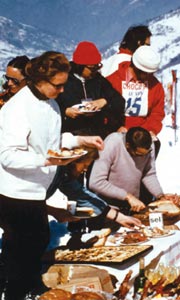
Times changed, the pressure to publish rose and the number of participants grew, but the original convivial spirit of the Rencontres was an invariant from year to year. The early afternoon breaks were invariably devoted to skiing (for beginners and experts alike), but this never stopped the science. Tourists would often wonder who those strange people were, stopping on the pistes to talk about some recondite subject using an esoteric vocabulary, pausing to draw diagrams in the snow, and getting so involved in an arcane discussion on a ski lift that they would almost forget to get off.
Although science was always on our minds, on or off the snow, there was time to talk of other matters, to change the world, to make and listen to music. The scientific community includes a large number of excellent amateur musicians of all kinds, from singers to pianists and violinists, who would often show their skills after dinner around the bar. Sometimes a popular science talk would be organized for the general public of the resort, and these talks were always well received.
Science knows no barriers: a proton is a proton, in Switzerland, America or Russia. But the post-war world was a labyrinth of frontiers and walls, and the Rencontres de Moriond played a part in changing this stifling climate of political confrontation between the East and the West. Every effort was made to help and encourage Russian (and more generally Eastern European) scientists to come to the Rencontres, both to display their considerable scientific expertise – often unrecognised – and to learn about the latest advances in the West. This was a new and different kind of multidisciplinary work, which many years later would find an echo in the Rencontres du Vietnam. The annual Rencontres in the Alps was a peaceful haven where the best minds of hostile, inward-looking nations could meet, talk, exchange ideas, push back the frontiers of their discipline and dream of a happier future.
Changing times
As the 1970s drew to a close, participants at the Rencontres found themselves increasingly attracted by subjects such as atomic physics and astrophysics, which were beginning to encroach on the domain of high-energy physics. The Rencontres had begun as a forum for exchanging ideas in frontier science, and now, true to this spirit, Tran Thanh Van recognized that it was once again time to broaden the scope of the meetings.
In 1981 the Rencontres de Moriond Astrophysique was born. It ran in parallel with the now traditional high-energy and biology meetings, and was an annual event devoted to the study of the infinitely large. The Rencontres de Moriond had become a true interdisciplinary institution, where specialists in distinct disciplines could confront their very different views of the universe. There were accelerator experimenters, observers, theorists in particle physics, cosmologists and even experts in galactic evolution.
During its 40 year lifetime, the Rencontres de Moriond has welcomed more than 10,000 scientists of all ages and statures from across the world.
The Rencontres was thus restructured around three major centres of interest: biology, high-energy physics and astrophysics. But the rest of science was not neglected. As the 1980s gave way to the 1990s, new subjects, sometimes only marginally related to the regular topics, would start to make an appearance. Among these topics were gravitational physics, mesoscopic physics, the search for the fifth force and for new laws in physics, and tests of the limits of existing laws.
As with all successful enterprises, Moriond has evolved. There are now more subjects, more meetings, more participants and more administration! But the spirit and excitement of those early days remain unabated. No discipline is an island unto itself, and the programme of each meeting, whatever its nominal subject, emphasizes the essential unity of the scientific endeavour.
During its 40 year lifetime, the Rencontres de Moriond has welcomed more than 10,000 scientists of all ages and statures from across the world. The meetings represent an important date in the scientist’s calendar. Since 1993 they have been sponsored by the European Union under the euroconference system, and thanks to this financial help, many young researchers have been able to participate – helping to maintain the youth and vigour of the meetings.
Spin-off events
The Rencontres de Moriond has stimulated the creation of other meetings organized in the same spirit: the Aspen Winter Conferences (US) and the Rencontres de Physique de la Valée d’Aoste (La Thuile, Italy) are flourishing examples, where frontier science is conducted in a warm and convivial atmosphere. The Rencontres de Blois, in existence for 17 years, represents another development of the Moriond spirit; these meetings are explicitly multidisciplinary in character, the subject changing from year to year, and culture replaces skiing during the break time.
Most recently, the Rencontres du Vietnam, which started in 1993, has taken this idea even further, with the explicit aim of helping Vietnam, still a developing country, realize its great potential. These meetings offer a forum in which scientists from Asia and the West can meet, present their work and forge new collaborations.
Which brings us to the present day, and to this year’s Rencontres de Moriond. In March it welcomed 20 times as many participants as the first meeting, incorporated audiovisual techniques that were unheard of 40 years ago, and enjoyed instantaneous contact with the world through the Internet. On the programme was research into fundamental questions that had not even been asked in 1966. The impressive set of proceedings, covering several decades, emphasized that we are in the golden age of physics, and that science is more vigorous than ever.
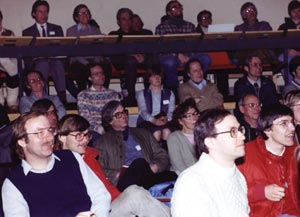
But the unique spirit of those early meetings lives on. Of the 400 participants at the 2005 meeting, 57% were younger than 35; of the 350 papers presented, 80% were read by young researchers; 60% of the participants were experimenters or observers and 40% were theorists. Sandwiched between three hours of morning talks and another three hours of hard work in the late afternoon was that traditional break, in which science, snow and sky combine to create new and ever-changing patterns.
What has the Moriond spirit brought to the scientific community? Nobel laureate James Cronin had this to say at the 20th anniversary of the Rencontres: “The Rencontres de Moriond has had a profound effect on the way we communicate in particle physics. It is a format which is extensively copied. The first Rencontres I attended was in 1971. There I learned for the first time about the GIM mechanism from Glashow and Iliopoulos. By having informal conversation on the ski slopes and in the bar at night, one could really understand why charm is necessary… I shall remember… the opportunity to discern the genuine humanity of our colleagues from all over the world.”
by Jack Steinberger, Springer. Hardback ISBN 3540213295, €39.95 (£30.50, $49.95).
Learning About Particles is an interesting excursion for the reader through the past 50 years of particle physics – 50 privileged years, as one is aptly reminded by the subtitle. Our guide is Jack Steinberger, undoubtedly one of the protagonists of those years, who offers a personal account of the historical and scientific evolution of the field, interspersed with autobiographical notes. He also makes sociological comments and expresses political views, but always gracefully, even when it is obvious that they must bring to memory particularly sad events.
The book follows a chronological order, which at times is slightly violated in favour of more logical organization by topic to improve readability. It unfolds at two paces: pleasantly accurate with generous detail of experiments from the early years, and slightly rushed by the time experiments at the Large Electron Positron (LEP) collider are reached.
Particularly enjoyable are the first four chapters, which recount his years as graduate student, post-doc and young faculty in various prestigious institutions. Descriptions of early experiments and of the theoretical interests of the time are wisely mixed with personal recollections and anecdotes about the “gurus” of physics, and about the author’s young colleagues who later became very famous. The history is a little more difficult to follow into the next chapter, however, when dealing with strange particles.
Two chapters are dedicated to neutrinos, marking two moments of their “interaction” with Steinberger. After the first, the reader feels disappointed – more details of the conception of the fundamental “two-neutrino experiment” would have been expected, as would some “inside stories”. Perhaps the disappointment stems from anticipation created earlier in the book when a future collaboration between the then Captain Lederman and the then Private Steinberger is mentioned. As for inside stories, Steinberger confesses that initially he did not believe in neutral currents and this (quite rightly!) cost him a few bottles of good wine.
In the second of the two neutrino chapters, the steps towards the present understanding of the nucleon structure are retraced clearly – although with some haste – and the author brings the reader to present times with neutrino masses and oscillations. The intervening chapter on CP violation is an authoritative account of the achievements in the field since its beginning in 1957. Here Steinberger enumerates the spectacular accomplishments of the Standard Model within the context of the LEP experiments, perhaps with a tinge of nostalgia for earlier times.
It is difficult to identify precisely the intended audience for this book. It seems to be aimed at a variety of readers, not all necessarily from a scientific background, as the explanations given from time to time in the footnotes imply. This is, however, not done consistently and the result is often unsatisfactory. Furthermore, the occurrence of a few misprints at unfortunate places might prove disconcerting for the untrained reader.
Regardless of the audience, however, the book touches clearly upon the building blocks of the Standard Model and communicates 50 years of passion for physics and its intricacies – a lesson for young researchers. It also speaks of a passion for other, and far more common, sources of enjoyment in life such as music and mountains – a lesson for physicists in general!
To provide the best experiences, we use technologies like cookies to store and/or access device information. Consenting to these technologies will allow us to process data such as browsing behavior or unique IDs on this site. Not consenting or withdrawing consent, may adversely affect certain features and functions.
Functional
Always active
The technical storage or access is strictly necessary for the legitimate purpose of enabling the use of a specific service explicitly requested by the subscriber or user, or for the sole purpose of carrying out the transmission of a communication over an electronic communications network.
Preferences
The technical storage or access is necessary for the legitimate purpose of storing preferences that are not requested by the subscriber or user.
Statistics
The technical storage or access that is used exclusively for statistical purposes.The technical storage or access that is used exclusively for anonymous statistical purposes. Without a subpoena, voluntary compliance on the part of your Internet Service Provider, or additional records from a third party, information stored or retrieved for this purpose alone cannot usually be used to identify you.
Marketing
The technical storage or access is required to create user profiles to send advertising, or to track the user on a website or across several websites for similar marketing purposes.