Comsol -leaderboard other pages

Topics

Singular Null Hypersurfaces in General Relativity

by C Barrabès and P A Hogan, World Scientific. Paperback ISBN 9812387374, £36 ($48).

41Zo7M0AmVL._SX338_BO1,204,203,200_

This book presents a comprehensive view of the mathematical theory of impulsive light-like signals in general relativity. Such signals can result from cataclysmic astrophysical events, and as the sub-title of “Light-like signals from astrophysical events” suggests, the topic has applications in relativistic astrophysics and cosmology, as well as in alternative theories of gravity deduced from string theory.

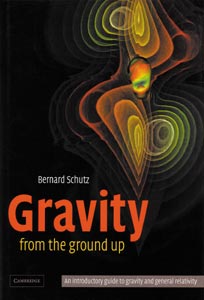
Gravity from the ground up

by Bernard Schutz, Cambridge University Press. Hardback ISBN 0521455065, £30 ($45).

cernboo1_10-04

This beautifully produced book is evidently the result of a labour of love by physicist Bernard Schutz, who refers to it as “the book” in the dedication to his daughters. There is a sense that this, more than his advanced textbooks, is the book that Schutz always wanted to write. In it he provides an introductory guide to gravity and general relativity, not only for undergraduates but also for the general reader who yearns for more detail than is often found in more “popular” books on these topics.

The title reveals the structure of the book. Chapter by chapter, Schutz begins with gravity on Earth and then moves out into the solar system, to the stars and galaxies beyond, to finish with the Big Bang and questions currently at the frontiers of research in gravity. On the way the reader first encounters the work of Galileo and Newton and finds out how Einstein stands on their shoulders, then learns how the Sun and other stars live and die, and moves on to discover neutron stars and black holes – exotic objects that now figure frequently in the news as well as in science fiction.

There are many books that cover the same topics, but rare are those that attempt to be simultaneously engaging and didactic. As with Steven Weinberg’s The Discovery of Subatomic Particles (Cambridge University Press 2003), Schutz writes for people who not only want to be amazed but who also want to know how it is that scientists know all the amazing things they talk about on beautifully made documentaries. As the author says, “this book is not a ‘gee-whizz’ tour of the universe: this is a book for people who are not afraid to think”. There is no calculus, no advanced mathematics, but there are equations that require a little high-school algebra. Moreover, recognizing that we live in the computer age, Schutz provides a website to support the book with programs that can be downloaded, and modified, to provide the results of complex calculations and solutions to exercises that are part of the “investigations” presented in the book.

EUROFEL and EUROTeV to receive EU support

The European Commission has selected two projects that are coordinated by DESY for support within the EU’s Sixth Framework Programme.

The EUROFEL and EUROTeV projects were ranked first and second, respectively, in the referees’ evaluation. From 2005 on, they will receive around €9 million each, spread over a period of three years. This corresponds to approximately one-third of the total costs estimated for each project. The remaining two-thirds will be born by the participating research institutions.

The EUROFEL project, in which 16 leading research institutions from five European countries are participating together with DESY, is a design study with the goal of developing jointly the physics and technology needed for the next generation of short-wave radiation sources, the free-electron lasers. Seven such facilities are currently being planned in Europe – in France, Germany, Italy, Sweden and the UK. Although the individual free-electron laser proposals partly differ in their choice of technology, they all share important issues such as the extremely high requirements concerning the quality of the electron beam, or the concepts of radiation generation. These are the issues on which the joint coordinated activities of the 16 participating research teams will concentrate.

The second project that was selected for support – EUROTeV – was proposed by 27 institutes from six European countries, among them DESY as the coordinating institution and CERN. This project’s goal is to focus European research and development activities for the design of an international linear collider for particle physics, and to perform final-phase research and development work on essential components for the facility – in close agreement with the corresponding Asian and American committees.

There is worldwide consensus that such a linear collider is to be the next major accelerator for particle physics. One motive of the EUROTeV proposal is to develop a high-quality European structure that would later evolve into the European branch of the international planning group for a global linear-collider project.

Hands across the Mediterranean

cernmed1_9-04

Back in April 2002 AFAS (the French Association for the Advancement of Science) and the “Club de Marseille” jointly convened “WorldMed 2002”, a meeting that was set up to share knowledge between the north and south regions of the Mediterranean. WorldMed’s aim was to show how concrete projects could advance co-operation between countries with different cultures, thereby providing a much-needed stimulus to the political intergovernmental process. The meeting, which was attended by 850 people, of whom 150 came from North Africa, was a huge success and several projects were begun as a result of contacts initiated among the participants. This success suggested a follow-up in the form of periodic meetings to discuss projects and seek potential synergies. For this purpose, smaller meetings, which would focus on a few selected topics and so be easier to organize and permit an even better opportunity for contacts, seemed a promising concept.

The celebration this year of CERN’s 50th anniversary provided a perfect opportunity for the laboratory, with its distinguished tradition along these lines, to initiate the series by hosting the event on 6-7 May. The chosen topics were the Large Hadron Collider (LHC), the Synchrotron-light for Experimental Science and Applications in the Middle East (SESAME) project, and computing – all of which are familiar to readers of the CERN Courier – together with two applied topics of considerable and obvious relevance: water and energy.

The conference was opened by Pascal Colombani, chairman of AFAS, who stressed the universal value of science and its ability to build bridges between peoples belonging to different cultures and religions, even in cases where they are in bitter political conflict. John Ellis from CERN introduced the first session with an overview of the LHC programme and its worldwide extent. His talk was followed by specific reports of non-member-state participation from countries in North Africa and the Middle East, with Abdeslam Hoummada from Casablanca, Hafeez Hoorani from the National Center for Physics in Islamabad, and Hessamaddin Arfaei from the Institute for Studies in Theoretical Physics and Mathematics in Teheran. The status of possible Egyptian participation was also presented by Mohammed Sherif from Cairo. A subsequent round-table discussion included CERN’s director-general, Robert Aymar, together with Ali Chamseddine of Beirut and Giora Mikenberg of Rehovoth.

The overwhelming impression was of the serious and impressive contributions these relative newcomers to the field are bringing to the building of the ATLAS and CMS detectors. In the case of Pakistan and Iran, the legacy of Abdus Salam as the first Muslim Physics Nobel laureate certainly seems to have played a role in persuading the powers-that-be to support such an apparently esoteric field of research. Another interesting aspect is the case of Morocco, where bilateral ties with the French institute IN2P3 have helped to organize and bring to a high standard a consortium of universities that is now a full member of the ATLAS collaboration.

Herwig Schopper, president of the SESAME Council, presented the UNESCO-backed programme for SESAME, a regional synchrotron light facility to be located in Jordan with statutes analogous to those of CERN. It will be based on parts donated from the BESSY I machine at Berlin, which are in the process of being upgraded to make SESAME competitive and up to international standards. The facility should be operational in 2007 and it is remarkable that in just five years a new international organization has been created. Zehra Sayers of Istanbul outlined the scientific programme and Samar Hasnain of the Daresbury Laboratory described the first generation of beam lines. Nasser Hamdam of the United Arab Emirates recounted his former work at the Advanced Light Source at the Lawrence Berkeley National Laboratory and talked about his projects for SESAME when it comes on line.

Joining in the subsequent round-table discussion were Abdeslam Hoummada, Abderrahmane Tadjeddine of LURE, Orsay, Jean-Patrick Connerade of Imperial College, London, and Eliezer Rabinovici of Jerusalem. The first example of a regional facility, SESAME will add a south_south dimension to international scientific collaboration. Indeed, as Schopper noted, UNESCO has agreed in principle that other regional scientific centres could be considered in the future – a point that generated tremendous interest in the audience.

Guy Wormser of IN2P3 and Orsay convened a session on “Fighting the digital divide”, in which Michel Spiro, director of IN2P3, first pointed out the dual importance of broadband access. As a tool, broadband would make data analysis a democratic affair, enabling researchers to do physics based on their talent rather than on their geographic location. More generally, bridging the divide could be meant as bridging the gap between people belonging to different cultures or religions, even though some may presently be in political conflict. This is really the prolongation of a 50-year-old CERN tradition.

Fabrizio Gagliardi of CERN then explained the concept of the computing Grid, stressing that it is not only very powerful but also economical. In addition to being necessary to handle the vast amounts of LHC data, it should also have obvious applications in other fields such as meteorology and genomics. Driss Benchekroun of the University of Hassan II, Casablanca, gave the view of a user from Morocco and outlined plans to update IT infrastructure within the Maghreb. These were in fact realized three weeks later when the Moroccan minister inaugurated MARWAN, a wide-area network connecting Moroccan universities among themselves and to Europe. As Dany Vandromme of the Réseau National de Télécommunications pour la Technologie, l’Enseignement et la Recherche (RENATER) explained, this was made possible because the European intra-university network GEANT had been extended to include a link to a point in each country around the Mediterranean, from Casablanca to Beirut. Lorne Levinson of Rehovot and Alberto Santoro from Rio de Janeiro then joined the round-table discussion, appropriately via an Internet videoconference.

For countries in the sun belt, solar energy is a tremendous resource still waiting to be exploited.

Water desalination and reuse is of crucial interest for semi-arid countries, where there is a strong increase in population. For this discussion Miriam Balaban of the European Desalination Association and Azzedine El Midaoui of Ibn Tofa University in Kénitra, Morocco, had assembled a splendid panel of experts. Richard Morris of Glasgow, Corrado Somariva of Abu Dabi, Valentina Lazarova of the Suez Environnement company, Michel Soulié of the Agropolis Association in Montpellier, Bruce Durham of Veolia Water in the UK, and Mohamed Safi of the Ecole national d’ingénieurs in Tunis, presented all aspects of the progress in this field.

The cost of desalination, which only a decade ago was considered out of reach for non oil-rich countries, has fallen dramatically in the past five years. It is now in the region of €0.50-0.85 per tonne for large installations and further progress can be expected. The energy necessary to pump seawater through a semi-permeable membrane is currently 2 kWh for new installations, compared with 5 kWh for installations built in the 1990s, and close to the thermodynamics limit of 0.7 kWh. The focus is now increasingly on environmental aspects such as the safe disposal of the brine and chemicals, on sound water management and on safe recycling of urban and industrial wastewater for irrigation.

For countries in the sun belt, solar energy is a tremendous resource still waiting to be exploited. Augusto Maccari of ENEA, the Italian national agency for new technologies, energy and the environment in Rome, gave a report on how to harness solar energy as high-temperature heat by using concentrating mirrors and storing the heat in a molten salt at 550 °C. This circumvents the discontinuous nature of solar energy so that electricity can be generated on a continuous basis. This development was under the leadership of Carlo Rubbia, president of ENEA, and the talk was also a preview of the inauguration of the “Archimède” pilot facility (20 MW), which took place on 19 May near Syracuse in Sicily.
• The conference was organized by AFAS with the support of CERN, IN2P3, UNESCO, France Telecom, Veolia and Suez.

Particles and Nuclei: An Introduction to the Physical Concepts

by Bogdan Povh et al., Springer. Paperback ISBN 3540201688, €34.95 (£27.00/$44.95).

841cc9b0c91733b8c9dd14cc91e3f81abe93073a-00-00

Now a standard reference for many undergraduate and more advanced courses, this book is a uniform presentation of nuclear and particle physics split into “Analysis” and “Synthesis” sections. “Analysis” looks at disentangling the substructure of matter, while “Synthesis” shows how the elementary building blocks combine to form hadrons and nuclei. This fourth edition has some new developments, such as double beta decay.

The Theory of Complex Angular Momenta: Gribov Lectures on Theoretical Physics

by V N Gribov, Cambridge University Press. Hardback ISBN 0521818346, £65 ($95).

9780521818346i

Published as part of the series of Cambridge Monographs on Mathematical Physics, this is an English translation of the lectures given by Gribov in 1969, when the physics of high-energy hadron interactions was emerging. It provides a rigorous introduction to the theory of complex angular momenta based on the methods of field theory. The approaches developed are useful for analysing high-energy hadron scattering in many contexts, including future analysis of electroweak processes at the Large Hadron Collider.

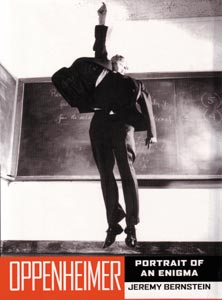
Oppenheimer: Portrait of an Enigma

by Jeremy Bernstein, Ivan R Dee. Hardback ISBN 1566635691, $25.

cernboo1_9-04

Jeremy Bernstein, theoretical physicist and erstwhile science writer at The New Yorker, targets “readers whom I do not assume to be scientists, but whom I do assume to have intellectual curiosity”. With Oppenheimer: Portrait of an Enigma he aims true. Portrait is an engrossing collection of vignettes of the great and the good (and the not so great and not so good) who took part in a scientific project that changed the world like no other: building the atomic bomb. Woven into the story are lucid exposés of those 20th century sciences that informed the project, as well as many insights into the geopolitical upheavals that were provoking and being provoked by it.

Portrait is less fraught with witch-hunting and soul-searching than earlier accounts of the same events. After passing sensitively through Oppenheimer’s somewhat strange and sad childhood, Bernstein treats his readers to splendid tales of “Oppie” as sartorial aesthete, polyglot, poet, lover, homicide manqué, “leftwanderer”, brilliant physicist, serial show-off and cruel critic, an insecure genius with a profound need to be admired. The supporting cast includes military and political stars, and most of the glitterati of early quantum, atomic and astrophysics, from Alvarez to Zwicky.

Though firmly in the Oppie fan club, Bernstein remains even-handed in drawing a fascinating profile of a complex man. The fellow he depicts is not particularly nice but undeniably charismatic, a magnet with both poles fully exposed, admired and hated equally. Unfortunately for Oppie, times were such that his enemies could be dangerous. Pivotal episodes are his unlikely appointment as director of the Los Alamos Laboratory in 1943 – “he had never managed anything” and “had a ton of left-wing baggage” according to Bernstein – and his almost self-induced downfall during the following years. His disgraceful testimony to the House Un-American Activities Committee in 1949 and bizarre conduct during his own “trial” before the Atomic Energy Commission (AEC) in 1954, when he finally lost his security clearance, are candidly presented and carefully analysed. In 1947 Oppenheimer was made director of the Institute of Advanced Study in Princeton, where Bernstein was later to meet him. The cold-war arms race proceeded without him.

Though not mentioned, in CERN’s 50th birthday year it is fitting to recall that several “men of science” who came out of the Manhattan Project with a feeling of “blood on their hands” were determined that things would be different for future generations of researchers. While Oppenheimer was being investigated by the AEC, his close friend Isidor Rabi and others were working through UNESCO to create CERN, a European laboratory where physicists could conduct “nuclear research of a pure scientific and fundamental character…[having] no concern with work for military requirements.”

Portrait prompts other sobering reflections on “then” versus “now”. For example, in July 1945 the Franck Report premised that bomb technology could not be kept secret and that it was only a matter of time before other nations would have nuclear weapons. A scant four years later Russia exploded its first nuclear bomb. In June of this year Mohamed El Baradei, director-general of the International Atomic Energy Agency, speaking at a conference hosted by the Carnegie Endowment for International Peace, said: “we are actually having a race against time…not only with regard to countries acquiring nuclear weapons but also terrorists getting their hands on some of these materials, uranium and plutonium.”

Portrait is full of personalities and is entertaining and thought-provoking. If cavils there must be, there is a brief lapse of clarity concerning fusion, later redressed, and the timeline is sometimes confusingly broken or looped, but these are minor quibbles not major complaints.

Invitation to Contemporary Physics

by Q Ho-Kim, N Kumar and C S Lam, World Scientific. Hardback ISBN 9812383026, £76 ($103); paperback ISBN 9812383034, £30 ($41).

517VK7AF5VL._SX333_BO1,204,203,200_

This is a completely revised second edition of a book that presents 10 of the most important areas of modern physics. It ranges from lasers and superconductivity to particles and cosmology, and includes three new chapters on Bose-Einstein condensation, nanostructures and quantum computing. Of interest to students and teachers, the emphasis is as much on describing natural phenomena as on explaining them in terms of basic physical principles.

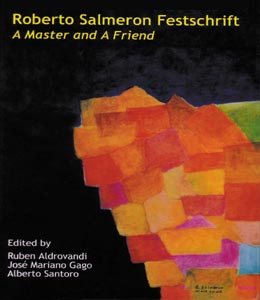
Roberto Salmeron Festschrift: A Master and A Friend

by R Aldrovandi, A Santoro and J M Gago (eds), AIAFEX, Rio de Janeiro. ISBN 8585806028, €40. Available from Livraria Leonardo Da Vinci, Rio, Brazil, fax: +55 21 2533 1277, e-mail: info@leonardodavinci.com.br.

cernboo3_9-04

This book is a token of the admiration and friendship felt for Roberto Salmeron on the occasion of his 80th birthday. Some of the authors regard him as both their teacher and mentor, and others as a respected colleague and friend. The book is thus a tribute to the scientist, the professor and the friend.

There is scarcely a domain in Brazilian science and culture where Roberto has not played an important role. He is remembered for example by his support for the Instituto de Fisica Teorica in Sao Paulo in the 1950s. He also proposed the establishment of the first ICFA Instrumentation School in Brazil, as well as the creation of a synchrotron light laboratory in Campinas. Then came his support for the development of instrumentation to be used in experiments both at CERN and at Fermilab.

The 32 contributed papers cover a wide spectrum of topics, from general relativity and cosmology to the interaction between science and society. They touch in turn upon the physics of neutrino masses and mixings, the study of cosmic rays and particle physics, and the search for the quark-gluon plasma, the origin of masses, the development of nanotechnology and several quantum-physics issues.

They also provide vivid glimpses of Roberto’s personality, such as his enthusiasm for teaching physics, the desire to develop science for the benefit of all society, and his awareness of the social responsibilities of scientists. A dramatic article by Michel Paty evokes their common struggle, in 1963-1965, in building the Institute of Physics of the University of Brazilia and defending its freedom against the intervention of the dictatorial regime. This was a fight that ended in the resignation of most of the faculty members and Roberto’s exile – an example of his courage and determination in defending the dignity of science. Long live Roberto!

Proceedings of the Dirac Centennial Symposium

by Howard Baer and Alexander Belyaev (eds), World Scientific. Hardback ISBN 981238412X, $77 (£57).

cernboo2_9-04

Sitting in an undergraduate lecture, being introduced to the Dirac equation for the first time, I found myself wondering “How on earth did he come up with that?” My hope for this book was that it might provide some insight into what made Paul Dirac such a great physicist. I think that it was satisfied to some extent.

2002 was the 100th anniversary of Dirac’s birth and this book constitutes the proceedings of a symposium held at Florida State University, where Dirac held a faculty position during his last 14 years. There are 13 contributions from the speakers, more-or-less centred around areas of Dirac’s interest. The anecdotes sprinkled throughout are particularly entertaining to read, especially for younger readers who may not have heard many of them.

Dirac’s daughter, Monica, writes an endearing account of her father, the family man, with obvious warmth and affection. Memories such as Dirac measuring the length of the cat’s whiskers to make sure he’d fit through the cat-flap warm the heart. His love of walking, swimming outdoors and classical music also shines through.

Despite not being able to attend due to a snow storm, Frank Wilczek contributed an outstanding essay (contrary to some speakers who are named and shamed for not contributing). It starts with a discussion of the Dirac equation and leads in sometimes surprising directions: considerations of the possibility of artificial intelligence, for instance. Wilczek’s views on what one may learn from Dirac’s approach to physics is interesting, and we see from various contradictory quotations that Dirac sometimes changed his mind. In particular, there are several quotes about Dirac apparently not worrying too much about experimental results, but Wilczek exposes Dirac’s delight when the prediction of his equation that the ratio of the magnetic moment of the electron to its spin equals two was supported by data. William Marciano follows with a nice and succinct review of this latter topic. Later, Dirac also lost faith in “his” monopole due to the lack of experimental evidence.

There are good introductions to time variations of fundamental “constants” by Paul Langacker and neutrino physics by Vernon Barger, which will appeal to those of a more phenomenological bent. Some of the M-theory/brane and string-oriented contributions by Pierre Ramond, Roman Jackiw and Joe Polchinski will probably appeal to the more mathematical physicist. The contribution of Leopold Halpbern is frankly annoying, however, after he starts discussing his own work in general relativity, and I found Maurice Goldhaber’s resolution of the fermion mass problem bizarre and too heuristic.

So how did Dirac contribute so much important work? It seems by doggedly hanging on to an elegant idea that solves a difficult problem, then frequently changing methodology; certainly by looking for mathematical beauty but also by taking note of other theorists’ work and experimental data. Oh, and plenty of long walks.

bright-rec iop pub iop-science physcis connect