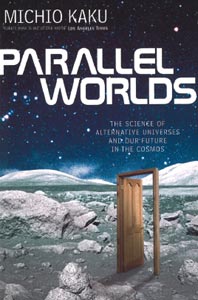
by Michio Kaku, Allen Lane, Penguin Books. Hardback ISBN 0713997281, £20.00. (In the US, Doubleday. Hardback ISBN 0385509863, $27.95.)
While reading Michio Kaku’s latest book, Parallel Worlds, I left it for a few days on the coffee table at home. At this time we had a visitor who, although interested in science in general, is not a physicist. After browsing through the book, he started reading it and was disappointed to see it disappear one day when I went away on a trip. He has been inquiring about getting the book back ever since. Although based on limited statistics, this is an excellent recommendation for Parallel Worlds – you do not need to be a physicist to find the book fascinating.
But what does a (non-theoretical) particle physicist think about the book? Well, I really enjoyed it. It is a rather complete book on cosmology for the layman, taking us from Einstein to M-theory in a language that manages to be understandable without being trivial. If you, like me, would like to know the difference between 10- and 11-dimension string theory or find it difficult to explain to your fascinated friends (or to yourself) the concept of the holographic universe, this book will give you plenty of ammunition.
Kaku discusses all of the important theories, observations and experimental results that have shaped our understanding of the universe over the past century, and mainly the past 30 years. A big portion of the book discusses string theory, which is close to Kaku’s heart, in an informative and understandable way. The book is also full of Kaku’s accounts of his favourite science-fiction stories (when he wants to demonstrate a point that happens to have excited the imagination of science-fiction writers) as well as excerpts from the works of poets, other writers and Nobel laureates.
A large portion of the book, as its name suggests, revolves around the many different sorts of parallel universes that might exist and their relation (and possible interaction) with ours. The discussion eventually leads to ideas about how our distant descendants might try to escape a dying or inhospitable universe. Ironically, this was for me the least interesting part of the book, however it does devote a few pages to fascinating subjects such as the question of consciousness, the anthropic principle and religion.
Minor gripes include Kaku’s insistence on not using scientific notation: a trillion electron-volts means to me much less than 1 TeV, and how long exactly is 30 billionths of an inch? Surely Kaku’s intended audience would be less perplexed by 1018 than by “a million trillion”. Another point is his assertion that particle physicists have introduced “hundreds of point-like particles” to the theory. Three families of four fermions each do not make hundreds of particles.
The book also includes a useful index and a glossary, and has notes with further explanations, which unfortunately I found only after I had finished reading the book. It would have been helpful to include note numbers in the text.
Should you go out and buy this book for Christmas? The answer is yes. Parallel Worlds is an excellent read. Just do not leave it on the coffee table.
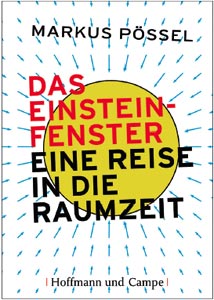
“Can only a genius understand Einstein? No…” claims author Markus Pössel on the back cover of his new book, which is aimed at the reader who is interested in modern science. Among the many books to mark the 100th anniversary of Einstein’s annus mirabilis, this one appeals immediately because of its high-quality design and the many colourful photos and illustrations. But can it deliver on its promise?
In the first part we are led to the basic concepts of special and general relativity, following a more phenomenological approach. With the help of facts, many pictures and stories relating to everyday life, Pössel manages to give us a flavour of this new world of extremes. Numerical examples substitute for mathematical equations and give a notion of reality. Minkowski diagrams are introduced and used wherever possible. In the context of general relativity, emphasis is put on the correct development of the geometrical principles, which is done with great care.
The second part covers the applications of relativity: our solar system, gravitational waves, stars, black holes and cosmology. The comparatively short third part is a surprisingly detailed discussion of gravitational-wave detection, which puts the reader at the forefront of this exciting field of research.
The chosen approach to relativity is similar to that of university textbooks, where all mathematical equations are substituted by pictures and numerical examples. This disguises the essential principles and occasionally makes it a cumbersome read. It is also questionable whether the sometimes awkward embellishments to the explanations serve the purpose of clarity. Nevertheless, Pössel takes the reader on an exciting journey through space-time.
“Can only a genius understand Einstein?” With this book in hand, average readers can understand him too, provided their curiosity is strong enough to help them find the necessary patience and stamina.
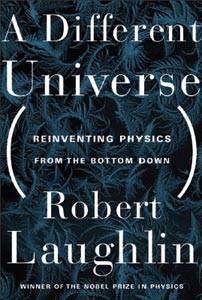
by Robert Laughlin, Basic Books. Hardback ISBN 046503828X, $26 (£15.50).
Despite the fact that the author has a Nobel Prize in Physics, this is rather an easy book to read. While not as funny as Richard Feynman’s jokes, and fortunately not as exquisitely informal (this is an understatement) as João Magueijo’s Faster than the Speed of Light, it is quite nicely written, good humoured and even sprinkled with poetic eloquence. I actually enjoyed reading the innumerable biographical anecdotes (at least the first 50 or so), even though most seemed rather irrelevant for the purpose of the book, which could easily be half as thick without any loss in real content.
Let me do justice to the book by wandering myself. We often hear at CERN that particle physics deals with the most fundamental level, the “ultimate theory”, from which everything else should, in principle even if not in practice, be derivable. But systems above certain levels of complexity exhibit “emergent” laws that cannot be derived through such a “bottom-up” approach. It is particularly interesting to note that superconductivity cannot be derived from fundamental principles, especially when we see how crucially dependent we are on superconductivity to perform our “fundamental” studies at CERN. A little modesty would not harm some particle physicists. We can’t always learn how a toy works by breaking it to pieces; sometimes all we learn is that the broken toy doesn’t work any longer.
This is the central point of Laughlin’s thought-provoking book: there’s a different universe out there, which we can easily see if we care to look, and where certain things are more than the sum of their parts.
This is surely not a new idea. “More is different” claimed Philip Anderson 33 years ago, at a time when Jacques Monod argued that the higher levels of reality are not necessarily determined by the lower levels.
What I enjoyed most in Laughlin’s “different” book were the descriptions of several eye-opening experimental observations – such as the von Klitzing and Josephson effects – which intrinsically depend on collective behaviour (the effects disappear in very small samples) but provide today’s most accurate measurements of the fundamental constants e and h.
Unfortunately these fascinating issues are not really described in much detail, while too many pages, especially at the end of the book, are devoted to less relevant topics, seemingly motivated by polemic fights with “hard-boiled reductionists” who are accused of believing that nothing fundamental is left undiscovered. However, don’t miss chapter 15, which is about a “cast of characters” trying to define what “emergence” means; this is particularly hilarious if you have read Arthur Koestler’s The Call-Girls (1972).
Laughlin’s book is definitely worth reading, although I was disappointed; there is a lot of talking but in the end not much physics really gets reinvented. It is a pity that Laughlin spends much of his energy fighting reductionism rather than detailing his own new ideas. And a little modesty would also not harm his arguments. Emergence and reductionism are equally important in our quest for understanding the (single) universe around us – as Freud said, on psychology and biology, “Some day the two will meet.” If you are interested in these topics, read Koestler’s The Ghost in the Machine (1967) and Stuart Kauffman’s At Home in the Universe (1995).
by Leon M Lederman and Christopher T Hill, Prometheus Books. Hardback ISBN 1591022428, $29.
A tribute to mathematical genius Emmy Noether (1882-1935) is long overdue. Noether’s theorem, which neatly linked symmetries in physical laws to constants of nature, heralded the most important conceptual breakthrough of modern physics and yet her name is rarely found in books on the subject. Symmetry and the Beautiful Universe attempts to right that wrong.
This popular-science book is presented as being accessible to “lay readers” and “the serious student of nature”. So is it? Well, any treatise on symmetry begs for pictures but we find very few until near the end, and often we get the proverbial thousand words instead. Also there are more mathematical equations than appear at first sight, as some are embedded in the text. So, I suspect that the going would be easier for the serious student than for lay readers.
The range of topics and styles is humongous, from cartoon character Professor Peabody with angular momentum worthy of a dervish (smoking a pipe), to Feynman diagrams for first-order quantum corrections in electron-electron scattering. The short biography of Noether is good and her theorem is well praised, although the chapter devoted to explaining it is rather long-winded.
More than once the reader is first given an esoteric example of some process or other and only later a more familiar example; momentum conservation starts with radioactive neutron decay and goes on to colliding billiard balls. Then there are “gedanken” experiments. These are familiar devices to scientists but will a lay reader believe that space is isotropic because a hypothetical experiment is said to show that it is? And sometimes the book is mystifyingly US-centric. What are EPA rules? And why is Kansas special?
However, the undeniable enthusiasm of the authors for their subject, indeed for almost any subject, shines brightly throughout. Even leaving aside the 60 or so pages of notes and appendix, the book brims over with facts, figures and fun fictions, often straying far from the subject of symmetry. I estimate that a smart cut-and-paste editor could produce three good books out of the material on offer, each at a quite different level. Find your own.
Reviewing a book that has one Nobel laureate as an author and two among the constellation of stars glowingly quoted on the dust jacket is a daunting task. I was once told that “astounding” conveys an acceptable amalgam of the polite and the honest when one is overwhelmed. This book is astounding.
A new frontier in experimental science was crossed in October when the state of South Dakota committed $20 million to pave the way for its acquisition and conversion of the Homestake Mine into a multidisciplinary underground laboratory, which it will operate until at least 2012. This boost from the state also aids longer-term planning, helping to position Homestake as a possible home for the proposed Deep Underground Science and Engineering Laboratory (DUSEL). The transfer of the property is scheduled to take place on 15 December.
The 125 year-old Homestake Mine, which was once the largest goldmine in the western hemisphere, is the deepest in North America, reaching 2500 m below ground. It became well known as the site of the first solar-neutrino experiment, which ran continuously from 1967 to 1994 and earned Raymond Davis the Nobel Prize in Physics in 2002. In May 2004 the company that owned the mine announced that it would turn off the pumps that prevent the mine from flooding.
The state of South Dakota’s funding will re-establish access into the mine, pump out the accumulated water and establish an operating laboratory at the 1500 m level, where Davis’s experiment was located. The lower levels will be developed in later years. Experimental Letters of Interest for short- and long-term experiments are now being solicited from the international community. The first experiments are scheduled to begin in 2007.
These depths provide the low-background environment needed to conduct a spectrum of physics experiments including studies of neutrinoless double beta decay and dark-matter searches. With more than 500 km of tunnels, the mine provides safe access to various depths, can accommodate large detectors, and offers expandable spaces to sustain evolving experiments over decades.
Homestake is one of two finalists selected by the National Science Foundation (NSF) for the location of a future DUSEL; the other site is Henderson Mine in Colorado. Both proposals have received grants of $500,000 from the NSF to develop conceptual design reports. The site for DUSEL should be chosen in late 2006.
For the first time, a single site dedicated to science will house an array of experiments spanning the disciplines of particle and nuclear physics, geology, hydrology, engineering, geomicrobiology and biochemistry. Forty years after Davis installed his solar-neutrino detector at Homestake, a new generation of experimentalists will avail themselves of the same site for this spectrum of modern-era experiments. As DUSEL is developed in the coming years these experiments will delve even deeper underground in a quest to answer some of the greatest scientific mysteries of our time – from dark matter, neutrinos and nucleosynthesis to probing the limits of life.
Physics, astrophysics and earth sciences are anticipated to be among the first disciplines to establish experiments. As well as experiments on neutrinoless double beta decay and searches for relic dark matter, large detectors will study proton decay and be used for long-baseline neutrino experiments, ultimately to probe neutrino mass, hierarchy and possible leptonic CP violations.
The diverse geology at Homestake, with the existing deep drifts and boreholes, will be an equally big boon for earth scientists. For the first time, they will have access to more than 34 km3 of the Earth’s crust to study the subterranean environment. Geomicrobiologists will investigate the genome and the limits of life in extreme environments; hydrologists will study fluid flows through rocks; geochemists will explore the formation of minerals; and at the intersection of physics and geology, scientists will measure geoneutrinos emanating from the Earth’s crust.
The Homestake project is a partnership between the scientific community and the South Dakota Science and Technology Authority, which will oversee the conversion and manage the mine. The scientific team is headed by Kevin Lesko of Lawrence Berkeley National Laboratory and the University of California at Berkeley. The early implementation plan will create an operational facility in advance of the NSF selection process and be the basis of Homestake’s staged approach to creating DUSEL.
Dan Brown’s novel Angels and Demons has been enormously popular. A secret brotherhood murders a physicist who managed to produce the first antimatter on Earth. You have surely heard about the book?
I have even read it. Indeed the author has me killed at the very beginning.
Correct. You die and the antimatter stolen from CERN is used to blackmail the Vatican. CERN does produce antimatter, and the contact of antimatter with ordinary matter results in annihilation where large quantities of energy appear. Aren’t you scared that one day Brown’s scenario may become real?
No, since there is no way to produce and store a large quantity of antimatter.
What does “a large quantity” mean? Are we talking about kilograms?
No, not even about nanograms. I am talking about single atoms. We are not able to produce and store amounts of antimatter that would cause damage of any kind, e.g. that could be used as an explosive, as in the book.
You mean we are not able to now – or ever? Is that a problem of technology or perhaps a result of the laws of physics?
Both. Let us start with technological reasons, which are probably less convincing. Even if somebody could produce lots of antimatter, their main headache would be how to store it. First, they must place it in a vacuum – any other “container” would immediately annihilate, that is disappear! So antimatter must be kept in the very middle of a vacuum by a magnetic field. This is possible, we hope to do it at CERN, but for a few or a few tens of atoms only.
The vacuum must be of the best quality. What we call a vacuum in daily life is far from the ideal. An electric light bulb is not empty but contains a very, very diluted gas. In the CERN “antimatter trap” the gas pressure is 10−17 mbar. This means that on average there are a few tens of thousands of atoms per cubic metre. So even here we have annihilation with “stray” atoms. While it is possible to guard a few hundred antimatter atoms, protecting, say, 1 mg of antimatter from annihilation is practically impossible. And every act of annihilation results in the freeing of a certain amount of energy and degrading of the vacuum. This is a chain reaction.
The technical limit is not a real one. What is impossible today may very well be possible tomorrow. Surely we will learn how to get a better and better vacuum?
I agree that technical arguments may not be convincing. However, in one day CERN produces about 1012 antiprotons. Renovations, equipment maintenance and upgrading, holidays and other interruptions limit the antiproton production to about 200 days a year. In 50 years of operation at CERN about 1016 antiprotons would be produced. Even if all of them made anti-atoms, we would arrive at about one millionth of a milligram of antihydrogen – I repeat, in 50 years!
I must add that in the process of antihydrogen production only a tiny percentage of antiprotons make anti-atoms. Once, I calculated that even if all the natural energy resources of our planet – coal, petrol, gas – were used to produce antimatter, it would be enough to drive about 15,000 km by car. This is physics. It does not depend on our technological development.
So we can forget about antimatter as a future energy source?
Of course! Until we find “natural resources” of antimatter (and I would not count on that), the production of antimatter on Earth for energy or, as in the book, for terrorism will never pay off. Much more energy would be used for its production than we could ever get back from annihilation.
Would you agree that more people learned about CERN from Angels and Demons than from reading scientific information? Is CERN correctly described in Brown’s book?
This question is a trap so my answer will be diplomatic. In my opinion antimatter, and thus CERN as the only place where we are able to produce it, came into the book by accident. They were just a background. An atomic bomb at the Vatican would have done as well. I do not want to speak on behalf of the author but I have the impression that he wanted to touch on the conflict between science and faith. History shows that sometimes such a conflict has indeed been seen by the church and the scientific community.
And what about CERN? Is CERN really working on a proof that God does not exist – that scientific knowledge is the real god?
A difficult question. For sure there are many people working at CERN who believe in God and their work actually confirms their convictions. There are also those who do not believe in God but believe in science. For them every discovery may be proof that God does not exist, but it is not true that we are working to prove that.
“Soon all gods will be proven to be false idols. Science has now provided answers to almost every question man can ask.” This statement is made in the book by Maximilian Kohler, the [fictional] director-general of CERN. Do you agree?
No, I do not agree. I am sure that science does not contradict faith. One person may say that he studies the laws of nature, another one that he wishes to understand how God initiated or created our world. In my opinion it is the same. Both are doing the same even if they believe in different things. The point of view represented by the head of CERN in the book was very popular in the 1950s and 60s. Not for the first time people believed then that science was close to completion; that technology would save the world. It seemed that building a sufficiently large number of nuclear reactors would solve the energy problem on Earth and so all other problems would disappear. However, people have not become happier and the old problems are still here. We continue to be dependent on nature, which dictates the conditions. I believe that despite more and more knowledge, ultimately it is nature that wins.
Production of the first antimatter atom on Earth brought you great recognition…
Antihydrogen production indeed led to extraordinary publicity. That is probably the reason that this work is considered to be one of 16 very important discoveries made at CERN. In my opinion, and from the scientific point of view, producing the first antihydrogen atom does not deserve such honour; the very production of antihydrogen is not a revolution in physics. It did not bring anything new and we do not care about the production itself but about studies of the antihydrogen atom. This is not at all simple. The first atoms produced moved with almost the speed of light. Indeed, one has to be fast to study such an object. Antihydrogen thus has to be cooled down and locked in a bottle; the slower it is, the better we can watch it. So the real goal is not the production of, but studies of, antimatter. I am sure that at some time physicists will manage to measure its gravitational interactions. That would really be something.
Why are antimatter studies so interesting to the public? Usually it is difficult to sell what physicists do in their large laboratories.
This is not completely true. There are at least a few problems that may be sold easily and in an interesting way even when drinking a good wine at a garden party. One example is relativistic physics – everybody is interested in the fact that the faster you move the younger you are. Another subject is astrophysics or the surrounding universe. It is fascinating to many, probably because we can make certain observations ourselves on a cloudless night. Besides, the astrophysical photographs are so impressive they are printed on the front pages of the daily papers. The curvature of time and space is also an extremely interesting problem. The shortest path between two points is not at all a straight line.
And what about antimatter?
When it comes to particle physics, the problem is complicated. People do not know what we really do. Antimatter is an exception, which is surely due to science-fiction films, where antimatter is very often a subject. Serials gather an audience. If every Monday evening we watch the adventures of the same heroes who conquer the universe in space vessels powered by antimatter, then television characters are quickly treated as one’s own family. In this way antimatter has become a family member.
Is your interest in antimatter also a result of those films?
No. I must admit that I have not seen many of them. Discussions on antimatter began much earlier than when the first episode of Star Trek was produced. The ancient Greeks had already discussed it – albeit under different names. One can read about it in the writings of Aristotle or Plato – writings that are rather philosophical according to our modern views. But 19th-century physicists also wrote about it, not yet knowing about the existence of its components.
I was always fascinated by the idea of symmetry, especially between the world and the antiworld. Does it exist at all? I think that studies of antimatter are so interesting because even in our everyday life we like asymmetry. Just have a look at an ancient Greek temple or a medieval church. But not only buildings – look at a Persian carpet. Only those that are factory-made display a full symmetry; the really expensive ones are handmade. Most appreciated are the very small breaks in symmetry, the subtle “faults” of the carpet weaver.
It is said that as a young man you considered being an actor. Would you accept the role of Leonard Vetra, the creator of antimatter at CERN, if a film based on Angels and Demons was produced?
Yes, but only on the condition that they do not take my eye or burn “Illuminati” across my chest with a hot iron. I think that from the acting point of view I would manage – after all Vetra is murdered on the first page of the novel. Does he say anything at all?
Oh yes, but only a little. Exactly four sentences.
by Dan Green, Cambridge University Press. Hardback ISBN 0521835097, £70 ($110).
Over the past several years, Fermilab physicist Dan Green has developed an excellent course on “High pT Hadron Collider Physics”. This is now published as a Cambridge monograph that successfully traces the important past and future roles of hadron colliders in testing and probing the limits of the Standard Model for electroweak and strong interactions. In so doing, it provides an accessible and pedagogic introduction to key features of parton-parton collisions in pp or pbar p interactions. It is not, however, an up-to-date survey of the field. Rather, the centre-piece of Green’s book concerns the motivation and experimental strategy for detecting, and subsequently studying, the Higgs scalar particle (the last undetected element of the minimal Standard Model).
Written by an experimentalist, the book is qualitative in nature and can even be enjoyed by final-year undergraduates, although to profit from it formal introductions to particle-physics phenomenology and quantum field theory are essential. (Such courses are fortunately part of most relevant Master’s programmes, and the reader is directed to excellent texts on the subject.) A key feature is the use of dimensional (heuristic) arguments to estimate key production and decay processes in hadron collisions. In addition, and uniquely, the COMPHEP freeware program has been extensively used to back up the dimensional arguments with lowest order computations. Despite some incompatibilities of nomenclature, this innovation is (to the reviewer) extremely successful.
The first chapter presents a concise summary of the Standard Model particles and their couplings, as well as a description of the Higgs mechanism for mass generation of the W and Z bosons. It lays out the key properties of the Higgs boson, and concludes with a list of issues that are not answered by the Standard Model. These issues are (rather superficially) discussed in chapter six, with chapters two to five directed towards experimental and phenomenological issues relevant to the Higgs search.
Chapter two describes, in an extremely accessible way, the detector requirements for identifying key high-p,sub>T parton-parton collision processes and the associated instrumental or irreducible physics-related backgrounds. The treatment of jet energy reconstruction and di-jet mass reconstruction is excellent. Inevitably, given the author’s background in the D0 and CMS experiments at Fermilab, the book leans towards examples of these experiments. In a few cases, some important instrumental innovations are not given adequate space (e.g. the real-time selection of heavy quarks as in the CDF experiment). Students could also have benefited from a description of the relative merits of the CDF and D0 experiments, and of course of the future ATLAS and CMS detectors at CERN’s Large Hadron Collider (LHC).
The third chapter is good reading for any new graduate student. Green introduces key features of collider physics: the central rapidity plateau and its energy dependence; the basic parton-parton collision processes and their kinematics; the main gauge boson and gauge-boson pair production processes; and jet fragmentation. In all cases experimental data (usually not the latest) are used to justify heuristic arguments and COMPHEP calculations. A series of exercises complements the chapter.
Chapters four and five concentrate respectively on the more important results from Fermilab’s Tevatron and on the Higgs search strategy at the LHC experiments (for which chapter four’s material is invaluable as a guide to the experimental backgrounds to be expected from any Higgs signal at the LHC). As a reviewer, I enjoyed the experimental approach of these two chapters and their highly readable nature. However, the extremely important sections on heavy-quark (b and t quark) production were rather incomplete, given the unique measurements at the Tevatron and the important implications for the LHC. While the somewhat arbitrary choice of figures in chapter four (taken in most cases from the experiments) is adequate for lecture notes, it detracts from the book’s quality that an effort was not made to include the latest available data, and to combine data from the CDF and D0 experiments. Chapter five concerns the experimental strategy for detecting and studying the Standard Model Higgs particle at the LHC, and relies heavily on relevant preparatory studies from the ATLAS and CMS experiments.
Finally, the concluding sixth chapter discusses extensions to the Standard Model such as supersymmetry, as well as some of the open questions alluded to in chapter one. While extensions relevant to the LHC physics programme must be discussed, it felt as if this was a hurried addition. Judy Garland’s quotation from The Wizard of Oz: “Toto, I’ve a feeling we’re not in Kansas anymore,” is rather appropriate.
Published at a time when the CDF and D0 experiments are increasing their data samples by more than an order of magnitude, and in advance of the LHC, Green’s book has limited shelf life in its present edition. However, despite some shortcomings, its core is an excellent introduction for any graduate student starting out in experimental hadron-collider physics and can be strongly recommended. Dan Green should be congratulated on the overall quality of his text. Presumably, any new edition beyond 2007 will provide some interesting updates.
by Misha Shifman, Arkady Veinshtein and John Wheater (eds), World Scientific. Hardback ISBN 9812389555 (three volume set), £146 ($240).
On the morning of 6 June 2003, Ian Kogan’s heart stopped beating. It was the untimely departure of an outstanding physicist and a warm human being. Ian had an eclectic knowledge of theoretical physics, as one can easily appraise by perusing the list of his publications at the end of the third volume of this memorial collection.
The editors of these three volumes had an excellent idea: the best tribute that could be offered to Ian’s memory was a snapshot of theoretical physics as he left it. The response of the community was overwhelming. The submitted articles and reviews provide a thorough overview of the subjects of current interest in theoretical high-energy physics and all its neighbouring subjects, including mathematics, condensed-matter physics, astrophysics and cosmology. Other subjects of Ian’s interest, not related to physics, will have to be left to a separate collection.
The series starts with some personal recollections from Ian’s family and close friends. It then develops into a closely knit tapestry of subjects including, among many other things, quantum chromodynamics, general field theory, condensed-matter physics, the quantum-hole effect, the state of unification of the fundamental forces, extra dimensions, string theory, black holes, cosmology and plenty of “unorthodox physics” the way Ian liked.
These books provide a good place to become acquainted with many of the new ideas and methods used recently in theoretical physics. It is also a great document for future historians to understand, first hand, what physicists thought of their subject at the turn of the 21st century. There is much to learn and profit from this trilogy. Circumnavigating theoretical physics is indeed fun. It is unfortunate, however, that it had to be gathered in such sad circumstances.
by Gerardus ‘t Hooft (ed), World Scientific. Hardback ISBN 9812389342, £51 ($84). Paperback ISBN 9812560076, £21 ($34).
Anniversary volumes usually mark a significant birthday of an individual, or perhaps an institution. But this fascinating compilation celebrates the golden jubilee of a theory – namely, the type of non-Abelian quantum gauge field theory first published by Chen Ning Yang and Robert L Mills in 1954, and now established as a central concept in the Standard Model of particle physics. It was a brilliant idea (by the editor, Gerardus ‘t Hooft, I assume) to signal the 50th birthday of Yang-Mills theory by gathering together a wide range of articles by leading experts on many aspects of the subject. The result is a most handsome tribute of both historical and current interest, and a substantial addition to the existing literature.
There are 19 contributions, only two of which have been published elsewhere. They are grouped into 16 sections (“Quantizing Gauge Fields”, “Ghosts for Physicists”, “Renormalization” and so on), each accompanied by brief but illuminating comments from the editor. The style of the contributions ranges from an equation-free essay by Frank Wilczek, to a paper by Raymond Stora on gauge-fixing and Koszul complexes. Somewhere in between lie, for example, François Englert’s review of “Breaking the Symmetry”, and Stephen Adler’s exemplary account of “Anomalies to All Orders”.
One recurrent theme is how unfashionable quantum field theory was in the 1950s and 1960s. As ‘t Hooft puts it: “In 1954, most of those investigators who did still adhere to quantum field theory were either stubborn, or ignorant, or both. In 1967 Faddeev and Popov not only had difficulties getting their work published in Western journals; they found it equally difficult to get their work published in the USSR, because of Landau’s ban on quantized field theories in the leading Soviet journals.” One of the most interesting papers in the book is the 1972 English translation of their 1967 “Kiev Report”, produced via an initiative of Martinus Veltman and Benjamin Lee. It is more detailed than their famous 1967 paper in Physics Letters, and includes a discussion of the gravitational field.
Alvaro De Rújula inimitably brings to life the strong interactions between theorists and experimentalists in the heady days of 1973-1978. He includes a candid snap of Howard Georgi and Sheldon Glashow, circa 1975, which made me wish there were more such shots of the leading players from that era. De Rújula’s is the only contribution to address the experimental situation, despite the editor’s admission that the lasting impact of Yang-Mills theory depended on “numerous meticulous experimental tests and searches”. But, after all, this is a volume celebrating the birthday of a theory.
Many contributors look to the future, as well as the past. These include Alexander Polyakov on “Confinement and Liberation”, Peter Hasenfratz on “Chiral Symmetry and the Lattice”, and Edward Witten on “Gauge/String Duality for Weak Coupling”.
I have only had space enough to (I hope) whet the reader’s appetite. This unusual and elegant festschrift is a treat for theorists – and, as a bonus, you get a full-colour representation on the cover of a 17-instanton solution of the Yang-Mills field equations (designed by the editor).
The 1st European Research and Innovation Exhibition – the Salon Européen de la Recherche et de l’Innovation – took place in Paris on 3-5 June 2005 under the patronage of Jacques Chirac, president of France. The aim of the exhibition, which is to become an annual event, is to provide a place for players from a broad sector of activities to come together, creating a crossroads where people and ideas from both the public sector and the corporate world can meet. This year, the 130 exhibitors included CERN, the Institut National de Physique Nucléaire et de Physique des Particules (IN2P3) of the Centre National de la Recherche Scientifique (CNRS), and the Dapnia laboratory of the Commissariat á l’Energie Atomique, who together presented a stand showing examples of technology transfer.
Jean Audouze, senior CNRS researcher, is the founder and chairman of the exhibition’s Scientific Committee. Consisting of scientific leaders in the world of research and innovation, this committee is responsible for the programme of events, in particular conferences and round-table discussions. Audouze himself has had a great deal of experience in communicating physics on the highest and broadest levels, as scientific adviser to the president of France (1989-1993) and as director of Paris’s well known science museum, the Palais de la Découverte (1998-2004).
How would you describe the role of research today, in the World Year of Physics?
Research is the driving force behind economic, cultural and social progress. The French government, much as the other European political leaders, has set a goal of devoting 3% of gross domestic product to research and development by 2010. Together, France and Europe are actively preparing for the future to meet the dynamic momentum of countries like the US, China and Japan, with whom competition is already very fierce. According to the OECD [Organization for Economic Co-operation and Development], gross domestic expenditure on research and development by member countries amounted to over $650 billion in 2001. The countries of the European Union contributed about $185 billion of this amount. France spent about $31 billion on research and development, which places it in second position in Europe and fourth worldwide, behind the US, Japan and Germany. Many researchers have started their own companies since 1999. Business incubators are playing a crucial role in the development of new companies, assisted by organizations that provide financing specifically for the creation of innovative companies. The biotechnology and nanotechnology sectors are at present leading in terms of the creation of new businesses
Can you explain the event’s objectives?
The exhibition combined information from fundamental research with its applications. It provided an opportunity for researchers, public and private institutions, universities and the top engineering and business schools in France (les grandes écoles), industrial and commercial companies, R&D departments, incubators, financing organizations, laboratory suppliers, local governments, technology parks (technopoles), research associations and foundations to meet. They could present their activities, develop contacts to encourage professional development, discuss the establishment of new projects, start new partnerships, and negotiate financing for new businesses or research programmes.
The final balance is very positive. A total of around 24,000 people attended the event. In addition, the presence of many visitors at the conferences, at the round tables concerning the European research programme and the diffusion of scientific culture in Europe, and at events with the participation of the Nobel laureates in physics has shown the strong interest the public has in scientific topics.
How have politicians reacted to the measures required to maximize the value of scientific research?
The politicians have responded well to the scientists’ needs, indeed a few programmes have received specific financing allocations. They appreciated the creative way the technological developments were presented to the public, and the debates on social impact to arouse awareness of the importance of science for everyday life.
What is the outlook for continuing the dialogue in research, education and industrial promotion?
The perspective for the future is to make this event an annual rendezvous with the participation of other European institutions and national stands.
The World Year of Physics 2005 is an international celebration of physics. Events throughout the year have been highlighting the vitality of physics and its importance in the coming millennium, and have commemorated Einstein’s pioneering contributions in 1905. How can the World Year of Physics bring the excitement and impact of physics, science and research to the public?
I am convinced that the World Year of Physics has been a success in terms of popularizing physics and in conveying enthusiasm for the subject among a large public. In each country, and especially in France, many very exciting events were set up with that goal and have attracted quite big audiences. We astrophysicists have a project to make 2009, the 400th anniversary of the use of the astronomical lens by Galileo, the World Year of Astronomy and Astrophysics.
How can worldwide collaborations and fundamental research laboratories such as CERN, CNRS and Dapnia inspire future generations of scientists?
This inspiration is induced by at least two factors: first, CERN, CNRS and Dapnia are involved in the most exciting aspects of fundamental research, e.g. the very nature of matter and the universe; second, their research programmes are planned for the coming decades: the forthcoming operation of the Large Hadron Collider at CERN and projects like VIRGO (which aims to detect gravitational waves) for CNRS and Dapnia should be very enticing for European newcomers to science.
• The CERN, IN2P3 and Dapnia stand showed examples of technology transfer and was prepared by CERN’s Technology Transfer and Communication groups. In addition, CERN’s Daniel Treille gave a talk “Miroirs brisés, antimatière disparue, matière cachée: le CERN mène l’enquête”.
To provide the best experiences, we use technologies like cookies to store and/or access device information. Consenting to these technologies will allow us to process data such as browsing behavior or unique IDs on this site. Not consenting or withdrawing consent, may adversely affect certain features and functions.
Functional
Always active
The technical storage or access is strictly necessary for the legitimate purpose of enabling the use of a specific service explicitly requested by the subscriber or user, or for the sole purpose of carrying out the transmission of a communication over an electronic communications network.
Preferences
The technical storage or access is necessary for the legitimate purpose of storing preferences that are not requested by the subscriber or user.
Statistics
The technical storage or access that is used exclusively for statistical purposes.The technical storage or access that is used exclusively for anonymous statistical purposes. Without a subpoena, voluntary compliance on the part of your Internet Service Provider, or additional records from a third party, information stored or retrieved for this purpose alone cannot usually be used to identify you.
Marketing
The technical storage or access is required to create user profiles to send advertising, or to track the user on a website or across several websites for similar marketing purposes.