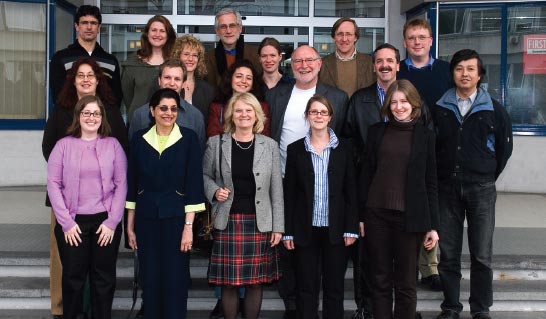
Festivity met science when the Lawrence Berkeley National Laboratory (LBNL) celebrated its 75th anniversary with a Founders Day party on 26 August. The day capped a summer of celebratory events, including historical lectures, speeches, music, fire-spinning, Scottish dance, films, science demonstrations, tours, birthday cake for 600 and a time capsule to be opened in 2031. There was even a display of vintage cars, including one driven by the lab’s founder and inventor of the cyclotron, Ernest Orlando Lawrence.
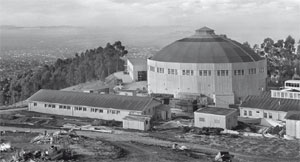
Originally known as the Rad Lab, LBNL was founded in 1931 to house the latest of Lawrence’s increasingly large cyclotrons. His first cyclotrons were small, and could easily be accommodated in his laboratory in the physics department at the University of California Berkeley. However, by 1931 he was working on a monster 27 inch cyclotron with an 80 ton magnet. This required a separate building with reinforced flooring, and on 26 August 1931 Lawrence was given use of the former Civil Engineering Testing Laboratory. Lawrence renamed it the Radiation Laboratory, and so the Rad Lab was born.
The 27 inch cyclotron accelerated protons to 3.6 MeV. Lawrence’s next machine boasted a 37 inch diameter, and accelerated deuterons to 8 MeV and alpha particles to 16 MeV. One of its major accomplishments was the production of the first artificial element, technetium. The next iteration had a 220 ton magnet around a 60 inch cyclotron. This machine required a new, dedicated building: the Crocker Radiation Laboratory. In 1939, Louis Alvarez and Robert Cornog used the 60 inch machine to discover helium-3, and Martin Kamen found radioactive carbon-14. Carbon-14’s potential as a radioactive tag for biology studies was quickly recognized. This machine also saw the beginning of the lab’s diversification, as Lawrence’s brother, John, used it to study nuclear medicine.
The steady growth in accelerator size and energy produced a steady increase in cost. Part of Lawrence’s genius was his ability to manage physics on an industrial scale; another part was his ability to persuade both government agencies and private philanthropists to fund his work. The fundraising was especially impressive in the midst of the Great Depression. Although these challenges are well recognized today, 75 years ago large accelerator laboratories were unknown, and many of the organizational techniques that he brought to particle physics have become ubiquitous.
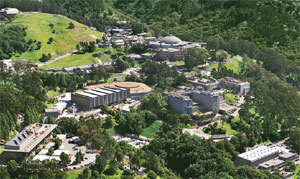
During the Second World War, the Rad Lab shifted focus, playing a key role in early studies of magnetic separation of uranium isotopes. However, by 1944 magnetic separation had largely moved to Oak Ridge, and the Rad Lab returned to basic physics, with the construction of a mammoth 184 inch cyclotron. By 1950, this was in use for studies of physics, nuclear chemistry and nuclear medicine. The war also produced a large turnover in personnel, as many pre-war leaders left to work on atomic weapons, radar and other military technology.
The lab’s next machine was a big step up in energy and complexity: a 6.5 GeV synchrotron, the Bevatron. Its energy could reach the threshold for antiproton production; by 1955 the accelerator was complete and antiprotons were indeed observed. Later, it supported a long series of experiments that used progressively larger bubble chambers. Throughout the late 1950s and early 1960s, researchers used these chambers to discover a large number of meson and baryon resonances. Still later, the Bevatron was converted to accelerate heavy ions, ushering in the new field of relativistic heavy-ion collisions.

In 1959, with the death of Ernest Lawrence, Ed McMillan became the lab’s second director. The 1960s saw a period of expansion, with many new buildings and facilities, including the 88 inch cyclotron, still used for nuclear structure studies. The Heavy Ion Linear Accelerator (HILAC), and later Super-HILAC, continued the laboratory’s studies of heavy elements, producing atoms of elements 102 and 103. The lab took its first steps beyond the world of particle and nuclear physics, with initiatives in materials science (initially to study the effects of radiation on different materials), and later, chemical lasers.
Of course, the laboratory was part of the Berkeley community. By the late 1960s, the US was involved in the Vietnam War, and Berkeley was the scene of massive antiwar protests. Lab scientists were themselves divided, but most had great sympathy for the antiwar movement, and many actively demonstrated against the war. The 1960s also led to new concerns for human rights, and LBNL scientists were active in supporting oppressed scientists in the former Soviet Union.
Besides the antiwar movement, the 1960s and 1970s brought tremendous political and intellectual ferment. Energy became scarce and environmentalism appeared. In 1971, US president Richard Nixon declared war on cancer. Basic research lost some of its lustre. Under the leadership of its third director, Andrew Sessler, the lab responded to these pressures by diversifying into a variety of fields: biology, earth science and materials science.
Today, this diversity is a hallmark of LBNL. The lab has major programmes in many fields, including synchrotron radiation (the 1.5 GeV advanced light-source accelerator and a strong accelerator development programme), computing (the National Energy Research Supercomputing Center), genome sequencing and cancer biology, as well as continuing programmes in electron microscopy, energy efficiency in buildings, and nanotechnology. The lab has also developed strong electrical and mechanical engineering and computer-science groups; their contributions are apparent in the complicated instrumentation built at LBNL. Recent examples include the vertex detectors for the BaBar experiment at SLAC and CDF at Fermilab, and contributions to ATLAS at CERN; the time projection chamber for the STAR detector at Brookhaven’s Relativistic Heavy Ion Collider (RHIC); the support structure for the Sudbury Neutrino Observatory; and the Gammasphere germanium detector.
Although birthdays are good opportunities to reminisce, the lab also used Founders Day to look forward to the next 75 years. The foreseeable future looks bright. In particle physics, a strong programme in the ATLAS experiment is accompanied by a cosmology programme, which is exploring the nature of dark energy, most notably by studying distant supernovae. SNAP, an orbiting telescope with a billion-pixel camera, should launch early in the next decade. In nuclear physics, the STAR time-projection chamber continues to study heavy-ion collisions at RHIC, and LBNL is contributing to the effort to build an electromagnetic calorimeter for ALICE at CERN. Future nuclear structure studies will be built around GRETINA, a precision germanium tracking calorimeter currently under construction. Efforts in neutrino oscillation, θ13, double beta decay and neutrino astronomy with IceCube complement these large programmes. Accelerator design has always been a hallmark of the lab; future designs include a low-energy, high-current light-ion accelerator for astrophysical studies and work on linear colliders. Other accelerator efforts are focused on producing ultra-short pulses of X-rays, and studies using lasers to accelerate particles. Over the next few decades, these efforts are likely to lead to radically new types of accelerators.
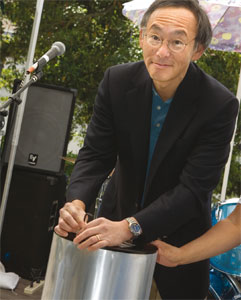
A key focus of current lab director Steve Chu is helping to solve the world energy crisis, through studies including hydrogen storage, carbon sequestration, solar energy (perhaps involving photosynthesis), biomass-to-fuel conversion and improved nuclear power systems. This effort will involve many of the lab’s divisions.
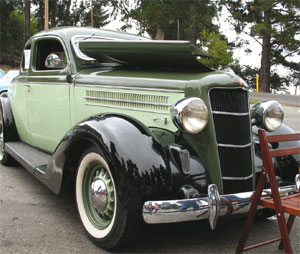
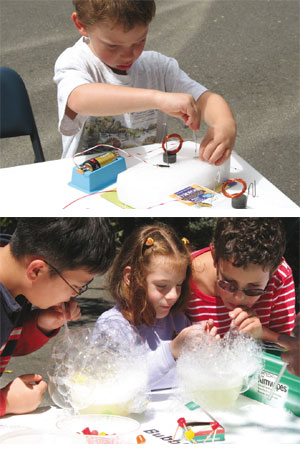
Founders Day included activities and exhibits looking back at many of these periods. Memorabilia from Lawrence’s research, including an early cyclotron were on display, as well as clothing worn by some of the lab’s 10 Nobel prize winners. An exhibition of vintage cars included a 1935 Dodge Brothers Coupé, said to have been driven by Lawrence and Robert Oppenheimer on clandestine late-night beer runs. A cinema showed classic science-fiction greats, from Flash Gordon to Frankenstein, and modern documentaries. Dance performances included traditional Scottish dance and modern fire-spinning. For children, there were hands-on scientific activities ranging from bubble-blowing to build-your-own electric motors and extracting genes from strawberries, as well as two bouncy inflatables where they could expend their energy. Who knows where the next Lawrence will come from?