Comsol -leaderboard other pages

Topics

The people factor

Participants of the 7th FCC physics workshop

Since its inception a decade ago, the Future Circular Collider (FCC) collaboration has evolved in scope and scale – especially since the completion of the conceptual design report in 2018, when directed efforts were made to broaden the project’s reach and attract new partners. Such endeavours are crucial considering the ambitious nature of the FCC project and the immense global collaboration required to bring it to fruition.

Today, the collaboration brings together more than 130 institutes from 31 countries. Contributions from members span a broad spectrum encompassing theoretical and experimental particle physics, applied science, engineering, computing and technology. Ongoing collaborations with research centres internationally are pushing the performance of key technologies such as superconducting radio-frequency cavities and klystrons, as well as magnets based on novel high-temperature superconductors (see “Advancing hardware“). Increased global collaboration is a prerequisite for success, and links with high-tech industry will be essential to further advance the implementation of the FCC.

The proposed four-interaction point layout for the FCC is not only designed to offer the broadest physics coverage, but makes it a future collider commensurate with the size and aspirations of the current high-energy physics community. The attractiveness of the FCC is also reflected in the composition of participants at annual conferences, which shows a good balance between early-career and more senior researchers, geographical diversity, and gender. The latter currently stands at a 70:30 male-to-female ratio, which has been increasing during the course of the feasibility study.

Global working group

The FCC feasibility study has established a global working group with a mandate to engage countries with mature communities, a long-standing participation in CERN’s programmes, and the potential to contribute substantially to the project’s long-term scientific objectives. In addition, an informal forum of national contacts allows exchanges between physicists from different countries and the development of collaborations inside FCC. Each interested country has one or two national contacts who have the opportunity to report regularly on the development of their FCC activities.

The 10th FCC conference poster

Drawing parallels with the LHC and HL-LHC successes, CERN’s unique experience with large-scale scientific collaborations has been invaluable in shaping the cohesive and productive environment of the FCC collaboration. It is imperative to recognise the dedication of existing members while addressing the need for new contributors to bolster the collaboration. As the FCC considers the next stage of its scientific journey, potential partners are invited to bring their unique skills and perspectives.

First discussions on the governance and financial considerations for the FCC project are taking place in the CERN Council. The models aim to provide a structure for both the construction and operation phases, and assume compatibility with the CERN Convention, while also taking into account the United Nations’ sustainable development goals. In parallel, the organisational structure of the FCC experiment collaborations is being discussed. Given the inherently cooperative and distributed nature of these collaborations, a relatively lightweight structure will be put forth, based on openness, equality at the level of participating institutes and a wide consultation within the collaboration for key decisions.

Since 2021, the FCC has implemented a robust organisational structure, acting under the authority of the CERN Council, that facilitates efficient communication and coordination among its members. Looking ahead, the path to the governance model required for the FCC project and operation phases is both exciting and challenging. Importantly, it requires the long-term engagement and support of participants from CERN’s member and associate member states, and from the non-member states, whose community at CERN has been growing with the LHC, particularly from institutes located in North America and the Asia-Pacific regions. As the project evolves further, it is crucial to refine and adapt the collaboration model to ensure the efficient allocation of resources and sustained momentum.

The FCC offers a multitude of R&D opportunities, and the collaborative spirit that defines it promises to shape the future of particle physics. As we go forward, the FCC collaboration beckons individuals and institutions to contribute to the next chapter in our exploration of the fundamental laws and building blocks of the universe.
Machine matters

It’s exactly 10 years since 350 physicists and engineers met at the University of Geneva to kick-off the Future Circular Collider (FCC) study. A response to the 2013 European strategy for particle physics, the study initially examined options for an energy-frontier collider in a new 80–100 km-circumference tunnel. By late 2018 a conceptual design report (CDR) integrating the physics, detector, accelerator and infrastructure of a staged lepton (FCC-ee) and hadron (FCC-hh) collider was published. Two years of lengthy deliberations later, the 2020 European strategy recommended that the community investigate the technical and financial feasibility of a future hadron collider at CERN with a centre-of-mass energy of at least 100 TeV and with an e+e Higgs and electroweak factory as a possible first stage.

Studies show that the FCC would deliver benefits that outweigh its costs

After three years of work, mobilising the expertise of physicists and engineers from around the world, a mid-term report of the FCC feasibility study was completed in December 2023. Numerous technical documents and a 700-page overview of the results demonstrate significant progress across all project deliverables, including physics opportunities, the placement and implementation of the ring, civil engineering, technical infrastructure, accelerators, detectors and cost. No technical showstoppers have been identified, and the results were received positively by the CERN Council during a special session on 2 February. Here and in the some related articles, the Courier gathers the key take-aways.

A collider for the times

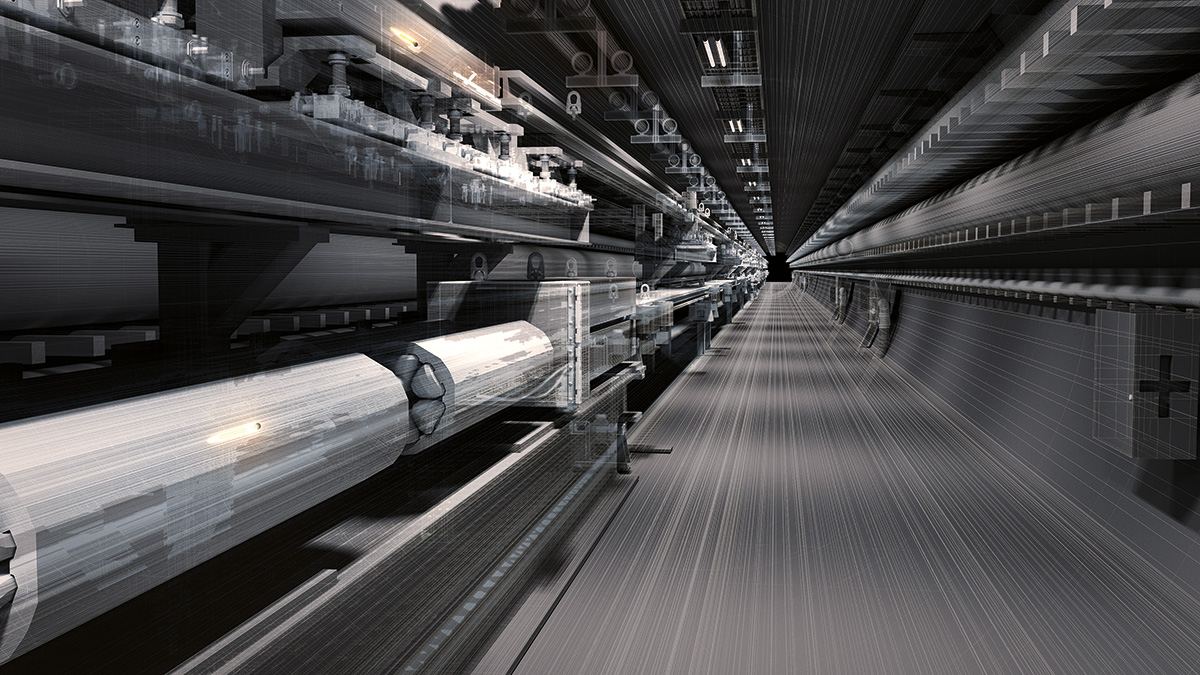
The scientific backdrop to the FCC is the existence of a 125 GeV Higgs boson together with no sign yet of new elementary particles at the TeV scale – transformational discoveries by the LHC that call for a broad and versatile exploration tool with unprecedented precision, sensitivity and energy reach (see “FCC: the physics case“). An unfathomable amount of work has led to an optimal placement of the FCC ring, surface sites and project implementation with CERN’s host states (see “Where and how“). The 90.7 km FCC tunnel, constituting a major global civil-engineering project in its own right, is well understood (see “Tunnelling to the future“). Assuming a decision to advance to the next stage is taken by the CERN Council after the next European strategy process, a preparatory phase (involving project authorisation, preparation of civil-engineering works, technical design for the collider, injectors and the detectors, further consolidation of physics cases and detector development) would take place from 2026 to 2032. Construction could then take place in 2033–2040, with the installation phase and transition to operation between 2038 and the mid-2040s.

The multi-energy lepton collider FCC-ee, which would produce huge quantities of Z, W and Higgs bosons, and ultimately top-quark pairs, over a period of about 15 years, builds on the remarkable success of LEP, which was instrumental in confirming the Standard Model and in guiding physicists to the discoveries of the top quark and the Higgs boson. Once thought to be the final word on circular e+e colliders, advances in accelerator technology since LEP (such as top-up injection at B factories and synchrotron-radiation light sources, developments in superconducting RF, and novel beam-focusing techniques) offer collision rates more than two orders of magnitude larger. Boosting the FCC-ee luminosity further, a key outcome of the mid-term report is a new ring-layout that enables four interaction points.

Ideal springboard

The mid-term report confirms that FCC-ee is both a mature design for a Higgs, electroweak and top factory, and an ideal springboard for an energy-frontier collider, FCC-hh, for which it would provide a significant part of the infrastructure. Since the revised FCC-ee placement studies, the overall layout of FCC-hh has changed radically compared to the initial concept phase, with three key benefits: an optimal size of the experiment caverns, with the option of sharing detector components between the lepton and the hadron machines; a reduction in the number of surface sites; and a shorter tunnel for the transfer lines from the injector to the collider ring. The new layout is compatible with an injection scheme that delivers beams to the FCC-hh ring from the LHC or from an upgrade of the SPS.

The mid-term report addresses the challenging R&D for the high-field FCC-hh magnets. A key deliverable of the feasibility study is a summary of R&D plans based on Nb3Sn, high-temperature superconductors (HTS) and hybrid technologies. While Nb3Sn magnets are considered relatively low-risk, HTS technology would enable the most aspirational goals to be reached. Due to the sizable gap in technology readiness between the two options, however, the study team advises against an early decision. Instead, an adapted “phase-gate” process is proposed with regular review, steering and decision points every five years, and coordinated with the CERN high-field magnet programme. Taking into account the time needed to construct and operate FCC-ee and, in parallel, to develop the high-field dipole magnet technology, it is estimated that FCC-hh could begin physics operations in the early 2070s.

The FCC-ee accelerator

The cost of an FCC-ee with four interaction points is estimated to be CHF 15 billion, around a third of which is taken up by the tunnel. The reliability of the FCC-ee cost estimate will be improved following further development of the various accelerator systems and equipment required, along with the subsurface investigations starting in 2024. The final feasibility-study report will also address risk-management and the personnel resources required from project development to construction.

Power consumption is another topic of interest. The FCC-ee will be the largest particle accelerator ever built, with its RF, magnet and cryogenic systems drawing the main loads. The total CERN energy consumption throughout the FCC-ee scientific programme is estimated to vary between 2.0 and 2.8 TWh/year depending on the energy mode, to be compared with about 1.6 TWh/year during the High-Luminosity LHC era. The figures are hoped to be lowered as R&D (for example, to improve the performance of superconducting cavities and the efficiency of power sources) advances. The FCC study team is also working with regional authorities to identify ways in which part of this energy may be re-used for heating in local industries and public infrastructures.

Electrical power would be provided from the French electricity grid, and the system is designed such that no new sub-stations will need to be constructed between the different FCC-ee energy stages. Studies carried out in conjunction with McKinsey and Accenture indicate that by the time the FCC comes into operation, a low carbon footprint can be achieved with an energy mix that contains a large fraction of energy from renewable sources.

Return on investment

Beyond the creation of new knowledge, studies undertaken within the European Union co-funded FCC Innovation Study show that the FCC would deliver benefits that outweigh its cost. Impacts on industry from high-tech developments, the sustained training of early-stage researchers and engineers, the development of open and free software, the creation of spin-off companies, cultural goods and other factors lead to an estimated benefit/cost ratio of 1.66. The FCC project is linked to the creation of around 800,000 person-years of jobs, states the mid-term report, and the FCC-ee scientific programme is estimated to generate an overall local economic impact of more than 4 billion.

The digested mid-term report in summary: the FCC integrated programme is an ideal match for the uncharted physics territory ahead; its placement at CERN is geologically and territorially feasible; no technical showstoppers have been identified; the FCC would return more to society than it costs. Accelerator, detector, engineering and physics studies by the global FCC collaboration are continuing across more than 150 institutes in more than 30 countries, while new partners are sought to work on various R&D (see “The people factor” ). The final report of the FCC feasibility study is due in early 2025.

Where and how?

FCC placement scenarios

Designing a next-generation collider with a performance that meets the scientific demands of the particle-physics community is one thing. Ensuring its territorial compatibility, technical feasibility and cost control is quite another. A core element of the FCC feasibility study is therefore the placement of the ring and the necessary surface sites, for which an iterative approach in collaboration with CERN’s host states, France and Switzerland, has been adopted from the outset.

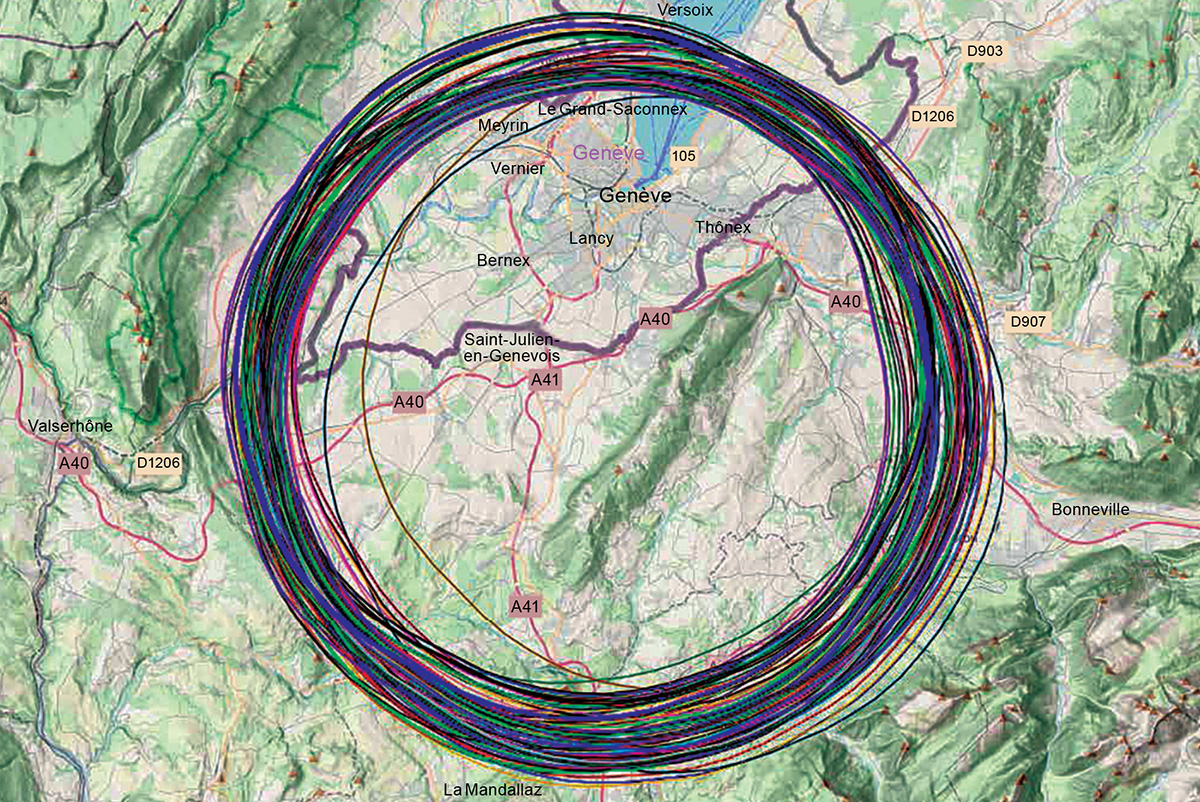
Territorial compatibility requires numerous natural, technical, urban and cultural constraints to be identified and considered. The goal is to limit the consumption of land, keep the quantity of excavated materials to a minimum and re-use as much as possible, minimise the consumption of resources such as electricity and water, avoid visibility, noise and dust nuisances, and create synergies with future neighbours where possible. Following eight years of intense study, one configuration was identified out of some 100 variants as being particularly suitable. This scenario has a circumference of about 90.7 km, eight surface sites and permits the installation of up to four experiments.

During 2023 this reference scenario was reviewed with different regional stakeholders and now serves as the baseline for further design and optimisation activities. These include geophysical and geotechnical investigations to set the optimum depth of the tunnel, links to high voltage grids, access to water for cooling purposes, connections to major rail and road infrastructures, landscape integration and the development of sustainable mitigation measures.

Drill down

Working out how to place a 90.7 km-circumference research infrastructure in a densely populated region requires several dozens of criteria to be met. While initial investigations concerned observations at the square-kilometre level, the focus gradually moved to thousands of square metres and individual land-plot levels. Initial cartographic and database research has progressively been replaced with analysis in the field, working meetings with public administration services and eventually individuals with expert local knowledge. In addition to the scientific and technical requirements, the FCC implementation scenario takes into account  the project-implementation risks, cost impacts, access to resources (electricity, water, land), transport requirements, and estimates of the urban and demographic evolution. The study also analyses socio-economic benefits for the region.

The reference layout with only eight surface sites requires less than 50 ha of land use on the surface and constitutes a significant reduction in footprint with respect to the initial scenario drawn up in 2014. All sites are situated close to road infrastructure, with less than 5 km of new roads required, and several of the eight sites are located in the vicinity of 400 kV grid lines. The layout of the FCC is integrated geographically with the existing CERN accelerator complex, with beam transfer possible from either the LHC or via the SPS tunnel.

Throughout all studies, CERN has been accompanied by the services of the Swiss and French authorities at different levels

The feasibility study, carried out with relevant consultancy companies, confirms the technical feasibility of all eight surface sites and the underground works. Working meetings with all the municipalities affected in France and Switzerland have not revealed any showstoppers so far, even if decisions by municipalities and the host states are yet to be taken. Next steps include the detailed integration of the surface sites in the environment.

Timescales are critical to be able to continue with such studies. By the end of the feasibility study in 2025, all land plots that are required by the project need to be communicated to the host states. In addition, a formal environmental evaluation phase in both France and Switzerland is necessary for the authorisation procedures. These activities rely on an agreement between CERN and the host states on the steps to be made by each stakeholder, including the associated legal and regulatory conditions.

Throughout all studies, CERN has been accompanied by the services of the Swiss and French authorities at different levels. This dialogue concerns the more detailed expression of the needs and constraints of the local actors and the identification of potential co-development topics and compensatory measures. The findings are gradually being integrated into a process of project optimisation of the reference scenario to further improve its added value for the territory while keeping the science value high and the project implementation risks low.

Quo vadis, European particle physics?

The 2020 European strategy for particle physics justifiably singled out the Higgs boson as the most mysterious element of the Standard Model. Uncovering the particle’s true nature and answering the numerous questions raised by its interactions with other particles is set forth as the highest priority of the field. And this, the strategy concluded, requires the next dream machines: an e+e Higgs factory and, in the longer term, a 100 TeV hadron collider. Getting there will be no easy feat, and thus several intermediate steps, necessary for bringing this programme to fruition, have been set in motion.

Firstly, the European Committee for Future Accelerators (ECFA) was called upon by the CERN Council to formulate a global detector R&D roadmap for both short- and long-term experimental endeavours. A painstaking consultation process across the entire range of detector technologies – from gas, liquid and solid-state detectors to particle-
identification systems, calorimetry and blue-sky R&D – culminated in a 250-page document and the creation of detector R&D collaborations to focus on the most relevant topics. In parallel, the European Laboratory Directors Group has compiled an accelerator R&D roadmap spanning activities such as high-field magnets, high-gradient accelerating elements, plasma-wakefield acceleration, energy- recovery linacs, and more.

Paris Sphicas

With the accelerator and detector development in the best of hands, what remains is to converge on the next machine: namely the e+e collider that takes us as close as we can to a full understanding of the Higgs boson and the electroweak and top-quark sectors. Thankfully, we already know a lot about the reach of such “HET” factories from previous studies, in particular those carried out during the previous strategy update. To encourage further work en route to the next strategy update, ECFA has put together a HET-factory study group that brings together both the linear and circular e+e detector communities. The goal is to solidify our understanding of the requirements that the physics places on the experiments and on the associated beams. A common software framework with more realistic detector simulation and a parallel study of detector structures are the other working areas in the study group. Good progress is visible, and the third and last major workshop on the HET-factory study will take place in October 2024.

Major players

The other major players in the global high-energy physics scene completed their corresponding strategy processes either several years ago (Japan with the ILC and China with the CEPC) or recently (US with the P5 process). All eyes are now turned to Europe as we enter the final stretch towards the next update of the European strategy. With the Future Circular Collider feasibility study due to be completed next year, all the elements needed for a fully informed decision on the future of European – and global – particle physics will soon be in place.

The entire field, and especially the younger generations, are most eagerly awaiting this decision

The next strategy process will build on the excellent work that took place in the context of the previous one, which culminated with a large community gathering in Granada. Taking into account the updated information, it is both expected and highly desirable that the process converges quickly, with a definitive recommendation on both the next e+e collider and the longer-term prospects. The entire field, and especially the younger generations, are most eagerly awaiting this decision. Today, in parallel with maximally exploiting the physics potential of the LHC, our most important duty is to ensure that current PhD candidates find themselves at the centre of future discoveries a few decades from now.

Is all this possible for Europe? Absolutely! CERN has an unparalleled track record on the world stage with the ISR, SppS and LEP legacies, as well as the tremendous success of the LHC. These have not only provided some of the greatest advances in our understanding of the fundamental elements of nature, but also serve as guarantors of CERN’s ability to continue advancing the energy frontier, keeping Europe at the leading edge of scientific knowledge. All that is currently needed is the final direction – and the start signal. Quo vadis European particle physics? Towards the next discovery frontier, to further unravel the mysteries of the fascinating universe we have come to inhabit.

The Many Voices of Modern Physics: Written Communication Practices of Key Discoveries

This book provides a rich glimpse into written science communication throughout a century that introduced many new and abstract concepts in physics. It begins with Einstein’s 1905 paper “On the Electrodynamics of Moving Bodies”, in which he introduced special relativity. Atypically, the paper starts with a thought experiment that helps the reader to follow a complex and novel physical mechanism. Authors Harmon and Gross analyse and explain the terminological text and bring further perspective by adding comments made from other scientists or science writers during the time. They follow this analysis style throughout the book, covering science from the smallest to the largest scales and addressing the controversies surrounding atomic weapons.

The only exception from written evaluations of scientific papers is the chapter “Astronomical value”, in which the authors revisit the times of great astronomers such as Galileo Galilei or the Herschel siblings William and Caroline. The authors show that, even back then researchers were in need of sponsors and supporters to fund their research. In Galilei’s case, he regularly presented his findings to the Medici family and fuelled fascination in his patrons so that he was able to continue his work.

While writing the book, Gross, a rhetoric and communications professor, died unexpectedly, leaving Harmon, a science writer and editor at Argonne National Laboratory in communications, to complete the work.

While somewhat repetitive in style, readers can pick a topic of interest from the table of contents and see how scientists and communicators interacted with their audiences. While in-depth scientific knowledge is not required, the book is best targeted at readers who are familiar with the basics of physics and who want to gain new perspectives on some of the most important breakthroughs during the past century and beyond. Indeed, by casting well-known texts in a communication context, the book offers analogies and explanations that can be used by anyone involved in public engagement.

Extremely Brilliant Source illuminates Paganini’s favourite violin

Intense beams of synchrotron X-rays produced at the European Synchrotron Radiation Facility (ESRF) in Grenoble have revealed the inner workings of Niccolò Paganini’s favourite violin. Renowned for its acoustic prowess, the 280 year-old “Il Cannone” ranks among the most important instruments in the history of Western music. To help understand and preserve the precious artefact, the Municipality of Genoa in Italy and the Premio Paganini teamed up with researchers at the ESRF’s new BM18 beam line to study the structural status of the wood and its bonding.

Using multi-resolution propagation phase-contrast X-ray microtomography, a non-destructive technique widely used at the ESRF for palaeontology, the team was able to reconstruct a 3D image of the violin at the level of its cellular structure. In addition to revealing Il Cannone’s conservation status and structure, the results hint at the interventions made by luthiers throughout the instrument’s life.

In few months, we will be able to work on much larger instruments, up to the size of a double bass

Paul Tafforeau, ESRF

Inaugurated in 1994, the ESRF was the first “third generation” synchrotron, using periodic magnetic arrays called undulators to deliver the world’s brightest X-ray beams. It consists of a 844 m-circumference 6 GeV electron storage ring with almost 50 experimental stations serving around 5000 users per year across a wide range of disciplines. The study of Paganini’s violin was made possible by an EUR 330 million upgrade called the Extremely Brilliant Source, which came online in 2020. With an increased X-ray brightness and coherent flux 100 times higher than before, the facility allows complex materials to be imaged more quickly and in greater detail.

“We had to deal with some logistical and technical challenges, but the ESRF team did an incredible job to make this dream a reality,” says Paul Tafforeau, ESRF scientist in charge of BM18. “I hope that this experiment will be the first in a long series. In few months, we will be able to work on much larger instruments, up to the size of a double bass.”

Science needs cooperation, not exclusion

In the aftermath of World War II, nations came together and formed the United Nations (UN) with the purpose, as stated in the first article of the UN charter, “… to take effective collective measures for the prevention and removal of threats to the peace”. With more than 100 ongoing wars and military conflicts, we are further away than ever from this ideal. This marks a significant failure of diplomacy to prevent those wars.

In a similar spirit as the UN, CERN was founded in 1954 to bring nations together through peaceful scientific collaboration. Remarkably, just one year after its foundation, cooperation between CERN and Soviet scientists began via the Joint Institute for Nuclear Research in Dubna and the Institute for High Energy Physics in Protvino. In 2014, on the occasion of CERN’s 60th anniversary, former Director-General Rolf Heuer wrote that “CERN has more than fulfilled the hopes and dreams of advancing science for peace”.

 The invasion of Ukraine by the army of the Russian Federation at the end of February 2022 and the suffering inflicted on countless innocent civilians, including scientists, is against international law and must be condemned in the strongest terms. Despite pro-war statements from some Russian institutes, many Russian physicists oppose the war and immediately signed petitions against it.

In March 2022, as a reaction to the war in Ukraine, many national Western science institutions put bans on their historical scientific cooperation with Russian institutions. This move unexpectedly also concerned international organisations such as CERN, whose governing Council deliberated on the renewal of existing cooperation agreements with Russian and Belarusian institutes, and, regrettably, decided to stop them in 2024.

Limiting international scientific collaboration is against the advancement of knowledge, which is not just a global public good but a powerful instrument for intercultural dialogue and peace – especially during times of crisis. If we take the UN charter seriously, we must ask which measures are appropriate for the prevention and removal of threats to the peace. After all, as one Ukrainian colleague put it, do sanctions against Russian science institutes help to stop the war?

Limiting international scientific collaboration is against the advancement of knowledge, which is not just a global public good but a powerful instrument for intercultural dialogue and peace

After some two years of both economic and scientific sanctions, the answer would appear to be “no”. While we have continued to work together with our Russian and Belarusian colleagues at CERN, and had many discussions among us within experimental collaborations, people with whom we worked together for decades now risk becoming excluded from their experiments and from CERN and other institutes.

Hear and be heard
When I came to CERN as a student in the early 1980s, I was fascinated by the open and international spirit. It was an unforgettable experience to be able to talk openly to scientists from the Soviet Union, the German Democratic Republic, or other countries. I was excited to listen to different viewpoints and thrilled that science could offer a way to understand each other and to work towards a better world.

Unfortunately, the discussion about sanctions in science and the sanctions themselves have contributed to an atmosphere of mistrust and fear. Today, I am shocked when hearing that young students are afraid of discussing political matters with their colleagues, and that they are not accepted to summer schools because they were born and have studied in the wrong country. I am afraid that this next generation of scientists will remember how they were treated.

With the acceptance of sanctions in science — sanctions which are not endorsed by UN agencies — we allow the dominance of politics over scientific cooperation. It is fatal to impose a failed policy on the scientific community, which has long provided the language to communicate and cooperate across all borders.

The Science4Peace forum, which was created in response to restrictions on scientific cooperation implemented as a result of Russia’s invasion of Ukraine, convened a panel discussion in spring 2023 at which experts from different fields in science, ranging from IUPAP to particle physicists and climate researchers, expressed their opposition to sanctions in science. A subsequent report “Beyond a year of sanctions in science” concluded with a statement of the famous conductor Daniel Barenboim at a concert he gave with his East-West orchestra in Ramallah in 2005: “This is not going to bring peace, what it can bring is understanding, patience and courage to listen to the narratives of the other”. Perhaps, we should take this also as our motto in science, and against exclusion and sanctioning of colleagues, even in difficult times.

Igor Golutvin 1934–2023

Igor Anatolievich Golutvin, an outstanding scientist who founded new directions and research techniques in particle physics, died on 13 September 2023.

Born on 8 August 1934 in Moscow, Golutvin graduated from MIPT in 1957 and started his work at JINR in 1958. Several generations of detectors for large-scale physics facilities were developed under his supervision at the JINR Synchrophasotron, the IHEP accelerator in Serpukhov, and at the Proton Synchrotron and the LHC at CERN.

Golutvin became one of the pioneers of the CMS experiment, driving the cooperation of Russia and other JINR member states via the Russia and Dubna Member States (RDMS) CMS collaboration. Over the past 30 years, under his supervision, RDMS physicists have completed the development of unique detectors for CMS. Igor was also instrumental in initiating Grid computing for CMS in Russia. He was awarded the 2014 Cherenkov Prize of the Russian Academy of Sciences for his outstanding contribution to the development of CMS. In recent years, he played an important role in the preparation of upgrades for CMS, in particular concerning the calorimeters.

During his work at JINR, Golutvin established a scientific school and trained a team of active, qualified physicists and engineers. Within the framework of cooperation between CMS Russia and other JINR member states, he brought together like-minded people with the aim of preserving Russian scientific schools, built unique teams of engineers and physicists, and developed favourable conditions for attracting gifted young physicists, which he saw as extremely important for the implementation of long-term scientific projects.

Igor was a member of the equipment committee of the International Committee for Future Accelerators, an editorial board member of the journal Nuclear Instruments and Methods, a directorate member of the CMS collaboration at CERN, head of the collaboration of the institutes of Russia and JINR in CMS, and the organiser and head of numerous international and Russian scientific conferences and symposia.

He was also a professor/full member of the Russian Academy of Engineering Sciences, Russian Academy of Natural Sciences, International Academy of Sciences, Honoured Scientist of the Russian Federation and chief researcher for CMS at VBLHEP. For many years of fruitful work, Golutvin was awarded numerous state and scientific awards and prizes.

A year of celebrations

2024 marks CERN’s 70th anniversary, with a packed programme of events that connect CERN’s heritage with its exciting future. This will culminate in a grand celebration for the CERN community on 17 September followed by a high-level official ceremony on 1 October. Kicking off proceedings in CERN Science Gateway on 30 January is a public event exploring CERN’s science. Two events on 7 March and 18 April will showcase how innovation and technologies in high-energy physics have found applications in daily life and medicine, while the transformative potential of global collaboration is the topic of a fourth public event in mid-May. Events in June and July will focus on open questions in the field and on the future facilities needed to address them, and public events will also be organised in CERN’s member states and beyond. The full programme can be found at: cern70.web.cern.ch/.

Marcello Ciafaloni 1940–2023

Internationally known theorist Marcello Ciafaloni passed away in Florence, Italy on 8 September 2023. Born in 1940 in the small town of Teramo in southern Italy, he was admitted for his higher education to the selective Scuola Normale Superiore in Pisa where he graduated in 1965. Since 1980 he was a full professor in theoretical physics at the University of Florence.

As a research associate at Berkeley (1969–1970) and a fellow at CERN (1972–1974), Ciafaloni initially focused his research on high-energy soft hadronic physics and produced important results in the context of Reggeon field theory. Towards the end of the seventies, he shifted his attention to perturbative QCD, in particular to hard processes and small-x physics where sophisticated re-summation techniques are needed. Since then, and throughout his career, he produced many fundamental results in perturbative QCD, including his single-author contribution to the celebrated CCFM equation (where the first C stands for his name), an important ingredient for QCD-based event generators.

Since 1987, Ciafaloni added a second dimension to his research spectrum by devoting part of his activity to the gravitational scattering of strings, a thought-experiment for understanding string theory’s version of quantum gravity. This work originated from one of his periodic visits to the CERN TH division and involved, besides Marcello, Daniele Amati and myself.

The so-called ACV collaboration carried on until 2007 (with long visits by Marcello at CERN in 1995 and 2001), but my own collaboration with Marcello continued until 2018, when his health started deteriorating. More recently, the techniques used for this “academic” problem turned out to be relevant for describing real black-hole mergers and the ensuing gravitational radiation.

I had the great privilege of working with Marcello on many occasions throughout his career. His deep knowledge of physics and his passion were only matched by his amazing technical skills. He had set very demanding standards for himself and pursued them with great intellectual honesty and much generosity towards his students and collaborators. His passing is a big loss for our community.

bright-rec iop pub iop-science physcis connect