
Comsol -leaderboard other pages

Topics

Entangled World. The Fascination of Quantum Information and Computing

by Jürgen Audretsch (ed.), Wiley-VCH. Hardback ISBN 3527404708, £22.50 ($33.80).

Entangled World is a 2006 English translation of “Verschränkte Welt – Faszination de Quanten” (2002). Based on lectures about “physics and philosophy of correlated quantum systems” given at the University of Konstanz in the winter semester of 2000/2001, it presents a clear and simple overview of quantum mechanics and its applications (especially via entanglement) to novel technologies like quantum computing.

CCEboo2_07-06

The lectures in the book are written in a clear and informal style, but are aimed at a level that is too high for an average non-physicist and too low for a practising physicist. Given that they are based on university lectures, this is perhaps not surprising and this book might best be thought of as supplementary reading for a proper quantum mechanics course.

For example, bra and ket notation are introduced, but you’d have to know what vectors and complex numbers are to follow the explanation. A discussion of Bell’s inequality assumes that the reader knows what a probability density is, as well as what an integral means. Those who do not have a background in mathematics or physics would probably still find this an interesting read, but they would have to be willing to skip over many of the details; finding a simpler book might be a better idea for them.

A practising physicist who has not had time to keep up with recent advances in quantum computation and other fields dealing with quantum information may well find sections of this book useful as quick and painless introductions to emerging quantum technologies – ones that genuinely go beyond the possibilities offered by an arbitrarily large amount of classical hardware. Those with a philosophical bent are likely to find much of interest, as there is a fair amount of historical information and interesting quotes with emphasis on the thoughts of physicists rather than professional philosophers.

Although the lectures are by a number of different authors, the book flows well and the notation is consistent. With the slightly rough translation, one could easily think that this was written by a single author.

With respect to the translation, I am aware that it is all but impossible for anyone who is not a native speaker to make a perfectly smooth translation and in many ways the translation is quite good. That said, a final pass by a native English speaker would have been useful. The same criticism could be levelled at many publishers, but it doesn’t seem unreasonable to ask for the same level of editing that goes into a book originally written in English. Even the short description of the book at is written in rather poor English. Come on publishers – there is no shortage of underpaid physicists who would make small corrections to translated texts for you!

Overall, I like the layout. Numerous illustrations help to make the text clear, and Erich Joos’ chapter on decoherence has the useful feature of separating out material “for physicists” into shaded boxes, much as New Scientist used to do many years ago, so that a popular article could include a piece of higher-level information without disturbing the overall flow of the text. This has always seemed a great idea to me and I wish that it would come back into vogue.

A few interesting points are raised that would even be of interest to a relatively advanced physics student, especially with respect to decoherence, which receives little treatment, if at all, in most of the classic textbooks. Another noteworthy feature of this book is the inclusion of experimental information in the form of plots and sketches of how pieces of equipment are put together.

All in all the book has much to offer and is reasonably priced, but one should be aware of the level at which it is pitched.
Paris hosts research and innovation expo

From 8-11 June, the 2nd European Research and Innovation Exhibition, being held at Porte de Versailles Exhibition Centre in Paris will open its doors to the public. Aimed both at professionals in research and industry and at the general public, including university and high-school students, the exhibition brings together the major European players in research and innovation. These include CERN, the Dapnia Laboratory of the Commissariat à l’Energie Atomique at Saclay, and the Institut National de Physique nucléaire et de physique des particules (IN2P3) of the Centre national de la recherche scientifique (CNRS).

The first exhibition, held in 2005, attracted 24,000 visitors. This year, to emphasize the international nature of the event, Germany is guest of honour, with participation by SIEMENS, one of the country’s leading exponents of industrial innovation, along with the French-German Association for Sciences and Technology.

The widely varied programme of conferences and round tables allows visitors to familiarize themselves with the achievements and ambitions of research and innovation and their fundamental importance to the future of the European Community, both in the scientific field and research funding and applications. A Young Scientists’ space also will also give exhibitors a chance to meet high-calibre young graduates who are seeking employment.

Presentations include a talk on on elementary particles by Christelle Roy from the CNRS Laboratoire de Physique Subatomique et des Technologies Associées (Subatech) in Nantes, and Michel Spiro, director of IN2P3 in Paris. The stands include an exhibit by CERN, highlighting aspects of technology transfer.

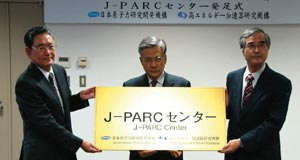
New centre to take control of J-PARC

The High-Energy Accelerator Research Organization, KEK, and the Japan Atomic Energy Agency (JAEA) have established the J-PARC Center to take entire responsibility for operating the Japan Proton Accelerator Complex (J-PARC), under construction in Tokai, Ibaraki. The centre’s mission will be to operate and maintain the high-intensity proton-accelerator facilities at J-PARC, to pursue Ramp;D for improving performance, and to support all J-PARC users and manage safety issues.

CCEnew1_06-06

The construction of J-PARC, which started in the spring of 2001, is now in the busiest stage, with about two thirds of the facilities complete. Major components for the proton linac, which accelerates H- beams up to 181 MeV, have been installed in the tunnel, and linac operation should start in December. Magnets for a 3-GeV rapid-cycling proton synchrotron, as well as for a 50-GeV proton synchrotron, are also being installed. The first beam from the 50 GeV synchrotron is expected in 2008.

KEK and JAEA have jointly constructed J-PARC, with each organization taking entire responsibility for the items budgeted to it. However, for the operational stage KEK, and JAEA have recently established that J-PARC will be controlled and managed by a single organization, the J-PARC Center.

The J-PARC Center was established in February, ready for the start-up of the linac at the end of 2006, and has begun partial operation with 62 staff and J-PARC director, Shoji Nagamiya. There are three divisions at this stage, covering accelerators, safety and administration. The number of staff will increase to around 330 by 2008 in about 10 divisions.

Many places in Japan, including the central government, prefecture and local government, and other research organizations, have congratulated the J-PARC Center. In its meeting in February, the International Advisory Committee of J-PARC, chaired by J W White of Australian National University, stated: “We recommend that the vision of the J-PARC Center be that of a centre of excellence in quantum-beam science for a broad user community and an ‘in house’ scientific community of such quality as to achieve international respect for their science.”

Nobel inspiration: a passion for precision

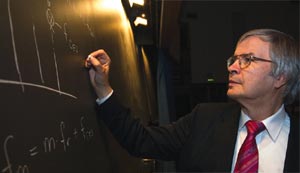
Theodor Wolfgang Hänsch’s interest in science began when he was six years old and living in Heidelberg, Germany. He grew up on Bunsen Strasse and one day asked his father about the name of the street and what someone had to do to have a street named after him. His father had worked in a pharmacy during the First World War and knew about Robert Wilhelm Bunsen, his burners and chemistry. So Hänsch senior brought home a Bunsen burner and would sprinkle table salt into the blue flame to reveal the yellow colour of sodium. This experience ignited the interest of the younger Hänsch and led him to study light, atoms and chemicals.

CCEnob1_06-06

At Heidelberg he earned his doctorate from the Ruprecht Karl University in 1969. He then moved to research and teaching at Stanford University from 1975 to 1986, which was a very positive experience. “I enjoyed it right from the beginning because in Germany there were many obstacles to deal with, whereas in California administrative things seemed to be extremely easy and people were helpful,” explained Hänsch. This was the first time he had been so far away from home, experiencing different teaching styles. In the US students would see a professor after class to discuss the lecture or assignments. However, in Germany there was more of a barrier between professor and students, as there were many more students to each professor.

CCEnob2_06-06

It was while working at Stanford that Hänsch found his mentor, Arthur Schawlow, co-inventor of the laser and Stanford University professor, who received the Nobel Prize in Physics in 1981. Although he was widely recognized, Schawlow was an easy-going person who offered a great deal of good advice for young professors.

Hänsch followed his mentor’s interest in lasers and in 1970, at the age of 28, he invented the high-spectral resolution laser. According to Hänsch, it was a simple invention that caused a great deal of excitement. This was the first laser for which the colour – wavelength – could be changed while keeping the light extremely monochromatic. This opened the door to new types of spectroscopy and greater precision in measuring frequencies, such as the transition frequency of the red Balmer line of atomic hydrogen.

A new era in laser spectroscopy began as the high-spectral resolution laser was quickly reproduced and used in laboratories around the world. Atoms and molecules are very particular about which wavelengths will excite them to higher energies. Therefore, it is necessary to use a laser that can produce the wavelength needed to excite them and to find out what that precise wavelength is.

Hänsch returned to Germany in 1986, where he became director of the Max-Planck-Institut für Quantenoptik and professor of experimental physics and laser spectroscopy at the Ludwig-Maximilians University in Munich. It was here that the challenge of finding out the particular wavelength that excited certain atoms or molecules led to Hänsch’s second invention in the mid-1990s: the optical-frequency comb generator. This invention allowed for extraordinary precision in measuring the Lyman line of atomic hydrogen, which made it possible to look for changes in the fundamental physical aspects of the universe. It was for this invention that Hänsch received his share of the Nobel Prize in Physics in 2005, the other recipients being Roy J Glauber, for his contribution to the quantum theory of optical coherence, and John L Hall, who also worked on the optical-frequency comb technique.

When asked if he was surprised to receive the Nobel prize, Hänsch explains that his friends had thought he had a good chance: “I think the year before [2004] there had been some game on the Internet where you could place bets on possible candidates, and I had come up pretty high at that time.” So he began to believe he had a real chance, but he did not expect the prize to be given for work in optics so soon; in 1997 the Nobel Prize in Physics was awarded for laser cooling and in 2001 for the Bose-Einstein condensation in dilute gases of alkali atoms.

A little-known aspect of Hänsch is his love of toys, and his own private little laboratory at the Ludwig-Maximilians University. “My students don’t even have a key to it, so I can start an experiment, give a talk somewhere, and come back to find my experiment still there,” he says. In his private laboratory Hänsch mostly works on ideas with light and is now working on how to deal with beam that is produced in a non-linear crystal, to find out its wavefronts and to correct it so that one can do meaningful experiments with it.

So what does Hänsch say to would-be Nobel laureates? His advice to young scientists is to find something that really interests you and is fun to work on. “Of course, no one can plan to win any prizes, but if you work hard at something that interests you, then every step along the way can lead to something new. One has to be prepared to put in long hours, but it makes the little triumphs extra sweet,” he said.

Currently, Hänsch is also working with the ATRAP Collaboration at CERN, which is studying hydrogen and antihydrogen atoms. If it were possible to measure precisely up to 14 or 15 digits, then it might be possible to see whether matter and antimatter are the same or if they differ in some unexpected way. This could explain why there is more matter than antimatter in the universe. To explore these questions, researchers have to look where no-one has ever looked before, and for that reason, Hänsch has a passion for precision.

Modern Supersymmetry: Dynamics and Duality

by John Terning, Oxford University Press. Hardback ISBN 0198567634 £55.

9a6b5527e173bbe272afadf802ba8a712473bb2d-00-00

The book begins with a brief review of supersymmetry and the construction of the minimal supersymmetric Standard Model and approaches to supersymmetry breaking. It also reviews general non-perturbative methods that led to holomorphy and the Affleck-Dine-Seiberg superpotential as powerful tools for analysing supersymmetric theories. Seiberg duality is discussed with example applications, paying special attention to its use in understanding dynamical supersymmetry breaking. Alongside an overview of important recent developments in supersymmetry the book covers topics of interest to both formal and phenomenological theorists.

Soft Multihadron Dynamics

by W Kittel and E A De Wolf, World Scientific. Hardback ISBN 9812562958 £60 ($98).

51w6zwVZgqL

This book comprehensively covers the development and status of soft (i.e. non-perturbative) phenomena encountered in the production of (multi-) hadronic final states by high-energy collisions of various particles. Phenomenological models used to describe the data are in general inspired by quantum chromodynamics (QCD) and the book often crosses between soft and hard (perturbative) QCD. Postgraduate students, researchers and academics interested in multihadron production will find this useful reading.

The QCD Vacuum Hadrons and Superdense Matter, 2nd edition

by Edward V Shuryak, World Scientific. Hardback ISBN 9812385738 £75 ($101). Paperback ISBN 9812385746 £43 ($58).

41bHFCusXYL._SX328_BO1,204,203,200_

This book is invaluable for particle and nuclear physicists and comprises extensive lecture notes on non-perturbative quantum chromodynamics. The original edition from 1988 had a review style. In this edition the outline remains, but the text has been rewritten and extended. As well as incorporating new developments, this edition has benefited from several graduate courses taught by the author at Stony Brook during the past decade. The text now includes exercises and about 1000 references to major works, arranged by subject.

Modeling Black Hole Evaporation

by Alessandro Fabbri and José Navarro-Salas, Imperial College Press. Hardback ISBN 1860945279 £34 ($55).

black hole23

This book gives a detailed and pedagogical presentation of the Hawking effect and its physical implications, and then discusses the backreaction problem, especially in relation to exactly solvable semiclassical models that analytically describe black-hole evaporation. The book aims to link the general relativistic viewpoint on black-hole evaporation and the new CFT-type approaches. The discussion on backreaction effects is valuable for graduate students and researchers in gravitation, high-energy physics and astrophysics.

A cosmic vision for world science

Many developed countries face the challenge of encouraging more young people to take up science to ensure future innovation to benefit society. However, there is a related and equally important challenge – to promote a scientific infrastructure to aid the academic and career ambitions of members of under-represented and economically disadvantaged groups, as well as scientists from developing countries, to increase their participation in scientific and technical fields worldwide.

CCEmul1_05-06

Severe constraints on resources, which are a common feature in developing countries, mean that research there does not usually consist of designing and making equipment for a new experiment at the forefront of the field. In many schools, colleges and universities laboratories either do not exist or are poorly equipped. Consequently, the brain drain of bright young scientists from developing to developed countries seems to be the norm, and further intellectually impoverishes the developing world. Collaborative programmes between scientists from developed and developing countries are urgently needed.

The Abdus Salam International Centre for Theoretical Physics (ICTP) in Trieste has set an international example by providing both a forum and practical support for collaboration in theoretical physics between developing and developed countries. It has also supported indigenous physics programmes in developing countries. Importantly, the director of ICTP, Katepalli Sreenivasan, plans to include experimental physics in the programme. CERN has also taken a significant step to foster a relationship with physicists from developing countries that does not require large cash contributions to CERN, but instead encourages the production of detector components at the home laboratories. This lets physicists from developing countries participate in frontier research.

The Pierre Auger Collaboration is involved in Vietnam in developing experimental work to understand the universe at the highest energies. The Vietnam Auger Training Laboratory (VATLY) at the Institute for Nuclear Science and Techniques in Hanoi was inaugurated as a training ground for future experimentalists in astroparticle physics and related areas, and an exact replica of the water Cherenkov detector used in the Pierre Auger Observatory has been installed at VATLY. More recently, the atmospheric muon spectrum was measured in Vietnam for the first time. The phenomenology of neutrino oscillation is also being studied at this laboratory. Indeed, a Vietnamese community for experimental particle physics is developing well – in 2001 a group from the Institute of Physics in Ho Chi Minh City joined the D0 collaboration at Fermilab.

In many areas of research, leading-edge science is expensive and there are few support networks for disadvantaged groups. However, cost-effective projects to investigate the nature of ultra-high-energy cosmic rays (UHECR) are already being developed for high schools and could provide an ideal vehicle for such an effort. These projects demonstrate the basic elements of research and technology, with modern detectors, fast electronics, GPS timing, computerized data acquisition and data analysis. Perhaps just as importantly, they also teach social skills such as collaborative effort, organization, long-term planning and teamwork.

Efforts to bring the developing world into such projects have already begun. For example, the collaboration behind the Mixed Apparatus for Radar Investigation of Cosmic-rays of High Ionization project has established contact with the Maseno University in Kisumu, Kenya, the University of Zambia in Lusaka and the University of Rio de Janeiro in Brazil, to investigate the hypothesis that some forms of lightning are induced by cosmic rays. The collaboration is also working with Rio de Janeiro to deploy detectors that register UHECR showers and meteors in high-school-based receivers.

These are just two examples of the diverse topics related to the “cosmic connection” between research and education in both the developed and developing world. These include not only the astrophysics and particle physics of cosmic rays, but also topics in biology (e.g. the effects of natural radiation), mathematics, computer science and programming, chemistry, and environmental and Earth sciences (e.g studying the chemistry of ozone and how that could affect the transmission of cosmic rays).

The educational paradigm created by the networks of cosmic-ray arrays in high schools is one that can be employed in many areas. In geophysics, for example, one could use distributed arrays of seismometers to study geological activity over a large area. A specific example is the project BAMBI, which promotes the construction of an amateur array of radio telescopes distributed over a large area to study the radio sky at 4 GHz and search for signs of extraterrestrial intelligence. Such large-area, national and international school-based detector networks could aid and encompass other efforts throughout the world including developing countries, where it could provide entry to the global scientific community.

Theoretical Nuclear and Subnuclear Physics, 2nd edition

by John Dirk Walecka, World Scientific. Hardback ISBN 9812387951 £60 ($98). Paperback ISBN 9812388982 £29 ($48).

41tNDHvUKHL._SX335_BO1,204,203,200_

This second edition is a revised and updated version of the original comprehensive text on nuclear and subnuclear physics, first published in 1995. It maintains the original goal of providing for graduate students a clear, logical, in-depth and unifying treatment of modern nuclear theory, ranging from the non-relativistic many-body problem to the Standard Model of the strong, electromagnetic and weak interactions. Researchers will also benefit from the updates on developments and the bibliography. This edition incorporates new chapters on the theoretical and experimental advances made in nuclear and subnuclear physics in the past decade.

bright-rec iop pub iop-science physcis connect