Comsol -leaderboard other pages

Topics

The Scientific Legacy of Beppo Occhialini

By P Redondi, G Sironi, P Tucci and G Vegni (eds), Springer. Hardback ISBN 9783540373537, £54 (€74.85).
CCboo1_05_07

Giuseppe Paulo Stanislao Occhialini, or Beppo to his many friends across the world, was a charismatic, dynamic leader of discovery in particle and astrophysics for more than 50 years from the 1930s. These essays and reminiscences, by 30 colleagues and others who knew him, review his life to celebrate the centenary of his birth in 1907.

The early years of Occhialini’s career were remarkable for two close encounters with the Nobel Prize: through his work on cosmic rays with Patrick Blackett and a decade later with Cecil Powell. His interest in cosmic rays began while studying at the Institute of Physics at Arcetri, part of the University of Florence, where he learnt to use new coincidence circuitry for Geiger–Muller counters from its developer, Bruno Rossi. After graduating in 1929 Occhialini stayed in research and in 1931 Rossi sent him to Cambridge to learn about Wilson cloud chambers from Blackett – who in turn learnt from Occhialini the advantages of using counters in coincidence to trigger the chamber. Soon, although unluckily a week or so after Carl Anderson at Caltech, they saw their first “positive electrons”, but, unlike Anderson, they observed e+e– pairs and recognized that Paul Dirac’s new relativistic quantum theory predicted this. Occhialini was a keen member of the “Kapitza Club” at Cambridge’s Cavendish Laboratory, where he met Dirac.

Returning to Arcetri in 1934, Occhialini found that things had changed. Facism was taking power in Italy so he left for an appointment at the University of Sao Paulo in Brazil where he stayed throughout the Second World War. He built a strong group there using counters in cosmic-ray research before leaving at the end of 1944 for England at the invitation of Blackett, who thought that his help would be valuable in the work on an atomic bomb. Since Occhialini was Italian, this was not allowed and in autumn 1945 he went to Bristol to join Powell, who was using photographic emulsions to study low-energy nuclear reactions. Occhialini was immediately intrigued and impressed by the elegance and power of the method, but saw the need to improve the emulsions’ sensitivity. So he contacted the technical staff at Kodak and Ilford to add his influence. Ilford then produced the C2 emulsion, with eight times the silver halide concentration, which Powell and Occhialini “warmly welcomed”, according to Ilford’s man in charge, Cecil Waller.

Occhialini proposed exposing C2 plates to cosmic radiation at the top of the Pic du Midi (2800 m) in the Pyrenees, and did so in summer 1946. In January 1947 Occhialini and Powell published in Nature the first of a series of papers from the Bristol group establishing the discovery of the π-meson, its decay to the μ-meson and, after Kodak produced the first emulsions able to detect minimum ionization, the μ’s decay to an electron.

It was at Bristol that Beppo met Connie: Constance Charlotte Dilworth, who was born in 1924 in Streatham, London. She started postgraduate studies in theoretical solid-state physics at Bristol in about 1946, then switched to join Powell’s group. Together with Occhialini and others, she contributed significantly to processing thick photographic emulsions. In 1948, when Occhialini was invited to Brussels to start a new nuclear emulsion group, Connie went with him. They were married in 1950 and their daughter, Etra, who contributed to this book, was born the next year. Connie and Beppo became a very effective team, a formidable duo who would provide strong leadership in Italian and European science. Beppo’s excitable Italian temperament was complemented by the calm, organized approach of Connie, a notable scientist herself who always understood how Beppo’s aspirations could be realized.

In 1950 the Occhialinis moved to Genoa and in 1952 to Milan University where Beppo was director until he retired in 1974. He built up a strong emulsion group at Milan, making major contributions to the “G-stack” and other collaborations flying emulsions on balloons. He was always looking for new challenges in physics and advances in experimental techniques. On returning from a visit to Rossi at MIT in 1960, he showed his group a new detector made of silicon, saying “think what you can do with this”. They did, and established an expertise that later became the basis for Milan’s major contribution to the central detector for the DELPHI experiment at LEP.

As machines replaced cosmic rays as a source for particle physics, and while maintaining a major presence for his group at CERN, Beppo turned to other techniques to continue his interest in cosmic rays, first with balloon-borne spark chambers and then adapting these to flights on satellites. Both Beppo and Connie were influential members of advisory and scheduling bodies for the European Space Research Organisation and together, as one contributor puts it, they pushed Italy into a leading position in astronomy. Milan was a “power house” for space research, with leading roles in two satellite experiments that mapped the sky for X-ray and gamma-ray sources: COS-B launched in 1975 and Beppo-SAX in 1996. Beppo maintained his interest in the design of the latter until his death in 1993, when it was named after him. Connie died in 2004.

Research into the origins of intense gamma-ray bursts (GRBs) – by far the brightest events known – is a scientific legacy of Beppo still very much alive. Until Beppo-SAX made the first accurate locations in 1997, no GRB had been associated with a visible galaxy. His most long-lasting legacies, however, are the young scientists who entered research in his care: his irrepressible enthusiasm inspired them; his lateral, dialectical probing tested their ideas; and his quick wit, wide cultural interests in art, literature and thoughts on “the film I saw last night” entertained them. This collection of essays portrays a complex personality for whom life was never dull, who was always ready to “brain storm” with colleagues, and who experienced the excitement of discovery in his research.

One question remains: why didn’t he share one of the two Nobel prizes, Blackett’s in 1948 or Powell’s in 1950?

New council provides a fresh look for UK big science

CCvie1_04_07

Regular readers of CERN Courier will be familiar with the Particle Physics and Astronomy Research Council (PPARC) which has supported the UK’s research in particle physics for the past decade. Now it is time to say goodbye (and thanks) to PPARC, and to welcome its successor, the Science and Technology Facilities Council (STFC). The new council will be formed by merging PPARC with the Council for the Central Laboratory of the Research Councils, which operates the Rutherford Appleton Laboratory (RAL) and Daresbury Laboratory in the UK.

These laboratories have long been a key component in the UK’s particle-physics programme, particularly through their capabilities in engineering and instrumentation. “Rutherford cable” is well known in superconducting magnets worldwide. For the LHC, RAL has taken on important roles in engineering for the ATLAS endcap toroids, and in constructing the ATLAS silicon tracker and the CMS endcap calorimetry in conjunction with UK universities. Daresbury Laboratory hosts a strong accelerator group who have, among other things, assumed major responsibilities within the International Linear Collider global design effort.

Responsibility for nuclear physics will also transfer to STFC, so the new research council will combine support for particle physics, nuclear physics and astronomy with responsibility for large science facilities, such as synchrotron light sources, high-power lasers and the ISIS spallation neutron source at RAL. Overall STFC will be responsible for a budget of more than £500 million (including international subscriptions), will have about 2000 employees and more than 10,000 scientific users. The new council formally takes over on 1 April 2007 and Keith Mason, previously in charge of PPARC, will be its chief executive.

Among the motivations for the new council is a desire to create a more integrated approach within the UK to large scientific facilities, especially for long-term projects involving several countries acting together, and to deliver increased economic impact and knowledge exchange between industry, universities and the STFC’s national laboratories. We want to promote new and innovative ideas that cut across entrenched domains and benefit from cross-fertilization.

As part of this aim, new Science and Innovation Campuses have been set up at Daresbury and Harwell (adjacent to RAL) with the goal of promoting connections with industry and universities. STFC will develop a single science strategy across its programme, which will be used to inform its investment choices. Ownership of this strategy will be shared with the research communities and will involve both university and in-house expertise. As now, independent advisory and peer-review panels will guarantee that the best scientific advice is available.

Readers will likely be asking what this means for particle physics. In the short term, continuity is assured. Support for university groups and experiments will be maintained at the currently planned levels and the broad physics strategy developed over the past few years will continue. In the longer term, however, the new larger council offers the possibility to exploit new synergies and connections between particle-physics activities and other areas of STFC’s responsibility.

An interesting example is in accelerator R&D, where the technologies developed and needed for particle physics also underpin the development of new synchrotrons or free-electron light sources and of new high-power neutron-scattering facilities. Projects that develop competencies in these areas will thus benefit both particle physics machines and user facilities for the physical and life sciences. The price to be paid for having broader opportunities is, of course, that future particle-physics projects will necessarily be tensioned against a wider range of future options in STFC. Particle physicists will need to be able to make a compelling case for their aspirations in a broad forum, and I am confident that they will be able to do so.

I am pleased that the UK particle-physics community has shown support for the creation of the new council, and has focused on the opportunities that it brings. We in STFC look forward to working with the science community, both nationally and internationally, and with our colleagues at CERN and elsewhere, as part of our mission to enable world-class research and deliver access to state-of-the-art facilities.

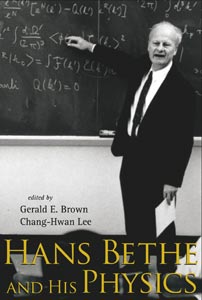
Hans Bethe and his Physics

By Gerald E Brown and Chang-Hwan Lee (eds), World Scientific. Hardback ISBN 9789812566096 £56 ($98). Paperback ISBN 9789812566102 £22 ($38).

CCboo1_04_07

This book is the result of a request that Hans Bethe made at the age of 97 to his long-term collaborator Gerry Brown to explain “his physics” to the world. This is no easy feat considering that the published scientific papers, books and reports span the best part of eight decades, and include some of the most important contributions to 20th-century physics. Brown and Lee have risen to the challenge and produced a book of which Bethe himself would be proud. It even goes beyond Bethe’s initial request to explain his physics and provides a portrait of the great man in all aspects of his life, which Brown and Lee have accomplished by enlisting the help of experts, collaborators and friends.

In part one of this four-part book, we catch a personal glimpse of the man and his science through the eyes of close collaborators and friends. Brown summarizes and evaluates Bethe’s long career as a teacher and researcher, starting with a brief history of his early years in Germany and England, with a short stay in Italy. He describes how Bethe developed mathematical rigor working with Arnold Sommerfeld and gained physical intuition from Enrico Fermi.

However, Bethe found that the British had a much healthier attitude towards life than the Germans, and with the rise of Adolf Hitler and the new laws he could not hold a university position as two of his grandparents were Jewish. So in 1933 he moved to Manchester University where he was reunited with his old friend Rudi Peierls. Bethe regarded 1933–34 as his most productive time, although he had already published the famous “Bethe ansatz”. Brown ends his article by describing his own long collaborative research with Bethe in astrophysics.

Bethe’s own article, “My life in astrophysics”, highlights his strengths and the application of nuclear physics in stellar energy production, for which he won the Nobel prize in 1967. The article describes in detail the whole Nobel experience; his enjoyment is obvious. He concludes by describing his return to astrophysics after retiring from Cornell University.

“Three weeks with Hans Bethe” by Chris Adami is a transcript of conversations with Bethe and Brown over a three-week period at the Kellogg Radiation Laboratory at Caltech. Here Adami provides a unique insight into the mind of Bethe, his thoughts on science, people and politics. Adami quizzed Bethe on almost every aspect of his life, keeping a record of each day’s discussion, a real Bridget Jones’s Diary of physics. Here we learn that Bethe was an expert on shock waves and explosions, which he had ample opportunity to develop during his time at Los Alamos, and Adami was sometimes met with silence if the questioning came too close to classified work.

Bethe’s commitment to nuclear energy is highlighted in the short article by Jeremy Bernstein, who had written a piece about Bethe for the New Yorker, highlighting his enthusiasm for nuclear energy. At the time, Bethe debated the nuclear option with Barry Commoner, a committed environmentalist and the magazine’s energy guru. Such debates are again increasingly relevant, but without a Bethe, explaining the nuclear option is more difficult. Part one concludes with a well crafted piece by Ed Salpeter who interacted with Bethe over a 60 year period.

Kurt Gottfried introduces part two, followed by Silvan Schweber who gives an account of Bethe’s education, swift rise to international prominence and immense impact on American physics. The other four papers in this section deal with distinct aspects of his research. Salpeter and the late John Bahcall expand on Bethe’s work on energy production in stars, nuclear astrophysics and neutrino physics. Bethe wrote an important and influential paper in 1986 on the missing solar neutrinos, explaining the Mikheyev–Smirnov–Wolfenstein effect. This is the best explanation of matter effects on neutrino oscillations that I have come across. Freeman Dyson traces Bethe’s influence on the development of quantum electrodynamics and the story of how he solved the Lamb shift problem, claiming that “Hans Bethe was the supreme problem solver of the past century”. John Negele describes Bethe’s work on the theory of nuclear matter and the post-war contribution he made to the nuclear many-body problem. Brown concludes this section by providing an intimate look at his remarkable collaboration with Bethe on supernovae and mergers between neutron stars and black holes as possible sources of gravitational waves.

Part three contains papers by Chen Ning Yang and Mo-Lin Ge on the impact of what Yang had termed the “Bethe ansatz”, which extended to many systems beyond the 1D problem in quantum mechanics that Bethe originally considered. David Mermin and Neil Ashcroft describe how influential Bethe was in solid-state physics. However, although he played a major role in developing the quantum theory of solids, he realized by 1933 that his real interest was in nuclear physics. Jeremy Holt and Brown provide a historical summary of nuclear physics where they put Bethe’s major contributions into context. Sometimes in physics the exact details of discovery are not well documented, but not in this case I am pleased to say. This section ends with the paper “And don’t forget the black holes”, which Bethe co-authored with Brown and Chang-Hwan Lee shortly before his death.

The last part of the book concludes with a set of papers discussing Bethe’s contribution to science policy at all levels. Sydney Dell recounts the various ways in which Bethe’s integrity, together with his incredible scientific knowledge, made him an admirable adviser to policy makers. Bethe’s panel helped shape the Limited Test Ban Treaty of 1963. He was deeply concerned with new threats posed by nuclear weapons and was deeply involved in all aspects of the global-energy problem. The article by Boris Ioffe on “Hans Bethe and the global energy problem” outlines Bethe’s commitment to the peaceful use of nuclear energy. He also advocated strategies to police and limit the amount of weapons-grade material, a very real threat in today’s global political scene. The book concludes with obituaries by Richard Garwin, Frank von Hippel and Gottfried.

This book does an admirable task in drawing a portrait of a great scientist and a great man. Bethe’s power, in my experience, was that he could always easily get to the heart of a problem in any field and solve it in the most economical way, and this comes through clearly. The book is a “must read” for every researcher and teacher of science.

New BMBF funding for LHC experiments

In February the German Federal Ministry of Education and Research, BMBF, set up new funding for the German universities and institutions involved in ALICE, ATLAS and CMS.

Besides financing the institutes individually, the BMBF approved additional funding for three BMBF-Forschungsschwerpunkte (FSP), or BMBF strategic research clusters. These comprise a large number of university groups and other research institutions working closely within a national research network. The scheme aims to promote co-operation between the institutes to create wider networks of scientific excellence and enhanced international visibility.

FSP 201 – ALICE, FSP 101 – ATLAS and FSP 102 – CMS won the first funding round. In total, the institutes in these clusters will receive more than €32 million for the next funding period, which runs until 2009. The research centres Karlsruhe, DESY and GSI will assist the clusters in their work.

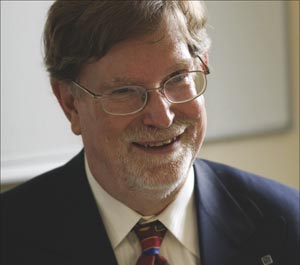
George Smoot: the Indiana Jones of the universe

CCsmo1_04_07

George Smoot feels at home when he is at CERN: as he walks through the corridors he always meets colleagues waving to him. This is not surprising as he has often visited the laboratory during the past 20 years. And even if he is now considered one of the great cosmologists, he remembers that his work began in particle physics when he was a PhD student.

As Smoot himself says, he was destined to be a scientist: he is cut out to do it. He remembers that as a child he asked his parents how the Moon could appear to follow their car and at the same time all the cars in the world. When they explained about the Earth and the Moon, it was a revelation for him and perhaps the beginning of his career. So, while still very young, Smoot read about Galileo, who became his hero. Was he not one of the first experimental physicists and the first astronomer to turn a telescope to the sky?

CCsmo3_04_07

Later, Smoot joined the Massachusetts Institute of Technology where he thought first of studying medicine. But physics and mathematics finally called him and he majored in these subjects in 1966 before focusing on particle physics, in which he obtained his doctorate in 1970. Soon he switched to cosmology, moving to the Lawrence Berkeley National Laboratory (LBNL) where he has worked and taught for more than three decades.

From the rainforests of Brazil to the bleak plains of Antarctica, Smoot has covered the whole world looking for what he likes to call “the holy grail of cosmology” – evidence for the Big Bang. This Indiana Jones of cosmology also likes playing with the big toys of technology and has used all he can to penetrate the mysteries of the early universe: high-altitude experimental balloons, U2 spy planes, satellites and so on. At LBNL he began work on the High-Altitude Particle Physics Experiment (HAPPE), aiming to find antimatter in the upper atmosphere, and cast light on the theory of the Big Bang. While he did not find antimatter with HAPPE, he did go on to discover the long-sought hard evidence for the Big Bang. In 1974 he had begun work on a proposal to map the cosmic microwave background (CMB) radiation. This later blossomed into NASA’s Cosmic Background Explorer (COBE), with which he discovered small fluctuations in the CMB in 1992.

CCsmo4_04_07

In 2006 Smoot won the Nobel Prize in Physics for this major milestone in our knowledge about the origin of the universe (see box 1). It is as if he had taken a photograph of the baby universe, succeeding where others had failed for so long. To achieve this breakthrough, he invented precision cosmology, managing to measure very tiny differences in the temperature of the cosmological background radiation at the level of a hundred-thousandth of a degree. His discovery is really a revolution, perhaps the greatest since the confirmation of the theory of general relativity. What Smoot calls the “wrinkles in time” gives us a new view of the very early universe, prefiguring the formation of large structures such as galaxies. And what is most exciting for him, is that in his opinion we now have one clear picture for the origin of the universe, which transcends cultures, religions and other differences the world over.

The discovery was by no means easy. Smoot and his team had to analyse and clean a large amount of data, verifying them again and again before being sure of the results. (This is more or less what physicists at CERN will have to do soon with the experiments at the LHC.) At the end of this meticulous work, however, he felt so confident about his results that he said he would offer a plane ticket to any destination to anyone who could find a mistake.

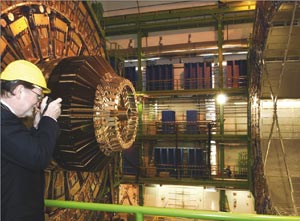
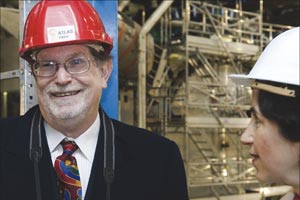
Smoot has now been tracking fluctuations in cosmological background radiation for more than 30 years, but he is not yet ready to step down. Now he is working on the Planck mission, the European successor to the Wilkinson Microwave Anisotropy Probe, which will give a higher precision than ever before. It is due to launch in 2008, when the LHC will be collecting its first data. “In the following three or four years, the most exciting physics experiments will be Planck and the LHC,” says Smoot. He is expecting much from the LHC experiments, so it is no coincidence that he went to see ATLAS and CMS during his visit to CERN. He says that “CERN is the place to be,” adding that if he was a PhD student now he would want to work there.

CCsmo2_04_07

With Planck, Smoot hopes to answer new questions about the shape of the universe and the inflationary model, so he thinks it would be very exciting to find something unusual at the LHC, such as extra dimensions or supersymmetry – something really revolutionary that would be exciting for the next generation. Whatever is found, it will open new windows on the universe and give new lines of research for physics. For Smoot, even though they have followed different paths, cosmology and particle physics are now asking the same questions – they are merging. He explained in the talk he gave at CERN how cosmological data could be used to test fundamental-physics models, providing frameworks and constraints. “We are living in the golden age of cosmology,” he says. Now he is waiting for the next cliffhanger in our exploration of the universe and is certain to be one of the main players in this next scientific crusade.

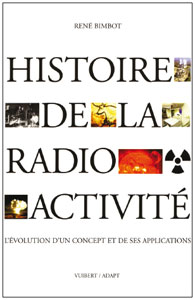
Histoire de la radioactivité

par René Bimbot, Vuibert. Broché ISBN 9782711771943, €35.

CCEboo1_03-07

Dans son Histoire de la radioactivité, René Bimbot s’adresse à un très large public dans un style limpide et son livre se lit aisément, cela d’autant plus que de nombreux graphiques et illustrations facilitent la compréhension. Au fil du texte, le lecteur peut aussi s’attarder sur des encadrés expliquant certaines notions simples de physique, accessibles dès la fin du secondaire, qui, au prix d’un effort minime, permettent d’approfondir la compréhension du sujet traité.

Des vignettes présentent en quelques paragraphes les chercheurs qui ont écrit les pages les plus remarquables de cette histoire ou y sont étroitement associés, c’est le cas successivement de Röntgen, Becquerel, Marie Curie, Pierre Curie, J J Thomson, Planck, Einstein, Rutherford, Bohr, de Broglie, Chadwick, Fermi, Yukawa, Frédéric et Irène Joliot, Lawrence, Gentner, Seaborg et Charpak.

Trop souvent, sous différents prétextes, les physiciens présentent de façon caricaturale le développement historique de leur sujet de prédilection; ici au contraire René Bimbot s’attache à suivre en grand détail le cheminement des idées en faisant ressortir les influences réciproques des acteurs ayant joué les premiers rôles dans les découvertes sur la radioactivité.

Curieusement ce livre semble combler un vide; en effet, une recherche rapide montre qu’il n’existait pas d’ouvrage dans la langue de Becquerel traitant complètement du sujet. En anglais on note le récent ouvrage de G I Brown (2003) intitulé Invisible Rays: A History of Radioactivity qui traite des mêmes sujets. L’auteur a joué un rôle très actif dans certaines des célébrations des divers centenaires remarquables de la physique que nous avons connu au cours de la dernière décennie, une bonne préparation pour l’élaboration de son Histoire.

Le livre comporte trois parties intitulées «De la radioactivité naturelle au noyau de l’atome», «De la radioactivité artificielle à l’énergie de fission» et «Rayonnements et radioactivité aujourd’hui».

Les sept chapitres de la première partie s’attachent aux premiers travaux de Becquerel, puis de Marie et Pierre Curie, et guident ensuite le lecteur à travers les bouleversements de la physique qui ont caractérisé le début du 20 e siècle jusqu’à l’élucidation par Gamow de la radioactivité alpha en 1928 (expliquée par l’effet tunnel permis par la mécanique quantique) et la théorie de Fermi de la radioactivité bêta en 1933. En résolvant les énigmes posées par la radioactivité, les physiciens nucléaires ont enrichi la physique de deux nouvelles forces, la force forte et la force faible. Ils ont ainsi légué à leurs successeurs de la physique des particules deux sujets essentiels dont l’élucidation théorique a pris plusieurs décennies pour arriver à l’unification électrofaible et à la chromodynamique quantique.

La deuxième partie traite en sept chapitres du sujet associé du positon et de l’antimatière, puis de la radioactivité dite artificielle et des diverses applications de la radioactivité. Parmi celles-ci, René Bimbot souligne bien sûr le rôle toujours croissant en médecine nucléaire des multiples radionucléides à usage médical et de l’imagerie avant de passer au domaine de la datation, en particulier par la méthode du carbone-14. Il consacre trois chapitres à la fission, aux armements nucléaires, aux diverses filières électronucléaires (sans éluder l’accident de Tchernobyl) et à la question des déchets.

Plus courte, la troisième partie du livre discute des détecteurs puis des deux faces contrastées des rayonnements: leurs dangers mais aussi leurs bienfaits en radiothérapie. Le chapitre final aborde des manifestations plus rares de la radioactivité, comme la capture électronique, l’émission de un ou de deux protons et aussi d’un neutron post-bêta. René Bimbot insiste par ailleurs sur le fait qu’il reste des radioactivités à découvrir après celle des ions lourds (comme le carbone-14) et que la sensibilité croissante des méthodes de détection promet la découverte de radioactivités ultrafaibles par des nucléides considérés comme stables. Ce chapitre considère aussi la désintégration bêta au niveau des quarks, après les niveaux moins élémentaires du noyau et du proton présentés auparavant.

On peut regretter l’omission de la double désintégration bêta qui aurait particulièrement intéressé les lecteurs du CERN Courier. De plus, un index analytique des sujets traités aurait utilement complété celui des scientifiques cités dans le livre.

Le livre de René Bimbot remplit donc de façon convaincante l’objectif annoncé par le titre et il intéressera en particulier le lecteur recherchant une perspective historique sur un sujet qu’il connaît déjà.

The EEE Project: big science goes to school

In May 2004, a major webcast linked CERN and high schools all over Italy to inaugurate the Extreme Energy Events (EEE) Project. Launched on the occasion of the visit to CERN of the Italian Minister of Education, University and Research, the project is the initiative of Antonino Zichichi from Bologna University and CERN.

CCEeee1_03-07

What is the main idea behind the project?

This project is meant to be the most extensive experiment to detect muon showers induced by extremely energetic primary cosmic rays (protons or nuclei) interacting in the atmosphere. Ultimately, it will cover a million square kilometres of Italian and Swiss territory. It would have been very expensive to implement such a large project without involving existing structures, namely schools all over Italy and part of Switzerland. This “economic” strategy also has the advantage of bringing advanced physics research to the heart of the new generation of students.

How will the experiment detect cosmic-ray showers?

The EEE telescopes, distributed over an immense area, will be tracking devices, capable of reconstructing the trajectories of the charged particles traversing them. These particles are the secondary cosmic rays produced in the showers, and are mostly muons at sea level. The project is based on a very advanced detector unit: the multigap resistive plate chamber (MRPC) (Cerron-Zeballos et al. 1996). An EEE telescope comprises three layers of MRPCs. We have developed these chambers for the ALICE time-of-flight detector at CERN’s LHC (Akindinov et al. 2004). Their performance in terms of detection efficiency and time resolution is outstanding.

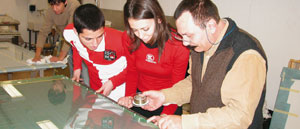
However, the EEE Project also aims to bring science into high schools (Zichichi 2004). This is why the plan was for all of the MRPCs to be built by teams of school pupils supervised by their teachers at CERN or in the nearest laboratory (located in the closest university or research institute). After the MRPC construction phase, school pupils participate in the installation, testing and start-up of the EEE telescope in their school, then in its maintenance and data-acquisition, and later in the analysis of the data. Of course the scientific and technical staff of the universities and research institutes collaborating in the project coordinate and guide everything.

CCEeee2_03-07

The telescopes will be coupled to GPS units and interconnected via a network. A dedicated PC will locally acquire the MRPC signals produced by each telescope and will then transfer them to the largest Italian computer centre in Bologna for analysis using Grid middleware.

How much does the project cost and how is it funded?

The cost is minimal because we install our detectors at existing structures (schools). The EEE Project was funded in 2005 by the Italian Ministry of Education, University and Research, and by Italian research institutes such as INFN and the Enrico Fermi Centre. The cost of an EEE unit (that is, a complete telescope, including PC, laboratory equipment, cables, gas system, etc.) is about €50,000. CERN, the World Federation of Scientists, the Italian National Research Council and many Italian universities are also participating in the project. Owing to the success of the project and to its undoubted impact on education and research potential, we expect more funding in the coming years.

What is the status of the project? How many schools are involved so far and what is the next step?

In one year, pupils from more than 20 high schools have built more than 70 MRPCs at CERN. Nine pilot sites are equipped with EEE telescopes: at CERN, at the INFN Gran Sasso Laboratory, at the INFN Frascati Laboratory and in the INFN sections in Bologna (central Italy), Cagliari (Sardinia, central-western Italy), Catania (Sicily, southern Italy), Lecce (south-east Italy) and Turin (north-west Italy). The remaining MRPCs are currently moving from Geneva to Italy for the other high schools that are involved so far. We foresee that all of these telescopes should soon be collecting data. Meanwhile the construction of other MRPCs at CERN continues, thanks to a new wave of pupils from other Italian high schools. More than 50 schools are already queuing up to be part of the EEE Project.

The next stage of the project is to continue expanding, increasing its coverage and involving as many high schools as possible in this frontier experimental research in fundamental physics.

What do you believe the project contributes to education?

The direct involvement of young pupils in the project is the most efficient way to contribute to their learning while doing advanced research in physics. The pupils will be personally involved in advanced research and will acquire a deeper knowledge of particle and astroparticle physics, experimental tools, data-acquisition systems, software, networks, etc. They will gain direct access to the data and to the working methods typical of modern research work.

How does EEE differ from schools projects in other countries?

When I started to speak about the project I knew of no other proposals. Now some educational cosmic-ray projects have been proposed in other countries. The detectors are groups of scintillation counters, typically on the school’s roof, and not in the building as with the EEE telescopes. These projects don’t use tracking devices.

What will the project contribute to research?

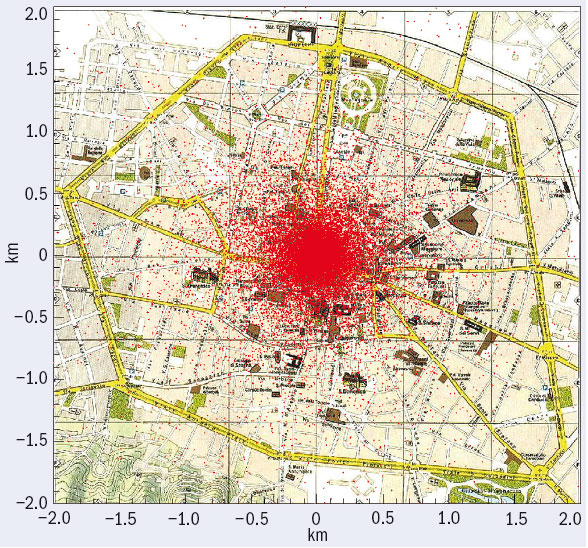
There are short- and long-range time coincidences between close (within the same city) and distant telescopes, and the tracking capabilities of the telescopes will determine with good precision the direction of the incoming primary cosmic ray. Therefore, the EEE Project can study not only large showers of muons originating from a common vertex, but also correlations between separated showers that might be produced by bundles of primaries. The project thus allows a large variety of studies, from measuring the local muon flux in a single telescope, to detecting extensive air showers producing time correlations in the same metropolitan area, to searching for large-scale correlations between showers detected in telescopes tens, hundreds or thousands of kilometres apart. When complete – that is, equipped with at least 100 telescopes – the EEE Project will compete strongly with other high-energy cosmic-ray experiments searching for extreme-energy extended air showers.

Amazing particles and light

Promising developments in hadronic physics, microwave superconductivity, free-electron lasers and efficient energy-recovery techniques in accelerators were beckoning me – after 25 colourful years at Berkeley, including two spent at CERN. I was also concerned about the longevity of a profession in which I had personally invested. I had seen the attrition of talents, many of whom I mentored, to other professions, driven by socio-economic realities of large particle accelerators. This inspired me to motivate accelerator-science practitioners to diversify their portfolio by developing the small and mezzo-scale engines that would drive emerging nano- and bio-sciences. Today, on the eve of another personal transition as I prepare to take the helm at the UK’s Cockcroft Institute, new developments and challenges once again invite comment.

I observe a few key developments contributing at the frontier of “discovery”, while others attest to “innovation” and “diversification”. These include: development of electron, proton and ion beams of unprecedented precision based on normal and superconducting material technology and advanced feedback control; diversification and growth of synchrotron radiation sources worldwide; evolution of sophisticated table-top laser-plasma acceleration techniques with necessary control to produce giga-electron-volt electron beams; demonstration of self-amplified spontaneous emission for the planned X-ray free-electron lasers; demonstration of efficient energy use and recovery in superconducting linacs; and production of ultra-short femtosecond flashes of electrons, infrared light and X-rays for studies of ultra-fast phenomena – to name but a few.

We have consolidated the “discovery” sector and diversified the “innovation” sector

I also admit to occasional sombre worries that perhaps accelerators will be just a passing moment in history. But I was always awakened by the realization that particle accelerators have been and must continue to be singularly distinctive instruments of discovery and innovation, in various measures. What we are witnessing is a mere partitioning of the balance between these values in the context of the evolving human condition. We have consolidated the “discovery” sector and diversified the “innovation” sector. The fundamental value of accelerators, articulated in my 2002 Viewpoint, remains invariant: they package and focus energy and information in patterns of space–time bursts to serve a multitude of human pursuits – hence their universal, timeless appeal. Amazing particles and light, carrying focused energy and information in special staccato-fashion, beam into matter and life, illuminating what our eyes do not see and manipulating what our hands cannot.

Throughout the 20th century, fundamental discoveries were enabled by bold conception and realization of ever-larger particle accelerators, which today must be consolidated into just a few carefully selected facilities so large that they can only be supported internationally. Hence the emergence of but a few grand future machines: the Large Hadron Collider, the X-ray free-electron lasers, a potential International Linear Collider (ILC- or CLIC-based), and neutrino/muon facilities. This consolidation is a must for mastering the global resources necessary to discover fundamentals at the core of the physical world: hidden dimensions, symmetries and structures; origins of mass, dark matter and dark energy; unification of gravity; and exotic states of matter.

In parallel with that consolidation, we continue to anticipate tremendous diversification in the innovation sector of clever techniques and merger of technologies in creating unique bursts of particles and light. These efforts will lead not only to novel affordable scientific devices (for example, energy-recovery and laser-plasma-based compact high-brightness particle and light sources), but also to an increasing set of affordable instruments and processes that more directly enrich our everyday lives (such as novel medical imaging, diagnostics, therapy and radiation oncology; micro-machined instruments for use in medicine, scientific research, information technology and space exploration; designer nano-materials; and knowledge of complex protein structures for drug discovery).

The vision is one of discovering the secrets of the hidden energy and matter in the universe’s evolution; of understanding the protein as the molecular engine of life through studying its energetics and structural folding; of innovating new eco- and bio-friendly materials for human use; and of eliminating radioactive waste and dependence on fossil fuels. Extraordinarily clever particle accelerators drive this at all scales from “small” to “mezzo” to “grand”.

Is this just a dream? Inspired by US poet Carl Sandburg, I respond: “Nothing happens, unless first a dream.”

Quantum Optics: an Introduction

by Mark Fox, Oxford University Press. Hardback ISBN 9780198566724, 9.95 ($89.50). Paperback ISBN 9780198566731, £24.95 ($44.50).

e1ac941a39e35c8e699e169bfae78981f980e3a4-00-00

This is a modern text on quantum optics for advanced undergraduate students. It provides explanations based primarily on intuitive physical understanding, rather than mathematical derivations. There is a strong emphasis on experimental demonstrations of quantum optical phenomena, in both atomic and condensed-matter physics. Other topics include squeezed light, Hanbury–Brown–Twiss experiments, laser cooling, Bose–Einstein condensation, quantum computing, entangled states and quantum teleportation. The book also includes worked examples and exercises.

The New Physics for the 21st Century

By Gordon Fraser (ed.), Cambridge University Press. Hardback ISBN 9780521816007, £30 ($60).

Seventeen years ago a book called The New Physics illuminated – vividly for the layperson and sensibly for the student – a series of scientific advances and philosophical obsessions, and it trailed them as signposts for the future. As so often happens, the future went off in a somewhat different direction. While Paul Davies was editing the first volume, physicists wondered loudly and publicly about dark matter and cosmic strings; black holes and the end of time; grand unification theory and cosmic inflation; the new window on the universe by the yet to be launched Hubble Space Telescope; and the claim by the Nobel prize-winner Luis Alvarez that an asteroid had crashed into the planet 65 million years ago and ended both the Cretaceous era and the dinosaurs. In fact, Alvarez and his planet-bruising bolide never got a mention in the Davies volume, but at the time there seemed quite a lot else to be getting on with.

CCEboo1_01-07

What a difference the decades make. In the past 17 years, experimental physicists have delivered a fifth state of matter in the Bose–Einstein condensate; slowed light down first to walking speed and then to a complete standstill; dropped the idea that time might run backwards and instead proposed interminable heat death in an ever expanding cosmos; demonstrated quantum entanglement and teleportation; mapped the fluctuations in the cosmic background radiation; introduced branes and apparently dropped cosmic strings; and discovered dark energy in a big way – so big that it accounts for three-quarters of everything. Nanotechnology emerged as both engineering obsession and practical investment, amid royal alarm in the UK about global death by grey goo. The Hubble telescope went up with a faulty mirror, and NASA launched its International Space Station but seemed to run out of steam. Global warming – physics at a practical level for most people – announced its arrival with a procession of record temperatures globally, and the debate about the Cretaceous catastrophe flowered into a much larger argument about asteroid impact-warning and deflection.

Physics never seemed so glamorous, but student numbers continued to fall and university departments continued to close. The old New Physics didn’t look so new and now CERN’s own Gordon Fraser has produced a companion volume of 19 essays, just as substantial, just as wide-ranging, and in some cases just as much fun.

Physics is not easy (it is after all done by PhDs, not dilettantes) but each essay begins comprehensibly and even enticingly, before diving quite briskly into mathematics, hard argument and occasionally hostile language. (Did Michael Green, writing about superstring theory, really have to head a section “beyond the naive perturbative approximation”?) Chris Quigg looks at particle physics and puts the Large Hadron Collider handsomely in its scientific context. But Fraser plays no special favourites. Nanoscience is there, and the Grid, and there are welcome surveys of biophysics and medical physics; the last essay is a reminder that without the physics of imaging, some neuroscience would be little more than voodoo.

All the classical preoccupations – cosmology, astronomy, gravity and the quantum world – get a fresh look. Robert Cahn’s survey of the physics of materials is a big help for the benighted. Ugo Amaldi ends the volume with a handsome canter through the connections between physics and society, and echoes many of the themes tackled in the book’s previous 18 chapters. The bad news is that physics still has an image problem. The good news is that this time Alvarez gets a mention, although not for bolide impacts, dinosaurs or the present concerted international effort to identify and track near-Earth objects. No, he gets a mention for not solving the world’s energy crisis: to be fair, for admitting that, for a few exhilarating moments, he thought that he had solved the world’s fuel problems for all time by fusing a proton with a deuteron to form helium-3. This anecdote appears, a little unkindly, under the heading “usable knowledge”.

bright-rec iop pub iop-science physcis connect