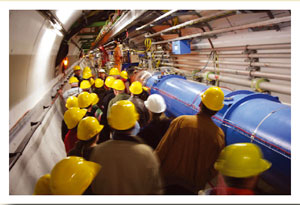
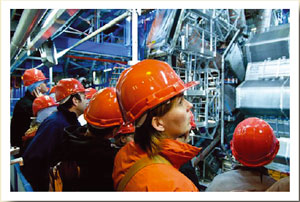
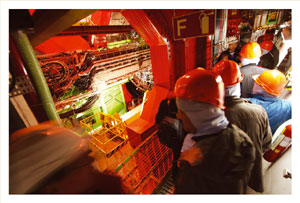
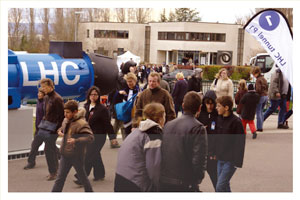
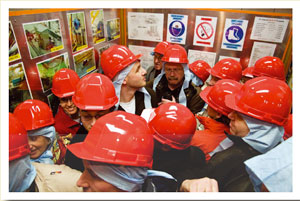
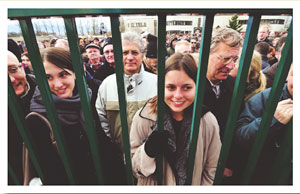
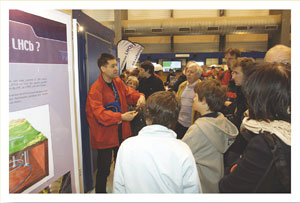
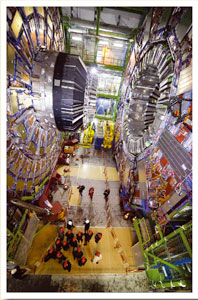
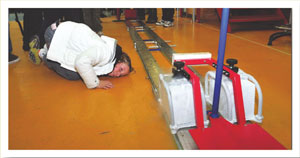
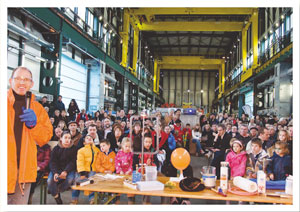
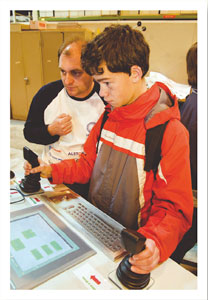
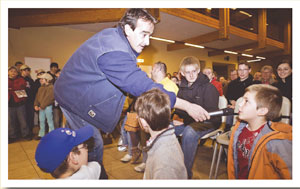
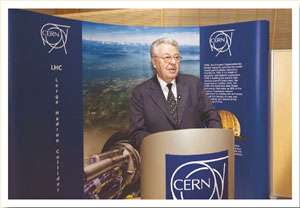
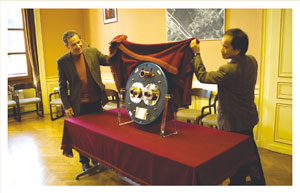
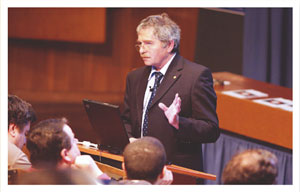
CERN would like to thank the following for their invaluable support:
Main Sponsors: Air Liquide, Alstom Power, ASG Superconductors SpA, Babcock Noell GmbH, Ineo, Intel, Linde Kryotechnik AG, LUVATA, ORACLE, UBS.
Sponsors: CECOM, Force10 Networks, La Mobilière, Peugeot Gerbier, Sun Microsystems (Suisse) SA, TRANSTEC Computer AG, Western Digital.
Associate Sponsors: ACCEL, ArcelorMittal, BRUUN & SORENSEN, Carlson Wagonlit, Cegelec, Dell SA, E4 computer engineering S.p.A., EOS, Ernesto Malvestiti SPA, IBM, IEEE, Infortrend Europe Ltd., INIZIATIVE INDUSTRIALI SRL, Italkrane, Kaneka, La Tour Reseau de Soins, Migros, National Instruments, ProCurve Networking by HP, SERCO, Société Générale, Sunrise Communications AG, Super Micro Computer Inc., Xerox.
Supporters: A+Z Bürosysteme GMBH, Carbagas, CES, ECHO Magazine, ETM, GATE Informatic SA, Plansee Metall GmbH, SIG, Thales.
Institutional Sponsors: Camera di Commercio Italiana in Svizzera, Communauté de
Communes du Pays de Gex, Commune de Meyrin.
Media Sponsors: Le Temps, Radio Lac, Worldradio.ch.
Open Days Friends: C’est pas sorcier, Crédit Agricole Centre-est, Collège du Léman, CNAO Foundation, European Scientific Institute, European Physical Society, European Synchrotron Radiation Facility, ETH Zurich, Fédération d’Improvisation Genevoise (FIG), Kodak, Materials with Novel Electronic Properties, Terapia con Radiazion Adroniche (TERA) Foundation, Université de Genève.
TRIUMF, Canada’s National Laboratory for Particle and Nuclear Physics, is one of 11 institutions to receive a C$14.95 million award from the Canadian government after competing with 110 proposals in the Centres of Excellence for Commercialization and Research (CECR) competition, within the Networks of Centres of Excellence (NCE) programme. Advanced Applied Physics Solutions Inc (AAPS), a not-for-profit affiliate of TRIUMF, will initially commercialize technological innovation from TRIUMF, such as the laser-production of diamond-like carbon foils, and bring it to the marketplace. AAPS has been incorporated and is putting together a formalized business plan to pursue R&D projects with business venture partners in Canada, China, France and the US.
The award will provide seed funding to accelerate the testing of ideas and innovations developed in the course of TRIUMF’s work as a laboratory for basic research. The mission of AAPS is to improve the quality of life of people worldwide by developing technologies emerging from worldwide subatomic physics research. AAPS will collaborate with academic, government, and industry stakeholders to research and develop promising technologies, bringing them to a commercially viable stage. These include developing a new underground imaging system to improve productivity in the natural resources sector, and other technologies with a range of applications, including medical-isotope production and pollution mitigation.
The NCE is an agency of the Canadian government that supports partnerships between universities, industry, government and not-for-profit organizations with a view to connecting leading-edge research with industrial expertise and strategic investments, in order to boost Canada’s leadership in Science and Technology (S&T). Its goal is to create internationally recognized centres of commercialization and research expertise to deliver economic, health, social, and environmental benefits to Canadians, as well as to encourage entrepreneurial and advantages for people, and greater S&T investments from the private sector.
CERN is a de facto global laboratory, with the LHC set to be the centre of particle-physics research for a decade or more, and comprises the largest scientific user community in the world. More than just a particle factory, CERN is a knowledge factory, enabling scientists to make discoveries, disseminate them and train younger generations. CERN is an example to the world of international scientific, technical and human collaboration.
The Council recognized – in the European Strategy for Particle Physics – that the next five years will be crucial, not only for CERN but for the future of particle physics in general. The start of LHC exploitation will provide a unique capability to explore new experimental vistas and an opportunity to seek support for possible new projects, such as upgrading the LHC itself and for a successor to explore the LHC’s breakthroughs.
Gathering the necessary support will require motivating and mobilizing the energies of all CERN stakeholders, both internal and external. Not only is it essential that the LHC be a technical success, but also that the implications of its discoveries for possible new projects be evaluated promptly and convincingly. This new physics should excite the imaginations not only of high-energy physicists, but also the wider scientific community and the general public – even schoolchildren and politicians. Only then could the future of accelerator-based research into the fundamental nature of matter – and any major new project – be assured.
Even so, it will be essential to optimize the deployment of the resources available for particle physics at CERN and other European laboratories. Any new project will surely be global in nature, so it will also be necessary to amplify the dialogue with our prospective partners in other regions of the world.
Possible directions
The European Strategy for Particle Physics also recognizes the importance of R&D on possible future projects in the period before LHC results set the favoured direction for particle physics. The Proton Accelerators for the Future group that advises the director-general has already made an initial plan for upgrading CERN’s Proton Accelerator Complex (Garoby 2007). Following these studies, the director-general set out the R&D priorities that have been approved by CERN Council.
Another report, by the CERN advisory group on Physics Opportunities with Future Proton Accelerators (POFPA) (Blondel et al. 2006), also reviewed some of the scientific motivation for upgrading the LHC. This report discusses possible synergies of upgrades of the LHC injector chain with research programmes in fixed-target physics, neutrino physics and nuclear physics.
Beyond the LHC, there is a general consensus that the priority for the next major international project is a linear electron–positron collider. The International Linear Collider (ILC) concept is potentially very interesting if the LHC reveals new physics within its energy range. Nevertheless, even in this case, physics will eventually require higher energies, hence the need for R&D on the Compact Linear Collider (CLIC) concept, within the international framework provided by the CLIC Test Facility 3 collaboration. CLIC, however, is ambitious; significant technical hurdles remain to be overcome before its feasibility can be demonstrated.
In view of the different options for the location, energy and timescale of a future linear electron–positron collider, CERN should collaborate with partners in Europe and elsewhere on R&D for a possible next-generation neutrino project. This might be based on the “super-beam” and “beta-beam” concepts, or it might be a full-blown “neutrino factory” based on a muon storage ring. The choice between these options will depend on technical feasibility as much as new results in neutrino physics, such as measurements of – or constraints on – the third neutrino-mixing angle.
In parallel with these major projects, the European Strategy recognizes the importance of a variety of smaller-scale projects at CERN that address complementary issues in particle and nuclear physics. Many of these, such as the Antiproton Decelerator, ISOLDE, nTOF and some fixed-target experiments are of unique global scientific interest. Such projects broaden the appeal of CERN and help train many young physicists. The POFPA report underlined the interest of several proposals for the future, in addition to those that would be made possible by upgrades of the LHC injector chain.
While the laboratory’s technical strength is the bedrock upon which any future CERN project will be built, this is likely to be even more global in nature than the LHC, with CERN becoming recognized explicitly as a “world laboratory”. Hence, CERN will need to nurture and build on its existing international partnerships with Canada, Japan, Russia and the US, while collaboration with emerging powers such as China and India should be expanded. CERN’s growing contact with other world regions such as the Middle East and Latin America will also become more important. CERN’s future plans should be discussed with its international collaborators in a spirit of partnership, in which the interests of all regions of the world are respected.
In particle physics, as in much of the rest of physics and engineering, the practitioners are generally men. However, women do become involved and some even break through to important positions. In a series of interviews made for the Italian magazine, Newton, Paula Catapano found out more about some of the women working on different aspects of CERN’s LHC, from environmental impact and radiation safety to the complex experiments. Their answers give some idea of what makes these talented women tick, as well as an insight into their views on working in a “man’s world”.
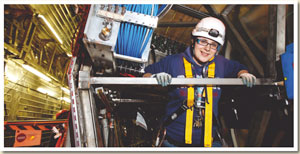
Ana-Paula Bernades. Portuguese and French. Environmental engineer.
Thirty-five years old and the mother of a three-year-old child, Ana-Paula Bernades graduated in environmental engineering at the Grenoble Polytechnic. She arrived at CERN in 1999 and soon after started work on building safety and ergonomics. In 2003 she became section leader within CERN’s Safety Commission and has since worked on the LHC’s environmental impact, particularly on the management of acoustic disturbances generated by the sites around the 27 km ring, in collaboration with EdF. When the LHC begins operating, she will be in charge of personnel safety training and will be a consultant on general safety, acoustics and ergonomics.
Did you have any particular difficulty in working as a woman in a male-dominated environment?
Not really. Being a woman in the world of safety is an advantage. In this field it is impossible to force things, in a typically male manner, so this makes you develop negotiation techniques to convince your counterparts at CERN to invest money and time on safety issues.
Isabel Brunner is 33 years old and has two children aged two and four. A graduate of the Berufsakademie in Karlsruhe, she came to CERN in 1999 as the radiation protection engineer responsible for radiation protection in the SPS West Area, the RF test facilities and the n-TOF installation. Her current tasks include radiological responsibility for the SPS North Area, the RF installations in the SPS complex and the LHC. She is the radiation protection engineer responsible for the LHC injection test and will participate in the operational radiation protection of the LHC. Measurements she made during cold tests of RF modules for the LHC provided input data for the shielding at Point 4, where the RF is located.
Have you ever encountered any disadvantages/differences in your studies and career as a result of being a woman?
My answer is a clear “no”. Even during my two pregnancies – where I was not able, or allowed, to perform my work in radiation controlled areas – I can’t say that I had any disadvantages. I like my job and I have a great supervisor who treats everyone as an equal. However, working in a “man’s world” is not always easy and it needs plenty of self-esteem and force to stand up and get your point through. I’ve only had one conflict regarding gender differences, and I put an end to it when I confronted the person. This was not easy, but eventually it was the best solution to the problem.
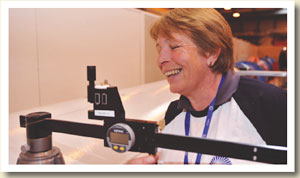
Monique Dupont. French. Surveyor.
Monique Dupont arrived at CERN in 1978 as “industrial support” within the team looking after the topography of buildings, which at the time was expanding. Today she is a member of the metrology group, comprised of 40 people. She has worked on the alignment of magnets for each new accelerator at CERN, as well as on their realignment at each shut down. These highly accurate measurements involve the use of hi-tech instruments, often designed within the metrology group. Since 1996, she has studied and worked on the alignment for the LHC, which has more than 1800 magnet systems. To check the curvature of the magnets, the group used microprobes in the beam tube, making a measurement every 50 cm with laser technology.
Have you experienced any difficulties as a woman working in a typically male career?
I was the only woman in a school of 1000 students. The profession did not attract women at the time – probably because the surveyor’s work is principally outside and the instruments were heavy. Nowadays modern technologies enable you to work comfortably and I think for this reason that the number of women surveyors has increased. In my group, I have always been welcomed and appreciated for my work, but maybe CERN is an exception. The environment here is so international that there are really no differences of race, culture, religion or even gender.
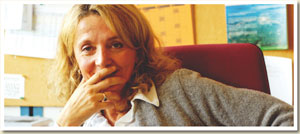
At 46 years old, Fabiola Gianotti is a woman who has reached one of the highest peaks during her career at CERN – that of deputy spokesperson for the largest LHC collaboration, ATLAS. She graduated at the University of Milan and completed her PhD at CERN. When physics allows, she finishes her day jogging or playing the piano – she has a professional diploma from the Milan conservatory. At the LHC, and with her experiment in particular, she would like to find dark-matter particles because of their connection with the universe. “That would be really fantastic.” She is also hoping for a surprise to come from the LHC: “Something really amazing, completely new and unexpected.”
Is it an obstacle to be a woman in a typically male career?
Physics is, unfortunately, often seen as a male subject; sterile and without charm or emotion. But this is not true, because physics is art, aesthetics, beauty and symmetry. Women have obstacles in the field for merely social reasons. Research does not allow you to make life plans. And the difficulties for women with a family are many. Something should be done, for instance, to develop more structures that would enable women with children to go through a physics career without too many obstacles, starting with nursery schools.
Virginia Greco. Italian. Electronics Engineer.
Born in the southern Italian city of Lecce, Virginia Greco is 29 and has a degree in electronics engineering from Pisa University. She is part of a team of engineers in charge of the design and installation of electronics for data acquisition in TOTEM, one of the LHC’s smaller experiments designed to focus on forward particles. Research has always been her passion and has brought her to work in many different international laboratories, from Fermilab to CERN. She also studies theatre, has worked as a radio journalist and is interested in politics, movements in ecology and international cooperation.
Undoubtedly. In Italy, in all technical and scientific environments, there’s a substrate of machismo. Some professors and male colleagues at my university were often convinced that, as a woman, I would never reach the level of a man, but I was never the victim of any real discrimination. In general, I think women have to make more effort than men to be taken seriously, to show they’re worth something and that they have the same skills as men. At the moment I am working in a very open international environment. I have only been here a short time and cannot make any final statements. However, I have the feeling that CERN is a meritocratic place where efficiency and productivity count more than any prejudice. But I still keep my eyes open for possible obstacles, so as not to stumble on them.
Monica Pepe is married to a theoretical physicist and is the mother of two children aged 18 and 13. She became a physicist almost by accident, after “risking” a career first as an actress and then as an architect. Having come to CERN with a postdoctorate research grant in 1983, she now leads a team of 60 CERN physicists in LHCb, a collaboration of 700 physicists from 48 universities in 14 countries. Her main role is to coordinate interaction between the LHCb collaboration and CERN, and to manage the manpower and financial resources of the team. In addition to this largely managerial role, she also handles the technical work of preparing the online data quality monitoring, which will be crucial for acquiring immediately full control of the quality of data collected by the detector once it sees collisions in the LHC. The only “luxuries” she can afford in her little spare time are two hours of yoga per week at lunchtime and jogging with her dog on Sundays.
Is being a woman an obstacle for a physicist’s career?
I was never hindered in my career by the fact of being a woman. In general, I have never seen it as a problem. And from some points of view it has even been an advantage, since people tend to remember you more easily. The real difficulty is conciliating family, children and work. In my case we had to invest a lot of organizational effort, help from my family (my parents), my partner’s availability and understanding, and an important economic investment in baby sitters and carers. I’ve been lucky because both my husband and I have good positions from the same employer (CERN). But it is clear that working days are really long when you have small kids. The advantage is that working as a physicist you can afford some flexibility in organizing your time, which is very helpful. I always think that I will have to help my daughter Giulia, who has just started her architectural studies at EPFL Lausanne, the same way as my mother has helped me.
Eva Sanchez Corral. Spanish. Computer engineer.
Forty-three years old and the mother of eight-year-old twin boys, Eva Sanchez Corral gained her degree in computer engineering from the Madrid Polytechnic University in 1989. She came to CERN in 1991 as a CERN fellow and today she is one of three women in the LHC access-control group.
Any difficulty working in a predominantly male environment?
Today we are three women in the project team, and I find that extraordinary. When I arrived at CERN in 1994 I was the first “staff” woman engineer in the whole department. In the beginning, my colleagues, all men and older in general, looked at me with curiosity and even with a defiant attitude. They treated me in the way men usually treat women, rather than as a colleague. Then, little by little, the old staff were replaced by young engineers, and a few were also women. So the group started treating us as a new resource. Today, our managers especially realize that women can really make a valuable contribution to team work. We are more flexible but also more
methodical, have more energy, we are less individualistic and are good at conflict solving and negotiating. These qualities are particularly appreciated now during LHC commissioning. The real challenge for us is when children come. It’s really two jobs, and it demands a super level of organization between home and the office. Luckily they are not kids forever – they grow up and when they are older, our partners can help more.
Gilda Scioli. Italian. Experimental physicist.
Gilda Scioli is 30 years old and is from Abruzzi in central Italy. After grammar school in Lanciano, she gained a degree in physics from the University of Bologna and arrived at CERN in a postdoctoral role in the ALICE collaboration. She helped construct the complex detectors that will record the 50,000 collisions per second between lead nuclei.
Why do you think there are more men than women in the world of physics?
Because being a researcher is not an easy profession for women. What we do can only be done here. But if I had a small child and an experiment to do, what should I do? Do I say good-bye to everybody, leave for a year and ask my husband to breast-feed the baby?
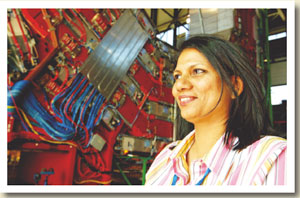
Archana Sharma. Indian. Experimental physicist.
Archana Sharma is married and has an 18-year-old son. She has a PhD in physics from Delhi University and another from Geneva University. She came to CERN in 1989 as a student in the famous Charpak–Sauli group, and after many temporary contracts, where she worked mainly on the development of particle detectors, she is now a CERN staff member within the CMS Collaboration. In CMS, she works in the Technical Coordination Group, which is in charge of integration, installation and commissioning of the experiment.
Is being a woman an advantage or a disadvantage for tackling such a big responsibility?
This job requires both a good knowledge of particle detector technology, which is my field, and also excellent communication skills to be able to interact with people from diverse countries and cultures – such as the physicists from China, Pakistan, Russia and the US. And women are natural communicators. The real challenge, however, is the juggling act: work doesn’t stop when you get home, where there’s a family to look after.
When physicists at CERN try to understand the basic building blocks of the universe, they build gigantic detectors – complex, intricately wired instruments that are capable of measuring and identifying hundreds of particles with extraordinary precision. In a sense, they build “brains” to analyse the particle interactions. For prominent neuroscientist Wolf Singer, director of the Max Planck Institute for Brain Research in Frankfurt, the challenge is quite the opposite. He and other researchers are trying to decode the dynamics of a mass of intricate “wiring”, with as many as 1011 neurons connected by 1014 “wires”. The brain is the most complex living system, and neuroscientists are only beginning to unravel its secrets.
Until recently, according to Singer, the technical tools available to neuroscientists were rather primitive. “Until a decade ago, most researchers in electrophysiology used handmade electrodes – either of glass tubes or microwires – to record the activity of a single element in this complex system,” explained Singer. “The responses were studied in a meticulous way and it was hoped that a greater understanding would arise of how the brain works. It was believed that a central entity was the source of our consciousness, where decisions are made and actions are initiated. We have now learned that the system isn’t built the way we thought – it is actually a highly distributed system with no central coordinator.”
Myriads of processes occur simultaneously in the brain, computing partial results. There is no place in this system where all of the partial results come together to be interpreted coherently. The fragments are all cross-connected and researchers are only now discovering the blueprint of this circuitry.
This mechanism poses some new and interesting problems that have intrigued Singer for many years. How is it possible for the partial results that are distributed in the brain to be bound together in dynamical states, even though they never meet at any physical location? Singer gives the example of looking at a barking dog. When this happens, all 30 areas of the cerebral cortex that deal with visual information are activated. Some of these areas are interested in colour, some in texture, others in motion and still others in spatial relations. All of these areas are simultaneously active, processing various signals and applying memory-based knowledge in order to perceive a coherent object. A tag is needed in this distributed system at a given moment of time so as to distinguish between the myriads of neurons activated by a particular object or situation, and those activated by simultaneous background stimuli. In 1986 Singer discovered that neurons engage in synchronized oscillatory activity. His hypothesis is that the nervous system uses synchronization to communicate.
Singer stresses that researchers in his field are closer to theorists in high-energy physics, because the tools necessary to decode the large amount of data generated by the brain’s activity do not exist yet. “This morning when I toured the ATLAS experiment, I heard how the data generated at the collision point is much richer, but physicists use filters to extract the most interesting data, which they formulate in highly educated ways,” said Singer. “The amount of data generated by the sensory organs is more than the brain could digest, so it reduces redundancy. Due to this enormous amount of data, the brain, by evolution, developed a way to filter it all. The most important information for us is based on survival, such as where food can be found or how our partners look.”
Brain function and communication
Singer began his career as a medical student at the Ludwig Maximilian University in 1962 in his hometown of Munich. He was inspired to specialize in neuroscience after attending a seminar by Paul Matussek and Otto Creutzfeldt, who discussed schizophrenia and “split brain” patients. After his postgraduate studies in psychophysics and animal behaviour at the University of Sussex, he worked on the staff of the Department of Neurophysiology at the Max Planck Institute for Psychiatry in Munich and completed his Habilitation in physiology at the Technical University of Munich. In 1981 he was appointed director at the Max Planck Institute for Brain Research in Frankfurt and in 2004 he co-founded the Frankfurt Institute for Advanced Studies.
The 20th century brought many advances in fundamental physics, including the discovery of elementary particles. During this same period, neuroscience provided greater illumination of the brain’s functions. One of the most significant is the identification of individual nerve cells and their connections by Camillo Golgi and Santiago Ramón y Cajal, winners of the Nobel Prize for Medicine in 1906. Another important advance was the introduction of the discontinuity theory, which regards neurons as isolated cells that transmit chemical signals to each other. This understanding allowed neuroscientists to determine the way in which the brain communicates with other parts of itself and the rest of the body.
Some of the results of the first studies of the relationships between function and the different areas of the brain were made using patients injured during the First World War. Later, with the discovery of magnetic imaging to study brain function, researchers were able to turn to non-invasive methods, but there is still much more development needed. With procedures such as magnetic resonance imaging, a neurologist can find out where a signal originates; but the signal is indirect, coming from the more oxygenated areas. A magnetic field of 3 T applied to an area of a square millimetre can show which part of the brain is activated (e.g. by emotions and pain) and reveal the various networks along which the signals travel.
The system is so complex and we are constantly learning new things
Wolf Singer
At the same time, neuroscientists are trying to decode the system and explain how biophysical processes can produce what is experienced in a non-material way – a meta-to-mind kind of riddle – with new entities and the creation of social realities such as sympathy and empathy. This is leading to a new branch of neuroscience, known as social neuroscience.
In other research, colleagues of Singer are studying the effects of meditation on the brain. They found that it creates a huge change in brain activity. It increases synchronization and is in fact a highly active state, which explains why it cannot be achieved by immature brains, such as in small children. Buddhist monks use their attention to focus the “inner eye” on their emotional outlet and so cleanse their platform of consciousness. In 2005 Singer attended the annual meeting for the Society of Neuroscience in Washington, DC, together with the Dalai Lama. Their meeting resulted in discussions about the synchronization of certain brain waves when the mind is highly focused or in a state of meditation.
Singer is also no stranger to controversy. His ideas about how some of the results of brain research could have an impact on legal systems caused a sensation in 2004. His theory that free will is merely an illusion is based on converging evidence from neurobiological investigations in animals and humans. He states that in neurobiology the way in which someone reacts to events is something that he or she could not have done much differently. “In everyday conditions the system is deterministic and you want your system to function reliably. The system is so complex and we are constantly learning new things,” explained Singer. There are many factors that determine how free someone is in their will and thinking. Someone could have false wiring in the part of the brain that deals with moral actions, or perhaps does not store values properly in their brain, or could have a chemical imbalance. All of these biological factors contribute to how someone reacts in a given situation.
Singer feels strongly that the general public should be aware of what scientists are working on and that enlightenment is essential. “Science should be a cultural activity,” he said, adding that in society the people who are considered “cultured” generally are knowledgeable in art, music, languages and literature, but not well versed in mathematics and science.
In 2003 he received the Communicator Prize of the Donors’ Association for the Promotion of Sciences and Humanities and the Deutsche Forschungsgemeinschaft in Germany. Communicating his passion to the young has been a challenging and yet highly rewarding experience. He works to engage society in discussions about the research in his field, providing greater transparency and comprehension. His dedication to improving communication between scientists and schools is evident in the programme that he has initiated: Building Bridges – Bringing Science into Schools. This creates a stronger dialogue between scientists, students and teachers. • For Wolf Singer’s colloquium at CERN, “The brain, an orchestra without conductor”, see indico.cern.ch/conferenceDisplay.py?confId=26835
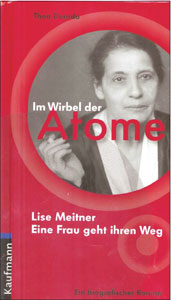
By Thea Derado, Kaufmann Verlag 2007. Hardback ISBN 9783780630599, €19.95.
Using letters, articles and biographies the author of this book paints a lively and private picture of the tragic life of Lise Meitner, which was thorny for two reasons: she was Jewish and a woman. Born in 1878 Meitner attended school in Vienna but could pass her maturity examination only after expensive private lessons. After studying in Vienna, she moved to Berlin in 1907, and for many years had to earn her living by giving private teaching lessons. Eventually she was accepted by the radiochemist Otto Hahn as a physicist collaborator at the Kaiser Wilhelm Institute in Berlin (but without pay), and so began a creative co-operation and a lifelong friendship. Since women were not allowed to enter the institute, Meitner had to do experiments in a wood workshop in the basement accessible from a side entrance.
Derado describes Meitner’s scientific achievements in an understandable way, particularly experiments leading to nuclear fission and the discovery of protactinium. The technical terms are explained in an appendix.
During her stay in Berlin, Meitner met all the celebrities in physics at the time, such as Max Planck, James Franck, Emil Fischer and Albert Einstein, whose characters are all described in a colurful fashion. She developed warm relations with Max von Laue, one of the few German physicists who had bravely withstood the Nazi regime. Apart from science, music played an important role in her life, and through music Meitner made friends with Planck’s family and happily sang Brahms’ songs with Hahn in the wood workshop.
During the First World War Meitner volunteered for the Austrian army as a radiologist. Working in a military hospital she learned the horrors of war. These experiences, and discussions with Hahn and Einstein led to some inner conflicts. During the persecution of the Jews by the Nazis, Meitner enjoyed a certain protection thanks to her Austrian passport, yet after the annexation of Austria it became impossible for her to leave Germany legally. Neglecting her colleagues’ warnings she hesitated too long, until in July 1938 she saved herself by escaping to Holland. Hahn gave her a diamond ring that he had inherited from his mother as a farewell present.
After a short stay in Holland Niels Bohr arranged for Meitner to stay at the Nobel Institute in Stockholm, which was directed by Manne Siegbahn, and finally in 1947 she obtained a research professorship at the Technical University in Stockholm. I was able to work with her there for a year and can confirm many of the episodes mentioned in the book. She was a graceful little person, with a combination of Austrian charm, Prussian orderliness and a sense of duty; she was also very kind and motherly.
Derado discusses, of course, why Meitner did not share the Nobel Prize with Hahn in 1944. Her merits were uncontested, and even after the publication of the Nobel Prize documents questions remain unanswered. It seems that being a woman had negative influences. However, numerous German and international honours and awards, as well as an overwhelming reception in the US, have compensated to a certain extent.
Meitner never married, but various family ties played an important role in her life. She was particularly attached to her nephew Otto Frisch, with whom she interpreted nuclear fission. She spent her last days with him in Cambridge, where she died in 1968.
In all, this book provides an historically accurate account, at the same time from a female perspective, of the turbulent life of one of the greatest scientists of the 20th century. It is worth reading, not only for those interested in history, but also perhaps as encouragement for young women scientists.
• This is an abridged version of a review originally published in German in Spektrum der Wissenschaft, March 2008.
by Harry Suhl, Oxford University Press. Hardback ISBN 9780198528029 £49.95 ($150).
Electrons in solids behave like microscopic bar magnets, and in certain solids these align to produce macroscopic magnetizations. This book deals with the dynamics of this magnetization field, which is intrinsically nonlinear. This is important in applications, particularly magnetic recording, which involves very large motion of the magnetization, well beyond the validity of linearized (small motion) approximations or their limited extensions. The author therefore emphasizes nonlinear solution methods but with only minimal use of numerical simulation. The book should be useful to physicists studying magnetic phenomena.
by Eric Akkermans and Gilles Montambaux, Cambridge University Press. Hardback ISBN 9780521855129 £55 ($99).
Quantum mesoscopic physics covers a whole class of interference effects related to the propagation of waves in complex and random media, ranging from the behaviour of electrons in metals and semiconductors to the propagation of electromagnetic waves in suspensions such as colloids, and quantum systems like cold atomic gases. A solid introduction to the field, this book addresses the problem of coherent wave propagation in random media. With more than 200 figures, and exercises throughout, it will be useful for graduate students in physics, applied physics, acoustics and astrophysics.
by Malcolm H MacGregor, World Scientific. Hardback ISBN 9789812569615 £50 ($93).
This book focuses on the most pressing unsolved problem in elementary particle physics – the mass generation of particles. It contains physics that is not included in the Standard Model as it is now formulated but at the same time is in conformity with its major results (i.e. isotopic spins and interactions). It differs from the Standard Model in the treatment of masses and pseudoscalar mesons, and in the role assigned to the coupling constant, α. Presented in a careful and phenomenological way, the material can easily be followed by all physicists, both experimental and theoretical, and also by interested workers in other fields.
by Vladilen S Letokhov, Oxford University Press. Hardback ISBN 9780198528166 £55 ($110).
The general term “laser control of atoms and molecules” covers a variety of problems, including the laser selection of atomic and molecular velocities for the purpose of Doppler-free spectroscopy; laser trapping and cooling of atoms; and laser control of atomic and molecular processes (ionization, dissociation) with a view to detecting single atoms and molecules and, in particular, separating isotopes and nuclear isomers. During the past decade, the principal problems have been successfully solved, many evolving in subsequent research worldwide. The aim of this book by one of the acknowledged experts in the field is to review these topics from a unified point of view, providing a resource for researchers in the various different fields.
To provide the best experiences, we use technologies like cookies to store and/or access device information. Consenting to these technologies will allow us to process data such as browsing behavior or unique IDs on this site. Not consenting or withdrawing consent, may adversely affect certain features and functions.
Functional
Always active
The technical storage or access is strictly necessary for the legitimate purpose of enabling the use of a specific service explicitly requested by the subscriber or user, or for the sole purpose of carrying out the transmission of a communication over an electronic communications network.
Preferences
The technical storage or access is necessary for the legitimate purpose of storing preferences that are not requested by the subscriber or user.
Statistics
The technical storage or access that is used exclusively for statistical purposes.The technical storage or access that is used exclusively for anonymous statistical purposes. Without a subpoena, voluntary compliance on the part of your Internet Service Provider, or additional records from a third party, information stored or retrieved for this purpose alone cannot usually be used to identify you.
Marketing
The technical storage or access is required to create user profiles to send advertising, or to track the user on a website or across several websites for similar marketing purposes.