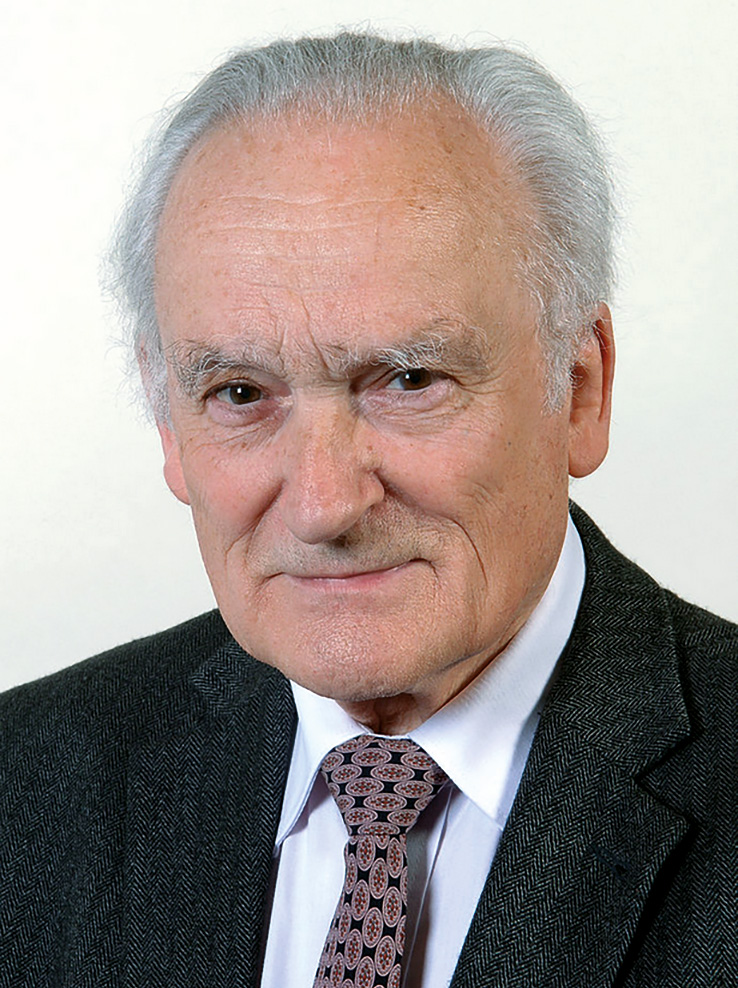
Alec Hester, a former editor of CERN Courier and later physics subject specialist at the CERN library for nearly 30 years, passed away in Geneva on 9 March at the age of 96.
Born in Hatfield, to the north of London, in 1928, Alec graduated in physics from Imperial College London in 1949. He continued there for his PhD, building a Van de Graaff accelerator to study (p, alpha) reactions in light nuclei. Yes, in those days postgraduate students built their own accelerators! One of his older fellow students was Don Perkins, who passed away in 2022.
In 1952 Alec interrupted his studies to take a job in the publicity department of General Electric at its site in Kent, England. Nine years later he came to CERN to take over the editorship of CERN Courier from Roger Anthoine. The Courier was then just two years old, and it was during Alec’s period as editor that it began to move beyond its initial role as the house journal for CERN staff to one that communicated the work of CERN and other laboratories to a wider scientific and technical readership. Marking the end of Alec’s editorship in the December 1965 issue, Anthoine wrote: “The editing and production of our periodical, with limited means, requires not only very definite intellectual qualities, for collecting and processing information from all over the Laboratory, but also considerable physical and moral toughness to cope with the many dictates of production, which are the lot of every editor… It is mainly thanks to [Alec’s] drive that CERN Courier, which now has a circulation of 6000 copies (French and English versions combined), has risen from the rank of ‘internal information journal’ to that of ‘world spokesman for European sub-nuclear physics’.”
In 1966 Alec moved to the CERN scientific information service as the physics subject specialist, remaining there until his retirement in February 1993. His accurate and painstaking work developing the library’s bibliographic databases provided the nucleus for those searchable on the CERN Document Server today.
Alec leaves behind Annemarie, his wife for over 70 years, his daughters Barbara and Dagmar, and his four grandchildren.
Renowned experimental physicist and co-initiator of relativistic heavy-ion physics, Rudolf Bock, passed away on 9 April 2024 aged 96.
Rudolf Bock was born in Mannheim, Germany in May 1927 and obtained his diploma in physics from the University of Heidelberg in 1954. He conducted his doctoral thesis on deuteron-induced nuclear reactions at the cyclotron of the Max Planck Institute for Medical Research in Heidelberg and received his doctorate from Heidelberg University in 1958. He then investigated nuclear reactions at the newly founded MPI for Nuclear Physics (MPIK) at the tandem accelerators there, initially with light ions and from 1963 with heavier ions.
In 1967 he was appointed full professor at the University of Marburg and was involved in the development of a joint accelerator project for heavy-ion research, ultimately leading to the UNILAC accelerator project. On 17 December 1969, the research centre GSI (Gesellschaft für Schwerionenforschung) was founded in Darmstadt–Wixhausen. As one of its founding fathers and subsequently as a long-standing member of the GSI board of directors, Rudolf Bock played a decisive role in the development of nuclear physics with heavy ions. At the same time, he maintained his contacts with Heidelberg as an honorary professor and as an external scientific member of the MPIK. In 2000 he was awarded an honorary doctorate from Goethe University Frankfurt.
Research with relativistic heavy-ion beams soon led to great successes. From 1974 Rudolf Bock established a working group at GSI under the leadership of Hans Gutbrod and Reinhard Stock, who set up and successfully carried out two major experiments at the Berkeley Bevalac accelerator. These resulted in the discovery of compressed, hot nuclear matter with hydrodynamic flow behaviour and thus formed the basis for his later experiments on quark–gluon plasma at CERN.
From the mid-1980s, the heavy-ion synchrotron SIS18 was set up at GSI under the leadership of director Paul Kienle. Thanks to Rudolf Bock’s guidance and in cooperation with surrounding universities, three new experiments (FOPI, KAOS and TAPS) were created, which focused on the formation of compressed nuclear matter as well as on hadron production and in particular the formation of light atomic nuclei. Around the same time, he was working on plans for experiments at much higher energies, which could ultimately only be realised at the CERN
SPS accelerator, with decisive contributions from GSI and LBL Berkeley. This led to the development of today’s global programme in ultra-relativistic nuclear–nuclear collisions, which has been pursued since the 1990s at the AGS and SPS, from 2000 with four experiments at RHIC and, since 2010, has been led by ALICE at the LHC at the highest energies.
The cooperation between GSI and LBL Berkeley was not only the beginning of relativistic heavy-ion physics. Supported by Hermann Grunder, then head of the LBL accelerator department, Rudolf Bock started the inertial confinement fusion programme in Germany. He also laid an important foundation for ion-beam therapy by supporting the secondment of Gerhard Kraft from GSI to the cancer-therapy programme at LBL. After his retirement in December 1995, Rudolf Bock maintained his scientific activities at GSI, his primary interest being the development of experiments on plasma physics and inertial-confinement fusion with high-intensity ion and laser beams.
Throughout the course of his scientific career, Rudolf Bock established numerous new research collaborations with institutes in Germany and abroad. As he himself had taken part in the Second World War and had spent several years as a prisoner of war in Russia, the idea of international understanding and peacekeeping was an important concern for him. As early as 1969 he invited many Russian scientists to the nuclear-physics conference at MPIK, and from the 1970s he promoted many collaborations between GSI and Russian institutes. He also pushed for Russia to become the largest member state in the GSI/FAIR project. The Russian invasion of Ukraine in February 2022 was therefore a great disappointment for him and for all of us.
Rudolf Bock was regularly present at GSI until his last days and continued to take an interest in current research and developments on campus. His advice and foresight will be sorely missed.
Theoretical physicist Werner Rühl died on 31 December 2023 in Füssen, Germany at the age of 86.
He was born in 1937, at a time when theoretical physics in Germany was being destroyed by the Nazis. After the Second World War, the ongoing study of cosmic rays and the availability of higher energies from accelerators made particle physics the most interesting field for budding researchers like him. Part of the way ahead was obvious: learn from the US and profit from the new spirit of European unity embodied by the creation of CERN.
Rühl followed this path in the straightest possible way. He obtained his PhD in 1962 in Cologne and became a research associate at CERN in 1964. Two years later he took up a postdoc at Rockefeller University, New York, before returning to CERN as a staff member in 1967, and obtained a chair in 1970 at the newly founded University of Kaiserslautern.
A more difficult decision concerned mathematics, for which many experimentalists had little regard. Initially, Einstein had shared this attitude, but then he worked hard on Riemannian geometry to understand gravity. Heisenberg’s successes were based on deep mathematics, too, but he tried his best to limit its scope. SU(2) and the analogy between spin and isospin were fundamental, and the representation theory of SU(2) had been fully explored in the context of atomic physics. Dirac’s understanding of spinors and his introduction of the delta distribution opened the way for a thorough investigation of non-compact groups like SL(2,C). This allowed us to break the wall between maths and physics, which happened initially in the Soviet Union. Rühl was very aware of this fact and was deeply impressed by the work of Israel Moiseevich Gelfand. In winter 1967/1968 he gave a series of lectures on this topic for the academic training programme at CERN, which in 1970 became the core of his book The Lorentz group and harmonic analysis. A mathematical fruit was his elementary proof of the Plancherel theorem for classical groups, published in 1969.
Rühl’s appointment to a chair at Kaiserslautern was a happy choice for both sides. Internationally recognised professors like Rühl had adequate resources for students, visitors and conferences, and four theory colleagues were hired between 1970 and 1973. In 1983–1985 Rühl was chairman of the physics department and member of the university senate. He published good papers with his PhD students and supported the global development of science, in particular through his work with postdocs from Oran University. For many years he also worked as a mentor for gifted students from all faculties for the prestigious Studienstiftung des deutschen Volkes scholarship foundation.
Despite his dominating affinity for mathematics, Rühl maintained an interest in experimental physics and occasionally published related work. His understanding of Russia facilitated successful collaborations with outstanding colleagues who had moved to the West, with some of his most important contributions stemming from his collaborations with colleagues from Yerevan. After his retirement in 2004 he continued to publish as before. Eleven years later he moved to Füssen near the Alps. For five years he could enjoy his passion for skiing, before an accident impaired his health.
Werner Rühl always had an open mind for new developments. He had studied the large-N behaviour of theories with symmetries like O(N) and did respected work on lattice theories. From the 1980s, his citation rate increased more and more – a tendency that lasted way beyond his retirement. The original take on AdS/CFT duality in the context of O(N) sigma models and high-spin theories stands out the most. At the end of his life it must have been a great satisfaction for Werner Rühl to watch the ripening of these late fruits.
Atsuhiko Ochi, a brilliant, passionate detector and experimental physicist, passed away on 29 April 2024 at the untimely age of 54. A source of innovative ideas at the forefront of radiation detectors, he made outstanding contributions to the development of micropattern gaseous detectors (MPGDs) that are recognised worldwide. He was also a distinguished lecturer whose inexhaustible passion, dedication and remarkable character captivated the many students he mentored.
Atsuhiko began his research at the Tokyo Institute of Technology, initially focusing on large-area avalanche photodiodes as fast photon and soft X-ray detectors. In 1998 he defended his PhD thesis “Study of Micro Strip Gas Chamber as a Time-Resolved X-ray Area Detector”, earning the second High Energy Physics Young Researcher’s Award from the Japan Association of High Energy Physicists. In 2000, alongside Toru Tanimori, he introduced the micro pixel chamber (micro-PIC), a new gaseous detector for X-ray, gamma-ray and charged-particle imaging. It was fully developed using printed circuit board technology and free of floating structures like wires, mesh or foils, featuring a pin-shaped anode surrounded by a ring-shaped cathode.
In 2001 Atsuhiko moved to Kobe University, where he joined the ATLAS experiment and devoted his efforts to commissioning the ATLAS thin gap chambers (TGCs). He was also in charge of integrating the front-end electronics on the KEK TGC detectors and of detector quality assurance and control. Later, at CERN, he led the acceptance quality control of the ATLAS TGCs.
Atsuhiko could always merge his love for experiments with a passion for new ideas. “We need new ‘eyes’ to catch a glimpse of science’s frontier”, he once said. Along with his group in Kobe, while making significant contributions in ATLAS to the design and construction of the new large resistive micromegas for the Muon New Small Wheel, he conducted R&D on the use of sputtered layers of diamond-like carbon (DLC) as resistive elements to quench discharges and played a crucial role in connecting with Japanese industry. He was among the first to test the technology with micromegas, apply it to the micro-PIC detector, and pioneer its use as electrodes for the novel resistive plate chambers he proposed for the MEG II experiment. He supported the use of DLC in the final TPC micromegas of the near detectors of the T2K experiment while serving as a liaison person with BE-Sput in Kyoto. DLC is now the predominant approach in most new resistive MPGD detectors.
In his research, Atsuhiko always placed great emphasis on mentoring students and giving them access to a worldwide community of experts, facilities and experiments. He meticulously shared all relevant research conducted by Japanese colleagues, ensuring proper visibility and recognition for his community. This has been crucial in the international RD51 collaboration on MPGD technologies, within which he played a significant role in its formation and management. During the transition from the MPGD-based RD51 collaboration to the upcoming DRD1, which encompasses a broader scope of technologies and applications, Atsuhiko made a crucial contribution by maintaining strong ties with the Asian community.
Atsuhiko’s vibrant enthusiasm and infectious smile leave an irreplaceable void. His departure is a profound loss, leaving behind a loving wife and two children.
Within CERN circles, Armin Hermann is mainly known as one of the co-editors of the authoritative History of CERN volumes covering the period from the beginnings of the Organization up to 1965. But he did so much more in the field of the history of science.
Armin Hermann was born on 17 June 1933 in Vernon, British Columbia, Canada and grew up in Upper Bavaria in Germany. He studied physics at Ludwig Maximilian University in Munich and obtained his doctorate in theoretical physics in 1963 with a dissertation on the “Mott effect for elementary particles and nuclei of electromagnetic structure”. He worked for a few years at DESY and performed synchrotron-oscillation calculations with an IBM 650 computer. Subsequently, Hermann decided to change his focus from physics proper to its history, which had preoccupied him since his student days.
Hermann was the first to occupy a chair in the history of science and technology at the University of Stuttgart – a chair not situated either at a science or mathematics faculty but rather among general historians. During his 30 year-long tenure, he authored important monographs on quantum theory, quantum mechanics and elementary particle theory. He wrote books on the history of atomic physics titled Weltreich der Physik: Von Galilei bis Heisenberg, The New Physics: The Route into the Atomic Age, and How Science Lost its Innocence, alongside numerous biographies (including Planck, Heisenberg, Einstein and Wirtz) and historical studies on companies, notably on the German optics firm Carl Zeiss. All became very popular among the physics community.
Meanwhile at CERN, the attitude among physicists towards studies in the history of science was rather negative – the mantra was “We don’t care of history, we make history”. However, in 1980, the advisory committee for the CERN History Project examined a feasibility study conducted by Hermann and decided to establish a European study team to write the history of CERN from its early beginnings until at least 1963, with an overview of later years. The project was to be completed within five years and financed outside the CERN budget. Hermann was asked by CERN Council to assume responsibility for the project, and from 1982 to 1985 he was freed from teaching obligations in Stuttgart to conduct research at CERN. He became co-editor of first two volumes on the history of CERN: Launching the European Organization for Nuclear Research and Building and Running the Laboratory, 1954–1965. A third volume covering the story of the history of CERN from the mid-1960s to the late 1970s later appeared under the editorship of John Krige in 1996.
Armin passed away in February 2024 in his home in Oberstarz near Miesbach, nestled among the alpine hills, which he had always felt attached to and which was also the main reason why he declined several tempting calls to other renowned universities. His wife Steffi, his companion of many decades, was by his side to the very end. Many historians of physics, science and technology in Germany and abroad mourn the loss of this influential pioneer in the history of science.
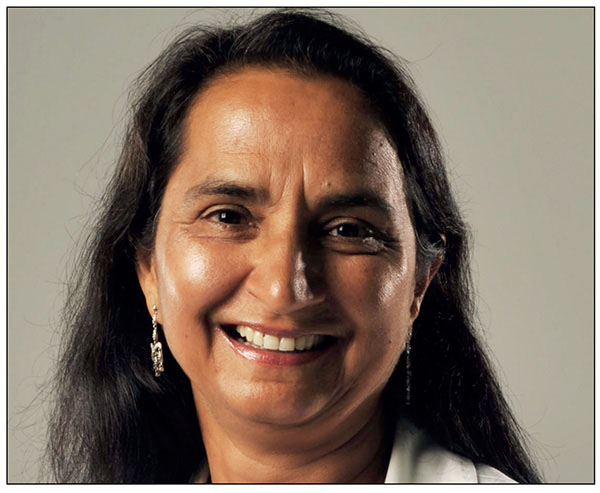
Manjit Fifty to 60% of cancer patients can benefit from radiation therapy for cure or palliation. Pain relief is also critical in low- and middle-income countries (LMICs) because by the time tumours are discovered it is often too late to cure them. Radiation therapy typically accounts for 10% of the cost of cancer treatment, but more than half of the cure, so it’s relatively inexpensive compared to chemotherapy, surgery or immunotherapy. Radiation therapy will be tremendously important for the foreseeable future.
What is the state of the art?
Manjit The most precise thing we have at the moment is hadron therapy with carbon ions, because the Bragg peak is very sharp. But there are only 14 facilities in the whole world. It’s also hugely expensive, with each machine costing around $150 million (M). Proton therapy is also attractive, with each proton delivering about a third of the radiobiological effect of a carbon ion. The first proton patient was treated at Berkeley in September 1954, in the same month CERN was founded. Seventy years later, we have about 130 machines and we’ve treated 350,000 patients. But the reality is that we have to make the machines more affordable and more widely available. Particle therapy with protons and hadrons probably accounts for less than 1% of radiation-therapy treatments whereas roughly 90 to 95% of patients are treated using electron linacs. These machines are much less expensive, costing between $1M and $5M, depending on the model and how good you are at negotiating.
Most radiation therapy in the developing world is delivered by cobalt-60 machines. How do they work?
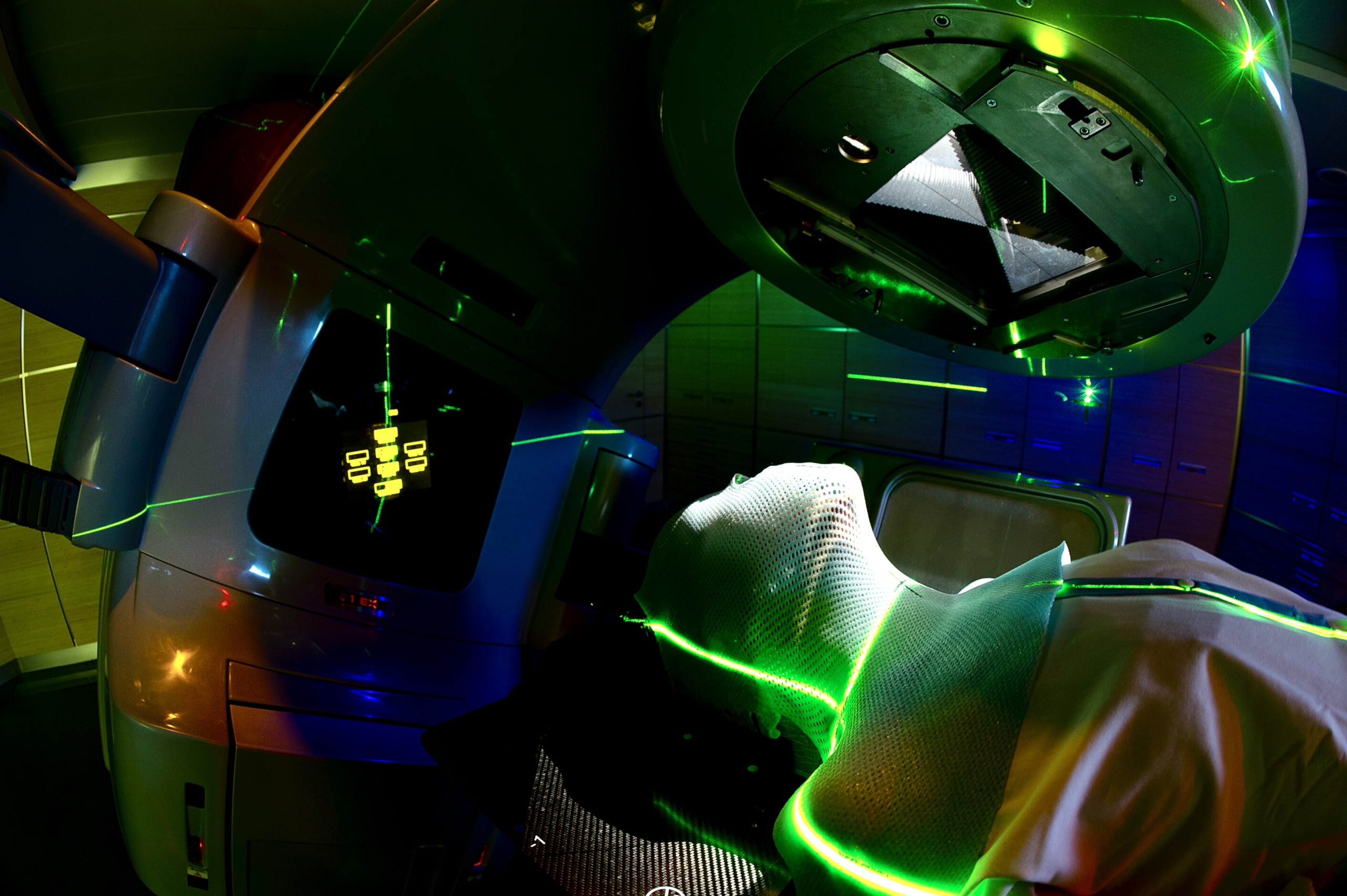
Manjit A cobalt-60 machine treats patients using a radioactive source. Cobalt has a half-life of just over five years, so patients have to be treated longer and longer to be given the same dose as the cobalt-60 gets older, which is a hardship for them, and slows the number of patients who can be treated. Linacs are superior because you can take advantage of advanced treatment options that target the tumour using focusing, multi-beams and imaging. You come in from different directions and energies, and you can paint the tumour with precision. To the best extent possible, you can avoid damaging healthy tissue. And the other thing about linacs is that once you turn it off there’s no radiation anymore, whereas cobalt machines present a security risk. One reason we’ve got funding from the US Department of Energy (DOE) is because our work supports their goal of reducing global reliance on high-activity radioactive sources through the promotion of non-radioisotopic technologies. The problem was highlighted by the ART (access to radiotherapy technologies) study I led for International Cancer Expert Corps (ICEC) on the state of radiation therapy in former Soviet Union countries. There, the legacy has always been cobalt. Only three of the 11 countries we studied have had the resources and knowledge to be able to go totally to linacs. Most still have more than 50% cobalt radiation therapy.
The kick-off meeting for STELLA took place at CERN from 29 to 30 May. How will the project work?
Manjit STELLA stands for Smart Technology to Extend Lives with Linear Accelerators. We are an international collaboration working to increase access to radiation therapy in LMICs, and in rural regions in high-income countries. We’re working to develop a linac that is less expensive, more robust and, in time, less costly to operate, service and maintain than currently available options.
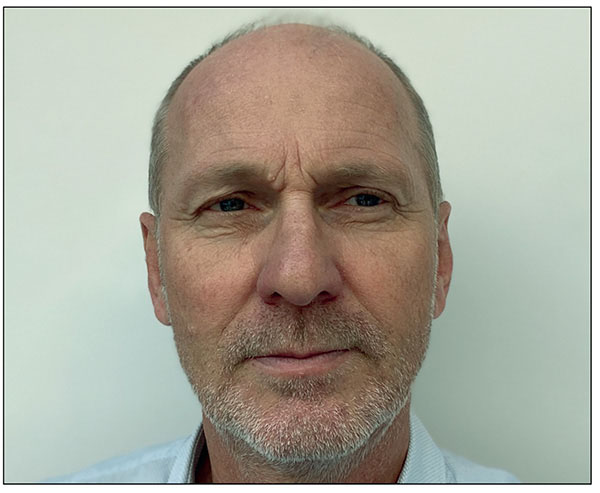
Steinar $1.75M funding from the DOE has launched an 18 month “pre-design” study. ICEC and CERN will collaborate with the universities of Oxford, Cambridge and Lancaster, and a network of 28 LMICs who advise and guide us, providing vital input on their needs. We’re not going to build a radiation-therapy machine, but we will specify it to such a level that we can have informed discussions with industry partners, foundations, NGOs and governments who are interested in investing in developing lower cost and more robust solutions. The next steps, including prototype construction, will require a lot more funding.
What motivates the project?
Steinar The basic problem is that access to radiation therapy in LMICs is embarrassingly limited. Most technical developments are directed towards high-income countries, ultimately profiting the rich people in the world – in other words, ourselves. At present, only 10% of patients in LMICs have access to radiation therapy.
We’re working to develop a linac that is less expensive, more robust and less costly to operate, service and maintain than currently available options
Manjit The basic design of the linac hasn’t changed much in 70 years. Despite that, prices are going up, and the cost of service contracts and software upgrades is very high. Currently, we have around 420 machines in Africa, many of which are down for long intervals, which often impacts treatment outcomes. Often, a hospital can buy the linac but they can’t afford the service contract or repairs, or they don’t have staff with the skills to maintain them. I was born in a small village with no gas, electricity or water. I wasn’t supposed to go to school because girls didn’t. I was fortunate to have got an education that enabled me to have a better life with access to the healthcare treatments that I need. I look at this question from the perspective of how we can make radiation therapy available around the world in places such as where I’m originally from.
What’s your vision for the STELLA machine?
Steinar We want to get rid of the cobalt machines because they are not as effective as linacs for cancer treatment and they are a security risk. Hadron-therapy machines are more costly, but they are more precise, so we need to make them more affordable in the future. As Manjit said, globally 90 or 95% of radiation treatments are given by an electron linac, most often running at 6 MeV. In a modern radiation therapy facility today, such linacs are not developing so fast. Our challenge is to make them more reliable and serviceable. We want to develop a workhorse radiation therapy system that can do high-quality treatment. The other, perhaps more important, key parts are imaging and software. CERN has valuable experience here because we build and integrate a lot of detector systems including readout and data-analysis. From a certain perspective, STELLA will be an advanced detector system with an integrated linac.
Are any technical challenges common to both STELLA and to projects in fundamental physics?
Steinar The early and remote prediction of faults is one. This area is developing rapidly, and it would be very interesting for us to deploy this on a number of accelerators. On the detector and sensor side, we would like to make STELLA easily upgradeable, and some of these upgrades could be very much linked to what we want to do for our future detectors. This can increase the industrial base for developing these types of detectors as the medical market is very large. Software can also be interesting, for example for distributed monitoring and learning.
Where are the biggest challenges in bringing STELLA to market?
Steinar We must make medical linacs open in terms of hardware. Hospitals with local experts must be able to improve and repair the system. It must have a long lifetime. It needs to be upgradeable, particularly with regard to imaging, because detector R&D and imaging software are moving quickly. We want it to be open in terms of software, so that we can monitor the performance of the system, predict faults, and do treatment planning off site using artificial intelligence. Our biggest contribution will be to write a specification for a system where we “enforce” this type of open hardware and open software. Everything we do in our field relies on that open approach, which allows us to integrate the expertise of the community. That’s something we’re good at at CERN and in our community. A challenge for STELLA is to build in openness while ensuring that the machines can remain medically qualified and operational at all times.
How will STELLA disrupt the model of expensive service contracts and lower the cost of linacs?
SteinarThis is quite a complex area, and we don’t know the solution yet. We need to develop a radically different service model so that developing countries can afford to maintain their machines. Deployment might also need a different approach. One of the work packages of this project is to look at different models and bring in expertise on new ideas. The challenges are not unique to radiation therapy. In the next 18 months we’ll get input from people who’ve done similar things.
Manjit Gavi, the global alliance for vaccines, was set up 24 years ago to save millions of children who died every year from vaccine-preventable diseases such as measles, TB, tetanus and rubella using vaccinations that were not available to millions of children in poorer parts of the world, especially Africa. Before, people were dying of these diseases, but now they get a vaccination and live. Vaccines and radiation therapy are totally different technologies, but we may need to think that way to really make a critical difference.
Steinar There are differences with respect to vaccine development. A vaccine is relatively cheap, whereas a linac costs millions of dollars. The diseases addressed by vaccines affect a lot of children, more so than cancer, so the patients have a different demographic. But nonetheless, the fact is that there was a group of countries and organisations who took this on as a challenge, and we can learn from their experiences.
Manjit We would like to work with the UN on their efforts to get rid of the disparities and focus on making radiation therapy available to the 70% of the world that doesn’t have access. To accomplish that, we need global buy-in, especially from the countries who are really suffering, and we need governmental, private and philanthropic support to do so.
What’s your message to policymakers reading this who say that they don’t have the resources to increase global access to radiation therapy?
SteinarOur message is that this is a solvable problem. The world needs roughly 5000 machines at $5M or less each. On a global scale this is absolutely solvable. We have to find a way to spread out the technology and make it available for the whole world. The problem is very concrete. And the solution is clear from a technical standpoint.
Manjit The International Atomic Energy Agency (IAEA) have said that the world needs one of these machines for every 200 to 250 thousand people. Globally, we have a population of 8 billion. This is therefore a huge opportunity for businesses and a huge opportunity for governments to improve the productivity of their workforces. If patients are sick they are not productive. Particularly in developing countries, patients are often of a working economic age. If you don’t have good machines and early treatment options for these people, not only are they not producing, but they’re going to have to be taken care of. That’s an economic burden on the health service and there is a knock-on effect on agriculture, food, the economy and the welfare of children. One example is cervical cancer. Nine out of 10 deaths from cervical cancer are in developing countries. For every 100 women affected, 20 to 30 children die because they don’t have family support.
How can you make STELLA attractive to investors?
Steinar Our goal is to be able to discuss the project with potential investor partners – and not only in industry but also governments and NGOs, because the next natural step will be to actually build a prototype. Ultimately, this has to be done by industry partners. We likely cannot rely on them to completely fund this out of their own pockets, because it’s a high-risk project from a business point of view. So we need to develop a good business model and find government and private partners who are willing to invest. The dream is to go into a five-year project after that.
We need to develop a good business model and find government and private partners who are willing to invest
Manjit It’s important to remember that this opportunity is not only linked to low-income countries. One in two UK citizens will get cancer in their lifetime, but according to a study that came out in February, only 25 to 28% of UK citizens have adequate access to radiation therapy. This is also an opportunity for young people to join an industrial system that could actually solve this problem. Radiation therapy is one of the most multidisciplinary fields there is, all the way from accelerators to radio-oncology and everything in between. The young generation is altruistic. This will capture their spirit and imagination.
Can STELLA help close the radiation-therapy gap?
Manjit When the IAEA first visualised radiation-therapy inequalities in 2012, it raised awareness, but it didn’t move the needle. That’s because it’s not enough to just train people. We also need more affordable and robust machines. If in 10 or 20 years people start getting treatment because they are sick, not because they’re dying, that would be a major achievement. We need to give people hope that they can recover from cancer.
The Einstein Telescope (ET), a proposed third-generation gravitational-wave observatory in Europe with a much higher sensitivity than existing facilities, requires a new underground infrastructure in the form of a triangle with 10 km-long arms. At each corner a large cavern will host complex mirror assemblies that detect relative displacements as small as 10–22 m caused by momentary stretches and contractions of space–time. Access to the underground structure, which needs to be at a depth of between 200 and 300 m to mitigate environmental and seismic noise, will be provided by either vertical shafts or inclined tunnels. Currently there are two candidate sites for the ET: the Meuse–Rhine Euroregion and the Sardinia region in Italy, each with their own geology and environment.
CERN is already sharing its expertise in vacuum, materials, manufacturing and surface treatments with the gravitational-wave community. Beginning in 2022, a collaboration between CERN, Nikhef and INFN is exploring practical solutions for the ET vacuum tubes which, with a diameter of 1 to 1.2 m, would represent the largest ultrahigh vacuum systems ever built (CERN Courier September/October 2023 p45).
In September 2023, the ET study entered a further agreement with CERN to support the preparation of a site-independent technical design report. With civil-engineering costs representing a significant proportion of the overall implementation budget, detailed studies are needed to ensure a cost-efficient design and construction methodology. Supported financially by INFN, Nikhef and IFAE, CERN will provide technical assistance on how to optimise the tunnel placement, for example via software tools to generate geological profiles. Construction methodology and management of excavated materials, carbon footprint, environmental impact, and project cost and schedule, are other key aspects. CERN will also provide recommendations during the technical review of the associate documents that feed into the site selection.
“We are advising the ET study on how we managed similar design studies for colliders such as CLIC, ILC, the FCC and the HL-LHC upgrade,” explains John Osborne of CERN’s site and civil-engineering department. “CERN is acting as an impartial third party in the site-selection process.”
A decision on the most suitable ET site is expected in 2027, with construction beginning a few years later. “The collaboration with CERN represents an element of extreme value in the preparation phase of the ET project,” says ET civil-engineering team leader Maria Marsella. “CERN’s involvement will help to design the best infrastructure at any selected sites and to train the future generation of engineers who will have to face the construction of such a large underground research facility.”
In April, CERN and the US government released a joint statement of intent concerning future planning for large research infrastructures, advanced scientific computing and open science. The statement was signed in Washington, DC by CERN Director-General Fabiola Gianotti and principal deputy US chief technology officer Deirdre Mulligan of the White House Office of Science and Technology.
Acknowledging their longstanding partnership in nuclear and particle physics, CERN and the US intend to enhance collaboration in planning activities for large-scale, resource-intensive facilities. Concerning the proposed Future Circular Collider, FCC-ee, the text states: “Should the CERN Member States determine that the FCC-ee is likely to be CERN’s next world-leading research facility following the high-luminosity Large Hadron Collider, the US intends to collaborate on its construction and physics exploitation, subject to appropriate domestic approvals.” A technical and financial feasibility study for the proposed FCC is due to be completed in March 2025.
CERN and the US also intend to discuss potential collaboration on pilot projects to incorporate new analytics techniques and tools such as AI into particle-physics research at scale, and affirm their collective mission “to take swift strategic action that leads to accelerating widespread adoption of equitable open research, science and scholarship throughout the world”.
Students from under-represented populations, including those at institutions serving minorities, have traditionally faced barriers to participating in high-energy physics (HEP). These include a lack of research infrastructure and opportunities, insufficient mentoring, lack of support networks, and financial hardship, among many others.
To help overcome these barriers, in 2022 the US CMS collaboration designed a pilot programme called PURSUE – the Program for Undergraduate Research Summer Experience. Due to the COVID pandemic, the collaboration initially worked virtually with 16 students, before an in-person pilot was launched in 2023. The programme has changed the career paths of several students, and a third edition with 20 undergraduates is now underway.
The power of collaboration
Two thirds of the HEP workforce go on to develop careers outside the field. The skills developed in HEP can lead to careers in many sectors, from software and electronics to health and finance. With skills-based labour markets currently a hot topic in business, a more guided and organised approach towards skills has the potential to reinforce the workforce pipeline for both HEP and industry, and benefit the many young researchers who look for jobs outside of academia.
The LHC experiments are a perfect seedbed for this. Comprising some 1200 physicists, graduate students, engineers, technicians and computer scientists from 55 universities and institutes, the US CMS collaboration each year trains about 200 students, 100 postdocs and produces 45 PhDs. It is therefore in a strong position to provide pathways to involve many young researchers in every aspect of the experiment and to prepare hundreds of next-generation scientists for careers in physics and industry alike.
The PURSUE undergraduate internship offers opportunities in state-of-art detector design and upgrades, operations, novel techniques in data taking and analysis, scientific presentations and international partnerships. It doesn’t matter if you are a US citizen or not. The basic requirement is that you are a student inside the US. This year’s cohort comprises students from Africa, South and Central America, and Asia.
This one-of-its-kind programme relies on a large team of dedicated collaborators
At the start of each year, invitations are sent out to all US CMS institutes asking them to propose projects and mentors. This year almost 30 applications were received, which were then matched as closely as possible to the individual interests of the students. Being a diverse and sprawling collaboration – rather than a single institution – is an attractive part of the programme.
At the beginning of the internship, all students meet at the LHC Physics Center at Fermilab for two weeks of software training, during which they gain skills in Unix, Python, machine learning and other areas that will equip them in any research area and throughout industry. This part of PURSUE was developed within the framework of the IRIS-HEP project, which is funded by the US National Science Foundation to address the computing challenges of the High-Luminosity LHC, and the CERN-based HEP Software Foundation. These skills are also key requirements for industry, with 42% of companies identifying AI and big data as a strategic priority for the next five years, according to the World Economic Forum’s Future of Jobs Report 2023.
During the remaining eight weeks of their internship, students travel to the US institution where their mentor is located. The students stay connected throughout this period via meetings and Zoom talks on physics and careers topics, and at the end of the programme they come together to produce a final presentation and poster. Some continue their research during the following semester, enabling a deeper dive into the field.
Success story
This one-of-its-kind programme relies on a large team of dedicated collaborators who take precious time out of their routines to battle the lack of diversity in HEP. And PURSUE’s interns are already succeeding. For example, from the 2022 cohort, Sneha Dixit has been admitted to graduate school at the University of Nebraska–Lincoln to pursue doctoral research on the CMS experiment, and Gabriel Soto has taken up a PhD in accelerator physics at the University of California Davis.
PURSUE also provides a way to engage new institutes with HEP. The initial funding for the programme was provided by a US Department of Energy grant awarded to Tougaloo College in Mississippi along with Brown University, the University of Puerto Rico and the University of Wisconsin. Tougaloo College had no previous connection to particle physics, but it is now hoped that it will become a member of the US CMS collaboration.
The driving force behind PURSUE was Meenakshi Narain of Brown University, an inspirational leader and champion of diversity in CMS and beyond, who passed away in January last year. We hope that the programme inspires similar initiatives in other experiments, fields and regions.
Accelerator physicist Phil Bryant, who made significant contributions to machines at CERN and beyond, passed away on 15 April 2024.
Just married, and fresh from his PhD from University College London, Phil was recruited by CERN in November 1968 to work in the magnet group of the Intersecting Storage Rings (ISR) division, where his first task was to oversee the manufacture of the skew quadrupoles. The group, later renamed the beam optics and magnets group, was strongly involved in the commissioning and development of the collider. Phil set up and tested a low-beta scheme, built from recuperated iron-core magnets, to validate this technology for the ISR, paving the way for the first superconducting low-beta insertion in a working accelerator. Later, he led the design and construction of the beamline from the PS that enabled pp collisions at the ISR, a development with which he became deeply involved. His name is also associated with coupling compensation, and generally with the smooth operation of the collider until it closed in 1983.
A skilled communicator, Phil moved on to assist Kjell Johnsen with setting up the CERN Accelerator School (CAS). He served as director of the school from 1985 to 1991, delivering many lectures himself, and laying the foundations for it to become the valued institution that it is today. He then participated in a study of a B-meson factory for CERN before turning his attention to medical accelerators. Under his leadership this culminated in the Proton–Ion Medical Machine Study (PIMMS) of a synchrotron and its beamlines, which became the basis of the now operating medical centres for cancer treatment in Italy (CNAO) and Austria (MedAustron).
In addition to his managerial competence, Phil brought a contagious enthusiasm to the table
In the early 2000s, Phil joined the LHC effort, serving as chair of the specification committee and taking responsibility for the contract office. Having to navigate deadlines, he shuttled between physicists, engineers, procurement officers and CERN’s legal team. In addition to his managerial competence, Phil brought a contagious enthusiasm to the table, and would apply diplomatic skill in the conclusion of protocols with funding agencies and institutes. On his official retirement from CERN in 2007, Phil moved to Austria to be available for the medical facility under construction there. As this activity wound down, he increased his collaboration with the Vienna-based company Cividec, developing diamond radiation detectors, as well as continuing to improve the WINAGILE program that he had developed for accelerator design, and lecturing – notably for CAS and JUAS, the Joint Universities Accelerator School.
Phil enjoyed scientific work, developing new ideas and writing. The author of numerous papers, his 2012 report on the advancement of colliders due to work done at the ISR is exemplary. A prodigious worker, he was nevertheless modest and always anxious to acknowledge the contribution of collaborators. Besides being a talented physicist and engineer, Phil was also good at drawing, his cartoons being especially appreciated. An inveterate “bricoleur”, when not busy advancing accelerator technology he was active with his hands at home. Phil will be sorely missed.
To provide the best experiences, we use technologies like cookies to store and/or access device information. Consenting to these technologies will allow us to process data such as browsing behavior or unique IDs on this site. Not consenting or withdrawing consent, may adversely affect certain features and functions.
Functional
Always active
The technical storage or access is strictly necessary for the legitimate purpose of enabling the use of a specific service explicitly requested by the subscriber or user, or for the sole purpose of carrying out the transmission of a communication over an electronic communications network.
Preferences
The technical storage or access is necessary for the legitimate purpose of storing preferences that are not requested by the subscriber or user.
Statistics
The technical storage or access that is used exclusively for statistical purposes.The technical storage or access that is used exclusively for anonymous statistical purposes. Without a subpoena, voluntary compliance on the part of your Internet Service Provider, or additional records from a third party, information stored or retrieved for this purpose alone cannot usually be used to identify you.
Marketing
The technical storage or access is required to create user profiles to send advertising, or to track the user on a website or across several websites for similar marketing purposes.