Comsol -leaderboard other pages

Topics

CLOUD: closing in on the initial steps of cloud formation

CCclo1_08_11

Studies of the effects on clouds of atmospheric ions from galactic cosmic rays extend as far back as C T R Wilson at the beginning of the 20th century, whose work on simulating ion-droplet processes led to a Nobel Prize in Physics for his development of the cloud chamber. Some 50 years later, laboratory studies beginning in the 1960s established ion-enhancement of aerosol nucleation at ion-production rates that are characteristic of the lower atmosphere (e.g. Vohra et al. 1984). Aerosols are tiny liquid or solid particles suspended in the atmosphere and – above a size of around 100 nm – they provide the seed particles for all cloud droplets; “nucleation” indicates that they are produced by the clustering (condensation) of trace atmospheric molecules rather than by direct emission into the atmosphere, such as sea-spray particles.

Robert Dickinson of the National Center for Atmospheric Research, Boulder, Colorado, was the first to postulate in detail a cosmic-ray-aerosol-cloud mechanism to explain solar-climate variability (Dickinson 1975). More than 20 years later, correlations between cosmic-ray changes and clouds were reported for the first time by two groups (Svensmark and Friis-Christensen 1997; Pudovkin and Veretenenko 1997). Since these initial observations, a large number of papers have been published that either dispute or support the presence of significant correlations between cosmic rays and clouds, so the atmospheric observations are not yet settled. Carefully controlled laboratory experiments provide the best way of understanding whether or not cosmic rays could affect Earth’s clouds and climate because atmospheric measurements are affected by many uncontrolled sources of variability. This is precisely the aim of the CLOUD experiment at CERN.

In its first round of measurements, the CLOUD experiment is tackling one of the most challenging and long-standing problems in atmospheric science: to understand how new aerosol particles are formed in the atmosphere and the effect that these particles have on climate. Increases in the number concentration of atmospheric aerosol particles cool the climate both directly, by reflecting more sunlight, and indirectly, by forming additional cloud droplets, which makes clouds brighter and extends their lifetimes. The increased amount of aerosols in the atmosphere caused by human activities is thought to have offset a large fraction of the warming caused by greenhouse gases.

By current estimates, about half of all cloud droplets are formed on aerosol particles that were nucleated, so the nucleation process is likely to be important for climate. However, the physical mechanisms of nucleation are not well understood, so aerosol nucleation in current global-climate models is either based on theoretical calculations or adjusted to match observations. The CLOUD collaboration aims to understand the nucleation process and provide reliable aerosol physics for climate models. These data will help to quantify the direct and indirect radiative effects of aerosols on the climate, which are recognized as the largest source of uncertainty in climate forcing contributed by mankind.

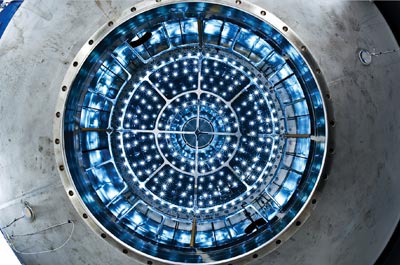
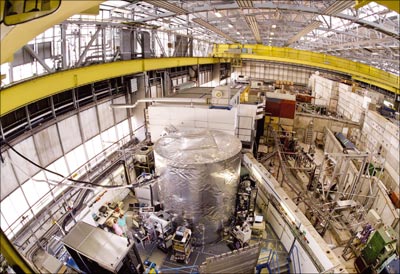
To answer these questions, the CLOUD collaboration has built a 3-m stainless-steel chamber with much lower concentrations of contaminants than all previous experiments. This allows the measurement of nucleation from controlled amounts of selected trace gases without the complicating effect of undetected gases. CERN know-how has been key in achieving the demanding technical requirements for the CLOUD chamber and its gas and thermal systems: impurities of condensable vapours in the chamber must be kept below about 1 part per trillion; and the temperature stability of the chamber must be around 0.01 K. CLOUD uses a secondary beam from the CERN Proton Synchrotron (PS) to simulate the effects of cosmic rays with precise control of the “cosmic ray” intensity. The experiment has several other unique aspects, including the capability to create an ion-free environment with an internal electric clearing field, precise control of light-induced (photolytic) gas-phase reactions by means of ultraviolet (UV) illumination from a fibre-optic system, as well as highly stable operation at any temperature between 300 K and 183 K. During experimental runs, small amounts of the chamber atmosphere are extracted and passed through an array of state-of-the-art mass spectrometers and other instruments to measure the ultralow concentrations of atmospheric vapours and other important quantities.

The first results

In its first results published in Nature, the CLOUD collaboration reports on its measurements of the formation of new particles from sulphuric acid, ammonia and water vapours, which have long been thought to account for nucleation in the Earth’s atmosphere. The experiment has also measured the enhancement of atmospheric aerosol nucleation from galactic cosmic rays and the report includes the first-ever measurements of the chemistry and growth, molecule-by-molecule, of newly-formed charged clusters from single molecules up to stable aerosol particles.
CCclo2_08_11

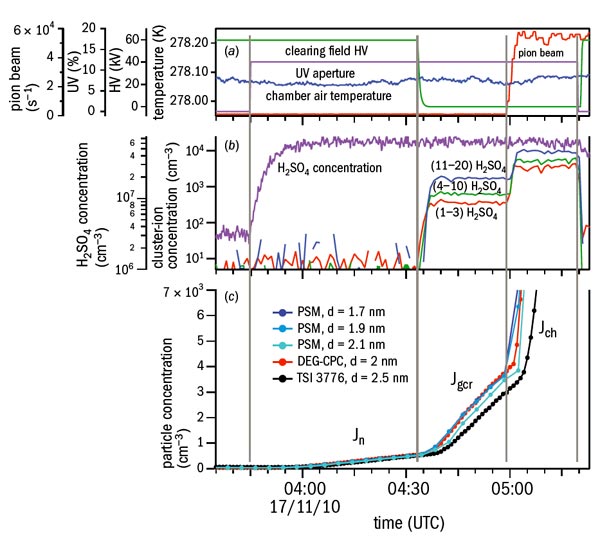
Figure 1 shows a typical sequence of online measurements of the nucleation rates under different ionization conditions. High voltage is initially applied to the clearing-field electrodes to sweep ions from the chamber and suppress all effects of ionization (a). The run is started by opening the shutter of the UV system at a selected aperture, which rapidly establishes a chosen sulphuric-acid concentration in the chamber by photolytic oxidation of SO2 in the presence of O3 and H2O – as occurs in the real atmosphere (b). Particles begin to appear in each aerosol counter after a time delay that depends on the particle growth rate and the detection size threshold (c). When the neutral nucleation rate, Jn, has been measured, the clearing field is turned off (a). This allows cosmic rays to generate ion pairs that remain in the chamber, as shown by the appearance of small ion clusters (b). The ions give rise to a distinct increase in the nucleation rate, Jgcr, resulting from ion-induced nucleation at ground-level cosmic-ray intensity (c). In the next step, a 3.5 GeV/c pion beam from the PS is turned on and passes through the chamber, producing a further sharp increase in the nucleation rate, corresponding to Jch. Finally, the run is ended by closing the UV shutter and turning on the clearing field high-voltage, which starts to clear the chamber of aerosols in preparation for a new run under different conditions.

CCclo3_08_11

CLOUD has already made several important discoveries. First, the experiment has shown that the most likely nucleating vapours, sulphuric acid and ammonia, cannot account for the nucleation that is observed in the lower atmosphere. The nucleation measured in the chamber occurs at only 1/10–1/1000 of the rates observed in the lower atmosphere. It is clear from these first results from CLOUD that the treatment of aerosol formation in climate models will need to be revised substantially because all models assume that nucleation in the lower atmosphere is caused by these vapours and water alone. It is now essential to identify the additional nucleating vapours and whether their sources are mainly natural or from human activities. If the vapours have strong anthropogenic sources then there potentially exists a new climate-forcing agent from human activities. Alternatively, if the source is natural, then there is the potential for a new climate feedback that may affect the understanding of how the climate responds to radiative forcings.

Second, CLOUD has found that natural rates of atmospheric ionization caused by galactic cosmic rays substantially enhance nucleation under the conditions studied so far – by up to a factor of 10. Ion-enhancement is particularly pronounced in the cool temperatures of the mid-troposphere (about 5 km altitude) and above. CLOUD has found that at these temperatures, sulphuric acid and water vapour can nucleate without the need for additional vapours. This result leaves open the possibility that cosmic rays could also influence climate. However, it is premature to conclude that cosmic rays have a significant influence on clouds and climate until the additional nucleating vapours have been identified, their ion enhancement measured and the ultimate effects on clouds have been confirmed. So far, CLOUD has only measured the formation rate of aerosols in the few-nanometre size range, which are far too small to seed clouds.

The next steps for the CLOUD experiment will be to investigate the role of biogenic organic vapours in atmospheric aerosol nucleation, to measure condensational growth of aerosols up to sizes sufficient to seed cloud droplets and to study the effect of cosmic rays on these processes. Also, during the next few months, a new fast expansion system will be installed on the CLOUD chamber to allow it to operate as a classical Wilson cloud chamber for the in situ creation of liquid and ice clouds. This will extend CLOUD’s capability to study the effects of cosmic rays directly on cloud droplets and ice particles themselves.
CCclo4_08_11

When he visited the Ben Nevis Observatory in 1894 and 1895, Wilson was fascinated by the electrical and cloud condensation phenomena he witnessed. He returned to the Cavendish Laboratory at Cambridge determined to recreate clouds in the laboratory and study their physics. This led to his expansion cloud chamber, later described by Ernest Rutherford as “the most original and wonderful instrument in scientific history”. After his Nobel prize in 1927, Wilson returned to his passion for meteorological phenomena and devoted the rest of his life to the study of atmospheric electricity and clouds. Today, a century after its invention, Wilson’s cloud chamber remains “the most original and wonderful instrument” for studying the link between cosmic rays and clouds.

• The CLOUD (Cosmics Leaving OUtdoor Droplets) experiment is conducted by an international and interdisciplinary collaboration of scientists from Austria (University of Innsbruck, University of Vienna), Finland (Finnish Meteorological Institute, Helsinki Institute of Physics, University of Eastern Finland, University of Helsinki), Germany (Johann Wolfgang Goethe University Frankfurt, Leibniz Institute for Tropospheric Research), Portugal (University of Beira Interior, University of Lisbon), Russia (Lebedev Physical Institute), Switzerland (CERN, Paul Scherrer Institut), the UK (University of Manchester, University of Leeds) and the US (California Institute of Technology). CLOUD has received invaluable support from CERN accelerator and technical teams including, in particular, PH-DT, EN-CV, EN-MME, EN-MEF and TE-VSC.

TOTEM probes new depths in pp elastic scattering

CCtot1_08_11

Forty years ago, the Intersecting Storage Rings (ISR) at CERN became the world’s first proton–proton collider, transporting the study of particle physics to much higher energies than was otherwise achievable. Now, the same is happening again at CERN as the LHC begins to open up a new high-energy frontier and it is interesting to find out how phenomena discovered at the ISR develop as the collision energy increases.

One of the first discoveries at the ISR was that the total proton–proton (pp) cross-section rises with energy: rather surprisingly, the proton becomes both larger and more opaque. Later, measurements of pp elastic scattering showed further unusual behaviour, revealing a peculiar structure in the variation of the differential cross-section with t, the four-momentum transfer squared. Now, the TOTEM collaboration at the LHC has published its first results on pp elastic scattering, which confirm that the behaviour observed at the ISR continues towards much higher energies.

The differential cross-section measured at the ISR showed a sharp peak at small values of |t| = (0.01–0.5) GeV2 that falls away exponentially to a dip, at about 1.4 GeV2, followed by a broad local maximum that eventually decreases more or less as |t|–8 (figure 1a). Measurements at different centre-of-mass energies in the range 23–62 GeV revealed that the sharp peak at low |t| appears to become narrower (“shrinks”) with rising energies, with the dip moving towards smaller values of |t|, indicating that the radius of the proton (rp2 ˜ 1 / |t|) is, in effect, increasing with energy. However, the power-law dependence at larger |t| values appeared not to depend on energy.

The ISR was also the world’s first proton–antiproton (pp) collider and measurements there showed a similar behaviour for the elastic differential cross-section (figure 1b), but without the pronounced dip, which was replaced instead by a broad “shoulder”. Between the ISR and the start-up of the LHC, the only measurement of pp elastic scattering was performed by the pp2pp experiment at Brookhaven’s Relativistic Heavy Ion Collider at 200 GeV in the centre-of mass over a limited |t| range around 10–2 GeV2. For pp, on the other hand, higher collision energies became available in the 1980s; first at CERN’s Super Proton Synchrotron (546 GeV) and then at Fermilab’s Tevatron (up to 1.96 TeV). Measurements at these energies showed that the pp cross-section continued to exhibit a similar shape as at the ISR, but without a pronounced dip as observed in pp scattering.

CCtot2_08_11

The LHC now presents the first opportunity to follow the behaviour observed at the ISR for pp scattering to higher energies, in particular with the experiment TOTEM, which stands for “TOTal cross-section, Elastic scattering and diffraction dissociation Measurement”. TOTEM is optimized for measuring elastic pp scattering over values of |t| ultimately in the range 0.001–10 GeV2. It can detect protons scattered at small angles by using silicon detectors in Roman Pots – movable insertions in the beam pipe that allow the detectors to be brought close to the beam. The experiment is located at point 5 on the LHC (together with CMS) and there are Roman Pot stations at distances of 147–149 m and 215–220 m from the interaction point. Each station contains two units that are 2–5 m apart and each consists of two pots in the vertical plane, which approach the beam from above and below, and one pot that moves horizontally. Each pot contains a stack of 10 specially designed silicon-strip detectors that have an insensitive region facing the beam of only a few tens of micrometres.

There are 512 strips per detector with 66 μm spacing and the detectors are oriented such that five of the 10 planes per pot are at +45° with respect to the edge near the beam, while the other five are at –45°. The trigger requires collinear hits in at least three of the five planes in each projection. This is implemented by programmable coincidence logic in integrated circuits that are mounted on the detectors and must therefore be radiation tolerant. Elastic candidate events require two reconstructed collinear diagonal tracks.

In a dedicated run of the LHC in October 2010, with only four proton bunches of 7 × 1010 protons per bunch, the TOTEM experiment acquired data for a total integrated luminosity of 6.1 nb–1 at a centre-of-mass energy of 7 TeV. The low-luminosity configuration of the LHC allowed the detectors to be brought in towards the centre of the beam to a distance of only seven times the 1σ width of the beam itself. The collaboration has analysed these data and in July published the first results on elastic pp scattering in the new high-energy region of the LHC.

CCtot5_08_11

The figure on the front cover of this month’s CERN Courier shows the histogram of the intersection points of the selected tracks in this data set with the Roman-pot silicon detectors at 220 m from the interaction point. The tracks are indicated in the bottom silicon detectors at one side and in the top detectors at the other side of the interaction point, representing the pp scattering configuration; the coloured scale shows the number of tracks on a log scale, from less than 10 in the dark blue to more than 10,000 in the red. The displacement in the vertical direction (less than 2 mm for the red region) is to a first approximation proportional to the vertical scattering angle. With the current LHC beam optics the horizontal scattering angle leads to only a small displacement in the x direction. However, protons that have lost momentum are shifted in the +x direction by the dispersion of the machine. This means that elastically scattered protons remain close to x=0, while those that are diffractively scattered are displaced in the positive x direction (the green region). Already in the raw data, the accumulation of elastic events close to x=0 and near the edge of the detectors is clearly distinguishable from the background mainly from diffractive events. Thus |x| <0.4 mm is the first criterion for selecting elastic candidates.

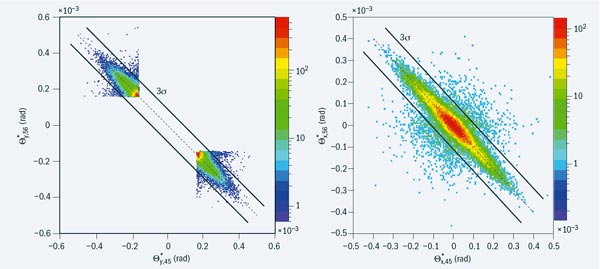
Vertical and horizontal scattering angles can be deduced from measurements of the track displacement in y and the track angle in x at the Roman pot stations. For collinear tracks on either side of the interaction point, these angles should be the same – as is impressively demonstrated in figure 2. Collinearity cuts at 3σ, as shown in the figure, provide another powerful tool to reduce background further.

From a total of 5.28 × 106 recorded triggers, 293 × 103 events had the required constructed tracks and elastic topology, of which 70.2 × 103 passed the cut in |x| and 66.0 × 103 survived the final collinearity cuts. These events were then used to calculate the differential cross-section, the value of |t| being derived from the measured scattering angle.

CCtot3_08_11

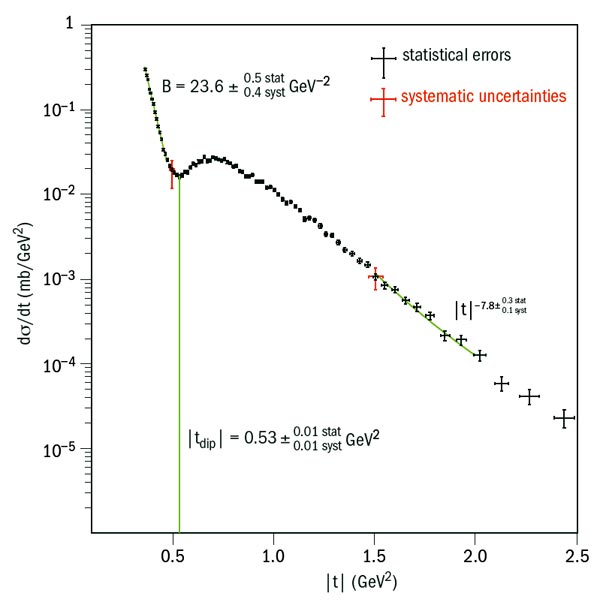
Figure 3 shows the differential cross-section that TOTEM has measured for elastic pp scattering in the |t| range 0.36 < |t| < 2.5 GeV2. It clearly exhibits the global features that were first seen at the ISR. At |t| < 0.47 GeV2 the data show an exponential decrease with a peak at low |t| sharpening with energy and leading to a well pronounced diffractive minimum at |t| = (0.53±0.01 stat.±0.01 syst.) GeV2, followed by a rounded peak that falls away as a power law, |t|–n, where n = 7.8 ±0.3 stat. ±0.1 syst. In particular, the data confirm the trend first observed at the ISR that the dip moves towards smaller values of |t| with increasing collision energy. At the ISR the dip appeared at a value of |t| around 1.4 GeV2; now, at a centre-of-mass energy of 7 TeV – some 100 times higher – TOTEM has found the dip to be near 0.5 GeV2. Interpreting this within the optical model, the proton continues to become larger with energy and consequently the total cross-section should rise further.

CCtot4_08_11

These first measurements of elastic scattering at LHC energies already begin to differentiate between various models. As figure 4 shows the position of the dip and the slopes at smaller and larger |t| agree with the predictions of some models but not with others. However, none of these models is capable of correctly predicting the measured size of the cross-section over the total |t| -range.

For the TOTEM collaboration this marks just the beginning. The experiment has already accumulated 5.8 pb–1 of data in high-luminosity runs that will extend the range in |t| to 4–5 GeV2. Special LHC beam optics for dedicated runs are presently being commissioned to reach much smaller |t| values down to below 0.01 GeV2. This will allow a better extrapolation of the differential cross-section to t = 0. A measurement of the total pp cross-section with a luminosity-independent method based on the optical theorem will then be possible for the first time in this new high-energy region. The TOTEM collaboration is confident that this data taking will start soon and that first results will be available around the end of 2011. Furthermore, diffractive phenomena are on the list of investigations. There is much to look forward to – in more ways than one.

EPS-HEP 2011: the harvest begins

CCnew1_06_11

Impressive results, and so much more to come: this is the general feeling that more than 800 participants took home from the International Europhysics Conference on High-Energy Physics, EPS-HEP 2011, which was held in Grenoble on 21–27 July. After only a year of data-taking, the spectacular performance of the LHC and the amazingly fast data analysis by the experiments have raised current knowledge by a huge notch in searches for new physics.

Those who had hoped that the LHC would reveal supersymmetry early on may have been slightly disappointed, although each extended limit contributes to the correct picture and new physics is guaranteed, as many speakers reminded the audience. CERN’s director-general, Rolf Heuer reinforced this point, stating that for the Higgs boson in particular, either finding it or excluding it will be a great discovery.

On the search for the Higgs boson, both the CMS and ATLAS experiments at the LHC have observed small excesses of events in the WW and ZZ channels. Each one is statistically weak but taken together, they become interesting, as each team independently sees a small excess in the low range for the Higgs mass. While this is exactly how a Standard Model Higgs would manifest itself, it is still far too early to tell (The LHC homes in on the Higgs).

Another big topic of conversation was the report by the CDF collaboration at Fermilab of the first measurement of the rare decay Bs→μμ, appearing possibly stronger than predicted. On the other hand, the CMS and LHCb collaborations at the LHC showed preliminary results, which when combined provide a limit in contradiction with the CDF result (CMS and LHCb pull together in search for rare decay). More data will soon clarify what is happening here.

The session on QCD showed great progress in the field, with updates on parton-distribution functions from the experiments at HERA, DESY, as well as several results from the LHC experiments. These measurements are now challenging the precision of theoretical predictions, and will contribute towards refining the Monte Carlo simulations further. The experiments at Fermilab’s Tevatron and at the B-factories also presented improved and impressive limits in all directions in flavour physics, contributing to a clearer theoretical picture.

In neutrino physics, new results came from the T2K and MINOS experiments, giving the first indications of a sizeable mixing angle between the first and third neutrino generations (MINOS and T2K glimpse electron neutrinos). It was particularly moving to see how Japanese colleagues are recovering after the devastating earthquake and tsunami. Atsuko Suzuki, head of the KEK laboratory, thanked the particle-physics community for its extended support.

An important highlight of the conference was the award of the European Physical Society (EPS) High Energy and Particle Physics Prize to Sheldon Lee Glashow, John Iliopoulos and Luciano Maiani. They received this for their crucial contribution to the theory of flavour, currently embedded in the Standard Model of strong and electroweak interactions, which is still of utmost importance today.

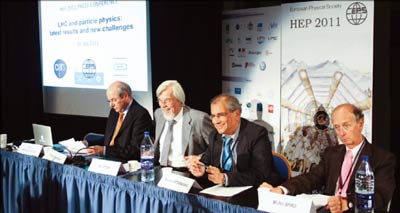
With the first results from significant amounts of data at the LHC, the conference attracted a great deal of interest from the world’s press. A press conference was held on 25 July to announce the EPS 2011 high-energy physics prizes, with contributions on the latest results from the LHC, the European strategy for particle physics, and the latest advances in astroparticle physics in Europe.

• A more detailed report will appear in the October issue of the CERN Courier.

MINOS and T2K glimpse electron-neutrinos

The T2K and MINOS experiments, which are both designed to study neutrino oscillations over long baselines, have reported results from their searches for the appearance of electron-neutrinos in beams of muon-neutrinos produced at distant locations. On 15 June the T2K collaboration announced that it had observed an indication that muon-neutrinos are able to transform into electron-neutrinos over the 295 km baseline of their experiment in Japan. Ten days later, the MINOS collaboration announced its latest results on the same effect. Both experiments find a non-zero value for the neutrino mixing angle θ13. This would be zero if electron- and muon-neutrinos could not transform into each other.

Oscillations between the three known flavours of neutrino – electron, muon and tau – are described by a mixing matrix, which can be parameterized in terms of three angles, θ12, θ23, θ13, and a CP-violating phase. Observations of oscillations in solar neutrinos and atmospheric neutrinos have determined θ12 and θ23, respectively, leaving θ13 still unknown. The new results provide the first indications that this angle is not zero, via values of sin213.

The collaboration found 88 neutrino events registered in the Super-Kamiokande detector

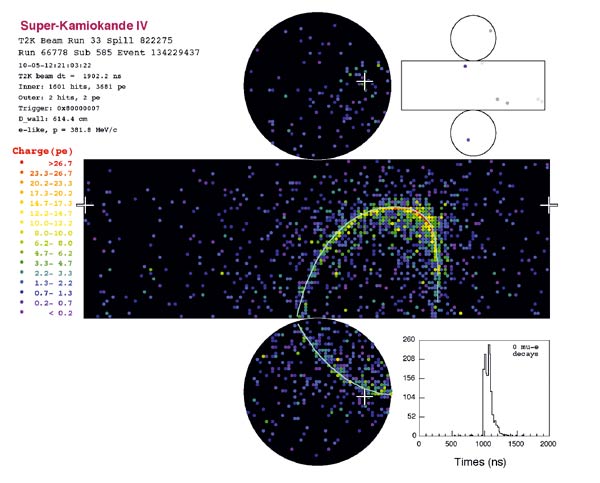
T2K (Tokai to Kamioka) uses the Super-Kamiokande detector in Kamioka to detect neutrinos produced at the Japan Proton Accelerator Research Complex (J-PARC) situated 295 km away. The new results are from an analysis based on all of the data collected between January 2010 – when the experiment began full operation – and 11 March 2011, when it was interrupted by the enormous earthquake in East Japan. This corresponds to a total of 1.43 × 1020 protons on the neutrino-production target. The collaboration found 88 neutrino events registered in the Super-Kamiokande detector, six of which are clearly identifiable as candidate electron-neutrino events. The expectation would be for 1.5 such events in this data sample if neutrino oscillations do not take place. The observation implies the appearance of electron-neutrinos in the experiment, with a probability of 99.3%. At 90% confidence level (CL), the data are consistent with 0.03 < sin213 < 0.28.

MINOS far detector

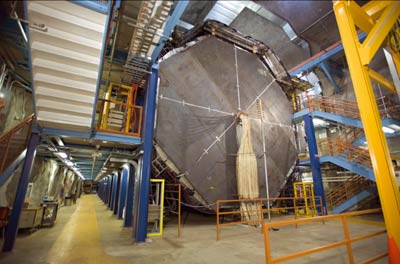
The MINOS (Main Injector Neutrino Oscillation Search) in the US sends a muon-neutrino beam 735 km through the Earth from the Main Injector accelerator at Fermilab to a 5000-tonne detector in the Soudan Underground Laboratory in northern Minnesota. In the recently announced analysis, based on 8 × 1020 protons on target, the collaboration found a total of 62 electron neutrino-like events. Only 48 events would be expected if muon-neutrinos do not transform into electron neutrinos.

Compared with T2K, MINOS uses a different method and a different analysis technique to search for electron-neutrino appearance. The MINOS collaboration extracts 2sin2θ23sin213, and finds that it is less than 0.12 at 90% CL, with a best fit of 2sin2θ23sin213 = 0.04. This improves on results that the collaboration obtained with smaller data sets in 2009 and 2010. The latest results disfavour θ13 = 0 at 89% CL, with a range that is consistent with that measured by T2K.

More work and more data are needed to confirm both these measurements. The T2K experiment collected about 2% of the proposed number of events before the massive earthquake hit in March. Once J-PARC resumes producing muon-neutrinos, which is planned to happen by the end of 2011, the experiment will continue accumulating events. MINOS will continue to collect data until February 2012. In addition, three nuclear-reactor-based neutrino experiments, which use different techniques to measure sin213, are in the process of starting up.

ALICE goes in search of charmonium in the quark–gluon plasma

CCnew4_06_11

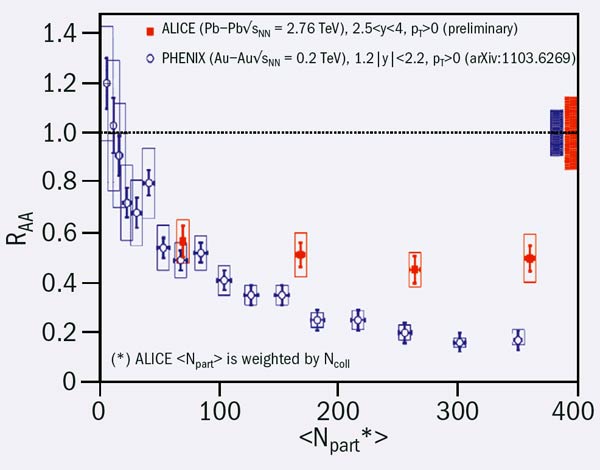
The ALICE collaboration has measured the nuclear modification (RAA) factor of J/Ψ mesons down to a transverse momentum (pT) equal to zero, in lead–lead (Pb–Pb) collisions at √sNN=2.76 TeV, delivered by the LHC in November 2010. The results, presented at the Quark Matter 2011 conference (Heavy ions in Annecy), hint at the recombination of charm and anticharm quarks in the quark–gluon plasma (QGP) formed in heavy-ion collisions at LHC energies.

The ALICE detector was conceived especially for measurements in heavy-ion collisions and is able to study QGP via comprehensive measurements of hadron abundances and correlations as well as of thermal photons. At LHC energies, new mechanisms of charmonium production in the QGP could occur. QCD calculations have predicted that a large number of charm quarks, around 50 c-c pairs, should be produced per central lead–lead collision at √sNN=2.76 TeV. These charm quarks would then coexist with the QGP during its dynamical evolution, like Brownian particles. A number of dynamical transport models predict that c and c quarks could then combine in later stages, leading to an enhancement of charmonium production in the most central Pb–Pb collisions.

ALICE detects charmonium down to pT=0 in two different rapidity domains: |y|<0.9 in the dielectron channel and 2.5<y<4 in the dimuon channel. The detection at low transverse momentum is crucial because the recombination of the charm and anticharm quarks is expected to be the main production mechanism for charmonium at low pT (pT<3 GeV/i>c). The different rapidity domains allow for the study of QGP with different charm densities.

In particular, ALICE has studied the nuclear modification factor, RAA, as a function of collision centrality for J/Ψ mesons. RAA is defined as the ratio of the yield measured in nucleus–nucleus (AA) collisions to that expected on the basis of the proton–proton yield scaled by the number of binary nucleon–nucleon collisions in the nucleus–nucleus reaction. The results from ALICE indicate that the J/Ψ RAA factor appears to show little dependence on centrality (see figure), a trend that is different from that observed at lower energies. The factor for central and mid-central collisions is larger at the LHC than was measured at lower centre-of-mass energy in gold–gold collisions in the PHENIX experiment at the Relativistic Heavy Ion Collider, Brookhaven. In complementary studies, the ATLAS and CMS collaborations at the LHC have measured a smaller J/ΨRAA factor at high pT (pT>6.5 GeV/c).

These observations contrast with expectations from the dissociation of charmonium through the mechanism of colour-screening in the QGP. They hint instead at the recombination of charm and anticharm quarks in the QGP as the main mechanism for J/Ψ production in central Pb–Pb collisions at LHC energies. ALICE’s analysis of J/Ψ production as a function of the pT and rapidity continues and should shed light on the topic soon.

ASACUSA measures antiproton mass with unprecedented accuracy

The Japanese-European ASACUSA experiment at CERN’s Antiproton Decelerator (AD) has reported a new measurement of the antiproton’s mass, accurate to about one part in a thousand million. This means that the measurement of the antiproton’s mass relative to the electron is now almost as accurate as that of the proton.

To make these measurements, the ASACUSA team first traps antiprotons inside antiprotonic helium, in which the negatively charged antiproton takes the place of an electron and occupies a Rydberg state, keeping it relatively far from the nucleus. The antiprotonic helium atoms thus live long enough to allow the frequencies of atomic transitions to be measured by laser spectroscopy. The frequencies depend on the ratio of the antiproton mass to the electron mass and ASACUSA has already used this technique to achieve record precision.

However, an important source of imprecision comes from Doppler broadening of the resonance observed when the laser is tuned to the transition frequency. The atoms move around, so that those moving towards and away from the laser beam experience slightly different frequencies. In the previous measurement in 2006, the ASACUSA team used just one laser beam, and the achievable accuracy was dominated by this effect. This time they have used two beams moving in opposite directions, with the result that the broadening for the two beams partly cancels out.

The resulting narrow spectral lines allowed the team to measure three transition frequencies with fractional precisions of 2.3–5 parts in 109. By comparing the results with three-body QED calculations, they find an antiproton-to-electron mass ratio of 1836.1526736(23), where the error (23) represents one standard deviation. This agrees with the proton-to-electron value, which is known to a similar precision.

COSY finds evidence for an exotic particle…

CCnew5_06_11

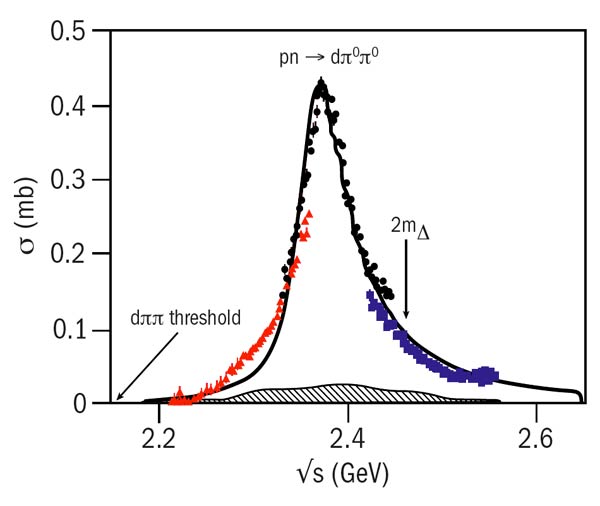
Experiments at the Jülich Cooler Synchrotron, COSY, have found evidence for a new complex state in the two-baryon system, with mass 2.37 GeV and width 70 MeV. The structure, containing six valence quarks, could constitute either an exotic compact particle or a hadronic molecule. The result could cast light on the long-standing question of whether there are eigenstates in the two-baryon system other than the deuteron ground-state. This has awaited an answer since Robert Jaffe first envisaged the possible existence of non-trivial six-quark configurations in QCD in 1977.

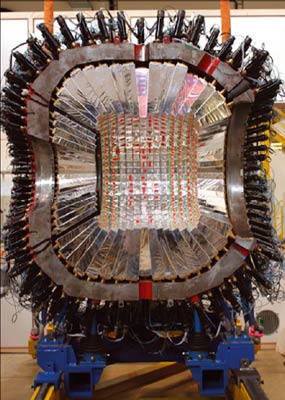
The new structure has been observed in high-precision measurements carried out by the WASA-at-COSY collaboration, using the Wide-Angle Shower Apparatus (WASA). The data exhibit a narrow isoscalar resonance-like structure in neutron–proton collisions for events where a deuteron is produced together with a pair of neutral pions. From the differential distributions, the spin-parity of the new system is deduced to be JP = 3+ and its main decay mode is via formation of a ΔΔ system below the nominal threshold of 2mΔ. The collaboration will further test the resonance hypothesis in elastic proton–neutron collisions with a polarized beam; the JP = 3+ partial waves should be dominated by the new structure, while its contribution to the elastic cross-section should be small.

CCnew6_06_11

The resonance structure also turns out to be intimately connected to the so-called ABC effect, in which the two pions produced in a nuclear fusion process are emitted preferentially in parallel. This 50-year-old puzzle, which is named after the initial letters of the surnames of its first observers A Abashian, N E Booth and K M Crowe, could now find its explanation in the way that such a resonance decays.

CDF discovers a heavy relative of the neutron

The CDF collaboration at Fermilab has announced the observation of the Ξ0b, the latest entry in the periodic table of baryons. Although Fermilab’s Tevatron is not a dedicated bottom-quark factory, the sophisticated particle detectors employed there and large integrated luminosity of proton–antiproton collisions delivered to the experiments have made it a haven for discovering and studying almost all of the known bottom baryons. Experiments there discovered the Σb baryons in 2006, observed the Ξb baryon in 2007 and found the Ωb in 2009. The lightest bottom baryon, the Λb, was discovered at CERN.

The complex decay pattern of the neutral Ξ0b has made the observation of this particle significantly more challenging than that of its charged sibling. Combing through an integrated luminosity of 4.2 fb–1 of proton–antiproton collisions produced at a centre-of-mass energy of 1.96 TeV, the CDF collaboration isolated 25 examples in which the particles emerging from a collision revealed the distinctive signature of the Ξ0b, through its decay to Ξ+cπ and the subsequent decay chain. The analysis established the discovery at a level of 6.8 σ and measured the mass of the Ξ0b as 5787.8 ± 5.0(stat) ± 1.3(syst) MeV/c2.

CDF also observed a similar number of events for the charged Ξb, in the decay Ξb → Ξ0cπ, never previously observed; this served as an independent cross-check of the analysis.

The LHC homes in on the Higgs

EPS-HEP 2011

In this issue, news from the LHC experiments focuses on a few highlights at the first big summer conference.

The outstanding performance of the LHC enabled the ATLAS and CMS collaborations to report remarkable progress in the hunt for the Higgs boson at EPS-HEP 2011. With an integrated luminosity of more than 1 fb–1 each – the original luminosity goal for all of 2011 – the experiments have been able to extend significantly the exclusion region for the Standard Model Higgs boson and to achieve impressive advances in extending sensitivity in other mass ranges.

In the Standard Model, the Higgs boson endows other particles and itself with mass. At the same time, the dominant decay mode of the Higgs depends on the value of its mass. Consequently, a comprehensive search for the Higgs must look in numerous decay modes.

At the conference, each collaboration reported results on several possible Higgs decay modes. These results were based on the full sample of data recorded by the end of June; the ability to search for so many decay modes so promptly reflected the efficiency of the experiments and the dedication of the collaborations. The most generally promising decay modes, such as H→γγ, H→W+W, and H→Z0Z0, were well covered by both experiments, while early results on H→τ+τ from CMS and on H→bb from ATLAS were also produced. In each experiment the results of these searches can be combined to optimize sensitivity across the range of possible Higgs boson masses.

The CMS and ATLAS Higgs limits presented at the conference are summarized by the solid curves in the two figures. These plots show the result of combining the limits from all of the analysed decay modes in each experiment in terms of the range of possible Standard Model Higgs mass that can be excluded with 95% confidence.

CCnew8_06_11

The two experiments presented similar exclusion ranges. They have now excluded mass ranges for the Higgs boson from 150 to 200 GeV and 300 to 450 GeV; they have also established expected limits within 50% of the Standard Model prediction for the region in between. Moreover, they are homing in on both the low mass region (around 115–150 GeV), which is preferred by electroweak measurements, and the high mass region above about 450 GeV. Throughout these regions, the experiments have already achieved sensitivities, reflected by the dashed curves, within a factor of 2–3 of the Standard Model cross-section.

While it is still early in the hunt for the Higgs, the ATLAS and CMS data also show some excesses that participants at the conference found tantalizing. For instance, both experiments currently see a small excess of candidate events at a mass of roughly 140 GeV. However, given the large range of masses and modes investigated by the two experiments and the as yet limited statistics, the limits observed do sometimes fluctuate from the limits that are expected. In addition, although the two detectors are independent, the results can be somewhat correlated because their background estimates make use of the same theoretical predictions.

Even as the LHC provides the experiments with more data, the painstaking process of combining the limits of the two experiments is currently underway. A combination with the experiments at Fermilab’s Tevatron, whose searches are particularly complementary in the low mass region, will also eventually be done.

Will the Higgs boson be discovered soon, or will the Standard Model Higgs boson be excluded as more data are accumulated? The answer at present is “watch this space”.

CMS and LHCb pull together in search for rare decay

EPS-HEP 2011

In this issue, news from the LHC experiments focuses on a few highlights at the first big summer conference.

The first major conference since the LHC started to deliver significant luminosities provided the opportunity for the experiments to begin to work together on certain results. CMS and LHCb joined forces in just this way in their search for the decay Bs→μ+μ. This rare decay mode is suppressed in the Standard Model, which predicts a branching ratio of (3.2 ± 0.2) × 10–9. It has recently gained much attention, with a preliminary measurement from the CDF experiment at Fermilab indicating a possible excess of events over the Standard Model expectation.

Now LHCb and CMS have combined their results based on 0.34 fb–1 and 1.14 fb–1 of proton–proton collisions, respectively, at a centre-of-mass energy of 7 TeV. The observed candidates in both experiments are consistent with the expectation from the sum of backgrounds and Standard Model signal. The combination results in an upper limit on the branching ratio for Bs→μ+μ of less than 1.1 × 10⁻⁸ at 95% confidence level (CL), which improves on the limits obtained by the separate experiments and represents the best existing limit on this decay. Enhancement of the branching ratio by more than 3.4 times the Standard Model prediction is excluded at 95% CL. However, there remains room for a contribution from new physics, so the experiments will press ahead with this search, as the data flood in from the LHC.

bright-rec iop pub iop-science physcis connect