Comsol -leaderboard other pages

Topics

Breaking records at EPS-HEP

2021-EPS-HEP-Poster-WEB-final

In this year’s unusual Olympic summer, high-energy physicists pushed back the frontiers of knowledge and broke many records. The first one is surely the number of registrants to the EPS-HEP conference, hosted online from 26 to 30 July by the University of Hamburg and DESY: nearly 2000 participants scrutinised more than 600 talks and 280 posters. After 18 months of the COVID pandemic, the community showed a strong desire to meet and discuss physics with international colleagues. 

200 trillion b-quarks, 40 billion electroweak bosons, 300 million top quarks and 10 million Higgs bosons

The conference offered the opportunity to hear about analyses using the full LHC Run-2 data set, which is the richest hadron-collision data sample ever recorded. The results are breathtaking. As my CERN colleague Michelangelo Mangano explained recently to summer students, “The LHC works and is more powerful than expected, the experiments work and are more precise than expected, and the Standard Model works beautifully and is more reliable than expected.” About 3000 papers have been published by the LHC collaborations in the past decade. They have established the LHC as a truly multi-messenger endeavour, not so much because of the multitude of elementary particles produced – 200 trillion b-quarks, 40 billion electroweak bosons, 300 million top quarks and 10 million Higgs bosons – but because of the diversity of scientifically independent experiments that historically would have required different detectors and facilities, built and operated by different communities. “Data first” should always remain the leitmotif of the natural sciences. 

Paula Alvarez Cartelle (Cambridge) reminded us that the LHC has revealed new states of matter, with LHCb confirming that four or even five quarks can assemble themselves into new long-lived bound states, stabilised by the presence of two charm quarks. For theorists, these new quark-molecules provide valuable input data to tune their lattice simulations and to refine their understanding of the non-perturbative dynamics of strong interactions.

Theoretical tours de force

While Run 1 was a time for inclusive measurements, a multitude of differential measurements were performed during Run 2. Paolo Azzurri (INFN Pisa) reviewed the transverse momentum distribution of the jets produced in association with electroweak gauge bosons. These offer a way to test quantum chromodynamics and electroweak predictions at the highest achievable precision through higher-order computations, resummation and matching to parton showers. The work is fuelled by remarkable theoretical tours de force reported by Jonas Lindert (Sussex) and Lorenzo Tancredi (Oxford), which build on advanced mathematical techniques, including inspiring new mathematical developments in algebraic geometry and finite-field arithmetic. We experienced a historic moment: the LHC definitively became a precision machine, achieving measurements reaching and even surpassing LEP’s precision. This new situation also induced a shift more towards precision measurements, model-independent interpretations and Standard Model (SM) compatibility checks, and away from model-dependent searches for new physics. Effective-field-theory analyses are therefore gaining popularity, explained Veronica Sanz (Valencia and Sussex).

We know for certain that the SM is not the ultimate theory of nature. How and when the first cracks will be revealed is the big question that motivates future collider design studies. The enduring and compelling “B anomalies” reported by LHCb could well be the revolutionary surprise that challenges our current understanding of the structure of matter. The ratios of the decay widths of B mesons, either through charged or neutral currents, b→cℓν and b→sℓ+, could finally reveal that the electron, muon and tau lepton differ by more than just their masses.

The statistical significance of the lepton flavour anomalies is growing, reported Franz Muheim (Edinburgh and CERN), creating “cautious” excitement and stimulating the creativity of theorists like Ana Teixeira (Clermont-Ferrand), who builds new physics models with leptoquarks and heavy vectors with different couplings to the three families of leptons, to accommodate the apparent lepton-flavour-universality violations. Belle II should soon bring new additional input to the debate, said Carsten Niebuhr (DESY).

Long-awaited results

The other excitement of the year came from the long-awaited results from the muon g-2 experiment at Fermilab, presented by Alex Keshavarzi (Manchester). The spin precession frequency of a sample of 10 billion muons was measured with a precision of a few hundred parts per million, confirming the deviation from the SM prediction observed nearly 20 years ago by the E821 experiment at Brookhaven. With the current statistics, the deviation now amounts to 4.2σ. With an increase by a factor 20 of the dataset foreseen in the next run, the measurement will soon become systematics limited. Gilberto Colangelo (Bern) also discussed new and improved lattice computations of the hadronic vacuum polarisation, significantly reducing the discrepancy between the theoretical prediction and the experimental measurement. The jury is still out – and the final word might come from the g-2/EDM experiment at J-PARC.

Accelerator-based experiments might not be the place to prove the SM wrong. Astrophysical and cosmological observations have already taught us that SM matter only constitutes around 5% of the stuff that the universe is made of. The traditional idea that the gap in the energy budget of the universe is filled by new TeV-scale particles that stabilise the electroweak scale under radiative corrections is fading away. And a huge range of possible dark-matter scales opens up a rich and reinvigorated experimental programme that can profit from original techniques exploiting electron and nuclear recoils caused by the scattering of dark-matter particles. A front-runner in the new dark-matter landscape is the QCD axion originally introduced to explain why strong interactions do not distinguish matter from antimatter. Babette Döbrich (CERN) discussed the challenges inherent in capturing an axion, and described the many new experiments around the globe designed to overcome them.

Progress could also come directly from theory

Progress could also come directly from theory. Juan Maldacena (IAS Princeton) recalled the remarkable breakthroughs on the black-hole information problem. The Higgs discovery in 2012 established the non-trivial vacuum structure of space–time. We are now on our way to understanding the quantum mechanics of this space–time.

Like at the Olympics, where breaking records requires a lot of work and effort by the athletes, their teams and society, the quest to understand nature relies on the enthusiasm and the determination of physicists and their funding agencies. What we have learnt so far has allowed us to formulate precise and profound questions. We now need to create opportunities to answer them and to move ahead.

One cannot underestimate how quickly the landscape of physics can change, whether the B-anomalies will be confirmed or whether a dark-matter particle will be discovered. Let’s see what will be awaiting us at the next EPS-HEP conference in 2023 in Hamburg – in person this time!

African physicists begin strategy process

The African Strategy for Fundamental and Applied Physics

Africa’s science, innovation, education and research infrastructures have over the years been undervalued and under-resourced. This is particularly true in physics. The African Strategy for Fundamental and Applied Physics (ASFAP) initiative aims to define the education and physics priorities that can be most impactful for Africa. The first ASFAP community town hall was held from 12 to 15 July. The event was virtual, with 147 people participating, including international speakers and members of the ASFAP community. The purpose of the meeting was to initiate a broad and community-driven discussion and action programme, leading to a final strategy document in two to three years’ time.

The first day began with an overview of the ASFAP by Simon Connell (University of Johannesburg) on behalf of the steering committee and addresses by Shamila Nair-Bedouelle (UNESCO assistant director-general for natural sciences), Sarah Mbi Enow Anyang Agbor (African Union commissioner for human resources, science and technology) and Raissa Malu (member of the Democratic Republic of Congo’s Presidential Panel to the African Union). These honoured guests encouraged delegates to establish a culture of gender balance in African physics. Later, in a dedicated forum for women in physics, Iroka Chidinma Joy (chief engineer at the National Space Research and Development Agency) noted that women are drastically underrepresented in scientific fields across the continent, and pointed out a number of cultural, religious and social barriers that prevent women from pursuing higher education. Barriers can come as early as primary education: in most cases, girls are not encouraged to take leading roles in conducting science experiments in classrooms. Improved strategies should include outreach, mentorship, dedicated funding for women, the removal of age limits for women wishing to conduct scientific research or further their education, and awards and recognition for women who excel in scientific fields. 

Community-driven

Representatives of scientific organisations such as the African Physical Society, the Network of African Science Academies and the African Academy of Science all presented messages of support for ASFAP, and delegates from other regions, including Japan, China, India, Europe, the US and Latin America, all presented their regional strategies. The consensus is that strategic planning should be a bottom-up and community-driven process, even if this means it may take two to three years to produce a final report. 

The meeting was updated on the progress of a diverse and well-established range of working groups (WGs) on accelerators, astrophysics and cosmology; computing and the fourth industrial revolution (4IR); energy needs for Africa; instrumentation and detectors; light sources; materials physics; medical physics; nuclear physics; particle physics; and community engagement (CE), which comprises physics education (PE), knowledge transfer, entrepreneurship and stakeholder and governmental-agency engagement. The WGs must also maintain dynamic communications with each other as key topics often impact multiple working groups.

Marie Clémentine Nibamureke (University of Johannesburg) highlighted the importance of the CE WG’s vision “to improve science education and research in African countries in order to position Africa as a co-leader in science research globally”. Convener Jamal Mimouni (Mentouri University) stressed that for ASFAP to establish a successful CE programme, it is crucial to reflect on challenges in teaching and learning physics in Africa – and on why students may be reluctant to choose physics as their study field. Nibamureke explained that the CE WG is seeking to appoint liaison officers between all the ASFAP working groups. Sam Ramaila (University of Johannesburg), representing the PE WG, indicated four main points the group has identified as crucial for the transformation and empowering of physics practices in Africa: strengthening teacher training; developing 21st-century skills and competences; introducing the 4IR in physics teaching and learning; and attracting and retaining students in physics programmes. Ramaila identified problem-based learning, self-directed learning and technology-enhanced learning as new educational strategies that could make a difference in Africa if applied more widely. 

On the subject of youth engagement, Mounia Laassiri (Mohammed V University) led a young-person’s forum to discuss the major issues young African physicists face in their career progression: outreach, professional development and networking will be a central focus for this new forum going forwards, she explained, and the forum aims to encourage young physics researchers to take up leadership roles. So far, there are about 40 members of the young-people’s forum. Laassiri explained that the long-term vision, which goes beyond ASFAP, is to develop into an association of young physicists affiliated to the African Physical Society.

We are now soliciting inputs for the development of the African Strategy for Fundamental and Applied Physics

The ability to generate scientific innovation and technological knowledge, and translate this into new products, is vital for a society’s economic growth and development. The ASFAP is a key step towards unlocking Africa’s potential. We are now soliciting inputs for the development of the African Strategy for Fundamental and Applied Physics. Letters of interest may be submitted by individuals, research groups, professional societies, policymakers, education officials and research institutes on anything they think is an issue, needs to be improved, or is important for fundamental or applied physics education and research in Africa.

10th anniversary for HASCO school

The 10th International Summer School on Hadron Collider Physics (HASCO) took place at the University of Göttingen from 18 to 26 July. After more than a year of lockdown and social isolation, we wanted to again give our young students the opportunity to attend courses and ask questions in person, meet international students of similar age, and junior and senior scientists from the particle-physics community. The school welcomed 40 undergraduate students and lecturers virtually and 50 in person. For the latter group, a highlight was a historical walkabout to the private houses of Max Born, Werner Heisenberg, Emmy Noether, Maria Goeppert-Mayer, David Hilbert, Richard Courant, James Franck and Max Planck. Students spent a week in discussion with lecturers from the University of Göttingen, partner universities and CERN. The focus was on the fundamentals of quantum field theory and current issues in hadron-collider physics, including quantum chromodynamics and jets, statistical methods of data analysis, the top quark, supersymmetry and the Higgs boson. A special focus this year was on machine learning and artificial intelligence.

Learning to detect new top-quark interactions

Figure 1

Ever since its discovery in 1995 at the Tevatron, the top quark has been considered to be a highly effective probe of new physics. A key reason is that the last fundamental fermion predicted by the Standard Model (SM) has a remarkably high mass, just a sliver under the Higgs vacuum expectation value divided by the square root of two, implying a Yukawa coupling close to unity. This has far-reaching implications: the top quark impacts the electroweak sector significantly through loop corrections, and may couple preferentially to new massive states. But while the top quark may represent a window into new physics, we cannot know a priori whether new massive particles could ever be produced at the LHC, and direct searches have so far been inconclusive. Model-inde­pendent measurements carried out within the framework of effective field theory (EFT) are therefore becoming increasingly important as a means to make the most of the wealth of precision measurements at the LHC. This approach makes it possible to systematically correlate sparse deviations observed in different measurements, in order to pinpoint any anomalies in top-quark couplings that might arise from unknown massive particles.

The top quark impacts the electroweak sector significantly through loop corrections

A new CMS analysis searches for anomalies in top-quark interactions with the Z boson using an EFT framework. The cross-section measurements of the rare associated production of either one (tZ) or two (ttZ) top quarks with a Z boson were statistically limited until recently. These interactions are among the least constrained by the available data in the top-quark sector, despite being modified in numerous beyond-SM models, such as composite Higgs models and minimal supersymmetry. Using the full LHC Run-2 data set, this study targets high-purity final states with multiple electrons and muons. It sets some of the tightest constraints to date on five generic types of EFT interactions that could substantially modify the characteristics of associated top-Z production, while having negligible or no effect on background processes.

Machine learning

In contrast to the more usual reinterpretations of SM measurements that require assumptions on the nature of new physics, this analysis considers EFT effects on observables at the detector level and constrains them directly from the data using a strategy that combines observables specifically selected for their sensitivity to EFT. The key feature of this work is its heavy use of multivariate-analysis techniques based on machine learning, which improve its sensitivity to new interactions. First, to define regions enriched in the processes of interest, a multiclass neural network is trained to discriminate between different SM processes. Subsequently, several binary neural networks learn to separate events generated according to the SM from events that include EFT effects arising from one or more types of anomalous interactions. For the first time in an analysis using LHC data, these classifiers were trained on the full physical amplitudes, including the interference between SM and EFT components.

The binary classifiers are used to construct powerful discriminant variables out of high-dimensional input data. Their distributions are fitted to data to constrain up to five types of EFT couplings simultaneously. The widths of the corresponding confidence intervals are significantly reduced thanks to the combination of the available kinematic information that was specifically chosen to be sensitive to EFT in the top quark sector. All results are consistent with the SM, which indicates either the absence of new effects in the targeted interactions or that the mass scale of new physics is too high to be probed with the current sensitivity. This result is an important step towards the more widespread use of machine learning to target EFT effects, to efficiently explore the enormous volume of LHC data more globally and comprehensively.

Bs decays remain anomalous

Figure 1

The LHCb experiment recently presented new results on the b → sμμ decay of a Bs meson to a φ meson and a dimuon pair, reinforcing an anomaly last reported in 2015 with improved statistics and theory calculations. Such decays of b hadrons via b → s quark transitions are strongly suppressed in the Standard Model (SM) and therefore constitute sensitive probes for hypothetical new particles. In recent years, several measurements of rare semileptonic b → sℓℓ decays have shown tensions with SM predictions. Anomalies have been spotted in measurements of branching fractions, angular analyses and tests of lepton flavour universality (LFU), leading to cautious excitement that new physics might be at play.

Calculating the Standard Model prediction is more challenging than for lepton-flavour universality

At the SM@LHC conference in April, LHCb presented the most precise determination to date of the branching fraction for the decay using data collected during LHC Run 1 and Run 2 (figure 1). The branching fraction is measured as a function of the dimuon invariant mass (q2) and found to lie below the SM prediction at the level of 3.6 standard deviations in the low-q2 region. This deficit of muons is consistent with the pattern seen in LFU tests of b → sℓℓ transitions, however calculating the SM prediction for the Bs→ φμμ branching fraction is more challenging than for LFU tests as it involves the calculation of non-perturbative hadronic effects. 

Calculations based on light-cone sum rules are most precise at low q2, while lattice-QCD calculations do better at high q2. A combination is expected to give the best precision over the full q2 range. If lattice-QCD calculations are not used in the comparison, increased theory errors reduce the tension to 1.8 standard deviations in the low-q2 region. The previous 2015 measurement by LHCb, which was based exclusively on Run-1 data (grey data points), was reported at the time to be approximately three standard deviations below the best theoretical predictions that were available at the time. Since then, theo­retical calculations have generally become more precise with regard to form factors, but more conservatively evaluated with regard to non-local hadronic effects.

Figure 2

Angular information

The angular distribution of the Bs→ φμμ decay products offers complementary information. At the international FPCP conference in June, LHCb presented a measurement of the angular distribution of these decays in different q2 regions using data collected during LHC Run 1 and Run 2. Figure 2 shows the longitudinal polarisation fraction FL – one of several variables sensitive to anomalous b → sμμ couplings. The results are consistent with SM predictions at the level of two standard deviations, but may also hint at the same pattern of unexpected behaviour seen in angular analyses of other b → sμμ decays and in branching-fraction measurements.

For both analyses, LHC Run 3 will be crucial to better understanding the anomalous behaviour seen so far in Bs→ φμμ decays.

From sea quarks to sea shanties

Social media apps

After being shown the app by her mother during lockdown, ATLAS physicist Clara Nellist downloaded TikTok and created her first two “shorts” in January this year. Jumping on a TikTok trend, the first saw her sing a CERN-themed sea shanty, while the second was an informal introduction to her page as she meandered around a park near the CERN site. Together, these two videos now total almost 600,000 views. Six months later, another ATLAS physicist, James Beacham, joined the platform, also with a quick introduction video explaining his work while using the ATLAS New Small Wheels as a backdrop. The video now has over 1.7 million views. With TikTok videos giving other social-media channels a run for their money, soon more of the high-energy physics community may want to join the rising media tide.

Surfing the wave

From blogs in the early 2000s through to Twitter and YouTube today, user-generated ‘Web 2.0’ platforms have allowed scientists to discuss their work and share their excitement directly. In the case of particle physics, researchers and their labs have never been within closer reach to the public, with a tour of the Large Hadron Collider always just a few clicks away. In 2005, as blogs were mushrooming, CERN and other players in particle physics joined forces to create Quantum Diaries. As the popularity of blogs began to dwindle towards the late noughties, CERN hopped on the next wave, joining YouTube in 2007 and Twitter in 2008 – at a time when public interest in the LHC was at its peak. CERN’s Twitter account currently boasts an impressive 2.5 million followers.

While joining later than some other laboratories, Fermilab caught onto a winning formula on YouTube, with physicist Don Lincoln fronting a long-standing educational series that began in 2011 and still runs today, attracting millions of views. Most major particle-physics laboratories also have a presence on Facebook and Instagram, with CERN joining the platforms in 2011 and 2014 respectively, not to mention LinkedIn, where CERN also possesses a significant following.

Particle physics laboratories are yet to launch themselves on TikTok. But that hasn’t stopped others from creating videos about particle physics, and not always “on message”. Type ‘CERN’ into the TikTok search bar and you are met with almost a 50/50 mix of informative videos and conspiracy theories – and even then, some of the former are merely debunking the latter. Is it time for institutions to get in on the trend?

Rising to the moment

Nellist, who has 123,000 followers on TikTok after less than nine months on the site, believes that it’s the human aspect and uniqueness of her content that has caused the quick success. “I started because I wanted to humanise science – people don’t realise that normal humans work at CERN. When I started there was nobody else at CERN doing it.” Beacham also uses CERN as a way of capturing attention, as illustrated in his weekly livestreams to his 230,000 followers. “If someone is scrolling and sees someone sitting in a DUNE cryostat discussing science, they’re going to stop and check it out,” he says. Beacham sees himself as a filmmaker, rather than a “TikTok-er”, and flexes his bachelor’s degree in film studies with longer form videos that take him across the CERN campus. “There is a desire on TikTok to know about CERN,” he says.

Clara Nellist

TikTok is different to other social-media platforms in several ways, one being  incompatibility. While a single piece of media such as a video can be shared across YouTube, Twitter, Instagram, Facebook, etc., this same media would not work on TikTok. Videos can also only be a maximum of three minutes, although the majority are shorter. This encourages concise productions, with a lot of information put across in a short period of time. Arguably the biggest difference is that TikTok insists that every video is in portrait mode – creating a feeling of authenticity and an intimate environment. YouTube and Instagram are now following suit with their portrait-mode ‘YouTube Shorts’, and ‘Instagram Reels’ respectively, with CERN already using the latter to create quick and informative clips that have attracted large audiences.

Nellist and Beacham, both engaging physicists in their own right who the viewer feels they can trust, create a perfect blend for TikTok. While there are some topics that will always generate more interest, they have a core audience that consistently returns for all videos. This gives a strong sense of editorial freedom, says Nellist. “While it is important to be aware of views, I get to make what I want.”

Changing demographics

When CERN joined Twitter in 2008, says James Gillies, head of CERN communications at the time, young people were a key factor as CERN tried to maximise its digital footprint. But things have changed since then. It is estimated that there are over 1 billion active TikTok users per month, and according to data firm Statista, in the US almost 50% of them are aged 30 and under, with other reports stating that up to 32.5% of users are between the ages of 10 and 19. Statista also estimates that only 24% of today’s Twitter users are under 25 – the so-called ‘Gen-Z’ who will fund and possibly work on future colliders.

If you want to lead the conversation, you have to be part of it

James Gillies

Another reason for CERN to enter the Twitter-verse (and which facilitated the creation of Quantum Diaries), says Gillies, was to allow CERN to take their communication into their own hands. Although Nellist and Beacham are already encouraging this discussion on TikTok, they are not official CERN communication channels. Were they to decide to stop or talk about different topics, it would be hard to find any positive high-energy physics discussions on the most popular app on the planet.

Whilst Nellist believes CERN should be joining the platform, she urges that someone “who knows about it” should be dedicated to creating the content, as it is obvious to TikTok audiences when someone doesn’t understand it. Beacham states, “humans don’t respond to ideas as much as they respond to people.” Creators have their own unique styles and personalities that the viewers enjoy. So, if a large institution were to join, how would it create this personal environment?

James Beacham

The ATLAS experiment is currently the only particle-physics experiment to be found on the platform. The content is less face-to-face and more focused on showing the detector and how it works – similar in style to a CERN Instagram story. Despite being active for a similar amount of time as Nellist and Beacham, however, the account has significantly fewer followers. Nellist, who runs the ATLAS TikTok account, thinks there is room for both personal and institutional creators on the platform, though the content should be different. Beacham agrees, stating that it should show individual scientists expressing information in an off-the-cuff way. “There is a huge opportunity to do something great with it, there are thousands of things you could do. There are amazing visuals that CERN is capable of creating that can grab a viewer’s attention.”


Keeping up

There may be some who scoff at the idea of CERN joining a platform that has a public image of creating dance crazes rather than educational content. It is easy to forget that when first established, YouTube was seen as the place for funny cat videos, while Twitter was viewed as an unnecessary platform for people to tell others what they had for breakfast. Now these two platforms are the only reason some may know CERN exists, and unfortunately, not always for the right reasons.

Social media gives physicists and laboratories the opportunity to contact and influence audiences more directly than traditional channels. The challenge is to keep up with the pace of change. It’s clearly early days for a platform that only took off in 2018. Even NASA, which has the largest number of social-media followers of any scientific institution, is yet to launch an official TikTok channel. But, says Gillies, “If you want to lead the conversation, you have to be part of it.”

Artificial-neutrino experiments near precision era 

The 22nd International Workshop on Neutrinos from Accelerators (NuFact 2021) was held from 6 to 11 September, attracting a record 450 participants either online or in Cagliari, Italy. NuFact addresses topics in neutrino oscillations and neutrino-scattering physics, neutrino beams, muon physics, neutrinos beyond the Standard Model and the latest generation of neutrino detectors. The 2021 edition was organised by the Cagliari Division of INFN, the Italian Institute for Nuclear Physics and the University of Milano-Bicocca.

At the time of the first NuFact in 1999, it wasn’t at all clear that accelerator experiments could address leptonic CP violation in neutrinos. Fits still ignored θ13, which expresses the relatively small coupling between the third neutrino mass eigenstate and the electron, and the size of the solar-oscillation mass splitting, which drives the CP-violating amplitude. Today, leading experiments testify to a precision era of neutrino physics where every parameter in the neutrino mixing matrix must be fitted. TK2, NOvA and MINERvA all reported new analyses and speakers from Fermilab updated the conference on the commissioning of the laboratory’s short-baseline experiments ICARUS, MicroBooNE and SBND, which seek to clarify experimental hints of additional “sterile” neutrinos. After a long journey from CERN to Fermilab, the ICARUS detector, the largest and most downstream of the three liquid-argon detectors in the programme, has been filled with liquid argon, and data taking is now in full swing.

g-2 anomaly

As we strive to pin down the values of the neutrino mixing matrix with a precision approaching that of the CKM matrix, NuFact serves as a key forum for collaborations between theorists and experimentalists. Simon Corrodi (Argonne) showed how the latest results from Fermilab on the g-2 anomaly may suggest new physics in lepton couplings, with potential implications for neutrino couplings and neutrino propagation. Collaboration with accelerator physicists is also important. After the discovery in 2012 that θ13 is nonzero, the focus of experiments with artificial sources of neutrinos turned to the development of multi-MW beams and the need for new facilities. Keith Gollwitzer (Fermilab) kicked off the discussion by summarising Fermilab’s outstanding programme at the intensity frontier, paving the way for DUNE, and Megan Friend (KEK) presented impressive progress in Japan last year. The J-PARC accelerator complex is being upgraded to serve the new T2K near detector, for which the final TPC anode and cathode are now being tested at CERN. The J-PARC luminosity upgrade will also serve the Hyper-Kamiokande experiment, which is due to come online on approximately the same timeline as DUNE. Though the J-PARC neutrino beam will be less intense and by design more monochromatic than that from Fermilab to DUNE, the Hyper-Kamiokande detector will be both closer and larger, promising comparable statistics to DUNE, and addressing the same physics questions at a lower energy.

ENUBET and nuSTORM could operate in parallel with DUNE and Hyper-Kamiokande

A lively round-table discussion featured a dialogue between two of the experiments’ co-spokespersons, Stefan Söldner-Rembold (Manchester) and Francesca Di Lodovico (King’s College London). Both emphasised the complementarity of DUNE and Hyper-Kamiokande, and the need to reduce systematic uncertainties with ad-hoc experiments. J-PARC director Takahashi Kobayashi explored this point in the context of data-driven models and precision experiments such as ENUBET and nuSTORM. Both experiments are in the design phase, and could operate in parallel with DUNE and Hyper-Kamiokande in the latter half of this decade, said Sara Bolognesi (Saclay) and Kenneth Long (Imperial). A satellite workshop focused on potential synergies between these two CERN-based projects and a muon-collider demonstrator, while another workshop explored physics goals and technical challenges for “ESSnuSB” – a proposed neutrino beam at the European Spallation Source in Lund, Sweden. In a plenary talk, Nobel laureate and former CERN Director-General Carlo Rubbia went further still, exploring the possibility of a muon collider at the same facility.

The next NuFact will take place in August 2022 in Salt Lake City, Utah.

US accelerator projects: Lab reports

• Earlier this summer, the Advanced Light Source (ALS), a synchrotron user facility at the US Department of Energy’s (DOE) Lawrence Berkeley National Laboratory, received federal approval (known as Critical Decision 2) for the $590 million budget, schedule and technical scope of a major upgrade project (ALS-U) that will boost the brightness of its X-ray beams at least a hundredfold. In addition to the replacement of the existing electron storage ring, the upgrade involves construction of two new beamlines to take full advantage of ALS-U’s enhanced beam properties. The project will also provide for the realignment of existing beamlines and a seismic and shielding upgrade of the storage-ring tunnel. A key challenge with ALS-U is the construction of a second concentric ring, called an accumulator, inside the already-cramped concrete tunnels that house the storage ring. This unique feature enables a technique called on-axis, swap-out injection, which allows the electron beam to be injected into the storage ring with minimal perturbation.

Fast-corrector magnet

• While construction work for the $815 million upgrade of Argonne National Laboratory’s Advanced Photon Source (APS) is already well under way, the replacement of the facility’s existing electron storage ring – which will require a year-long shutdown of the APS experimental programme – is now scheduled to kick off in April 2023. That represents a 10-month delay versus the original planned refit owing to the operational impacts of the COVID-19 pandemic. The upgrade of the APS, a national synchrotron research facility funded by the US DOE, will reduce electron beam emittance by a factor of 70 from its present value which, together with a doubling of stored beam current and the introduction of high-performance insertion devices (some superconducting), will yield X-ray beams two to three orders of magnitude brighter than the current machine. Delaying the shutdown for the storage-ring upgrade will allow the APS to continue operating for all three experimental runs in 2022.

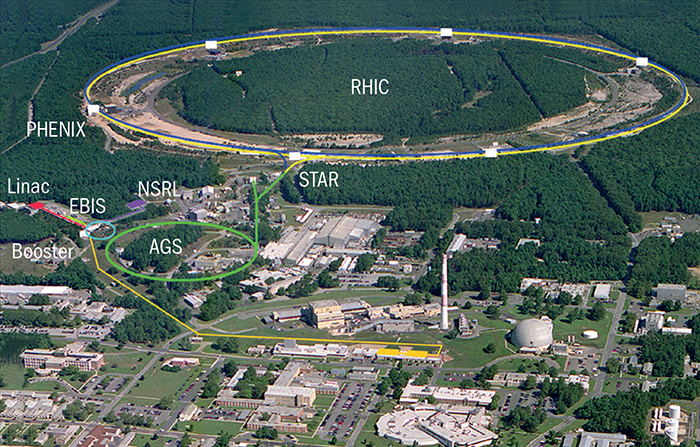
• The US DOE’s Brookhaven National Laboratory (BNL) has named Wolfram Fischer as chair of its Collider–Accelerator Department (C-AD). C-AD develops, improves and operates BNL’s suite of particle and heavy-ion accelerators – including the Relativistic Heavy Ion Collider (RHIC) and Alternating Gradient Synchrotron (AGS) – and will also play a key role in supporting the upcoming construction of the Electron-Ion Collider (see Partnership yields big wins for the EIC). Fischer previously served as accelerator division head in C-AD.

PIP-II’s international engagement is the secret of success

Rendering of PIP-II superconducting linac

The Proton Improvement Plan II (PIP-II) is an essential upgrade – and ambitious reimagining – of the Fermilab accelerator complex. An all-new, leading-edge superconducting linear accelerator, combined with a comprehensive overhaul of the laboratory’s existing circular accelerators, will deliver multimegawatt proton beam power and, in turn, enable the world’s most intense beam of neutrinos for the international Long Baseline Neutrino Facility (LBNF) and Deep Underground Neutrino Experiment (DUNE). While positioning Fermilab at the forefront of accelerator-based neutrino research, PIP-II will also provide the “engine room” for a diverse – and scalable – experimental programme in US particle physics for decades to come. Put simply, PIP-II will be the highest-energy and highest-power continuous-wave (CW) proton linac ever built, capable of delivering both pulsed and continuous particle beams.

Another unique aspect of PIP-II is that it is the first US Department of Energy (DOE)-funded particle accelerator that will be built with significant international participation. With major “in-kind” contributions from institutions in India, Italy, the UK, France and Poland, the project’s international partners bring wide-ranging expertise and know-how in core accelerator technologies along with an established track-record in big-physics initiatives. What’s more, PIP-II is not going to be the last DOE project to benefit from international collaboration – there will be more to come – so a near-term priority is to provide a successful template that others can follow. 

Deconstructing neutrino physics

Neutrino detector modules

Operationally, LBNF/DUNE is a global research endeavour comprising three main parts: the experiment itself (DUNE); the facility that produces the neutrino beam plus associated infrastructure to support the experiment (LBNF); and the PIP-II upgrade to the Fermilab accelerator complex, which will power the neutrino beam. 

At Fermilab, PIP-II will accelerate protons and smash them into an ultrapure graphite target. The resulting beam of neutrinos will travel through the DUNE near detector on the Fermilab site, then through 1300 km of earth (no tunnel required), and finally through the DUNE far detector at Sanford Lab in South Dakota (see figure). Data from neutrino interactions collected by the experiment’s detectors will be analysed by a network of more than 1000 DUNE collaborators around the world.

In this way, DUNE will enable a comprehensive programme of precision neutrino-oscillation measurements using νμ and νμ beams from Fermilab. Key areas of activity will include tests of leptonic charge-parity conservation; determining the neutrino mass ordering; measuring the angle θ23 in the Pontecorvo–Maki–Nakagawa–Sakata mixing matrix; and probing the three-neutrino paradigm. Furthermore, DUNE will search for proton decay in several decay modes and potentially detect and measure the νe flux from any supernovae that take place in our galaxy. 

To provide unprecedented detail in the reconstruction of neutrino events, the DUNE experiment will exploit liquid-argon time-projection-chamber (LArTPC) detectors on a massive scale (technology itself that was first deployed at scale in 2010 for the ICARUS detector as part of the CERN Neutrinos to Gran Sasso facility). The LArTPC implementation for DUNE is currently being developed in two prototype detectors at CERN via the CERN Neutrino Platform, an initiative inaugurated in 2014 following the recommendations of the 2013 European Strategy for Particle Physics to provide a focal point for Europe’s contributions to global neutrino research. 

In addition to the prototype DUNE detectors, the CERN Neutrino Platform is contributing to the long-baseline Tokai-to-Kamioka (T2K) and future Hyper-Kamiokande experiments in Japan. Construction of the underground caverns for DUNE and Hyper-Kamiokande is under way, with both experiments chasing similar physics goals and offering valuable scientific complementarity when they come online towards the end of the decade. 

A key driver of change was the recommendation of the 2014 US Particle Physics Project Prioritization Panel (P5) that the US host a world-leading international programme in neutrino physics. “Its centrepiece,” the P5 report asserts, “would be a next-generation long-baseline neutrino facility (LBNF). LBNF would combine a high-intensity neutrino beam and a large-volume precision detector [DUNE] sited underground a long distance away to make accurate measurements of the oscillated neutrino properties… A powerful, wideband neutrino beam would be realised with Fermilab’s PIP-II upgrade project, which provides very high intensities in the Fermilab accelerator complex.”

Fast forward to December 2020 and full DOE approval of the PIP-II baseline plan, at a total project cost of $978m and with completion scheduled for 2028. Initial site preparation actually started in March 2019, while construction of the cryoplant building got under way in July 2020. Commissioning of PIP-II is planned for the second half of this decade, with the first delivery of neutrino beam to LBNF/DUNE in the late 2020s (see “Deconstructing neutrino physics” panel). With the help of Fermilab’s network of international partners, a highly capable, state-of-the-art accelerator will soon be probing new frontiers in neutrino physics and, more broadly, redefining the roadmap for US high-energy physics.  

Then, now, next

If that’s the future, what of the back-story? Fermilab’s particle-accelerator complex originally powered the Tevatron, the first machine to break the TeV energy barrier and the world’s most powerful accelerator before CERN’s Large Hadron Collider (LHC) came online a decade ago. The Tevatron was shut down in 2011 after three illustrious decades at the forefront of particle physics, with notable high-points including discovery of the top quark in 1995 and direct discovery of the tau neutrino in 2000. 

A powerful, wideband neutrino beam would be realised with Fermilab’s PIP-II upgrade project

Today, about 4000 scientists from more than 50 countries rely on Fermilab’s accelerators, detectors and computing facilities to support their cutting-edge research. The laboratory comprises four interlinking accelerators and storage rings: a 400 MeV room-temperature linac; an 8 GeV Booster synchrotron; an 8 GeV fixed-energy storage ring called the Recycler; and a 60–120 GeV Main Injector synchrotron housed in the same tunnel with the Recycler. The Main Injector generates more than 800 kW of proton beam power, in turn yielding the world’s most intense beams of neutrinos for Fermilab’s flagship NOvA experiment (with the far detector located in Ash River, Minnesota), while supporting a multitude of other research programmes exploring fundamental particles and forces down to the smallest scales.

A leading-edge SRF proton linac

The roll-out of PIP-II will make the Fermilab complex more powerful again. Replacing the 50-year-old linear accelerator with a high-intensity, superconducting radio­frequency (SRF) linac will enable Fermilab to deliver 1.2 MW of proton beam power to the LBNF target, providing a platform for scale-up to multimegawatt levels and the capability for high-power operation across multiple particle-physics experiments simultaneously. 

Deconstructed, the PIP-II linac is an 800 MeV, 2 mA H machine consisting of a room-temperature front-end (up to 2.1 MeV) followed by an SRF section designed to operate in CW mode. The CW operation, and the requirements it places on the SRF systems, present some unprecedented challenges in terms of machine design. 

Precision engineering

The H source (capable of 15 mA beam current) is followed by a low-energy beam transport (LEBT) section and a radio­frequency quadrupole (RFQ) that operates at a frequency of 162.5 MHz and is capable of 10 mA CW operation. The RFQ bunches, focuses and accelerates the beam from 30 keV to 2.1 MeV. Subsequently, the PIP-II MEBT includes a bunch-by-bunch chopping system that removes undesired bunches of arbitrary patterns from the CW beam exiting the RFQ. This is one of several innovative features of the PIP-II linac design that enables not only direct injection into the Booster RF bucket – thereby mitigating beam losses at injection – but also delivery of tailored bunch patterns for other experiments. The chopper system itself comprises a pair of wideband kickers and a 20 kW beam absorber.

In terms of the beam physics, the H ions are non-relativistic at 2.1 MeV and their velocity changes rapidly with acceleration along the linac. To achieve efficient acceleration to 800 MeV, the PIP-II linac employs several families of accelerating cavities optimised for specific velocity regimes – i.e. five different types of SRF cavities at three RF frequencies. Although this arrangement ensures efficient acceleration, it also increases the technical complexity of the project owing to the unique challenges associated with the design, fabrication and commissioning of a portfolio of accelerating systems.

Mapped versus increasing energy, the PIP-II linac consists of a half-wave resonator (HWR) operating at 162.5 MHz at optimal beta-value of 0.112; two types of single-spoke resonators (SSR1, SSR2) at 325 MHz and optimal betas equal to 0.222 and 0.472, respectively; and two types of elliptical cavities with low and high beta at 650 MHz (LB650, HB650) and optimal betas equal to 0.65 and 0.971. The HWR cryomodule has been built by the DOE’s Argonne National Laboratory (Lemont, Illinois), while an SSR1 prototype cryomodule was constructed by Fermilab, with a cavity provided by India’s Department of Atomic Energy. Both cryomodules have now been tested successfully with beam by the PIP-II accelerator physics team. 

Innovation yields acceleration

Each of the five accelerating systems comes with unique technical challenges and requires dedicated development to validate performance requirements. In particular, the CW RF mode of operation necessitates SRF cavities with high-quality factors at high gradient, thereby minimising the cryogenic load. For the SSR2, LB650 and HB650 cavities, the Qo and accelerating gradient specifications are: 0.82 × 1010 and 11.4 MV/m; 2.4 × 1010 and 16.8 MV/m; 3.3 × 1010 and 18.7 MV/m, respectively – figures of merit that are all beyond the current state-of-the-art. Nitrogen doping will enable the elliptical cavities to reach this level of performance, while the SSR2 cavities will undergo a rotational-buffered chemical polishing treatment. 

PIP-II prioritises international partnerships

International engagement

PIP-II is the first DOE-funded particle accelerator to be built with significant international participation, leveraging in-kind contributions of equipment, personnel and expertise from a network of partners across six countries. It’s a similar working model to that favoured by European laboratories like CERN, the European X-ray Free Electron Laser (XFEL) and the European Spallation Source (ESS) – all of which have shared their experiences with Fermilab to inform the PIP-II partnership programme. 

US

Partners: Argonne National Laboratory; Fermilab (lead partner); Lawrence Berkeley National Laboratory; Thomas Jefferson National Accelerator Facility

Key inputs: HWR, RFQ and resonance control systems

INDIA

Partners: Bhabha Atomic Research Centre (BARC); Inter-University Accelerator Centre (IUAC); Raja Ramanna Centre for Advanced Technology (RRCAT); Variable Energy Cyclotron Centre (VECC)

Key inputs: room-temperature and superconducting magnets, SRF cavities, cryomodules, RF amplifiers

ITALY

Partner: Italian Institute for Nuclear Physics (INFN)

Key inputs: SRF cavities (LB650) 

UK

Partner: Science and Technology Facilities Council as part of UK Research and Innovation (STFC UKRI)

Key inputs: SRF cryomodules (HB650)

FRANCE

Partners: French Alternative Energies and Atomic Energy Commission (CEA); French National Centre for Scientific Research/National Institute of Nuclear and Particle Physics (CNRS/IN2P3) 

Key inputs: cryomodules (LB650) and SRF cavity testing (SSR2)

POLAND

Partners: Wrocław University of Science and Technology; Warsaw University of Technology; Lodz University of Technology

Key inputs: cryogenic distribution systems and high-performance electronics (e.g. low-level RF and RF protection instrumentation).

A further design challenge is to ensure that the cavity resonance is as narrow as possible – something that is necessary to minimise RF power requirements when operating in CW mode. However, a narrow-bandwidth cavity is prone to detuning owing to small acoustic disturbances (so-called microphonic noise), with adverse effects on the required phase, amplitude stability and ultimately RF power consumption. The maximum detuning requirement for PIP-II is 20 Hz – achieved via a mix of passive approaches (e.g. cryomodule design, decoupling cavities from sources of vibration and more rigid cavity design) and active intervention (e.g. adaptive detuning control algorithms). 

Another issue in the pulsed RF regime is Lorentz force cavity detuning, in which the thin walls of the SRF cavities are deformed by forces from electromagnetic fields inside the cavity. This phenomenon can be especially severe in the SSR2 and LB650 cavities – where detuning may be approximately 10 times larger than the cavity bandwidth – though initial operation of PIP-II in CW RF and pulsed beam mode will help to mitigate any detuning effects.

The management of risk 

Given the scale and complexity of the linac development programme, the Fermilab project team has constructed the PIP-II Injector Test facility (also known as PIP2IT) as a systems engineering testbed for PIP-II’s advanced technologies. Completed last year, PIP2IT is a near-full-scale prototype of the linac’s room-temperature front-end, which accelerates protons up to 2.1 MeV, and the first two PIP-II cryomodules (HWR and SSR1) that then take the beam up to about 20 MeV. 

The testbed is all about risk management: on the one hand, validating design choices and demonstrating that core enabling technologies will meet PIP-II performance goals in an operational setting; on the other, ensuring seamless integration of the in-kind contributions (including SRF cavities, magnets and RF amplifiers) from PIP-II’s network of international partners (see “PIP-II prioritises international partnerships”). Beam commissioning in PIP2IT was completed earlier this year, with notable successes versus a number of essential beam manipulations and technology validations including: the PIP-II design beam parameters; the bunch-by-bunch chopping pattern required for injection into the Booster; and acceleration of beam to 17.2 MeV in the first two PIP-II cryomodules. Significant progress was also registered with successful testing of the SRF/cryomodule technologies, first operation of the laser-wire profile monitor, and the application of machine-learning algorithms to align the orbit through the cryomodules. 

There’s no duplication of effort here either. Post-commissioning, after completion of full system and design validation, the PIP2IT accelerator will be disassembled, moved and reinstalled in the PIP-II facility as the SRF linac’s upstream front-end. The testbed location, meanwhile, is being transformed into the PIP-II Cryomodule Test Facility, where most of the cryomodules will be tested with full RF power before being installed in the tunnel. 

Notwithstanding construction of the new SRF linac, PIP-II also involves fundamental upgrades to Fermilab’s existing circular accelerators – the Booster, Recycler Ring and Main Injector – to enable the complex to achieve at least 1.2 MW of proton beam power while providing a scalable platform towards multi-MW capability. More specifically, the path to 1.2 MW from Fermilab’s Main Injector, over the energy range 60 to 120 GeV, requires a number of deliverables to come together: increase of the Fermilab Booster beam intensity by roughly 50% compared to current operation (i.e. an increase in the number of protons extracted per Booster cycle from 4.3 × 1012 to 6.3 × 1012); reduction of the Main Injector cycle from 1.33 to 1.2 s; and an increase of the Booster repetition rate from 15 to 20 Hz. 

PIP-II: a flexible, versatile design

If PIP-II is primarily about providing a platform for doubling the beam power from Fermilab’s Main Injector, the project is also designed with scalability in mind to enable future upgrades versus a broad spectrum of scientific opportunities. 

At 2 mA average beam current at 800 MeV, the PIP-II linac is capable of delivering up to 1.6 MW of CW beam power. The LBNF/DUNE experiment requires approximately 17 kW of that power budget – which constitutes 1% of the available beam power – though that requirement will scale to twice as much over the long term. The rest of the beam can be delivered to other user programmes by combining RF separators and fast switching magnets, yielding a high-power beam with flexible bunch patterns for diverse experiments simultaneously. 

One key outcome of PIP-II is an upgrade path for a 10-fold increase in beam power delivered to the Mu2e experiment. The resulting Mu2e-II project will measure how muons decay to electrons with the aim of observing forbidden processes that could point to physics beyond the Standard Model. PIP-II will also underpin a low-energy muon research programme, using not only its large beam power but also its extremely flexible bunch structure to support two different classes of slow-muon experiments – i.e. those involving continuous beams and those involving pulsed beams.

Along the energy coordinate, meanwhile, the PIP-II linac tunnel currently includes space and infrastructure for two more HB650 cryomodules – additions that would increase the beam energy above 1 GeV. There is considerable interest, for example, in using the excess protons at about 1 GeV that PIP-II could provide when operated in continuous mode. Coupling to a proton storage ring to drive a MW-class proton beam dump facility would support new lines of enquiry in high-energy physics, including the search for accelerator-produced dark matter. Extending the tunnel (and adding even more cryomodules) would offer an upgrade path to further increase the beam energy to roughly 2 GeV.

Versatility is a given. Although the PIP-II linac accelerates H ions, it’s worth noting that most of the accelerator components are also suitable for acceleration of protons without modifications or changes to their polarity or phase.

Right now, beam losses in the Booster – which occur during injection, transition and extraction – prevent the intensity increase and limit the performance of the accelerator complex to roughly 900 kW. The PIP-II SRF linac injection into the Booster mitigates high-intensity effects and reduces losses on two fronts: first, the higher injection energy (800 MeV vs 400 MeV) will mitigate space-charge forces at higher beam intensities; second, the high-quality, lower-emittance beam will allow “beam painting” at injection in all three degrees of freedom, further reducing space-charge forces and beam losses at high intensity. Other upgrades are also in the works to further reduce and control losses, with some of them to be made available early, several years before PIP-II commissioning, to benefit the NOvA experiment. 

In PIP-II, the 8 GeV Booster beam will be injected into the Fermilab Recycler ring – equipped with new 53 MHz RF cavities capable of larger beam current – where 12 Booster transfer batches are accumulated and slip-stacked. Next, the Recycler beam will enter Fermilab’s Main Injector – equipped with double the number of power amplifiers and vacuum tubes – which accelerates this intense beam anywhere from 60 to 120 GeV, delivering at least 1.2 MW of beam power at 120 GeV. Further, the Booster upgrade to 20 Hz will support an 8 GeV science programme, including Fermilab’s muon-to-electron conversion experiment (Mu2e) and studies of short-baseline neutrinos (see “PIP-II: a flexible, versatile design”). 

International collaboration  

Over the next decade, the PIP-II roadmap is clear. Phase one of the project will see the front-end of the Fermilab accelerator complex replaced with an 800 MeV SRF linac while performing necessary upgrades to the existing rings. Completion will see PIP-II deliver an initial beam power of 1.2 MW on the LBNF target, though the longer-term objective is to upgrade to 2.4 MW through replacement of the Booster synchrotron.

Operationally, its worth reiterating that PIP-II is very much a collective endeavour

Operationally, it’s worth reiterating that PIP-II is very much a collective endeavour – in fact, the first US accelerator to be built with the help of a network of international partnerships. In this way, PIP-II is very much a trail-blazer, with the excellence and sustained commitment of the project’s international partners essential for the construction – and ultimately the successful delivery – of this next-generation accelerator complex by the end of the decade. 

Rare isotopes aplenty at FRIB

The 400 kW SRF linac

The $730 million Facility for Rare Isotope Beams (FRIB) at Michigan State University (MSU) is scheduled to come online in early 2022 – a game-changer in every sense for the US and international nuclear-physics communities. With peer review and approval of the first round of experimental proposals now complete, an initial cohort of scientists from 25 countries is making final preparations to exploit FRIB’s unique capabilities. Their goal: to open up new frontiers in the fundamental study of rare and unstable isotopes as well as identifying promising candidate isotopes for real-world applications. 

The engine-room of the FRIB scientific programme is an all-new 400 kW superconducting radiofrequency (SRF) linac. In short: the world’s most powerful heavy-ion driver accelerator, firing beams of stable isotopes at targets of heavier nuclei (for example, carbon or beryllium). Amid the chaos of flying particles, two nuclei will occasionally collide, fusing to form a rare and unstable isotope – a process that ultimately delivers high-intensity beams of rare isotopes to FRIB’s experimental end-stations and a suite of scientific instruments. 

Funded by the US Department of Energy Office of Science (DOE-SC), and supported by MSU cost-share and contributions, FRIB will operate as a traditional big-science user facility, with beam-time granted via merit review of proposals and access open to all interested researchers. Here, FRIB’s scientific director, Bradley Sherrill, tells CERN Courier how the laboratory is gearing up for “go-live” and the importance of wide-ranging engagement with the international user community, industry and other rare-isotope facilities.

What are the overarching objectives of the FRIB scientific mission?

Bradley Sherrill

There are four main strands to the FRIB science programme. For starters, user experiments will generate a wealth of data to advance our understanding of the nucleus – how it’s put together and how we can develop theoretical nuclear models and their approximations. At the same time, the research programme will yield unique insights on the origins of the chemical elements in the universe, providing access to most of the rare isotopes involved in extreme astrophysical processes such as supernovae and neutron-star mergers. Other scientists, meanwhile, will use isotopes produced at FRIB to devise experiments that look beyond the Standard Model, searching for subtle indications of hidden interactions and minutely broken symmetries. Finally, FRIB will generate research quantities of rare isotopes to feed into R&D efforts on next-generation applications – from functional medical imaging to safer nuclear reactors and advanced detector technologies.

What is FRIB’s biggest differentiator?  

The 400 kW SRF linac is the heart of FRIB’s value proposition to the research community, opening up access to a much broader spectrum of rare isotopes than hitherto possible – in fact, approximately 80% of the isotopes predicted to exist. It is worth noting, though, that FRIB does not exist in isolation. It’s part of a global research ecosystem, with a network of collaborations ongoing with other rare-isotope facilities – among them RIKEN’s RI Beam Factory in Japan, RAON in Korea, ISOLDE at CERN, FAIR in Germany, GANIL in France and ISAC at TRIUMF in Canada. Collectively, FRIB and this global network of laboratories are well placed to deliver unprecedented – and complementary – advances across the nuclear-science landscape over the coming decades.

Is it realistic to expect broader commercial opportunities to emerge from FRIB’s research programme? 

There’s a high likelihood of FRIB yielding spin-off technologies and commercial applications down the line. One of the game-changers with FRIB is the quantities of rare isotopes the beamline can produce with high efficiency – a production scheme that enables us to make a broad swathe of isotopes relatively quickly and with high purity. That capability, in turn, will enable potential early-adopters in industry to fast-track the evaluation of novel applications and, where appropriate, to figure out how to produce the isotopes of interest at scale (see “FRIB’s bumper harvest will fuel applied science and innovation”). 

How is FRIB engaging with the scientific user community across academia, industry and government agencies? 

FRIB enjoys strong links with its future users – both here in the US and internationally – and meets with them regularly at planning events to identify and coordinate research opportunities. Earlier this year, in response to our first call for proposals, we received 82 project submissions and six letters of intent from 130 institutions across 30 countries. Those science proposals were subsequently peer-reviewed by the FRIB Programme Advisory Committee (PAC), an international group of nuclear science experts which I convene, to yield an initial set of experiments that will get underway once FRIB commences user operations in early 2022. 

Those PAC-recommended experiments align with national science priorities across the four FRIB priority areas: properties of rare isotopes; nuclear astrophysics; fundamental interactions; and applications for society. The headline numbers saw 34 (out of 82 requested) experiments approved with a projected 4122 facility-use hours. There are 88 institutions, 24 US states and 25 countries represented in the initial experimental programme.

FRIB’s bumper harvest will fuel applied science and innovation

An excess of useful radioisotopes will be formed as FRIB fulfils its basic science mission of providing rare-isotope beams to feed a broad-scope international user programme. For the FRIB beams to reach high purity, though, the vast majority of these “surplus” isotopes will end up discarded in a water-filled beam dump – stranded assets that go unused and remain largely unexplored. 

With this in mind, the DOE-SC Office of Nuclear Physics, through the DOE Isotope Programme, has awarded FRIB scientists $13 million in funding over the next four years to build up FRIB’s isotope harvesting capabilities. The hope is that systematic recovery of the surplus isotopes – without impacting FRIB’s primary users – could open up novel lines of enquiry in applied research – from biochemistry to nuclear medicine, and from radiothermal generators to nuclear-weapons stockpile stewardship.

“This grant is about broadening the scientific impact of FRIB,” says Greg Severin, lead investigator for the harvesting project at FRIB. “While physicists at FRIB are making ground-breaking fundamental discoveries, our team will be supporting exciting opportunities in applied science.”

In 2018, the DOE-SC awarded Severin and colleagues an initial grant to prove that isotope harvesting is feasible. Their proof-of-concept involved building a small-scale isotope harvester in FRIB’s predecessor, the National Superconducting Cyclotron Laboratory at MSU. 

Now, with follow-on funding secured, Severin’s team is scaling up, with construction of a dedicated Isotope Harvesting Vault at FRIB in the works and set for completion in 2024.

See also “Isotope harvesting at FRIB: additional opportunities for scientific discovery” (J. Phys. G: Nucl. Part. Phys. 2019 46 100501). 

What are the opportunities for early-career scientists and engineers at FRIB?

Developing the talent pipeline is part of the organisational DNA here at FRIB. There’s a structured educational framework to pass on the expertise and experience of senior FRIB staff to the next generation of researchers, engineers and technicians in nuclear science. MSU’s Accelerator Science and Engineering Traineeship (ASET) programme is a case in point. ASET leverages multidisciplinary expertise from FRIB and MSU colleagues to support specialisation in four key areas: physics and engineering of large accelerators; SRF technology; radiofrequency power engineering; and large-scale cryogenic systems. 

Theres a high likelihood of FRIB yielding new spin-off technologies as well as commercial applications

Many MSU ASET students supplement their courses through participation in the US Particle Accelerator School, a national programme that provides graduate-level training and workforce development in the science of particle beams and associated accelerator technologies. At a more specialist level, there’s also the MSU Cryogenic Initiative, a unique educational collaboration between the university’s college of engineering and FRIB’s cryogenics team. Meanwhile, we continue to prioritise development of a more diverse workforce, partnering with several academic institutions that traditionally serve under-represented groups to broaden participation in the FRIB programme. 

In what ways does FRIB ensure a best-practice approach to facilities management? 

Sustainability and continuous improvement underpin all FRIB working practices. We are an ISO14001-registered organisation, which means we measure ourselves against an international standard specifying requirements for effective environmental management. That’s reflected, for example, in our use of energy-efficient superconducting technologies, and also our efforts to minimise any helium wastage through an exhaustive capture, recovery and reuse scheme within FRIB’s cryogenic plant. 

We also have an ISO 9001-registered quality management system that guides how we address scientific user needs; an ISO 45001-registered occupational health and safety management system to keep our workers safe; and an ISO 27001-registered information security management system.

How important is FRIB’s relationship with industry?

Our strategic partnerships with industry are also significant in driving organisational efficiencies. The use of standard industry components wherever possible reduces maintenance and training requirements, minimises the need for expensive product inventory, and lowers our operational costs. We engage with manufacturers on a co-development basis, fast-tracking innovation and knowledge transfer so that they are able to produce core enabling technologies for FRIB at scale – whether that’s accelerator cavities, superconducting magnets, or vacuum and cryogenic subsystems.  

bright-rec iop pub iop-science physcis connect