Comsol -leaderboard other pages

Topics

Thinking big: the next generation of detectors

This time last year, it became clear at the Neutrino 2004 conference that results from experiments on solar and atmospheric neutrinos are converging with those from accelerators (in particular, KEK to Kamioka, or K2K, in Japan) and reactors (as in KamLAND, also in Japan) in pointing to a definite neutrino deficit due to an oscillation mechanism. However, further understanding will require new experiments, aimed at making precision measurements of all the parameters of the Pontecorvo-Maki-Nakagawa-Sakata (PMNS or MNSP) leptonic mixing matrix that describes the oscillation mechanism.

The major challenge will be to detect a potential violation of charge-parity (CP) invariance in the leptonic sector, which might in turn make a crucial contribution to explaining the matter-antimatter asymmetry in our universe. Such experiments will require the use of huge “mega-detectors”.
CCEbig1_07-05

The first generation of large-volume detectors was initially designed to measure proton decay. By pushing up the limits on the lifetime of the proton by two orders of magnitude, these experiments made it possible to exclude a minimal SU5 theory as the theory for grand unification. A new, second generation of experiments would make it possible to increase the sensitivity to the proton lifetime by two further orders of magnitude, and check the validity of a significant number of supersymmetry theories. The kind of detector required would also be well suited to the study of those major events in the history of the universe that we know as supernovae.

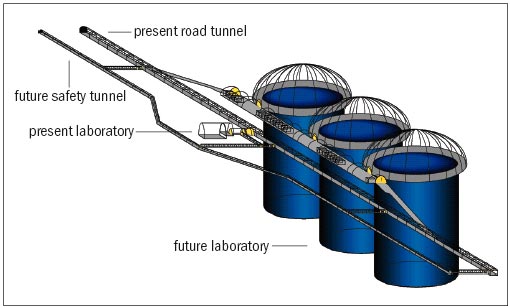
It is therefore quite appropriate for the same conference to address the detection of neutrinos, the measurement of the proton lifetime and issues relating to cosmology, as in this year’s meeting on the Next Generation of Nucleon Decay and Neutrino Detectors (NNN), held near the Laboratoire Souterrain de Modane (LSM). Originally the site of a detector to study proton instability, the LSM is now a potential site for hosting a mega-detector, capable of receiving a low-energy neutrino beam from CERN, 130 km away. Thus, on 7-9 April 2005, around 100 participants, mainly from Europe, Japan and the US, came together for a conference at the CNRS’s Paul Langevin Centre at nearby Aussois organized by IN2P3 (CNRS) and Dapnia (DSM/CEA), with financial support from photomultiplier manufacturers Hamamatsu, Photonis and Electron Tubes Ltd (ETL).

The first day of the meeting was dedicated to theory, physics motivations and future experimental projects to be pursued at underground sites. John Ellis from CERN opened the conference with a striking plea in favour of this type of physics; he insisted that it complemented collider physics, and emphasized the potential discoveries to be made with a mega-detector.
CCEbig2_07-05

Specialists in the field explained that proton decay, which has not yet been discovered, is still the key to grand unified theories. Recalling that the detectors built to measure the proton lifetime had made it possible to detect neutrinos from supernovae for the first time, subsequent presentations addressed potential approaches to supernova physics, about which little is known, through the high-statistics detection of the neutrinos from these stellar explosions. As Gianluigi Fogli of Bari and Sin’ichiro Ando of Tokyo explained, such a detector would make it possible to extend to neighbouring galaxies the study of these major events in the evolution of the universe, be they in the future or in the distant past.

The afternoon sessions moved on to consider future detectors that could be sited at locations where the detection of neutrino beams, at some distance from an accelerator, could be combined with the observation of proton decay and astrophysical neutrinos. These presentations took stock of the progress of large-scale detector projects in the US, Asia and Europe.

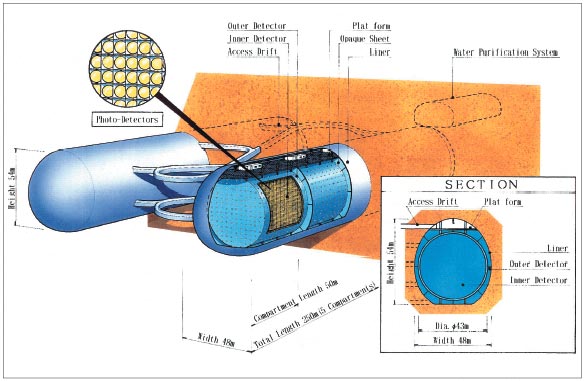
On the face of it, the most accessible technology (the best known and simplest to implement) uses the Cherenkov effect in water, as proposed for the Hyper-Kamiokande project in Japan and the Underground Nucleon Decay and Neutrino Observatory (UNO) project in the US. The most ambitious technology is without doubt that for a large liquid-argon time-projection chamber (100 kt), a bold derivative of the ICARUS detector currently under preparation in the Gran Sasso Laboratory. Further promising alternatives look to organic scintillating liquids, as in the Low Energy Neutrino Astronomy project (LENA), and even a magnetized iron calorimeter as in the India-based Neutrino Observatory (INO).
CCEbig3_07-05

Precision measurements of the θ13 mixing angle in the PMNS matrix, with a value that conditions the possibility of obtaining a measurement of CP violation, require high-intensity neutrino beams. The following day, the conference heard presentations on the worldwide status of experiments using a beam to verify the results obtained with solar or atmospheric neutrinos. For Japan – in addition to the K2K experiment, which has already successfully launched such a programme – the opportunities offered by a successor, Tokai to Kamioka (T2K), at the new Japan Proton Accelerator Research Complex (J-PARC) were reviewed. For the US, following the report of the first results after the successful launch of the Main Injector Neutrino Oscillation Search (MINOS), presentations highlighted the opportunities for measuring θ13 at Fermilab with experiments using off-axis beams to the Soudan mine, as well as the very-long-distance projects from Brookhaven towards several prospective sites.

Moving on to CERN, and Europe more generally, the opportunities for beams to the Gran Sasso Laboratory, which hosts the OPERA and ICARUS experiments, were defined. A series of contributions also demonstrated the validity and physics potential of longer-term projects that are likely to be of direct interest to the CERN community. These are based on the superbeams and neutrino beta-beams produced by the beta-decays of certain light nuclei, such as helium or neon, and even by the decay of dysprosium, which has been met with enthusiasm since the recent discovery of this possibility.

The afternoon session of the second day was mainly devoted to the complex but encouraging R&D efforts in fields as varied as the study of the different physics and instrumental backgrounds, and photo detection. In particular, the presence and support from principal actors in the field of photomultiplier manufacture led to a series of promising technical presentations, in addition to those by physicists on the efforts underway in laboratories in the field of photo detection. The clear objective is to build photomultipliers able to cover large surface areas. The synergies with other fields of research, such as geophysics and rock mechanics, were also underlined.

On one hand, the conference sought to follow in the footsteps of its predecessors; on the other it aimed to ensure that such meetings were held on a more regular basis, and to rationalize their agendas. With this in mind, the day concluded with a round-table discussion, where the participants included Alain Blondel (Geneva), Jacques Bouchez (Saclay), Gianluigi Fogli (Bari), Chang Kee Jung (Stony Brook), Kenzo Nakamura (Tsukuba), André Rubbia (Zurich) and Bernard Sadoulet (Berkeley). It was moderated by Michel Spiro (IN2P3), who proposed making the NNN an annual event and improving coordination of the community’s R&D efforts. This would be done by setting up an inter-regional committee, consisting of several members for each region (Europe, North America, Japan and so on), with a view to validating the construction of a very large detector in around 2010. The committee would also maintain contacts with the steering group for ECFA Studies of a European Neutrino Factory and Future Neutrino Beams, which is chaired by Blondel.

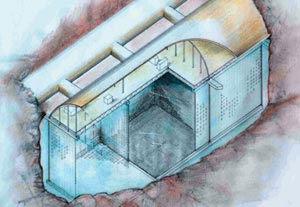
On the last day, before the organized visit to the LSM, an entire session was devoted to a series of presentations from Japan, the US and France. Taking an engineering point of view, this session examined the potential caverns for housing a megatonne detector. Several possible sites are being considered in the US, and the Japanese are presenting the results of their studies for the Kamioka sites. In Europe, the Fréjus site on the Franco-Italian border could host a megatonne detector, so long as the preliminary studies, which have already begun, yield positive results.

The various presentations given throughout the NNN05 conference clearly highlighted the possible areas for exchanges between the different regions and communities, which until now have tended to pursue distinct paths. The next NNN conference will be held in the US in 2006, and the following meeting has already been scheduled to take place on 2 October 2007 at Hamamatsu in Japan, the Japanese “shrine” for photomultipliers.

40 great years of the Rencontres de Moriond

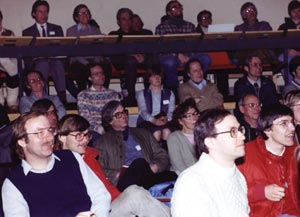
From 5 to 19 March, 400 scientists from the four corners of the world gathered in La Thuile to discuss fundamental questions in high-energy physics and astrophysics, during four distinct one-week meetings. This was the 40th Rencontres de Moriond – an event that has grown from being a gathering of around 20 friends in 1966 to an annual institution for scientists everywhere.

CCEren1_07-05

In the early 1960s, scientific meetings in which theorists and experimenters discussed questions of mutual interest were rare. Even rarer were meetings in which participants of all ages talked to each other on an equal footing, in a climate insulated from day-to-day problems and far removed from the usual laboratory environment.

In 1965, Jean Tran Thanh Van, a young researcher at Orsay, decided to organize an unusual scientific meeting for January 1966. The subject itself – electromagnetic interactions – was not particularly unusual, but the organization was. The meeting was held in the French Alps in a group of chalets, with no catering help or assistance, few of the visual aids one associates with such meetings and, most importantly, without any telephone contact with the outside world. Tran Thanh Van was helped in this groundbreaking initiative by five colleagues: Bernard Grossetête, Fernand Renard, Michel Gourdin, Jean Perez Y Jorba and Pierre Lehmann.

This was not a conference or a school, but a gathering (“rencontre”) of minds. The name of what became a series of meetings reflects this original motivation. Held in Moriond village, the very first of the Rencontres de Moriond was a resounding success. The 20 participants included theorists and experimenters of all ages, from France, Italy (Frascati) and Germany (DESY). The time was well filled with fruitful but relaxed discussions, culinary experiments, skiing, and evenings spent listening to music performed by the scientists themselves.

CCEren2_07-05

The Rencontre was unusual in another respect. Half of the participants and organizers were young researchers, but their views and contributions were as significant as those of the senior members. At Moriond, all participants were equal, and none were more equal than others. Happily this tradition persists today.

For the past 39 years the meetings have not been held in Moriond, but they still take place in the mountains! The content has changed continuously, but the underlying Moriond spirit has taken on a life of its own, much to the surprise of Tran Thanh Van. Those original chalets used in 1966 soon became too small and the Rencontres moved to Courchevel, at the Hotel des Neiges, then wandered from hotel to hotel before finding a temporary home in Meribel in 1970, at the Lac Bleu hotel. Gradually, the Rencontres de Moriond became known as the annual fair of the high-energy physics community. Participants would go their separate ways, conduct their own research, then return to the annual Rencontres to show their latest work, find new collaborators and exchange ideas – and then continue their trek to new horizons. A core membership of more than 80 physicists began to meet annually.

In 1969, Tran Thanh Van felt that it was time to apply the idea of bridges within his discipline to bridges between disciplines. As a result, 1970 saw the addition of a biology meeting (founded by cell biologist Kim Tran Thanh Van) to the particle-physics meetings.

An evolving institution

During the decades that followed, the Rencontres gradually changed in character. From a one-week meeting, devoted essentially to one subject in high-energy physics, it expanded into a two-week conference with two basic topics in particle physics – electroweak and hadronic interactions – and a topic in biology. It became an annual “happening”, followed by physicists and biologists worldwide. It was a place to announce new discoveries, to discover the new directions that researchers were taking, and to forge new friendships and collaborations.

CCEren3_07-05

The Rencontres de Moriond became an institution, but the underlying motivation remained intact. Theorists mingled with experimenters; young researchers (postdocs and PhD students) were encouraged to present their work and talk with senior researchers as with colleagues and friends; even the most outrageous ideas had their place. The Rencontres were often the place for young scientists to present their first serious papers before a prestigious international audience, and a place to meet and listen to individuals before there was even a hint that they would one day win a Nobel prize.

Times changed, the pressure to publish rose and the number of participants grew, but the original convivial spirit of the Rencontres was an invariant from year to year. The early afternoon breaks were invariably devoted to skiing (for beginners and experts alike), but this never stopped the science. Tourists would often wonder who those strange people were, stopping on the pistes to talk about some recondite subject using an esoteric vocabulary, pausing to draw diagrams in the snow, and getting so involved in an arcane discussion on a ski lift that they would almost forget to get off.

Although science was always on our minds, on or off the snow, there was time to talk of other matters, to change the world, to make and listen to music. The scientific community includes a large number of excellent amateur musicians of all kinds, from singers to pianists and violinists, who would often show their skills after dinner around the bar. Sometimes a popular science talk would be organized for the general public of the resort, and these talks were always well received.

Science knows no barriers: a proton is a proton, in Switzerland, America or Russia. But the post-war world was a labyrinth of frontiers and walls, and the Rencontres de Moriond played a part in changing this stifling climate of political confrontation between the East and the West. Every effort was made to help and encourage Russian (and more generally Eastern European) scientists to come to the Rencontres, both to display their considerable scientific expertise – often unrecognised – and to learn about the latest advances in the West. This was a new and different kind of multidisciplinary work, which many years later would find an echo in the Rencontres du Vietnam. The annual Rencontres in the Alps was a peaceful haven where the best minds of hostile, inward-looking nations could meet, talk, exchange ideas, push back the frontiers of their discipline and dream of a happier future.

Changing times

As the 1970s drew to a close, participants at the Rencontres found themselves increasingly attracted by subjects such as atomic physics and astrophysics, which were beginning to encroach on the domain of high-energy physics. The Rencontres had begun as a forum for exchanging ideas in frontier science, and now, true to this spirit, Tran Thanh Van recognized that it was once again time to broaden the scope of the meetings.

In 1981 the Rencontres de Moriond Astrophysique was born. It ran in parallel with the now traditional high-energy and biology meetings, and was an annual event devoted to the study of the infinitely large. The Rencontres de Moriond had become a true interdisciplinary institution, where specialists in distinct disciplines could confront their very different views of the universe. There were accelerator experimenters, observers, theorists in particle physics, cosmologists and even experts in galactic evolution.

During its 40 year lifetime, the Rencontres de Moriond has welcomed more than 10,000 scientists of all ages and statures from across the world.

The Rencontres was thus restructured around three major centres of interest: biology, high-energy physics and astrophysics. But the rest of science was not neglected. As the 1980s gave way to the 1990s, new subjects, sometimes only marginally related to the regular topics, would start to make an appearance. Among these topics were gravitational physics, mesoscopic physics, the search for the fifth force and for new laws in physics, and tests of the limits of existing laws.

As with all successful enterprises, Moriond has evolved. There are now more subjects, more meetings, more participants and more administration! But the spirit and excitement of those early days remain unabated. No discipline is an island unto itself, and the programme of each meeting, whatever its nominal subject, emphasizes the essential unity of the scientific endeavour.

During its 40 year lifetime, the Rencontres de Moriond has welcomed more than 10,000 scientists of all ages and statures from across the world. The meetings represent an important date in the scientist’s calendar. Since 1993 they have been sponsored by the European Union under the euroconference system, and thanks to this financial help, many young researchers have been able to participate – helping to maintain the youth and vigour of the meetings.

Spin-off events

The Rencontres de Moriond has stimulated the creation of other meetings organized in the same spirit: the Aspen Winter Conferences (US) and the Rencontres de Physique de la Valée d’Aoste (La Thuile, Italy) are flourishing examples, where frontier science is conducted in a warm and convivial atmosphere. The Rencontres de Blois, in existence for 17 years, represents another development of the Moriond spirit; these meetings are explicitly multidisciplinary in character, the subject changing from year to year, and culture replaces skiing during the break time.

Most recently, the Rencontres du Vietnam, which started in 1993, has taken this idea even further, with the explicit aim of helping Vietnam, still a developing country, realize its great potential. These meetings offer a forum in which scientists from Asia and the West can meet, present their work and forge new collaborations.

Which brings us to the present day, and to this year’s Rencontres de Moriond. In March it welcomed 20 times as many participants as the first meeting, incorporated audiovisual techniques that were unheard of 40 years ago, and enjoyed instantaneous contact with the world through the Internet. On the programme was research into fundamental questions that had not even been asked in 1966. The impressive set of proceedings, covering several decades, emphasized that we are in the golden age of physics, and that science is more vigorous than ever.

But the unique spirit of those early meetings lives on. Of the 400 participants at the 2005 meeting, 57% were younger than 35; of the 350 papers presented, 80% were read by young researchers; 60% of the participants were experimenters or observers and 40% were theorists. Sandwiched between three hours of morning talks and another three hours of hard work in the late afternoon was that traditional break, in which science, snow and sky combine to create new and ever-changing patterns.

What has the Moriond spirit brought to the scientific community? Nobel laureate James Cronin had this to say at the 20th anniversary of the Rencontres: “The Rencontres de Moriond has had a profound effect on the way we communicate in particle physics. It is a format which is extensively copied. The first Rencontres I attended was in 1971. There I learned for the first time about the GIM mechanism from Glashow and Iliopoulos. By having informal conversation on the ski slopes and in the bar at night, one could really understand why charm is necessary… I shall remember… the opportunity to discern the genuine humanity of our colleagues from all over the world.”

Telescope takes next step to high-energy frontier

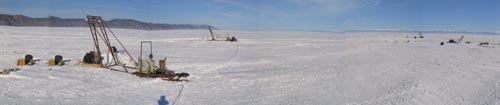
On 9 April 2005, another sunny and bitterly cold day on the southwest shore of Lake Baikal in Siberia, NT200+ was commissioned as the successor to the neutrino telescope NT200. With an effective volume of 10 million tonnes, NT200+ forms one of a trio of large high-energy neutrino telescopes currently in operation, together with Super-Kamiokande in Japan and the Antarctic Muon and Neutrino Detector Array (AMANDA) at the South Pole.

CCEice1_07-05

Every year in February and March, the Baikal Neutrino Telescope is hauled up close to the surface of the thick layer of ice that covers the lake in winter for routine maintenance. Then, in early April, in a race against the steadily warming environment, the ice camp with all its containers and winches is dismantled and stored on shore. The telescope is re-deployed to its operational depth of 1.1 km below the surface and switched back on for another year of operation. With a stable ice cover on the lake lasting well into April, nature has been kind this year to the 50 physicists and technicians, who have struggled over two Siberian winters to accomplish their ambitious programme to upgrade NT200.

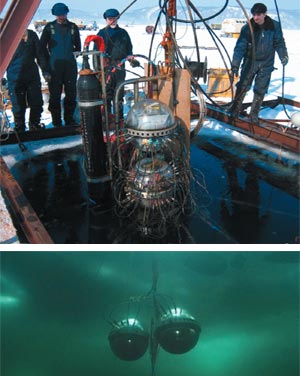
The existing NT200 telescope consists of 192 glass spheres, 40 cm in diameter, each housing a 37 cm phototube. The first, smaller stage of the telescope was commissioned in 1993, and became the first stationary underwater Cherenkov telescope for high-energy neutrinos in a natural environment (CERN Courier September 1996 p24). The full array was completed in 1998 and has been taking data ever since.

CCEice2_07-05

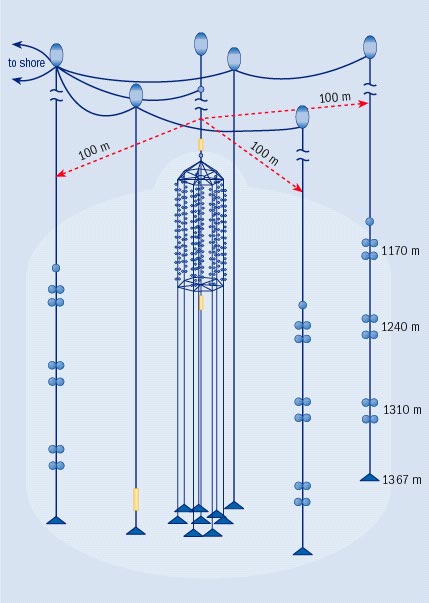
The glass spheres are arranged in pairs along eight vertical strings that are attached to an umbrella-like frame at a depth of 1.1 km. The phototubes record the Cherenkov light emitted by charged particles as they pass through the water. Three electrical cables, 5 km long with seven wires each, connect NT200 to the shore 3.5 km away and enable the array to be operated throughout the year. Two of these cables were changed in 2004 and 2005. The reliability and performance of the telescope were also improved during this period, with embedded high-performance PCs installed underwater. In addition, new modems operating at 1 Mbit/s have increased the transfer rate to shore by two orders of magnitude.

NT200 looks at the sky for sources of high-energy cosmic neutrinos. Galactic candidates for high-energy sources include supernova remnants and micro-quasars, while extragalactic sources include active galactic nuclei and gamma-ray bursts. If individual sources are too weak to produce an unambiguous directional signal, the integrated neutrino flux from all sources might still produce a detectable “diffuse signal”. This flux could be identified by an excess of particles at high energies above the background – which is dominantly muons produced in the atmosphere above the detector, with a small contribution from muons generated in the interactions of atmospheric neutrinos.

CCEice3_07-05

The most important result of the first four years of NT200 comes from a search for such a diffuse neutrino flux. It is based on a principle that works only in media with small light scattering, such as water. The idea is not only to watch the geometrical volume of the detector, but also to look for bright events in the large volume between the detector and the bottom of the lake. Because of the small light scattering, wave fronts are preserved over 100 m or more. This results in good pattern recognition for bright particle cascades occurring far outside the geometrical volume, and it enables distant high-energy cascades generated by neutrinos to be distinguished from bright bremsstrahlung showers along the much more frequent downward-going muons. No such events in excess of background have been found.

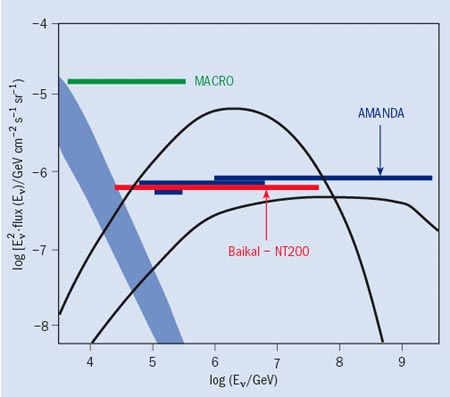
This result can be transformed into a limit on the flux of cosmic neutrinos, for a given spectral distribution. Assuming a reference spectrum that falls with the inverse square of the neutrino energy, four years of Baikal data yield the flux limit shown in figure 1. For comparison, the limits obtained in one year with the much larger AMANDA telescope are shown. Both experiments have entered new territory and exclude several models for sources of cosmic neutrinos.

CCEice4_07-05

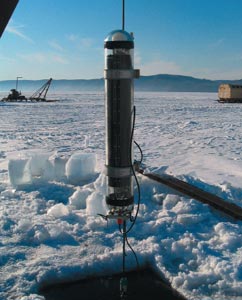
It is this success that motivated the upgrade to NT200+. In the new configuration, three 140 m strings with 12 photomultipliers each are arranged at a radius of 100 m from NT200, so that they surround most of the sensitive volume (figure 2). This enables a much better determination of the shower vertex and dramatically improves the energy resolution. As a result, the upgrade, which adds only 36 photomultipliers to the existing 192, yields a fourfold rise of the sensitivity at 10 PeV – certainly a cost-effective way to do better physics.

CCEice5_07-05

The results from NT200 have demonstrated that a deep underwater detector with an instrumented volume of 80 kt can reach an effective volume of a few megatonnes at peta-electron-volt energies. NT200+, with its moderate but cleverly arranged additional instrumentation, will boost the effective volume to more than 10 Mt. If successful, this could become the prototype for an even larger, sparsely instrumented detector for high energies.

• The Baikal Telescope is a joint Russian-German project, with the Institute for Nuclear Research (INR) in Moscow, the Moscow State University, the Joint Institute for Nuclear Research, Dubna, the Irkutsk State University (all Russia) and DESY (Germany).

ClearPET offers improved insight into animal brains

Crystal Clear is an international collaboration of research institutes, working to develop new generations of scanners for positron emission tomography (PET). The members are CERN, Forschungszentrum Jülich, the Institute of Nuclear Problems in Minsk, the Institute for Physical Research in Ashtarak, the Laboratório de Instrumentação e Física Experimental de Partículas (LIP) in Lisbon, Sungkyunkwan University School of Medicine in Seoul, the Université Claude Bernard in Lyon, the Université de Lausanne and the Vrije Universiteit Brussel (VUB).

Together with a number of guest laboratories, the institutes provide expertise in different domains of physics instrumentation, biology and medicine. Their research activities have led to the design and construction of three prototypes of a new generation of PET scanners for small animals, which provide depth-of-interaction (DOI) information. This machine has now been commercialized by the German company Raytest GmbH under the name ClearPET.

In PET, a molecule involved in a metabolic function of an organ or tumour is labelled by a positron-emitting radioisotope. Once injected, it is taken up by the cells or organs under study. The emitted positrons annihilate with electrons in the surrounding atoms to produce a back-to-back pair of gamma rays. Detecting this gamma radiation reveals the detailed distribution of the isotope.

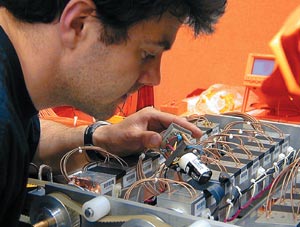
In the prototype scanners developed by the Crystal Clear collaboration, the detector heads are based on an 8 x 8 matrix of scintillation crystal elements, read out by a multi-anode photomultiplier tube (figure 1). Each element consists of a phosphor sandwich, or phoswich, made up of two layers of crystals with different decay times. One layer is formed from cerium-doped lutetium yttrium orthosilicate (LYSO) scintillator material; the other contains cerium-doped lutetium yttrium aluminate perovskite (LuYAP) scintillator, specially developed by the Crystal Clear collaboration and now commercially available from several companies.

The phoswich arrangement yields DOI information that can be used to correct parallax errors, resulting in a more uniform spatial resolution across the field of view. The crystal elements have an area of 2 x 2 mm and are 8 or 10 mm long; they are separated by 300 μm Tyvek, a highly reflecting material.

The detector modules, which are installed on a rotating gantry, consist of four detector heads mounted in line together with readout electronics. A complete ring system contains 20 detector modules. Because the gantry rotates during a scan, not all of the 20 need to be present. This allows the option of designing a cost-effective system based on a partial ring configuration. Two versions of the scanner are being produced, differing only in the mechanics of the gantry. ClearPETNeuro is optimized for small primates and features a gantry that can be tilted to allow the animal to be imaged in a sitting position, while ClearPET Rodent is optimized for rats and mice.

The performance of the ClearPET prototypes has been studied in various tests. The spatial resolution was measured by imaging a point source of the positron emitter 22Na. Figure 3 shows that the spatial resolution is close to the predictions made in detailed Monte Carlo simulations using GATE, the Geant4 Application for Tomographic Emission (CERN Courier January/February 2005 p27). At the centre of the field of view the resolution is 1.35 mm FWHM, and it remains constant around 1.8 mm FWHM for objects within 20 mm of the scanner axis.

A general feeling for the ClearPET’s performance was obtained by imaging a phantom – a model that measures the characteristics of a medical imaging system. An ad hoc Derenzo phantom was used, consisting of capillary tubes with diameters varying between 1.0 and 2.0 mm, arranged like slices in a pie. Rods of the phantom were filled with 0.5 mCi 18F, a positron emitter regularly used, for example, in PET scans of the brain. It was scanned for 6 min. Figure 4 shows a picture of the phantom and a reconstruction using the ordered-subsets expectation maximization (OSEM) method. Tubes with diameters as small as 1.6 mm are still clearly distinguishable.

The prototypes have also been tested with real subjects. Figure 5 (a) shows one of the rat images obtained with the ClearPETNeuro of the Forschungszentrum Jülich. A 400 g rat was injected with 0.5 mCi of 18F-labelled fluorodeoxyglucose ([18F]FDG), which can be used to observe sugar metabolism in the brain. A 24 min scan was started 30 min after the injection. The reconstructed image shows FDG uptake in the head of a rat. Figure 5 (b) depicts the anatomy of a rat brain. Note the good identification of the small olfactory bulb in front of the brain. These images were obtained using the library of Software for Tomographic Image Reconstruction (STIR) at Hammersmith Hospital, London.

These measurements meet the ClearPET design specifications, and the first images obtained with a rat support these encouraging results. The ClearPETNeuro of the Forschungszentrum Jülich and the ClearPETRodent at the Vrije Universiteit Brussel are nearing completion, and will soon be used in several biomedical research projects.

• “ClearPET” has been registered as a trademark and the technology is licensed to Germany’s Raytest GmbH, which is commercializing a small animal PET system based on the ClearPET Rodent developed by Crystal Clear. See www.raytest.de/index2.html.

Learning About Particles – 50 Privileged Years

by Jack Steinberger, Springer. Hardback ISBN 3540213295, €39.95 (£30.50, $49.95).

Learning About Particles is an interesting excursion for the reader through the past 50 years of particle physics – 50 privileged years, as one is aptly reminded by the subtitle. Our guide is Jack Steinberger, undoubtedly one of the protagonists of those years, who offers a personal account of the historical and scientific evolution of the field, interspersed with autobiographical notes. He also makes sociological comments and expresses political views, but always gracefully, even when it is obvious that they must bring to memory particularly sad events.

CCEboo1_07-05

The book follows a chronological order, which at times is slightly violated in favour of more logical organization by topic to improve readability. It unfolds at two paces: pleasantly accurate with generous detail of experiments from the early years, and slightly rushed by the time experiments at the Large Electron Positron (LEP) collider are reached.

Particularly enjoyable are the first four chapters, which recount his years as graduate student, post-doc and young faculty in various prestigious institutions. Descriptions of early experiments and of the theoretical interests of the time are wisely mixed with personal recollections and anecdotes about the “gurus” of physics, and about the author’s young colleagues who later became very famous. The history is a little more difficult to follow into the next chapter, however, when dealing with strange particles.

Two chapters are dedicated to neutrinos, marking two moments of their “interaction” with Steinberger. After the first, the reader feels disappointed – more details of the conception of the fundamental “two-neutrino experiment” would have been expected, as would some “inside stories”. Perhaps the disappointment stems from anticipation created earlier in the book when a future collaboration between the then Captain Lederman and the then Private Steinberger is mentioned. As for inside stories, Steinberger confesses that initially he did not believe in neutral currents and this (quite rightly!) cost him a few bottles of good wine.

In the second of the two neutrino chapters, the steps towards the present understanding of the nucleon structure are retraced clearly – although with some haste – and the author brings the reader to present times with neutrino masses and oscillations. The intervening chapter on CP violation is an authoritative account of the achievements in the field since its beginning in 1957. Here Steinberger enumerates the spectacular accomplishments of the Standard Model within the context of the LEP experiments, perhaps with a tinge of nostalgia for earlier times.

It is difficult to identify precisely the intended audience for this book. It seems to be aimed at a variety of readers, not all necessarily from a scientific background, as the explanations given from time to time in the footnotes imply. This is, however, not done consistently and the result is often unsatisfactory. Furthermore, the occurrence of a few misprints at unfortunate places might prove disconcerting for the untrained reader.

Regardless of the audience, however, the book touches clearly upon the building blocks of the Standard Model and communicates 50 years of passion for physics and its intricacies – a lesson for young researchers. It also speaks of a passion for other, and far more common, sources of enjoyment in life such as music and mountains – a lesson for physicists in general!

LHC cryogenic unit keeps its cool

The cryogenic system for the Large Hadron Collider (LHC) at CERN reached a major milestone on 7 April by achieving operation of the unit at Point 8 at its nominal temperature of 1.8 K. The LHC and its superconducting magnets are designed to operate at this very low temperature, making the 27 km accelerator the coldest large-scale installation in the world. Although acceptance tests performed on the surface had already reached the required temperature in 2002, this is the first time that the nominal temperature has been achieved in situ.

CCEnew1_06-05

The LHC cryogenics system is hugely complex, with 31 kt of material (compressor stations, cold boxes with expansion turbines and heat exchangers, and interconnecting lines) requiring 700 kl of liquid helium passing through 40,000 pipe junctions.

Although normal liquid helium at 4.5 K would be able to cool the magnets so that they became superconducting, the LHC will use superfluid helium at the lower temperature of 1.8 K. Superfluid helium has unusually efficient heat-transfer properties, allowing kilowatts of refrigeration to be transported over more than 1 km with a temperature drop of less than 0.1 K.

Eight cryogenic installations distributed around the LHC ring, with a total power exceeding 140 kW, will cool the helium in two stages, first to 4.5 K and then to the final 1.8 K. Four units built by the Japanese-Swiss consortium IHI-Linde have already been installed; the other four units, made by the French company Air Liquide, are currently being installed and will be tested in 2006.

Analysis method measures angle γ

Up to a few years ago, no significant measurement of the angle γ in the unitarity triangle of B-meson physics was expected to come out of the current B-factories. However, a recent proposal to measure γ in B → DK decays using a Dalitz plot analysis has revolutionized the field. Results are emerging from both the B-factories at KEK and at SLAC.

Determinations of the Cabibbo-Kobayashi-Maskawa (CKM) matrix elements provide important checks on the consistency of the Standard Model and ways to search for new physics. The CKM matrix parameterizes the mixing of different quarks as seen by the weak interaction and provides the Standard Model interpretation for charge-parity (CP) violation.

The nine complex elements of the matrix are related by unitarity constraints to a series of equations. One such relationship of specific interest to B-physics can be represented by a triangle, referred to as the “unitarity triangle”. The angles of the unitarity triangle are referred to as α, β and γ (ϕ2, ϕ1 and ϕ3 respectively in Japan). Although β has already been measured with an accuracy of a few degrees, it is more difficult to measure α and γ accurately.

.The new analysis uses three-body decay of the neutral D, D0 → Ksπ+π from the channels B± → D0K±, B± → D*K± and B± → DK*±. In the Dalitz plot analysis on the three-body decay of the D the invariant mass of the Ksπ+ system is plotted versus the Ksπ system in two dimensions, helping a measurement of an asymmetry when looking at B+ compared with B decays. The method also utilizes more event information and is thus more sensitive compared with a 1D approach.

Using a data sample of 253 fb-1, the Belle collaboration at KEK obtains 276 signal candidates for B± → D0K±, 69 candidates for B± → D*K± and 56 candidates for B± → DK*± (Abe et al. 2004 and 2005). Combining the first two channels yields the result γ = 68° ± 14° ± 13° ± 11°. The first error is statistical, the second is experimental systematics and the third is model uncertainty. The statistical significance of CP violation is 98%. This is not quite enough to claim observation of direct CP violation just yet, but it is getting close.

The BaBar collaboration at SLAC is also working on a similar analysis and their preliminary result stands at γ = 70° ± 26° ± 10° ± 10° (Aubert et al. 2004). Such values of γ agree with what is expected by the Standard Model and global fits of other information; moreover, the Dalitz plot method is fast becoming an established tool for measuring γ.

CMS VPT production reaches 10,000 mark

The CMS experiment, under construction for the Large Hadron Collider (LHC) at CERN, recently took delivery of its 10,000th vacuum phototriode (VPT), to be used in the Electromagnetic Endcap Calorimeter. The occasion was marked by a seminar organised in St Petersburg by the VPT manufacturer, National Research Institute Electron. The manufacturing programme is scheduled for completion in early 2006, when a total of 15,500 devices will have been delivered.

CCEnew2_06-05

The VPT is a single-stage photomultiplier, developed for CMS by groups at the Rutherford Appleton Laboratory, Brunel University and the Petersburg Nuclear Physics Institute, Gatchina. In CMS, each VPT will be bonded to a scintillating lead-tungstate crystal supplied by the Bogoroditsk Techno-Chemical Plant, also in Russia. Each CMS endcap will contain 7324 such crystals and VPTs.

The LHC will provide a very demanding environment for the detectors: they must operate for 10 years under intense gamma and neutron irradiation, and in a magnetic field of 4 T.

In addition, the beam-crossing rate of 40 MHz means that the VPTs must respond to light signals on a timescale of a few nanoseconds. Only a few manufacturers in the world are able to meet the technical requirements of the CMS experiment.

The seminar in St Petersburg was attended by representatives of CERN, the CMS experiment, NRI Electron, and OJSC Russian Electronics, the holding company of both NRI Electron and Bogoroditsk Techno-Chemical Plant. At the end of the seminar, the Russian Academy of Engineering Science gave a special award to Hans Rykaczewski, the CMS-ECAL resources manager, to recognize his contribution to the collaboration between CERN and Russian industry.

Double dose of magic proves key to element production

Researchers at Michigan State University’s National Superconducting Cyclotron Laboratory (NSCL) have reported the first measurement of the half-life of nickel-78 (78Ni). With completely filled proton and neutron shells, 78Ni is doubly magic and also neutron-rich, and is an important element for understanding heavy-metal nucleosynthesis.

Doubly magic nuclei are of fundamental interest to nuclear physics, as their simplified structure makes it feasible for them to be modelled. In addition, neutron-rich nuclei play an important role in the astrophysical rapid neutron-capture process, or “r process”. The r process is responsible for the origin of about half of the elements heavier than iron in the universe, yet its exact mechanism is still unknown. 78Ni is the only doubly magic nucleus that provides an important “waiting point” in the path of the r process, where the reaction sequence halts to wait for the decay of the nucleus.

There are 10 doubly magic nuclei (excluding super-heavy ones), and only four of these are far from stability: 48Ni, 78Ni, 100Sn and 132Sn. Of these, (neutron-poor) 48Ni and (neutron-rich) 78Ni are the last ones with properties yet to be experimentally measured. Now the results from NSCL demonstrate that experiments with 78Ni are finally feasible.

In this experiment, a secondary beam comprised of a mix of several neutron-rich nuclei near 78Ni was produced by the fragmentation of a 86Kr34+ primary beam with and energy of 140 MeV per nucleon on a beryllium target at the NSCL Coupled Cyclotron Facility. A total of 11 78Ni events were identified over a total beam-time of 104 h. The half-life obtained, 110 + 100 – 60 ms, is lower than models predict. The measurement provides a first constraint for nuclear models and valuable experimental input to the understanding of the r process.

Mystery deepens as pentaquarks refuse to make an appearance

Preliminary data on the hot topic of the search for pentaquarks were presented at the April Meeting of the American Physical Society by the Jefferson Laboratory’s CEBAF Large Acceptance Spectrometer (CLAS) collaboration. Quantum chromodynamics (QCD) does not forbid exotic, pentaquark states comprising four quarks and an antiquark, but the jury is still out as to whether such a state has been observed. Several experiments have published positive results while an equal number of different experiments have found nothing. The new result adds to the negative evidence.

CCEnew3_06-05

The g11 experiment at the CLAS detector is a fixed-target photoproduction experiment in which a tagged photon beam, with photon energies individually measured, at an energy of 1.6-3.8 GeV hits a proton target. Data-taking was completed in 2004 with 70 pb-1 of integrated luminosity. The collaboration searched for the Θ+(1540) produced together with a neutral kaon in the reaction γp → Θ+Kbar0, where the Kbar0 is detected via its K0s component decaying into π+π.

The Θ+ is expected to decay into a neutron and a K+, and the neutron is reconstructed from the missing mass in the reaction. No signal is seen in the nK+ mass spectrum, putting a limit on the production cross-section for γp → Θ+K0bar of less than 4 nb at a 95% confidence level.

This result is at odds with a published analysis of CLAS, where a Θ+ signal was seen with a 7.8 σ significance in the reaction γp → Θ+π+K. The earlier study was performed on 5 pb-1 of data, where a couple of severe geometry cuts had to be applied to the original nK+ distribution to reveal the Θ+ signal. An experiment at higher energy to verify this result is planned.

bright-rec iop pub iop-science physcis connect