Comsol -leaderboard other pages

Topics

High schools focus on the extreme universe

On 15 October 1991 the highest-energy cosmic-ray particle ever measured struck Earth’s atmosphere tens of kilometres above the Utah Desert. Colliding with a nucleus, it lit up the night for an instant and then was gone. The Fly’s Eye detector at the Dugway Proving Grounds in Utah captured the trail of light emitted as the cascade of secondary particles created in the collision made the atmosphere fluoresce. The Fly’s Eye researchers measured the energy of the unusual ultra-high-energy cosmic-ray event – dubbed the “Oh-My-God (OMG) event” – at 320 exa-electron-volts (EeV), or 320 × 1018 eV. In SI units, the particle, probably a proton, hit the atmosphere with a total kinetic energy of about 5 J. For a microscopic particle this is a truly macroscopic energy – enough to lift a mass of 1 kg half a metre against gravity. On 3 December 1993, on the opposite side of the world, the Akeno Giant Air Shower Array (AGASA) in Japan recorded another OMG event with an energy of 200 EeV. In this case the cosmic ray was recorded using a large array of detectors on the ground to measure the extended air shower (EAS) resulting from the primary cosmic ray interacting with the atmosphere.
CCEhig1_05-06

Since these first observations at least a dozen OMG events have been recorded, confirming the phenomenon and mystifying cosmic-ray physicists. It seemed that particles with energies more than about 50 EeV should not reach Earth from any plausible source in the universe more than around 100 million parsecs distant, as they should rapidly lose their energy in collisions with the 2.7 K cosmic-microwave background radiation from the Big Bang – the Greisen-Zatsepin-
Kuzmin limit. While many explanations have been proposed, experiments have so far failed to decipher a clear message from these highly energetic messengers, and the existence of the OMG events has become a profound puzzle. Now a new eye on these ultra-high-energy events has come into focus, based on the great plain of the Pampa Amarilla in western Argentina. The Pierre Auger Observatory (PAO), with its unprecedented collecting power, has begun to study cosmic rays at the highest energies.

CCEhig2_05-06

However signs of the extreme-energy universe may also come in a different guise – not as a single OMG event but rather as bursts of events of more-modest energy. On 20 January 1981, near Winnipeg, a cluster of 32 EASs – with an estimated mean energy of 3000 tera-electron-volts – was observed within 5 min (Smith et al. 1983). Only one such event would have been expected. This observation was the only one of its kind during an experiment that recorded 150,000 showers in 18 months. In the same year an Irish group reported an unusual simultaneous increase in the cosmic-ray shower rate at two recording stations 250 km apart (Fegan et al. 1983). The event, recorded in 1975, lasted 20 s and was the only one of its kind detected in three years of observation.

CCEhig3_05-06

There have since been a few hints of such “correlated” cosmic-ray phenomena seen by some small cosmic-ray experiments dotted around the world, such as a Swiss experiment that deployed four detector systems in Basel, Bern, Geneva and Le Locle, with a total enclosed area of around 5000 km2. In addition, the Baksan air-shower-array group has presented evidence from data from 1992 to 1996 for short bursts of super-high-energy gamma rays from the direction of the active galactic nucleus Markarian 501. The AGASA collaboration has also reported small-scale clustering in arrival directions, and possibly in the arrival times of these clustering events.

CCEhig4_05-06

One mechanism that could generate correlated showers over hundreds of kilometres is the photodisintegration of high-energy cosmic-ray nuclei passing through the vicinity of the Sun, first proposed by N M Gerasimova and Georgy Zatsepin back in the 1950s. Other more recent and more exotic examples of phenomena that could give rise to large-area non-random cosmic-ray correlations include relativistic dust grains, antineutrino bursts from collapsing stellar systems, primordial black-hole evaporation and even mechanisms arising from the presence of extra dimensions.
CCEhig5_05-06

Working together

Whichever way the high-energy universe is incarnated on Earth, the signs should be exceedingly rare, requiring large numbers of detectors deployed over vast areas to provide a reasonable signal. The detection of a single OMG particle requires dense EAS arrays and/or atmospheric fluorescence detectors, with detector spacings of the order of a kilometre, as in the PAO. Detection of cosmic-ray phenomena correlated over very large areas requires even bigger detection areas, which at present are economically feasible only with more sparse EAS arrays (on average much fewer than one detector per km2). In fact, global positioning system (GPS) technology makes it possible to perform precision timing over ultra-large areas, enabling a number of detector networks to be deployed as essentially one huge array. An example is the Large Area Air Shower array, which started taking data in the mid-1990s. It comprises around 10 compact EAS arrays spread across Japan, forming a sparse detector network with an unprecedented enclosed area of the order of 30,000 km2.

Now, however a new dimension to cosmic-ray research has opened up. In 1998 in Alberta, building on a proposal first presented in 1995, the first node of a new kind of sparse very-large-area network of cosmic-ray detectors began to take data. The innovative aspect of the Alberta Large-area Time-coincidence Array (ALTA) is that it is deployed in high schools. By the end of 1999 three high-school sites were operating, each communicating with the central site at the University of Alberta. In 2000 the Cosmic Ray Observatory Project (CROP), centred at the University of Nebraska, set up five schools with detectors from the decommissioned Chicago Air Shower Array. Around the same time the Washington Large-area Time-coincidence Array (WALTA) installed its first detectors.

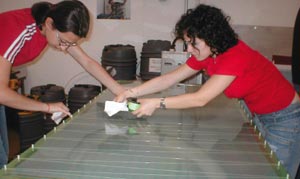
The ALTA, CROP and WALTA projects have a distinct purpose – to forge a connection between two seemingly unrelated but equally important aims. The first is to study the extreme-energy universe by searching for large-area cosmic-ray coincidences and their sources; the second is to involve high-school students and teachers in the excitement of fundamental research. These “educational arrays”, with their serious research purpose, provide a unique educational experience, and the paradigm has spread to many other sites in North America. The detector systems are simple but effective. Following the ALTA/CROP model they use a small local array of plastic scintillators, which are read by custom-made electronics and which use GPS for precise coincidence timing with other nodes in a network of local arrays over a large area. Most of the local systems forming an array use three or more detectors, which, with a separation of the order of 10 m and a hard-wired coincidence, allow accurate pointing at each local site. Today the ALTA/CROP/WALTA arrays involve more than 60 high schools and there are three further North American educational arrays in operation: the California High School Cosmic Ray Observatory (CHICOS) and the Snowmass Area Large-scale Time-coincidence Array (SALTA) in the US, and the Victoria Time-coincidence Array (VICTA) in Canada. At least seven more North American projects are planned.

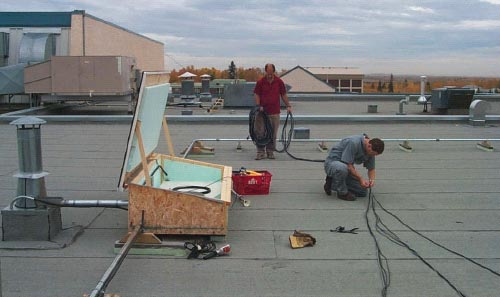
The CHICOS array is the largest ground-based array in the Northern Hemisphere. Its detectors, donated by the CYGNUS collaboration, are deployed on more than 70 high-school rooftops across 400 km2 in the Los Angeles area. Each site has two 1 m2 plastic scintillator detectors separated by a few metres. Local pointing at each site is not possible, nor is it required as CHICOS uses GPS pointing across multiple sites to concentrate on the search for single ultra-high-energy cosmic-ray air showers. Recently the collaboration reported their results at the 29th International Cosmic Ray Conference in Pune, India (McKeown et al. 2005).

Innovative detection techniques have also been employed in this burgeoning collaboration between researchers and high-school students and teachers in North America. A prime example is the project for Mixed Apparatus for Radar Investigation of Cosmic Rays of High Ionization (MARIACHI), based at Brookhaven National Laboratory, New York. The plan is for the experiment to detect ultra-high-energy cosmic rays using the passive bistatic radar technique, where stations continuously listen to a radio frequency that illuminates the sky above it. The ionization trails of ultra-high-energy cosmic-ray showers – as well as meteors, micro-meteors and even aeroplanes – in the field of the radio beam will reflect radio waves into the high-school-based detectors. These schools will also be equipped with conventional cosmic-ray air-shower detectors. The technique, if successful, will speed the construction of ultra-large-area cosmic-ray detectors.

The European endeavour

Across the Atlantic, schools in many European countries are also getting involved in studying the extreme-energy universe (see figure 1). In 2001 physicists from the University of Wuppertal proposed SkyView – the first European project to suggest using high-school-based cosmic-ray detectors. This ambitious project proposed an immense 5000 km2 array, the size of the PAO, using thousands of universities, colleges, schools and other public buildings in the North Rhine-Westphalia area. Roughly a year later CERN entered the field with a collaborative effort to distribute cosmic-ray detectors from the terminated High Energy Gamma Ray Astronomy project in schools around Dusseldorf. A test array of 20 counters was set up at Point 4 on the tunnel for the Large Electron-Positron (LEP) collider, with the aim of studying coincidences with counters installed about 5 km away at Point 3 as part of cosmic-ray studies by the L3 experiment on the LEP.

CCEhig6_05-06

Also in 2002 the High School Project on Astrophysics Research with Cosmics (HiSPARC), initiated by physicists from the University of Nijmegen in the Netherlands, joined the European effort. HiSPARC now has five regional clusters of detectors being developed in the areas of Amsterdam, Groningen, Leiden, Nijmegan and Utrecht. Around 40 high schools are participating so far and more are joining. In March 2005 the HiSPARC array registered an event of energy 8 × 1019 eV, in the ultra-high-energy “ankle” region of the cosmic-ray energy spectrum, which was also reported at the international conference in Pune (Timmermans 2005).

The HiSPARC collaboration is also planning to use a recent and exciting development of the Low Frequency Array (LOFAR) Prototype Station (LOPES) experiment in Karlsruhe. Using a relatively simple radio antenna, LOPES detects the coherent low-frequency radio signal that accompanies the showers of secondary particles from ultra-high-energy cosmic rays. A large array of these low-frequency radio antennas, the LOFAR observatory, is already being constructed in the Netherlands. Such technology can also be exploited by high-school-based observatories around the world to expand their capability rapidly to become effective partners in the search for point sources of ultra-high-energy particles.

Elsewhere, the School Physics Project was initiated in Finland and is now under development. Also in 2002 the Stockholm Educational Air Shower Array (SEASA) was proposed to the Royal Institute of Technology in Stockholm. SEASA has two stations of cosmic-ray detectors running at the AlbaNova University Centre and the first cluster of stations for schools in the Stockholm area is now in the production stage. Meanwhile, in the Czech Republic the Technical University in Prague and the University of Opava in the province of Silesia – working closely with the ALTA collaboration – each have a detector system taking data, with a third to be deployed this summer.

A number of other European efforts are gearing up, including two that have links to the discovery of cosmic-ray air showers in 1938 by Pierre Auger, Roland Maze and Thérèse Grivet-Meyer working at the Paris Observatory. The Reseau de Lycées pour Cosmiques (RELYC) project, centred on the College de France/Laboratoire Astroparticule et Cosmologie in Paris, is preparing to install detectors in high schools close to where Auger and colleagues performed their ground-breaking experiments. The Roland Maze project is centred on the Cosmic Ray Laboratory of the Andrzej Soltan Institute for Nuclear Studies in Lodz, Poland, where it continues a long tradition in studies of cosmic-ray air showers initiated in partnership with Maze some 50 years ago. The plans are to deploy detectors in more than 30 local high schools. In the UK, physicists from King’s College London in collaboration with the Canadian ALTA group will place detector systems in the London area during 2006. In northern England, Preston College is continuing to work on a pilot project, initiated in 2001, to develop an affordable cosmic-ray detection system as part of the Cosmic Schools Group Proposal, involving the University of Liverpool and John Moores University in Liverpool. Finally, a project to set up cosmic-ray telescopes with GPS in 10 Portuguese high schools is underway, spearheaded by the Laboratório de Instrumentação e Física Experimental de Partículas and the engineering faculty of the Technical University in Lisbon.

While the majority of the European projects are based on plastic scintillators, the Italian Extreme Energy Events (EEE) project has opted instead for multigap resistive plate chambers (MRPCs) as their basic detector element. These allow a precise measurement of the direction and time of arrival of a cosmic ray. The aim of this project, the roots of which date back to 1996, is to have a system of MRPC telescopes distributed over a surface of 106 km2, for precise detection of extreme-energy events (Zichichi 1996). These chambers are similar to those that will be used in the time-of-flight detector for the ALICE experiment at CERN’s Large Hadron Collider. Three MRPC chambers form a detector “telescope” that can reconstruct the trajectories of cosmic muons in a shower. At present 23 schools from across Italy are involved in the pilot project, with around 100 others on a waiting list from the length and breadth of the Italian peninsula. More than 60 MRPCs have been built at CERN by teams of high-school students and teachers under the guidance of experts from Italian universities and the INFN.

A worldwide network

CCEhig7_05-06

Most of the major groups in Canada and the US have formed a loose collaboration – the North American Large-area Time Coincidence Arrays (NALTA) – with more than 100 detector stations spread across North America (figure 2). The aim is to share educational resources and information. However, it is also planned to have one central access point where students and researchers can use data from all of the NALTA sites, creating in effect a single giant array. Such a combined network across North America could eventually consist of thousands of cosmic-ray detectors, with the primary research aim of studying ultra-high-energy cosmic-ray showers and correlated cosmic-ray phenomena over a very large area. Until the PAO collaboration constructs its second array in Colorado, US, the NALTA arrays, along with their European counterparts, will dominate the ground-based investigation of the extreme-energy universe in the Northern Hemisphere.

The European groups are also developing a similar collaboration, called Eurocosmics. It is clear that a natural next step is to combine the North American and European networks into a worldwide network that could contribute significantly to elucidating the extreme-energy universe. Such a network could aid and encompass other efforts throughout the world, including in developing countries where it could provide a natural bridgehead into the global scientific culture.
Relativity on a mountain

CCErel1_05-06

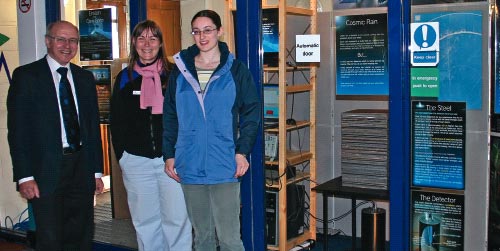
Studying cosmic rays from mountain tops has a grand tradition with famous observatories in dramatic surroundings, such as the Jungfraujoch in Switzerland, the Pic du Midi in France and Mount Chacaltaya in Bolivia. Last year one of Scotland’s highest mountains, Cairn Gorm, temporarily joined the elite club when Ingrid Burt from Beeslack High School in Penicuik, near Edinburgh, set up a high-school cosmic-ray project. Rather than measuring cosmic-ray showers, as many schools projects are now doing, Burt set out during World Year of Physics to test Albert Einstein’s special theory of relativity.

Burt spent six weeks funded by a Nuffield Bursary looking at the feasibility of doing such an experiment with a small muon detector, using a UK mountain. Peter Reid from the Scottish Science and Technology Road Show and myself of the Particle Physics Group at the University of Edinburgh guided her studies. The study and the subsequent experiment were undertaken in conjunction with the Particle Physics for Scottish Schools outreach project, which also provided the detector. The aim was to verify time dilation by comparing the number of cosmic-ray muons detected near the top of the mountain at 1097 m with the number arriving in the university 76 m above sea level.

The amount of dilation depends on the particle’s velocity, so a key part of the experiment was to ensure that the muons detected in the physics department at close to sea-level had the same speed when they passed the altitude of Cairn Gorm as the muons actually detected on the mountain. To do this we used steel sheets to slow the muons until they stopped in a thick scintillator detector and subsequently decayed. The “signal” was thus a pulse in a thin counter from a muon entering the apparatus followed within 20 μs by a delayed pulse from the exiting electron created in the muon’s decay.

For a student in Edinburgh, Cairn Gorm was a clear choice for an experiment at altitude. It is only 227 km from Edinburgh and, like the Jungfraujoch, has a mountain railway – an important criterion where heavy equipment is involved. To this end, Burt asked CairnGorm Mountain Ltd, the company that operates the funicular railway, for help in transporting the 400 kg of steel and other apparatus.

We took the first measurements at the Ptarmigan Top Station of the Cairn Gorm funicular railway, where we needed 49.3 cm of steel to slow the muons so that they would stop and decay in the scintillator. Given that we can calculate the energy losses in both materials, this accurately measures the velocity of the muons as they enter the top of the steel at this altitude before they stop and decay in the scintillator.

The energy lost as a muon of this velocity passes through the atmosphere can also be accurately calculated, so we compensated for this loss between the Cairn Gorm and university sites by removing 21 cm of steel – the equivalent to the slowing power of the intervening 1021 m of atmosphere – and ran the experiment at the university with 28.3 cm of steel. This meant that the muons detected at both experimental sites had the same energies and speeds. As muons travel down from Cairn Gorm to the university, they change velocity and their numbers reduce according to the exponential decay law. The number of muons detected each minute decreases as they travel downwards, and the reduction depends solely on the time elapsed. Without the effect of time dilation, the reduction in this experiment would be a factor of about 4; taking time dilation into account gives a reduction factor of 1.3.

For 10 days in October 2005, visitors arriving at the top of the Cairn Gorm funicular had the chance to see the experiment in action as it counted stopping muons there – at a rate of 1.3 a minute. This meant that if Einstein was right, we should detect 1 a minute at the university, and it was no surprise to do so.

Burt is now refining these calculations to estimate the errors in the predictions, but we do not expect these to render the results invalid. It would be interesting to repeat the experiment with a greater height difference, for example at CERN and at the top of Jungfraujoch railway.

• Ingrid Burt was a gold finalist at the British Association 2006 Crest Science Fair, and won a week at the London International Science Fair in August.

The world’s biggest neutrino detector gets ready for physics

CCEthe1_05-06

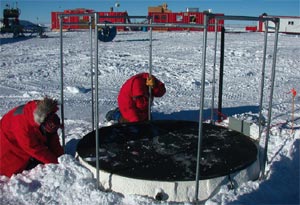
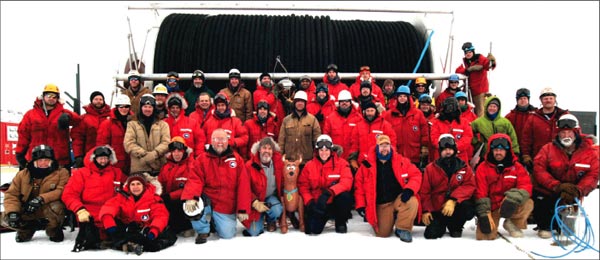
The second season of construction for the IceCube detector in Antarctica has recently ended as summer in the Southern Hemisphere has drawn to a close. Now with nine strings of sensors, IceCube is the largest neutrino detector in the world, and is well on the way to its goal of detecting extraterrestrial neutrinos with energies of more than 100 GeV.

CCEthe2_05-06

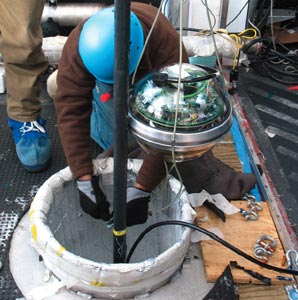
By early February, eight strings, each comprising 60 optical sensors had been deployed, bringing the total number of in-ice sensors to 540. Each sensor includes a 25 cm photomultiplier tube in a pressure vessel. The associated electronics provides integrated trigger, readout, control, data-formatting and calibration functions, essentially forming a “mini-satellite”.

CCEthe3_05-06

The strings form a triangular grid with 125 m sides, with the sensors installed 1450-2450 m below the surface, encompassing a volume of more than 3000 million tonnes of ice. A laser “standard candle” and a “dust-logger” to measure ice properties were also deployed. In addition, 24 IceTop tanks were installed, expanding the surface air-shower array to 32 tanks. The schedule was helped by generally good weather, with temperatures remaining above -30 °C until the end of January.

CCEthe4_05-06

The season also saw the start of rapid production drilling, in which the heating system supplied hot water to one drill tower while a second tower was moved to the next hole. Although drilling got off to a late start, by the end of January holes were being drilled every four days, with string deployment smoothly following drilling. By the end of the season, it only took about 12 hours to connect the optical modules to the cable and lower the string into place. Strings were commissioned soon after deployment. About 99% of the detectors appear fully functional; the half-dozen or so failures stem from a variety of causes.

In addition to preparing for this season, IceCube has been collecting data from the single string and eight tanks that were deployed in 2004/05. Several different types of events have been studied: downward-going cosmic-ray muons, air showers and “flasher” events designed to mimic showers from the interactions of electron neutrinos. Flasher events are produced by the 12 LEDs contained in each sensor module. Events have also been studied that contain coincidences between the new strings and tanks, as well as between the new strings and the Antarctic Muon and Neutrino Detector Array (IceCube’s predecessor) and the South Pole Air Shower Array.

The initial data analyses included a search for neutrino events. Two clear muon neutrinos were observed, appearing as near-vertical, upward-going muons. One event was seen by 50 detectors, which tracked the muon over an 850 m trajectory. The other muon was observed by 35 sensors over about 650 m. These tracks correspond to minimum muon energies of about 420 and 330 GeV, respectively. The ratio of upward-going to downward-going muons is about 500,000:1; being able to separate clean neutrino events with a single string shows the power of the detector. Several additional possible candidates were observed with shorter tracks, with 8-11 hits. However, with a single string, these lower-multiplicity events could not be conclusively identified as neutrinos.

These data have been closely scrutinized to measure detector performance. Both the muon and light-flasher data demonstrate that the timing across the entire array (including the surface detectors) is consistent to better than 3 ns. The sensors are highly efficient for single photoelectrons, but also have adequate dynamic range to measure light pulses of up to 10,000 photoelectrons. Directional comparisons between air showers reconstructed with IceTop, and coincident muons seen in the deep ice were used to verify the pointing accuracy and angular resolutions. For muons, the angular resolution is better than 10° for events with 8 sensors hit, improving to 1.5° for events with more than 30 hits; the muon and neutrino directions are nearly co-linear.

The detector’s dark-noise rates are particularly important for supernova searches; a pulse of low-energy neutrinos from a supernova will manifest itself as an increase in the noise rates in the phototubes. Shortly after the phototubes were deployed, their noise rates rose dramatically owing to triboluminescence – light produced by friction as the ice freezes. However, after the freeze-in was complete, the phototube rates dropped to an average of 650 Hz. With 51 μs of deadtime after each pulse to remove correlated light, the rate drops to 350 Hz. This rate is even less than anticipated, increasing IceCube’s sensitivity to supernovae.

These successes bode well for the future of IceCube and physics analyses are now beginning. Working groups are forming to search for point sources of neutrinos, such as active galactic nuclei and gamma-ray bursters, to search for diffuse extra-terrestrial neutrinos and to study the composition of cosmic rays. IceCube will also shed light on many areas of nuclear and particle physics through searches for signs of supersymmetry, annihilation of weakly interacting massive particles in the Sun and Earth, and for exotica such as magnetic monopoles. It will also probe quantum chromodynamics, through a measurement of neutrino cross-sections at high energies (via absorption in Earth) and thereby explore saturation in nuclear-parton distributions at low parton energy fraction, i.e. low x. With a full programme of physics to explore, detailed plans for deployment are being made for the coming seasons, with at least 75 strings expected to be complete by 2011.

• IceCube is a collaboration of about 250 scientists and engineers from 30 institutions in the US, Europe, Japan and New Zealand. The $270 m project is funded largely by the US National Science Foundation, with smaller contributions from the US Department of Energy, the University of Wisconsin and several European countries.

Closed-loop technology speeds up beam control

Successful beam acceleration in the Large Hadron Collider (LHC) at CERN will require accurate and robust control of a variety of machine parameters. With a sufficiently accurate model, it might be possible to control these parameters by the “set it and forget it” method, more often referred to by control specialists as open-loop control. However, in complex systems such as the LHC it becomes advantageous to measure continuously the value of the parameters to be controlled and to adjust the strength of correction elements to maintain the desired values. This method is called closed-loop, or feedback, control.

CCEclo2_05-06

In addition to correction of absolute position, beam control in the transverse (horizontal and vertical) directions in a synchrotron must regulate two parameters in each plane: betatron tune and chromaticity. The beam in a synchrotron is focused by quadrupole magnets, the equivalent of focusing lenses in optics. The beam particles oscillate transversely in these confining fields, similar to a mass on a spring. This is known as betatron motion and the frequency of oscillation is the betatron tune. In addition, the momentum spread of the beam causes particles with different momenta to experience different focusing, a property of the accelerator known as chromaticity, which is corrected with sextupole magnets.

Equally important is that inevitable magnetic-field errors cause the betatron motions in horizontal and vertical planes to become coupled to each other, and this coupling must be carefully controlled. In the “mass on a spring” model, the horizontal and vertical motions are equivalent to two independent masses vibrating on separate springs, and coupling is a third spring that joins the two masses. This coupling may be corrected with skew quadrupole magnets. Coupling control is often one of the more difficult problems in accelerator control. Inadequate coupling control makes it impossible to control betatron tune properly and also reduces the area of the stable transverse space available to the beam.

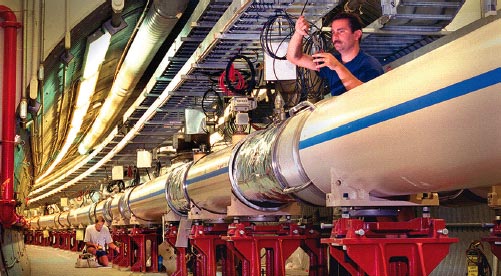
Historically, control of tune, chromaticity and coupling has been open loop. However, the LHC pushes design frontiers to the limit, and successful beam acceleration will require closed-loop feedback control of these transverse parameters. In 2002 a collaboration was established between CERN and the Collider-Accelerator Department at the Brookhaven National Laboratory. The purpose was to benefit the LHC from the tune-feedback programme at Brookhaven, and to benefit Brookhaven from CERN expertise. This collaboration is now sponsored by the US LHC Accelerator Research Program (LARP), funded by the US Department of Energy, and has been expanded to include Fermilab. The collaborative effort paid off spectacularly at the beginning of the 2006 run of the Relativistic Heavy Ion Collider (RHIC), with robust control of tune and coupling up the acceleration ramps.

Figure 1 shows data on betatron tunes from a typical development ramp early in RHIC Run 6, with tune and coupling feedback enabled. The drop in tune near the end of the acceleration ramp follows from the fact that RHIC is currently running with polarized protons. The working point used during the acceleration ramp is chosen to minimize growth in the emittance of the beam; once the machine is at full energy the working point is shifted to minimize the effect on the protons of depolarizing resonances. The feedbacks were turned off at the end of the beta squeeze. With the feedbacks on, the largest departures from the desired tunes were around 10-3, while the rms variation of tune was a few 10-4.

CCEclo1_05-06

The accomplishment of successful ramps with feedback control of tune and coupling was the result of an effort that evolved over several years. Early efforts at RHIC were persistently confounded by two obstacles. The first was a problem of dynamic range. To avoid blowing up the transverse size of the beam, and thereby reducing the beam brightness available to the physics experiments, the beam excitations needed to measure and control tune must be very small. The power in the resulting betatron signal is of the order of femtowatts (10-15 W), while the power delivered to the pickup by the beam unrelated to the betatron tune is in the range of tens of watts. We therefore devoted our attention to this dynamic-range problem, attempting many solutions, all with only partial success. Ultimately, CERN provided the solution by way of an analogue front-end using direct diode detection, or “3D” (Gasior and Jones 2005).

The second obstacle to tune feedback at RHIC was linear coupling, which rotates the planes of the betatron oscillations away from the horizontal and vertical in which the magnet portion of a tune-feedback loop applies corrections. When this rotation approaches 45° the magnet loop then applies tune corrections in the wrong plane relative to the tune measurement, and the tune-feedback loop is driven unstable. RHIC (like the LHC) requires strong sextupoles to compensate for natural chromaticity; unfortunately, vertical offset in the sextupoles introduces coupling, and vertical-orbit fluctuations from ramp to ramp in RHIC were often sufficient to cause the tunes to become fully coupled.

In 2004 we fully understood the coupling problem, so efforts to implement tune feedback ceased, and we began to implement coupling feedback. We reconfigured the tune-measurement system to measure both projections of the tunes in both planes during tune tracking. Due to hardware limitations, this could be done in only one ring at a time. However, the excellent quality of the resulting data made it clear that we could implement coupling feedback. Over the course of the next two years this was studied in some detail and a decoupling algorithm was formulated (Jones et al. 2005 and Luo et al. 2005).

For the 2006 run at RHIC a new system for measuring baseband tune – or baseband Q (BBQ) – was developed. This incorporates measurement of both tunes in both planes in both rings, as well as the 3D analogue front ends. The system was extensively commissioned on analogue test resonators before working with a real beam, both for tune and coupling measurement. Within minutes of the first circulating bunched beam in RHIC, the BBQ was measuring tune and coupling “out of the box”. During the period of machine set-up and tuning in preparation for developing acceleration ramps, the control-system interface to the magnets was completed, together with measurements of overall system loop gains and the design of the loop filters.

Ramping began on the evening of 15 February. The beam was lost early in the first ramp, which was done without tune and coupling feedback to establish a baseline. For the second ramp the feedback loops were closed and the beam was delivered to full energy, with tune control of around 0.001 or better, with the machine well decoupled throughout the ramp. This successful ramp was the world’s first attempt to implement simultaneous tune and coupling feedback during beam acceleration – good news for the LHC. There is now a reasonable expectation, given sufficient attention to integration with the controls and magnet systems, that an operational tune- and coupling-feedback system will be available early in the LHC commissioning.

As the tune- and coupling-feedback system for RHIC moves towards full operational integration as a “non-expert” system, the focus for instrumentation has shifted to chromaticity control and feedback. As valuable as robust tune and coupling feedback will be for LHC commissioning, the most urgent need will be for chromaticity measurement and control, to combat the chromatic effect of “snapback” transients at the beginning of the acceleration ramp.

Many approaches to the problem of fast and accurate chromaticity measurement during ramping are being investigated. The most promising approach implemented so far tracks tune while simultaneously modulating the beam momentum very slightly. Measurement of the resulting tune modulations has permitted determination of chromaticity during ramping with an accuracy of around a unit, and a bandwidth of about 1 Hz. This method has been operational in RHIC for the past two years as a non-expert measurement under sequencer control (Cameron et al. 2005). During the coming weeks and months both this and other methods will be further evaluated at RHIC, in close collaboration with Fermilab and CERN, and we look forward to reporting here on successful results from these efforts.

• For more about US-LARP see www.agsrhichome.bnl.gov/LARP/.

A cosmic vision for world science

Many developed countries face the challenge of encouraging more young people to take up science to ensure future innovation to benefit society. However, there is a related and equally important challenge – to promote a scientific infrastructure to aid the academic and career ambitions of members of under-represented and economically disadvantaged groups, as well as scientists from developing countries, to increase their participation in scientific and technical fields worldwide.

CCEmul1_05-06

Severe constraints on resources, which are a common feature in developing countries, mean that research there does not usually consist of designing and making equipment for a new experiment at the forefront of the field. In many schools, colleges and universities laboratories either do not exist or are poorly equipped. Consequently, the brain drain of bright young scientists from developing to developed countries seems to be the norm, and further intellectually impoverishes the developing world. Collaborative programmes between scientists from developed and developing countries are urgently needed.

The Abdus Salam International Centre for Theoretical Physics (ICTP) in Trieste has set an international example by providing both a forum and practical support for collaboration in theoretical physics between developing and developed countries. It has also supported indigenous physics programmes in developing countries. Importantly, the director of ICTP, Katepalli Sreenivasan, plans to include experimental physics in the programme. CERN has also taken a significant step to foster a relationship with physicists from developing countries that does not require large cash contributions to CERN, but instead encourages the production of detector components at the home laboratories. This lets physicists from developing countries participate in frontier research.

The Pierre Auger Collaboration is involved in Vietnam in developing experimental work to understand the universe at the highest energies. The Vietnam Auger Training Laboratory (VATLY) at the Institute for Nuclear Science and Techniques in Hanoi was inaugurated as a training ground for future experimentalists in astroparticle physics and related areas, and an exact replica of the water Cherenkov detector used in the Pierre Auger Observatory has been installed at VATLY. More recently, the atmospheric muon spectrum was measured in Vietnam for the first time. The phenomenology of neutrino oscillation is also being studied at this laboratory. Indeed, a Vietnamese community for experimental particle physics is developing well – in 2001 a group from the Institute of Physics in Ho Chi Minh City joined the D0 collaboration at Fermilab.

In many areas of research, leading-edge science is expensive and there are few support networks for disadvantaged groups. However, cost-effective projects to investigate the nature of ultra-high-energy cosmic rays (UHECR) are already being developed for high schools and could provide an ideal vehicle for such an effort. These projects demonstrate the basic elements of research and technology, with modern detectors, fast electronics, GPS timing, computerized data acquisition and data analysis. Perhaps just as importantly, they also teach social skills such as collaborative effort, organization, long-term planning and teamwork.

Efforts to bring the developing world into such projects have already begun. For example, the collaboration behind the Mixed Apparatus for Radar Investigation of Cosmic-rays of High Ionization project has established contact with the Maseno University in Kisumu, Kenya, the University of Zambia in Lusaka and the University of Rio de Janeiro in Brazil, to investigate the hypothesis that some forms of lightning are induced by cosmic rays. The collaboration is also working with Rio de Janeiro to deploy detectors that register UHECR showers and meteors in high-school-based receivers.

These are just two examples of the diverse topics related to the “cosmic connection” between research and education in both the developed and developing world. These include not only the astrophysics and particle physics of cosmic rays, but also topics in biology (e.g. the effects of natural radiation), mathematics, computer science and programming, chemistry, and environmental and Earth sciences (e.g studying the chemistry of ozone and how that could affect the transmission of cosmic rays).

The educational paradigm created by the networks of cosmic-ray arrays in high schools is one that can be employed in many areas. In geophysics, for example, one could use distributed arrays of seismometers to study geological activity over a large area. A specific example is the project BAMBI, which promotes the construction of an amateur array of radio telescopes distributed over a large area to study the radio sky at 4 GHz and search for signs of extraterrestrial intelligence. Such large-area, national and international school-based detector networks could aid and encompass other efforts throughout the world including developing countries, where it could provide entry to the global scientific community.

Theoretical Nuclear and Subnuclear Physics, 2nd edition

by John Dirk Walecka, World Scientific. Hardback ISBN 9812387951 £60 ($98). Paperback ISBN 9812388982 £29 ($48).

41tNDHvUKHL._SX335_BO1,204,203,200_

This second edition is a revised and updated version of the original comprehensive text on nuclear and subnuclear physics, first published in 1995. It maintains the original goal of providing for graduate students a clear, logical, in-depth and unifying treatment of modern nuclear theory, ranging from the non-relativistic many-body problem to the Standard Model of the strong, electromagnetic and weak interactions. Researchers will also benefit from the updates on developments and the bibliography. This edition incorporates new chapters on the theoretical and experimental advances made in nuclear and subnuclear physics in the past decade.

Lattice Gauge Theories: An Introduction, 3rd edition

by Heinz J Rothe, World Scientific. Hardback ISBN 9812560629 £51 ($84). Paperback ISBN 9812561684 £29 ($48).

51JC2SC5MGL

This broad introduction to lattice gauge field theories, in particular quantum chromodynamics, serves as a textbook for advanced graduate students, and also provides the reader with the necessary analytical and numerical techniques to carry out research. Although the analytic calculations can be demanding, they are discussed in sufficient detail that the reader can fill in the missing steps. The book also introduces problems currently under investigation and emphasizes numerical results from pioneering work.

Field Theory, the Renormalization Group and Critical Phenomena: Graphs to Computers, 3rd edition

by Daniel J Amit and Victor Martín-Mayor, World Scientific. Hardback ISBN 9812561099 £52 ($86). Paperback ISBN 9812561196 £27 ($44).

9812561196

Linking field-theory methods and concepts from particle physics with those in critical phenomena and statistical mechanics, this book starts from the latter point of view. In this way, it introduces quantum field theory to those already grounded in the concepts of statistical mechanics and advanced quantum theory. Non-perturbative methods and numerical simulations are introduced in this third edition, with new chapters on real-space methods, finite size scaling, Monte Carlo methods and numerical field theory. There are sufficient exercises in each chapter for use as a textbook in a one-semester graduate course.

300 questions à un astronome

de Anton Vos, Presses Polytechniques et Universitaires Romandes. Broché ISBN 2880746566, €26.

CCEboo2_05-06

Comment l’eau est-elle apparue sur Terre? Peut-on voyager dans le temps? Est-il possible de créer un trou noir en laboratoire? Voici quelques-unes des 300 questions qui apparaissent dans ce livre.

Comme on peur le lire dans l’avant-propos, le livre est né sur l’Internet, sur le site de l’Observatoire astronomique de l’Université de Genève. Un espace y avait été ouvert pour que les internautes posent directement leurs questions aux astronomes. A partir de ces questions/réponses, Anton Vos, journaliste scientifique a réalisé cet ouvrage. Ces deux aspects apparaissent très clairement dans le livre. Les questions sont très directes et pratiques, une caractéristique typique des sites où le public est invité à intervenir. D’autre part, un énorme travail de journaliste a été réalisé pour simplifier le contenu, ce qui rend la lecture très agréable.

Avant de lire le livre, j’ai formulé une question dans ma tête pour vérifier que l’ouvrage contenait vraiment “tout ce que vous avez toujours voulu savoir sur l’astronomie”, comme la quatrième de couverture l’annonçait. J’ai trouvé ma question ainsi qu’une réponse pertinente.

Pour conclure, la structure du livre se prête à des approches de lecture différentes: on peut le picorer ou le lire de bout en bout, sans que la compréhension s’en ressente. De quelque manière que vous le lisiez, vous aurez appris beaucoup de choses sur l’astronomie et sans trop de difficultés.

Chern-Simons Theory, Matrix Models, and Topological Strings

by Marcos Mariño, Oxford University Press. Hardback ISBN 0198568495 £49.50.

41QNroIfzTL._SX313_BO1,204,203,200_

One of the most important examples of string theory/gauge theory correspondence relates Chern-Simons theory – a topological gauge theory in three dimensions that describes knot and three-manifold invariants – to topological string theory. This book gives the first coherent presentation of this and other related topics. After an introduction to matrix models and Chern-Simons theory, it describes the topological string theories that correspond to these gauge theories and develops the mathematical implications of this duality for the enumerative geometry of Calabi-Yau manifolds and knot theory. It will be useful reading for graduate students and researchers in both mathematics and physics.

bright-rec iop pub iop-science physcis connect