A paper entitled “Measurement of Bbar0 → D(*)0Kbar(*)0 Branching Fractions” became the focus of celebrations in early April, as it became the 200th to be submitted for publication by the BaBar Collaboration. With this submission, BaBar can also look back on five years of broad-ranging, significant science publications.
On average, BaBar has published one paper a week since mid-2004 in Physical Review Letters or Physical Review D. Among the latest publications on the decays of the B mesons, the main purpose for building BaBar, are results from the study of the properties of the leptons in the B 7rarr; Xsll decays, which are highly sensitive to possible contributions from unseen physics processes; a search of CP violation with an unprecedented sensitivity of 0.3% in events where both the B mesons decay through semileptonic channels; and the most accurate single measurements of the side Vub of the unitarity triangle.
The 200th paper describes a new approach to measuring accurately the angle γ in the unitarity triangle, one of three angles governing CP violation in B mesons (BaBar Collaboration 2006). Although the new approach does not appear to work as well as theorists expected, it illustrates the approach at BaBar of constantly trying to invent new methods and helps in understanding what may or may not be possible in similar studies at the Large Hadron Collider.
The wide breadth of physics addressed in BaBar’s publications is equally impressive. Thedetector was built to study the decay of B-mesons, yet about 30% of BaBar papers focus on charm and tau particles – research for which the detector was not specifically designed, but at which it excels. The recent list of publications includes the observation of a new charmed baryon, the Λc(2880), a detailed study of the decays of the recently discovered DsJ(2316) and DsJ(2460) mesons, the search for the lepton-flavour violating decay of the tau lepton into an electron and a photon, and the first observation of decays of the U(4S) mesons into other U mesons and two pions.
The researchers on BaBar look forward to many more publications in the future and appear on track to have submitted 250 papers by early 2007.
From 8-11 June, the 2nd European Research and Innovation Exhibition, being held at Porte de Versailles Exhibition Centre in Paris will open its doors to the public. Aimed both at professionals in research and industry and at the general public, including university and high-school students, the exhibition brings together the major European players in research and innovation. These include CERN, the Dapnia Laboratory of the Commissariat à l’Energie Atomique at Saclay, and the Institut National de Physique nucléaire et de physique des particules (IN2P3) of the Centre national de la recherche scientifique (CNRS).
The first exhibition, held in 2005, attracted 24,000 visitors. This year, to emphasize the international nature of the event, Germany is guest of honour, with participation by SIEMENS, one of the country’s leading exponents of industrial innovation, along with the French-German Association for Sciences and Technology.
The widely varied programme of conferences and round tables allows visitors to familiarize themselves with the achievements and ambitions of research and innovation and their fundamental importance to the future of the European Community, both in the scientific field and research funding and applications. A Young Scientists’ space also will also give exhibitors a chance to meet high-calibre young graduates who are seeking employment.
Presentations include a talk on on elementary particles by Christelle Roy from the CNRS Laboratoire de Physique Subatomique et des Technologies Associées (Subatech) in Nantes, and Michel Spiro, director of IN2P3 in Paris. The stands include an exhibit by CERN, highlighting aspects of technology transfer.
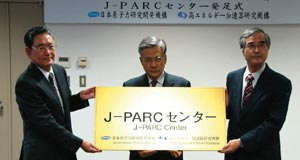
The High-Energy Accelerator Research Organization, KEK, and the Japan Atomic Energy Agency (JAEA) have established the J-PARC Center to take entire responsibility for operating the Japan Proton Accelerator Complex (J-PARC), under construction in Tokai, Ibaraki. The centre’s mission will be to operate and maintain the high-intensity proton-accelerator facilities at J-PARC, to pursue Ramp;D for improving performance, and to support all J-PARC users and manage safety issues.
The construction of J-PARC, which started in the spring of 2001, is now in the busiest stage, with about two thirds of the facilities complete. Major components for the proton linac, which accelerates H- beams up to 181 MeV, have been installed in the tunnel, and linac operation should start in December. Magnets for a 3-GeV rapid-cycling proton synchrotron, as well as for a 50-GeV proton synchrotron, are also being installed. The first beam from the 50 GeV synchrotron is expected in 2008.
KEK and JAEA have jointly constructed J-PARC, with each organization taking entire responsibility for the items budgeted to it. However, for the operational stage KEK, and JAEA have recently established that J-PARC will be controlled and managed by a single organization, the J-PARC Center.
The J-PARC Center was established in February, ready for the start-up of the linac at the end of 2006, and has begun partial operation with 62 staff and J-PARC director, Shoji Nagamiya. There are three divisions at this stage, covering accelerators, safety and administration. The number of staff will increase to around 330 by 2008 in about 10 divisions.
Many places in Japan, including the central government, prefecture and local government, and other research organizations, have congratulated the J-PARC Center. In its meeting in February, the International Advisory Committee of J-PARC, chaired by J W White of Australian National University, stated: “We recommend that the vision of the J-PARC Center be that of a centre of excellence in quantum-beam science for a broad user community and an ‘in house’ scientific community of such quality as to achieve international respect for their science.”
Observations of very high-energy gamma-rays from two distant active galaxies reveal that the universe is more transparent to this radiation than previously thought. This limited absorption of gamma-rays en route to Earth implies that the fog of light in intergalactic space is dominated by emissions from stars in galaxies that have already formed, rather than from the first generation of stars, which would have shone before galaxy formation.
Gamma-rays at tera-electron-volt energies can produce electron-positron pairs when they interact with visible light. These very high-energy gamma-rays can therefore be absorbed when travelling through intergalactic space filled with photons from the accumulated starlight emitted by galaxies throughout the history of the universe, as well as from other possible sources such as quasars and the very first generation of stars.
The direct detection of this extragalactic background light is made difficult because of our light-polluted environment, in particular by zodiacal light – sunlight reflected from dust clouds in our solar system. An indirect method consists of deriving this background radiation based on its opacity to tera-electron-volt gamma-rays. This can now be achieved for the first time thanks to the high sensitivity of the four Cherenkov telescopes of the High Energy Stereoscopic System (HESS) (see CERN Courier January/February 2005 p30).
HESS has observed tera-electron-volt gamma-rays from two relatively distant active galaxies at redshifts of z = 0.165 and 0.186. These objects are most likely blazars, similar to Mkn 421 and Mkn 501, two nearby (z ∼ 0.03) tera-electron-volt gamma-ray sources. The observed radiation of blazars is thought to be amplified and shifted towards higher energies because it is emitted in a relativistic jet towards us. Observations of blazars as well as theoretical shock-acceleration models in jets show that the gamma-ray spectral slope cannot be harder than Γ = 1.5. Using this property and the fact that the opacity through electron-positron pair production is energy dependent, the HESS collaboration has been able to set a firm upper limit on the absorption of gamma-ray photons and hence on the amount of extragalactic background light.
This limit is less than – and hence in conflict with – the values derived by direct measurements of the extragalactic background light. Furthermore, being only about a factor of 1.5 above the lower limit given by direct observation of galaxies by the Hubble Space Telescope, the HESS observations seriously limit the possible contribution from sources other than galaxies. This is in good agreement with recent theoretical calculations and arguments against a strong extragalactic background from first-generation stars. This is bad news for the attempts at direct detection of the glow of these population III stars (see CERN Courier December 2005 p10), but the HESS results expand the horizon of the gamma-ray universe, allowing Cherenkov telescopes to detect many other remote active galaxies.
ENLIGHT++ étend le réseau de recherche sur le traitement du cancer par les ions légers
La réunion préparatoire du réseau ENLIGHT++ s’est tenue au CERN en mars, rassemblant les plus éminents chercheurs européens du domaine naissant de la thérapie par les ions légers. L’objectif du réseau est de coordonner les travaux menés dans ce domaine en Europe pour le traitement du cancer. Les deux signes “plus” symbolisent l’augmentation du nombre des pays participants et des hadrons (en particulier des protons) par rapport au projet ENLIGHT précédent. Fort des structures de traitement spécialisées déjà mises en place en Europe, ENLIGHT++ se concentre sur les recherches nécessaires à la création de centres de traitement hadronique efficaces et travaille à l’établissement et à la mise en vre de protocoles de traitement communs pour renforcer le réseau paneuropéen actuel.
Many concepts and developments from particle physics find applications in health care. High-performance detectors, accelerators and beam technologies are essential for particle physicists to complete their quests. These developments also benefit society by providing better diagnostic tools and tailored radiation treatment of cancer and other diseases. One of the most promising fields in this respect is hadron therapy.
On 24 March more than 100 scientists – including clinicians, oncologists, physicists, radiobiologists, information and communication technology experts and engineers – from about 20 European countries arrived at CERN for the preparatory meeting of the second European Network for Research in Light-Ion Hadron Therapy (ENLIGHT++). This one-day workshop aimed at coordinating European efforts using light-ion beams for cancer therapy. The two plus signs in ENLIGHT++ refer to more countries and more hadrons (specifically protons), and emphasize these extensions to the previous project, which carried the same name (see CERN Courier October 2005 p31).
ENLIGHT, which had its inaugural meeting at CERN in February 2002, was established to coordinate a pan-European effort with a common multidisciplinary platform for using light-ion beams for radiation therapy. It has been instrumental in promoting the advantages of using hadrons, particularly carbon ions. A collaboration of scientists from various European centres and institutions formed the original network, which the European Commission funded for three years. In these centres resides the core expertise in the physics and engineering of accelerators and detectors, which can be used towards the design, advancement and realization of new hadron-therapy machines and other equipment to benefit health.
The importance of hadrons
There are many instances of tumours located near critical organs for which conventional radiation therapy with X-rays is inappropriate. In these cases successful tumour control often means that the dose delivered must reach such a high level that it can damage the surrounding critical organs. For this reason, hadrons – protons or light ions – are more appropriate for radiotherapy of deep-seated tumours. These particles penetrate the patient with practically no diffusion and can easily be formed into narrow “pencil” beams; most importantly, they have a well-defined variable penetration depth, delivering most of their dose at the end of their range in matter. Because of these properties, hadron beams allow highly conformal treatment that follows the shape of the deep-seated tumours with millimetre accuracy, while delivering only very small doses in the surrounding area, hence sparing the healthy tissues.
The idea of hadron therapy dates back to 1946, when Robert Wilson, physicist and founder of Fermilab, was the first to propose using hadrons for cancer treatment; almost 10 years later, 30 patients were treated with protons at the Lawrence Berkeley Laboratory (LBL). In the late 1960s, pioneering studies were carried out at CERN and, in the early 1990s, Ugo Amaldi at CERN vigorously promoted the development of new proton-ion accelerators. In 1999, CERN, the Gesellschaft für Schwerionenforschung (GSI) in Germany, Med-Austron in Austria, Onkologie 2000 in the Czech Republic and the Terapia con Radiazioni Adroniche (TERA) foundation in Italy realized the Proton-Ion Medical Machine Study (PIMMS) to design an ion synchrotron that is optimized for medical applications (CERN Courier September 1998 p20).
The success of therapy projects at nuclear-research centres, along with improved accelerator technology, dose delivery systems and dose calculations, has led to a number of dedicated proton-therapy facilities. These include the Loma Linda University Medical Center in California and the Northeast Proton Therapy Center in Massachusetts in the US, and the Kashiwa and Tsukuba centres in Japan. Proton-therapy facilities also exist in France, Germany, Italy, Russia, Sweden, Switzerland and the UK. In Switzerland, at the Paul Scherrer Institute (PSI), Europe’s leading centre for treating deep-seated tumours with scanned proton beams, a new superconductive cyclotron has been built exclusively for proton therapy and related research. Since Wilson’s initial proposal, about 45,000 patients have been treated with protons with excellent results for head and neck tumours.
Treatment of deep-seated tumours with light ions is less well established and it is this area that the ENLIGHT network targeted. About 10 years ago, radiobiologists and radiotherapists concluded that the optimal ions for therapy are found in the mass range between lithium and carbon. This was based on the results of the treatment of about 2000 patients in the US with helium ions between 1957 and 1987, and of about 400 patients with neon ions from 1975 until 1993, when LBL’s accelerator was closed down.
Since then, clinical results have come from the Japanese Heavy-Ion Medical Accelerator Centre in Chiba and the GSI facility in Germany, where sophisticated raster scanning techniques, in conjunction with online real-time imaging by positron-emission tomography, are used for treatment with carbon-ion beams. The results obtained at these facilities agree with theoretical expectations, thus demonstrating that carbon-ion therapy is an important avenue to follow. Epidemiological data indicate that in Europe about 30,000 patients each year – affected by certain types of cancers, such as those of the pancreas, the saliva-producing parotid gland, uveal melanomas, chordomas and chondrosarcomas of the skull base – would benefit from treatment with ion beams.
The importance of ENLIGHT++
Jos Engelen, CERN’s chief scientific officer, opened the ENLIGHT++ preparatory meeting. He noted that it was appropriate that the workshop took place at CERN as the laboratory has a task in stimulating the application of its technologies, for example, in hadron therapy. CERN has extensive knowledge and expertise in accelerators and related technologies, and indeed hosted and coordinated the PIMMS project.
Following Engelen’s welcome, keynote presentations began with Jean-Pierre Gérard, director-general of Centre Antoine-Lacassagne and past chair of the European Society for Therapeutic Radiology and Oncology, who illustrated the compelling reasons why ion therapy is essential. He pointed out that ENLIGHT++ is a new step that should bring the use of carbon ions into an era of clinical reality.
Ugo Amaldi from the Università di Milano Bicocca and the TERA Foundation – who has promoted hadron therapy for many years – later underlined that, since the beginning of the previous ENLIGHT initiative, the Heidelberger Ionenstrahlen-Therapie facility in Germany and the Centro Nazionale di Adroterapia Oncologica in Italy have begun construction, while Med-Austron in Austria and the European Light Ion Oncological Treatment Centre in France have been approved. (Since the meeting, it has been announced that another facility for hadron therapy will be built in Germany. Hosted by the Marburg-Giessen Klinikum, it will use carbon ions and protons and will be functional in four years.)
Amaldi continued by adding that the hadron-therapy community needs to put in place two kinds of collaboration: the first to develop a common view on issues such as authorization protocols and patient selection, and the second, crucial for ENLIGHT++, to provide Ramp;D involving European groups as a follow-up of ENLIGHT activities and new research initiatives. The community should identify and define the key areas in which further work is needed and obtain funding from the European Commission to carry out the necessary research.
Following the introductory talks, the participants split up into working groups to discuss such an aim. The groups then reported back and the meeting agreed that studies on clinical trials, radiobiology focused on treatment therapy, modalities to improve the delivery of the radiation dose, novel designs of detectors and equipment, and information sharing should all be pursued with the highest priority. Lastly, Manjit Dosanjh was chosen as official coordinator for the ENLIGHT++ initiative.
In summary, the main objective for ENLIGHT++ is to form a consensus from representatives of different disciplines and national programmes in a way that most benefits the patient. It is now agreed that this goal can be met by reinforcing the existing pan-European network, focusing on the areas of research needed for effective hadron-therapy centres, and establishing and implementing common protocols for treating patients.
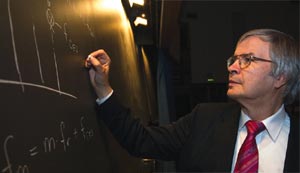
Theodor Wolfgang Hänsch’s interest in science began when he was six years old and living in Heidelberg, Germany. He grew up on Bunsen Strasse and one day asked his father about the name of the street and what someone had to do to have a street named after him. His father had worked in a pharmacy during the First World War and knew about Robert Wilhelm Bunsen, his burners and chemistry. So Hänsch senior brought home a Bunsen burner and would sprinkle table salt into the blue flame to reveal the yellow colour of sodium. This experience ignited the interest of the younger Hänsch and led him to study light, atoms and chemicals.
At Heidelberg he earned his doctorate from the Ruprecht Karl University in 1969. He then moved to research and teaching at Stanford University from 1975 to 1986, which was a very positive experience. “I enjoyed it right from the beginning because in Germany there were many obstacles to deal with, whereas in California administrative things seemed to be extremely easy and people were helpful,” explained Hänsch. This was the first time he had been so far away from home, experiencing different teaching styles. In the US students would see a professor after class to discuss the lecture or assignments. However, in Germany there was more of a barrier between professor and students, as there were many more students to each professor.
It was while working at Stanford that Hänsch found his mentor, Arthur Schawlow, co-inventor of the laser and Stanford University professor, who received the Nobel Prize in Physics in 1981. Although he was widely recognized, Schawlow was an easy-going person who offered a great deal of good advice for young professors.
Hänsch followed his mentor’s interest in lasers and in 1970, at the age of 28, he invented the high-spectral resolution laser. According to Hänsch, it was a simple invention that caused a great deal of excitement. This was the first laser for which the colour – wavelength – could be changed while keeping the light extremely monochromatic. This opened the door to new types of spectroscopy and greater precision in measuring frequencies, such as the transition frequency of the red Balmer line of atomic hydrogen.
A new era in laser spectroscopy began as the high-spectral resolution laser was quickly reproduced and used in laboratories around the world. Atoms and molecules are very particular about which wavelengths will excite them to higher energies. Therefore, it is necessary to use a laser that can produce the wavelength needed to excite them and to find out what that precise wavelength is.
Hänsch returned to Germany in 1986, where he became director of the Max-Planck-Institut für Quantenoptik and professor of experimental physics and laser spectroscopy at the Ludwig-Maximilians University in Munich. It was here that the challenge of finding out the particular wavelength that excited certain atoms or molecules led to Hänsch’s second invention in the mid-1990s: the optical-frequency comb generator. This invention allowed for extraordinary precision in measuring the Lyman line of atomic hydrogen, which made it possible to look for changes in the fundamental physical aspects of the universe. It was for this invention that Hänsch received his share of the Nobel Prize in Physics in 2005, the other recipients being Roy J Glauber, for his contribution to the quantum theory of optical coherence, and John L Hall, who also worked on the optical-frequency comb technique.
When asked if he was surprised to receive the Nobel prize, Hänsch explains that his friends had thought he had a good chance: “I think the year before [2004] there had been some game on the Internet where you could place bets on possible candidates, and I had come up pretty high at that time.” So he began to believe he had a real chance, but he did not expect the prize to be given for work in optics so soon; in 1997 the Nobel Prize in Physics was awarded for laser cooling and in 2001 for the Bose-Einstein condensation in dilute gases of alkali atoms.
A little-known aspect of Hänsch is his love of toys, and his own private little laboratory at the Ludwig-Maximilians University. “My students don’t even have a key to it, so I can start an experiment, give a talk somewhere, and come back to find my experiment still there,” he says. In his private laboratory Hänsch mostly works on ideas with light and is now working on how to deal with beam that is produced in a non-linear crystal, to find out its wavefronts and to correct it so that one can do meaningful experiments with it.
So what does Hänsch say to would-be Nobel laureates? His advice to young scientists is to find something that really interests you and is fun to work on. “Of course, no one can plan to win any prizes, but if you work hard at something that interests you, then every step along the way can lead to something new. One has to be prepared to put in long hours, but it makes the little triumphs extra sweet,” he said.
Currently, Hänsch is also working with the ATRAP Collaboration at CERN, which is studying hydrogen and antihydrogen atoms. If it were possible to measure precisely up to 14 or 15 digits, then it might be possible to see whether matter and antimatter are the same or if they differ in some unexpected way. This could explain why there is more matter than antimatter in the universe. To explore these questions, researchers have to look where no-one has ever looked before, and for that reason, Hänsch has a passion for precision.
It is slightly more than 30 years since the discovery of the J/ψ, the first bound state of a charmed quark, c, and its antiquark cbar, near a mass of 3.1 GeV/c2. This discovery ushered in the era of heavy-flavour physics, which now includes studies of the tau lepton and its neutrino, and the b and t quarks. As the mass of the charmed quark is quite large, the velocities of the c and cbar in a bound state are small enough that many important features of these states can be described using non-relativistic potential models. Also, at typical separations of the quark and antiquark, the shape of the ccbar potential is somewhat like that of the Coulomb potential. Hence, many features of ccbar states – collectively called charmonium – are familiar from the physics of the hydrogen atom, or more precisely, from the spectroscopy and dynamics of positronium, a bound state of an electron and a positron.
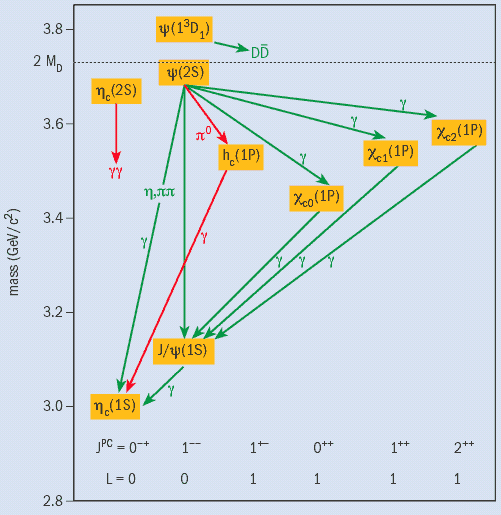
After its discovery, the J/ψ was soon identified as a 3S1 ccbar bound state, that is, a spin-triplet (S = 1) S-wave (L = 0) level with total spin J = 1. Several other ccbar levels were observed soon after, including the ψ(2S), or ψ’, an excited version of the J/ψ; several orbitally excited triplet P-wave (3PJ = 0, 1, 2) levels χcJ; a D-wave level at 3.77 GeV/c2; and a spin-singlet 1S0 level known as the ηc(1S). Figure 1 illustrates the low-mass charmonium spectrum and the principal transitions between charmonium states expected from the analogy of ccbar states with positronium states. Among the low-mass states expected, only the ηc(2S), an excited version of the ηc(1S), and the hc, a spin-singlet P-wave 1P1 level, steadfastly refused to make significant appearances, despite reported sightings that were not confirmed.
A few years ago, with the conclusion of its 20-year programme of studies of the decays and spectroscopy of the bottom quark, the CLEO Collaboration at the Cornell Laboratory for Elementary-Particle Physics turned its attention to the study of charm and charmonium. The National Science Foundation supported converting the Cornell Electron Storage Ring (CESR) to CESR-c, including installing wiggler magnets to enhance luminosity in the charm threshold region (see CERN Courier May 2003 p7). The new programme benefits enormously from the versatility of the CLEO detector, upgraded to CLEO-c (figure 2), which is unrivalled by other detectors that have operated in this energy region. This latest version of the CLEO detector features excellent charged-particle tracking, neutral-shower energy resolution, and particle identification.
The ease of studying the lower-mass charmonium states is due in part to their narrow decay widths (long lifetimes), which are much smaller than the mass differences among the states. Above the charm threshold, where production of a pair of charmed mesons, D, becomes possible – that is, above 2MD ≈ 3.73 GeV/c2 – charmonium states are much broader and they may overlap, so the spectroscopy becomes more complicated.
The charmonium spectrum provides fundamental information about the nature of the strong force holding quarks together. If current ideas about the nature of the interquark force are correct, the mass of the hc, M(hc), is expected to be near the spin-weighted average of the masses of the χcJ levels, 〈M(3PJ)〉 ≈ 3525 MeV/c2. This prediction for M(hc) is based on the expectation that the dominant spin-dependent interquark force is Coulomb-like, as predicted by quantum chromodynamics (QCD), the theory of the strong force. It is borne out by calculations in lattice gauge theory, which predict a difference of at most a few mega-electron-volts/c2 between the masses of the spin-singlet and spin-triplet P-wave states.
Charm and charmonium data taken at CLEO so far include a sample of slightly more than 3 million ψ(2S) decays, as well as continuum data below the ψ(2S), charm data just above DDbar threshold, and data at higher energies for a nascent programme of Ds investigations. The ψ(2S) data were used to search for the isospin-violating transition ψ(2S) → π0hc. A similar transition in the bbbar system (from the Υ(3S) level) was proposed some time ago as a way to search for the 1P1 state hb (Voloshin 1986). The transition was expected to occur with a branching fraction of only about 10-3, and so substantial suppression of background was required. The hc was expected to decay to the ηc and a photon of energy around 500 MeV with a branching fraction of roughly 40%, so this photon was sought in coincidence with the slow π0 (energy around 160 MeV) from the first transition.
The search for the hc using just the 160 MeV π0 and 500 MeV photon at CLEO produced good results (Rosner et al. 2005 and Rubin et al. 2005). Analyses of this inclusive signature yielded M(hc) = 3524.9±0.7±0.4 MeV/c2 and a product of branching fractions Bψ’Bh ≡ B(ψ(2S) → π0hc)B(hc → γηc) = (3.5±1.0±0.7) × 10-4, both in good agreement with expectations.
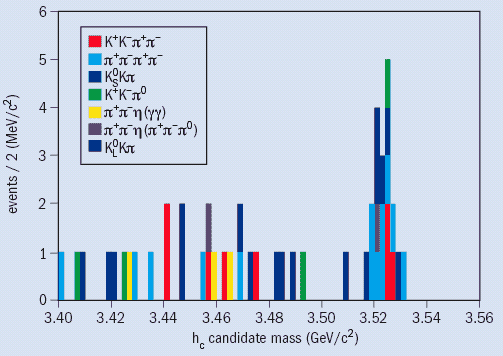
The inclusive hc signal sits on a considerable background. Further reduction of this background is possible if one reconstructs the decay of ηc into specific final states. The hc peak stands out quite distinctly under such circumstances (figure 3). This exclusive analysis yielded values of the hc mass and product branching fraction consistent with those of the inclusive measurement, but with slightly larger errors. However, as a result of the low background, the statistical significance of the exclusive measurement is higher than that of the inclusive measurement, providing a more conclusive observation of the existence of the hc. The combined inclusive and exclusive analyses yield M(hc) = 3524.4±0.6±0.4 MeV/c2 and Bψ’Bh (4.0±0.8±0.7) × 10-4, very close to theoretical expectations.
The hc thus lies at 1.0±0.6±0.4 MeV/c2 below the average 3PJ mass, supporting the QCD prediction and indicating little contribution from a long-range spin-dependent quark-confining force or coupled-channel effects, which could cause a displacement from this value. It is barely consistent with an interesting (but non-relativistic) bound that predicted the hc should lie no lower than 〈M(3PJ)〉 (Stubbe and Martin 1991).
An independent experiment at Fermilab, E835, has produced additional evidence that the hc is nearly degenerate with 〈M(3PJ)〉 (Andreotti et al. 2005). By forming hc candidates using collisions of antiprotons in the Accumulator Ring with protons in a gas-jet target, the E835 Collaboration found 13 candidates for the process pbarp →hc → γgηc → γ(γγ). Utilizing the carefully controlled energy of the antiproton, the team found M(hc) = 3525.8±0.2 0.2 MeV/c2 and a decay width Γ <1 MeV.
The CLEO Collaboration plans to collect more ψ(2S) data, enabling a better measurement of the hc mass and production rate. It is hoped that the predictions of lattice gauge theories will keep pace with these improvements.
Further discoveries
The hc is not the only new charmonium state below charmed threshold to which CLEO has contributed substantially. Several years ago, the Belle Collaboration observed a candidate for ηc(2S) in B→ K(KSKπ) (Choi et al. 2002) and e+e– → J/ψ + X (Abe et al. 2002), the mass of which was incompatible with that of the previously claimed observation. By studying its production in photon-photon collisions, the CLEO collaboration has confirmed the presence of this state (Asner et al. 2004), as has the BaBar Collaboration. The mass of the ηc(2S) is found to be only 48±5 MeV/c2 below the corresponding spin-triplet ψ(2S) state, a hyperfine splitting that is considerably less than the difference of 117 MeV/c2 seen in the 1S charmonium states, that is, between the J/ψ and the ηc(1S). This difference may well be due to the proximity of the charmed meson-pair threshold, which can lower the mass of the ψ(2S) by tens of MeV/c2.
Researchers at the CLEO Collaboration found that the product Γ(ηc(2S) → γγ)B(ηc(2S) → KSKπ) is only 0.18±0.05±0.02 times the corresponding product for ηc(1S). This could pose a problem for descriptions of charmonium if the branching ratios to KSKπ are equal. More likely, the heavier ηc(2S) has more decay modes available to it, so its branching ratio to KSKπ is likely to be less than that of the hc(1S).
Altogether it is remarkable that more than 30 years after the first discovery, charmonium continues to yield new information and new challenges to elementary-particle physics, thanks to improvements in collider luminosities and detector capabilities. Recent advancements include surprises from charmonium spectroscopy above charm threshold to which CLEO is also contributing.
With the recent discoveries of the hc and the ηc(2S), all of the expected bound states below charm threshold have now been observed. With the exception of the mass of the ηc(2S), the observed masses and branching fractions are in quantitative agreement with theoretical expectations, while the lower-than-expected ψ(2S) – ηc(2S) mass splitting stresses the importance of the nearby DDbar- threshold. The quantitative agreement between theory and experiment for the states below charm threshold provide a firm foundation for developing an understanding of the new states found above the threshold.
Two hundred people gave a warm reception to Nobel laureate and detector pioneer Georges Charpak when he gave the opening talk at the Workshop on Micro-Pattern Gas Detectors at CERN on 20 January. The meeting began with a welcome from Jean-Jacques Blaising, head of CERN’s Physics Department, and continued with considerations of future challenges for particle detectors, overviews of the progress made on micro-pattern gas-detector technologies, and detailed presentations that emphasized production and running with these detectors. As the first in a series of workshops dedicated to reviewing the status of various particle-detector technologies, the formula adopted for this meeting was approved by the accumulated experts.
Aurore Savoy-Navarro of LPNHE-Université de Paris 6 addressed the basic questions surrounding the challenging future for particle detectors. With the Large Hadron Collider (LHC), particle physics will penetrate into the tera-electron-volt world, in explorations that will later be pursued together with another machine characterized by more stringent parameters. So what challenges do we expect? There will be increases in both the importance of the physics and the difficulty of the environment in the forward and very forward regions; increases in the number of jets and in the dynamic range required to observe them; an increase in the need for tagging particle flavours; increases in the flow of information, in the need for real-time decision-making, filtering and full processing of the data, together with an increasing demand for easy and worldwide access to the data; and there will, of course, be a need for increased robustness and reliability. So how do we cope with such a demanding future? Savoy-Navarro encouraged the exchange of information, Ramp;D and the pioneering of new technologies, also in collaboration with industry. However, the core question at the meeting was: “Can the micro-pattern gas detectors be an appropriate technology for future experiments?”
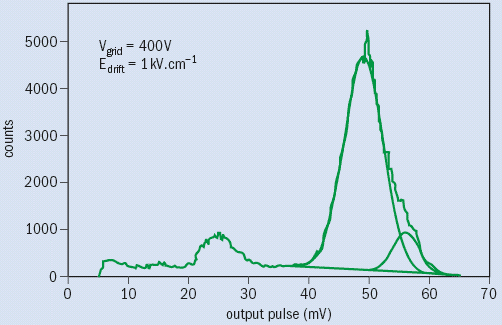
CERN’s Fabio Sauli described the recent developments and applications of the gas electron multiplier (GEM), a powerful detector concept that he introduced several years ago. In a GEM, a thin, metal-plated polymer foil is chemically pierced by a high density of microscopic holes. When a suitable voltage difference is applied between the two sides of the foil, each hole acts as an individual proportional counter, amplifying the ionization charge released in the gas. Several electrodes can be cascaded, leading to large gains and stable operating conditions in harsh radiation environments – a major point for the four speakers supporting GEM technology.
Sauli underlined two innovations in GEMs. With a caesium-iodide photosensitive layer deposited on the first electrode in a cascade, GEM devices provide efficient and fast detection of photoelectrons. With a resolution of a few nanoseconds and single-photon position accuracies better than a tenth of a millimetre, a GEM-based detector could form the basis of a new generation of ring-imaging Cherenkov particle identifiers. A large “hadron blind” detector exploiting these principles is being constructed for the upgrade of the PHENIX detector at the Brookhaven National Laboratory. Recent work at the Budker Institute for Nuclear Physics in Novosibirsk has demonstrated that GEM detectors can also work at cryogenic temperatures, which could lead to electronic bubble chambers.
Ioannis Giomataris of the Commissariat à l’Energie Atomique (CEA), Saclay, reviewed the micromesh gaseous structure chamber (Micromegas) detector. He recalled that the amplification process in a small gap has a fundamental feature: the gain reaches its maximum value for gaps in the range 30-150 μm. This key point in the Micromegas operation leads to extraordinary performance in several areas: stability, relative immunity to defects in flatness, and excellent energy resolution. The small amplification gap produces a narrow ionized avalanche, giving rise to excellent spatial and time resolution – several experiments measure 12 μm accuracy and time resolutions in the sub-nanosecond range. Giomataris pointed out that thanks to the fast collection of ions, the Micromegas can safely sustain particle fluxes larger than 105 mm-2s-1. He also introduced the Micromegas bulk, a new technology that is easy to implement, which has recently been developed in collaboration with the printed circuit board workshop at CERN. The detector, built in a single process, is light, low cost and robust.
In addition, Giomataris also presented applications of Micromegas in areas other than high-energy physics. These included a high-resolution detector for thermal neutron tomography; a detector with high time resolution for fast neutron detection in inertial confinement fusion experiments; and the novel compact, sealed Piccolo Micromegas detector, designed to provide in-core measurements of the neutron flux at a nuclear reactor and to give an estimation of the neutron energy.
The COMPASS fixed-target experiment at CERN has pioneered the use of multi-GEM and Micromegas detectors for tracking close to the beam line with particle rates of 25 kHz/mm2. Both technologies have shown excellent performance. Bernhard Ketzer of the Technischen Universität München and CERN gave a detailed description of the production and running experience accumulated with 22 large (31 cm2) GEM detectors with a triple amplification stage. All detectors operate with single-plane efficiencies greater than 97%, with a spatial resolution of 70 µm at a rate of 4 × 10⁷/s. In addition, Fabienne Kunne of CEA-Saclay emphasized the excellent tracking capabilities of the largest Micromegas built to date, with an area of 40 cm2: they achieve a spatial resolution of 90 µm with full efficiency at a moderate gain.
Both speakers pointed out that no degradation of performance was observed in the COMPASS detectors after several years of operation with an accumulated charge of a few millicoulombs/cm2. With these results COMPASS has demonstrated the large-scale feasibility and reliability of the micro-pattern detector concept, and several years of flawless running have demonstrated its robustness and resistance to high radiation levels.
A Micromegas detector has also been developed for the CERN Axion Solar Telescope (CAST) experiment, which is searching for axions produced in the Sun’s core. George Fanourakis of the National Centre for Scientific Research “Demokritos”, Athens, explained that to find these rare events, the CAST Micromegas required demanding features – efficient detection of photons of 1-10 keV, stability, linearity and very good spatial and energy resolution with low background – all of which have been achieved. The detector has an X-Y strip structure on the same plane and reaches, after software filtering, an average background event rate of 5 × 10⁻⁵ keV-1 cm-2 s-1. In this way, the Micromegas detector at CAST has established the enormous potential of the technique in experiments to study rare events.
The NA48 experiment at CERN is using Micromegas detectors, and Kunne presented the spectrometer comprising three Micromegas stations coupled to a time projection chamber (TPC). Tracking of kaons, at rates exceeding several 107/s, is performed with a time resolution of 0.6 ns and a spatial resolution better than 100 μm. Kaons are tagged with a momentum resolution of 0.6%, which improves the resolution on missing masses significantly. A thin-gap (25 µm) Micromegas was also developed for the new proposal, P326, where the study of the rare decay K+ → pi;+νν requires tracking a flux of around 1.5 × 10⁸/cm2/s.
Exploiting the technology
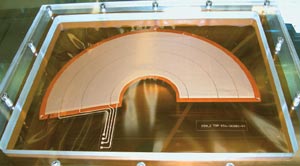
For the new LHC programme, two experiments, TOTEM and LHCb, have adopted GEM technology. Leszek Ropelewski of CERN described the TOTEM telescopes, made of triple-GEM detectors, which will be placed in the forward region of the CMS detector, where the charged-particle densities are estimated to be in the region of 106 cm-2s-1. Each of the telescopes will contain 20 half-moon detectors arranged in 10 planes, with an inner radius matching the beam pipe. TOTEM will exploit the full decoupling of the charge-amplification and charge-collection regions, which allows freedom in the optimization of the readout structure, a unique property of GEM detectors.
LHCb will use triple-GEM detectors with digital-pad readout to generate a fast and selective level-0 muon trigger in a small region close to the beam pipe. To trigger at 40 MHz a very fast gas mixture is needed. Alessandro Cardini from INFN Cagliari presented a detailed study performed on fast gas mixtures and showed that a triple-GEM detector fulfils the LHCb requirements in terms of efficiency in a 25 ns window, pad multiplicity, cross-talk and radiation hardness.
A key point that must be solved to promote micro-pattern detectors: industrialization of the production and manufacture of larger-size detectors.
Many groups worldwide develop the GEM and Micromegas technologies for future experiments at accelerators. An interesting use is in end-cap detectors for the TPCs of detectors for the International Linear Collider (ILC). The physics goals at the ILC require a detector with unprecedented tracking capabilities to be developed. Two major questions on the feasibility of a TPC based on a gas micro-pattern detector were addressed at the meeting, namely the problem of ion feedback and the two-track separation ultimately reachable. Stefan Roth of RWTH (Rheinisch-Westfälische Technische Hochschule) Aachen and Vincent Lepeltier of the Laboratoire de l’accelérateur linéaire, Orsay, responded by showing the excellent results obtained in a 4 T magnetic field with TPCs based on GEM and Micromegas detectors, namely a relative ion feedback of a few per-mille and position resolutions of less than 100 µm.
Harry Van der Graaf of NIKHEF presented two new detector concepts suitable for coupling to a TPC. The GridPix detector (95% efficient for single primary electrons) consists of a grid placed directly on top of the MediPix2 chip. A modification of MediPix2 is foreseen so as to record the arrival time of the drifted charges, allowing full 3D track reconstruction. With the InGrid technique, the grid is produced in wafer post-processing technology and integrated with a complementary-metal-oxide semiconductor pixel chip. This detector has shown an unprecedented energy resolution.
In the concluding discussion session, chaired by CERN’s Lucie Linssen, the community underlined a key point that must be solved to promote micro-pattern detectors: industrialization of the production and manufacture of larger-size detectors. There was applause for the team at CERN that optimized the production technique and that still devotes a great deal of effort to fulfilling the increasing demands for micro-pattern detectors.
The meeting unanimously agreed a concluding statement: the high radiation resistance and excellent time and spatial resolution, combined with a light structure, make these detectors attractive for high-precision tracking in future high-rate projects. It also became evident that pioneering and Ramp;D in detector technology are fundamental for cultivating synergy between the LHC and the ILC communities. There are many common issues to resolve and a mixture of the two cultures of e+e– and pp colliders, along with an adventurous mind, is what we need to confront future detector challenges successfully.
by John Terning, Oxford University Press. Hardback ISBN 0198567634 £55.
The book begins with a brief review of supersymmetry and the construction of the minimal supersymmetric Standard Model and approaches to supersymmetry breaking. It also reviews general non-perturbative methods that led to holomorphy and the Affleck-Dine-Seiberg superpotential as powerful tools for analysing supersymmetric theories. Seiberg duality is discussed with example applications, paying special attention to its use in understanding dynamical supersymmetry breaking. Alongside an overview of important recent developments in supersymmetry the book covers topics of interest to both formal and phenomenological theorists.
by W Kittel and E A De Wolf, World Scientific. Hardback ISBN 9812562958 £60 ($98).
This book comprehensively covers the development and status of soft (i.e. non-perturbative) phenomena encountered in the production of (multi-) hadronic final states by high-energy collisions of various particles. Phenomenological models used to describe the data are in general inspired by quantum chromodynamics (QCD) and the book often crosses between soft and hard (perturbative) QCD. Postgraduate students, researchers and academics interested in multihadron production will find this useful reading.
To provide the best experiences, we use technologies like cookies to store and/or access device information. Consenting to these technologies will allow us to process data such as browsing behavior or unique IDs on this site. Not consenting or withdrawing consent, may adversely affect certain features and functions.
Functional
Always active
The technical storage or access is strictly necessary for the legitimate purpose of enabling the use of a specific service explicitly requested by the subscriber or user, or for the sole purpose of carrying out the transmission of a communication over an electronic communications network.
Preferences
The technical storage or access is necessary for the legitimate purpose of storing preferences that are not requested by the subscriber or user.
Statistics
The technical storage or access that is used exclusively for statistical purposes.The technical storage or access that is used exclusively for anonymous statistical purposes. Without a subpoena, voluntary compliance on the part of your Internet Service Provider, or additional records from a third party, information stored or retrieved for this purpose alone cannot usually be used to identify you.
Marketing
The technical storage or access is required to create user profiles to send advertising, or to track the user on a website or across several websites for similar marketing purposes.