Comsol -leaderboard other pages

Topics

Extreme light rises in Eastern Europe

A new international player has entered the arena of intense short-pulse coherent light technology, with the latest developments in the Extreme Light Infrastructure (ELI) European project, which was launched in November 2007 in its preparatory phase and involves nearly 40 research and academic institutions from 13 EU member states. At the end of 2009, ELI decided to create a pan-European Extreme Light Facility based at several research sites. The first three sites have been selected and a decision on a fourth site, to deal with “ultrahigh peak power”, will be taken in 2012 after validation of the technology.

The field of “extreme light” is opening up a new direction in fundamental and applied research. It is currently carried out in Europe – mainly in France, Germany, Russia and the UK – as well as in China, Japan, South Korea and the US. With the new initiative, other European countries hosting the three sites for the new facility are set to take a leading role.

The site in Prague, Czech Republic, will focus on providing ultrashort-pulse beams of energetic particles (10 GeV) and radiation (up to a few mega-electron-volts) produced from compact pulsed-laser plasma accelerators with a planned overall laser peak-power reaching 50 PW. In Hungary, a site in Szeged will be dedicated to extremely fast dynamics, taking snap-shots at the attosecond scale (10–18 s) of electron dynamics in atoms, molecules, plasmas and solids based on an optical few-femtosecond laser with an average power of several kilowatts.

The third site in Magurele, near Bucharest, Romania, will produce radiation and beam particles at energies high enough to address nuclear processes. With this facility a renaissance in the field of nuclear physics is expected. The planned laser peak-power will reach 30 PW. Intense radiation created at ELI could help to clarify the processes limiting the lifetime of nuclear power reactors, offer new avenues to control the lifetime of nuclear waste, fabricate new nuclear pharmaceutical products, and lead to laser-driven hadron therapy, and phase-contrast imaging as a medical diagnostic tool.

Completion of the fourth ELI site will afford new fundamental investigations into particle physics, nuclear physics, acceleration physics and ultrahigh-pressure physics, leading on to applications in astrophysics and cosmology. It will offer new research directions in high-energy physics relating to particle acceleration and the study of the vacuum structure and critical acceleration conditions.

ELI’s host countries have been mandated to form a pan-European Research Infrastructure Consortium (ERIC), which will be open to all European countries, and possibly others, willing to contribute to the realization of the project. A unique centralized management will preside over the integrated infrastructure. The host countries are to provide about 15% of the funding, while the EU is contributing the balance under its infrastructure investment programme. A total of €750 million is currently earmarked for the initial three sites.
Ten nations sign up for European XFEL project

On 30 November, representatives from Denmark, Germany, Greece, Hungary, Italy, Poland, Russia, the Slovak Republic, Sweden and Switzerland signed the “Convention concerning the Construction and Operation of a European X-ray Free-Electron Laser Facility”. Six language versions each of the Convention and the Final Act now carry the signatures of 11 government representatives, including two from the Federal Republic of Germany. These two documents lay the foundations of the European XFEL project, define the financial contributions of the current partner countries, and confer the responsibility for the construction and operation of the X-ray free-electron laser facility on the nonprofit company European XFEL GmbH.

For internal reasons France and Spain will sign the Convention later and China plans to join within the next six months.

UK’s ALICE facility collides beams to make X-rays

CCnew4_01_10

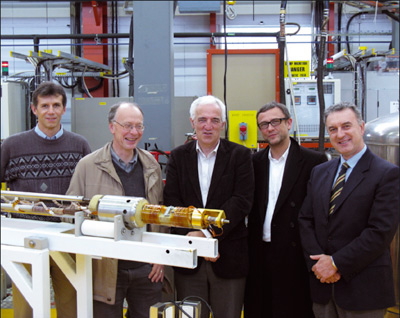
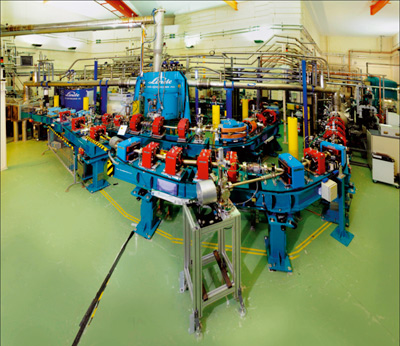
Physicists working on an R&D prototype for the next generation of accelerator-based light sources – Accelerators and Lasers in Combined Experiments (ALICE) at the Daresbury Laboratory in the UK – are celebrating after successfully colliding electrons and a powerful laser beam to produce short-pulsed X-rays. This is the first time this has been done in the UK and the first time that the concept of using an accelerator and laser source together has been demonstrated on ALICE.

The Compton Back Scattering project saw a team of scientists from the Cockcroft Institute, the University of Manchester, the Max Born Institute and the Science and Technology Facilities Council (STFC) accelerate bunches of electrons and then collide them head-on with a high-energy, short-pulse multi-terawatt laser photon beam. The technique converts the optical laser light to X-rays, as the electrons transfer energy to the photons.

ALICE is the first accelerator in Europe to operate using energy recovery, where the energy used to create its high-energy beam is captured and reused after each circuit of the accelerator for further acceleration of fresh particles. The recent success comes just one year after the facility first achieved energy recovery.

US niobium-tin superconducting magnet reaches 200 T/m

A focusing magnet based on niobium-tin superconductor, built by members of the US LHC Accelerator Research Program (LARP), has reached the design gradient of 200 T/m. The US group is working on strategies to upgrade the inner triplet quadrupole magnets that perform the final focusing of the particle beams close to the interaction points.

In an upgraded, higher-luminosity LHC the inner triplets will be subjected to still more radiation and heat than the current magnets are designed to withstand. One of the goals of LARP is to develop upgraded magnets using niobium tin (Nb3Sn), which is superconducting at a higher temperature than the niobium titanium (NbTi) currently used. Nb3Sn therefore has a greater tolerance for heat and can remain superconducting at a magnetic field more than twice as strong. However, it is brittle and sensitive to pressure and to become a superconductor when cold, it must first be reacted at temperatures of 650–700 °C.

The LARP effort initially centred on a series of short quadrupole models at Fermilab and Berkeley and, in parallel, a 4-m long magnet based on racetrack coils, built at Brookhaven and Berkeley. The next step involved the combined resources of all three laboratories on the fabrication of a long, large-aperture quadrupole magnet. In 2005 the US Department of Energy (DOE), CERN and LARP set a goal of reaching, before the end of 2009, a gradient of 200 T/m in a 4-m long superconducting quadrupole magnet with a 90 mm bore for housing the beam pipe.

This goal was met on 4 December 2009 by LARP’s first “long quadrupole shell” model magnet. The magnet’s superconducting coils performed well, as did its mechanical structure, based on a thick aluminium cylinder (shell) that supports the superconducting coils against the large forces generated by high magnetic fields and electrical currents. The magnet’s ability to withstand quenches – sudden transitions to normal conductivity with resulting heating – was also excellent.

• LARP is a collaboration of Brookhaven National Laboratory, Fermilab, Lawrence Berkeley National Laboratory and the SLAC National Accelerator Laboratory, founded by the DOE in 2003 to address the challenge of planned upgrades to the LHC’s luminosity.

CERN to be reference lab for ITER’s superconductor tests

CCnew3_01_10

The fourth meeting of the Steering Committee of the CERN/ITER Collaboration Agreement took place at CERN on 19 November. It marked not only the end of a second year of successful collaboration between ITER and CERN on superconducting magnets and associated technologies but also the establishment of CERN as the ITER reference laboratory for superconducting strand testing for the next five years.

The implementation agreement for 2009 encompassed a variety of topics. These included expertise in stainless steel and welding, high-voltage engineering, the design of high-temperature superconductor current leads, and testing and consultancy in cryogenics and vacuum technology.

The main role of CERN as the ITER reference laboratory will be: to carry out yearly benchmarking of the acceptance test facilities at the six domestic agencies involved in superconducting strand production; to help in the training of the personnel involved in these tests around the world; and to carry out third-party inspection and expertise in case of problems during production. To this end, CERN will use the facilities that were set up for strand qualification for the LHC, but with an important modification: the upgrade of magnetic fields from 10 T to 15 T to properly test samples of niobium-tin (Nb3Sn) superconductors.

This programme has considerable synergy with the study for high-gradient quadrupoles in Nb3Sn that CERN is pursuing to prepare new technology for the LHC luminosity upgrade. Nb3Sn has a superior performance to the niobium-titanium alloy employed in the LHC. However, the brittleness of Nb3Sn and the need for high-temperature heat treatments mean that much R&D is still required. ITER will see the first large-scale use of Nb3Sn: some 400 tonnes of the conductor will be used for the toroidal field coils and the central solenoid.

LHC restart impresses Council

CCnew1_01_10

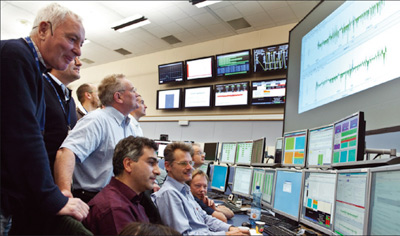
At its 153rd session on 18 December, the CERN Council heard that the LHC had ended its first full period of operation two days earlier, following collisions at a total energy of 2.36 TeV – a world record. The LHC circulated its first beams of 2009 on 20 November, ushering in a remarkably rapid beam-commissioning phase (The LHC is back: a remarkable four weeks). The first collisions were recorded on 23 November, and the world-record beam energy was established on 30 November. Following these milestones, a systematic phase of commissioning led to a period in which the six LHC experiments recorded more than a million collision events, which were distributed for analysis around the world on the LHC Computing Grid.

At the end of this first period of running, the LHC went into standby mode for a short technical stop to allow preparations for higher energy running after a restart scheduled for February. In November teams had commissioned and tested the magnet powering up to 2 kA, which corresponds to a beam energy of 1.18 TeV. To run at higher energies requires higher currents, placing more exacting demands on the new machine protection systems, which need to be readied for the task. Commissioning work for higher energies has been under way throughout January, together with necessary adaptations to the hardware and software of the protections systems that have come to light during the 2009 run.

CCnew2_01_10

“Council is extremely pleased and impressed by the way the LHC, the experiments and the Computing Grid have operated this year,” said Council president Torsten Åkesson. “The laboratory set itself an ambitious but realistic programme at its February [2009] planning meeting. The fact that all the objectives set back then have been achieved is a ringing endorsement of the step-by-step approach adopted by CERN management.”

Other Council business included the question of geographic enlargement of CERN. Council heard from a working group established in 2008 to examine this question, and accepted a series of guiding principles concerning such an enlargement, with a possible associate status involving balanced benefits and obligations being developed. In parallel, CERN has received five applications for membership over the past 12 months. Council decided to establish a working group to undertake the tasks of technical verification and fact-finding relating to these applications.

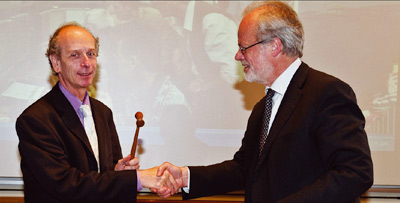
At the end of the meeting, Åkesson handed over the Council’s presidency to Michel Spiro, director of the National Institute for Nuclear Physics and Particle Physics (IN2P3) at the Department of Nuclear and Particle Physics and of the National Centre for Scientific Research (CNRS) in France. “I am greatly honoured to have been elected president of the CERN Council,” said Spiro. “I will be the Council’s 20th president, and it is with humility that I take up the mantle of my illustrious predecessors, not least Professor Åkesson, who has made significant progress with the organization over the term of his mandate. With the first results from the LHC eagerly anticipated, the period ahead promises to be a golden era: it is these results that will shape the future of particle physics and of CERN.”

The Primordial Density Perturbation: Cosmology, Inflation and the Origin of Structure

by David Lyth and Andrew Liddle, Cambridge University Press. Hardback ISBN 9780521828499, £40 ($75). E-book ISBN 9780511536922, $60.

CCboo1_01_10

In the early 1990s, the discovery of minute inhomogeneities in the temperature of the cosmic microwave background (CMB) marked the beginning of an observational endeavour that continues today thanks to dedicated satellite missions, such as the Wilkinson Microwave Anisotropy Probe and Planck. Current observations seem to suggest that the CMB anisotropies and polarization stem from inhomogeneities of the spatial curvature, which are related via general relativity to the fluctuations of the energy density. The latter fluctuations are often called, in the jargon, density perturbations. This monograph by David Lyth and Andrew Liddle unveils the different facets of the interplay between density inhomogeneities, quantum field theory and observational astrophysics. It follows (and partly overlaps with) Cosmological Inflation and Large-Scale Structure, written less than nine years ago by the same pair of authors.

The Primordial Density Perturbation is organized into three parts. The first and second parts provide a swift reminder of concepts connected to relativity (both special and general) and the Standard Cosmological paradigm (sometimes dubbed the ΛCDM model where Λ stands for the dark-energy component and CDM is the acronym for cold dark matter). The third part of the book, titled “Field Theory”, collects all of those aspects of quantum-field theory that are germane to the evolution and normalization of cosmological perturbations. The section’s main focus is organized around the description of space–time geometry in its most relativistic regime, i.e. when the typical wavelengths of the fluctuations in the spatial curvature are comparable with the Hubble radius, whose size is a million times larger than the extension of a typical spiral galaxy, such as the Milky Way.

Despite the excellent effort made by the authors, it seems necessary – especially for students and novices – to keep other dedicated books about quantum field theory on hand as well as books about cosmology (appropriately quoted through the 29 chapters of the text), such as the monumental Cosmology by Steven Weinberg (Oxford University Press 2008) and the reference treatise of the early 1990s Principles of Physical Cosmology by Jim Peebles (Princeton University Press 1993).

The rich literature that is flourishing these days on the mutual interplay between the microphysics probed by particle accelerators and the macrophysics scrutinized by astrophysics and cosmology suggests an increasing interest in these themes among a community that ranges from undergraduate students to skilled practitioners of the field. The different treatises are in agreement on one aspect: the unknown territory to be charted by the LHC will influence not only the forthcoming path of particle physics but also the development of cosmology and high-energy astrophysics during the next two decades.

First Principles, The Crazy Business of Doing Serious Science

by Howard Burton, Key Porter Books. Paperback ISBN 9781554701759, $24.95.

CCboo2_01_10

Science, usually an also-ran in the major funding stakes, is nevertheless occasionally surprised by generous benefactors. Just before the Wall Street crash in 1929, the Bloomberger family sold their department store to Macy’s of New York and altruistically invested the proceeds in what would become the Institute for Advanced Study (IAS), Princeton. This was not to be a university, and its research would not be dictated or contracted. With mathematical science high on its agenda, early members included Albert Einstein, John von Neumann and Kurt Gödel.

The IAS soon became a template for other research centres, both in the US and abroad. One of these was Israel’s Weizmann Institute, whose initial benefactors were the Sieff family, from another retailer, Britain’s Marks and Spencer. Another was India’s Tata Institute, supported by the mighty eponymous industrial combine. More recently came the foundation established by the Norwegian-American innovator Fred Kavli.

Another fresh venture is the Perimeter Institute (PI) for Theoretical Physics in Waterloo, Ontario, established in 1999 by Mike Lazaridis, co-founder of Research in Motion, the developers of the ubiquitous BlackBerry handsets. Lazaridis thrust an unsuspecting Howard Burton into the role of PI’s first executive director, with the job of getting the new institute up and running. This book is Burton’s memoirs of those heady days.

After labouring towards a PhD in theoretical physics, and with financial organizations snapping up numerate scientists, in 1999 Burton started looking for a job. The covering letter for his CV concluded with the line: “Please help save me from a lucrative career on Wall Street.” One CV went to Research in Motion. To Burton’s surprise a prompt and enthusiastic reply came from Lazaridis, who had an idea at the back of his mind and was looking for help to make it crystallize. Burton vividly conveys the difficulties of trying to sound enthusiastic in an interview for a job he didn’t even begin to understand.

Nevertheless, he was hired. To clarify his own ideas, he went far and wide to explore possibilities and seek out recruits. One early candidate was Roger Penrose at Oxford, whose foreword to the book is characteristically stimulating and enigmatic by turns. There is a hilarious anecdote about trying to make a telephone call from Penrose’s office. Another amusing episode comes when Burton goes to ask his former teacher at Guelph University to join the board of the new institute. On arrival, Burton is wrong-footed by being offered a postdoc position, which he immediately has to turn down and instead make his counter-offer to an even more surprised former teacher.

Soon, Burton was seeking other recruits and looking for suitable premises. With the first physicists in residence, attention turned towards establishing a working environment. Burton’s initial confusion was now inherited by scientists unused to Lazaridis’ work style. Burton’s chapter, “The trouble with physicists”, illustrates the culture shock when the brash commercial world meets the passive serenity of academia. Commendably, outreach was soon identified as a major objective at PI, with a successful series of public lectures and other events.

The book’s “crazy” subtitle and the offbeat cover illustration could be misleading: at first glance it is easy to assume that the book is eccentric. However, its informal style masks serious issues. PI aims to redress the balance in a world dominated – culturally, intellectually, technologically and economically – by scientific research, but which is nevertheless largely uncaring and unappreciative of the importance of science.

Because PI is an institute for theoretical physics, theorists especially will enjoy the book, and many well known figures flit across the pages. There is no official collective noun for theoretical physicists, but Burton’s acknowledgements include a list of about 200 of them, which surely qualifies for one (“galaxy”, “group”, “resonance”?).

Voyage to the Heart of Matter: the ATLAS Experiment at CERN

by Anton Radevsky and Emma Sanders, Papadakis. Hardback ISBN 9781906506063, £20.

CCboo1_09_09

You would never guess from the title that Voyage to the Heart of Matter is a pop-up book about the Large Hadron Collider. And that is a shame because it is an extraordinary work of paper engineering that deserves to stand out on the soon-to-be crowded shelf of popular books about the LHC.

Written by pop-up-book author Anton Radevsky and manager of CERN’s Microcosm exhibition Emma Sanders, Voyage is only eight pages long yet each turn of the page reveals a pop-up spread that will have you gasping with joy. Most of the corners open up to reveal yet more 3D delights, including delicate reproductions of the ATLAS tracking detectors and a miniature control room, complete with physicists. Others reveal movable elements showing how matter and antimatter annihilate or how showers of particles develop in a calorimeter.

CCboo2_09_09

Voyage exploits all three dimensions to wonderful effect. A glorious pop-up universe charts cosmic evolution from the first microsecond, chock-full of quarks and leptons, to the galaxies of present day. Readers are even given the chance to unfurl the ATLAS detector and install the inner detectors and muon chambers.

What is so charming about Voyage is the level of detail in the illustrations. You are guaranteed to spot something new each time you read it: the tiny human standing next to ATLAS; the trigger room; and event displays on the physicists’ computer screens.

CCboo3_09_09

Voyage does have its flaws, though. For instance, some of the pop-up structures need a helping hand as you open and close the pages. A more serious problem is that the authors know too much about ATLAS and haven’t simplified the words enough for ordinary readers. This is all the more apparent because of the book’s layout: the words need to be read in order yet the book has so many flaps that there is no clear order. The various detector components would benefit from being labelled too. (One of the pop-up structures remains a mystery to me.)

On balance, the book’s charms outweigh its faults. It is somehow fitting that its complex paper engineering reflects the engineering achievements of ATLAS and the LHC. Voyage is an enchanting book.

Collider: The Search for the World’s Smallest Particles

by Paul Halpern, Wiley. Hardback ISBN 9780470286203, €24.90 (£18.99, $27.95).

CCboo4_09_09

As well as opening a new era of fundamental physics research, the LHC is also making its mark on science publishing. There are already several books on the LHC – soon there will be more. Paul Halpern of Philadelphia’s University of the Sciences is a prolific author and has produced a book aimed at the North American market.

After a tourist’s introduction to CERN, Collider charts the history of the quest to discover and explain the structure of matter. Any book on particle physics has to shoulder this burden. Thus, in a book about 21st-century science, the first illustration is a portrait of Ernest Rutherford.

Unification, as a means to understand as much as possible from a minimal subset of axioms, is a central theme in physics. Halpern points out the aptness of CERN having its home in Switzerland. Just as the country successfully unifies different languages, religions and geographies, so can it be with physics: with imagination and insight, what superficially seems to be highly disparate, in fact reveals deep parallels.

As well as this theoretical understanding, Halpern also traces the history of the particle accelerators that probe the depths of the atomic nucleus and the detectors needed to capture and record their outcomes. After the Second World War, this science became very much a US speciality, with CERN trying to play catch-up as best it could.

With colliding-beam machines providing an additional stage for this research, it was Carlo Rubbia who helped propose the idea of a proton–antiproton collider. However, Fermilab in the US was committed to equipping its ring tunnel with superconducting magnets, so Rubbia knocked on CERN’s door instead.

There, prescient minds saw the value of the scheme. In 1983 came the landmark discovery of the W and Z particles – the carriers of the unified electroweak force (the Nobel path to a unified electroweak theory). With this collider, Europe had not only caught up but overtook the US, where it was a blow to national scientific prestige. As Halpern writes: “Like baseball, accelerator physics had become an American pastime, so it was like losing the World Series to Switzerland.”

Piqued, the US mobilized for the mother of all colliders, its Superconducting Supercollider (SSC). Halpern recalls the SSC era and points out how the machine, primarily a US venture, was handicapped by its limited international horizon.

After the sudden cancellation of the SSC, the less ambitious LHC collider was alone on the world stage and CERN, itself an international organization, knew how to manage such ventures. The SSC had been a green-field site: CERN had the advantage of an existing tunnel, built to house its electron–positron collider, LEP. More credit should be given to the CERN pioneers who had presciently stressed right at the start that this tunnel should be made wide enough to accommodate big magnets for a later, more ambitious machine. Thanks to such foresight, the LHC could fit inside CERN’s existing subterranean real estate.

In 2008 the commissioning of the LHC was overshadowed by a puerile phobia: black holes from the machine would swallow the planet. Halpern creditably blows away such absurdity. It often appears as though the human race is not happy unless it has something to worry about. In 2009 the panic about purported black holes at the LHC seems to have become obscured by other worries.

Collider is timely, instructive and comprehensive. However, its transatlantic view of Europe sometimes gets a little out of focus. With a population of 7600, the thriving French town of Ferney-Voltaire near CERN is not “little touched by modernity”. This “village” gives France the novelty of separate access to Geneva airport, and its proximity to the international scene in neighbouring Geneva has played a key role in the development of French secondary-school education. On a more important historical note, Isidor Rabi may have suggested the idea of what eventually became CERN, but he did not create it.

bright-rec iop pub iop-science physcis connect