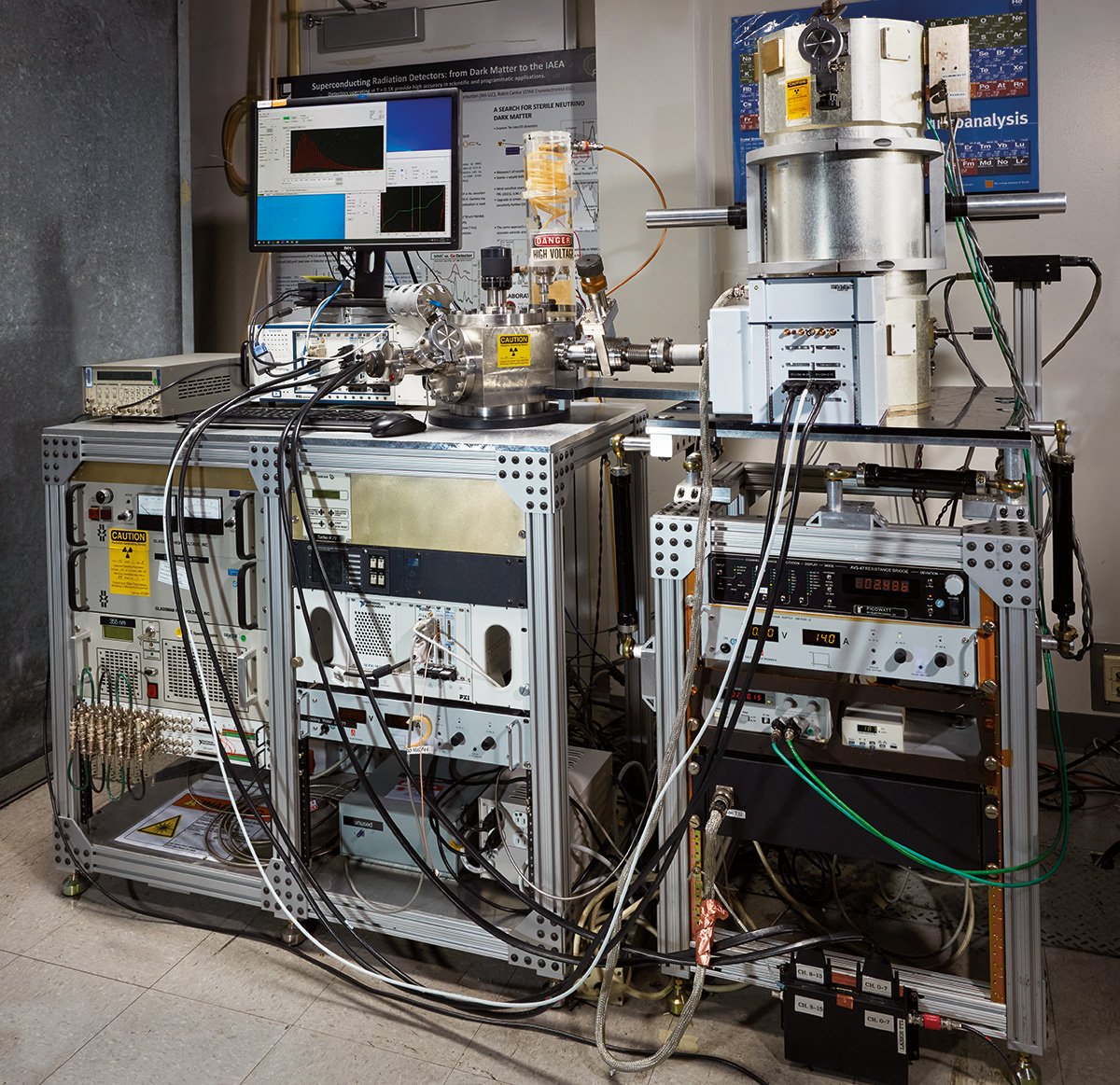
How big is a neutrino? Though the answer depends on the physical process that created it, knowledge of the size of neutrino wave packets is at present so wildly unconstrained that every measurement counts. New results from the Beryllium Electron capture in Superconducting Tunnel junctions (BeEST) experiment in TRIUMF, Canada, set new lower limits on the size of the neutrino’s wave packet in terrestrial experiments – though theorists are at odds over how to interpret the data.
Neutrinos are created as a mixture of mass eigenstates. Each eigenstate is a wave packet with a unique group velocity. If the wave packets are too narrow, they eventually stop overlapping as the wave evolves, and quantum interference is lost. If the wave packets are too broad, a single mass eigenstate is resolved by Heisenberg’s uncertainty principle, and quantum interference is also lost. No quantum interference means no neutrino oscillations.
“Coherence conditions constrain the lengths of neutrino wave packets both from below and above,” explains theorist Evgeny Akhmedov of MPI-K Heidelberg. “For neutrinos, these constraints are compatible, and the allowed window is very large because neutrinos are very light. This also hints at an answer to the frequently asked question of why charged leptons don’t oscillate.”
The spatial extent of the neutrino wavepacket has so far only been constrained to within 13 orders of magnitude by reactor-neutrino oscillations, say the BeEST team. If wave-packet sizes were at the experimental lower limit set by the world’s oscillation data, it could have impacted future oscillation experiments, such as the Jiangmen Underground Neutrino Observatory (JUNO) that is currently under construction in China.
“This could have destroyed JUNO’s ability to probe the neutrino mass ordering,” says Akhmedov, “however, we expect the actual sizes to be at least six orders of magnitude larger than the lowest limit from the world’s oscillation data. We have no hope of probing them in terrestrial oscillation experiments, in my opinion, though the situation may be different for astrophysical and cosmological neutrinos.”
BeEST uses a novel method to constrain the size of the neutrino wavepacket. The group creates electron neutrinos via electron capture on unstable 7Be nuclei produced at the TRIUMF–ISAC facility in Vancouver. In the final state there are only two products: the electron neutrino and a newly transmuted 7Li daughter atom that receives a tiny energy “kick” by emitting the neutrino. By embedding the 7Be isotopes in superconducting quantum sensors at 0.1 K, the collaboration can measure this low-energy recoil to high precision. Via the uncertainty principle, the team infers a limit on the spatial localisation of the entire final-state system of 6.2 pm – more than 1000 times larger than the nucleus itself.
Consensus has not been reached on how to infer the new lower limit on the size of the neutrino wave packet, with the preprint quoting two lower limits in the vicinity of 10–11 m and 10–8 m based on different theoretical assumptions. Although they differ dramatically, even the weaker limit improves upon all previous reactor oscillation data by more than an order of magnitude, and is enough to rule out decoherence effects as an explanation for sterile-neutrino anomalies, says the collaboration.
“I think the more stringent limit is correct,” says Akhmedov, who points out that this is only about 1.5 orders of magnitude lower than some theoretical predictions. “I am not an experimentalist and therefore cannot judge whether an improvement of 1.5 orders of magnitude can be achieved in the foreseeable future, but I very much hope that this is possible.”
In a series of daring balloon flights in 1912, Victor Hess discovered radiation that intensified with altitude, implying extra-terrestrial origins. A century later, experiments with cosmic rays have reached low-Earth orbit, but physicists are still puzzled. Cosmic-ray spectra are difficult to explain using conventional models of galactic acceleration and propagation. Hypotheses for their sources range from supernova remnants, active galactic nuclei and pulsars to physics beyond the Standard Model. The study of cosmic rays in the 1940s and 1950s gave rise to particle physics as we know it. Could these cosmic messengers be about to unlock new secrets, potentially clarifying the nature of dark matter?
The cosmic-ray spectrum extends well into the EeV regime, far beyond what can be reached by particle colliders. For many decades, the spectrum was assumed to be broken into intervals, each following a power law, as Enrico Fermi had historically predicted. The junctures between intervals include: a steepening decline at about 3 × 10⁶ GeV known as the knee; a flattening at about 4 × 10⁹ GeV known as the ankle; and a further steepening at the supposed end of the spectrum somewhere above 1010 GeV (10 EeV).
While the cosmic-ray population at EeV energies may include contributions from extra-galactic cosmic rays, and the end of the spectrum may be determined by collisions with relic cosmic-microwave-background photons – the Greisen–Zatsepin–Kuzmin cutoff – the knee is still controversial as the relative abundance of protons and other nuclei is largely unknown. What’s more, recent direct measurements by space-borne instruments have discovered “spectral curvatures” below the knee. These significant deviations from a pure power law range from a few hundred GeV to a few tens of TeV. Intriguing anomalies in the spectra of cosmic-ray electrons and positrons have also been observed below the knee.
Electron origins
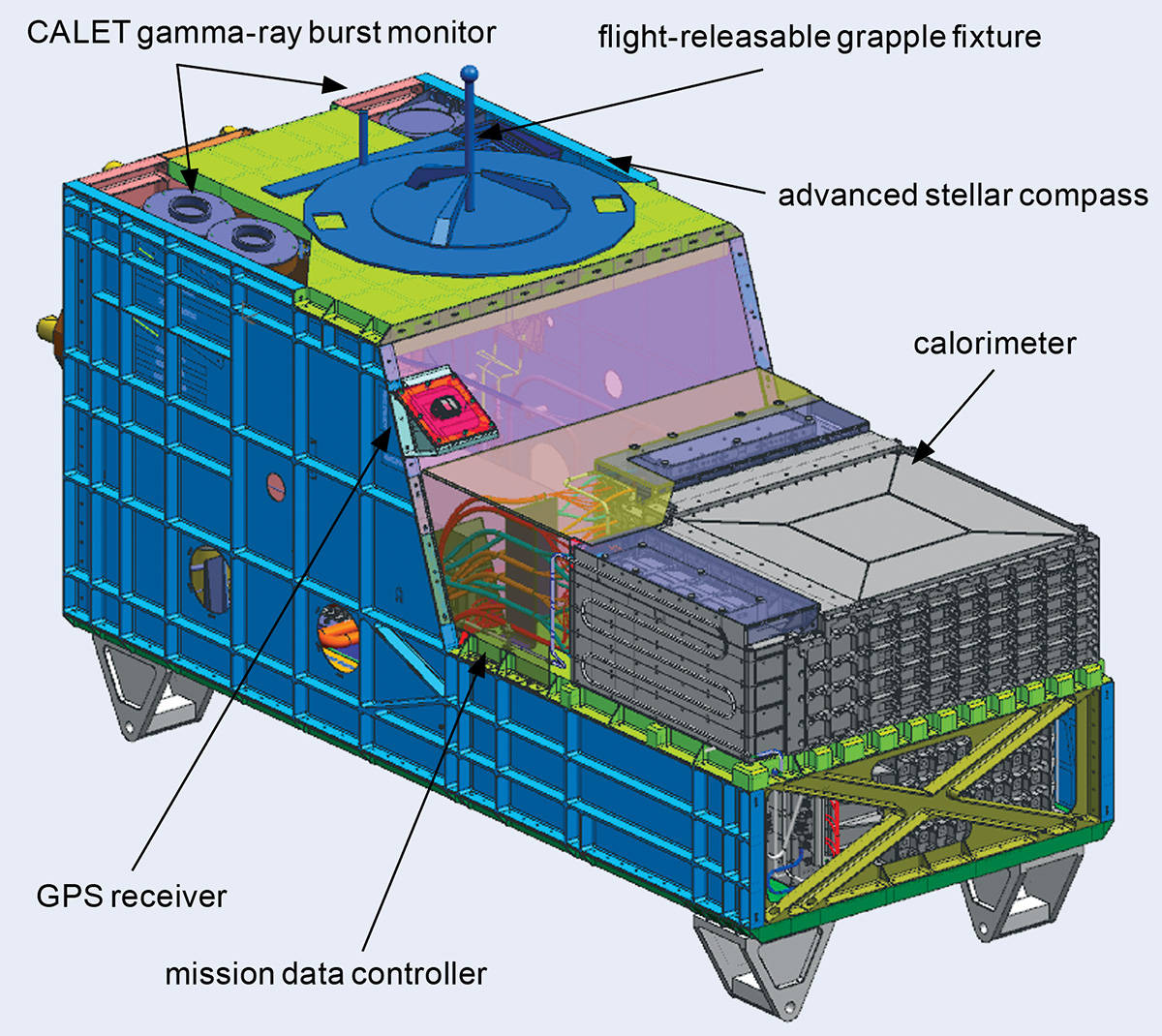
The Calorimetric Electron Telescope (CALET; see “Calorimetric telescope” figure) on board the International Space Station (ISS) provides the highest-energy direct measurements of the spectrum of cosmic-ray electrons and positrons. Its goal is to observe discrete sources of high-energy particle acceleration in the local region of our galaxy. Led by the Japan Aerospace Exploration Agency, with the participation of the Italian Space Agency and NASA, CALET was launched from the Tanegashima Space Center in August 2015, becoming the second high-energy experiment operating on the ISS following the deployment of AMS-02 in 2011. During 2017 a third experiment, ISS-CREAM, joined AMS-02 and CALET, but its observation time ended prematurely.
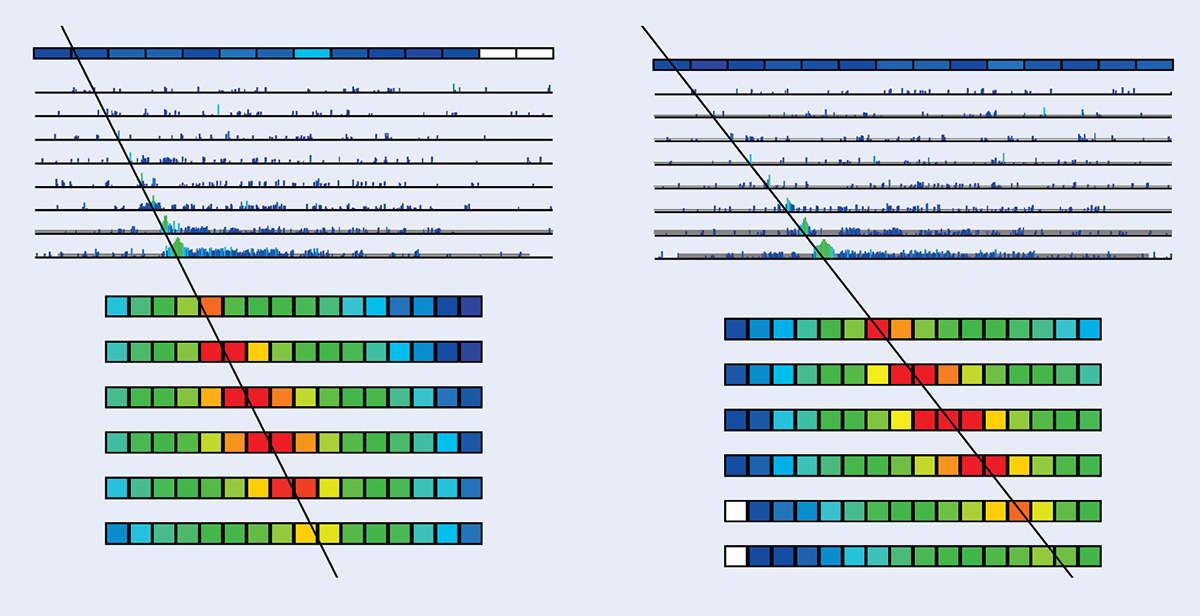
As a result of radiative losses in space, high-energy cosmic-ray electrons are expected to originate just a few thousand light-years away, relatively close to Earth. CALET’s homogeneous calorimeter (fully active, with no absorbers) is optimised to reconstruct such particles (see “Energetic electron” figure). With the exception of the highest energies, anisotropies in their arrival direction are typically small due to deflections by turbulent interstellar magnetic fields.
Energy spectra also contain crucial information as to where and how cosmic-ray electrons are accelerated. And they could provide possible signatures of dark matter. For example, the presence of a peak in the spectrum could be a sign of dark-matter decay, or dark-matter annihilation into an electron–positron pair, with a detected electron or positron in the final state.
Direct measurements of the energy spectra of charged cosmic rays have recently achieved unprecedented precision thanks to long-term observations of electrons and positrons of cosmic origin, as well as of individual elements from hydrogen to nickel, and even beyond. Space-borne instruments such as CALET directly identify cosmic nuclei by measuring their electric charge. Ground-based experiments must do so indirectly by observing the showers they generate in the atmosphere, incurring large systematic uncertainties. Either way, hadronic cosmic rays can be assumed to be fully stripped of atomic electrons in their high-temperature regions of origin.
A rich phenomenology
The past decade has seen the discovery of unexpected features in the differential energy spectra of both leptonic and hadronic cosmic rays. The observation by PAMELA and AMS of an excess of positrons above 10 GeV has generated widespread interest and still calls for an unambiguous explanation (CERN Courier December 2016 p26). Possibilities include pair production in pulsars, in addition to the well known interactions with the interstellar gas, and the annihilation of dark matter into electron–positron pairs.
Regarding cosmic-ray nuclei, significant deviations of the fluxes from pure power-law spectra have been observed by several instruments in flight, including by CREAM on balloon launches from Antarctica, by PAMELA and DAMPE aboard satellites in low-Earth orbit, and by AMS-02 and CALET on the ISS. Direct measurements have also shown that the energy spectra of “primary” cosmic rays is different from those of “secondary” cosmic rays created by collisions of primaries with the interstellar medium. This rich phenomenology, which encodes information on cosmic-ray acceleration processes and the history of their propagation in the galaxy, is the subject of multiple theoretical models.
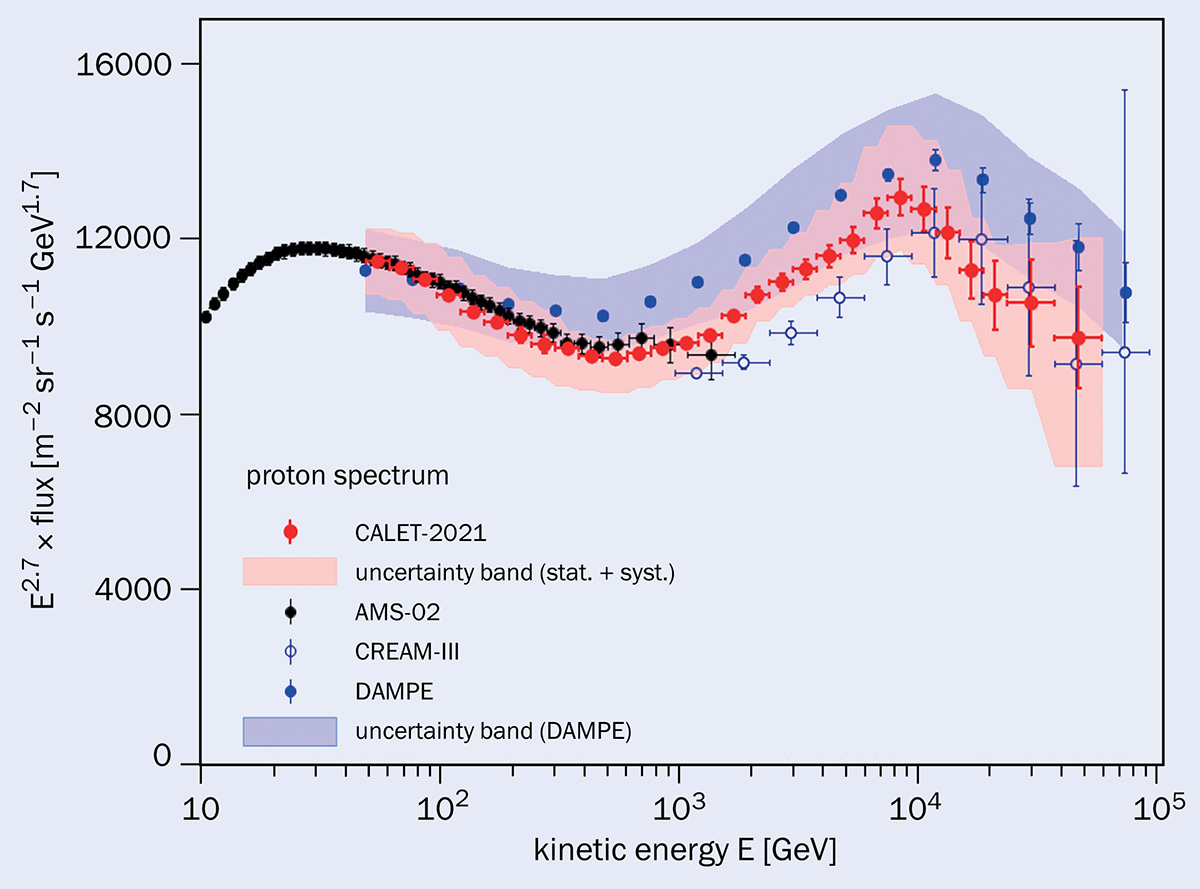
An unexpected discovery by PAMELA, which had been anticipated by CREAM and was later measured with greater precision by AMS-02, DAMPE and CALET, was the observation of a flattening of the differential energy spectra of protons and helium. Starting from energies of a few hundred GeV, the proton flux shows a smooth and progressive hardening (increase in gradient) of the spectrum that continues up to around 10 TeV, above which a completely different regime is established. A turning point was the subsequent discovery by CALET and DAMPE of an unexpected softening of proton and helium fluxes above about 10 TeV/Z, where the atomic number Z is one for protons and two for helium. The presence of a second break challenges the conventional “standard model” of cosmic-ray spectra and calls for a further extension of the observed energy range, currently limited to a few hundred TeV.
At present, only two experiments in low-Earth orbit have an energy reach beyond 100 TeV: CALET and DAMPE. They rely on a purely calorimetric measurement of the energy, while space-borne magnetic spectrometers are limited to a maximum magnetic “rigidity” – a particle’s momentum divided by its charge – of a few teravolts. Since the end of PAMELA’s operations in 2016, AMS-02 is now the only instrument in orbit with the ability to discriminate the sign of the charge. This allows separate measurements of the high-energy spectra of positrons and antiprotons – an important input to the observation of final states containing antiparticles for dark-matter searches. AMS-02 is also now preparing for an upgrade: an additional silicon tracker layer will be deployed at the top of the instrument to enable a significant increase in its acceptance and energy reach (CERN Courier March/April 2024 p7).
Pioneering observations
CALET was designed to extend the energy reach beyond the rigidity limit of present space-borne spectrometers, enabling measurements of electrons up to 20 TeV and measurements of hadrons up to 1 PeV. As an all-calorimetric instrument with no magnetic field, its main science goal is to perform precision measurements of the detailed shape of the inclusive spectra of electrons and positrons.
Thanks to its advanced imaging calorimeter, CALET can measure the kinetic energy of incident particles well into TeV energies, maintaining excellent proton–electron discrimination throughout. CALET’s homogeneous calorimeter has a total thickness of 30 radiation lengths, allowing for a full containment of electron showers. It is preceded by a high-granularity pre-shower detector with imaging capabilities that provide a redundant measurement of charge via multiple energy-loss measurements. The calibration of the two instruments is the key to controlling the energy scale, motivating beam tests at CERN before launch.
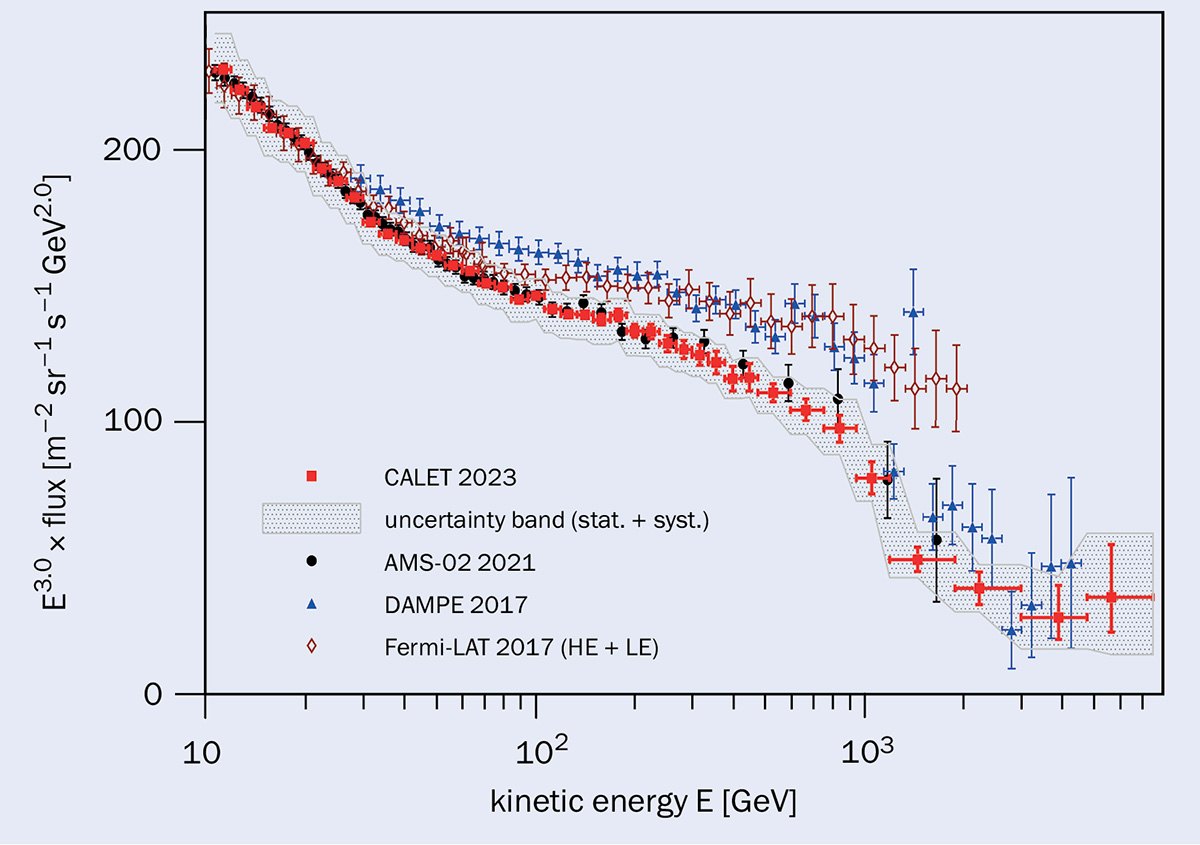
A first important deviation from a scale-invariant power-law spectrum was found for electrons near 1 TeV. Here, CALET and DAMPE observed a significant flux reduction, as expected from the large radiative losses of electrons during their travel in space. CALET has now published a high-statistics update up to 7.5 TeV, reporting the presence of candidate electrons above the 1 TeV spectral break (see “Electron break” figure).
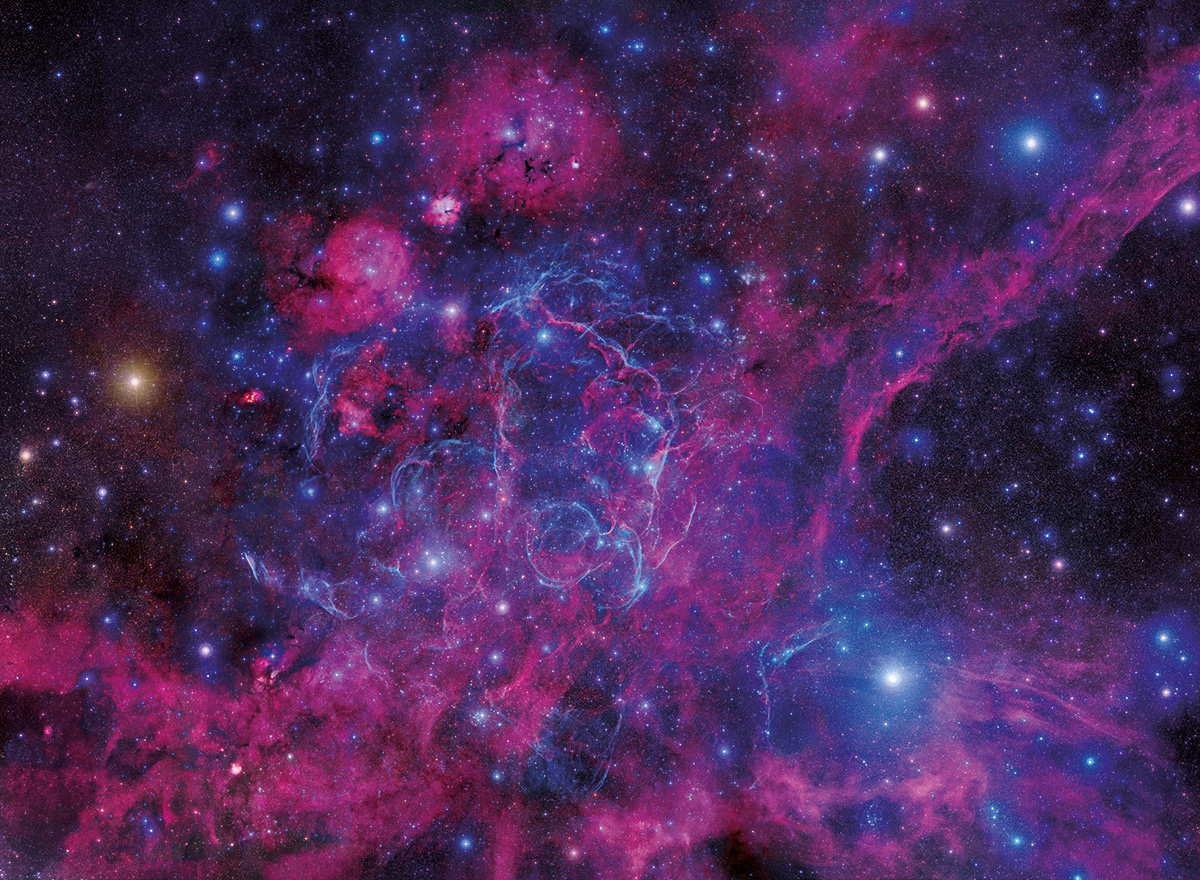
This unexplored region may hold some surprises. For example, the detection of even higher energy electrons, such as the 12 TeV candidate recently found by CALET, may indicate the contribution of young and nearby sources such as the Vela supernova remnant, which is known to host a pulsar (see “Pulsar home” image).
CALET was designed to extend the energy reach beyond the rigidity limit of present space-borne spectrometers
A second unexpected finding is the observation of a significant reduction in the proton flux around 10 TeV. This bump and dip were also observed by DAMPE and anticipated by CREAM, albeit with low statistics (see “Proton bump” figure). A precise measurement of the flux has allowed CALET to fit the spectrum with a double-broken power law: after a spectral hardening starting at a few hundred GeV, which is also observed by AMS-02 and PAMELA, and which progressively increases above 500 GeV, a steep softening takes place above 10 TeV.
A similar bump and dip have been observed in the helium flux. These spectral features may result from a single physical process that generates a bump in the cosmic-ray spectrum. Theoretical models include an anomalous diffusive regime near the acceleration sources, the dominance of one or more nearby supernova remnants, the gradual release of cosmic rays from the source, and the presence of additional sources.
CALET is also a powerful hunter of heavier cosmic rays. Measurements of the spectra of boron, carbon and oxygen ions have been extended in energy reach and precision, providing evidence of a progressive spectral hardening for most of the primary elements above a few hundred GeV per nucleon. The boron-to-carbon flux ratio is an important input for understanding cosmic-ray propagation. This is because diffusion through the interstellar medium causes an additional softening of the flux of secondary cosmic rays such as boron with respect to primary cosmic rays such as carbon (see “Break in B/C?” figure). The collaboration also recently published the first high-resolution flux measurement of nickel (Z = 28), revealing the element to have a very similar spectrum to iron, suggesting similar acceleration and propagation behaviour.
CALET is also studying the spectra of sub-iron elements, which are poorly known above 10 GeV per nucleon, and ultra-heavy galactic cosmic rays such as zinc (Z = 30), which are quite rare. CALET studies abundances up to Z = 40 using a special trigger with a large acceptance, so far revealing an excellent match with previous measurements from ACE-CRIS (a satellite-based detector), SuperTIGER (a balloon-borne detector) and HEAO-3 (a satellite-based detector decommissioned in the 1980s). Ultra-heavy galactic cosmic rays provide insights into cosmic-ray production and acceleration in some of the most energetic processes in our galaxy, such as supernovae and binary-neutron-star mergers.
Gravitational-wave counterparts
In addition to charged particles, CALET can detect gamma rays with energies between 1 GeV and 10 TeV, and study the diffuse photon background as well as individual sources. To study electromagnetic transients related to complex phenomena such as gamma-ray bursts and neutron-star mergers, CALET is equipped with a dedicated monitor that to date has detected more than 300 gamma-ray bursts, 10% of which are short bursts in the energy range 7 keV to 20 MeV. The search for electromagnetic counterparts to gravitational waves proceeds around the clock by following alerts from LIGO, VIRGO and KAGRA. No X-ray or gamma-ray counterparts to gravitational waves have been detected so far.
On the low-energy side of cosmic-ray spectra, CALET has contributed a thorough study of the effect of solar activity on galactic cosmic rays, revealing charge dependence on the polarity of the Sun’s magnetic field due to the different paths taken by electrons and protons in the heliosphere. The instrument’s large-area charge detector has also proven to be ideal for space-weather studies of relativistic electron precipitation from the Van Allen belts in Earth’s magnetosphere.
The spectacular recent experimental advances in cosmic-ray research, and the powerful theoretical efforts that they are driving, are moving us closer to a solution to the century-old puzzle of cosmic rays. With more than four billion cosmic rays observed so far, and a planned extension of the mission to the nominal end of ISS operativity in 2030, CALET is expected to continue its campaign of direct measurements in space, contributing sharper and perhaps unexpected pictures of their complex phenomenology.
With masses up to 1015 times greater than that of the Sun, galaxy clusters are the largest concentrations of matter in the universe. Within these objects, the space between the galaxies is filled with a gravitationally bound hot plasma. Given time, this plasma accretes on the galaxies, cools down and eventually forms stars. However, observations indicate that the rate of star formation is slower than expected, suggesting that processes are at play that prevent the gas from accreting. Violent bursts and jets coming from super-massive black holes in the centre of galaxy clusters are thought to quench star formation. A new study indicates that these jets rapidly change their directions.
Super-massive black holes form the centre of all galaxies, including our own, and can undergo periods of activity during which powerful jets are emitted along their spin axes. In the case of galaxy clusters, these bursts can be spotted in real time by looking at their radio emission, while their histories can be traced using X-ray observations. As the jets are emitted, they crash into the intra-cluster plasma, sweeping up material and leaving behind bubbles, or cavities, in the plasma. As the plasma emits in the X-ray region, these bubbles reveal themselves as voids when viewed with X-ray detectors. After their creation, they continue to move through the plasma and remain visible long after the original jet has disappeared (see image).
Francesco Ubertosi of the University of Bologna and co-workers studied a sample of about 60 clusters observed using the Very Long Baseline Array, which produces highly detailed radio information, and the Chandra X-ray telescope. The team studied the angle between the cavities and the current radio jet and found that most cavities are simply aligned, indicating that the current jet points in the same direction as those responsible for the cavities produced in the past. However, around one third of the studied objects show significant angles, some as large as 90°.
Violent bursts and jets are thought to quench star formation
This study therefore shows that the source of the jet, the super-massive black hole, appears to be able to reorient itself over time. More importantly, by dating the cavities the team showed that this can happen within time scales of just one million years. To get an idea of the rapidity of this change, consider that the solar system takes 225 million years to revolve around the super-massive black hole at the centre of the Milky Way. Analogously, Earth takes 365 days for one revolution around the Sun. Therefore, if the Milky Way’s super-massive black hole altered its spin axis on the timescale of one million years, it would be as if the Sun were to change its spin axis in a matter of a few days.
These observations raise the question of how the re-orientation of jets from super-massive black holes takes place. The authors find that the results are unlikely to be due to projection effects, or perturbations that significantly shift the position of the cavities. Instead, the most plausible explanation is that the spin axes of the super-massive black hole tilt significantly, likely affected by complex accretion flows. The results therefore reveal important information about the accretion dynamics of super-massive black holes. They also offer important insights into how stars form in these clusters, as the reorientation would further suppress star formation.
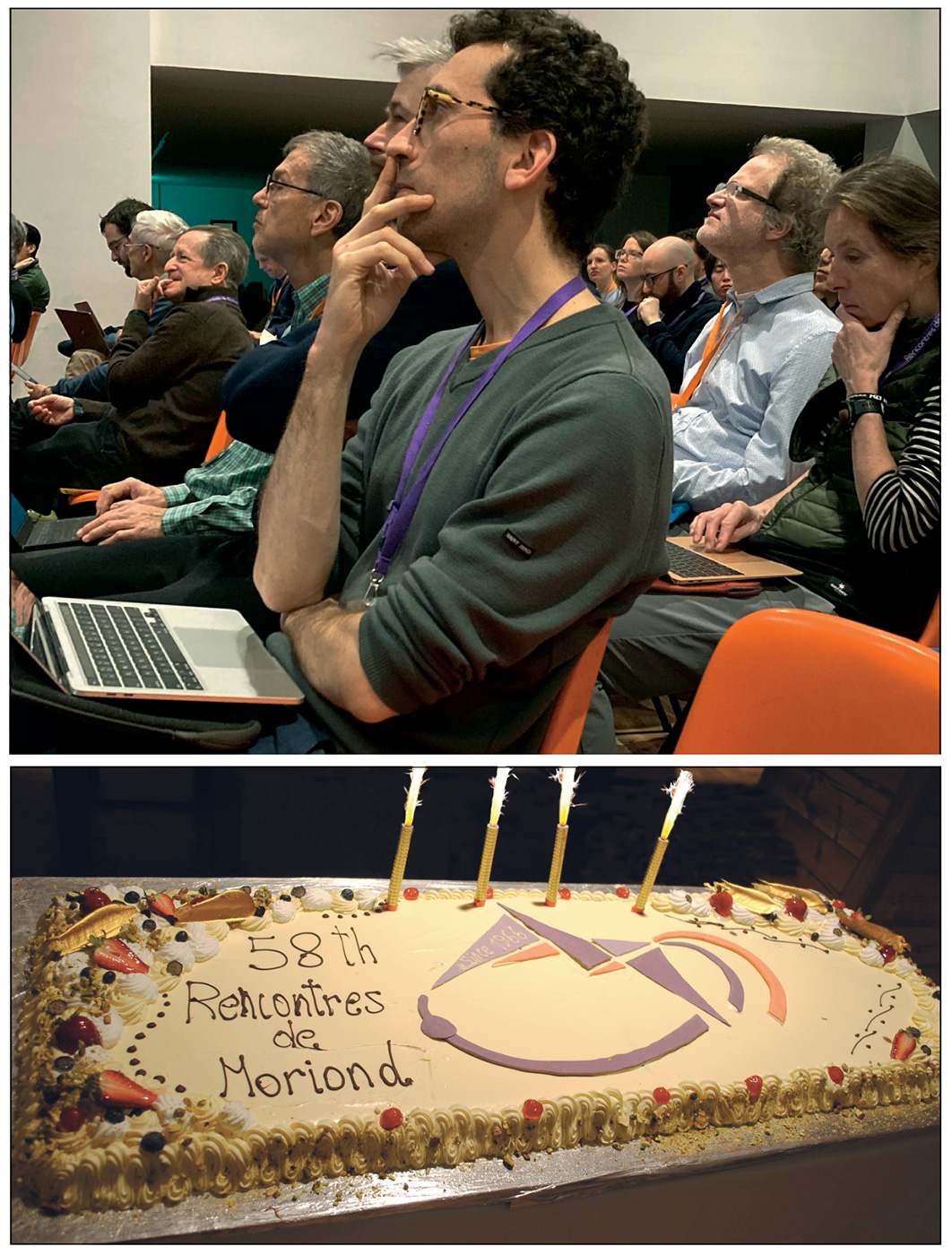
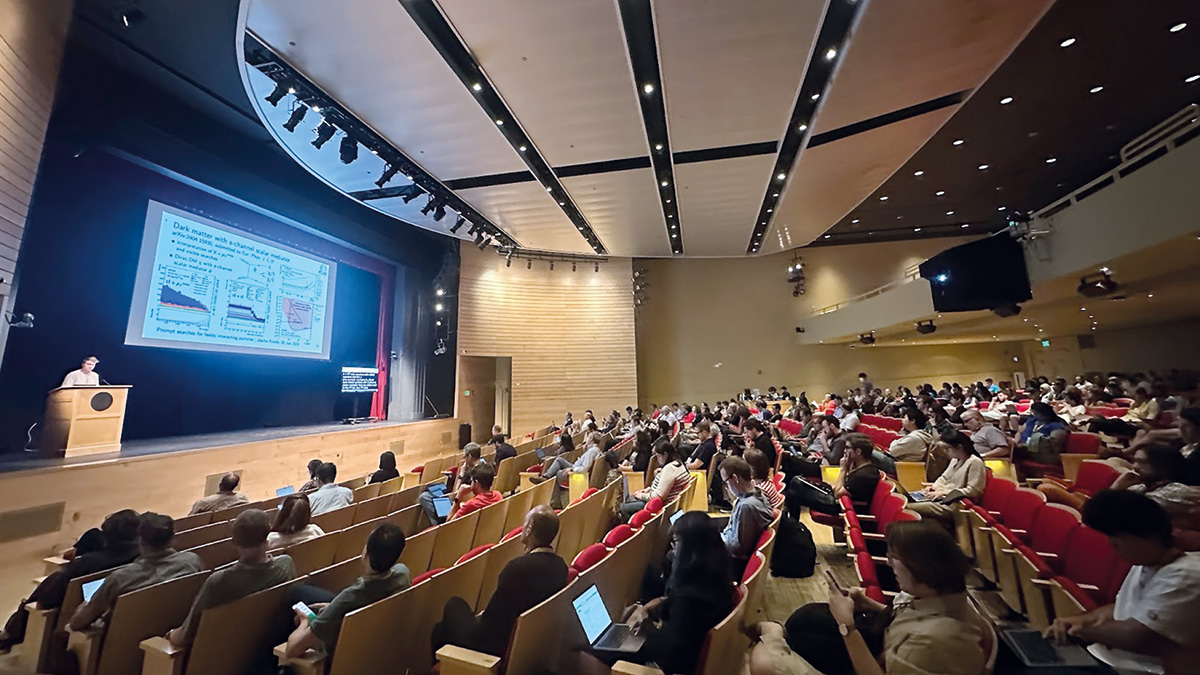
Packed sessions, more than 100 talks and lively discussions at Rencontres de Moriond electroweak, held from 24 to 31 March in La Thuile, Italy, captured the latest thinking in the field. The Standard Model (SM) emerged intact, while new paths of enquiry were illuminated.
Twelve years after the discovery of the Higgs boson, H, a wide variety of analyses by ATLAS and CMS are bringing the new scalar into sharper focus. This includes its mass, for which CMS has reported the most precise single measurement using the H → ZZ → 4ℓ channel: 125.04 ± 0.11 (stat) ± 0.05 (syst) GeV. A Run 2 legacy mass measurement combining ATLAS and CMS results is under way, while projections for the HL-LHC indicate that an uncertainty at the 10–20 MeV level is attainable. For the H width, which is potentially highly sensitive to new physics but notoriously difficult to measure at a hadron collider, the experiments constrain its value to be less than three times the SM width at 95% confidence level using an indirect method with reasonable assumptions. A precision of about 20% is expected from the full HL-LHC dataset.
New generation
The measured H cross sections in all channels continue to support the simplest incarnation of the SM H sector, with a new result from CMS testing the bbH production mode in the ττ and WW channels. Now that the H couplings to the most massive particles are well established, the focus is moving to the second-generation fermions. Directly probing the shape of the Brout–Englert–Higgs potential, and sensitive to new-physics contributions, the H self-coupling is another key target. HH production has yet to be observed at the LHC due to its very low cross section (the combined ATLAS and CMS limit is currently 2.5–3 times the SM value), but an extensive measurement programme utilising multiple channels is under way and Moriond saw new results presented based on HH → bbbb and HH → γγττ decays (see “Homing in on the Higgs self-interaction“).
Searches for exotic H decays, or for additional low-mass scalar bosons as predicted by two-Higgs-doublet extensions to the SM, were a Moriond highlight. A wide scope of new H-boson (a, A) searches have been released by ATLAS and CMS, including a new search for H → aa → muons by CMS in the mass range 0.2–60 GeV and, on the higher mass side, new limits on H/A → ttby ATLAS and A → ZH → ℓℓtt by CMS. Although none show significant deviations from the SM, most of the searches are statistically limited and there remains a large amount of phase space available for extended H sectors. Generating much conversation in the corridors was a new-physics interpretation of ATLAS and CMS data in terms of a Higgs-triplet model, based on resultsin the HH → γγ channel and top-quark differential distributions.
The LHC experiments are making stunning progress in precision electroweak measurements, as exemplified by a new measurement by CMS of the effective leptonic electroweak mixing angle sin2θℓeff= 0.23157 ± 0.00031, the first LHC measurement of the W-boson width by ATLAS, and precise measurements of the W and Z cross sections at 13.6 TeV. ATLAS announced at Moriond the most precise single-experiment test of lepton-flavour universality in comparisons between W-boson decays to muons and electrons. A wide-ranging presentation of electroweak results based on two-photon collisions at the LHC described recent attempts by CMS to extract the anomalous magnetic moment of the tau lepton. And LHCb showcased its capabilities in providing an independent measurement of the W-boson mass and the Z-boson cross section. Participants heard about the increasing relevance of lattice QCD in precision electroweak measurements, for example in determining the running of alpha and the weak mixing angle. A tension between the predictions from lattice QCD and from more traditional dispersive approaches exists, with a similar origin to that for the anomalous magnetic moment of the muon.
Following the recent observation of entanglement in top-quark pairs by ATLAS and CMS, a presentation addressing the intriguing ability of colliders to carry out fundamental tests of quantum mechanics generated much discussion. Offering full access to spin information, collider experiments can study quantum correlations, wavefunction collapse and decoherence at unprecedented energies, possibly enabling a Bell measurement at the HL-LHC and the first observation of toponium.
Seeking signals from beyond
Searches for long-lived particles by ATLAS, CMS and LHCb – including the first at LHC Run 3 by CMS – were high on the Moriond agenda. Heavy gauge and scalar bosons, left–right gauge boson masses and heavy neutral leptons are among other new-physics scenarios being constrained. Casting the net as wide as possible, the LHC experiments are developing AI anomaly-detection algorithms, while the power of effective field theory (EFT) in parameterising the effect of heavy new particles on LHC measurements continues to grow via a diverse range of analyses. Even at O(6) in the SMEFT, no fewer than 59 Wilson coefficients, each related to different underlying physics processes, need to be to measured.
Neutrinoless double-beta decay, which would be an unambiguous sign of new physics, continues to be hunted by a host of experiments
Tensions between theory and experiment remain in some processes involving b → s or b → c quark transitions. Moriond saw much discussion on such processes, including new results from Belle II on the branching ratio of the highly suppressed decay B → Kνν. Participants heard about the need for theory progress, as has been the case recently with impressive calculations of b → sγ. Predictions for b → sμμ – which show a tension with experiment and that are independent of the R(K) parameters clocking the relative rates of B → Kμ+μ– and B → Ke+e– – are excellent ways to probe new physics. Concerning b → c transitions, updates on R(D*) from Belle II and on R(D*) and R(D) from LHCb based on the muonic decay of the tau lepton take the world-average tension to 3.17σ. The stability of the SM prediction of R(D*) was also questioned.
New flavours
The flavour sector is awash with new results. LHCb presented fresh analyses exploring mixing and CP violation in the charm sector – a unique gateway to the flavour structure of up-type quarks – while CMS presented a new measurement of CP violation in Bs→ J/ψ K+K– decays. In ultra-rare kaon decays, KOTO presented a new upper limit on the branching ratio of K0L→ πνν (< 2 × 10⁻⁹ at 90% confidence level) and projects a sensitivity < 10–13 with the proposed KOTO II upgrade. NA62 presented a preliminary measurement of the branching ratio of the very rare decay π0→ e+e– (5.86 ± 0.37 × 10⁻⁸), in agreement with the SM, and results for K+→ πγγ, the latter offering the first evidence that second-order terms must be included in chiral perturbation theory. Belle and Belle II showed new radiative and electroweak penguin results concerning processes such as B0→ γγ, and BESIII presented a precise measurement of the CKM matrix element Vcs. A sweeping theory perspective on the mysterious flavour structure of the SM introduced participants to “flavour modular symmetries” – a promising new game in town for a potential theory of flavour based on modular forms, which are well known in mathematics and were used in the proof of Fermat’s last theorem.
The final sessions of Moriond electroweak turned to neutrinos, dark matter and astroparticle physics. KATRIN is soon to release an update on the neutrino mass limit based on six times more data, with an expected uncertainty of mν < 0.5 eV, and is undertaking R&D towards a proposed upgrade (KATRIN++) that would use new technology to push the mass limit down further. The collaboration is also stepping up its search for new physics via high-precision spectroscopy and is working towards an upgrade called TRISTAN that will soon zone in on the sterile neutrino hypothesis.
In Japan, the T2K facility has undergone an extensive renewal period including its first operation with the near-detector ND280 upgrade in August 2023, which increased the acceptance. Designed to explore neutrino mass ordering and leptonic CP violation, T2K data so far show a slight preference for the “normal” mass ordering while admitting a CP-conserving phase at the level of 2σ. However, a joint analysis between T2K and NOvA, a neutrino oscillation experiment in the US with a longer baseline and complementary sensitivity, prefers a more degenerate parameter space where either CP conservation or the inverted ordering are acceptable solutions. The combined data place a strong constraint on Δm32.
Neutrinoless double-beta decay (NDBD), which would reveal the neutrino to be a Majorana particle and be an unambiguous sign of new physics, continues to be hunted by a host of experiments. LEGEND-200’s first physics data was shown, setting up an ultimate goal of placing a lower limit on the NDBD half-life of 1028 years for 76Ge. Also located at Gran Sasso, CUORE, which has been collecting data since 2019, will operate for one more year before an upgrade is planned. In parallel, designs for a next-generation tonne-scale upgrade, CUPID, are being finalised. Neutrino aficionados were also treated to scotogenic three-loop models, in which neutrinos gain a Dirac mass term from radiative corrections, and to the latest results from FASER at the LHC, including the first emulsion-detector measurements of the νe and νμ cross sections at TeV energies, and a search for axion-like particles.
IceCube, which studies resonant disappearance of antineutrinos due to matter effects, showed intriguing results that delve into new-physics territory. Adding sterile neutrinos improves global fits by 7σ, participants heard, but brings inconsistencies too. Generating much interest, the global p-value for the null hypothesis of the sterile neutrino in the muon disappearance channel is 3.1%, in tension with MINOS. The Deep Core IceCube upgrade will increase the number of strings in the observatory, while the more significant Gen-2 upgrade will expand its overall area. A theory overview of the status of sterile neutrinos, taking into account recent results from MiniBooNE, MicroBooNE, PROSPECT, STEREO, GALEX, SAGE, BEST and others, concluded that experimental evidence for such a fourth neutrino state is fading but not excluded. The so-called reactor anomaly is probably explained by smaller uranium contribution than previously accounted for, while the upgraded Neutrino-4 experiment will shed light on tensions with PROSPECT and STEREO.
Cosmological constraints
The status of dark photons was also reviewed. Constraints are being placed from many sources, including colliders, astrophysical and cosmological bounds, haloscopes, and most recently radio telescopes, the James Webb Space Telescope and beam-dump experiments. PandaX-4T, which seeks to constrain WIMP dark matter and NDBD, is about to restart data-taking. LZ, another large liquid-xenon detector, has placed record limits on dark matter based on its first 60 days of data-taking. Results from the first observing run of a novel kind of laser-interferometric detector, LIDA, to observe axion-like particles in the galactic halo are promising.
No particle-physics conference would be complete without the anomalous magnetic moment of the muon
The latest supersymmetry and dark-matter searches at ATLAS and CMS were also presented, including a new result on R-parity violating supersymmetry and fresh limits on the chargino mass. BESIII reported on exotic searches for massive dark photons, muon-philic particles, glueballs and the QCD axion. Searches for axion-like particles are multiplying in many shapes and forms. In terms of flavour probes of axions, the strongest bounds come from NA62. Less conventionally, probing ultralight dark matter by searching for oscillatory behaviour in gravitational waves is gaining traction. Recent NanoGrav data show no signs of such a signal.
All eyes on the muon
No contemporary particle-physics conference would be complete without the anomalous magnetic moment of the muon – a powerful quantity that takes into account all known and unknown particles, for which the measured value is in significant tension with the SM prediction. As the Fermilab Muon g-2 experiment continues to improve the experimental precision (currently 0.2 ppm), all eyes are on how the SM calculation is performed – specifically the systematic uncertainty associated with a process called hadronic vacuum polarisation. A huge amount of work is going into understanding this quantity, both in terms of the calculational machinery and underlying data used. When computed using lattice QCD, the tension between experiment and theory is significantly reduced. However, the calculations are so complex that few groups have been able to execute them. That is set to change this year, Moriond participants heard, as new lattice calculations are unblinded ahead of the Lattice 2024 meeting in August, followed by a decision on whether to include such results in the official SM prediction at the seventh plenary workshop of the Muon g-2 Theory Initiative at KEK in September.
Experimentally and theoretically, all tools are being thrown at the SM in an attempt to find an explanation for dark matter, the cosmological baryon asymmetry, neutrino masses and other outstanding mysteries. The many high-quality talks at this year’s Moriond electroweak session, including an impressive batch of flash talks in dedicated young-researcher sessions, covered all aspects of the adventure and set the standard for future analyses. An incredible interplay between astrophysical, cosmological, collider and other experimental measurements is rapidly eating into the available parameter space for new physics. Ten years ago, the Moriond theory-summary speaker remarked “new physics must be around the corner, but we see no corner”. While the same could be said today, physicists have a much clearer view of the road ahead.
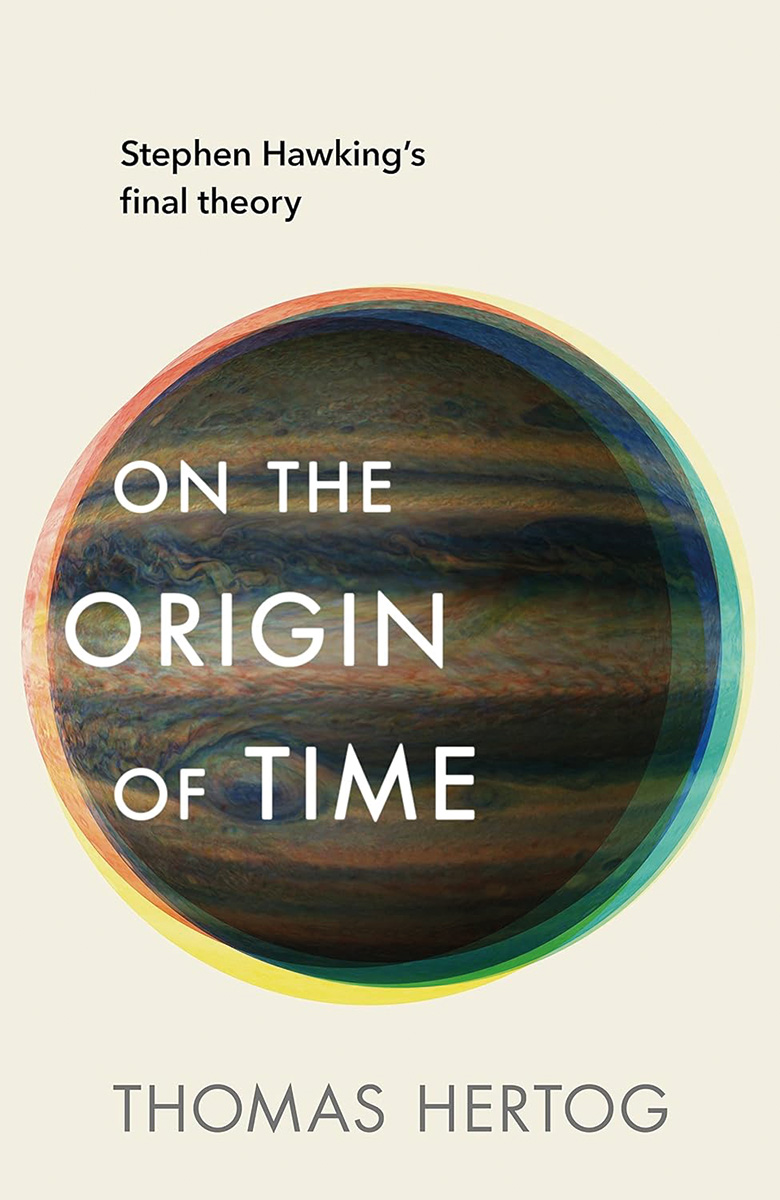
On the Origin of Time is an intellectually thrilling book and a worthy sequel to Stephen Hawking’s bestsellers. Thomas Hertog, who was a student and collaborator of Hawking, suggests that it may be viewed as the next book the famous scientist would have written if he were still alive. While addressing fundamental questions about the origin of the cosmos, Hertog sprinkles the text with anecdotes from his interactions with Hawking, easing up on the otherwise intense barrage of ideas and concepts. But despite its relaxed and popular style, the book will be most useful for physicists with a basic education in relativity and quantum theory.
Expanding universes
The book starts with an exhaustive journey through the history of cosmology. It reviews the ancient idea of an eternal mathematical universe, passes through the ages of Copernicus and Newton, and then enters the modern era of Einstein’s universe. Hertog thoroughly explores static and expanding universes, Hoyle’s steady-state cosmos, Hartle and Hawking’s no-boundary universe, Guth’s inflationary universe and Linde’s multiverse with eternal inflation. Everything culminates in the proposal for holographic quantum cosmology that the author developed together with the late Hawking.
What makes the book especially interesting is its philosophical reflections on the historical evolution of various underlying scientific paradigms. For example, the old Greeks developed the Platonic view that the workings of the world should be governed by eternal mathematical laws. This laid the groundwork for the reductionistic worldview that many scientists – especially particle physicists – subscribe to today.
Hertog argues that this way of thinking is flawed, especially when confronted with a Big Bang followed by a burst of inflation. Given the supremely fine-tuned structure of our universe, as is necessitated by the existence of atoms, galaxies and ultimately us, how could the universe “know” back at the time of the Big Bang that this fine-tuned world would emerge after inflation and phase transitions?
The quest to scientifically understand this apparent intelligent design has led to physical scenarios such as eternal inflation, which produces an infinite collection of pocket universes with their own laws. These ideas blend the anthropic principle – that only a life-friendly universe can be observed – into the narrative of a multiverse.
However, for anthropic reasoning to make sense, one needs to specify what a typical observer would be, observes Hertog, because otherwise the statement is circular. Instead, he argues that one should interpret the history of the universe as an evolutionary process. Not only would physical objects continuously evolve, but also the laws that govern them, thereby building up an enormous chain of frozen accidents analogous to the evolutionary tree of biological species on Earth.
This represents a major paradigm shift as it introduces a retrospective element: one can only understand evolution by looking at it backwards in time. Deterministic and causal explanations apply only at a crude, coarse-grained level, while the precise way that structures and laws play out is governed by accumulated accidents. Essentially the question “how did everything start?” is superseded by the question “how did our universe become as it is today?” This may be seen as adopting a top-down view (into the past) instead of a bottom-up view (from the past).
Hawking criticised traditional cosmology for hiding certain assumptions, in particular the separation of the fundamental laws from initial boundary conditions and from the role of the observer. Instead, one should view the universe, at its most fundamental level, as a quantum superposition of many possible spacetimes, of which the observer is an intrinsic part.
From this Everettian viewpoint, wavefunctions behave like separate branches of reality. A measurement is like a fork in the road, where history divides into different outcomes. This line of thought has significant consequences. The author presents an illuminating analogy with the so-called delayed double-slit experiment, which was first conceived by John Archibald Wheeler. Here the measurement that determines whether an electron behaves as particle or wave is delayed until after the electron has already passed the slit. This demonstrates that the process of observation inflicts a retroactive component which, in a sense, creates the past history of the electron.
The fifth dimension
Further ingredients are needed to transform this collection of ideas to a concrete proposal, argues Hertog. In short, these are quantum entanglement and holography. Holography has been recognised as a key property of quantum gravity, following Maldacena’s work on quantum black holes. It posits that all the information about the interior of a black hole is encoded at its horizon, which acts like a holographic screen. Inside, a fictitious fifth dimension emerges that plays the role of an energy scale.
A holographic universe would be the polar opposite of a Platonic universe with eternal laws
In Hawking and Hertog’s holographic quantum universe, one considers a Euclidean universe where the role of the holographic screen is played by the surface of our observations. The main idea is that the emergent dimension is time itself! In essence, the observed universe, with all its complexity, is like a holographic screen whose quantum bits encode its past history. Moving from the screen to the interior is equivalent to going back in time, from a highly entangled complex universe to a gradually less structured universe with fading physical laws and less entangled qubits. Eventually no entangled qubits remain. This is the origin of time as well as of the physical laws. Such a holographic universe would be the polar opposite of a Platonic universe with eternal laws.
Could these ideas be tested? Hertog argues that an observable imprint in the spectrum of primordial gravitational waves could be discovered in the future. For now, On the Origin of Time is delightful food for thought.
In a world first, a research group working at the J-PARC laboratory in Tokai, Japan, has cooled and accelerated a beam of antimatter muons (µ+). Though muon cooling was first demonstrated by the Muon Ionisation Cooling Experiment in the UK in 2020 (CERN Courier March/April 2020 p7), this is the first time that the short-lived cousins of the electron have been accelerated after cooling – an essential step for applications in particle physics.
The cooling method is ingenious – and completely different to ionisation cooling, where muons are focused in absorbers to reduce their transverse momentum. Instead, µ+ are slowed to 0.002% of the speed of light in a thin silica-aerogel target, capturing atomic electrons to form muonium, an atom-like compound of an antimatter muon and an electron. Experimenters then ionise the muonium using a laser to create a near monochromatic beam that is reaccelerated in radiofrequency (RF) cavities. The work builds on the acceleration of negative muonium ions – an antimatter muon bonded to two electrons – which the team demonstrated in 2017 (CERN Courier July/August 2018 p8).
Though the analysis is still to be finalised, with results due to be published soon, the cooling and acceleration effect is unmistakable. In accelerator physics, cooling is traditionally quantified by a reduction in beam emittance – an otherwise conserved quantity that reflects the volume occupied by the beam in the abstract space of orthogonal displacements and momenta. Estimates indicate a beam cooling effect of more than an order of magnitude, with the beam then accelerated from 25 meV to 100 keV. The main challenge is transmission. At present one antimatter muon emerges from the RF for every 10 million, which impact the aerogel. Muon decay is also a challenge given that the muonium is nearly stationary in the laboratory frame, with time dilation barely extending the muon’s 2.2 μs lifetime. Roughly a third of the µ+ decay before exiting the J-PARC apparatus.
The first application of this technology will be the muon g-2/EDM experiment at J-PARC, where data taking is due to start in 2028. The experiment will add valuable data points to measurements thought to have exceptional sensitivity to new physics (CERN Courier May/June 2021 p25). In the case of the anomalous magnetic moment (g-2) of the muon, theoretical showdowns later this year may either dissipate or reinforce intriguing hints of beyond-the-Standard-Model physics from the Muon g-2 experiment at Fermilab, potentially adding strong motivation to an independent test.
We are very impressed with the progress of our colleagues at J-PARC and congratulate them on their success
“Although our current focus is the muon g-2/EDM experiment, we are open to any possible applications of this technology in the future,” says spokesperson Tsutomu Mibe of KEK. “We are communicating with experts to understand if our technology is of any use in a muon collider, but note that our method cannot be adapted for negative muons.”
While proposals for a µ+µ+ or µ+e– collider exist, a µ+µ– collider remains the most strongly motivated machine. “Much of the physics interest in e+e– and µ+µ– colliders comes from the annihilations of the initial particles into a photon and/or a Z boson, or a Higgs boson in the case of µ+µ–,” says John Ellis of CERN/KCL. “These possibilities are absent for a µ+e– or µ+µ+ collider, making them less interesting in my opinion.” From an accelerator-physics perspective, it remains to be demonstrated that the technique can deliver the beam intensity needed for an energy-frontier collider – not least while keeping the emittance low.
“We are very impressed with the progress of our colleagues at J-PARC and congratulate them on their success, says International Muon Collider study leader Daniel Schulte of CERN. “This will profit the development of muon-beam technology and use. We are in contact to understand how we can collaborate.”
Astroparticle physics connects the extremely small with the extremely large. At the interface of particle physics, cosmology and astronomy, the field ties particles and interactions to the hot Big Bang cosmological model. This synergy allows us to go far beyond the limitations of terrestrial probes in our quest to understand nature at its most fundamental level. A typical example is neutrino masses, where cosmological observations from large-scale structure formation far exceed current bounds from terrestrial experiments. Astroparticle theory (APT) has accelerated quickly in the past 10 years. And this looks certain to continue in the next 10.
Today, neutrino masses, dark matter and the baryon asymmetry of the universe are the only evidence we have of physics beyond the Standard Model (BSM) of particle physics. Astroparticle theorists study how to extend the theory towards a new Standard Model – and the cosmological consequences of doing so.
New insights
For a long time, work on dark matter focused on TeV-scale models parallel to searches at the LHC and in ultra-low-noise detectors. The scope has now broadened to a much larger range of masses and models, from ultralight dark matter and axions to sub-GeV dark matter and WIMPs. Theoretical developments have gone hand-in-hand with new experimental opportunities. In the next 10 years, much larger detectors are planned for WIMP searches aiming towards the neutrino floor. Pioneering experimental efforts, even borrowing techniques from atomic and condensed-matter physics, test dark matter with much lower masses, providing new insights into what dark matter may be made of.
I strongly welcome efforts to broaden the reach in mass scales to efficiently hunt for any hint of what the new physics BSM may be
Neutrinos provide a complementary window on BSM physics. It is just over 25 years since the discovery of neutrino oscillation provided evidence that neutrinos have mass – a fact that cannot be accounted for in the SM (CERN Courier May/June 2024 p29). But the origin of neutrino masses remains a mystery. In the coming decade, neutrinoless double-beta decay experiments and new large experiments, such as JUNO, DUNE (see “A gold mine for neutrino physics“) and Hyper-Kamiokande, will provide a much clearer picture, determining the mass ordering and potentially discovering the neutrino’s nature and whether it violates CP symmetry. These results may, via leptogenesis, be related to the origin of the matter–antimatter asymmetry of the universe.
Recently, there has been renewed interest in models with scales accessible to current particle-physics experiments. These will exploit the powerful beams and capable detectors of the current and future experimental neutrino programme, and collider-based searches for heavy neutral leptons with MeV-to-TeV masses.
Overall, while the multi-TeV scale should continue to be a key focus for both particle and astroparticle physics experiments, I strongly welcome the theoretical and experimental efforts to broaden the reach in mass scales to efficiently hunt for any hint of what the new physics BSM may be.
Astroparticle physics also studies the particles that arrive on Earth from all around our universe. They come from extreme astrophysical environments, such as supernovae and active galactic nuclei, where they may be generated and accelerated to the highest energies. Thanks to their detection we can study the processes that fuel these astrophysical objects and gain an insight into their evolution (see “In defiance of cosmic-ray power laws“).
The discovery of gravitational waves (GWs) just a few years ago has shed new light on this field. Together with gamma rays, cosmic rays and the high-energy neutrinos detected at IceCube, the field of multi-messenger astronomy is in full bloom. In the coming years it will get a boost from the results of new, large experiments such as KM3Net, the Einstein Telescope, LISA and the Cherenkov Telescope Array – as well as many new theoretical developments, such as advanced particle-theory techniques for GW predictions.
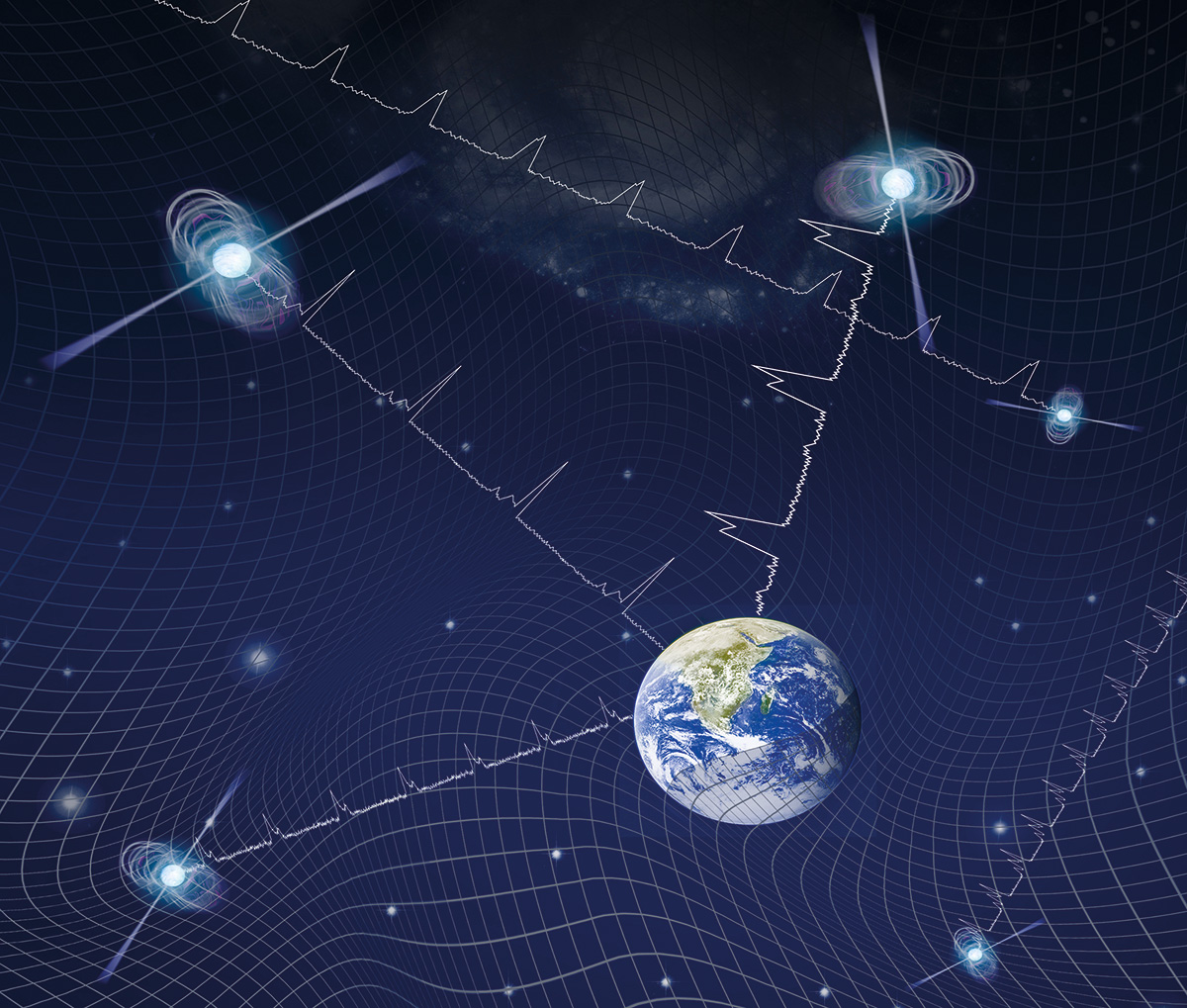
In the field of GWs, last year’s results from pulsar timing arrays indicate the presence of a stochastic background of GWs. What is its origin? Is it of astrophysical nature or does it come from some dramatic event in the early universe, such as a strong first-order phase transition? In this latter case, we would be getting a glimpse of the universe when it was just born, opening up a new perspective on fundamental particles and interactions. Could it be that we have seen a new GeV-scale dark sector at work? It is too early to tell. But this is very exciting.
Dedicated solely to LHC physics, the LHCP conference is a vital gathering for experts in the field. The 12th edition was no exception, attracting 450 physicists to Northeastern University in Boston from 3 to 7 June. Participants discussed recent results, data taking at a significantly increased instantaneous luminosity in Run 3, and progress on detector upgrades planned for the high-luminosity LHC (HL-LHC).
The study of the Higgs boson remains central to the LHC programme. ATLAS reported a new result on Standard Model (SM) Higgs-boson production with decays to tau leptons, achieving the most precise single-channel measurement of the vector-boson-fusion production mode to date. Determining the production modes of the Higgs boson precisely may shed light on the existence of new physics that would be observed as deviations from the SM predictions.
Beyond single Higgs production, the di-Higgs production (HH) search is one of the most exciting and fundamental topics for LHC physics in the coming years as it directly probes the Higgs potential (see “Homing in on the Higgs self-interaction“). ATLAS has combined results for HH production in multiple final states, providing the best-expected sensitivity to the HH production cross-section and Higgs-boson self-coupling, allowing κλ (the Higgs self-coupling with respect to the SM value) to be within the range –1.2 < κλ< 7.2.
The search for beyond-the-SM (BSM) physics to explain the many unresolved questions about our universe is being conducted with innovative ideas and methods. CMS has presented new searches involving signatures with two tau leptons, examining the hypotheses of an excited tau lepton and a heavy neutral spin-1 gauge boson (Z′) produced via Drell-Yan and, for the first time, via vector boson fusion. These results set stringent constraints on BSM models with enhanced couplings to third-generation fermions.
Other new-physics theoretical models propose additional BSM Higgs bosons. ATLAS presented a search for such particles being produced in association with top quarks, setting limits on their cross-section that significantly improve upon previous ATLASresults. Additional BSM Higgs bosons could explain puzzles such as dark matter, neutrino oscillations and the observed matter–antimatter asymmetry in the universe.
The dark side
Some BSM models imply that dark-matter particles could arise as composite mesons or baryons of a new strongly-coupled theory that is an extension of the SM. ATLAS investigated this dark sector through searches for high-multiplicity hadronic final states, providing the first direct collider constraints on this model to complement direct dark-matter-detection experimental results.
CMS have used low-pileup inelastic proton–proton collisions to measure event-shape variables related to the overall distribution of charged particles. These measurements showed the particle distribution to be more isotropic than predicted by theoretical models.
The LHC experiments also presented multiple analyses of proton–lead (p–Pb) and pp collisions, exploring the potential production of quark–gluon plasma (QGP) – a hot and dense phase of deconfined quarks and gluons found in the early universe that is frequently studied in heavy-ion Pb–Pb collisions, among others, at the LHC. Whether it can be created in smaller collision systems is still inconclusive.
ALICE reported a high-precision measurement of the elliptic flow of anti-helium-3 in QGP using the first Run-3 Pb–Pb run. The much larger data sample compared to the previous Run 2 measurement allowed ALICE to distinguish production models for these rarely produced particles for the first time. ALICE also reported the first measurement of an impact-parameter-dependent angular anisotropy in the decay of coherently photo-produced ρ0 mesons in ultra-peripheral Pb–Pb collisions. In these collisions, quantum interference effects cause a decay asymmetry that is inversely proportional to the impact parameter.
CMS reported its first measurement of the complete set of optimised CP-averaged observables from the process B0→ K*0μ+μ–. These measurements are significant because they could reveal indirect signs of new physics or subtle effects induced by low-energy strong interactions. By matching the current best experimental precision, CMS contributes to the ongoing investigation of this process.
LHCb presented measurements of the local and non-local contributions across the full invariant-mass spectrum of B0*→ K*0μ+μ–, tests of lepton flavour universality in semileptonic b decays, and mixing and CP violation in D → Kπ decays.
The future of the field was discussed in a well-attended panel session, which emphasised exploring the full potential of the HL-LHC and engaging younger generations
From a theoretical perspective, progress in precision calculations has exceeded expectations. Many processes are now known to next-to-next-to-leading order or even next-to-next-to-next-to-leading order (N3LO) accuracy. The first parton distribution functions approximating N3LO accuracy have been released and reported at LHCP, and modern parton showers have set new standards in perturbative accuracy.
In addition to these advances, several new ideas and observables are being proposed. Jet substructure, for instance, is becoming a precision science and valuable tool due to its excellent theoretical properties. Effective field theory (EFT) methods are continuously refined and automated, serving as crucial bridges to new theories as many ultraviolet theories share the same EFT operators. Synergies between flavour physics, electroweak effects and high-transverse-momentum processes at colliders are particularly evident within this framework. The use of the LHC as a photon collider showcases the extraordinary versatility of LHC experiments and their synergy with theoretical advancements.
Discovery machine
The HL-LHC upgrade was thoroughly discussed, with several speakers highlighting the importance and uniqueness of its physics programme. This includes fundamental insights into the Higgs potential, vector-boson scattering, and precise measurements of the Higgs boson and other SM parameters. Thanks to the endless efforts by the four collaborations to improve their performances, the LHC already rivals historic lepton colliders for electroweak precision in many channels, despite the cleaner signatures of lepton collisions. The HL-LHC will be capable of providing extraordinarily precise measurements while also serving as a discovery machine for many years to come.
The future of the field was discussed in a well-attended panel session, which emphasised exploring the full potential of the HL-LHC and engaging younger generations. Preserving the unique expertise and knowledge cultivated within the CERN community is imperative. Next year’s LHCP conference will be held at National Taiwan University in Taipei from 5 to 10 June.
Particle accelerators have become essential instruments to improve our health, the environment, our safety and our high-tech abilities, as well as unlocking new, fundamental insights into physics, chemistry and biology, and generally enabling scientific breakthroughs that will improve our lives. Accelerating particles to higher energies will always require a large amount of energy. In a society where energy sustainability is critical, keeping energy consumption as low as is reasonably possible is an unavoidable challenge for both research infrastructures (RIs) and industry, which collectively operate more than 40,000 accelerators.
Going green
Based on state-of-the-art technology, the portfolio of current and future accelerator-driven RIs in Europe could develop to consume up to 1% of Germany’s annual electricity demand. With the ambition to maintain the attractiveness and competitiveness of European RIs, and enable Europe’s Green Deal, the Innovate for Sustainable Accelerating Systems (iSAS) project has been approved by Horizon Europe. Its aim is to establish an enhanced collaboration in the field to broaden, expedite and amplify the development and impact of novel energy-saving technologies to accelerate particles.
In general terms, a particle accelerator has a system to create the particles to be accelerated, a system preparing beams with these particles, an accelerating system that effectively accelerates the particle beams, a magnet system to steer the beam, an experimental facility using the particles, and finally a beam dump. In linear accelerating structures, most of the electrical power taken from the grid to operate the accelerator is used by the accelerating system itself.
The core of an accelerating system is a series of cavities that can deliver a high-gradient electric field. For many modern accelerators, these cavities are superconducting and therefore cryogenically cooled to about 2 K. They are powered with radio frequency (RF) power generators to deliver the field at a specific frequency and accordingly to provide energy to the particle beams as they traverse. These superconducting RF (SRF) systems are the enabling technology for frontier accelerators, but are energy-intensive devices where only a fraction of the power extracted from the grid is effectively transmitted to the accelerated particles. In addition, the beam energy is radiated by recirculating beams and ultimately dumped and lost. As an example, the European XFEL’s superconducting RF system uses 5–6 MW for 0.1 MW of average beam power, leading to a power conversion of less than 3%.
The objective of iSAS is to innovate those technologies that have been identified as being a common core of SRF accelerating systems and that have the largest leverage for energy savings with a view to minimising the intrinsic energy consumption in all phases of operation. In the landscape of accelerator-driven RIs, solutions are being developed to reuse the waste heat produced, develop energy-efficient magnets and RF power generators, and operate facilities on opportunistic schedules when energy is available on the grid. The iSAS project has a complementary focus on the energy efficiency of the SRF accelerating technologies themselves. This will contribute to the vital transition to sustain the tremendous 20th-century applications of accelerator technology in an energy-conscious 21st century.
Interconnected technologies
Based on a recently established European R&D roadmap for accelerator technology and based on a collaboration between leading European research institutions and industry, several interconnected technologies will be developed, prototyped and tested, each enabling significant energy savings on their own in accelerating particles. The collection of energy-saving technologies will be developed with a portfolio of forthcoming applications in mind, and to explore energy-saving improvements in accelerator-driven RIs. Considering the developments realised, the new technologies will be coherently integrated into the parametric design of a new accelerating system, a linac SRF cryomodule, optimised to achieve high beam-power in accelerators with an energy consumption that is as low as reasonably possible. This new cryomodule design will enable Europe to develop and build future energy-sustainable accelerators and particle colliders.
iSAS has been approved by Horizon Europe to help develop novel energy-saving technologies to accelerate particles
On 15 and 16 April, the iSAS kick-off meeting was organised at IJCLab (Orsay, France) with around 100 participants. Each of the working groups enthusiastically presented their impactful R&D plans and, in all cases, concrete work has begun. To save energy from RF power systems, novel fast-reacting tuners are being developed to compensate rapidly for detuning of the cavity’s frequency caused by mechanical vibrations, and methods are being invented to integrate them into smart digital control systems. To save energy from the cryogenics, and based on the ongoing Horizon Europe I.FAST project, superconducting cavities with thin films of Nb3Sn are being further developed to operate with high performance at 4.2 K instead of 2 K, thereby reducing the grid-power to operate the cryogenic system. The cryogenic system requires three times less cooling power to maintain a 4.2 K bath at 4.2 K when heat is dissipated in the bath compared to maintaining a 2 K bath at 2 K. Finally, to save energy from the accelerated particle beam itself, the technology of energy recovery linacs (ERLs) is being improved to operate efficiently with high-current beams by developing novel higher-order mode dampers that significantly avoid heat loads in the cavities.
To address the engineering challenges related to the integration of the new energy-saving technologies, an existing ESS cryovessel will be equipped with new cavities and novel dampers, and the resulting linac SRF cryomodule will be tested in operation in the PERLE accelerator at IJCLab (Orsay, France). PERLE is a growing international collaboration to demonstrate the performance of ERLs with high-power beams that would enable applications in future particle colliders. Its first phase is being implemented at IJCLab with the objective to have initial beams in 2028.
The timescale to innovate, prototype and test new accelerator technologies is inherently long, in some cases longer than the typical duration of R&D projects. It is therefore essential to continue to collaborate and enhance the R&D process so that energy-sustainable technologies can be implemented without delay, to avoid hampering the scientific and industrial progress enabled by accelerators. Accordingly, iSAS plans co-development with industrial partners to jointly achieve a technology readiness level that will be sufficient to enter the large-scale production phase of these new technologies.
Empowering industry
While the readiness of several energy-saving technologies will be prepared towards industrialisation with impact on current RIs, iSAS is also a pathfinder for sustainable future SRF particle accelerators and colliders. Through inter- and multidisciplinary research that delivers and combines various technologies, it is the long-term ambition of iSAS to reduce the energy footprint of SRF accelerators in future RIs by half, and even more when the systems are integrated in ERLs. Accordingly, iSAS will help maintain Europe’s leadership for breakthroughs in fundamental sciences and enable high-energy collider technology to go beyond the current frontiers of energy and intensity in an energy-sustainable way. In parallel, the new sustainable technologies will empower and stimulate European industry to conceive a portfolio of new applications and take a leading role in, for example, the semiconductor, particle therapy, security and environmental sectors.
Quantum chromodynamics (QCD) is one of the pillars of the Standard Model of particle physics, but much remains to be understood about its emergent behaviours, and theoretical calculations often disagree. A new result from the ALICE collaboration has now added fresh intrigue to interpretations of hadronisation – the process by which quarks and gluons become confined inside colour-neutral groupings such as baryons and mesons.
The production of heavy charm and beauty quarks in proton–proton collisions at the LHC is a rather fast process (~7 × 10–24 s) and subject to perturbative QCD calculations. On the other hand, the transformation of heavy quarks into hadrons requires substantially more time (~3 × 10–23 s). This separation of time scales has motivated the idea that the hadronisation process of heavy quarks is independent of the colliding system and collision energy. However, the production of baryons carrying a heavy quark in proton–proton collisions at the LHC has been found to be enhanced compared to more elementary e+e–collisions. This surprising finding seems to invalidate the concept of universal hadronisation of heavy quarks, which is an important basis for calculations of particle production in QCD.
A new dimension
Heavy-flavour baryons carrying charm and strange quarks add a new dimension to these measurements. Such measurements are challenging because they suffer from low production rates. Due to the short lifetime of charm baryons (typically a fraction of a picosecond), they are usually observed through the detection of their decay products. The probability of how often they decay into a particular set of daughter particles, known as the branching ratio (BR), is poorly known for many of the strange-charm baryons. Knowledge of the precise branching ratio is crucial for interpreting the production results of these baryons.
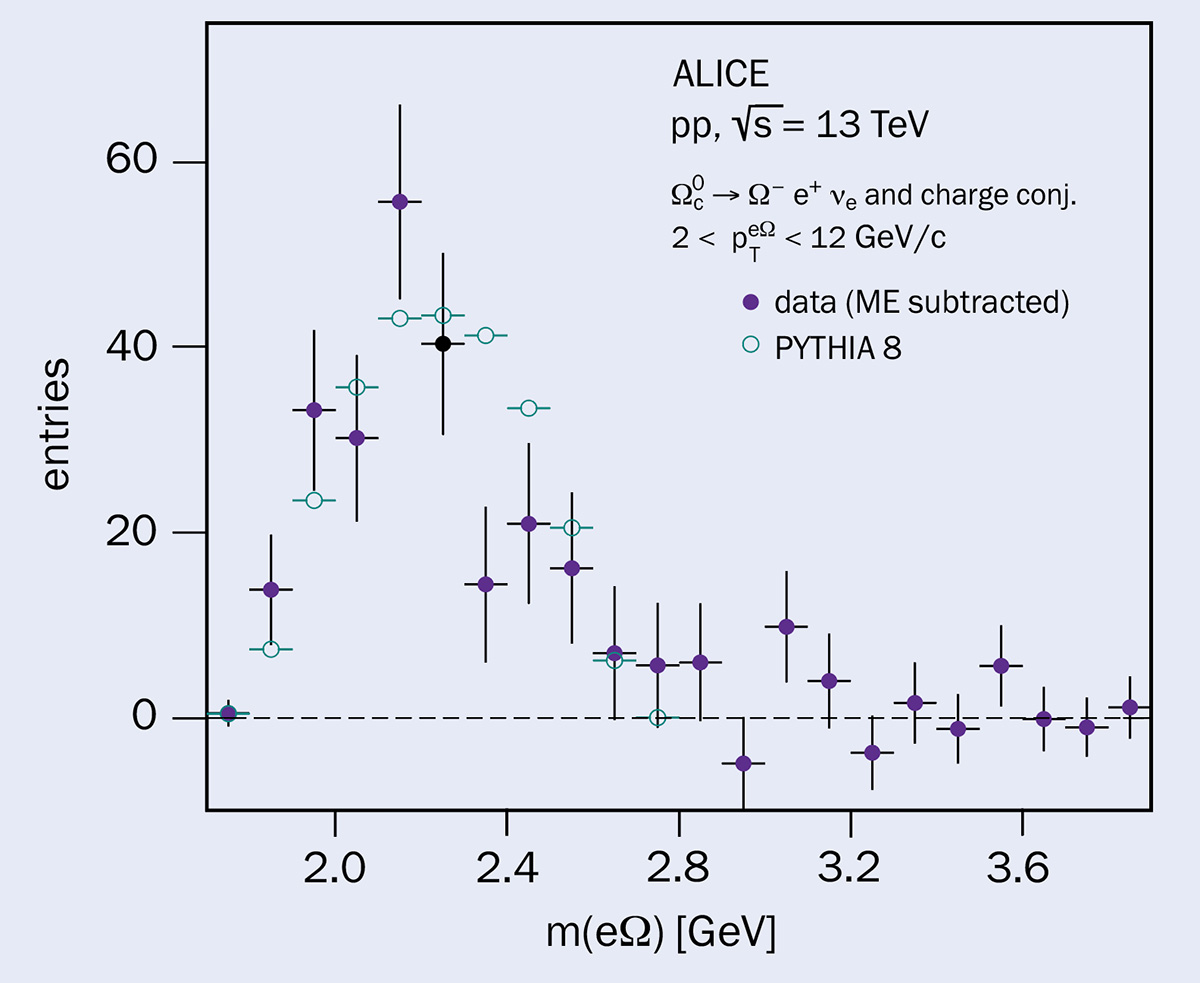
Recently, the ALICE collaboration has measured the production of Ωc0 (css) baryons via the semileptonic decay channelΩc0→ Ω–e+νe (and its charge-conjugate modes) as a function of transverse momentum (pT) in proton–proton collisions at 13 TeV at midrapidity (|y| < 0.8). The Ωc0 candidates are built by pairing an electron or positron candidate track with an Ω baryon candidate using a Kalman Filter vertexing algorithm. The Ω candidates are reconstructed via the cascading decay chain Ω–→ ΛK–, followed by the decay Λ→ pπ–. The missing momentum of the neutrino was corrected by using an unfolding technique. Figure 1 shows the invariant-mass distribution of the Ωc0 candidates.
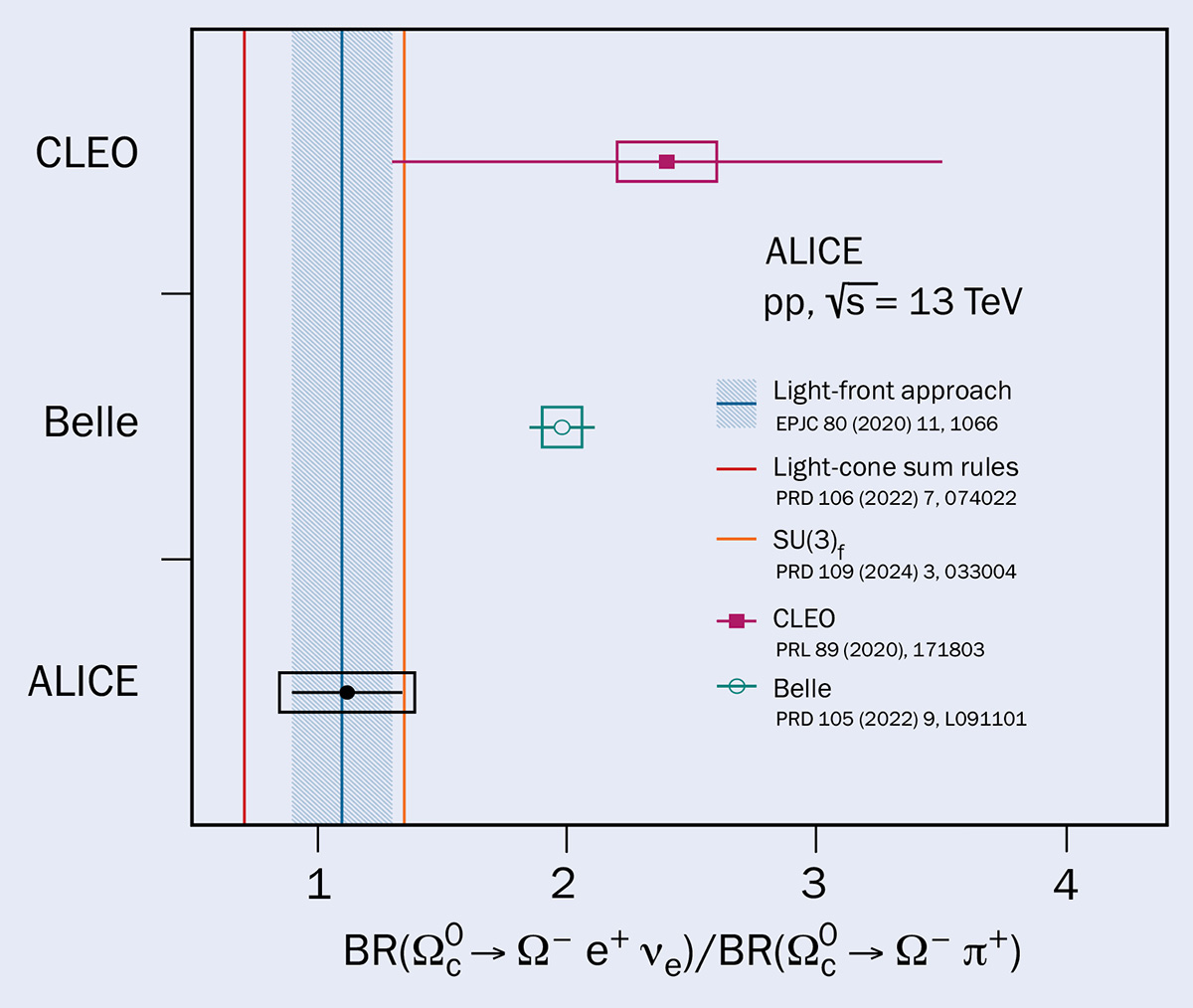
Figure 2 compiles measurements of the decay by CLEO, Belle and now ALICE. Due to the lack of an absolute BR, results are quoted relative to the BR of Ωc0→ Ω–π+. Combined with the earlier measurement of Ωc0→ Ω–π+, the relative probability of the two decay modes is obtained: BR(Ωc0→ Ω–e+νe)/BR(Ωc0→ Ω–π+) = 1.12 ± 0.22 (stat.) ± 0.27 (syst.). The Belle and CLEO collaborations have measured this ratio to be 1.98 ± 0.13 (stat.) ± 0.08 (syst.) and 2.4 ± 1.1 (stat.) ± 0.2 (syst.). Model predictions using the light-front approach and light-cone sum rules predict values of 1.1 ± 0.2 and 0.71, respectively. Another approach calculates decay modes and probabilities of charmed-baryon decays based on SU(3)f flavour symmetry in the quark model, resulting in a computed branching fraction ratio of 1.35.
The ALICE result is consistent with theory calculations and is 2.3σ lower than the more precise value reported by the Belle collaboration. The present measurement provides constraints on the decay probabilities of the Ωc0 baryons. It demonstrates that such measurements are now possible at the LHC with a precision similar to that at e+e– colliders.
With the ongoing Run 3 at the LHC and thanks to the recent upgrades, ALICE is on the way to collecting a data sample that is about a thousand times larger for these types of analyses, which will enable more precise measurements of other decay modes. Thanks to these data, we expect to resolve the question of universal hadronisation in the near future.
To provide the best experiences, we use technologies like cookies to store and/or access device information. Consenting to these technologies will allow us to process data such as browsing behavior or unique IDs on this site. Not consenting or withdrawing consent, may adversely affect certain features and functions.
Functional
Always active
The technical storage or access is strictly necessary for the legitimate purpose of enabling the use of a specific service explicitly requested by the subscriber or user, or for the sole purpose of carrying out the transmission of a communication over an electronic communications network.
Preferences
The technical storage or access is necessary for the legitimate purpose of storing preferences that are not requested by the subscriber or user.
Statistics
The technical storage or access that is used exclusively for statistical purposes.The technical storage or access that is used exclusively for anonymous statistical purposes. Without a subpoena, voluntary compliance on the part of your Internet Service Provider, or additional records from a third party, information stored or retrieved for this purpose alone cannot usually be used to identify you.
Marketing
The technical storage or access is required to create user profiles to send advertising, or to track the user on a website or across several websites for similar marketing purposes.