When I was an undergraduate physics student in the mid-1980s, I fell in love with the philosophy of quantum mechanics. I devoured biographies of the greats of early-20th-century atomic physics – physicists like Bohr, Heisenberg, Schrödinger, Pauli, Dirac, Fermi and Born. To me, as I was struggling with the formalism of quantum mechanics, there seemed to be something so exciting, magical even, about that era, particularly those wonder years of the mid-1920s when its mathematical framework was being developed and the secrets of the quantum world were revealing themselves.
I went on to do a PhD in nuclear reaction theory, which meant I spent most of my time working through mathematical derivations, becoming familiar with S-matrices, Green’s functions and scattering amplitudes, scribbling pages of angular-momentum algebra and coding in Fortran 77. And I loved that stuff. There certainly seemed to be little time for worrying about what was really going on inside atomic nuclei. Indeed, I was learning that even the notion of something “really going on” was a vague one. My generation of theoretical physicists were still being very firmly told to “shut up and calculate”, as many adherents of the Copenhagen school of quantum mechanics were keen to advocate. To be fair, so much progress has been made over the past century, in nuclear and particle physics, quantum optics, condensed-matter physics and quantum chemistry, that philosophical issues were seen as an unnecessary distraction. I recall one senior colleague, frustrated by my abiding interest in interpretational matters, admonishing me with: “Jim, an electron is an electron is an electron. Stop trying to say more about it.” And there certainly seemed to be very little in the textbooks I was reading about unresolved issues arising from such topics as the EPR (Einstein–Podolsky–Rosen) paradox and the measurement problem, let alone any analysis of the work of Hugh Everett and David Bohm, who were regarded as mavericks. The Copenhagen hegemony ruled supreme.
What I wasn’t aware of until later in my career was that a community of physicists had indeed continued to worry and think about such matters. These physicists were doing more than just debating and philosophising – they were slowly advancing our understanding of the quantum world. Experimentalists such as Alain Aspect, John Clauser and Anton Zeilinger were devising ingenious experiments in quantum optics – all three of whom were only awarded the Nobel Prize for their work on tests of John Bell’s famous inequality in 2022, which says a lot about how we are only now acknowledging their contribution. Meanwhile, theorists such as Wojciech Zurek, Erich Joos, Deiter Zeh, Abner Shimony and Asher Peres, to name just a few, were formalising ideas on entanglement and decoherence theory. It is certainly high time that quantum-mechanics textbooks – even advanced undergraduate ones – should contain their new insights.
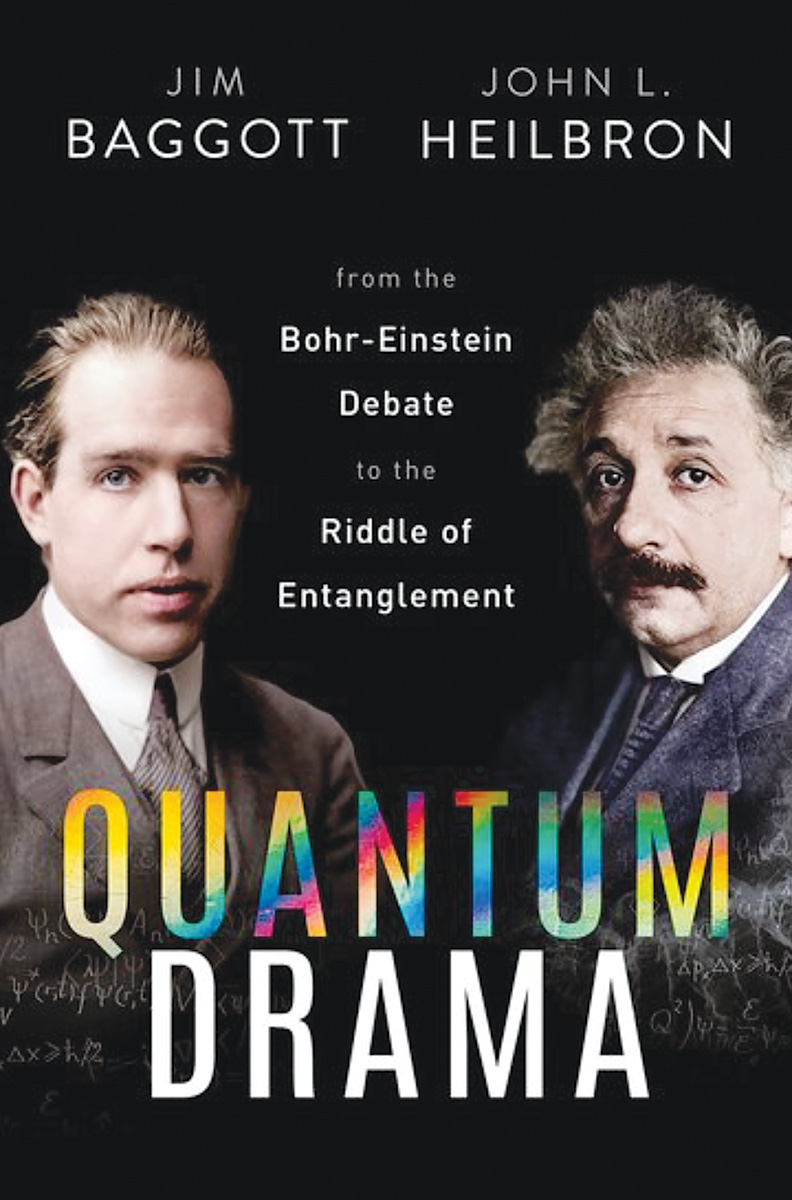
All of which brings me to Quantum Drama, a new popular-science book and collaboration between the physicist and science writer Jim Baggott and the late historian of science John L Heilbron. In terms of level, the book is at the higher end of the popular-science market and, as such, will probably be of most interest to, for example, readers of CERN Courier. If I have a criticism of the book it is that its level is not consistent. For it tries to be all things. On occasion, it has wonderful biographical detail, often of less well-known but highly deserving characters. It is also full of wit and new insights. But then sometimes it can get mired in technical detail, such as in the lengthy descriptions of the different Bell tests, which I imagine only professional physicists are likely to fully appreciate.
Having said that, the book is certainly timely. This year the world celebrates the centenary of quantum physics, since the publication of the momentous papers of Heisenberg and Schrödinger on matrix and wave mechanics, in 1925 and 1926, respectively. Progress in quantum information theory and in the development of new quantum technologies is also gathering pace right now, with the promise of quantum computers, quantum sensing and quantum encryption getting ever closer. This all provides an opportunity for the philosophy of quantum mechanics to finally emerge from the shadows into mainstream debate again.
A new narrative
So, what makes Quantum Drama stand out from other books that retell the story of quantum mechanics? Well, I would say that most historical accounts tend to focus only on that golden age between 1900 and 1927, which came to an end at the Solvay Conference in Brussels and those well-documented few days when Einstein and Bohr had their debate about what it all means. While these two giants of 20th-century physics make the front cover of the book, Quantum Drama takes the story on beyond that famous conference. Other accounts, both popular and scholarly, tend to push the narrative that Bohr won the argument, leaving generations of physicists with the idea that the interpretational issues had been resolved – apart that is, from the odd dissenting voices from the likes of Everett or Bohm who tried, unsuccessfully it was argued, to put a spanner in the Copenhagen works. All the real progress in quantum foundations after 1927, or so we were told, was in the development of quantum field theories, such as QED and QCD, the excitement of high-energy physics and the birth of the Standard Model, with the likes of Murray Gell-Mann and Steven Weinberg replacing Heisenberg and Schrödinger at centre stage. Quantum Drama takes up the story after 1927, showing that there has been a lively, exciting and ongoing dispute over what it all means, long after the death of those two giants of physics. In fact, the period up to Solvay 1927 is all dealt with in Act I of the book. The subtitle puts it well: From the Bohr–Einstein Debate to the Riddle of Entanglement.
The Bohr–Einstein debate is still very much alive and kicking
All in all, Quantum Drama delivers something remarkable, for it shines a light on all the muddle, complexity and confusion surrounding a century of debate about the meaning of quantum mechanics and the famous “Copenhagen spirit”, treating the subject with thoroughness and genuine scholarship, and showing that the Bohr–Einstein debate is still very much alive and kicking.
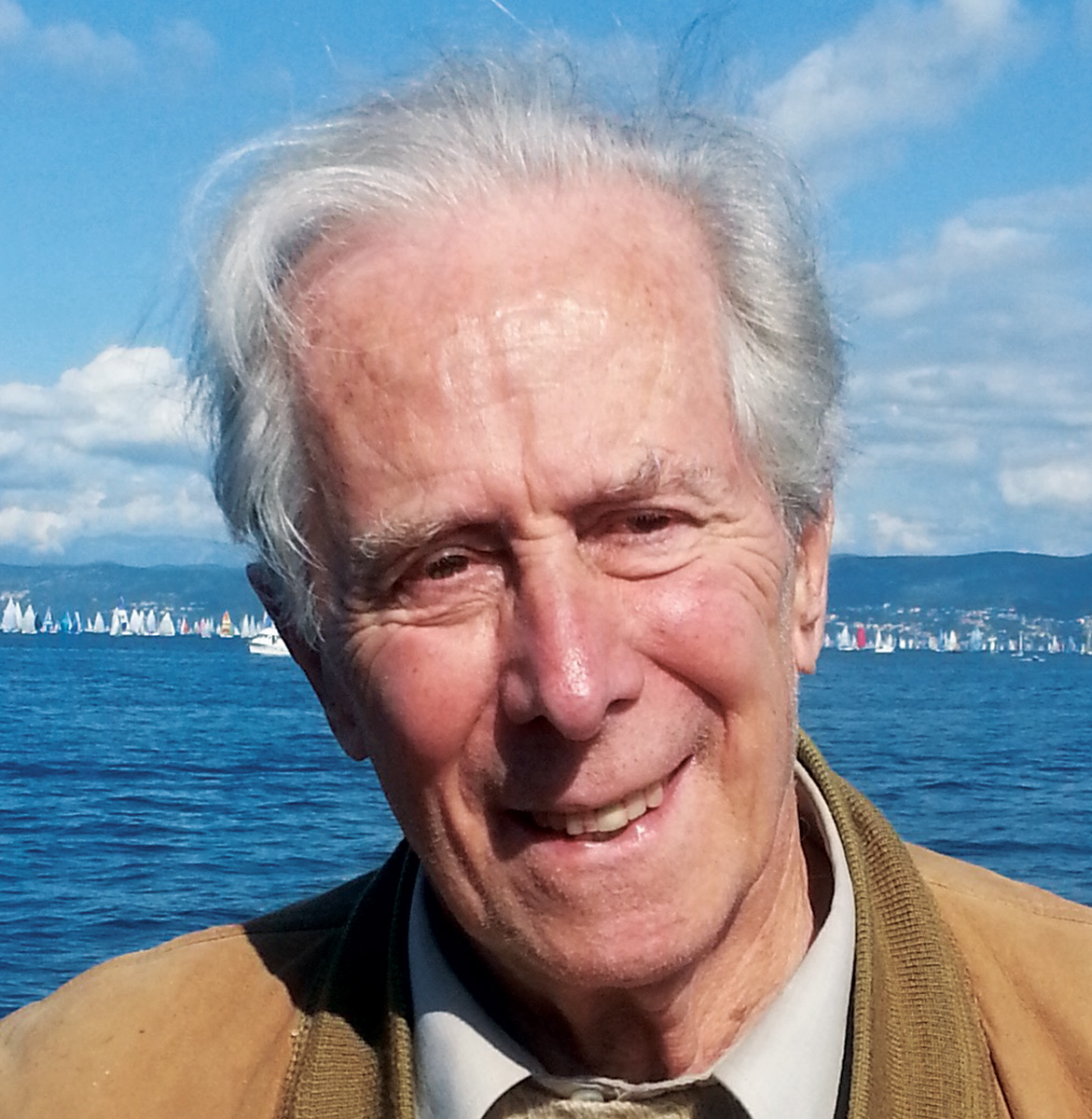
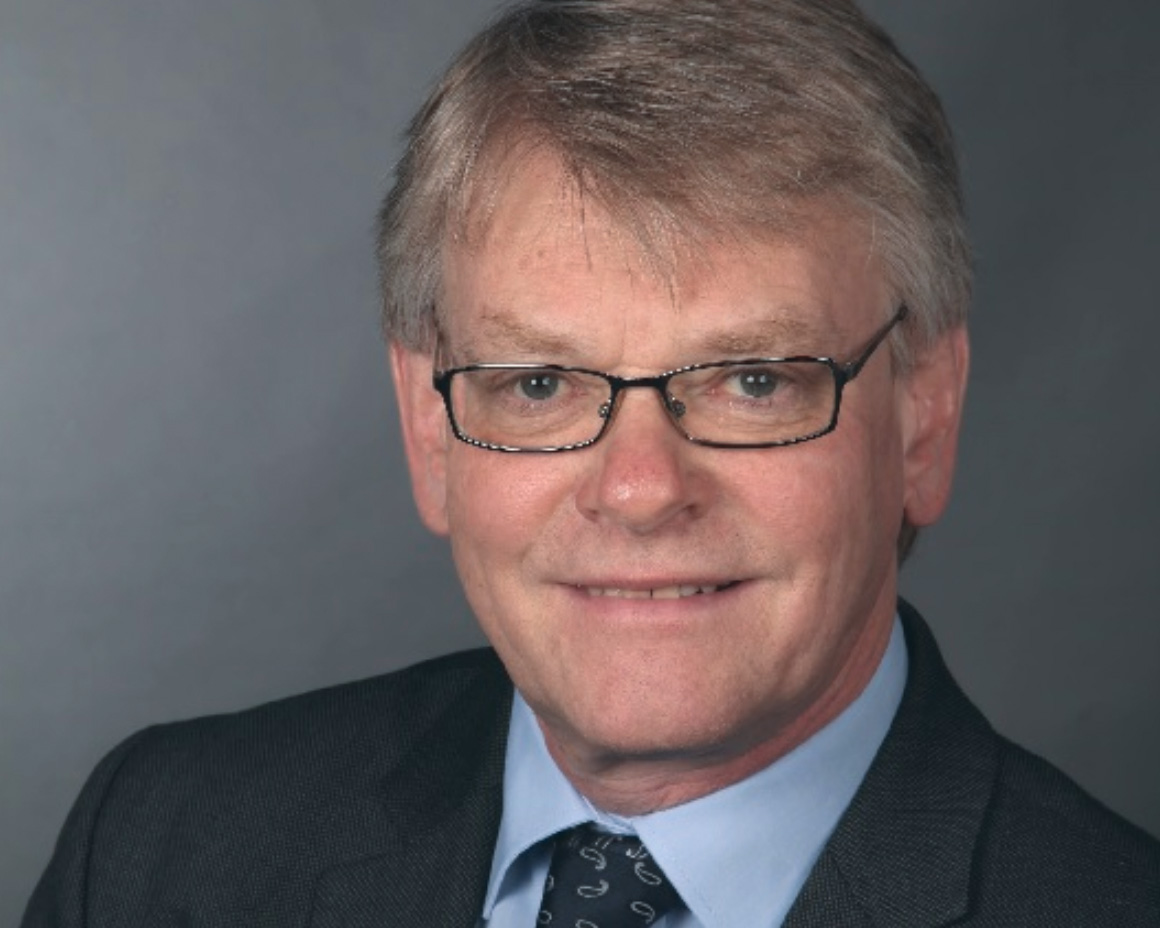
Guido Barbiellini Amidei, who passed away on 15 November 2024, made fundamental contributions to both particle physics and astrophysics.
In 1959 Guido earned a degree in physics from Rome University with a thesis on electron bremsstrahlung in monocrystals under Giordano Diambrini, a skilled experimentalist and excellent teacher. Another key mentor was Marcello Conversi, spokesperson for one of the detectors at the Adone electron–positron collider at INFN Frascati, where Guido became a staff member and developed the first luminometer based on small-angle electron–positron scattering – a technique still used today. Together with Shuji Orito, he also built the first double-tagging system for studying gamma-ray collisions.
Guido later spent several years at CERN, collaborating with Carlo Rubbia, first on the study of K-meson decays at the Proton Synchrotron and then on small-angle proton–proton scattering at the Intersecting Storage Rings. In 1974 he proposed an experiment in a new field for him: neutrino-electron scattering, a fundamental but extremely rare phenomenon known from a handful of events seen in Gargamelle. To distinguish electromagnetic showers from hadronic ones, the CHARM collaboration built a “light” calorimeter made of 150 tonnes of Carrara marble. From 1979 to 1983, 200 electron–neutrino scattering events were recorded.
In 1980 Guido remarked to his friend Ugo Amaldi: “Why don’t we start our own collaboration for LEP instead of joining others?” This suggestion sparked the genesis of the DELPHI collaboration, in which Guido played a pivotal role in defining its scientific objectives and overseeing the construction of the barrel electromagnetic calorimeter. He also contributed significantly to the design of the luminosity monitors. Above all, Guido was a constant driving force within the experiment, offering innovative ideas for fundamental physics during the transition to LEP’s higher-energy phase, and engaging tirelessly with both young students and senior colleagues.
Guido’s insatiable scientific curiosity also extended to CP symmetry violation. In 1989 he co-organised a workshop, with Konrad Kleinknecht and Walter Hoogland, exploring the possibility of an electron–positron ϕ-factory to study CP violation in neutral kaon decays. Two of his papers, with Claudio Santoni, laid the groundwork for constructing the DAΦNE collider in Frascati.
The year 1987 was a turning point for Guido. Firstly, he became a professor at the University of Trieste. Secondly, the detection of neutrinos produced by Supernova 1987A inspired a letter, published in Nature in collaboration with Giuseppe Cocconi, in which it was established that neutrinos have a charge smaller than 10–17 elementary charges. Thirdly, Guido presented a new idea to mount silicon detectors (which he had encountered through work done in DELPHI by Bernard Hyams and Peter Weilhammer) on the International Space Station or a spacecraft to detect cosmic rays and their showers, which led to a seminal paper.
At the beginning of the 1990s, an international collaboration for a large NASA space mission focused on gamma-ray astrophysics (initially named GLAST) began to form, led by SLAC scientists. Guido was among the first proponents and later was the national representative of many INFN groups. The mission, later renamed Fermi, was launched in 2008 and continues to produce significant insights in topics ranging from neutron stars and black holes to dark-matter annihilation.
Beyond GLAST, Guido was captivated by the application of silicon sensors to a new programme of small space missions initiated by the Italian Space Agency. The AGILE gamma-ray astrophysics mission, for which Guido was co-principal investigator, was conceived and approved during this period. Launched in 2007, AGILE made numerous discoveries over nearly 17 years, including identifying the origin of hadronic cosmic rays in supernova remnants and discovering novel, rapid particle acceleration phenomena in the Crab Nebula.
Guido’s passion for physics made him inexhaustible. He always brought fresh insights and thoughtful judgments, fostering a collaborative environment that enriched all the projects he took part in. He was not only a brilliant physicist but also a true gentleman of calm and mild manners, widely appreciated as a teacher and as director of INFN Trieste. Intellectually free and always smiling, he conveyed determination and commitment with grace and a profound dedication to nurturing young talents. He will be deeply missed.
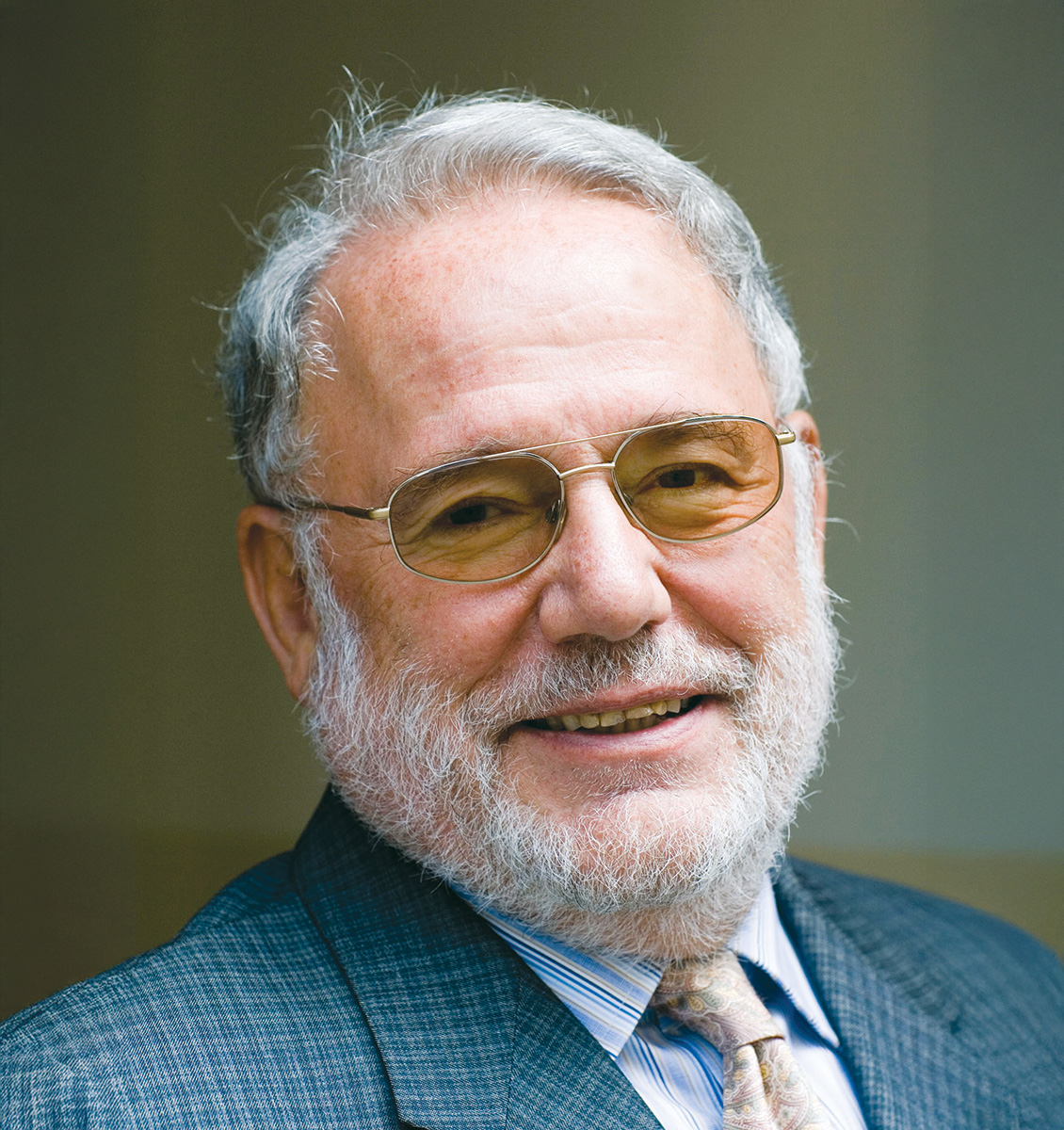
Meinhard Regler, an expert in detector development and software analysis, passed away on 22 September 2024 at the age of 83.
Born and raised in Vienna, Meinhard studied physics at the Technical University Vienna (TUW) and completed his master’s thesis on deuteron acceleration in a linac at CERN. In 1966 he joined the newly founded Institute of High Energy Physics (HEPHY) of the Austrian Academy of Sciences. He settled in Geneva to participate in a counter experiment at the CERN Proton Synchrotron, and in 1970 obtained his PhD with distinction from TUW.
In 1970 Meinhard became staff member in CERN’s data-handling division. He joined the Split Field Magnet experiment at the Intersecting Storage Rings and, together with HEPHY, contributed specially designed multi-wire proportional chambers. Early on, he realised the importance of rigorous statistical methods for track and vertex reconstruction in complex detectors, resulting in several seminal papers.
In 1975 Meinhard returned to Vienna as leader of HEPHY’s experimental division. From 1993 until his retirement at the end of 2006 he was deputy director and responsible for the detector development and software analysis groups. As a faculty member of TUW he created a series of specialised lectures and practical courses, which shaped a generation of particle physicists. In 1978 Meinhard and Georges Charpak founded the Wire Chamber Conference, now known as the Vienna Conference on Instrumentation (VCI).
Meinhard continued his participation in experiments at CERN, including WA6, UA1 and the European Hybrid Spectrometer. After joining the DELPHI experiment at LEP, he realised the emerging potential of semiconductor tracking devices and established this technology at HEPHY. First applied at DELPHI’s Very Forward Tracker, this expertise was successfully continued with important contributions to the CMS tracker at LHC, the Belle vertex detector at KEKB and several others.
Meinhard is author and co-author of several hundred scientific papers. His and his group’s contributions to track and vertex reconstruction are summarised in the standard textbook Data Analysis Techniques for High-Energy Physics, published by Cambridge University Press and translated into Russian and Chinese.
All that would suffice for a lifetime achievement, but not so for Meinhard. Inspired by the fall of the Iron Curtain, he envisaged the creation of an international centre of excellence in the Vienna region. Initially planned as a spallation neutron source, the project eventually transmuted into a facility for cancer therapy by proton and carbon-ion beams, called MedAustron. Financed by the province of Lower Austria and the hosting city of Wiener Neustadt, and with crucial scientific and engineering support from CERN and Austrian institutes, clinical treatment started in 2016.
Meinhard received several prizes and was rewarded with the highest scientific decoration of Austria
Meinhard was invited as a lecturer to many international conferences and post-graduate schools worldwide. He chaired the VCI series, organised several accelerator schools and conferences in Austria, and served on the boards of the European Physical Society’s international group on accelerators. For his tireless scientific efforts and in particular the realisation of MedAustron, Meinhard received several prizes and was rewarded with the highest scientific decoration of Austria – the Honorary Cross for Science and Arts of First Class.
He was also a co-founder and long-term president of a non-profit organisation in support of mentally handicapped people. His character was incorruptible, strictly committed to truth and honesty, and responsive to loyalty, independent thinking and constructive criticism.
In Meinhard Regler we have lost an enthusiastic scientist, visionary innovator, talented organiser, gifted teacher, great humanist and good friend. His legacy will forever stay with us.
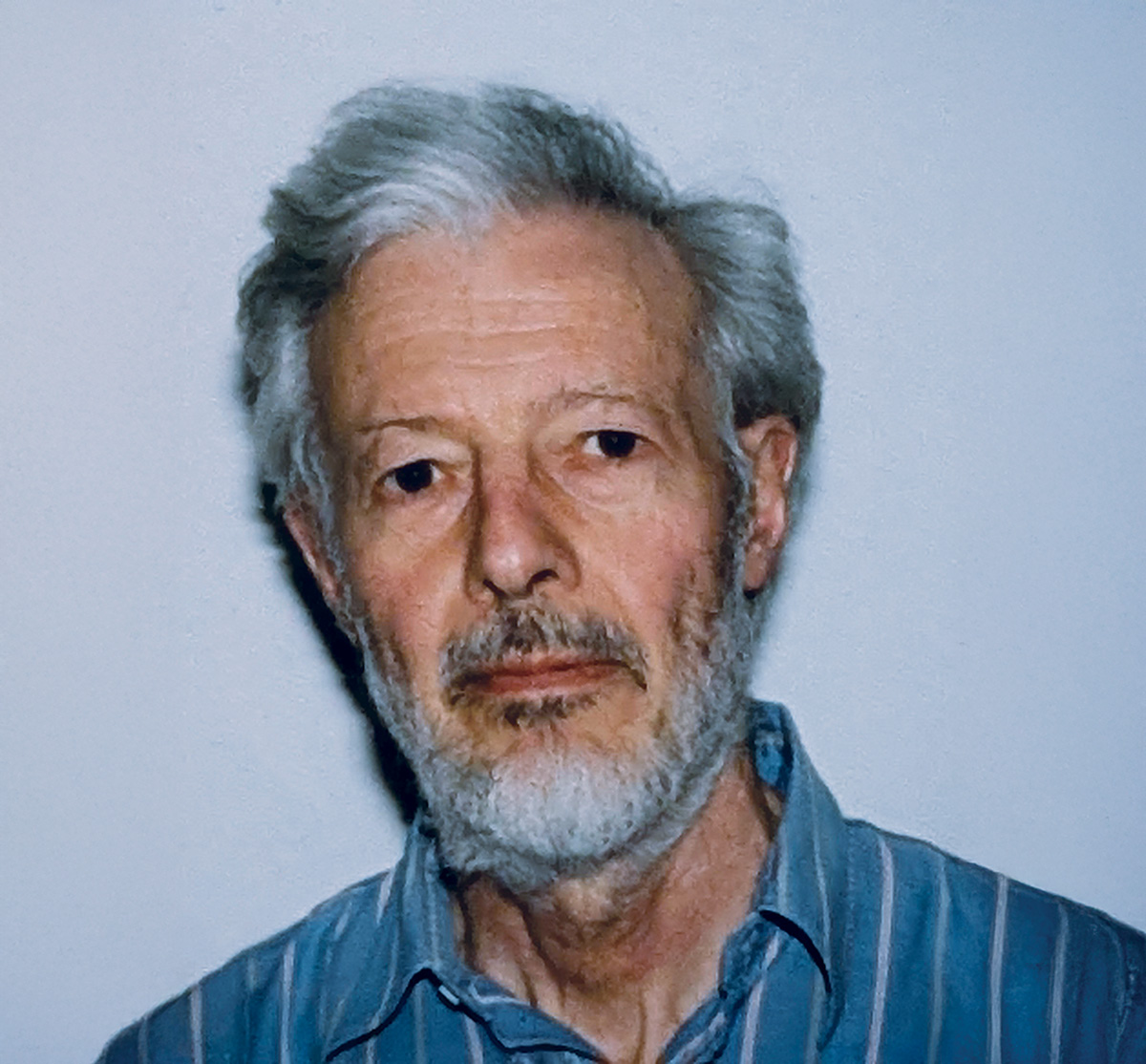
Renowned Soviet/Russian theorist Iosif Khriplovich passed away on 26 September 2024, aged 87. Born in 1937 in Ukraine to a Jewish family, he graduated from Kiev University and moved to the newly built Academgorodok in Siberia. From 1959 to 2014 he was a prominent member of the theory department at the Budker Institute of Nuclear Physics. He combined his research with teaching at Novosibirsk University, where he also held a professorship in 1983–2009. In 2014 he moved to St. Petersburg to take up a professorial position at Petersburg University and was a corresponding member of the Russian Academy of Sciences from 2000.
In a paper published in 1969, Khriplovich was the first to discover the phenomenon of anti-screening in the SU(2) Yang–Mills theory by calculating the first loop correction to the charge renormalisation. This immediately translates into the crucial first coefficient (–22/3) of the Gell-Mann–Low function and asymptotic freedom of the theory.
Regretfully, Khriplovich did not follow this interpretation of his result even after the key SLAC experiment on deep inelastic scattering and its subsequent partonic interpretation by Feynman. The honour of the discovery of asymptotic freedom in QCD went to three authors of papers published in 1973, who seemingly did not know of Khriplovich’s calculations.
In the early 1970s, Khriplovich’s interests turned to fundamental questions on the way towards the Standard Model. One was whether the electroweak theory is described by the Weinberg–Salam model, with neutral currents interacting via Z bosons, or the Georgi–Glashow model without them. While neutrino scattering on nucleons was soon confirmed, the electron interaction with nucleons was still unchecked. One practical way to find out was to use atomic spectroscopy to look for any mixing between states of opposite parity. Actively entering this area, Khriplovich and his students worked out quantitative predictions for the rotation of laser polarisation due to the weak interaction between electrons and nucleons. Their predictions were triumphantly confirmed in experiments, firstly by Barkov and Zolotorev at the Budker Institute. The same parity violating interaction was later observed at SLAC in 1978, proving the Z-exchange and the Weinberg–Salam model beyond any doubt. In 1973, together with Arkady Vainshtein, Khriplovich also derived the first solid limit on the mass of the charm quark that was unexpectedly discovered the following year.
He became engaged in Yang–Mills theories at a time when very few people were interested in them
The work of Khriplovich and his group significantly advanced the theory of many-electron atoms and contributed to the subsequent studies of the violation of fundamental symmetries in processes involving elementary particles, atoms, molecules and atomic nuclei. His students and later close collaborators, such as Victor Flambaum, Oleg Sushkov and Maxim Pospelov, grew as strong physicists who made important contributions to various subfields of theoretical physics. He was awarded the Silver Dirac Medal by the University of New South Wales (Sydney) and the Pomeranchuk Prize by the Institute of Theoretical and Experimental Physics (Moscow).
Yulik, as he was affectionately known, had his own style in physics. He was feisty and focused on issues where he could become a trailblazer, unafraid to cut relations with scientists of any rank if he felt their behaviour did not match his high ethical standards. This is why he became engaged in Yang–Mills theories at a time when very few people were interested in them. Yet, Yulik was always graceful and respectful in his interactions with others, and smiling, as we would like to remember him.
Registration is now open for the Open Symposium of the 2026 update to the European Strategy for Particle Physics (ESPP). It will take place from 23 to 27 June at Lido di Venezia in Italy, and see scientists from around the world debate the inputs to the ESPP (see “A call to engage”).
The symposium will begin by surveying the implementation of the last strategy process, whose recommendations were approved by the CERN Council in June 2020. In-depth working-group discussions on all areas of physics and technology will follow.
The rest of the week will see plenary sessions on the different physics and technology areas, starting with various proposals for possible large accelerator projects at CERN, and the status and plans in other regions of the world. Open questions, as well as how they can be addressed by the proposed projects, will be presented in rapporteur talks. This will be followed by longer discussion blocks where the full community can get engaged. On the final day, members of the European Strategy Group will summarise the national inputs and other overarching topics to the ESPP.
Karel Šafařík, one of the founding members of the ALICE collaboration, passed away on 7 October 2024.
Karel graduated in theoretical physics in Bratislava, Slovakia (then Czechoslovakia) in 1976 and worked at JINR Dubna for over 10 years, participating in experiments in Serpukhov and doing theoretical studies on the phenomenology of particle production at high energies. In 1990 he joined Collège de France and the heavy-ion programme at CERN, soon becoming one of the most influential scientists in the Omega series of heavy-ion experiments (WA85, WA94, WA97, NA57) at the CERN Super Proton Synchrotron (SPS). In 2002 Karel was awarded the Slovak Academy of Sciences Prize for his contributions to the observation of the enhancement of the production of multi-strange particles in heavy-ion collisions at the SPS. In 2013 he was awarded the medal of the Czech Physical Society.
As early as 1991, Karel was part of the small group who designed the first heavy-ion detector for the LHC, which later became ALICE. He played a central role in shaping the ALICE experiment, from the definition of physics topics and the detector layout to the design of the data format, tracking, data storage and data analysis. He was pivotal in convincing the collaboration to introduce two layers of pixel detectors to reconstruct decays of charm hadrons only a few tens of microns from the primary vertex in central lead–lead collisions at the LHC – an idea considered by many to be impossible in heavy-ion collisions, but that is now one of the pillars of the ALICE physics programme. He was the ALICE physics coordinator for many years leading up to and including first data taking. Over the years, he also made multiple contributions to ALICE upgrade studies and became known as the “wise man” to be consulted on the trickiest questions.
Karel was a top-class physicist, with a sharp analytical mind, a legendary memory, a seemingly unlimited set of competences ranging from higher mathematics to formal theory, and from detector physics to high-performance computing. At the same time he was a generous, caring and kind colleague who supported, helped, mentored and guided a large number of ALICE collaborators. We miss him dearly.
Günter Wolf, who played a leading role in the planning, construction and data analysis of experiments that were instrumental in establishing the Standard Model, passed away on 29 October 2024 at the age of 86. He significantly shaped and contributed to the research programme of DESY, and knew better than almost anyone how to form international collaborations and lead them to the highest achievements.
Born in Ulm, Germany in 1937, Wolf studied physics in Tübingen. At the urging of his supervisor Helmut Faissner, he went to Hamburg in 1961 where the DESY synchrotron was being built under DESY founder Willibald Jentschke. Together with Erich Lohrmann and Martin Teucher, he was involved in the preparation of the bubble-chamber experiments there and at the same time took part in experiments at CERN.
The first phase of experiments with high-energy photons at the DESY synchrotron, in which he was involved, had produced widely recognised results on the electromagnetic interactions of elementary particles. In 1967 Wolf seized the opportunity to continue this research at the higher energies of the recently completed linear accelerator at Stanford University (SLAC). He became the spokesperson for an experiment with a polarised gamma beam, which provided new insights into the nature of vector mesons.
In 1971, Jentschke succeeded in bringing Wolf back to Hamburg as senior scientist. He remained associated with DESY for the rest of his life and became a leader in the planning, construction and analysis of key DESY experiments.
Together with Bjørn Wiik, as part of an international collaboration, Wolf designed and realised the DASP detector for DORIS, the first electron–positron storage ring at DESY. This led to the discovery of the excited states of charmonium in 1975 and thus to the ultimate confirmation that quarks are particles. For the next, larger electron–positron storage ring, PETRA, he designed the TASSO detector, again together with Wiik. In 1979, the TASSO collaboration was able to announce the discovery of the gluon through its spokesperson Wolf, for which he, together with colleagues from TASSO, was awarded the High Energy Particle Physics Prize of the European Physical Society.
Wolf’s negotiating skills and deep understanding of physics and technology served particle physics worldwide
In 1982 Wolf became the chair of the experiment selection committee for the planned LEP collider at CERN. His deep understanding of physics and technology, and his negotiating skills, were an essential foundation for the successful LEP programme, just one example of how Wolf has served particle physics worldwide as a member of international scientific committees.
At the same time, Wolf was involved in the planning of the physics programme for the electron–proton collider HERA. The ZEUS general-purpose detector for experiments at HERA was the work of an international collaboration of more than 400 scientists, that Wolf brought together and led as its spokesperson for many years. The experiments at HERA ran from 1992 to 2007, producing outstanding results that include the direct demonstration of the unification of the weak and electromagnetic force at high momentum transfers, the precise measurement of the structure of the proton, which is determined by quarks and gluons, and the surprising finding that there are collisions in which the proton remains intact even at the highest momentum transfers. In 2011 Wolf was awarded the Stern–Gerlach Medal of the German Physical Society, its highest award for achievements in experimental physics.
When dealing with colleagues and staff, Günter Wolf was always friendly, helpful, encouraging and inspiring, but at the same time demanding and insistent on precision and scientific excellence. He took the opinions of others seriously, but only a thorough and competent analysis could convince him. As a result, he enjoyed the greatest respect from everyone and became a role model and friend to many. DESY owes its reputation in the international physics community not least to people like him.
The European strategy for particle physics is the cornerstone of Europe’s decision-making process for the long-term future of the field. In March 2024 CERN Council launched the programme for the third update of the strategy. The European Strategy Group (ESG) and the strategy secretariat for this update were established by CERN Council in June 2024 to organise the full process. Over the past few months, important aspects of the process have been set up, and these are described in more detail on the strategy web pages at europeanstrategyupdate.web.cern.ch/welcome.
The Physics Preparatory Group (PPG) will play an important role in distilling the community’s scientific input and scientific discussions at the open symposium in Venice in June 2025 into a “physics briefing book”. At its meeting in September 2024, CERN Council appointed eight members of the PPG, four on the recommendation of the scientific policy committee and four on the recommendation of the European Committee for Future Accelerators (ECFA). In addition, the PPG has one representative from CERN and two representatives each from the Americas and Asia.
The strategy secretariat also proposed to form nine working groups to cover the full range of physics topics as well as the technology areas of accelerators, detectors and computing. The work of these groups will be co-organised by two conveners, with one of them being a member of the PPG. In addition, an early-career researcher has been appointed to each group to act as a scientific secretary. Both the appointments of the co-conveners and of the early-career researchers are important to increase the engagement by the broader community in the current update. The full composition of the PPG, the co-conveners and the scientific secretaries of the working groups is available on the strategy web pages.
The strategy secretariat has also devised guidelines for input by the community. Any submitted documents must be no more than 10 pages long and provide a comprehensive and self-contained summary of the input. Additional information and details can be submitted in a separate backup document that can be consulted on by the PPG if clarification on any aspect is required. A backup document is not, however, mandatory.
A major component are inputs by national high-energy physics communities, which are expected to be collected individually by each country, and in some cases by region. The information collected from different countries and regions will be most useful if it is as coherent and uniform as possible when addressing the key issues. To assist with this, the ECFA has put together a set of guidelines.
It is anticipated that a number of proposals for large-scale research projects will be submitted as input to the strategy process, including, but not limited to, particle colliders and collider detectors. These proposals are likely to vary in scale, anticipated timeline and technical maturity. In addition to studying the scientific potential of these projects, the ESG wishes to evaluate the sequence of delivery steps and the challenges associated with delivery, and to understand how each project could fit into the wider roadmap for European particle physics. In order to allow a straightforward comparison of projects, we therefore request that all large-scale projects submit a standardised set of technical data in addition to their physics case and technical description.
It is anticipated that a number of proposals for large-scale research projects will be submitted as input to the strategy
To allow the community to take into account and to react to the submissions collected by March 2025 and to the content of the briefing book, national communities are offered further opportunities for input: first ahead of the open symposium (see p11), with a deadline of 26 May 2025; and then ahead of the drafting session, with a deadline of 14 November 2025.
In this strategy process the community must converge on a preferred option for the next collider at CERN and identify a prioritised list of alternative options. The outcome of the process will provide the basis for the decision by CERN Council in 2027 or 2028 on the construction of the next large collider at CERN, following the High-Luminosity LHC. Areas of priority for exploration complementary to colliders and for other experiments to be considered at CERN and other laboratories in Europe will also be identified, as well as priorities for participation in projects outside Europe.
Given the importance of this process and its outcomes, I encourage strong community involvement throughout to reach a consensus for the future of our field.
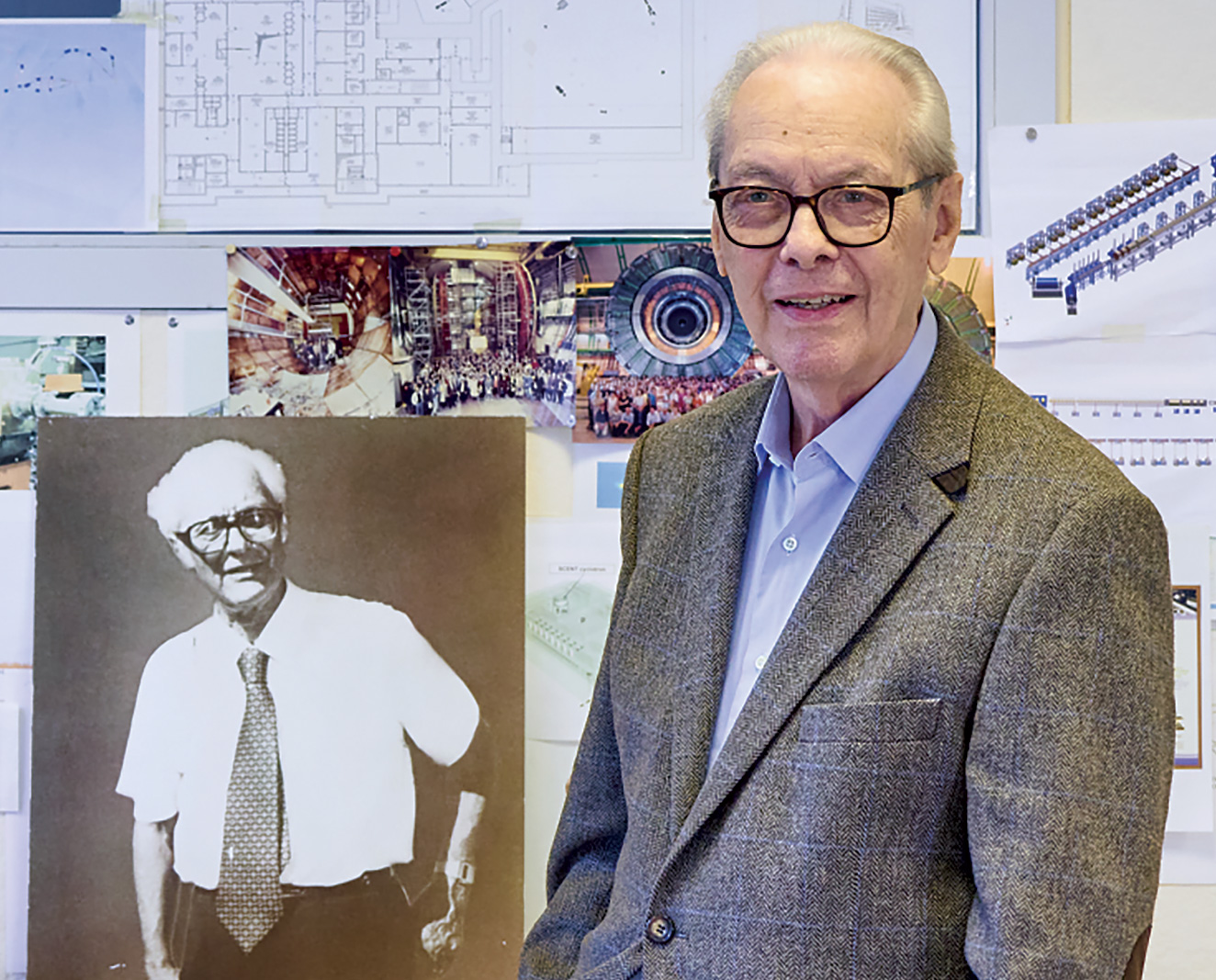
Should we start with your father’s involvement in the founding of CERN?
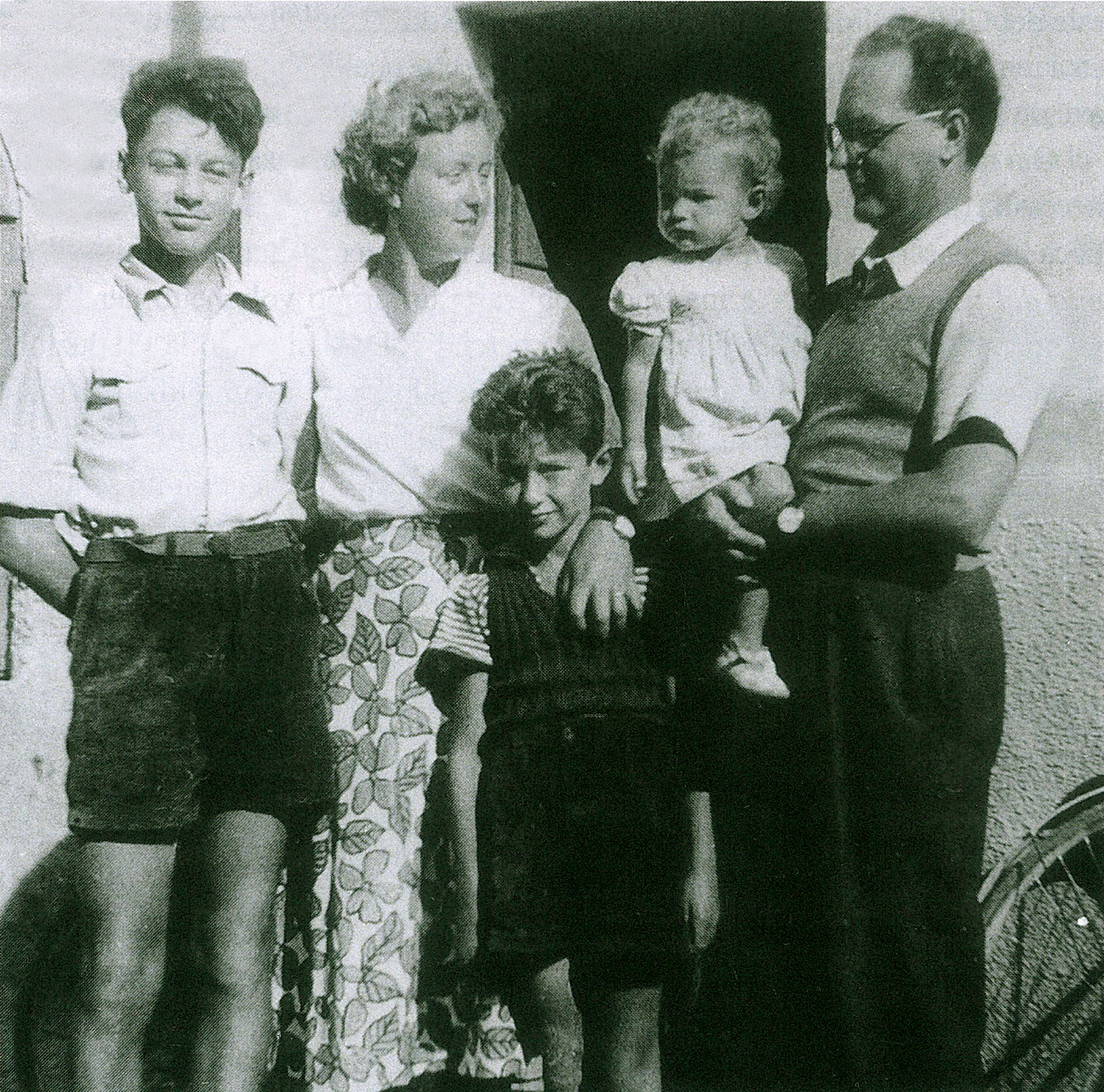
I began hearing my father talk about a new European laboratory while I was still in high school in Rome. Our lunch table was always alive with discussions about science, physics and the vision of this new laboratory. Later, I learned that between 1948 and 1949, my father was deeply engaged in these conversations with two of his friends: Gilberto Bernardini, a well-known cosmic-ray expert, and Bruno Ferretti, a professor of theoretical physics at Rome University. I was 15 years old and those table discussions remain vivid in my memory.
So, the idea of a European laboratory was already being discussed before the 1950 UNESCO meeting?
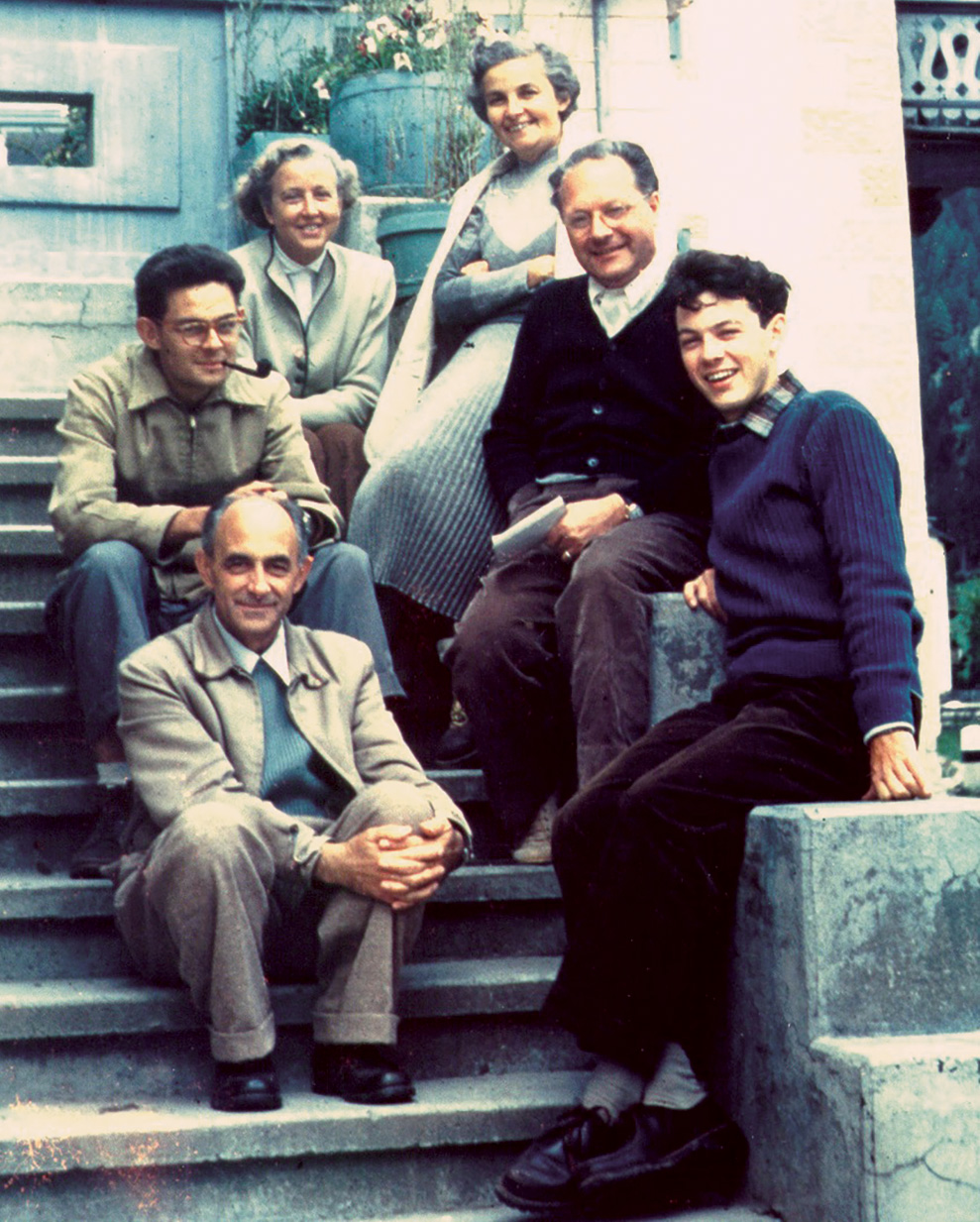
Yes, indeed. Several eminent European physicists, including my father, Pierre Auger, Lew Kowarski and Francis Perrin, recognised that Europe could only be competitive in nuclear physics through collaborative efforts. All the actors wanted to create a research centre that would stop the post-war exodus of physics talent to North America and help rebuild European science. I now know that my father’s involvement began in 1946 when he travelled to Cambridge, Massachusetts, for a conference. There, he met Nobel Prize winner John Cockcroft, and their conversations planted in his mind the first seeds for a European laboratory.
Parallel to scientific discussions, there was an important political initiative led by Swiss philosopher and writer Denis de Rougemont. After spending the war years at Princeton University, he returned to Europe with a vision of fostering unity and peace. He established the Institute of European Culture in Lausanne, Switzerland, where politicians from France, Britain and Germany would meet. In December 1949, during the European Cultural Conference in Lausanne, French Nobel Prize winner Louis de Broglie sent a letter advocating for a European laboratory where scientists from across the continent could work together peacefully.
My father strongly believed in the importance of accelerators to advance the new field that, at the time, was at the crossroads between nuclear physics and cosmic-ray physics. Before the war, in 1936, he had travelled to Berkeley to learn about cyclotrons from Ernest Lawrence. He even attempted to build a cyclotron in Italy in 1942, profiting from the World’s Fair that had to be held in Rome. Moreover, he was deeply affected by the exodus of talented Italian physicists after the war, including Bruno Rossi, Gian Carlo Wick and Giuseppe Cocconi. He saw CERN as a way to bring these scientists back and rebuild European physics.
How did Isidor Rabi’s involvement come into play?
In 1950 my father was corresponding with Gilberto Bernardini, who was spending a year at Columbia University. There Bernardini mentioned the idea of a European laboratory to Isidor Rabi, who, at the same time, was in contact with other prominent figures in this decentralised and multi-centered initiative. Together with Norman Ramsay, Rabi had previously succeeded, in 1947, in persuading nine northeastern US universities to collaborate under the banner of Associated Universities, Inc, which led to the establishment of Brookhaven National Laboratory.
What is not generally known is that before Rabi gave his famous speech at the fifth assembly of UNESCO in Florence in June 1950, he came to Rome and met with my father. They discussed how to bring this idea to fruition. A few days later, Rabi’s resolution at the UNESCO meeting calling for regional research facilities was a crucial step in launching the project. Rabi considered CERN a peaceful compensation for the fact that physicists had built the nuclear bomb.
How did your father and his colleagues proceed after the UNESCO resolution?
Following the UNESCO meeting, Pierre Auger, at that time director of exact and natural sciences at UNESCO, and my father took on the task of advancing the project. In September 1950 Auger spoke of it at a nuclear physics conference in Oxford, and at a meeting of the International Union of Pure and Applied Physics (IUPAP), my father– one of the vice presidents – urged the executive committee to consider how best to implement the Florence resolution. In May 1951, Auger and my father organised a meeting of experts at UNESCO headquarters in Paris, where a compelling justification for the European project was drafted.
The cost of such an endeavour was beyond the means of any single nation. This led to an intergovernmental conference under the auspices of UNESCO in December 1951, where the foundations for CERN were laid. Funding, totalling $10,000 for the initial meetings of the board of experts, came from Italy, France and Belgium. This was thanks to the financial support of men like Gustavo Colonnetti, president of the Italian Research Council, who had already – a year before – donated the first funds to UNESCO.
Were there any significant challenges during this period?
Not everyone readily accepted the idea of a European laboratory. Eminent physicists like Niels Bohr, James Chadwick and Hendrik Kramers questioned the practicality of starting a new laboratory from scratch. They were concerned about the feasibility and allocation of resources, and preferred the coordination of many national laboratories and institutions. Through skilful negotiation and compromise, Auger and my father incorporated some of the concerns raised by the sceptics into a modified version of the project, ensuring broader support. In February 1952 the first agreement setting up a provisional council for CERN was written and signed, and my father was nominated secretary general of the provisional CERN.
He worked tirelessly, travelling through Europe to unite the member states and start the laboratory’s construction. In particular, the UK was reluctant to participate fully. They had their own advanced facilities, like the 40 MeV cyclotron at the University of Liverpool. In December 1952 my father visited John Cockcroft, at the time director of the Harwell Atomic Energy Research Establishment, to discuss this. There’s an interesting episode where my father, with Cockcroft, met Frederick Lindemann and Baron Cherwell, who was a long-time scientific advisor to Winston Churchill. Cherwell dismissed CERN as another “European paper mill.” My father, usually composed, lost his temper and passionately defended the project. During the following visit to Harwell, Cockcroft reassured him that his reaction was appropriate. From that point on, the UK contributed to CERN, albeit initially as a series of donations rather than as the result of a formal commitment. It may be interesting to add that, during the same visit to London and Harwell, my father met the young John Adams and was so impressed that he immediately offered him a position at CERN.
What were the steps following the ratification of CERN’s convention?
Robert Valeur, chairman of the council during the interim period, and Ben Lockspeiser, chairman of the interim finance committee, used their authority to stir up early initiatives and create an atmosphere of confidence that attracted scientists from all over Europe. As Lew Kowarski noted, there was a sense of “moral commitment” to leave secure positions at home and embark on this new scientific endeavour.
During the interim period from May 1952 to September 1954, the council convened three sessions in Geneva whose primary focus was financial management. The organisation began with an initial endowment of approximately 1 million Swiss Francs, which – as I said – included a contribution from the UK known as the “observer’s gift”. At each subsequent session, the council increased its funding, reaching around 3.7 million Swiss Francs by the end of this period. When the permanent organisation was established, an initial sum of 4.1 million Swiss Francs was made available.
In 1954, my father was worried that if the parliaments didn’t approve the convention before winter, then construction would be delayed because of the wintertime. So he took a bold step and, with the approval of the council president, authorised the start of construction on the main site before the convention was fully ratified.
This led to Lockspeiser jokingly remarking later that council “has now to keep Amaldi out of jail”. The provisional council, set up in 1952, was dissolved when the European Organization for Nuclear Research officially came into being in 1954, though the acronym CERN (Conseil Européen pour la Recherche Nucléaire) was retained. By the conclusion of the interim period, CERN had grown significantly. A critical moment occurred on 29 September1954, when a specific point in the ratification procedure was reached, rendering all assets temporarily ownerless. During this eight-day period, my father, serving as secretary general, was the sole owner on behalf of the newly forming permanent organisation. The interim phase concluded with the first meeting of the permanent council, marking the end of CERN’s formative years.
Did your father ever consider becoming CERN’s Director-General?
People asked him to be Director-General, but he declined for two reasons. First, he wanted to return to his students and his cosmic-ray research in Rome. Second, he didn’t want people to think he had done all this to secure a prominent position. He believed in the project for its own sake.
When the convention was finally ratified in 1954, the council offered the position of Director-General to Felix Bloch, a Swiss–American physicist and Nobel Prize winner for his work on nuclear magnetic resonance. Bloch accepted but insisted that my father serve as his deputy. My father, dedicated to CERN’s success, agreed to this despite his desire to return to Rome full time.
How did that arrangement work out?
My father agreed but Bloch wasn’t at that time rooted in Europe. He insisted on bringing all his instruments from Stanford so he could continue his research on nuclear magnetic resonance at CERN. He found it difficult to adapt to the demands of leading CERN and soon resigned. The council then elected Cornelis Jan Bakker, a Dutch physicist who had led the synchrocyclotron group, as the new Director-General. From the beginning, he was the person my father thought would have been the ideal director for the initial phase of CERN. Tragically though, Bakker died in a plane crash a year and a half later. I well remember how hard my father was hit by this loss.
How did the development of accelerators at CERN progress?
The decision to adopt the strong focusing principle for the Proton Synchrotron (PS) was a pivotal moment. In August 1952 Otto Dahl, leader of the Proton Synchrotron study group, Frank Goward and Rolf Widerøe visited Brookhaven just as Ernest Courant, Stanley Livingston and Hartland Snyder were developing this new principle. They were so excited by this development that they returned to CERN determined to incorporate it into the PS design. In 1953 Mervyn Hine, a long-time friend of John Adams with whom he had moved to CERN, studied potential issues with misalignment in strong focusing magnets, which led to further refinements in the design. Ultimately, the PS became operational before the comparable accelerator at Brookhaven, marking a significant achievement for European science.
It’s important here to recognise the crucial contributions of the engineers, who often don’t receive the same level of recognition as physicists. They are the ones who make the work of experimental physicists and theorists possible. “Viki” Weisskopf, Director-General of CERN from 1961 to 1965, compared the situation to the discovery of America. The machine builders are the captains and shipbuilders. The experimentalists are those fellows on the ships who sailed to the other side of the world and wrote down what they saw. The theoretical physicists are those who stayed behind in Madrid and told Columbus that he was going to land in India.
Your father also had a profound impact on the development of other Big Science organisations in Europe
Yes, in 1958 my father was instrumental, together with Pierre Auger, in the founding of the European Space Agency. In a letter written in 1958 to his friend Luigi Crocco, who was professor of jet propulsion in Princeton, he wrote that “it is now very much evident that this problem is not at the level of the single states like Italy, but mainly at the continental level. Therefore, if such an endeavour is to be pursued, it must be done on a European scale, as already done for the building of the large accelerators for which CERN was created… I think it is absolutely imperative for the future organisation to be neither military nor linked to any military organisation. It must be a purely scientific organisation, open – like CERN – to all forms of cooperation and outside the participating countries.” This document reflects my father’s vision of peaceful and non-military European science.
How is it possible for one person to contribute so profoundly to science and global collaboration?
My father’s ability to accept defeats and keep pushing forward was key to his success. He was an exceptional person with a clear vision and unwavering dedication. I hope that by sharing these stories, others might be inspired to pursue their goals with the same persistence and passion.
Could we argue that he was not only a visionary but also a relentless advocate?
He travelled extensively, talked to countless people, and was always cheerful and energetic. He accepted setbacks but kept moving forwards. In this connection, I want to mention Eliane Bertrand, later de Modzelewska, his secretary in Rome who later became secretary of the CERN Council for about 20 years, serving under several Director-Generals. She left a memoir about those early days, highlighting how my father was always travelling, talking and never stopping. It’s a valuable piece of history that, I think, should be published.
International collaboration has been a recurring theme in your own career. How do you view its importance today?
International collaboration is more critical than ever in today’s world. Science has always been a bridge between cultures and nations, and CERN’s history is a testimony of what this brings to humanity. It transcends political differences and fosters mutual understanding. I hope CERN and the broader scientific community will find ways to maintain these vital connections with all countries. I’ve always believed that fostering a collaborative and inclusive environment is one of the main goals of us scientists. It’s not just about achieving results but also about how we work together and support each other along the way.
Looking ahead, what are your thoughts on the future of CERN and particle physics?
I firmly believe that pursuing higher collision energies is essential. While the Large Hadron Collider has achieved remarkable successes, there’s still much we haven’t uncovered – especially regarding supersymmetry. Even though minimal supersymmetry does not apply, I remain convinced that supersymmetry might manifest in ways we haven’t yet understood. Exploring higher energies could reveal supersymmetric particles or other new phenomena.
Like most European physicists, I support the initiative of the Future Circular Collider and starting with an electron–positron collider phase so to explore new frontiers at two very different energy levels. However, if geopolitical shifts delay or complicate these plans, we should consider pushing hard on alternative strategies like developing the technologies for muon colliders.
Ugo Amaldi first arrived at CERN as a fellow in September 1961. Then, for 10 years at the ISS in Rome, he opened two new lines of research: quasi-free electron scattering on nuclei and atoms. Back at CERN, he developed the Roman pots experimental technique, was a co-discoverer of the rise of the proton–proton cross-section with energy, measured the polarisation of muons produced by neutrinos, proposed the concept of a superconducting electron–positron linear collider, and led LEP’s DELPHI Collaboration. Today, he advances the use of accelerators in cancer treatment as the founder of the TERA Foundation for hadron therapy and as president emeritus of the National Centre for Oncological Hadrontherapy (CNAO) in Pavia. He continues his mother and father’s legacy of authoring high-school physics textbooks used by millions of Italian pupils. His motto is: “Physics is beautiful and useful.”
This interview first appeared in the newsletter of CERN’s experimental physics department. It has been edited for concision.
In the autumn of 2023, Wojciech Brylinski was analysing data from the NA61/SHINE collaboration at CERN for his thesis, when he noticed an unexpected anomaly – a strikingly large imbalance between charged and neutral kaons in argon–scandium collisions. Instead of producing roughly equal numbers, he found that charged kaons were produced 18.4% more often. This suggested that the “isospin symmetry” between up (u) and down (d) quarks might be broken by more than expected due to the differences in their electric charges and masses – a discrepancy that existing theoretical models would struggle to explain. Known sources of isospin asymmetry only predict deviations of a few percent.
“When Wojciech got started, we thought it would be a trivial verification of the symmetry,” says Marek Gaździcki of Jan Kochanowski University of Kielce, spokesperson of NA61/SHINE at the time of the discovery. “We expected it to be closely obeyed – though we had previously measured discrepancies at NA49, they had large uncertainties and were not significant.”
Isospin symmetry is one facet of flavour symmetry, whereby the strong interaction treats all quark flavours identically, except for kinematic differences arising from their different masses. Strong interactions should therefore generate nearly equal yields of charged K+ (us) and K– (us), and neutral K0 (ds) and K0 (ds), given the similar masses of the two lightest quarks. NA61/SHINE’s data contradict the hypothesis of equal yields with 4.7σ significance.
“I see two options to interpret the results,” says Francesco Giacosa, a theoretical physicist at Jan Kochanowski University working with NA61/SHINE. “First, we substantially underestimate the role of electromagnetic interactions in creating quark–antiquark pairs. Second, strong interactions do not obey flavour symmetry – if so, this would falsify QCD.” Isospin is not a symmetry of the electromagnetic interaction as up and down quarks have different electric charges.
While the experiment routinely measures particle yields in nuclear collisions, finding a discrepancy in isospin symmetry was not something researchers were actively looking for. NA61/SHINE’s primary focus is studying the phase diagram of high-energy nuclear collisions using a range of ion beams. This includes looking at the onset of deconfinement, the formation of a quark-gluon plasma fireball, and the search for the hypothesised QCD critical point where the transition between hadronic matter and quark–gluon plasma changes from a smooth crossover to a first-order phase transition. Data is also shared with neutrino and cosmic-ray experiments to help refine their models.
The collaboration is now planning additional studies using different projectiles, targets and collision energies to determine whether this effect is unique to certain heavy-ion collisions or a more general feature of high-energy interactions. They have also put out a call to theorists to help explain what might have caused such an unexpectedly large asymmetry.
“The observation of the rather large isospin violation stands in sharp contrast to its validity in a wide range of physical systems,” says Rob Pisarski, a theoretical physicist from Brookhaven National Laboratory. “Any explanation must be special to heavy-ion systems at moderate energy. NA61/SHINE’s discrepancy is clearly significant, and shows that QCD still has the power to surprise our naive expectations.”
To provide the best experiences, we use technologies like cookies to store and/or access device information. Consenting to these technologies will allow us to process data such as browsing behavior or unique IDs on this site. Not consenting or withdrawing consent, may adversely affect certain features and functions.
Functional
Always active
The technical storage or access is strictly necessary for the legitimate purpose of enabling the use of a specific service explicitly requested by the subscriber or user, or for the sole purpose of carrying out the transmission of a communication over an electronic communications network.
Preferences
The technical storage or access is necessary for the legitimate purpose of storing preferences that are not requested by the subscriber or user.
Statistics
The technical storage or access that is used exclusively for statistical purposes.The technical storage or access that is used exclusively for anonymous statistical purposes. Without a subpoena, voluntary compliance on the part of your Internet Service Provider, or additional records from a third party, information stored or retrieved for this purpose alone cannot usually be used to identify you.
Marketing
The technical storage or access is required to create user profiles to send advertising, or to track the user on a website or across several websites for similar marketing purposes.