Comsol -leaderboard other pages

Topics

Proton therapy enters precision phase

Résumé

Protonthérapie : l’ère de la précision

La protonthérapie est une technique de radiothérapie innovante, qui peut traiter des tumeurs avec beaucoup plus de précision que les rayons X ou les rayons gamma. Le nombre de centres de traitement par protonthérapie augmente rapidement, et offre aux patients des traitements plus efficaces avec un risque de complications moindre. Au Centre Antoine Lacassagne, à Nice, une nouvelle installation de protonthérapie de haute énergie, qui tire son origine d’une collaboration avec le CERN vieille de 30 ans, se prépare à présent à traiter son premier patient. À performance égale, son accélérateur est quatre fois plus léger et consomme huit fois moins d’énergie que les machines actuelles, et il peut traiter tous types de tumeurs situées profondément à l’intérieur du corps humain.

Each year, millions of people worldwide undergo treatment for cancer based on focused beams of high-energy photons. Produced by electron linear accelerators (linacs), photons with energies in the MeV range are targeted on cancerous tissue where they indirectly ionise DNA atoms and therefore reduce the ability of cells to reproduce. Photon therapy has been in clinical use for more than a century, following the discovery of X-rays by Roentgen in 1896, and has helped to save or improve the quality of countless lives.

Proton therapy, which is a subclass of particle or hadron therapy, is an innovative alternative technique in radiotherapy. It can treat tumours in a much more precise manner than X- or gamma-rays because the radiation dose of protons is ballistic: protons have a definite range characterised by the Bragg peak, which depends on their energy. This initial ballistic advantage gives protons their advantage over X-rays to provide a dose deposition that better matches tumour contours while limiting the dose in the vicinity. This property, which was first identified by accelerator-pioneer Robert Wilson in 1946 when he was involved in the design of the Harvard Cyclotron Laboratory, results in a greater treatment efficiency  and a lower risk of complications.

The pioneers of proton therapy used accelerators from physics laboratories at locations including Uppsala in Sweden in 1957; Boston Harvard Cyclotron Laboratory in the US in 1961; and the Swiss Institute for Nuclear Research in Switzerland in 1984. The first dedicated clinical proton-therapy facility, which was driven by a low-energy cyclotron, was inaugurated in 1989 at the Clatterbridge Centre for Oncology in the UK. The following year, a dedicated synchrotron designed at Fermilab began operating in the US at the Loma Linda University Medical Center in California. By the early 2000s, the number of treatment centres had risen to around 20, and today proton therapy is booming: some 45 facilities are in operation worldwide, with around 20 under construction and a further 30 at the planning stage in various countries around the world (see www.ptcog.ch).

Towards MEDICYC

Modern proton therapy exploits an active technique called pencil-beam scanning, which creates a pointillist 3D tumour-volume painting by displacing the proton beam with appropriate magnets. Moreover, different irradiation ports are generally possible thanks to rotating gantries. This delivery technique is competitive with the most advanced forms of X-ray irradiation, such as intensity-modulated radiation therapy (IMRT), tomotherapy, cyberknife  and others, because it uses a smaller number of entering ports and hence reduces the overall absorbed dose to the patient.

Owing to its high dose accuracy, proton therapy has historically been oriented towards the treatment of uveal melanoma and base-of-skull tumours, for which X-rays are less efficient. Today, however, proton therapy is used to treat any tumour type with a predilection for paediatric treatment. Indeed, by limiting the integral dose to an absolute minimum at the whole-body level, the side effects of radiotherapy occurring from radiation-induced cancer are reduced to a minimum.

Particle physics, and CERN in particular, has played a key role in the success of proton therapy. One of the first facilities operating in Europe was MEDICYC – a 65 MeV proton medical cyclotron that was initially devoted to neutron production for cancer therapy. It was installed at the Centre Antoine Lacassagne (CAL) in Nice in 1991, where the first proton-therapy treatment for ocular melanoma was achieved in France. MEDICYC was designed by a small team of young CAL members hosted by CERN in the PS division, and the advice of the passionate experts there was key to the success of this accelerator. Preliminary studies for MEDICYC and the first test of the radiofrequency accelerating system were performed at CERN. Indeed, because the cyclotron was completed before the building that would house it, it was proposed to assemble the cyclotron magnet at CERN in the East Hall of the PS division, to perform the magnetic-measurement campaigns.

During its 25 year operational lifetime, which began in June 1991, MEDICYC has reached a high level of reliability and successfully treated more than 5500 patients for various ocular tumours with a 96% local control rate. Owing to its high-dose-profile quality (0.8 mm dose fall-off beyond the Bragg peak, which is of the utmost importance for irradiating tumours close to the optical nerve), MEDICYC will continue to run its medium-energy proton-therapy programme. Moreover, CAL is investigating a MEDICYC improvement programme for increasing the beam intensities in view of new medical-isotope production at high energies with protons and deuterons.

On 30 June this year, a new proton therapy centre called the Institut Méditerranéen de Protonthérapie (IMPT) was inaugurated at CAL, marking a new phase in European advanced hadron therapy. Joining MEDICYC as the driver of this new facility is a new cyclotron called the Superconducting Synchro-cyclotron (S2C2). This facility, which will expand the proton-therapy activity of MEDICYC, uses the latest technology to precisely target tumours while controlling the intensity and spatial distribution of the dose with fine precision. It is therefore ideal for treating base of skull, head and neck, sarcomas tumours and with priority oncopediatics tumours, and is expected to treat up to 250 patients per year in its first phase.

CERN beginnings

The new facility at CAL has its roots in a CERN-led project called EULIMA (European Light Ions Medical Accelerator) – a joint initiative at the end of the 1980s to bring the potential benefit of hadron therapy with light ions to cancer patients in Europe. Historically, CAL was involved with several European institutes to undertake feasibility studies for EULIMA. The feasibility study group was hosted by CERN and the main design option for the accelerator was a four-magnetic-sector cyclotron with a single large cylindrical superconducting excitation coil designed by CERN magnet-specialist Mario Morpurgo. CAL was selected as a candidate site to host the EULIMA prototype because it offered both adequate space in the MEDICYC building to house the machine and treatment rooms, while also offering an adequate supply of medical, scientific and technical staff in an attractive site.

When the EULIMA came to an end in 1992, the empty EULIMA hall was available for future development projects in high-energy proton therapy. Therefore, in 2011, we were able to construct the new S2C2 facility at CAL at low cost. This compact, approximately 40 tonne facility provides proton beams with an energy of 230 MeV and delivers its dose using dynamic pencil-beam scanning (PBS). Its design is the result of a collaboration between AIMA (a spin-out company from CAL) and Belgian medical firm IBA.

The facility comprises a beamline that feeds an R&D room for research teams, which have decided to commit themselves to a national research programme called France Hadron. The programme gathers several hadron-therapy centres based at Paris-Orsay, Lyon, Caen, Toulouse and Nice, in addition to several universities and national public research institutions, to co-ordinate and organise a national programme of research and training in hadron therapy. This programme aims at bringing nuclear-physics techniques to clinical research through dosimetry, radiation biology, imaging, control of target positioning, and quality-control instruments.

As is the case for eye treatment at MEDICYC, the new facility will operate in co-operation with the Léon Bérard cancer centre in Lyon and other oncologic centres in the south of France. The new high-energy proton facility displays many innovative technological breakthroughs compared with existing systems. The accelerator is four-times lighter and consumes eight-times less energy than current machines for the same performance, and its maximum energy of 230 MeV can treat all tumours deep in the human body up to a depth of 32 cm. Its significantly lower cost represents a particularly attractive alternative compared with the global industrial standard. It also foreshadows a major development of proton therapy in the coming years, because compact synchrocyclotron technology is also being developed for the acceleration of alpha particles and heavier ions for hadron therapy.

A major innovation is its rotating compact gantry, the first prototype of which was installed in the US in 2013. The new beamline has a mobility that allows operators to direct the radiation beam in different incidences around the patient and offer unprecedented compactness, reducing costs further. The new S2C2 and the future upgrading programme of MEDICYC embody the medical mission of CAL at large by bringing together advanced proton therapy for treating patients and scientific research activities with multidisciplinary teams of medical physicists and radiobiologists.

CERN to produce radioisotopes for health

Résumé

Le CERN produira des radio-isotopes pour la médecine

Le lien entre les communautés des accélérateurs et de la médecine remonte à presque 50 ans. Aujourd’hui, alors que les physiciens développent la nouvelle génération de machines pour la recherche, les médecins imaginent de nouvelles méthodes pour diagnostiquer et traiter les maladies neurodégénératives et les cancers. Le projet MEDICIS du CERN vise à développer de nouveaux isotopes pouvant être utilisés à la fois comme agents de diagnostic et pour la curiethérapie ou la radiothérapie interne avec source non scellée, pour le traitement de cancers du cerveau ou du pancréas non opérables et d’autres formes de cette maladie. L’installation, dont l’idée a germé en 2010 et qui sera opérationnelle en 2017, utilise un faisceau de protons et l’installation de faisceaux d’ions radioactifs ISOLDE pour produire des isotopes médicaux. Ces isotopes seront d’abord destinés à des hôpitaux et des centres de recherche en Suisse, puis progressivement à d’autres laboratoires en Europe et ailleurs dans le monde.

Accelerators and their related technologies have long been developed at CERN to undertake fundamental research in nuclear physics, probe the high-energy frontier or explore the properties of antimatter. Some of the spin-offs of this activity have become key to society. A famous example is the World Wide Web, while another is medical applications such as positron emission tomography (PET) scanner prototypes and image reconstruction algorithms developed in collaboration between CERN and Geneva University Hospitals in the early 1990s. Today, as accelerator physicists develop the next-generation radioactive beam facilities to address new questions in nuclear structure – in particular HIE-ISOLDE at CERN, SPIRAL 2 at GANIL in France, ISOL@Myrrha at SCK•CEN in Belgium and SPES at INFN in Italy – medical doctors are devising new approaches to diagnose and treat diseases such as neurodegenerative disorders and cancers.

The bridge between the radioactive-beam and medical communities dates back to the late 1970s, when radioisotopes collected from a secondary beam at CERN’s Isotope mass Separator On-Line facility (ISOLDE) were used to synthesise an injectable radiopharmaceutical in a patient suffering from cancer. 167Tm-citrate, a radiolanthanide associated to a chelating chemical, was used to perform a PET image of a lymphoma, which revealed the spread-out cancerous tumours. While PET became a reference protocol to provide quantitative imaging information, several other pre-clinical and pilot clinical tests have been performed with non-conventional radioisotopes collected at radioactive-ion-beam facilities – both for diagnosis and for therapeutic applications.

Despite significant progress made in the past decade in the field of oncology, however, the prognosis of certain tumours is still poor – particularly for patients presenting advanced glioblastoma multiforme (a form of very aggressive brain cancer) or pancreatic adenocarcinoma. The latter is a leading cause of cancer death in the developed world and surgical resection is the only potential treatment, although many patients are not candidates for surgery. Although external-beam gamma radiation and chemotherapy are used to treat patients with non-operable pancreatic tumours, and survival rates can be improved by combined radio- and chemotherapy, there is still a clear need for novel treatment modalities for pancreatic cancer.

A new project at CERN called MEDICIS aims to develop non-conventional isotopes to be used as a diagnostic agent and for brachytherapy or unsealed internal radiotherapy for the treatment of non-resectable brain and pancreatic cancer, among other forms of the disease. Initiated in 2010, the facility will use a proton beam at ISOLDE to produce isotopes that first will be destined for hospitals and research centres in Switzerland, followed by a progressive roll-out to a larger network of laboratories in Europe and beyond. The project is now approaching its final phase, with start-up foreseen in June 2017.

A century of treatment

The idea of using radioisotopes to cure cancer was first proposed by Pierre Curie soon after his discovery of radium in 1898. The use of radium seduced many physicians because the penetrating rays could be used superficially or be inserted surgically into the body – a method called brachytherapy. The first clinical trials took place at the Curie Institute in France and at St Luke’s Memorial Hospital in New York at the beginning of the 20th century, for the treatment of prostate cancer.

A century later, in 2013, a milestone was met with the successful clinical trials of 223Ra in the form of the salt-solution RaCl2, which was injected into patients suffering from prostate cancers with bone metastasis. The positive effect on patient survival was so clear in the last clinical validation (so-called phase III), that the trial was terminated prematurely to allow patients who had received a placebo to be given the effective drug. Today, the availability of new isotopes, medical imagery, robotics, monoclonal antibodies and a better understanding of tumour mechanisms has enabled progress in both brachytherapy and unsealed internal radiotherapy. Radioisotopes can now be placed closer to and even inside the tumour cells, killing them with minimal damage to healthy tissue.

CERN-MEDICIS aims to further advance this area of medicine. New isotopes with specific types of emission, tissue penetration and half-life will be produced and purified based on expertise acquired during the past 50 years in producing beams of radioisotope ions for ISOLDE’s experimental programme. Diagnosis by single photon emission computed tomography (SPECT), a form of scintigraphy, covers the vast majority of worldwide isotope consumption based on the gamma-emitting 99mTc, which is used for functional probing of the brain and various other organs. PET protocols are increasingly used based on the positron emitter 18F and, more recently, a 68Ga compound. Therapy, on the other hand, is mostly carried out with beta emitters such as 131I, more recently with 177Lu, or with 223Ra for the new application of targeted alpha therapy. Other isotopes also offer clear benefits, such as 149Tb, which is the lightest alpha-emitting radiolanthanide and also combines positron-emitting properties.

Driven by ISOLDE

With 17 Member States and an ever-growing number of users, ISOLDE is a dynamic facility that has provided beams for around 300 experiments at CERN in its 50 year history. It allows researchers to explore the structure of the atomic nucleus, study particle physics at low energies, and provides radioactive probes for solid-state and biophysics. Through 50 years of collaboration between the technical teams and the users, a deep bond has formed, and the facility evolves hand-in-hand with new technologies and research topics.

CERN MEDICIS is the next step in this adventure, and the user community is joining in efforts to push the development of the machine in a new direction. The project was initiated six years ago by a relatively small collaboration involving CERN, KU Leuven, EPFL and two local University Hospitals (CHUV in Lausanne and HUG in Geneva). One year later, in 2011, CERN decided to streamline medical production of radioisotopes and to offer grants dedicated to technology transfer. While the mechanical conveyor system to transport the irradiated targets was covered by such a grant, the construction of the CERN MEDICIS building began in September 2013. The installation of the services, mass separator and laboratory is now under way.

At ISOLDE, physicists direct a high-energy proton beam from the Proton Synchrotron Booster (PSB) at a target. Since the beam loses only 10% of its intensity and energy on hitting the target, the particles that pass through it can still be used. For CERN-MEDICIS, a second target therefore sits behind the first and is used for exotic isotope generation. Key to the project is a mechanical system that transports a fresh target and its ion source into one of the two ISOLDE target-stations’ high resolution separator (HRS) beam dump, irradiates it with the proton beam from the PSB to generate the isotopes, then returns it to the CERN-MEDICIS laboratory. The system was fully commissioned in 2014 under proton-beam irradiation with a target that was later used to produce a secondary beam, thus validating the full principle. A crucial functional element was still missing: the isotope mass separator, along with its services and target station. Coincidentally, however, CERN MEDICIS started just as the operation of KU Leuven’s isotope-separation facility ended, and a new lease of life could therefore be given to its dipole magnet separator, which was delivered to CERN earlier this year for testing and refurbishment.

A close collaboration is growing at MEDICIS centred around the core team at CERN but involving partners from fundamental nuclear physics, material science, radiopharmacy, medical physics, immunology, radiobiology, oncology and surgery, with more to come.

Training network

With such an exceptional tool at hand, and based on growing pre-clinical research experiments performed at local university hospitals, in 2014 a H2020 Innovative Training Network was set up by CERN to ensure MEDICIS is fully exploited. This “Marie Skłodowska-Curie actions” proposal was submitted to the European Commission entitled MEDICIS-Promed, which stands for MEDICIS-produced radioisotope beams for medicine. The goal of this 14-institution consortium is to train a new generation of scientists to develop systems for personalised medicine combining functional imaging and treatments based on radioactive ion-beam mass separation. Subsystems for the development of new radiopharmaceuticals, isotope mass separators at medical cyclotrons, and of mass-separated 11Carbon for PET-aided hadron therapy are to be specifically developed to treat ovarian cancer. Pre-clinical experiments have already started, with the first imaging studies ever done with these exotic radioisotopes. For this, a specific ethical review board has been implemented within the consortium and is chaired by independent members.

With the MEDICIS facility entering operation next year, an increasing range of innovative isotopes will progressively become accessible. These will be used for fundamental studies in cancer research, for new imaging and therapy protocols in cell and animal models, and for pre-clinical trials – possibly extended to early phase clinical studies up to Phase I trials. During the next few years, 500 MBq isotope batches purified by electromagnetic mass separation combined with chemical methods will be collected on a weekly basis. This is a step increase in production to make these innovative isotopes more available to biomedical research laboratories, compared with the present production of a few days per year in a facility such as ISOLDE.

Staged production

During its initial stage in 2017, only low-Z materials, such as titanium foils and Y2O3 ceramics, will be used as targets. From these, we will produce batches of several hundred MBq of 44,47Sc and 61,64Cu. In the second stage, tentatively scheduled for 2018, we will use targets from the nuclei of higher atomic numbers, such as tantalum foils, to reach some of the most interesting terbium and lanthanide isotopes. In a final phase in 2018, we foresee the use of uranium and thorium targets to reach an even wider range of isotopes and most of the other alpha-emitters.

Selected isotopes will first be tested in vitro for their capacity to destroy glioblastoma or pancreatic adenocarcinoma or neudoendocine tumour cells, and in vivo by using mouse models of cancer. We will also test the isotopes for their direct effect on tumours and when they are coupled to peptides with tumour-homing capacities. New delivery methods for brachytherapy using stereotactic, endoscopic ultrasonographic-guided or robotic-assisted surgery will be established in large-animal models.

Moreover, this new facility marks the entrance of CERN into the era of theranostics. This growing oncological field allows nuclear-medicine physicians to verify and quantify the presence of cellular and molecular targets in a given patient with the diagnostic radioisotope, before treating the disease with the therapeutic radioisotope. The prospect of a dedicated facility at CERN for the production of innovative isotopes, together with local leading institutes in life and medical sciences and a large network of laboratories, makes this an exciting scientific programme in the coming years.

Energetic protons boost BNL isotope production

The mission of the US Department of Energy (DOE) isotope programme is to produce and distribute radioisotopes that are in short supply and in high demand for medical, industrial and environmental uses. The DOE programme also maintains the unique infrastructure of national laboratories across the country, one of which is Brookhaven National Laboratory’s medical radioisotope programme, MIRP. Although there are many small accelerators in the US that produce radioisotopes, the availability of proton energies up to 200 MeV from the Brookhaven Linac Isotope Producer (BLIP) is unique.

There is significant promise for treating a variety of diseases including metastatic cancer, viral and fungal infections and even HIV

Radioisotopes are of interest both for nuclear medicine and for diagnostic imaging and therapy. The most important aspect of Brookhaven’s isotope programme is the large-scale production and supply of clinical-grade strontium-82 (82Sr). Although 82Sr is not directly used in humans, its short-lived daughter product 82Rb is a potassium mimic and upon injection is rapidly taken up by viable cardiac tissue. It is therefore supplied to hospitals as a generator for positron emission tomography (PET) scans of the heart, where its short half-life (76 seconds) allows multiple scans to be performed and minimal doses delivered to the patient. At present, up to 350,000 patients per year in the US receive such PET scans, but demand is growing beyond capacity.

There is also significant promise for the utilisation of alpha emitters for treating a variety of diseases including metastatic cancer, viral and fungal infections and even HIV, for which the leading candidate is the alpha-emitter 225Ac. Thanks to a series of upgrades completed this year, Brookhaven is now in a position to boost production of both of these vital medical isotopes.

Protons on target

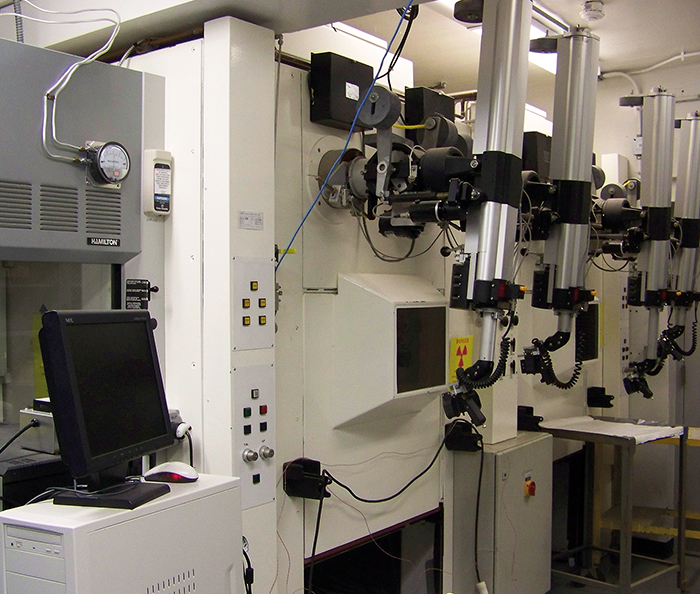
The BLIP was built in 1972 and was the world’s first facility to utilise high-energy, high-current protons for radioisotope production. It works by diverting the excess beam of Brookhaven’s 200 MeV proton linac to water-cooled target assemblies that contain specially engineered targets and degraders to allow optimal energy to be delivered to the targets. The use of higher-energy particles allows relatively thick targets to be irradiated, in which the large number of target nuclei compensate for the generally smaller reaction cross-sections compared to low-energy nuclear reactions.

CCfea34_08_16

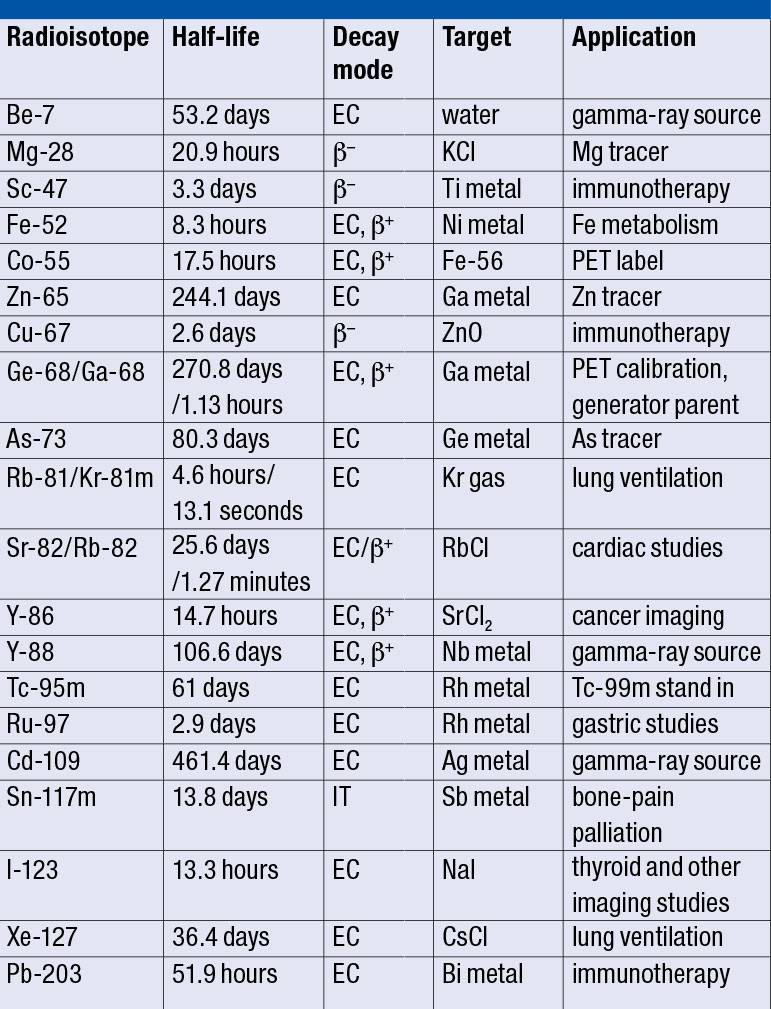
Although the maximum proton energy is 200 MeV, lower energies can be delivered by sequentially turning off the accelerating sections to achieve 66, 92, 117, 139, 160, 181 and 200 MeV beams. This is the only linac with such a capability, and its energy and intensity can be controlled on a pulse-by-pulse basis. As a result, the linac can simultaneously supply high-intensity pulses to the BLIP and a low-intensity polarised proton beam to the booster synchrotron for injection into the Alternating Gradient Synchrotron (AGS) and the Relativistic Heavy Ion Collider (RHIC) for Brookhaven’s nuclear-physics programme. This shared use allows for cost-effective operation. The BLIP design also enables bombardment of up to eight targets, offering the unique ability to produce multiple radioisotopes at the same time (see table). Target irradiations for radiation-damage studies are also performed, including for materials relevant to collimators used at the LHC and Fermilab.

The Gaussian beam profile of the linac results in very high power density in the target centre. Until recently, the intensity of the beam was limited to 115 μA to ensure the survival of the target. This year, however, a raster system was installed that allows the current on the target to be increased by allowing a more uniform deposition of the beam across the target. This system requires rapid cycling magnets and power supplies to continuously move the beam spot, and has been fully operational since January 2016.

Production of 82Sr is accomplished by irradiating a target comprising rubidium-chloride salt with 117 MeV protons, with the raster parameters driven by the thermal properties of the target. This demanded diagnostic devices in the BLIP beamline that enable the profile of the beam spot to be measured, both for initial device tuning and commissioning and for routine monitoring. These included a laser-profile monitor, beam-position monitor and plunging multi-wire devices. It was also necessary to build an interlock system to detect raster failure, because the target could be destroyed rapidly if the smaller-diameter beam spot stopped moving. The beam is moved in a circular pattern at a rate of 5 kHz with two different radii to create one large and one smaller circle. The radius values and the number of beam pulses for each radius can be programmed to optimise the beam distribution, allowing a five-fold reduction in peak power density.

Given the resulting increase in current from these upgrades, a parallel effort was required to increase the linac-beam intensity. This was accomplished by extending the present pulse length by approximately five per cent and optimising low-energy beam-transport parameters. These adjustments have now raised the maximum beam current to 173 μA, boosting radioisotope production by more than a third. After irradiation, all targets need to be chemically processed to purify the radioisotope of interest from target material and all other coproduced radioisotopes, which is carried out at Brookhaven’s dedicated target-processing laboratory.

Tri-lab effort

Among the highest-priority research efforts of the MIRP is to assess the feasibility of using an accelerator to produce the alpha emitter 225Ac. Alpha particles impart a high dose in a very short path length, which means that high doses to abnormal diseased tissues can be delivered while limiting the dose to normal tissues. Although there have been several promising preclinical and clinical trials of alpha emitters in the US and Europe, the 10 day half-life of 225Ac would enable targeted alpha radiotherapy using large proteins such as monoclonal antibodies and peptides for selective treatments of metastatic disease. 225Ac decays through multiple alpha emissions to 213Bi, which is an alpha emitter with a half-life of 46 minutes and can therefore be used with peptides and small molecules for rapid targeted alpha therapy.

CCfea35_08_16

Although 225Ac is the leading-candidate alpha emitter, vital research has been hindered by its very limited availability. To accelerate this development, a formal “Tri-Lab” collaboration has been established between BNL and two other DOE laboratories: Los Alamos National Laboratory (LANL) and Oak Ridge National Laboratory (ORNL). The aim is to evaluate the feasibility of irradiating thorium targets with high-energy proton beams to produce much larger quantities of 225Ac for medical applications. Because there is a direct correlation between beam intensity and radioisotope yields, the higher the intensity the higher the yield of these and other useful isotopes. So far, BNL and LANL have measured cross-sections, developed and irradiated relevant alpha-emitter targets for shipment to ORNL and other laboratories. These include several targets containing 225Ac-radioactivity up to 5.9 GBq and others for chemical and biological evaluation of both direct 225Ac use as well as use of a generator to provide the shorter-lived 213Bi. Similar irradiation methods are available at LANL and also TRIUMF in Canada.

Irradiation of thorium metal at high energy also creates copious fission products. This complicates the chemical purification but also creates an opportunity because some coproduced radiometals are of interest for other medical applications. The BNL group therefore plans to develop and evaluate methods to extract these from the irradiated-thorium target in a form suitable for use. In addition to 225Ac, the BNL programme is evaluating the future production of other radioisotopes that can be used as “theranostics”. This term refers to isotope pairs or even the same radioisotope that can be used for both imaging and therapeutic applications. Among the potentially attractive isotopes for this purpose that can be produced at BLIP are the beta- and gamma-emitters 186Re and 47Sc.

BNL has served as the birthplace for nuclear medicine from the 1950s, and saw the first use of high-intensity, high-power beams for radioisotope production. Under the guidance of the DOE isotope programme, the laboratory is using its unique accelerator facilities to develop and supply radioisotopes for imaging and therapy. Completed and future upgrades will enable large-scale production of alpha emitters and theranostics to meet presently unmet clinical need. These will enable personalised patient treatments and overall improvements in patient health and quality of life.

TRIUMF targets alpha therapy

External-beam radiation therapy is used routinely to treat many different types of cancerous tumours, delivering a targeted dose of radiation to cancer cells while sparing surrounding healthy tissue as much as possible. While there have been dramatic improvements in the control of patient and tumour dose during recent years, many challenges persist. These include side effects such as depressed immunity, which makes patients susceptible to post-treatment infections, and an increase in secondary cancers.

An alternative approach involves delivering a therapeutic radiation dose to tumour cells selectively through a strategy similar to that for molecular imaging: therapeutic isotopes are incorporated into complex pharmaceuticals for specific, targeted delivery of a potent radiation dose directly to cancerous cells. This approach has been recognised since the time of Madame Curie, but even after a century of development, this application remains woefully unoptimised.

To study the full potential of radionuclide therapy, the medical research community is increasingly demanding therapeutic alpha- and beta-emitting isotopes to treat advanced metastatic cancer and other diffuse diseases. Such therapeutic isotopes are changing the cancer-treatment landscape, yet lack of availability and cost are significantly affecting further research and development.

Targeted radionuclide therapy

Targeted radionuclide therapy (TRT) involves the injection of particle-emitting radionuclides appended to a biological targeting molecule, which direct a lethal dose of radiation to a specific site within the body. The short range and highly cytotoxic nature of alpha and beta particles destroys small, diffuse and post-operative residual tumours while minimising damage to healthy tissue. TRT’s strength lies in the diversity and adaptability of both isotopes and targeting molecules, which include monoclonal antibodies, antibody fragments, nanoparticles, and small peptides and molecules. Because this allows an optimal delivery regimen to be developed for each application, TRT isotopes are generating significant interest internationally.

Within the Life Sciences Division of TRIUMF in Vancouver, Canada, TRT is now an active research effort. The goal is to exploit TRIUMF’s production and radiochemistry capabilities to enable fundamental and applied research with a spectrum of isotopes across different disciplines. In the near-to-medium term, TRIUMF plans to develop platform technologies to enable accelerator-based radiometallic isotope production and applications beyond the current state-of-the-art. Access to a host of metallic isotopes will allow TRIUMF to leverage its radiochemistry expertise to demonstrate the synthesis of novel radiopharmaceuticals, including TRT drugs.

Alpha therapy in sight

Targeted alpha therapy (TAT) is a type of TRT that exploits the high linear-energy transfer of alpha particles (figure 1) to maximise tumour-cell destruction while minimising damage to surrounding cells. As such, TAT has tremendous potential to become a very powerful, selective tool for personalised cancer treatments. To fulfil its promise, however, TAT relies heavily on new developments in isotope production. It also demands organic, bioinorganic and organometallic synthesis techniques to create new molecular probes, and novel techniques to address the stability of metal complexes in vivo.

Several promising alpha-emitting radionuclides are currently under consideration worldwide – including 149Tb, 211At, 212Bi, 212Pb,  213Bi, 223Ra, 225Ac, 226Th and 230U – and very promising results have already emerged from clinical and pre-clinical studies of TAT agents. Progress at several laboratories is fuelling great optimism in the medical community. For example, the US Food and Drug Administration recently approved the use of the alpha emitter 223RaCl2 (registered under the trademark Xofigo) for pain relief from bone metastases, and several other TAT drugs are in the clinical-trial pipeline.

Securing a constant supply of clinically relevant amounts of alpha-emitting radionuclides remains a challenge, since their production requires high-Z targets and a complex infrastructure. “Generator systems” are a convenient source of TAT isotopes: for example, 225Ac (which has a half-life of 9.92 days) can be harvested as a decay product of 229Th. Because the global quantity of 229Th is not being replenished and the 229Th/225Ac generator can only be eluted every nine weeks, annual worldwide production is limited to approximately 1.7 curies. Several alternative strategies are therefore being proposed to produce such isotopes directly.

TAT radionuclides must be carefully processed before being used in medical applications. They first must be isolated with high radio-chemical purity from the target material, which can be achieved using classical chemical procedures such as ion exchange, extraction and precipitation. Purified TAT radionuclides are then attached to biomolecule targeting vectors via a bifunctional chelator, which connects the biomolecule with a radionuclide complex (figure 2). The stability of compounds containing alpha-emitting radionuclides is a challenge because after decay most of the daughter isotopes are radioactive elements that no longer remain chelated. Moreover, the radioactive daughters can accumulate and cause unwanted toxicity in healthy organs, especially those involved in excretion such as the liver and kidneys. These issues have driven demand for a more robust and stable chelation system and/or encapsulation methods that contribute to an optimised pharmacokinetic profile with rapid cell internalisation. By doing so, the hope is to keep radioactive daughter nuclei proximal to the original decay site and thus close to the targeted tissue.

Several clinical trials with alpha-emitting radionuclides – including 225Ac (phase II trial) and 213Bi (phase III) – are under way around the world, based on the standard chelation approach. Despite the challenges involved, these trials are already showing extremely high promise and superiority over existing beta-emitting radionuclides. Further research is therefore warranted to investigate and optimise various production strategies designed to make TAT a viable clinical modality. The TAT isotope 225Ac has demonstrated particularly high potential in recent years because its half-life correlates well with the biological half-lives of intact antibodies, and its multiple alpha-emitting daughters enhance the therapeutic effect. 225Ac also can be used as a parent radionuclide for a 225Ac/213Bi generator system.

TRIUMF’s strategy

TRIUMF has extensive expertise in all aspects of the production of medical isotopes, including the development of high-powered targets for large-scale production and expertise in isotope-production simulations with its existing Monte Carlo code FLUKA and the new Geant4. TRIUMF’s strategy involves using both existing and new proton beamlines from its 520 MeV cyclotron, along with a newly built 30 MeV electron linac in the upcoming Advanced Rare IsotopE Laboratory (ARIEL) facility, to irradiate thorium and uranium targets to produce a variety of radiometals. These include 225Ra and 224Ra, which are parent isotopes for the daughter products 225Ac, 212,213Bi and 212Pb. Because these targets can be positioned downstream from the science targets, the symbiotic production of these radiometals is limited only by the beam intensity.

Under the envisioned operating conditions of the new proton beamline, FLUKA simulations of the ARIEL proton target station predict yields of several-hundred millicuries of 225Ac per irradiation and significant quantities of other isotopes. While only very small quantities of 225Ac are required for radionuclide therapy, larger quantities are required to produce enough 213Bi in those treatments where it’s preferred. A larger demand for 213Bi will then drive a similarly increased demand for 225Ac to provide adequate 225Ac/213Bi generators. Thus, TRIUMF’s emerging production capacity would yield sufficient 225Ac to enable the assembly of multiple 225Ac/213Bi generators for therapeutic research studies in patients at multiple centres. Based on typical operating-schedule estimates, this technique could result in the production of several curies of 225Ac per year, compared to the current global output of 1 to 2 curies per year, making the proposed infrastructure a potentially potent source of this valuable isotope. Furthermore, many other medically relevant radioisotopes apart from 225Ac are produced from a thorium or uranium target. The higher current proton beam at ARIEL will enable TRIUMF researchers to explore this exciting medical isotope further.

The ultimate goal of TRIUMF’s TRT programme is to carry out clinical testing and establish the efficacy of TRT agents, enabling a national and possibly international clinical-trial programme for promising therapeutics. TRIUMF research partners will develop new radiopharmaceuticals incorporating therapeutic nuclei into targeting molecules, producing therapeutic conjugates that are used to shepherd their targeted payload to tumours. In addition, research will be carried out to design new molecules that can be used to target different types of tumours.

By leveraging TRIUMF’s existing infrastructure and established research partnerships, the medical community can look forward to production of higher quantities of TRT isotopes. Should the promising results seen to date materialise into a viable treatment option for late stage and/or currently untreatable cancers, the results will bring new hope for a significant number of cancer patients worldwide.

Reactors and accelerators join forces

Nuclear reactors are usually thought of in the context of electricity generation, whereby heat generated by nuclear fission produces steam to drive an alternator. A less well-known class of nuclear-fission reactors fulfils an entirely different societal goal. Known as research and test reactors, the heat they produce is a by-product, while the neutrons resulting from the fission reactions are used to irradiate materials or as probes for materials science. In some reactors, neutrons are used to transmute stable isotopes into radioactive ones, which are subsequently utilised for industrial or medical purposes.

Used in diagnostics and treatment, medical radioisotopes are a vital tool in the arsenal of oncologists in detecting and fighting cancer. In the case of 99mTc, which is a daughter product of 99Mo, roughly 30  million patients per year are injected with this isotope. This accounts for 80% of all nuclear-medicine diagnostic procedures, and demand is only growing as more of the global population gain access to advanced medicine. Classically, 99Mo is produced as a fission product in uranium targets: after irradiation lasting around one week, the targets are rushed off to the processing facility where the 99Mo is extracted. Since its half-life is only around six days, there is no way to stock up on the isotope, and therefore a continuous chain of target production, irradiation, isotope extraction and purification – and finally supply to hospitals – is required.

The importance of a steady supply of medical radioisotopes such as 99Mo cannot be overestimated, yet it is generally not possible to cover the cost of operating a large research reactor or other facility solely for the production of radioisotopes, and the yield needs to be sufficiently high for such a production to even significantly reduce the cost. Traditionally, the economics of constructing an accelerator facility for the sole purpose of generating 99Mo have been challenging, especially since the fission yield of 99Mo outweighs the possible yields from non-reactor methods by at least a factor of 10. Recently, however, a reduction in the construction costs of high-power accelerators and the increasing costs associated with operating reactors has generated interest in accelerator-based production of 99Mo, for example via semi-commercial initiatives such as SHINE and NorthStar in the US. 

One of the driving forces behind these developments is the ageing of existing research reactors. The global supply of 99Mo mainly originates in a handful of reactors such as the BR2 in Belgium, the NRU in Canada or the HFR in the Netherlands, and most of them are more than 50 years old. The NRU, which alone is responsible for about a third of the global demand of 99Mo, is scheduled to cease production this year. Some reactors are still planned to continue operation for multiple decades (such as OPAL in Australia, SAFARI in South Africa and BR2), while smaller research reactors such as MARIA in Poland and LVR-15 in the Czech Republic are getting increasingly involved in radioisotope production and new research reactors are being contemplated: MYRRHA in Belgium, PALLAS in the Netherlands and JHR in France (for which construction is ongoing), for instance. Despite these developments, it is uncertain if the rising demand can continue to be met without assistance from accelerator-based production.

Neutrons are very suitable for isotope production because the cross-sections for neutron-induced nuclear reactions are often much larger than those for charged particles. As such, there is an advantage in using the neutrons already available at research reactors for isotope production. But it is clear that accelerators and reactors are highly complementary. Reactors generate neutron-rich isotopes through fission or activation, whereas accelerators typically allow the production of proton-rich isotopes. Alpha emitters are also becoming more popular in nuclear medicine, particularly in palliative care, and the role of accelerators will likely become more important in the future production of such isotopes. It is therefore healthy to maintain multiple production routes open for such vital and rare products, on which people’s lives can depend.

Life on the Cusp

By Weimin Wu

World Scientific

716kjey0d3L

The extraordinary scientific career and personal life of the Chinese-naturalised American physicist Weimin Wu have played out against the backdrop of profound political and cultural changes in China during the last 70 years.

In this autobiography, Wu describes the diverse and colourful events of his life and sketches a portrait of the social environment where they took place. He was personally involved in the making of the first atomic bomb in China, aged just 17, and he participated in the analysis of the data collected by the first artificial Chinese satellite, as well as in the construction of the first electron–positron collider. An e-mail that he sent from Beijing to Switzerland in 1986 is considered to be the first in the history of the internet in China. He was also a member of the research team that observed the first J/ψ particle in Beijing, and of the CMS experiment, where he worked on the search for the Higgs boson.

Not only has he had a remarkable career, his personal life has also been marked by many unusual and stormy events. He had a poor childhood, undertook various jobs as a labourer or a farmer, and was forced to emigrate to the US after becoming personally involved in the Tiananmen Square protest.

The author tells the story of his scientific trajectory and life “on the cusp” with a candid spirit, describing both the events and his inner feelings – details of his emotional experience and love stories add to the book.

Memorial Volume for Y Nambu

By Lars Brink, Lay Nam Chang, Moo-Young Han and Kok Khoo Phua (eds)

World Scientific

415MMTgkkjL

Less than a year after his death at the age of 94, World Scientific has published a book honouring the memory of Yoichiro Nambu, who was one of the greatest physicists of the second half of the 20th century. A brilliant mind and a visionary thinker, Nambu contributed to the development of many areas of theory – from particle to condensed-matter physics.

In the 1960s, he introduced the concept of spontaneously broken symmetries (with G Jona-Lasinio) and identified a new symmetry for quarks and gluons (with M-Y Han). Both works can be considered cornerstones of the Standard Model of particles and forces.

This book provides an interesting collection of articles written by Nambu’s former collaborators, colleagues, students and friends. Through these contributions, the reader can gain an idea of the importance and variety of Nambu’s work, as well as learn about his personality. He is described by many of those who knew him as kind, warm and humble. Besides being very clever and “many years ahead”, he was also a good mentor. The volume concludes with the last scientific writing by Nambu himself, discussing the origin and development of particle physics.

Half Life: The Divided Life of Bruno Pontecorvo, Physicist or Spy

By Frank Close

Oneworld

Also available at the CERN bookshop

CCboo56_08_16

In this book, Frank Close tells the story of the enigmatic life of renowned Italian physicist Bruno Pontecorvo, reporting plenty of historical details about his work and personal affairs. The reader is taken on a fascinating story, which develops in difficult times – the years just before, during and after World War Two.

Following an introduction about Pontecorvo’s early life, the story continues with a discussion of the discovery of neutron moderation in 1934 and the role played by Pontecorvo, along with its scientific and political consequences. The author gives many insights that will amaze physicist readers.

After this discovery, Pontecorvo begins his career as an international scientist. He moves to France in 1936, where he works with Frederic Jolit-Curie and meets Marianne Nordblom, his future wife. In 1938, Marianne and Bruno have their first son, Gil.

The events of the life and work of Pontecorvo are embedded in an incredible historical background. As an example, in March 1940, about 40 gallons of heavy water are shipped from Norway and hidden from Nazis in France. This precious treasure would later be taken to the UK by two scientists who were working with Pontecorvo. The heavy water is clearly related to the attempt to use and control nuclear fission.

In Paris, Pontecorvo joins the Communist Party. His political ideas will play a crucial role in his personal and professional life. When the Nazis invade France, Pontecorvo has to move away. Helped by his friend and colleague Emilio Segré, in 1940 he and his family set off for the US and settle in Tulsa, Oklahoma.

In November 1942 he meets again his mentor, Enrico Fermi, who was interested – together with his collaborators – in the activities of Pontecorvo, and in particular in an instrument he designed to search for oil underground by detecting neutrons. As a consequence of this event, Pontecorvo gets the opportunity to move to Canada and join the Anglo-Canadian reactor project at Montreal, aimed at making a reactor based on uranium and heavy water.

In January 1943, Pontecorvo sets off for his new job, which he will hold for seven years. In Canada, he joins an active team made of some 100 scientists and engineers. At this time, the FBI sends three letters to the British Security Coordination Office in Washington because of concerns about the physicist’s communist sympathies. A number of interesting details and anecdotes are given by Close about this and other related events.

For security reasons, the Anglo-Canadian project is carried out at Chalk River, which then becomes a target for Soviet agents. The author provides fascinating insights about the spy network, collecting information on the nuclear programme in the years after the end of World War Two. Nunn May, a collaborator on the project, is arrested in 1946 for espionage.

During his years at Chalk River, Pontecorvo also becomes interested in neutrinos and carries out important studies.

He joins the Atomic Energy Research Establishment in Harwell, UK, in January 1949. Although offered a number of positions in the US, he prefers to move to the UK. One month later, another colleague, Klaus Fuchs, is arrested for espionage. This is a difficult time for Pontecorvo, whose movements are followed by Military Intelligence. Close probes into events in Pontecorvo’s life during these years, to give the reader an idea of the role that he plays. He tells the story of the Soviet agent Lona Cohen, as well as of Kim Philby, another agent who might have had an important impact on Pontecorvo’s decision to escape to the Soviet Union at the end of the summer of 1950. The reader can try to solve the Pontecorvo enigma on the basis of the information reported – did he give information about the reactor commissioned in 1947 to the Soviet Union?

The life of Pontecorvo and his family in the Soviet Union is also described, detailing the problems they faced settling yet again into a new country, after France, the US, Canada and the UK. Many other interesting aspects of his life are discussed, including the events following 4  March 1955 when the physicist was interviewed in Moscow after five years of silence, and the happenings at an international meeting on high-energy physics that he attended in Kiev in 1959.

Close also reports on an interview with Pontecorvo by Italian journalist and writer Miriam Mafai, which gives a profound insight into his mysterious life. In my opinion, the book is very much worth reading and the amount of detail is impressive. The publication of this wonderful book is already stimulating discussions among physicists and will reawaken interest in the Pontecorvo enigma.

Inside CERN’s Large Hadron Collider: From the Proton to the Higgs Boson

By Mario Campanelli

World Scientific

Also available at the CERN bookshop

CCboo57_08_16

In this concise book, Mario Campanelli provides an overview of particle-physics research at CERN. He starts with an introduction about the history of this branch of science, tracing the steps of its evolution through speculative theories and experimental proofs, up to the completion of the Standard Model puzzle with the discovery of the Higgs boson in 2012. It is hard to condense – and explain in relatively simple terms – all of this complex material. As a consequence, the first section of the book should be considered by particle-physicist readers as a brief summary of known concepts, while by non-experts in the field as a very quick overview of the basics of particle physics.

The following chapters focus on CERN, home to the Large Hadron Collider (LHC). After a short account of the history of the laboratory concerning the different accelerators and relative detectors that followed one another, the author discusses the challenges that scientists had to face to design, construct and commission the LHC – a giant, complex and technologically advanced apparatus. He explains how the machine works, from the superconducting magnets to the acceleration phases (realised consecutively in different pre-accelerators and, finally, in the collider) and the beam extraction, showing that the LHC is a marvel of engineering. No less important, of course, are the detectors, which are necessary to study the products of collisions for different research purposes. A chapter is then dedicated to describing the experimental apparatus of the four main experiments: ATLAS, CMS, ALICE and LHCb.

The reader is also given an idea of how data are selected, stored and analysed to extract interesting information, as well as of the physics topics that are investigated by these experiments, including the Standard Model (SM), quantum chromodynamics, b-quark and top-quark physics, supersymmetry and any sign of new physics. The latter is what physicists working at CERN are really eager to find – particles or phenomena that could enable theorists to go beyond the SM. A chapter is dedicated to the discovery of the Higgs boson – the most important result accomplished with the LHC up to now.

Since such a great endeavour cannot be realised without hard work, professionalism and collaboration, the author highlights the importance of the human factor in such a varied, multicultural and highly competitive environment. Finally, a few paragraphs on the impact of high-energy physics research on industry and society conclude the book.

Written in a fluid style, this book would appeal to those who, even if not completely unfamiliar with the topic, know little about collider physics, CERN and its experiments.

60 Years of Yang–Mills Gauge Field Theories: C N Yang’s Contributions to Physics

By L Brink and K K Phua (eds)

World Scientific

41z0J7wVOYL._SX346_BO1,204,203,200_

Since their first formulation, and following development that took place between the end of the 1950s and the beginning of the 1970s, Yang–Mills gauge field theories have proven to be the cornerstone of theoretical physics. Up to now, they represent the only relativistic quantum many-body corpus of theories in four space–time dimensions that appear to be fully consistent. The Yang–Mills theories for the strong, weak and electromagnetic forces are the framework of the Standard Model of particle physics, which has been proven to be the correct theory at the energies that we can measure.

In May 2015, the International Conference on 60 years of Yang–Mills Gauge Theories  was held at the Institute of Advanced Studies in Singapore, in order to commemorate this anniversary. Renowned physicists from all over the world participated and gave interesting talks on different aspects of the theories, as well as on their role outside particle physics, in particular in condensed-matter and statistical physics.

Chen Ning Yang, who was awarded the Nobel Prize in Physics in 1957 together with Tsung-Dao Lee for another work, the discovery of parity violations, gave a talk at the conference. The same was not possible for Robert Mills, co-father of these theories, because he passed away in 1999. The emphasis of the conference was given to Yang’s contributions to physics in general.

This book collects together the talks given at the conference by Yang and the invited speakers, reviewing these remarkable contributions and their importance for the future of physics. Authors include D Gross, L Brink, M Fisher, L Faddeev, S L Wu, T T Wu, T Zee and many others.

bright-rec iop pub iop-science physcis connect