The Particle Zoo, a California-based company that produces soft-toy versions of elementary particles and other outreach materials, is searching for a buyer to take the reins.
Julie Peasley, a graphic designer with a keen interest in physics, started the company in 2008 after having attended a public lecture about cosmology at the University of California at Los Angeles and a craft fair in the same weekend. Setting up an online store, she began selling her particles, slowly expanding the range after requests from physicists. Beginning with little sewing experience, Peasley can now produce around four particle toys per hour and has created more than 50,000 units to date.
Each of the Zoo’s 36 felt particles, plus a range of related products from stickers to pillows, is designed to reflect the properties of its real counterpart: the W boson is double-sided to represent its positive and negative aspects; neutrinos are masked to reflect their elusive nature; and each toy is stuffed with a different material to reflect the mass hierarchy of the real particles.
Looking for a new career path, Peasley says the business has tremendous potential for growth with the right owner and a little capital. “To this day, there are no competitors – I am still the only person selling plush particles! I just never had the capital to take it to the next level,” she told CERN Courier.
Peasley piloted the mass-production of her two most popular particles – the Higgs boson and the electron – in China for three years. However, she struggled to secure the investment required to continue with the mass-production of all the particles. “Iʼd really love to see the business continue rather than die because it brings smiles to anyone who sees it.” Interested potential particle zookeepers can get in touch at particlezoo.net.
Launched in 2014, the Distributed Electronic Cosmic-ray Observatory (DECO) enables Android smartphone cameras to detect cosmic rays. In response to the increasing number of events being recorded, however, the DECO team has developed a new machine-learning analysis that classifies 96% of events correctly.
Similar to detectors used in high-energy physics experiments, the semiconductors in smartphone camera sensors detect ionising radiation when charged particles traverse the depleted region of their sensor. The DECO app can spot three distinct types of charged-particle events: tracks, worms and spots (see image). Each event can be caused by a variety of particle interactions, from cosmic rays to alpha particles, and a handful of events can be expected every 24 hours or so.
These events have so far been classified by the users themselves, but the increasing number of images being collected meant there was a need for a more reliable computerised classification system. Due to the technological variations of smartphones and the orientation of the sensor when a cosmic ray strikes, traditional algorithms would have struggled to classify events.
The DECO team used advances in machine learning similar to those widely used in high-energy physics to design several deep neural-network architectures to classify the images. The best performing design, which contained over 14 million learnable parameters and was trained with 3.6 million images, correctly sorted 96% of 100 independent images. An iOS version of DECO is currently in the beta stage and is expected to be released within the next year.
In addition to the direct production of new particles in high-energy collisions, evidence for new physics beyond the Standard Model (SM) could arise through precision measurements. Two particularly important parameters in this regard are the mass of the W boson, Mw, and the electroweak mixing angle, sin2θW. The CMS collaboration has recently reported a precise measurement of the effective electroweak mixing angle based on Drell–Yan production of leptons.
The electroweak mixing angle is a key parameter defining how the SM unifies the electromagnetic and weak forces, and at first order it is related to the W and Z bosons masses by the simple expression: sin2θW = 1 − M2w / M2Z. An uncertainty in sin2θW of ±0.0005 is equivalent to an indirect measurement of Mw to a precision of 25 MeV, which corresponds to the precision of the direct measurements at hadron colliders.
The most precise measurements of sin2θW were performed at the LEP and SLD electron–positron collider at CERN and SLAC. While the uncertainties are small (0.00026 and 0.00029), the central values differ by more than three standard deviations, motivating further precise measurements. CMS aims to measure sin2θW with a precision matching LEP and SLD based on the forward–backward asymmetry of lepton pairs with an invariant mass near MZ. The asymmetry of the production of a negative lepton with respect to the direction of the quark is small in this region, as a result of the axial-vector Z boson self-interference, and is sensitive to the effective mixing angle, sin2θlepteff. In contrast, the asymmetry at higher and lower mass is much larger, originating from the interference of the weak and electromagnetic interactions, and this asymmetry is not sensitive to sin2θlepteff. The leptons are produced via quark–antiquark annihilation in the LHC’s proton–proton collisions, and limited knowledge about the quark and antiquark parton distribution functions (PDFs) lead to systematic uncertainties that currently dominate the measurement uncertainty.
Using a novel technique with lepton pairs at high and low invariant mass to reduce the PDF uncertainties, CMS has analysed the full electron and muon data samples recorded at an energy of 8 TeV and finds that the effective mixing angle, 0.23101±0.00052, is consistent with the SM prediction 0.23152±00005. With analysis of the 13 TeV LHC data, we can expect that the uncertainties will be significantly smaller and test the electroweak sector further.
The LHCb collaboration has observed the rare baryonic decay B0→ pp, as first presented at the European Physical Society conference in Venice in early July. The branching fraction was measured at the level of about 1.3 per 100 million decays, which makes this decay mode the rarest decay of a B0 meson ever observed. It is also the rarest observed hadronic decay of all beauty mesons.
Our knowledge of baryonic B decays has increased considerably in the last few years. The LHCb experiment, which is primarily designed to search for new physics in CP-violation and rare decays of particles with heavy flavour, has been pursuing a programme to study the decays of B mesons to final states containing baryons. Among the recent achievements it is worth emphasising the first observation of a baryonic B0s decay, B0s→ p Λ K–, and that of B0 and B0s decays to pp plus a pair of light charged mesons. The B0s is the last of the B meson species for which a baryonic decay mode had yet to be observed. The large data samples available at LHCb have made it possible to study the two-body baryonic final-state decays, which are suppressed with respect to higher-multiplicity decay modes.
A search for the rare decays B0→ pp and B0s→ pp had previously been performed by LHCb with 2011 data only, obtaining evidence for B0→ pp. The collaboration now used the full 3 fb–1 data sample collected during the first run of the LHC, approximately three times more data than in the previous search, to confirm the evidence for this decay. An excess of B0→ pp candidates with respect to the background-only hypothesis is now observed with a statistical significance of 5.3 standard deviations. The hint of a B0s→ pp signal reported in 2013 is, however, not confirmed, and an upper limit for the corresponding branching fraction has been set.
The measured B0→ pp and B0s→ pp branching fractions are compatible with the latest theoretical calculations. The observation of the latter will allow a quantitative comparison of various QCD-inspired models describing baryonic B decays.
The ALICE collaboration has reported a measurement of the azimuthal anisotropy in the production of D mesons, which contain a charm quark, when measured relative to the estimated reaction plane of lead–lead collisions at 5.02 TeV at LHC Run 2. The new measurement is a factor two more precise than the Run 1 measurement and clearly indicates that charm takes part in the collective flow of the colour-deconfined quark–gluon plasma (QGP).
Since heavy quarks are produced in hard-scattering processes on a timescale shorter than the QGP formation time, they experience all stages of the system’s evolution. Evidence of interactions between charm quarks and the medium is provided by the observed strong modification of the transverse momentum (pT) distribution of D mesons in heavy-ion collisions with respect to pp collisions. This is understood in terms of elastic scatterings and gluon-radiation in the medium. Measurements of anisotropies in the azimuthal distribution of heavy-flavour hadrons provide further information to determine the transport properties of the medium. The QGP expansion converts the initial spatial anisotropy, which originates from the geometry of the collision, into a particle-momentum anisotropy. The elliptic anisotropy is characterised by the second Fourier coefficient (v2) of the particle’s azimuthal angle distribution relative to the estimated reaction plane.
The measurement of v2 for the D meson addresses the issue of whether the flow that is generated by the expansion of the collision system and is known to affect light quarks is also imparted to the much heavier charm quarks. Additionally, hadronisation of charm quarks via recombination with light quarks could contribute to the D-meson flow. This motivates a comparison of the v2 of D mesons with and without strange-quark content.
ALICE measured the v2 of D0, D+, D*+ and, for the first time at the LHC, of D+s mesons in mid-central lead–lead collisions at an energy of 5.02 TeV per nucleon. The average v2 of non-strange D mesons is larger than zero and similar to that of pions, which is compatible with a similar recent measurement by CMS. The D+s v2 was found to be positive and compatible with that of non-strange D mesons (top panel of the figure). The improved precision of the new measurement compared to the Run 1 measurement at an energy of 2.76 TeV per nucleon will significantly improve the determination of the heavy-quark diffusion coefficient in the QGP at LHC, which is one of the fundamental properties of this exotic form of matter.
Beyond the Standard Model of particle physics (SM), crucial open questions remain such as the nature of dark matter, the overabundance of matter compared to antimatter in the universe, and also the mass scale of the scalar sector (what makes the Higgs boson so light?). Theorists have extended the SM with new symmetries or forces that address these questions, and many such extensions predict new resonances that can decay into a pair of bosons (diboson), for example: VV, Vh, Vγ and γγ, where V stands for a weak boson (W and Z), h for the Higgs boson, and γ is a photon.
The ATLAS collaboration has a broad search programme for diboson resonances, and the most recent results using 36 fb–1 of proton–proton collision data at the LHC taken at a centre-of-mass energy of 13 TeV in 2015 and 2016 have now been released. Six different final states characterised by different boson decay modes were considered in searches for a VV resonance: 4ℓ, ℓℓνν, ℓℓqq, ℓνqq, ννqq and qqqq, where ℓ, ν and q stand for charged leptons (electrons and muons), neutrinos and quarks, respectively. For the Vh resonance search, the dominant Higgs boson decay into a pair of b-quarks (branching fraction of 58%) was exploited together with four different V decays leading to ℓℓbb, ℓνbb, ννbb and qqbb final states. A Zγ resonance was sought in final states with two leptons and a photon.
A new resonance would appear as an excess (bump) over the smoothly distributed SM background in the invariant mass distribution reconstructed from the final-state particles. The left figure shows the observed WZ mass distribution in the qqqq channel together with simulations of some example signals. An important key to probe very high-mass signals is to identify high-momentum hadronically decaying V and h bosons. ATLAS developed a new technique to reconstruct the invariant mass of such bosons combining information from the calorimeters and the central tracking detectors. The resulting improved mass resolution for reconstructed V and h bosons increased the sensitivity to very heavy signals.
No evidence for a new resonance was observed in these searches, allowing ATLAS to set stringent exclusion limits. For example, a graviton signal predicted in a model with extra spatial dimensions was excluded up to masses of 4 TeV, while heavy weak-boson-like resonances (as predicted in composite Higgs boson models) decaying to WZ bosons are excluded for masses up to 3.3 TeV. Heavier Higgs partners can be excluded up to masses of about 350 GeV, assuming specific model parameters.
During the last two decades the WMAP and Planck satellites have produced detailed maps of the density distribution of the universe when it was only 380,000 years old – the moment electrons and protons recombined into neutral hydrogen, producing today’s cosmic microwave background (CMB). The CMB measurements show that the distribution of both normal and dark matter in the universe is inhomogeneous, which is explained via a combination of inflation, dark matter and dark energy: initial quantum fluctuations in the very early universe expanded and continued to grow as gravity pulled matter together while dark energy worked to force it apart. Data from the CMB have allowed cosmologists to predict a range of cosmological parameters such as the fractions of dark energy, dark matter and normal matter.
Now, using new optical measurements of the current universe from the international Dark Energy Survey (DES), these predictions can be tested independently. DES is an ongoing, five-year survey that aims to map 300 million galaxies and tens of thousands of galaxy clusters using a 570 megapixel camera to capture light from galaxies eight billion light-years away (see figure). The camera, one of the most powerful in existence, was built and tested at Fermilab in the US and is mounted on the 4 m Blanco telescope in Chile.
The DES data sample is set to grow from 26 million to 300 million galaxies
To measure how the clumps seen in the CMB evolved from the early universe into their current state, the DES collaboration first mapped the distribution of galaxies in the universe precisely. The researchers then produced detailed maps of the matter distribution using weak gravitational lensing, which measures small distortions of the optical image due to the mass between an observer and multiple sources. The galaxies observed by DES are elongated by only a few per cent due to lensing and, since galaxies are intrinsically elliptical, it is not possible to measure the lensing from individual galaxy measurements.
The first year of DES data, which includes measurements of 26 million galaxies, has allowed researchers to measure cosmological parameters such as the matter density with a precision comparable to those made using the CMB data. The matter-density parameter, which indicates the total fraction of matter in the universe, measured using optical light is found to be fully compatible with Planck data based on measurements of microwave radiation emitted around 13 billion years ago. Combining the measurements of Planck and DES places further constraints on this crucial parameter, indicating that only about 30% of the universe consists of matter while the rest consists of dark energy. The results are also compatible with other important cosmological parameters such as the fluctuation amplitude, which indicates the amplitude of the initial density fluctuations, and further constrain measurements of the Hubble constant and even the sum of the neutrino masses.
The DES results allow for a fully independent measurement of parameters initially derived using a map of the early universe. With the DES data sample set to grow from 26 million to 300 million galaxies, cosmological parameters will be measured with even higher precision and allow more detailed comparisons with the CMB data.
The core mission of CERN is fundamental research in particle physics. Yet, as a publicly funded laboratory, it also has a remit to ensure that its technology and expertise deliver prompt and tangible benefits to society wherever possible. Other physics-research laboratories and institutes were early adopters of CERN technologies, thanks to the highly collaborative nature of particle physics. Since its creation in 1954, CERN has also been active in transferring technology to industry, mainly through purchasing contracts or collaboration agreements. Through novel developments in the field of accelerator technologies and detectors, and more recently in computing and digital sciences, CERN technologies and know-how have contributed to applications in many fields, including the World Wide Web, invented at CERN by Tim Berners-Lee in 1989.
As its impact has broadened, in 1997 CERN set up a reinforced policy and team to support its knowledge- and technology-transfer activities. Twenty years later, these activities are still going strong. Some 18 start-up companies around the world are currently using CERN technology and CERN has developed a network of Business Incubation Centres (BICs) in nine different Member States. Its knowledge-transfer activities have impacted a wide range of fields, from medical and biomedical technologies to aerospace applications, safety, “industry 4.0” and the environment.
Maximising the societal impact of CERN technologies is a key aim for CERN’s knowledge-transfer activities. To do this effectively, CERN has set up a thematic forum with delegates from all of its Member States and associate Member States. Regular meetings are held at CERN, and beginning this year there will also be forum meetings dedicated to medical applications – which is one of the most prominent examples of CERN’s impact so far.
Technology for health
Early activities at CERN relating to medical applications date back to the 1970s, and have been triggered for the most part by individual initiatives. The multiwire proportional chamber conceived in 1968 by CERN physicist Georges Charpak not only opened a new era for particle physics and earned its inventor the 1992 Nobel Prize in Physics, but also found important X-ray and gamma-ray imaging applications in biology, radiology and nuclear medicine. Essential early work at CERN also contributed significantly to the development of advanced detectors and analysis techniques for positron emission tomography (PET). In particular, starting in 1975 with famous images of a mouse, CERN physicist David Townsend led important contributions to the reconstruction of PET images and to the development of 3D PET, in collaboration with the University of Geneva and the Geneva Cantonal Hospital.
After these individual efforts, in the 1990s CERN witnessed the first collaborative endeavours in medical applications. The Crystal Clear and Medipix collaborations started to explore the feasibility of developing technologies used in the LHC detectors – scintillating crystals and hybrid silicon pixel detectors, respectively – for possible medical applications, such as PET and X-ray imaging. At the same time, the Proton Ion Medical Machine Study (PIMMS) was initiated at CERN, with the aim of producing a synchrotron design optimised for treating cancer patients with protons and carbon ions. The initial design was improved by the TERA Foundation, and finally evolved into the machine built for the CNAO treatment centre in Italy, with seminal contributions from INFN. Later on, MedAustron in Austria built its treatment centre starting from the CNAO design. Beyond the initial design study, CERN contributed to the realisation of the CNAO and MedAustron treatment centres, in particular with expertise in accelerators and magnets and with training of personnel.
For the past 50 years, CERN has hosted the ISOLDE facility dedicated to the production of a large variety of radioactive ion beams for different experiments in the fields of nuclear and atomic physics, solid-state physics, materials science and life sciences. Over 1200 radioisotopes from more than 70 chemical elements have been made available for fundamental and applied research, including in the medical field. A particular highlight was the demonstration in 2012 of the efficiency of terbium-149, one of the lightest alpha emitters, for treatment at the level of single cancer cells. The growing worldwide interest in novel isotopes suitable for theragnostics, namely the possibility to perform both imaging and treatment at the same time, has motivated an extension of ISOLDE called CERN-MEDICIS (Medical Isotopes Collected from ISOLDE). This new facility will produce, as of this autumn, innovative isotopes for performing medical research at collaborating institutes (CERN Courier October 2016 p28).
Today, activities pertinent to medical applications are happening in all areas of CERN, with some compelling examples highlighted in the panel opposite. In June 2017, CERN Council approved a document setting out the “Strategy and framework applicable to knowledge transfer by CERN for the benefit of medical applications”.
Aiming high
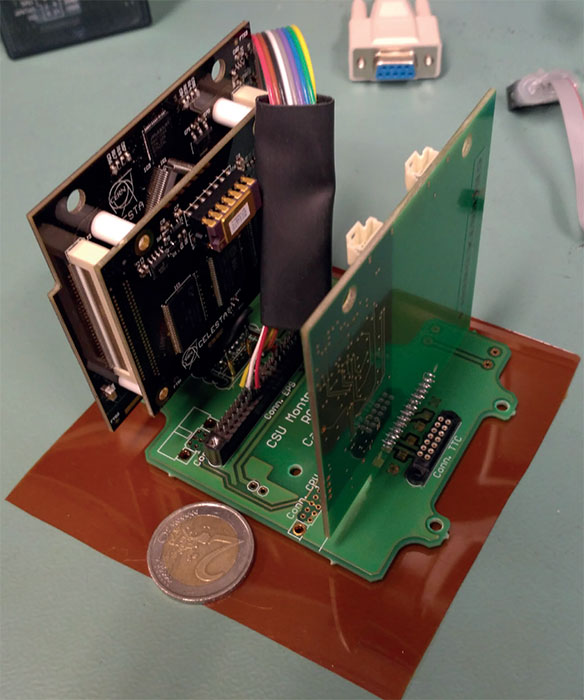
Aerospace and particle physics might not at first seem obvious partners. However, both fields have to deal with radiation and other extreme environments, posing stringent technological requirements that are often similar. CERN operates testing facilities and develops qualification technologies for high-energy physics, which are useful for ground testing and qualification of flight equipment. This opportunity is particularly attractive for miniaturised satellites called CubeSats that typically use commercial off-the-shelf components for their electronics, since radiation qualification according to standard procedures is expensive and time-consuming. The CERN Latchup Experiment STudent sAtellite (CELESTA) intends to develop a CubeSat version of RadMon, a radiation monitor developed at CERN, and to prove that low-Earth orbit qualification can be performed in CERN’s High energy AcceleRator Mixed field facility (CHARM). CELESTA is being developed in collaboration with the University of Montpellier and this year was selected by ESA’s “Fly Your Satellite!” programme to be deployed in orbit in 2018 or 2019.
Magnesium diboride (MgB2), the high-temperature superconductor that will be used for the innovative electrical transmission lines of the high-luminosity LHC, has also demonstrated its potential for future space missions. Within the framework of the European Space Radiation Superconducting Shield (SR2S) project, which aims to demonstrate the feasibility of using superconducting magnetic shielding technology to protect astronauts from cosmic radiation, CERN successfully tested a prototype racetrack coil wound with a MgB2 superconducting tape. Astronauts’ exposure to space radiation is a major concern for future crewed missions to Mars and beyond. Monte Carlo codes such as FLUKA, initially jointly developed by CERN and INFN, and Geant4, developed and maintained by a worldwide collaboration with strong support from CERN since its conception, have been routinely used to study the radiation environment of past, recent, and future space missions. The TimePix detectors, which are USB-powered particle trackers based on the Medipix technology, are already used by NASA on board the International Space Station to accurately monitor radiation doses.
CERN’s computing expertise is also finding applications in aerospace. To solve the challenge of sharing software and codes in big-data environments, researchers at CERN have developed a system called CernVM-FS (CERN Virtual Machine File Systems), which is currently used in high-energy physics experiments to distribute about 350 million files. The system is now also being used for Euclid, a European space mission that aims to study the nature of dark matter and dark energy, to deploy software in Euclid’s nine science data centres.
CERN technologies and know-how have found concrete applications in a variety of other fields. One of them is safety: CERN’s unique working environment, which combines various types of radiation, extremely low temperatures, ultra-high magnetic fields and very high voltages, requires innovative solutions for detecting threats and preventing risks.An example is B-rad, a portable meter to ensure radiation safety in strong magnetic fields that was initially developed by CERN’s radiation-protection group and fire brigade. With a financial contribution from the CERN Knowledge Transfer (KT) Fund, the product has been brought from lab prototype to finalised product in collaboration with an Italian company. Another example is Kryolize, a novel cryogenic safety software also supported by the CERN KT Fund. Six Kryolize licences have now been granted to other research laboratories, with potential application domains ranging from the food industry to cryogenic techniques in medicine.
CERN also taps into its technologies and creativity to address the challenge of a healthier and more sustainable planet. CERN’s contribution in this area ranges from novel biochemical sensors for water safety through novel irrigation techniques for the most challenging agricultural environments. The innovative Non Evaporable Getter (NEG) technology developed to reach ultra-high-vacuum conditions in the LHC vacuum chambers, for example, was successfully used in other applications, including thermal solar panels.
MgB2-based superconducting power cables could also offer significant power-transmission solutions for densely populated, high-load areas, and CERN is part of a consortium to build a prototype to demonstrate the feasibility of this concept.
Another buzz-worthy trend in industry is the so-called “industry 4.0”, a push towards increasing automation and efficiency in manufacturing processes with connected sensors and machines, autonomous robots and big-data technology. CERN’s accelerators, detectors and computing facilities naturally call for the use of the latest industry-4.0 technology, while the technological solutions to CERN’s own challenges can be used in the automation industry. In the field of robotics, CERN has developed TIM (Train Inspection Monorail), a mini vehicle autonomously monitoring the 27 km-long LHC tunnel and moving along tracks suspended from the tunnel’s ceiling, which can be programmed to perform real-time inspection missions. This innovation has already caught the eye of industry, in particular for autonomous monitoring of utilities infrastructure, such as underground water pipelines. Sensor technologies developed at CERN are also being used in drones, such as in the start-up Terabee, which uses them for aerial inspections and imaging services. Since their business was expanded to include CERN sensor development, the start-up won the prestigious first place in the automation category of Startup World at Automatica.
Boosting KT in practice
One of the main challenges in the knowledge-transfer sphere is to make it as easy as possible for scientists and other specialists to turn their research into innovations, and CERN invests much effort in such activities. Launched in 2011, the CERN KT Fund bridges the gap between research and industry by awarding grants to projects proposed by CERN personnel where there is high potential for positive impact on society. Since its creation, 40 projects have been funded, each receiving grants with a value of CHF15–240 thousand over a period of one or several years. Among them were projects addressing thermal management in space applications, very large-scale software distribution, distributed optical-fibre sensors and long-term data preservation for digital libraries. In 2016, two European Commission funded projects, AIDA-2020 and ARIES, incorporated a proof-of-concept fund modelled on CERN’s KT Fund.
Since the early days of technology transfer at CERN, one of the main focuses has been on knowledge transfer through people, especially early career scientists who work in industry after their contracts at CERN or who start their own company. Over the last 20 years, CERN has continued to build a general culture of entrepreneurship within the Organization through many different avenues. To assist entrepreneurs and small technology businesses in taking CERN technologies and expertise to the market, CERN has established a network of nine BICs throughout its Member States where companies can directly express their interest in adopting a CERN technology. The BIC managers provide office space, expertise, business support, access to local and national networks and support in accessing funding. There are currently 18 start-ups and spin-offs using CERN technologies in their business, with four joining BICs last year alone: Ross Robotics (exploiting software developed for production tasks at CERN); Innocryst (developing a system to identify and track gemstones); Colnec Health (using CERN’s know-how in Grid middleware technology) and Camstech (novel electrochemical sensor technologies).
Every year since 2008, students from the School of Entrepreneurship (NSE) at the Norwegian University of Science and Technology (NTNU) spend a week at CERN to evaluate the business commercial potential of CERN technologies. Three of the students attending the CERN-NTNU screening week in 2012 started the spin-off TIND, which is based on the open-source software Invenio. TIND has now, among others, contracts to host Invenio for the UNESCO International Bureau of Education, the California Institute of Technology and the Max Planck institute for Extraterrestrial Physics.
Getting the next generation of scientists into the habit of thinking about their research in terms of impact is vital for knowledge transfer to thrive. In 2015, CERN launched a series of Entrepreneurship Meet-Ups (EM-Us) to foster entrepreneurship within the CERN community. Selected CERN and external entrepreneurship experts present their expertise at informal get-togethers and the events offer a good opportunity to network. In October this year, the EM-Us are celebrating their 50th event, with over 1000 attendees since the series was created, and a new informal “KT-clinic” service has been launched.
Many more interesting projects are in the pipeline. CERN’s knowledge in superconducting technologies can be used in MRI and gantries for hadron therapy, while its skills in handling large amounts of data can benefit the health sector more widely. Detector technologies developed at CERN can be used in non-destructive testing techniques, while compact accelerators benefit the analysis of artworks. These are just some of the examples of new projects we are working on, and more initiatives will be started to meet the needs of industrial and research partners in CERN’s Member States and associate Member States for the next 20 years and beyond.
Cutting-edge medical technologies under CERN’s microscope
Novel designs for compact medical accelerators
Thanks to cutting-edge studies on beam dynamics and radio-frequency technology, along with innovative construction techniques, teams at CERN have manufactured an innovative linear accelerator designed to be compact, modular, low-cost and suitable for medical applications. The accelerator is a radio-frequency quadrupole (RFQ) operating at a frequency of 750 MHz, which had never been achieved before, and capable of producing low-intensity beams of just a few microamps with no significant losses. The high-frequency RFQ capitalises on the skills and know-how developed at CERN while designing Linac 4, and is a perfect injector for the new generation of high-frequency compact linear accelerators being developed for hadron therapy.Expertise in high-gradient accelerating structures gathered by the Compact Linear Collider (CLIC) group at CERN is also being applied to novel designs for hadron-therapy facilities, such as the cyclinac concept proposed by the TERA foundation, as well as the development of accelerators to boost the energy of medical cyclotrons to provide proton-imaging capabilities.
CERN’s know-how in cryogenic systems is also interesting for modern superconducting medical accelerators, such as the compact cyclotron being developed by CIEMAT for on-site production in hospitals of isotopes for PET.
Detectors and medical imaging
Medipix3 is a CMOS pixel detector read-out chip designed to be connected to a segmented semiconductor sensor. Like its predecessor, Medipix2, it acts as a camera taking images based on the number of particles that hit the pixels when the electronic shutter is open. However, Medipix3 aims to go much further than Medipix2 by permitting colour imaging and dead-time free operation. Ten years ago, a member of the Medipix3 collaboration founded a company in New Zealand and obtained a licence to exploit the chip for spectral computed tomography imaging – X-Ray imaging in colour. The company’s pre-clinical scanners enable researchers and clinicians to study biochemical and physiological processes in specimens and small animals. In a related development, the Timepix3 chip permits trigger-free particle tracking in a single semiconductor layer. Preliminary measurements using the previous generation of the chip point strongly to its potential for beam and dose monitoring in the hadron-therapy environment.
Since 1997, CERN’s Crystal Clear collaboration (CCC) has been using its expertise in scintillators to develop and construct PET prototypes. Their first success was the ClearPET concept: the development of several prototypes has resulted in the commercialisation of a small-animal scanner with breakthrough performance and led to the first simultaneous PET/CT image of a mouse in 2015. Starting in 2002, the CCC started developing dedicated PET scanners for breast imaging, called ClearPEM, with two prototypes undergoing clinical trials. Recent CCC developments are focused on time-of-flight PET scanners for better image quality. Via the European FP7 project EndOTOFPET_US, CCC members are developing a novel bi-modal time-of-flight PET and an ultrasound endoscope prototype dedicated to early-stage detection of pancreatic and prostate cancer.
Computing and simulations
Simulation codes initially developed for HEP, such as Geant4 and FLUKA, have also become crucial to modelling the effects of radiation on biological tissues for a variety of applications in the medical field. FLUKA is licensed to various companies in the medical field: in particular, FLUKA-based physics databases are at the core of the commercial treatment-planning systems (TPS) clinically used at HIT and CNAO, as well as of the TPS for carbon ions for MedAustron. Geant4 is adopted by thousands of users worldwide for applications in a variety of domains: examples of Geant4 extensions for use in the medical field are GATE, TOPAS and Geant4-DNA.
Computing tools, infrastructures and services developed for HEP have also great potential for applications in the medical field. CERN openlab has recently started two collaborative projects in this domain: BioDynaMo aims to design and build a cloud-based computing platform for rapid simulation of biological tissue dynamics, such as brain development; GeneROOT aims to use ROOT to analyse large genomics data sets, beginning with data from TwinsUK, the largest UK adult twins registry.
A brief history of knowledge transfer at CERN
• 1954: Since its creation, CERN has been active in knowledge and technology transfer, although with no formal structure.
• 1974 & 1983–1984: Two external studies consider the economic impact of CERN contracts and find that it equates to around 3–3.5 times the contract value.
• 1987: CERN’s Annual Report incorporates the first dedicated section on technology-transfer activities.
• 1988: The Industry and Technology Liaison Office (ITLO) is founded at CERN to stimulate interaction with industry, including through procurement.
• June 1997: With the support of Council, CERN sets up a reinforced structure for technology transfer.
• November 1997: The Basic Science and Technology Transfer: Means and Methods in the CERN Environment workshop helps to identify appropriate technology-transfer mechanisms.
• 1998: CERN develops a series of reports on intellectual-property-rights protection practices that was endorsed by the finance committee.
• 1999: First technology-transfer policy at CERN, with the new technology-transfer service replacing the ITLO and three main actions: to encourage the protection of intellectual-property rights for new technologies developed at CERN and the institutes participating in its scientific programme; to promote the training of young scientists in intellectual-property rights; and to promote entrepreneurship.
• 2001: CERN begins to report on its technology-transfer activities annually to the CERN finance committee.
• 2008: creation of HEPTECH, a technology-transfer network for high-energy physics.
• 2010: CERN develops a new policy on the management of intellectual property in technology-transfer activities at CERN.
• 2014: OECD publishes a report entitled “The Impacts of Large Research Infrastructures on Economic Innovation and on Society: Case studies at CERN”, which praises innovation at CERN.
• 2016: CERN featured as leader in World Intellectual Property Organisation (WIPO) Global Innovation Index.
• 2017: CERN publishes new medical-applications strategy, works on a set of updated software and spin-off and patent policies, and launches a revamped knowledge-transfer website: kt.cern.
A major focus of experiments at the Large Hadron Collider (LHC) is to search for new phenomena that cannot be explained by the Standard Model of particle physics. In addition to sophisticated analysis routines, this requires detailed measurements of particle tracks and energy deposits produced in large detectors by the LHC’s proton–proton collisions and, in particular, precise knowledge of the collision energy. The LHC’s counter-rotating proton beams each carry an energy of 6.5 TeV and this quantity is known to a precision of about 0.1 per cent – a feat that requires enormous technical expertise and equipment.
So far, no clear signs of physics beyond the Standard Model (BSM) have been detected at the LHC or at other colliders where a precise knowledge of the beam energy is needed. Indeed, the only evidence for BSM physics has come from experiments in which the beam energy is known very poorly. In 1998, in work that would lead to the 2015 Nobel Prize in Physics, researchers discovered that neutrinos have mass and that, therefore, these elementary particles cannot be purely left-handed, as had been assumed by the Standard Model. The discovery came from the observation of oscillations of atmospheric and solar neutrinos. The energies of the latter are determined by various elementary processes in the Sun and cover a wide range from a few keV up to about 20 MeV.
Since then, dedicated “long-baseline” experiments have started to explore neutrino oscillations under controlled conditions by sending neutrino beams produced in accelerator labs to detectors located hundreds of kilometres away. The T2K experiment in Japan shoots a beam from JPARC into the Super-Kamiokande underground detector about 300 km away, while the NOvA experiment in the US aims a beam produced at Fermilab to an above-ground detector near the Canadian border about 800 km away. Finally, the international Deep Underground Neutrino Experiment (DUNE), for which prototype detectors are being assembled at CERN (see “Viewpoint: CERN’s recipe for knowledge transfer”), will send a neutrino beam from Fermilab over a distance of 1300 km to a detector in the old Homestake gold mine in South Dakota. The targets in these experiments are all nuclei, rather than single protons, and the neutrino-beam energies range from a few 100 MeV to about 30 GeV.
Such poor knowledge of neutrino-beam energies is no longer acceptable for the science that awaits us. All long-baseline experiments aim to determine crucial neutrino properties, namely: the neutrino mixing angles; the value of a CP-violating phase in the neutrino sector; and the so far unknown mass ordering of the three neutrino flavours. Extracting these parameters is only possible by knowing the incoming neutrino energies, and these have to be reconstructed from observations of the final state of a neutrino–nucleus reaction. This calls for Monte Carlo generators that, unlike those used in high-energy physics, not only describe elementary particle reactions and their decays but also reactions with the nuclear environment.
Beam-energy problem
Neutrino beams have been produced for more than 50 years, famously allowing the discovery of the muon neutrino at Brookhaven National Laboratory in 1962. The difficulty in knowing the energy of a neutrino beam, as opposed to the situation at colliders such as the LHC, stems from the way the beams are produced. First, a high-current proton beam is fired into a thick target to produce many secondary particles such as charged pions and kaons, which are emitted in the forward direction. A device called a magnetic horn, invented by Simon van der Meer at CERN in 1961, then bundles the charged particles into a given direction as they decay into neutrinos and their corresponding charged leptons. Once the leptons have been removed by appropriate absorber materials, a neutrino beam emerges.
Whereas a particle beam in a high-energy accelerator has a diameter of about 10 μm, the width of the neutrino beam at its origin is determined by the dimensions of the horn, which is typically of the order of 1 m. Since the pions and kaons are produced with their own energy spectra, which have been measured by experiments such as HARP and NA61/SHINE at CERN, their two-body decays into a charged lepton and a neutrino lead to a broad neutrino-energy distribution. By the time a neutrino beam reaches a long-baseline detector, it may be as wide as a few kilometres and its energy is known only in broad ranges. For example, the beam envisaged for DUNE will have a distribution of energies with a maximum at about 2.5 GeV, with tails all the way down to 0 GeV on one side and 30 GeV on the other. While the high-energy tail may be small, the neutrino–nucleon cross-section in this region scales roughly linearly with the neutrino energy, so that even small tails contribute to interactions in the detector (figure 1).
The neutrino energy is a key parameter in the formula governing neutrino-oscillation probabilities and must be reconstructed on an event-by-event basis. In a “clean” two-body reaction such as νμ + n →μ + p, where a neutrino undergoes quasi-elastic (QE) scattering off a neutron at rest, the neutrino energy can be determined from the kinematics (energy and angle) of the outgoing muon alone. This kinematical or QE-based approach requires a sufficiently good detector to make sure that no inelastic excitations of the nucleon have taken place. Alternatively, the so-called calorimetric method measures the energies of all the outgoing particles to yield the incoming neutrino energy. Since both methods suffer from less-than-perfect detectors with limitations in acceptance and efficiency, the reconstructed energy may not be equal to the true energy and detector simulations are therefore essential.
A major additional complication comes about because all modern neutrino experiments use nuclear targets, such as water in T2K and argon in DUNE. Even assuming that the neutrino–nucleus interaction can be described as a superposition of quasi-free interactions of the neutrino with individual nucleons, the latter are bound and move with their Fermi motion. As a result, the kinematical method suffers because the initial-state neutron is no longer at rest but moves with a momentum of up to about 225 MeV, smearing the reconstructed neutrino energy around its true value by a few tens of MeV. Furthermore, final-state interactions concerning the hadrons produced – both between themselves and with the nuclear environment of the detector – significantly complicate the energy reconstruction procedure. Even true initial QE events cannot be distinguished from events in which first a pion is produced and then is absorbed in the nuclear medium (figure 2), and the kinematical approach to energy reconstruction necessarily leads to a wrong neutrino energy.
The calorimetric method, on the other hand, suffers because detectors often do not see all particles at all energies. Here, the challenge to determine the neutrino energy is to “calculate backwards” from the final state, which is only partly known due to detector imperfections, to the incoming state of the reaction. One can gain an impression of how good this backwards calculation has to be by considering figure 3, which shows the sensitivity of the oscillation signal to changes in the CP-violating phase angle: for DUNE and T2K an accuracy of about 100 MeV and 50 MeV is required, respectively, to distinguish between the various curves showing the expected oscillation signal for different assumptions about the phase and the neutrino mass-ordering. At the same time, one sees that the oscillation maxima have to be determined within about 20% to be able to measure the phase and mass-ordering.
Detectors near and far
Neutrino physicists working on long-baseline experiments have long been aware of the problems in extracting the oscillation signal. The standard remedy is to build a detector not only at the oscillation distance (called the far detector, FD) but also one close to the neutrino production target (the near detector, ND). By dividing the event rates seen in the FD by those in the ND, the oscillation probability follows directly. The division also leads one to hope that uncertainties in our knowledge of cross-sections and reaction mechanisms cancel out, making the resulting probability less sensitive to uncertainties in the energy reconstruction. In practice, however, there are obstacles to such an approach. For instance, often the ND contains a different active material and has a different geometry to the FD, the latter simply because of the significant broadening of the neutrino beam with distance between the ND and the FD. Furthermore, due to the oscillation the energy spectrum of neutrinos is different in the ND than it is in the FD. It is therefore vital that we have a good understanding of the interactions in different target nuclei and energy regimes because the energy reconstruction has to be done separately both at the ND and the FD.
To place neutrino–nucleus reactions on a more solid empirical footing, neutrino researchers have started to measure the relevant cross-sections to a much higher accuracy than was possible at previous experiments such as CERN’s NOMAD. MiniBooNE at Fermilab has provided the world’s largest sample of charged-current events (QE-like reactions and pion production) on a target consisting of mineral oil, for example, and the experiment is now being followed by the nearby MicroBooNE, which uses an argon target. At higher energies, the MINERvA experiment (also at Fermilab) is dedicated to determining neutrino–nucleus cross-sections in an energy distribution that peaks at about 3.5 GeV and is thus close to that expected for DUNE. Cross-section measurements are also taking place in the NDs of T2K and NOvA, which are crucial to our understanding of neutrino–nucleus interactions and for benchmarking new neutrino generators.
Neutrino generators provide simulations of the entire neutrino–nucleus interaction, from the very first initial neutrino–nucleon interaction to the final state of many outgoing and interacting hadrons, and are needed to perform the backwards computation from the final state to the initial state. Such generators are also needed to estimate effects of detector acceptance and efficiency, similar to the role of GEANT in other nuclear and high-energy experiments. These generators should be able to describe all of the interactions over the full energy range of interest in a given experiment, and should also be able to describe neutrino–nucleus and hadron–nucleus interactions involving different nuclei. Obviously, the generators should therefore be based on state-of-the-art nuclear physics, both for the nuclear structure and for the actual reaction process.
Presently used neutrino generators, such as NEUT or GENIE, deal with the final-state interactions by employing Monte Carlo cascade codes in which the nucleons move freely between collisions and nuclear-structure information is kept at a minimum. The challenge here is to deal correctly with questions such as relativity in many-body systems, nuclear potentials and possible in-medium changes of the hadronic interactions. Significant progress has been made recently in describing the structure of target nuclei and their excitations in so-called Green’s function Monte Carlo theory. A similarly sophisticated approach to the hadronic final-state interactions is provided by the non-equilibrium Green’s function method. This method, the foundations of which were written down half a century ago, is the only known way to describe high-multiplicity events while taking care of possible in-medium effects on the interaction rates and the off-shell transport between collisions. Only during the last two decades have numerical implementations of this quantum-kinetic transport theory become possible. A neutrino generator built on this method (GiBUU) has recently been used to explore the uncertainties that are inherent in the kinematical-energy reconstruction method for the very same process shown in figure 3, and the result of that study (figure 4) gives an idea of the errors inherent in such an energy reconstruction.
Generators that contain all the physics of neutrino–nucleus interactions are absolutely essential to get at the neutrino’s intriguing properties in long-baseline experiments. The situation is comparable to that in experiments at the LHC and at the Relativistic Heavy Ion Collider at Brookhaven that study the quark–gluon plasma (QGP). Here, the existence and properties of the QGP can be inferred only by calculating backwards from the final-state observations with “normal” hadrons to the hot and dense collision zone with gluons and quarks. Without a full knowledge of the neutrino–nucleus interactions the neutrino energy in current and future long-baseline neutrino experiments cannot be reliably reconstructed. Thus, generators for neutrino experiments should clearly be of the same quality as the corresponding experimental apparatus. This is where the expertise and methods of nuclear physicists are needed in experiments with neutrino beams.
A natural test bed for these generators is provided by data from electron–nucleus reactions. These test the vector part of the neutrino–nucleus interaction and thus constitute a mandatory test for any generator. Experiments with electrons at JLAB are presently in a planning stage. Since the energy reconstruction has to start from the final state of the reaction, the four-vectors of all final-state particles are needed for the backwards calculation to the initial state. Inclusive lepton–nucleus cross-sections, with no information on the final state, are therefore not sufficient.
Call to action
All of this has been realised only recently and there is now a growing community that tries to bring together experimental high-energy physicists that work on long-baseline experiments with nuclear theorists. There is a dedicated conference series called NUINT, in addition to meetings such as WIN or NUFACT, which now all have sessions on neutrino–nucleus interactions.
We face a challenge that is completely new to high-energy physics experiments: the reconstruction of the incoming energy from the final state requires a good description of the nuclear ground state, control of neutrino–nucleus interactions and, on top of all this, control of the final-state interactions of the hadrons when they cascade through the nucleus after the primary neutrino–nucleon interaction. Neutrino generators that fulfil all of these requirements can minimise the uncertainties in the energy reconstruction. They should therefore attract the same attention and support as the development of new equipment for long-baseline neutrino experiments, since their quality ultimately determines the precision of the extracted neutrino properties.
Particle physics is evolving as a result of greater co-ordination and collaboration on a global scale. This goes hand in hand with CERN’s policy of increased networking with organisations and institutions worldwide. In 2010, the CERN Council approved a radical shift in CERN’s membership policy that opened full membership to non-European states, irrespective of their geographical location. At the same time, the Council introduced the status of associate membership to facilitate the accession of new members, including emerging countries outside of Europe, which might not command sufficient resources to sustain full membership (CERN Courier December 2014 p58). Interest in membership and associate membership of CERN continues to grow (CERN Courier January/February 2017 p5).
CERN’s geographical enlargement policy offers clear opportunities to reinforce the long-term aspirations of the high-energy physics community. Enlargement is not an aim in itself. Rather, the focus is on strengthening relations with countries that can bring scientific and technological expertise to CERN and, in return, allow countries with developing particle-physics communities to build capacity. Presently, CERN has 22 Member States, seven associate Member States, and six states and organisations with observer status. From the South Asia region, Pakistan and India have recently become associate members. International Co-operation Agreements (ICAs) have been signed with Bangladesh, Nepal and Sri Lanka.
The first CERN South Asian High Energy Physics Instrumentation (SAHEPI) workshop on detector technology and applications, held on 20–21 June at Nepal’s Kathmandu University, Dhulikhel, brought together physicists and policy makers from the South Asia region and Mauritius. Representatives from Afghanistan, Bangladesh, Bhutan, India, the Maldives, Mauritius, Nepal, Pakistan and Sri Lanka were invited to attend. At least one senior scientist and one student from each country participated, making a total of about 70 participants, more than half of whom were students (representatives from the Maldives and Bhutan were not able to attend due to other commitments).
The aim of the workshop was to bring together representatives from CERN and South Asia countries to strengthen the scientific co-operation between the Organization and the South Asia region. The workshop also provided the opportunity for countries to establish new contacts within the region, with the objective of initiating new intra-regional co-operation in high-energy physics and related technologies. The workshop was initiated as part of CERN’s broader efforts to establish relations with regions, complementing relations with individual countries, and follows similar regional approaches in Latin America and South-east Asia.
Rewards of participation
Progress in particle physics relies on close collaboration between physicists, technicians, hardware and software engineers and industry, and both Member States and associate Member States enjoy opportunities to apply for staff and fellowship positions and bid for CERN contracts. Collaborating with CERN also trains young scientists and engineers in cutting-edge projects, giving them expertise that can be brought to their home nations, and offers great opportunities for educating the next generation through CERN’s teacher programmes and others. Participation in CERN programmes has already fostered successful scientific collaborations in South Asia, where researchers have participated in many of CERN’s pioneering activities and made a significant contribution to the construction of the LHC. Indeed, CERN’s relations with South Asia feature strong partnerships dating back decades, particularly with India and Pakistan.
In 1994, CERN and the government of Pakistan signed an ICA concerning the development of scientific and technical co-operation in CERN’s research. This agreement was followed by the signing ofseveral protocols, and today Pakistan contributes to the ALICE and CMS experiments as well as to accelerator projects such as CLIC/CTF3 and Linac 4, making Pakistan a significant partner for CERN. Pakistan has also built various mechanical components for ATLAS and for the LHC, and made an important contribution to the LHC consolidation programme in 2013–2014. In July 2015 Pakistanbecame an associate Member State of CERN.
Given its long tradition and broad spectrum of co-operation with CERN since the 1970s, combined with the country’s substantial scientific and technological potential, India applied for associate membership in 2015. In particular, in 1996 the Indian Atomic Energy Commission (AEC) agreed to take part in the construction of the LHC, and to contribute to the CMS and ALICE experiments and to the LHC Computing Grid with Tier-2 centres in Mumbai and Kolkata. In recognition of its contribution to the construction of the LHC, India was awarded observer status in 2002. The success of the partnership between CERN and the Indian Department of Atomic Energy (DAE) regarding the LHC has also led to co-operation on novel accelerator technologies through DAE’s participation in CERN’s Linac 4, Superconducting Proton Linac (SPL) and CTF3 projects, and CERN’s contribution to DAE’s programmes. India is also participating in the COMPASS, ISOLDE and n_TOF experiments. India became an associate Member State in January 2017.
Broader region
In the recent past, contacts have also been established with several other countries in the South Asia region. Collaboration between Sri Lanka and CERN has been ongoing for a number of years, following an expression of interest signed between the CMS collaboration and the University of Ruhuna in 2006. This saw the first CERN summer students from Sri Lanka and the first PhD student graduating in 2013. The conclusion of the ICA with the government of Sri Lanka in 2017, and the expected entry of a consortium of universities from Sri Lanka into the CMS collaboration, are important steps for growing the country’s national high-energy physics capacity. Sri Lanka is moving towards membership of the CMS collaboration with an interest in contributing to the experiment’s upgrade programme, driven initially by the University of Colombo and the University of Ruhuna.
Official contacts between CERN and Bangladesh were established in 2012 with the signing of an expression of interest. This provided an interim framework to enable scientists, engineers and students from universities and research institutes of Bangladesh to further develop their professional training, in particular through participation in CERN’s scientific and training programmes. In 2014 CERN and Bangladesh signed an ICA, and the first Bangladesh–CERN school on particle physics was held at the University of Dhaka that year. Bangladesh is currently participating in the ALICE experiment as an associate member and working on physics analysis. There is a high potential for future development of the collaboration with CERN, through 39 public universities and 93 recognised universities and the high number of multidisciplinary research facilities of the Bangladesh Atomic Energy Commission.
Nepal has seven universities: Tribhuvan University (the largest and, until around 1990, the only university in the country); Kathmandu University; Pokhara University; Purbanchal University; Mahendra Sanskrit University; Far-western University; and the Agriculture and Forestry University. Tribhuvan and Kathmandu universities are considered to be best placed to develop scientific and technical co-operation with CERN, and collaborative activities are already under way between CERN and Nepal. Students from Nepal have been participating in the CERN summer-student programme for non-Member State nationals, and teachers from Nepal have taken part in the CERN high-school teachers programme. Several workshops on particle physics and related areas have been held at Tribhuven University and Kathmandu University, and an ICA between Nepal and CERN has recently been concluded.
Contacts with the physics communities of Afghanistan, Bhutan, the Maldives and Mauritius were established through the June workshop and will be pursued to explore ways and means to develop capacity in physics and related areas in these countries. The department of physics at the University of Kabul was established in 1942 and includes programmes for undergraduate and graduate studies in physics as well as student laboratories. The department of physics at the University of Mauritius includes research programmes in radioastronomy and applied radio frequency and it also operates the Mauritius Radio Telescope, while its undergraduate teaching programme includes courses in nuclear and elementary particle physics.
Moving forward
The nature of the national programmes in high-energy physics and related areas in these South Asian countries was the focus of discussions at the Kathmandu workshop. The aim was to identify synergies to establish stronger scientific collaboration across the region, such as promoting the exchange of researchers and students within the region. These efforts will help to build capacity, particularly in the countries with emerging high-energy physics programmes that face challenges in research infrastructure and university curricula.
The motivation and enthusiasm of the participants was palpable, and it was clear to see the efforts they put in for research and education. The proceedings of the workshop together with the identified strengths, weaknesses, opportunities and threats of the national programmes in high-energy physics and possibilities to strengthen the intra-regional co-operation will be presented to representatives of the governments from the participating countries with the objective to raise awareness at the highest political level.
CERN will continue to engage with the region in an effort to build capacity in high-energy physics research and education and to facilitate collaboration with CERN. It was decided that due to the success of this workshop, discussions will continue in Sri Lanka in 2019.
To provide the best experiences, we use technologies like cookies to store and/or access device information. Consenting to these technologies will allow us to process data such as browsing behavior or unique IDs on this site. Not consenting or withdrawing consent, may adversely affect certain features and functions.
Functional
Always active
The technical storage or access is strictly necessary for the legitimate purpose of enabling the use of a specific service explicitly requested by the subscriber or user, or for the sole purpose of carrying out the transmission of a communication over an electronic communications network.
Preferences
The technical storage or access is necessary for the legitimate purpose of storing preferences that are not requested by the subscriber or user.
Statistics
The technical storage or access that is used exclusively for statistical purposes.The technical storage or access that is used exclusively for anonymous statistical purposes. Without a subpoena, voluntary compliance on the part of your Internet Service Provider, or additional records from a third party, information stored or retrieved for this purpose alone cannot usually be used to identify you.
Marketing
The technical storage or access is required to create user profiles to send advertising, or to track the user on a website or across several websites for similar marketing purposes.