A team of researchers from the UK, Germany and the US has used data from the CLAS experiment at Jefferson Laboratory to confirm an anomalous measurement of ⍺– — a key parameter in the theoretical description of the non-leptonic decays of Λ hyperons. ⍺– describes the interference of parity-conserving and parity-violating amplitudes in the matrix element of the decay Λ → pπ–, and its Particle Data Group listing had remained unchanged for over 40 years. The new value will have consequences for heavy-ion physics, measurements of the transverse polarisation of Λ hyperons, the decays of heavier strange baryons, and kaon production.
Prior to this year, the best measurement of ⍺– was derived from π−p→ΛK0 interactions using liquid-hydrogen targets dating from the early 1970s. In May, however, the BESIII collaboration in Beijing published a new measurement ⍺– = 0.750 ± 0.009 (stat) ± 0.004 (syst) based on observations of the decays of ΛΛ pairs from electron-positron collisions at the J/ψ resonance. The collaboration also reported a measurement of the corresponding parameter ⍺+ = −0.758 ± 0.010 (stat) ± 0.007 (syst) for the charge-conjugate decay Λ → p̄π+, consistent with the conservation of CP symmetry — the most sensitive test with Λ baryons so far. The BESIII value is 17% (corresponding to more than five standard deviations) above the previously accepted value, ⍺– = 0.642 ± 0.013. “We suspect previous experiments underestimated some systematic biases in their analyses,” says BESIII spokesperson Yuan Changzheng, of the Institute for High-Energy Physics in Beijing.
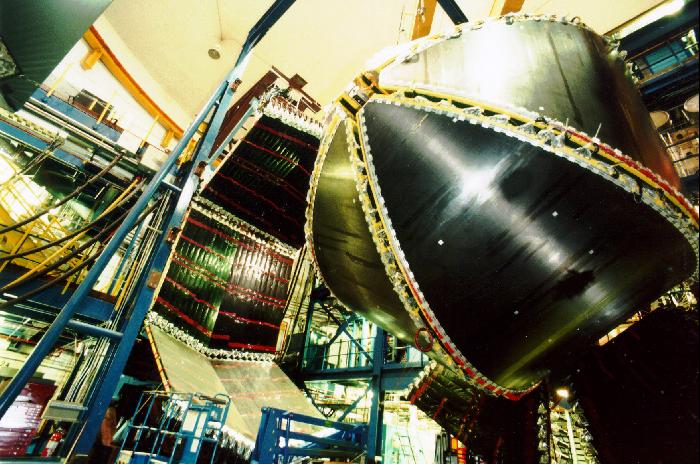
David Ireland of the University of Glasgow, and colleagues at George Washington University, the University of Bonn and Forschungszentrum Jülich, have now confirmed the BESIII measurement using kaon photo-production (γp→KΛ) data from the CLAS detector, which operated from 1998 to 2012. Their analysis exploited CLAS measurements of polarisation observables that describe the decay of the recoiling Λ→ pπ– to infer the value of α– using a theoretical tool known as Fierz identities. The value found, α– = 0.721 ± 0.006 (stat) ± 0.005 (syst), is near to, but noticeably below, the BESIII value.
Any experiment that has used this value as part of their analysis should look again
David Ireland
“These data were not measured specifically to evaluate ⍺–,” said Ireland, a former spokesperson of CLAS, “but when the BES result was reported, we realised that they represented a unique opportunity to make an independent estimate of the decay parameter.” Any experiment that has used this value as part of their analysis should look again, he continued. “It would be sensible for the time being to use both the BES and CLAS results to give a range of possible systematic uncertainty.”
The new analysis confirms the BESIII result “very nicely”, concurs Yuan, given that it is based on completely different data and a different technique. “BESIII has now accumulated another 8.7 billion J/ψ events, and the same process will be analysed to
further improve the precision, both statistical and systematic.”
Accelerators of unstable or non-naturally occurring particles, such as the proton–antiproton colliders with which the W, Z and top quark were discovered, famously rely on “beam-cooling” techniques, which reduce the beam’s phase-space volume in order to achieve sufficient interaction rates. Cooling techniques continue to improve, enhancing current and future experiments using low-energy antiprotons, heavy ions and molecular beams, and enabling future muon colliders. The community of scientists and engineers developing and applying beam cooling has been meeting to exchange ideas for more than 20 years at the COOL workshops.
It was gratifying to see the proliferation and progress of beam-cooling technologies at the 12th biennial international workshop on beam cooling and related topics, held from 23–27 September at the Budker Institute of Nuclear Physics (BINP) in Novosibirsk , Russia. Electron-cooling R&D platforms were represented in profusion, including in the US (RHIC at Brookhaven and the planned EIC at Brookhaven and JLab), Germany (COSY at the Forschungszentrum Jülich, the CSR at MPI-K Heidelberg, and R&D at HIM Mainz), China (EICC and HIAF at IMP Lanzhou), CERN (the AD and ELENA), and Russia (NICA at JINR Dubna). Most of these are joint efforts with BINP, which continues to be the primary source for high-voltage, electron-gun and solenoid systems for such coolers. Also represented were stochastic cooling installations, tests of coherent electron cooling, and, at long last, results from the Muon Ionisation Cooling Experiment – notably, the first observation of muon ionisation cooling (first conceived at BINP almost 50 years ago), and a measurement of multiple scattering in a lithium-hydride energy absorber. Results with liquid hydrogen, and a wedge-shaped plastic absorber designed to demonstrate emittance exchange between the transverse and longitudinal planes, are expected soon.
It was unfortunate that no one from a US national laboratory was able to travel to Novosibirsk in person – apparently a casualty of anti-Russia sanctions
Another highlight of the workshop was the report from Brookhaven, “Cooling commissioning results of the first RF-based electron cooler LEReC,” which was delivered remotely by Alexei Fedotov. It was unfortunate that no one from a US national laboratory was able to travel to Novosibirsk in person – apparently a casualty of anti-Russia sanctions. Even at the height of the Cold War, US–USSR scientific contacts in particle and accelerator physics were successfully pursued. The argument that by cutting off such contacts one is shooting oneself in the foot seems quite plausible – after all, we go in order to learn.
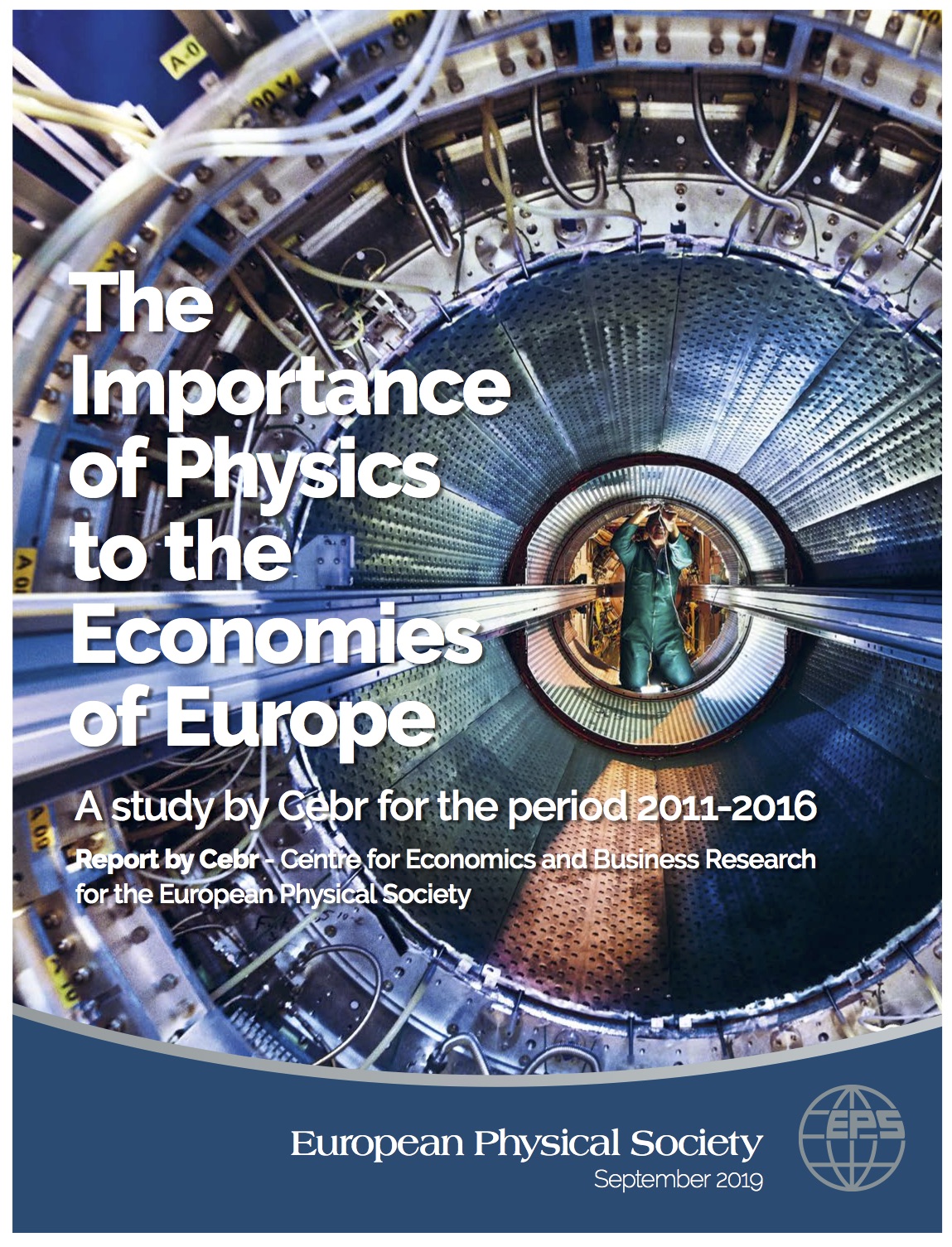
Physics-based industries generate over 16% of total turnover and more than 12% of overall employment in Europe, topping contributions from the financial services and retail sectors, according to a report published by the European Physical Society (EPS). The analysis, carried out by UK consultancy firm Cebr (Centre for Economics and Business Research), reveals that physics makes a net contribution to the European economy of at least €1.45 trillion per year, and suggests that physics-based sectors are more resilient than the wider economy.
“To give some context to these numbers, the turnover per person employed in the physics-based sector substantially outperforms the construction and retail sectors, and physics-based labour productivity (expressed as gross value added per employee) was significantly higher than in many other broad industrial and business sectors, including manufacturing,” stated EPS president Petra Rudolf of the University of Groningen. “Our hope is that the message conveyed by the EPS through the study performed by Cebr will be inspiring for the future, both at the European and national levels, making a convincing case for the support for physics in all of its facets, from education to research, to business and industry.”
The Cebr analysis examined public-domain data in 31 European countries for the six-year period 2011-2016. It defined physics-based industries as those where workers with some training in physics would be expected to be employed and where the activities rely heavily on the theories and results of physics to achieve their commercial goals, following the statistical classification of economic activities in the European community (NACE).
Germany showed the highest percentage of turnover from physics-based industries
Based on several different measures of economic growth and prosperity, the analysis found that physics-based goods and services contributed and average of 44% of all exports from the 28 European Union countries during the relevant period. The three major contributions were from manufacturing (42.5%), information & communication (14.1%), followed by professional, scientific & technical activities in physics-based fields such as architecture, engineering and R&D (14.1%). Distributions in employment data were found to be broadly similar, with professional, scientific & technical activities showing the strongest employment growth. Germany showed by far the highest percentage of turnover from physics-based industries (29%), followed by the UK (14.2%), France (12.9%) and Italy 10.4(%).
Taking into account “multiplier impacts” that capture the knock-on effect of goods and services on the wider economy, the analysis found that for every €1 of physics-based output, a total of €2.49 output is generated throughout the EU economy. The employment multiplier is higher still, meaning that for every job in physics-based industries, an average of 3.34 jobs are supported in the economy as a whole by these industries.
The report also found the European physics-based sector to be highly R&D intensive, with expenditure exceeding €22 billion in every year. “However, what seems to be difficult to comprehend for policy makers and for the general public that elects them is that keeping the physics-based sector in the economy strong and addressing global societal challenges is a process of a very long-term nature,” comments Rudolf. “Indeed, it will not suffice to develop technologies on the basis of the current knowledge: new paths and new knowledge will be needed, which can only be generated by open-ended research.”
While the report does not assess the impact of different sub-fields of physics, it is clear that high-energy physics is a major contributor, says former EPS president Rüdiger Voss of CERN. “The sheer scale and technological complexity of big-science projects, and the thousands of highly-skilled people that they produce, makes particle physics, astronomy and other research based on large-scale facilities significant contributors to the European economy – not to mention the fact that these are the subjects that often draw young people into science in the first place.”
The 18th International Conference on Hadron Spectroscopy and Structure, HADRON2019, took place in Guilin, China, from 16 to 21 August, co-hosted by the Guangxi Normal University and the Institute of Theoretical Physics of the Chinese Academy of Sciences. The conference brought together more than 330 experimental and theoretical physicists from more than 20 countries to discuss topics ranging from meson and baryon spectroscopy to nucleon structure and hypernuclei. The central issue was exotic hadrons: the strongly interacting particles that deviate from the textbook definitions of mesons and baryons. Searches for exotic hadrons and studies of their properties have been a focus for many high-energy physics experiments, and many fascinating results have been reported since 2003 when the first particles of this sort were discovered: the hidden-charm X(3872) and the open-charm Ds*0 (2317) observed by Belle and BaBar, respectively. The most cited physics papers of Belle and BESIII and the second most cited of BaBar and LHCb are reports of the discoveries of exotic hadron candidates.
The conference began with a report on LHCb measurements of the doubly charmed Ξ++cc baryon, and the discovery of pentaquark particles called Pc. The higher statistics of the LHC Run-2 data have resolved the Pc(4450) reported by LHCb in 2015 into two narrower structures, Pc(4440) and Pc(4457). In addition, a third hidden-charm pentaquark, Pc(4312), with a smaller mass, was observed for the first time. These Pc structures are very likely exotic baryons consisting of at least five quarks, including a charm quark–antiquark pair. Many theorists believe that these pentaquarks can be described as hadronic molecules of a charmed meson and a charmed baryon, analogous to the deuteron, which is a bound state of a neutron and a proton. A series of parallel talks described theoretical predictions that will be useful in motivating further measurements, such as searches for the decay to a charmed baryon and a charmed meson, and searches for the various new pentaquarks predicted by theoretical models.
The X(3872) discovered by Belle 16 years ago is still the subject of intensive investigations
Illustrating the difficulty of understanding the inner structure of hadrons, the X(3872) discovered by Belle 16 years ago is still the subject of intensive investigations. Its mass is extremely close to the sum of the masses of two charmed mesons, D0 and D*0, and its decay width (< 1.2 MeV) is anomalously small for a hadron of such a mass. New results on its decays into lighter particles were reported by BESIII. Alongside proposals for precise measurements of its mass, width and polarisation at Belle-II, PANDA and the LHC experiments, a deeper understanding of the X(3872) may be just around the corner. A close collaboration between experimentalists and theorists is required, and this conference provided a valuable opportunity to exchange ideas. Interesting discussions will continue at the next HADRON conference, to be held in Mexico in 2021.
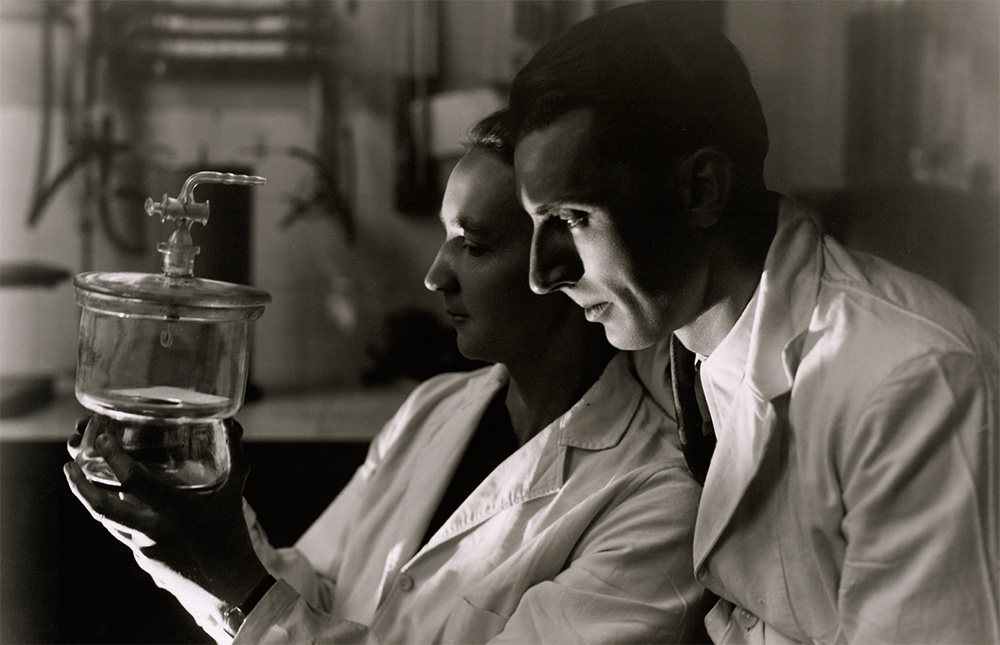
Marie Curie once described the laboratory she shared with her husband Pierre as “just a clapboard hut with an asphalt floor and glass roof giving incomplete protection against the rain, without any amenities”. Even her colleagues abroad were shocked by their paltry resources. German chemist Wilhelm Ostwald noted: “The laboratory was a cross between a stable and a potato shed, and if it hadn’t been for the chemical apparatus, I would have thought it a practical joke.” In the 1920s, newspapers showed the desperate situation the French laboratories were in. “There are some in attics, others in cellars, others in the open air…” the Petit Journal newspaper reported in 1921. Increasing research funding to elevate France to the level of countries like Germany became a rallying point for the nation.
In the inter-war years, Jean Perrin, winner of the 1926 Nobel Prize in Physics for his work showing the existence of atoms, championed the development of science and had the support of many other scientists. Thanks to financial support from the Rothschild Foundation, he founded the Institute of Physico-Chemical Biology, the first place to employ researchers full-time. In 1935 he managed to get the National Scientific Research Fund set up to fund academic projects and research fellowships. One of its first fellows was the young Lew Kowarski in 1937, who had joined Frédéric Joliot-Curie’s laboratory at the Collège de France. In May 1939, together with Hans von Halban, they filed patents via the fund that outlined the production of nuclear power and the principle of the atomic bomb.
Around 32,000 people currently work at CNRS in collaboration with universities, private laboratories and other organisations
A new government under Léon Blum took office in 1936, and with it came the appointment of France’s first under-secretary of state for scientific research. Another first was the inclusion of three women in the government at a time when women still did not have the vote in France. Irène Joliot-Curie took up her post for three months in support of women’s rights and scientific research. During this short period, she set out major objectives: an increase in research budgets, salaries and grants for research fellows.
After her resignation, Perrin took over. This sexagenarian with the appearance of a dishevelled scientist “immediately showed the ardour of a young man and the enthusiasm of a beginner, not for the prestige, but for the means of action the post provided”, Jean Zay, the very young minister of national education at the time, noted in his memoirs. Over the next four years, his achievements included the opening of laboratories such as the Paris Institute of Astrophysics and culminated in the decree founding CNRS, published in October 1939. Six weeks after the outbreak of the Second World War, Perrin announced: “Science is not possible without freedom of thought, and freedom of thought cannot exist without freedom of conscience. You cannot require chemistry to be Marxist and expect to produce great chemists; you cannot require physics to be 100% Aryan and expect to keep the greatest physicists in your country… Each of us can die, but we want our ideals to live on.”
The founding principle of the CNRS “to identify and conduct, alone or with its partners, every type of research in the interest of science and the technological, social and cultural advancement of the country” stands strong today. Around 32,000 people, including 11,000 academics and researchers, currently work at CNRS in collaboration with universities, private laboratories and other organisations. Most of the 1100 CNRS laboratories are co-directed with a partner institution and host CNRS personnel and, in the majority of cases, faculties and academics. These “mixed research units”, which were introduced in 1966, form the backbone of French research and allow cutting-edge research to be done whilst being rooted in teaching and contact with students.
Under the auspices of the national ministry of higher education, research and innovation, CNRS is France’s largest research institution. With an annual budget of €3.4 billion, it covers the whole gamut of scientific disciplines, from the humanities to natural and life sciences, the science of matter and the universe, and from fundamental to applied research. The disciplines are organised thematically into 10 institutes, which manage the scientific programmes and a significant share of the investment in research infrastructure. CNRS plays a coordination role, particularly through its three national institutes, the National Institute of Nuclear and Particle Physics (IN2P3), together with the National Institute of Sciences of the Universe and the National Institute for Mathematical Sciences and their Interactions.
When CNRS was founded, French physicists were among the world-leading: Irène and Frédéric Joliot-Curie, Jean Perrin, Louis de Broglie and Pierre Auger are among the names that have entered the history books from this time. Frédéric Joliot-Curie’s laboratory at the Collège de France played a crucial role thanks to its cyclotron, as did Irène Joliot-Curie’s Radium Institute, Louis Leprince-Ringuet’s laboratory at the École polytechnique and Jean Thibaud’s in Lyon. The newly established CNRS put up the funds for facilities, research fellows, technical personnel and chairs of nuclear physics at universities and the elite Grandes Écoles. The war broke out the same year CNRS was founded, bringing everything to a halt: researchers either went into exile or tried to continue running their laboratories in inevitable isolation.
Frédéric Joliot-Curie, buoyed by his involvement in the Resistance, took up the reins of CNRS in August 1944 and strove to help France catch up again after the war, particularly in nuclear physics. After atomic bombs were dropped on Hiroshima and Nagasaki, General de Gaulle asked Frédéric Joliot-Curie and Raoul Dautry, who was minister for reconstruction and urbanism, to set up the Commissariat à l’Energie Atomique (CEA). Frédéric Joliot- Curie saw this organisation as a means of bringing together and coordinating all fundamental research in nuclear physics, including research undertaken in university laboratories. From 1946, all the big names – Auger, Joliot-Curie, Perrin and Kowarski – joined CEA. CNRS was therefore not greatly involved in this area. In 1947 the decision was taken to build a facility in Saclay combining fundamental and applied research. André Berthelot was the director of the nuclear physics division at Saclay and installed several accelerators there.
Founding CERN
In the 1950s French physicists played a key role in the establishment of CERN: Louis de Broglie, the first well-known scientist to call for the creation of a multinational laboratory; Auger, who was director of the department of exact and natural sciences at UNESCO; Dautry, director-general of CEA; Perrin, the high commissioner; and Kowarski, one of CERN’s first staff members who later became director of scientific and technical services. He is credited with the construction of the first bubble chamber at CERN and the introduction of computers. Joliot-Curie, relieved of his duties at CEA owing to his political beliefs, was very upset not to be appointed to the CERN Council – unlike Perrin, who succeeded him at CEA. Alive to CERN’s potential, Louis Leprince-Ringuet shifted the focus of his teams’ research from cosmic rays to accelerators. He became the first French chair of the scientific policy committee (SPC) in 1964 and his laboratory contributed greatly to the involvement of French physicists at CERN.
Another CNRS recruit of the post-war period who also made a name for himself at CERN was Georges Charpak. Securing a research position at CNRS in 1948, he wrote his thesis under the supervision of Frédéric Joliot-Curie, who had wanted to nudge Charpak towards nuclear physics. But he picked his own area: detectors. He was hired at CERN by Leon Lederman in 1963 and went on to develop the multiwire proportional chamber, which replaced bubble chambers and spark chambers by enabling digital processing of the data. The invention won him the 1992 Nobel Prize in Physics.
When he returned to the Collège de France, Frédéric Joliot-Curie joined forces with Irène to create the Orsay campus. Given the prospect of new facilities at CERN, they felt that France needed to develop its own infrastructure to enable French physicists to train and prepare their experiments for CERN. “Helping to create and sustain CERN whilst letting fundamental nuclear-physics research fizzle out in France would be to act against the interests of our country and those of science,” Irène Joliot-Curie wrote in Le Monde. The government under Pierre Mendès France made research a priority and in 1954 granted funds for the construction of two accelerators, a synchrocyclotron at Irène Joliot-Curie’s Radium Institute and a linear accelerator for Yves Rocard’s Physics Laboratory at the École normale supérieure. Irène Joliot-Curie secured the plots required in Orsay for the construction of the Orsay Institute of Nuclear Physics (IPNO) and the Linear Accelerator Laboratory (LAL). Irène Joliot-Curie did not live to see the new laboratory, but Frédéric Joliot-Curie became the IPNO’s first director, while Hans Halban was called back from England to manage LAL. These two emblematic institutes still play a major role in French contributions to CERN.
From strength to strength
During the 1950s and 1960s CNRS went from strength to strength and set up more laboratories for high-energy and nuclear physics. A Cockroft-Walton accelerator, built in Strasbourg by the Germans during the war, was the seed that grew into the Nuclear Research Centre directed by Serge Gorodetsky. Maurice Scherer’s chair in nuclear physics in Caen, created in 1947, evolved into the Corpuscular Physics Laboratory. One of its first doctoral students, Louis Avan, founded the eponymous laboratory in Clermont-Ferrand in 1959. Louis Néel laid the foundations for important physics research in Grenoble, and CEA set up a centre for nuclear studies there in 1956. The Franco-German research reactor was built at the “Institut Laue-Langevin” in Grenoble in 1967. In the same year, the Grenoble Nuclear Science Institute was established, hosting a cyclotron used in particular for the production of radioisotopes for medicine. Its director, Jean Yoccoz, later became a director of IN2P3. The Centre of Nuclear Studies of Bordeaux-Gradignan was established in a disused Bordeaux château in 1969.
The physicists at these laboratories played an active role in CERN experiments, thanks in particular to the flexible secondment policy at CNRS. Among them was Bernard Gregory, who worked at Leprince-Ringuet’s laboratory and focused on the construction of a large, 81 cm liquid-hydrogen bubble chamber in Saclay in preparation for the impending commissioning of the Proton Synchrotron (PS) at CERN. It produced more than 10 million pictures of particle interactions, which were shared all over Europe. In 1965 Gregory became the Director-General of CERN. Five years later, he replaced Louis Leprince-Ringuet as the head of the École polytechnique laboratory, and then became director general of CNRS. He was elected President of the CERN Council in 1977.
Managing expansion
In the 1960s research facilities were becoming so large that the idea came about within CNRS to create national institutes to coordinate the laboratories’ resources and programmes. LAL director André Blanc-Lapierre campaigned for a National Institute of Nuclear and Particle Physics, following the example of the Italian INFN founded in 1951. The aim was to organise the funding allocated to the various laboratories by CNRS, the universities and CEA. Discussions between the partners then began.
In parallel, French physicists were engaged in another debate. After the construction of the 3 GeV proton accelerator SATURNE at CEA in Saclay in 1958 and the 1.3 GeV electron linear accelerator at LAL in Orsay in 1962, as well as the later ACO collider at ALA in Orsay, opinions were divided about building a national machine that would complement CERN’s experimental capabilities and strengthen the French scientific community. Two options were in the running: a proton machine and an electron machine. This decision was especially important since other machines were springing up elsewhere in Europe. In Italy, the electron–positron collider AdA was followed by ADONE in 1969. In Hamburg, Germany, the electron synchrotron DESY was commissioned in 1964.
France’s priority, however, was construction at the European level with CERN, so neither of the two proposed projects ever got off the ground. Jean Teillac, who succeeded Frédéric Joliot-Curie as head of the IPNO, founded IN2P3 in 1971, federating the laboratories and the universities of CNRS. It was only later, in 1975, that CEA and IN2P3 decided to collaborate in building a national machine in Caen, the Large Heavy Ion National Accelerator (“Grand Accélérateur National d’Ions Lourds”, GANIL), which specialised in nuclear physics. Despite the fact that the CEA laboratories involved were not part of IN2P3, the physicists of the two organisations collaborated extensively.
In this context, André Lagarrigue, who had been the director of LAL since 1969, proposed the construction of a new bubble chamber, Gargamelle, on a neutrino beam at CERN. The scientist had previously investigated the feasibility of bubble chambers containing heavy liquids that would favour interactions with neutrinos instead of hydrogen at the École polytechnique. After its construction at Saclay, the chamber filled with liquid freon was installed at CERN and detected neutral currents in 1973. This was a major discovery, which certainly would have won Lagarrigue a Nobel prize had he not died of a heart attack in 1975.
Today, IN2P3 has around 20 laboratories and some 3200 staff, including 1000 academics and researchers in nuclear physics, particle physics, astroparticle physics and cosmology. The institute contributes to the development of accelerators, detectors and observation instruments and their applications to societal needs. Its data centre in Lyon plays an important role in processing and storing large volumes of data, as well as housing the digital infrastructure for other disciplines.
IN2P3 has had strong links with CERN through many projects and experiments. These include: the discovery of the W and Z bosons by UA1 and UA2; contributions to ALEPH, DELPHI and L3 at LEP; the discovery of the Higgs boson by ATLAS and CMS at the LHC; flavour studies at LHCb and heavy-ion physics at ALICE; neutrino physics; CP violation; antimatter experiments, as well as nuclear physics. These joint ventures also involve other CNRS institutes like the INP (Institute of Physics), with its specialists in quantum physics and lasers, as well as in strong magnetic fields.
Future CERN projects are currently being discussed in the update of the European strategy for particle physics. They offer the prospect of new collaborations between CERN and CNRS in high-energy physics, but also in engineering, computing, biomedical applications and even the humanities and social sciences. No doubt the synergy between these two organisations, with their exceptionally rich scientific knowledge, will continue to give birth to exciting new research.
A French version of this article is available here.
Se souvient-on des images du laboratoire de Pierre et Marie Curie ? «Ce n’est qu’une baraque en planches, au sol bitumé et au toit vitré, protégeant incomplètement contre la pluie, dépourvue de tout aménagement », selon Marie Curie. Même ses collègues étrangers se désolent alors du peu de moyens dont ils disposent. Le chimiste allemand Wilhelm Ostwald déclare : « Ce laboratoire tenait à la fois de l’étable et du hangar à pommes de terre. Si je n’y avais pas vu des appareils de chimie, j’aurais cru que l’on se moquait de moi ». Dans les années 1920, des journaux témoignent de la misère des laboratoires. « Il y en a dans les greniers, d’autres dans des caves, d’autres en plein air… », rapporte le Petit Journal en 1921. Augmenter les moyens de la recherche pour se mettre au niveau de pays comme l’Allemagne devient une cause nationale.
Entre les deux guerres, Jean Perrin, prix Nobel de physique 1926 pour ses travaux sur l’existence des atomes, s’engage pour le développement de la science, avec le soutien de nombreux scientifiques. Grâce à des financements de la Fondation Rothschild, il crée l’Institut de biologie physico-chimique, où travaillent pour la première fois des chercheurs à temps plein. En 1935, il obtient la création de la Caisse nationale de la recherche scientifique qui finance des projets universitaires et des bourses de chercheurs. L’un de ses premiers boursiers en 1937 est le jeune Lew Kowarski, issu du laboratoire de Frédéric Joliot-Curie au Collège de France. En mai 1939, ils déposent avec Hans von Halban, via la Caisse, les brevets qui esquissent la production d’énergie nucléaire et le principe de la bombe atomique.
Avec l’arrivée du gouvernement de Léon Blum en 1936, un sous-secrétaire d’État à la recherche est nommé pour la première fois. Autre première : trois femmes intègrent le gouvernement à une époque où elles n’avaient pas encore le droit de vote en France. Irène Joliot-Curie accepte ce poste pour trois mois afin de soutenir la cause féminine et celle de la recherche scientifique. Pendant cette courte période, elle définira des orientations majeures : une augmentation des budgets de la recherche, des salaires et des bourses de chercheurs.
Environ 32000 personnes travaillent aujourd’hui au CNRS en collaboration avec des universités, des laboratoires privés et d’autres organisations
À sa démission, Jean Perrin lui succède. Avec son image de scientifique hirsute, le sexagénaire « déploya aussitôt la fougue d’un jeune homme, l’enthousiasme d’un débutant, non pour les honneurs, mais pour les moyens d’action qu’ils fournissaient », note dans ses mémoires Jean Zay, le très jeune ministre de l’éducation nationale d’alors. Après quatre ans de réalisations, dont la création de laboratoires comme l’Institut d’astrophysique de Paris, le décret fondant le CNRS est publié en octobre 1939. Six semaines après le début de la deuxième guerre mondiale, Jean Perrin annonce : « Il n’est pas de science possible où la pensée n’est pas libre, et la pensée ne peut pas être libre sans que la conscience soit également libre. On ne peut pas imposer à la chimie d’être marxiste, et en même temps favoriser le développement des grands chimistes ; on ne peut pas imposer à la physique d’être cent pour cent aryenne et garder sur son territoire le plus grand des physiciens… Chacun de nous peut bien mourir, mais nous voulons que notre idéal vive. »
La mission du CNRS est encore aujourd’hui d’« identifier, effectuer ou faire effectuer, seul ou avec ses partenaires, toutes les recherches présentant un intérêt pour la science ainsi que pour le progrès technologique, social et culturel du pays ». Environ 32 000 personnes, dont 11 000 chercheurs, travaillent au CNRS en collaboration avec les universités, d’autres organismes ou des laboratoires privés. La plupart des 1100 laboratoires du CNRS sont gérés en cotutelle avec un établissement partenaire Ils accueillent du personnel CNRS et, dans la majorité des cas, des enseignants-chercheurs. Ces unités mixtes de recherche, dont le statut date de 1966, constituent les briques de la recherche française et permettent de mener des recherches pointues tout en restant proche de l’enseignement et des étudiants.
L’évolution de la physique nucléaire et des hautes énergies
Placé sous la tutelle du ministère de l’Enseignement supérieur, de la recherche et de l’innovation, le CNRS est le plus grand organisme de recherche en France. Avec un budget annuel de 3,4 milliards d’euros, il couvre l’ensemble des recherches scientifiques, des humanités aux sciences de la nature et de la vie, de la matière et de l’Univers, de la recherche fondamentale aux applications. Les disciplines sont organisées en dix instituts thématiques qui gèrent les programmes scientifiques ainsi qu’une importante partie des investissements dans les infrastructures de recherche, comme les contributions de ses laboratoires aux expériences du CERN. Il joue un rôle de coordination, en particulier à travers ses trois instituts nationaux, dont l’IN2P3 (Institut national de physique nucléaire et physique des particules) aux cotés des instituts nationaux des sciences de l’Univers et des mathématiques.
À la création du CNRS, la physique française est au meilleur niveau mondial : Irène et Frédéric Joliot-Curie, Jean Perrin, Louis de Broglie, Pierre Auger sont parmi les noms entrés dans l’histoire de la discipline. Le laboratoire de Frédéric Joliot-Curie au Collège de France joue un rôle important grâce à son cyclotron, de même que l’Institut du radium de Irène Joliot-Curie, le laboratoire de Louis Leprince-Ringuet à l’École polytechnique, ou encore celui de Jean Thibaud à Lyon. Des équipements, des boursiers et du personnel technique, des chaires en physique nucléaire dans les universités et les grandes écoles sont financés par le tout jeune CNRS. Avec la guerre, une véritable césure se produit : les chercheurs s’exilent ou tentent de continuer à faire fonctionner leurs laboratoires dans un isolement certain.
Fort de son engagement dans la résistance, Fréderic Joliot-Curie, prend la direction du CNRS en août 1944 et œuvre pour que la France rattrape le retard accumulé pendant la guerre, notamment en physique nucléaire. Après le lancement des bombes atomiques sur Hiroshima et Nagasaki, le Général de Gaulle demande à Frédéric Joliot-Curie et à Raoul Dautry, ministre de la reconstruction et de l’urbanisme, de mettre en place le Commissariat à l’énergie atomique (CEA). Dans l’idée de Joliot-Curie, cet organisme allait rassembler et coordonner toutes les recherches fondamentales de physique nucléaire, y compris celles des laboratoires universitaires. Dès 1946, les grands noms rejoignent le CEA : Pierre Auger, Irène Joliot-Curie, Francis Perrin, Lew Kowarski. Le CNRS se préoccupe alors peu de ce domaine. En 1947, la décision est prise de construire un centre à Saclay qui couple les recherches fondamentales et appliquées sur ce sujet. André Berthelot y dirigera le service de physique nucléaire et y installera plusieurs accélérateurs.
La création du CERN
Dans les années 1950, les physiciens français jouent un rôle important dans la création du CERN : Louis de Broglie, le premier scientifique de renom à demander la création d’un laboratoire multinational lors d’une conférence de Lausanne en 1949, Pierre Auger qui dirige le département des sciences exactes et naturelles de l’UNESCO, Raoul Dautry, l’administrateur général du CEA, Francis Perrin, haut-commissaire, et Lew Kowarski, l’un des premiers employés du CERN et qui deviendra plus tard le directeur des services techniques et scientifiques. On lui doit la construction de la première chambre à bulles au CERN et l’introduction des ordinateurs. Frédéric Joliot-Curie, révoqué en 1950 de ses fonctions au CEA pour ses convictions politiques, est quant à lui très affecté de ne pas être nommé au Conseil du CERN, à l’inverse de Francis Perrin, qui lui a succédé au CEA. Conscient des potentialités du CERN, Louis Leprince-Ringuet réoriente les recherches de ses équipes portant sur les rayons cosmiques vers les accélérateurs. Il deviendra le premier président français du Comité des directives scientifiques (SPC) en 1964 et son laboratoire jouera un rôle important dans l’implication des physiciens français au CERN.
Une autre recrue du CNRS de l’après-guerre fera également parler de lui au CERN : Georges Charpak. Admis au CNRS comme chercheur en 1948, il réalise sa thèse sous la direction de Frédéric Joliot-Curie. Alors que ce dernier veut l’orienter vers la physique nucléaire, il choisit son propre sujet : les détecteurs. En 1963, il est recruté par Leon Lederman au CERN. La suite est connue : il met au point la chambre proportionnelle « multi-fils » qui remplace les chambres à bulles et les chambres à étincelles en permettant un traitement numérique des données. L’invention lui vaut le prix Nobel de physique en 1992.
A son retour au Collège de France, Frédéric Joliot-Curie s’engage auprès d’Irène dans la création du campus d’Orsay. Avec la perspective de nouvelles installations au CERN, des infrastructures en France leur semblent nécessaires pour permettre aux physiciens français de se former et de préparer leurs expériences au CERN. « Contribuer à créer et à faire vivre le CERN en laissant s’éteindre la recherche fondamentale française en physique nucléaire serait agir contre les intérêts de notre pays et contre ceux de la science », écrit Irène Joliot-Curie dans « Le Monde ». Le gouvernement de Pierre Mendès France donne une priorité à la recherche et alloue en 1954 des crédits pour la construction de deux accélérateurs, un synchrocyclotron dans l’Institut du radium d’Irène Joliot-Curie, et un accélérateur linéaire pour le Laboratoire de physique de Yves Rocard à l’École normale supérieure. Irène Joliot-Curie obtient les terrains nécessaires à Orsay pour la construction de l’Institut de physique nucléaire (IPNO) et le Laboratoire de l’accélérateur linéaire (LAL). Irène Joliot-Curie ne verra pas le nouveau laboratoire et c’est Fréderic Joliot-Curie qui devient le premier directeur de l’IPNO et Hans Halban, rappelé d’Angleterre, prend la direction du LAL. Ces deux instituts emblématiques jouent encore un rôle majeur pour les contributions françaises au CERN.
L’éclosion des laboratoires
Pendant les années 1950-1960, le CNRS connaît un fort développement et d’autres laboratoires de physique nucléaire et des hautes énergies sont créés. Un accélérateur Cockroft-Walton construit pendant la guerre à Strasbourg par les Allemands sera le germe du Centre de recherches nucléaires, dirigé par Serge Gorodetzky. Créée en 1947, la chaire de Maurice Scherer en physique nucléaire à Caen devient le Laboratoire de physique corpusculaire. L’un de ses premiers thésards, Louis Avan, fondera un laboratoire du même nom à Clermont-Ferrand en 1959. A Grenoble, Louis Néel pose les fondations d’une importante activité de recherche en physique et le CEA y installera le Centre d’études nucléaires en 1956. En 1967, le réacteur de recherche franco-allemand de l’Institut Laue-Langevin y est construit. La même année, l’Institut des sciences nucléaires de Grenoble voit le jour : il accueillera un cyclotron, utilisé en particulier pour produire des radio-isotopes en médecine. Son directeur, Jean Yoccoz, sera l’un des futurs directeurs de l’IN2P3. Le Centre d’études nucléaires de Bordeaux-Gradignan s’installe dans un ancien château bordelais en 1969.
Les physiciens de ces laboratoires participent activement aux expériences au CERN, bénéficiant en particulier d’une mobilité facilitée par le CNRS. Parmi eux, Bernard Gregory, du laboratoire de Leprince-Ringuet, s’oriente, en vue de la prochaine mise en service du Synchrotron à protons (PS) du CERN, vers la construction à Saclay d’une grande chambre à bulles à hydrogène liquide de 81 centimètres. Elle produira plus de dix millions de clichés d’interactions de particules, distribués à travers toute l’Europe. En 1965, Bernard Gregory est désigné directeur général du CERN. Cinq ans plus tard, il succède à Louis Leprince-Ringuet à la direction du laboratoire de l’École polytechnique, puis devient directeur général du CNRS. Il est élu président du Conseil en 1977.
Gérer l’expansion
Dans les années 1960, les équipements de recherche deviennent si imposants qu’émerge au sein du CNRS l’idée de créer des instituts nationaux pour coordonner les ressources et les activités des laboratoires. Le directeur du LAL, André Blanc-Lapierre, milite pour la création d’un institut national de physique nucléaire et de physique des particules, à l’instar de l’INFN italien fondé en 1951. Il s’agit d’organiser les moyens alloués aux différents laboratoires par le CNRS, les universités et le CEA : les discussions entre les partenaires commencent.
Parallèlement, un autre débat anime les physiciens français. Après la construction en 1958 de l’accélérateur de protons SATURNE de 3 GeV au CEA à Saclay et, en 1962, de l’accélérateur linéaire à électrons de 1,3 GeV au LAL à Orsay, et la construction du collisionneur électron-positron ACO, les esprits se divisent sur la construction d’une machine nationale qui complèterait les capacités expérimentales du CERN et renforcerait la communauté scientifique française. Deux propositions sont en lice : une machine à protons et une machine à électrons. D’autant qu’en Europe d’autres machines sont sorties de terre. En Italie, le collisionneur électron-positon AdA est suivi en 1969 par ADONE. À Hambourg en Allemagne, le synchrotron à électrons DESY démarre en 1964.
La France en revanche donne la priorité à la construction européenne avec le CERN. Aucun des deux projets proposés ne voit donc le jour. Jean Teillac, successeur de Frédéric Joliot-Curie à la tête de l’IPNO, fonde l’IN2P3 en 1971, regroupant les laboratoires du CNRS et des universités. Il faudra attendre 1975 pour que le CEA et l’IN2P3 décident de construire ensemble à Caen une machine nationale, le Grand accélérateur national d’ions lourds (GANIL), spécialisé en physique nucléaire. Bien que les laboratoires concernés du CEA ne fassent pas partie de l’IN2P3, les collaborations entre les physiciens des deux organismes sont importantes.
Ainsi, André Lagarrigue, directeur du LAL depuis 1969, propose la construction d’une nouvelle chambre à bulles, Gargamelle, sur un faisceau de neutrinos du CERN. Le scientifique avait exploré auparavant à l’École polytechnique la faisabilité de chambres à bulles contenant des liquides lourds au lieu de l’hydrogène, favorisant les interactions avec des neutrinos. Après sa construction au CEA Saclay, la chambre remplie de fréon liquide est installée au CERN et décèlera en 1973 les courants neutres. Une découverte majeure, certainement nobélisable si Lagarrigue n’avait pas succombé à une crise cardiaque en 1975.
L’IN2P3 compte aujourd’hui une vingtaine de laboratoires, environ 3200 personnes dont 1000 chercheurs et enseignants-chercheurs dans les domaines de la physique nucléaire, des particules et des astroparticules ainsi qu’en cosmologie. L’Institut contribue au développement d’accélérateurs, de détecteurs et d’instruments d’observation et leurs applications. Son centre de calcul à Lyon joue un rôle important dans le traitement et le stockage de grands volumes de données, hébergeant par ailleurs des infrastructures numériques d’autres disciplines.
Les liens avec le CERN sont forts à travers des nombreux projets et expériences : la découverte des bosons W et Z par UA1 et UA2, le LEP avec des contributions à ALEPH, DELPHI et L3, la découverte du boson de Higgs par ATLAS et CMS au LHC, LHCb et ALICE, la physique des neutrinos, la violation de CP, les expériences sur l’antimatière, ainsi que la physique nucléaire. Les collaborations impliquent d’autres instituts du CNRS comme l’INP (Institut de physique), auquel sont rattachés des théoriciens, ainsi que les spécialistes de la physique quantique et des lasers, ou encore les recherches des champs magnétiques intenses.
Et la suite ? Les futurs projets du CERN sont en discussion à l’occasion de la mise à jour de la stratégie européenne pour la physique des particules. Ils offrent la possibilité de faire émerger de nouvelles collaborations entre le CERN et le CNRS, en physique mais aussi en ingénierie, en calcul, dans les applications biomédicales ou, pourquoi pas, en sciences humaines. Sans aucun doute, de la synergie entre ces deux organismes porteurs d’une richesse scientifique exceptionnelle, de nouvelles recherches passionnantes verront le jour !
La version anglaise de cet article est disponible ici.
Higgs-boson measurements are entering the precision regime, with Higgs couplings to gauge bosons now measured to better than 10% precision, and its decays to third-generation fermions measured to better than 20%. These and other recent experimental and theoretical results were the focus of discussions at the eighth international Higgs Couplings workshop, held in Oxford from 30 September to 4 October 2019. Making its final appearance with this moniker (next year it will be rebranded as Higgs 2020), the conference programme comprised 38 plenary and 46 parallel talks attended by 120 participants.
The first two days of the conference reviewed Higgs measurements, including a new ATLAS measurement of ttH production using Higgs boson decays to leptons, and a differential measurement of Higgs boson production in its decays to W-boson pairs using all of the CMS data from Run 2. These measurements showed continuing progress in coupling measurements, but the highlight of the precision presentations was a new determination of the Higgs boson mass from CMS using its decays to two photons. Combining this result with previous CMS measurements gives a Higgs boson mass of 125.35 ± 0.15 GeV/c2, corresponding to an impressive relative precision of 0.12%. From the theory side, the challenges of keeping up with experimental precision were discussed. For example, the Higgs boson production cross section is calculated to the highest order of any observable in perturbative QCD, and yet it must be predicted even more precisely to match the expected experimental precision of the HL-LHC.
ATLAS presented an updated self-coupling constraint
One of the highest priority targets of the HL-LHC is the measurement of the self-coupling of the Higgs boson, which is expected to be determined to 50% precision. This determination is based on double-Higgs production, to which the self-coupling contributes when a virtual Higgs boson splits into two Higgs bosons. ATLAS and CMS have performed extensive searches for two-Higgs production using data from 2016, and at the conference ATLAS presented an updated self-coupling constraint using a combination of single- and double-Higgs measurements and searches. Allowing only the self-coupling to be modified by a factor ?λ in the loop corrections yields a constraint on the Higgs self-coupling of –2.3 < ?λ < 10.3 times the Standard Model prediction at 95% confidence.
The theoretical programme of the conference included an overview of the broader context for Higgs physics, covering the possibility of generating the observed matter-antimatter asymmetry through a first- order electroweak phase transition, as well as possibilities for generating the Yukawa coupling matrices. In the so-called electroweak baryogenesis scenario, the cooling universe developed bubbles of broken electroweak symmetry with asymmetric matter-antimatter interactions at the boundaries, with sphalerons in the electroweak-symmetric space converting the resulting matter asymmetry into a baryon asymmetry. The matter-asymmetric interactions could have arisen through Higgs boson couplings to fermions or gauge bosons, or through its self-couplings. In the latter case the source could be an additional electroweak singlet or doublet modifying the Higgs potential.
The broader interpretation of Higgs boson measurements and searches was discussed both in the case of specific models and in the Standard Model effective field theory, where new particles appear at significantly higher masses (~1 TeV/c2 or more). The calculations in the effective field theory continue to advance, adding higher orders in QCD to more electroweak processes, and an analytical determination of the dependence of the Higgs decay width on the theory parameters. Constraints on the number and values of these parameters also continue to improve through an expanded use of input measurements.
The conference wrapped up with a look into the crystal ball of future detectors and colliders, with a sobering yet inspirational account of detector requirements at the next generation of colliders. To solve the daunting challenges, the audience was encouraged to be creative and explore new technologies, which will likely be needed to succeed. Various collider scenarios were also presented in the context of the European Strategy update, which will wrap up early next year.
The newly minted Higgs conference will be held in late October or early November of 2020 in Stonybrook, New York.
A currently popular sentiment in some quarters is that theoretical physics has dived too deeply into mathematics, and lost contact with the real world. Perhaps, it is surmised, the edifice of quantum gravity and string theory is in fact a contrived Rube-Goldberg machine, or a house of cards which is about to collapse – especially given that one of the supporting pillars, namely supersymmetry, has not been discovered at the LHC. Graham Farmelo’s new book sheds light on this issue.
The universe speaks in numbers, reads Farmelo’s title. With hindsight this allows a double interpretation: first, that it is primarily mathematical structure which underlies nature. On the other hand, one can read it as a caution that the universe speaks to us purely via measured numbers, and theorists should pay attention to that. The majority of physicists would likely support both interpretations, and agree that there is no real tension between them.
The author, who was a theoretical physicist before becoming an award-winning science writer, does not embark on a detailed scientific discussion of these matters, but provides a historical tour de force of the relationship between mathematics and physics, and their tightly correlated evolution. At the time of ancient Greeks there was no distinction between these fields, and it was only from about the 19th century onwards that they were viewed as separate. Evidently, a major factor was the growing role of experiments, which provided a firmer grounding in the physical world than what had previously been called natural philosophy.
Theoretical physicists should not allow themselves to be distracted by every surprising experimental finding
Paul Dirac
The book follows the mutual fertilisation of mathematics and physics through the last few centuries, as the disciplines gained momentum with Newton, and exploded in the 20th century. Along the way it peeks into the thinking of notable mathematicians and physicists, often with strong opinions. For example, Dirac, a favourite of the author, is quoted as reflecting both that “Einstein failed because his mathematical basis… was not broad enough” and that “theoretical physicists should not allow themselves to be distracted by every surprising experimental finding.” The belief that mathematical structure is at the heart of physics and that experimental results ought to have secondary importance holds sway in this section of the book. Such thinking is perhaps the result of selection bias, however, as only scientists with successful theories are remembered.
The detailed exposition makes the reader vividly aware that the relationship between mathematics and physics is a roller-coaster loaded with mutual admiration, contempt, misunderstandings, split-ups and re-marriages. Which brings us, towards the end of the book, to the current state of affairs in theoretical high-energy physics, which most of us in the profession would agree is characterised by extreme mathematical and intellectual sophistication, paired with a stunning lack of experimental support. After many decades of flourishing interplay, which provided, for example, the group-theoretical underpinning of the quark model, the geometry of gauge theories, the algebraic geometry of supersymmetric theories and finally strings, is there a new divorce ahead? It appears that some not only desire, but relish the lack of supporting experimental evidence. This concern is also expressed by the author, who criticises self-declared experts who “write with a confidence that belies the evident slightness of their understanding of the subject they are attacking”.
The last part of the book is the least readable. Based on personal interactions with physicists, the exposition becomes too detailed to be of use to the casual, or lay reader. While there is nothing wrong with the content, which is exciting, it will only be meaningful to people who are already familiar with the subject. On the positive side, however, it gives a lively and accurate snapshot of today’s sociology in theoretical particle physics, and of influential but less well known characters in the field.
The Universe Speaks in Numbers illuminates the role of mathematics in physics in an easy-to-grasp way, exhibiting in detail their interactive co-evolution until today. A worthwhile read for anybody, the book is best suited for particle physicists who are close to the field.
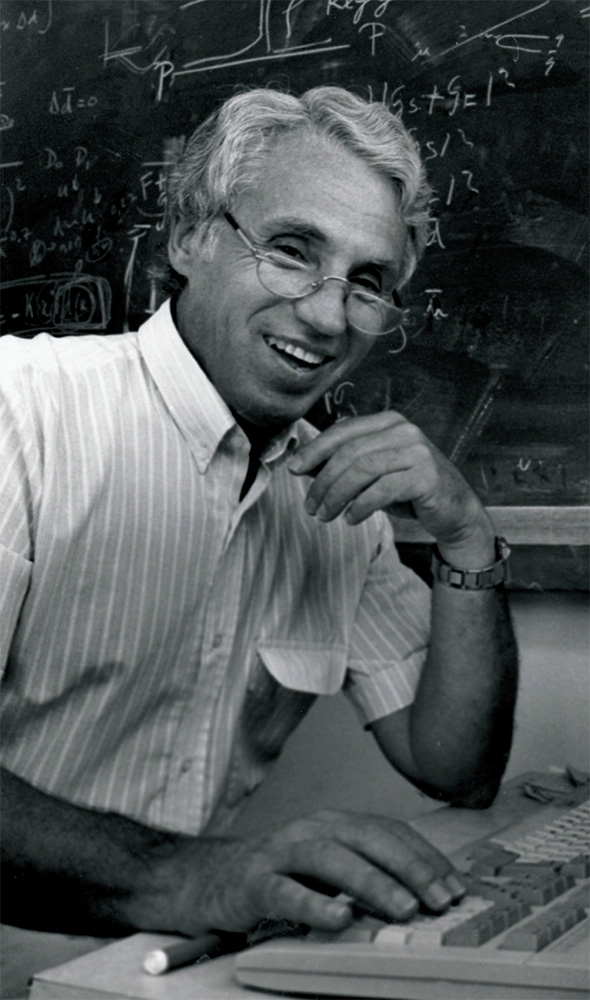
Jacques Soffer, a prolific theorist and phenomenologist with nearly 300 articles in journals or conference proceedings to his name, was born in 1940 in Marseille. During the war, he and his family were sheltered in a farm in the Alps. Afterwards, Jacques came back to Marseille, studied there, and obtained his doctoral degree under the supervision of A Visconti. He spent most of his career at the Centre de Physique Théorique in Marseille, serving as director from 1986 to 1993. He enjoyed sabbaticals at Maryland, Cambridge, CERN, the Weizmann Institute and Lausanne University, and after his retirement he became adjunct-professor at Temple University in the US.
Jacques played a big part in persuading the elementary particle community of the importance of polarisation-type measurements, which provide a probe of dynamical theories far sharper than tests involving just differential and total cross-sections. He is renowned in the community for predicting, together with Claude Bourrely and Tai Wu in 1984, the dramatic phenomenology of the growth with energy of the proton–proton cross-section. This prediction still holds when compared with experimental data after a 100-fold increase in collision energy – up to and including LHC energies. In 1999 Jacques contributed to a paper showing how to make an absolute measurement of the degree of polarisation of a proton beam – which was essential to the success of the Brookhaven spin programme.
In recent years, Jacques showed how positivity sets bounds on spin observables, with important applications to the extraction and determination of the polarised parton structure functions and to low-energy hadron–hadron scattering. His various achievements culminated in three major reviews in Physics Reports.
Jacques always cooperated closely and fruitfully with experimentalists. Entire programmes, such as the polarised proton–proton collisions at Brookhaven’s Relativistic Heavy-Ion Collider, were inspired by his work and carried out with his guidance. Along his career, Jacques organised or co-organised several workshops and conferences on spin physics, and in more recent years was often giving the summary talk.
Throughout his pioneering work in particle physics, Jacques always got to the central issues very quickly, guided by an uncanny feeling for the new physics that roused the amazement and admiration of his collaborators. His colleagues and collaborators, and especially his thesis students, benefited from his advice and his broad knowledge of theory tools and experimental facts. They unanimously praised his warm friendship and hospitality, his sense of humour and his widespread interests in the arts, literature and technology.
Jacques is survived by his wife, Danielle, their three children and nine grandchildren.
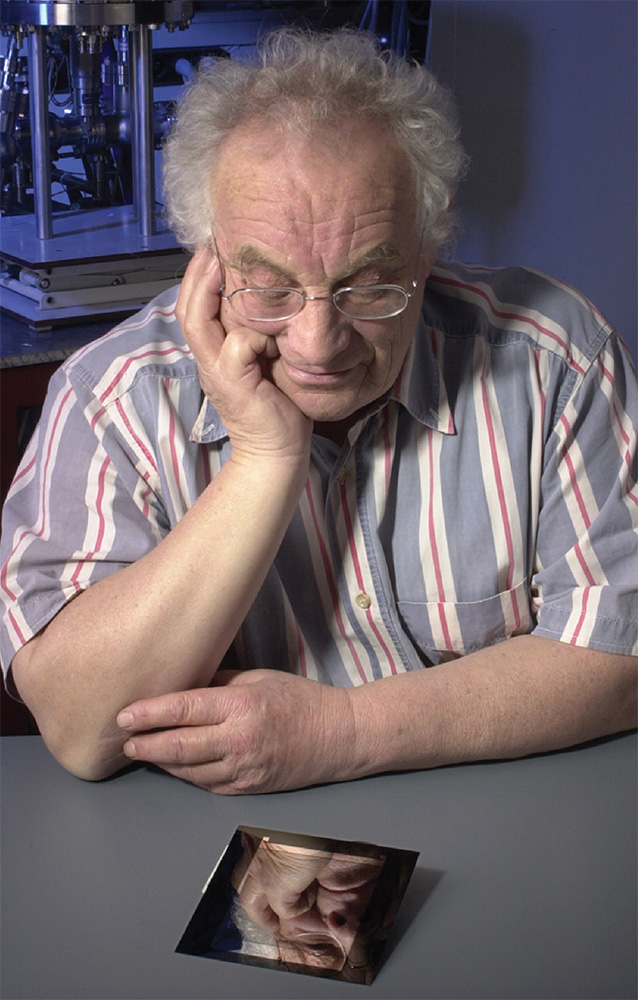
Anton Oed, a passionate inventor and a source of inspiration for many of us today, passed away on 30 September 2018. His introduction of micro-strip gas chambers (MSGCs) at the Institut Laue-Langevin (ILL) in 1988 was a decisive breakthrough in the field of radiation detectors. It demonstrated a significant gain in spatial resolution and counting rate, and the invention immediately stimulated the development of a new class of micro-pattern gas detectors (MPGDs).
Anton was born 1933 in Ulm, Germany, and studied physics at the University of Tübingen. For his diploma thesis on “The double resonance spectrum of 23Na”, he received the prize of the Faculty of Mathematics and Natural Sciences of the University of Tübingen. In his doctoral thesis, again in atomic physics, he studied the double-quanta decay of the hydrogen 2S level.
Anton arrived at the ILL in Grenoble in 1979, and set about developing the detector of the “Cosi Fan Tutte” spectrometer to measure the mass, charge and kinetic energy of fission fragments. The results obtained with this detector were so precise that it has been taken as a reference for several nuclear instruments in other institutes. Anton later started developing the MSGC technique to upgrade detectors of neutron diffractometers. Several ILL instruments are now equipped with MSGCs that have been in operation for more than 10 years.
The development of MSGCs for high-energy physics started at the beginning of the 1990s. Encouraging results were obtained by the RD28 collaboration at CERN but the relative fragility of MSGCs under harsh irradiation conditions motivated the development of new detectors with improved robustness. Among these, Micromegas and gas electron multipliers (GEMs) have become very successful and are currently being implemented in various upgrades to the LHC experiments. MSGC detectors are also used to detect X-rays on ESA’s INTEGRAL telescope.
In 1997 Anton received the R W Pohl medal from the Deutsche Physikalische Gesellschaft for the invention of the MSGC. To honour his memory, the ILL has established a prize promoting his innovative spirit and the ability to solve technical challenges in the field of micro-pattern gas detectors.
Memories of the technology’s development and of Anton’s personality were shared during a special session at the MPGD 2019 conference held in La Rochelle from 5–10 May. He has always been of great inspiration to many of the collaborators working with him. We will remember him as a very friendly and enthusiastic person, as well as for his kindness towards everybody.
To provide the best experiences, we use technologies like cookies to store and/or access device information. Consenting to these technologies will allow us to process data such as browsing behavior or unique IDs on this site. Not consenting or withdrawing consent, may adversely affect certain features and functions.
Functional
Always active
The technical storage or access is strictly necessary for the legitimate purpose of enabling the use of a specific service explicitly requested by the subscriber or user, or for the sole purpose of carrying out the transmission of a communication over an electronic communications network.
Preferences
The technical storage or access is necessary for the legitimate purpose of storing preferences that are not requested by the subscriber or user.
Statistics
The technical storage or access that is used exclusively for statistical purposes.The technical storage or access that is used exclusively for anonymous statistical purposes. Without a subpoena, voluntary compliance on the part of your Internet Service Provider, or additional records from a third party, information stored or retrieved for this purpose alone cannot usually be used to identify you.
Marketing
The technical storage or access is required to create user profiles to send advertising, or to track the user on a website or across several websites for similar marketing purposes.