The benefits of CERN membership go well beyond science and technology, confirms a study commissioned by the UK’s Science and Technology Facilities Council (STFC). The report “Evaluation of the benefits that the UK has derived from CERN”, published on 6 August, finds that around 500 UK firms have benefitted from supplying goods and services to CERN during the past decade, bringing in £183.3M in revenue. An additional £33.4M was awarded to UK firms for CERN experiments and from the CERN pension fund, while a further £1B in turnover and £110M in profit is estimated to have resulted from knock-on effects for UK companies after working with CERN.
Over the same 10-year period, 1000 or so individuals who have participated in CERN’s various employment schemes have received training estimated to be worth more than £4.9M. The knowledge and skills gained via working at CERN are deployed across sectors including IT and software, engineering, manufacturing, financial services and health, the report notes, with young UK researchers who have engaged with CERN estimated to earn 12% more across their careers (corresponding to an extra £489M in additional wages in the past 10 years).
Each year an average of 12,000 school students and other members of the public visit CERN in person; 220,000 visit CERN’s website; and 40,000 interact with its social media. More than 1000 teachers have attended CERN’s national teacher programme in the past decade, who go on to teach an estimated 175,000 school students within three months of their visit. A survey of 673 physics undergraduates in eight UK universities revealed that 95% were attracted to study science because of activities in particle physics, with more than 50% saying they were inspired by the discovery of the Higgs boson.
In terms of science diplomacy, the report acknowledges that CERN provides a platform for the UK to engage more widely in global initiatives and international networks, spilling over to favourable perceptions of its members and greater engagement in science, technology and beyond. “Fundamental research requires long-term engagement; international collaboration makes this essential pooling of efforts possible, and the report provides a promising testimony for the future of CERN membership,” said Charlotte Warakaulle, CERN director of international relations.
Being part of one of the biggest international scientific collaborations on the planet places the UK at the frontier of discovery science
Mark Thomson
Carried out by consulting firm Technopolis, the study also quantified the scientific benefits of CERN membership. Over the past decade, more than 20,000 scientific papers with a UK author have cited one of the 40,000 papers based directly on CERN research published in the past 20 years. The report estimates that the production of knowledge can be valued at more than £495M, before even considering the impact of the advances that this research may underpin. Bibliometric analyses also show that CERN research underpins many of the UK’s most influential physics papers.
The new report supports previous studies into the benefits of CERN membership. In particular, a recent study of the impact of the High Luminosity LHC conducted by economists at the University of Milan concluded that the quantifiable return to society is well in excess to the project’s costs (CERN Courier September 2018 p51).
The UK is one of CERN’s founding members, and currently contributes £144M per year to the CERN budget (representing 16% of Member State subscriptions) via the STFC. “Being part of one of the biggest international scientific collaborations on the planet places the UK at the frontier of discovery science, which in turn helps to inspire the next generation to study physics and other STEM subjects,” says STFC executive chair Mark Thomson. “This is of huge value to the UK – and for the first time this report goes some way to quantify this.”
A new international design study for a future muon collider began in July, following the recommendations of the 2020 update of the European strategy for particle physics (CERN Courier July/August 2020 p7). Initiated by the Large European Laboratory Directors Group, which exists to maximise co-operation in the planning, preparation and execution of future projects, the study will initially be hosted at CERN, and carried out in collaboration with international partners. Institutes can join by expressing their intent to collaborate via a Memorandum of Understanding. The goal of the study is to evaluate the feasibility of both the accelerator and its physics experiments (CERN Courier May/June 2020 p41). CERN’s Daniel Schulte has been appointed as interim project leader.
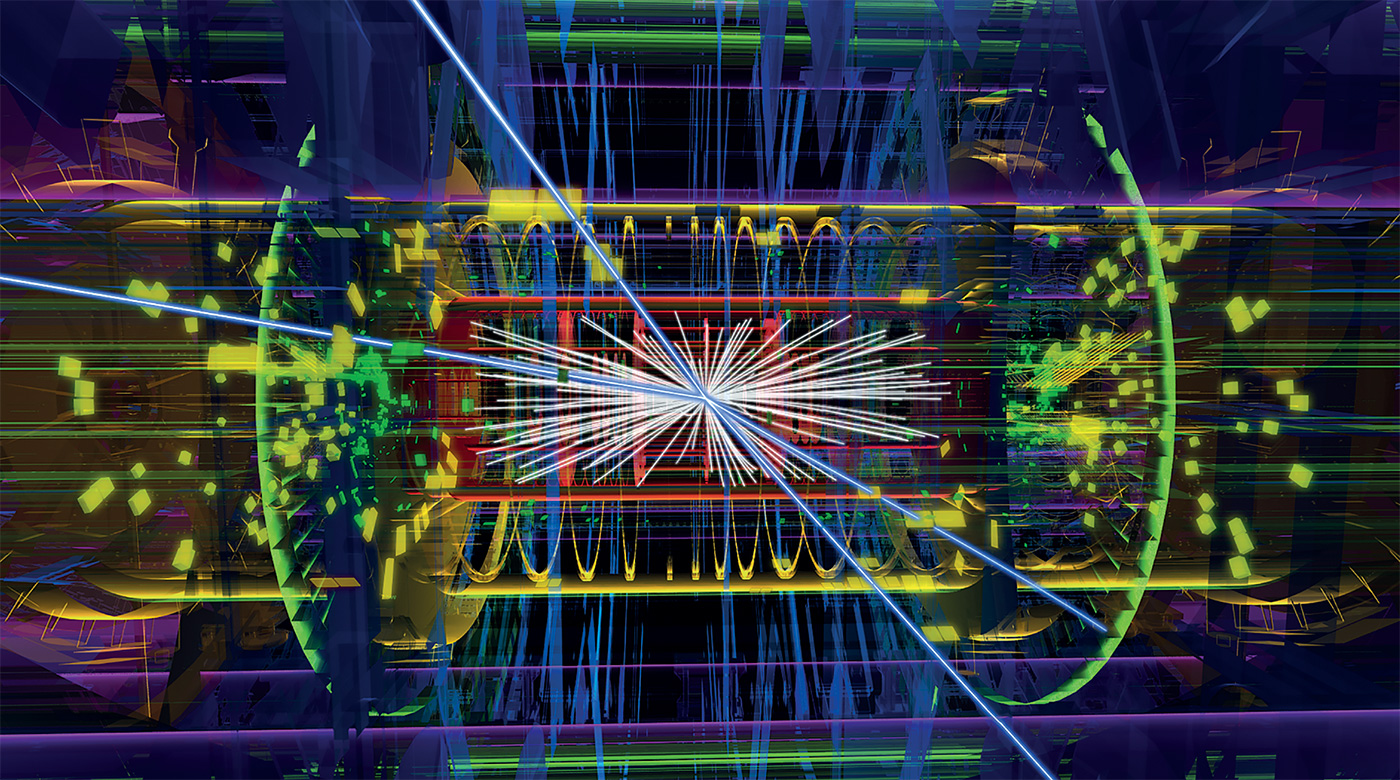
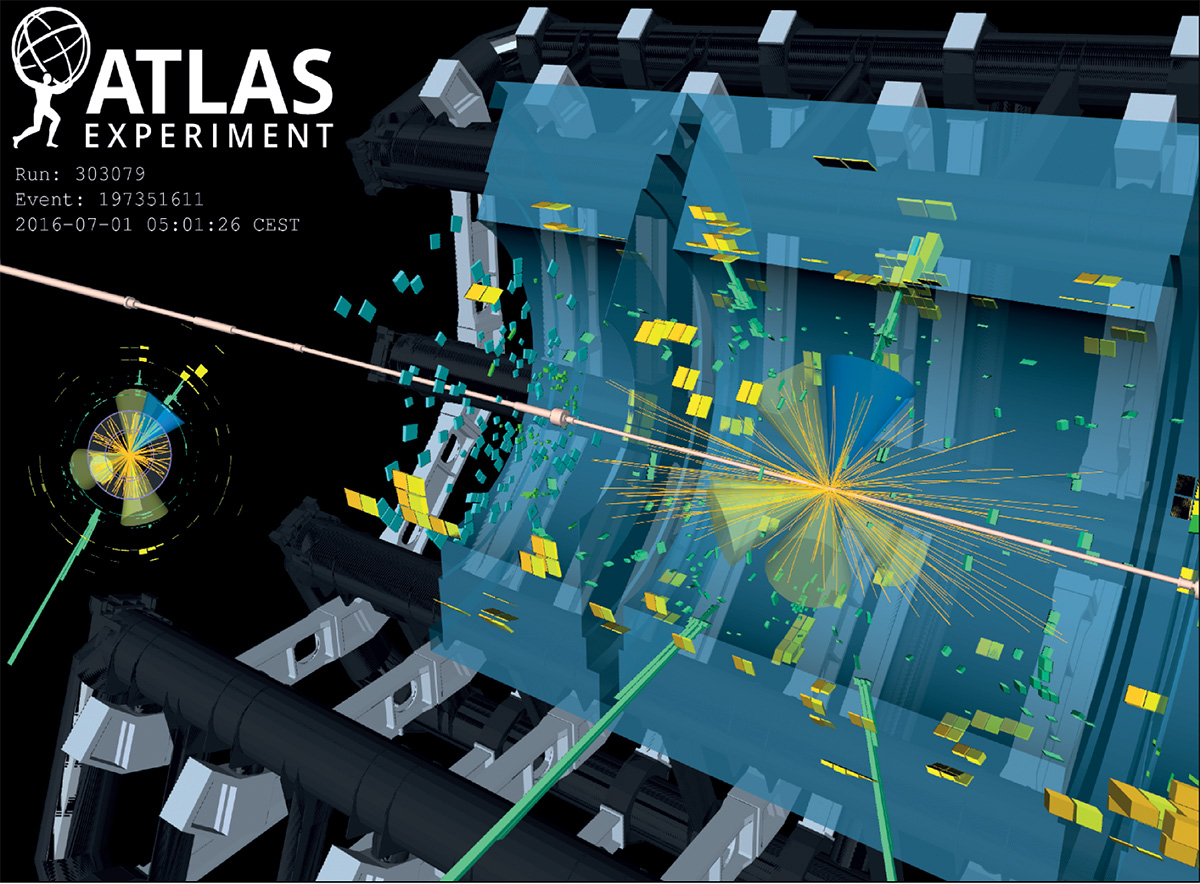
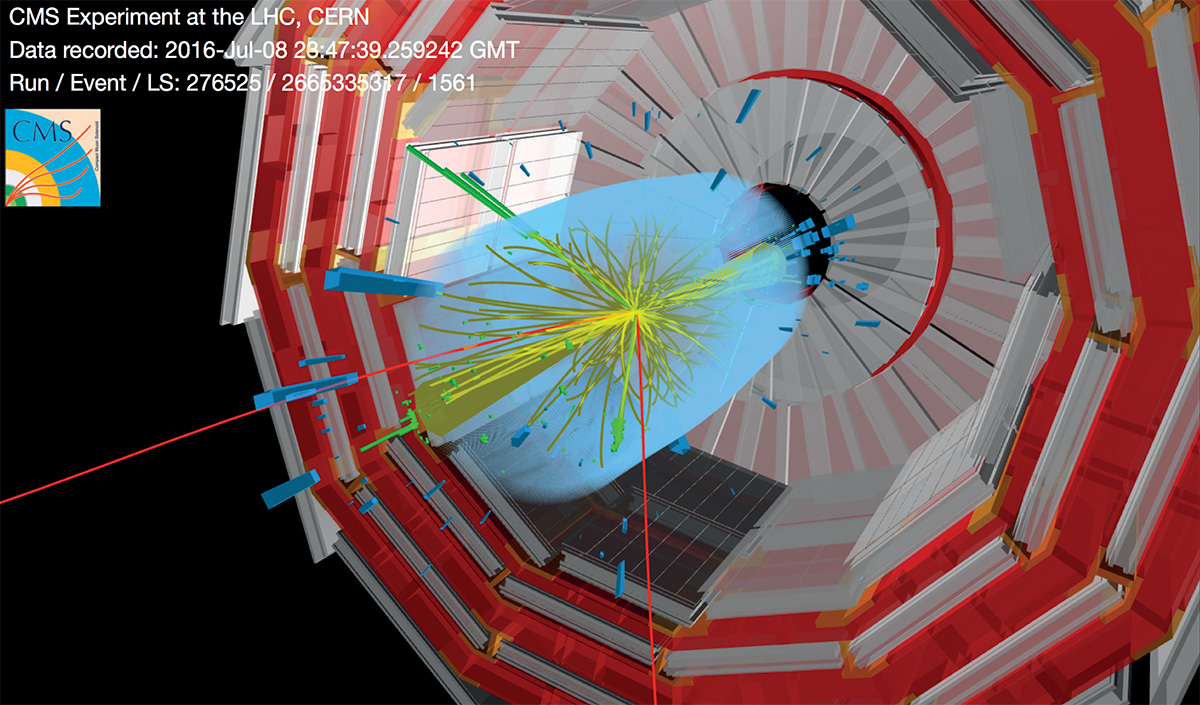
The discovery of the Higgs boson in 2012 was the culmination of almost five decades of research, beginning in 1964 with the theoretical proposal of the Brout–Englert–Higgs (BEH) mechanism. This discovery was monumental, but was itself just a beginning, and research into the properties of the Higgs boson and the BEH mechanism, which has unique significance for the dynamics of the Standard Model, stretches the horizons of even the most ambitious future-collider proposal. Despite this, the ATLAS and CMS collaborations have already made three major discoveries relating to the Higgs boson. These are the jewels in the crown of LHC research so far: an elementary spin-zero particle, the mechanism that makes the weak interaction short range, and the mechanism that gives the third-generation fermions their masses. They can be related to three distinct classes of measurements: the decay of the Higgs boson into two photons, and its production from and decays into the weak force carriers and third-generation fermions, respectively.
Until 2012, the list of elementary particles could be divided into just two broad classes: spin-1/2 matter particles (fermions) and spin-1 force carriers (vector bosons), with a spin-2 force carrier (the graviton) pencilled in by most theorists to mediate the gravitational force. The first jewel in the LHC’s crown is the discovery of an elementary spin-0 particle – the first and only particle of this type to have been discovered. The question of the spin of the Higgs boson is intrinsically linked to the dominant discovery mode in 2012: the decay into two photons. Conservation laws insist that only a spin-0 or spin-2 particle can decay into two photons.
To decide between the two spin options, a more complex study than just measuring decay rates was needed. The spin of the parent particle affects the angular distributions of the daughter particles of Higgs-boson decays. Studies began immediately within ATLAS and CMS, showing unambiguously that the newly discovered particle was spin-0. The ways in which this particle is produced and the ways in which it decays call for its identification with the only particle that was predicted by the Standard Model of particle physics that had not been observed by 2012 – the Higgs boson. The field related to this particle is the BEH field.
The next question was whether this new particle is elementary or composite. If the Higgs boson is actually a composite spin-0 particle, then there should be a whole series of new composite particles with different quantum numbers – in particular, spin-1 particles whose mass scale is roughly inversely proportional to the distance scale that characterises their internal structure.
One can test the question of whether the Higgs boson is elementary or composite in three ways. Firstly: indirectly. The virtual effects of these heavy spin-1 particles would modify the properties of the W and Z bosons. Part of the legacy of the LEP experiments, which operated at CERN between 1989 and 2000, and the SLD experiment, which operated in SLAC between 1992 and 1998, is a large class of precision measurements of these properties. The other two ways are pursued by the LHC experiments: the direct search for the new spin-1 particles, and precision measurements of properties of the Higgs boson itself, such as its couplings to electroweak vector-boson pairs, which would differ if it were composite. No such composite excitations have been discovered to date, and the Higgs boson shows no signs of internal structure down to a scale of 10–19 m – some four orders of magnitude smaller than the proton.
The electromagnetic and strong interactions are mediated by massless mediators – the photon and the gluon. Consequently, they are long-range, though colour confinement – the phenomenon that quarks and gluons cannot be isolated – renders the long-range effects of the strong interaction unobservable. By contrast, weak interactions are mediated by massive mediators – the W and Z bosons – with masses of the order of 100 times larger than that of the proton. As a result, the weak force is exponentially suppressed at distances larger than 10–18 m.
A common feature of the electromagnetic, strong and weak forces is that their mediators are all spin-1. This type of interaction is very special. By assuming that nature has certain gauge symmetries, our current quantum field theories can predict the existence of these types of interactions, and many of their features. There are numerous predictions stemming from these symmetries that have been successfully tested by experiments, such as the identical couplings between gluons and quarks of all flavours, the fact that photons don’t interact with each other, and the structure of higher-order corrections, for example the running of coupling constants and the anomalous magnetic moment of the electron and the muon. Yet, as the mass term in the Lagrangian isn’t invariant under gauge transformations, gauge symmetry predicts, at least naively, that the spin-1 force carriers should be massless. So, while the symmetries that predict the electromagnetic and strong interactions also explain why their force carriers are massless, the symmetry principle that predicts the weak interaction is challenged by the experimental fact that its force carriers are massive.
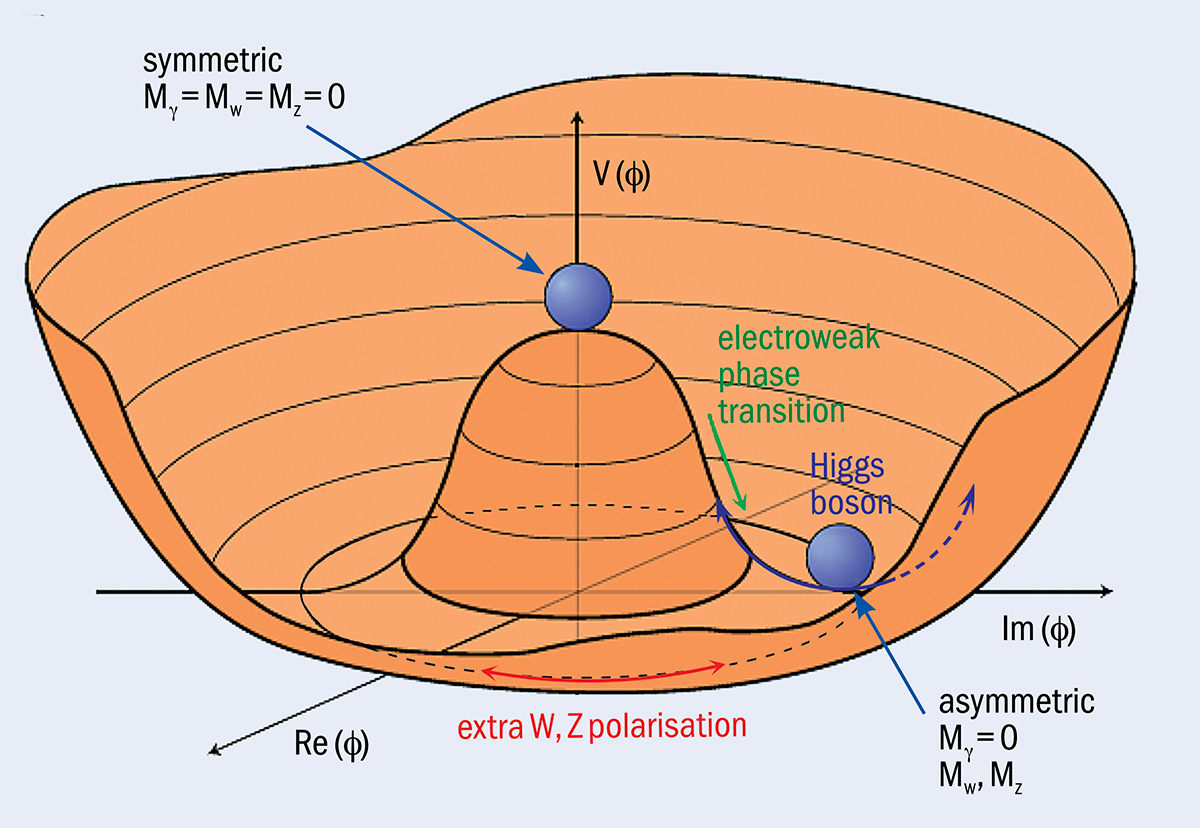
This conundrum has a possible solution if a symmetry is respected by the quantum field theory but not by the ground state of the universe (see “Broken symmetry” image). The theory’s predictions will then be different from those that would follow if the ground state were also symmetric. One way in which the symmetry can be broken is if there is a scalar field that does not vanish in the ground state. This is the case for the Higgs potential, which, unlike a purely parabolic potential, does not have rotational symmetry around its ground state. The weak-force carriers are affected by their interaction with the BEH field, and this interaction slows them down. Moving at speeds slower than the speed of light – the consequence of interacting with the BEH field in the ground state – is equivalent to having non-zero masses, making weak interactions short range. These insights also transformed our understanding of the early universe. Following the Glashow–Weinberg–Salam breakthrough shortly after the BEH proposal, the Standard Model presents a universe in which the ground state transitioned from zero to non-zero due to the spontaneous breaking of electroweak symmetry – a cosmological event that took place when the universe was about 10-11 seconds old.
A BEH field different from zero in the ground state of the universe has important observational and experimental consequences. For example, if the symmetry were unbroken, a process where a single Higgs particle decays into a pair of Z bosons would be forbidden. But, once the ground state of the universe breaks the symmetry – the BEH field is non-zero – this process is allowed to occur. (Strictly speaking, the Higgs boson cannot decay into two Z bosons because the sum of their masses is larger than the mass of the Higgs boson, however, the Higgs boson can decay into a real Z boson and a virtual one that produces a pair of fermions.) Similarly, the symmetry would not allow a single Higgs-boson production from Z-boson fusion. But, once the ground state of the universe breaks the symmetry, the latter process is also allowed to occur.
An asymmetric ground state costs the theory none of its predictive power. The strength of the interaction of the Z boson with the BEH field, measured by the mass it gains from this interaction, is closely related to the strength of the interaction of the Z boson with the Higgs particle, measured by the rate at which the Higgs boson decays into two Z bosons, or by the rate at which it is produced by Z-boson fusion. This relation is commonly expressed as the ratio μZZ* between the measured and the predicted rates: if the field related to the newly discovered spin-0 particle is indeed responsible for the mass of the Z boson, then μZZ* = 1.
ATLAS and CMS have established a new law of nature
The rate of the Higgs decay into two Z bosons was first measured with 5σ significance by the ATLAS and CMS experiments in 2016. Its current value is μZZ* ≈ 1.2 ± 0.1. The rate at which the Higgs boson decays into a pair of W bosons was measured in the same year. Its current value of μWW* ≈1.2 ± 0.1 also corresponds to the strength of interaction that would give the W boson its mass. Finally, the experiments measured the rate at which a single Higgs boson is produced in vector-boson fusion to be μVBF ≈ 1.2 ± 0.2. Thus, ATLAS and CMS have established a new law of nature: the force carriers of the weak interaction gain their masses via their interactions with the everywhere-present BEH field. The strength of this interaction is precisely the right size to limit the effects of the weak interaction to distances shorter than 10–18 metres.
Third generation, third jewel
The third jewel in the crown of the LHC is the explanation for how the tau-lepton and the top and bottom quarks – members of the third, heaviest fermion family – gain their masses. The same electroweak symmetry that predicts that the weak-force carriers should be massless also predicts that all 12 spin-1/2 matter particles known to us should also be massless. Experiments have shown, however, that all the matter particles are massive, with the one possible exception of the lightest neutrino. The fact that this symmetry is broken in the ground state of the universe also opens the door to the possibility that matter particles gain masses. But via what mechanism? For the ground state of the BEH field to slow down the fermions as well as the W and Z bosons, a new type of interaction has to exist: an interaction with a spin-0 mediator – the Higgs boson itself. Discovering a Higgs-boson decay into a pair of fermions would mean the discovery of this new type of spin-0 mediated interaction, which was first proposed in a different context by Hideki Yukawa in the 1930s.
Yukawa interactions are fundamentally different from the interactions through which the W and Z bosons get their mass because they are not deduced from a symmetry principle. Another difference, in contrast not only to weak, but also to strong and electromagnetic interactions, is that the interaction strength is not quantised. However, the strength of the interaction of a matter particle with the BEH field, measured by the mass it gains from this interaction, is still closely related to the strength of the Yukawa interaction of that matter particle with the Higgs boson, measured by the rate at which the Higgs boson decays into two such fermions. Once again, if the field that gives the matter particles their masses is indeed the one related to the newly discovered spin-0 particle, then the measured decay rate of the Higgs particle to fermion pairs should give a value of unity to the corresponding μ-ratio.
The three heaviest spin-1/2 particles – the top quark, the bottom quark and the tau lepton – are expected to have the strongest couplings to the Higgs boson, and consequently the largest rates of Yukawa interactions with it. The first Yukawa interaction to be measured, with the significance in both the ATLAS and CMS analyses rising to 5σ in 2015, concerned the decay of a Higgs boson into a tau lepton–antilepton pair. The current decay rate is μτ+τ– ≈ 1.15 ± 0.15, which, within present experimental accuracy, corresponds to the strength of interaction that would give the tau lepton its mass. The rate of Higgs-boson decays into the bottom quark–antiquark pair was measured by ATLAS and CMS three years later. The current value is μbb– ≈ 1.04 ± 0.13. Within present experimental accuracy, this corresponds to the strength of interaction that would give the bottom quark its mass.
The potential of the LHC to discover new facts about nature and the universe is far from saturated
In the case of the top quark, the Higgs boson has a vanishingly tiny decay rate into a top–antitop pair, because the mass of each is individually larger than that of a Higgs boson, and both would have to be produced virtually. To extract the strength of the Higgs–top interaction, experiments instead measure the rate at which this trio of particles is produced. The rate of the production of a Higgs boson together with a top quark–antiquark pair was measured by the ATLAS and CMS experiments in 2018. The current value is μtt–h ≈ 1.3 ± 0.2. Within present experimental accuracy, this value corresponds to the strength of interaction that would give the top quark its mass. (The remaining third-generation particle, a neutrino, is at least 12 orders of magnitude lighter than the top quark, and is suspected to derive its mass via a different mechanism, which is unlikely to be tested experimentally in the near future.)
ATLAS and CMS have therefore discovered a new fact about nature: the third-generation charged particles – the tau lepton, the bottom quark and the top quark – also gain their masses via their interaction with the everywhere-present BEH field. This is also the discovery of the new and rather special Yukawa interactions among elementary particles, which are mediated by a spin-0 force carrier, the Higgs boson.
The path forward
Answering questions about nature’s fundamental workings almost always leads to new questions. The discovery of the Higgs boson has already been the source of at least two. Firstly, the value of the Higgs boson’s mass suggests the possibility that our universe is likely in an unstable state. In the extremely distant future, a transition to an entirely different universe with a different ground state could occur. Should this remain true as precision improves, not only is there nothing special about Earth, nor the solar system, nor even Milky Way galaxy, but the fundamental structure of the universe is itself only temporary. What’s more, the lightness of the mass of the Higgs boson compared to both the Planck scale (above which quantum-gravity effects become significant) and the “seesaw scale” (below which new particles, beyond those of the Standard Model, are predicted to exist), poses a challenge to the basic framework that we use to formulate the laws of nature. In quantum field theory, cancellations between tree-level and higher order loop-diagram contributions to the mass of the Standard Model Higgs boson are huge, and require extreme fine-tuning, perhaps by as many as 32 orders of magnitude, between seemingly unrelated constants of nature. Various ideas of how to restore “naturalness”, such as supersymmetry and Higgs compositeness, have been suggested, but the LHC experiments have not uncovered any of the TeV-scale particles predicted by these models and are ruling out ever-increasing swathes of parameter space for the models.
The potential of the LHC to discover new facts about nature and the universe is far from saturated. There are at least two additional, big open questions that are guaranteed to be answered, at least in part, by the LHC experiments. First is the understanding of the mechanism that gives second-generation particles – in particular the muon and the charm quark – their masses. That may be the same mechanism as the one that has been shown to give the third-generation fermions masses, or it may be different (for the latest progress, see Turning the screw on H → μμ). Second is the question of what happened at the electroweak phase transition in the early universe? It may have been a smooth crossover, where the value of the BEH field changed from zero to its present value continuously and uniformly in space, as predicted by the combination of the Standard Model of particle physics and the Big Bang model, or it may have been a first-order phase transition, where bubbles with a finite value of the BEH field nucleated within the surrounding plasma. A first-order phase transition could open the door to a new mechanism to explain the matter–antimatter imbalance in the universe. These deep questions depend on a new chapter of Higgs research concerning the self-interaction of the Higgs boson, which will be carried forward by a future collider.
Beyond constituting amazing intellectual and technological achievements, the LHC experiments have already made a series of profound discoveries about nature. The existence of a spin-0 particle whose non-zero force field is responsible for both the short range of weak interactions and, in a distinct way, the masses of spin-1/2 particles, represents three major discoveries. That theorists have long speculated on these new laws of nature ideas must not diminish the significance of establishing them experimentally. These three jewels in the crown of LHC research, the first steps in the exploration of Higgs physics, begin a trek to some of the most significant open questions in particle physics and cosmology.
The existence of particles with fractional charges and fractional baryon numbers was a hard sell in 1964 when Gell-Mann and Zweig independently proposed the quark model. Physicists remained sceptical until the discovery of the J/ψ meson 10 years later. Heavier than anything previously seen and extremely narrow, with a width of just 0.1 MeV and a mass of 3097 MeV, the J/ψ pointed to the existence of a new quark with its own quantum number. This confirmed Glashow, Iliopoulos and Maiani’s 1970 hypothesis, which they cooked up to explain peculiarities in rare kaon decays. Any doubt as to the existence of a charm–anticharm system was eliminated by observing narrow excitations of the J/ψ, which lined up as expected in non-relativistic quantum mechanics. The spectrum of charmonium mesons soon became populated by states with widths up to hundreds of MeV as their masses surpassed the threshold for decaying to a pair of “open-charm” mesons with a single charm quark each.
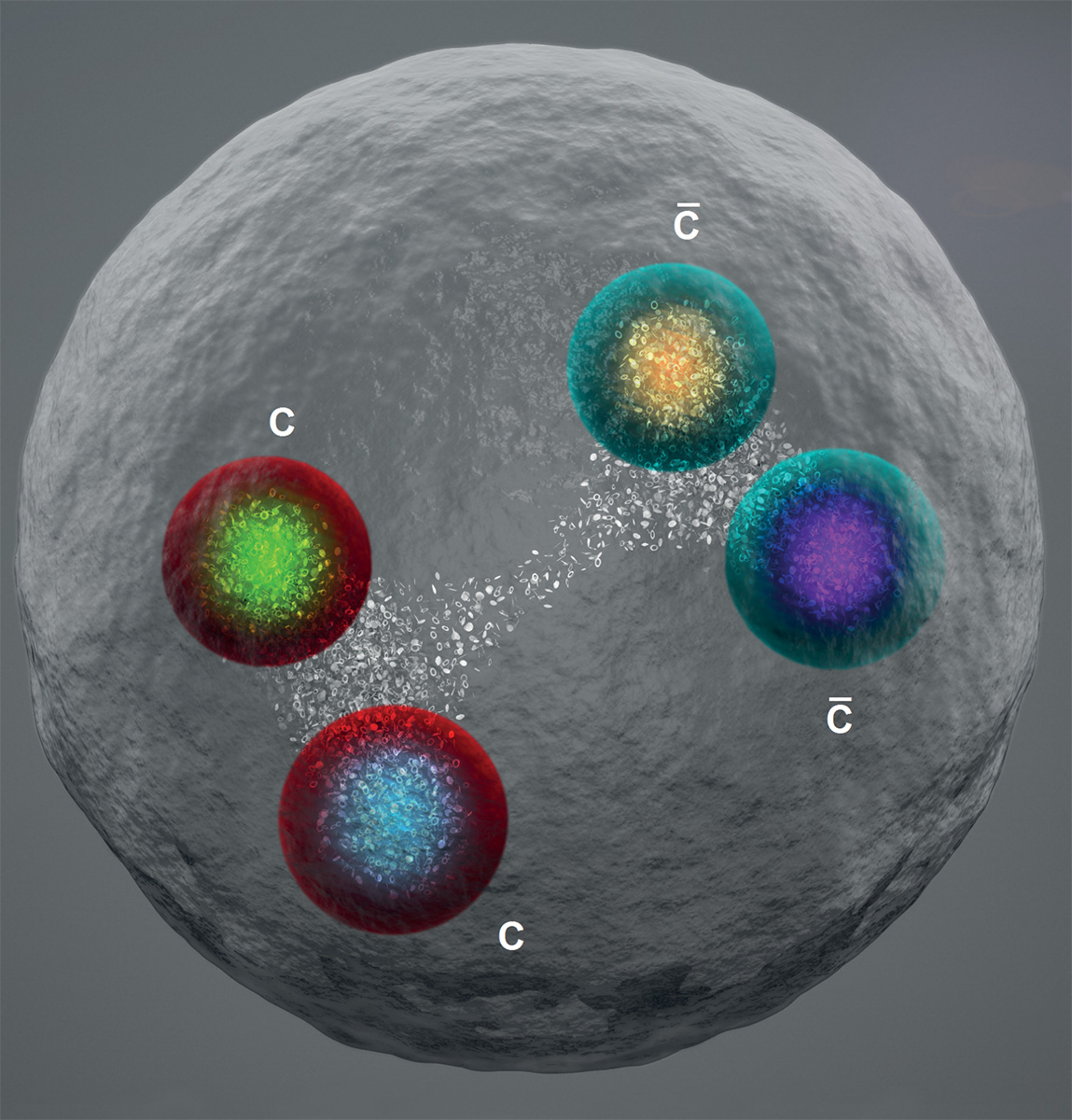
Hadron spectroscopy continues to be a rich area of fundamental exploration today, with results from collider experiments over the past two decades revealing the existence of multi-quark states more exotic than the familiar mesons and baryons (CERN Courier April 2017 p31). The LHCb experiment at CERN is at the forefront of this work. Now, a structure in the J/ψ-pair mass spectrum consistent with a tetraquark state made up of two charm quarks and two charm antiquarks has been observed by the collaboration. With doubly hidden charm, the new cccc state is the most significant evidence so far for the existence of tightly bound tetraquarks composed of a pair of colour-charged “diquarks”, and sheds light on a difficult-to-model regime of quantum chromodynamics (QCD).
Multi-quark states
Gell-Mann and Zweig both acknowledged that the symmetries which led to the quark hypothesis allowed for more complicated quark configurations than just mesons (qq) and baryons (qqq). Tetraquarks (qqqq), pentaquarks (qqqqq) and hexaquarks (qqqqqq or qqqqqq) were all suggested. In the early 1970s, a deepening understanding of the dynamics of strong interactions brought about by QCD only furthered the motivation for seeking new multi-quark states. QCD not only predicted attractive forces between a quark and an antiquark, and between three quarks, but also between two quarks.
The attraction between two quarks can easily be proven when they are close together and the strong coupling constant is small enough to allow perturbative calculations. Similar interactions also likely occur in the non-perturbative regime. Such systems, known as diquarks, have the colour charge of an antiquark. (For example, red and blue combine to make an anti-green diquark.) As coloured objects, they can be confined in hadrons by partnering with other coloured constituents. A diquark can attract a quark to create a simple baryon. Alternatively, a diquark and an antidiquark can attract each other to create a tetraquark. As a result of their direct colour couplings, such compact tetraquarks can have binding energies of several hundreds of MeV.
Compact two-diquark tetraquarks stand in stark contrast to the alternative “molecular” model for tetraquarks, which was named by loose analogy with the exchange of electrons between atoms in molecules. In this picture, the tetraquark is arranged as a pair of mesons that attract each other by exchanging colour-neutral objects, such as light mesons and glueballs – an idea first proposed in 1935 by Hideki Yukawa, in the context of interactions between nucleons. Such exchanges only provide a binding energy of a few MeV per nucleon.
Molecular tetraquarks are therefore expected to be only loosely bound, with masses near the sum of the masses of their constituent mesons, however they could have rather narrow widths if their mass lies below the “fall-apart” threshold. As such states are most likely to be created without angular momentum between the mesons, the spin-parity combinations available to them are highly restricted. In contrast, a rich spectrum of radial and angular momentum excitations between the coloured constituents is predicted for diquark tetraquarks. The widths of these states could be large, as they can easily fall apart into lighter hadrons, with their binding energy transformed into a light quark–antiquark pair.
Unfortunately, it is difficult to rigorously apply QCD in the confining regime of multi-quark states. It is therefore up to experiments to discover which multi-quark states actually exist in nature. There have been some hints of tetraquark states built out of light quarks, though without definite proof. This is largely because additional light quark pairs can easily be created in the decay process of simple mesons and baryons, and the highly relativistic nature of such states makes model predictions for their excitations unreliable. Hidden charm states have proved helpful again, however, as the charmonium spectrum and the properties of such states are well predicted.
Experiments to the fore
Molecular tetraquark proposals were fuelled in 2003 by the unexpected discovery by the Belle collaboration, at the KEKB electron–positron collider in Tsukuba, Japan, of a new narrow state, right at the sum of the masses of a charmed-meson pair. Unlike other charmonium states near its mass, the state is surprisingly narrow, with a width of the order of just 1 MeV. Originally named X(3872), it is now conventionally referred to as χc1(3872), reflecting its nature as a possible triplet P-wave state with hidden charm and one unit of total angular momentum. Despite subsequent results from collider experiments around the world, there is no consensus about its exact nature, as it variously exhibits features of simple charmonium or a loosely bound molecule.
It is up to experiments to discover which multi-quark states actually exist in nature
Stronger evidence for the loose meson–meson binding of multi-quark states was provided by observations in 2013 of a hidden-charm tetraquark candidate Zc(3900) by the BES III collaboration at the BEPC II electron–positron collider in Beijing, China, and by Belle, and of the Zc(4020), also by BES III. Since they have electrically charged forms, they cannot be counted as charmonium states. They are both relatively narrow states near meson–meson thresholds for open charm, with widths of the order of tens of MeV. They are definitely tetraquarks, though it is still a moot point if they are genuinely bound states or merely manifestations of non-binding hadron–hadron forces that manifest in complicated forms. The molecular interpretation had also been reinforced in 2012 by Belle’s observations of the hidden-beauty Zb(10610) and Zb(10650) tetraquarks. These states also have relatively narrow widths of the order of tens of MeV and masses near the threshold for falling apart, in this case to “open-beauty” mesons.
Pentaquark observations have also weighed in on the debate. Last year’s observation of three narrow hidden-charm pentaquarks by the LHCb collaboration, with widths below tens of MeV and masses close to the charm meson-baryon threshold (CERN Courier May/June 2019 p15), also points to loose hadron–hadron binding, in this case between a meson and a baryon.
Bucking the trend
Yukawa-style bindings cannot, however, explain a large number of broader tetraquark-like structures with hidden charm, with widths of hundreds of MeV, which are not near any hadron–hadron threshold. Such states include the charged Zc(4430) observed by Belle in 2008 and later confirmed by LHCb in 2014, and a family of states that decay to a J/ψ φ final state, including X(4140) and X(4274), which were observed by the CDF collaboration at Fermilab in 2009 and later by CMS and LHCb at CERN. These states could be either manifestations of diquark interactions or kinematic effects near the fall-apart threshold. No single simple model can account for all of them.
Reaching states with hidden double charm (cccc) now promises new insights into multi-quark dynamics, as all the quarks are non-relativistic. Furthermore, there is no known mechanism for two charmonium mesons to be loosely bound, according to a molecular model, as no light valence quarks are available to be exchanged. Compact diquark-type tetraquarks have been predicted for such quark combinations, but it is not clear whether they might lead to experimentally detectable signatures – the tetraquarks could be too broad or their production rate too small. While collisions at the LHC provide enough energy to simultaneously produce pairs of charm–anticharm quark combinations, getting them close enough together to form diquarks is a tall order. Additionally, while observations of beauty-charm mesons such as Bc and doubly charmed baryons such as Ξcc showed that LHCb has reached the sensitivity to detect the interactions of two heavy quarks, it was unclear until recently if the interactions of diquark-model tetraquarks could be detected. The observation, reported in July, by LHCb, of a highly significant J/ψ-pair mass structure is therefore an exciting moment for the study of multi-quark dynamics.
Introducing the X(6900)
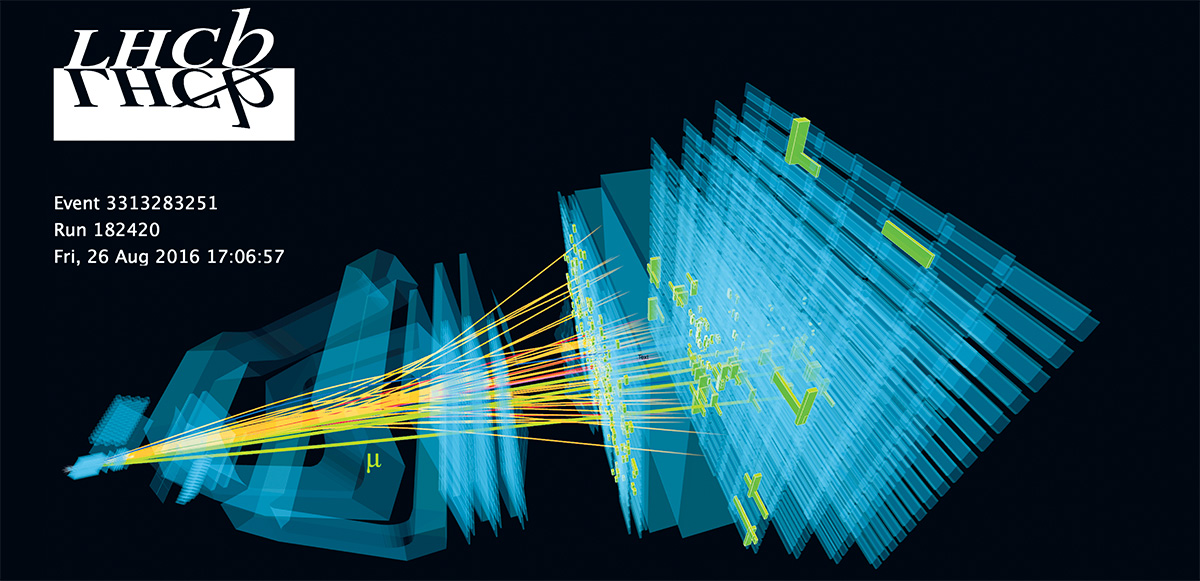
Exploiting the full data set collected from 2011 to 2018, LHCb investigated the J/ψ-pair invariant mass spectrum, where J/ψ meson candidates are reconstructed from the dimuon decay mode. A narrow peaking structure at 6900 MeV and a broader structure at approximately twice the J/ψ mass threshold was observed. The structure of X(6900) is consistent with the signature of a resonance (see figure), suggesting a four-charm-quark state.
While the peaking X(6900) structure is close to the χc0χc1 meson-pair threshold, its width, of the order of a hundred MeV, seems too large to fit into the loose-binding scheme, wherein decay modes other than the “fall-apart” topology are expected to be strongly suppressed, and in any case, there is no known loose binding mechanism between two charmonium states. Charmonium-pair re-scattering effects are also disfavoured due to the requirements of such interactions. This observation is therefore the most intriguing experimental indication so far for hadrons made out of diquarks.
It is less clear if the observed structure is made of one state, or several that may or may not interfere with each other. There is no information on the spin-parity of the observed structure. Neither do we yet know if mass structures also appear in the invariant mass spectra of other charmonium or doubly charmed baryon pairs.
This observation is the most intriguing experimental indication so far for hadrons made out of diquarks
The first LHCb upgrade is currently in progress and data taking will recommence at the beginning of LHC Run 3 in 2022, with a second upgrade phase planned to collect a much larger data set by 2030. The ATLAS and CMS experiments have highly performing muon detectors too, and could also make significant contributions to the study of the new X(6900) structure, with both existing and future data. A key contribution may also be made by Belle’s successor, Belle II, currently in its start-up phase, which observes electron–positron collisions at the SuperKEKB collider at energies above the observed J/ψ-pair mass structure. It is unclear, however, if the collision energy, luminosity and electromagnetic production cross sections will be high enough to achieve the required sensitivity.
Research is already moving forward quickly, with further evidence for diquark tetraquarks coming from an even more recent discovery by LHCb of two “X(2900)” states with widths between 57 and 110 MeV. As they decay to a D+K– final state, they are both openly charming and openly strange. Their most likely composition is that of a (cs)(ud) diquark tetraquark. While the X(2900) states decay strongly, similar heavy-light diquark systems, such as (cc)(ud), (bc)(ud) and (bb)(ud), have been studied theoretically, resulting in varying degrees of confidence that some may be stable with respect to strong interactions, and instead decay weakly, with measurable lifetimes. Hunting for such states is an exciting prospect for the upgraded LHCb experiment.
LHCb’s new tetraquark observations have once again thrown open the debate on the nature of multi-quark states. With the theory still mired in non-perturbative calculations, experimental observations will be decisive in leading the development of this subject. The community is waiting eagerly to see if other experiments confirm the LHCb observation, and shed light on its nature.
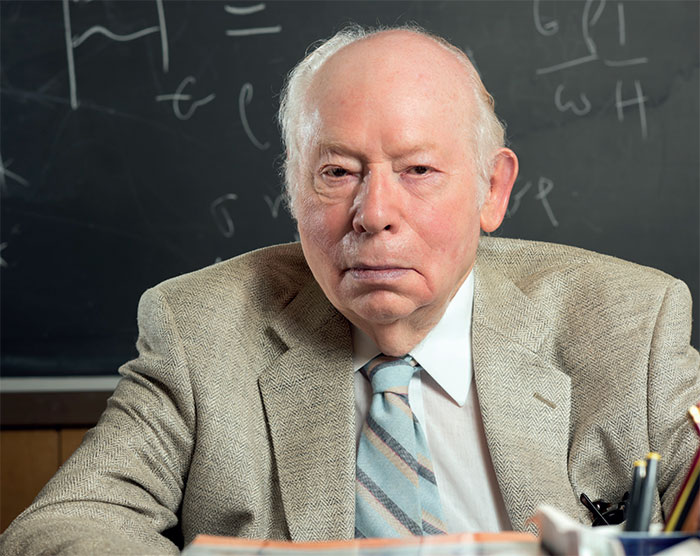
Steven Weinberg’s continuous leadership in particle physics, gravity and cosmology, has been recognised by a Special Breakthrough Prize in Fundamental Physics. While his contribution to the genesis of the Standard Model has undoubtedly been Weinberg’s greatest single achievement, states the selection committee for the $3M prize, he would be recognised as a leader in the field even if he had not made this particular contribution. “Steven Weinberg has developed many of the key theoretical tools that we use for the description of nature at a fundamental level,” said Juan Maldacena of the Institute for Advance Study in Princeton, chair of the selection committee.
Weinberg’s 1967 paper “A Model of Leptons” determined the direction of high-energy particle physics through the final decades of the 20th century and is one of the most cited in theoretical physics. The paper applied the notion of spontaneous symmetry breaking to the weak interaction, revealing that it is unified with the electromagnetic interaction and predicting the existence of the W, Z and Higgs bosons – all of which went on to be discovered at CERN. Weinberg also used spontaneous symmetry breaking to account for the masses of elementary fermions, which the LHC experiments are now probing. The electroweak theory won Weinberg, Abdus Salam and Sheldon Lee Glashow the 1979 Nobel Prize in Physics.
There was a special pleasure in being awarded the prize, because the selection committee is composed of a younger generation
Steven Weinberg
“Of course, nothing compares with the Nobel Prize in prestige, if only because of the long history of great scientists to whom it has been awarded in the past,” says Weinberg, when asked to compare the two awards, “but for me there was a special pleasure in being awarded the Breakthrough Prize, because the selection committee is composed of a younger generation of outstanding physicists who are today playing a leading role in research.”
The prize committee also cites Weinberg’s achievements in communicating science. His teaching and “meticulously written textbooks” have had a major influence on succeeding generations, they say, while also acknowledging Weinberg’s highly visible public role as a spokesman for science and rationality.
Weinberg is currently the Jack S Josey – Welch Foundation Chair in Science at the University of Texas at Austin.
Breakthrough Prize for Eöt-Wash group
On the same day, September 10th, the 2021 Breakthrough Prize in Fundamental Physics was announced. Also worth $3M, it is shared between Eric Adelberger, Jens H Gundlach and Blayne Heckel, the leaders of the Eöt-Wash group at the University of Washington, “for precision fundamental measurements that test our understanding of gravity, probe the nature of dark energy and establish limits on couplings to dark matter”. The trio have built equipment sensitive enough to measure the force of gravity on unprecedentedly low scales to test the inverse square law, with results earlier this year showing that the law holds true down to distances of 52mm.
Three New Horizons in Physics Prizes, each worth $100,000 and designed to recognise early-career researchers, were awarded to: Tracy Slatyer (MIT) “for major contributions to particle astrophysics, from models of dark matter to the discovery of the ‘Fermi Bubbles'”; Rouven Essig (Stony Brook University), Javier Tiffenberg (Fermilab), Tomer Volansky (Tel Aviv University) and Tien-Tien Yu (University of Oregon) “for advances in the detection of sub-GeV dark matter especially in regards to the SENSEI experiment”; and Ahmed Almheiri (IAS), Netta Engelhardt (MIT), Henry Maxfield (UC Santa Barbara) and Geoff Penington (UC Berkeley) “for calculating the quantum information content of a black hole and its radiation”.
The Breakthrough Prize in Fundamental Physics, which has taken place annually for the past nine years, was created “to recognize those individuals who have made profound contributions to human knowledge”, while the Special Breakthrough Prize in Fundamental Physics has only been handed out on six occasions and is not limited to recent discoveries. Last year, theorists Sergio Ferrara, Dan Freedman and Peter van Nieuwenhuizen received a Special Breakthrough Prize for their 1976 invention of supergravity. Other past winners include Steven Hawking (2013); the LIGO collaboration (2016); and seven CERN scientists (2013) for the discovery of the Higgs boson. The 2021 prize ceremony is due to take place in March.
Just five research areas account for more than half of Nobel prizes, even though they publish only 10% of papers, reveals a study by social scientists John Ioannidis, Ioana-Alina Cristea and Kevin Boyack. The trio mapped the number of Nobel prizes in medicine, physics and chemistry between 1995 and 2017 to 114 fields of science, finding that particle physics came top with 14%, followed by cell biology (12%), atomic physics (11%), neuroscience (10%) and molecular chemistry (5%). The analysts also investigated whether Nobel success reflects immediate scientific impact, and found that the only key paper associated with a Nobel Prize which was the most cited that year pertains to the 2010 award to Andre Geim and Konstantin Novoselov for experiments with graphene. On average, more than 400 papers had greater impact than the work most closely associated with the prize-winners’ success within a year either side of the publication dates.
Particle-physics prize-winners in the period studied include: Perl and Reines (1995) for the discovery of the tau lepton and the detection of the neutrino; ’t Hooft and Veltman (1999) for contributions to electroweak theory; Davis and Koshiba (2002) for the detection of cosmic neutrinos; Gross, Politzer and Wilczek (2004) for asymptotic freedom; Nambu, Kobayashi and Maskawa (2008) for work on spontaneous symmetry breaking and quark mixing; Englert and Higgs (2013) for the Brout–Englert–Higgs mechanism; and Kajita and McDonald (2015) for the discovery of neutrino oscillations. The team also chose to class Mather and Smoot’s 2006 prize relating to the cosmic microwave background, Perlmutter, Schmidt and Riess’s 2011 award for the discovery of the accelerating expansion of the universe, and Weiss, Barish and Thorne’s 2017 gong for the observation of gravitational waves as particle-physics research.
The winners of this year’s Nobel prize in physics will be announced on Tuesday 6 October.
Former CERN director Horst Wenninger, who played key roles in the approval of the LHC and in establishing knowledge transfer at CERN, passed away on 16 July. Horst was universally trusted and his advice was sought regularly by colleagues. He knew his way around CERN like no one else, and knew whom to contact to get things done (and, crucially, how to get them to do it). Before becoming a physicist, Horst had considered becoming a diplomat. Somehow, he managed to combine the two professions, all in the interest of CERN. He cultivated the art of connecting scientists, engineers and administrators – always with the aim of achieving a clear goal.
Born in Wilhelmshaven, Germany in 1938, the third child of a naval officer, Horst earned his PhD in nuclear physics from Heidelberg University in 1966. Two years later he joined CERN to participate in the Big European Bubble Chamber (BEBC). From the outset Horst was inspired by CERN. Early on he saw the importance of the Laboratory for establishing peaceful worldwide collaboration and relished participating in the adventure.
He was soon identified as a leader, first as physics coordinator for the BEBC in 1974. In 1980 he went to DESY to work on electron–positron collider physics in preparation for LEP, returning to CERN in 1982 to lead the BEBC group. In 1984 he became head of the experimental facilities division, providing support for Omega, UA1 and UA2. For the R&D and construction of the LEP detectors Horst needed to implement a new style of collaboration: for the first time, major parts of the detectors had to be financed, developed and provided by outside groups with central CERN coordination. In 1990 he became leader of the accelerator technologies division, and in 1993 he was appointed LHC deputy project leader, where his profound knowledge of CERN was vital for the reassessment of the LHC project.
The wider community also benefited immensely from his contributions in advisory roles throughout his active life
Horst’s five-year term as CERN research and technical director began in 1994 – the year LHC approval was expected. The day before the crucial vote by the CERN Council in December of that year, the German delegation was still not authorised to vote in support of the project. In a latenight action Horst managed to arrange contact with the office of the German chancellor, with the mission to sway the minister responsible for the CERN decision. His cryptic reaction was conveniently interpreted by the supportive German delegate as a green light, a determined move for the good of CERN. Horst was later awarded the Order of Merit (First Class) of the German Republic.
In 2000 Horst helped launch the CERN technology transfer division and chaired the technology advisory board. Also, thanks largely to his drive, the 2017 book Technology Meets Research – 60 Years of CERN Technology: Selected Highlights was published. Horst retired from CERN in 2003, but continued to make major contributions. He was asked to provide guidance for the FAIR project at GSI Darmstadt, where he was instrumental in arranging the involvement of CERN accelerator experts and later steered the complex and delicate organisation of major international “in-kind” contributions. When, in 2019 the EU approved the “South-East European International Institute for Sustainable Technologies” (SEEIIST), Horst was appointed to coordinate the projects first phase.
Horst left his mark on CERN. The wider community also benefited immensely from his contributions in advisory roles throughout his active life. We have lost an outstanding colleague and a good friend from whose enthusiasm, advice and wisdom we all benefited tremendously.
The first evidence for the coupling of the Higgs boson to a second-generation fermion, the muon, has been reported at the LHC. At the 40th International Conference on High Energy Physics, held from 28 July to 6 August, CMS reported a 3σ excess of H → μμ decay candidates compared to the expected sample under the hypothesis of no coupling between the Higgs boson and the muon. A similar analysis by the ATLAS collaboration yielded a 2σ excess for the coupling.
The latest measurements of the Higgs boson by ATLAS and CMS follow 5σ observations of its coupling to the tau lepton in 2015 and to the top and bottom quarks in 2018, all of which are third-generation fermions. Its couplings to W and Z bosons have also been established at 5σ confidence. Within present experimental accuracy, all couplings between the Higgs boson and other Standard Model particles correspond to the strength of interaction that would give the particles their observed masses, according to the Brout–Englert–Higgs mechanism. In this model, the particles acquire mass through spontaneous symmetry breaking; the W and Z as a result of a local gauge symmetry and the fermions, such as the muon, as a result of Yukawa couplings to the Higgs field – a novel type of interaction among fundamental particles that is not derived from a symmetry principle. Any deviation from the expected couplings would imply that the Higgs sector is more complicated than this minimal scenario.
Couplings to lighter particles are expected to be proportionately smaller and more difficult to observe. The decay to two muons, H → μμ, is expected to occur with a branching fraction of just one in 5000 Higgs-boson decays, and is overwhelmed by backgrounds from the Drell–Yan process.
The new results sharpen the question of why there is a hierarchy of particle masses
John Ellis
The new ATLAS and CMS analyses, which deploy the entire 13 TeV Run-2 data set, include events where the Higgs boson was produced according to four topologies gluon fusion, which accounts for the creation of 87% of the Higgs bosons observed at the LHC; vector-boson fusion; the production of a Higgs boson in association with a weak vector boson; and its production in association with a top quark–antiquark pair. Uniquely, CMS simulated the background to the vector-boson-fusion signal rather than fitting it from data – a procedure that would have incurred additional statistical uncertainty – resulting in the topology contributing roughly equal statistical power compared to gluon fusion.
Machine learning
“The first evidence in CMS was reached thanks to the excellent performance of our muon and tracking systems, and an improved signal/background discrimination with machine-learning techniques,” says Andrea Rizzi, CMS physics co-coordinator.
The signature for the decay is a small excess of events near a muon-pair invariant mass of 125 GeV – the mass of a Higgs boson. CMS reports an overall signal strength of 1.2 ± 0.4, while ATLAS finds a signal strength of 1.2 ± 0.6, with the uncertainties dominated by their statistical component. “Both measurements are compatible with the Standard Model,” says ATLAS physics coordinator Klaus Mönig. “Assuming the H → μμ coupling predicted by the Standard Model, and extrapolating the current results, the combined sensitivity could get near the observation threshold of 5σ at the end of Run 3, from 2022 to 2024.”
If there is only a single Higgs field, it should provide the masses for all the Standard-Model particles, but there may be additional Higgs fields that could make contributions to their masses. The new results therefore reduce the scope available to such multi-Higgs models, and sharpen the question of why there is a hierarchy of particle masses, says John Ellis of King’s College London. “Why is the Higgs coupling to the muon so different from its coupling to the tau lepton, whereas the couplings of the W boson to tau leptons and muons are equal to within a couple of percent? The more we learn about the Higgs, the more mysterious it seems!”
Originally set to take place in Prague, the International Conference of High Energy Physics (ICHEP) took place virtually from 28 July to 6 August. Running a major biennial meeting virtually was always going to be extremely difficult, but the local organisers rose to the challenge by embracing technologies such as Zoom and YouTube. To allow global participation, the conference was spread over eight days rather than the usual six, with presentations compressed into five-hour slots that were streamed twice: first as a live “premiere” and later as recorded “replay” sessions, for the benefit of participants in different time zones.
This was the first ICHEP meeting since the publication of the update of the European strategy for particle physics, which presented an ambitious vision for the future of CERN. Though VIP-guest Peter Gabriel – rock star and human rights advocate – may not have been aware of this when delivering his opening remarks, his urging that delegates speak up for science and engage with politicians resonated with the physicists virtually present.
Many scientific highlights were covered at ICHEP and it is only possible to scratch the surface here. The results from all four major LHC experiments were particularly impressive and the collective progress in understanding the properties of neutrinos shows no sign of slowing down.
Higgs physics
ATLAS and CMS presented the first evidence for the decay of the Higgs boson into a pair of muons. Combined, the results provide strong evidence for the coupling of the Higgs boson to the muon, with the strength of the coupling consistent with that predicted in the Standard Model. Prior to these new results, the Higgs had only been observed to couple to the much heavier third-generation fermions and the W and Z gauge bosons. The measurements also provide further evidence for the linearity of the Higgs coupling, now over four orders of magnitude (from the muon to top quark), indicating the universality of the Standard-Model Higgs boson as the mechanism through which all Standard Model particles acquire mass. These are highly non-trivial statements.
ATLAS also presented a combined measurement of the Higgs signal strength, which describes a common scaling of the expected Higgs-boson yields in all processes, of 1.06 ± 0.07. In this measurement, the experimental and theoretical uncertainties are now roughly equal, emphasising the ever-increasing importance of theoretical developments in keeping up with the experimental progress; a feature that will ultimately determine the precision that will be reached by the LHC and high-luminosity LHC (HL-LHC) Higgs physics programmes.
The range of Standard Model measurements presented at ICHEP 2020 by ATLAS and CMS was truly impressive
More generally, the precision we are seeing from the ATLAS and CMS Run 2 proton–proton data is truly impressive, and an exciting indication of what is to come as the integrated luminosity accumulated by the experiments ramps up, and then ramps up again in the HL-LHC era. One interesting new example was the first observation of WW production from photon–photon collisions, where the photons are radiated from the incoming proton beams. This is a neat measurement that demonstrates the breadth of physics accessible at the LHC.
Overall, the range of Standard Model measurements presented at ICHEP 2020 by ATLAS and CMS was truly impressive and we should not forget that it is still relatively early in the LHC programme. In parallel, direct searches for new phenomena, such as supersymmetry and the “unexpected”, continues apace. Results from direct searches at the energy frontier were covered in numerous parallel session presentations. The current status was summarised succinctly by Paris Sphicas (Athens) in his conference summary talk: “Looked for a lot of possible new things. Nothing has turned up yet. Still looking intensively.”
Flavour physics
Over the last few years, a number of deviations from theoretical predictions have been observed in B-meson decays to final states with leptons. Discrepancies have been observed in ratios of decays to different lepton species, and in the angular distribution of decay products. Taken alone, each of these discrepancies are not particularly significant, but collectively they may be telling us something new about nature. At ICHEP 2020, the LHCb experiment presented their recently published results on the angular analysis in B0 → K*0 μ+μ–. The overall picture remains unchanged. The full analysis of the LHCb Run-2 data set, including updated measurements of the relative rates of the muon and electron decay modes (RK and RK*), is eagerly awaited.
The search for rare kaon decays continues to attract interest
The search for rare kaon decays continues to attract interest. One of the most impressive results presented at ICHEP was the recent observation by NA62 of the extremely rare kaon decay, K+ → π+νν̄. Occurring only once in every 10 billion decays, this is an incredibly challenging measurement and the new NA62 result is the first statistically significant observation of this decay, based on just 17 events. Whilst the observed rate is consistent with the Standard Model expectation, its observation opens up a new future avenue for exploring the possible effects of new physics.
Neutrino physics
Neutrino physics continues to be one of the most active areas of research in particle physics, so it was not surprising that the neutrino parallel sessions were the best attended of the conference. This is a particularly interesting time, with long-baseline neutrino oscillation experiments becoming sensitive to the neutrino mass ordering, and beginning to provide constraints on CP violation. Updates were presented by the NOvA experiment in the USA and the T2K experiment in Japan. Both experiments favour the normal-ordering hypothesis, although not definitively, and there is currently a slight tension between the CP violation results from the two experiments. It is worth noting that the combined interpretation of the two experiments is quite complex. The NOvA and T2K collaborations are working on a combined analysis to clarify the situation.
There were also a number of presentations on the next generation of long-baseline neutrino oscillation experiments, DUNE in the US and Hyper-Kamiokande in Japan, which aim to make the definitive discovery of CP violation in the neutrino sector. In the context of DUNE, the progress with liquid-argon time-projection- chamber (LArTPC) detector technology is impressive. It was particularly pleasing to see a number of physics results from MicroBooNE at Fermilab, and the single-phase DUNE detector prototype at CERN (ProtoDUNE-SP), that are based on the automatic reconstruction of LArTPC images – a longstanding challenge.
Virtual success
A vast range of high-qualify scientific research was covered in the 800 parallel session presentations and summarised in the 44 plenary talks at ICHEP 2020. The quality of the presentations was high, and speakers coped well with the challenge of pre-recording talks. The “replay” sessions worked extremely well too – an innovation that is likely to persist in the post-COVID world. About 3000 people registered for the meeting, which is more than double the previous two events. It was particularly pleasing to learn that almost 2500 connected to the parallel sessions.
Despite the many successes, we all missed the opportunity to meet colleagues in person; it is often the informal discussions over coffee or in restaurants and bars that generate new ideas and, importantly, lead to new collaborations. Whilst virtual conferences are likely to remain a feature in the post- COVID world, they will not replace in-person events.
Leading member of the UK particle-physics community, Paul Murphy, passed away on 26 August. Paul was a keen and brilliant physicist who was head of the particle-physics group at the University of Manchester from 1965 until his retirement in 1990. He started his PhD as a Fulbright Scholar theoretician in Fermi’s group in Chicago, but later discovered that his real talent lay in experimentation. Styling himself as a “gas and glue” man, Paul was one of the few physicists at the time who could design and make spark chambers that worked.
He then went to Liverpool to work on the 400 MeV cyclotron before joining the Rutherford Laboratory and going to UC Berkeley to study hyperons at the 6 GeV Bevatron. On returning in the early 1960s, he and John Thresher carried out a series of experiments to determine the spin-parity of pion-nucleon resonances, for which they were awarded the Rutherford medal and prize by the UK Institute of Physics.
Aged only 34, Paul moved to Manchester to become a professor, heading up the newly formed high-energy physics group. As well as leading the group into two experiments at the new electron synchrotron, NINA, at the Daresbury Laboratory, he spearheaded the development of particle detectors at Manchester and built the group’s strong reputation in this area. First were the wire spark chambers with digital instead of photographic readout, a version of which was then used in the CERN, Holland, Lancaster, Manchester (CHLM) experiment that concentrated on proton–proton diffraction scattering at the CERN ISR facility. Paul then led the group developing (quieter) large-area drift chambers that were used to detect muons, first at the JADE experiment at DESY, which helped to discover the gluon, and then at LEP’s OPAL experiment at CERN. His sharp physics mind led him to be a pioneer at the start of each new accelerator facility, for instance realising the potential for NINA to produce a useable beam of neutral kaons.
Paul was a firm believer in making the most of wherever he found himself. He played a major role in national and international particle physics, chairing and contributing to many strategic decision-making bodies. He was also an engaging educator at all levels, often livening up his lectures with many anecdotes.
Paul was a passionate humanitarian and loved people; he wanted to show everyone he met that he valued them, for example, by learning how to welcome them in their own language. His insight into people and physics alike was extraordinary, and his penchant for making a little friendly mischief never far from the surface.
To provide the best experiences, we use technologies like cookies to store and/or access device information. Consenting to these technologies will allow us to process data such as browsing behavior or unique IDs on this site. Not consenting or withdrawing consent, may adversely affect certain features and functions.
Functional
Always active
The technical storage or access is strictly necessary for the legitimate purpose of enabling the use of a specific service explicitly requested by the subscriber or user, or for the sole purpose of carrying out the transmission of a communication over an electronic communications network.
Preferences
The technical storage or access is necessary for the legitimate purpose of storing preferences that are not requested by the subscriber or user.
Statistics
The technical storage or access that is used exclusively for statistical purposes.The technical storage or access that is used exclusively for anonymous statistical purposes. Without a subpoena, voluntary compliance on the part of your Internet Service Provider, or additional records from a third party, information stored or retrieved for this purpose alone cannot usually be used to identify you.
Marketing
The technical storage or access is required to create user profiles to send advertising, or to track the user on a website or across several websites for similar marketing purposes.