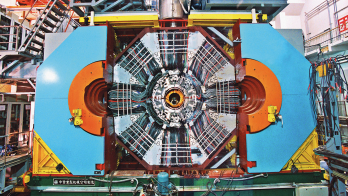
Across high-energy physics experiments, scintillator-based detectors rely on fast, sensitive photodetection to capture faint flashes of light from charged particles and rare interactions. The MPPC® silicon photomultipliers developed through Hamamatsu Photonics’ in-house manufacturing expertise combine high gain, fast response, excellent timing resolution and customisation to support demanding detector designs.
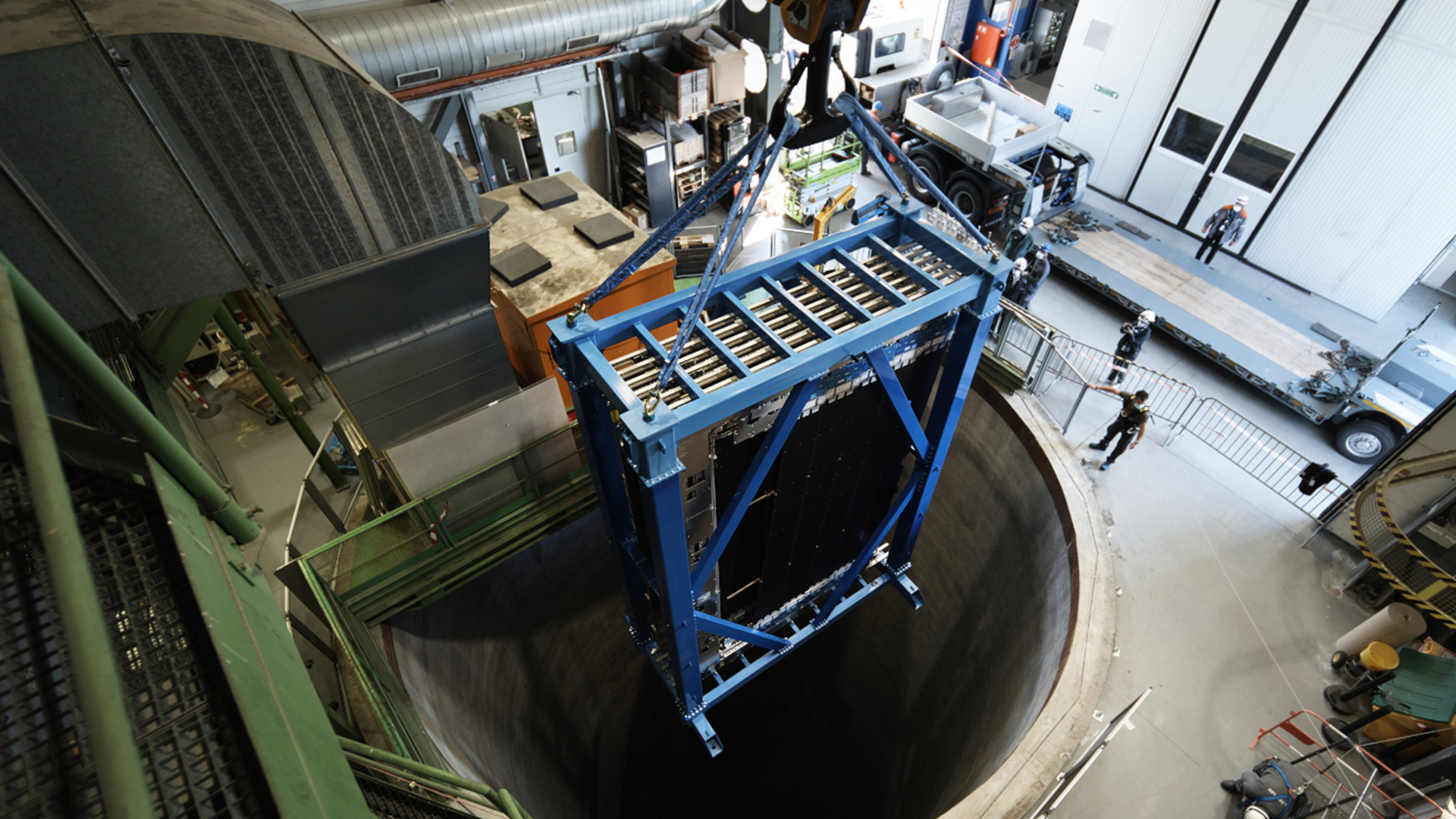
These applications place intense demands on detector performance. Particle trackers, for example, require strong light-detection capability for signals produced by charged particles, together with good spatial resolution, compact size, fast response and short recovery times to follow large numbers of particles. In large-scale scintillator systems, specifications such as active area, spatial resolution, interaction rate and hit efficiency directly influence the ability to detect infrequently occurring events and push measurement boundaries.
When charged particles cross scintillating fibres, the resulting light signals are extremely faint. In high-radiation environments, where increased sensor noise can compromise signal detection, maintaining reliable sensitivity becomes critical. This is where MPPC® silicon photomultipliers (SiPMs) from Hamamatsu Photonics play a critical role.
Future experiments will place even greater emphasis on timing precision, noise reduction and high-rate capability. Detector cooling, low-noise operation and custom device structures are among the strategies used to maintain performance under increasingly challenging conditions.
Why SiPMs are the preferred choice for modern HEP detectors
Each MPPC® (MultiPixel Photon Counter) is an array of avalanche photodiode pixels operating in Geiger mode, for extremely low-level light detection with high gain, fast response and excellent timing resolution. These characteristics make the technology well suited for high-energy physics applications.

For the high-energy physics applications, Hamamatsu develops sophisticated custom-made MPPC® (SiPM) arrays with reduced inactive area, optimised entrance windows and packaging designed for the efficient readout of densely packed scintillator systems. This ability to customise at scale supports detector concepts ranging from compact tracking modules to large multi-channel photodetection systems.
Engineering for precision: PDE, dark noise and rare-event sensitivity
Photon detection efficiency (PDE) is a key metric for MPPC® capability. Peak sensitivity in the 400–500 nm range, which aligns well with many scintillator emission spectra, increases the probability of detecting every critical photon. PDE is determined by factors including fill factor, quantum efficiency and avalanche probability, with Hamamatsu refining wafer processes to minimise lattice defects and improve carrier transport.
Low dark-count rates (DCRs) are equally vital, particularly for rare-event experiments. MPPC® devices exhibit temperature-dependent DCR behaviour, which can be significantly reduced through thermoelectric cooling, halving the DCRs for each ~10 °C reduction.
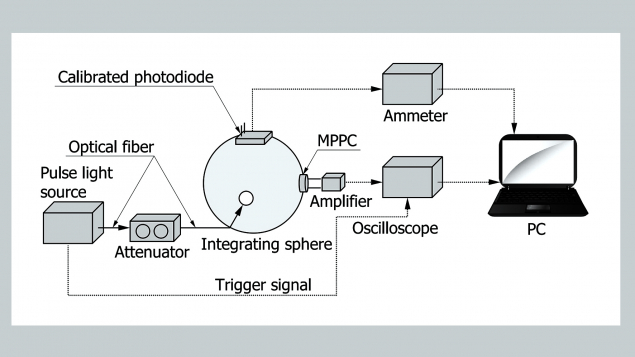
Beyond tracking, MPPC® technology also supports detector types where timing, compactness and low-light sensitivity are essential, including calorimeters, time-of-flight systems, beam diagnostics and low-background experiments. By tailoring the device characteristics to each application, Hamamatsu helps researchers balance sensitivity, noise performance, channel density and reliability.
For experiments requiring near-zero background, such as neutrinoless double-beta decay, Hamamatsu also develops low-radioisotope MPPC® designs, selecting materials that drastically reduce internal noise sources and improve sensitivity under demanding conditions.
Hamamatsu also offers MPPC® devices specifically designed for cryogenic liquid-noble-gas detectors. Optimised for operation at cryogenic temperatures and featuring enhanced sensitivity in the vacuum-ultraviolet spectral range, these devices support applications such as liquid xenon and liquid-argon detectors used in dark matter and neutrino experiments.
The invisible advantage
Hamamatsu’s detectors are built on decades of in-house manufacturing expertise. This foundation allows us to deliver stable, low-noise and application-specific photodetectors that integrate seamlessly into complex experimental environments. By collaborating closely with research teams, we help ensure that each detector module meets the required performance targets, from timing and noise to channel density and long-term reliability.
Contact our specialists to learn more about our customisable solutions and detector support.