Comsol -leaderboard other pages

Topics

Decision to flood hits US underground science plans

cernnus1_7-03

On 30 May, the US National Science Foundation (NSF) issued its site panel report concerning potential sites for a deep underground science and engineering laboratory for the US. The panel concluded that by far the most favourable among the proposed sites was the Homestake mine in South Dakota. However, on 2 June, the first working day after the NSF announcement, the company that owns the mine announced that the following week it would turn off the pumps that prevent the mine from flooding. Despite intense “scientific diplomacy” – including a letter to the company from Nobel prize-winning scientists – the pumps were turned off on 10 June. Now state officials are continuing their negotiations with the mine’s owners, who estimate that complete flooding could take as long as 25-30 years. Meanwhile, the underground laboratory community in the US is pursuing several options.

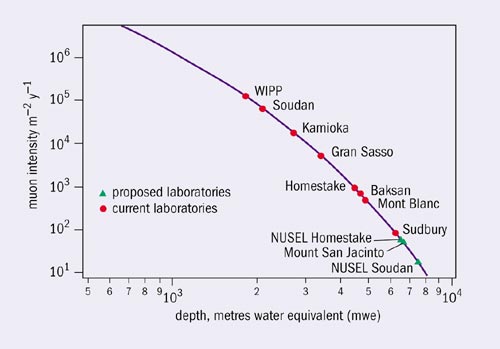
The idea of a National Underground Science and Engineering Laboratory (NUSEL) in the US first gathered momentum after the Homestake Mining Corporation announced the closure of the mine in autumn 2000. The Homestake mine housed the original large solar neutrino detector built by Raymond Davis, then at Brookhaven National Laboratory. At a meeting of 200 neutrino physicists in Seattle to discuss the future US Long Range Plan for Nuclear Physics, Kenneth Lande of the University of Pennsylvania, Davis’s successor as leader of the Homestake experiment, proposed taking over the entire mine for science and engineering studies. This idea was ultimately strongly endorsed in the US Long Range Plan for Nuclear Physics and by several other US national advisory committees. Other groups also identified different possible sites for a national underground laboratory, including Mount San Jacinto in California, the Waste Isolation Pilot Plant (WIPP) in New Mexico and the Soudan Laboratory in Minnesota. However, because of its extreme depth – nearly 2500 m – and well-characterized rock integrity, most attention focused on Homestake.

The Homestake proposal was based on utilizing the attributes of the existing Homestake mine. It is the deepest existing site in the US, and provides a variety of levels and great flexibility in optimizing sites for experiments. Its massive shafts and hoists provide dual access to every level, which would allow the immediate initiation of a research programme simultaneously with the construction of a new laboratory. The site is also ideal for earth sciences as it provides 3D access to approximately 9 km3 of well-characterized and interesting rock. The current proposal includes a comprehensive earth-science research programme called EarthLab, which includes studies of microbial life, fluid flow and rock deformation. Homestake also has sufficient distance (about 2000 km) from existing accelerators in the US to allow for precision studies of neutrino properties.

The proposed new layout for Homestake foresees development along the main drift at 1480 m (4400 metres water equivalent, or mwe), with existing shafts providing direct access to the surface. This is the level recommended for construction of a “megadetector” and for other experiments wanting to simplify construction and transport, while requiring moderate overburdens. The deep level at 2250 m (6500 mwe), also accessed by existing shafts, is the choice for experiments needing greater overburdens.
cernnus2_7-03

Despite significant efforts, progress at Homestake has been slow. Although initial talks with the US-based Homestake Mining Company were very encouraging, negotiations stalled after the Barrick Gold Corporation, a Canadian mining firm, purchased Homestake Mining Company. Intense discussions between officials of Barrick, national and local political leaders, and the NUSEL-Homestake group of scientists led by Wick Haxton of the University of Washington, failed to produce any universally agreed solutions to the technical and political challenges of converting the mine into a science and engineering lab. Barrick rejected several proposed solutions, while continuing the process of closing the mine and removing the Davis neutrino experiment. In May 2003, the NSF convened a “site panel” of seven technical experts to evaluate different proposals for an underground laboratory, in particular in terms of geological suitability and relative costs. They received proposals for three sites – Homestake, Soudan and Mount San Jacinto.

Mount San Jacinto, a 15 minute drive from the centre of Palm Springs, California, has an altitude of 3293 m, and rises 2400 m (6700 mwe) above the surrounding desert. Located in high-tech southern California, the site enjoys close proximity to many major research and teaching universities, with their assets of researchers, students and trained support staff. The proposal for this site, led by Henry Sobel of the University of California Irvine, foresees the construction of a complex of underground chambers accessed by one or two tunnels starting near the mountain’s base. The sides of the mountain rise so steeply that an 8 km horizontal tunnel could access a laboratory almost 2 km underground. One advantage of Mount San Jacinto is that, unlike Homestake and Soudan, the site is unaffected by previous operations as a mine or laboratory. It offers the opportunity of a clean start, albeit with the concomitant costs associated with the lack of an existing underground infrastructure.

The Soudan Laboratory in northeastern Minnesota is currently the largest, deepest, most active and most experienced underground laboratory in the US. It houses the Cryogenic Dark Matter Search (CDMS 2) detector and the 5500 tonne “far detector” for the Main Injector Neutrino Oscillation Search (MINOS) experiment. MINOS will use the Neutrinos at the Main Injector (NUMI) neutrino beam from Fermilab, due to start up in 2005, which is likely to be the only long baseline beam in the US and one of only three in the world, at least for the next 10 years. NUSEL at Soudan would therefore start with existing laboratories, an existing research programme and experienced staff.
cernnus3_7-03

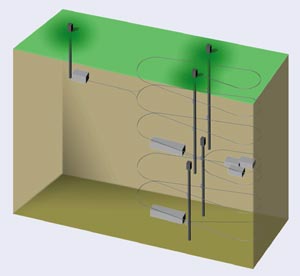
The proposed design for Soudan envisages the construction of a new 17.5 km long tunnel, with a one in seven decline from the surface to the deepest new laboratories 2500 m underground. The tunnel, which is modeled on the access to the Pyhäsalmi mine in Finland, would be in the form of a race-track spiral, about 800 by 400 m in cross-section, making seven complete turns from top to bottom. Trucks driving down the incline would deliver large instrumentation and equipment to the existing laboratories 710 m underground, and to new laboratories at 1450 and 2500 m (4350 and 7500 mwe). An elevator shaft tangential to the helix would allow easy entry for staff and small items of equipment.

The NSF panel came to the conclusion that “Homestake is by far the most favourable site for an underground laboratory”, stating that the existing deep access, infrastructure and proven ability to excavate large caverns at relatively low cost, made it “an obvious choice”. Soudan was considered a “possible back-up” site, but was not the first choice of any of the panelists, due in part to the need to develop ramps and shafts for deep access. San Jacinto was the least favourable site, and indeed considered “not a viable candidate”, due to local geology uncertainties, the potential for permission problems due to environmental issues and high relative cost.

The San Jacinto proponents disagree with the report and the process behind generating it, and have sent a letter to the NSF stating their concerns. The group feels many of the panel’s statements misrepresent the site and its benefits. There was in fact no opportunity for them to interact with the panel and correct these misconceptions.

The Homestake NUSEL collaboration intends to submit an updated project book to the NSF in the next few weeks. The collaboration was in the process of completing this more detailed proposal when the decision to flood was reached. But considering the potential delays and corresponding uncertainties associated with the flooding, the collaboration has also announced its intent to consider alternative sites, including potential new horizontal access sites in the western US.

What happens next is still unclear. The key to the future of Homestake is for political leaders to find an acceptable legal framework to facilitate the transfer of the mine by Barrick Gold. A horizontal access laboratory at Mount San Jacinto or another mountain site in the western US requires additional studies to identify and document the site. The Soudan Laboratory proponents plan to focus on the existing programme of MINOS and CDMS 2, while continuing geological and environmental studies to keep Soudan ready if Homestake falters.


Internet for the masses

cernvie1_7-03

What if no telecommunications companies, no government and no World Bank involvement were necessary to develop and build an information and communication technology (ICT) infrastructure in developing countries? What if it cost only $0.50 (€0.43) per student per month to install such an infrastructure in schools in developing countries?

This may sound like an impossible dream for those who live in a developing country, as I do in Indonesia. But fortunately, in reality it can easily be done. It is not the equipment, nor the legislation, nor the investment that counts; it is the ability to educate a critical mass of people to gain the information and knowledge that are vital to the establishment of such an infrastructure.

It seems that the traditional Indonesian telecommunications companies (such as Telco) and the government believe that any ICT infrastructure requires highly skilled and trained personnel to run expensive, sophisticated equipment that can be funded only by multinational investors. This belief is embedded in all legal and policy frameworks within the Indonesian telecommunications industry.

Stronger, smarter and faster

However, let’s take a closer look at ICT, and note a few important features of how it has developed. It has recently become more powerful, smarter and faster, and has greater memory requirements than ever before. Fortunately, all of these advanced features can now be obtained at much lower costs, and are also much easier to use, configure and control. ICT has become more user-friendly – with dramatic consequences.

The investment required in infrastructure can now be drastically reduced to a level that makes it affordable for a household or community to build and operate their own ICT system. Moreover, it can be operated by people with limited technical skills. This enables a community-based telecommunications infrastructure to be built by the people and run by the people, for the people.

It is a totally different concept and a significant paradigm shift away from the traditional telecommunications infrastructure, which is normally licensed by the government and built and run by the telecommunications operators for the subscribers. Unfortunately, most telecommunications policies and regulations, at least in Indonesia, cannot easily be adapted to accommodate such a shift.

After seven years of trying to educate the Indonesian government about the basic idea of a community-based ICT infrastructure, in 1996 I succeeded in having it partially written into some sections in the Indonesian National Information Infrastructure policy known as “Nusantara 21”.

This infrastructure currently supports about 4 million Indonesian individuals, more than 2000 cyber cafés and more than 1500 schools on the Internet, running on more than 2500 WiFi nodes.

However, in February 2000, fed up with the lack of progress, I left my work as a civil servant to dedicate myself to becoming an IT writer, delivering ICT knowledge to Indonesians through various media, such as CD-ROMs, the Web, books, talk shows, seminars and workshops, as well as answering e-mails on more than 100 Internet mailing lists. Since then, experience has proved that a knowledgeable society with access to new ICT equipment can easily deploy a self-financed infrastructure, thus releasing its dependence on the telecommunications companies as well as on its own government.

Two major technologies are used as the backbone of this Indonesian bottom-up, community-based telecommunications infrastructure, namely wireless Internet (WiFi) and Voice over Internet Protocol (VoIP). WiFi-based systems, when run at 2.4 and 5.8 GHz and extended by simple external antennas, are quite good for 5-8 km links. This makes it possible to bypass the Telco system’s “last mile” and enables the NeighborhoodNet Internet Service Provider to reduce access costs.

This infrastructure currently supports about 4 million Indonesian individuals, more than 2000 cyber cafés and more than 1500 schools on the Internet, running on more than 2500 WiFi nodes. It has increased dramatically in size in the past few years.

Building on the infrastructure

Because the Indonesian government is planning to increase phone tariffs in mid-2003, a free VoIP infrastructure, also known as Indonesian VoIP MaverickNet, was deployed on top of the Indonesian Internet infrastructure in early January 2003. Within around three months, we managed to deploy more than 150 VoIP gatekeepers based on www.gnugk.org freeware to handle approximately 1000 calls per gatekeeper per day for more than 3000 registered users and an estimated 8000 or more unregistered users.

Long-distance and local calls are routed through the Internet infrastructure without any Telco interconnection, via a VoIP MaverickNet area code, +6288, that has been specifically assigned to this task. Users can also be called and registered to the VoIP gatekeeper using their normal Telco number if they wish – this can easily be done, as the gatekeeper can recognize any form of number. This has the side-effect that people can be called on Telco’s number at no charge via VoIP MaverickNet, thus avoiding using the expensive Telco infrastructure.

A community-based telecommunications infrastructure would not have been possible without the generous knowledge-sharing of many people on the Internet. I thank them all.

ANTARES succeeds with underwater connections

cernant1_6-03

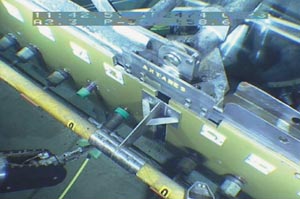
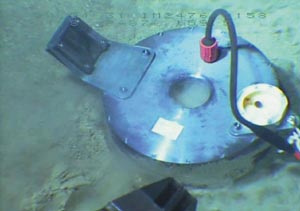
The ANTARES underwater neutrino telescope, located in the Mediterranean Sea south of l’Ile de Porquerolles near Toulon, has passed a major milestone on the way to implementation in late 2004. At around 1700 h on 17 March, 2003, the first data were received from a prototype detection line of optical modules containing photomultiplier tubes. Earlier in the mission, the Nautile manned submersible of the French IFREMER oceanographic research agency had made the vital connections from both the detection line and a second line carrying underwater environmental instrumentation to the underwater electro-optical junction box, which had been deployed in December 2002.

cernant2_6-03

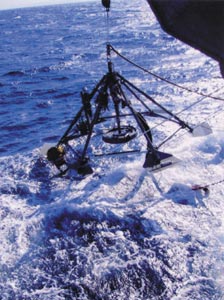
After navigating by fixes from a network of sea-bed acoustic transponders deployed around the ANTARES site, and then staying in place with its GPS dynamical positioning system, the Nautile‘s service ship l’Atalante had deployed a 350 m spool of electro-optical interlink cable. Around 30 minutes later, a position fix from an acoustic transponder attached to the spool confirmed that it had been accurately positioned to within 100 m of the junction box, more than 2400 m below. It was then the turn of Nautile to begin its two hour descent. On the sea floor, the submersible would use its own acoustic navigation system to triangulate within the ANTARES transponder network and recover the cable spool.

cernant3_6-03

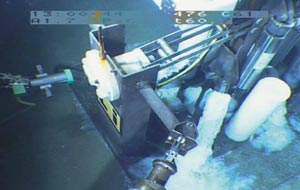
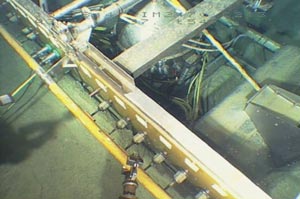
A buoy made from syntactic foam having constant buoyancy down to 2500 m depth was attached to the spool to give it a slightly negative buoyancy, allowing Nautile to carry the cable between its manipulator arms. Placing the spool within 25 m of the junction box, Nautile grasped the deep-sea “mateable” electro-optical connector containing two electrical and four fibre-optic pathways, which can be plugged and unplugged in seawater at pressures of 250 atmospheres. The cable was then unwound and plugged into one of the 16 outputs from the junction box. After shore-based measurements using optical time-domain reflectometry had verified that the light loss and reflection at the connection were within acceptable limits, Nautile recovered the cable spool and laid out the cable in the direction of the detection line’s sea anchor. Waypoint markers on this interlink cable would allow future forays into the site of the detector to be made without acoustic navigation.

cernant4_6-03

During the same mission, Nautile unfurled a second interlink cable to connect the junction box with an instrumentation line, which was deployed on 12 February. This line incorporates a sea-bed seismometer as well as monitors of the underwater environmental parameters that are necessary for the reconstruction of upgoing muons in the ANTARES detector. The monitors include a pulsed laser light calibration system, a deep-sea Doppler current meter, a sound velocity monitor and instruments for the measurement of salinity and water transparency. The laser flash system has been used to send calibration light pulses to the photomultipliers on the detection line and will aid in the synchronization of the optical readout modules for the reconstruction of muon tracks.

cernant5_6-03

The mission was accomplished in two Nautile dives on successive days, with a total of 15 hours on the sea-bed. Four successful underwater connections were made. The validation of this connection technique gives the collaboration confidence in the viability of the configuration for the final ANTARES detector. This will consist of 12 detection lines with around 1000 photomultipliers arranged in triplets on “storeys” that lie at depths varying between -2300 m and -1950 m, with inter-connections radiating from a central junction box.

cernant6_6-03

The detection lines will be held taut between sea anchors and flotation buoys, so they will be subject to curvature and rotation due to the effects of deep-sea currents. Each triplet will be equipped with a tiltmeter and compass to log its movement in real time, and a series of hydrophones along the line will be used to measure the line shape by triangulation with the acoustic transponder network on the sea-bed.

cernant7_6-03

On-line measurement of the position of individual photomultipliers to a precision of better than 20 cm (better than 1 ns timing resolution) is needed for the reconstruction of up-going muons from the conversion of high-energy cosmic neutrinos in the deep-sea water and sea-bed.

Data are being acquired from the photomultipliers, tilt meters and compasses of the detection line, and from the instrumentation line monitors. The baseline singles counting rates of around 50 kHz, observed in the triplets of 25 cm diameter photomultipliers, is consistent with the expected background due to disintegrations of 40K present in sea salt.

cernant8_6-03

Peak background rates in excess of 250 kHz with time correlations between the three photomultipliers are consistent with the expected rates previously measured around the site from sea fauna. A few months of data taking and evaluation with the prototype detection line are now planned before it is recovered during the summer.

NESTOR sees muons at the bottom of the sea

On 29 March the NESTOR collaboration successfully deployed the first “floor” for a detector tower at its site 4000 m deep in the Ionian Sea. Data, including signals probably from downward-going muons, are being transmitted to the shore station in Methoni via a 30 km electro-optical cable laid on the sea-bed. This is the first time that continuous, real-time “physics” data have been obtained from such a depth, and represents a major step towards a kilometre cube neutrino detector.

cernnews1_5-03

The NESTOR (Neutrino Extended Submarine Telescope with Oceanographic Research) will ultimately consist of a tower with 12 floors of 32 m diameter, vertically spaced at 30 m. Each floor has 12, 38 cm diameter photomultiplier tubes (PMTs) mounted in pairs, looking upwards and downwards, at the ends of the six arms of a titanium “star”. The PMTs detect Cerenkov light radiated by muons produced by the interactions of high-energy neutrinos near the detector. The read-out and control electronics are housed in a titanium sphere at the star’s centre. With a total height of 410 m from the sea-bed, a tower will have an effective area of some 20,000 m2 to neutrinos at 10 TeV.

The deployment site off the south-west tip of mainland Greece (Peloponnese) is an underwater plateau 65 km2 in area at an average depth of 4000 m. This deep water, essential for a low cosmic muon background, is surprisingly close to shore, only 7.5 nautical miles (nm) from the island of Sapienza and 11 nm from Methoni. The NESTOR neutrino telescope is part of the scientific programme of the NESTOR Institute, in the town of Pylos on the bay of Navarino, 11 km north of Methoni.

cernnews2_5-03

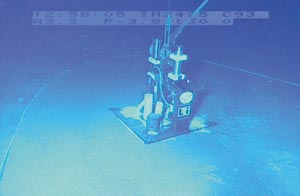
The electro-optical cable from the shore station to the deep-sea site was laid in 2000. Then in January 2002 the end of the cable was brought to the surface by recovery buoy and connected to the junction box on the sea-bottom station, or “pyramid”. The pyramid also houses the sea electrode (the electrical power-return), the anchor system and environmental monitors. Bad weather made it dangerous to attach a detector floor on this occasion, but useful data were transmitted to shore from the pyramid during the descent, and long-term variations in environmental parameters were measured at the sea-bed. Since then, the team has been awaiting the availability of a suitable vessel and good weather.

Only in March this year could the pyramid be brought back to the surface and the floor deployed. The titanium sphere at the centre of the floor was connected to the junction box and the detector floor lowered into the sea, 80 m above the pyramid. The operation was quite fast and posed no problems. The junction box and sphere were powered and monitored from the shore station throughout the deployment. There are LED calibration pulse modules positioned above and below the floor and the assembly is kept vertical by a buoy.

The titanium sphere contains a “housekeeping” board for control and monitoring of all systems and a “floor board” that performs the PMT pulse sensing, majority logic event triggering, coincidence rate scaling, waveform capture and digitization, as well as the data formatting and transmission. Parameters and functions can be downloaded over the optical link. The heart of the system is the Analog Transient Waveform Digitizer (ATWD), developed at Lawrence Berkeley Laboratory. Each ATWD has four channels with 128 common-ramp, 10-bit Wilkinson ADCs, and a present sampling rate of 282 MHz. A trigger is generated when the coincidence requirement for the floor is met and provides a time stamp for combining information from several floors.

Reconstruction and calibration have only just started but the data already obtained look very good. The plots show a typical event, with evidence of a downward-going muon. Even with a single floor, it may be possible to reconstruct tracks near to the horizon.

To avoid future delays the Delta Verenike, a large, self-powered floating platform with GPS dynamic positioning, has been designed for the deployment of NESTOR. Funded from within the Institute’s infrastructure budget, construction is well advanced and delivery is expected later this year.

Wigglers give CESR a new charmed life

In early March, after more than 23 years of continuous operation, the CESR staff and the CLEO collaboration at Cornell completed their programme of b quark physics. Now the conversion of CESR to operate in the lower-energy region of the c quark, or charm, threshold has begun, with the installation of the first new “wiggler” magnets, which are a key component of the conversion. The US National Science Foundation has approved the proposal for this new programme and awarded a five-year grant to support it. At the same time, the NSF approved the continuation of the CHESS facility, which supports the utilization of synchrotron radiation X-rays produced in CESR.

cernnews4_5-03

Conversion of CESR’s e+e storage ring to operate with sufficient luminosity in the charm-threshold region requires the installation of 18 m of wiggler magnets operating at magnetic fields of 2.1 T. Wiggler magnets have alternating north and south poles which induce rapid radial oscillations of the beams, increasing dramatically the emission of synchrotron radiation in the form of X-rays. Emission of synchrotron radiation “damps” the beams – that is, it decreases the sizes of the beams and increases the luminosity that the collider can provide.

When CESR was operating in the region of the upsilon particle, near 5 GeV per beam, the emission of synchrotron radiation in the collider’s bending magnets was sufficient to achieve small beams and high luminosity. At the lower energies of the c quark threshold region, between 1.5 and 2 GeV per beam, a factor of 20 in the radiation damping rate is lost. The wigglers will make up for this loss and achieve the high luminosities required.

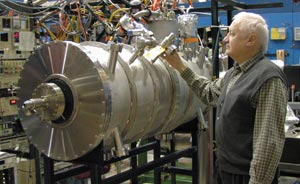
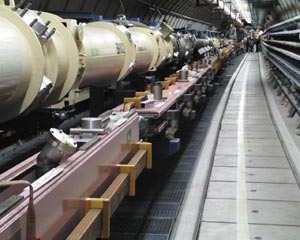
The wigglers for “CESR-c” are superferric magnets, with iron poles excited by superconducting coils. A prototype wiggler, constructed in early 2002, was placed in CESR last August. Beam tests showed that the effects from the wiggler are consistent with estimates based on computer tracking and dynamic aperture analysis. With the extra damping of this one wiggler, as well as two weaker wigglers from the CHESS synchrotron radiation source, the luminosity in CESR in the charm-threshold region approached 2 x 1031 cm-2 s-1, which is already above luminosities achieved at other colliders in this energy range. The final luminosity with all wigglers installed will be around 3 x 1032 cm-2 s-1.

cernnews5_5-03

Six wigglers, representing 8 m of the 18 m required, have already been built and will be installed during a machine shutdown from March through June. For cooling, these wigglers will use the cryogenic facilities in place for CESR’s superconducting RF cavities. Space in the ring is being created by removing two dipole bending magnets, in the third of the circumference closest to the central lab, and increasing the field of adjacent magnets.

Other hardware changes are minor, such as using thinner windows in injection lines, improving the regulation of the power supply, and optimizing the superconducting RF field control for higher-field and lower-beam loading. The modifications of the CLEO detector are also modest. The main upgrade is replacing the silicon vertex detector with a small drift chamber.

Because of the lower beam energy, synchrotron-radiation users will no longer be able to run in parallel with high-energy physics operation. Dedicated periods of operation with beam energies above 5 GeV will serve the needs of X-ray users. The higher-energy running also benefits the beam lifetime for high-energy physics operations by keeping the vacuum chamber clean thanks to the action of the higher-energy synchrotron radiation photons.

CESR will operate in the charm-threshold region during the second half of 2003, after a period of commissioning and synchrotron-radiation running. At the same time the remaining wiggler units will be built and tested, ready for installation when convenient, so that full-intensity operation for high-energy physics can follow shortly afterwards.

BESSY shines bright in the far-infrared

cernnews7_5-03

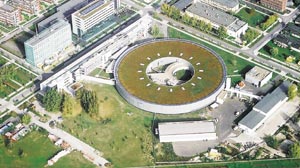
The BESSY synchrotron light source in Berlin has developed a technique to provide intense, steady-state, broadband coherent radiation in the far-infrared – or terahertz (THz) – spectral range. This region of the spectrum, close to the microwave region, has so far been difficult to use because the available sources were very weak, but there are many potential applications, for example in medical imaging and chemical “fingerprinting”. The breakthrough follows recent advances at the Jefferson Laboratory, where high-average-power broadband emission in the far-infrared was produced by synchrotron radiation from electron bunches in the free-electron laser.

Coherent far-infrared radiation can be produced as synchrotron radiation when the length of the electron bunches is comparable to that of the wavelength of the radiation. To produce these conditions the BESSY synchrotron must be run in a “low alpha” optics mode in which the length of the bunches and the shape are specially tuned. In this mode the bunches are typically 1 mm long, with up to 400 bunches stored in the ring at 2 ns bunch spacing. Measurements of the intensity of the coherent far-infrared radiation produced are 1000 times greater than a standard spectrometer mercury arc lamp, illustrating the advantage of the synchrotron source over a more standard thermal source.

HERA II puts collisions in a spin

cernnews1_4-03

With only days to go before a scheduled long shutdown began on 3 March, the upgraded HERA collider – HERA II – succeeded in running with high-energy longitudinally polarized positrons at three interaction regions, soon reaching a polarization of 50%. This is a first not only for DESY, the laboratory that is home to HERA, but also for the world.

Electron and positron beams in storage rings have a natural tendency to become polarized with the spins of the particles perpendicular to the direction in which the beam is travelling. However, in 1994 HERA made polarization history when spin rotators were used to convert this vertical polarization to a longitudinal polarization, with the spins oriented along the particles’ direction of motion. This enabled the HERMES experiment in particular, which directs the polarized beam at a gas target, to begin its measurements of collisions between protons and polarized electrons in order to investigate the origin of the spin in the proton – something that is still not well understood.

cernnews2_4-03

With the HERA upgrade in 2000/2001, spin rotators were also installed at the collision regions where the H1 and ZEUS experiments are located. The removal of compensating solenoids in these regions and the use of stronger quadrupoles for focusing in the arcs of the collider made the conditions for polarization of the positron beam more difficult in HERA II. However, on 24 February, longitudinal polarization was achieved at the three interaction regions where pairs of spin rotators are now installed.

The machine ran for many hours, with the pairs of rotators flipping the spins along the beam direction before the interaction regions and back again as the beam emerged from the detectors, 47,000 times a second. Initially, the solenoid magnets of H1 and ZEUS remained off, but on 2 March, the day before the shutdown, the solenoids were switched on and a polarization of 50% was achieved for collisions in the detectors.

Shortly before the shutdown, the machine crew was also able to achieve a peak luminosity of 2.7 x 1031 cm-2 s-1 for the first time, exceeding the maximum luminosity achieved by HERA I. This indicates that the four-fold increase in luminosity expected with HERA II is in fact achievable, and this will be a major goal when the machine restarts after the 18-week shutdown. During this time, work will take place on the vacuum system and on some parts of the H1 and ZEUS detectors. Systematic tests by the experiments and machine crew have revealed the source of the high background rates that unexpectedly caused problems after the machine and detector upgrades, and which made data-taking in the two experiments extremely difficult. The aim will be to reduce these high background rates, so that HERA II can begin to perform as planned.

The curtain goes up on OPERA

cernnews3_4-03

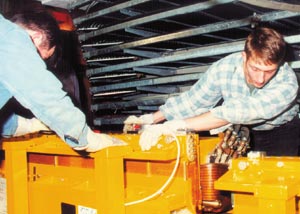
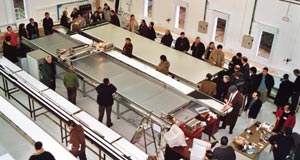
The first module for the target tracker for OPERA (Oscillation Project with Emulsion-tRacking Apparatus) was centre stage at the Institut de Recherches Subatomiques (IReS) in Strasbourg in January, when the OPERA collaboration met there to launch the construction of the detector. The target tracker is being built in Strasbourg, where two halls at IReS have been provided for its construction.

Now that the latest results from the KamLAND experiment have indicated a large mixing angle (LMA) solution for the oscillation of solar neutrinos, OPERA has increased its chances of making the next discovery in the field of neutrino oscillations. Using the CERN muon neutrino beam to Gran Sasso (CNGS), OPERA aims to observe an unambiguous νμ → ντ oscillation. The scheduled start-up of the CNGS beam over the summer of 2006 leaves the OPERA collaboration with little time to build and install its detector in Italy’s Gran Sasso Underground Laboratory. The main purpose of the meetings in Strasbourg was to define and plan all the construction and installation phases.

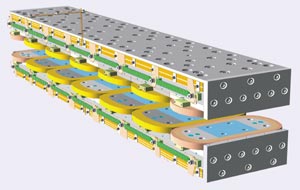
The OPERA detector combines photographic emulsion and electronic detection techniques, and comprises a target part and a spectrometer part. The target part consists of alternate walls of lead/ emulsion bricks and modules of scintillator strips for the target tracker. The main purpose of the tracker is to identify the brick where a neutrino interaction is likely to be. The 7 m long scintillator strips will have grooves into which wavelength-shifting fibres will be glued and read out by 64-channel multianode photomultipliers. Computer-operated robotic manipulators will extract the bricks identified by the tracker. The emulsions will then be developed and scanned using automated microscopes.

The spectrometer part, which is essential to detect muons emerging from neutrino interactions, will consist of a precision drift-tube tracker, a magnet producing a 1.55 Tesla magnetic field and RPCs inserted into the magnets. The collaboration comprises some 150 physicists from a wide range of countries and expects to be data-taking for the period 2006-2011.

Doubly doped semiconductor makes a fast scintillator

cernnews4_4-03

At cryogenic temperatures some semiconductors can convert ionizing radiation into visible light with high efficiency and speed. In cadmium sulphide, for example, electron-hole pairs produced by ionizing radiation promptly form excitons with a radiative decay time of about 0.2 ns. However, at room temperature almost all of the holes are trapped on non-radiative centres, that is, crystal defects and impurities.

Now Stephen Derenzo, Edith Bourret-Courchesne, Mattias Klintenberg and Marvin Weber at the Lawrence Berkeley National Laboratory (LBNL) have found that if one impurity is added to trap the holes and another impurity is added to provide an abundant supply of electrons, then bright fast scintillation can occur at room temperature. They hope that their work will lead to a new class of fast, luminous scintillators based on radiative electron-hole recombination in direct-gap semiconductors.

cernnews5_4-03

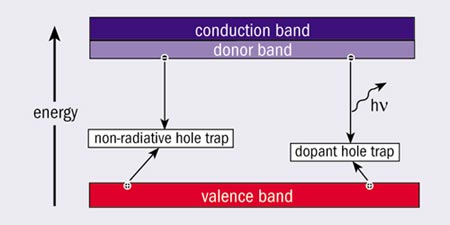
Many inorganic scintillators such as tellurium-doped cadmium sulphide work by combining ionization electrons and holes to form an exciton, but the excited state promptly converts into a triplet (with electron spins aligned) that produces light slowly because the transition to the singlet ground state is spin forbidden. The work at LBNL shows that it is possible to overcome this speed limitation by adding additional different impurity atoms to make the material n-type, as this provides an abundant supply of electrons of both spins to combine with the ionization holes.

The team successfully applied this strategy to cadmium sulphide by codoping it with tellurium and indium. The tellurium is an efficient isoelectronic hole trap and the indium is used to make the material bulk n-type, which provides a band of donor electrons near the bottom of the conduction band. When an electron or X-ray produces holes and electrons in this material, many of the holes are promptly trapped on tellurium atoms in less than 0.05 ns. They then recombine with electrons from the donor band to produce scintillation light with a decay time of 3.5 ns. The light has a wavelength spectrum that peaks at 620 nm and is the same as that of tellurium-doped cadmium sulphide, which has a primary decay time of 3 microseconds.

Derenzo and his colleagues believe that among the vast combination of host crystals and codopants, there are many fast new scintillators that can be developed, and that band structure calculations can guide the search. They are currently exploring the possibility of using ionized acceptor impurities to trap the ionization holes, and codoping other semiconductors such as lead iodide, which has good efficiency for detecting gamma rays and produces 200,000 electron-hole pairs per MeV.

Laboratories link up to win Internet land speed record

The transfer of data equivalent to two feature-length movies on DVD between California and Amsterdam in less than one second has been recognized as a new record by the Internet2 consortium. The operation, which achieved an average speed of more than 923 megabytes per second, was by an international team from several laboratories and involved a number of different networking systems.

The team comprised members of NIKHEF, SLAC, Caltech and the University of Amsterdam, with support from CERN. They used the advanced networking capabilities of TeraGrid, StarLight, SURFnet and NetherLight, together with optical networking links provided by Level 3 Communications and Cisco Systems. The transfer involved standard PC hardware running Debian GNU/LINUX in Amsterdam and redHat Linux in Sunnyvale. The team is supported by the EU-funded DataTAG project and by the US Department of Energy.

The Internet2 Land Speed Record is an open and ongoing competition run by Internet2, a consortium of 200 universities that are working with industry and government to develop network applications and technologies. The record-breaking event, which took place during the SC2002 conference in Baltimore in November, was judged on a combination of the bandwidth used and the distance covered using standard Internet (TCP/IP) protocols. By transferring 6.7 gigabytes across 10,978 km in 58 seconds, the transfer set a record of 9891.60 terabit metres per second.

bright-rec iop pub iop-science physcis connect