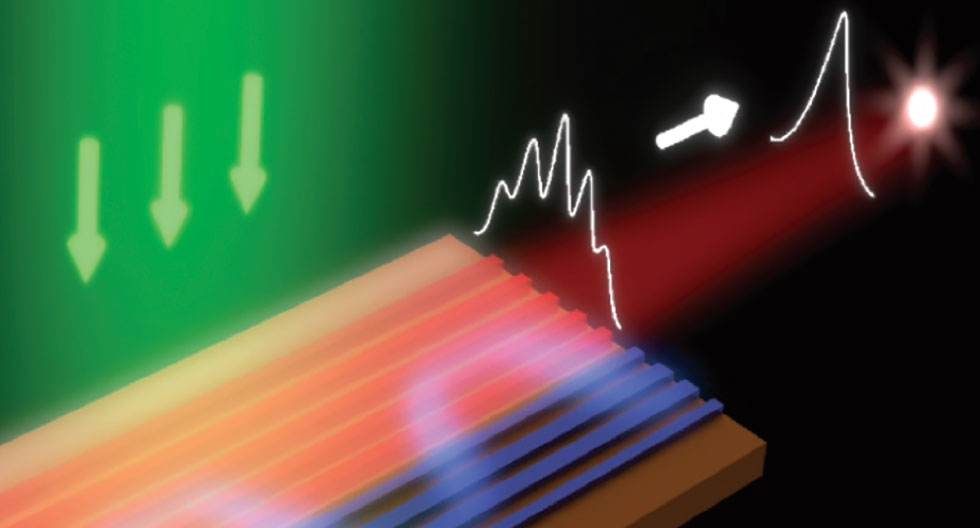
Ideas from supersymmetry have been used to address a longstanding challenge in optics – how to suppress unwanted spatial modes that limit the beam quality of high-power lasers. Mercedeh Khajavikhan at the University of Central Florida in the US and colleagues have created a first supersymmetric laser array, paving the way towards new schemes for scaling up the radiance of integrated semiconductor lasers.
Supersymmetry (SUSY) is a possible additional symmetry of space–time that would enable bosonic and fermionic degrees of freedom to be “rotated” between one another. Devised in the 1970s in the context of particle physics, it suggests the existence of a mirror-world of supersymmetric particles and promises a unified description of all fundamental interactions. “Even though the full ramification of SUSY in high-energy physics is still a matter of debate that awaits experimental validation, supersymmetric techniques have already found their way into low-energy physics, condensed matter, statistical mechanics, nonlinear dynamics and soliton theory as well as in stochastic processes and BCS-type theories, to mention a few,” write Khajavikhan and collaborators in Science.
The team applied the SUSY formalism first proposed by Ed Witten of the Institute for Advanced Study in Princeton to force a semiconductor laser array to operate exclusively in its fundamental transverse mode. In contrast to previous schemes developed to achieve this, such as common antenna-feedback methods, SUSY introduces a global and systematic method that applies to any type of integrated laser array, explains Khajavikhan. “Now that the proof of concept has been demonstrated, we are poised to develop high-power electrically pumped laser arrays based on a SUSY design. This can be applicable to various wavelengths, ranging from visible to mid-infrared lasers.”
To demonstrate the concept, the Florida-based team paired the unwanted modes of the main laser array (comprising five coupled ridge-waveguide cavities etched from quantum wells on an InP wafer) with a lossy superpartner (an array of four waveguides left unpumped). Optical strategies were used to build a superpartner index profile with propagation constants matching those of the four higher-order modes associated with the main array, and the performance of the SUSY laser was assessed using a custom-made optical setup. The results indicated that the existence of an unbroken SUSY phase (in conjunction with a judicious pumping of the laser array) can promote the in-phase fundamental mode and produce high-radiance emission.
“This is a remarkable example of how a fundamental idea such as SUSY may have a practical application, here increasing the power of lasers,” says SUSY pioneer John Ellis of King’s College London. “The discovery of fundamental SUSY still eludes us, but SUSY engineering has now arrived.”
The High-Luminosity LHC (HL-LHC), scheduled to operate from 2026, will increase the instantaneous luminosity of the LHC by at least a factor of five beyond its initial design luminosity. The analysis of a fraction of the data already delivered by the LHC – a mere 6% of what is expected by the end of HL-LHC in the late-2030s – led to the discovery of the Higgs boson and a diverse set of measurements and searches that have been documented in some 2000 physics papers published by the LHC experiments. “Although the HL-LHC is an approved and funded project, its physics programme evolves with scientific developments and also with the physics programmes planned at future colliders,” says Aleandro Nisati of ATLAS, who is a member of the steering group for a new report quantifying the HL-LHC physics potential.
The 1000+ page report, published in January, contains input from more than 1000 experts from the experimental and theory communities. It stems from an initial workshop at CERN held in late 2017 (CERN Courier January/February 2018 p44) and also addresses the physics opportunities at a proposed high-energy upgrade (HE-LHC). Working groups have carried out hundreds of projections for physics measurements within the extremely challenging HL-LHC collision environment, taking into account the expected evolution of the theoretical landscape in the years ahead. In addition to their experience with LHC data analysis, the report factors in the improvements expected from the newly upgraded detectors and the likelihood that new analysis techniques will be developed. “A key aspect of this report is the involvement of the whole LHC community, working closely together to ensure optimal scientific progress,” says theorist and steering-group member Michelangelo Mangano.
Physics streams
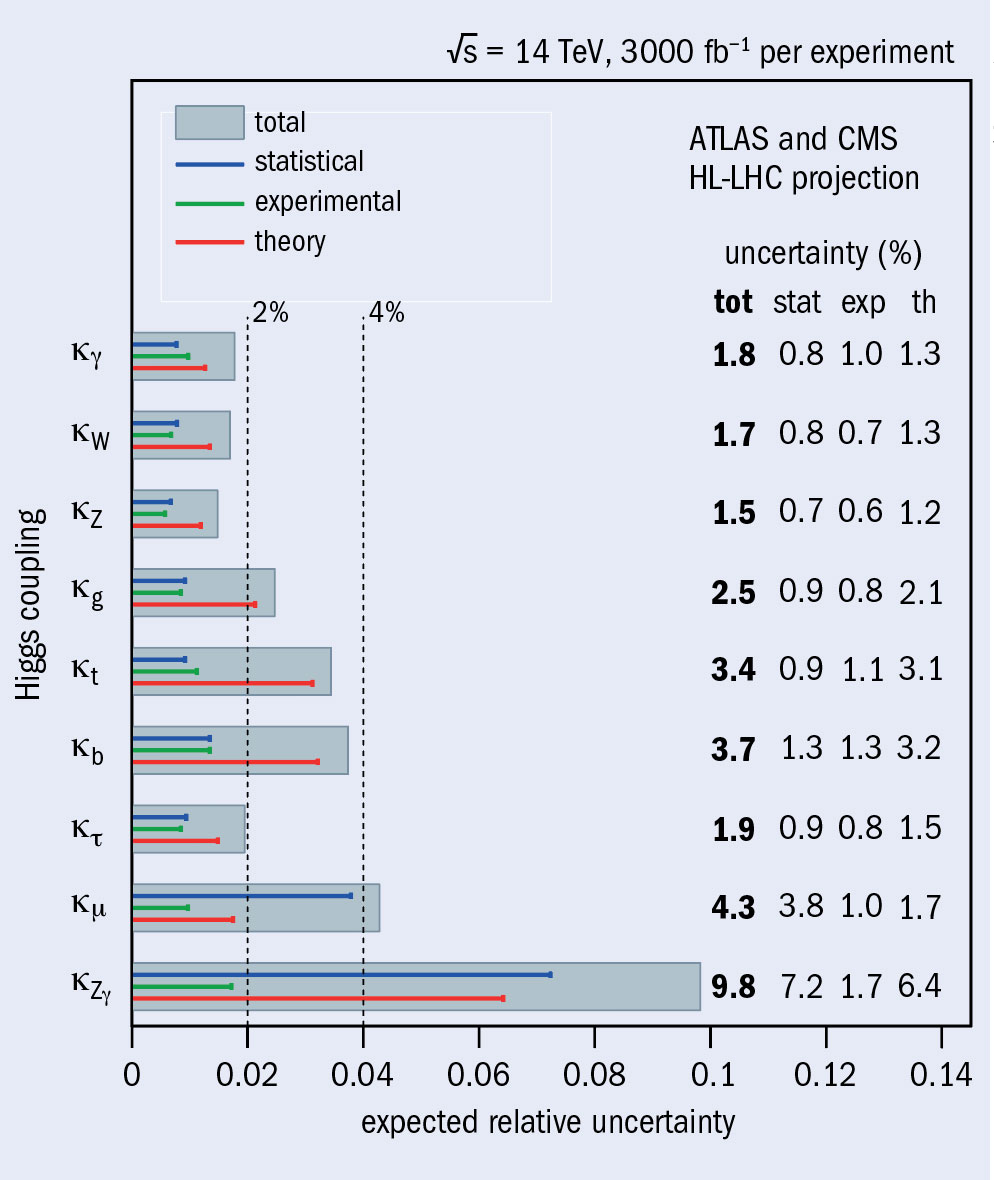
The physics programme has been distilled into five streams: Standard Model (SM), Higgs, beyond the SM, flavour and QCD matter at high density. The LHC results so far have confirmed the validity of the SM up to unprecedented energy scales and with great precision in the strong, electroweak and flavour sectors. Thanks to a 10-fold larger data set, the HL-LHC will probe the SM with even greater precision, give access to previously unseen rare processes, and will extend the experiments’ sensitivity to new physics in direct and indirect searches for processes with low-production cross sections and more elusive signatures. The precision of key measurements, such as the coupling of the Higgs boson to SM particles, is expected to reach the percent level, where effects of new physics could be seen. The experimental uncertainty on the top-quark mass will be reduced to a few hundred MeV, and vector-boson scattering – recently observed in LHC data – will be studied with an accuracy of a few percent using various diboson processes.
The 2012 discovery of the Higgs boson opens brand-new studies of its properties, the SM in general, and of possible physics beyond the SM. Outstanding opportunities have emerged for measurements of fundamental importance at the HL-LHC, such as the first direct constraints on the Higgs trilinear self-coupling and the natural width. The experience of LHC Run 2 has led to an improved understanding of the HL-LHC’s ability to probe Higgs pair production, a key measure of its self-interaction, with a projected combined ATLAS and CMS sensitivity of four standard deviations. In addition to significant improvements on the precision of Higgs-boson measurements (figure 1), the HL-LHC will improve searches for heavier Higgs bosons motivated by theories beyond the SM and will be able to probe very rare exotic decay modes thanks to the huge dataset expected.
The new report considers a large variety of new-physics models that can be probed at HL-LHC. In addition to searches for new heavy resonances and supersymmetry models, it includes results on dark matter and dark sectors, long-lived particles, leptoquarks, sterile neutrinos, axion-like particles, heavy scalars, vector-like quarks, and more. “Particular attention is placed on the potential opened by the LHC detector upgrades, the assessment of future systematic uncertainties, and new experimental techniques,” says steering-group member Andreas Meyer of CMS. “In addition to extending the present LHC mass and coupling reach by 20–50% for most new-physics scenarios, the HL-LHC will be able to potentially discover, or constrain, new physics that is not in reach of the current LHC dataset.”
Pushing for precision
The flavour-physics programme at the HL-LHC comprises many different probes – the weak decays of beauty, charm, strange and top quarks, as well as of the τ lepton and the Higgs boson – in which the experiments can search for signs of new physics. ATLAS and CMS will push the measurement precision of Higgs couplings and search for rare top decays, while the proposed second phase of the LHCb upgrade will greatly enhance the sensitivity with a range of beauty-, charm-, and strange-hadron probes. “It’s really exciting to see the full potential of the HL-LHC as a facility for precision flavour physics,” says steering-group member Mika Vesterinen of LHCb. “The projected experimental advances are also expected to be accompanied by improvements in theory, enhancing the current mass-reach on new physics by a factor as large as four.”
Finally, the report identifies four major scientific goals for future high-density QCD studies at the LHC, including detailed characterisation of the quark–gluon plasma and its underlying parton dynamics, the development of a unified picture of particle production, and QCD dynamics from small to large systems. To address these goals, high-luminosity lead–lead and proton–lead collision programmes are considered as priorities, while high-luminosity runs with intermediate-mass nuclei such as argon could extend the heavy-ion programme at the LHC into the HL-LHC phase.
High-energy considerations
One of the proposed options for a future collider at CERN is the HE-LHC, which would occupy the same tunnel but be built from advanced high-field dipole magnets that could support roughly double the LHC’s energy. Such a machine would be expected to deliver an integrated proton–proton luminosity of 15,000 fb–1 at a centre-of-mass energy of 27 TeV, increasing the discovery mass-reach beyond anything possible at the HL-LHC. The HE-LHC would provide precision access to rare Higgs boson (H) production modes, with approximately a 2% uncertainty on the ttH coupling, as well as an unambiguous observation of the HH signal and a precision of about 20% on the trilinear coupling. An HE-LHC would enable a heavy new Z´ gauge boson discovered at the HL-LHC to be studied in detail, and in general double the discovery reach of the HL-LHC to beyond 10 TeV.
The HL/HE-LHC reports were submitted to the European Strategy for Particle Physics Update in December 2018, and are also intended to bring perspective to the physics potential of future projects beyond the LHC. “We now have a better sense of our potential to characterise the Higgs boson, hunt for new particles and make Standard Model measurements that restrict the opportunities for new physics to hide,” says Mangano. “This report has made it clear that these planned 3000 fb–1 of data from HL-LHC, and much more in the case of a future HE-LHC, will play a central role in particle physics for decades to come.”
On 1 January a new virtual centre devoted to some of the most precise measurements in science was established by researchers in Germany and Japan. The Centre for Time, Constants and Fundamental Symmetries will offer access to ultra-sensitive equipment to allow experimental groups in atomic and nuclear physics, antimatter research, quantum optics and metrology to collaborate closely on fundamental measurements. Three partners – the Max Planck Institutes for nuclear physics (MPI-K) and for quantum optics (MPQ), the National Metrology Institute of Germany (PTB) and RIKEN in Japan – agreed to fund the centre in equal amounts with a total of around €7.5 million for five years, and scientific activities will be coordinated at MPI-K.
A major physics target of the German–Japanese centre is to investigate whether the fundamental constants really are constant or if they change in time by tiny amounts. Another goal concerns the subtle differences in the properties of matter and antimatter, namely C, P and T invariance, which have not yet shown up, even though such differences intrinsically must exist, otherwise the universe would consist of almost pure radiation. Closely related to these tests of fundamental symmetries is the search for physics beyond the Standard Model. The broad research portfolio also includes the development of novel optical clocks based on atoms, nuclei and highly charged ions.
“It is fascinating that nowadays manageable laboratory experiments make it possible to investigate such fundamental questions in physics and cosmology by means of their high precision”, says Klaus Blaum of MPI-K.
Stringent tests of fundamental interactions and symmetries using the protons and antiprotons available at the BASE experiment at CERN are another key aspect of the German–Japanese initiative, explains Stefan Ulmer, co-director of the centre, chief scientist at RIKEN, and spokesperson of the BASE experiment: “This centre will strongly promote fundamental physics in general, in addition to the research goals of BASE. Given this support we are developing new equipment to improve both the precision of the proton-to-antiproton charge-to-mass ratio as well as the proton/antiproton magnetic moment comparison by factors of 10 to 100.”
To reach these goals, the researchers intend to develop novel experimental techniques – such as transportable antiproton traps, sympathetic cooling of antiprotons by laser-cooled beryllium ions, and optical clocks based on highly charged ions and thorium nuclei – which will outperform contemporary methods and enable measurements at even shorter time scales and with improved sensitivity. “The combined precision-physics expertise of the individual groups with their complementary approaches and different methods using traps and lasers has the potential for substantial progress,” says Ulmer. “The low-energy, ultra-high-precision investigations for physics beyond the Standard Model will complement studies in particle physics.”
The features in this first issue of 2019 bring you all the shutdown news from the seven LHC experiments, and what to expect when the souped-up detectors come back online in 2021.
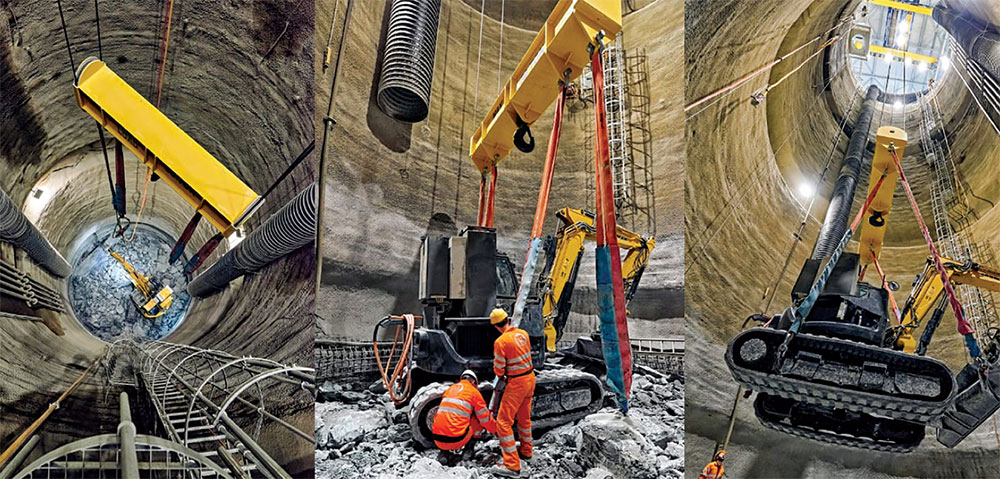
During the next two years of long-shutdown two (LS2), the LHC and its injectors will be tuned up for high-luminosity operations: Linac2 will leave the floor to Linac4 to enable more intense beams; the Proton Synchrotron Booster will be equipped with completely new injection and acceleration systems; and the Super Proton Synchrotron will have new radio-frequency power. The LHC is also being tested for operation at its design energy of 14 TeV, while, in the background, civil-engineering works for the high-luminosity upgrade (HL-LHC), due to enter service in 2026, are proceeding apace.
The past three years of Run 2 at a proton–proton collision energy of 13 TeV have seen the LHC achieve record peak and integrated luminosities, forcing the detectors to operate at their limits. Now, the four main experiments ALICE, ATLAS, CMS and LHCb, and the three smaller experiments LHCf, MoEDAL and TOTEM, are gearing up for the extreme conditions of Run 3 and beyond.
At the limits
Since the beginning of the LHC programme, it was clear that the original detectors would last for approximately a decade due to radiation damage. That time has now come. Improvements, repairs and upgrades have been taking place in the LHC detectors throughout the past decade, but significant activities will take place during LS2 (and LS3, beginning 2024), capitalising on technology advances and the ingenuity of thousands of people over a period of several years. Combined, the technical design reports for the LHC experiment upgrades number some 20 volumes each containing hundreds of pages.
For LHCb, the term “upgrade” hardly does it justice, since large sections of the detector are to be completely replaced and a new trigger system is to be installed (LHCb’s momentous metamorphosis). ALICE too is undergoing major interventions to its inner detectors during LS2 (ALICE revitalised), and both collaborations are installing new data centres to deal with the higher data rate from future LHC runs. ATLAS and CMS are upgrading numerous aspects of their detectors while at the same time preparing for major installations during LS3 for HL-LHC operations (CMS has high luminosity in sight and ATLAS upgrades in LS2). At the HL-LHC, one year of collisions is equivalent to 10 years of LHC operations in terms of radiation damage. Even more challenging, HL-LHC will deliver a mean event pileup of up to 200 interactions per beam crossing – 10 times greater than today – requiring totally new trigger and other capabilities.
Three smaller experiments at the LHC are also taking advantage of LS2. TOTEM, which comprises two detectors located 220 m either side of CMS to measure elastic proton–proton collisions (see “Forging ahead” image), aims to perform total-cross-section measurements at maximal LHC energies. For this, the collaboration is building a new scintillator detector to be integrated in CMS, in addition to service work on its silicon-strip and spectrometer detectors.
Another “forward” experiment called LHCf, made up of two detectors 140 m either side of ATLAS, uses forward particles produced by the LHC collisions to improve our knowledge about how cosmic-ray showers develop in Earth’s atmosphere. Currently, the LHCf detectors are being prepared for 14 TeV proton–proton operations, higher luminosities and also for the possibility of colliding protons with light nuclei such as oxygen, requiring a completely renewed data-acquisition system. Finally, physicists at MoEDAL, a detector deployed around the same intersection region as LHCb to look for magnetic monopoles and other signs of new physics, are preparing a request to take data during Run 3. For this, among other improvements, a new sub-detector called MAPP will be installed to extend MoEDAL’s physics reach to long-lived and fractionally charged particles.
The seven LHC experiments are also using LS2 to extend and deepen their analyses of the Run-2 data. Depending on what lies there, the collaborations could have more than just shiny new detectors on their hands by the time they come back online in the spring of 2021.
One hundred and fifty years since Dmitri Mendeleev revolutionised chemistry with the periodic table of the elements, an international team of researchers has resolved a longstanding question about one of its more mysterious regions – the actinide series (or actinoids, as adopted by the International Union of Pure and Applied Chemistry, IUPAC).
The periodic table’s neat arrangement of rows, columns and groups is a consequence of the electronic structures of the chemical elements. The actinide series has long been identified as a group of heavy elements starting with atomic number Z = 89 (actinium) and extending up to Z = 103 (lawrencium), each of which is characterised by a stabilised 7s2 outer electron shell. But the electron configurations of the heaviest elements of this sequence, from Z = 100 (fermium) onwards, have been difficult to measure, preventing confirmation of the series. The reason for the difficulty is that elements heavier than fermium can be produced only one atom at a time in nuclear reactions at heavy-ion accelerators.
Confirmation
Now, Tetsuya Sato at the Japan Atomic Energy Agency (JAEA) and colleagues have used a surface ion source and isotope mass-separation technique at the tandem accelerator facility at JAEA in Tokai to show that the actinide series ends with lawrencium. “This result, which would confirm the present representation of the actinide series in the periodic table, is a serious input to the IUPAC working group, which is evaluating if lawrencium is indeed the last actinide,” says team member Thierry Stora of CERN.
Using the same technique, Sato and co-workers measured the first ionisation potential of lawrencium back in 2015. Since this is the energy required to remove the most weakly bound electron from a neutral atom and is a fundamental property of every chemical element, it was a key step towards mapping lawrencium’s electron configuration. The result suggested that lawrencium has the lowest first ionisation potential of all actinides, as expected owing to its weakly bound electron in the 7p1/2 valence orbital. But with only this value the team couldn’t confirm the expected increase of the ionisation values of the heavy actinides up to nobelium (Z = 102). This occurs with the filling of the 5f electron shell in a manner similar to the filling of the 4f electron shell until ytterbium in the lanthanides.
In their latest study, Sato and colleagues have determined the successive first ionisation potentials from fermium to lawrencium, which is essential to confirm the filling of the 5f shell in the heavy actinides (see figure). The results agree well with those predicted by state-of-the-art relativistic calculations in the framework of QED and confirm that the ionisation values of the heavy actinides increase up to nobelium, while that of lawrencium is the lowest among the series.
The results demonstrate that the 5f orbital is fully filled at nobelium (with the [Rn] 5f14 7s2 electron configuration, where [Rn] is the radon configuration) and that lawrencium has a weakly bound electron, confirming that the actinides end with lawrencium. The nobelium measurement also agrees well with laser spectroscopy measurements made at the GSI Helmholtz Center for Heavy Ion Research in Darmstadt, Germany.
“The experiments conducted by Sato et al. constitute an outstanding piece of work at the top level of science,” says Andreas Türler, a chemist from the University of Bern, Switzerland. “As the authors state, these measurements provide unequivocal proof that the actinide series ends with lawrencium (Z = 103), as the filling of the 5f orbital proceeds in a very similar way to lanthanides, where the 4f orbital is filled. I am already eagerly looking forward to an experimental determination of the ionisation potential of rutherfordium (Z = 104) using the same experimental approach.”
The CMS detector has performed better than what was thought possible when it was conceived. Combined with advances in analysis techniques, this has allowed the collaboration to make measurements – such as the coupling between the Higgs boson and bottom quarks – that were once deemed impossible. Indeed, together with its sister experiment ATLAS, CMS has turned the traditional view of hadron colliders as “hammers” rather than “scalpels” on its head.
In exploiting the LHC and its high-luminosity upgrade (HL-LHC) to maximum effect in the coming years, the CMS collaboration has to battle higher overall particle rates, higher “pileup” of superimposed proton–proton collision events per LHC bunch crossing, and higher instantaneous and integrated radiation doses to the detector elements. In the collaboration’s arsenal to combat this assault are silicon sensors able to withstand the levels of irradiation expected, a new high-rate trigger, and detectors with higher granularity or precision timing capabilities to help disentangle piled-up events.
The majority of CMS detector upgrades for the HL-LHC will be installed and commissioned during long-shutdown three (LS3). However, the planned 30-month duration of LS3 imposes logistical constraints that result in a large part of the muon-system upgrade and many ancillary systems (such as cooling, power and environmental control) needing to be installed substantially beforehand. This makes the CMS work plan for LS2 extremely complex, dividing into three classes of activity: the five-yearly maintenance of the existing detectors and services, the completion of so called “phase 1” upgrades necessary for CMS to continue to operate until LS3, and the initial upgrades to detectors, infrastructure or ancillary systems necessary for HL-LHC. “The challenge of LS2 is to prepare CMS for Run 3 while not neglecting the work needed now to prepare for Run 4,” says technical coordinator Austin Ball.
A dedicated CMS upgrade programme was planned since the LHC switched on in 2008. It is being carried out in two phases: the first, which started in 2014 during LS1, concerns improvements to deal with a factor-of-two increase over the design instantaneous luminosity delivered in Run 2; and the second relates to the upgrades necessary for the HL- LHC. The phase-1 upgrade is almost complete, thanks to works carried out during LS1 and regular end-of-year technical stops. This included the replacement of the three-layer barrel (two-disk forward) pixel detector with a four-layer barrel (three-disk forward) version, the replacement of photosensors and front-end electronics for some of the hadron calorimeters, and the introduction of a more powerful, FPGA-based, level-1 hardware trigger. LS2 will conclude phase-1 by upgrading photosensors (hybrid photodiodes) in the barrel hadron calorimeter with silicon photomultipliers and replacing the innermost pixel barrel layer.
Phase-2 activities
But LS2 also sees the start of the phase-2 CMS upgrade, the first step of which is a new beampipe. The collaboration already replaced the beampipe during LS1 with a narrower one to allow the phase-1 pixel detector to reach closer to the interaction point. Now, the plan is to extend the cylindrical section of the beampipe further to provide space for the phase-2 pixel detector with enlarged pseudo-rapidity coverage, to be installed in LS3. In addition, for the muon detectors CMS will install a new gas electron multiplier (GEM), layer in the inner ring of the first endcap disk, upgrade the on-detector electronics of the cathode strip chambers, and lay services for a future GEM layer and improved resistive plate chambers. Several other preparations of the detector infrastructure and services will take place in LS2 to be ready for the major installations in LS3.
Key elements of the LS2 work plan include: constructing major new surface facilities; modifying the internal structure of the underground cavern to accommodate new detector services (especially CO2 cooling); replacing the beampipe for compatibility with the upgraded tracking system; and improving the powering system of the 3.8 T solenoid to increase its longevity through the HL-LHC era. In addition, the system for opening and closing the magnet yoke for detector access will be modified to accommodate future tolerance requirements and service volumes, and the shielding system protecting detectors from background radiation will be reinforced. Significant upgrades of electrical power, gas distribution and the cooling plant also have to take place during LS2.
The CMS LS2 schedule is now fully established, with a critical path starting with the pixel-detector and beampipe removal and extending through the muon system upgrade and maintenance, installation of the phase-2 beampipe plus the revised phase-1 pixel innermost layer, and, after closing the magnet yoke, re-commissioning of the mag-net with the upgraded powering system. The other LS2 activities, including the barrel hadron calorimeter work, will take place in the shadow of this critical path.
“The timely completion of the intense LS2 programme, including the construction of the on-site surface infrastructures necessary for the construction, assembly or refurbishment activities of the phase-2 detectors, is critical for a successful CMS phase-2 upgrade,” explains upgrade coordinator Frank Hartmann. “Although still far away, LS3 activities are already being planned in detail.” The future LS3 shutdown will see the CMS tracker completely replaced with a new outer tracker that can provide tracks at 40 MHz to the upgraded level-1 trigger, and with a new inner tracker with extended pseudo-rapidity coverage. The 36 modules of the barrel electromagnetic calorimeter will be removed and their on-detector electronics upgraded to enable the high readout rate, while both current hadron and electromagnetic endcap calorimeters will be replaced with a brand-new system (see “A new era in calorimetry” box). The addition of timing detectors in the barrel and endcaps will allow a 4D reconstruction of collision vertices and, together with the other new and upgraded detectors, reduce the effective event pile-up at the HL-LHC to a level comparable to that already seen.
“The upgraded CMS detector will be even more powerful and able to make even more precise measurements of the properties of the Higgs boson as well as extending the searches for new physics in the unprecedented conditions of the HL-LHC,” says CMS spokesperson Roberto Carlin.
To precisely study the Higgs boson and extend our sensitivity to new physics in the coming years of LHC operations, the ATLAS experiment has a clear upgrade plan in place. Ageing of the inner tracker due to radiation exposure, data volumes that would saturate the readout links, obsolescence of electronics, and a collision environment swamped by up to 200 interactions per bunch crossing are some of the headline challenges facing the 3000-strong collaboration. While many installations will take place during long-shutdown three (LS3), beginning in 2024, much activity is taking place during the current LS2 – including major interventions to the giant muon spectrometer at the outermost reaches of the detector.
The main ATLAS upgrade activities during LS2 are aimed at increasing the trigger efficiency for leptonic and hadronic signatures, especially for electrons and muons with a transverse momentum of at least 20 GeV. To improve the selectivity of the electron trigger, the amount of information used for the trigger decision will be drastically increased: until now, the very fine-grained information produced by the electromagnetic calorimeter is grouped in “trigger towers” to limit the number and hence cost of trigger channels, but advances in electronics and the use of optical fibres allows the transmission of a much larger amount of information at a reasonable cost. By replacing some of the components of the front-end electronics of the electromagnetic calorimeter, the level of segmentation available at the trigger level will be increased fourfold, improving the ability to reject jets and preserve electrons and photons. The ATLAS trigger and data-acquisition systems will also be upgraded during LS2 by introducing new electronics boards that can deal with the more granular trigger information coming from the detector.
New small wheels
Since 2013, ATLAS has been working on a replacement for its “small wheel” forward-muon endcap systems so that they can operate under the much harsher background conditions of the future LHC. The new small wheel (NSW) detectors employ two detector technologies: small-strip thin gap chambers (sTGC) and Micromegas (MM). Both technologies are able to withstand the higher flux of neutrons and photons expected in future LHC interactions, which will produce counting rates as high as 20 kHz cm–2 in the inner part of the NSW, while delivering information for the first-level trigger and muon measurement. The main aim of the NSW is to reduce the fake muon triggers in the forward region and improve the sharpness of the trigger threshold drastically, allowing the same selection power as the present high-level trigger.
The first NSW started to take shape at CERN last year. The iron shielding disks (see “Iron support” image), which serve as the support for the NSW detectors in addition to shielding the endcap muon chambers from hadrons, have been assembled, while the services team is installing numerous cables and pipes on the disks. Only a few millimetres of space is available between the disk and the chambers for the cables on one side, and between the disk and the calorimeter on the other side, and the task is made even more difficult by having to work from an elevated platform. In a nearby building, the sTGC chambers coming from the different construction sites are being integrated in full wedges and, soon this year, the Micromegas wedges will be integrated and tested at a separate integration site. The construction of the sTGC chambers is taking place in Canada, Chile, China, Israel and Russia, while the Micromegas are being constructed in France, Germany, Greece, Italy and Russia. On a daily basis, cables arrive to be assembled with connectors and tested; piping is cut to length, cleaned and protected until installation; and gas-leak and high-voltage test stations are employed for quality control. In the meantime, several smaller upgrades will be deployed during LS2, including the installation of 16 new muon chambers in the inner layer of the barrel spectrometer.
The organisation of LS2 activities is a complex exercise in which the maintenance needs of the detectors have to be addressed in parallel with installation schedules. After a first period devoted to the opening of the detector and the maintenance of the forward muon spectrometer, the first major non-standard operation (scheduled for January) will be to bring to the surface the first small wheel. Having the detector fully open on one side will also allow very important test for the installation of the new all-silicon inner tracker, which is scheduled to be installed during LS3. The upgrade of the electromagnetic-calorimeter electronics will start in February and continue for about one year, requiring all front-end boards to be dismounted from their crates, modifications to both the boards and the crates, and reinstallation of the modified boards in their original position. Maintenance of the ATLAS tile calorimeter and inner detector will take place in parallel, a very important aspect of which will be the search for leaks in the front-end cooling system.
In August, the first small wheel will be lowered again, allowing the second small wheel to be brought to the surface to make space for the NSW installation foreseen in April 2020. In the same period, all the optical transmission boards of the pixel detector will have to be changed. Following these installations, there will be a long period of commissioning of all the upgraded detectors and the preparation for the installation of the second NSW in the autumn of 2020. At that moment the closing process will start and will last for about three months, including the bake-out of the beam pipe, which is a very delicate and dangerous operation for the pixel detectors of the inner tracker.
A coherent upgrade programme for ATLAS is now fully underway to enable the experiment to fully exploit the physics potential of the LHC in the coming years of high-luminosity operations. Thousands of people around the world in more than 200 institutes are involved, and thetechnical design reports alone for the upgrade so far number six volumes, each containing several hundred pages. At the end of LS2, ATLAS will be ready to take data in Run 3 with a renewed and better performing detector.
The discovery of the Higgs boson at the LHC in the summer of 2012 set particle physics on a new course of exploration. While the LHC experiments have determined many of the properties of the Higgs boson with a precision beyond expectations, and will continue to do so until the mid-2030s, physicists have long planned a successor to the LHC that can further explore the Higgs mechanism and other potential sources of new physics. Several proposals are on the table, the most ambitious and scientifically far-reaching involving circular colliders with a circumference of around 100 km.
On 18 December, the Future Circular Collider (FCC) study released its conceptual design report (CDR) for a 100 km collider based at CERN. A month earlier, the Institute of High Energy Physics (IHEP) in China officially presented a CDR for a similar project called the Circular Electron Positron Collider (CEPC). Both studies were launched shortly after the discovery of the Higgs boson (the FCC was a direct response to a request from the 2013 update of the European Strategy for Particle Physics to prepare a post-LHC machine, following preliminary proposals for a circular Higgs factory at CERN in 2011), and both envisage physics programmes extending deep into the 21st century. Documents concerning the FCC and CEPC proposals were also submitted as input to the latest update of the European Strategy for Particle Physics at the end of the year (see Input received for European strategy update).
“If a high-luminosity electron–positron Higgs factory were to drop out of the sky tomorrow, the line of users would be very long, while a very-high-energy hadron collider is a vessel of discovery and will help us study the role of the Higgs boson in taming the high-energy behaviour of longitudinal gauge-boson (WW) scattering,” says theorist Chris Quigg of Fermilab in the US. “It is a very significant validation of the scientific promise opened by a 100 km ring for scientists of different regions to express the same judgment.”
The four-volume FCC report demonstrates the project’s technical feasibility and identifies the physics opportunities offered by the different collider options: a high-luminosity electron–positron collider (FCC-ee) with a centre-of-mass energy ranging from the Z pole (90 GeV) to the tt̅ threshold (365 GeV); a 100 TeV proton–proton collider (FCC-hh); a future lepton–proton collider (FCC-eh); and, finally, a higher-energy hadron collider in the existing tunnel (HE-LHC). The FCC is a global collaboration of more than 140 universities, research institutes and industrial partners. During the past five years, with the support of the European Commission’s Horizon 2020 programme, the FCC collaboration has made significant advances in high-field superconducting magnets, high-efficiency radio-frequency cavities, vacuum systems, large-scale cryogenic refrigeration and other enabling technologies (see A giant leap for physics).
According to the present proposal, an eight-year period for project preparation and administration is required before construction of FCC’s underground areas can begin, potentially allowing the FCC-ee physics programme to start by 2039. The FCC-hh, installed in the same tunnel, could then start operations in the late 2050s. “Though the two machines can be built independently, a combined scenario profits from the extensive reuse of civil engineering and technical systems, and also from the additional time available for high-field magnet breakthroughs,” says deputy leader of the FCC study Frank Zimmermann of CERN. “Timely preparation, early investment and diverse collaborations between researchers and industry are already yielding promising results and confirming the anticipated downward trend in the costs associated with operation.”
Asian ambition
CEPC is a putative 240 GeV circular electron-positron collider, the tunnel for which is foreseen to one day host a super proton–proton collider (SppC) that reaches energies beyond the LHC (CERN Courier June 2018 p21). The two-volume CEPC design report summarises the work accomplished in the past few years by thousands of scientists and engineers in China and abroad. IHEP states that construction of CEPC will begin as soon as 2022 – allowing time to build prototypes of key technical components and establish support for manufacturing – and be completed by 2030. According to the tentative operational plan, CEPC will run for seven years as a Higgs factory, followed by two years as a Z factory and one year at the WW threshold, potentially followed by the installation of the SppC. Although CEPC–SppC is a Chinese-proposed project to be built in China, it has an international advisory committee and more than 20 agreements have been signed with institutes and universities around the world.
“The Beijing Electron Positron Collider will stop running in the 2020s, and China’s government is encouraging Chinese scientists to initiate and work towards large international science projects, so it is possible that CEPC may get a green light soon,” explains deputy leader of the CEPC project Jie Gao of IHEP. “As for the site, many Chinese local governments showed strong interest to host CEPC with the support of the central government.”
Cost is a key factor for both the Chinese and European projects, with the tunnel taking up a large fraction of the expense. CEPC’s price tag is currently $5 billion and FCC-ee is hovering at around twice this value, while, at present, a hadron collider on either continent would cost significantly more due to the cost of the required superconducting wire. Geoffrey Taylor of the University of Melbourne, who is chair of the International Committee for Future Accelerators, says that CERN has the major benefit of magnet expertise and high-energy collider development and operation, in addition to already having the multi-billion-dollar accelerator infrastructure required for the project. “The value of this infrastructure at CERN outweighs the cost of the tunnel; on the other hand, the Chinese proposal has a lower cost of tunneling but lacks the immense infrastructure and expertise necessary for the hadron collider.”
Taylor says that whilst it is essential that CERN maintains its pre-eminent position, having competition from Asia with the potential for major investment would be beneficial for the field as a whole because Western investment in future machines may well remain at current levels. There are also broader cultural factors to be considered, says Quigg: “CERN has earned an exemplary reputation for inclusiveness and openness, which go hand in hand with scientific excellence. Any region, nation, and institution that aims to host a world-leading instrument must strive for a similar environment.”
For theorist Gerard ’t Hooft, who shared the 1999 Nobel Prize in Physics for elucidating the quantum structure of electroweak interactions, the physics target of a 100 km collider is far more important than its location. It is not obvious, in view of our present theoretical understanding, whether or not a 100 km accelerator will be able to enforce a breakthrough, he says. “Most theoreticians were hoping that the LHC might open up a new domain of our science, and this does not seem to be happening. I am just not sure whether things will be any different for a 100 km machine. It would be a shame to give up, but the question of whether spectacular new physical phenomena will be opened up and whether this outweighs the costs, I cannot answer. On the other hand, for us theoretical physicists the new machines will be important even if we can’t impress the public with their results.”
Profound discoveries
Experimentalist Joe Incandela of the University of California in Santa Barbara, who was spokesperson of the CMS experiment at the time of the Higgs-boson discovery, believes that a post-LHC collider is needed for closure – even if it does not yield new discoveries. “While such machines are not guaranteed to yield definitive evidence for new physics, they would nevertheless allow us to largely complete our exploration of the weak scale,” he says. “This is important because it is the scale where our observable universe resides, where we live, and it should be fully charted before the energy frontier is shut down. Completing our study of the weak scale would cap a short but extraordinary 150 year-long period of profound experimental and theoretical discoveries that would stand for millennia among mankind’s greatest achievements.”
Throughout LHC Run 2, LHCb has been flooded by b- and c-hadrons due to the large beauty and charm production cross-sections within the experiment’s acceptance. To cope with this abundant flux of signal particles and to fully exploit them for LHCb’s precision flavour-physics programme, the collaboration has recently implemented a unique real-time analysis strategy to select and classify, with high efficiency, a large number of b- and c-hadron decays. Key components of this strategy are a real-time alignment and calibration of the detector, allowing offline-quality event reconstruction within the software trigger, which runs on a dedicated computing farm. In addition, the collaboration took the novel step of only saving to tape interesting physics objects (for example, tracks, vertices and energy deposits), and discarding the rest of the event. Dubbed “selective persistence”, this substantially reduced the average event size written from the online system without any loss in physics performance, thus permitting a higher trigger rate within the same output data rate (bandwidth). This has allowed the LHCb collaboration to maintain, and even expand, its broad programme throughout Run 2, despite limited computing resources.
LHCb has been flooded by b- and c-hadrons due to the large beauty and charm production cross-sections within the experiment’s acceptance.
The two-stage LHCb software trigger is able to select heavy flavoured hadrons with high purity, leaving event-size reduction as the handle to reduce trigger bandwidth. This is particularly true for the large charm trigger rate, where saving the full raw events would result in a prohibitively high bandwidth. Saving only the physics objects entering the trigger decision reduces the event size by a factor up to 20, allowing larger statistics to be collected at constant bandwidth. Several measurements of charm production and decay properties have been made so far using only this information. The sets of physics objects that must be saved for offline analysis can also be chosen “à la carte”, opening the door for further bandwidth savings on inclusive analyses too.
For the LHCb upgrade (see LHCb’s momentous metamorphosis), when the instantaneous luminosity increases by a factor of five, these new techniques will become standard. LHCb expects that more than 70% of the physics programme will use the reduced event format. The full software trigger, combined with real-time alignment and calibration, along with the selective persistence pioneered by LHCb, will likely become the standard for very high-luminosity experiments. The collaboration is therefore working hard to implement these new techniques and ensure that the current quality of physics data can be equalled or surpassed in Run 3.
Particle physics has revolutionised our understanding of the universe. The experimental and theoretical tools developed in the 20th century delivered the Standard Model of particle physics, the particle content of which was completed in 2012 with the discovery of the Higgs boson at the LHC. And, yet, this hugely powerful theory leaves several observations unexplained. In solving mysteries such as the nature of dark matter, the origin of neutrino masses, the dominance of matter over antimatter on cosmological scales, and the low mass of the Higgs boson itself, physicists could open a completely new view of nature. Therefore, it is high time to start planning a new collider that maintains this rich course of exploration throughout the 21st century.
In late 2018 the Future Circular Collier (FCC) collaboration published a conceptual design report (CDR) addressing this need. A similar proposal is also under development in China (CERN Courier June 2018 p21). In more than 1000 pages distributed over four volumes, the FCC CDR covers all aspects of the project, including technologies, detector design, physics goals and civil-engineering considerations. But what changes when we move from a 27 km to a new 100 km-long tunnel, and what stays the same? The obstacles to new colliders pushing the current energy and intensity frontiers are many, yet the past five years have seen the international FCC study steadily break them down.
Lessons learned
The FCC design report shows that CERN’s existing accelerator chain can serve as the foundation for a 100 km post-LHC machine, while also opening a rich fixed-target programme. The new 100 km infrastructure is indeed enormous, representing a four-fold increase in dimensions compared to the LHC. But, taking history as a guide, it should be possible: this jump in scale is identical to that adopted in the 1980s to move from the Super Proton Synchrotron (SPS) to the Large Electron Positron collider (LEP) and eventually to the LHC, allowing the completion of the Standard Model. Jumping to larger and more complex machines always comes with new challenges, but these translate precisely into opportunities for young researchers and industry (CERN Courier September 2018 p51).
A 100 km tunnel offers three main collider options. The most straightforward in terms of technological readiness is a luminosity-frontier lepton collider (FCC-ee) that will deliver unprecedented collision rates in a clean environment at specific energies corresponding to the Z pole (91 GeV), the WW threshold (161 GeV), Higgs production (240 GeV), and the top quark–antiquark threshold (350 to 365 GeV). By filling the FCC tunnel with new superconducting magnets twice the strength of the LHC’s (16 T as opposed to 8 T), however, a hadron collider called FCC-hh can be built with a collision energy of 100 TeV – an order-of-magnitude higher than the LHC. The FCC study, which was formally launched in early 2014, also explores the option of a proton–electron collider (FCC-he) that could run in parallel with FCC-hh, and a high-energy LHC based on high-field magnets installed in the current LHC tunnel (CERN Courier June 2018 p15).
The cost of future colliders is a major issue, and concerted value-engineering of all aspects from individual components through sustainability to logistics is required. Cost estimates for FCC construction and operation are detailed in the CDR, although the range of collider modes, staging approaches and technology choices make it difficult to place a single figure on each machine. Construction on a site with an existing infrastructure, as offered by CERN, is a major cost advantage in terms of capital investment, sharing of infrastructure and breadth of the overall physics programme. The sequence of FCC-ee and FCC-hh would also resemble the successful staging of LEP and the LHC: a lepton–lepton machine followed by a hadron collider (both for protons and heavy ions). In the case of the FCC, possibly even a future muon collider could then follow as a third stage.
FCC-ee is a dream machine for precision measurements, taking the successful LEP scheme into entirely new territory (figure 1). Precise measurements of the properties of the Z, W and Higgs boson and the top quark, together with much improved measurements of other input parameters to the Standard Model such as the electromagnetic and strong coupling constants, would provide sensitivity to new particles with masses in the range 10–70 TeV.
Common lattice
The bulk of FCC-ee will comprise around 8000 normal-conducting low-power and cost-effective twin-aperture dipole magnets, 3000 focusing magnets and between 26 (Z pole) and 161 (tt̅ threshold) four-cavity radio-frequency (RF) cryomodules, to compensate for the energy loss from synchrotron radiation and provide the required accelerating voltage. Currently, two interaction points are planned for high-luminosity FCC-ee operations, though up to four can be accommodated. A common FCC-ee lattice has been designed for all energy stages except for the highest energy tt̅ threshold, where a small rearrangement of the beamline passing through the RF cavities will be needed. The basic cell of the FCC-ee lattice has been chosen for operation at a beam energy of 182.5 GeV and combines four dipole magnets and two main quadrupoles in a 50 m-long section. Moreover, to achieve the required high luminosities, the vertical beta function at the interaction points (called βy*) has to be very small (0.8 mm) at the Z pole, which is 50 times smaller than for LEP but about three times larger than for the SuperKEKB accelerator now being commissioned in Japan. The reduction in βy* is possible because of technological innovations during the past three decades (such as local chromatic correction of the final-quadrupole doublet and use of a crab-waist collision scheme) and thanks to the large size of the ring.
Indeed, achieving the unprecedented FCC-ee luminosity of up to 4 × 1036 cm–2s–1 (the total for two experiments), while minimising the amount of synchrotron radiation near the detector, called for considerable effort in designing the final-focus system. Combined with a small crossing angle of 30 mrad, the minimum distance from the interaction point to the first quadrupole is 2 m, which is a compromise between beam dynamics and detector constraints. The present optics design has a momentum acceptance of around 2%, which is one of the most critical requirements of the FCC-ee design because it determines the beam lifetime.
A distinct feature of FCC-ee, in contrast to LEP, is the use of separate beam pipes for the two counter-rotating electron and positron beams, based on energy-efficient dual-aperture main magnets (pictured above). The two separate rings allow operation with a large number of bunches – up to around 16,000 at the Z pole – by avoiding parasitic collisions. This approach also allows for a well-centered orbit all around the ring and a nearly perfect mitigation of the energy “sawtooth” at the highest tt̅ energies. A so-called tapering scheme is foreseen, which will enable the strengths of all the magnets to be scaled according to the local energy of the electron and positron beams, taking into account any differences in the energy loss due to synchrotron radiation. Also distinct from LEP, a top-up injection scheme has been designed for FCC-ee to maximise the integrated luminosity, whereby electrons and positrons are injected into the machine by a full-energy booster to maintain a constant high beam current.
Beating the fourth power
When moving to a larger radius and higher energies, one of the key obstacles for colliders is the synchrotron radiation emitted by the accelerated particles because the resulting energy loss increases with the fourth power of a charged particle’s energy. Improving energy efficiency is critical for any future big accelerator, and the development of high-efficiency RF power sources, along with robust higher-gradient superconducting cavities, is at the core of the FCC programme. The cavities can be produced, for example, by applying a thin superconducting film on a copper substrate, as is currently being pursued by CERN in collaboration with global partners (CERN Courier May 2018 p26). To achieve a low power consumption and guarantee sustainable operation, a high conversion efficiency from wall-plug to RF power is critical. The FCC target RF operation efficiency is 65%, profiting from recent innovations in klystron design at CERN.
For FCC-ee to fulfil its promise of precision electroweak measurements, it is also vital that physicists can accurately determine its centre-of-mass energy so that the Z mass can be measured with a relative precision of 3 × 10⁻⁵, the total Z width with a precision of 0.1 MeV and the W mass within 0.5 MeV. A strategy based on the resonant-depolarisation technique, as used at LEP, guarantees precise energy measurements every 15-20 minutes for both the electron and positron beam.
The design of the FCC-ee detectors is also described in the FCC design report. Due to the beam crossing angle, the detectors’ solenoid magnetic field is limited to 2 T to confine their impact on the luminosity due to the synchrotron radiation emitted within the solenoid field. Two detector concepts have been optimised for the FCC-ee: CLD, a consolidated option based on the detector developed for CLIC, with a silicon tracker and a 3D-imaging highly-granular calorimeter; and IDEA, a bolder, possibly more cost-effective, design, with a short drift-wire chamber and a dual-readout calorimeter. However, specific detector-technology choices will be made at a later date.
Following the operation of FCC-ee, the same tunnel could host a 100 TeV proton collider, FCC-hh. A very large, circular hadron collider is the only feasible approach to reach significantly higher collision energies than the LHC (13-14 TeV) in the coming decades. A 100 TeV collider would offer access to new particles through direct production in the few-TeV to 30 TeV mass range, far beyond the LHC’s reach. It would also provide much higher rates for phenomena in the sub-TeV mass range and therefore much greater precision on key measurements (CERN Courier May 2017 p34).
Within 25 years of operation, FCC-hh could accumulate an integrated luminosity of around 20 ab–1 in each of the two main experiments. FCC-hh also offers the possibility of colliding heavy ions with protons and heavy ions with heavy ions, adding to its physics opportunities. Reaching the physics goals of such a collider requires a machine availability of about 70%, which is comparable to what has been routinely reached with the LHC. Nevertheless, considering the increased machine complexity and the introduction of an additional machine in the injector chain in the FCC baseline scenario, achieving this target availability poses major challenges.
FCC-hh is envisioned to lie adjacent to the LHC and SPS, with two injection insertions so that protons can be injected from either the LHC or SPS tunnel. In the first case, the beam will be injected at an energy of 3.3 TeV from the LHC (which requires, in addition to new transfer lines and extraction systems, some modifications to allow the LHC to be ramped five times faster than today). In the second case, a new superconducting SPS – from which other experiments would also profit – could provide a beam at 1.3 TeV using fast ramping and cost-effective 6 T superconducting magnets. The FCC design report presents a complete lattice for FCC-hh that is consistent with this layout and the required energy reach. The arc lattice consists of around 500 cells each 200 m long and made up of two short, straight sections and 12 cryo-dipoles, comprising one 14 m-long dipole and one 0.11 m-long sextupole corrector. Integrated studies of the lattice performance are ongoing and will inform the final choice for the magnet design, along with considerations of power efficiency and cost.
Reducing costs
The biggest cost in reaching higher energies is that of the magnets. A primary goal of FCC-hh is to build 16 T superconducting magnets that are a factor of three to five times more cost-effective per TeV than those of the LHC. Achieving this goal would impact many accelerator applications outside physics, from medical treatments to food-quality monitoring and energy storage and distribution. The FCC study has recently launched a global conductor R&D programme involving collaborators from the US, Russia, Europe, Japan and Korea to improve the performance of the niobium-tin conductor and to reduce its cost.
The FCC-hh foresees two high-luminosity experiments, for which a key design challenge is to obtain the target values of βy* in the collision points while protecting the detectors and the magnets from the collision debris. Incredibly, FCC-hh will produce a pile-up of up to 1000 events per bunch crossing, compared to around 200 at HL-LHC. Another major challenge for FCC-hh is the beam-dump system to protect the machine components. Each of the two rings will have to reliably abort proton beams with stored energies of around 8 GJ, which is more than an order of magnitude higher than for HL-LHC. Beam extraction at the FCC has to be fast, and the first prototypes of new kicker generator and superconducting septum technologies are now being tested.
Synchrotron radiation is also an issue, since FCC-hh will emit about 5 MW at 100 TeV, and calls for a novel beam screen held at a temperature of 50 K (compared with 5–20 K at the LHC). The FCC-hh beam screen, a prototype of which is shown left, enables cost-effective heat removal and maintains the high quality vacuum while providing shielding from the beam. Finally, cooling the FCC-hh superconducting magnets poses entirely new challenges compared to the LHC. In addition to the higher synchrotron radiation, the cooling system (which, like the LHC will use liquid helium at 1.9 K) will have to cope with higher heat dissipated inside the cold magnets as well as from the cold bore itself. About 100 MW of total cooling power will be required to remove 5 MW of synchrotron radiation heat (see China and Europe bid for post-LHC collider).
Coordinating the future
For almost 90 years, progress in particle physics has gone hand-in-hand with progress in accelerators. Today, capitalising on the great success of the LHC, the field faces pivotal decisions about what collider to build next. Advancing the enabling technologies for a future circular collider can only be done via a coordinated international effort between universities, research centres and industry. It also calls for smart solutions to ensure reliability and sustainability. The results of these efforts are documented in the four volumes of the FCC conceptual design report, which presents a clear route to a post-LHC machine and also serves as an input to the update of the European Strategy for Particle Physics.
The FCC offers great potential for curiosity-driven research with unimaginable consequences. Discoveries of new particles and forces not only alter our perspective of humankind’s position in the universe, but also, either directly or via the technology that made them possible, lead to radical applications that improve our quality of life. In the present age of political turbulence and rapid change, we are proposing an ambitious future accelerator complex to push the boundaries of knowledge and to optimally prepare future generations for the challenges they are sure to face.
To provide the best experiences, we use technologies like cookies to store and/or access device information. Consenting to these technologies will allow us to process data such as browsing behavior or unique IDs on this site. Not consenting or withdrawing consent, may adversely affect certain features and functions.
Functional
Always active
The technical storage or access is strictly necessary for the legitimate purpose of enabling the use of a specific service explicitly requested by the subscriber or user, or for the sole purpose of carrying out the transmission of a communication over an electronic communications network.
Preferences
The technical storage or access is necessary for the legitimate purpose of storing preferences that are not requested by the subscriber or user.
Statistics
The technical storage or access that is used exclusively for statistical purposes.The technical storage or access that is used exclusively for anonymous statistical purposes. Without a subpoena, voluntary compliance on the part of your Internet Service Provider, or additional records from a third party, information stored or retrieved for this purpose alone cannot usually be used to identify you.
Marketing
The technical storage or access is required to create user profiles to send advertising, or to track the user on a website or across several websites for similar marketing purposes.