By Chandra Wickramasinghe and Kamala Wickramasinghe (ed.) World Scientific
Paperback: £28
E-book: £21
Fred Hoyle was undoubtedly among the most original thinkers of his time and one of the leading figures of 20th-century physics. From the purely scientific viewpoint, his name is associated with at least three ideas: the synthesis of heavy nuclear elements in the cores of supernovae (developed in collaboration with William Fowler, Margaret and Geoffrey Burbidge); the steady-state model of the universe (formulated together with Hermann Bondi and Thomas Gold); and some of the early applications of anthropic arguments to astrophysics and cosmology. Hoyle also contributed to many other fields – such as stellar structure, planetary formation, galactic dynamics and the origin of large-scale magnetism – where his creative imagination often made the difference.
A Journey with Fred Hoyle – now in a second edition that incorporates relevant developments that have occurred since the original was published in 2005 – is a respectful, lively and at times exciting tribute to an independent thinker, a capable teacher and an inventive scientist. It is an extremely well written collection of scientific memoirs and an intriguing journey in the realm of scientific controversies, which often accompany the achievements of those who like to think a little differently. The author started his PhD under the guidance of Hoyle in the early 1960s and was still collaborating with him in 2001 when Hoyle passed away. His narration begins in Cambridge where, from the mid-1950s to the mid-1960s, three disciplines thrived serendipitously: biology (with the monumental discovery of James Watson and Francis Crick of the famous double helix structure of genetic material); cosmology and astrophysics (with the work of Hoyle at the institute of astronomy and of Martin Ryle with the radio-astronomy group) and particle physics (with the Lucasian professorship of Paul Dirac).
The Cambridge atmosphere probably inspired a quest for the unification between astrophysics and biology – a field that later became known as astrobiology and gained funding and respect from the whole scientific community. The starting observation made by Hoyle and Wickramasinghe was that interstellar clouds are not made of ice, as originally thought in the 1950s and early 1960s, but rather of carbon. By analysing the way that interstellar dust dims starlight the authors proposed, in a crescendo, that the carbon was part of complex organic molecules and, eventually, bacteria or even viruses. This combination of science and inventiveness led to the theory of panspermia, i.e. the hypothesis that life exists throughout the universe distributed in meteorites and asteroids.
Is it really true that life on the Earth came from the cosmos? This is probably not the most relevant question. What matters here is to appreciate that the current success of astrobiology started – amid inevitable controversies – from the analysis of organic compounds in interstellar space. This is an interesting book and worth reading for those who like to follow the complicated fate of successful ideas. Recalling the title of Hoyle’s autobiography, we could say that “home” for scientists is, sometimes, “where the wind blows”.
By Richard P Feynman, Michael A Gottlieb and Ralph Leighton Basic Books
Paperback: £11.99 $16.99
Originally published in hardback not long ago (Addison Wesley 2006), Feynman’s Tips on Physics is now available as a slim paperback, complete with some additional material. It is essentially a collection of four “lost” lectures and could be thought of as four chapters that somehow didn’t make it into The Feynman Lectures on Physics – the well known three-volume set by Feynman and colleagues Robert Leighton and Matthew Sands. To complement these, Michael A Gottlieb and Ralph Leighton (Robert’s son) have added a fifth chapter with selected problems from Exercises in Introductory Physics by Leighton Sr and Rochus Vogt. To set the scene, they also include a “memoir” by Sands on the origins of the famous three books in their distinctive red covers and – new for this edition – three interviews, with Leighton Sr, Vogt and Feynman himself.
The first thing to say is that the scientific level of the four lectures is far below that of the other published lectures. The first lecture, “Prerequisites”, is an elementary reminder about the importance of learning basic calculus and vector algebra and it is unlikely that anyone reading this review will find anything new. Perhaps the main point of interest is Feynman’s discussion on how to deal with not being the top member of a group comprised of many talented people. This might provide some inspiration to bright high-school students who go from being top of their class to no longer being at the top at a good university.
The second lecture, “Laws and Intuition” attempts to explain to students the importance of having a feel for the material and using physical intuition to back up mathematical calculations. This could help students, who far too often, in my experience, just want to know “what formula to use”.
“Problems and Solutions”, the third lecture, is pitched at a slightly more advanced level. It would be suitable for a good high school student or first-year university student and covers a range of interesting topics from satellite motion to rockets (including ion and photon propulsion) as well as a couple of simple particle-physics examples: electrostatic deflection of a proton beam and the determination of the charged-pion mass.
Last, “Dynamical Effects and Their Applications”, is essentially about gyroscopes. It contains little mathematics and the technology is quite dated but it is fun to read. In fact, even the datedness of some of the material has its charm. Feynman says: “Computing is mostly analogue at the moment, but it is likely that it’ll turn into digital – in a year or two, probably – because that has no errors in it.” How things have changed since 1962!
While there is not much here for the practising physicist, it is a quick and easy read and contains many interesting things about the history of The Feynman Lectures in Physics in the introduction (and the surprising statement that there are more than 170 errors in the 3 volume set). As such, it is worth the hour or two that it will take to read – and, after all, it is Feynman. While it is unlikely to find much use as a reference work, it would make a nice gift for someone about to start studying physics – but together with the full 3-volume set.
By M L’Annunziata (ed.) Academic Press
Hardback: €120
E-book: €129
Updated and much expanded, the new edition of this authoritative text provides the principles, practical techniques and procedures for accurately measuring radioactivity, from the low levels encountered in the environment to higher levels measured, for example, in radioisotope research, nuclear medicine and nuclear power. The book describes the basic principles of radiation detection and measurement and the preparation of samples; assists in the selection and use of appropriate radiation detectors; and presents state-of-the-art methods of analysis. Fundamentals of radiation properties, radionuclide decay and methods of detection provide the foundation of the analytical procedures. It is also suitable as a teaching text for university and training courses.
Strong in the Rain By Lucy Birmingham and David McNeil Palgrave Macmillan
Hardback: £17.99 $27.00
E-book: $12.99
Some dates will remain in the public consciousness forever, given their cultural impact. Personally, these would include 11 September 2001 (the attacks on the twin towers in New York), 7 July 2005 (the London Underground bombings) and 11 November (Armistice Day, commemorating the end of the First World War).
On 11 March 2011 the Tohoku earthquake occurred approximately 70 km off the coast of Japan. It was the most powerful earthquake ever to hit Japan and the fifth most powerful to be recorded since records began in 1900. The earthquake triggered powerful tsunami waves that reached heights of up to 40 m. The Japanese National Police Agency subsequently confirmed 15,883 deaths, ensuring that this date will live long in the Japanese cultural memory.
Strong in the Rain brings together six stories from people affected by the tragic events associated with the earthquake/tsunami on 11 March. The book is described as “part history, part science” and the authors use the experiences of the six people in the book, in addition to their own, to paint a tale of heroes and villains.
The book gets off to a slow start but the reading becomes gripping once the stories move on to the tales of the six central protagonists. It delves into the Japanese cultural strengths and weaknesses in equal measure, from the lack of information provided regarding the nuclear meltdown at the Fukushima Daiichi to the best qualities of the Japanese spirit and character, which are embodied in the town mayor who changes press coverage of the nuclear meltdown with a heartfelt plea uploaded to YouTube.
Living somewhere like the UK it is hard to picture the epic scale of this disaster but the authors weave between the stories of the protagonists to make you feel like you were there. The book manages to be both heart-breaking and uplifting in equal measure and the title Strong in the Rain – taken from a famous Japanese poem – becomes an apt description of the events that unfold.
Some books portraying historical events have the potential to become dated but I believe that Strong in the Rain will stand up well to the test of time. This is mainly because of the human stories within the book that leave you questioning how you might have behaved under similar stress. What would you leave and who would you save? What does it take to be a hero? It also leaves you thinking how important learning from the past is to save us all in the future. I would heartily recommend this book and will be lending it to all of my friends.
Materia Strana (Strange Matter) By J J Gómez Cadenas, translated from the original Materia Extraña, published by Espasa Calpe Edizioni Dedalo
Paperback: €16
CERN has attracted the attention of a number of writers as a stage for their thrillers and in most cases they have been assisted on the scientific background by friends or by interviews with key CERN scientists. In Dan Brown’s Angels & Demons, CERN’s science portfolio was an excuse for writing a science-fiction novel in which special effects overshadow reality to create shocking situations. Bruno Arpaia’s L’Energia del Vuoto (Vacuum’s Energy) was more respectful of CERN’s science, providing detailed scientific descriptions but with the risk of breaking the rhythm of the novel. By contrast, J J Gómez Cadenas has been gifted with a rare combination of talents: he is a good writer and a professional particle physicist. As a result, Materia Strana is a powerful thriller based on an almost realistic scientific case that fits well with an engaging narration.
The possible existence of stable strange matter in the universe was put forward by Edward Witten and independently by Álvaro De Rújula and Sheldon Glashow in 1984. Some neutron stars could, indeed, be strange stars. The possibility that high-energy ion–ion collisions could create chunks of strange matter that would have a tendency to grow exponentially in size was debated when the Relativistic Heavy-Ion Collider started operating in the US. The probability of this happening has been calculated to be negligibly low but in Materia Strana it is assumed to be much higher – dangerously high for a high-luminosity, ion–ion LHC at CERN.
This is the main theme around which a truly international thriller develops involving Irene, the gifted young theoretician with Iranian roots and Héctor, an amazing experimental physicist from the US with multiple backgrounds as a boxer, soldier and scientist, who becomes involved in a highly dangerous mission in Iran – as well as with Irene. There is also Friedrich, the powerful but unscrupulous head of the large experiment that is likely to bring him the Nobel prize; Helena, the hyper-efficient, fighting and bright director-general of CERN; and Boiko, a natural-born killer, who escaped to Geneva from the horrors of Chernobyl and Grozny. The deadly fight between Hector and Boiko has the intensity of the pages of Khaled Hosseini’s The Kite Runner. Intermixed with dreams and ghosts crossing the border between life and death, these stories provide the texture for a decent thriller where good wins eventually over evil, although with a heavy toll.
The Particle at the End of the Universe By Sean Carroll Oneworld
Hardback: £16.99
Paperback: £9.99
In his latest book, Sean Carroll, author of the brilliant From Eternity to Here, has produced an accessible read aimed at the layperson interested in an up-to-date account of the state of particle physics and, in particular, the discovery of the Higgs boson. Carroll is well placed to offer the reader an in-depth view of the world of particle physics, being close enough to give a personal account yet maintaining the perspective of an onlooker. As a result he is a superb advocate of the case for “Big Science”, which he demonstrates to full effect in both the opening and closing chapters of the book, beginning with several snapshots of physicists celebrating the milestones that led up to the announcement of the major discovery at CERN on 4 July 2012.
By interweaving the scientific concepts with chapters on historical, social and political aspects of particle physics, Carroll dilutes the hard bits with human interest, appealing to the widest possible audience. He conveys the central importance of the Higgs discovery before going into the theory in any detail, so that we get an idea of what the fuss is about. He explains that the particle at the end of the universe is not a reference to the Higgs boson’s location in space or time but rather its location in our understanding, as the final piece of the Standard Model. This marks the end of the journey to describe our everyday surroundings and the beginning of a new era of full discovery. The theme is developed further when Carroll gets into his stride with dark matter, supersymmetry and string theory, demonstrating how the Higgs particle can act as a portal for exploring as yet unreachable phenomena.
True to the headline-grabbing comments of intrigue and drama in high-energy physics on the cover, the book recounts the chequered history of accelerators: the engineering challenges and the agonies of having your machine switched off when a major discovery could be just around the corner; or the frustrations of not getting the machine built at all, as with the Superconducting Super Collider. In this way, the account does justice to the magnitude and achievements of the LHC and its experiments.
What is meant by the “discovery” of a particle is also explained clearly, together with the issues concerning the timing and control of such announcements, especially given the high level of public interest. Concerning the difficulties of apportioning credit, Carroll proposes that scientific collaborations should be allowed to win the Nobel prize and that “Whoever gets that rule change implemented might deserve the Nobel Peace Prize”.
A couple of errors should be mentioned: the Higgs boson is repeatedly credited with distinguishing the electron from the neutrino and the up quark from the down, etc. The important qualification that this statement holds true only for the left-handed components of these particles is mentioned only latterly. Also, there is an unfortunate sign error in the diagram of Fleming’s left-hand rule – not a big deal in itself but enough to undermine confidence in the book for some readers, perhaps giving the impression that it has been rushed into print.
With this book Carroll consolidates his position as an exceptionally talented writer of difficult physics concepts for the layperson. He weaves together fascinating facts, amusing anecdotes and insightful analogies. In storyteller style, with colourful characters and thrilling plots, he propels the reader along the journey that particle physics has made in our lifetime. The layperson can empathize with the emotional highs and lows of research, the patience and tenacity required to bring a project like the LHC to completion and the laudable level of co-operation that the particle-physics community demonstrates to other large and complex organizations – to quote: “If only the United Nations could work like CERN, the world would be a better place.”
On 30 May, at a special meeting hosted by the European Commission in Brussels, the CERN Council formally adopted an update to the European Strategy for Particle Physics. Since the original European strategy was put into place seven years ago, the LHC has begun routine operation, producing its first major results at centre of mass energies of 7 TeV and 8 TeV, and the global particle-physics landscape has evolved with new neutrino and precision measurements. The updated strategy takes these changes into account and charts a leading role for Europe in a field that is increasingly globalized.
An important issue for the strategy is to ensure that Europe stays at the forefront of particle physics research, which pays dividends in terms of knowledge, innovation, education and training. CERN, in close collaboration with research institutions in its member states and under the guidance of the CERN Council, will co-ordinate future European engagement with global particle-physics projects in other regions.
The strategy emphasizes that Europe and the European particle-physics community should exploit the LHC to its full potential over many years via a series of planned upgrades. Alongside the LHC, the community should also be open to engaging in large particle-physics projects outside Europe and continuing to develop novel techniques for global future accelerator projects. European particle physics should maintain a healthy base in fundamental physics research, with universities and national laboratories contributing to a strong European focus through CERN. Last but not least, the community should continue to invest substantial effort in communication, education and outreach activities to engage global publics with science.
The European Commission (EC) and CERN have agreed to support the construction of the Synchrotron-light for Experimental Science and Applications in the Middle East (SESAME) facility, one of the most ambitious research initiatives in the Middle East. SESAME is a unique joint venture based in Jordan that brings together scientists from its members Bahrain, Cyprus, Egypt, Iran, Israel, Jordan, Pakistan, the Palestinian Authority and Turkey.
The SESAME synchrotron light source will allow researchers from the region to investigate the properties of advanced materials, biological processes and cultural artefacts. Alongside its scientific goals, the project aims to promote peace in the region through scientific co-operation.
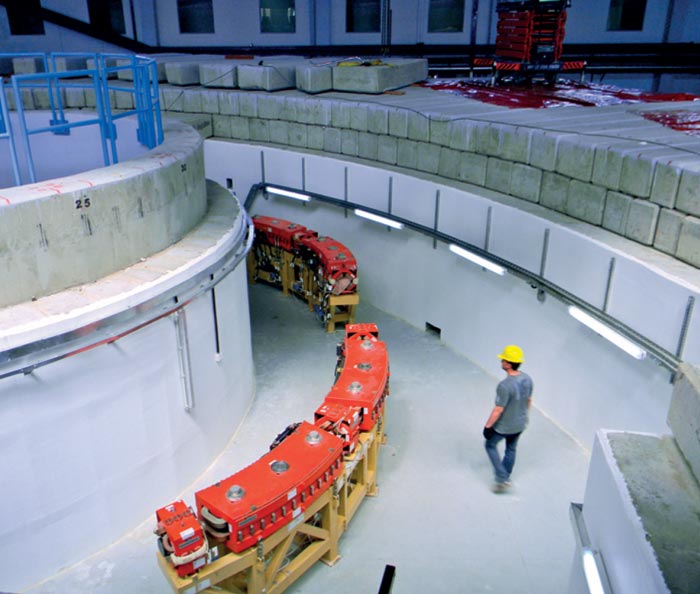
Through an agreement that was announced on 28 May, the EC will contribute €5 million, allowing CERN – working with SESAME – to supply SESAME with magnets for a new electron storage ring at the heart of the facility. This will pave the way for commissioning to begin in 2015. In addition, the EC has already contributed more than €3 million to the project through the European Neighbourhood and Partnership Instrument and by supporting the SESAME networking, computing and data-handling systems.
Construction started in 2003. Like CERN, SESAME was established under the auspices of UNESCO. A key impetus to launch was the donation of components from the BESSY laboratory in Berlin. Since then, a growing community of local scientists has been working closely with partner facilities from around the world and several other laboratories have contributed to making the SESAME facility world-class.
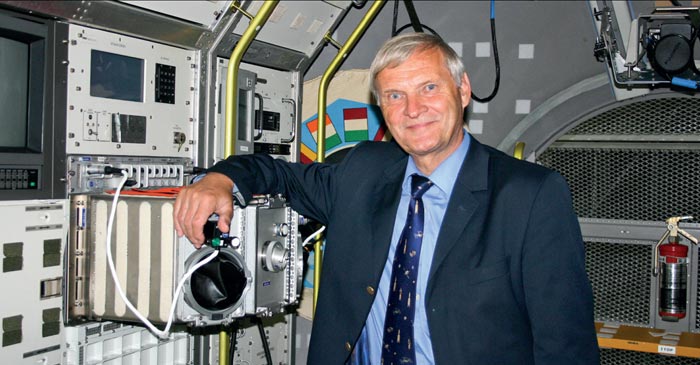
Ernst Messerschmid first arrived at CERN as a summer student in 1970, in the midst of preparations for the start up of the Intersecting Storage Rings (ISR). The studies that he did on beam pick-ups in this ground-breaking particle collider formed the topic of his diploma thesis – but he was soon back at the laboratory as a fellow, sharing in the excitement of seeing injection of the first beams on 29 October that same year. This time he worked on simulations of longitudinal beam instabilities, the subject of his PhD thesis. By the time he came back to CERN some 40 years later to give a colloquium in May this year, he was one of the few people to have worked in space and he had even had a hand in training another former CERN fellow, Christer Fuglesang, before he also flew into space.
A self-confessed “country boy”, Messerschmid grew up in Reutlingen in south-western Germany, training first as a plumber and then attending the Technisches Gymnasium in Stuttgart. An aptitude for mathematics turned him towards more academic pursuits and after military service he enrolled at the universities of Tübingen and Bonn. Coming to CERN then as a summer student opened up a new world – an international lab set among the French-speaking communities on the Franco-Swiss border near Geneva. He was on the first steps of the journey that would take him much further afield – into space.
Following his fellowship at the ISR, Messerschmid gained his doctorate from the University of Freiburg. After further experience in accelerators at Brookhaven National Laboratory, he started work at DESY in 1977 optimizing the alternating-gradient magnets for the PETRA electron–positron collider. He looked set for a career in accelerator physics but while deciding on his future he spotted an advert in the newspaper Die Zeit: “Astronauts wanted.”
The questions were easy for a ‘CERNois’ to answer. The challenge came afterwards.
Ernst Messerschmid
Messerschmid had by chance come across ESA’s first astronaut selection campaign. “There were five boxes to tick,” he recalls. “Scientific training, good health, psychological stability, language skills and experience in an international environment. Being prepared by my time at CERN, I could tick them all.” Out of some 7000 applicants, he was among five selected in Germany, of whom three eventually went into space: Ulf Merbold was first, as an ESA astronaut, with Reinhard Furrer and Messerschmid following. “The questions were easy for a ‘CERNois’ to answer,” he says. “The challenge came afterwards.”
So, Messerschmid left the world of particle accelerators and in 1978 went to work on satellite-based, search-and-rescue communication systems at the German Aerospace Test and Research Institute (DFVLR), the precursor of the German Aerospace Centre (DLR). He was selected for training as a science astronaut in 1983. Two years later, after scientific training at various universities and industrial laboratories, as well as flight training at ESA and NASA, he was assigned as a payload specialist on the first German Spacelab mission, D1, aboard the Challenger space shuttle. With two NASA pilots, three NASA mission specialists and three payload specialists from Europe, this was the largest crew to fly on the space shuttle. Joining Messerschmid from Europe were his fellow German, Reinhard Furrer, and Wubbo Ockels, from the Netherlands. It was the first Spacelab mission in which payload activities were controlled from outside the US. It was also the last flight of the Challenger before the disaster in January 1986.
Working in space
Between 30 October and 6 November 1985, Ernst and his colleagues performed more than 70 experiments. This was the first series to take full advantage of the “weightless” conditions on Spacelab, covering a range of topics in physical, engineering and life-science disciplines. “These were not just ‘look and see’ experiments,” Messerschmid explains. “We studied critical phenomena. With no gravity-driven convection and no sedimentation we could make different alloys – for example, mixing a heavy metal with aluminium. In other experiments we grew uniform, large single crystals of pharmaceuticals for X-ray crystallography studies.”
It was the experiments – more than the launch and distance from Earth – that proved to be the most stressful. “There were 100 or so professors and some 200 students who were dependent on the data we were collecting,” Messerschmid says. “We worked 15–18 hours a day. There was not much time to look out of the window!” But look out of the window he did, and the view of Earth was to leave a lasting impression, not only because of its beauty but also because of the cautionary signs of exploitation. He saw smoke from fires in the rainforests and the bright lights at night over huge urban areas. “Our planet is overcrowded,” he observes. “We can’t continue like this.”
Since 2005, Messerschmid has been back at Stuttgart as chair of astronautics and space stations
After his spaceflight, Messerschmid moved to the University of Stuttgart, where he became director of the Space Systems Institute, doing research and lecturing on space and transportation systems, re-entry vehicles and experiments in weightlessness. He went on to be dean of the faculty of aerospace at Stuttgart and the university’s vice-president for science and technology before becoming head of the European Astronaut Centre in Cologne in 2000. There, he was involved in training Fuglesang, who has since flown twice aboard a space shuttle to the International Space Station. Since 2005, Messerschmid has been back at Stuttgart as chair of astronautics and space stations.
In the meantime, he renewed contact with CERN when he joined Gerald Smith from Pennsylvania State University and others in 1996 on a proposal for a general-purpose, low-energy antiproton facility at the Antiproton Decelerator, based on a Penning trap. Messerschmid and Smith were interested in using antiprotons and in particular the decay chain of the annihilation products for plasma heating in a concept for an antimatter engine. A letter-of-intent described an experiment to measure the energy deposit of proton–antiproton annihilation products in gaseous hydrogen or xenon and compare it with numerical simulations. Messerschmid’s student, Felix Huber, worked at CERN for several months but in the end nothing came of the proposal.
Back in Stuttgart, Messerschmid continues to teach astronautics and – as in the colloquium at CERN – to spread the word on the value of spaceflight for knowledge and innovation. “We fly a mission,” he says, “and afterwards, as professors, we become ‘missionaries’ – ambassadors for science and innovation.” His “mission statement” for spaceflight has much in common with that of CERN, with three imperatives: to explore – the cultural imperative; to understand – the scientific imperative; and to unify – the political imperative. While the scientific imperative is probably self-evident, the cultural imperative recognizes the human desire to learn and the need to inspire the next generation, and the political imperative touches on the value of global endeavours without national boundaries – all aspects that are close to the hearts of the founders of CERN and their successors.
So what advice would he give a young person, perhaps coming to CERN as a summer student, as he did 40 years ago? The plumber-turned-accelerator physicist who became an astronaut reflects for a few moments. “Thinking more in terms of jobs,” he replies, “consider engineering – physicists can also become engineers.” Then he adds: “Physicists live on the technologies that engineers produce. Engineers solve the differential equations, they makes theories a reality.” Who knows, one day the antimatter plasma-heating for propulsion might become a reality.
The idea that the tunnel for the future Large Electron–Positron (LEP) collider should be able to house at some time even further in the future a Large Hadron Collider (LHC) was already in the air in the late 1970s. Moreover – thankfully – those leading CERN at the time had the vision to plan for a tunnel with a big enough diameter to allow the eventual installation of such an accelerator. In the broader community, however, enthusiasm for an LHC surfaced for the first time in 1984, promoted in part by members of CERN’s successful proton–antiproton collider experiments and their discovery of the W and Z bosons the previous year. A workshop in Lausanne on the “Large Hadron Collider in the LEP Tunnel” organized jointly by the European Committee for Future Accelerators (ECFA) and CERN brought together working groups that comprised machine experts, theorists and experimentalists.
With the realization of the great physics potential of an LHC, several motivating workshops and conferences followed where the formidable experimental challenges started to appear manageable, provided that enough R&D work on detectors could be carried out. Highlights of these “LHC experiment preliminaries” were the 1987 Workshop in La Thuile for the so-called “Rubbia Long-Range Planning Committee” and the large Aachen ECFA LHC Workshop in 1990. Last, in March 1992 the famous conference “Towards the LHC Experimental Programme” took place in Evian-les-Bains, where several proto-collaborations presented their designs in “expressions of interest”. Moreover, CERN’s LHC Detector R&D Committee (DRDC), which reviewed and steered R&D collaborations, greatly stimulated innovative developments in detector technology from the early 1990s.
Designs for a Higgs
The detection of the Standard Model Higgs boson played a particularly important role in the design of the general-purpose experiments. In the region of low mass (114 < mH < 150 GeV), the two channels considered particularly suited for unambiguous discovery were the decay to two photons and the decay to two Z bosons, where one or both of the Z bosons could be virtual. Because the natural width of the putative Higgs boson is < 10 MeV, the width of any observed peak would be entirely dominated by instrumental mass-resolution. This meant that in designing the general-purpose detectors, considerable care was placed on the value of the magnetic-field strength, on the precision-tracking systems and on high-resolution electromagnetic calorimeters. The high-mass region and signatures from supersymmetry drove the need for good resolution for jets and missing transverse energy, as well as for almost full 4π calorimetry coverage.
The choice of the field configuration determined the overall design. It was well understood that to stand the best chance of making discoveries at the new “magic” energy scale of the LHC – and in the harsh conditions generated by about a billion pairs of protons interacting every second – would require the invention of new technologies while at the same time pushing existing ones to their limits. In fact, a prevalent saying was: “We think we know how to build a high-energy, high-luminosity hadron collider – but we don’t have the technology to build a detector for it.” That the general-purpose experiments have worked so marvellously well since the start-up of the LHC is a testament to the difficult technology choices made by the conceivers and the critical decisions made during the construction of these experiments. It is noteworthy that the very same elements mentioned above were crucial in the recent discovery of a Higgs boson.
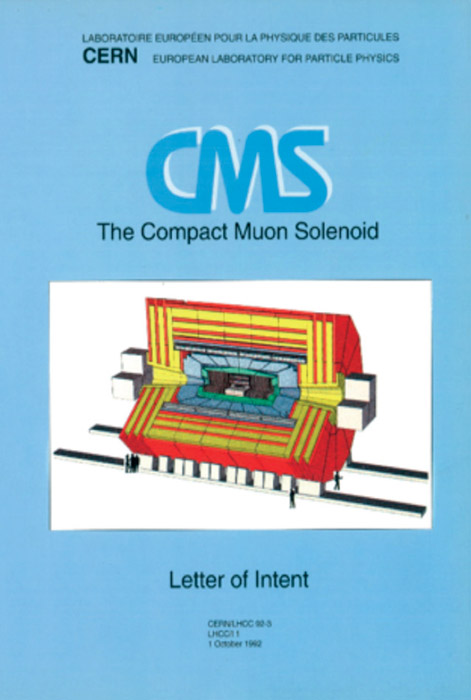
At the Aachen meeting in 1990, much discussion took place on which detector technologies and field configurations to deploy. At the Evian meeting two years later, four experiment designs were presented: two using toroids and two using high-field solenoids. In the aftermath of this meeting, lively discussions took place in the community on how to continue and possibly join forces. The time remaining was short because the newly formed peer-review committee, the LHC Committee (LHCC), had set a deadline for the submission of the letters of intent (LoI) of 1 October 1992.
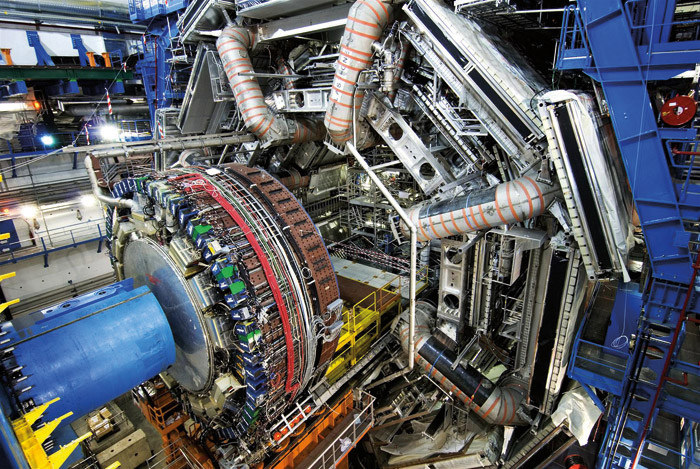
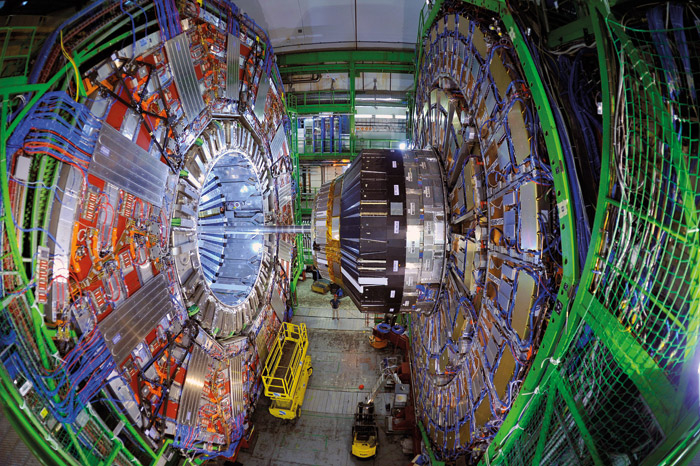
The designs based on the toroidal configurations merged to form the ATLAS experiment, deploying a superconducting air-core toroid for the measurement of muons, supplemented by a superconducting 2 T solenoid to provide the magnetic field for inner tracking and by a liquid-argon/lead electromagnetic calorimeter with a novel “accordion” geometry. The two solenoid-based concepts were eventually submitted separately. Although not spelt out explicitly, it was clear to everyone that resources would permit only two general-purpose experiments. It took seven rounds of intense encounters between the experiment teams and the LHCC referees before the committee decided at its 7th meeting on 8–9 June 1993 “to recommend provisionally that ATLAS and CMS should proceed to technical proposals”, with agreed milestones for further review in November 1993. The CMS design centred on a single large-bore, long, high-field superconducting solenoid, together with powerful microstrip-based inner tracking and an electromagnetic calorimeter of novel scintillating crystals.
So, the two general-purpose experiments were launched but the teams could not have foreseen the enormous technical, financial, industrial and human challenges that lay ahead. For the technical proposals, many difficult technology choices now had to be made “for real” for all of the detector components, whereas the LoI had just presented options for many items. This meant, for example, that several large R&D collaborations sometimes had to give up on excellent developments in instrumentation that had been carried out over many years and to find their new place working on the technologies that the experimental collaborations considered best able to deliver the physics. Costs and resources were a constant struggle: they were reviewed over a period of many years by an expert costs-review committee (called CORE) of the LHCC. It was not easy for many bright physicists to accept that the chosen technology also had to remain affordable.
The years just after the LoI were also the time when the two collaborations grew most rapidly in terms of people and institutes. Finding new collaborators was a high priority on the “to do” list of the spokespeople, who became real frequent-flyers, conducting global “grand tours”. These included many trips to far-flung, non-European countries to motivate and invite participation and contributions to the experiments, in parallel (and sometimes even in competition) with CERN’s effort to get non-member state contributions to enable the timely construction of the accelerator. It is during this period that the currently healthy mix of wealthy and less-wealthy countries was established in the two collaborations, clearly placing a value on not only material contributions but also intellectual ones. One important event was the integration of a strong US community after the discontinuation of the Superconducting Supercollider in 1993, which had a notable impact on both ATLAS and CMS in terms of the final capabilities of these experiments.
The submissions of the technical proposals followed in December 1994 and these were approved in 1996. The formal approval for construction was given on 1 July 1997 by the then director-general, Chris Llewellyn Smith, based on the recommendations of the Research Board and the LHCC (by then at meeting number 27) after the first of a long series of Technical Design Reports and the imposing of a material cost ceiling of SwFr475 million. These were also the years when the formal framework was set up by CERN and all of the funding agencies, first in interim and finally via a detailed Construction Memorandum of Understanding, agreed on in the new, biannual Resources Review Boards.
To explore all our coverage marking the 10th anniversary of the discovery of the Higgs boson ...
To provide the best experiences, we use technologies like cookies to store and/or access device information. Consenting to these technologies will allow us to process data such as browsing behavior or unique IDs on this site. Not consenting or withdrawing consent, may adversely affect certain features and functions.
Functional
Always active
The technical storage or access is strictly necessary for the legitimate purpose of enabling the use of a specific service explicitly requested by the subscriber or user, or for the sole purpose of carrying out the transmission of a communication over an electronic communications network.
Preferences
The technical storage or access is necessary for the legitimate purpose of storing preferences that are not requested by the subscriber or user.
Statistics
The technical storage or access that is used exclusively for statistical purposes.The technical storage or access that is used exclusively for anonymous statistical purposes. Without a subpoena, voluntary compliance on the part of your Internet Service Provider, or additional records from a third party, information stored or retrieved for this purpose alone cannot usually be used to identify you.
Marketing
The technical storage or access is required to create user profiles to send advertising, or to track the user on a website or across several websites for similar marketing purposes.