Comsol -leaderboard other pages

Topics

Slovenia, Ireland and Chile tighten ties with CERN

Slovenia became CERN’s 25th Member State on 21 June, formalising a relationship of over 30 years. Full membership confers voting rights in the CERN Council and opportunities for Slovenian enterprises and citizens.

“Slovenia’s full membership in CERN is an exceptional recognition of our science and researchers,” said Igor Papič, Slovenia’s Minister of Higher Education, Science and Innovation. “Furthermore, it reaffirms and strengthens Slovenia’s reputation as a nation building its future on knowledge and science. Indeed, apart from its beautiful natural landscapes, knowledge is the only true natural wealth of our country. For this reason, we have allocated record financial resources to science, research and innovation. Moreover, we have enshrined the obligation to increase these funds annually in the Scientific Research and Innovation Activities Act.”

“On behalf of the CERN Council, I warmly welcome Slovenia as the newest Member State of CERN,” said Costas Fountas, president of the CERN Council. “Slovenia has a longstanding relationship with CERN, with continuous involvement of the Slovenian science community over many decades in the ATLAS experiment in particular.”

On 8 and 16 May, respectively, Ireland and Chile signed agreements to become Associate Member States of CERN, pending the completion of national ratification processes. They join Türkiye, Pakistan, Cyprus, Ukraine, India, Lithuania, Croatia, Latvia and Brazil as Associate Members – a status introduced by the CERN Council in 2010. In this period, the Organization has also concluded international cooperation agreements with Qatar, Sri Lanka, Nepal, Kazakhstan, the Philippines, Thailand, Paraguay, Bosnia and Herzegovina, Honduras, Bahrain and Uruguay.

Advances in very-high-energy astrophysics

Advances in Very High Energy Astrophysics: The Science Program of the Third Generation IACTs for Exploring Cosmic Gamma Rays

Imaging atmospheric Cherenkov telescopes (IACTs) are designed to detect very-high-energy gamma rays, enabling the study of a range of both galactic and extragalactic gamma-ray sources. By capturing Cherenkov light from gamma-ray-induced air showers, IACTs help trace the origins of cosmic rays and probe fundamental physics, including questions surrounding dark matter and Lorentz invariance. Since the first gamma-ray source detection by the Whipple telescope in 1989, the field has rapidly advanced through instruments like HESS, MAGIC and VERITAS. Building on these successes, the Cherenkov Telescope Array Observatory (CTAO) represents the next generation of IACTs, with greatly improved sensitivity and energy coverage. The northern CTAO site on La Palma is already collecting data, and major infrastructure development is now underway at the southern site in Chile, where telescope construction is set to begin soon.

Considering the looming start to CTAO telescope construction, Advances in Very High Energy Astrophysics, edited by Reshmi Mukherjee of Barnard College and Roberta Zanin, from the University of Barcelona, is very timely. World-leading experts tackle the almost impossible task of summarising the progress made by the third-generation IACTs: HESS, MAGIC and VERITAS.

The range of topics covered is vast, spanning the last 20 years of progress in the areas of IACT instrumentation, data-analysis techniques, all aspects of high-energy astrophysics, cosmic-ray astrophysics and gamma-ray cosmology.  The authors are necessarily selective, so the depth into each sector is limited, but I believe that the essential concepts were properly introduced and the most important highlights captured. The primary focus of the book lies in discussions surrounding gamma-ray astronomy and high-energy physics, cosmic rays and ongoing research into dark matter.

It appears, however, that the individual chapters were all written independently of each other by different authors, leading to some duplications. Source classes and high-energy radiation mechanisms are introduced multiple times, sometimes with different terminology and notation in the different chapters, which could lead to confusion for novices in the field. But though internal coordination could have been improved, a positive aspect of this independence is that each chapter is self-contained and can be read on its own. I recommend the book to emerging researchers looking for a broad overview of this rapidly evolving field.

Mary K Gaillard 1939–2025

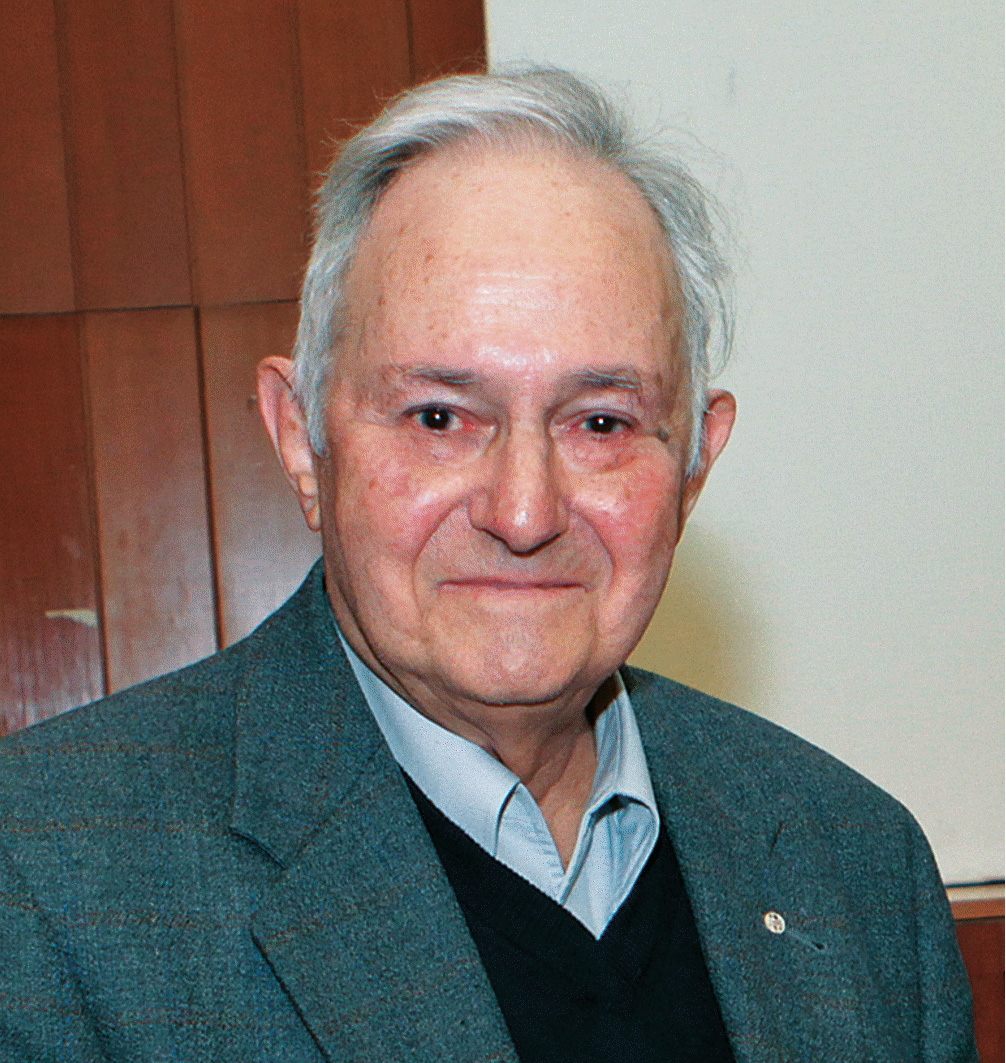
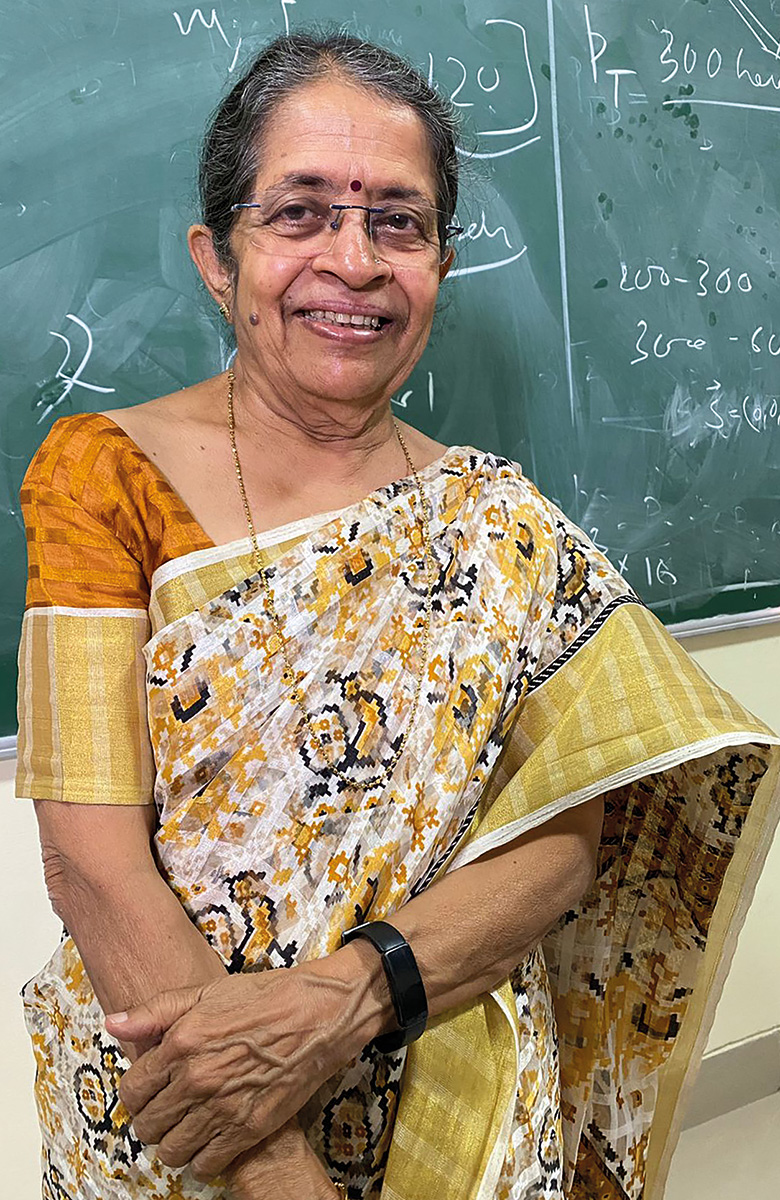
Mary K Gaillard, a key figure in the development of the Standard Model of particle physics, passed away on 23 May 2025. She was born in 1939 to a family of academics who encouraged her inquisitiveness and independence. She graduated in 1960 from Hollins College, a small college in Virginia, where her physics professor recognised her talent, helping her get jobs in the Ringuet laboratory at l’École Polytechnique during a junior year abroad and for two summers at the Brookhaven National Laboratory. In 1961 she obtained a master’s degree from Columbia University and in 1968 a doctorate in theoretical physics from the University of Paris at Orsay. Mary K was a research scientist with the French CNRS and a visiting scientist at CERN for most of the 1970s. From 1981 until she retired in 2009, she was a senior scientist at the Lawrence Berkeley National Laboratory and a professor of physics at the University of California at Berkeley, where she was the first woman in the department.

Mary K was a theoretical physicist of great power, gifted both with a deep physical intuition and a very high level of technical mastery. She used her gifts to great effect and made many important contributions to the development of the Standard Model of elementary particle physics that was established precisely during the course of her career. She pursued her love of physics with powerful determination, in the face of overt discrimination that went well beyond what may still exist today. She fought these battles and produced beautiful, important physics, all while raising three children as a devoted mother.

Undeniable impact

After obtaining her master’s degree at Columbia, Mary K accompanied her first husband, Jean-Marc Gaillard, to Paris, where she was rebuffed in many attempts to obtain a position in an experimental group. She next tried and failed, multiple times, to find an advisor in theoretical physics, which she actually preferred to experimental physics but had not pursued because it was regarded as an even more unlikely career for a woman. Eventually, and fortunately for the development of elementary particle physics, Bernard d’Espagnat agreed to supervise her doctoral research at the University of Paris. While she quickly succeeded in producing significant results in her research, respect and recognition were still slow to come. She suffered many slights from a culture that could not understand or countenance the possibility of a woman theoretical physicist and put many obstacles in her way. Respect and recognition did finally come in appropriate measure, however, by virtue of the undeniable impact of her work.

Her contributions to the field are numerous. During an intensely productive period in the mid-1970s, she completed a series of projects that established the framework for the decades to follow that would culminate in the Standard Model. Famously, during a one-year visit to Fermilab in 1973, using the known properties of the “strange” K mesons, she successfully predicted the mass scale of the fourth “charm” quark a few months prior to its discovery. Back at CERN a few years later, she also predicted, in the framework of grand unified theories, the mass of the fifth “bottom” quark – a successful though still speculative prediction. Other impactful work, extracting the experimental consequences of theoretical constructs, laid down the paths that were followed to experimentally validate the charm-quark discovery and to search for the Higgs boson required to complete the Standard Model. Another key contribution showed how “jets”, streams of particles created in high-energy accelerators, could be identified as manifestations of the “gluon” carriers of the strong force of the Standard Model.

In the 1980s in Berkeley, when the Superconducting Super Collider and the Large Hadron Collider were under discussion, she showed that they could successfully uncover the mechanism of electroweak symmetry breaking required to understand the Standard Model weak force, even if it was “dynamical” – an experimentally much more challenging possibility than breaking by a Higgs boson. For the remainder of her career, she focused principally on work to address issues that are still unresolved by the Standard Model. Much of this research involved “supersymmetry” and its extension to encompass the gravitational force, theoretical constructs that originated in the work of her second husband, the late Bruno Zumino, who also moved from CERN to Berkeley.

Mary K’s accomplishments were recognised by numerous honorary societies and awards, including the National Academy of Sciences, the American Academy of Arts and Sciences, and the J. J. Sakurai Prize for Theoretical Particle Physics of the American Physical Society. She served on numerous governmental and academic advisory panels, including six years on the National Science Board. She tells her own story in a memoir, A Singularly Unfeminine Profession, published in 2015. Mary K Gaillard will surely be remembered when the final history of elementary particle physics is written.

Fritz Caspers 1950–2025

Friedhelm “Fritz” Caspers, a master of beam cooling, passed away on 12 March 2025.

Born in Bonn, Germany in 1950, Fritz studied electrical engineering at RWTH Aachen. He joined CERN in 1981, first as a fellow and then as a staff member. During the 1980s Fritz contributed to stochastic cooling in CERN’s antiproton programme. In the team of Georges Carron and Lars Thorndahl, he helped devise ultra-fast microwave stochastic cooling systems for the then new antiproton cooler ring. He also initiated the development of power field-effect transistors that are still operational today in CERN’s Antiproton Decelerator ring. Fritz conceived novel geometries for pickups and kickers, such as slits cut into ground plates, as now used for the GSI FAIR project, and meander-type electrodes. From 1988 to 1995, Fritz was responsible for all 26 stochastic-cooling systems at CERN. In 1990 he became a senior member of the Institute of Electrical and Electronics Engineers (IEEE), before being distinguished as an IEEE Life Fellow later in his career.

Pioneering diagnostics

In the mid-2000s, Fritz proposed enamel-based clearing electrodes and initiated pertinent collaborations with several German companies. At about the same time, he carried out ultrasound diagnostics on soldered junctions on LHC interconnects. Among the roughly 1000 junctions measured, he and his team found a single non-conform junction. In 2008 Fritz suggested non-elliptical superconducting crab cavities for the HL-LHC. He also proposed and performed pioneering electron-cloud diagnostics and mitigation-using microwaves. For the LHC, he predicted a “magnetron effect”, where coherently radiating cloud electrons might quench the LHC magnets at specific values of their magnetic field. His advice was highly sought after on laboratory-impedance measurements and electromagnetic interference.

Throughout the past three decades, Fritz was active and held in high esteem not only at CERN but all around the world. For example, he helped develop the stochastic cooling systems for GSI in Darmstadt, Germany, where his main contact was Fritz Nolden. He contributed to the construction and commissioning of stochastic cooling for GSI’s Experimental Storage Ring, including the successful demonstration of the stochastic cooling of heavy ions in 1997. Fritz also helped develop the stochastic cooling of rare isotopes for the RI Beam Factory project at RIKEN, Japan.

He helped develop the power field-effect transistors still operational today in CERNs AD ring

Fritz was a long-term collaborator of IMP Lanzhou at the Chinese Academy of Sciences (CAS). In 2015, stochastic cooling was commissioned at the Cooling Storage Ring with his support. Always kind and willing to help anyone who needed him, Fritz also provided valuable suggestions and hands-on experience with impedance measurements for IMP’s HIAF project, especially the titanium-alloy-loaded thin-wall vacuum chamber and magnetic-alloy-loaded RF cavities. In 2021, Fritz was elected as a Distinguished Scientist of the CAS President’s International Fellowship Initiative and awarded the Dieter Möhl Award by the International Committee for Future Accelerators for his contributions to beam cooling.

In 2013, the axion dark-matter research centre IBS-CAPP was established at KAIST, Korea. For this new institute, Fritz proved to be just the right lecturer. Every spring, he visited Korea for a week of intensive lectures on RF techniques, noise measurements and much more. His lessons, which were open to scientists from all over Korea, transformed Korean researchers from RF amateurs into professionals, and his contributions helped propel IBS–CAPP to the forefront of research.

Fritz was far more than just a brilliant scientist. He was a generous mentor, a trusted colleague and a dear friend who lit up a room when he entered, and his absence will be deeply felt by all of us who had the privilege of knowing him. Always on the hunt for novel ideas, Fritz was a polymath and a fully open-minded scientist. His library at home was a visit into the unknown, containing “dark matter”, as we often joked. We will remember Fritz as a gentleman who was full of inspiration for the young and the not-so-young alike. His death is a loss to the whole accelerator world.

Sandy Donnachie 1936–2025

Sandy Donnachie, a particle theorist and scientific leader, passed away on 7 April 2025.

Born in 1936 and raised in Kilmarnock, Scotland, Sandy received his BSc and PhD degrees from the University of Glasgow before taking up a lectureship at University College London in 1963. He was a CERN research associate from 1965 to 1967, and then senior lecturer at the University of Glasgow until 1969, when he took up a chair at the University of Manchester and played a leading role in developing the scientific programme at NINA, the electron synchrotron at the nearby Daresbury National Laboratory. Sandy then served as head of the Department of Physics and Astronomy at the University from 1989 to 1994, and as dean of the Faculty of Science and Engineering from 1994 to 1997. He had a formidable reputation – if a staff member or student asked to see him, he would invite them to come at 8 a.m., to test whether what they wanted to discuss was truly important.

Sandy played a leading role in the international scientific community, maintaining strong connections with CERN throughout his career, as scientific delegate to the CERN Council from 1989 to 1994, chair of the SPS committee from 1988 to 1992, and member of the CERN Scientific Policy Committee from 1988 to 1993. In the UK, he chaired the UK’s Nuclear Physics Board from 1989 to 1993, and served as a member of the Science and Engineering Research Council from 1989 to 1994. He also served as an associate editor for Physical Review Letters from 2010 to 2016. In recognition of his leadership and scientific contributions, he was awarded the UK’s Institute of Physics Glazebrook Medal in 1997.

The “Donnachie–Landshoff pomeron” is known to all those working in the field

Sandy is perhaps best known for his body of work with Peter Landshoff on elastic and diffractive scattering: the “Donnachie–Landshoff pomeron” is known to all those
working in the field. The collaboration began half a century ago and when email became available, they were among its early and most enthusiastic users. Sandy only knew Fortran and Peter only knew C, but somehow they managed to collaborate and together wrote more than 50 publications, including a book Pomeron Physics and QCD with Günter Dosch and Otto Nachtmann published in 2004. The collaboration lasted until, so sadly, Sandy was struck with Parkinson’s disease and was no longer able to use email. Earlier in his career, Sandy had made significant contributions to the field of low-energy hadron scattering, in particular through a collaboration with Claud Lovelace, which revealed many hitherto unknown baryon states in pion–nucleon scattering, and through a series of papers on meson photoproduction, initially with Graham Shaw and then with Frits Berends and other co-workers.

Throughout his career, Sandy was notable for his close collaborations with experimental physics groups, including a long association with the Omega Photon Collaboration at CERN, with whom he co-authored 27 published papers. He and Shaw also produced three books, culminating in Electromagnetic Interactions and Hadronic Structure with Frank Close, which was published in 2007.

In his leisure time, Sandy was a great lover of classical music and a keen sailor, golfer and country walker.

Fritz A Ferger 1933–2025

Fritz Ferger, a multi-talented engineer who had a significant impact on the technical development and management of CERN, passed away on 22 March 2025.

Born in Reutlingen, Germany, on 5 April 1933, Fritz obtained his electrical engineering degree in Stuttgart and a doctorate at the University of Grenoble. A contract with General Electric in his pocket, he visited CERN, curious about the 25 GeV Proton Synchrotron, the construction of which was receiving the finishing touches in the late 1950s. He met senior CERN staff and was offered a contract that he, impressed by the visit, accepted in early 1959.

Fritz’s first assignment was the development of a radio-frequency (RF) accelerating cavity for a planned fixed-field alternating-gradient (FFAG) accelerator. This was abandoned in early 1960 in favour of the study of a 2 × 25 GeV proton–proton collider, the Intersecting Storage Rings (ISR). As a first step, the CERN Electron Storage and Accumulation Ring (CESAR) was constructed to test high-vacuum technology and RF accumulation schemes; Fritz designed and constructed the RF system. With CESAR in operation, he moved on to the construction and tests of the high-power RF system of the ISR, a project that was approved in 1965.

After the smooth running-in of the ISR and, for a while having been responsible for the General Engineering Group, he became division leader of the ISR in 1974, a position he held until 1982. Under his leadership the ISR unfolded its full potential with proton beam currents up to 50 A and a luminosity 35 times the design value, leading CERN to acquire the confidence that colliders were the way to go. Due to his foresight, the development of new technologies was encouraged for the accelerator, including superconducting quadrupoles and pumping by cryo- and getter surfaces. Both were applied on a grand scale in LEP and are still essential for the LHC today.

Under his ISR leadership CERN acquired the confidence that colliders were the way to go

When the resources of the ISR Division were refocussed on LEP in 1983, Fritz became the leader of the Technical Inspection and Safety Commission. This absorbed the activities of the previous health and safety groups, but its main task was to scrutinise the LEP project from all technical and safety aspects. Fritz’s responsibility widened considerably when he became leader of the Technical Support Division in 1986. All of the CERN civil engineering, the tunnelling for the 27 km circumference LEP ring, its auxiliary tunnels, the concreting of the enormous caverns for the experiments and the construction of a dozen surface buildings were in full swing and brought to a successful conclusion in the following years. New buildings on the Meyrin site were added, including the attractive Building 40 for the large experimental groups, in which he took particular pride. At the same time, and under pressure to reduce expenditure, he had to manage several difficult outsourcing contracts.

When he retired in 1997, he could look back on almost 40 years dedicated to CERN; his scientific and technical competence paired with exceptional organisational and administrative talent. We shall always remember him as an exacting colleague with a wide range of interests, and as a friend, appreciated for his open and helpful attitude.

We grieve his loss and offer our sincere condolences to his widow Catherine and their daughters Sophie and Karina.

Charting DESY’s future

How would you describe DESY’s scientific culture?

DESY is a large laboratory with just over 3000 employees. It was founded 65 years ago as an accelerator lab, and at its heart it remains one, though what we do with the accelerators has evolved over time. It is fully funded by Germany.

In particle physics, DESY has performed many important studies, for example to understand the charm quark following the November Revolution of 1974. The gluon was discovered here in the late 1970s. In the 1980s, DESY ran the first experiments to study B mesons, laying the groundwork for core programmes such as LHCb at CERN and the Belle II experiment in Japan. In the 1990s, the HERA accelerator focused on probing the structure of the proton, which, incidentally, was the subject of my PhD, and those results have been crucial for precision studies of the Higgs boson.

Over time, DESY has become much more than an accelerator and particle-physics lab. Even in the early days, it used what is called synchrotron radiation, the light emitted when electrons change direction in the accelerator. This light is incredibly useful for studying matter in detail. Today, our accelerators are used primarily for this purpose: they generate X-rays that image tiny structures, for example viruses.

DESY’s culture is shaped by its very engaged and loyal workforce. People often call themselves “DESYians” and strongly identify with the laboratory. At its heart, DESY is really an engineering lab. You need an amazing engineering workforce to be able to construct and operate these accelerators.

Which of DESY’s scientific achievements are you most proud of?

The discovery of the gluon is, of course, an incredible achievement, but actually I would say that DESY’s greatest accomplishment has been building so many cutting-edge accelerators: delivering them on time, within budget, and getting them to work as intended.

Take the PETRA accelerator, for example – an entirely new concept when it was first proposed in the 1970s. The decision to build it was made in 1975; construction was completed by 1978; and by 1979 the gluon was discovered. So in just four years, we went from approving a 2.3 km accelerator to making a fundamental discovery, something that is absolutely crucial to our understanding of the universe. That’s something I’m extremely proud of.

I’m also very proud of the European X-ray Free-Electron Laser (XFEL), completed in 2017 and now fully operational. Before that, in 2005 we launched the world’s first free-electron laser, FLASH, and of course in the 1990s HERA, another pioneering machine. Again and again, DESY has succeeded in building large, novel and highly valuable accelerators that have pushed the boundaries of science.

What can we look forward to during your time as chair?

We are currently working on 10 major projects in the next three years alone! PETRA III will be running until the end of 2029, but our goal is to move forward with PETRA IV, the world’s most advanced X-ray source. Securing funding for that first, and then building it, is one of my main objectives. In Germany, there’s a roadmap process, and by July this year we’ll know whether an independent committee has judged PETRA IV to be one of the highest-priority science projects in the country. If all goes well, we aim to begin operating PETRA IV in 2032.

Our FLASH soft X-ray facility is also being upgraded to improve beam quality, and we plan to relaunch it in early September. That will allow us to serve more users and deliver better beam quality, increasing its impact.

In parallel, we’re contributing significantly to the HL-LHC upgrade. More than 100 people at DESY are working on building trackers for the ATLAS and CMS detectors, and parts of the forward calorimeter of CMS. That work needs to be completed by 2028.

Hunting axions

Astroparticle physics is another growing area for us. Over the next three years we’re completing telescopes for the Cherenkov Telescope Array and building detectors for the IceCube upgrade. For the first time, DESY is also constructing a space camera for the satellite UltraSat, which is expected to launch within the next three years.

At the Hamburg site, DESY is diving further into axion research. We’re currently running the ALPS II experiment, which has a fascinating “light shining through a wall” setup. Normally, of course, light can’t pass through something like a thick concrete wall. But in ALPS II, light inside a magnet can convert into an axion, a hypothetical dark-matter particle that can travel through matter almost unhindered. On the other side, another magnet converts the axion back into light. So, it appears as if the light has passed through the wall, when in fact it was briefly an axion. We started the experiment last year. As with most experiments, we began carefully, because not everything works at once, but two more major upgrades are planned in the next two years, and that’s when we expect ALPS II to reach its full scientific potential.

We’re also developing additional axion experiments. One of them, in collaboration with CERN, is called BabyIAXO. It’s designed to look for axions from the Sun, where you have both light and magnetic fields. We hope to start construction before the end of the decade.

Finally, DESY also has a strong and diverse theory group. Their work spans many areas, and it’s exciting to see what ideas will emerge from them over the coming years.

How does DESY collaborate with industry to deliver benefits to society?

We already collaborate quite a lot with industry. The beamlines at PETRA, in particular, are of strong interest. For example, BioNTech conducted some of its research for the COVID-19 vaccine here. We also have a close relationship with the Fraunhofer Society in Germany, which focuses on translating basic research into industrial applications. They famously developed the MP3 format, for instance. Our collaboration with them is quite structured, and there have also been several spinoffs and start-ups based on technology developed at DESY. Looking ahead, we want to significantly strengthen our ties with industry through PETRA IV. With much higher data rates and improved beam quality, it will be far easier to obtain results quickly. Our goal is for 10% of PETRA IV’s capacity to be dedicated to industrial use. Furthermore, we are developing a strong ecosystem for innovation on the campus and the surrounding area, with DESY in the centre, called the Science City Hamburg Bahrenfeld.

What’s your position on “dual use” research, which could have military applications?

The discussion around dual-use research is complicated. Personally, I find the term “dual use” a bit odd – almost any high-tech equipment can be used for both civilian and military purposes. Take a transistor for example, which has countless applications, including military ones, but it wasn’t invented for that reason. At DESY, we’re currently having an internal discussion about whether to engage in projects that relate to defence. This is part of an ongoing process where we’re trying to define under what conditions, if any, DESY would take on targeted projects related to defence. There are a range of views within DESY, and I think that diversity of opinion is valuable. Some people are firmly against this idea, and I respect that. Honestly, it’s probably how I would have felt 10 or 20 years ago. But others believe DESY should play a role. Personally, I’m open to it.

If our expertise can help people defend themselves and our freedom in Europe, that’s something worth considering. Of course, I would love to live in a world without weapons, where no one attacks anyone. But if I were attacked, I’d want to be able to defend myself. I prefer to work on shields, not swords, like in Asterix and Obelix, but, of course, it’s never that simple. That’s why we’re taking time with this. It’s a complex and multifaceted issue, and we’re engaging with experts from peace and security research, as well as the social sciences, to help us understand all dimensions. I’ve already learned far more about this than I ever expected to. We hope to come to a decision on this later this year.

You are DESY’s first female chair. What barriers do you think still exist for women in physics, and how can institutions like DESY address them?

There are two main barriers, I think. The first is that, in my opinion, society at large still discourages girls from going into maths and science.

Certainly in Germany, if you stopped a hundred people on the street, I think most of them would still say that girls aren’t naturally good at maths and science. Of course, there are always exceptions: you do find great teachers and supportive parents who go against this narrative. I wouldn’t be here today if I hadn’t received that kind of encouragement.

That’s why it’s so important to actively counter those messages. Girls need encouragement from an early age, they need to be strengthened and supported. On the encouragement side, DESY is quite active. We run many outreach activities for schoolchildren, including a dedicated school lab. Every year, more than 13,000 school pupils visit our campus. We also take part in Germany’s “Zukunftstag”, where girls are encouraged to explore careers traditionally considered male-dominated, and boys do the same for fields seen as female-dominated.

Looking ahead, we want to significantly strengthen our ties with industry

The second challenge comes later, at a different career stage, and it has to do with family responsibilities. Often, family work still falls more heavily on women than men in many partnerships. That imbalance can hold women back, particularly during the postdoc years, which tend to coincide with the time when many people are starting families. It’s a tough period, because you’re trying to advance your career.

Workplaces like DESY can play a role in making this easier. We offer good childcare options, flexibility with home–office arrangements, and even shared leadership positions, which help make it more manageable to balance work and family life. We also have mentoring programmes. One example is dynaMENT, where female PhD students and postdocs are mentored by more senior professionals. I’ve taken part in that myself, and I think it’s incredibly valuable.

Do you have any advice for early-career women physicists?

If I could offer one more piece of advice, it’s about building a strong professional network. That’s something I’ve found truly valuable. I’m fortunate to have a fantastic international network, both male and female colleagues, including many women in leadership positions. It’s so important to have people you can talk to, who understand your challenges, and who might be in similar situations. So if you’re a student, I’d really recommend investing in your network. That’s very important, I think.

What are your personal reflections on the next-generation colliders?

Our generation has a responsibility to understand the electroweak scale and the Higgs boson. These questions have been around for almost 90 years, since 1935 when Hideki Yukawa explored the idea that forces might be mediated by the exchange of massive particles. While we’ve made progress, a true understanding is still out of reach. That’s what the next generation of machines is aiming to tackle.

The problem, of course, is cost. All the proposed solutions are expensive, and it is very challenging to secure investments for such large-scale projects, even though the return on investment from big science is typically excellent: these projects drive innovation, build high-tech capability and create a highly skilled workforce.

Europe’s role is more vital than ever

From a scientific point of view, the FCC is the most comprehensive option. As a Higgs factory, it offers a broad and strong programme to analyse the Higgs and electroweak gauge bosons. But who knows if we’ll be able to afford it? And it’s not just about money. The timeline and the risks also matter. The FCC feasibility report was just published and is still under review by an expert committee. I’d rather not comment further until I’ve seen the full information. I’m part of the European Strategy Group and we’ll publish a new report by the end of the year. Until then, I want to understand all the details before forming an opinion.

It’s good to have other options too. The muon collider is not yet as technically ready as the FCC or linear collider, but it’s an exciting technology and could be the machine after next. Another could be using plasma-wakefield acceleration, which we’re very actively working on at DESY. It could enable us to build high-energy colliders on a much smaller scale. This is something we’ll need, as we can’t keep building ever-larger machines forever. Investing in accelerator R&D to develop these next-gen technologies is crucial.

Still, I really hope there will be an intermediate machine in the near future, a Higgs factory that lets us properly explore the Higgs boson. There are still many mysteries there. I like to compare it to an egg: you have to crack it open to see what’s inside. And that’s what we need to do with the Higgs.

One thing that is becoming clearer to me is the growing importance of Europe. With the current uncertainties in the US, which are already affecting health and climate research, we can’t assume fundamental research will remain unaffected. That’s why Europe’s role is more vital than ever.

I think we need to build more collaborations between European labs. Sharing expertise, especially through staff exchanges, could be particularly valuable in engineering, where we need a huge number of highly skilled professionals to deliver billion-euro projects. We’ve got one coming up ourselves, and the technical expertise for that will be critical.

I believe science has a key role to play in strengthening Europe, not just culturally, but economically too. It’s an area where we can and should come together.

European strategy update: the community speaks

Community input themes of the European Strategy process

The deadline for submitting inputs to the 2026 update of the European Strategy for Particle Physics (ESPP) passed on 31 March. A total of 263 submissions, ranging from individual to national perspectives, express the priorities of the high-energy physics community (see “Community inputs” figure). These inputs will be distilled by expert panels in preparation for an Open Symposium that will be held in Venice from 23 to 27 June (CERN Courier March/April 2025 p11).

Launched by the CERN Council in March 2024, the stated aim of the 2026 update to the ESPP is to develop a visionary and concrete plan that greatly advances human knowledge in fundamental physics, in particular through the realisation of the next flagship project at CERN. The community-wide process, which is due to submit recom­mendations to Council by the end of the year, is also expected to prioritise alternative options to be pursued if the preferred project turns out not to be feasible or competitive.

“We are heartened to see so many rich and varied contributions, in particular the national input and the various proposals for the next large-scale accelerator project at CERN,” says strategy secretary Karl Jakobs of the University of Freiburg, speaking on behalf of the European Strategy Group (ESG). “We thank everyone for their hard work and rigour.”

Two proposals for flagship colliders are at an advanced stage: a Future Circular Collider (FCC) and a Linear Collider Facility (LCF). As recommended in the 2020 strategy update, a feasibility study for the FCC was released on 31 March, describing a 91 km-circumference infrastructure that could host an electron–positron Higgs and electroweak factory followed by an energy-frontier hadron collider at a later stage. Inputs for an electron–positron LCF cover potential starting configurations based on Compact Linear Collider (CLIC) or International Linear Collider (ILC) technologies. It is proposed that the latter LCF could be upgraded using CLIC, Cool Copper Collider, plasma-wakefield or energy-recovery technologies and designs. Other proposals outline a muon collider and a possible plasma-wakefield collider, as well as potential “bridging” projects to a future flagship collider. Among the latter are LEP3 and LHeC, which would site an electron–positron and an electron–proton collider, respectively, in the existing LHC tunnel. For the LHeC, an additional energy-recovery linac would need to be added to CERN’s accelerator complex.

Future choices

In probing beyond the Standard Model and more deeply studying the Higgs boson and its electroweak domain, next-generation colliders will pick up where the High-Luminosity LHC (HL-LHC) leaves off. In a joint submission, the ATLAS and CMS collaborations presented physics projections which suggest that the HL-LHC will be able to: observe the H  µ+µ and H  Zγ decays of the Higgs boson; observe Standard Model di-Higgs production; and measure the Higgs’ trilinear self-coupling with a precision better than 30%. The joint document also highlights the need for further progress in high-precision theoretical calculations aligned with the demands of the HL-LHC and serves as important input to the discussion on the choice of a future collider at CERN.

Neutrinos and cosmic messengers, dark matter and the dark sector, strong interactions and flavour physics also attracted many inputs, allowing priorities in non-collider physics to complement collider programmes. Underpinning the community’s physics aspirations are numerous submissions in the categories of accelerator science and technology, detector instrumentation and computing. Progress in these technologies is vital for the realisation of a post-LHC collider, which was also reflected by the recommendation of the 2020 strategy update to define R&D roadmaps. The scientific and technical inputs will be reviewed by the Physics Preparatory Group (PPG), which will conduct comparative assessments of the scientific potential of various proposed projects against defined physics benchmarks.

We are heartened to see so many rich and varied contributions

Key to the ESPP 2026 update are 57 national and national-laboratory submissions, including some from outside Europe. Most identify the FCC as the preferred project to succeed the LHC. If the FCC is found to be unfeasible, many national communities propose that a linear collider at CERN should be pursued, while taking into account the global context: a 250 GeV linear collider may not be competitive if China decides to proceed with a Circular Electron Positron Collider at a comparable energy on the anticipated timescale, potentially motivating a higher energy electron–positron machine or a proton–proton collider instead.

Complex process

In its review, the ESG will take the physics reach of proposed colliders as well as other factors into account. This complex process will be undertaken by seven working groups, addressing: national inputs; diversity in European particle physics; project comparison; implementation of the strategy and deliverability of large projects; relations with other fields of physics; sustainability and environmental impact; public engagement, education, communication and social and career aspects for the next generation; and knowledge and technology transfer. “The ESG and the PPG have their work cut out and we look forward to further strong participation by the full community, in particular at the Open Symposium,” says Jakobs.

A briefing book prepared by the PPG based on the community input and discussions at the Open Symposium will be submitted to the ESG by the end of September for consideration during a five-day-long drafting session, which is scheduled to take place from 1 to 5 December. The CERN Council will then review the final ESG recommendations ahead of a special session to be held in Budapest in May 2026.

Machine learning in industry

Antoni Shtipliyski

In the past decade, machine learning has surged into every corner of industry, from travel and transport to healthcare and finance. For early-career researchers, who have spent their PhDs and postdocs coding, a job in machine learning may seem a natural next step.

“Scientists often study nature by attempting to model the world around us into math­ematical models and computer code,” says Antoni Shtipliyski, engineering manager at Skyscanner. “But that’s only one part of the story if the aim is to apply these models to large-scale research questions or business problems. A completely orthogonal set of challenges revolves around how people collaborate to build and operate these systems. That’s where the real work begins.”

Used to large-scale experiments and collaborative problem solving, particle physicists are uniquely well-equipped to step into machine-learning roles. Shtipliyski worked on upgrades for the level-1 trigger system of the CMS experiment at CERN, before leaving to lead the machine-learning operations team in one of the biggest travel companies in the world.

Effective mindset

“At CERN, building an experimental detector is just the first step,” says Shtipliyski. “To be useful, it needs to be operated effectively over a long period of time. That’s exactly the mindset needed in industry.”

During his time as a physicist, Shtipliyski gained multiple skills that continue to help him at work today, but there were also a number of other areas he developed to succeed in machine learning in industry. One critical gap in a physicists’ portfolio, he notes, is that many people interpret machine-learning careers as purely algorithmic development and model training.

“At Skyscanner, my team doesn’t build models directly,” he says. “We look after the platform used to push and serve machine-learning models to our users. We oversee the techno-social machine that delivers these models to travellers. That’s the part people underestimate, and where a lot of the challenges lie.”

An important factor for physicists transitioning out of academia is to understand the entire lifecycle of a machine-learning project. This includes not only developing an algorithm, but deploying it, monitoring its performance, adapting it to changing conditions and ensuring that it serves business or user needs.

Learning to write and communicate yourself is incredibly powerful

“In practice, you often find new ways that machine-learning models surprise you,” says Shtipliyski. “So having flexibility and confidence that the evolved system still works is key. In physics we’re used to big experiments like CMS being designed 20 years before being built. By the time it’s operational, it’s adapted so much from the original spec. It’s no different with machine-learning systems.”

This ability to live with ambiguity and work through evolving systems is one of the strongest foundations physicists can bring. But large complex systems cannot be built alone, so companies will be looking for examples of soft skills: teamwork, collaboration, communication and leadership.

“Most people don’t emphasise these skills, but I found them to be among the most useful,” Shtipliyski says. “Learning to write and communicate yourself is incredibly powerful. Being able to clearly express what you’re doing and why you’re doing it, especially in high-trust environments, makes everything else easier. It’s something I also look for when I do hiring.”

Industry may not offer the same depth of exploration as academia, but it does offer something equally valuable: breadth, variety and a dynamic environment. Work evolves fast, deadlines come more readily and teams are constantly changing.

“In academia, things tend to move more slowly. You’re encouraged to go deep into one specific niche,” says Shtipliyski. “In industry, you often move faster and are sometimes more shallow. But if you can combine the depth of thought from academia with the breadth of experience from industry, that’s a winning combination.”

Applied skills

For physicists eyeing a career in machine learning, the most they can do is to familiarise themselves with tools and practices for building and deploying models. Show that you can use the skills developed in academia and apply them to other environments. This tells recruiters that you have a willingness to learn, and is a simple but effective way of demonstrating commitment to a project from start to finish, beyond your assigned work.

“People coming from physics or mathematics might want to spend more time on implementation,” says Shtipliyski. “Even if you follow a guided walkthrough online, or complete classes on Coursera, going through the whole process of implementing things from scratch teaches you a lot. This puts you in a position to reason about the big picture and shows employers your willingness to stretch yourself, to make trade-offs and to evaluate your work critically.”

A common misconception is that practicing machine learning outside of academia is somehow less rigorous or less meaningful. But in many ways, it can be more demanding.

Scientific development is often driven by arguments of beauty and robustness. In industry, there’s less patience for that,” he says. “You have to apply it to a real-world domain – finance, travel, healthcare. That domain shapes everything: your constraints, your models, even your ethics.”

Shtipliyski emphasises that the technical side of machine learning is only one half of the equation. The other half is organisational: helping teams work together, navigate constraints and build systems that evolve over time. Physicists would benefit from exploring different business domains to understand how machine learning is used in different contexts. For example, GDPR constraints make privacy a critical issue in healthcare and tech. Learning how government funding is distributed throughout each project, as well as understanding how to build a trusting relationship between the funding agencies and the team, is equally important.

“A lot of my day-to-day work is just passing information, helping people build a shared mental model,” he says. “Trust is earned by being vulnerable yourself, which allows others to be vulnerable in turn. Once that happens, you can solve almost any problem.”

Taking the lead

Particle physicists are used to working in high-stakes, international teams, so this collaborative mindset is engrained in their training. But many may not have had the opportunity to lead, manage or take responsibility for an entire project from start to finish.

“In CMS, I did not have a lot of say due to the complexity and scale of the project, but I was able to make meaningful contributions in the validation and running of the detector,” says Shtipliyski. “But what I did not get much exposure to was the end-to-end experience, and that’s something employers really want to see.”

This does not mean you need to be a project manager to gain leadership experience. Early-career researchers have the chance to up-skill when mentoring a newcomer, help improve the team’s workflow in a proactive way, or network with other physicists and think outside the box.

You can be the dedicated expert in the room, even if you’re new. That feels really empowering

“Even if you just shadow an existing project, if you can talk confidently about what was done, why it was done and how it might be done differently – that’s huge.”

Many early-career researchers hesitate prior to leaving academia. They worry about making the “wrong” choice, or being labelled as a “finance person” or “tech person” as soon as they enter another industry. This is something Shtipliyski struggled to reckon with, but eventually realised that such labels do not define you.

“It was tough at CERN trying to anticipate what comes next,” he admits. “I thought that I could only have one first job. What if it’s the wrong one? But once a scientist, always a scientist. You carry your experiences with you.”

Shtipliyski quickly learnt that industry operates under a different set of rules: where everyone comes from a different background, and the levels of expertise differ depending on the person you will speak to next. Having faced intense imposter syndrome at CERN – having shared spaces with world-leading experts – industry offered Shtipliyski a more level playing field.

“In academia, there’s a kind of ladder: the longer you stay, the better you get. In industry, it’s not like that,” says Shtipliyski. “You can be the dedicated expert in the room, even if you’re new. That feels really empowering.”

Industry rewards adaptability as much as expertise. For physicists stepping beyond academia, the challenge is not abandoning their training, but expanding it – learning to navigate ambiguity, communicate clearly and understand the full lifecycle of real-world systems. Harnessing a scientist’s natural curiosity, and demonstrating flexibility, allows the transition to become less about leaving science behind, and more about discovering new ways to apply it.

“You are the collection of your past experiences,” says Shtipliyski. “You have the freedom to shape the future.”

Exographer

Exographer

Try lecturing the excitement of subatomic particle discovery to physics students, and you might inspire several future physicists. Lecture physics to a layperson, and you might get a completely different response. Not everyone is excited about particle physics by listening to lectures alone. Sometimes video games can help. 

Exographer, the brainchild of Raphael Granier de Cassagnac (CERN Courier March/April 2025 p48), puts you in the shoes of an investigator in a world where scientists are fascinated by what their planet is made of, and have made a barrage of apparatus to investigate it. Your role is to traverse through this beautiful realm and solve puzzles that may lead to future discoveries, encountering frustration and excitement along the way.

The puzzles are neither nerve-racking nor too difficult, but solving each one brings immense satisfaction, much like the joy of discoveries in particle physics. These eureka moments make up for the hundreds of times when you fell to your death because you forgot to use the item that could have saved you.

The most important part of the game is taking pictures, particularly inside particle detectors. These reveal the tracks of particles, reminiscent of Feynman diagrams. It’s your job to figure out what particles leave these tracks. Is it a known particle? Is it new? Can we add it to our collection?

I am sure that the readers of CERN Courier will be familiar with particle discoveries throughout the past century, but as a particle physicist I still found awe and joy in rediscovering them whilst playing the game. It feels like walking through a museum, with each apparatus you encounter more sophisticated than the last. The game also hides an immensely intriguing lore of scientists from our own world. Curious gamers who spend extra time unravelling these stories are rewarded with various achievements.

All in all, this game is a nice introduction to the world of particle-physics discovery – an enjoyable puzzle/platformer game you should try, regardless of whether or not you are a physicist. 

bright-rec iop pub iop-science physcis connect