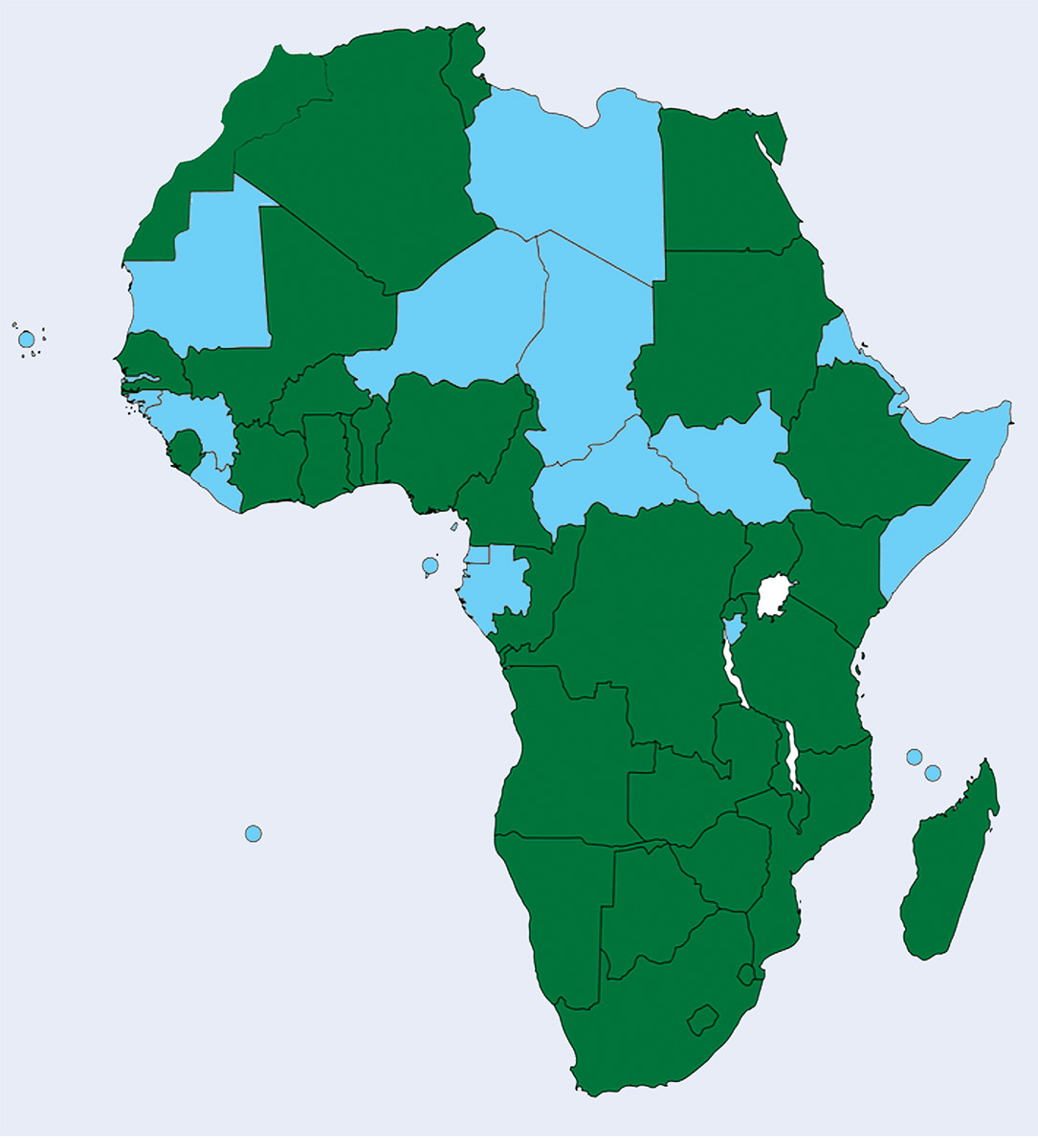
Science and technology are key instruments for a society’s economic growth and development. Yet Africa’s science, innovation and education have been chronically under-funded. Transferring knowledge, building research capacity and developing competencies through training and education are major priorities for Africa in the 21st century. Physics combines these priorities by extending the frontiers of knowledge and inspiring young people. It is therefore essential to make basic knowledge of emerging technologies available and accessible to all African citizens to build a steady supply of trained and competent researchers.
In this spirit, the African School of Fundamental Physics and Applications was initiated in 2010 as a three-week biennial event. To increase networking opportunities among participants, the African Conference on Fundamental and Applied Physics (ACP) was included as a one-week extension of the school. The first edition was held in Namibia in 2018 and the second, co-organised jointly by Mohammed V University and Cadi Ayyad University in Morocco, was rebranded ACP2021, originally scheduled to take place in December but postponed due to COVID-19. The virtual event held from 7 to 11 March attracted more than 600 registrants, an order of magnitude higher than its first edition.
The ACP2021 scientific programme covered the three major physics areas of interest in Africa defined by the African Physical Society: particles and related applications; light sources and their applications; and cross-cutting fields covering accelerator physics, computing, instrumentation and detectors. The programme also included topics in quantum computing and quantum information, as well as machine learning and artificial intelligence. Furthermore, ACP2021 focused on topics related to physics education, community engagement, women in physics and early-career physicists. The agenda was stretched to accommodate different time zones and 15 parallel sessions took place.
Welcome speeches by Hassan Hbid (Cadi Ayyad University) and by Mohammed Rhachi (Mohammed V University) were followed by a plenary talk by former CERN Director-General Rolf Heuer, “Science bridging Cultures and Nations” and an overview of the African Strategy for Fundamental and Applied Physics (ASFAP). Launched in 2021, the ASFAP aims to increase African education and research capabilities, build the foundations and frameworks to attract the participation of African physicists, and establish a culture of awareness of grassroots physics activities contrary to the top-down strategies initiated by governments. Shamila Nair-Bedouelle (UNESCO) conveyed a deep appreciation of and support for the ASFAP initiative, which is aligned with the agenda of the United Nations Sustainable Development Goals. A rich panel discussion followed, raising different views on physics education and research roadmaps in Africa.
A central element of the ACP2021 physics programme is the ASFAP community planning meeting, where physics and community-engagement groups discussed progress in soliciting the community input that is critical for the ASFAP report. The report will outline the direction for the next decade to encourage and strengthen higher education, capacity building and scientific research in Africa.
The motivation and enthusiasm of the ACP2021 participants was notable, and the efforts in support of research and education across Africa were encouraged. The next ACP in 2023 will be hosted by South Africa.
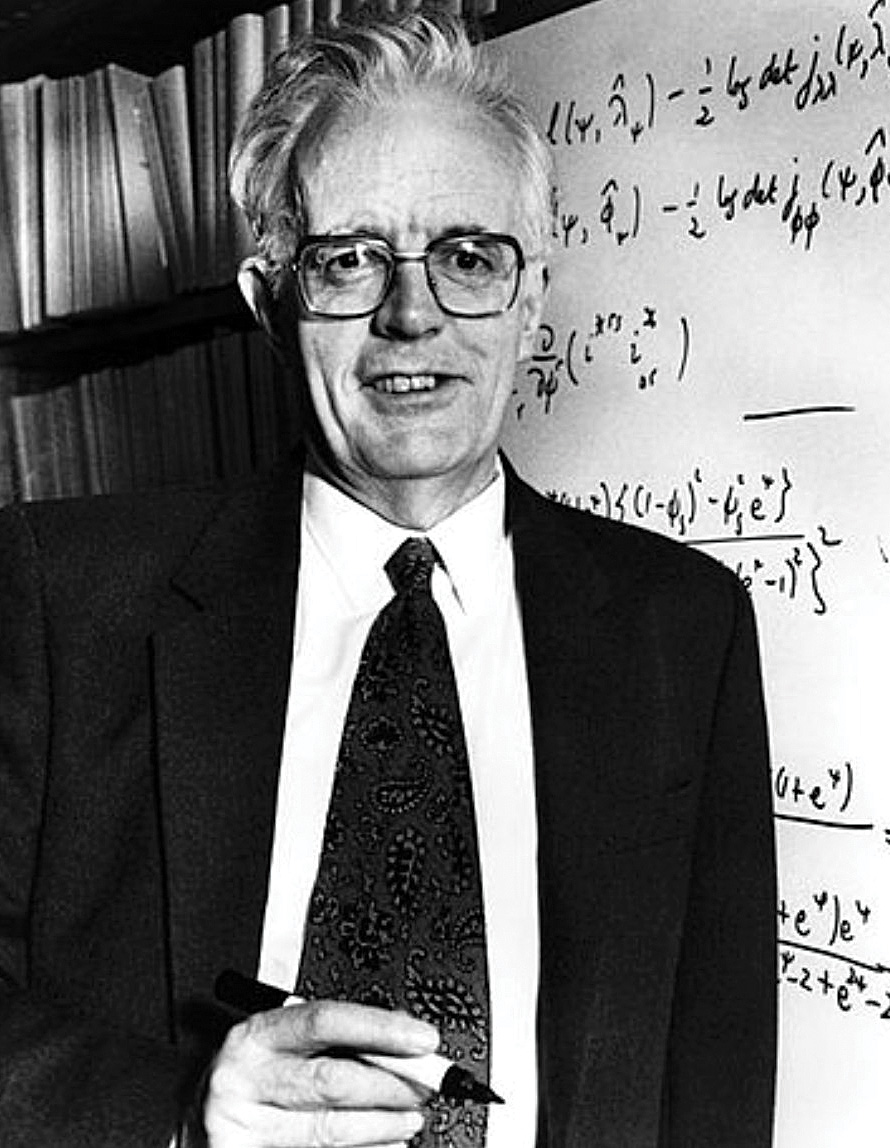
David Cox, a giant in the world of statistics, passed away earlier this year at the age of 97. As he had been a contributor to PHYSTAT workshops and was a supporter of its activities, a seminar held on 23 March was dedicated to his memory. Brad Efron (Stanford) referred to Cox as the world’s most famous statistician – an assessment confirmed by Cox being the first recipient of the International Prize in Statistics, roughly the equivalent of a Nobel Prize. The citation mentioned a lifelong series of contributions to statistics spanning many subjects. In particular, it emphasised his work on what is now called Cox’s proportional hazards model, which provides a very useful way to implement regression analysis of survival times (the times to an event of interest such as the death of a person or failure of a machine). His contribution is ranked 16th in Nature’s list of most-cited papers in any subject.
Heather Battey (Imperial College), who collaborated closely with Cox for the past five years, described how he was still very active until his very last days, and highlighted his helpful and charming personality.
Long-time collaborator Nancy Reid (Toronto) concurred, admiring his ability to see through extraneous detail and concentrate on the essence of the problem. She remembers going with him to watch Verdi’s Ernani, sung in Italian, in Budapest when they were both attending a statistics meeting there. So that Reid wouldn’t be completely lost, Cox kindly summarised the lengthy and convoluted plot by telling her “The tenor is in love with the soprano, and the baritone is trying to keep them apart.”
It was a special pleasure to have Cox available at our meetings, and he was always prepared to explain statistical issues in informal discussions with particle physicists. Bob Cousins (UCLA) recalled the talks Cox had given at PHYSTAT meetings in 2005, 2007 and 2011. He compared and contrasted frequentist statistics and the “five faces” of Bayesian statistics, repeatedly warning of the dangers of “treacherous” uniform prior probability densities used in attempts to represent ignorance. He alluded to a general key problem in frequentist statistics, that of ensuring that the long run used to calibrate coverage is relevant to the specific data sample being analysed. He also discussed in more technical detail issues of testing multiple hypotheses, including graphical methods. Cox and Reid further offered published thoughts on problems presented to them by LHC physicists. Cousins concluded that we would do well to read Cox’s contributions again.
PHYSTAT is pleased and honoured to have had the opportunity of paying its respect to a very eminent statistician and a wonderful person. His memory will long be with us.
The SLAC Summer Institute (SSI) is an annual two-week-long Summer School tradition since 1973. The theme of the 50th SLAC Summer Institute for this Golden Anniversary year’s installment is “Golden Opportunities: Puzzles & Surprises – Past & Future”. These SSI lectures will discuss how our attempts to solve and understand the various puzzles and surprises presented to us by nature, whether we have been successful or not, have pushed – and continue to push – our field forward. This SSI intends to inspire reinvigorated effort for new revelations on these fundamental puzzles. SSI is especially targeted for graduate students and postdocs while senior researchers are also welcome.
This year’s SSI is proceeding with the on SLAC site full program in person, with lectures in the morning, Q&A discussions and projects in the afternoon. There will be also special 50th anniversary sessions at the end of SSI to look back at the history of SSI. We are evaluating the COVID-19 situation continuously and preparing precautionary measures, but unless the situation is taking a worse turn than the present orange level in California the program remains on site.
For SSI logistics questions, please use the contact us link on the web page
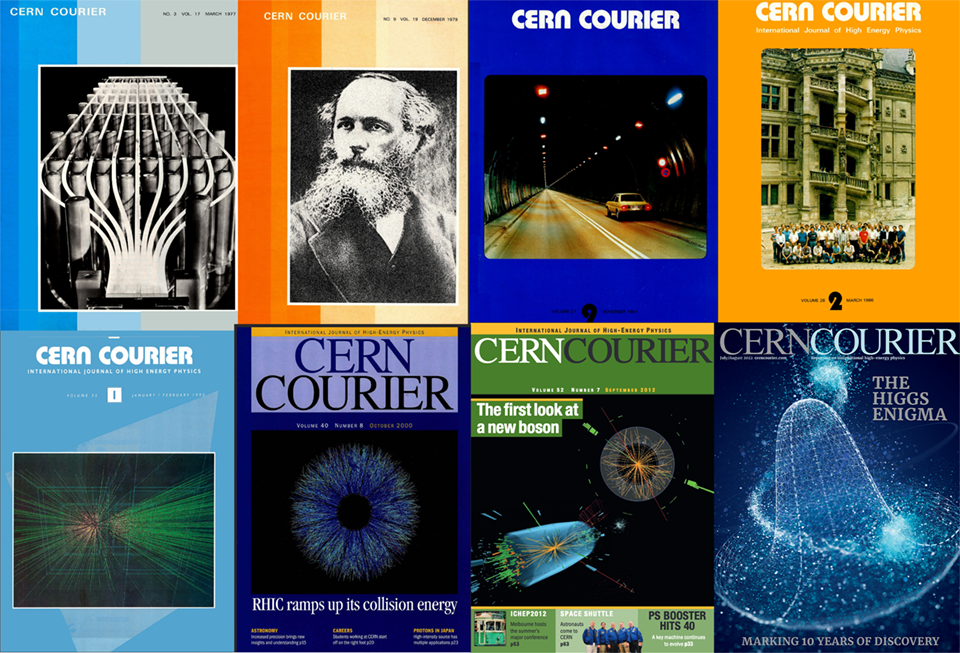
It was March 1977 when the hypothetical Higgs boson first made its way onto the pages of this magazine. Reporting on a talk by Steven Weinberg at the Chicago Meeting of the American Physical Society, the editors noted the dramatic success of gauge theories in explaining recent discoveries at the time — beginning with the observation of the neutral current at CERN in 1973 and the “new physics” following the J/ψ discovery at Brookhaven and Stanford the following year, observing: “The theories also postulate a set of scalar particles in a similar mass range… If Higgs bosons exist, they will affect particle behaviour at all energies. However, their postulated interactions are even weaker than the normal weak interactions. The effects would only be observable on a very small scale and would usually be drowned out by the stronger interactions.”
The topic clearly drew the attention of readers, as just a few issues later, in September 1977, the editors delved deeper into the origins of the Higgs boson and its role in spontaneous symmetry breaking, offering Abdus Salam’s “personal picture” to communicate this abstruse concept: “Imagine a banquet where guests sit at round tables. A bird’s eye view of the scene presents total symmetry, with serviettes alternating with people around each table. A person could equally well take a serviette from his right or from his left. The symmetry is spontaneously broken when one guest decides to pick up from his left and everyone else follows suit.”
Within a year, CERNCourier was on the trail of how the Higgs boson might show itself experimentally. Reporting on a “Workshop on Producing High Luminosity Proton–Antiproton Storage Rings” held at Berkeley, the April 1978 issue stated: “As well as the intermediate boson, the proton–antiproton colliders could give the first signs of the Higgs particles or of other unexpected states. While the discovery of weak neutral currents and charm provided impressive evidence for the gauge-theory picture that unifies electromagnetic and weak interactions, one prediction of this picture is the existence of spinless Higgs bosons. If these are not found at higher energies, some re-thinking might be required.” In the December 1978 issue, with apologies to Neil Armstrong, the Courier ran a piece titled “A giant LEP for mankind”. The hope was that with LEP, physicists had the tool to explore in depth the details of the symmetry breaking mechanism at the heart of weak interaction dynamics.
The award of the 1979 Nobel Prize in Physics to Weinberg, Glashow and Salam for the electroweak theory received full coverage in December that year, with the Courier expressing confidence in the Higgs: “Another vital ingredient of the theory which remains to be tested are the Higgs particles of the spontaneous symmetry breaking mechanism. Here the theory is still in a volatile state and no firm predictions are possible. But this mechanism is crucial to the theory, and something has to turn up.”
A Higgs for the masses
To many people, wrote US theorist Sam Treiman in November 1981, the Higgs particle looks somewhat artificial — “a kind of provisional stand-in for deeper effects at a more fundamental level”. Four years later, “with several experiments embarking on fresh Higgs searches”, Richard Dalitz and Louis Lyons organised a neatly titled workshop “Higgs for the masses” to review the theoretical and experimental status. Another oddity of the Higgs, wrote Lyons, is that unless it is very light (less than 10–17 eV), the Higgs should make the universe curved, “contributing more to the cosmological constant than the known limit permits”. Lower limits (from spontaneous symmetry breaking) and higher limits (from the unitarity requirement) open up a wide range of masses for the Higgs to manoeuvre — between 7 and 1000 GeV, he noted. “From time to time, new ‘bumps’ and effects are tentatively put forward as candidate Higgs, but so far none are convincing.”
LEP’s electroweak adventure reached a dramatic climax in the summer of 2000, with hints that a light Higgs boson was showing itself. In October, the machine was granted a stay of Higgs execution. Alas, the signal faded, and the final curtain fell on LEP in November — a “LEPilogue” heralding the beginning of a new era: the LHC.
Discussions about a high-energy hadron collider were ongoing long before: ICFA’s Future Perspectives meeting at Brookhaven in October 1987 noted two major hadron collider projects on the market: “the US Superconducting Supercollider, with collision energies of 40 TeV in an 84 kilometre ring, and the CERN Large Hadron Collider, with up to 17 TeV collision energies”. In December 1994, shortly after CERN turned 40, Council provided the lab with “The ultimate birthday present“: the unanimous approval of the LHC. A quarter of a century later, the LHC started up and brought particle physics to the world.
Together with LEP data, Fermilab’s CDF and DØ experiments and the LHC 2011 measurement campaign narrowed down the possible mass range for the Higgs boson to be between 115 and 127 GeV. First tantalising hints of the Higgs boson were presented on 13 December 2011. The quest remained open for another half a year, until Director-General Rolf Heuer, following the famous talks by ATLAS and CMS spokespersons Fabiola Gianotti and Joe Incandela, concluded: “As a layman I would say: I think we have it” on 4 July 2012. It was a day to remember: a breakthrough discovery rooted in decades of work by thousands of individuals that rocked the CERN auditorium and reverberated around the world. A new chapter in particle physics had begun…
To mark the 10th anniversary of this momentous event, from Monday 4 July the Courier will be exploring the theoretical and experimental effort behind the Higgs-boson discovery, the immense progress made by ATLAS and CMS in our understanding of this enigmatic particle, and the deep connections between the Higgs boson and some of the most profound open questions in fundamental physics.
Wherever the Higgs boson leads, CERN Courierwill be there to report!
The search for the Higgs boson is the kind of adventure that draws many young people to science, even if they go on to work in more applied areas. I first set out to become a nuclear physicist, and even applied for a position at CERN, before deciding to specialise in electrical engineering and then moving into science policy. Today, my job at the European Commission (EC) is to co-create policies with member states and stakeholders to shape a globally competitive European research and innovation system.
Large research infrastructures (RIs) such as CERN have a key role to play here. Having visited CERN for the first time last year, I was impressed not just by the basic research but also by the services that CERN provides the collaborations, its relationships with industry, and its work in training and educating young people. It is truly an example of what it means to collaborate on an international level, and it helped me understand better the role of RIs in research and innovation.
Innovation is one of three pillars of the EC’s €95.5 billion Horizon Europe programme for the period 2021–2027. The first pillar is basic science, and the second concerns applied research and knowledge diffusion. Much of the programme’s focus is “missions” geared to societal challenges such as soil, climate and cancer, driven by the UN’s 2030 Sustainable Development Goals. So where does a laboratory like CERN fit in? Pillar one is the natural home of particle physics, where there is well established support via European Research Council grants, Marie Skłodowska-Curie fellowships and RI funding. On the other hand, the success of the Horizon Europe missions relies on the knowledge and new technologies generated by the RIs.
We view the role of RIs as driving knowledge and technology, and ensuring it is transferred in Europe – acting as engines in a local ecosystem involving other laboratories and institutes, hospitals and schools, attracting the best people and generating new labour forces. COVID-19 is a huge social challenge that we also managed to address using basic research, RIs and opening access to data. This is a clear socioeconomic impact of current research and also data collected in the past.
Open science is a backbone of Horizon Europe, and an area where particle physics and CERN in particular are well advanced. I chair the governance board of the European Open Science Cloud, a multi-disciplinary environment where researchers can publish, find and re-use data, tools and services, in which CERN has a long-standing involvement.
Indeed, the EC has established a very strong collaboration with CERN across several areas. Recently we have been meeting to discuss the proposed Future Circular Collider (FCC). The FCC is worthwhile not just to be discussed but supported, and we are already doing so via significant projects. We are now discussing possibilities in Horizon Europe to support more technological aspects, but clearly EU money is not enough. We need commitment from member states, so there needs to be a political decision. And to achieve that we need a very good business plan that turns the long-term FCC vision into clearly defined short-term goals and demonstrates its stability and sustainability.
Societal impact
Long-term projects are not new to the EC: we have ITER, for example, while even the neutrality targets for the green-deal and climate missions are for 2050. The key is to demonstrate their relevance. There is sometimes a perception that people doing basic research are closed in their bubble and don’t realise what’s going on in the “real” world. The space programme has managed to demonstrate over the years that there are sufficient applications providing value beyond its core purpose. Nowadays, with issues of defence, security and connectivity rising up political agendas, researchers can always bring to the table that their work can help society address its needs. For big RIs such as the FCC we need to demonstrate first: what is the added value, even if it’s not available today? Why is it important for Europe? And what is the business plan? The FCC is not a typical project. To attract and convince politicians and finance ministers of its merits, it has to be presented in terms of its uniqueness.
The FCC brings to mind the Moon landings
The FCC brings to mind the Moon landings. Contrary to popular depictions, this was a long-term project that built on decades of competitive research from different countries. Yes, it was a period during the Cold War, but it was also the basis of fruitful collaboration. If we don’t dare to spend money on projects that bring us to the future then we lose, as Europe, a competitive advantage.
With the boson confirmed, speculation inevitably grew about the 2012 Nobel Prize in Physics. The prize is traditionally announced on the Tuesday of the first full week in October, at about midday in Stockholm. As it approaches, a highly selective epidemic breaks out: Nobelitis, a state of nervous tension among scientists who crave Nobel recognition. Some of the larger egos will have previously had their craving satisfied, only perhaps to come down with another fear: will I ever be counted as one with Einstein? Others have only a temporary remission, before suffering a renewed outbreak the following year.
Three people at most can share a Nobel, and at least six had ideas like Higgs’s in the halcyon days of 1964 when this story began. Adding to the conundrum, the discovery of the boson involved teams of thousands of physicists from all around the world, drawn together in a huge cooperative venture at CERN, using a machine that is itself a triumph of engineering.
The 2012 Nobel Prize in Physics was announced on Tuesday 9 October and went to Serge Haroche and David Wineland for taking the first steps towards a quantum computer. Two days later, I went to Edinburgh to give a colloquium and met Higgs for a coffee beforehand. I asked him how he felt now that the moment had passed, at least for this year. “I’m enjoying the peace and quiet. My phone hasn’t rung for two days,” he remarked.
That the sensational discovery of 2012 was indeed of Higgs’s boson was, by the summer of 2013, beyond dispute. That Higgs was in line for a Nobel prize also seemed highly likely. Higgs himself, however, knew from experience that in the Stockholm stakes, nothing is guaranteed.
Back in 1982, at dawn on 5 October in the Midwest and the eastern US, preparations were in hand for champagne celebrations in three departments at two universities. At Cornell, the physics department hoped they would be honouring Kenneth Wilson, while over in the chemistry department their prospect was Michael Fisher. In Chicago, the physicists’ hero was to be Leo Kadanoff. Two years earlier the trio had shared the Wolf Prize, the scientific analogue of the Golden Globes to the Nobel’s Oscars, for their work on critical phenomena connected with phase transitions, fuelling speculation that a Nobel would soon follow. At the appointed hour in Stockholm, the chair of the awards committee announced that the award was to Wilson alone. The hurt was especially keen in the case of Michael Fisher, whose experience and teaching about phase transitions, illuminating the subtle changes in states of matter such as melting ice and the emergence of magnetism, had inspired Wilson, five years his junior. The omission of Kadanoff and Fisher was a sensation at the time and has remained one of the intrigues of Nobel lore.
Fisher’s agony was no secret to Peter Higgs. As undergraduates they had been like brothers and remained close friends for more than 60 years. Indeed, Fisher’s influence was not far away in July 1964, for it was while examining how some ideas from statistical mechanics could be applied to particle physics that Higgs had the insight that would become the capstone to the theory of particles and forces half a century later. For this he was to share the 2004 Wolf Prize with Robert Brout (who sadly died in 2011) and François Englert – just as Fisher, Kadanoff and Wilson had shared this prize in 1980. Then as October approached in 2013 Higgs became a hot favourite at least to share the Nobel Prize in Physics, and the bookmakers would only take bets at extreme odds-on.
Time to escape
In 2013, 8 October was the day when the Nobel decision would be announced. Higgs’s experiences the year before had helped him to prepare: “I decided not to be at home when the announcement was made with the press at my door; I was going to be somewhere else.” His first plan was to disappear into the Scottish Highlands by train, but he decided it was too complicated, and that he could hide equally well in Edinburgh. “All I would have to do is go down to Leith early enough. I knew the announcement would be around noon so I would leave home soon after 11, giving myself a safe margin, and have an early lunch in Leith about noon.”
Richard Kenway, the Tait Professor of Mathematical Physics at Edinburgh and one of the university’s vice principals, confirmed the tale. “That was what we were all told, and he completely convinced us. Right up to the actual moment when we were sitting waiting for the [Nobel] announcement, we thought he had disappeared off somewhere into the Highlands.” Some newspapers got the fake news from the department, and one reporter even went up into the Highlands to look for him.
As scientists and journalists across the world were glued to the live broadcast, the Nobel committee was still struggling to reach the famously reclusive physicist. The announcement of his long-awaited crown was delayed by about half an hour until they decided they could wait no longer. Meanwhile, Peter Higgs sat at his favourite table in The Vintage, a seafood bar in Henderson Street, Leith, drinking a pint of real ale and considering the menu. As the committee announced that it had given the prize to François Englert and Peter Higgs “for the theoretical discovery of a mechanism that contributes to our understanding of the origin of mass of subatomic particles, and which recently was confirmed through the discovery of the predicted fundamental particle, by the ATLAS and CMS experiments at CERN’s Large Hadron Collider”, phones started going off in the Edinburgh physics department.
Higgs finished his lunch. It seemed a little early to head home, so he decided to look in at an art exhibition. At about three o’clock he was walking along Heriot Row in Edinburgh, heading for his flat nearby, when a car pulled up near the Queen Street Gardens. “A lady in her 60s, the widow of a high-court judge, got out and came across the road in a very excited state to say, ‘My daughter phoned from London to tell me about the award’, and I said, ‘What award?’ I was joking of course, but that’s when she confirmed that I had won the prize. I continued home and managed to get in my front door with no more damage than one photographer lying in wait.” It was only later that afternoon that he finally learned from the radio news that the award was to himself and Englert.
Suited and booted
On arrival in Stockholm in December 2013, after a stressful two-day transit in London, Higgs learned that one of the first appointments was to visit the official tailor. The costume was to be formal morning dress in the mid-19th-century style of Alfred Nobel’s time, including elegant shoes adorned with buckles. As Higgs recalled, “Getting into the shirt alone takes considerable skill. It was almost a problem in topology.” The demonstration at the tailor’s was hopeless. Higgs was tense and couldn’t remember the instructions. On the day of the ceremony, fortunately, “I managed somehow.” Then there were the shoes. The first pair were too small, but when he tried bigger ones, they wouldn’t fit comfortably either. He explained, “The problem is that the 19th-century dress shoes do not fit the shape of one’s foot; they were rather pointy.” On the day of the ceremony both physics laureates had a crisis with their shoes. “Englert called my room: ‘I can’t wear these shoes. Can we agree to wear our own?’ So we did. We were due to be the first on the stage and it must have been obvious to everyone in the front row that we were not wearing the formal shoes.”
Robert Brout in spirit completed a trinity of winners
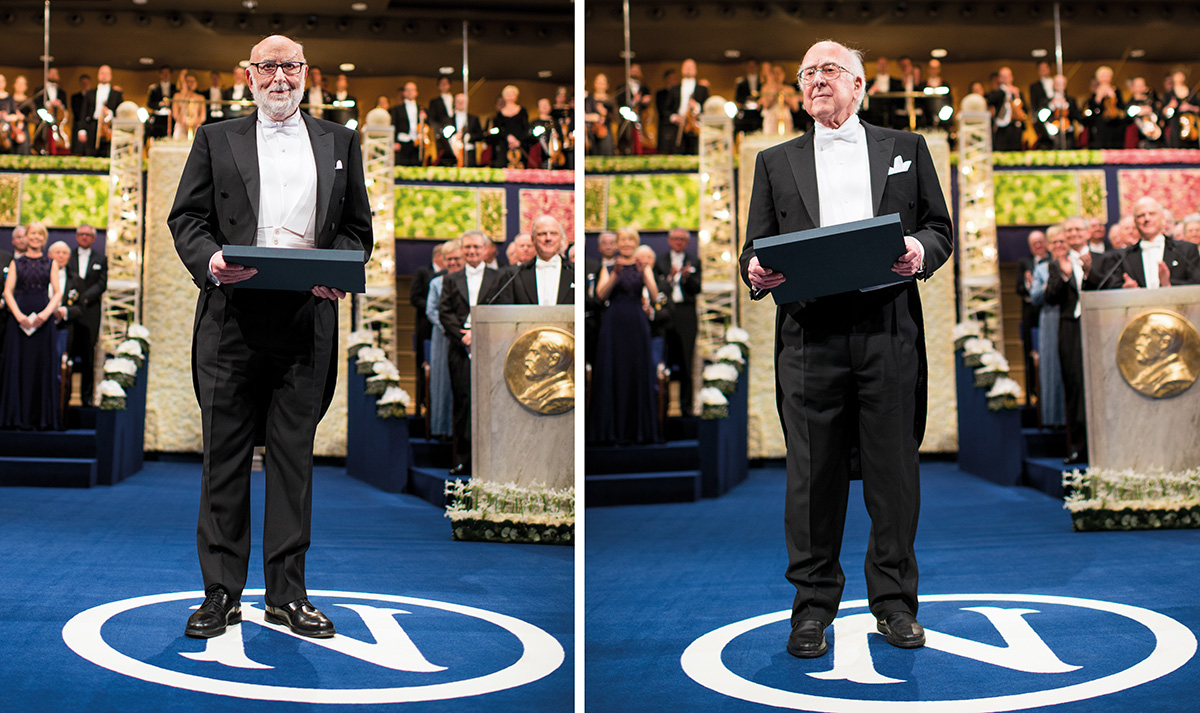
On the afternoon of 10 December, nearly 2000 guests filled the Stockholm Concert Hall to see 12 laureates receive their awards from King Gustav of Sweden. They had been guided through the choreography of the occasion earlier, but on the day itself, performing before the throng in the hall, there would be first-night nerves for this once-in-a-lifetime theatre. Winners of the physics prize would be called to receive their awards first, while the others watched and could see what to expect when they were named. The scenery, props and supporting cast were already in place. These included former winners dressed in tail suits and proudly wearing the gold button stud that signifies their membership of this unique club. Among them were Carlo Rubbia, discoverer of the W and Z particles, who instigated the experimental quest for the boson and won the prize in 1984; Gerard ’t Hooft, who built on Higgs’s work to complete the theoretical description of the weak nuclear force and won in 1999; and 2004 winner Frank Wilczek, who had built on his own prize-winning work to identify the two main pathways by which the Higgs boson had been discovered.
After a 10-minute oration by the chair of the Nobel Foundation and a musical interlude, Lars Brink, chairman of the Nobel Committee for Physics, managed to achieve one of the most daunting challenges in science pedagogy, successfully addressing both the general public in the hall and the assembled academics, including laureates from other areas of science. The significance of what we were celebrating was beyond doubt: “With discovery of the Higgs boson in 2012, the Standard Model of physics was complete. It has been proved that nature follows precisely that law that Brout, Englert and Higgs created. This is a fantastic triumph for science,” Brink announced. He also introduced a third name, that of Englert’s collaborator, Robert Brout. In so doing, he made an explicit acknowledgement that Brout in spirit completed a trinity of winners.
Brink continued with his summary history of how their work and that of others established the Standard Model of particle physics. Seventeen months earlier the experiments at the LHC had confirmed that the boson is real. What had been suspected for decades was now confirmed forever. The final piece in the Standard Model of particle physics had been found. The edifice was robust. Why this particular edifice is the one that forms our material universe is a question for the future. Brink now made the formal invitation for first Englert and then Higgs to step forward to receive their share of the award.
Higgs, resplendent in his formal suit, and comfortable in his own shoes, rose from his seat and prepared to walk to centre-stage. Forty-eight years since he set out on what would be akin to an ascent of Everest, Higgs had effectively conquered the Hillary step – the final challenge before reaching the peak – on 4 July 2012 when the existence of his boson was confirmed. Now, all that remained while he took nine steps to reach the summit was to remember the choreography: stop at the Nobel Foundation insignia on the carpet; shake the king’s hand with your right hand while accepting the Nobel prize and diploma with the other. Then bow three times, first to the king, then to the bust of Alfred Nobel at the rear of the stage, and finally to the audience in the hall.
Higgs successfully completed the choreography and accepted his award. As a fanfare of trumpets sounded, the audience burst into applause. Higgs returned to his seat. The chairman of the chemistry committee took the lectern to introduce the winners of the chemistry prize. To his relief, Higgs was no longer in the spotlight.
All in a name
The saga of Higgs’s boson had begun with a classic image – a lone genius unlocking the secrets of nature through the power of human thought. The fundamental nature of Higgs’s breakthrough had been immediately clear to him. However, no one, least of all Higgs, could have anticipated that it would take nearly half a century and several false starts to get from his idea to a machine capable of finding the particle. Nor did anyone envision that this single “good idea” would turn a shy and private man into a reluctant celebrity, accosted by strangers in the supermarket. Some even suggested that the reason why the public became so enamoured with Higgs was the solid ordinariness of his name, one syllable long, unpretentious, a symbol of worthy Anglo-Saxon labour.
In 2021, nine years after the discovery, we were reminiscing about the occasion when, to my surprise, Higgs suddenly remarked that it had “ruined my life”. To know nature through mathematics, to see your theory confirmed, to win the plaudits of your peers and join the exclusive club of Nobel laureates: how could all this equate with ruin? To be sure I had not misunderstood, I asked again the next time we spoke. He explained: “My relatively peaceful existence was ending. I don’t enjoy this sort of publicity. My style is to work in isolation, and occasionally have a bright idea.”
This is an edited extract from Elusive: How Peter Higgs Solved the Mystery of Mass, by Frank Close, published on 14 June (Basic Books, US) and 7 July (Allen Lane, UK)
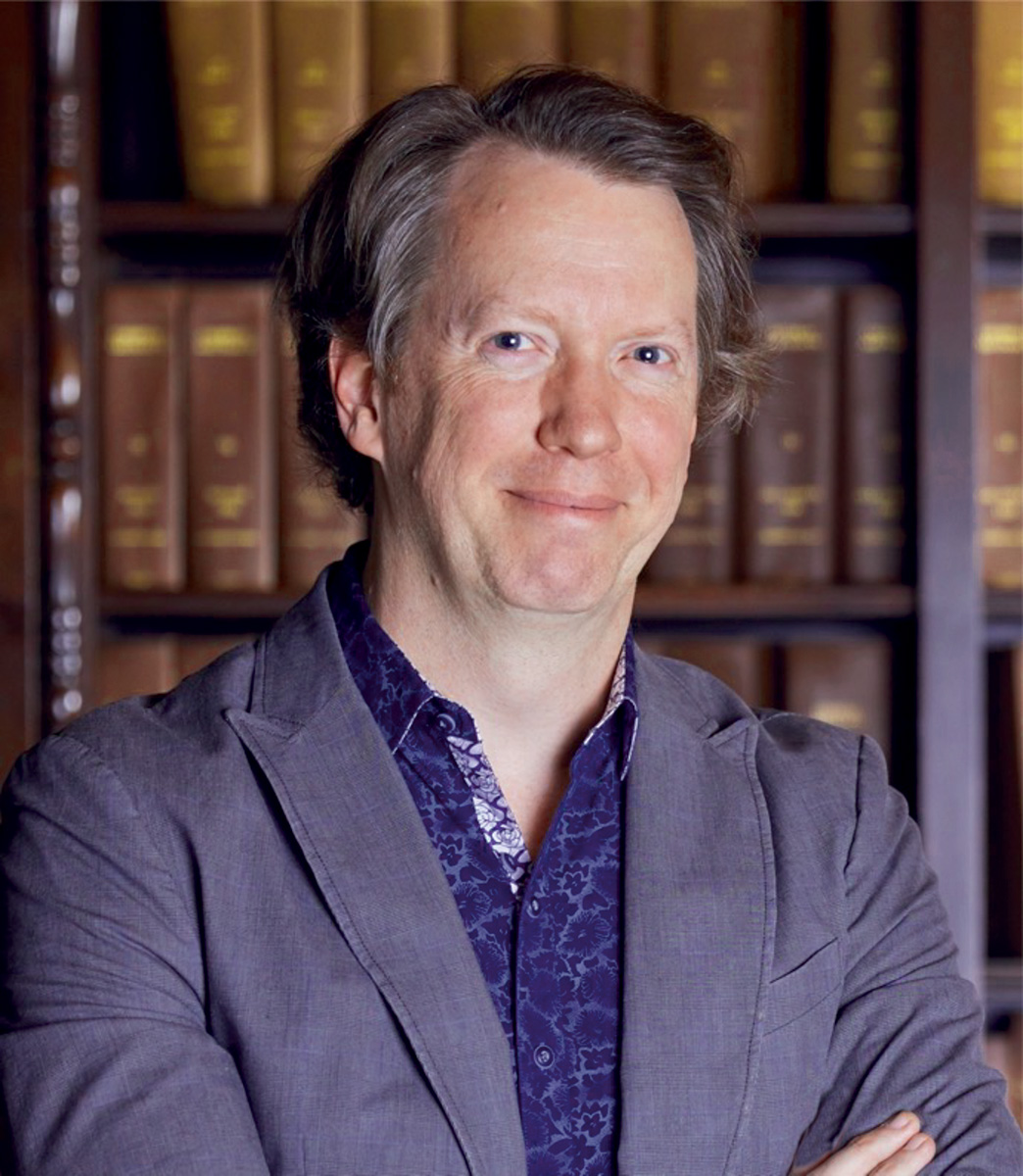
On 4 July 2012, Sean Carroll was at CERN to witness the momentous announcements by ATLAS and CMS – but not in his usual capacity as a physicist. He was there as an accredited member of the media, sharing an overflow room with journalists to get first-hand footage for the final chapter of his book. The Particle at the End of the Universe ended up being the first big title on the discovery and went on to win the 2013 Royal Society Science Books Prize. “It got reviewed everywhere, so I am really grateful to the Higgs boson and CERN!”
Carroll’s publisher sensed an opportunity for a timely, expert-authored title in 2011, as excitement in ATLAS and CMS grew. He initially said “No” – it wasn’t his research area, and he preferred to present a particular point of view, as he did in his first popular work From Eternity to Here: The Quest for the Ultimate Theory of Time. “With the Higgs boson, there is no disagreement, he says. “Everyone knows what the boson is, what it does and why is it important.” After some negotiation, he received an offer he couldn’t refuse. It also delved into the LHC, the experiments and how it all works, with a dash of quantum field theory and particle physics more generally. “We were hoping the book would come out by the time they announced the discovery, but on the other hand at least I got to include the discovery in the book, and was there to see it.”
Show me the money
Books are not very lucrative, he says. “Back in the 1980s and 1990s, when the success of Hawking’s A Brief History of Time awoke the interest of publishers, if you had a good idea for a physics book you could make a million dollars. But it is very hard to earn enough to make a living. “It takes roughly a year, or more depending on how much you have to learn, and depends on luck, the book and the person writing it.” His next project is a series of three books aimed at explaining physics to the general reader. The first, The Biggest Ideas in the Universe: Space, Time and Motion, due out in September, covers Newtonian mechanics and relativity; the second covers quantum mechanics and quantum field theory, and the third complexity, emergence and large-scale phenomena.
Meanwhile, Carroll’s podcast Mindscape, in which he invites experts from different fields to discuss a range of topics, has produced 200 episodes since it launched in 2018 and attracts around 100,000 listeners weekly. “I thought that it was a very fascinating idea, basically your personal radio show, but I quickly learned that I didn’t have that many things to say all by myself,” he explains. “Then I realised it would give me an excuse to talk to lot of interesting people and stretch my brain a lot, and that worked out really well.”
Reaching out
As someone who fell in love with science at a young age and enjoyed speaking and writing, Carroll has clearly found his ideal career. But stepping outside the confines of research is not without its downsides. “Overall, I think it has been negative actually, as it’s hard for some scientists to think that somebody is both writing books and giving talks, and also doing research at the same time. There is a prejudice that if you are a really good researcher then that’s all you do, and anything else is a waste of time. But whatever it does to my career, it has been good in many ways, and I think for the field, because I have reached people who wouldn’t know about physics otherwise.”
We need to take seriously the responsibility to tell people what it is that we have learned about the universe, and why it’s exciting to explore further
Moreover, he says, scientists are obligated to communicate the results of their work. “When it comes to asking the public for lots of money you have to be able to explain why it’s needed, and if they understand some of the physics and they have been excited by other discoveries they are much more likely to appreciate that,” he says, citing the episode of the Superconducting Super Collider. “When we were trying to build the SSC, physicists were trying their best to explain why we needed it and it didn’t work. Big editorials in the New York Times clearly revealed that people did not understand the reasons why this was interesting, and furthermore thought that the kind of physics we do does not have any immediate or technological benefit. But they are all also curious like we are. And while we don’t all have to become pop-science writers or podcasters (just like I am not going to turn up on Tik Tok or do a demo in the street), as a field we really need to take seriously the responsibility to tell people what it is that we have learned about the universe, and why it’s exciting to explore further.”
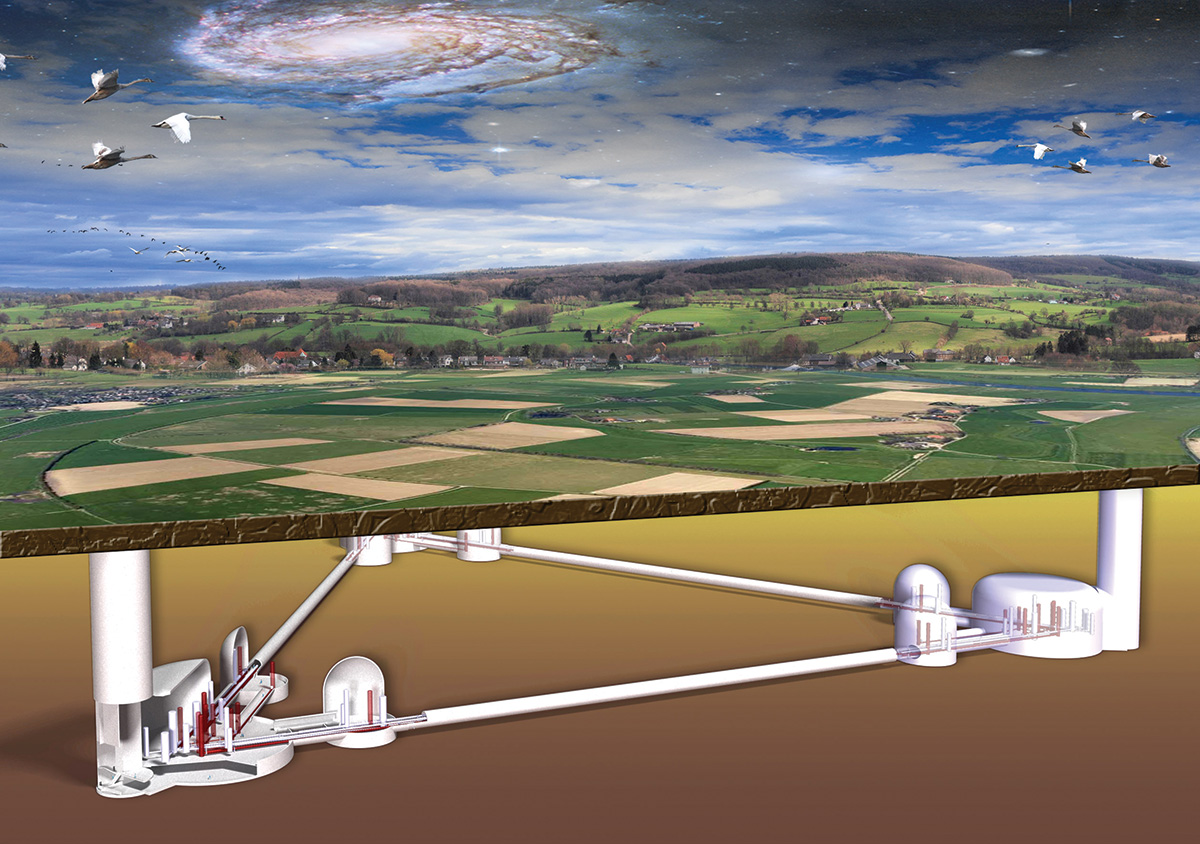
On 14 April the government of the Netherlands announced that it intends to conditionally allocate €42 million to the development of the Einstein Telescope – a proposed next-generation gravitational-wave observatory in Europe. It also pledged a further €870 million for a potential future Dutch contribution to the construction. The decision was taken by the Dutch government based on the advice of the Advisory Committee of the National Growth Fund, stated a press release from Nikhef and the regional development agency for Limburg.
The Einstein Telescope (ET) is a triangular laser interferometer with sides 10 km-long that would be at least 10 times more sensitive than the Advanced LIGO and Virgo observatories, extending its scope for detections and enabling physicists to look back much further in cosmological time. To reach the required sensitivities, the interferometer has to be built at least 200 m underground in a geologically stable area. Its mirrors will have to operate in cryogenic conditions to reduce thermal disturbance, and be larger and heavier than those currently employed to allow for a larger and more powerful laser beam.
Activities have been taking place at two potential sites in Europe: the border region of South Limburg (the Euregio Meuse-Rhine) in the Netherlands; and the Sar-Grav laboratory in the Sos Enattos mine in Sardinia, Italy. For the Sardinia site, a similar proposal has been submitted to the Italian government and feedback is expected in July.
The Netherlands’ intended €42 million investment will go towards preparatory work such as innovation of the necessary technology, location research, building up a high-tech ecosystem and organisation, stated the press release, while the reservation of €870 million is intended to put the Netherlands in a strong position to apply in the future – together with Belgium and Germany – to host and build the ET.
It is fantastic that the cabinet embraces the ambition to make the Netherlands a world leader in research into gravity waves
“It is fantastic that the cabinet embraces the ambition to make the Netherlands a world leader in research into gravity waves,” said Nikhef director Stan Bentvelsen, who has been involved with the ET for several years. “These growth-fund resources form the basis for further cooperation with our partners in Germany and Belgium, and for research into the geological subsurface in the border region of South Limburg. A major project requires a careful process, and I am confident that we will meet the additional conditions.”
Housing the ET in the region could have a major positive impact on science, the economy and society in the Netherlands, said provincial executive member for Limburg Stephan Satijn. “With today’s decision, the cabinet places our country at the global forefront of high-tech and science. Limburg is the logical place to help shape this leading position. Not only because of the suitability of our soil, but also because we are accustomed to working together internationally and to connecting science and business.”
At the 12th ET symposium in Budapest on 7–8 June, the ET scientific collaboration was officially born – a crucial step in the project’s journey, said ad interim spokesperson Michele Punturo of the INFN: “We were a scientific community, today we are a scientific collaboration, that is, a structured and organised system that works following shared rules to achieve the common goal: the realisation of a large European research infrastructure that will allow us to maintain scientific and technological leadership in this promising field of fundamental physics research.”
In January, the ET was granted status as a CERN recognised experiment (RE43), with a collaboration agreement on vacuum technology already in place and a further agreement concerning cryogenics at an advanced stage.
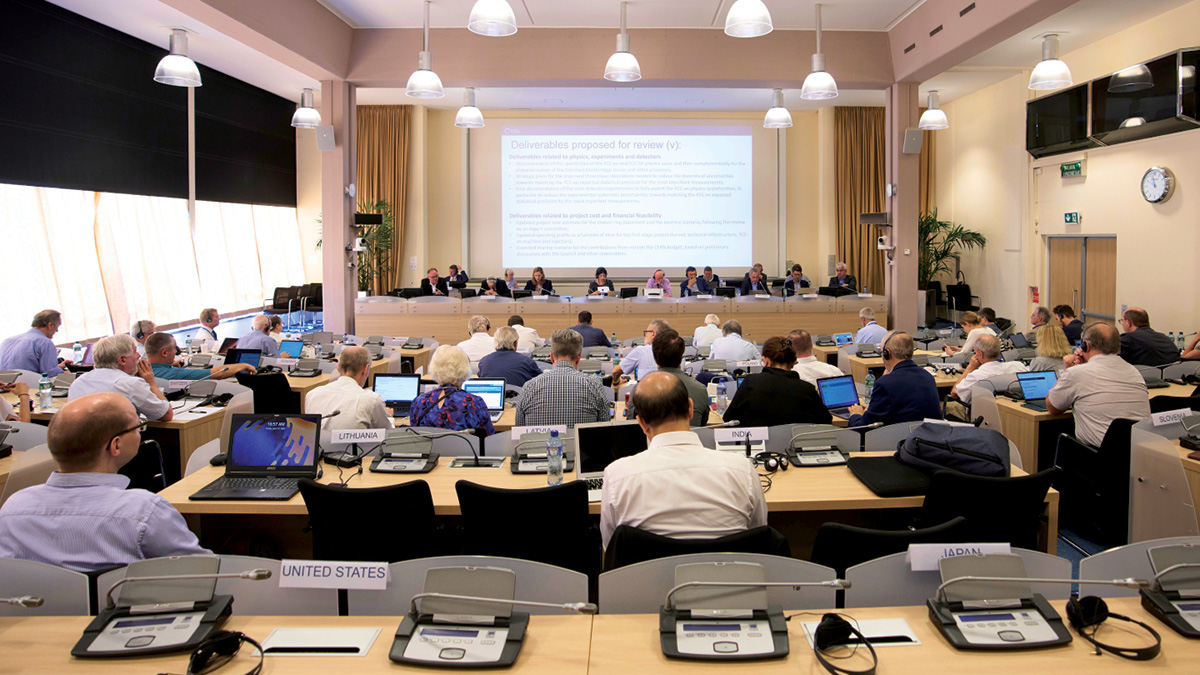
At its 208th meeting on 16 June, the CERN Council announced further measures in response to the continuing illegal military invasion of Ukraine by the Russian Federation with the involvement of the Republic of Belarus. The Council declared that it intends to terminate CERN’s International Cooperation Agreements (ICAs) with both countries at their expiration dates in 2024. However, the situation will continue to be monitored carefully and the Council stands ready to take any further decision in the light of developments in Ukraine.
CERN’s ICAs normally run for five years and are tacitly renewed for the same period unless a written notice of termination is provided by one party to the other at least six months prior to the renewal date. The ICA with the Russian Federation expires in December 2024, and that with the Republic of Belarus in June 2024.
The latest measures follow those already adopted at an extraordinary meeting of the Council on 8 March, and at the Council’s regular session on 25 March. In addition to the promotion of initiatives to support Ukrainian collaborators and Ukrainian scientific activity in high-energy physics, these measures included the suspension of Russia’s Observer status and the decision not to engage in new collaborations with Russia and its institutions until further notice (CERN Courier May/June 2022 p7).
The Council also decided in June to review CERN’s future cooperation with the Joint Institute for Nuclear Research (JINR) well in advance of the expiration of the current ICA in January 2025. This follows measures adopted at the previous Council sessions to suspend the Observer status of JINR and the participation of CERN scientists in all JINR scientific committees, and vice versa, until further notice. The Council reaffirmed that all decisions taken to date, along with the actions undertaken by the CERN management, which have had a marked impact on the involvement of the Russian Federation and the Republic of Belarus in the scientific programme of the organisation, remain in force.
Ukraine joined CERN as an Associate Member State in 2016 and Ukrainian scientists have long been active in many of the laboratory’s activities. Russian scientists also have a long and distinguished involvement with CERN, and Russia was granted Observer status in recognition of its contributions to the construction of the LHC. At the June Council meeting, the Member States reiterated their denunciation of the continuing illegal military invasion, recalling that the core values of CERN (CERN Courier September/October 2022 p49) have always been based upon scientific collaboration across borders as a driver for peace, and stressing that the aggression of one country against another runs counter to these values.
The 56th Rencontres de Moriond on QCD and High Energy Interactions took place at the Italian resort of La Thuile from 19 to 26 March. More than 100 participants, almost equally split between experimentalists and theorists, were treated to an exciting scientific programme and many in-person interactions, which were especially appreciated after two years of pandemic isolation.
Keeping with the tradition of Moriond, several new experimental results were presented by major experimental collaborations, with participants enjoying ample opportunities to debate cases where measurements and theoretical predictions do not agree. Held 10 years after the Higgs discovery, the conference started with a review of how the Higgs boson came of age – from early exploration to a precision era. An exciting mix of new precision results and interesting observations in Higgs physics were presented, including the first measurement of the Higgs-charm coupling as well as studies of off-shell Higgs production and di-Higgs production by the ATLAS and CMS collaborations.
The first observation of tqγ production by ATLAS as well as many measurements in top-quark physics, including a mass measurement based on single top quarks by CMS, were discussed. Many recent studies of Z and W bosons and their interactions were reported, including a new CMS result that resolved an earlier mild LEP tension in the decay rates of W bosons to leptons, and the observation of triple-W production at the LHC by ATLAS. The LHCb collaboration presented its first measurement of the W mass, while CMS discussed the first observation of WW and triple-J/ψ production in double-parton scattering.
Several sessions were devoted to flavour measurements and anomalies, including possible lepton-flavour universality violations in B-meson decays. LHCb presented the most precise value of the CKM matrix angle γ measured in a single experiment, as well as the most precise measurement of the charm-mixing parameter yCP. New results on lepton-flavour universality attracted a lot of attention. Among them are LHCb’s measurement of the ratio of Br(B+ → K+μ+μ–) to Br(B+ → K+e+e–), which is 3.1σ away from the SM, new LHCb limits on rare B0 decays, and the CMS measurement of the Drell–Yan forward–backward asymmetry difference between di-muons and di-electrons. The status of selected Standard Model (SM) calculations was described with the conclusion that the predictions are robust and therefore possible deficiencies of the SM a very unlikely source of the flavour anomalies. A number of talks demonstrated that there are many ways to accommodate the flavour anomalies into a consistent physics picture, which predicts subtle signals at the LHC that could have easily evaded detection so far.
Several speakers emphasised the importance of new creative analysis concepts
Continuing the topic of searches for new physics, several speakers emphasised the importance of new creative analysis concepts, including searching for anomalous energy losses, non-pointing tracks, delayed photons, displaced jets, displaced collimated leptons and tagging missing mass with forward detectors. Among the results of many interesting searches presented at Moriond, a 3σ excess in the number of highly ionising particles reported by the ATLAS collaboration caused some excitement and discussion, indicating that further studies (and statistics!) are very much needed.
Several talks presented theoretical predictions at high orders of perturbative QCD for basic SM processes at the LHC and future lepton colliders, such as the Drell–Yan and jet-production processes. These tour de force computations, representing cutting-edge applications of quantum field theory to collider physics, force us to think about how such advances in the theory of hard hadron collisions can be used to search for physics beyond the SM. Several talks addressed this issue by considering specific physics examples pointing towards new, exciting opportunities during LHC Run 3.
Emphasising the need for a refined knowledge of the fundamental input parameters used to describe hadron collisions, four new extractions of the strong coupling constant were reported, based on HERA, CDF, LEP and CMS data. The role of precision deep-inelastic scattering (HERA) and W/Z (ATLAS/CMS) data in constraining parton distribution functions was clearly elucidated.
An element of nonperturbative QCD that keeps theorists on their toes is hadronic spectroscopy
Turning towards the non-perturbative sector of QCD, a measurement of Λc production down to zero transverse momentum allowed the ALICE collaboration to extract the total charm cross-section in pp collisions. Interestingly, the fraction of Λc is significantly above the e+e– baseline. Jet substructure measurements presented by ALICE and CMS allow a detailed comparison to Monte Carlo event generators. Furthermore, the first direct observation of the dead-cone effect, a suppression of forward gluon radiation in case of a massive emitter, was presented by the ALICE collaboration using charm-tagged jets.
An element of non-perturbative QCD that keeps theorists on their toes is hadronic spectroscopy. This trend continued at Moriond where the discoveries of several new states were presented, including the same-sign doubly charmed T+cc (c–c–u–d) (LHCb) and the Z–cs (c–c–s–u) (BES III). The exploration of the χc1, earlier known as X(3872), with the hope of revealing its molecular or tetraquark nature, continues in pp as well as in PbPb collisions.
The best constraint of the charm diffusion coefficient in the quark–gluon plasma (ALICE), jet quenching studies with Z-hadron correlations (CMS) and surprising results on ridge structures in γp and γPb collisions (ATLAS) were presented during a dedicated heavy-ion session. Interestingly, by studying the abundant nuclei produced in heavy-ion collisions, the ALICE collaboration ruled out simple coalescence models for antideuteron production in PbPb collisions.
Finally, the current status of the muon anomalous magnetic moment was reviewed. The experimental value presented last year by the Fermilab g-2 collaboration shows a 1.5–4.2σ discrepancy with the SM prediction, depending on the theoretical baseline. An interesting comparison between continuum and lattice computations of the hadronic vacuum polarisation contributions was presented, and a new lattice result on hadronic light-by-light scattering was described, indicating that this “troublemaking” contribution is being brought under theoretical control.
Exciting experimental results and developments in the theory of QCD and high-energy interactions that, perhaps, remained somewhat hidden during the pandemic years, were on full display at Moriond, making the 56th edition of this conference a resounding success.
To provide the best experiences, we use technologies like cookies to store and/or access device information. Consenting to these technologies will allow us to process data such as browsing behavior or unique IDs on this site. Not consenting or withdrawing consent, may adversely affect certain features and functions.
Functional
Always active
The technical storage or access is strictly necessary for the legitimate purpose of enabling the use of a specific service explicitly requested by the subscriber or user, or for the sole purpose of carrying out the transmission of a communication over an electronic communications network.
Preferences
The technical storage or access is necessary for the legitimate purpose of storing preferences that are not requested by the subscriber or user.
Statistics
The technical storage or access that is used exclusively for statistical purposes.The technical storage or access that is used exclusively for anonymous statistical purposes. Without a subpoena, voluntary compliance on the part of your Internet Service Provider, or additional records from a third party, information stored or retrieved for this purpose alone cannot usually be used to identify you.
Marketing
The technical storage or access is required to create user profiles to send advertising, or to track the user on a website or across several websites for similar marketing purposes.