For the first time in CERN’s history, private donors (individuals and philanthropic foundations) have agreed to support a CERN flagship research project. Recently, a group of friends of CERN, including the Breakthrough Prize Foundation, The Eric and Wendy Schmidt Fund for Strategic Innovation, and the entrepreneurs John Elkann and Xavier Niel, have pledged significant funds towards the construction of the Future Circular Collider (FCC), the potential successor of the Large Hadron Collider. These potential contributions, totalling some 860 million euros and corresponding to 1 billion US dollars, would represent a major private-sector investment in the advancement of research in fundamental physics.
“It’s the first time in history that private donors wish to partner with CERN to build an extraordinary research instrument that will allow humanity to take major steps forward in our understanding of fundamental physics and the universe. I am profoundly grateful to them for their generosity, vision and unwavering commitment to knowledge and exploration. Their support is essential to the prospective realisation of the FCC and to enabling future generations of scientists to push the frontiers of scientific discovery and technology,” said CERN Director-General Fabiola Gianotti.
Understanding the fundamental nature of our universe is the mission that unites humanity
“Understanding the fundamental nature of our universe is the mission that unites humanity,” said Pete Worden, chairman of the Breakthrough Prize Foundation. “We’re proud to support the creation of the most powerful scientific instrument in history, that can shed new light on the deepest questions humanity can ask.”
“The Future Circular Collider is an instrument that could push the boundaries of human knowledge and deepen our understanding of the fundamental laws of the universe,” said Eric Schmidt. “Beyond the science, the technologies emerging from this project could benefit society in profound ways, from medicine to computing to sustainable energy, while training a new generation of innovators and problem-solvers. Wendy and I are inspired by the ambition of this project and by what it could mean for the future of humanity.”
“CERN’s Member States are extremely grateful for the interest expressed by our donors in contributing to the funding of the Laboratory’s next flagship project. This once again demonstrates CERN’s relevance and positive impact on society, and the strong interest in CERN’s future that exists well beyond our own particle-physics community,” said the president of the CERN Council Costas Fountas.
The FCC has also been included among 11 proposed “Moonshot” projects in the draft Multiannual Financial Framework for the years 2028–2034, released by the European Commission in July.
Based on strong input from the international particle-physics community, the FCC has been recommended as the preferred option for the next flagship collider at CERN in the ongoing process to update the European Strategy for Particle Physics, which will be concluded by the CERN Council in May 2026 (see “European Strategy Group recommends FCC-ee“). A decision by the CERN Council on the construction of the FCC is expected around 2028.
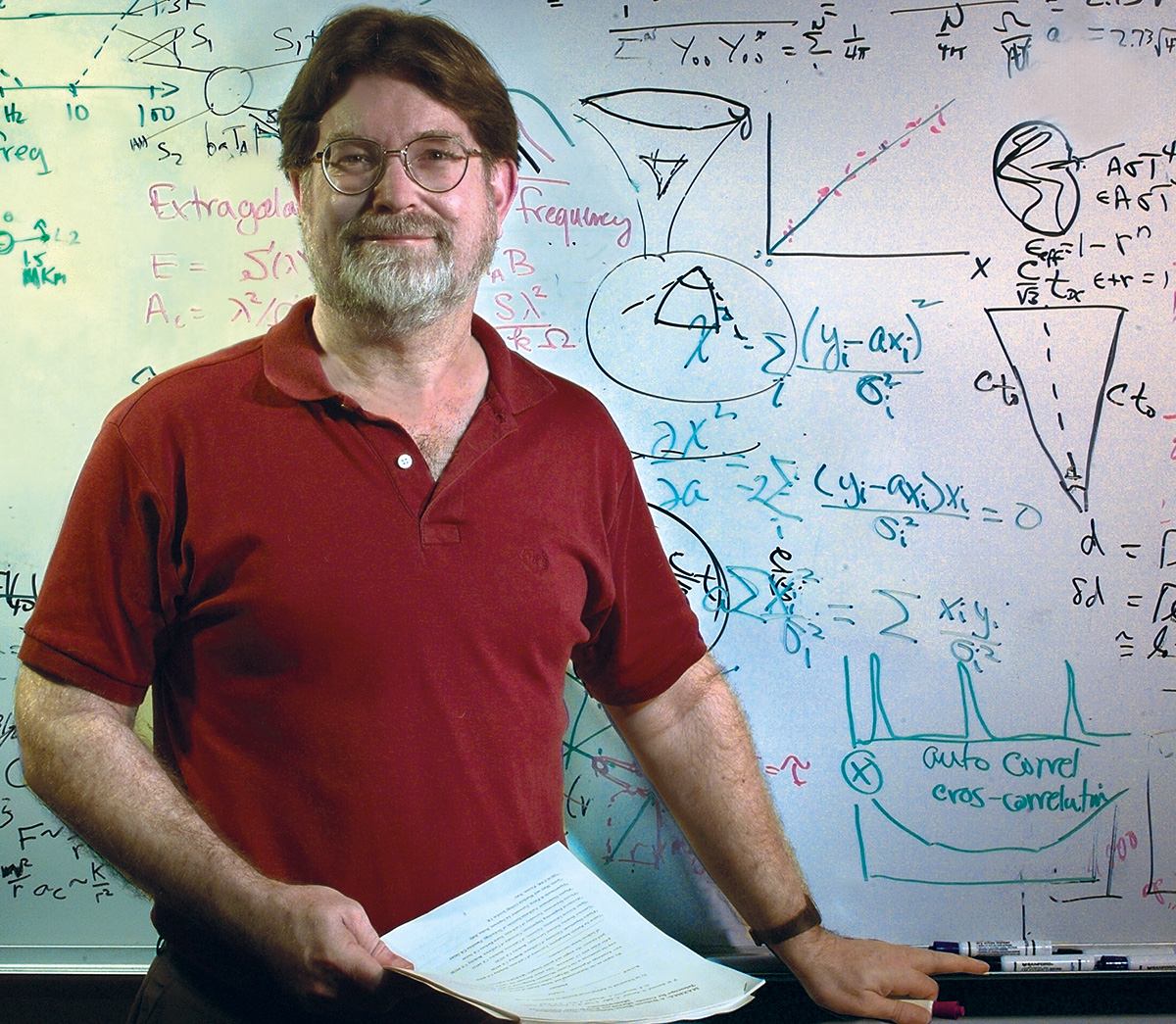
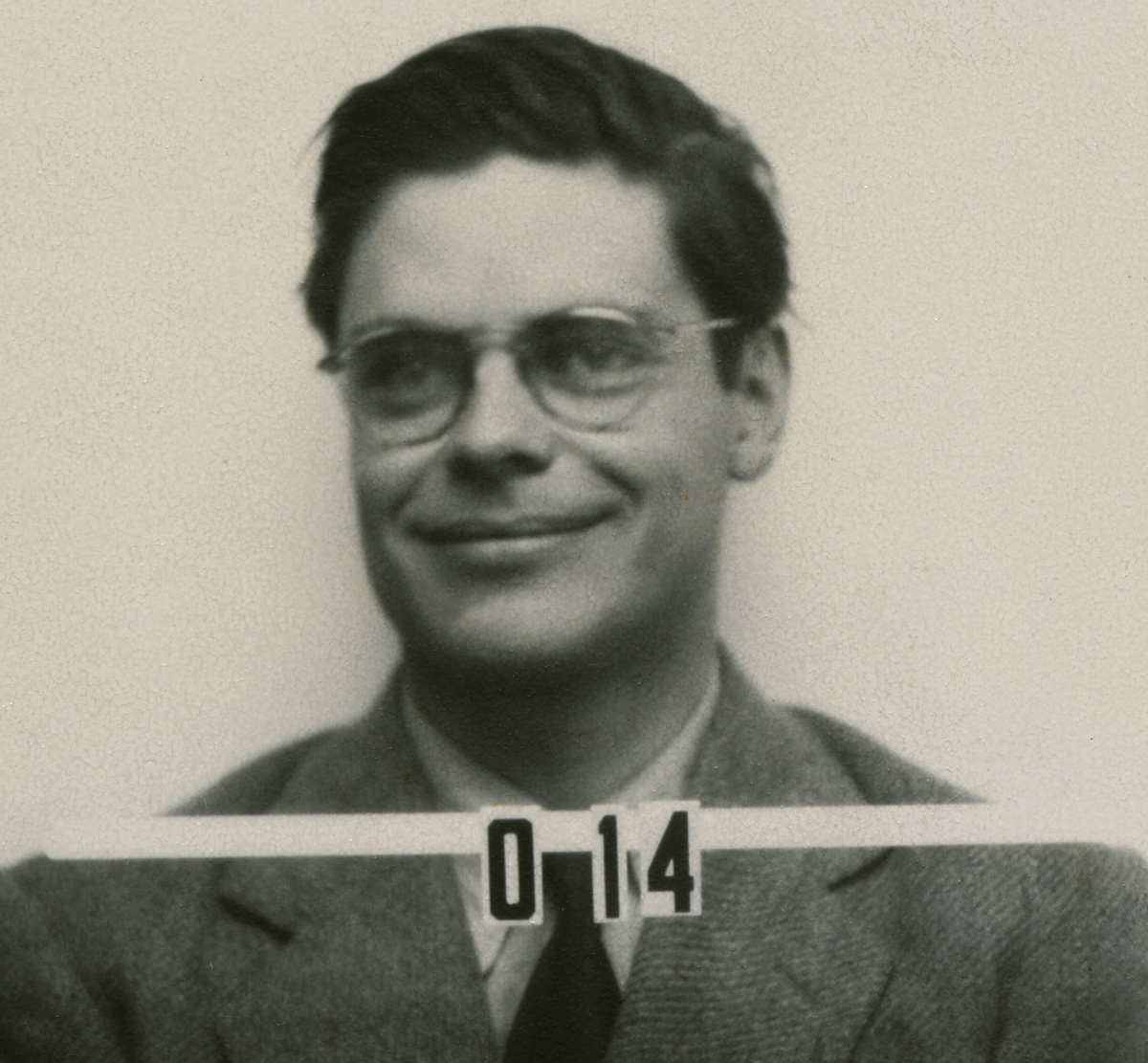
George Smoot, who led the team that first measured tiny fluctuations in the cosmic microwave background (CMB) and began a revolution in cosmology, passed away in Paris on 18 September 2025.
George earned his undergraduate and doctoral degrees at the Massachusetts Institute of Technology (MIT), and then moved to Berkeley, where he held positions at Lawrence Berkeley National Laboratory (Berkeley Lab) and the Space Sciences Laboratory at the University of California, Berkeley (UC Berkeley). Though trained as a particle physicist, he switched to cosmology and developed research projects, including using differential microwave radiometers (DMRs) on U-2 spy planes to detect the dipole anisotropy of the CMB, a consequence of the motion of the Earth relative to the universe as a whole. He then devoted himself to the measurement of the CMB in detail, and this undertaking occupied him from his proposal of a satellite experiment using DMRs in 1974 to the results of the Cosmic Background Explorer (COBE) satellite in 1992. George subsequently continued research and teaching as a member of the faculty of the UC Berkeley physics department.
In 2006, the Nobel Prize committee recognised John Mather for leading a team that determined the CMB spectrum was a blackbody (arising from thermal equilibrium) to exquisite precision, and George for leading a team that detected temperature variations across the sky in the CMB at the level of one part in a hundred thousand. Those variations were signatures of the primordial density fluctuations that gave rise to galaxies, and so eventually to us. They have been called the DNA of cosmic structure and provide a remarkable window on the early universe and high-energy physics beyond our particle accelerators. The excitement caused by the COBE CMB results was dramatically expressed by Stephen Hawking, who declared them to be “the discovery of the century, if not all time.”
After the Nobel Prize, George intensified his efforts in science education and training young scientists. Indeed, on the day of the prize, George continued to teach his undergraduate introductory physics class.
George created new research institutes internationally to support young scientists. He used his prize money to found the Berkeley Center for Cosmological Physics, a joint effort between UC Berkeley and Berkeley Lab. He also started an annual Berkeley Lab summer workshop for high-school students and teachers, now in its 19th year. Later, he founded the Instituto Avanzado de Cosmología and the international Essential Cosmology for the Next Generation winter schools in Mexico, the Paris Centre for Cosmological Physics, the Institute for the Early Universe in South Korea at the world’s largest women’s university, and more. Many of the scientists trained at those institutes went on to become faculty in their home countries and internationally, and formed their own research groups.
His open online course “Gravity! From the Big Bang to Black Holes” taught nearly 100,000 students
George took special pride in the Oersted Medal awarded to him by the American Association of Physics Teachers in 2009 for “outstanding, widespread, and lasting impact” on the teaching of physics. His massive open online course “Gravity! From the Big Bang to Black Holes” with Pierre Binétruy taught nearly 100,000 students.
In his later years, George’s scientific interests spanned not only the CMB (in particular the Planck satellite), but new sensor technologies such as kinetic inductance detectors and ultrafast detectors that could open up new windows on astrophysical phenomena, gravitational waves and gravitational lensing, features in the inflationary primordial fluctuation spectrum, and dark-matter properties.
The primordial density fluctuations for which George was awarded the Nobel Prize lie at the heart of almost every aspect of cosmology. The revolution started by the COBE results led to the convergence of cosmology and particle physics, exemplified by the centrality of dark matter as a primary issue for both disciplines. George will be remembered for this, for the many students whose lives he touched and whose research he inspired, and for his advocacy of international science.
Rohini Madhusudan Godbole, one of India’s most influential particle physicists, passed away in her hometown of Pune on 25 October 2024.
Rohini was born on 12 November 1952 to Madhusudan and Malati Godbole. Theirs was a cultured and highly educated family, and she grew up in an atmosphere of intellectual freedom and progressive ideas. Educated at the best schools and colleges in Pune, she joined the Indian Institute of Technology at Bombay, from which she graduated in 1972. She then moved to Stony Brook, where she completed her PhD in particle physics with Jack Smith in 1979. Returning to India, she worked temporarily at the Tata Institute of Fundamental Research before joining the faculty at the University of Bombay (now Mumbai). There she remained until 1997, when she moved to the Centre for High Energy Physics at the Indian Institute of Science at Bangalore (now Bengaluru). She worked there for the rest of her life, continuing after her formal retirement as an emeritus professor. It was only a few months before the end that she moved back to her hometown, to be with her family in her last days.
Rohini was a prolific researcher. She will probably be best remembered pioneering the development, with Manuel Drees, of photon structure functions for use with photon beams at future colliders, but her contributions spanned vacuum polarisation, Higgs physics, top-quark physics with polarised beams, and beyond the Standard Model physics, especially low-energy supersymmetry. She authored a well-known textbook on the latter subject with Probir Roy and Drees.
Rohini was indefatigable in promoting the cause of women in science
Rohini’s broad understanding and warm character combined to make her the best-known face of elementary particle physics from India. She worked tirelessly to promote high-energy physics inside India, organising schools and workshops, and often represented the country in international forums, such as to monitor India’s participation in the LHC and other large international collaborative experiments. Rohini was a dedicated teacher and mentor to a long series of graduate students and postdocs, and a universal elder sister or aunt for the entire community of younger particle physicists in India.
No description of Rohini can be complete without mentioning her indefatigable efforts to promote the cause of women in science. Having herself faced gender discrimination in her younger days, she was determined to ensure that young women scientists received proper opportunities and recognition. She authored two books highlighting the work of Indian women scientists, thereby setting up role models to inspire the younger generation. Even more than these books, however, her own presence and encouragement left a mark on two generations of particle physicists, in India and abroad.
Rohini’s signal contributions were recognised by many awards and distinctions. The government of India awarded her the coveted Padma Shri in 2019, and the government of France awarded her the Ordre National du Mérite in 2021, mentioning her important role in furthering scientific collaboration between India and France. But her true memorial lies in the unique place she holds in the hearts of thousands of students, collaborators, friends and acquaintances. She was an extraordinary person who carved out a niche all by herself, with her scientific talents, her indefatigable energy, her universal amiability and her indomitable will. Her loss is sorely felt.
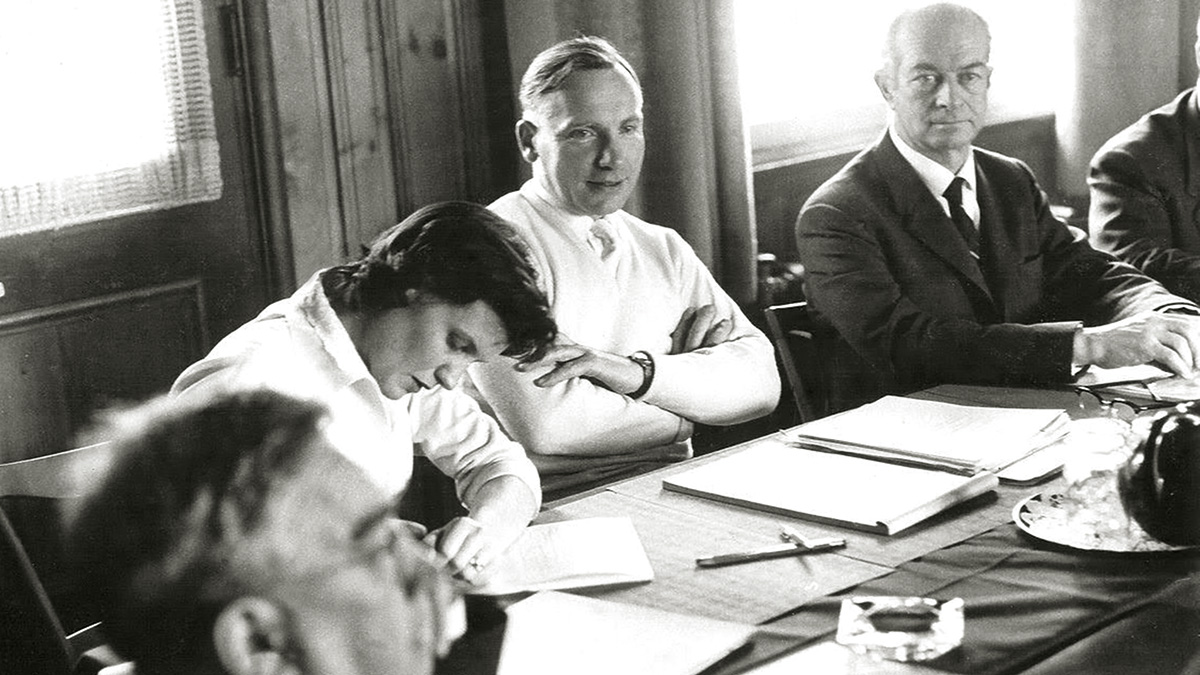
On 7 November 2025, the Austrian Academy of Sciences inaugurated the Marietta Blau Institute for Particle Physics (MBI). The new centre brings together the former Stefan Meyer Institute for Subatomic Physics and the Institute of High Energy Physics (HEPHY), creating Austria’s largest hub for particle-physics research. In total, about 130 researchers with broad expertise across the discipline now work under the MBI umbrella.
Marietta Blau was one of the first women to study physics at the University of Vienna. As recalled by Brigitte Strohmaier (University of Vienna), who summarised Blau’s biography, she became best known for her work at the Institute for Radium Research between 1923 and 1938, where she developed the nuclear-emulsion technique for detecting charged particles with micrometre-scale precision.
Together with Hertha Wambacher, Blau exposed nuclear emulsions to cosmic rays at Victor Hess’s observatory near Innsbruck, producing photographic evidence of the interactions between high-energy particles and matter.
Staying in Scandinavia when Nazi Germany annexed Austria in 1938, Blau could not return to Vienna. She secured a position at the Polytechnic Institute of Mexico City on the recommendation of Albert Einstein, but found herself isolated from colleagues. From 1944 on, she worked in the US before returning to Vienna in 1960, where she supervised the evaluation of photographic plates from CERN.
Her method of nuclear emulsions was further advanced by Cecil Powell in Bristol, who was awarded the Nobel Prize in Physics in 1950 for discoveries regarding mesons made with this method. On this and other occasions, Marietta Blau was also nominated, but never recognised for her groundbreaking research.
Joachim Kopp, chair of the Scientific Advisory Board of HEPHY, introduced the institute’s scientific outlook. He highlighted the breadth of MBI’s programme, which includes major contributions to CERN experiments such as CMS and ALICE at the LHC, and ASACUSA at the AD/ELENA facility, where antimatter is studied using low-energy antiprotons.
Groups at MBI are also involved in the Belle II experiment at KEK, as well as the dark-matter experiments CRESST and COSINUS at the LNGS underground lab. Neutrino physics, gravitational-wave studies at the Einstein Telescope, as well as tests of fundamental symmetries using ultra-cold hydrogen and deuterium beams, are also part of the research programme. The MBI also builds on the long tradition of detector development and construction for future experiments, complemented by a dedicated theory group.
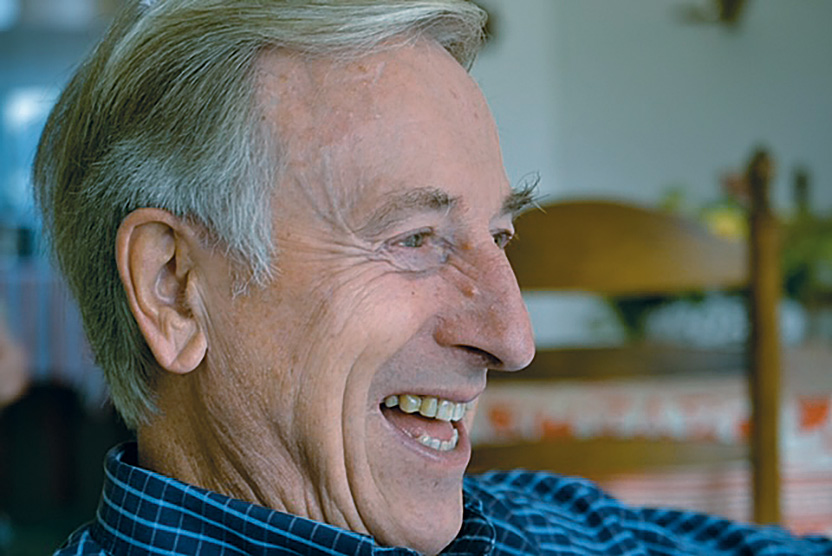
Hendrik Verweij, who was for many years a driving force in the development of electronics for high-energy physics, passed away on 11 August 2025 in Meyrin, Switzerland, at the age of 93.
Born in Linschoten near Gouda in the Netherlands, Henk earned a degree in electrical engineering at the Technical High School in Hilversum and started his career as an instrumentation specialist at Philips, working on oscilloscopes. He joined CERN in July 1956, bringing his expertise in electronics to the newly founded laboratory. With Ian Pizer, group leader of the electronics group of the nuclear-physics-division, he published CERN Yellow Report 61-15 on a nanosecond-sampling oscilloscope, followed by a paper on a fast amplifier one year later.
During the next four decades, developments in electronics profoundly transformed the world. Henk played a crucial role in bringing this transformation to CERN’s electronics instrumentation, and he eventually succeeded Pizer as group leader. Over the years he worked with numerous colleagues on fast signal-processing circuits. The creation of a collection of standardised modules facilitated the setup of a variety of CERN experiments. With Bjorn Hallgren and others, he realised the simultaneous, fast time and amplitude digitisation of the inner drift detector of the innovative UA1 experiment at CERN’s Super Proton Synchrotron, which discovered the W and Z bosons together with the UA2 experiment.
In the 1960s, recognising the importance of standardisation for engaging industry, Henk built close ties with colleagues in the US, including at Lawrence Berkeley Laboratory, SLAC and the National Bureau of Standards (NBS). He took part in the discussions that led to the Nuclear Instrumentation Module (NIM) standard, defined in 1964 by the US Atomic Energy Commission, and served on the NIM committee chaired by Lou Costrell of the NBS.
Henk was also a member of the ESONE committee for the CAMAC and later FASTBUS standards, working alongside colleagues such as Bob Dobinson, Fred Iselin, Phil Ponting, Peggie Rimmer, Tim Berners-Lee and many others from across Europe and the US in this international effort. He contributed hardware for standard modules both before and after the publication of the FASTBUS specification in 1984, and reported regularly at conferences on the status of European developments. A strong advocate of collaboration with industry, he also helped persuade LeCroy to establish a facility near CERN.
A driving force in the development of electronics for high-energy physics
Towards the end of his career, Henk became group leader of the microelectronics group at CERN, closing the loop in this transformational electronics evolution with integrated circuit developments for silicon microstrip, hybrid pixel and other detectors. When he retired in the 1990s, the group had built up the necessary expertise to design optimised application-specific integrated circuits (ASICs) for the LHC detectors. Ultimately, these allow the recording of millions of frames per second and event selection from the on-chip stored data.
Retirement did not diminish Henk’s interest in CERN and its electronics activities. He often passed by in the microelectronics group at CERN, regularly participating in Medipix meetings on the development of hybrid pixel-detector read-out chips for medical imaging and other applications.
Henk played an important role in making advances in microelectronics available to the high-energy physics community. His friends and colleagues will miss his experience, vision and irrepressible enthusiasm.
A major step toward shaping the future of European particle physics was reached on 2 October, with the release of the Physics Briefing Book of the 2026 update of the European Strategy for Particle Physics. Despite its 250 pages, it is a concise summary of the vast amount of work contained in the 266 written submissions to the strategy process and the deliberations of the Open Symposium in Venice in June (CERN Courier September/October 2025 p24).
The briefing book compiled by the Physics Preparatory Group is an impressive distillation of our current knowledge of particle physics, and a preview of the exciting prospects offered by future programmes. It provides the scientific basis for defining Europe’s long-term particle-physics priorities and determining the flagship collider that will best advance the field. To this end, it presents comparisons of the physics reach of the different candidate machines, which often have different strengths in probing new physics beyond the Standard Model (SM).
Condensing all this in a few sentences is difficult, though two messages are clear: if the next collider at CERN is an electron–positron collider, the exploration of new physics will proceed mainly through high-precision measurements; and the highest physics reach into the structure of physics beyond the SM via indirect searches will be provided by the combined exploration of the Higgs, electroweak and flavour domains.
Following a visionary outlook for the field from theory, the briefing book divides its exploration of the future of particle physics into seven sectors of fundamental physics and three technology pillars that underpin them.
1. Higgs and electroweak physics
In the new era that has dawned with the discovery of the Higgs boson, numerous fundamental questions remain, including whether the Higgs boson is an elementary scalar, part of an extended scalar sector, or even a portal to entirely new phenomena. The briefing book highlights how precision studies of the Higgs boson, the W and Z bosons, and the top quark will probe the SM to unprecedented accuracy, looking for indirect signs of new physics.
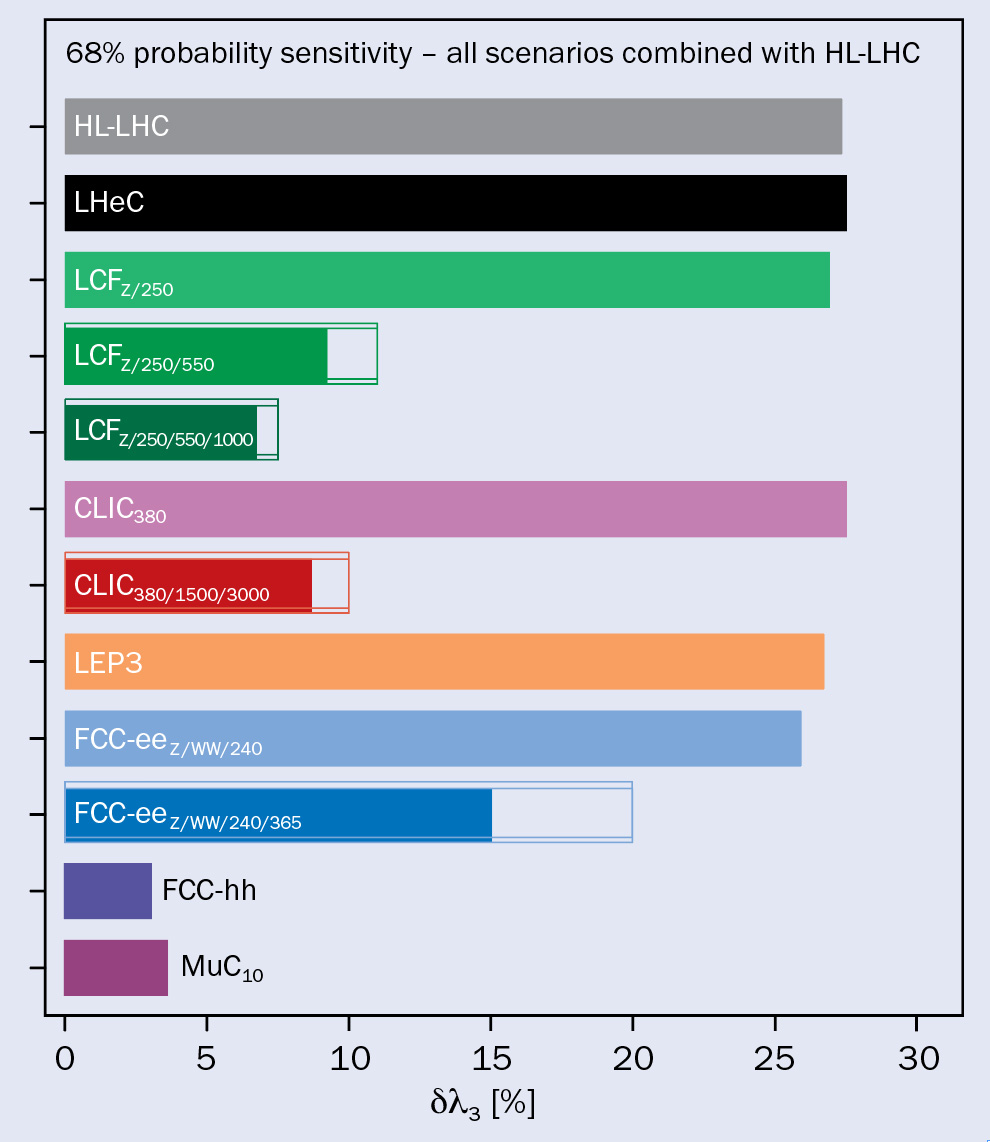
Addressing these requires highly precise measurements of its couplings, self-interaction and quantum corrections. While the High-Luminosity LHC (HL-LHC) will continue to improve several Higgs and electroweak measurements, the next qualitative leap in precision will be provided by future electron–positron colliders, such as the FCC-ee, the Linear Collider Facility (LCF), CLIC or LEP3. And while these would provide very important information, it would fall upon the shoulders of an energy-frontier machine like the FCC-hh or a muon collider to access potential heavy states. Using the absolute HZZ coupling from the FCC-ee, such machines would measure the single-Higgs-boson couplings with a precision better than 1%, and the Higgs self-coupling at the level of a few per cent (see “Higgs self-coupling” figure).
This anticipated leap in experimental precision will necessitate major advances in theory, simulation and detector technology. In the coming decades, electroweak physics and the Higgs boson in particular will remain a cornerstone of particle physics, linking the precision and energy frontiers in the search for deeper laws of nature.
2. Strong interaction physics
Precise knowledge of the strong interaction will be essential for understanding visible matter, exploring the SM with precision, and interpreting future discoveries at the energy frontier. Building upon advanced studies of QCD at the HL-LHC, future high-luminosity electron–positron colliders such as FCC-ee and LEP3 would, like LHeC, enable per-mille precision on the strong coupling constant, and a greatly improved understanding of the transition between the perturbative and non-perturbative regimes of QCD. The LHeC would bring increased precision on parton-distribution functions that would be very useful for many physics measurements at the FCC-hh. FCC-hh would itself open up a major new frontier for strong-interaction studies.
A deep understanding of the strong interaction also necessitates the study of strongly interacting matter under extreme conditions with heavy-ion collisions. ALICE and the other experiments at the LHC will continue to illuminate this physics, revealing insights into the early universe and the interiors of neutron stars.
3. Flavour physics
With high-precision measurements of quark and lepton processes, flavour studies test the SM at energy scales far above those directly accessible to colliders, thanks to their sensitivity to the effects of virtual particles in quantum loops. Small deviations from theoretical predictions could signal new interactions or particles influencing rare processes or CP-violating effects, making flavour physics one of the most sensitive paths toward discovering physics beyond the SM.
The book highlights how precision studies of the Higgs boson, the W and Z bosons, and the top quark will probe the SM to unprecedented accuracy
Global efforts are today led by the LHCb, ATLAS and CMS experiments at the LHC and by the Belle II experiment at SuperKEKB. These experiments have complementary strengths: huge data samples from proton–proton collisions at CERN and a clean environment in electron–positron collisions at KEK. Combining the two will provide powerful tests of lepton-flavour universality, searches for exotic decays and refinements in the understanding of hadronic effects.
The next major step in precision flavour physics would require “tera-Z” samples of a trillion Z bosons from a high-luminosity electron–positron collider such as the FCC-ee, alongside a spectrum of focused experimental initiatives at a more modest scale.
4. Neutrino physics
Neutrino physics addresses open fundamental questions related to neutrino masses and their deep connections to the matter–antimatter asymmetry in the universe and its cosmic evolution. Upcoming experiments including long-baseline accelerator-neutrino experiments (DUNE and Hyper-Kamiokande), reactor experiments such as JUNO (see “JUNO takes aim at neutrino-mass hierarchy” and astroparticle observatories (KM3NeT and IceCube, see also CERN Courier May/June 2025 p23) will likely unravel the neutrino mass hierarchy and discover leptonic CP violation.
In parallel, the hunt for neutrinoless-double-beta decay continues. A signal would indicate that neutrinos are Majorana fermions, which would be indisputable evidence for new physics! Such efforts extend the reach of particle physics beyond accelerators and deepen connections between disciplines. Efforts to determine the absolute mass of neutrinos are also very important.
The chapter highlights the growing synergy between neutrino experiments and collider, astrophysical and cosmological studies, as well as the pivotal role of theory developments. Precision measurements of neutrino interactions provide crucial support for oscillation measurements, and for nuclear and astroparticle physics. New facilities at accelerators explore neutrino scattering at higher energies, while advances in detector technologies have enabled the measurement of coherent neutrino scattering, opening new opportunities for new physics searches. Neutrino physics is a truly global enterprise, with strong European participation and a pivotal role for the CERN neutrino platform.
5. Cosmic messengers
Astroparticle physics and cosmology increasingly provide new and complementary information to laboratory particle-physics experiments in addressing fundamental questions about the universe. A rich set of recent achievements in these fields includes high-precision measurements of cosmological perturbations in the cosmic microwave background (CMB) and in galaxy surveys, a first measurement of an extragalactic neutrino flux, accurate antimatter fluxes and the discovery of gravitational waves (GWs).
Leveraging information from these experiments has given rise to the field of multi-messenger astronomy. The next generation of instruments, from neutrino telescopes to ground- and space-based CMB and GW observatories, promises exciting results with important clues for
particle physics.
6. Beyond the Standard Model
The landscape for physics beyond the SM is vast, calling for an extended exploration effort with exciting prospects for discovery. It encompasses new scalar or gauge sectors, supersymmetry, compositeness, extra dimensions and dark-sector extensions that connect visible and invisible matter.
Many of these models predict new particles or deviations from SM couplings that would be accessible to next-generation accelerators. The briefing book shows that future electron–positron colliders such as FCC-ee, CLIC, LCF and LEP3 have sensitivity to the indirect effects of new physics through precision Higgs, electroweak and flavour measurements. With their per-mille precision measurements, electron–positron colliders will be essential tools for revealing the virtual effects of heavy new physics beyond the direct reach of colliders. In direct searches, CLIC would extend the energy frontier to 1.5 TeV, whereas FCC-hh would extend it to tens of TeV, potentially enabling the direct observation of new physics such as new gauge bosons, supersymmetric particles and heavy scalar partners. A muon collider would combine precision and energy reach, offering a compact high-energy platform for direct and indirect discovery.
This chapter of the briefing book underscores the complementarity between collider and non-collider experiments. Low-energy precision experiments, searches for electric dipole moments, rare decays and axion or dark-photon experiments probe new interactions at extremely small couplings, while astrophysical and cosmological observations constrain new physics over sprawling mass scales.
7. Dark matter and the dark sector
The nature of dark matter, and the dark sector more generally, remains one of the deepest mysteries in modern physics. A broad range of masses and interaction strengths must be explored, encompassing numerous potential dark-matter phenomenologies, from ultralight axions and hidden photons to weakly interacting massive particles, sterile neutrinos and heavy composite states. The theory space of the dark sector is just as crowded, with models involving new forces or “portals” that link visible and invisible matter.
As no single experimental technique can cover all possibilities, progress will rely on exploiting the complementarity between collider experiments, direct and indirect searches for dark matter, and cosmological observations. Diversity is the key aspect of this developing experimental programme!
8. Accelerator science and technology
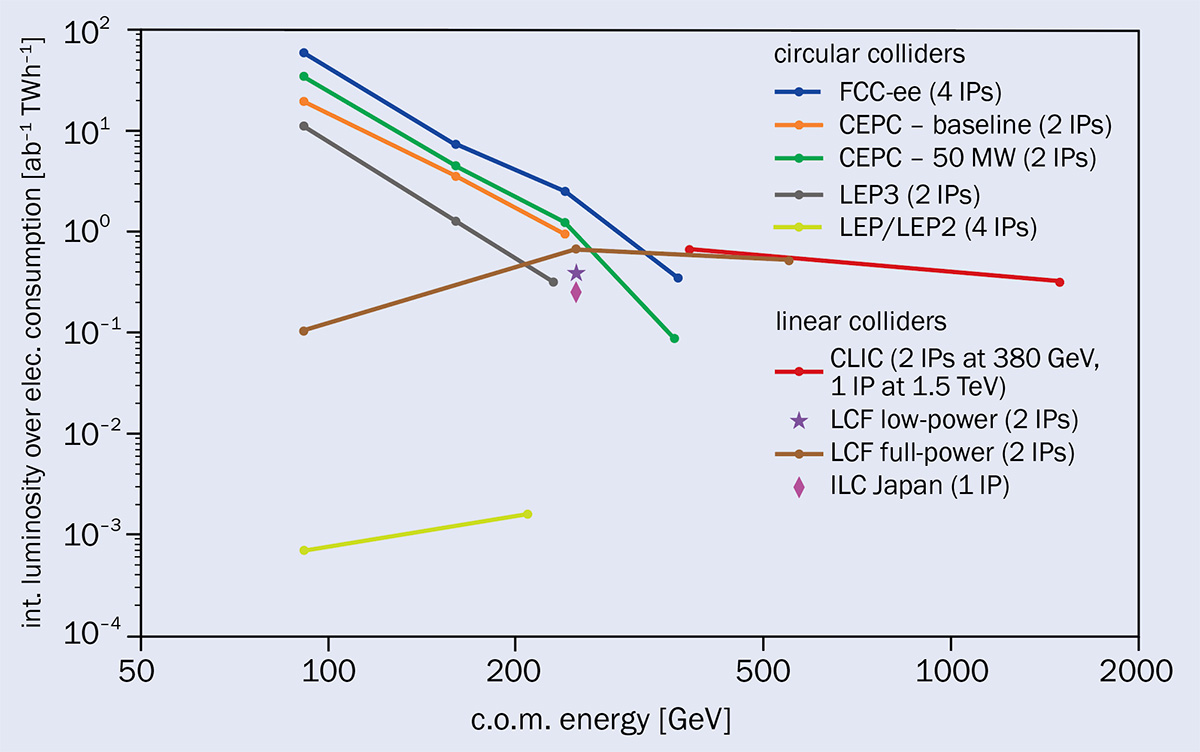
The briefing book considers the potential paths to higher energies and luminosities offered by each proposal for CERN’s next flagship project: the two circular colliders FCC-ee and FCC-hh, the two linear colliders LCF and CLIC, and a muon collider; LEP3 and LHeC are also considered as colliders that could potentially offer a physics programme to bridge the time between the HL-LHC and the next high-energy flagship collider. The technical readiness, cost and timeline of each collider are summarised, alongside their environmental impact and energy efficiency (see “Energy efficiency” figure).
The two main development fronts in this technology pillar are high-field magnets and efficient radio-frequency (RF) cavities. High-field superconducting magnets are essential for the FCC-hh, while high-temperature superconducting magnet technology, which presents unique opportunities and challenges, might be relevant to the FCC-hh as a second-stage machine after the FCC-ee. Efficient RF systems are required by all accelerators (CERN Courier May/June 2025 p30). Research and development (R&D) on advanced acceleration concepts, such as plasma-wakefield acceleration and muon colliders, also present much promise but necessitate significant work before they can present a viable solution for a future collider.
Preserving Europe’s leadership in accelerator science and technology requires a broad and extensive programme of work with continuous support for accelerator laboratories and test facilities. Such investments will continue to be very important for applications in medicine, materials science and industry.
9. Detector instrumentation
A wealth of lessons learned from the LHC and HL-LHC experiments are guiding the development of the next generation of detectors, which must have higher granularity, and – for a hadron collider – a higher radiation tolerance, alongside improved timing resolution and data throughput.
As the eyes through which we observe collisions at accelerators, detectors require a coherent and long-term R&D programme. Central to these developments will be the detector R&D collaborations, which have provided a structured framework for organising and steering the work since the previous update to the European Strategy for Particle Physics. These span the full spectrum of detector systems, with high-rate gaseous detectors, liquid detectors and high-performance silicon sensors for precision timing, precision particle identification, low-mass tracking and advanced calorimetry.
If detectors are the eyes that explore nature, computing is the brain that deciphers the signals they receive
All these detectors will also require advances in readout electronics, trigger systems and real-time data processing. A major new element is the growing role of AI and quantum sensing, both of which already offer innovative methods for analysis, optimisation and detector design (CERN Courier July/August 2025 p31). As in computing, there are high hopes and well-founded expectations that these technologies will transform detector design and operation.
To maintain Europe’s leadership in instrumentation, it is important to maintain sustained investments in test-beam infrastructures and engineering. This supports a mutually beneficial symbiosis with industry. Detector R&D is a portal to sectors as diverse as medical diagnostics and space exploration, providing essential tools such as imaging technologies, fast electronics and radiation-hard sensors for a wide range of applications.
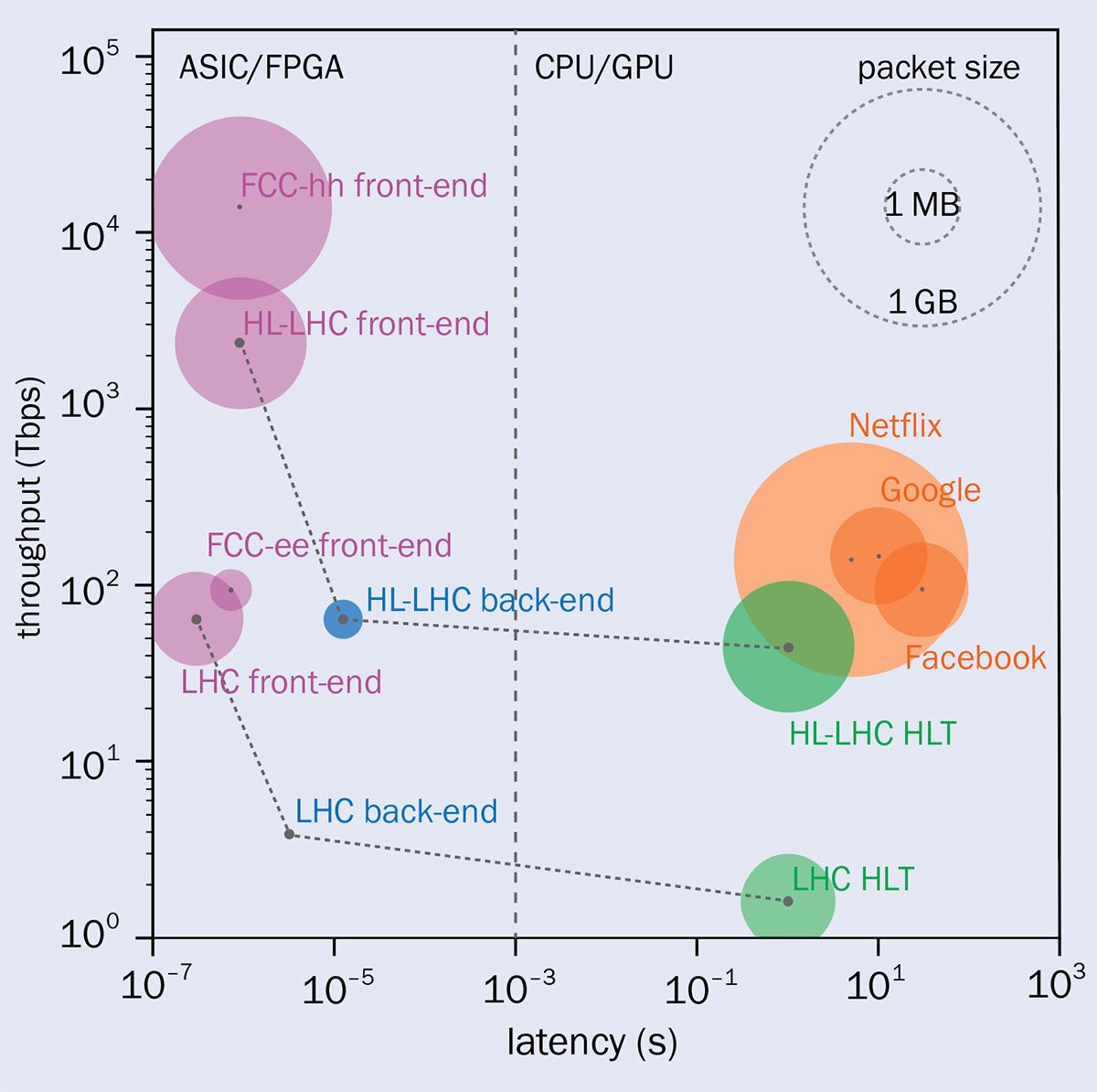
If detectors are the eyes that explore nature, computing is the brain that deciphers the signals they receive. The briefing book pays much attention to the major leaps in computation and storage that are required by future experiments, with simulation, data management and processing at the top of the list (see “Data challenge” figure). Less demanding in resources, but equally demanding of further development, is data analysis. Planning for these new systems is guided by sustainable computing practices, including energy-efficient software and data centres. The next frontier is the HL-LHC, which will be the testing ground and the basis for future development, and serves as an example for the preservation of the current wealth of experimental data and software (CERN Courier September/October 2025 p41).
Several paradigm shifts hold great promise for the future of computing in high-energy physics. Heterogeneous computing integrates CPUs, GPUs and accelerators, providing hugely increased capabilities and better scaling than traditional CPU usage. Machine learning is already being deployed in event simulation, reconstruction and even triggering, and the first signs from quantum computing are very positive. The combination of AI with quantum technology promises a revolution in all aspects of software and of the development, deployment and usage of computing systems.
Some closing remarks
Beyond detailed physics summaries, two overarching issues appear throughout the briefing book.
First, progress will depend on a sustained interplay between experiment, theory and advances in accelerators, instrumentation and computing. The need for continued theoretical development is as pertinent as ever, as improved calculations will be critical for extracting the full physics potential of future experiments.
Second, all this work relies on people – the true driving force behind scientific programmes. There is an urgent need for academia and research institutions to attract and support experts in accelerator technologies, instrumentation and computing by offering long-term career paths. A lasting commitment to training the new generation of physicists who will carry out these exciting research programmes is equally important.
Revisiting the briefing book to craft the current summary brought home very clearly just how far the field of particle physics has come – and, more importantly, how much more there is to explore in nature. The best is yet to come!
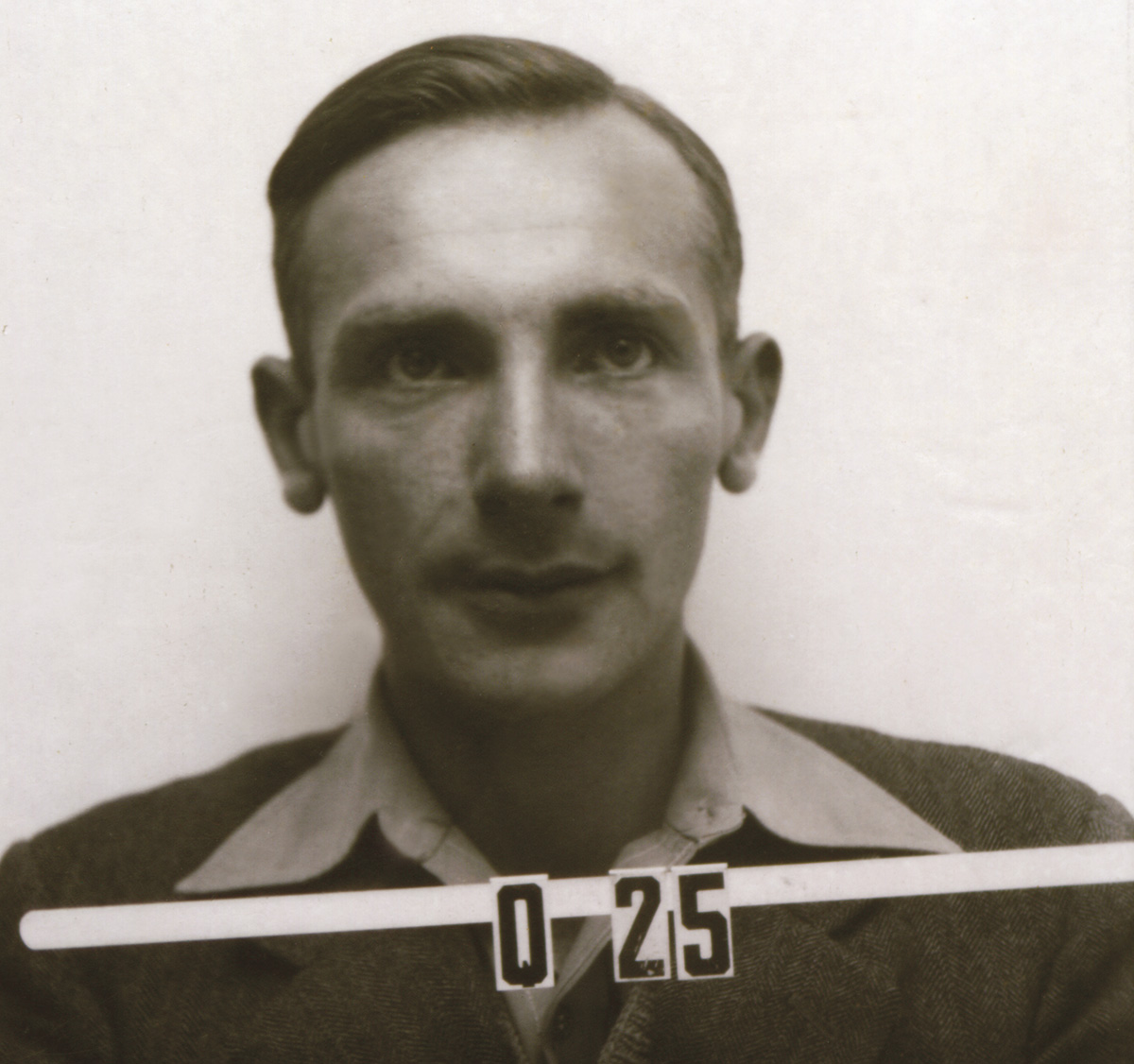
Joseph Rotblat’s childhood was blighted by the destruction visited on Warsaw, first by the Tsarist Army, followed by the Central Powers and completed by the Red Army from 1918 to 1920. His father’s successful paper-importing business went bankrupt in 1914, and the family became destitute. After a short course in electrical engineering, Joseph and a teenaged friend became jobbing electricians. A committed autodidact, Rotblat found his way into the Free University, where he studied physics under Ludwik Wertenstein. Wertenstein had worked with Marie Skłodowska-Curie in Paris and was the chief of the Radiological Institute in Warsaw as well as teaching at the Free University. He was the first to recognise Rotblat’s brilliance and retained him as a researcher at the Institute. Rotblat’s main research was neutron-induced artificial radioactivity: he was among the first to induce cobalt-60, which became a standard source in radiotherapy machines before reliable linear accelerators were available.
Chadwick described Rotblat as “very intelligent and very quick”
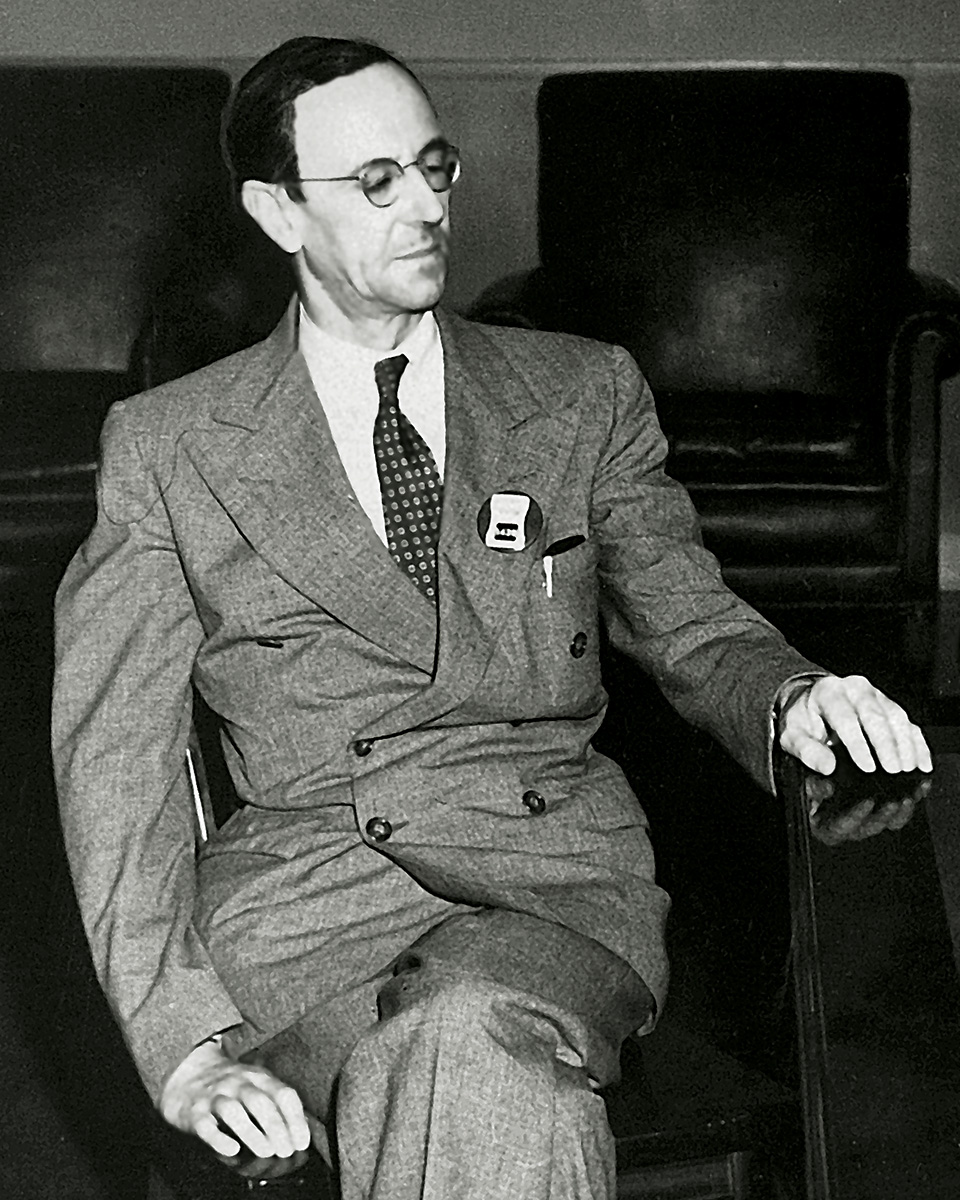
By the late 1930s, Rotblat had published more than a dozen papers, some in English journals after translation by Wertenstein; the name Rotblat was becoming known in neutron physics. The professor regarded him as the likely next head of the Radiological Institute and thought he should prepare by working outside Poland. Rotblat wanted to gain experience of the cyclotron and, although he could have joined the Joliot–Curie group in Paris, elected to go to Liverpool where James Chadwick was overseeing a machine expected to produce a proton beam within months. He arrived in Liverpool in April 1939 and was shocked by the city’s filth. He also found the scouse dialect of its citizens incomprehensible. Despite the trying circumstances, Rotblat soon impressed Chadwick with his experimental skill and was rewarded with a prestigious fellowship. Chadwick wrote to Wertenstein in June describing Rotblat as “very intelligent and very quick”.
Brimming with enthusiasm
Chadwick had formed a long-distance friendship with Ernest Lawrence, the cyclotron’s inventor, who kept him apprised of developments in Berkeley. At the time of Rotblat’s arrival, Lawrence was brimming with enthusiasm about the potential of neutrons and radioactive isotopes from cyclotrons for medical research, especially in cancer treatment. Chadwick hired Bernard Kinsey, a Cambridge graduate who spent three years with Lawrence, to take charge of the Liverpool cyclotron, and he befriended Rotblat. Liverpool had limited funding: Chadwick complained to Lawrence that the money “this laboratory has been running on in the past few years – is less than some men spend on tobacco.” Chadwick served on a Cancer Commission in Liverpool under the leadership of Lord Derby, which planned to bring cancer research to the Liverpool Radium Institute using products from the cyclotron.
The small stipend from the Oliver Lodge fellowship encouraged Rotblat to return to Warsaw in August 1939 to collect his wife, Tola, and bring her to England. She was recovering from acute appendicitis; her doctors persuaded Joseph that she was not fit to travel. So he returned alone on the last train allowed to pass through Berlin before the Germans attacked Poland once more. Tola wrote her last letter to Joseph in December 1939. While he was in Warsaw, Rotblat confided in Wertenstein about his belief that a uranium fission bomb was feasible using fast neutrons, and he repeated this argument to Chadwick when he returned to Liverpool. Chadwick eventually became the leader of the British contingent on the Manhattan Project and arranged for Rotblat to come to Los Alamos in 1944 while remaining a Polish citizen. Rotblat worked in Robert Wilson’s cyclotron group and survived a significant radiation accident, receiving an estimated dose of 1.5 J/kg to his upper torso and head. The circumstances of his leaving the project in December 1944 were far more complicated than the moralistic account he wrote in The Bulletin of the Atomic Scientists 40 years later, but no less noble.
Tragedy and triumph
As Chadwick wrote to Rotblat in London, he saw “very obvious advantages” for the future of nuclear physics in Britain from Rotblat’s return to Liverpool. For one thing, “Rotblat has a wider experience on the cyclotron than anyone now in England,” and he also possessed “a mass of information on the equipment used in Project Y [Los Alamos] and Chicago.” Chadwick had two major roles in mind for Rotblat. One was to revitalise the depleted Liverpool department and to stimulate cyclotron research in England; and the second to collate the detailed data on nuclear physics brought by British scientists returning from the Manhattan Project. In 1945, Rotblat discovered that six members of his family had miraculously survived the war in Poland, but tragically not Tola. His state of despair deepened after the news of the atomic bombs being used against Japan: he knew about the possibility of a hydrogen bomb, and remembered conversations with Niels Bohr in Los Alamos about the risks of a nuclear arms race. He made two resolutions: to campaign against nuclear weapons and to leave academic nuclear physics and become a medical physicist to use his scientific knowledge for the direct benefit of people.
When Chadwick returned to Liverpool from the US, he found the department in a much better state than he expected. The credit for this belonged largely to Rotblat’s leadership; Chadwick wrote to Lawrence praising his outstanding ability, combined with a truly remarkable concern for the staff and students. Chadwick and Rotblat then agreed to build a synchrocyclotron in Liverpool. Rotblat selected the abandoned crypt of an unbuilt Catholic cathedral as the best site, since the local topography would provide some radiation protection. The post-war shortages, especially of steel, made this an extremely ambitious project. Rotblat presented a successful application for the largest university grant to the Department of Science and Industrial Research, and despite design and construction problems resulting in spiralling costs, the machine was in active research use from 1954 to 1968.
With the encouragement of physicians at Liverpool Royal Infirmary, Rotblat started to dabble in nuclear medicine to image thyroid glands and treat haematological disorders. In 1949 he saw an advert for the chair in physics at the Medical College of St. Bartholomew’s Hospital (Bart’s) in London and applied. While Rotblat was easily the most accomplished candidate, there was a long delay in his appointment on spurious grounds, such as being over-qualified to teach physics to medical students, likely to be a heavy consumer of research funds and xenophobia. Bart’s was a closed, reactionary institution. There was a clear division between the Medical College, with its links to London University, and the hospital, where the post-war teaching was suboptimal as it struggled to recover from the war and adjusted reluctantly to the new National Health Service (NHS). The Medical College, in Charterhouse Square, was severely bombed in the Blitz and the physics department completely destroyed. Rotblat attempted to thwart his main opponent, the dean (described as “secretive and manipulative” in one history), by visiting the hospital and meeting senior clinicians and governors. There was also a determined effort, orchestrated by Chadwick, to retain him in the ranks of nuclear physicists.
When I interviewed Rotblat in 1994, he told me that Chadwick’s final tactic was to tell him that he was close to being elected as a fellow of the Royal Society, but if he took the position at Bart’s, it would never happen. Rotblat poignantly observed: “He was right.” I mentioned this to Lorna Arnold, the nuclear historian, who thought it was a shame. She said she would take it up with her friend Rudolf Peierls. Despite being in poor health, Peierls vowed to correct this omission, and the next year the Royal Society elected Rotblat a fellow at the age of 86.
Full-time medical physicist
Rotblat’s first task at Bart’s, when he finally arrived in 1950, was to prepare a five-year departmental plan: a task he was well-qualified for after his experience with the synchrocyclotron in Liverpool. With wealthy, centuries-old hospitals such as Bart’s allowed to keep their endowments after the advent of the NHS, he also became an active committee member for the new Research Endowment Fund that provided internal grants and hired research assistants. The physics department soon collaborated with the biochemistry, pharmacology and physiology departments that required radioisotopes for research. He persuaded the Medical College to buy a 15 MV linear accelerator from Mullard, an English electronics company, which never worked for long without problems.
Rotblat resolved to campaign against nuclear weapons and use his scientific knowledge for the direct benefit of people
During his first two years, in addition to the radioisotope work, he studied the passage of electrons through biological tissue and the energy dissipation of neutrons in tissue – the 1950s were a golden age for radiobiology in England, and Rotblat forged close relationships with Hal Gray and his group at the Hammersmith Hospital. In the mid-1950s, he was approached by Patricia Lindop, a newly qualified Bart’s physician who had also obtained a first-class degree in physiology. Lindop had a five-year grant from the Nuffield Foundation to study ageing and, after discussions with Rotblat, it was soon arranged that she would study the acute and long-term effects of radiation in mice at different ages. This was a massive, prospective study that would eventually involve six research assistants and a colony of 30,000 mice. Rotblat acted as the supervisor for her PhD, and they published multiple papers together. In terms of acute death (within 30 days of a high, whole-body dose), she found that mice that were one-day old at exposure could tolerate the highest doses, whereas four-week-old mice were the most vulnerable. The interpretation of long-term effects was much less clearcut and provoked major disagreements within the radiobiology community. In a 1994 letter, Rotblat mused on the number of Manhattan Project scientists still alive: “According to my own studies on the effects of radiation on lifespan, I should have been dead a long time, having received a sub-lethal dose in Los Alamos. But here I am, advocating the closure of Los Alamos, Livermore and Sandia, instead of promoting them as health resorts!”
In 1954, the US Bravo test obliterated the Bikini atoll and layered a Japanese fishing boat (Lucky Dragon No. 5) that was outside the exclusion zone in the South Pacific with radioactive dust. American scientists realised that the weapon massively exceeded its designed yield, and there was an unconvincing attempt to allay public fear. Rotblat was invited onto BBC’s flagship current-affairs programme, Panorama, to explain to the public the difference between the original fission bombs and the H-bomb. His lucid delivery impressed Bertrand Russell, a mathematical philosopher and a leading pacifist in World War I, who also spoke on Panorama. The two became close friends. When Rotblat went to a radiobiology conference a few months later, he met a Japanese scientist who had analysed the dust recovered from Lucky Dragon No. 5. The dust was comprised of about 60% rare-earth isotopes, leading Rotblat to believe that most of the explosive energy was due to fission not fusion. He wrote his own report, not based on any inside knowledge and despite official opposition, concluding this was a fission–fusion–fission bomb and that his TV presentation had underestimated its power by orders of magnitude. Rotblat’s report became public just as the British Cabinet decided in secret to develop thermonuclear weapons. The government was concerned that the Americans would view this as another breach of security by an ex-Manhattan Project physicist. Rotblat’s reputation as a man of the political left grew within the conservative institution of Bart’s.
Russell made a radio address at the end of 1954 to address the global existential threat posed by thermonuclear weapons and urged the public to “remember your humanity and forget the rest”. Six months later, Russell announced the Russell–Einstein Manifesto with Rotblat as one of the signatories, and relied upon by Russell to answer questions from the press. The first Pugwash conference followed in 1957 with Rotblat as a prominent contributor. His active involvement, closely supported by Lindop, would last for the rest of his life, as he encouraged communication across the East–West divide and pushed for international arms control agreements. Much of this work took place in his office at Bart’s. Rotblat and the Pugwash conference then shared the 1995 Nobel Peace Prize.
Michele Arneodo, professor of physics at the University of Piemonte Orientale and chairperson elect of the CMS Collaboration Board, passed away on 12 August 2025. He was 65.
Born in Turin in 1959, Michele graduated in physics from the University of Torino in 1982. He was awarded a Fulbright Fellowship to pursue graduate studies at Princeton University, where he received his MA in 1985 and his PhD in 1992. He began his career as a staff researcher at INFN Torino, before moving to academia as an associate professor at the University of Calabria and then, from 1995, at the University of Piemonte Orientale in Novara, where he became full professor in 2002.
Michele’s research career began with the European Muon Collaboration (NA2 and NA9) and the New Muon Collaboration (NA37) at CERN, investigating the structure of nucleons through the deep inelastic scattering of muons. He went on to play a leading role in the ZEUS experiment at DESY’s HERA collider, focusing on the diffractive physics programme, coordinating groups in Torino and Novara, and overseeing the operation of the Leading Proton Spectrometer. Awarded an Alexander von Humboldt fellowship, he worked at DESY between 1996 and 1999.
With the start of the LHC era, Michele devoted his efforts to CMS, becoming a central figure in diffractive physics and the relentless force behind the construction of the CMS Precision Proton Spectrometer (PPS) and the subsequent merging of the TOTEM and CMS collaborations. He was convener of the diffractive physics group, served on the CMS Publication and Style committees, and from 2014 chaired the Institution Board of the CMS PPS, where he was also resource manager and INFN national coordinator. He had been appointed as chairperson of the CMS Collaboration Board, a role that he was due to begin this year.
A central figure in diffractive physics and the relentless force behind the construction of the Precision Proton Spectrometer
Teaching was central to Michele’s vocation. At the University of Piemonte Orientale, he developed courses on radiation physics for medical students and radiology specialists, building bridges between particle physics and medical applications. He was also widely recognised as a dedicated mentor, always attentive to the careers of younger collaborators.
We will remember Michele as a very talented physicist and a genuinely kind person, who had the style and generosity of a bygone era. Always approachable, he could be found with a smile, a sincere interest in others’ well-being, and a delicate sense of humour that brought lightness to professional exchanges. His students and collaborators valued his constant encouragement and his passion for transmitting enthusiasm for physics and science.
While leaving a lasting mark on physics and on the institutions he served, Michele also cultivated enduring friendships and dedicated himself fully to his family, to whom the thoughts of the CMS and wider CERN communities go at this difficult time.
CERN Council president Costas Fountas sums up the vision of CERN’s Member States.
In March 2024, the CERN Council called on the particle-physics community to develop a visionary and concrete plan that greatly advances human knowledge in fundamental physics through the realisation of the next flagship project at CERN. This community-driven strategy will be submitted to the CERN Council in March 2026, leading to discussions among CERN Member States. The CERN Council will update the European strategy for particle physics (ESPP) based on these deliberations, with a view to approving CERN’s next flagship collider in 2028.
This third update to the ESPP builds on a process initiated by the CERN Council in 2006 and updated in 2013 and 2020. It is designed to convey to the CERN Council the views of the community on strategic questions that are key to the future of high-energy physics (HEP). The process involves all CERN Member States and Associate Member States, with the goal of developing a roadmap for the field for many years to come. The CERN Council asked that the newly updated ESPP should take into account the status of implementation of the 2020 ESPP, recent accomplishments at the LHC and elsewhere, progress in the construction of the High-Luminosity LHC (HL-LHC), the outcome of the Future Circular Collider (FCC) Feasibility Study, recent technological developments in accelerator, detector and computing technology, and the international landscape of the field. Scientific inputs were requested from across the community.
On behalf of the CERN Council, I would like to thank the high-energy community for understanding that this is a critical time for our field and participating very actively. Throughout this time, the various national groups have held a large number of meetings to debate which would be the best accelerator to be hosted at CERN after the HL-LHC. They also discussed and proposed alternative options as requested by the CERN Council, which followed the process closely.
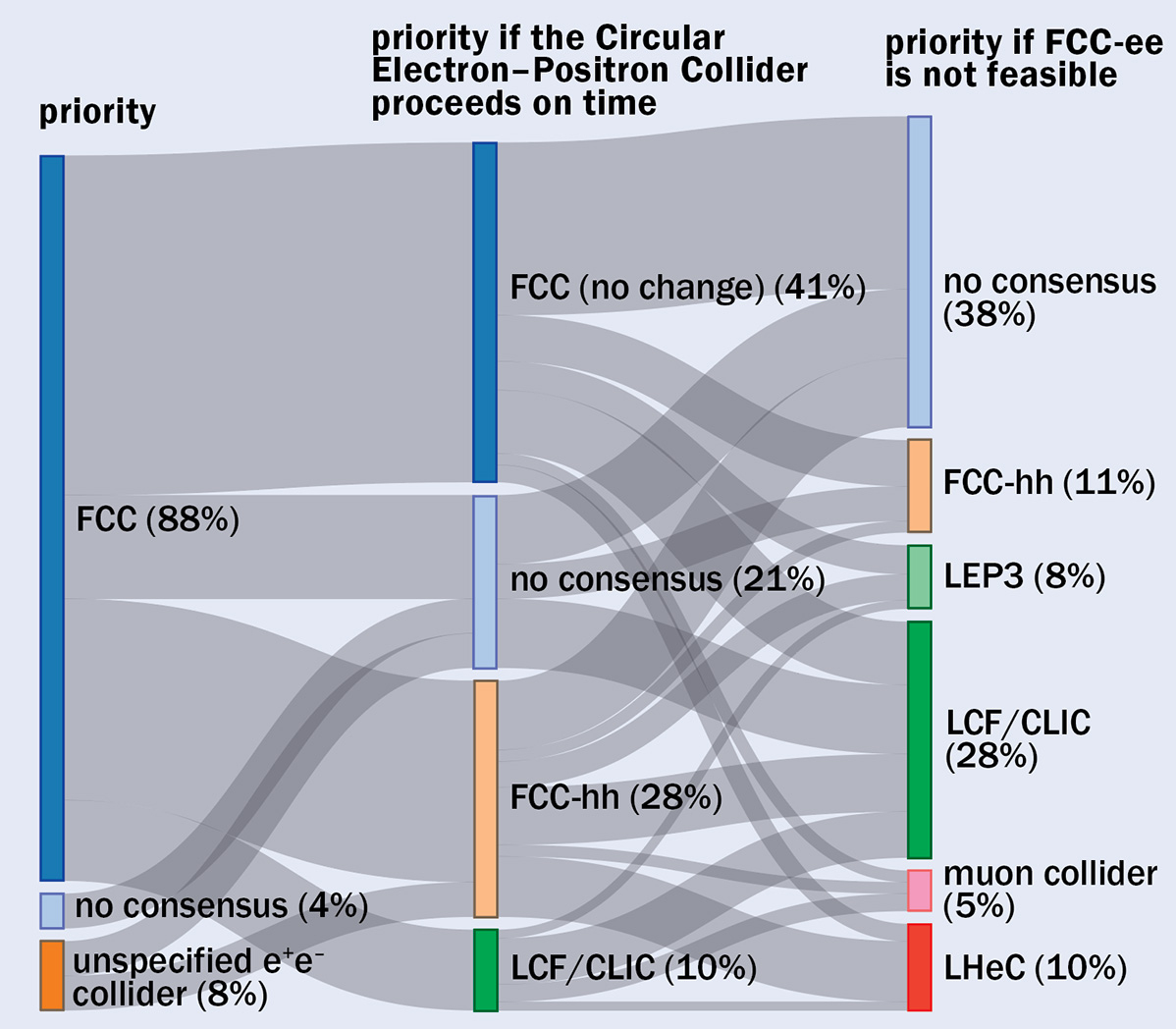
By June 2025 we were delighted to hear from the ESPP secretariat that the participation of the community had been overwhelming and that a very large number of proposals had been submitted (CERN Courier May/June 2025 p8). These submissions show a broad consensus that CERN should be maintained as the global centre for collider physics through the realisation of a new flagship project. Europe’s strategy should be ambitious, innovative and forward looking. An overwhelming majority of the communities from CERN Member States express their strong support for the FCC programme, starting with an electron–positron collider (FCC-ee) as a first stage. Their strong support is largely based on its superb physics potential and its long-term prospects, given the potential to explore the energy frontier with a hadron collider (FCC-hh) following a precision era at FCC-ee.
CERN’s future flagship collider – Member State preferences
Based on an unofficial analysis by CERN Courier of national submissions to the 2026 update to the European strategy for particle physics. Each national submission is accorded equal weight, with that weight divided equally when multiple options are specified. With the deadline for national submissions passing before Slovenia acceded as CERN’s 25th Member State, 24 national submissions are included. These data are not endorsed by the authors, the CERN Council, the strategy secretariat or CERN management.
This strategy coherently develops the vision of ESPP 2020, which recommended to the CERN Council that an electron–positron Higgs factory be the highest-priority next collider. The 2020 ESPP update further recommended that Europe, together with its international partners, should investigate the technical and financial feasibility of a future hadron collider at CERN with a centre-of-mass energy of at least 100 TeV and with an electron–positron Higgs and electroweak factory as a possible first stage. Such a feasibility study of the colliders and related infrastructure should be established as a global endeavour and be completed on the timescale of the next strategy update.
Based on ESPP 2020, the CERN Council mandated the CERN management to undertake a feasibility study for the FCC and approved an initial budget of CHF 100 million over a five-year period. Throughout the past five years, the FCC feasibility study was undertaken by CERN management under the oversight of the CERN Council. Council heard presentations on its progress at every session and carefully scrutinised a very successful mid-term review (CERN Courier March/April 2024 p25). The FCC collaboration completed the FCC feasibility study ahead of schedule and summarised the results of the study in a three-volume report that was released in March 2025 (CERN Courier May/June 2025 p8). The results are currently under review by panels which will scrutinise both the scientific aspects of the project as well as its budget estimates. The project will be presented to the Scientific Policy and Finance committees in September 2025 and to the CERN Council in November 2025.
It is rewarding to see that the scientific opinion of the community is in sync with ESPP 2020, the decision of the CERN Council to initiate the FCC feasibility study, and the efforts of CERN management to steer and complete it. This is a sign of the strength of the HEP community. While respecting a healthy diversity of opinion, a clear consensus has emerged across the community that the FCC is the highest priority project.
Crucially, however, the CERN Council requested that the community provide not only the scientifically most attractive option, but also hierarchically ordered alternative options. Specifically, the Council requested that the strategy update should include the preferred option for the next collider at CERN and prioritised alternative options to be pursued if the chosen preferred plan turns out not to be feasible or competitive. No consensus has yet been reached here, however two projects have the required readiness to be candidates for alternative programmes: the Linear Collider Facility (LCF, 250 GeV) and the Compact Linear Collider (CLIC, 380 GeV), with additional R&D required in the latter case. A third proposal, LEP3, also requires further study, but could be a promising candidate for a Higgs factory in the existing LEP/LHC tunnel, albeit at a significantly reduced luminosity relative to FCC-ee.
On behalf of the CERN Council, I would like to thank the high-energy community for understanding that this is a critical time for our field and participating very actively
The R&D for several of these projects has been supported by CERN for a long time. Research on linear colliders has been an active programme for the past 30 years and has received significant support, not only ensuring their readiness for consideration as future HEP facilities, but also sparking an exceptional R&D programme in the applications of fundamental research, for example in accelerators for cancer treatment (CERN Courier July/August 2024 p46). Over the past five years, CERN has also invested in muon colliders and hosts the International Muon Collider Collaboration. CERN also leads research into the application of plasma-wakefield acceleration for fundamental physics, having supported the AWAKE experiment for 10 years now (CERN Courier May/June 2024 p25).
The next milestone for updating the ESPP is 14 November: the deadline for submission of the final national inputs. The final drafting session of the strategy update will then take place from 1 to 5 December 2025 at Monte Verità Ascona, where the community recommendations will be finalised. These will be presented to the CERN Council in March 2026 and discussed at a dedicated meeting of the CERN Council in May 2026 in Budapest.
Meanwhile, a key milestone for community deliberations recently passed. The full spectrum of community inputs was presented and debated at an Open Symposium held in Venice in June. As strategy secretary Karl Jakobs reports on the following pages, the symposium was a smashing success with lively discussions and broad participation from our community. On behalf of Council, I would like to convey my sincere thanks to the Italian delegation for the superb organisation of the symposium.
Costas Fountashas served as president of the CERN Council since his appointment in January this year, and as the Greek scientific delegate to the Council since 2016. A professor of physics at the University of Ioannina and longstanding member of the CMS collaboration, he previously served as vice-president of the Council from 2022 to 2024. (Image credit: M Brice, CERN)
Venice symposium debates decades of collider strategy
Strategy secretary Karl Jakobs reports from a vibrant Open Symposium in Venice.
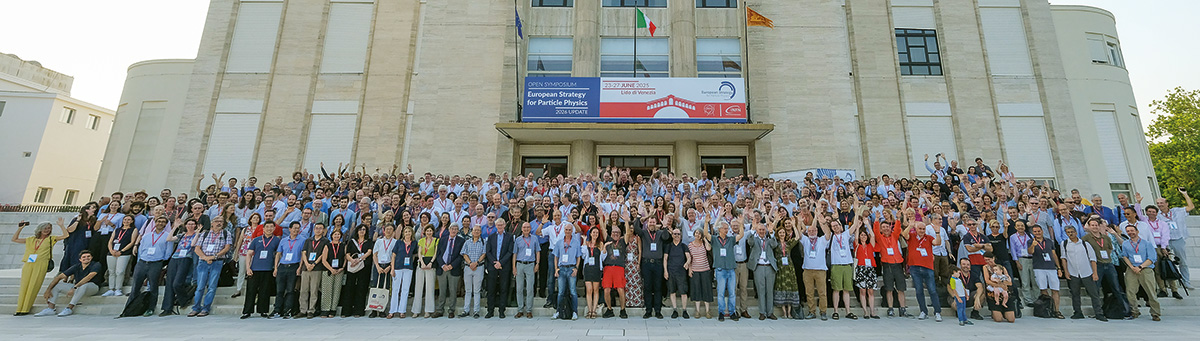
The Open Symposium of the European Strategy for Particle Physics (ESPP) brought together more than 600 physicists from almost 40 countries in Venice, Italy, from 23 to 27 June, to debate the future of European particle physics. In the focus was the discussion on the next large-scale accelerator project at CERN to follow the HL-LHC, which is scheduled to operate until the end of 2041. The strategy update should – according to the remit defined by the CERN Council – define a preferred option for the next collider and prioritised alternative options to be pursued if the preferred plan turns out not to be feasible or competitive. In addition, the strategy update should indicate areas of priority for exploration complementary to colliders and other experiments to be considered at CERN and at other European laboratories, as well as for participation in projects outside Europe.
The Open Symposium is an important step in the strategy process. The aim is to involve the full community in discussions of the 266 scientific contributions that had been submitted by the community to the ESPP process before the symposium (CERN Courier May/June 2025 p8).
In the opening session of the symposium CERN Director-General Fabiola Gianotti summarised the impressive achievements of the CERN community in the implementation of the recommendations from the 2020 update to the ESPP. Eric Laenen (Nikhef) stressed that the outstanding questions in particle physics require a broad and diverse experimental programme, including the HL-LHC, a new flagship collider, and a wide variety of other experiments including those in neighbouring fields. A broad consensus emerged that a future collider programme should be realised that can fully leverage both precision and energy, covering the widest range of observables at different energy scales. To match experimental precision, significant progress on the theoretical side is also required, in particular regarding higher-order calculations.
An important part of the symposium was devoted to presentations of possible future large-scale accelerator projects. Detailed presentations were given on the FCC-ee and FCC-hh colliders, either in the integrated FCC programme or proceeding directly to FCC-hh as a standalone realisation at an earlier time. Linear colliders were presented as alternative options, with a Linear Collider Facility (LCF) based on the design of the International Linear Collider (ILC) and CLIC both considered. In addition, smaller collider options were presented, based on re-using the LHC/LEP tunnel. A first proposal, LEP3, suggests accelerating electrons and positrons up to energies of 230 GeV, while a second proposal, LHeC, proposes the realisation of electron–proton collisions in one interaction point of the LHC. LHeC would require the construction of an additional new energy-recovery linac for the acceleration of electrons.
Moving focus from the precision frontier to the energy frontier, several ways to reach the 10 TeV “parton scale” were presented. (Comparisons between the energy reach of hadron and lepton colliders must discuss parton–parton centre-of-mass energies, where partons refer to the pointlike constituents of hadrons, as only a fraction of the energy of collisions between composite particles can be used to probe the existence of new particles and fields.) If FCC-ee is realised, a natural path is to proceed with proton-proton collisions with proton–proton centre-of-mass energies in the range of 85 to 120 TeV, depending on the available high-field magnet technology. As an alternative, a muon collider could provide a path towards high-energy lepton collisions, however, demonstrations of how to address the significant technological challenges, such as six-dimensional cooling in transverse and longitudinal phase space, and other items associated with the various acceleration steps, need to be achieved. Likewise, plasma-based acceleration techniques for electrons and positrons capable of exceeding the 1 TeV energy scale are yet to be demonstrated.
A broad consensus emerged that a future collider programme should be realised that can fully leverage both precision and energy
The symposium was organised to foster strong engagement by the community in discussion sessions. Six physics topics – covering electroweak physics, strong interactions, flavour physics, physics beyond the Standard Model, neutrino physics and cosmic messengers, and dark matter and the dark sector, as well as the three technology areas on accelerators, detectors and computing, were summarised in rapporteur talks, followed by 45-minute discussions, where the people present in Venice strongly engaged.
For the study of precision Higgs measurements, the performance of all the considered electron–positron (e+e–) colliders is comparable. While a sub-percent precision can be reached in several measurements of Higgs couplings to fermions and bosons, HL-LHC measurements would prevail for rare processes. On the determination of the important Higgs-boson (H) self-coupling, the precision obtained at the HL-LHC will prevail until either e+e– linear colliders can improve it in direct HH production measurements at collision energies above 500 GeV, or before precisions at the level of a few percent can be reached at FCC-hh or a muon collider. It was further stressed that precision measurements in the Higgs, electroweak (Z, W, top) and flavour physics constitute three facets for indirect discoveries and that their synergy is essential to maximise the discovery potential of future colliders. Due to its high luminosity at low energies and its four experiments, the FCC-ee shows a superior physics performance in the electroweak programme.
In flavour physics, a lot of progress will be achieved in the coming decade by the LHCb and Belle-II experiments. While the tera-Z production at a future FCC-ee would provide a major step forward, the giga-Z data samples available at linear colliders do not seem to be a good option for flavour physics. The FCC-ee and LHeC would also achieve high precision on QCD measurements, leading, for example, to a per-mille level determination of the strong coupling constant αs. The important investigations of the quark–gluon plasma at the HL-LHC could be continued in parallel to an e+e– collider operation at CERN at the SPS fixed target programme, before FCC-hh would eventually allow for novel studies in the high-temperature QCD domain.
Keeping diversity in the particle-physics programme was also felt to be essential: the next collider project should not come at the expense of a diverse scientific programme in Europe. Given that we do not know where new physics will show up, ensuring a diverse and comprehensive physics programme is vital, including fixed-target, neutrino, flavour, astroparticle and nuclear-physics experiments. Experiments in these areas have the potential for groundbreaking discoveries.
The discussions in Venice revealed a community united in its desire for a future flagship collider at CERN
At the technology frontier, essential work on accelerator R&D, such as on high-field and high-temperature superconducting magnets and RF systems, remain a high priority and appropriate investments must be made. R&D on advanced acceleration concepts should continue with adequate effort to prepare future projects. In the detector area, the establishment of the Detector Research & Development (DRD) collaborations as a result of the implementation of the recommendations of the 2020 ESPP update were considered to provide a solid basis to tackle the challenges related to the developments for high-performing detectors for future colliders and beyond. It is also expected that the required software and computing challenges for future colliders can be mastered, provided that adequate person power and funding are available and adaptations to new technologies, in particular GPUs, AI and – on a longer timescale – quantum computing, can be made.
The discussions in Venice revealed a community united in its desire for a future flagship collider at CERN. Over the past years, very significant progress has been made in this direction, and the discussions on the prioritisation of collider options will continue over the next months. In addition to the FCC-ee, linear colliders (LCF, CLIC) present mature options for a Higgs factory at CERN. LEP3 and LHeC could alternatively be considered as intermediate collider projects, followed by a larger accelerator capable of exploring the 10 TeV parton scale.
The differences in the physics potential between the various collider options will be documented in the Physics Briefing Book that will be released by the Physics Preparatory Group by the end of September. In parallel, the technical readiness, risks, timescales and costs will be reviewed by the European Strategy Group (ESG). Alongside the final national inputs, these assessments will provide the foundation for the final recommendations to be drafted by the ESG in early December 2025.
Karl Jakobs is the secretary of the 2026 update to the European strategy for particle physics. A professor at the University of Freiburg, Jakobs served as spokesperson of the ATLAS collaboration from 2017 to 2021 and as chairman of the European Committee for Future Accelerators from 2021 to 2023. (Image credit: K Jakobs)
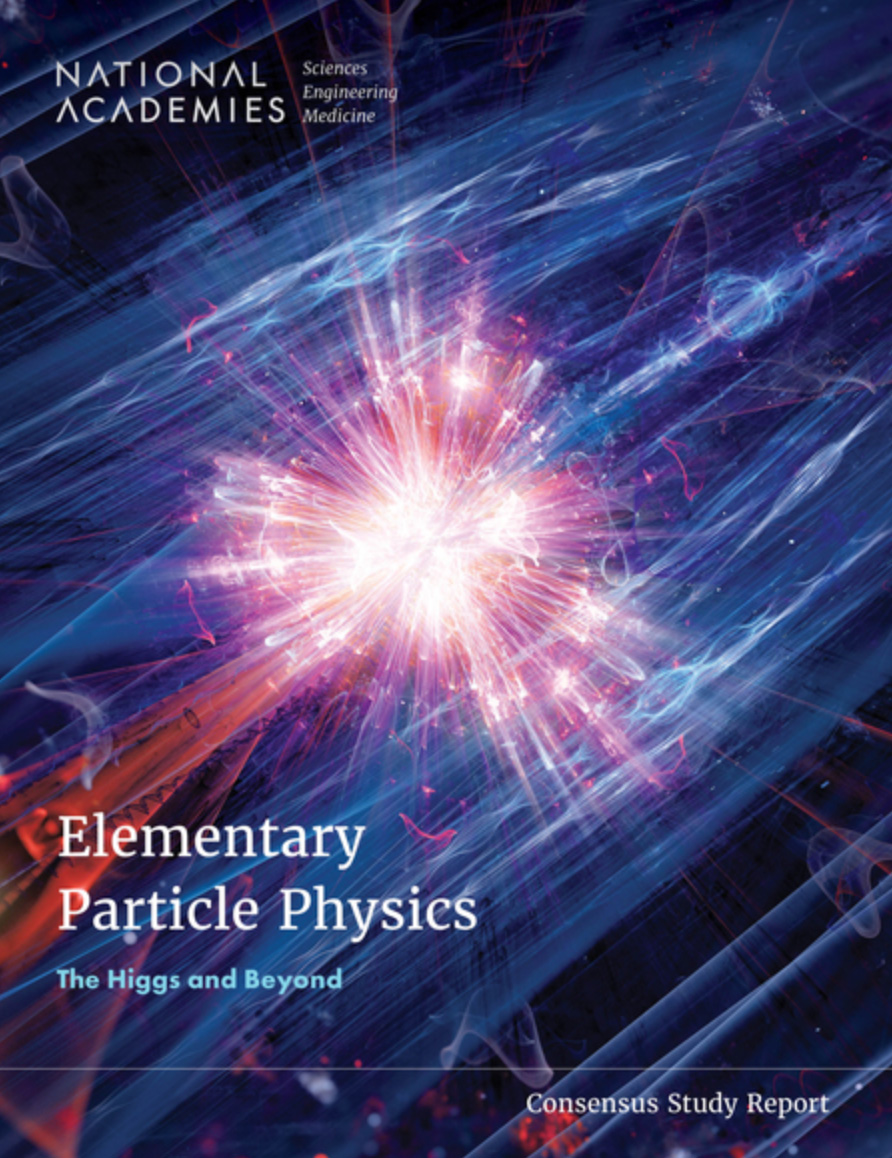
Big science requires long-term planning. In June, the US National Academies of Sciences, Engineering, and Medicine published an unprecedented 40-year strategy for US particle physics titled Elementary Particle Physics: The Higgs and Beyond. Its recommendations include participating in the proposed Future Circular Collider at CERN and hosting the world’s highest-energy elementary particle collider around the middle of the century (see “Eight recommendations” panel). The report assesses that a 10 TeV muon collider would complement the discovery potential of a 100 TeV proton collider.
“The shift to a 40-year horizon in the new report reflects a recognition that modern particle-physics projects and scientific questions are of unprecedented scale and complexity, demanding a much longer-term strategic commitment, international cooperation and investment for continued leadership,” says report co-chair Maria Spiropulu of the California Institute of Technology. “A staggered approach towards large research-infrastructure projects, rich in scientific advancement, technological breakthroughs and collaboration, can shield the field from stagnation.”
Eight recommendations
1. The US should host the world’s highest-energy elementary particle collider around the middle of the century. This requires the immediate creation of a national muon collider R&D programme to enable the construction of a demonstrator of the key new technologies and their integration.
2. The US should participate in the international Future Circular Collider Higgs factory currently under study at CERN to unravel the physics of the Higgs boson.
3. The US should continue to pursue and develop new approaches to questions ranging from neutrino physics and tests of fundamental symmetries to the mysteries of dark matter, dark energy, cosmic inflation and the excess of matter over antimatter in the universe.
4. The US should explore new synergistic partnerships across traditional science disciplines and funding boundaries.
5. The US should invest for the long journey ahead with sustained R&D funding in accelerator science and technology, advanced instrumentation, all aspects of computing, emerging technologies from other disciplines and a healthy core research programme.
6. The federal government should provide the means and the particle-physics community should take responsibility for recruiting, training, mentoring and retaining the highly motivated student and postdoctoral workforce required for the success of the field’s ambitious science goals.
7. The US should engage internationally through existing and new partnerships, and explore new cooperative planning mechanisms.
8. Funding agencies, national laboratories and universities should work to minimise the environmental impact of particle-physics research and facilities.
Source: National Academies of Sciences, Engineering, and Medicine 2025 Elementary Particle Physics: The Higgs and Beyond. Washington, DC: The National Academies Press.
The report is authored by a committee of leading scientists selected by the National Academies. Its mandate complements the grassroots-led Snowmass process and the budget-conscious P5 process (CERN Courier January/February 2024 p7). The previous report in this series, Revealing the Hidden Nature of Space and Time: Charting the Course for Elementary Particle Physics was published in 2006. It called for the full exploitation of the LHC, a strategic focus on linear-collider R&D, expanding particle astrophysics, and pursuing an internationally coordinated, staged programme in neutrino physics.
Two conclusions underpin the new report’s recommendations. The first identifies three workforce issues currently threatening the future of particle physics: the morale of early-career scientists, a shortfall in the number of accelerator scientists, and growing barriers to international exchanges. The second urges US leadership in elementary particle physics, citing benefits to science, the nation and humanity.
To provide the best experiences, we use technologies like cookies to store and/or access device information. Consenting to these technologies will allow us to process data such as browsing behavior or unique IDs on this site. Not consenting or withdrawing consent, may adversely affect certain features and functions.
Functional
Always active
The technical storage or access is strictly necessary for the legitimate purpose of enabling the use of a specific service explicitly requested by the subscriber or user, or for the sole purpose of carrying out the transmission of a communication over an electronic communications network.
Preferences
The technical storage or access is necessary for the legitimate purpose of storing preferences that are not requested by the subscriber or user.
Statistics
The technical storage or access that is used exclusively for statistical purposes.The technical storage or access that is used exclusively for anonymous statistical purposes. Without a subpoena, voluntary compliance on the part of your Internet Service Provider, or additional records from a third party, information stored or retrieved for this purpose alone cannot usually be used to identify you.
Marketing
The technical storage or access is required to create user profiles to send advertising, or to track the user on a website or across several websites for similar marketing purposes.