The career advancement of experimental high-energy physicists at universities and research institutes has become harder in the last 10 years due to the large number of authors appearing on each publication within the field. This large number of authors makes it harder to evaluate the individual contribution when comparing with other fields in science.
Collaborations associated with forthcoming LHC experiments are typically several times larger than existing experiments. Thus, if no action is taken, the problem of recognizing individual contributions to experiments will become even more acute.
It is understood that the LHC experiments presently expect that all scientific results using data from these experiments will be published in the name of the full collaboration that is running the experiment.
This new recommendation attempts to address the above issues, while providing a way for fair recognition to the individuals. It is intended to provide a concrete procedure for the period before data taking and outlines the way to be followed thereafter.
1. The editors of scientific journals have been contacted to establish a new class of publications under the name “scientific notes”. These notes will contain results of analyses, detector development and improvements, detector and physics simulations, software, algorithms and data handling. The results presented in these notes will be part of the official results of the experiment and should be quoted, whenever relevant, in official communications or publications of the full collaboration. It is intended that such notes should describe a unique result or methodology as accepted by the collaboration and be of interest to a wider scientific community. It is intended that these notes should be of sufficiently high quality that they count as valid publications, credited to the named authors.
In this spirit, the following requirements are proposed:
they will be published in the name of the direct authors of the work;
they will need to be approved and submitted by the collaboration spokesperson;
they will have to pass a review procedure that will not only involve members of the experiment but also external reviewers;
they will be part of the public domain. Most preferably, they should also appear in the electronic media.
2. Publications of the full collaboration will normally include the name of the collaboration and the list of participating institutions with a secure reference to the electronic media and in print to the author list (for printed journals, a full author list should appear periodically). This will eliminate the need of printing many pages of names in each publication, while giving recognition to the institutes involved.
3. Publications of the full collaborations and conference presentations given in the name of the collaborations will refer, as far as possible, to the published scientific notes. This will make the publications easier to read and will give the proper credit to the scientific notes (which contain the names of the direct contributors).
4. Publications of the full collaboration are deemed to include:
articles from the full collaboration in refereed journals;
proposals and reports submitted to official bodies in the name of the collaboration;
articles from a very large subgroup (like a subsystem) of the collaboration in official journals.
During the 26 years that Bjørn Wiik spent at DESY, he decisively shaped its destiny as one of the world’s major physics centres. He did this in a series of roles leading scientist, HERA project leader, and chairman of the DESY directorate, but most of all as an exceptional scientist and leader whose charm and enthusiasm captivated all who met him. Wiik’s calm and soft-spoken manner concealed a penetrating vision and an iron will, which left their mark on world science.
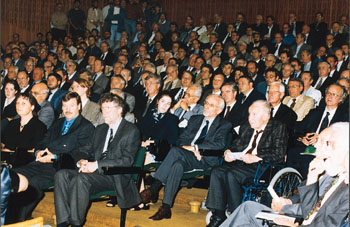
On 7 July 1999, nearly 800 friends and colleagues gathered at DESY to pay a final tribute, both scientific and personal, at a memorial meeting. Among the guests were Wiik’s wife and their three children, the Norwegian consul, DESY founding father Willibald Jentschke, and Peter Brix, Wiik’s thesis supervisor from Darmstadt.
A man of high moral integrity, with an exceptional capability to motivate and integrate an outstanding example of his sense of responsibility towards both politicians and the public.
As emphasized in the opening address by his successor, former DESY research director Albrecht Wagner, Wiik was an outstanding figure in European and world particle physics. His interest and talent extended from theoretical to detector and accelerator physics, all of which benefited from his scientific excellence and uniqueness. Moreover, his impressive political talent allowed him to influence politicians and citizens alike all the more remarkable as a Norwegian at the head of a German national research centre.
As the son of a Norwegian resistance leader during wartime German occupation, Wiik was not exactly predestined for close co-operation with Germany. However, it was his father who urged him to study in Darmstadt to get to know “the other” Germany. One of Wiik’s oldest friends, Roland Engfer from Zürich, he remembered the years spent at Darmstadt Technical University the years that allowed Wiik to get to know “the other” Germany, and that laid the foundation of his career as a world leader in particle physics.
After seven profitable years at SLAC in Stanford, Wiik returned to Germany to take up an appointment at DESY, which he felt was the ideal place for him to contribute to physics. Volker Soergel, Wiik’s predecessor as head of the DESY directorate, retraced Wiik’s time at the laboratory from its very beginning, when Erich Lohrmann heard of the exceptional young physicist and invited him to the Hamburg laboratory in 1972.
Wiik’s physics work eventually led him to share the European Physical Society’s 1995 High-Energy Physics prize for discovering the first direct evidence of the gluon using the TASSO experiment at the PETRA electronpositron collider in 1979.
From the early 1970s, Wiik nurtured the novel idea of an energy-asymmetric electronproton collider, a vision that eventually came to fruition with the commissioning of DESY’s flagship accelerator, HERA, in 1992.
A talented orchestrator, he led the work for HERA’s ambitious superconducting proton ring. Despite DESY’s relative inexperience in both superconductivity and proton machines, HERA was completed on time and within budget. Its physics harvest is now surpassing all early promises.
In 1993, Wiik took over from Soergel as DESY’s director-general. Under him, DESY’s characteristic symbiosis of particle physics laboratory and multidisciplinary synchrotron radiation research centre gained even more importance, the latest achievement being a proposal to set up a structural biology group.
He also played a major role in worldwide efforts to develop the next generation of electronpositron linear colliders, pushing the idea and promoting R&D work for an international 33 km superconducting TESLA machine with integrated X-ray lasers for multidisciplinary research. As Albrecht Wagner put it, Wiik left the particle physics community with a void but also a vision, which is now up to the laboratory to realize.
Hamburg mayor Ortwin Runde valued Bjørn Wiik as a man of high moral integrity, with an exceptional capability to motivate and integrate an outstanding example of his sense of responsibility towards both politicians and the public.
Hermann Schunck, chairman of DESY’s Administrative Council, speaking for the Federal Minister for Education and Research (Mrs Bulmahn), called for an effort to make Wiik’s ideas and visions become a reality.
Jürgen Lüthje, president of Hamburg University, underlined the exemplary collaboration between DESY and the university.
Detlev Ganten, chairman of the Hermann von Helmholtz Association of National Research Centres (HGF), remembered Wiik as a truly interdisciplinary thinker who promoted the collaboration between the rather disparate HGF institutes with great dedication and judgement.
CERN director-general Luciano Maiani recalled Wiik’s valuable collaboration with CERN, as chairman and as a member of the SPS experiments committee on which they served together, and his farsightedness.
Ralph Eichler, chairman of DESY’s Scientific Council, closed the first part of the seminar with a more personal view, recollecting many examples of Wiik’s practical philosophy like taking the cross-country skiing trail at the Nordic Winter School in the opposite direction to everyone else in order to talk to every workshop participant.
Introducing the scientific part of the seminar, Maury Tigner from Cornell described the impact of superconductivity on particle physics. As well as the HERA proton ring, Wiik also shaped the international effort towards a new generation of electronpositron colliders via the TESLA route.
Rather than dwelling on the past, SLAC director Burt Richter looked at the ongoing role of electronpositron colliders, a field bristling with activity. With science budgets under pressure all over the world, Richter insisted on the necessity to push a single project.
Former CERN director-general Chris Llewellyn Smith recalled the important roles that Wiik had played on various committees at CERN. These included the Scientific Policy Committee, and chairing the 1991 external review of the LHC Project. Further afield he was a key figure in European and world particle physics, particularly in the European Committee for Future Accelerators (ECFA), and in the International Committee for Future Accelerators (ICFA), of which he had been chairman since 1997.
Llewellyn Smith then turned to “deep inelastic scattering” using high-energy beams to reach the deep interior of the proton and the historic steps that ultimately led to HERA.
HERA data have now shed important light on nearly all of the open questions underlined in the milestone 1977 paper by Wiik and Llewellyn Smith, which pointed out the potential of such a collider. HERA’s electrons probe protons at an unprecedented level, allowing the interactions between quarks and gluons to be studied in new depth. Photoproduction has revealed the dual behaviour hadronic and point-like of the photon. Neutral and charged current effects vividly demonstrate electroweak unification.
Turning away from particle physics, Jochen Schneider, head of the Hamburg Synchrotron Radiation Laboratory (HASYLAB), presented DESY’s second research field, of which Wiik was extremely proud. Synchrotron radiation research has a long tradition at DESY, going back to 1964. Now, with the former electronpositron collider, DORIS, transformed into a dedicated synchrotron radiation source, HASYLAB users including 650 biologists outnumber the particle physicists by far. Wiik felt that DESY was a good place for such a cohabitation, because both fields had a common need in tools, which furthered a fruitful collaboration.
For the future, he envisaged bringing them even closer together within the TESLA project, which includes an X-ray free-electron laser (FEL) for multidisciplinary research. Driven by the superconducting linac, those X-ray FELs will deliver coherent X-ray pulses of between 100 and 300 fs, which far surpass the brilliance of existing synchrotron radiation sources. DESY is building a prototype FEL facility in the vacuum ultraviolet range, to go into test operation in 2002.
Without Wiik, DESY would not be the world focus that it is.
The International School of Subnuclear Physics at Erice, Sicily, which took place from 29 August to 7 September, included a special ceremony: “A tribute to Bjørn Wiik: the man, the physics, his projects”.
In the presence of Mrs Margret Becher-Wiik and members of the Wiik family, the director of Erice’s Ettore Majorana Centre for Scientific Culture, Antonino Zichichi, began by emphasizing Wiik’s important role in establishing a successful collaboration between DESY and Italian industry, for superconducting magnet technology and fabrication of the proton ring of the HERA project.
A message from the Italian Minister for University and Scientific and Technological Research, Ortensio Zecchino, stressed his deep appreciation for Wiik’s contribution to a vigorous and fruitful collaboration between the two countries. The minister expressed his strong support for the INFN strategic scientific programme and its concrete accomplishments the Gran Sasso Laboratory, the strong Italian involvement in LEP at CERN and in HERA at DESY, and the successful detector R&D work in the framework of the LAA Project, itself an important contribution for reseach at future proton machines.
Kjell Johnsen of CERN reviewed Wiik’s life, his childhood in Norway, his time as a student in Darmstadt, and his research at SLAC and at DESY. As chairman of the HERA machine committee, Kjell Johnsen was well placed to highlight Wiik’s achievements as an accelerator physicist, who was responsible for the construction of the HERA proton ring.
Günter Wolf of DESY reviewed Wiik’s scientific work from his first photon physics experiment at Darmstadt to HERA physics, which included the 1979 discovery of gluon jets, for which he and his TASSO colleagues were awarded the 1995 European Physical Society High-Energy and Particle Physics prize.
Horst Wenninger of CERN described Wiik’s ultimate superconducting vision the TESLA International Research Project at DESY, which is an electronpositron linear collider with an integrated X-ray laser. He showed Wiik’s original 1992 proposal to construct and test prototype superconducting radiofrequency structures for linear colliders and then reported on the excellent progress of the TESLA collaboration in achieving accelerating fields of up to 35 MV/m. The TESLA Test Facility at DESY begins operation this year in its first step towards self-amplified spontaneous emission (SASE) X-ray free-electron lasers. This is preparing the ground for the construction of a 500 GeV superconducting linear collider.
My wife Barbara and I picked Bermuda for our first family vacation. However, a delay in our bubble chamber run at SLAC forced us to change plans and we wound up instead in the less popular, sleepy island of St Croix in the US Virgin Islands (part of the Leeward Island archipelago). It was hot, beautiful and relaxing.
Some 10 years later, I heard that the West Indies Lab at St Croix was opening a conference centre and I thought it would be wonderful to offer our hard-working graduate students and postdocs at Fermilab an opportunity to have a bit of fun in the sun and, simultaneously, learn some particle physics. There were already several schools for theorists at that time, so I decided to propose a summer institute for experimenters.
It turned out to be far easier to make the proposal than it was to find support for it. After I failed with our standard funding agencies, Maurice Jacob suggested that I turn to NATO. Being a confirmed pacifist, I felt awkward dealing with NATO. However, their totally defence-oriented posture (at that time) persuaded me to try Jacob’s idea. It worked. For the past 20 years, NATO’s Division of Scientific Affairs has been generous and flexible in its support of the biennial Advanced Study Institute (ASI). In addition to NATO, the ASI at St Croix has been supported throughout by the US Department of Energy, the US National Science Foundation, Fermilab and the University of Rochester.
Only once did NATO balk at the school being held in the Virgin Islands, so that year it was transferred to Lake George in New York State. However, NATO agreed that St Croix was probably no more exotic to Americans than Corsica is to Europeans, and we were allowed to return to the Caribbean.
St Croix is, of course, quite exotic, but we managed to survive the monstrous cockroaches, poisonous trees and fruit, the unbelievably strong sun and even the hurricanes. It has been a great adventure, from both a scientific and a social perspective. Many of the students have become respected leaders in the field and, as far as I can recall, only two eventually switched to theory. Former lecturers have continued to make important contributions to particle physics and an unusually large number have become directors of laboratories such as CERN, DESY, Fermilab, ITEP, ITP and SLAC.
The scientific programme
The speakers were almost always superb and the students fully engaged. Although the lectures were intense, everyone had fun. The informal interactions and relaxed atmosphere often rekindled enthusiasm for physics in students whose morale was ebbing at the end of their PhD studies, and the cameraderie led to the forging of lasting professional ties and friendships among the participants.
The scientific programme was always the main focus at the ASI, with lectures that consisted of a mixture of the most exciting topics in the field developments in accelerators, particle detectors, aspects of data acquisition and reconstruction, statistics and, of course, the latest results from the forefronts of experimental particle physics and particle theory. Occasional diversions into astrophysics and cosmology were always welcome and enjoyable.
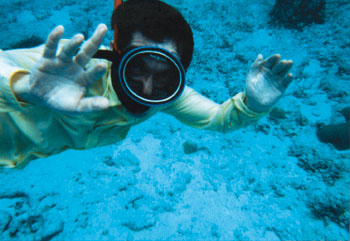
I can recall many unforgettable images. Our trips into the rain forest and to the reefs of the Buck Island Underwater National Park were great. Konrad Kleinknecht is still proud of having rescued an overenthusiastic Yau Wai Wah from drowning, after Wah jumped into the water to get a closer look at the sea menagerie, without the benefit of a life-jacket or any previous swimming experience.
It was fascinating to hear Bob Wilson lecture on his schemes for building a charm/tau factory to fit in the parking lot of Columbia’s Nevis Labs. At that same session, I persuaded the youthful Chris Quigg to offer a series of six lectures (to save money on speakers), and the poor fellow spent most of his time at St Croix writing transparencies. He also discovered that the 150 proof Cruzian rum served as an excellent eraser of permanent markers, so he could not have been working all of the time.
Students and lecturers rarely missed any of the sessions. Consequently, when most of our Mediterranean participants did not show up for an evening discussion, we realized that something was awry. It turned out that Capt. Guido Martinelli had rented a large sailboat and, far out of Christiansted harbour, its rudder had broken. It kept going round in circles until Rosy Mondardini saved the day by reaching the Coast Guard on the short-wave radio.
An impressive sight was John Iliopoulos emerging from the sea with an enormous parrot fish that he had harpooned. We later ate it for dinner. Then there is the image of Nicola Cabibbo enjoying the cuddly teddy bear he was given by the students.
Most of the institutes were held at the Hotel on the Cay, on a tiny speck of sand located in the scenic harbour of Christiansted. The Cay could only be reached by motor boat from the dock at Christiansted, and it was tough luck if you got stuck after hours unless you happened to be a very strong swimmer, as Aurore Savoy and her bevy of admirers proved on several occasions.
We were close to panic at least twice, and both times it involved food. One evening at dinner, someone made some playful, but chauvinistic, remarks and a piece of food was thrown back in response. This confrontation developed as close to a Mack Sennett food fight as I have ever witnessed. My pleas for calm prevailed and they all made up and parted friends. The other near-panic situation occurred when the entire kitchen staff quit on the first day of one of our meetings. Barbara and I had to cook and serve breakfast, but fortunately by lunchtime we were rescued by the beach restaurant.
It has been a wonderful and educational experience to interact with all of the brilliant students, lecturers and advisers I have met as a result of organizing the ASI at St Croix. Next year, Misha Danilov and Harrison Prosper will be taking it over and I wish them as much satisfaction and enjoyment as I have had running it in the past.
by Fred M Asner, Oxford University Press, ISBN 0 19 851764 5 (£55).
Fred Asner traces the discovery and understanding of superconductivity. This includes the development and manufacture of semiconducting materials, the cooling of superconducting magnets and their control. Asner looks at beam dynamics and winding configurations specific to accelerator magnets and discusses their design principles using examples from recent major projects. All of these magnets have to work under extreme conditions. It is stressed that the design criteria are not to be taken lightly. One chapter is dedicated to particle physics detectors and superconducting magnets for medical applications. Both are major growth areas.
by Tuck C Choy, Oxford University Press, International Series of Monographs on Physics ISBN 0 19 851892 7.
While not at the cutting edge of fundamental physics, effective medium theory is a fruitful way of describing and handling microstructure at the mesoscopic scale. The introduction is by Marshall Stoneham.
edited by E Baron and M Lieuvin, GANIL, France, Institute of Physics Publishing ISBN 0 7503 0663 7 (hbk £220.00/$400).
Cyclotrons 1998 was the fifteenth in a series of international conferences initiated in 1959. Cyclotrons are used in basic and applied research, radiotherapy and nuclear medicine. Included is a complete list of existing cyclotrons and their characteristics.
(2nd edn) by Michael Metcalf and John Reid, Oxford University Press ISBN0 19 850558 2 (pbk).
Despite the continual appearance of new programming languages Fortran, now well into middle age, soldiers on. This new edition summarizes the latest standards. Michael Metcalf, now retired, was a longtime member of CERN’s Information Technology Division.
by G Castelo Branco, L Lavoura and J P Silva, Oxford University Press, International Series of Monographs on Physics ISBN 0 19 850399 7 (£60).
A complete theoretical and phenomenological study of CP violation and the CKM matrix, including the implications for heavy quarks. This is a good reference for physicists at B-factories, but little mention is made of the enormous efforts that are going into measuring the phenomenon of CP violation.
edited by D I Olive and P C West, Cambridge University Press ISBN 0 521 641158 6 (hbk £45/$69.95).
A collection of lectures given in a six-month programme at the Newton Institute in Cambridge, with an introduction and guide by the editors. The contributors are M K Gaillard, B Zumino, J Gauntlett, T Eguchi, G W Gibbons, A Sen, C Bachas, D I Olive and P C West.
To provide the best experiences, we use technologies like cookies to store and/or access device information. Consenting to these technologies will allow us to process data such as browsing behavior or unique IDs on this site. Not consenting or withdrawing consent, may adversely affect certain features and functions.
Functional
Always active
The technical storage or access is strictly necessary for the legitimate purpose of enabling the use of a specific service explicitly requested by the subscriber or user, or for the sole purpose of carrying out the transmission of a communication over an electronic communications network.
Preferences
The technical storage or access is necessary for the legitimate purpose of storing preferences that are not requested by the subscriber or user.
Statistics
The technical storage or access that is used exclusively for statistical purposes.The technical storage or access that is used exclusively for anonymous statistical purposes. Without a subpoena, voluntary compliance on the part of your Internet Service Provider, or additional records from a third party, information stored or retrieved for this purpose alone cannot usually be used to identify you.
Marketing
The technical storage or access is required to create user profiles to send advertising, or to track the user on a website or across several websites for similar marketing purposes.