The former Institutes for High-Energy Physics and for Applied Physics at the University of Heidelberg have recently joined forces to become the new Kirchhoff Institute for Physics. The Institute was named after Gustav Robert Kirchhoff who carried out his fundamental work on radiation laws and spectral analysis in Heidelberg more than 100 years ago.
At the formal inauguration on 2 November 1999, Kirchhoff Institute director Karlheinz Meier presented an overview of the wide spectrum of teaching and research. These activities cover pure research areas like experimental particle physics and low-temperature physics as well as applications and interdisciplinary work in biophysics, medical physics, microelectronics and computer science. The new institute is participating in a couple of particle physics experiments at DESY and CERN. It also hosts the Heidelberg ASIC integrated circuit laboratory founded and operated by three physics institutes in Heidelberg.
The merger has already initiated fruitful co-operations between applied and pure science. Particle physicists have developed microelectronic light sensor chips with fast integrated-signal processing, for applications in ophthalmology, based on experience with particle physics detectors. The low temperature group, lead by Siegfried Hunklinger, detects very low-energy photons, with unprecedented resolution, using a magnetic probe at very low temperatures.
The Kirchhoff Institute employs about 120 people in two separate buildings. The inauguration was preceded by the laying of the foundation stone for a new institute building, to be equipped with modern infrastructure: cleanroom facilities, experimental halls, workshops and lecture halls. The building should be complete in the summer of 2002.
Alcatel has signed the final agreement to take control of the superconductivity activities of Aventis Research & Technologies, a subsidiary of Hoechst.
Through this agreement, Alcatel acquires the know-how of Aventis High-Temperature Superconductivity (AHTS) in the design and production of superconductor materials. Thus, Alcatel adds an existing industrial and commercial entity to its significant research and development capacity.
This integration should give the Group the ability to offer the entire superconductor wire production range (from raw materials up to transformation processes), to improve synergy between the various R&D teams and, as a result, achieve production of excellent, high-performance wires and bulk parts.
The activities of Aventis take place in Hurth, near Cologne, where all the industrial equipment is installed.
by Richard P Feynman and Steven Weinberg, Cambridge University Press, ISBN 0 521 658622 4 (110pp, pbk £9.95/$11.95)
The text of the 1986 Dirac Memorial Lectures, long available as a slim hardback, is now available in paperback. Feynman dismantles field theory to find the real reason for the existence of antiparticles, then puts the theory together again. Weinberg’s compelling prose “Towards the final laws of physics” examines how quantum physics can be reconciled with gravity. Over a decade later, the messages in these lectures remain fresh.
edited by Alexander Chao and Maury Tigner, World Scientific ISBN 981 02 3500 3 (hbk £58, pbk £32).
World Scientific approached Alex Chao some four years ago and asked if he would be willing to do a book for them. Chao had the idea for some sort of handbook and got in touch with me to ask if I would be interested in joining him. In the course of making that decision we explored many ideas. One approach was that we should write it ourselves. The other route involved trying to convince the real experts in the community to share their wisdom.
It soon became clear that the only economically feasible way of carrying this out was as a community project and a labour of love. No book royalties could possibly repay the kind of effort that would be required of more than 200 authors.
A key feature is that the money goes to the two accelerator schools (at CERN and in the US) for fellowships for students from institutions that are unable to support them. I’m sure this made the difference to many of the authors who toiled after hours and on weekends to meet our strict deadlines.
Having decided to go that way, we compiled a “straw man” table of contents and sent it around to many of those that we hoped would contribute, together with suggestions on which topic(s) we hoped they would write on. To our great joy and surprise, most agreed and we were off.
We tried to be very precise about the level, style and length of articles and, by and large, the authors entered into the spirit of the thing. Even with the best of wills, however, it was impossible for everyone to keep to their space allotment and we had an enormous amount of work to help the authors cut back.
Space was felt to be very important as we insisted that the book should be portable in emulation of previous outstanding examples. Other considerations included uniform notation and style (at which we were only partly successful). The final text is about half the total of the original submissions.
Naturally, now that the work of four years and thousands of person-hours has borne its fruit, we have had many suggestions for improvement. Some of these suggestions and corrections have already appeared on a special Web page.
Maybe someday there will be another edition in which all of these contributed ideas and corrections can be incorporated. At any rate, we profoundly hope that the book will prove useful and stand as an example of the underlying unity of our community and what can be done when there is a will.
by Per F Dahl, Institute of Physics Publishing 0 7503 0633 5 (£35).
Per Dahl is a physicist who has made significant contributions to the design and development of superconducting magnets for particle accelerators. He also has a burning interest in the history of modern science. It is not surprising that he has already written a book on the history of superconductivity (1992 Superconductivity: Its Historical Roots and Development from Mercury to the Ceramic Oxides American Institute of Physics).
Continuing on his history beat, Dahl is also the author of The Flash of the Cathode Rays (1997 Institute of Physics Publishing). Advertised as a history of J J Thomson’s electron, it is in fact a careful documentation (with nearly 100 pages of footnotes) of many other developments in fundamental physics, from time immemorial up to the early 1930s, where the book stops. Dahl is also the son of CERN pioneer and colourful Norwegian scientific personality Odd Dahl (18981994).
In Dahl’s new book, heavy water is the hero of a saga that unfolds where Dahl’s previous book left off, and it continues up to 1945. In the early 1940s, just after the discovery of nuclear fission, many people were convinced that heavy water was the key to new nuclear physics progress. With little of the substance around, attention was soon focused on Norway, which had an abundance of hydroelectric power for manufacturing processes.
With the outbreak of the Second World War, both sides were eager to get a supply of heavy water and to prevent it from falling into enemy hands. In 1940 the French cornered 185 kg of Norwegian deuterium, which was spirited to Paris via the UK in an elaborately planned operation. With the invasion of France, the heavy water had to be smuggled out again. It eventually found a temporary home in Windsor Castle, England, before being used in wartime Cambridge and then in Montreal, with Lew Kowarski and Hans von Halban playing leading roles.
In 1942 and 1943, allied commando raids and air strikes on the heavy-water plant in occupied Norway attempted to put the factory out of business. This culminated in the famous 1944 Norwegian Resistance operation, which intercepted a ferry carrying tons of deuterium-rich material en route to Germany and sank it in Lake Tinnsjø. Eighteen lives were lost. In 1965 the episode was made into a film called The Heroes of Telemark, which starred Kirk Douglas.
Dahl manages to combine scientific accuracy with a compelling storyline that keeps the pages turning. Like his cathode-ray book, the volume is meticulously researched, particularly with regards to Norway (although this time the footnotes have been abridged to a mere 57 pages). It is a remarkable read.
edited by V Alan Kostelecky, World Scientific, ISBN 981 02 3926 2 (£36).
These are the proceedings of a meeting held at Bloomington, Indiana, November 1998, which look at the underlying spacetime symmetries of particle physics.
George Gamow was a sort of prototype Richard Feynman gifted, incisive, exuberant, unpredictable and occasionally eccentric. Feynman played bongo drums and opened safes, while Gamow preferred conjuring. Born in Russia in 1904, Gamow gradually emigrated westwards via Göttingen, Copenhagen, Cambridge, Paris and London. He eventually moved to the US in 1934. Gamow left a substantial scientific and literary legacy.
After milestone contributions to nuclear physics (which included the GamowTeller coupling), at Göttingen he explained the mystery of alpha radioactivity, showing how quantum tunnelling allowed low-energy particles to escape the pull of the nucleus. When Gamow brought these insights to Cambridge, Rutherford and Cockcroft realized that what goes out can also come in. In a kind of reverse radioactivity, relatively low-energy bombarding particles should be able to enter the nucleus and induce nuclear transformations. From the late 1920s, this motivated the push for particle accelerators.
Working with his student, Ralph Alpher, in Washington in the 1940s, Gamow learned that the young Hans Bethe was visiting the US and invited him to add his name to the famous “Alpher, Bethe, Gamow” papers on the origin of the chemical elements. In the late 1940s, Gamow also helped to develop the ideas that are now known as the Big Bang.
In 1938 he wrote a short science fantasy (being careful not to call it science fiction), in which he tried to explain the ideas of the relativistic curvature of space and the expanding universe. The hero of his story was a modest bank clerk called C G H Tompkins. His initials were borrowed from the standard physics notation for the speed of light, the gravitational constant and Planck’s constant.
After sending the piece to several large circulation magazines and receiving impersonal rejection slips, Gamow put it to one side until his physicist friend, Sir Charles Darwin (the grandson of the author of The Origin of Species), suggested sending it to C P Snow, then the editor of Discovery magazine, published by Cambridge University Press. The text was immediately accepted and the discerning Snow demanded more.
Mr Tompkins tries valiantly to follow dry science lectures, but easily falls asleep. However, all becomes clear in his vivid dreams. Soon the articles were collected into Mr Tompkins in Wonderland, published in 1940, followed by Mr Tompkins Explores the Atom in 1944. Each was a major success and the two volumes were reissued with additional material as a single volume in 1965. This reissue alone was reprinted some 20 times.
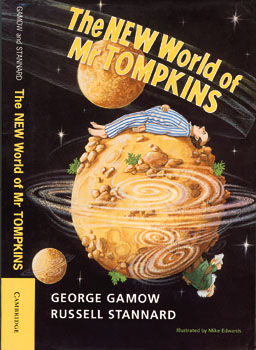
Thirty years after this revision, the book was still selling* but was seriously out of date. With Gamow no longer available (he died in 1968), UK physicist Russell Stannard, author of the well-known “Uncle Albert” trilogy (The Time and Space of Uncle Albert, Black Holes and Uncle Albert and Uncle Albert and the Quantum Quest), was invited to give Mr Tompkins a facelift. As well as updating the science to include quarks, the Standard Model and supersymmetry, Stannard has also tried to modernize the text. For example, the title of Gamow’s chapter 10 “The gay tribe of electrons” had acquired another connotation over the years and has become “The merry tribe of electrons”. An additional chapter “Visiting the atom smasher” provides an opportunity to introduce a politically correct female spokesperson (however, she is depicted as unfeminine and wearing a white coat).
Although concepts are gently introduced, ultimately there is little attempt to paraphrase. A 120-entry glossary, extending over 10 pages, has been thoughtfully provided.
Tompkins is a moot figure. Although he no longer exclaims “By jove!”, he seems to have got stuck in a time warp. The original illustrations, revised by Gamow for the 1965 reissue, did have a certain charm. Although the pictures have been redrawn for 1999, the original style remains. Mild-mannered Tompkins is still supposed to be in his 30s but looks like a refugee from a Tintin episode. Already a dweeb in the original version, now he is an anachronism. Perhaps it is time for “The World of the New Mr Tompkins” in “now-speak”, where the Internet exists and where dog-eared flip charts have been discarded in favour of Powerpoint displays.
However, the Tompkins character evokes sympathy, and the impressive literary track record of George Gamow and of Russell Stannard shows that packaging basic physics with a veneer of personification and anecdote via dreams and thought bubbles does work.
*The 1965 reissue is available as Mr Tompkins in paperback by George Gamow, Cambridge, ISBN 0 521 44771 2 (£7.95).
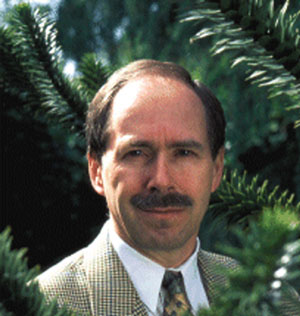
The last Nobel Prize for Physics this century goes to Gerardus ‘t Hooft of Utrecht and Martinus Veltman of Bilthoven in the Netherlands, “for elucidating the quantum structure of electroweak interactions in physics”.
Exactly 20 years ago the Nobel prize went to Sheldon Glashow, Steven Weinberg and Abdus Salam for their contributions to the electroweak theory the unified theory of weak and electromagnetic interactions, which was first published in 1967. It was ‘t Hooft’s and Veltman’s work that put this unification on the map, by showing that it was a viable theory that could make predictions possible.
Field theories have a habit of throwing up infinities that at first sight make sensible calculations difficult. This had been a problem with the early forms of quantum electrodynamics and was the despair of a whole generation of physicists. However, its reformulation by Richard Feynman, Julian Schwinger and Sin-Ichiro Tomonaga (Nobel prizewinner 1965) showed how these infinities could be wiped clean by redefining quantities like electric charge.
Each infinity had a clear origin, a specific Feynman diagram, the skeletal legs of which denote the particles involved. However, the new form of quantum electrodynamics showed that the infinities can be made to disappear by including other Feynman diagrams, so that two infinities cancel each other out. This trick, difficult to accept at first, works very well, and renormalization then became a way of life in field theory. Quantum electrodynamics became a powerful calculator.
For such a field theory to be viable, it has to be “renormalizable”. The synthesis of weak interactions and electromagnetism, developed by Glashow, Weinberg and Salam, and incorporating the now famous “Higgs” symmetry-breaking mechanism, at first sight did not appear to be renormalizable. With no assurance that meaningful calculations were possible, physicists attached little importance to the development. It had not yet warranted its “electroweak” unification label.
The model was an example of the then unusual “non-Abelian” theory, in which the end result of two field operations depends on the order in which they are applied. Until then, field theories had always been Abelian, where this order does not matter.
In the summer of 1970, ‘t Hooft, at the time a student of Veltman in Utrecht, went to a physics meeting on the island of Corsica, where specialists were discussing the latest developments in renormalization theory. ‘t Hooft asked them how these ideas should be applied to the new non-Abelian theories. The answer was: “If you are a student of Veltman, ask him!” The specialists knew that Veltman understood renormalization better than most other mortals, and had even developed a special computer program Schoonschip to evaluate all of the necessary complex field theory contributions.
At first ‘t Hooft’s ambition was to develop a renormalized version of non-Abelian gauge theory that would work for the strong interactions that hold subnuclear particles together in the nucleus. However, Veltman believed that the weak interaction, which makes subnuclear particles decay, was a more fertile approach. The result is physics history. The unified picture based on the Higgs mechanism is renormalizable. Physicists sat up and took notice. As Sidney Coleman at Harvard said, this work “turned the WeinbergSalam frog into an enchanted prince!”
One immediate prediction of the newly viable theory was the “neutral current”. Normally the weak interactions involve a shuffling of electric charge, as in nuclear beta decay, where a neutron decays into a proton. With the neutral current, the weak force could also act without switching electric charges. Such a mechanism has to exist to assure the renormalizability of the new theory. In 1973 the neutral current was discovered in the Gargamelle bubble chamber at CERN and the theory took another step forward.
The next milestone on the electroweak route was the discovery of the W and Z carriers, of the charged and neutral components respectively, of the weak force at CERN’s protonantiproton collider. For this, Carlo Rubbia and Simon van der Meer were awarded the 1984 Nobel Prize for Physics.
The electroweak baton was taken up in 1989 by CERN’s LEP electronpositron collider, where precision data enabled ‘t Hooft and Veltman’s technique to be put to work to predict the mass of the sixth “top” quark. Although at the time unseen, physicists knew that the top quark had to be contributing indirectly. Corrections involving the top quark have the unusual property of becoming larger as the top mass increases. When the top quark was discovered at Fermilab’s Tevatron protonantiproton collider in 1995, its mass was exactly where the calculations said it would be.
The only missing link in the electroweak picture now is the Higgs mechanism, and, with LEP exploring new energy regimes, the physicists are eagerly scanning the latest LEP data. On the sidelines is CERN’s LHC, which will bring Higgs physics to its ultimate conclusion.
A major physics experiment is the sum of many components, the main components being the individual physicists. The collaborations on the experiments at CERN’s new LHC collider can involve thousands of people.
While these researchers draw collective pride in their accomplishments, the career of an individual scientist ultimately depends on personal contributions. When the progress of the experiment depends on the efforts of many physicists scattered all over the globe, how can the individual physicists document his or her personal achievements?
To solve this dilemma, an initiative for a totally new type of scientific publication, which complements the traditional collaboration articles, was launched in 1998 by the High-Energy and Particle Physics (HEPP) Board of the European Physical Society and was discussed with the European Committee for Future Accelerators (ECFA). The ECFA is a parliament of European particle physicists whose concerns cover all aspects of particle physics.
The result was a common ECFA/EPS committee and a working group on publications policy for future large experiments, co-chaired by the ECFA and EPSHEPP secretaries. The committee included representatives from major experiments at CERN’s LHC collider and an observer from the Division of Particle and Fields of the American Physical Society.
The working group made recommendations to the ECFA and to the EPSHEPP board. These have been discussed and, with remarkable speed, so far accepted in principle by major European and US research journals. The full statement on these new “scientific notes” is published here for the first time.
The proponents of the new publishing format said: “A combination of scientific publications of the large collaborations with associated scientific notes provides a way of recognizing individual contributions while maintaining responsibility for published results with the collaborations. We hope this will provide new guidelines for other fields of science where large collaborations are involved.”
To provide the best experiences, we use technologies like cookies to store and/or access device information. Consenting to these technologies will allow us to process data such as browsing behavior or unique IDs on this site. Not consenting or withdrawing consent, may adversely affect certain features and functions.
Functional
Always active
The technical storage or access is strictly necessary for the legitimate purpose of enabling the use of a specific service explicitly requested by the subscriber or user, or for the sole purpose of carrying out the transmission of a communication over an electronic communications network.
Preferences
The technical storage or access is necessary for the legitimate purpose of storing preferences that are not requested by the subscriber or user.
Statistics
The technical storage or access that is used exclusively for statistical purposes.The technical storage or access that is used exclusively for anonymous statistical purposes. Without a subpoena, voluntary compliance on the part of your Internet Service Provider, or additional records from a third party, information stored or retrieved for this purpose alone cannot usually be used to identify you.
Marketing
The technical storage or access is required to create user profiles to send advertising, or to track the user on a website or across several websites for similar marketing purposes.