by Peter Carroll Dunn, Wiley, ISBN 0471254487, 658pp.
This textbook aims to enable students in engineering and the experimental sciences to gain a quantitative understanding of modern electronics and thus design their own instrumentation. It contains numerous exercises and examples for students to work through.
Climbing the Mountain is the first full-length biography of Julian Schwinger. There is also a companion volume, A QuantumLegacy (World Scientific), edited by Milton, which complements a previous collection of Schwinger papers edited by C Fronsdal, M Flato and K Milton. An earlier volume, Julian Schwinger, the Physicist, the Teacher and the Man (World Scientific), is a compilation of tributes delivered at various memorial symposia by friends and former students and edited by Jack Ng. There is also a third volume, QED and the Men Who Made It: Dyson, Feynman, Schwinger and Tomonaga by S S Schweber (Princeton University Press).
This biography describes Julian Schwinger’s life as well as his work. The treatment of his scientific work is scholarly and well done. The challenge faced by this book is well stated in the preface: “Julian Schwinger was one of the most important and influential scientists of the 20th century…yet even among physicists recognition of his fundamental contributions remains limited.” This is all the more remarkable since Schwinger had more than 70 students, many of whom became very distinguished, including three Nobel laureates.
Climbing the Mountain confronts this challenge by a very extensive discussion of Schwinger’s manifold contributions. On the other hand one may still ask how it is possible that C N Yang can recall that when he entered the University of Chicago in 1946 as a graduate student, Julian Schwinger was already a legend (even before he had published his monumental papers on quantum electrodynamics), while in the year 2000 so little is known about Schwinger and so much is known about Feynman.
The answer lies partly in the personalities of the two men, but also in the beautifully simple and powerful diagrammatic notation invented by Feynman (which, in Schwinger’s words, “like the silicon chip, would bring computation to the masses”) and finally his separation from the mainstream in his later years.
The most important part of the Schwinger-Feynman story is summarized by the Michigan Summer Schools of 1948 and 1949. In 1948 Schwinger first described his breakthrough in QED to a wider audience, including Dyson, Kroll, Lee and Yang. It was thenthat Dyson wrote home that in a few months we shall have forgotten what pre-Schwinger physics was like.
In the following 1949 Michigan lectures, Feynman described his version of QED, but at that time he was unable to deal with vacuum polarization and it was not generally clear how much he had been able to accomplish.
By contrast, Schwinger had presented an essentially complete package: a manifestly covariant theory with which he had calculated in lowest order all the previously inaccessible consequences of QED. He had not only climbed the mountain but, more importantly, had shown that it could be climbed. Shorter routes were subsequently found. In the third year of the Michigan series, Dyson lectured and showed that the Schwinger theory and the completed Feynman theory were equivalent. This history, as well as the parallel work of Tomonaga, is well described in this book.
The Schwinger theory of 1948, while adequate for its original purpose, was, like every first invention, relatively crude and could not easily be pushed to higher order. Therefore during the 1950s he developed increasingly powerful calculational techniques. To this period belong the Schwinger action principle and the extensive use of Green’s functions and functional techniques that are now part of the standard literature.
During the 1960s Schwinger began a total reconstruction of quantum field theory that he named source theory. Here he was attempting to replace the operator field theory, to which he had contributed so much, by a philosophy and methodology that eliminated all infinite quantities. He did in fact succeed in constructing an infinity-free formalism that was also receptive to new experimental information and new theoretical ideas. It was not simply a programme: Schwinger and his UCLA source theory group, K Milton and colleagues, showed that it was a very effective calculational tool. Source theory has not until now found extensive use in the general theoretical community, although it has elements in common with S Weinberg’s use of phenomenological Lagrangians. Schwinger’s determination to pursue this work for about 10 years led to his partial eclipse. Milton is obviously well qualified to review this period.
One of the more interesting chapters is entitled “Electroweak Unification and Foreshadowing of the Standard Model”. Not so well known is Schwinger’s role in the development of the electroweak theory. In 1941 he made the amazingly prescient remark that if the significant mass scale for nuclear beta-decay were of the order of several tens of nuclear masses, then there would be the possibility of an intermediate vector theory with a coupling of the order of alpha. The theory suggested by this numerology was essentially realized in 1957 in his beautiful paper “A Theory of the Fundamental Interactions” (1957 Ann. Phys.2 407). Schwinger comments on this paper (82) in the selected papers (edited by Flato et al.):
“A speculative paper that was remarkably on target: VA weak interaction, two neutrinos, charged intermediate vector meson, dynamical unification of weak and electromagnetic interactions, scale invariance, chiral transformations, mass generation through vacuum expectation value of scalar field. Concerning the idea of unifying the weak and electromagnetic interactions, Rabi once reported to me: ‘They hate it’.”
However, he was convinced and proposed a similar model to his student, Glashow. Thanks to the efforts of Glashow, Weinberg, Salam and ‘t Hooft the standard electroweak SU(2) x U(1) theory, bearing enormous similarity to Schwinger’s paper of 1957, was born. The 1957 paper might well have led directly to the standard electroweak theory if it had not become bogged down in the infamous morass of 13 flawed experiments that seemed to imply that the beta-interaction was not VA.
Schwinger’s independence of the mainstream is discussed in this biography and by many others including Schweber. It is said that he didn’t like “conversational physics” but that meant only that he didn’t like conversations unless they interested him. In fact he was quite open to new ideas.
The more accurate view is that he was simply an independent thinker who guarded his time and set his own goals, toward which he worked intensely and constantly. Much of his work he made no effort to publish. For some of his work, like the Bethe-Salpeter equation and the TCP theorem, he received no recognition.
It is arguable that the creativity of an original mind such as Schwinger’s or Dirac’s would have been enhanced by more interaction with others in later years. In Schwinger’s case, in spite of the undeniable handicaps of isolation, the following assessment appears in the Festschrift published on the occasion of his 60th birthday:
“His work during the 44 years preceding his 60th birthday extends to almost every frontier of modern theoretical physics. He has made far-reaching contributions to nuclear, particle and atomic physics, to statistical mechanics, to classical electrodynamics and to general relativity. Many of the mathematical techniques he developed can be found in every theorist’s arsenal…He is one of the prophets and pioneers in the uses of gauge theories…Schwinger’s influence, however, extends beyond his papers and books. His course lectures and their derivatives constitute the substance of graduate physics courses throughout the world, and in addition to directing about 70 doctoral theses, he is now the ancestor of at least four generations of physicists…The influence of Julian Schwinger on the physics of his time has been profound.”
On 11 September, French Minister of Research and Technology Roger-Gerard Schwartzenberg announced the decision to build the SOLEIL third-generation synchrotron radiation source near Paris.
This decision marked the climax of 10 years of effort to convince French scientific and political authorities to replace the DCI and Super-ACO rings at the LURE synchrotron radiation laboratory at Orsay with a modern synchrotron radiation source.
The project study was started and led by LURE between 1990 and 1996, and developed in a 3 year collaboration aimed at producing a 2.5 GeV machine with a circumference of 337 m and very high brightness. The detailed pre project, costing 70 million French francs ($9 million) including salaries, was completed in June 1999.
Three major obstacles have been overcome in reaching the final decision. First, the reference site of Orme des Merisiers met opposition from proponents of political decentralization from 1992 onwards. Then budgetary restrictions on research quickly led to a successful search for alternative financial sources in different French regions. In this area, LURE made a spectacular breakthrough.
Finally, the categorical no to SOLEIL on 2 August 1999 from the previous Minister of Research in favour of a minority participation in the British project DIAMOND began a pitched battle. The massive intervention of the French synchrotron radiation community, with wide support from scientific and political circles, brought the question into the media spotlight.
In March this year, a French parliament scientific and technological evaluation committee mounted a strong counterattack that was taken up by the Académie des Sciences and numerous scientific institutions. The arrival of the new Minister of Research and Technology turned the tide and helped produce the final decision.
In addition, the authorities of the Ile-de-France Region and the Département of the Essonne decided to increase their financial support to 1.2 billion francs ($160 million) out of a total of 2.1 billion francs including salaries, over an 8 year period.
SOLEIL will have 16 straight sections, of which 14 will be for insertions with undulators or wigglers, and must be able to provide room for a maximum of 40 beamlines including those from the dipoles. The photon spectrum must be wide, with performances of particular interest in the 1-11 keV range, but also on either side.
SOLEIL is a project of nationwide importance, but also intends to be European in scope, bringing in researchers from Spain, Belgium and elsewhere, as has always been done at LURE. Several governments, in particular those of Spain and Portugal, are also examining the possibility of participating in SOLEIL. The project incorporates a dozen innovative ideas, including a monomode superconductor which has been designed and built in collaboration with CERN.
First beams should appear in 2005. In this way LURE will continue its long pioneering tradition at the Orsay site.
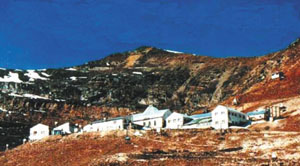
New support for the Chacaltaya Cosmic Ray Research Laboratory, on Mount Chacaltaya near La Paz, Bolivia, underlines its relevance for cosmic ray research. At 5220 m above sea level (a barometric pressure of about 540 mbar; just over 0.5 atm), it is the highest continuously functioning research station on the globe, providing a unique opportunity for siting relatively large cosmic ray detectors.
At energies above 1014 eV, the flux of primary cosmic rays is so low that direct observation by balloon- or satellite-borne instruments (with areas of only a few square metres) is difficult. For example, the integral primary cosmic ray flux of energies above 1016 eV is only one particle per m2 per year. Consequently the most sensitive indirect studies of cosmic rays with energies of 1015 eV (1 PeV) and above suggest the deployment of large-area detector systems at as high a terrestrial elevation as possible, in order to reduce atmospheric shielding.
Although Brazilian and Japanese groups have maintained their research activities at Chacaltaya throughout recent years, the research potential of this site has been underutilized. In consideration of the unique capabilities of this site, and to stimulate further exploitation of this facility, the Centro Latinoamericano de Fisica (CLAF), at its General Assembly in Leon, Mexico in November 1999, unanimously approved a declaration of support for the installation of new experiments at Chacaltaya.
To coordinate the international, and in particular the Latin American, collaborations for new experiments at the laboratory, CLAF asked its director, Luis Masperi, and deputy director, Joao dos Anjos, to form a special committee together with Carlos Aguirre, president of the Academia Nacional de Ciencias of Bolivia, and P Miranda of the Universidad Mayor de San Andres of La Paz and the director of the Chacaltaya Laboratory.
The laboratory was founded in 1942 by I Escobar, initially as a meteorological station. Soon afterwards, a road was constructed, partly to give access to a ski station opened in 1940 by the Club Andino Boliviano.
The project was championed by an Austrian physicist then in Bolivia, F Hendel (now at Michigan) and R Posnaski. C M G Lattes initiated cosmic ray research on Chacaltaya with the exposure of nuclear emulsions, confirming the strange particle decays discovered at Pic du Midi in France.
The Bolivian Air Shower Joint Experiment (BASJE) collaboration was started in about 1960 by B Rossi (MIT) and K Suga (Japan). Lattes, together with Brazilian colleagues and a Japanese group including Y Fujimoto and S Hasegawa from Waseda, established a long-term program at Chacaltaya, working mainly with nuclear emulsion chambers – stacks of alternating layers of nuclear emulsion and lead.
Other research groups from the US, Japan and Europe were also active there from the 1950s until the 1970s. Notable discoveries included the “Centauro” events and other exotic phenomena not apparent in the lower energy collisions studied with particle accelerators, and which are still not understood. The current research activities are primarily the BASJE observations, now involving only a Japanese group and the Saitama Yamanashi-San Andres collaboration.
At 5220 m, the laboratory is only an hour’s drive from La Paz airport (on the Alte Plano, at 4200 m) and about two hours from central La Paz (3600 m). As Chacaltaya is 17° south, access is possible throughout the year.
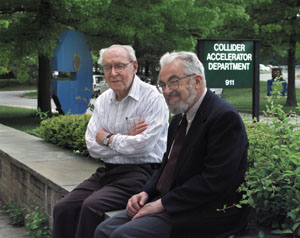
“If you can’t do two things together, you just do one after the other – that’s all there is to it!” Ernest Courant, Brookhaven distinguished scientist emeritus, was describing how he came to think of the strong-focusing principle that he, together with M Stanley Livingston and Hartland Snyder, co-discovered in 1952.
Also known as alternating gradient focusing, this principle was a breakthrough in accelerator design. At Brookhaven it resulted in the construction of the successful Alternating Gradient Synchrotron (AGS), which achieved its design energy on 29 July 1960.
In previous circular accelerators, such as Brookhaven’s Cosmotron, particles had been guided round the ring by a magnetic field made by outward-facing magnets. The magnets bent the particles’ trajectories and at the same time weakly focused them both horizontally and vertically. The particles’ energy could only be increased by enlarging the ring with wider magnets, requiring far more steel – at great cost – to make the larger number of magnets.
However, Courant and his colleagues calculated that energy could be increased dramatically with much smaller magnets if the particles were strongly focused first vertically then horizontally.
They achieved this by arranging the magnets so that their field gradients faced alternately inward and then outward around the ring. (It turned out that this idea had been proposed earlier by Nick Christofilos in Greece, but his innovation had gone unrecognized and was then forgotten. Later he was invited to Brookhaven.)
The practicality of the principle was demonstrated in 1954 by Cornell University’s 1.3 GeV electron accelerator, and in 1959, well before the AGS was finished, by CERN’s 24 GeV Proton Synchrotron.
CERN makes a scoop
On 17 May 1960 a 50 MeV beam completed one turn round the AGS ring. In July that year the 30 GeV design energy was reached and even surpassed. “But,” Courant recalled, “although we were all very excited by how quickly things were going, we were a little disappointed that we’d been scooped by CERN.”
One reason why Brookhaven had fallen behind was because it had built an electron analogue before starting construction of the AGS, Courant says. The analogue was designed to explore what is called the “transition energy” – a potentially serious problem with the synchronization behaviour. The analogue could also give information on nonlinear resonances that might affect the orbit stability of the particles as they circled the AGS ring.
“These resonances were not a big problem, but it was good to know what was happening,” said Courant . “Using the analogue, we found that the transition problem could be overcome. We also found out a lot about higher order resonances that we hadn’t expected, and we confirmed that we could go forward with the design as planned. So the delay was worth it.”
Dedicated staff
In a statement made in July 1960 as the AGS began operation, Leland Haworth, Brookhaven director at the time, congratulated Ken Green, John Blewett and the entire staff of the Accelerator Development Department for their work. He offered special congratulations to Courant, Snyder and Livingston, “whose brilliant concept of strong focusing has once more proved its great utility”.
Taking over as Brookhaven director on 1 July 1961 was Maurice Goldhaber, now distinguished scientist emeritus. From 6 to 12 September the laboratory hosted the 1961 International Conference on High Energy Accelerators. Immediately following the conference, the AGS dedication ceremony was held. Goldhaber had just returned from a celebration in Manchester for the 50th anniversary of the discovery of the nucleus by Ernest Rutherford.
On the return flight, Goldhaber wrote the talk that he was to give at the AGS dedication: “Why high-energy physics?”. Unsurprisingly, Goldhaber’s words on the science lying ahead at the AGS are relevant today in the new age of the AGS’s mighty spin-off partner, the Relativistic Heavy Ion Collider.
In his talk, Goldhaber described experimentalists, eager to work on the new machine “on the border between light and dark, where no complete set of guiding principles is as yet established. Today, the border between light and dark has moved to questions of nuclear structure, of the structure of elementary particles, and of the forces between them,” he also noted. “Research with these machines is a great adventure; it leads us nearer to the heart of the particles of which we all are built. To think of something more exciting is difficult.”
Strong-focusing accelerators
At the end of 1999, CERN celebrated the 40th anniversary of its Proton Synchrotron. This machine and the Brookhaven AGS were the world’s pioneer proton strong focusing accelerators. That both of them are also the hub of complex and ongoing beam networks testifies to the importance of the invention of the strong focusing technique. Other machines that opted for the comfort of the then conventional weak focusing are now history.
In 1952, even before CERN had formally been created, the declared goal of the proposed European laboratory was to build a scaled-up version of Brookhaven’s 3 GeV Cosmotron, then nearing completion. In 1952 a group of European pioneers visited Brookhaven to see Cosmotron preparations. The visit prompted the Brookhaven accelerator experts to organize a brainstorming session. The outcome was alternating gradient (strong) focusing. On his return, Odd Dahl boldly insisted that the new European machine should go for the untried focusing technique. CERN went for it, and the European machine was even commissioned several months before that at Brookhaven. The CERN machine’s 40th anniversary was featured in the December 1999 issue of CERN Courier.
*This article originally appeared in the 4 August issue of the Brookhaven Bulletin.
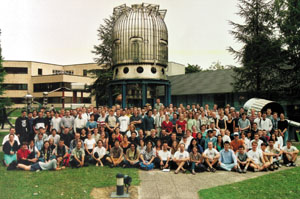
CERN always has plenty of visitors, but never more so than in the summer, when the itinerant population is boosted by several hundred students from CERN member states and further afield. CERN’s Summer Student Programme offers undergraduate students in physics, computing and engineering a unique opportunity to join in the day-to-day work of research teams participating in experiments at CERN.
Beyond the outstanding first-class scientific value of their stay, the students find working in a multidisciplinary and multicultural environment an extremely enriching experience – an opportunity to make valuable and long lasting contacts with other students and scientists from all over Europe.
In addition to the work with the experimental teams, summer students attend a series of lectures specially prepared for them. Scientists from around the world share their knowledge about a range of topics in the fields of theoretical and experimental particle physics and related technologies.
Victor Weisskopf, field theory pioneer and CERN director-general in 1961-1965, had a particular interest in education. During his mandate as director-general, he gave a series of introductory lectures on particle physics (maintaining that “the best way to get a basic understanding of anything is to teach it”). For many years after he left CERN, Weisskopf returned every summer to address an eager audience. These lectures also developed into a book, Concepts of Particle Physics (two volumes), written with Kurt Gottfried.
Many generations of CERN summer student alumni vividly recall a relaxed Weisskopf recounting anecdotes about the early days of quantum mechanics. Among them is Melissa Franklin of Harvard (CERN summer student 1977), who lectured this year on “Classic experiments”. Sadly, Weisskopf seldom returns to CERN, but the tradition lives on.
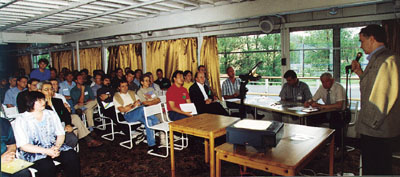
Every two years, Europe, Japan, Russia and the US collaborate to organize a Joint Accelerator School, giving accelerator physicists and engineers from each region an opportunity to meet experts from most of the world’s accelerator laboratories. This year it was Russia’s turn to host the school. It chose an unusual setting – on board a river boat sailing from St Petersburg to Dubna and Moscow along the system of inland waterways that link the mouth of the Neva with the Volga.
The title of the school was JAS2000: High Quality Beams, and an international team of more than 20 lecturers addressed the many effects that limit the intensity, luminosity and brilliance of proton and electron beams in both linear and circular machines. Parallel afternoon sessions on insertion and crossing region design, space charge and beam quality control for linear colliders allowed students to concentrate on a specialist topic of their choice. The school attracted more than 70 students, including 20 from outside Russia.
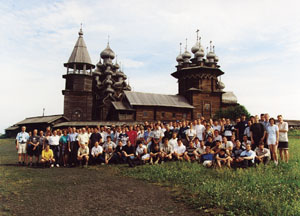
The boat proved to be an ideal environment for uninterrupted study. Nevertheless, participants still had a chance to visit two great Russian cities on a voyage that also passed through two large lakes – Ladoga and Onega. Historic sites en route included the monastery on Valaam Island, the famous church at Kizhi constructed entirely out of timber and the delightful town of Yaroslavl.
For CERN’s Accelerator School (CAS) this was one of three events in a crowded millennium year calendar. In March, CAS and GSI Darmstadt organized a specialist course on radiofrequency engineering at the Lufthansa Training Center, Seeheim, near Darmstadt, and in October there will be a course entitled Introduction to Accelerator Physics, held in Loutraki, near Athens. This has been organized with the help of the Institute of Accelerating Systems and Applications in Athens and the University of Athens. The Loutraki school is designed to be of particular interest to those participating in the SESAME initiative, which will provide a synchrotron light source for eastern Mediterranean countries. Parallel courses will deal with synchrotron light sources, linacs, and muon and neutrino factories.
In addition, the CAS course, Particle Accelerators for Medicine and Industry, will be held at Pruhonice, near Prague, on 9-17 May 2001.
Personal skills are a valuable form of technology transfer. The expertise acquired in the big international collaborations running today’s major physics experiments is diverse – computing, electronics, project management, etc. In addition are the interpersonal skills gained by being a member of a large international team working on a complex problem. Today’s physics students are much in demand.
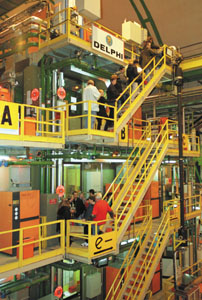
To investigate this, the DELPHI experiment at CERN’s LEP electron-positron collider analysed the careers of 669 students, mainly those involved in DELPHI since it began running for physics in 1989.
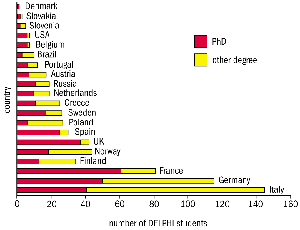
Of these students, 338 obtained a PhD, 89 a masters degree and 242 diplomas. Three nations dominate the sample – Italy (140 students), Germany (120) and France (80). Norway and the UK follow, each with about 40 students (figure 1).
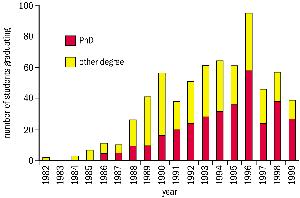
The distribution of the students reflects the resources given to DELPHI by the respective countries (and refers to the university to which the student is attached rather than their nationality). The attraction of DELPHI for students also increased once the experiment began running (figure 2).
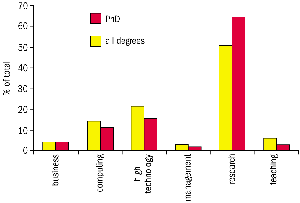
There were seven identifiable career outlets (figure 3):
* research: public-funded jobs in universities and research centres;
* teaching in schools and in universities where there is no research activity;
* computing and simulation, mainly in the private sector;
* management in public administration, the private sector and consultancy;
* business, including entrepreneurs and start-ups, but excluding computing and related activities;
* high technology: electronics and other specialized industries;
* graduate school: further education, but not with the DELPHI experiment.
The 19 different nationalities active in DELPHI in many cases have very different traditions. In certain countries (notably France), choosing to follow a doctoral programme in fundamental research implies a commitment to this as a career. In other countries, for example Germany and Italy, the situation is much more open. Here, the skills acquired in the course of thesis work in high-energy physics can be more important than the topic of the thesis.
Working in high-energy physics at CERN means a certain level of dedication, but it is nevertheless striking how most of the students continue with research, at least for an initial period of a few years. Determining whether ex DELPHIers continued with research later was not so easy, as it is difficult to keep track of students’ progress once they have left their degree-awarding institute.
However, a subsample of 158 ex-students in Austria, Germany, Italy, the Netherlands, Norway, Portugal and the UK revealed a subsequent migration out of research to positions in business, high technology and computing. Assuming that this trend is valid for the whole sample gives the result shown below. This shows that about 50% of students eventually leave research for fast-developing sectors of their national economies.
Comparing data collected in 1996 with those in 2000 shows that physics students have become valuable. With job offers already on the table, they are having to wrap up their thesis work in a hurry.
Career moves after first employment
Career category [All degrees(%), PhD(%)]
high technology 24.4, 19.5
computing 15.7, 13.8
business 7.0, 6.4
management 2.8, 1.9 total private
sector 49.9, 41.6
research 44.3, 55.5
teaching 5.8, 2.9 total public sector 50.1, 58.4
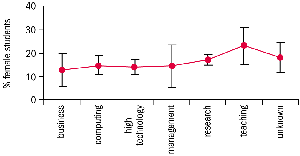
Women make up about 20% of the students involved in the DELPHI experiment today, and, although this has moved down from an all-time high of 30% in 1998, there has been a marked increase over the years. Their initial post-DELPHI job is shown in figure 4. The pattern closely matches that of the overall statistics.
While the study shows that research at an international level is clearly a stimulating environment, most of the students choose not to follow this career path for life. However, whatever they do go on to do, their stay at CERN certainly played a major role.
To provide the best experiences, we use technologies like cookies to store and/or access device information. Consenting to these technologies will allow us to process data such as browsing behavior or unique IDs on this site. Not consenting or withdrawing consent, may adversely affect certain features and functions.
Functional
Always active
The technical storage or access is strictly necessary for the legitimate purpose of enabling the use of a specific service explicitly requested by the subscriber or user, or for the sole purpose of carrying out the transmission of a communication over an electronic communications network.
Preferences
The technical storage or access is necessary for the legitimate purpose of storing preferences that are not requested by the subscriber or user.
Statistics
The technical storage or access that is used exclusively for statistical purposes.The technical storage or access that is used exclusively for anonymous statistical purposes. Without a subpoena, voluntary compliance on the part of your Internet Service Provider, or additional records from a third party, information stored or retrieved for this purpose alone cannot usually be used to identify you.
Marketing
The technical storage or access is required to create user profiles to send advertising, or to track the user on a website or across several websites for similar marketing purposes.