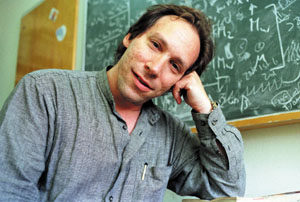
It is fortunate that Howard Georgi has decided to publish a revised and updated version of his famous book Lie Algebras in Particle Physics, the previous edition having appeared in 1982. In this case it may have been a non-trivial problem to decide whether significant changes to the text are pertinent, because, as the author himself points out in the preface to the second edition, “this has been an extremely successful book”. Indeed, many generations of graduate students have learned from it the basic algebraic tools in SU and other such Lie algebras, which are at the core of the Standard Model and all of its conjectured extensions.
Besides a healthy evolution from old-fashioned typewriter fonts to modern LaTeX layout, the present edition includes numerous improvements in the presentation, as well as new material. Perhaps the most important piece of new material is an enlarged introductory chapter on finite group theory. This makes the book a little longer, but much more self-contained, because a lot of the group-theory jargon – such as conjugacy classes, characters and the role of the permutation group and Young tableaux – is introduced in a simple form, where the student can see the nuts and bolts explicitly.
Finite groups appear in many physics problems, so their absence from the first edition was somewhat unfortunate. On the other hand, in its present form the book can be used as a rather complete group-theory textbook for particle physics students.
One of the distinctive reasons for the book’s success had been the introduction of “physics-flavoured” chapters in which the algebraic techniques were put to work in simple yet important topics in high-energy physics. It is those physics chapters that have undergone comparatively major rewriting.
Keeping the essential outline of the first edition, one notes many changes in wording and emphasis, which reflects the author’s desire to suppress anecdotal information – such as the hadron tables of chapter XVII in the first edition, while at the same time making room for more useful theoretical applications. One good example is the description of algebraic constraints on the Higgs mechanism in various common unification models.
To summarize, the book’s contents have been improved while the basic philosophy – introducing the mathematical tools in a way as concrete and “calculational” as possible – is kept almost intact. Prof. Georgi has managed to maintain a fresh and direct “lecture notes” style – something that students and teachers will surely value.
by J Cole, Institut des Sciences Nucleaires, Grenoble, France. Institute of Physics Publishing, Bristol and Philadelphia 0750305126 (illus. hbk 368pp £80/$130).
This book covers statistical models applied to the decay of atomic nuclei with emphasis on highly excited nuclei, which are usually produced using heavy ion collisions.
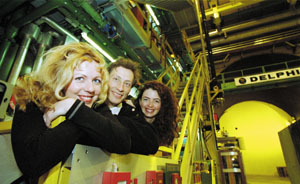
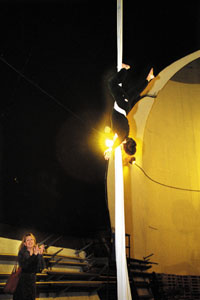
This winter The Delphic Oracle,by Geneva’s Miméscope company in collaboration with CERN, ran for an extended season in the pit that houses the Delphi experiment at CERN’s LEP electron-positron collider. Using a matter-antimatter collider as the scene, the play focused on Paul Dirac’s mathematical discovery of antimatter symmetry.
Writing the script was a challenge – presenting the ideas of antimatter as entertainment, not as a scientific seminar. Renilde Vanden Broeck of CERN’s press office, following a diploma course in Science Communication at the University of London, chose to present the idea behind and the build-up to The Delphic Oraclefor her course dissertation.
In the following extract, Renilde describes some obstacles encountered on the way to presenting antimatter on stage. Just two weeks before opening night, Anne Gaud McKee of the Miméscope company and I are walking to CERN’s reception area. We are both very excited about the forthcoming play’s freshly printed posters and leaflets. She is picking them up to have them distributed all over Geneva. I tell her about the first interviews she will have to do tonight and that the press is really picking up. She is very excited and suddenly exclaims: “You haven’t heard the last yet: we changed the whole script!” I think I am going to faint! “I can’t believe it – just two weeks before the first night!” I shout.
Anne explains they had a crisis a couple of days ago. They had mainly been working on four set pieces and hadn’t really practised the actual lines that Markus Schmid (who plays Dirac) has to say. “What was wrong with it?” I demand. Anne explains that Markus and the others found her script too difficult and dry. So much abstract thinking out loud. What they disliked most of all was that it had become too focused on the science and less on the show. The script wouldn’t work with the acrobatics and dance the audience was to see, and that would kill their imagination. These dream scenes are so poetic…and then to revert suddenly to those dry sterile lines. “It would annihilate the whole atmosphere!” Anne objects, and we laugh at the word “annihilate” – after so long, physics terminology is seeping into our everyday speech. Anne explains that Markus refused to say lines he couldn’t feel. “I instinctively sense that he was right, that there was something awfully wrong with my scenario,” she continues, “and then suddenly it hit me – after all our discussions they hadn’t understood a key item of the play, the famous Scientific Process! And there was so little time left!”
“It all started when we were rehearsing the cosmos scene,” Anne explains. “That scene is all about the infinitely big. Dirac goes to the cosmos to look for antimatter because that is the natural result of his prediction. As much antimatter as matter should have been created by the Big Bang. Thus there should have been antigalaxies, antistars, etc.”
Antimatter or no antimatter?
But Dirac comes back from his dream empty-handed with no antimatter. So the cast concluded that antimatter doesn’t exist. I told them that this is simply not true. Scientists don’t know this yet for sure and are still searching with sophisticated detectors. “If antimatter is not up there, that doesn’t necessarily mean that it is down here instead,” I insist. “Maybe there’s another reason why nature preferred matter to antimatter. Perhaps Dirac thinks that there is a slight, almost undetectable, difference between the two. Maybe if he could study antimatter closely he could find this asymmetry.”
Later, putting these ideas to the cast, Markus objects immediately. “We can’t tell all that!” he shouts, “They’ll be totally confused!” “We have to,” I insist, “because we can’t say that there is no antimatter in space – we don’t know that yet, so Dirac thinks that there could be another explanation.”
Cast members Claire de Buren and Yasmina Krim agree, but point out “But then the ‘particle collision scene’ has nothing to do with his initial hypothesis.” “Exactly,” I reply. “That scene is there because he questions his first theory and follows another line – abandoning the idea of antimatter in space to instead explain the dominance of matter over antimatter. He thinks, if only I could have a close look at antimatter colliding with matter…that’s where the particle collision dream scene comes in.
That is how science works! You follow one road and when you find that it leads nowhere, you go back to the crossroads and choose another route. That’s what scientific research is all about,” I explain, feeling that they were beginning to see how science really operates. Anne agrees. “It would be good if we could make people understand that science is not a smooth road to a fixed objective, but full of twists and turns, doubts and questions.”
The cast just hadn’t seen that science could be so vulnerable and fragile. It was such a relief that they finally understood. “Better late than never,” Anne laughs.
Diary
When the penny drops, they bombard me with questions. Now they understand why CERN has such big machines. I tell them about CERN’s new antiproton decelerator and its quest to look for any subtle differences between matter and antimatter. “We can never explain this in one hour! What are we going to do now?” says a horrified Anne, realizing she still didn’t have the right formula to communicate the difficult antimatter message. The next day she starts over, calling in Claire and saying: “Tell me as soon as you don’t understand anything.”
“It’s all so abstract,” Claire objects immediately. “You should tie the ideas down to everyday things – Dirac’s gestures, for instance. Integrate his thoughts into the normal things that people do.”
This leads Anne to hit on a new formula for the script. Suppose Dirac writes letters expressing his feelings? She remembers learning about one important event in Dirac’s life, when his research supervisor at Cambridge, R H Fowler, received the draft of a key paper from quantum mechanics pioneer Werner Heisenberg. Fowler passed the paper to Dirac, who later said this was what got him started in quantum mechanics. Suppose there had been a mistake or misunderstanding in Heisenberg’s paper which Dirac spotted? Pure fiction, but that was the hook for the final script.
So Anne begins to write for Dirac: “My dear and respected colleague and friend, this night I stayed up until four o’clock in the morning, and could it be because of the exhaustion, that I have finally managed to solve the equation that you sent me two weeks ago.”
The ficticious letters make the difficult Dirac come alive on stage. While he goes about his everyday life, his mind struggles with strange equations and is bewildered by their implications. Reluctant to go against the scientific tide, he says: “No physicist has ever seen a positive electron…I hope you will not take me for a madman.”
Continuing its eternal round of visits to CERN member states, the European Committee for Future Accelerators (ECFA) met in London in March, with a side trip to the Rutherford Appleton Laboratory.
The particle physics effort in the UK, with a strong focus on CERN but with many active projects elsewhere, is very dynamic. Despite this success, specialists are not complacent and take care not to be wrong-footed by new developments.
ECFA delegates were happy to hear UK Minister of Science and Space Lord Sainsbury praise the role that their committee has played in coordinating European strategies and in ensuring the coherence of the community.
“Particle physics contributes much more than world-leading science,” he maintained. “European particle physics laboratories are a hot-bed of cutting-edge technology in many other areas. Everyone knows the story of the World Wide Web and has watched, almost in amazement, the explosive growth of the Internet and e-commerce. For example, in the UK, the Web is currently used by more than 34% of the population. This is now having a profound impact on science, commerce and increasingly on our daily lives.”
His main message to particle physicists was to ensure that their new technologies are not only recognized but also transferred for wider industrial and commercial application.
UK funding was described by John Garvey (Birmingham). UK particle physics and astronomy are jointly funded by the Particle Physics and Astronomy Research Council (PPARC) with support through studentships, through direct funding to the university groups – especially research associateships and technical manpower – and through funds for constructing and running experiments. Funding decisions are peer-reviewed by a panel drawn mostly from the university groups, and the projects are administered by the Rutherford Appleton Laboratory (RAL).
Some 16 experimental physics university groups have 166 academic staff, about 200 PhD students (spread over 3-4 years), 190 research associates and fellows, and about 90 technical and computing support staff. The 17 university theory groups have 72 academic staff, more than 100 students and 84 research associates and fellows (including both PPARC- and non-PPARC-funded positions).
RAL has an additional 60 people directly involved in the particle physics programme (which is entirely PPARC funded) and about 100 full-time-equivalent specialists providing technical support.
Neville Harnew (Oxford) surveyed the UK experimental particle physics programme, with supplementary comments from RAL director Ken Peach, who is the manager of the UK particle physics programme. UK physicists are active in a number of ongoing experiments, both in Europe and the US, and are busy preparing for several future projects. Their major future involvement will be in ATLAS, CMS and ALICE at CERN’s LHC. They are also preparing for LHCb and the Fermilab neutrino experiment MINOS, both of which are close to being approved for PPARC funding.
Activities away from accelerators include the measurement of the neutron electric dipole moment at ILL, Grenoble, the measurement of solar neutrinos at the SNO Sudbury Neutrino Observatory in Canada and searching for dark matter at the Boulby mine, UK.
In addition, some far-sighted UK physicists are busy with R&D for linear colliders and for a neutrino and muon factory. The UK would like to have a neutrino factory at RAL, possibly associated with an upgraded spallation neutron source.
The range of experiments with UK involvement is broad, and enthusiasm and optimism exude everywhere.
Technology and the Central Laboratories
PPARC has a technology panel chaired by Phil Allport (Liverpool), who described UK innovations in instrumentation and the long-term technology plan. A key concept is “data deluge”. Particle physics is driving sensor technologies that have applications across many disciplines, and UK academics, in collaboration with industry, are involved in common programmes.
The GRID project, where UK has taken a leading role, was described by Steve Lloyd (Queen Mary and Westfield College, London), who discussed plans for a UK regional centre for all four major LHC experiments and the resource implications.
The vital role of the Central Laboratories of the Research Councils (CLRC) was reviewed by chief executive designate Gordon Walker. The CLRC, an independent non-departmental public body of the Department of Trade and Industry, comprises the Rutherford Appleton and Daresbury laboratories. These provide science and technology support, operate a number of large facilities for UK users, provide advanced engineering and computing resources, and have their own research programmes.
Facilities include Daresbury’s SRS synchrotron radiation source and the RAL ISIS spallation neutron source. ISIS is the scene of the KARMEN neutrino experiment, with strong German participation, which is looking for evidence of the phenomenon of neutrino oscillations. The new Diamond synchrotron radiation source, with support from France and the Wellcome Foundation, is to be built at RAL.
Peter Sharpe of RAL surveyed advanced resources for microelectronics, where miniaturization is ever smaller. The present microelectronic linewidth of 0.25 mm is expected to decrease five-fold in the next 10 years. RAL and some of the university groups are very much involved in this development, which is expected to be important not only for physics but also in many other fields.
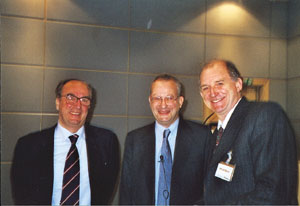
Important decisions are being taken about the future of the CLRC, and ECFA was invited to participate in the debate. In a round-table discussion moderated by ECFA chairman Lorenzo Foà, laboratory directors Luciano Maiani (CERN), Albrecht Wagner (DESY) and Paolo Laurelli (Frascati) explained their view of the role of a national laboratory. PPARC chief executive Ian Halliday examined how its RAL relations might develop.
Richard Kenway (Edinburgh) described the continual evolution of UK particle physics theory and restructuring for the 21st century, partly due to developments in computers and networks. A new proposal involves setting up a national Institute for Particle Physics Phenomenology, and a site decision is imminent.
Anna Burrage, a PhD student working with the H1 collaboration at DESY, alleged that British particle physics PhD students are required to be highly self-motivated and to complete original research at the highest international level.
A supervisory support framework provides academic and technical day-to-day assistance. Students acquire a range of “transferrable skills”, such as computer literacy and communications, which are highly valued by employers.
However, there are problems: students have great difficulty in finishing in three years of funding, and frequently finish their PhD deeper in the red. Burrage pointed out that PPARC is now introducing measures to ensure timely PhD completion, and it will be interesting to see how this develops.
Christine Sutton (Oxford) described PPARC-supported outreach activities in particle physics. These dynamic efforts point the way for similar developments elsewhere. As well as giving information on particle physics in the UK and elsewhere, the Web site also features a memorable “Picture of the Week”.
The ECFA meeting was organized by David Miller from University College, London, and his UK colleagues.
Cosmology has a lot going for it at the moment. Unprecedented amounts of data characterizing the universe at almost every possible energy and lengthscale make it one of the richest scientific fields around. Theorists scramble to explain all of the disparate results, while experimentalists and observers push the limits of what, only a few years ago, was not thought possible. In the middle of all this activity, Lawrence Krauss’s book Quintessence(a re-edition of his 1989 Fifth Essence) arrives to assess what is going on.
There is a growing trend in astrophysical and particle cosmology to believe (or at least sell the idea) that cosmology is “solved”. Again and again researchers in the field say something like: “things are finally falling into place”,so that we now have a standard model for structure formation. Often this represents a very theoretical and prejudiced view in selecting which data to believe.
Krauss himself embraces the latest high-redshift supernova results and consequent evidence for a cosmological constant as a confirmation of the “new standard cosmological model” that he developed with collaborators in the mid-1980s. He is not alone in doing this, but such an attitude seriously compromises the evolution of the field.
It is the glaring inconsistencies and the conceptually inexplicable fixes that we should be trying to tackle. For example, we assume that the universe is homogeneous (and we know that the cosmic microwave background is very smooth), but when we look atthe distribution of luminous matter it is strongly clustered as far as we can see; we believe that galaxies follow the underlying distribution of mass, but when we try to compare catalogues of different galaxies we end up having to invoke biasing mechanisms to make them all consistent.
My view is that cosmology is opening up and complexifying, not closing down and focusing on an existing component theory. Having declared my prejudices when starting this book, the truth is that I enjoyed it a lot. Although Krauss does try to oversell the inflationary cosmology and the derived cold dark matter scenario, this theme does not dominate the narrative. He does a great job of explaining the existence of dark matter, critically assessing the different pieces of experimental evidence and ensuring that he can relate these results with understandable physical principles. Particularly impressive is his description of the cosmic virial theorem (relating the kinematics of systems of gravitating bodies with the overall underlying mass) and his careful attempts to explain freezeout and relic abundances.
Many of the fundamental concepts needed in contemporary cosmology are outlined in the book and I see it as a great source of explanations for a wider audience. It was inevitable that this book would be revised. When Krauss wrote The Fifth Essenceat the end of the 1980s, it was at the end of a decade of fruitless searches for cosmological relics (he relates the story of the “Cabrera Monopole”, which was never properly explained away).
The search for dark matter in the universe really took off in the 1990s, with bolometric and scintillation direct detection experiments being set up all over the world, the microlensing searches producing arguable evidence for clumped baryonic dark matter in our halo and the new weak lensing experiments mapping out the dark mass in clusters. Krauss systematically goes through these different technological advances, explaining why they happened and what scientific returns to expect. I particularly liked his description of the use of bolometric detectors in direct detection experiments, and his clear explanation of the phonon/ionization method used by the CDMS experiments at Berkeley. It conveys the beauty of experimental physics – how clever ideas and masterful work can really transcend physical limitations. Krauss has also done a reasonable job of avoiding the sociological folklore of characters and egos. He succumbs vary rarely, the most notable occasion being in his description of his work on WIMP detection and axions (and he likes Glashow’s quips).
The bottom line is that Lawrence Krauss has been able to give us a glimpse of an open,fascinating problem in physics that is far from being solved: the existence and essence of dark matter. The book can be read by the layperson but is also useful for scientists and non-specialists in cosmology.
by James P Keener (updated and revised), Perseus 0 7382 0129 4, $60.
The new edition of this successful book includes material on wavelet analysis, multigrid methods and homogenization theory, and the introduction of popular software tools. The exercises have been extended, and hints and solutions are now provided.
by Philippe Nozières and David Pines, Perseus Advanced Book Classics 0738202290, pbk $49.
Long available as two volumes (Normal Fermi Liquidsand Superfluid Bose Liquids),these reliable classics are now available as a combined volume in paperback.
by Ta-Pei Cheng and Ling-Fong Li, Oxford University Press 0 19 850621 X, £23.95.
Designed as a companion volume to Gauge Theory of Elementary Particle Physicsby the same authors, this 300-page collection of problems over the full range of field theory applications has very helpful solutions and further explanations.
by Donald H Perkins (4th edition), Cambridge University Press 0 521 62196 8, £30/$49.95.
Does Donald Perkins’ classic Introduction to High Energy Physicsneed another review? When the first edition appeared in 1972, it quickly established itself as one of the most authoritative and successful textbooks on particle physics. However, the latest revision appeared in 1987 – before the advent of physics at LEP, the SLC, the Tevatron and HERA – and was beginning to show its age.
Donald Perkins’ distinguished career as an experimental particle physicist has been intimately connected with physics at CERN, where he has been a prime mover of many landmark experiments on neutrino scattering with bubble chambers. He has served as chairman of the Scientific Policy Committee and as UK delegate to the CERN Council. After retiring from his chair at Oxford, he has found the time to tackle a new edition.
The result is worth the wait: this is not just a straightforward update, it is a major rewrite, and the most comprehensive revision so far. It goes without saying that the book covers all significant developments of the past 15 years. Equally important, it has been reorganized thoroughly, such that the discussion is now firmly embedded in the classification of particles and forces of the Standard Model. A welcome addition are two new chapters that treat “Physics beyond the Standard Model” and “Particle physics and cosmology” in much more detail than previous editions and present the relevance of particle physics in a wider scientific context.
Notwithstanding the revised and more logical organization, the fourth edition does not sacrifice any of the qualities that have made previous versions so popular with students and lecturers alike. It focuses on phenomenological concepts rather than theoretical rigour, prefers illustrative examples and intuitive approaches to completeness and abstraction, and emphasizes the historical dimension to illustrate that particle physics is, more than ever, a fast-moving field.
To retain the same page count as previous editions, some material had to be omitted: this is less regrettable for the chapter on “Hadron-hadron interactions” than for most of the appendices, which provided much handy reference material. Useful additions to the supplementary material are a glossary, a historical account of “Milestones in particle physics” and a bibliography.
The latter is somewhat of a mixed success – while being a good guide to many classic books and papers, it omits many excellent, recent review articles that could take the novice reader to the forefront of current research in greater detail than is possible in a textbook. However, these are minor flaws when compared with the outstanding qualities of a book that once again is well poised to introduce generations of future researchers to the fascination of particle physics.
To provide the best experiences, we use technologies like cookies to store and/or access device information. Consenting to these technologies will allow us to process data such as browsing behavior or unique IDs on this site. Not consenting or withdrawing consent, may adversely affect certain features and functions.
Functional
Always active
The technical storage or access is strictly necessary for the legitimate purpose of enabling the use of a specific service explicitly requested by the subscriber or user, or for the sole purpose of carrying out the transmission of a communication over an electronic communications network.
Preferences
The technical storage or access is necessary for the legitimate purpose of storing preferences that are not requested by the subscriber or user.
Statistics
The technical storage or access that is used exclusively for statistical purposes.The technical storage or access that is used exclusively for anonymous statistical purposes. Without a subpoena, voluntary compliance on the part of your Internet Service Provider, or additional records from a third party, information stored or retrieved for this purpose alone cannot usually be used to identify you.
Marketing
The technical storage or access is required to create user profiles to send advertising, or to track the user on a website or across several websites for similar marketing purposes.