Comsol -leaderboard other pages

Topics

Spotting kaon decays into four muons

LHCb figure 1

The LHCb experiment is designed to study heavy-flavour particles containing beauty and charm quarks. Nevertheless, thanks to the large strangeness production cross-sections at the LHC as well as the excellent reconstruction performance of LHCb at low momenta, the experiment is also able to produce precise results in strange decays, complementary to those from dedicated experiments such as NA62 and KOTO. The collaboration has recently released a “trillio-scale” upper limit on the branching fraction of the decay K0S μ+μμ+μ, being the first at this scale at the LHC. The same dataset was used to search for K0L μ+μμ+μ, yielding the world best upper limit f and the first LHC result on a K0L decay.

According to the Standard Model (SM), K0S (K0L) mesons decay into four muons at a very small rate of a few 10–14 (10–13). The decay rates of these processes are very sensitive to possible contributions from new, yet-to-be discovered particles such as dark photons, which could significantly enhance or suppress the decay rate via quantum interference with the SM amplitude. Despite the unprecedented K0-meson production rate at the LHC, performing this search is challenging due to the low transverse momentum (typically a few hundred MeV) of the muons. LHCb exploits its unique capability to select, in real time, low transverse-momentum muons – a capability that has improved in recent years thanks to the versatility of its online trigger system. The analysis used machine learning to discriminate long-lived particles from combinatorial background, as well as a data-driven and detailed map of the detector material around the interaction point. The invariant mass of the four-muon system is used as a control variable to statistically separate the potential signal from the remaining combinatorial background.

No selected event consistent with the decay of K0S into four muons, which should appear in the region around the K0S mass of 498 MeV, was observed (see figure 1). In the absence of a signal, upper limits on the respective branching fractions are set to 5.1 × 10–12 for the K0S decay mode and 2.3 × 10–9 for the K0L mode at 90% CL. These results represent the world’s most precise searches for these decays, and the branching fraction for K0S μ+μμ+μ is the most stringent upper limit on a K0S decay mode. 

The upgraded LHCb detector, which started data-taking this year, offers excellent opportunities to further improve the search precision and eventually find evidence of this decay. In addition to the increased luminosity, the LHCb upgrade has a fully software trigger, which is expected to significantly improve the efficiency for K0 decays into four muons and other decays with very soft final-state particles.

Probing QCD beyond LHC energies

ATLAS figure 1

The study of elastic hadron scattering is a cornerstone in understanding the non-perturbative properties of strong interactions. A key role is played by experiments at the LHC, where it is possible to precisely measure proton–proton (pp) interactions at a very high centre-of-mass energy. The goal is to detect the process pp  pp, in which the interacting protons remain intact and are scattered at angles of a few microradians with respect to the beamline. The importance of such measurements follows from their relation to the total hadronic pp cross section via the optical theorem, and to properties of proton interactions at asymptotically high energies via dispersion relations.

In ATLAS, elastic scattering is studied using a dedicated experimental setup – the ALFA detectors, which allow measurements of scattered-proton trajectories inside the beam pipe, just a few millimetres from the LHC beam. They are installed inside so-called Roman pots located at distances of 237 and 245 m on either side of the ATLAS interaction point.

Recently, ATLAS reported a measurement of elastic scattering at a centre-of-mass energy of 13 TeV. The data were collected with a special setting of the LHC magnets characterised by a high β* of 2500 m, which results in a large beam-spot size and a very small beam divergence. The latter allows precise measurements of small scattering angles. With these optics, the ALFA system detected events characterised by very small values of the Mandelstam t variable, which is proportional to the scattering angle squared. Measurements of small |t| values give access to the Coulomb–nuclear interference (CNI) kinematic region, where the contribution from electromagnetic and strong interactions are of similar magnitude. 

The ALFA detectors use scintillating- fibre technology to measure the position of the passing proton. The t value for each event is reconstructed from the measured positions using knowledge of the magnetic fields of the LHC magnets between the interaction point and the detectors. The selection of candidate events is based on the strong correlations between the elastically scattered protons, resulting from energy and momentum conservation. The analysis is heavily based on data-driven techniques, which are used for the alignment of the detectors, background estimation, evaluation of reconstruction efficiency and optics tuning.

Figure 1 presents the measured differential elastic cross section as a function of t. The shape of the distribution is sensitive to important physics parameters, such as the total cross section (σtot) and the ρ parameter, defined as the ratio of real to imaginary parts of the forward scattering amplitude. The smallest |t| values, and thus the smallest scattering angles, are dominated by the electromagnetic interaction between the protons. The CNI effects are strongest for |t| around 10–3 GeV2 and provide the sensitivity to the ρ parameter. For larger |t| values, the strong interaction dominates, and the spectrum depends on the value of σtot. The physics parameters are extracted from a fit to the t distribution.

ATLAS figure 2

The ρ parameter is related, through dispersion relations, to the energy dependence of σtot, with a certain sensitivity also to energies above those at the LHC. In addition, ρ is sensitive to possible differences between pp and pp scattering amplitudes at asymptotic energies. ATLAS measured ρ = 0.098 ± 0.011, in agreement with a previous TOTEM measurement. The result is in conflict with pre-LHC theoretical expectations (see the COMPETE line in figure 2), which assumed that no pp/pp  difference is present asymptotically and that σtot increases proportionally to the squared logarithm of the centre-of-mass energy, similarly to the evolution observed at accessible energies back then. This suggests that one of the above assumptions is incorrect: either the increase of σtot slows down above LHC energies, or protons and antiprotons interact differently at asymptotic energies. The second statement is often associated with the so-called odderon exchange. Both possibilities affect our understanding of the high-energy behaviour of strong interactions. 

ATLAS also measured the total pp hadronic cross section σtot = (104.7 ± 1.1) mb. This is the most precise measurement to date at this energy, due to a dedicated luminosity measurement that contributed less than 1 mb to the total systematic uncertainty. However, the long-standing tension between the ATLAS and TOTEM σtot measurements, with the latter being about 5% higher than ATLAS, persists.

ATLAS has collected more elastic scattering data in LHC Run 2, which are currently being analysed. New data taking is planned during Run 3, where a special run is foreseen at a centre-of-mass energy of 13.6 TeV.

Hypertriton characterised with unprecedented precision

ALICE figure 1

At the LHC, light nuclei and antinuclei are produced both in proton–proton and in heavy-ion collisions. Unstable nuclei, called hypernuclei, are also produced. First observed in cosmic rays in 1953, hypernuclei are formed by a mix of protons, neutrons and hyperons containing one or more strange quarks and undergo weak decays. Almost 70 years since their discovery, hypernuclei are still a source of fascination for nuclear physicists since their production is very rare and the measurement of their properties is extremely challenging.

The only hypernucleus observed so far at the LHC is the hypertriton (3ΛH), composed of a Lambda baryon (Λ), a proton and a neutron. While, traditionally, hypernuclei are studied in low-energy nuclear experiments, the hundreds of hypertritons and antihypertritons produced in each lead–lead run at the LHC provide one of the largest data samples for their study. The hypertritons fly for a few centimetres in the experimental apparatus before decaying into a 3He nucleus and a charged pion, which are then identified by the detectors.

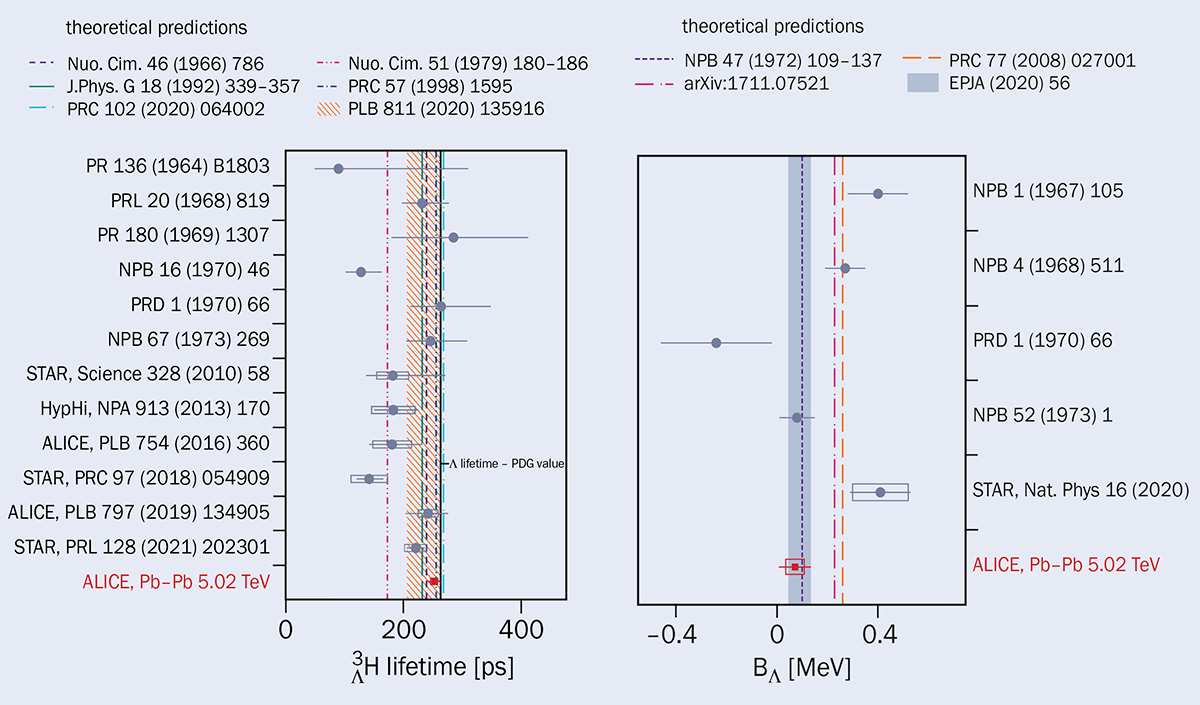
The ALICE collaboration recently completed a new analysis of the largest Run 2 data sample, achieving the most precise measurements to date of the hypertriton lifetime and its Λ-separation energy (the energy required to separate the Λ from the rest of the hypertriton). The lifetime, measured from the distribution of reconstructed two-body decay lengths, was found to be 253 ± 11 (stat.) ± 6 (syst.) ps, while the separation energy, obtained from the hypertriton invariant-mass distribution, was measured to be 72 ± 63 (stat.) ± 36 (syst.) keV.

These two quantities are fundamental to understand the structure of this hypernucleus and therefore the nature of the strong interaction. While the strong force binding neutrons and protons inside atomic nuclei is well understood, the characteristics of the strong force binding nucleons and hyperons are not precisely known.

The study of this interaction is not only interesting per se, but it is also an input for modelling of the dense core of neutron stars. Indeed, the creation of hyperons is energetically favoured compared to ordinary nucleonic matter in the inner core of neutron stars. Therefore, detailed knowledge of the interactions between nucleons and hyperons is required to understand these compact astrophysical objects.

The new ALICE measurements indicate that the interaction between the hyperon inside the hypertriton and the other two nucleons is extremely feeble (see figure 1). This is also confirmed by the lifetime of the hypertriton, which is compatible with the free Λ-baryon lifetime. Finally, since at the LHC matter and antimatter are produced in the same amount, the ALICE collaboration could compare the lifetimes of the antihypertriton and the hypertriton. Within the experimental uncertainty, the lifetimes were found to be compatible, as expected from CPT invariance.

During LHC Run 3, ALICE will extend its studies to heavier hypernuclei, putting tighter constraints on the interaction models among hyperons and nucleons. 

Probing the Milky Way’s violent history

Fermi bubbles

Active galactic nuclei (AGN) are one of the most studied astrophysical objects. Known to be the brightest persistent sources of photons in the radio to gamma- ray spectrum, they are also thought to be responsible for high-energy cosmic rays and neutrinos. As such, they play an important role in the universe and its evolution. 

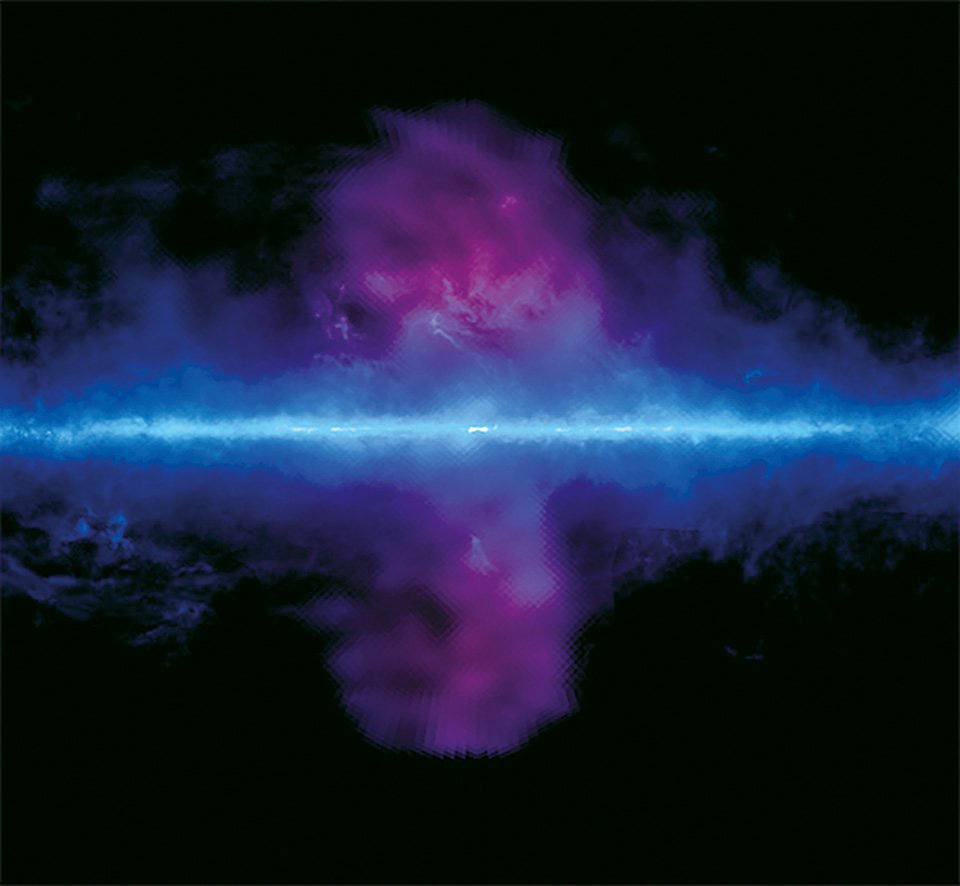
AGNs are galaxies in which the supermassive black hole at their centre is accreting matter, thereby producing violent jets responsible for the observed emissions. While our galaxy has a supermassive black hole at its centre, it is currently not accreting matter and therefore the nucleus of the Milky Way is not active. Strong hints of past activity were, however, discovered using the Fermi–LAT satellite in 2010. In particular, the data showed two giant gamma-ray emitting bubbles – now known as the Fermi bubbles – extending from the galactic centre and covering almost-half of the sky (see image). The exact origin of the giant plasma lobes remains to be understood. However, their position and bipolar nature point towards an origin in the Milky Way’s centre several million years ago, likely during a period of high activity in the galactic nucleus. 

A new study led by Trisha Ashley from the Space Telescope Science Institute, Baltimore, brings a fresh perspective on the origin of these structures. Her team focused on the chemical composition of gas clouds inside the bubbles using UV absorption data collected by the Hubble Space Telescope and Green Bank Telescope. Based on their location and movement, these high-velocity clouds had been assumed to originate in the disk of the Milky Way before being swept up as the bubbles were emitted from the galactic centre. However, measurements of the clouds’ elemental makeup cast doubt on this assumption.

UV surprise 

Gas clouds from the galactic disk should have a similar chemical composition (referred to as metallicity by astronomers) to those that once collapsed into stars like the Sun. In the galactic disk, the abundance of elements heavier than hydrogen (high metallicity) is expected to be higher thanks to several generations of stars responsible for the production of such elements, whereas in the galactic halo the metallicity is expected to be lower due to a lack of stellar evolution. To measure the chemical composition of the gas clouds, Ashley and her team looked at the UV spectra from sources behind them to see the induced absorption lines. To their surprise, they found not only clouds with high metallicity but also those with a lower metallicity, matching that of galactic halo gas, thereby implying a different origin for these clouds. Suggestions that the second class of clouds is a result of heavy clouds accumulating low-metallicity gases are unlikely to hold, as the time it would take to absorb these gases is significantly longer than the age of the Fermi bubbles. Instead, it appears that while the bubbles did drag along gas clouds from the galactic plane, they also swept up existing halo gas clouds as they expanded outwards. 

These results imply that events such as those which produced the Fermi bubbles play an important role in gas accumulation in a galactic plane. They remove gas from the galactic disk, while in parallel, push back gas flowing into the galactic disk from the halo. As less gas reaches the disk, star formation gets suppressed, and as such, these events play an important role in galaxy evolution. Since studying small-scale details such as gas clouds in other galaxies is impossible, these results provide a unique insight into our own galaxy as well as into galaxy evolution in general.

Physics Beyond Colliders Annual Workshop

The main goal of this annual workshop is to review the status of the PBC studies continued or launched after the European Particle Physics Strategy update, with a focus on the programmes under consideration for start of operation after the next LHC long shutdown LS3. The workshop is also opened to presentation of new ideas of potential interest for CERN, after submission along the guidelines given on the PBC Home Page.

Organising Committee:

Gianluigi Arduini, Joerg Jaeckel, Claude Vallée

Higgs 2022

We are pleased to announce the Higgs 2022 Conference that will take place in the on-site format.

The conference will focus on new experimental and theoretical results on the Higgs boson.

Latest measurement of the Higgs boson properties and recent theoretical developments in the Higgs boson sector, in the Standard Model and in physics Beyond the Standard Model will be presented and discussed at the Conference.

Contributions will be organised in several parallel and plenary sessions.

During the the Conference, the ten years anniversary of Higgs boson discovery will be celebrated with social events opened to the general public.

The conference is planned to be kept in hybrid format with a substantial in-person participation, in compliance with the relevant COVID-19 regulations at the time of the meeting.

LHCb tests lepton-flavour universality in b → c transitions

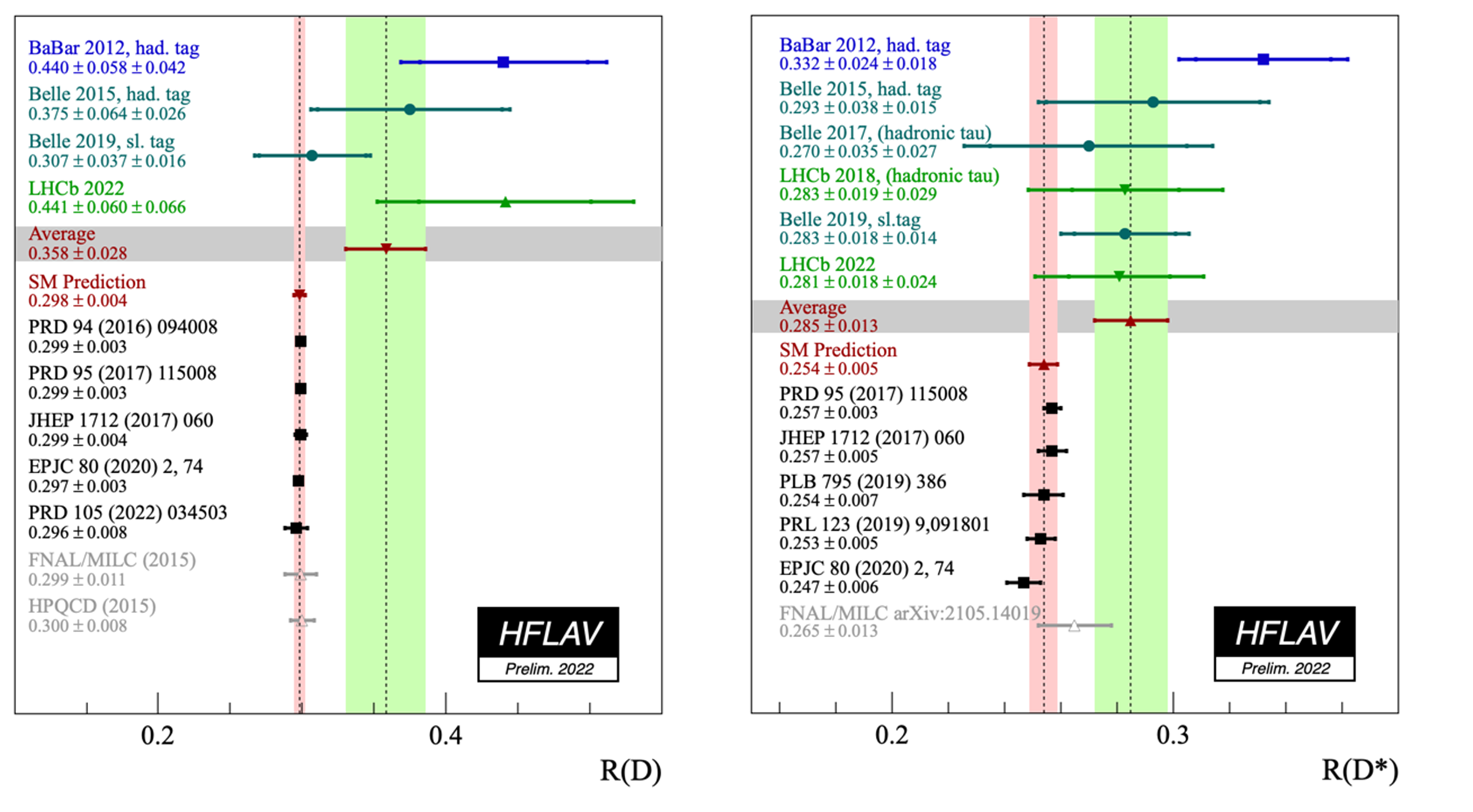
Complementing previous results by Belle, BaBar and LHCb, the LHCb collaboration has reported a new test of lepton flavour universality in b → cℓ ν decays. At a seminar at CERN on Tuesday 18 October, the collaboration announced the first simultaneous measurements of the ratio of the branching fraction of B-meson decays to D mesons: R(D*)= BR(B→D*τντ)/BR(B→D*μνμ) and R(D)= BR(B→D0τντ)/BR(B→D0μνμ) at a hadron collider. Based on Run 1 data recorded at a centre-of-mass energy of 7 and 8 TeV, they found R(D*) = 0.281 ± 0.018 (stat.) ± 0.024 (syst.) and R(D) = 0.441 ± 0.060 (stat.) ±0.066 (syst.). The values, which are consistent with the Standard Model (SM) expectation within 1.9 σ, bring further information to the pattern of “flavour anomalies” reported in recent years.

Lepton-flavour universality holds that aside from mass differences, all interactions must couple identically to different leptons. As such, the rate of B-meson decays to different leptons is expected to be the same, apart from known differences due to their different masses. Global fits of R(D(*)) measurements, which probe b → c quark transitions, show that the ratio of B-meson to D-meson decays tends to be larger (by about 3.2 σ) than the SM prediction. The ratios of electronic to muonic B-meson decays, R(K), which probe b → s quark transitions, are also under scrutiny to test this basic principle of the SM.

rdrds_1D

To reconstruct b → cτ ντ decays, LHCb used the leptonic τ→μνν decay to identify the visible decay products D(*) and µ. “We use the measurement of the B flight direction to constrain the kinematics of the unreconstructed particles, and with an approximation reconstruct the rest frame kinematic quantities,” says LHCb’s Greg Ciezarek, who presented the results. “The challenge is then to understand the modelling of the various background processes which also produce the same visible decay products but have additional missing particles different distributions in the rest frame quantities. We use control samples selected based on these missing particles to constrain the modelling of background processes and justify our level of understanding.”

The respective SM predictions for the ratios R(D) and R(D*) are very clean because they are independent of uncertainties induced by the CKM-matrix element Vcb and hadronic matrix elements. The new values of R(D) and R(D*) are compatible both with the current world average compiled by the HFLAV collaboration, and with the SM prediction (at 2.2σ and 2.3σ). The combined LHCb result provides improved sensitivity to a possible lepton-universality breaking process.

“Rare B-meson decays and ratios such as R(K) and R(D(*)) are powerful probes to search for beyond the Standard Model particles, which are not directly detectable at the LHC,” says Ben Allanach, theorist at the University of Cambridge.

UK event celebrates Higgs@10

HiggsDiscovery@10 symposium

Marking 10 years since the discovery of the Higgs boson, a two-day workshop held at the University of Birmingham on 30 June and 1 July brought together ATLAS and CMS physicists who were involved in the discovery and subsequent characterisation of the Higgs boson. Around 75 physicists, in addition to members of the public who attended a colloquium, celebrated this momentous discovery together with PhD students, early-career researchers and members of IOP’s history of physics group. In an informal atmosphere, participants recalled and gave insights on what had taken place, spicing it with personal stories that placed the human dimension of science under the spotlight.

The story of the Higgs-boson search was traced from the times of LEP and the Tevatron. Participants were reminded of the uncertainty and excitement during the final days of LEP: the hints of an excess of events at around 115 GeV and the ensuing controversy surrounding the decision to either stop the machine or extend its data-taking further. For the Tevatron, the focus was more on the relentless race against time until the LHC could provide an overwhelming dataset. It was considered plausible that the Tevatron could observe the Higgs boson first, leading CERN to delay a scheduled break in LHC data-taking following its 2011 run.

The timeline of the design, construction and commissioning of the LHC experi­ments was presented, with a particular focus on the excellent performance achieved by ATLAS and CMS since the beginning of Run 1. The parallel role of theory and the collaboration among theorists and experimentalists was also discussed. Speakers from the experiments involved in the Higgs-discovery analyses provided personal perspectives on the events leading up to the 4 July 2012 announcement.

With his unique perspective, former CERN Director-General Chris Llewellyn-Smith described the early discussions and approval of the LHC project during a well-attended public symposium. He recalled his discussions with former UK prime minister Margaret Thatcher, the role of the ill-fated US Superconducting Super Collider and the “byzantine politics” that led to the LHC’s approval in 1994. Most importantly, he emphasised that the LHC was not inevitable: scientists had to fight to secure funding and bring it to reality. Former ATLAS spokesperson David Charlton reflected on the preparation of the experiments, the LHC startup in 2008 and subsequent magnet problems that delayed the physics runs until 2010, noting the excellent performance of the machine and detectors that enabled the discovery to be made much earlier than expected.

The workshop would not have been complete without a discussion on what happened after the discovery. Precision measurements of the Higgs-boson couplings, observation of new decay and production modes, as well as the search for Higgs-boson pair-production were described, always with a focus on the challenges that needed to be overcome. The workshop closed with a look to the future, both in terms of experimental prospects of the High-Luminosity LHC and theory.

A(nother) day to remember

“I am an opportunist, in one way an extremely successful one. Weinberg and I were working along similar lines with similar attitudes. I wish you well for your celebrations and regret that I can’t be with you in person.” 

Peter Higgs winner of the 2013 Nobel Prize in Physics.

Peter Higgs

“It was an overwhelming time for us. It took time to understand what had happened. I especially remember the excitement among the young researchers.” 

Rolf Heuer former CERN Director-General. 

“It took 14 years to build the LHC. At one point we had 1000 dipoles, each costing a million Swiss francs, stored on the surface, throughout rain and snow.” 

Lyn Evans former LHC project director.

“The first two years of measuring Standard Model physics were essential to give us confidence in the readiness of the two experiments to search for new physics.” 

Peter Jenni founding ATLAS spokesperson.

“A key question for CMS was: can tracking be done in a congested environment with just a few points, albeit precise ones? It was a huge achievement requiring more than 200 m2 of active silicon.” 

Michel Della Negra founding CMS spokesperson.

“I remember on 4 July 2012 a magnificent presentation of a historical discovery. I would also like to celebrate the life of Robert Brout, a great physicist and important man.” 

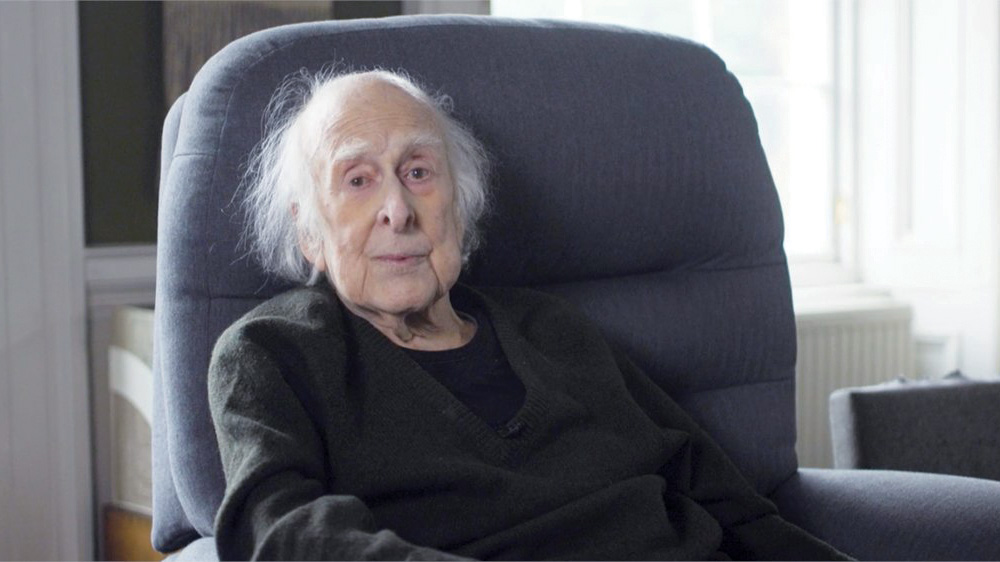
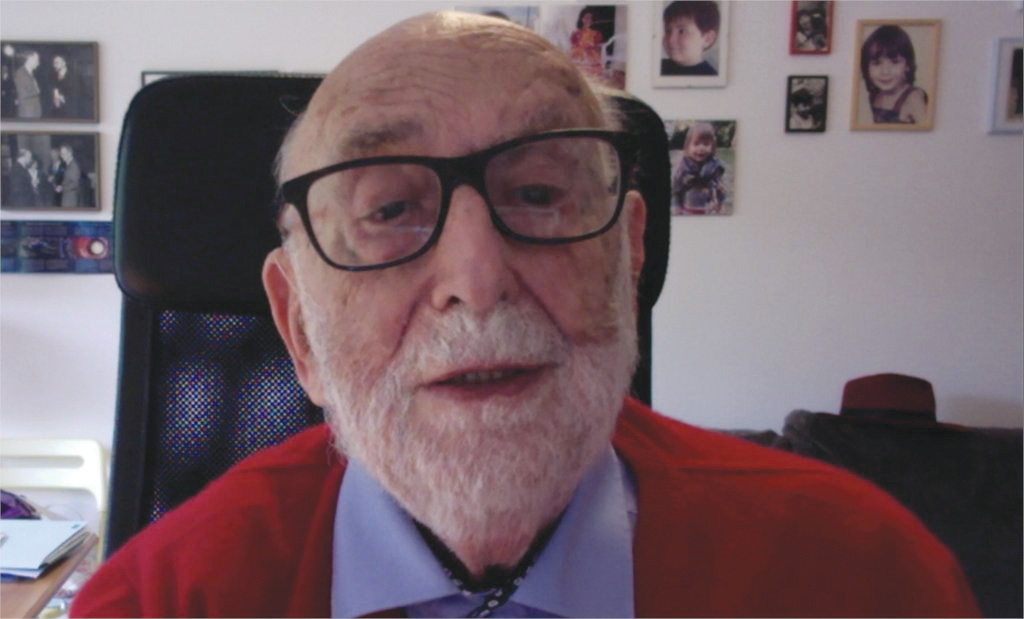
François Englert winner of the 2013 Nobel Prize in Physics. 

François Englert

“The gist of the theory behind the Higgs boson would easily compete with the most far-fetched conspiracy theory, yet it seems nature chose it.” 

Eliezer Rabinovici president of the CERN Council.

“The structure of the vacuum is intimately connected to how the Higgs boson interacts with itself. To probe this phenomenon at the LHC we can study the production of Higgs-boson pairs.” 

André David CMS experimentalist (CERN).

“Collaboration between experiment and theory is even more necessary now to find any hints for BSM physics.” 

Reisaburo Tanaka ATLAS experimentalist (Université Paris-Saclay).

“Precision Higgs physics is a telescope to high-scale physics, so I’m looking forward to the next 10 years of discovery.” 

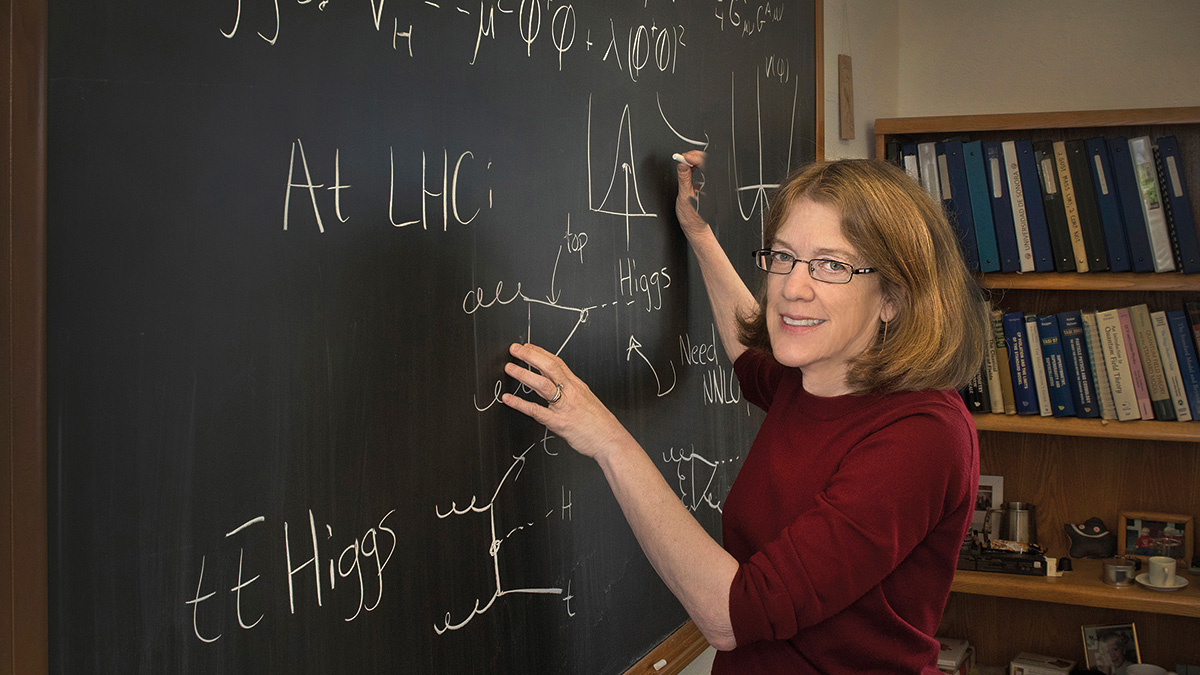
Sally Dawson theorist (BNL). 

Sally Dawson

“Theory accuracy will be even more important to make the best of the HL-LHC data, especially in the case in which no evidence of new physics will show up… This is also crucial for the Monte Carlo tools used in the analyses.”

Massimiliano Grazzini theorist (University of Zurich).

“After 10 years we’ve measured the five main production and five major decay mechanisms of the Higgs boson.” 

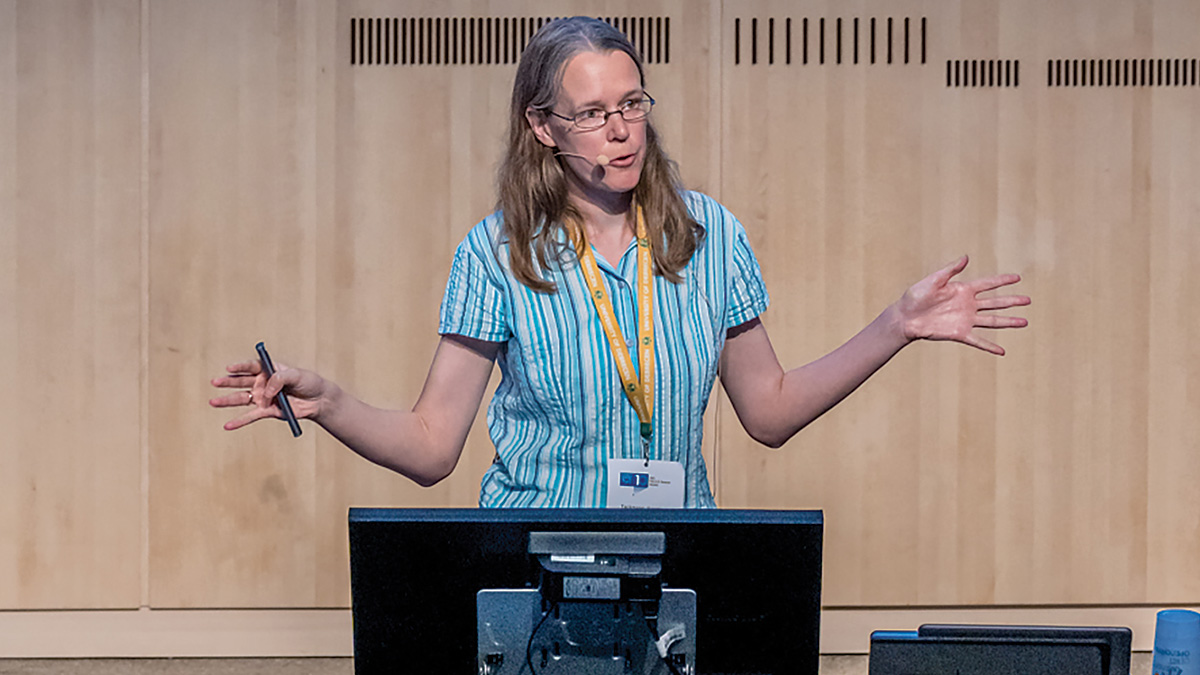
Kerstin Tackmann ATLAS experimentalist (DESY).

Kerstin Tackmann

“What we know so far – Mass: known to 0.11%. Width: closing in on SM value of 3.2+2.5–1.7   MeV (plus evidence of off-shell Higgs production). Spin 0: spin 1 & 2 excluded at 99.9% CL. CP structure: in accordance with SM CP-even hypotheses.”

Marco Delmastro ATLAS experimentalist (CNRS/IN2P3 LAPP).

“We have learned much about the 125 GeV Higgs boson since its discovery. The LHC Run 3 starts tomorrow: ready for the next decade of Higgs-boson exploration!”

Adinda de Wit CMS experimentalist (University of Zurich).

“The Higgs boson is linked to profound structural problems in the Standard Model. It is therefore an extraordinary discovery tool that calls for a broad experimental programme at the LHC and beyond.” 

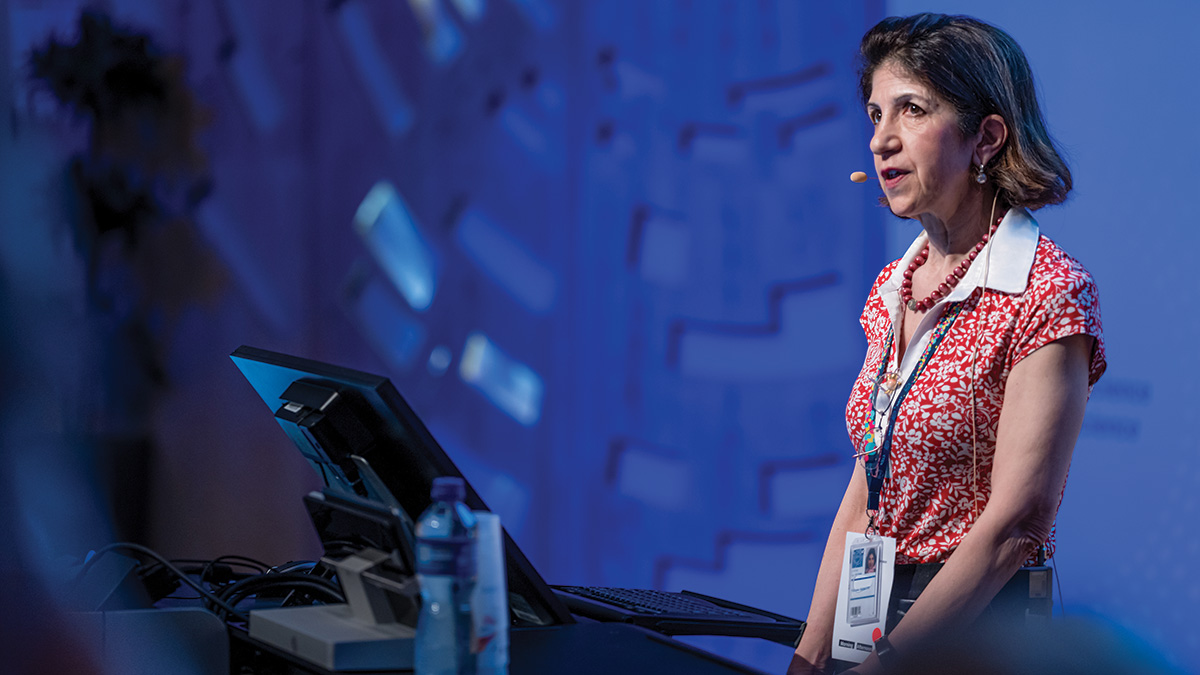
Fabiola Gianotti CERN Director-General.

Fabiola Gianotti

“Elusive non-resonant pairs of Higgs bosons are the prime experimental signature of the Higgs-boson self-coupling. We are all eager to analyse Run 3 data to further probe HH events!”

Arnaud Ferrari ATLAS experimentalist (Uppsala University).

“New physics can affect differently the different fermion generations. We have to precisely measure the couplings if we want to understand the Higgs boson’s nature.”

Andrea Marini CMS experimentalist (CERN).

“From its potential invisible, forbidden, and exotic decays to the possible existence of scalar siblings, the Higgs boson plays a fundamental role in searches for physics beyond the Standard Model.”

Roberto Salerno CMS experimentalist (CNRS/IN2P3 – LLR & École polytechnique).

“An incredible collaborative effort has brought us this far. But there is much more to come, especially during Long Shutdown 3, with HL-LHC paving the way from Run 3 to ultimate performance. Interesting times ahead to say the least!”

Mike Lamont CERN director for accelerators and technology.

Mike Lamont

“The hard work and creativity in reconstruction and analysis techniques are already evident since the last round of projections. Imagine what we can do in the next 20 years!”

Elizabeth Brost ATLAS experimentalist (BNL).

“The Higgs is the first really new elementary particle we’ve seen. We need to study it to death!”  

Nima Arkani-Hamed theorist (IAS).

Jet-energy corrections blaze a trail

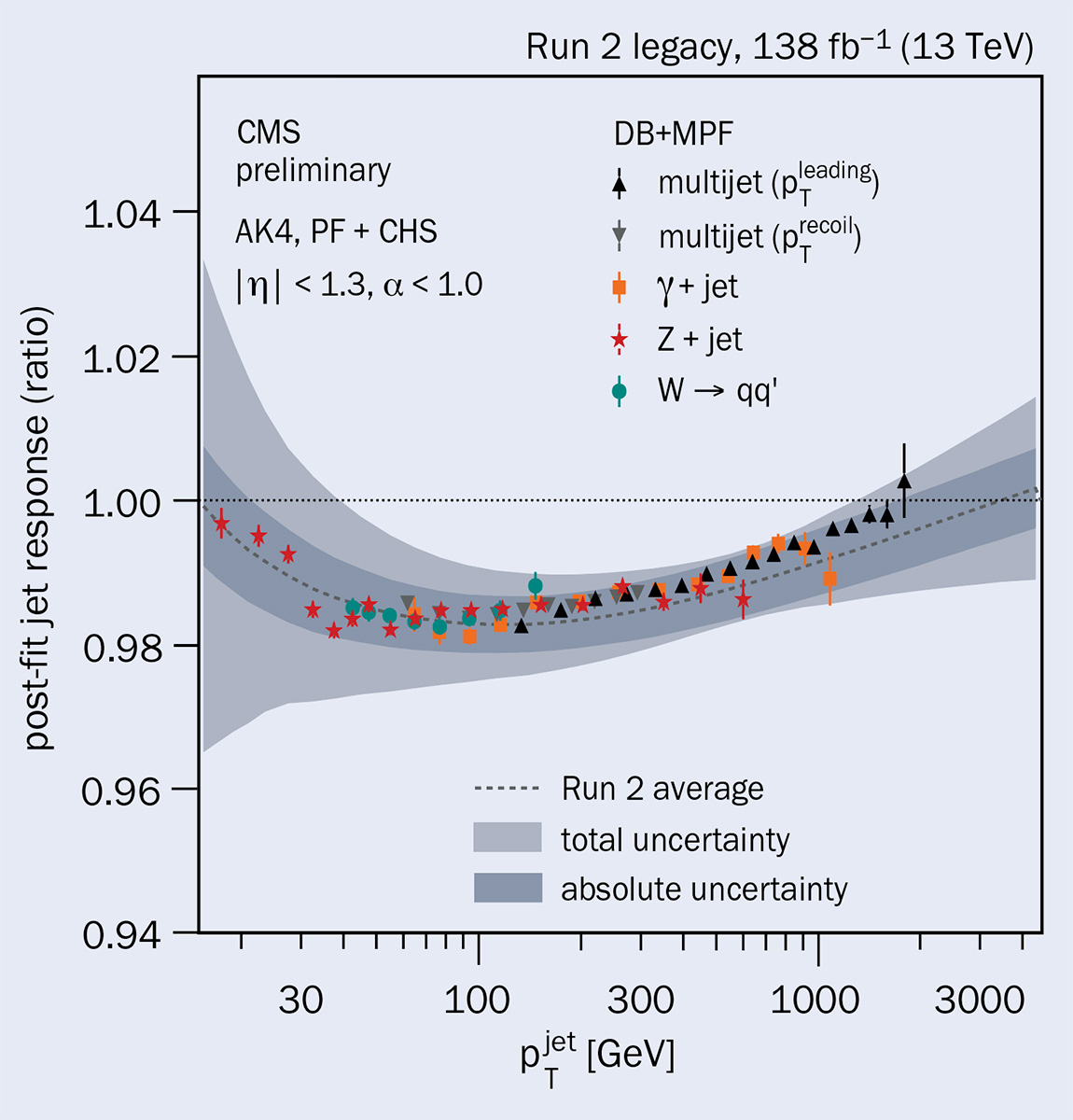
Figure 1

Understanding hadronic final states is key to a successful physics programme at the LHC. The quarks and gluons flying out from proton–proton collisions instantly hadronise into sprays of particles called jets. Each jet has a unique composition that makes their flavour identification and energy calibration challenging. While the performance of jet-classification schemes has been increased by the fast-paced evolution of machine-learning algorithms, another, more subtle, revolution is ongoing in terms of precision jet-energy corrections.

CMS physicists have taken advantage of the data collected during LHC Run 2 to observe jets in many different final states and systematically understand their differences in detail. The main differences originate from the varying fractions of gluons making up the jets and the different amounts of final-state radiation (FSR) in the events, causing an imbalance between the leading jet and its companions. The gluon uncertainty was constrained by splitting the Z+jet sample by flavour, using a combination of quark–gluon likelihood and b/c-quark tagging, while FSR was constrained by combining the missing-ET projection fraction (MPF) and direct balance (DB) methods. The MPF and DB methods have been well established at the LHC since Run 1: while in the DB method the jet response is evaluated by comparing the reconstructed jet momentum directly to the momentum of the reference object, the MPF method considers the response of the whole hadronic activity in the event, recoiling versus the reference object. Figure 1 shows the agreement achieved with the Run 2 data after carefully accounting for these biases for samples with different jet-flavour compositions.

Precise jet-energy corrections are critical for some of the recent high-profile measurements by CMS, such as an intriguing double dijet excess at high mass, a recent exceptionally accurate top-quark mass measurement, and the most precise extraction of the strong coupling constant at hadron colliders using inclusive jets.

The expected increase of pileup in Run 3 and at the High-Luminosity LHC will pose additional challenges in the derivation of precise jet-energy corrections, but CMS physicists are well prepared: CMS will adopt the next-generation particle-flow algorithm (PUPPI, for PileUp Per Particle Id) as the default reconstruction algorithm to tackle pileup effects within jets at the single-particle level.

Jets can be used to address some of the most intriguing puzzles of the Standard Model (SM), in particular: is the SM vacuum metastable, or do some new particles and fields stabilise it? The top-quark mass and strong-coupling-constant measurements address the former question via their interplay with the Higgs-boson mass, while dijet-resonance searches tackle the latter. 

Underlying these studies are the jet-energy corrections and the awareness that each jet flavour is unique. 

bright-rec iop pub iop-science physcis connect