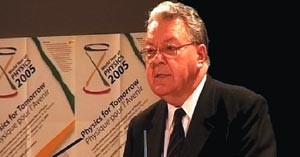
More than 1000 people including eight Nobel laureates and close to 500 students from 70 countries took part in the Physics for Tomorrow conference in Paris on 13 January. The event took place at the headquarters of the United Nations Educational, Scientific and Cultural Organization (UNESCO). It marked the official launch of the International Year of Physics proclaimed by the UN, which aims to highlight the importance of physics and its contribution to society.
The conference was organized by UNESCO, the lead UN organization for the International Year, together with other organizations from the physics community, including the CNRS and CEA in France and CERN. CERN itself was founded under the auspices of UNESCO, which is one of the observer organizations to the CERN council, so it was appropriate that Carlo Rubbia and Georges Charpak, Nobel laureates from CERN, together with the director-general, Robert Aymar, were among the invited speakers.
During the opening ceremony, Aymar emphasized the crucial roles of physics as the driving force for innovation, as the magnet for attracting and training the most talented people, and in forging partnerships of nations. Rubbia participated in the round table on “What can physics bring to the socio-economical challenges of the 21st century?” and Charpak talked about “Teaching and education in physics”.
• This inaugurated a series of events that are taking place all over the world in 2005 to celebrate physics and emphasize its role. For further information see www.wyp2005.org.
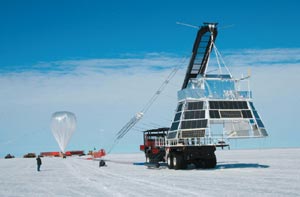
The Balloon-borne Experiment with Superconducting Spectrometer (BESS) launched a cosmic-ray spectrometer from Antarctica on 13 December. BESS, a collaboration between the US and Japan, has been studying cosmic rays since 1993 with balloon flights over northern Canada, but this was its first flight in Antarctica with a completely new instrument.
The 2 t detector was carried by a 1,000,000 m3 balloon from Williams Field near the US McMurdo Station. It flew to altitudes of 37-39 km for a period of 8 days and 17 hours. Flight operations were carried out by the National Scientific Balloon Facility (NSBF) as part of the United States Antarctic Program, supported by NASA and by the National Science Foundation (NSF).
With this new detector the BESS group is continuing the systematic study of low-energy antiprotons in cosmic radiation. These rare particles are a unique probe for understanding elementary particle phenomena in the early universe.
Most cosmic-ray antiprotons are produced in collisions of primary cosmic-ray nuclei with the interstellar gas. However, if an excess of low-energy antiprotons beyond those expected from standard processes is observed, measurements from BESS may provide evidence for the primary origin of some cosmic-ray antiprotons through processes such as the evaporation of primordial black holes or the decay of possible forms of dark matter.
BESS has detected more than 2000 low-energy antiprotons in eight flights from northern Canada over the past 11 years. Most of the antiprotons measured by BESS are clearly secondary products of primary cosmic rays. However, the data obtained during the last solar minimum in the sunspot cycle (which occurred in 1996) suggest a spectrum flatter than expected in the low-energy region, and hence the exciting possibility of novel origins for cosmic antiprotons.
BESS also searches for antihelium in the cosmic radiation, the detection of which would have profound significance for both cosmology and particle physics. Unlike antiprotons, antihelium has a vanishingly small probability of creation by cosmic rays. Furthermore, our current understanding is that the universe is baryon-asymmetric, with an overwhelming dominance of matter over antimatter, and that antimatter stars or galaxies do not exist. The discovery of a single antihelium event would change this view.
The analysis of the BESS data has found no evidence for antihelium while recording more than 7 million helium nuclei, establishing the most stringent upper limit to the existence of antihelium and supporting baryon asymmetry.
In 2001 the BESS group started a project to improve the statistics and to lower the energy threshold of the detector. They developed a new instrument with a much thinner superconducting solenoid magnet and detector system and without an outer pressure vessel. The cryogen lifetime of the new magnet has also been greatly improved, and at polar latitudes a solar-power system increases flight times by more than an order of magnitude compared with typical one-day flights in Canada.
During the 2004 BESS-Polar flight, the data from some 900 million cosmic rays, totalling about 2 Tb, was recorded on an array of on-board hard disks. Following the flight around Antarctica, BESS-Polar descended by parachute to a landing site on the Ross Ice Shelf approximately 900 km from its launch point. A recovery crew was flown to the area, and in a series of flights from the remote Siple Dome Camp to the landing location the data disks and the remainder of the instrument and payload were recovered successfully.
• BESS is a collaboration between KEK, the NASA Goddard Space Flight Center, the University of Tokyo, Kobe University, the Institute of Space and Astronautical Science of JAXA, and the University of Maryland.
The CERN Axion Solar Telescope (CAST) collaboration has released the first results from its search for the solar axion, a viable candidate for a dark-matter particle. The result from CAST’s first year of operation, submitted to Physical Review Letters, does not show evidence for the axion but it narrows down the hunt for this elusive particle.
Axions were theorized more than 25 years ago to explain the absence of charge-parity (CP) symmetry violation in the strong interaction. These neutral, very light particles (in the mass range 10–5 – 10 eV/c2) interact so weakly with ordinary matter that they could have survived until now from their birth at the very beginning of the universe, so could contribute to dark matter. However, axions could also be created today, for example near the strong electric field inside the hot plasma core of the Sun, where thermal X-rays could be efficiently converted into axions. These axions would stream out freely and arrive on Earth in quantities larger than solar neutrinos.
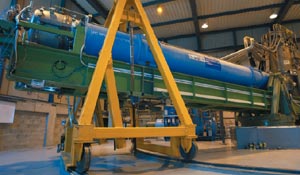
CAST, currently the world’s only working “axion helioscope”, is a prototype superconducting magnet for the Large Hadron Collider that has been refurbished and fitted with X-ray detectors, plus a focusing mirror system for X-rays that was recovered from the German space programme. The 9 T field in the magnet can convert solar axions passing through CAST into X-rays, with the highest efficiency for such a detector to date.
The first results from CAST show that the axion-photon coupling constant is gaγγ< 1.16 x 10⁻¹⁰ GeV–1 for axion masses below 0.02 eV (Zioutas et al. 2004). This new limit is five times smaller than the previous best laboratory measurements, from the Tokyo axion helioscope experiment (Moriyama et al. 1998). However, CAST’s new result is comparable, in the mass range studied, to the best limit derived from stellar energy-loss arguments. It also excludes an important part of the parameter space that is not excluded by solar-age considerations, which allow an axion-photon coupling somewhat larger than the Tokyo limit.
So far CAST has covered the low end of the axion rest-mass range, ma< 0.02 eV/c2. The group is currently remodelling the telescope; filling the two tubes of the magnet with helium gas will keep the X-rays and axions in phase over the magnet’s entire length of 9.26 m. This will allow a search for axions of higher mass, covering more of the range expected from theory and not excluded by astrophysical and cosmological observations.
A milestone has been reached on the way towards the realization of the European X-ray Free Electron Laser facility (XFEL). France, Germany, Greece, Italy, Poland, Spain, Sweden, Switzerland and the UK have signed a Memorandum of Understanding in which they agree to prepare the ground for a governmental accord on the construction and operation of the European XFEL research facility until mid-2006. Denmark will also sign up soon. Together with Hungary, the Netherlands, Russia, Slovakia and the European Union, which are present as observers, the signatory countries form a steering committee that coordinates the preparations for the construction of XFEL.
Following a recommendation by the German Science Council, the German federal government decided in February 2003 to go ahead with XFEL as a European joint project to be situated at the DESY laboratory in Hamburg. Commissioning this research facility, which will be unique in Europe, is to start in 2012. Its cost amounts to about €900 million, which will be borne jointly by Germany and the partner countries.
The memorandum includes working out proposals for detailed time schedules and financing schemes, the future organization structure, the exact technical design and the operation of the X-ray laser. XFEL, with its ultra-short X-ray pulses with laser-like properties, will open up completely new opportunities in a wide range of research, from geological studies to nanotechnology.
A new technique for cooling antiprotons has been tested at CERN’s Antiproton Decelerator (AD), yielding 50 times more trapped antiprotons per cycle than ever before. Storing and cooling large samples of antiprotons is an important step towards achieving the physics goals of the experiments at the AD, which require the synthesis of exotic atoms such as antihydrogen (pbar e+) and protonium (p pbar).
Atoms, including exotic ones like these, can be efficiently synthesized only at chemical-energy scales (a few electron-volts or lower). This is many orders of magnitude below the energy scales needed for the production of antiprotons using an accelerator (a few giga-electron-volts). The AD reduces this gap by decelerating the 3 GeV antiprotons generated when the proton beam from the Proton Synchrotron hits an iridium target down to an energy of 5.3 MeV. This is still too high, however, for electromagnetic traps that can only capture antiprotons at the 10 keV range. Until now, thin “degrader” foils were used to slow antiprotons further, but the efficiency of such a system is low as many antiprotons stop and annihilate within the foils. Indeed, out of the 3 x 10⁷ antiprotons ejected every 2 min in a 90 ns pulse (or “shot”) of the AD, only about 25,000 were retained.
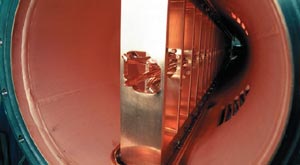
Now a team from the Atomic Spectroscopy And Collisions Using Slow Antiprotons (ASACUSA) experiment and CERN have replaced these foils by a radio-frequency quadrupole decelerator (RFQD). This 4 m-long device can decelerate antiprotons to 10-120 keV. In the tests, the antiprotons passed from the RFQD into a standard multi-ring trap (MRT), as was the case with the earlier work with degrader foils. The trap is filled with an electron gas that helps to cool the antiprotons through thermal exchange, as the electron gas dissipates energy through the emission of synchrotron radiation.
During the tests, around 1.2 x 10⁶ antiprotons per AD shot were stored in the MRT for 10 min or more. This is 50 times higher than the previous best values obtained with degrader foils and corresponds to an antiproton trapping efficiency of about 4%.
One goal of future studies with antihydrogen will be to compare its spectroscopy with hydrogen’s. This will require the antihydrogen atoms to be trapped long enough for precise measurements to be made, which in turn will need very low antihydrogen temperatures, well below 0.5 K. The ATRAP collaboration at the AD has been experimenting with a new way of producing antihydrogen that might result in suitably low temperatures.
Until now, antihydrogen production has been achieved by bringing cooled antiprotons and positrons together in a nested Penning trap structure. The new method consists of exciting caesium atoms from an oven with two lasers, and then introducing the caesium into a positron trap. Excited positronium, a bound state of an electron and a positron, is then formed when a positron collides with a caesium atom and captures an electron. These positronium atoms carry virtually all the 10 meV or so binding energy of the caesium atoms. Finally, a fraction of the excited positronium atoms collide with trapped antiprotons to produce excited antihydrogen atoms with a probability that is expected to be much higher than for ground-state positronium.
The velocity distribution of the resulting excited antihydrogen is expected to be the same as that of the trapped antiprotons from which the antihydrogen forms, which can be made arbitrarily low in principle. Verifying this by directly measuring the antihydrogen velocity has not yet been possible, but if the low antihydrogen energy is confirmed, and if the highly excited states can be de-excited, this technique could become the method of choice for producing cold antihydrogen for precise spectroscopic analysis.
The Relativistic Heavy Ion Collider (RHIC) at the Brookhaven National Laboratory in the US has started colliding beams of copper ions. RHIC, which is actually two concentric rings 4 km in circumference, was built to create collisions between heavy ions, in particular gold. The use of intermediate-size copper nuclei – resulting in energy densities that are not as high as in earlier gold-ion runs, but more than was produced by colliding gold ions with much lighter deuterons – is important to understanding the new phenomena that have been observed in the heavy-ion collisions.
The energy of the gold-gold collisions was predicted to be sufficient to “melt” protons and neutrons to produce a hot “soup” of free quarks and gluons – the quark-gluon plasma. To date, the gold-gold collisions at RHIC have produced some very intriguing data that indicate the presence of a new form of matter – hotter and denser than anything ever produced in a laboratory. However, while some observations fit with what was expected of quark-gluon plasma, others do not.
So there has been considerable debate over whether the hot, dense matter being created at RHIC is indeed the postulated quark-gluon plasma, or perhaps something even more interesting. Data already in hand show that the quarks in the new form of matter appear to interact quite strongly with one another and with the surrounding gluons, rather than floating freely in the “soup” as the theory of quark-gluon plasma had predicted. Many physicists are beginning to use the term “strongly interacting quark-gluon plasma” to express this understandi
ng.
The deuteron-gold collisions do not exhibit the same behaviour, leading to the suggestion that what is seen in the gold-gold collisions is not an intrinsic property of the gold ions themselves, but is indeed created in the collisions. The copper experiments will provide another control that will help in understanding how the new phenomena observed are turned on and off, and when.
The copper-copper run is expected to last for about 10 weeks, but depends on funding for fiscal year 2005.
Tests for an advanced slow stochastic extraction (SSE) scheme have been performed successfully at the U70, the 70 GeV proton synchrotron at the Institute for High Energy Physics (IHEP), Protvino, in the Moscow region. A holder of the record for highest-energy accelerator during the late 1960s, the U70 is still in operation today, and the feasibility tests in November and December 2004 may offer an interesting option for future beams.
The SSE concept was pioneered in 1978 by Simon van der Meer at CERN as a spin-off from his work on stochastic cooling, which led to the conversion of CERN’s Super Proton Synchrotron to a proton-antiproton collider, and a share of the 1984 Nobel Prize in physics for van der Meer. This technique, yielding long and uniform spills, was later successfully used at CERN in the Low Energy Antiproton Ring (LEAR), achieving extraction times of several hours.
Stochastic extraction is a modification of resonant extraction in which particles are moved to the extraction resonance by random kicks from a noisy radiofrequency system. It has the advantage of being immune to unavoidable ripples in the magnetic optics that deteriorate the spill under resonant extraction. This might prove especially useful to a venerable machine like the U70.
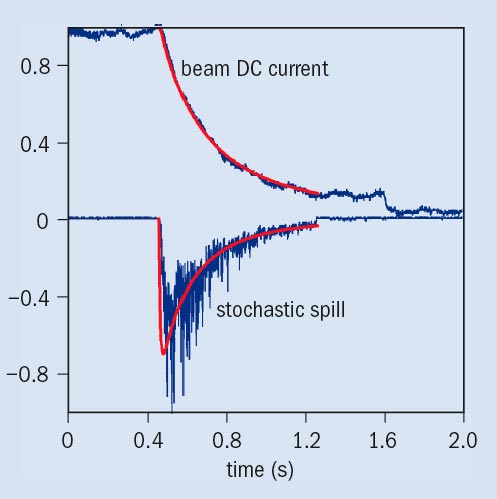
The SSE tests were performed on an ejection plateau at 60 GeV in the U70, with recorded beam and extraction currents as shown in the figure in blue together with the fitted curves in red.
About 90% of the spill is extracted in 0.8 s. The extracted current is not free from AC ripple, but the IHEP engineers are hopeful that they can suppress this in future. The design goal is to obtain ripple-free flat-topped spills lasting 2-3 s or longer.
The tests have been deemed a success and the feasibility of SSE at the U70 has been confirmed by the beam measurements. The scheme promises smoother and longer spills, which will improve the machine’s functionality.
While it is well known that ordinary baryonic matter constitutes only about 5% of the total energy content of the universe, it is probably less commonly appreciated that about half of this “known” matter has never been identified, even in our galaxy’s neighbourhood. Now a high-resolution spectrum from the Chandra X-ray Observatory suggests that the missing matter is in the form of diffuse, hot gas, filling vast regions between galaxies.
Baryons – the three-quark particles such as protons and neutrons – are used to define ordinary matter, because the other known particles are either like pions, too short-lived, or like electrons, too light to contribute significantly to the mass of the universe.
The masses of all astronomical objects that have been identified so far by different means are included in this baryonic mass – in particular, planets, stars of all types and black holes, as well as gas and dust – in other words, all the known constituents of galaxies.
According to cosmologists, however, all this amounts to only about half of the existing baryonic matter in the universe, which is itself only about 5% of the matter-energy content of the universe. The remaining 95% seems to consist of about 25% non-baryonic dark matter (see CERN Courier November 2004 p13 ) and the balance is dark energy (see CERN Courier September 2003 p23 ).
While the nature of dark matter and dark energy remains unknown, Fabrizio Nicastro from the Harvard-Smithsonian Center for Astrophysics and colleagues now claim that they have identified the missing part of baryonic matter. They have evidence that the elusive baryons are in the form of low-density “warm-hot” intergalactic gas, with a temperature of approximately 1 million degrees. The temperature and very low density of the gas have meant that it has previously escaped detection.
The team did not detect emissions from the gas, but rather absorption by the gas of X-ray radiation from an active galaxy along its line of sight. A strong outburst from the relatively nearby blazar Markarian 421 gave the team an opportunity to obtain the best signal-to-noise spectrum ever measured by the Chandra X-ray Observatory.
A detailed analysis of this spectrum revealed the presence of absorption lines that were identified as being those of highly ionized carbon, nitrogen, oxygen and neon: the most abundant nuclei in the universe besides helium and hydrogen.
Nine of a total of 24 absorption lines belong to two separate regions at distances of 150 million and 380 million light-years, as determined from the measured redshifts of the lines z = 0.011 and z = 0.027, respectively. The remaining lines are at a redshift of zero and are therefore associated with gas in our galaxy or in the local group of galaxies.
By assuming that the detected gas has a heavy-element abundance that is one-tenth of that of the Sun, which is typical for intergalactic gas, Nicastro and colleagues were able to extrapolate the total density of baryons along the line of sight to Markarian 421. The result is consistent with the amount of missing baryonic matter and with data from computer simulations.
Indeed, before the detection of this intergalactic gas, simulations of the large-scale structure formation predicted the existence of a warm-hot diffuse gas. This gas, one-millionth of the density of the interstellar medium in our galaxy, is shock-heated by the continuous interaction between galaxies.
The overall baryon content of this warm-hot gas is quite loosely determined by this first measurement, and certainly needs confirmation by similar studies along other lines of sight. Nevertheless, it is an important step on the track towards understanding the make-up of the universe.
Further reading
F Nicastro et al. 2005 Nature433 495.
Author:
Compiled by Marc Türler, INTEGRAL Science Data Centre and Geneva Observatory
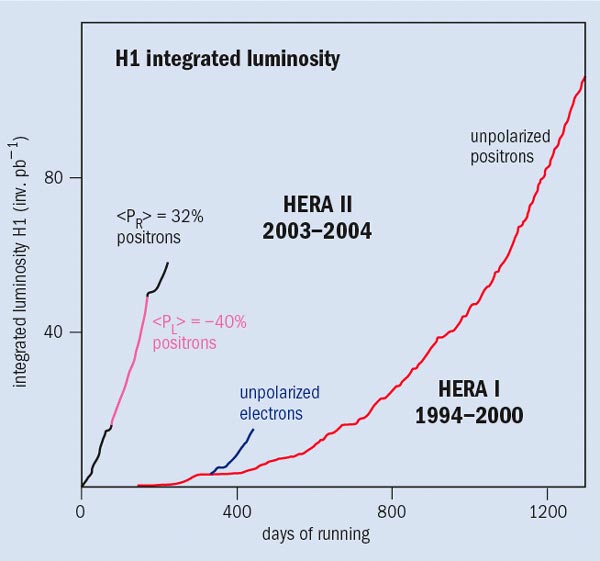
In August 2000 the first phase of operation (Run I) of HERA, DESY’s electron/positron-proton collider, came to a successful conclusion after the machine reached a luminosity of 2 x 1031 cm-2 s-1, surpassing its original design luminosity by 30%. The total luminosity delivered between 1992 and 2000 to the colliding-beam experiments H1 and ZEUS amounted to about 190 pb-1, and electron and positron beams with a longitudinal spin polarization of up to 60% were routinely delivered to the HERMES experiment, which uses a gas target. In addition, proton-nucleus interaction rates as high as 5-20 MHz were provided for the HERA-B experiment. The run enabled the four experiments to publish a large number of results on the strong and electroweak interactions as well as physics beyond the Standard Model.
The objective of the second phase of the HERA programme, Run II, was to operate with a greater luminosity, about four times higher than the design luminosity of Run I. The upgrade began in 2001 and proved challenging in several respects. By October 2004 the collider had completed a year of successful running with positrons and could be switched to electron-proton operation, for the first time since 1999.
The upgrade challenges
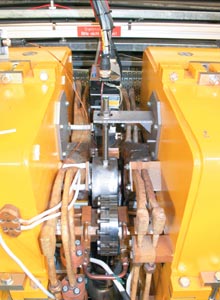
In order to provide the greater luminosity required for Run II, the interaction regions of the colliding-beam experiments had to be rebuilt to reduce the beam cross-section at the collision points by a factor of three, to values of 112 μm x 30 μm. In addition, the interaction regions of H1 and ZEUS were to be equipped with pairs of spin rotators to allow for longitudinally spin-polarized lepton beams in collisions with protons.
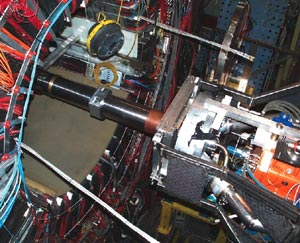
The requirements of the upgrade represented a challenging engineering project. Strong focusing magnets had to be fitted inside the existing detectors – a task made very difficult by the small apertures involved, the limited available space and insufficient access to support points. In addition, new technologies had to be developed in order to improve the interaction regions still further, which had already been optimized during HERA Run I. The technical novelties developed for the upgrade include large-aperture superconducting combined-function magnets with small outer dimensions, which are supported inside the narrow aperture of the colliding beam-detectors. This means that a beam separation closer to the experiments is necessary to achieve stronger focusing.
Moreover, inside the strong magnetic fields of the superconducting magnets, the lepton beam emits high-power synchrotron radiation. This requires a sophisticated vacuum system to handle the large power loads and to provide at the same time the excellent vacuum pressure of 0.1 nanotorr needed around the detectors for tolerable background conditions.
The upgraded components were installed during a shutdown from September 2000 to July 2001, which was followed by a period of technical commissioning and commissioning with beam in the autumn of 2001. The high luminosity that can be achieved in the upgraded configuration was demonstrated soon after the accelerator was restarted. In October 2001, a specific luminosity of Lspec= 1.8 x 1030 mA-2 cm-2 s-1 was reached with a small number of bunches, a value about two-and-a-half times greater than the ones achieved before the upgrade.
Fighting background problems
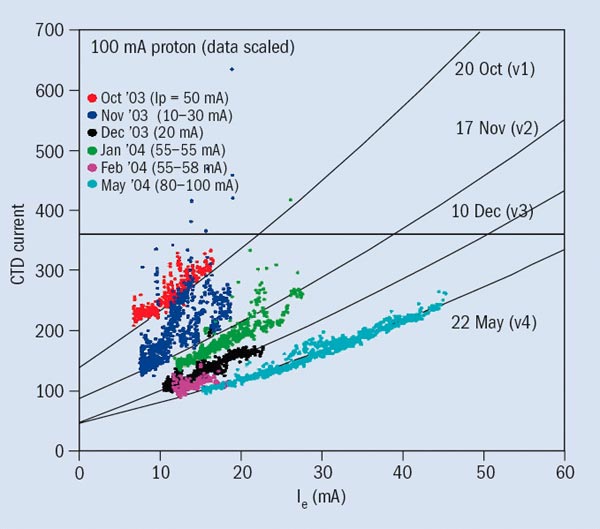
For the collider experiments, H1 and ZEUS, however, it was a different story. It turned out that the backgrounds they saw were larger than expected and this prevented turning on the tracking detectors in H1 and ZEUS. There was even a risk of damaging some detector components close to the beam. This led to considerable joint efforts between the accelerator and experimental groups to explore and to understand the reasons for the high background and to develop appropriate countermeasures. These efforts included detailed Monte Carlo simulations of the background conditions, which were benchmarked with accelerator experiments. This process required a considerable amount of accelerator study time. The results and conclusions were discussed during an international workshop in July 2002 and the improvement programme was presented to an international review committee in January 2003.
This thorough analysis led to the conclusion that the backgrounds generated by protons lost in the interaction-region beam correlated with the poor initial vacuum conditions in the new system in the presence of the positron beam. The vacuum recovery was also slowed down by considerable thermal desorption of synchrotron radiation masks inside the beam pipe close to the experiments. This was due to higher-order mode heating at injection energy when the bunches are short. In addition, in the spring of 2002 it became apparent that the ZEUS detector was also being hit by scattered synchrotron radiation. This was caused by a problem with a mask that was actually designed to shield the detector against it.
These problems limited the intensity during running in 2002, and this in turn allowed only slow recovery and conditioning of the vacuum. However, by the end of 2002 a significant improvement in the vacuum at the interaction region and a corresponding reduction of the proton-induced background had been achieved. This indicated that tolerable background conditions with full beam currents would be possible after further conditioning.
At the same time, the more intricate operational procedures of the upgraded accelerators were consolidated. These include global and local orbit stabilization systems with active feedback, which control the beam orbit to 0.1 mm during injection, acceleration, low-beta squeezing, tuning and luminosity running.
High longitudinal spin polarization of the positron beam was tuned up and measured for the first time simultaneously at all three interactions points during a test run in February 2003. HERA was then able to report the achievement of a world first: the collision of a longitudinally spin-polarized positron beam with high-energy protons.
Before this achievement could be exploited in the physics programme, however, the shutdown period from March to July 2003, which was needed to complete the experimental detector upgrades, was used to improve the synchrotron-radiation masks. The shape of the masks was changed to reduce higher-order mode losses of the beam, the cooling of the masks was improved, and the problem with the mask inside the ZEUS detector was resolved. Furthermore the pumping of the beam pipe inside the H1 detector and in a long beam-pipe section inside one of the magnets was improved to speed up the vacuum conditioning. These measures all achieved the desired effects: the vacuum system recovered quite quickly after the shutdown, the higher-order mode heating was reduced considerably and – most importantly – the problem with scattered synchrotron radiation in the ZEUS detector was completely solved.
High-luminosity operation with protons and positrons started after vacuum conditioning with beam in October 2003. However, beam intensities in November and December were limited by new rules on radiation safety, which required an upgrade of the active machine-protection system. This was accomplished by the end of December 2003. Then, from January 2004, the HERA beam currents were increased steadily and the operating currents previously achieved in 2000, of around 100 mA protons together with 48 mA positrons, were reached.
From January to June 2004, the HERA luminosity was increased from 1.6 x 1031 cm-2 s-1 to 3.8 x 1031 cm-2 s-1, which is twice the value achieved in 2000. At the same time, the longitudinal positron spin polarization was tuned to values up to 50%. By August 2004, a total integrated polarized positron-proton luminosity of 92 pb1 had been delivered to the collider experiments. As a result, all three HERA experiments – H1, ZEUS and HERMES – have successfully taken data in 2004, with interesting first results presented in August 2004 at the International Conference on High Energy Physics in Beijing.
HERA’s luminosity upgrade is nearly complete, and we are now looking at increasing the luminosity again by another 50%. This requires further increasing the beam intensities, and better control of the beam parameters and the specific luminosity. An improvement programme to achieve this goal during 2005 is under way.
The proton background conditions for the experiments steadily improved during the 2004 run. In February 2004, the ZEUS experiment reported excellent background conditions together with large luminosity, and the proton-induced backgrounds in H1 have been demonstrated to be tolerable up to the highest beam intensities. Unfortunately, a number of vacuum leaks in the interaction regions due to a weakness in the design of a flange connection temporarily led to larger vacuum pressure there, resulting in poor background conditions. During a shutdown in August and September 2004, which was required to perform the annual safety tests and some detector repair work, the interaction-region vacuum system was improved further.
After this shutdown, HERA resumed operation with protons and electrons, rather than positrons, for the first time since 1999. To maximize the integrated luminosity of HERA over the coming years, a programme is under way to improve the availability of the components and the overall operational reliability. In addition, a longitudinal broadband damper system is being developed to control coupled bunch instabilities. This will help to control the proton bunch length and will provide a minimum effective transverse beam size so as to maximize luminosity.
The present plan is to continue the electron run until mid-2006, then switch back to positrons and complete the HERA data-taking by mid-2007. The three experiments are ready and eagerly awaiting a large harvest of HERA II data.
To provide the best experiences, we use technologies like cookies to store and/or access device information. Consenting to these technologies will allow us to process data such as browsing behavior or unique IDs on this site. Not consenting or withdrawing consent, may adversely affect certain features and functions.
Functional
Always active
The technical storage or access is strictly necessary for the legitimate purpose of enabling the use of a specific service explicitly requested by the subscriber or user, or for the sole purpose of carrying out the transmission of a communication over an electronic communications network.
Preferences
The technical storage or access is necessary for the legitimate purpose of storing preferences that are not requested by the subscriber or user.
Statistics
The technical storage or access that is used exclusively for statistical purposes.The technical storage or access that is used exclusively for anonymous statistical purposes. Without a subpoena, voluntary compliance on the part of your Internet Service Provider, or additional records from a third party, information stored or retrieved for this purpose alone cannot usually be used to identify you.
Marketing
The technical storage or access is required to create user profiles to send advertising, or to track the user on a website or across several websites for similar marketing purposes.