Comsol -leaderboard other pages

Topics

Network boosts progress in therapy with light ions

Le réseau ENLIGHT dynamise la thérapie par ions légers

ENLIGHT, Réseau européen de recherche sur la thérapie par les ions légers, a récemment tenu sa dernière réunion. Financé par l’UE pendant trois ans, le réseau avait pour mission de coordonner les recherches menées en Europe sur l’utilisation des faisceaux d’ions légers (hadrons) en radiothérapie. La réunion a fait ressortir les avancées dans ce domaine et le rôle-clé qu’a joué le réseau en rapprochant différents centres européens pour promouvoir la thérapie hadronique, en particulier à l’aide d’ions carbone.

The European Network for Research in Light Ion Therapy (ENLIGHT), which had its inaugural meeting at CERN in February 2002, was established to coordinate European efforts in using light ion beams for radiation therapy. Funded by the European Commission for three years, the network was formed from a collaboration of European centres, institutions and scientists involved in research, and in the advancement and realization of hadron-therapy facilities in Europe (see CERN Courier May 2002 p29). The final meeting took place in June in Oropa, an ancient sanctuary in the Italian Alps. Organized by the Italian foundation for hadron therapy, Fondazione per Adroterapia Oncologica (TERA), it was chaired by Ugo Amaldi, whose promotion of hadron-therapy facilities is highly valued and widely recognized.

The meeting went beyond providing a mere platform for discussion for the 100 scientists in ENLIGHT. Following immediately after the 10th Workshop on Heavy Charged Particles in Biology and Medicine (HCPBM), it became an international gathering for clinicians, radiobiologists, physicists and engineers, and provided an opportunity to demonstrate the latest developments in hadron therapy. There were presentations and discussions on the key areas outlined in the EU project: epidemiology and patient selection; clinical trials; radiation biology; beam delivery and dosimetry of ion beams; imaging; and the economics of hadron-therapy treatment.

Researchers already know that hadrons are an important alternative to photons for radiation therapy. Conventional radiation therapy with photon beams is characterized by energy release that decreases steeply after a maximum at a depth of 2-3 cm for typical beams. Hadrons, by contrast, release the highest density of energy at the end of their path. Therefore a beam of protons or light ions allows a highly tailored treatment of deep-seated tumours with millimetre accuracy, minimally damaging surrounding tissue.

ENLIGHT has been instrumental in bringing together different European centres to promote hadron therapy, in particular with carbon ions; to establish international discussions comparing the respective advantages of intensity-modulated radiation treatment (IMRT) with X-rays, proton and carbon therapies; and to address the ancillary equipment and methods necessary for such therapies. These efforts have included a study to compare the clinical data for proton therapy (at the Centre de Protontherapie, Orsay) and carbon-ion therapy (GSI) for certain types of tumour (chordomas and chondrosarcomas) at the base of the skull.

Carbon-ion therapy

Clinical trials are conducted for a specific tumour type and location to identify the total amount of dose to be delivered, the optimal number of fractions and the possible combination with other treatments. (Fractions are the number of radiation treatments in which the total required dose is delivered). Experience gained from clinical results obtained with carbon ions at the Heavy Ion Medical Accelerator in Chiba (HIMAC) in Japan and at GSI shows that these particles are very effective at treating tumours as they produce irreparable neighbouring multiple-strand breaks in the double helix of DNA, mainly in the region of the tumour cells; furthermore, post-treatment survival rates are improved.

A group of clinicians from HIMAC presented some remarkable results at the meeting. They conducted trials on “non-small” lung cancers in which the number of fractions was decreased from 16 to 4; for small lung and liver cancers, treatments are carried out in only one or two irradiation sessions; prostate cancer is treated in fewer than 20 sessions, while approximately 30 are needed for proton therapy and 40 for conventional radiotherapy. In the Japanese carbon-ion facility the average number of fractions is reduced to 13, less than half of what is needed for proton or traditional radiotherapy treatment. This simultaneously decreases the patient’s discomfort, increases the number of patients that can be treated per year and lowers the cost of the total treatment.

With two new hadron-therapy centres soon to become operational in Heidelberg and Pavia, analysing the cost of ion therapy versus traditional treatment is an important issue. A session of the meeting was devoted to discussing the economic aspects of facilities and treatments, with several European estimates indicating the cost of a hadron-therapy centre to be in the order of €100 million. A study carried out at the German cancer research centre, Deutsches Krebsforschungszentrum (DKFZ), has compared the treatment cost of chordoma at the base of the skull, in which surgical removal is followed by conventional radiotherapy or carbon-ion radiotherapy. A primary 20-fraction treatment with carbon ions has an estimated cost of €20,000-25,000, more than primary conventional radiotherapy. However, hadron therapy becomes more cost-effective in the long term, as it makes recurring tumours less likely. Furthermore, the cost of carbon-ion therapy could decrease if there are fewer fractions.

The meeting also looked at the principles of treatment optimization and planning. The centre at PSI in Villigen has studied treatment planning for intensity-modulated proton treatment (IMPT), in which three or four fields with complex particle fluences combine to create a uniform dose in the treatment volume. In this way, it is possible to optimize the sparing of healthy tissue. A similar project is under study for carbon ions at GSI.

Studies are under way to investigate the implementation of online positron emission tomography (PET) imaging in carbon-ion facilities. The technique uses the positrons emitted by the nuclear fragments of the treatment beam and the imaging systems of the conventional PET. It offers a non-invasive method for comparing in situ the planned dose and the dose delivered. The data can be used to correct and redesign planning for subsequent treatment fractions. Work on online PET in proton therapy was also presented.

The meeting also learned of a project that compares the dose distribution achieved with X-rays, protons and carbon ions. The treatment-plan systems available for IMRT – passive scattering and spot scanning for proton beams, and raster scanning for carbon ion beams – are being used to compare the effectiveness of the different radiations in delivering the dose to the target volume while sparing the organs at risk. When implemented, this could become a fundamental daily reference tool for radiotherapists and oncologists.

Facilities for the future

There are a variety of facilities with highly specialized beams available for studying specific radiobiological aspects in Europe that could be more usefully organized on a wider basis. This was discussed during the meeting, with proposals ranging from identifying a single European facility for studying radiobiology in hadron therapy to the creation of a European network of existing and new facilities. In both cases, the EU framework programmes are seen as potential funding sources, with a common European “Experiments Committee” to approve experiments and allocate beam time.

In the ENLIGHT network the characteristics of synchrotron-based hadron-therapy centres have been studied to optimize designs for a possible second-generation hadron-therapy facility. The work has involved the optimization of injection and extraction systems, the beam diagnostic, monitoring of the treatment, and the dosimetry.

In the final session, the role and effect of the ENLIGHT initiative and future perspectives were discussed. It was acknowledged that the network has certainly succeeded in focusing the attention of European countries on the importance of hadrons in cancer treatment. Four national centres have been approved: Heidelberg Ion Therapy (HIT); the Centro Nazionale di Adroterapia Oncologica (CNAO) in Pavia; MedAustron in Wiener Neustadt; and ETOILE in Lyon. There is an increasing interest in further initiatives and more countries are expressing interest in creating national projects, in particular Sweden, the Netherlands, Belgium, Spain and the UK.

Interest in the industry is increasing rapidly. Several companies with experience in proton accelerators are preparing to launch carbon-therapy machines on the market. For example, Roberto Petronzio, president of the Istituto Nazionale di Fisica Nucleare (INFN), announced an agreement between INFN, Ansaldo Superconduttori and ACCEL to develop and launch a 250 MeV/u superconducting cyclotron suitable for protons and carbon ions (see CERN Courier September 2005 p9).

The interest in carbon-ion therapy is also crossing the Atlantic back to the US, where the initial pioneering studies using hadrons began more than 50 years ago at Lawrence Berkeley Laboratory. Although the most recent facilities installed in the US are based on proton accelerators, there is growing interest in using heavier ions, and building dual systems for both proton and carbon ions is becoming more likely.

A major success of ENLIGHT has been the creation of a multidisciplinary platform, uniting traditionally separate communities so that clinicians, physicists, biologists and engineers with experience in carbon ions and protons work together. It was unanimously acknowledged that ENLIGHT has been a key catalyst in building a European platform and pushing hadron therapy forward. Discussions are under way to continue this fruitful network, as it is felt that ENLIGHT is a crucial ingredient for progress and therefore should be maintained and broadened.

• ENLIGHT consists of the following members: the European Society for Therapeutic Radiology and Oncology (ESTRO); CERN; the European Organisation for Research and Treatment of Cancer (EORTC); GSI; the Deutsches Krebsforschungszentrum (DKFZ); the Fondazione per Adroterapia Oncologica (TERA); the Karolinska Institutet; the ETOILE project; the Forschungszentrum Rossendorf (FZR), Dresden; the Hospital Virgen de la Macarena, Sevilla; and Charles University, Prague.
Pomerons return to Blois

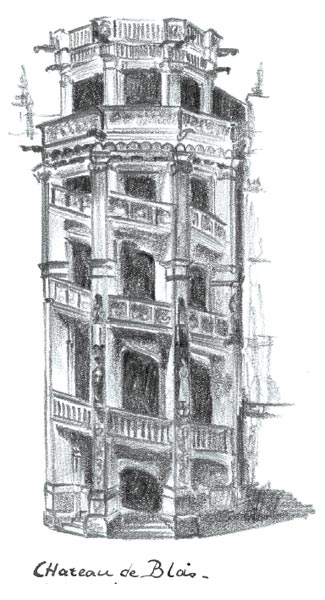
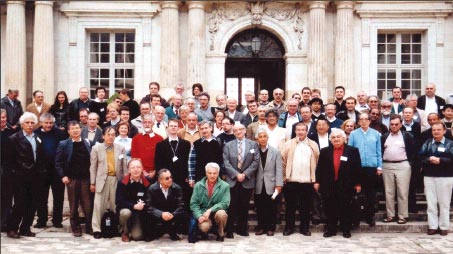
Twenty years ago the first “Blois Workshop” was organized by Basarab Nicolescu of the University Paris VI and Jean Tran Thanh Van of the University Paris Sud in the historic Château de Blois. Now, the 11th conference in this international biannual series focusing on elastic scattering and diffraction returned to Blois on 15-21 May 2005. Organized by the original team plus Maurice Haguenauer of the Ecole Polytechnique, it set the scene for future high-energy studies in this field.

CCEblo1_10-05

Blois Workshops have taken place all over the world, and the meeting is now a scientific forum for researchers trying to unravel the foundations of elastic scattering and diffraction from first principles in quantum chromodynamics (QCD). Originally a rather specialized field, this has moved towards the centre of high-energy QCD studies. This is particularly because measurements at HERA and Fermilab show that diffractive events, where a scattered proton remains intact in a high-energy inelastic collision, constitute a surprisingly high proportion of the entire rate. Recent measurements from the ZEUS and H1 detectors at HERA show that approximately 10% of the deep inelastic lepton-proton scattering cross-section is diffractive.

High-energy elastic and diffractive scattering is traditionally explained in Regge theory as a result of pomeron exchange. Here the system exchanged between projectile and target carries the quantum numbers of the vacuum. Events with large gaps in the rapidity distribution occur even in hard collisions involving very high momentum transfers. Such “hard diffraction” has now become firmly established, initially at the Intersecting Storage Rings (ISR) and Super Proton Synchrotron (SPS) at CERN in proton and antiproton collisions, and now most clearly at HERA in positron-proton collisions, and in proton-proton collisions at the Relativistic Heavy Ion Collider (RHIC) at Brookhaven and the Tevatron at Fermilab.

With the advent of QCD, hard diffraction became attributed to the exchange of two or more gluons with net zero colour, and these processes are now an important observable for understanding fundamental aspects of the strong interactions. At the conference, Peter Landshoff from Cambridge and Sandy Donnachie from Manchester reviewed the apparent dichotomy between the soft and hard aspects of pomeron exchange and the phenomenological manifestations, such as the remarkable growth with energy of the cross-section for hard diffractive electroproduction of vector mesons. Theorists are beginning to develop formalisms that encompass the transition between hadron and quark-gluon degrees of freedom and the duality between the two descriptions.

QCD also predicts the existence of a C-odd three-gluon exchange, which through interference with the pomeron exchange leads to remarkable charge asymmetries in diffractive reactions.

CCEblo2_10-05

One interesting nuclear diffractive phenomenon is the demonstration of QCD “colour transparency” by the E791 fixed-target experiment at Fermilab, which measured the diffractive dissociation of a high-energy 500 GeV/c pion into two high-transverse-momentum jets while leaving the target nucleus intact. The experiment confirmed the remarkable prediction, based on the gauge interactions of QCD, that the small quark-antiquark Fock component of the pion projectile interacts coherently on every nucleon in the nucleus without absorption or energy loss, in dramatic contrast with traditional Glauber theory. The diffractive dijet experiment also provides crucial information on the quark-antiquark wavefunction of the pion. Other diffractive experiments that explore the structure of the photon are now in progress at HERA.

Contrary to parton-model expectations, the rescattering of the quarks with the spectator constituents shortly after the nucleon has been struck by the lepton critically affects the final state in deep inelastic scattering (DIS). The rescattering of the struck quark from gluon exchange generates dominantly imaginary diffractive amplitudes. This gives rise to a dijet effective “hard pomeron” exchange – a rapidity gap between the target and the diffractive system – while leaving the target intact. The diffractive cross-section measured in diffractive deep inelastic scattering can be interpreted in terms of the quark and gluon constituents of an effective pomeron as in the model by Gunnar Ingelman and Peter Schlein. Since the gluon exchange occurs after the interaction of the lepton current, the pomeron cannot be considered a pre-existing constituent of the target proton. The rescattering contributions to the DIS structure functions are not included in the target proton’s wavefunctions computed in isolation, and cannot be interpreted as parton probabilities. The resulting gluon exchange matches closely the phenomenology of the soft colour interaction model. Gluon exchange in the final state also leads to Bjorken-scaling the Sivers single-spin asymmetry, a T-odd correlation between the spin of the target proton and the production plane of a produced hadron or quark jet.

The connections between diffraction and coherent effects in nuclei such as shadowing and anti-shadowing are also now being understood. Diffractive deep inelastic scattering on a nucleon leads to nuclear shadowing at leading twist as a result of the destructive interference of multistep processes within the nucleus. In addition, multistep processes involving Reggeon exchange lead to anti-shadowing. In fact, since Reggeon couplings are flavour-specific, anti-shadowing is predicted to be non-universal, depending on the type of current and even the polarization of the probes in nuclear DIS.

Saturation under focus

A central focus of the 2005 Blois conference was the physics of “saturation”, a QCD phenomenon that limits particle production when the underlying gluonic scattering subprocesses significantly overlap in space and time. At very high energies, the gluon density is so high that two scatterings have the same probability as one. The theory of saturation is based on the Balitsky-Kovchegov equation and its extensions, and has analogues with stochastic methods used in other areas of statistical physics. The effects of saturation can be observed in the small-x, high-energy domain of deep inelastic lepton scattering at HERA, thus providing a window into nonlinear aspects of QCD.

The theory of saturation predicts a parameterization of the HERA data (“geometrical scaling”) that gives a remarkably good description of the deep inelastic structure functions at small-x in terms of a single scaling variable. The high occupation number of gluons can even lead to the formation of a “colour glass condensate”, which may be causing a decrease of particle creation at forward rapidities in heavy-ion collisions at RHIC.

The nonlinear gluon interactions of QCD also underlie the physics of the hard Balitsky-Fadin-Lipatov-Kuraev pomeron, which is postulated to control the energy dependence of hard reactions, as well as the distribution of particle production at very small values of x and extreme values of rapidity.

Remarkably, Juan Maldacena’s “anti-de-Sitter-/conformal-field-theory (AdS/CFT) duality” between conformal gauge field theory and string theory in 10 dimensions has begun to make an impact on QCD studies. The mapping of quark and gluon physics onto the fifth dimension of anti-de Sitter space is providing insight into the gluonium spectrum that controls the pomeron trajectory and light-quark hadron spectroscopy. Moreover, it explains the success of QCD counting rules for hard elastic scattering reactions using the methods of Joseph Pochinsky and Matt Strassler.

The AdS/CFT correspondence also explains the dominance of the quark interchange mechanism in hard exclusive reactions, and gives a model for the basic light-front wavefunctions of hadrons that incorporates conformal scaling at short distance and colour confinement at large distances. Lattice gauge theory is also making an impact on the QCD physics of high-energy collisions.

Much of the phenomenological work in pomeron physics was pioneered by loyal participants in the Blois conference series. Many of the original participants of the first Blois Workshop attended the 20th anniversary conference and presented their current work. While the discussions at the first Blois Workshop centred on results from the ISR at CERN and the first data from the SPS as a proton-antiproton collider (with predictions for the Tevatron and Superconducting Super Collider projects), the XIth International Conference had speakers reporting the latest experimental results from the Tevatron, from polarized proton-proton (and proton-carbon) experiments using fixed and jet targets at RHIC, and from HERA at DESY. HERA II running has started and a significant and welcome statistical increase in diffraction data is expected before the machine closes down in 2007.

The experimental efforts under way regarding forward physics at the Large Hadron Collider (LHC) at CERN were extensively discussed; the large increase in reach in x and Q2 in proton-proton and nucleus-nucleus collisions will provide significant tests and advances for QCD-inspired diffraction phenomenology and calculations. There was also speculation that the Froissart bound for the total proton-proton cross-section will be saturated at the LHC, with its value controlled not by pion exchange but by the exchange of the lightest glueball, as originally predicted by Nicolescu. An exciting possibility for the future is observing the Higgs boson in doubly tagged diffractive collisions pp → p + H + p at the LHC; the Higgs would be found as a peak in the missing mass spectrum, rather than in a specific decay channel.

A number of presentations addressed existing and new cosmic-ray detector arrays, where the discrepancy above the Greisen-Zatsepin-Kuzmin cut-off between the excess in the Akena Giant Air Shower Array (AGASA) and the fall-off in the High Resolution Fly’s Eye (HiRes) experiment continues to generate interest. Some proposals for very forward instrumentation at the LHC are dedicated to providing benchmarks for simulations of cosmic-ray shower initiation: the Centauro and Strange Object Research (CASTOR) detector in TOTEM/CMS for forward electromagnetic showers, and in the proposed LHCf for the measurement of forward π0s. Zero-degree neutron calorimeters, which are operating successfully in the experiments at RHIC, will have counterparts in the heavy-ion programme at the LHC, but would also be very useful and complementary tools in the measurement of diffraction in proton-proton collisions.

The diffractive production of vector mesons and single hard photons at HERA provides a way to select and determine different generalized parton distributions (GPDs), the quantum-mechanical parton wavefunctions, of the proton. Early results from HERMES and from the H1 and ZEUS experiments seem to be in close agreement with current GPD models. A number of talks discussed the physics of other exclusive diffractive reactions such as two-photon collisions, which are sensitive to the vector meson distribution amplitudes as well as the exchange mechanism. Double-charm production, an indication of an intrinsic heavy-charm component in the proton wavefunction, was demonstrated by the SELEX experiment at Fermilab. The production of pentaquarks and other exotic quark bound states was reviewed with the conclusion that the situation is still very confused, with seemingly contradictory results.

At this anniversary, a number of overviews were presented surveying the progress in diffractive physics, both experimentally and theoretically, made over the past 20 years. Alan Krisch of Michigan told the story of his pioneering measurements of hadronic spin effects, and the extraordinarily large spin correlations that were discovered in large-angle elastic proton-proton scattering and that are still only partially understood. Konstantin Goulianos of Rockefeller University gave an overview of diffraction, both soft and hard, as measured at the Tevatron and its connection to results from HERA. Gunnar Ingelman of Uppsala presented the enormous evolution in understanding of hard diffraction since it was first observed by UA8 at CERN’s proton-antiproton collider.

The overall atmosphere of the conference was one of expectation: for the data from the new runs that have started at the Tevatron and at HERA II, and from the LHC which will start running around the time of the next Blois conference. Indeed, the next two meetings may well see significant progress in the understanding of both soft and hard diffraction.

When physics needs the public

Decision-making in high-energy elementary particle-physics research is usually highly technical, sometimes political, and often very passionate. And now, in the 21st century, scientists have come to realize that the public not only has the right to know what science we do, but should also be involved in many decisions of that scientific work. This is precisely what the particle-physics community has set out to accomplish with the design process and creation of the world’s next big particle accelerator.

CCEvie1_10-05

Outside of space exploration, it is sometimes assumed that large populations are not interested in science, but the International Linear Collider (ILC) is an accelerator that will collide particles of matter and antimatter to help solve some of the true mysteries of the quantum universe. So how can the public be involved in the design of such a complex facility?

In August, I was among the nearly 700 participants in the 2005 International Linear Collider Physics and Detector Workshop held in Snowmass, Colorado. A number of my colleagues around the world engaged in the global design effort have been studying the technical issues and understanding the limitations of the proposed facility for some years. Now, in addition to the physics, a communications group is focusing on how this facility will affect the public when completed, and how physicists should communicate our work to decision-makers and the public.

In many scientific disciplines, the research community often communicates to the public on laboratory experiments by reporting the benefits after the designs are completed, during the building of the apparatus (if any), and after the research results are assembled. For the ILC project, communication was a high priority from the very beginning. At the ILC workshop, Judy Jackson of the Fermilab Office of Public Affairs and a member of the ILC Communication Group invited Douglas Sarno, head of The Perspectives Group, Inc. of Alexandria, Virginia, to lead a seminar on the public-participation process.

At the seminar, Sarno instructed us on elements of the process: identify members of the public and the “stakeholders”; examine and include the public values; and seek input from all sides when issues arise. He helped us recognize the benefits of this effort in general, and showed how real participation in the process leads to decisions.

There can be a range of participation in this process, from minimal participation where the public is informed only of the general scientific goals and information, to the other end of the spectrum where the final decision on the project implementation is in the hands of the public. The former can be accomplished by reading materials, websites, public lectures and personal contacts, while the latter might additionally require ballots, elections, citizen referendums or chief-executive initiatives. For the ILC, the specifics of the ideal public-participation process lie somewhere in between, and of course input from the public is required to find the right level. When we think about access to materials, land use, ecology and economic impacts due to the resources that are required, large scientific projects are never isolated from the public.

I am now convinced that the ILC project will benefit from a high level of public participation. Because of the very long tradition of international participation in particle-physics research, and the international character of this project, the public-participation process should include all the countries and regions contributing to the project, taking into account the role of local communities. I believe our discussion helped those participating in this seminar gain a broader view of how the decisions concerning the ILC might include a public perspective, independent of region.

However, the ILC is a complex facility and the science that motivates the need for this facility is equally complex, which of course means that decisions are multifaceted and interwoven primarily with physics issues. Nevertheless, a host of other considerations and opportunities will include resource and design issues, communication, organization, a construction timeframe, the world-community effort and – usually before any actions – a decision. The level at which the public is included in this decision process could also be viewed as a complex question.

My experience in public communication leads me to conclude that involving the public early in the design and description of our scientific research, and continuing that involvement, is crucial to an effective partnership between the public and the scientific proponents of our research. Although it is a noble goal to teach particle physics to the public and government leaders, this may not always be necessary. It is important to convey the excitement and the impact of the ILC project on society, and to earnestly listen to the response of policy-makers and members of the public about all of our science. It is vital to gain and sustain the trust of the public, so that the inevitable changes in this research project will be embraced and perhaps even understood as a regular component of fundamental research.

Pulsed Power

by Gennady A Mesyats, Springer. Hardback ISBN 0306486539, 7227 (£157, $249).

978-0-306-48654-8

Meysat provides an in-depth coverage of the generation of pulsed electric power, electron and ion beams, and various types of pulsed electromagnetic radiation, with a wide range of methods for producing up to 1014 W of power for pulse durations from 10-10 to 10-7 s. The physics of pulsed electrical discharges, properties of coaxial lines, spark gap switches, various plasma and semiconductor switches and their use in pulse generators are covered, as well as the production of high-power pulsed electron and ion beams, X-rays, laser beams and microwaves.

Foundations of Modern Cosmology (Second Edition)

by John F Hawley and Katherine A Holcomb, Oxford University Press. Hardback ISBN 9780198530961, £33.99.

51tnWAdloRL._SX375_BO1,204,203,200_

The new edition of this thorough, descriptive introduction to the physical basis for modern cosmological theory includes the latest observational results and provides the background material necessary to understand their implications, with a special focus on the concordance model. Emphasis is given to the scientific framework for cosmology, beginning with the historical background and leading to an in-depth discussion of the Big Bang theory and the physics of the early universe.

Quaternions, algèbre de Clifford et physique relativiste

par Patrick R Girard, Presses Polytechniques et universitaires romandes. Broché ISBN 288074606X, 68CHF (€45.50).

978-2-88074-606-3

Ce livre propose une introduction pédagogique à ce nouveau calcul, à partir du groupe des quaternions, avec des applications principalement dans les domaines de le relativité restreinte, de l’eacutelectromagn&eacutetisme classique et de la relativité geacuteneacuterale. C’est le premier ouvrage sur le sujet reacutedigé en langue française depuis près de 30 ans. Il s’adresse aux eacutetudiants, professeurs et chercheurs en physique et en sciences de l’ingeacutenieur.

Meacutethodes quantiques: Champs, N-corps, diffusion

par Constantin Piron, Presses Polytechniques et universitaires romandes. Broché ISBN 2880746116, 42CHF (7euro28).

71RdxWUJz2L

Cet ouvrage constitue une introduction à la theacuteorie des champs quantiques très diffeacuterente des exposeacutes habituels le plus souvent formels. Reacutedigé par l’un des speacutecialistes francophones en la matière, il est particulièrement clair et didactique, illustré de nombreux exemples et exercices corrigeacutes.

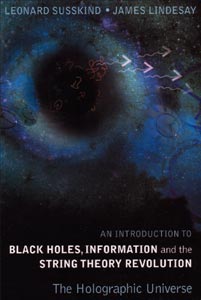
An Introduction to Black Holes, Information and the String Theory Revolution: The Holographic Universe

by Leonard Susskind and James Lindesay, World Scientific. Hardback ISBN 9812560831, £17 ($28). Paperback ISBN 9812561315, £9 ($14).

Black holes have attracted the imagination of the public and of professional astronomers for quite some time. The astrophysical phenomena associated with them are truly spectacular. They seem to be ubiquitous in the centre of galaxies, and they are believed to be the power engines behind quasars. There is little doubt of their existence as astronomical objects, but this very existence poses deep and unresolved paradoxes in the context of quantum mechanics when one tries to understand the quantum properties of the gravitational field.

CCEboo1_10-05

For many readers, the title of this book may sound odd because the contents have little to do with the astrophysical or observational properties of black holes. If you look for nice pictures of galaxy centres and gamma-ray bursts, you will find none. If, however, you are looking for the deep paradoxes in our understanding of quantum-field theory in nontrivial gravitational environments, and the riddles encountered when trying to harness the gravitational force within the quantum framework, then you will find plenty.

At the end of the 19th century, Max Planck was confronted with serious paradoxes and apparent contradictions between statistical thermodynamics and Maxwell’s electromagnetic theory. The resolution of the puzzle brought the quantum revolution. When Albert Einstein asked himself what someone would observe when travelling at the same speed as a light beam, the answer revealed a fundamental contradiction between Newtonian mechanics and electromagnetic theory.

The resolution of these problems led to the relativity revolution, first with special and then general relativity. Sometimes experiment itself is not the only way towards progress in our understanding of nature. Conceptual paradoxes often provide the way to a deeper view of the world.
In the 1960s, largely due to Roger Penrose and Steven Hawking, it became understood that under very general conditions, very massive objects would undergo gravitational collapse. The end state would be a singularity of infinite curvature in space-time shrouded by an event horizon – the last light surface that did not manage to leave the region. The horizon is a profoundly non-local property of a black hole that cannot be detected by local measurements of an unaware, infalling observer.

Classically, black holes were supposed to be black. However, in the early 1970s Jacob Bekenstein and Hawking showed that black holes must necessarily have very unsettling properties. As Bekenstein argued, if the second law of thermodynamics is supposed to hold, then an intrinsic entropy must be assigned to a black hole. Since entropy measures the logarithm of the number of available states for a given equilibrium state, it is logical to ask what these states are and where they came from.The entropy in this case is proportional to the area of the black-hole horizon measured in Planck units (a Planck unit of length is 10-33 cm). This is vastly different from the behaviour of ordinary quantum-field theoretic systems.

Meanwhile, Hawking showed that if one considers the presence of a black hole in the context of quantum-field theory, it radiates thermally with a temperature inversely proportional to its mass, so the hole is not black after all. If the radiation is truly thermal, this raises a fundamental paradox, as Hawking realized. Imagine that we generate a gravitational collapse from an initial state that is a pure state quantum-mechanically. Since thermal radiation cannot encode quantum correlations, once the black hole fully evaporates it carries with it all the subtle correlations contained in a pure quantum state. Hence the very process of evaporation leads to the loss of quantum coherence and unitary time evolution, two basic features of quantum-mechanical laws.

These puzzles were formulated nearly 30 years ago and they still haunt the theory community. It was, nevertheless, realized that resolving these puzzles requires deep changes in our understanding of both quantum mechanics and general relativity, and also a profound modification of the sacrosanct principle of locality in quantum-field theory.

This book is precisely dedicated to explaining what we have learned about these puzzles and their proposed solutions. Assuming that some of the basic features of quantum mechanics (such as unitary evolution) and general relativity (such as the consistency of different observers’ observations, no matter how different they may be) do indeed hold, the authors analyse the conceptual changes that are required to accommodate strange phenomena such as black-hole evaporation.

In the process, they masterfully present a whole host of subjects including quantum-field theory in curved spaces; the Unruh effect and states; the Rindler vacua; the black-hole complementarity principle; holography; the Maldacena conjecture and the role of string theory in the whole affair; the notion of information in quantum systems; the no-cloning theorem for quantum states; and the general concept of entropy bounds.

A remarkable feature of this book is that relatively little specialized knowledge is required from the reader; a cursory acquaintance with quantum mechanics and relativity is sufficient. This is impressive, given that the authors cover some of the hottest topics in current research.

The technical demands are low, but conceptually the book is truly challenging. It makes us think about many ideas we take for granted and shakes the foundations of our understanding of basic physics. It provides a rollercoaster ride into the treacherous and largely uncharted land of quantum gravity. This book is highly recommended for those interested in these fascinating topics.

The authors end with the sentence: “At the time of the writing of this book there are no good ideas about the quantum world behind the horizon. Nor for that matter is there any good idea of how to connect the new paradigm of quantum gravity to cosmology. Hopefully our next book will have more to say about this.” We hope so too.

Fermilab’s Recycler beams take electron cooling to new heights

After 10 years of preparation, a team at Fermilab has achieved electron cooling at high energy. On 9 July, on the first attempt, the Electron Cooling Group observed the interaction between an 8 GeV antiproton beam and an electron beam travelling at the same speed. Although commissioning will take another couple of months, accelerator experts have already begun to use the electron-cooling system to reduce the size of antiproton beams prior to their injection into the Tevatron proton-antiproton collider. Ultimately, they hope that electron cooling will increase the collider’s luminosity by 50-100%.

CCEnew1_09-05

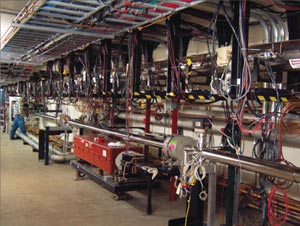
Electron cooling, first proposed by Gersh Budker in 1966, is a proven method at low energies, but Fermilab, funded by the Office of Science of the US Department of Energy, is the first laboratory to extend the method to relativistic beam energies. The higher-energy system has been developed at Fermilab under the leadership of Sergei Nagaitsev, who joined the laboratory in 1995. Installation of the system in the Recycler storage ring, which stores and cools antiprotons, began in August 2004.

Constructed in the late 1990s, the Recycler is 3.3 km in circumference and uses permanent magnets to store antiprotons at 8 GeV. The new electron-cooling system mainly reduces the longitudinal emittance of the beam by “mixing” the antiprotons with a continuous 4.3 MeV beam of electrons, which are provided by a Pelletron accelerator adjacent to the ring. The electron beam, with a current of up to 0.5 A and power of up to 2 MW, travels for approximately 20 m along the same path as the antiprotons, and is then sent back to the Pelletron for recirculation. The electrons interact with the antiprotons, cooling the beam and reducing the spread in longitudinal momentum: antiprotons travelling too fast are slowed down as they bump into electrons, and slow antiprotons are sped up as they are hit by faster electrons.

A stochastic-cooling system, based on the principle invented by Simon van der Meer at CERN in 1972, already reduces the transverse emittance of the Recycler’s antiproton beam. With the start-up of the electron-cooling system, it is the first time that two beam-cooling systems have been used concurrently, according to Nagaitsev, and that electron cooling has been used to improve beams for a collider.

KamLAND detects geoneutrinos

The Kamioka liquid-scintillator antineutrino detector (KamLAND) has made the first observation of “geoneutrinos”. This comes just over 50 years since George Gamow, in a letter to Fred Reines in 1953, pointed out the possibility of detecting antineutrinos of terrestrial origin. KamLAND, which has already confirmed neutrino oscillations by detecting antineutrinos emitted from nuclear reactors, has opened up a new window of research, exploring the deep interior of the Earth by detecting geoneutrinos.

CCEnew2_09-05

Geoneutrinos are created in the beta decays of radioactive isotopes in the Earth. The current geochemical and geophysical models suggest that the radiogenic power from the 238U and 232Th decay chains is 16 TW, approximately half the total measured heat-dissipation rate from the Earth. This heat helps to drive convective flows in the mantle and the outer core, resulting in plate tectonics, volcanism and terrestrial magnetism. Thus radiogenic heat is a key factor in understanding the Earth’s dynamics, formation and evolution. However, since geophysicists have never had a direct way to determine how uranium and thorium are distributed in the Earth’s interior, measuring their concentration inside the Earth sheds new light on geophysics.

CCEnew3_09-05

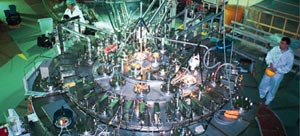
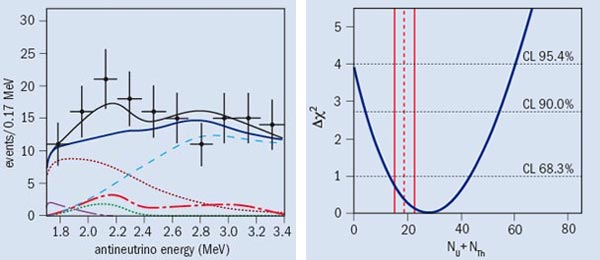
KamLAND consists of about 1 kt of liquid scintillator, located in the Kamioka mine in Japan. It can detect geoneutrinos from the 238U and 232Th decay chains through an inverse beta-decay process with a threshold energy of 1.8 MeV. Using data collected between 9 March 2002 and 30 October 2004 with a detector live-time of 749 days, 25 geoneutrino events were obtained after subtracting the number of expected background events, mostly from reactor antineutrinos. Combining the event rate and energy spectrum of candidates yields between 4.5 and 54.2 geoneutrinos, with a central value of 28 at the 90% confidence interval (see figures). This assumes a Th:U mass ratio of 3.9, the value derived from chondritic meteorites and commonly understood to be the same for all materials in the solar system.

The result is consistent with the central value of 19 predicted by a geological model, and constrains the flux of geoneutrinos from uranium and thorium to less than 1.62 × 107 cm−2 s−-1 at 99% confidence limits. Although the present data have limited statistical power, they nevertheless directly provide an upper limit of 60 TW for the radiogenic power of uranium and thorium in the Earth.

These investigations should pave the way to more accurate measurements, which may develop into a new field of neutrino geophysics. There is a programme currently under way to reduce the radioactive content of the KamLAND detector, but further background reduction will require a new detector location, far away from nuclear reactors. In the future, a worldwide network of geoneutrino detectors would allow the production of a tomographic image of the radiogenic heat distribution.

bright-rec iop pub iop-science physcis connect