Comsol -leaderboard other pages

Topics

The future looks bright for particle channelling

Radiographs using a parametric X-ray

Bent crystals

Over the past decade, the understanding of particle steering by a bent crystal lattice has progressed very well, and in particular the accelerator applications of the bent-crystal channelling technique have greatly expanded. Crystal bending and extraction of particle beams has become an established technology at high-energy accelerators, and with the approaching start-up of the Large Hadron Collider (LHC) at CERN, crystal-channelling techniques are providing further applications that are useful in the multi-tera-electron-volt range. One new application proposes bending the LHC protons (or ions) by a huge angle of 1-20 ° in the 0.45-7 TeV energy range using a bent single crystal of silicon or germanium. This would allow calibration of the calorimeters in the CMS (or ATLAS) detector in situ, using an LHC beam of precisely known energy. The simulations presented at the workshop show that such an application at the LHC is feasible. The workshop also reported results from the experiment at the Institute for High Energy Physics (IHEP), Protvino, on crystal bending of 70 GeV protons by 9 ° (150 mrad) and its application for beam delivery during 1994-2004.

At lower particle-accelerator energies, crystal channelling can be used to produce low-emittance beams useful for medical and biological applications. The success in bending beams of less than 1 GeV was reported from the Beam Test Facility of the INFN’s Laboratori Nazionali di Frascati (LNF). Here, a positron beam of about 500 MeV provides the right energy scale for using the facility as a test bench for possible future applications of crystal techniques with light ions in medical machines. This study was made possible through the support of Transnational Access to Research Infrastructure granted to LNF by the European Union as one of the major research infrastructures in Europe to give free access to researchers for the period 2004-2008. The advances in crystal micro-technology for producing micro-beams for possible future applications in radiobiology and medicine was also reported by the INFN-IHEP collaboration. This work covers the range from lower energies (kilo-electron-volts and mega-electron-volts) to higher energies (giga-electron-volts) and compares channelling techniques with alternative ones.

From Japan, a collaboration from Hiroshima University and KEK reported on an experiment on electron-beam deflection with channelling in silicon crystals at the 150 MeV electron ring of the university’s Relativistic Electron Facility for Education and Research. The group plans tests with bent crystals at KEK’s Proton Synchrotron and aims to apply crystal deflection of high-energy beams at the Japan Proton Accelerator Research Centre, the 50 GeV high-intensity proton machine currently under construction in Japan.

Undulators and targets

While bent (and also focusing) crystals are well-known tools in accelerators, crystal undulators are just being introduced into experiments. Channelling undulators offer sub-millimetre periods and magnetic fields of the order of 1000 T. Samples of crystal undulators have already been manufactured and tested with X-rays and in channelling proton beams. Now tests using positron beams have been started at IHEP Protvino and at CERN’s Super Proton Synchrotron, and are also planned at LNF. The first data from the experiment on positron radiation in a crystal undulator at IHEP were presented at the workshop.

The Yerevan Physical Institute presented calculations on radiation produced by 20 MeV electrons channelled in the crystallographic planes of quartz, both with and without periodic deformations. The institute also plans experiments to study the influence of external fields on channelling radiation.

Intense positron sources using crystal effects are another application of strong coherent fields. A number of talks reported on the theories of coherent radiation and pair production in ordered matter, and CERN’s WA103 collaboration reviewed the experimental progress in the field. The KEK-Tokyo-Tomsk-Paris collaboration reported a study of positron production from a thick silicon-crystal target using 8 GeV channelling electrons with high bunch charges.

For the future, many interesting directions are foreseen in the field

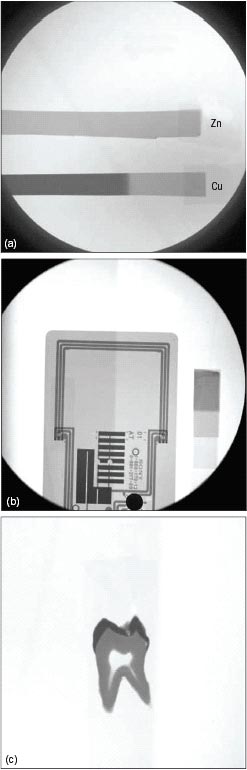
The workshop marked two decades since the experimental discovery of parametric X-ray radiation (PXR) in Tomsk in 1985: the radiation is generated by the motion of electrons inside a crystal, such that the energy intensity of the radiation depends on the parameters of the crystal structure. PXR has since been a subject of experimental and theoretical research and possible applications at accelerators, and was a subject in many talks at the workshop. A team working at Nuclotron at the Joint Institute for Nuclear Research in Dubna has reported the first observation of PXR from moderately relativistic nuclei in crystals. A nice example of an application is a tunable monochromatic X-ray source based on PXR developed at the Laboratory for Electron Beam Research and Application in Nihon University, Japan. So far the main use of the X-rays there has been in radiography for biological samples such as teeth or bones (figure 1). The contrast of the images was controlled with precise changes of the X-ray energy, a great advantage of a system that uses a PXR beam.

For the future, many interesting directions are foreseen in the field. A great deal of effort worldwide is being put into crystal radiation research and applications. Further progress is expected in applications using bent crystals for beam steering at accelerators. It will be an ideal opportunity to take full advantage of the channelling-crystal potentialities at the LHC and other high-energy accelerators, making crystals to serve for both collimation and extraction. The opportunity to have an extracted beam at a multi-tera-electron-volt machine should stimulate more research at the highest energies into particle interactions with aligned atomic lattices. The first crystal-channelling undulators and their initial tests with positron beams should proceed to the realization of novel radiation sources; thus, new positron-channelling experiments on undulator radiation are eagerly awaited.

The success of the workshop is reflected both in the level of participation, with around 40 specialists coming from different geographical areas, such as Europe, Japan and the former USSR, and in the high quality of the presentations. The resulting papers will be published as a special issue of Nuclear Instruments and Methods B, covering nearly all topics of current interest in channelling and radiation in aligned periodic structures at relativistic energies.
Tokyo meeting focuses on nucleon-spin problem

Last summer, physicists from 10 countries came to the campus of the Tokyo Institute of Technology for the 5th Circum-Pan-Pacific Symposium on High Energy Spin Physics, held on 5-8 July 2005. The aim of this symposium is to enhance communications among physicists in the circum-pan-Pacific region as well as with guests from other regions, including Europe. Another feature is the active participation of young physicists.

CCEspi1_01-06

In 1988, the European Muon Collaboration experiment at CERN reported that quark spin makes only a small contribution to the spin of the proton, contrary to what had been believed for many years. This gives rise to the well-known “nucleon spin problem”, now being studied by physicists all over the world: what in fact does give the proton and neutron their spin?

At the symposium, the COMPASS collaboration, EMC’s successor at CERN, reported on their measurements of the gluon spin’s contribution to the nucleon spin for which they use a high-energy muon beam together with the detection of “open charm” and hadron pairs. In addition to a longitudinally polarized deuteron target, COMPASS occasionally uses a transversely polarized deuteron target, and so can measure the Collins effect and hence the transversity distribution δq(x). δq(x), which is the distribution of transversely polarized quarks in a transversely polarized target, is the third distribution function at twist two, along with the momentum distribution q(x) and helicity distribution Δq(x).

At DESY, the HERMES experiment has performed quark flavour separation of helicity distributions Δq(x) using a ring-imaging Cherenkov detector for hadron identification. Further progress in this experiment has come with a transversely polarized hydrogen target, which has enabled the Collins and Sivers effects to be separately identified for the first time. Identifying each of these effects with both HERMES and COMPASS will also help in understanding the mechanism in hadron reactions, such as the sizeable single-spin asymmetries observed, for example, by the E704 experiment at Fermilab and STAR at the Relativistic Heavy Ion Collider (RHIC) at Brookhaven. A relationship between the Sivers effect and the orbital angular momenta of quarks has been suggested theoretically, and the quark orbital angular momentum could contribute to the nucleon spin.

RHIC uses polarized proton-proton collisions to study the nucleon-spin problem, and both the luminosity and beam polarization are becoming higher every year. Here each proton beam can be regarded as a bundle of high-energy partons, where gluon-gluon collisions and gluon-quark collisions tell us about the role of the gluon’s spin in the proton. The double-spin asymmetry ALL in π0 meson production has been measured with longitudinally polarized proton beams as a function of transverse momentum, pt, and transversely polarized proton beams are also used. At the symposium the PHENIX and STAR collaborations at RHIC presented recent data along with interesting plans for the future.

Jefferson Lab also has a variety of experiments to study the nucleon-spin problem. The symposium presented experiments on the quark helicity distribution at large x, deeply virtual Compton scattering, single-spin asymmetries from semi-inclusive hadron detection, investigations in the nucleon resonance region and quark-
hadron duality and so on, as well as the plan for a future beam-energy upgrade. High luminosity is one of the merits of Jefferson Lab.

The Belle collaboration at the KEK B-factory reported their analysis of the Collins fragmentation function in the hadronization process in positron-electron collisions, where a non-zero value for the function was observed. This fragmentation function is needed to extract the transversity distribution δq(x) from the Collins effect observed in lepton-nucleon scattering.

The symposium also presented plans for a neutrino-scattering experiment to study the spin of strange quarks in the nucleon. In addition, there were theory talks on nucleon-spin structure based on lattice quantum chromodynamic calculations, the chiral quark soliton model, di-quark model and resummation method etc. Here developments in generalized parton distributions were a main topic.
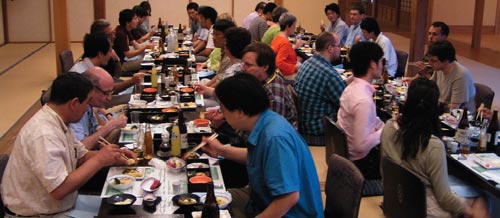
The symposium consisted completely of plenary sessions, so that all the participants could share the same discussions. On the afternoon of the second day, a boat trip was organized at Yokohama Bay, followed by a visit to a Japanese-style garden and a conference dinner in an old traditional Japanese house in the garden.

Warped Passages: Unravelling the Universe’s Hidden Dimensions

by Lisa Randall, Allen Lane, Penguin Books. Hardback ISBN 0713996994, £25.
(In the US, HarperCollins, ISBN 0060531088, $27.95.)

They say you should never judge a book by its cover, which is advice worth considering if you’re thinking of buying Lisa Randall’s Warped Passages. The violent pink with the title scrawled graffiti-like across it (in the Penguin edition) makes the book jump off the shelf, screaming “I’m no ordinary popular-science book.” Don’t be put off. Randall does break the mould, but not by filling the book with graffiti. She delivers a bold journey from the origins of 20th-century science to the frontiers of today’s theoretical physics. It’s bold because, despite her protestations that the book is about physics and not personalities, it turns out to be a very personal journey in the company of one of the field’s most cited practitioners.

CCEboo1_12-05

This is most true at the beginning, where Randall tells us a little about who she is and why she has devoted her life’s work to the science of extra dimensions. She begins with the words: “When I was a young girl, I loved the play and intellectual games in math problems or in books like Alice in Wonderland.” Thereafter, she affords us a glimpse of who she is through her choice of musical snippets at the beginning of each chapter, and the Alice-inspired story of Ike, Athena and Dieter, which unfolds throughout the book, one episode per chapter. The result is that the reader gets not only a competent review of a difficult subject, but also a feeling for what drives someone at the cutting edge of science.

I have to confess that I read the story of Ike, Athena and Dieter from cover to cover before embarking on the book proper, and having done so would recommend that course of action. Should physics cease to be a fruitful career, Randall could perhaps turn her hand to fiction. Coupled with the What to Remember and What’s New sections at the end of each chapter, the story gives a pretty good overview of what the book is about.

The personality that emerges as the book progresses is not the kind of physicist who would be lost for words at a party if asked what she does. As well as being, according to her publisher, the world’s most influential physicist thanks to the citations-index-topping paper she published with Raman Sundrum in 1999, Randall is also a woman with a life. She has broad interests, she is cultured and she climbs mountains in her spare time. In short, she’s the sort of role model science needs.

Clearly conscious of the “no equations” school of science communication, she tries early on to put the reader at ease by promising that the descriptions will never be too complicated. Inevitably she cannot hold this promise throughout, and there are places where even the most dedicated amateur scientists will be baffled, but that is more the nature of the subject than the author. If Niels Bohr thought that quantum mechanics was profoundly shocking, what would he have made of hidden dimensions? In places, Randall goes so far to try to make things easy that the tone verges on the patronizing, and in others, she hides difficult stuff in a “math notes” section at the end of the book. On balance, however, she has done a good job of making a difficult subject accessible.

Bohr is on record as saying to a young physicist, “We are all agreed that your theory is crazy. The question which divides us is whether it is crazy enough to have a chance of being correct.” Could the same be true of extra dimensions? If you do not already have an opinion, this book will certainly help you to make up your mind. Don’t let the cover, or the publisher’s hype, put you off.

La quête d’Einstein: “Au prix d’une peine infinie…”

par Jean-Marie Vigoureux, Editions Ellipses. Broché ISBN 2729823557, €19.50.

Un de plus! Cette année 2005 aura vu la multiplication d’ouvrages dédiés à Albert Einstein. Certains développent prioritairement l’histoire de l’homme et de sa vie, d’autres s’intéressent à sa théorie de la relativité.

Le présent livre commence par clarifier la question de la gravitation ´ l’aube du 20e siècle, avec ses grands succès (pendule de Foucault, découverte de la planéte de Le Verrier) et ses échecs (problème à trois corps, périhélie de Mercure), ces derniers semblant indiquer le besoin d’une “nouvelle physique”.

CCEboo7_12-05

La partie de l’ouvrage la plus intéressante est l’introduction qui traite des débats philosophiques sur la notion de force agissant à distance à travers le vide, et sur les concepts d’espace et de temps avec les critiques de Ernst Mach pour qui l’espace est impensable sans la matière nécessaire pour le définir. Alors, Einstein arrive.

Le livre est très documenté, il comprend deux pages entières de bibliographie. Il ne comporte pratiquement aucune équation, même pas les transformations de Lorentz, ce qui est un bon point pour certains lecteurs. Cela limite cependant la compréhension globale, et les propriétés induites par la théorie (dilatation des temps, contraction des longueurs) sont données sans explication claire.

Le choix des conséquences abordées de la relativité est un peu arbitraire. L’auteur ne débat pas de la fameuse équation E = mc2, à peine citée, mais 10 pages sont consacrées aux tentatives infructueuses de Joseph Weber pour mettre en évidence les ondes gravitationnelles. Les acquis récents de la cosmologie (fond cosmologique, énergie noire) ne sont pas présentés, et aucune perspective n’est indiquée. La derniére partie relate la vie à Princeton d’un anticonformiste solitaire, berçant le rêve d’une théorie du tout.

Il existe sur le marché des biographies d’Einstein plus vivantes et des exposés plus complets de la relativité et de ses conséquences. Cet ouvrage donne l’impression d’un travail un peu impersonnel d’érudit. Ce qui peut gêner est le point de vue souvent hagiographique: on lit le récit de la vertueuse vie de Saint Albert, savant et philosophe en quête d’harmonie, et le sous-titre du livre “au prix d’une peine infinie” va jusqu’à lui conférer les palmes du martyre… ce qui peut paraître très exagéré.

Malgré tout, le livre vaut par de petits exemples bien expliqués qui aident à concrétiser la démarche d’Einstein vers l’élaboration de sa grande théorie de la relativité.

The Artful Universe Expanded

by John D Barrow, Oxford University Press. Hardback ISBN 019280569X, £20 ($30).

One contender for the premier division of popular-science writers is cosmologist John Barrow. He now has a long list of impressive titles to his credit, notably The Anthropic Cosmological Principle (with Frank Tipler), which introduced a whole new slant on cosmology and has become a classic of modern science, and The Left Hand of Creation (with Joseph Silk), which was one of the first popular books on modern cosmology.

CCEboo8_12-05

Some arrogant physicists condemn any science that is not quantum mechanics or relativity as being lightweight. This pompous attitude antagonizes scientists in other disciplines, and many non-scientists too. Barrow’s imaginative literary work helps to demolish such preconceptions, breaking down barriers between specialist subjects and showing how far a mathematical approach can reach.

Barrow says that the popularization of quantum physics and cosmology has been well exploited, and aspiring writers should look elsewhere for subject matter. Heeding this advice, The Artful Universe Expanded, an updated and enlarged edition of a book that first appeared in 1995, is a collection of largely self-contained pieces in which scientific arguments illuminate a range of topics that include art, music, evolution and tradition.

The result is a delightfully diverse package of thought-provoking and entertaining articles. Ploughing through even the best popular science demands a certain effort and motivation, but the compact articles in this book are accessible. It is a book to dip into and meet, for example, “Jack the Dripper” – the fractal-inspired Jackson Pollock.

While Barrow is particularly good at explaining the sizes of things, in a few places there is a sense of déjà vu. Barrow’s figure 3.2 on the distribution of masses and sizes in the universe is the same as figure 5.1 in his Between Inner Space and Outer Space, published in 1999; and the customary illustrations of symmetry by Maurits Escher also appear in the book.

A mine of stimulating material, The Artful Universe Expanded anthology is a good choice for travellers or those simply looking for insight, and it is a prolific source of ideas for offbeat talks.

Parallel Worlds: The Science of Alternative Universes and our Future in the Cosmos

by Michio Kaku, Allen Lane, Penguin Books. Hardback ISBN 0713997281, £20.00. (In the US, Doubleday. Hardback ISBN 0385509863, $27.95.)

While reading Michio Kaku’s latest book, Parallel Worlds, I left it for a few days on the coffee table at home. At this time we had a visitor who, although interested in science in general, is not a physicist. After browsing through the book, he started reading it and was disappointed to see it disappear one day when I went away on a trip. He has been inquiring about getting the book back ever since. Although based on limited statistics, this is an excellent recommendation for Parallel Worlds – you do not need to be a physicist to find the book fascinating.

CCEboo5_12-05

But what does a (non-theoretical) particle physicist think about the book? Well, I really enjoyed it. It is a rather complete book on cosmology for the layman, taking us from Einstein to M-theory in a language that manages to be understandable without being trivial. If you, like me, would like to know the difference between 10- and 11-dimension string theory or find it difficult to explain to your fascinated friends (or to yourself) the concept of the holographic universe, this book will give you plenty of ammunition.

Kaku discusses all of the important theories, observations and experimental results that have shaped our understanding of the universe over the past century, and mainly the past 30 years. A big portion of the book discusses string theory, which is close to Kaku’s heart, in an informative and understandable way. The book is also full of Kaku’s accounts of his favourite science-fiction stories (when he wants to demonstrate a point that happens to have excited the imagination of science-fiction writers) as well as excerpts from the works of poets, other writers and Nobel laureates.

A large portion of the book, as its name suggests, revolves around the many different sorts of parallel universes that might exist and their relation (and possible interaction) with ours. The discussion eventually leads to ideas about how our distant descendants might try to escape a dying or inhospitable universe. Ironically, this was for me the least interesting part of the book, however it does devote a few pages to fascinating subjects such as the question of consciousness, the anthropic principle and religion.

Minor gripes include Kaku’s insistence on not using scientific notation: a trillion electron-volts means to me much less than 1 TeV, and how long exactly is 30 billionths of an inch? Surely Kaku’s intended audience would be less perplexed by 1018 than by “a million trillion”. Another point is his assertion that particle physicists have introduced “hundreds of point-like particles” to the theory. Three families of four fermions each do not make hundreds of particles.

The book also includes a useful index and a glossary, and has notes with further explanations, which unfortunately I found only after I had finished reading the book. It would have been helpful to include note numbers in the text.

Should you go out and buy this book for Christmas? The answer is yes. Parallel Worlds is an excellent read. Just do not leave it on the coffee table.

Das Einstein-Fenster – Eine Reise in die Raumzeit

by Markus Pössel, Hoffmann und Campe Verlag. Hardback ISBN 3455094945, €30.

CCEboo6_12-05

“Can only a genius understand Einstein? No…” claims author Markus Pössel on the back cover of his new book, which is aimed at the reader who is interested in modern science. Among the many books to mark the 100th anniversary of Einstein’s annus mirabilis, this one appeals immediately because of its high-quality design and the many colourful photos and illustrations. But can it deliver on its promise?

In the first part we are led to the basic concepts of special and general relativity, following a more phenomenological approach. With the help of facts, many pictures and stories relating to everyday life, Pössel manages to give us a flavour of this new world of extremes. Numerical examples substitute for mathematical equations and give a notion of reality. Minkowski diagrams are introduced and used wherever possible. In the context of general relativity, emphasis is put on the correct development of the geometrical principles, which is done with great care.

The second part covers the applications of relativity: our solar system, gravitational waves, stars, black holes and cosmology. The comparatively short third part is a surprisingly detailed discussion of gravitational-wave detection, which puts the reader at the forefront of this exciting field of research.

The chosen approach to relativity is similar to that of university textbooks, where all mathematical equations are substituted by pictures and numerical examples. This disguises the essential principles and occasionally makes it a cumbersome read. It is also questionable whether the sometimes awkward embellishments to the explanations serve the purpose of clarity. Nevertheless, Pössel takes the reader on an exciting journey through space-time.

“Can only a genius understand Einstein?” With this book in hand, average readers can understand him too, provided their curiosity is strong enough to help them find the necessary patience and stamina.

A Different Universe: Reinventing Physics from the Bottom Down

by Robert Laughlin, Basic Books. Hardback ISBN 046503828X, $26 (£15.50).

Despite the fact that the author has a Nobel Prize in Physics, this is rather an easy book to read. While not as funny as Richard Feynman’s jokes, and fortunately not as exquisitely informal (this is an understatement) as João Magueijo’s Faster than the Speed of Light, it is quite nicely written, good humoured and even sprinkled with poetic eloquence. I actually enjoyed reading the innumerable biographical anecdotes (at least the first 50 or so), even though most seemed rather irrelevant for the purpose of the book, which could easily be half as thick without any loss in real content.

CCEboo3_12-05

Let me do justice to the book by wandering myself. We often hear at CERN that particle physics deals with the most fundamental level, the “ultimate theory”, from which everything else should, in principle even if not in practice, be derivable. But systems above certain levels of complexity exhibit “emergent” laws that cannot be derived through such a “bottom-up” approach. It is particularly interesting to note that superconductivity cannot be derived from fundamental principles, especially when we see how crucially dependent we are on superconductivity to perform our “fundamental” studies at CERN. A little modesty would not harm some particle physicists. We can’t always learn how a toy works by breaking it to pieces; sometimes all we learn is that the broken toy doesn’t work any longer.

This is the central point of Laughlin’s thought-provoking book: there’s a different universe out there, which we can easily see if we care to look, and where certain things are more than the sum of their parts.

This is surely not a new idea. “More is different” claimed Philip Anderson 33 years ago, at a time when Jacques Monod argued that the higher levels of reality are not necessarily determined by the lower levels.

What I enjoyed most in Laughlin’s “different” book were the descriptions of several eye-opening experimental observations – such as the von Klitzing and Josephson effects – which intrinsically depend on collective behaviour (the effects disappear in very small samples) but provide today’s most accurate measurements of the fundamental constants e and h.

Unfortunately these fascinating issues are not really described in much detail, while too many pages, especially at the end of the book, are devoted to less relevant topics, seemingly motivated by polemic fights with “hard-boiled reductionists” who are accused of believing that nothing fundamental is left undiscovered. However, don’t miss chapter 15, which is about a “cast of characters” trying to define what “emergence” means; this is particularly hilarious if you have read Arthur Koestler’s The Call-Girls (1972).

Laughlin’s book is definitely worth reading, although I was disappointed; there is a lot of talking but in the end not much physics really gets reinvented. It is a pity that Laughlin spends much of his energy fighting reductionism rather than detailing his own new ideas. And a little modesty would also not harm his arguments. Emergence and reductionism are equally important in our quest for understanding the (single) universe around us – as Freud said, on psychology and biology, “Some day the two will meet.” If you are interested in these topics, read Koestler’s The Ghost in the Machine (1967) and Stuart Kauffman’s At Home in the Universe (1995).

Symmetry and the Beautiful Universe

by Leon M Lederman and Christopher T Hill, Prometheus Books. Hardback ISBN 1591022428, $29.

A tribute to mathematical genius Emmy Noether (1882-1935) is long overdue. Noether’s theorem, which neatly linked symmetries in physical laws to constants of nature, heralded the most important conceptual breakthrough of modern physics and yet her name is rarely found in books on the subject. Symmetry and the Beautiful Universe attempts to right that wrong.

CCEboo4_12-05

This popular-science book is presented as being accessible to “lay readers” and “the serious student of nature”. So is it? Well, any treatise on symmetry begs for pictures but we find very few until near the end, and often we get the proverbial thousand words instead. Also there are more mathematical equations than appear at first sight, as some are embedded in the text. So, I suspect that the going would be easier for the serious student than for lay readers.

The range of topics and styles is humongous, from cartoon character Professor Peabody with angular momentum worthy of a dervish (smoking a pipe), to Feynman diagrams for first-order quantum corrections in electron-electron scattering. The short biography of Noether is good and her theorem is well praised, although the chapter devoted to explaining it is rather long-winded.
More than once the reader is first given an esoteric example of some process or other and only later a more familiar example; momentum conservation starts with radioactive neutron decay and goes on to colliding billiard balls. Then there are “gedanken” experiments. These are familiar devices to scientists but will a lay reader believe that space is isotropic because a hypothetical experiment is said to show that it is? And sometimes the book is mystifyingly US-centric. What are EPA rules? And why is Kansas special?

However, the undeniable enthusiasm of the authors for their subject, indeed for almost any subject, shines brightly throughout. Even leaving aside the 60 or so pages of notes and appendix, the book brims over with facts, figures and fun fictions, often straying far from the subject of symmetry. I estimate that a smart cut-and-paste editor could produce three good books out of the material on offer, each at a quite different level. Find your own.

Reviewing a book that has one Nobel laureate as an author and two among the constellation of stars glowingly quoted on the dust jacket is a daunting task. I was once told that “astounding” conveys an acceptable amalgam of the polite and the honest when one is overwhelmed. This book is astounding.

Homestake poised to become a goldmine for scientific research

A new frontier in experimental science was crossed in October when the state of South Dakota committed $20 million to pave the way for its acquisition and conversion of the Homestake Mine into a multidisciplinary underground laboratory, which it will operate until at least 2012. This boost from the state also aids longer-term planning, helping to position Homestake as a possible home for the proposed Deep Underground Science and Engineering Laboratory (DUSEL). The transfer of the property is scheduled to take place on 15 December.

CCEnew1_12

The 125 year-old Homestake Mine, which was once the largest goldmine in the western hemisphere, is the deepest in North America, reaching 2500 m below ground. It became well known as the site of the first solar-neutrino experiment, which ran continuously from 1967 to 1994 and earned Raymond Davis the Nobel Prize in Physics in 2002. In May 2004 the company that owned the mine announced that it would turn off the pumps that prevent the mine from flooding.

The state of South Dakota’s funding will re-establish access into the mine, pump out the accumulated water and establish an operating laboratory at the 1500 m level, where Davis’s experiment was located. The lower levels will be developed in later years. Experimental Letters of Interest for short- and long-term experiments are now being solicited from the international community. The first experiments are scheduled to begin in 2007.

These depths provide the low-background environment needed to conduct a spectrum of physics experiments including studies of neutrinoless double beta decay and dark-matter searches. With more than 500 km of tunnels, the mine provides safe access to various depths, can accommodate large detectors, and offers expandable spaces to sustain evolving experiments over decades.

Homestake is one of two finalists selected by the National Science Foundation (NSF) for the location of a future DUSEL; the other site is Henderson Mine in Colorado. Both proposals have received grants of $500,000 from the NSF to develop conceptual design reports. The site for DUSEL should be chosen in late 2006.

For the first time, a single site dedicated to science will house an array of experiments spanning the disciplines of particle and nuclear physics, geology, hydrology, engineering, geomicrobiology and biochemistry. Forty years after Davis installed his solar-neutrino detector at Homestake, a new generation of experimentalists will avail themselves of the same site for this spectrum of modern-era experiments. As DUSEL is developed in the coming years these experiments will delve even deeper underground in a quest to answer some of the greatest scientific mysteries of our time – from dark matter, neutrinos and nucleosynthesis to probing the limits of life.

Physics, astrophysics and earth sciences are anticipated to be among the first disciplines to establish experiments. As well as experiments on neutrinoless double beta decay and searches for relic dark matter, large detectors will study proton decay and be used for long-baseline neutrino experiments, ultimately to probe neutrino mass, hierarchy and possible leptonic CP violations.

The diverse geology at Homestake, with the existing deep drifts and boreholes, will be an equally big boon for earth scientists. For the first time, they will have access to more than 34 km3 of the Earth’s crust to study the subterranean environment. Geomicrobiologists will investigate the genome and the limits of life in extreme environments; hydrologists will study fluid flows through rocks; geochemists will explore the formation of minerals; and at the intersection of physics and geology, scientists will measure geoneutrinos emanating from the Earth’s crust.

The Homestake project is a partnership between the scientific community and the South Dakota Science and Technology Authority, which will oversee the conversion and manage the mine. The scientific team is headed by Kevin Lesko of Lawrence Berkeley National Laboratory and the University of California at Berkeley. The early implementation plan will create an operational facility in advance of the NSF selection process and be the basis of Homestake’s staged approach to creating DUSEL.

• For further information see http://neutrino.
lbl.gov/Homestake/LOI
.

bright-rec iop pub iop-science physcis connect