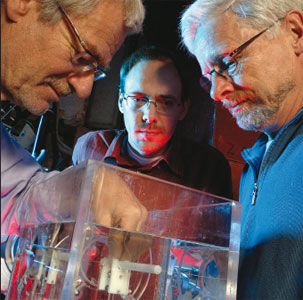
A pioneering experiment at CERN with potential for cancer therapy has produced its first results. Exploiting the unique capability of CERN’s Antiproton Decelerator to produce an antiproton beam at the right energy, the Antiproton Cell Experiment (ACE) has shown that antiprotons are four times more effective than protons for cell irradiation.
Cancer therapy is about collateral damage: destroying the tumour while avoiding the healthy tissue around it. Unwanted exposure of healthy tissue could cause side effects and result in a reduced quality of life. It is also believed to increase the chances of secondary cancers developing. In radiation therapy there is an ongoing quest to reduce the radiation level to tissue outside the primary tumour volume.
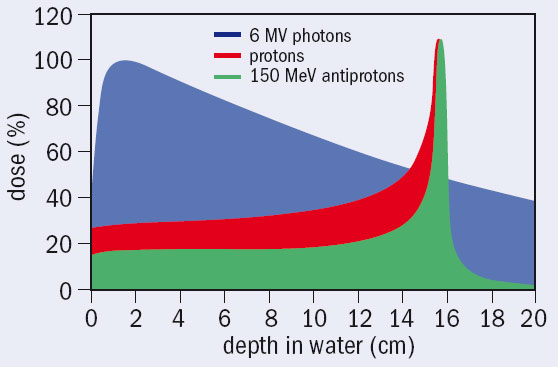
In hadron therapy, which began in 1946 with Robert Wilson’s seminal paper, “Radiological Use of Fast Protons”, the dose profile of heavy charged particles (hadrons) does not irradiate healthy tissue because most of the energy is deposited at the end of the flight path of the particles – the Bragg peak – with little before and none beyond. However, the question remains of how to maximize the concentration of energy onto the target.
The first speculations that antiprotons could offer a significant gain in targeting tumours through the extra energy released by annihilation date back more than 20 years (Gray and Kalogeropoulos 1984). Now the ACE collaboration has tested this idea by directly comparing the effectiveness of cell irradiation using protons and antiprotons.
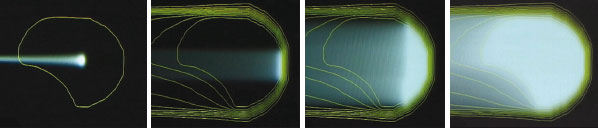
To simulate a cross-section of tissue inside a body, the experiment uses tubes filled with live hamster cells suspended in gelatine. These are irradiated with beams of protons or antiprotons at a variety of intensities with about a 2 cm range in water. After irradiation the gelatine is extruded from the tubes and cut into 1 mm slices. These are then dissolved in growth medium and the cells are placed in Petri dishes in an incubator. After a few days the naked eye can see that some of the cells have produced healthy offspring. This gives a measure of the survival of cells along the beam path for the different dose levels. Cell survival is plotted for the entrance and the Bragg-peak regions as a function of particle fluencies, and the ratio of dose for a 20% survival in these two regions is extracted.
Comparing beams of protons and antiprotons that cause identical damage at the entrance to the target, the results of the experiment show that the damage to cells inflicted at the end of the beam is four times higher for antiprotons (Holzscheiter et al. 2006.) The method directly samples the total effect of the beams on the cells, combining the enhanced energy deposition in the vicinity of the annihilation point and the higher biological effectiveness of this extra energy (delivered by nuclear fragments). The experiment demonstrates a significant reduction of the damage to the healthy cells along the entrance channel of a beam for antiprotons compared with protons.
While antiprotons may seem unlikely candidates for cancer therapy, the initial results from ACE indicate that these antimatter particles could lead to more effective radiation therapy. There is no doubt, however, that the first clinical application is still at least a decade away.
A new tungsten monocrystalline positron target has generated an intense positron beam at the injector linac of the KEK B-factory (KEKB). It has operated stably since its first use in September 2006 and it is helping to increase the integrated luminosity of KEKB. Crystal positron sources of this kind could be important for the next generation of B-factories and electron–positron linear colliders.
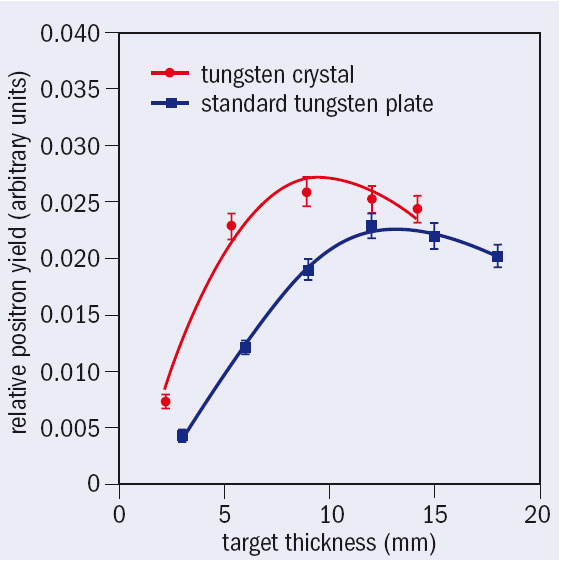
The new positron target at KEKB consists of a 5 mm square tungsten monocrystal 10.5 mm thick, which is bombarded with 4 GeV electrons. The positrons created are then collected and accelerated in succeeding sections up to the final energy of 3.5 GeV for injection into the KEKB positron ring. A conventional target of a 14 mm thick tungsten plate has previously been used, giving a conversion efficiency – the ratio of the number of positrons captured in the positron-capture section and the number of the incident electrons (Ne+⁄Ne–) – of 0.20 (mean). Replacing the tungsten plate with the tungsten crystal has increased the conversion efficiency to 0.25 (mean) (figure 1), which in turn has boosted the positron intensity to its highest since KEKB began operating in 1999.
In a positron source, electrons radiate photons when they interact in a suitable target, and the photons then create electron–positron pairs. The use of a crystal target as a good alternative positron source was first proposed by Robert Chehab and colleagues at Laboratoire de l’Accélérateur Linéaire (LAL), Orsay, in 1989. The method has the advantage of producing high photon intensities by channelling radiation and coherent bremsstrahlung. Experiments at CERN (WA103) and KEK confirmed that the positron yield from a crystal target is remarkably enhanced at higher electron energies. Studies have since been done at KEK to find the optimum crystal thickness as a function of the incident electron energy (figure 2), and Tomsk Polytechnic University has developed tungsten crystals of various thicknesses.
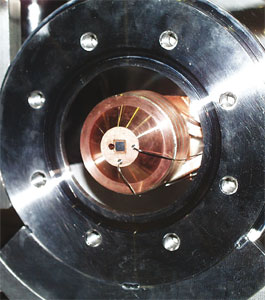
Technology for mounting the tungsten crystal in the positron production station at KEK has also been studied carefully because the <111> crystal axis must be oriented with respect to the direction of the incident electrons to within 1 mrad. To achieve this precise orientation without alignment devices, the target assembly (figure 3) was carefully fabricated, using X-ray Bragg-reflection measurements to ensure that the crystal axis orientation was correct. The team then installed the crystal target at the operational positron source of the KEKB injector linac, and it has since been operating stably. Continued operation at KEKB will provide useful information about radiation damage and the stability of the crystal target.
• This work has been done through the collaborative efforts of Tokyo Metropolitan University, Kyushu Synchrotron Light Research Center, Tomsk Polytechnic University, LAL and KEK.
Most experiments at the Antiproton Decelerator (AD) at CERN involve laser or microwave studies of atoms such as antiprotonic helium (pbarαe–) and antihydrogen (pbare+). These may throw light on outstanding questions concerning, for example, the apparent absence of cosmic antimatter and possible limits to the validity of the charge–parity time-reversal (CPT) theorem. In this research, antiprotons are brought to rest in a container – a helium-gas target chamber in the first case, and a high-vacuum electromagnetic trap containing positrons in the second. In either case, interpretation of the results requires a full understanding of how the atoms are created, what their quantum states are and how they subsequently behave. However, it is rather like performing chemistry in a test tube where residues of impurity gases might also be present. Though unwanted these could have important effects and the studies at the AD have indeed led to some unexpected, serendipitous discoveries.
The ATHENA collaboration, whose primary is to study antihydrogen spectroscopically, has reported evidence that metastable protonium atoms (i.e. antiprotonic hydrogen, pbarp) can be created in binary antiproton reactions with H2+ ions. These ions were produced when the positrons in the trap collided with H2 molecules, inevitably present as “dirt in the test tube”. This serendipitous method of making protonium turns out to be interesting because it seems to produce it in states with principal quantum number (n) near 68 and angular momentum quantum number l < 10.
Ground-state n = 1, l = 0 protonium can be produced easily and has been known for many years. However, it annihilates almost instantaneously owing to the marked overlap of the p and pbar wave functions. In high-n protonium, however, there is little overlap, since the Bohr-model orbit radius is proportional to n2. The p and pbar can then come into contact only by de-exciting radiatively to l ∼ 0 via a chain of transitions that the ATHENA team estimates to take about 1 ms. This extreme longevity should enable detailed laser-spectroscopy experiments on the protonium atom, leading to values of the antiproton’s properties relative to those of the proton, and so to a new class of CPT-invariance tests (N Zurlo et al. 2006). Two-body atoms are especially valuable in this respect since their transition frequencies can be calculated analytically
Another experiment at the AD, ASACUSA, has been exploiting longevity against annihilation for some years with the (neutral) antiprotonic helium atom, pbarHe+. Although this is a three-body atom, its high-n, high-l, pbarHe states have microsecond annihilation lifetimes and are easily produced when antiprotons with electron-volt energies collide with ordinary helium atoms. As in the antihydrogen experiment, H2 impurities are always present in the “test tube” at some level and have long been known to reduce, or quench, the pbarHe+ lifetime, even at very low molecular concentrations, via binary collisions between H2 and pbarHe+.
To understand this fully, the ASACUSA team introduced H2 and D2 molecules into the helium target at various temperatures and concentrations and then deduced the quenching cross-section from the annihilation lifetime of the antiproton in the (n,l) = (37,34) and (n,l) = (39,35) states, as a function of these variables (B Juhász et al. 2006). Below 30 K the cross-section levelled off in the first case, revealing a tunnelling effect with a small activation barrier, while the (39,35) state had a 1/v “Wigner”-type dependence. Such results can perhaps serendipitously fill some gaps in our understanding of astrophysics, since the measured cross-sections should be similar to those for binary reactions of hydrogen and deuterium, which play an important role in cold interstellar and protostellar clouds, but have not been well studied at low temperatures.
A final unsought discovery has resulted from ASACUSA’s quest for ever lower systematic errors in the laser-spectroscopy experiments on antiprotonic helium. This forced the team to go to extremely low helium target pressures. At helium densities less than 3 × 1016 cm-3 they noticed a lengthening of the tail of the spectrum of time intervals between the formation of the pbarHe+ atom and the subsequent annihilation of the antiproton. This could only be explained by longevity of the pbarHe++ two-body, doubly charged ion, which in higher-pressure gas is a short-lived intermediate stage between the formation of the neutral pbarHe+ atom and the “contact” ppbar annihilation (Hori et al. 2005). Once again, a two-body atom promises to become serendipitously available as a test bench for CPT tests. Following up this possibility is an important part of the ASACUSA experimental programme.
Researchers at the Tevatron at Fermilab have found two new heavy particles and two of their excited states. The CDF collaboration has observed the first Σb particles, made up of quark combinations uub and ddb. Until now the Λb0 (udb) was the only baryon (three quark) state containing a b quark to have been observed.
The quark model predicts the existence of Σb particles, in which the spins of the light quarks (u or d) combine with spin-parity, JP = 1+ to give a ground-state baryon with JP = 1/2+, and excited state, Σb*, with JP = 3/2+. CDF is well placed to search for new particles like these, as the collaboration has the world’s largest data set of baryons containing the b quark, thanks to the displaced track trigger that the experiment uses and a total of proton–antiproton luminosity around 1 fb-1 from the Tevatron, collected between February 2002 and February 2006. As the ground states of Σb are expected to decay strongly to Λb0 states by emitting pions, the CDF team searched first for the Λ states via the decay chain, Λb0 → Λc+π, Λc+ → pK–π+. They then looked for narrow resonances in the mass difference m(Λb0pi;) – m(Λb0) – mπ, where they found signals corresponding to a hundred or so examples of positively charged states, and rather more with negative charge.
The states with positive charge correspond to uub and are consistent with being either Σb+ or Σb*-, while the negative states correspond to ddb, that is Σb+ or Σb*-, where the Σb* states have slightly higher masses. Working from CDF’s measurement of the Λb0, the four new states have masses in the region of 5800 MeV/c2.
The KEDR collaboration has precisely measured the τ lepton mass. This continues a series of high-precision measurements of masses of particles and resonances at the VEPP-4M collider at the Budker Institute of Nuclear Physics in Novosibirsk. In 2004 and 2005 masses of the J/Ψ and Ψ’ mesons were measured with a relative accuracy of 4 × 10⁻⁶ and 7 × 10⁻⁶, respectively.
The τ lepton mass is a fundamental parameter of the Standard Model. Its value can be used with the τ lifetime and the decay probability to eνbareντ to test the principle of lepton universality, one of the postulates of modern electroweak theory. Up to now the accuracy of the measurement of the Beijing Spectrometer (BES) has dominated the accuracy of the τ mass. Like BES, the KEDR experiment determines the τ mass by measuring the energy dependence of the τ+τ– cross-section near threshold, and the key factor in such experiments is the accuracy of the beam-energy determination.
While previous experiments relied on the extrapolation based on the J/Ψ and Ψ’ meson masses (measured in Novosibirsk) as reference points, the new KEDR-VEPP experiment uses two independent high-precision methods for the beam-energy measurement. During data-taking the beam energy was monitored through Compton backscattering of infrared laser light with a precision of 5 × 10⁻⁵. The beam energy was absolutely calibrated daily with a precision of 1 × 10⁻⁵ using the resonant depolarization method.
The preliminary result, presented at ICHEP’06, based on 6.7 pb-1 of data, is mτ = 1776.80-0.23+0.25 ±0.15 MeV. This value agrees well with the current world average mτ = 1776.99-0.26+0.29 MeV and has comparable accuracy. It is also in good agreement with the recent preliminary result from the Belle experiment at KEK of mτ = 1776.71±0.13±0.32 MeV, which was also reported in Moscow. Detector-related uncertainties currently dominate in the systematic error presented for KEDR, but they will be reduced with more detailed data analysis. The experiment started a new run of data-taking at the threshold for t production in October, with the aim of reducing the statistical error.
Dans l’édition de novembre l’article “Exotic atoms cast light on fundamental questions” a malencontreusement été publié avec le résumé en français d’un autre article, sur l’expérience OPERA. Le résumé correct est publié ci-dessous avec toutes nos excuses pour la confusion occasionnée par cette erreur.
Des atomes exotiques pour comprendre des questions fondamentales. Un atelier d’été, tenu à Trente, s’est attaché à étudier l’apport des expériences sur les atomes exotiques, les formes kaoniques fortement liées et l’antihydrogène pour explorer la physique fondamentale à basse énergie. L’atelier a rassemblé des experts dans le domaine des atomes et noyaux exotiques, afin d’examiner l’état actuel des expériences et de la théorie et de déterminer quels sont les sujets les plus prometteurs. Le programme, très fourni, allait des variétés pioniques, kaoniques et antiprotoniques des atomes exotiques à l’antihydrogène, et aux clusters nucléaires exotiques, plus généralement appelés de nos jours noyaux kaoniques fortement liés. Les participants ont pris connaissance des derniers résultats obtenus par de nombreuses expériences sur ces atomes exotiques, et ont discuté de projets futurs fondés sur des techniques d’expérimentation améliorées.
A new analysis of diffuse galactic gamma-ray data sets constraints on the initial energy of positrons produced in the centre of our galaxy. This limitation to at most a few mega-electron-volts severely restricts their production sites and in particular the range of masses allowed for a possible origin in lightweight dark matter.
A balloon-borne spectrometer first detected the characteristic electron–positron annihilation line at 511 keV in radiation from the galactic centre in the early 1970s. It was only in the 1990s with the Oriented Scintillation Spectrometer Experiment on NASA’s Compton Gamma Ray Observatory (CGRO) that the distribution of the 511 keV emission could be mapped. A decade later, the improved capabilities of the Spectrometer on board ESA’s INTEGRAL mission revealed a simple circular distribution of emission around the galactic centre with an extension of about 8° in diameter at half-maximum.
The confinement of the positrons to the galactic bulge, with only weak evidence for emission from the galactic disc, triggered new and exotic ideas about their origin. In particular, the idea that annihilation of lightweight dark matter could be behind the positrons ignited much interest (CERN Courier November 2004 p13).
The fact that positron annihilation can result only in gamma-ray emission at energies at or below 511 keV implies that if the positrons are energetic, they have to cool down before annihilating, possibly leaving an imprint at gamma-ray energies above 511 keV. John Beacom and Hasan Yüksel from Ohio State University have now reconsidered this and used gamma-ray data in the mega-electron-volt range to constrain the injection energy of the positrons.
Previous work considered only internal bremsstrahlung radiation associated with positron production as a possible cooling mechanism. However, Beacom and Yüksel also took into account the in-flight annihilation of energetic positrons in the interstellar medium as they lose energy by ionization in matter.
After calculating the expected gamma-ray spectrum through this mechanism for mono-energetic positrons of different energies, Beacom and Yüksel compared it with gamma-ray observations from INTEGRAL and CGRO. They found that the in-flight annihilation signal from positrons injected with energies above about 3 MeV would produce a detectable excess in the gamma-ray emission of the central 5° diameter circle of our galaxy. Such an excess is not detected and this strongly limits the initial energy of the positrons.
At lower energies, they noted that there is a hint of an excess in the INTEGRAL data in this region between 0.5 and 1 MeV. If confirmed by observation, this could be the first detection of in-flight positron annihilation.
The finding that positrons annihilating in our galaxy cannot be produced insite with energies above a few mega-electron-volts has been independently confirmed by P Sizun and collaborators from Dapnia, Saclay, using similar arguments. This severely limits the possible energy of any lightweight dark-matter candidate. However, these authors stress that it is premature to exclude this hypothesis, because the main constraints on the continuum gamma-ray emission in the mega-electron-volt range come from measurements by the past CGRO mission rather than INTEGRAL. Further INTEGRAL observations are required, as well as a reassessment of both statistical and systematic uncertainties on fluxes in the CGRO maps.
Further reading
John F Beacom and Hasan Yüksel 2006 Phys. Rev. Lett.97 071102.
In 1945 William Hansen at Stanford University built a disk-loaded linear accelerator that produced 4.5 MeV electrons and was less than a metre long. This first electron linac ran at the previously unimaginable frequency of 3 GHz and was so short because it used pulsed high-power klystrons invented by the Varian brothers and developed during the Second World War. Hansen had aimed to advance research in nuclear physics, but his invention was to have an enormous impact on medicine. By the 1970s the company Varian led the market in producing what is now “conventional” radiotherapy systems based on the same type of linac running at the same frequency.
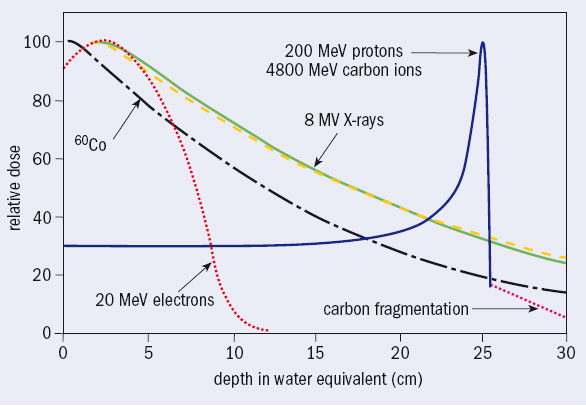
In developed countries every year some 40,000 per 10 million inhabitants are diagnosed as having cancer, around half of whom are treated with high-energy photons produced by electron linacs. There are almost 10,000 electron linacs worldwide, which run more than one shift a day. They irradiate around 4 million patients a year, each in about 30 sessions over 5–6 weeks. The photon beams have energies of a few million electron volts, but are still called X-rays by medical doctors. They have replaced low-energy X-rays and the gamma radiation from radioactive cobalt because they deposit the dose (the energy per unit mass) at greater depth (see figure 1).
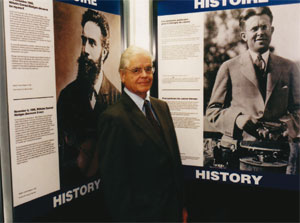
In the same year of Hansen’s invention, and not far away, Robert R Wilson – a Harvard associate professor who was working on cyclotrons with his old teacher Ernest Lawrence at the Radiation Laboratory in Berkeley – was computing the shielding thickness for a 150 MeV cyclotron to be constructed and installed at Harvard. Fifty years later, opening the Advances in Hadron Therapy conference, held at CERN in 1996, Wilson said, “I found that a few inches of lead would fix everything. But I did not stop. Why? Fifty years later I do not know why I did not stop. I suppose the first reason was just plain simple curiosity. So I went on and I jumped into the most obvious thing I could do next: because one could hurt people with protons, one could probably help them too. So I tried to work out every detail and I was surprised to see that the Bragg curve came up and came down very sharply,” (Wilson 1997). The narrow Bragg peak at the end of the range (figure 1) prompted him to publish in the journal Radiology a now-famous paper suggesting the use of protons (and carbon ions) to irradiate tumours while sparing – much better than with X-rays – the healthy tissue traversed, contiguous and located more deeply (Wilson 1946).
However, the resonance within the medical community was almost zero and it was a decade before Berkeley and Harvard treated patients with proton beams from accelerators originally designed for nuclear-physics experiments. It wasn’t until the beginning of the 1990s that radiation oncologists started to recognize this new therapeutic method, because the apparatus was huge by medical standards and the irradiations were done in nuclear-physics laboratories with horizontal particle beams and simple beam-shaping methods. By 1993 about 10 000 patients worldwide had been treated with protons, and by the end of 2006 this has reached 50,000. Today five companies supply turnkey proton-therapy centres.
It is no surprise that from 1961 interesting clinical results for proton therapy were obtained at Harvard where radiotherapists at Massachusetts General Hospital and physicists from Harvard have successfully treated many thousands of head and neck tumours. Eventually in 1993 at the Loma Linda University Medical Center in California, the first proton synchrotron dedicated to proton therapy began irradiating patients in three treatment rooms featuring magnet beamlines on 10 m high gantries, which rotate around the patient. Again, it is no surprise that the Loma Linda synchrotron was built at Fermilab, the particle-physics laboratory that Wilson created and then directed until 1987.
Carbon ions join the fight
Heavier ions than protons, such as helium and later argon, first came into use at Berkeley in 1957 and 1975, respectively. At the old 184 inch cyclotron 2800 patients received brain treatment with helium beams: the lateral spread and range straggling are smaller and this leads to much better dose gradients than protons. At the Bevalac, argon beams were tried to increase the effectiveness against hypoxic and otherwise radio-resistant tumours, i.e. tumours that need deposited doses 2–3 times higher if they are to be controlled with either photons or protons. But problems arose owing to non-tolerable side effects in the normal tissues. After a few irradiations, the Bevalac used lighter ions, first silicon ions and then neon, for 433 patients before it shut down in 1993.
The transition from protons to heavier ions adds another order of magnitude to the complexity of patient irradiation. In the beginning at Berkeley the increase in the relative biological effectiveness (RBE) for ions with respect to photons was believed to be related to the physical parameters of the beam, being the same for different tissues. Since 1980 a large programme of systematic studies of RBE has been carried out at various accelerators, such as Unilac (Darmstadt), Ganil (Caen), Bevalac (Berkeley), the Tandem Van de Graff (Heidelberg) and, later, SIS (Darmstadt). This research studied the effects on very different biological objects, from sub-cellular systems, such as DNA and chromosomes, to biological systems that are resistant to extreme environmental conditions and are used in space research.
The experiments used more than 100,000 biological samples and ion beams from very light to very heavy elements. The research identified the systematic dependence of RBE on physical and biological parameters – mainly the capacity of cells to repair DNA damage – as the most important factor, which was then theoretically modelled for use in treatment planning. In particular, the work showed that for beams of carbon ions the section of the particle track with increased RBE coincides with the few centimetres up to the Bragg peak, while for lighter ions it is concentrated in the last few millimetres. For heavier ions, such as the argon, silicon, and neon ions used previously at Berkeley, it causes significant damage in the normal tissues before the tumour.
For these reasons, in 1994 the synchrotron facility led by Yasou Hirao at the Heavy Ion Medical Accelerator in Chiba (HIMAC), of the National Institute for Radiation Sciences in Japan, treated the first patient with carbon ions, although the accelerator complex was originally designed for ions up to argon.
While an energy of 200 MeV is needed to reach deep-seated tumours (about 25 cm of water equivalent) for protons, 4800 MeV is needed for carbon ions, 24 times higher. Protons beams are obtained either from cyclotrons (normal or superconducting) or from synchrotrons with a diameter of 6–8 m. Currently only synchrotrons are used to produce carbon ions up to 400–430 MeV/u. Their magnetic rigidity is about three times larger than for 200 MeV protons, so synchrotrons of 18–25 m diameter are needed.
Since the end of the 1990s, newly built proton-therapy centres feature isocentric gantries to improve treatment conformity. These avoid high doses to healthy tissue by rotating the beam around the patient as in X-ray treatments. These complex hi-tech systems could not be designed and run effectively and continuously – as is necessary in a hospital environment – were it not for decades of colliding particles and understanding the subatomic world.
Until 1997 relatively simple passive spreading systems were used to produce a spread-out Bragg peak in all hadron-therapy centres. A first scatterer widens the pencil beam while the energy is adapted to the further side of the tumour by appropriate absorbers. More recently, GSI and PSI have developed novel active spreading systems (Haberer et al. 1993 and Pedroni et al. 1995, respectively), which magnetically guide the charged hadrons over the treatment area and modulate the intensity (Intensity Modulated Particle Therapy, or IMPT). All future centres will feature such systems. In particular the ion-therapy centres currently being built at Heidelberg and Pavia have been equipped with the first active beam-delivery system for carbon ions, which restricts the physically and biologically effective end of the track to the target volume (Rossi 2006).
Treating patients
By the beginning of 2006, around 45,000 patients had been treated with proton beams in 12 subatomic physics laboratories and in more than 10 hospital-based proton-therapy centres. (The Particle Therapy Co-ordination Group updates the number of patients treated at see http://ptcog.web.psi.ch Another 10 centres are running or are being built. This shows that proton therapy is booming. At the same time around 2200 patients have been treated with carbon ions at HIMAC, and about 300 at the pilot project proposed by Gerhard Kraft and built at GSI in Darmstadt.
In a conventional treatment with photons of a few million electron volts, a total dose of 60–70 Gy (1 Gy = 1 J/kg) is deposited in a tumour in typically 30 fractions over six weeks. This “fractionation” gives time for re-oxygenation of hypoxic – and therefore radio resistant – tumour cells and allows them to change from radio-resistant stages in the cell cycle to more sensitive stages. In addition, unavoidably irradiated healthy cells have a chance to repair themselves. A proton treatment typically needs the same number of fractions, but allows higher doses to the tumour and thus larger control rates. A larger dose is beneficial because even a 10% increase in the deposited dose generally increases the probability of local control of the tumour by 15–20%.
With carbon ions, the clinical results from Japan and Germany on head, lung, liver and prostate tumours confirm the radiobiological predictions that they have a larger RBE than protons, because their ionization is 24 times higher, which produces multiple double-strand breaks of the DNA of the traversed cell. This damage cannot be repaired, so ion beams are most suited for slow-growing tumours, which are precisely those tumours that are resistant to photons and protons. It is important to note that, since there is only little repair to damage by carbon ions, the fractionation of the dose is not needed as far as tumour inactivation is concerned, but for the normal tissue in the entrance channel fractionation helps to repair the less severe damage. In principle a patient can be treated in 5–10 sessions, reducing both psychological and financial cost. A proton treatment costs 2–3 times more than a conventional treatment, averaging in the West around €6000, but the economy of carbon treatment is different because the shortening of the treatment allows for effective use of the infrastructures. If confirmed by the ongoing clinical trials, this will reduce the cost of treatment and may become one of the main reasons behind any rapid expansion of light-ion therapy in the future. In addition, having little or no side effects reinforces the necessity of active beam-delivery systems for carbon ions, to tailor the dose to the tumour.
In summary, research indicates that carbon-ion beams should be used in the treatment of deep-seated tumours, which are radio resistant both to high-energy photons and to protons. These tumours are thus the targets of choice in a carbon-ion facility, while proton therapy is well adapted to the cases in which a tumour is close to critical organs that cannot be irradiated (Amaldi and Kraft 2005). Groups of radiotherapists in Austria, France, Germany and Italy have applied specific criteria for each tumour site to the national data and made detailed analyses of the number of potential patients (Carbon-ion therapy 2004). The results of these different approaches are consistent. They show that about 1% of the patients treated today with X-rays should be irradiated with protons as the outcomes are definitely better than conventional therapy. In addition, about 12% of X-ray patients would benefit from proton treatment but further clinical trials are needed to quantify the clinical advantages site by site. Lastly, about 3% of X-ray patients would benefit from carbon-ion therapy, but more clinical trials and dose-escalation studies are needed.
Overall, 15% of the approximately 20,000 patients per 10 million inhabitants treated with conventional radiation would receive better treatment with hadron beams. Irradiating these patients would require 3–4 proton treatment rooms (i.e. a centre treating about 1500 patients a year) per 5 million people and a carbon-ion centre per 35 million people. A balanced national programme can therefore make good use of dual centres that accelerate carbon ions and protons and feature fixed ion beams (horizontal, vertical and inclined) and rotating gantries for protons.
Hadron therapy in Europe
In the past five years Europe has made important steps in developing and building hospital-based dual centres for carbon ions and protons. Based on the success of GSI’s pilot project, the Heidelberg Ion Therapy Centre (HIT), designed by GSI, was approved in 2001 and civil engineering work began in November 2003. This centre features two horizontal beams and the first carbon-ion rotating gantry, which is 25 m long and weighs 600 tonnes. The first treatment will be at the end of 2007.
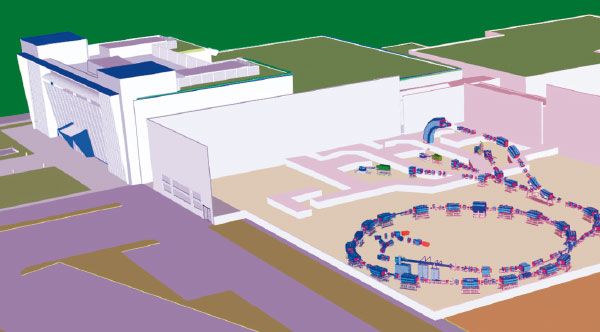
At the end of 1995 Ugo Amaldi, with Meinhard Regler of the Med-Austron project, attracted CERN management’s attention to the design of an optimized synchrotron for light-ion therapy. This was the starting point of a five-year Proton and Ion Medical Machine Study (PIMMS) (Badano et al. 1999 and 2000). As a development of this initiative, in 2002 the Italian health minister financed a second European centre, based on the PIMMS design modified by the TERA Foundation (Fondazione per Adroterapia Oncologica). This is now being built in Pave by the Centro Nazionale di Adroterapia Oncologica Foundation (CNAO) with strong support from INFN (figure 3). It will be ready by the end of 2007.
At the end of 2004 the Austrian authorities approved the Med-Austron project, granting a substantial part of the required funding for the construction of a dual centre in Wiener Neustadt. The tendering procedure to acquire a turnkey carbon-ion facility is now almost complete. Similarly, in May 2005 the French government approved the ETOILE project to be built in Lyon.
In 2002 the initiatives at Heidelberg, Lyon, Pave, Stockholm (where the Karolinska Institute has proposed a similar facility) and Wiener Neustadt all teamed up with the European Society for Radiotherapy, CERN and GSI to form the European Network for Light Ion Therapy, which the European Union financed for three years. The work by this network, and the existence of its potential successor, guarantees that carbon-ion therapy in Europe is on the right track and that the foreseen facilities will be run for the benefit of all European patients. During 2006 a larger group of institutes and hospitals from 15 countries has come together to prepare a new proposal for the EU Framework Programme FP7 under the name ENLIGHT++ (CERN Courier June 2006 p27).
In addition, in January 2006 contracts for a privately financed carbon/proton centre were signed by Rhön–Klinikum–AG, which owns more than 40 German hospitals, including the Giessen-Marburg University clinics, and Siemens Particle Therapy. When it starts up in 2010, the new heavy-ion therapy facility in Marburg (figure 4) will show that hadron therapy with ion and proton beams has left research and arrived in the clinical environment.
Future developments
The unique physical and biological properties of hadron beams are better for patients than the most recent photon image guided radiotherapy (IGRT) techniques if the position of the tumour target can be accurately determined and an active irradiation system can follow the movements of the treated organ. To achieve this, two approaches have been considered. One uses feedback systems that redirect the moving beam during scanning, while the other uses the multiple “repainting” of the target to avoid the local delivery of larger or smaller doses than predicted. In the former, the online motion correction can be done in 3D, using the scanning system for the lateral correction and a fast passive absorber for the depth correction. Experiments at GSI with a phantom showed that the homogeneity and the steep gradients can be preserved to 95% compared with static target irradiation. PSI will pursue the latter approach with proton beams at the PROSCAN project.
Scientists at KEK and TERA have proposed two types of fast cycling accelerators, better suited than cyclotrons and synchrotrons to treating moving organs. They are, respectively, the fixed field alternating gradient accelerator (a mixture of a cyclotron and a synchrotron) and the cyclinac (the combination of a low-energy high-current cyclotron and a high-frequency linac), both of them suitable for proton and carbon-ion therapies. It will take a few years to see what the best solution is both economically and technically.
Without waiting for these developments, industry has shown interest in the upcoming market of hadron therapy, proposing solutions based on synchrotrons and cyclotrons. Five companies already sell proton-therapy units. In the heavy-ion market Mitsubishi has designed a micro-HIMAC, a synchrotron for combined proton and carbon therapy, while Siemens Particle Therapy offers a combined proton/carbon facility on the basis of exclusive licences of the GSI patents and know-how. At present a commercial company is discussing the licensing of the PIMMS/CNAO synchrotron design with the CNAO Foundation. Moreover scientists at the INFN Laboratori Nazionali del Sud in Catania have designed a 300 MeV/u superconducting cyclotron that accelerates hydrogen molecules and carbon ions, allowing treatment with protons of all tumours as well as treatment with carbon ions of tumours located at a water depth of about 15 cm. The Ion Beam Application company in Belgium has transformed this design into a commercial product. The recent interest of industrial companies in ion therapy indicates its large potential, which has its roots in the instruments developed for fundamental research in subatomic physics.
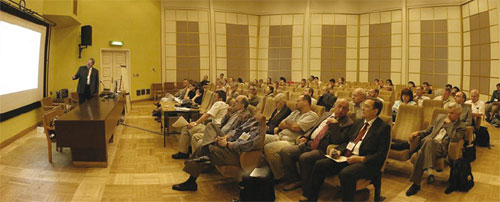
In summer 1976, the International Conference on High Energy Physics (ICHEP), known traditionally as the Rochester conference, was held in Tbilisi, the last time it would take place within the USSR. Thirty years later, the Rochester conference returned to Russia, when around a thousand physicists from 53 countries attended ICHEP’06, held on 26 July – 2 August in the Russian Academy of Sciences in Moscow. The extensive scientific programme contained the customary mixture of plenary reports, parallel sessions and poster presentations. For six days, participants discussed key issues in high-energy physics, ranging from astrophysics and cosmology, through the physics of heavy-ions, rare decays and hadron spectroscopy, to theoretical scenarios and experimental searches beyond the Standard Model. Topics also included Grid technology for data processing, new accelerators and particle detectors, and mathematical aspects of quantum field theory and string theory.
In his opening speech, the co-chair of the conference, Victor Matveev, emphasized that the entire community of Russian high-energy physicists was honoured to host the major international conference of 2006. The participants were also greeted by the director of the Budker Institute of Nuclear Physics (BINP) and co-chair of the conference, Alexander Skrinsky, and deputy rector of the Lomonosov Moscow State University, Vladimir Belokurov. The vice-chair of the organizing committee, and director of the Joint Institute for Nuclear Research (JINR), Alexei Sissakian then spoke about the structure of ICHEP’06 and its scientific programme.
Duality, QCD and heavy-ions
On the theory side, the progress in so-called “practical theory” is evident, primarily in the sophisticated calculations in quantum chromodynamics (QCD) presented by Giuseppe Marchesini of Milano-Bicocca University and Zvi Bern of the University of California, Los Angeles. Gerritt Schierholz from DESY, Adriano Di Giacomo of Pisa University and Valentin Zakharov of the Institute for Theoretical and Experimental Physics (ITEP), Moscow, explained the remarkable achievement of the splendid harmony between analytical calculations and the results obtained on the lattice using dynamical quarks.
The theoretical discussions emphasized the concept and use of gravity-gauge duality in a framework generalizing the anti-de Sitter space/conformal field theory correspondence. This duality is a conjectured relationship between confining gauge theories in four dimensions on the one hand, and gravity and string theory in five and more dimensions on the other. DESY’s Volker Schomerus described how, when applied to QCD, this approach reproduces numerous non-perturbative features of strong interactions, from the low-energy hadron spectrum through Regge trajectories and radial excitations to quark counting rules. On the experimental side, Pavel Pakhlov of ITEP Moscow, Antonio Vairo of Milano University and Alexandre Zaitsev of the Institute for High Energy Physics (IHEP) Protvino, reported on the numerous candidates for exotic hadronic states, both with light quarks only and with heavy quarks and/or gluons, that have been confirmed or newly reported by teams from the VES experiment in Protvino, BES II in Beijing, E852 at Brookhaven, CLEOc at Cornell, Belle at KEK, and BaBar at SLAC. These exotic states have still to be interpreted theoretically, within either gravity/gauge duality or more traditional approaches.
The Relativistic Heavy Ion Collider (RHIC) at the Brookhaven National Laboratory is intensively studying a relatively new area of QCD – the properties of matter at high temperatures and high particle densities. Timothy Hallman from Brookhaven, Larisa Bravina of the Skobeltsyn Institute of Nuclear Physics (SINP) Moscow University, Nu Xu of Lawrence Berkeley National Laboratory (LBNL), and Oleg Rogachevsky of JINR, among others, presented numerous experimental results, some of which were reported for the first time. These results suggest, quite surprisingly, as Xin-Nian Wang of LBNL explained, that collisions of highly energetic ions at RHIC result in the formation of strongly coupled quark–gluon matter, rather than weakly interacting quark–gluon “gas”. Here, too, gravity/gauge duality can reflect the most remarkable properties such as the low viscosity of quark–gluon “fluid”, jet quenching and so on.
Karel Safarik from CERN and Lyudmila Sarycheva of SINP described how QCD will be probed at even higher temperatures at the Large Hadron Collider (LHC) at CERN. Sissakian and Alexander Sorin of JINR reported on plans at the JINR Nuclotron for complementary studies of matter at lower temperatures but high baryon number densities; there are also plans at GSI, Darmstadt. Most likely, matter at these extreme conditions will exhibit new surprising properties in addition to those observed at RHIC.
Quarks and leptons
With the B-factories and Tevatron operating, this conference witnessed impressive progress in flavour physics, including B meson decays, processes with CP violation, b → s and b → d transitions and so on, which featured in the review talks by KEK’s Yasuhiro Okada and Masashi Hazumi and Robert Kowalewski from Victoria University. The discovery of Bs oscillations at the Tevatron was one of the highlights of the year. Doug Glenzinski of Fermilab reported on these results from the CDF collaboration, which reveal a mass difference between the mass eigenstates equal to 17.31 ps-1 (central value). All data on flavour physics, including CP violation and Bs oscillations, are now well described by the Standard Model and Cabibbo–Kobayashi–Maskawa theory. Thus, the Standard Model once again has passed a series of highly non-trivial tests, this time in the heavy-quark sector.
Dugan O’Neil of Simon Fraser University and Florencia Canelli from Fermilab were among those presenting precision measurements of the masses of the heaviest known particles, which are still an important aspect of experimental high-energy physics. New results presented at the conference were based mainly on data from the CDF and D0 collaborations at the Tevatron. The top quark became lighter than it had been at the Beijing Conference in 2004 (CERN Courier January/February 2005 p37): now its mass is 171.4±2.1 GeV. Measurements of the W-boson mass are also more accurate. Making use of these data, the Electroweak Working Group has produced a new fit for the mass of the Standard Model Higgs boson, mh = 85-28+39 GeV, which is somewhat lower than before. According to this fit, the upper limit on the Higgs boson mass is 166 GeV, as Darien Wood of Northeastern University explained. Yuri Tikhonov from BINP presented recent high-precision measurements of the mass of the τ lepton at Belle and at the KEDR detector at BINP, which have confirmed lepton universality in the Standard Model.
Beyond the Standard Model
The conference paid considerable attention to the search for new physics. Numerous possible properties beyond the Standard Model are even more strongly constrained than before, including supersymmetry; extra space–time dimensions; effective contact interactions in the quark and lepton sectors; additional heavy-gauge bosons; excited states of quarks and leptons; and leptoquarks. This was emphasized in various talks by Elisabetta Gallo of INFN Florence, Roger Barlow of Manchester University, Herbert Greenlee of Fermilab, Stephane Willocq of Massachusetts University and others. Yet most of the community is confident that new physics is within the reach of the LHC. Indeed, more theoretical scenarios for tera-electron-volt-scale physics beyond the Standard Model were presented at the conference, in talks for example by Rohini Godbole of the Indian Institute of Science, Alexander Belyaev of Michigan University, Pierre Savard of Toronto University and TRIUMF, Sergei Shmatov and Dmitri Kazakov of JINR, and Satya Nandi of Oklahoma University. Notable exceptions were Holger Bech Nielsen of the Niels Bohr Institute, who argued that even the Higgs boson might never be discovered (for a not necessarily scientific reason), and Mikhail Shaposhnikov of Lausanne University and the Institute for Nuclear Research (INR) Moscow, who defended his “nuMSM” model, which accounts for all existing data in particle physics and cosmology at the expense of extreme fine-tuning.
CERN’s Fabiola Gianotti raised much interest by discussing the tactics for early running at the LHC, reflecting the community’s thirst for new physics and the high expectations for the LHC. More generally, there was a sense of expectation as this was the last Rochester meeting before the start-up of the LHC.
The properties of neutrinos continue to be among the top issues in high-energy physics. Geoff Pearce of the Rutherford Appleton Laboratory presented the first data from a new player, the MINOS collaboration, which support the pattern of the oscillations of muon neutrinos observed by the Super-Kamiokande and KEK-to-Kamioka (K2K) experiments. Other collaborations presented refined analyses of their data in talks by Kiyoshi Nakamura of KamLAND and Tohoku University, Yasuo Takeuchi of Super-Kamiokande and Tokyo University, keVin Graham of the Sudbury Neutrino Observatory and Carleton University, Valery Gorbachev of the Russian American Gallium Experiment and INR Moscow, and Yuri Kudenko of K2K and INR. These agree overall on oscillations of both electron and muon neutrinos, with evidence for oscillations of muon neutrinos into tau neutrinos confirmed by the Super-Kamiokande experiment. Also, the KamLand experiment has confirmed and enhanced the case for geo-neutrinos. The dominating oscillation parameters are now measured with the precision of 10–20%, except for the smallest mixing angle θ13 and a possible CP-violating phase, as Regina Rameika of Fermilab, Ferruccio Feruglio of Padova University and Kunio Inoue of Tohoku University explained. Interestingly, the range of neutrino masses 0.01 eV < mν < 0.3 eV, suggested by neutrino oscillation experiments, as well as by cosmology and direct searches, is in the right ballpark for leptogenesis – a mechanism for the generation of the matter–antimatter asymmetry in the universe.
Astroparticle physics is another area of continuing interest. Anatoli Serebrov of Petersburg Nuclear Physics Institute presented a new measurement of the neutron lifetime, which makes a significant contribution to the calculation of the abundance of primordial helium-4 in the universe. Techniques for the direct and indirect detection of dark-matter particles are rapidly developing, with indications for positive signals from DAMA and EGRET still persisting, as described by Alessandro Bettini of INFN Padova and by Kazakov. In cosmic-ray physics, the Greisen–Zatsepin–Kuzmin cut-off in the spectrum of ultra-high-energy cosmic rays is still an issue. Giorgio Matthiae of Rome University “Tor Vergata” presented the first data from the Pierre Auger Observatory. Masahiro Teshima of the Max Planck Institute, Munich, and Gordon Thomson of Rutgers University presented the new analyses by the AGASA and HiRes collaborations, respectively. As a result, as Yoshiyuki Takahashi of Alabama University explained, the discrepancy between different experiments is now reduced.
Traditionally, the Rochester conferences discuss future accelerators for high-energy physics and new developments in particle detection, and receive reports from the International Committee for Future Accelerators (ICFA) and the Commission on Particles and Fields (C11) of the International Union of Pure and Applied Physics (IUPAP). This was particularly timely in Moscow in view of the upcoming start-up of the LHC. At present, the scientific community is discussing a new megaproject – the large linear electron–positron collider with an energy of 0.5–1.0 TeV, known as the International Linear Collider (ILC). Together with the LHC, the ILC will be a unique tool for studying fundamental properties of matter and the universe. The talks by Skrinsky, DESY’s Albrecht Wagner and Rolf Heuer, and CERN’s Lyn Evans discussed the prospects for the project, including the contribution from Russia. Gregor Herten of Freiburg University, who heads the IUPAP Commission (C11), said that fundamental science is very important in Russia, and that the research conducted by Russian scientists is highly esteemed around the world.
Valery Rubakov of INR Moscow closed the conference with a summary talk emphasizing both the current confusion of some theorists regarding new physics and the impact of the LHC on the entire field and beyond. The hope is that, with results from the LHC, at least some of the numerous questions raised in Moscow will be answered at the next Rochester conference, to be held in summer 2008 in Philadelphia.
The ICHEP’06 conference was jointly organized by the Russian Academy of Sciences, the Russian Federation (RF) Ministry of Education and Science, the RF Federal Agency on Science and Innovation, the RF Federal Agency on Atomic Energy, the Lomonosov Moscow State University and JINR, the main coordinator of the meeting. It was financially supported by IUPAP, the Russian Foundation for Basic Research, RAS, JINR and the RF Federal Agency on Science and Innovation.
• The authors are indebted to Valery Rubakov for his help in preparing this article.
In Europe, one in three people is expected to confront some form of cancer during his or her lifetime. In Switzerland alone, this amounts to about 28,000 patients a year – 70% of whom undergo radiotherapy, now the second most successful form of treatment after surgery. While the majority of tumours are treated with photons, the use of proton beams, first proposed 60 years ago, is becoming increasingly important for deep-seated tumours, as the technique moves from accelerator centres to dedicated clinical facilities. The Paul Scherrer Institute (PSI) is one of Europe’s leading centres for proton-therapy research and has recently begun work with a new superconducting proton cyclotron, COMET, and beamline to serve its proton-therapy project, PROSCAN.
PROSCAN grew from PSI’s decision in 2000 to expand its radiotherapy activities by developing a new compact gantry system to enable the laboratory’s successful spot-scanning technology to be used in a hospital environment. The project also aims at optimizing treatment methods and expanding the spectrum of treatable forms of cancers, as well as transferring the technology and know-how to industry and other radiotherapy centres, including the education and training of specialist personnel.
PSI’s pioneering development of the spot-scanning technique for deep-seated tumours dates back to its former times as the Swiss Institute for Nuclear Research (SIN), when the laboratory established a therapy programme using pions. This used a dynamic beam-delivery system of 60 converging pion beams where the patient’s target area could be moved 3-dimensionally within a body (bolus) of water. Some 500 patients were treated with this system between 1981 and 1992. Protons for both the pion work and the subsequent proton-therapy programme at the Gantry 1 system described below were produced by the main 590 MeV Ring Cyclotron and a beam-splitter system, which at the same time served the main users in particle physics and materials science. In 1984, in collaboration with the Lausanne University Eye Clinic, the very successful OPTIS Proton Therapy Programme began. A first in Europe, this facility has treated more than 4400 patients with differing forms of eye tumours, using a 70 MeV horizontal proton beam from PSI’s Injector 1 cyclotron. With a success rate of better than 98%, it continues to treat the highest number of eye patients worldwide each year, and has led in turn to the establishment and operation of six new European facilities in England, France, Germany, Italy and Sweden.
Modern ways to achieve a conformal dose distribution tailored 3-dimensionally to a target tumour volume, while sparing healthy tissue, use active scanning rather than conventional passive scattering (Goitein et al. 2002). The latter, which has fewer degrees of freedom, uses a set of scattering foils to produce a laterally spread-out proton beam of constant range. A set of individually manufactured collimators and compensators then contours the beam to match each target volume. The range of the protons is subsequently modulated by, for example, a rotating range-shifter wheel, which alters the proton depth profile.
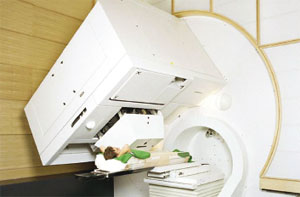
Figure 1 illustrates the principle of active scanning. Here the dose delivery to the patient is achieved through the sequential superposition of single pencil beams of protons, each of which produces a hot spot at the Bragg peak, where the protons deposit most of their energy. The hot spot is about 1 cm3 for a Gaussian beam profile of 7–8 mm FWHM. Lateral scanning is possible either using sweeper magnets or by moving the patient table, or by a combination of both. Depth modulation, on the other hand, is achieved either by a fast active degrader or by changing the beam energy. Combining these options with both a beam-delivery system that can rotate and an eccentrically mounted counter-rotating patient table yields the very compact (4 m diameter) PSI Gantry 1 system (figure 2).
This system allows a dose application of almost 10,000 spots/litre to be applied in a few minutes with an individual spot-dose precision of 1%. It is the only facility in the world to use a dynamic beam-delivery technique based on active spot scanning with protons. A similar scanning system using a horizontal beamline has been developed for carbon ions at Germany’s national laboratory for heavy-ion physics, GSI in Darmstadt.
Gantry 1 was designed to treat deep-seated tumours and since it started up in 1996 has handled around 260 patients, some 69 of whom were treated with a new therapy plan using intensity-modulated proton therapy (IMPT), which further reduces the dose to healthy tissue. One of the main disadvantages of the present spot-scanning technique as applied in Gantry 1 is the modulation speed, which is currently too slow to apply IMPT to moving target volumes. This will soon be addressed with the new features being incorporated into Gantry 2, within the PROSCAN project.
The PROSCAN project
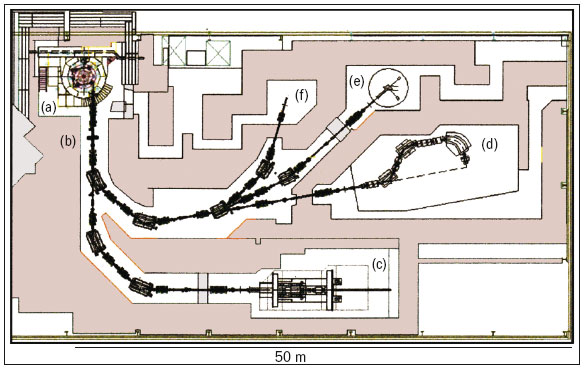
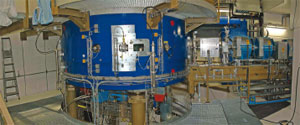
When PROSCAN is complete it will consist of six main features (figure 3), with the newly commissioned 250 MeV superconducting cyclotron, COMET, as the heart of the facility (figure 4). ACCEL Instruments, Germany, built this machine in close co-operation with accelerator specialists at PSI, and based it on a design by Henry Blosser of Michigan State University. It will allow year-round therapy operation. The decision in favour of a cyclotron was based on the benefits of the 100% duty cycle and the need to control the beam intensity precisely and dynamically prior to acceleration. The restriction of the fixed energy from a cyclotron in turn requires a degrader system that acts rapidly, allowing fast, small energy steps to be implemented. This, together with a beam-diagnostics system after the degrader, means that the rapid modulation of both energy and intensity can be fully exploited, allowing the possibility of fast volumetric rescanning and the study of IMPT for moving tumours. The new machine also achieved the stringent requirement of an 80% extraction efficiency and an availability of 98%.
Gantry 1 will remain unchanged and will continue as the workhorse for treating patients in PROSCAN. The development work will concentrate on implementing IMPT methods into clinical practice, including treatment planning, dosimetry and quality-assurance. The present OPTIS eye-treatment facility at the Injector 1 cyclotron will continue its successful operation until mid-2007 when it will be transferred to the new 70 MeV area at PROSCAN. This will involve a complete re-design of the control system and treatment procedures. The second of the two horizontal beamlines will do biological and dosimetry experiments.
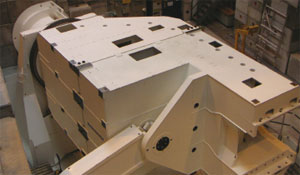
Finally, to meet the challenge to proton therapy of producing a beam-scanning method that can overcome the sensitivity to organ motion, a new compact gantry system, Gantry 2, is being built to be implemented in 2007, with the first treatments of patients expected in 2008 (figure 5). This will allow faster beam scanning by 2D magnetic deflection, to achieve multiple target rescannings of the same volume within a single sitting (Pedroni et al. 2004).
Once the PROSCAN facility is fully operational it is expected that the number of patient treatments for deep-seated tumours will increase by a factor of 3–4 (150–250 patients a year) with a further 200–300 patients a year benefiting from the OPTIS eye- treatment station. It has taken some 50 years from the basic idea for protons to come of age as a clinical tool, enabling more than 40,000 patients so far to benefit from this therapy developed in a multi-disciplinary fashion. Although the future is clearly aimed at providing dedicated commercial facilities for hospitals and clinics, the present role played by accelerator laboratories such as PSI, in developing new methods and the technology to implement them, is an essential ingredient in achieving this goal.
To provide the best experiences, we use technologies like cookies to store and/or access device information. Consenting to these technologies will allow us to process data such as browsing behavior or unique IDs on this site. Not consenting or withdrawing consent, may adversely affect certain features and functions.
Functional
Always active
The technical storage or access is strictly necessary for the legitimate purpose of enabling the use of a specific service explicitly requested by the subscriber or user, or for the sole purpose of carrying out the transmission of a communication over an electronic communications network.
Preferences
The technical storage or access is necessary for the legitimate purpose of storing preferences that are not requested by the subscriber or user.
Statistics
The technical storage or access that is used exclusively for statistical purposes.The technical storage or access that is used exclusively for anonymous statistical purposes. Without a subpoena, voluntary compliance on the part of your Internet Service Provider, or additional records from a third party, information stored or retrieved for this purpose alone cannot usually be used to identify you.
Marketing
The technical storage or access is required to create user profiles to send advertising, or to track the user on a website or across several websites for similar marketing purposes.