Comsol -leaderboard other pages

Topics

Keeping antihydrogen: the ALPHA trap

Suppose, as the villain of a story, you absolutely needed to transport a macroscopic amount of antimatter, for whatever sinister purpose. How would you go about it and could you smuggle it, for example, into the Vatican catacombs? The truth is that we will probably never have a macroscopic amount of antimatter for such a scenario to ever become reality.

According to the preface to the popular novel Angels and Demons (2000), author Dan Brown was apparently inspired by the imminent commissioning of CERN’s “antimatter factory”, the Antiproton Decelerator (AD). The real-life AD has now been fully operational for about five years, and the experiments there have produced some notable physics results. One of the big stories along the way was the synthesis in 2002 of antihydrogen atoms by the ATHENA and ATRAP collaborations.

This feat was an important step towards one of the ultimate goals of everyday antimatter science: precision comparisons of the spectra of hydrogen and antihydrogen. According to the CPT theorem, these spectra should be identical. To get an idea of what precision means in this context, take a look at the website of 2005 Nobel Laureate Theodor Hänsch, which has the following cryptic headline: f(1S–2S) = 2 466 061 102 474 851(34) Hz. This may look like a cryptic puzzle appearing in Brown’s fiction, but it simply means that the frequency of one of the n = 1 to n = 2 transitions in hydrogen has been measured with an absolute precision of about 1 part in 1014. This is impressive, but where do we stand with antihydrogen?

Storing antihydrogen
CCalp1_07_07

Both ATHENA and ATRAP produced antihydrogen by mixing antiprotons and positrons in electromagnetic “bottles” called Penning traps. Penning traps feature strong solenoidal magnetic fields and longitudinal electrostatic wells that confine charged particles. The antiprotons come from CERN’s AD, and the positrons come from the radioactive isotope 22Na. The whole process involves cleverly slowing, trapping, and cooling both species of particles (Amoretti et al.. 2002 and Gabrielse et al.. 2002). But here’s the rub: when the charged antiproton and positron combine, the neutral antihydrogen is no longer confined by the fields of the Penning trap, and the precious anti-atom is lost. The ATHENA experiment demonstrated antihydrogen production because it could detect the annihilation of the anti-atoms when they escaped the Penning trap volume and annihilated on the walls.

To study antihydrogen using laser spectroscopy, anti-atoms need to be sustained for longer. In the 1s–2s transition mentioned above, the excited state (2s) has a lifetime of about a seventh of a second; while in ATHENA, an anti-atom would annihilate on the walls of the Penning trap within a few microseconds of its creation. Thus, the next-generation antihydrogen experiments include the provision for trapping the neutral anti-atoms that are produced in a mixture of charged constituents.

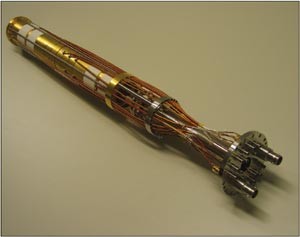
The Antihydrogen Laser Physics Apparatus (ALPHA) collaboration has recently commissioned a new device designed to trap the neutral anti-atoms. ALPHA takes the place of ATHENA at the AD and features five of the original groups from ATHENA (Aarhus, Swansea, Tokyo, RIKEN and Rio de Janeiro) plus new contributors from Canada (TRIUMF, Calgary, UBC and Simon Fraser), the US (Berkeley and Auburn), the UK (Liverpool) and Israel (Nuclear Research Center, Negev).
CCalp2_07_07

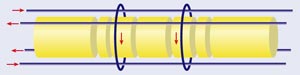
Neutral atoms – or anti-atoms – can be trapped because they have a magnetic moment, which can interact with an external magnetic field. If we build a field configuration that has a minimum magnetic field strength, from which the field grows in all directions, some quantum states of the atom will be attracted to the field minimum. This is how hydrogen atoms are trapped for studies in Bose–Einstein condensation (BEC). The usual geometry is known as an Ioffe–Pritchard trap. A quadrupole winding and two solenoidal “mirror coils” produce the field to provide transverse and longitudinal confinement, respectively. The image above also shows the electrodes that provide the axial confinement in the Penning trap for the charged antiprotons and positrons. The idea is that the antihydrogen produced in the Penning trap is “born” trapped within the Ioffe–Pritchard trap – if its kinetic energy does not exceed the depth of the trapping potential.

This is a big “if”. A ground-state hydrogen atom has a magnetic moment that gives us a trap depth of only about 0.7 K for a magnetic well depth of 1 T. The superconducting magnetic traps that we can build and squeeze into our experiments will give 1–2 T of well-depth for neutral atoms. All antihydrogen experiments to date occur in devices cooled by liquid helium at 4.2 K, but there are strong indications that the antihydrogen produced by direct mixing of antiprotons and positrons is warmer than this, with temperatures of at least hundreds of kelvin. ATRAP has devised a laser-assisted method of producing antihydrogen that May give colder atoms, but their temperature has not yet been measured. (Note that the highly excited antihydrogen atoms produced in both experiments can have significantly larger magnetic moments, thus experiencing higher trapping potentials. The trick, then, is to keep them around while they decay to the ground state.) Both groups are investigating new ways to produce colder anti-atoms, and the 2007 run at the AD (June–October) promises to be revealing.

Designer magnets

A second important issue facing both collaborations is the effect on the charged particles of adding the highly asymmetric Ioffe–Pritchard field to the Penning trap. Penning traps depend on the rotational symmetry of the solenoidal field for their stability. As ALPHA collaborator Joel Fajans of Berkeley initially pointed out, the addition of transverse magnetic fields to a Penning trap can be a recipe for disaster, leading either to immediate particle loss, or to a slower, but equally fatal, loss due to diffusion. Fajans’ solution, adopted by the ALPHA collaboration, is to use a higher-order magnetic multi-pole field for the transverse confinement. A higher-order field can, in principle, provide the same well-depth as a quadrupole while generating significantly less field at the axis of the trap, where the charged particles are confined.

CCalp3_07_07

To construct such a magnet, the ALPHA collaboration surveyed the experts in fabrication of superconducting magnets for accelerator applications. It turns out that the Superconducting Magnet Division at the Brookhaven National Laboratory (BNL) had previously developed a technique that is almost tailor-made to our needs. The key here is to use the proper materials in the construction of the magnet. To detect antiproton annihilations, ALPHA incorporates a three-layer silicon vertex detector similar to those used in high-energy experiments. However, the annihilation products (pions) must travel through the magnets of the atom trap before reaching the silicon. Therefore, it is highly desirable to minimize the amount of material used in the magnet construction to minimize multiple scattering between the vertex and the detector. So bulky stainless-steel collars for containing the magnetic forces, as used in the Tevatron or the LHC, cannot be used.
CCalp4_07_07

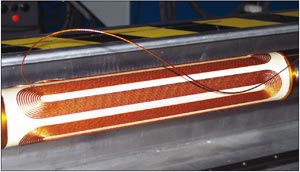
The Brookhaven process uses composite materials to constrain the superconducting cable that forms the basis of the magnet. Using a specially developed 3D winding machine, the team at BNL was able to wind an eight-layer octupole and the mirror coils directly onto the outside of the ALPHA vacuum chamber. The mechanical strength is provided by pre-tensioned glass fibres in an epoxy substrate. Only the superconducting cable is metal.
CCalp5_07_07

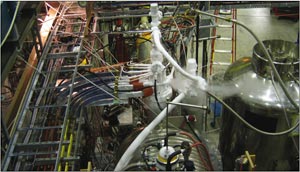
The new ALPHA device was designed and constructed during the AD shutdown of November 2004 to July 2006 and commissioned during the physics run at the AD in July–November 2006. The Brookhaven magnets performed beautifully, demonstrating that charged antiprotons and positrons can be stored in the full octupole field for times far exceeding those necessary to synthesize antihydrogen. We even made the first preliminary attempt to produce and trap antihydrogen in the full field configuration; but we have yet to observe evidence for trapping.

Meanwhile, the ATRAP collaboration worked hard to commission a new quadrupole trap for antihydrogen and succeeded in storing clouds of antiprotons and electrons in their new device. The 2007 physics run at the AD promises to be an exciting one for antihydrogen physics. Both ALPHA and ATRAP should have operational devices that are capable – in theory – of trapping neutral antimatter for the first time.

Back to Dan Brown

So let’s look at what is possible in experiments with antimatter today, leaving the speculation to aficionados of sci-fi and NASA. If you wanted to take antimatter to the offices of your national funding agency, you might consider taking some antiprotons, since most of the mass-energy of an antihydrogen atom is in the nucleus. This might be tempting, since our charged-particle traps are certainly deeper than those for neutral matter or antimatter. ATRAP and ALPHA initially capture antiprotons in traps with depths of a few kilo-electron-volts, corresponding to tens of millions of kelvin. But, density is an issue. A good charged-particle trap for cold positrons has a particle density of about 109 cm–3. Antiproton density is much smaller, but we’ll be optimistic and use this number. So to transport a milligram of antiprotons – of the order of 1021 particles – you would need a trap volume of 1012 cm3, or 106 m3. That means a cube 100 m wide, which will not fit in your luggage. Incidentally, a milligram of antimatter, annihilating on matter, would yield an energy equivalent to about 50 tonnes of TNT.

So, what about transporting some neutral antimatter? Neutral atom traps certainly have higher densities. The first BEC result for hydrogen at MIT reported a density in the order of 1015 cm–3 for about 109 atoms in the condensate. This is better, but still far less than a milligram, even if you can get the atoms from a gas bottle. The size of the trap is now down to 105 cm3, which is more manageable. Note, however, that the BEC transition in this experiment was at 50 μK – far below the 4.2 K that we hope to achieve with antihydrogen. Unfortunately, to get really cold and dense atomic hydrogen requires using evaporative cooling – throwing hot atoms away to cool the remaining ones in the trap. This implies damaging your lab before you send the surviving, trapped anti-atoms to their final, cataclysmic fate. And don’t forget that the total history of antiproton production here on Earth amounts to perhaps a few tens of nanograms in the past 25 years or so. Unfortunately, the antiproton production cross-section is unlikely to change.

How many anti-atoms can we trap? The Japanese-led ASACUSA experiment, using an extra stage of deceleration after the AD, can trap around a million of the 30 million decelerated anti-protons that the AD delivers every 100 s or so. Suppose we could make all of these into antihydrogen (in comparison, ATHENA achieved about 15%). The trapping efficiency for neutral anti-hydrogen is anybody’s guess at this point – we would be grateful for 1%. This is why the very notion of having a dense cloud of interacting antihydrogen atoms will bring a weary smile to the face of anyone working in the AD zone. Using the above figures, it would take us 1019 s – about 300 billion years – to accumulate just one milligram. One might also question if anyone could engineer a device reliable enough to safely contain an explosive quantity of anti-matter – not in my lab, thanks.

Back down to the sober reality here at CERN, we would be happy just to demonstrate trapping of antihydrogen in principle. This means initially trapping just a few anti-atoms – not making a BEC or antihydrogen ice. The future of our emerging field seems to depend on this, although ASACUSA is developing a plan to do spectroscopy on antihydrogen in flight. Time will tell which approach proves more promising. Two things are certain: the real technology of antimatter production and trapping lags far behind Dan Brown’s imagination; and the Vatican is safe from us.

Hubble detects ring of dark matter

Astronomers using the Hubble Space Telescope have discovered a ghostly ring of dark matter that formed during a titanic collision between two massive galaxy clusters. Because ordinary matter in the cluster shows no evidence of such a ring, this discovery is among the strongest evidence yet for non-baryonic dark matter.

Clusters of galaxies are the largest gravitationally bound structures in the universe. They typically contain hundreds or thousands of galaxies, forming at the knots of the filamentary sponge-like distribution of matter on very large scales. Numerical simulations show how the accretion of matter from the filaments to the knots make galaxy clusters grow in size. This one-dimensional accretion (along a filament) results in frequent, near head-on collisions among clusters or groups of galaxies, whereas interactions between individual galaxies usually occur only when there is significant rotation.

The galaxy cluster Cl 0024+17 – some 5 x 109 light-years away (z = 0.4) – is supposed to have experienced exactly such a head-on collision 1 or 2 thousand million years ago. The first evidence of this was obtained in 2002 by Oliver Czoske, from the University of Bonn, and collaborators. By studying the velocity distribution of the galaxies in the cluster, they found two distinct groups with opposite velocity, suggesting that there are two sub-clusters moving away from each other along the line-of-sight. Their numerical simulations confirm the collision scenario and suggest a sub-cluster mass ratio of 2:1.

In 2004, when Myungkook Jee from the John Hopkins University started to study the dark-matter distribution in Cl 0024+17, he was not aware that this was such a peculiar cluster of galaxies. He was at first annoyed when he saw the ring-like distribution because he had never seen such a pattern in other clusters, and thought it was an artefact. It is indeed tricky to derive the dark-matter distribution in a cluster from the distortion it causes on the shape of background galaxies, but the analysis of this weak gravitational lensing now seems to be well under control, with the release of the first 3D map of the dark matter distribution (CERN Courier January/February 2007 p11).

The ring-like structure, which measures 2.6 million light-years across, is reminiscent of the famous Cartwheel Galaxy (CERN Courier March 2006 p12) shaped by a frontal collision with another galaxy. A similar scenario – but on the scale of galaxy clusters – is most likely at the origin of the dark-matter ring found by Jee and colleagues.

To validate this scenario, they performed a collisionless N-body simulation of the head-on interaction between two spherical dark-matter halos. The simulation shows how the cluster collision triggers a radially expanding shell of dark matter around each cluster core. These shells superimpose in projection on the sky to form the ring-like pattern.

The unique spatial distribution of this ring, compared with both the galaxies and the hot X-ray emitting gas in the cluster, is strong evidence for the existence of dark matter. It confirms a similar result found in the Bullet Cluster (CERN Courier October 2006 p9) and makes it difficult for any theory trying to reproduce the effect of dark matter by modified Newtonian dynamics (MOND).

German particle physics gets funding boost

Physicists in Germany will soon be able to strengthen their role in the international quest to understand the fundamental laws of nature. On 15 May, the Senate of the Helmholtz Association of German Research Centres announced that it will grant €25 m in funding over the next five years to support the Helmholtz Alliance, Physics at the Terascale, in a proposal led by the DESY research centre. In this alliance, DESY – together with Forschungszentrum Karlsruhe, 17 universities and the Max Planck Institute for Physics in Munich – will bring together existing competencies in Germany in the study of elementary particles and forces.

At the same time, the Helmholtz Alliance will provide the basis to drive technological advancement in a much more focused way. This new initiative comes at a time when German particle physicists are making large contributions to international collaborations at particle accelerators, such as the LHC at CERN, and a future International Linear Collider.

Alliance funds will finance more than 50 new positions for scientists, engineers and technicians during the initial five-year period. Junior scientists, in particular, will be given the opportunity to lead research groups with options for tenure positions. This is intended to open up attractive new perspectives for a future career in particle physics. Joint junior positions at all partner institutes, coordinated recruitment and teaching substitutes for researchers who are abroad will together provide a framework where it is possible for scientists to work away from their home institutes at large-scale international research centres without interfering with teaching provision.

The new network will enhance collaboration between universities and research institutes in data-analysis fields and the development of new technologies. Particular support will be given to the design of new IT structures, as well as detector and accelerator technologies that are of central importance for the sustainable development of particle physics in the future.

As a member of the alliance, DESY will offer its facilities for testing and development of detector and accelerator technology, and 10 Helmholtz Alliance positions will be opened at the laboratory. An analysis centre for LHC data will also be established at DESY.

AGILE takes its place in orbit

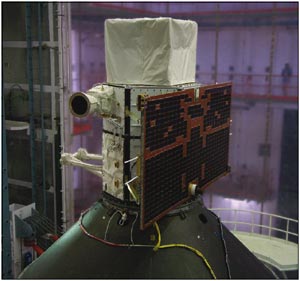
On 23 April, the Indian Polar Satellite Launch Vehicle (PSLV) launched the Italian astronomical satellite, AGILE, into orbit from the Sriharikota base in Chennai-Madras. AGILE (Astrorivelatore Gamma a lmmagini Leggero) is a 350 kg satellite dedicated to high-energy astrophysics. Its main goal is the simultaneous detection of hard X-ray and gamma-ray cosmic radiation in the energy bands 15–60 keV and 30 MeV – 50 GeV, with optimal imaging and timing.

CCnew6_07_07

Ten days after launch, on 4 May, the instruments on board the satellite – the tracker, the mini-calorimeter, and the X-ray detector – were switched on and the first data transmitted back to Earth. All proved to work well, and commissioning proceeded according to schedule until the end of June. The tracker, the main scientific instrument on AGILE, is based on state-of-the-art, reliable technology of solid-state silicon detectors developed by INFN laboratories.

CCnew7_07_07

The AGILE Mission is funded and managed by the Italian Space Agency (ASI), with co-participation from the Italian Institute of Astrophysics, the Italian Institute of Nuclear Physics, and several universities and research centres – including the National Research Council, the National Agency for New Technologies, Energy and the Environment, and the Consorzio Interuniversitario per la Fisica Spaziale. The industrial contractors involved are Carlo Gavazzi Space, Oerlikon-Contraves, Alcatel-Alenia Space Italia-LABEN, Telespazio, Galileo Avionica, Intecs and Mipot.

Borexino begins data taking at Gran Sasso

The Borexino detector is now fully operational at the Laboratori Nazionali del Gran Sasso. This milestone comes after several years of technical developments that have led to the lowest background levels ever achieved, followed by construction and commissioning. In addition, problems at the underground laboratory and with local authorities – owing mainly to environmental concerns – caused four years of delay.

Borexino’s main goal is the measurement of the monoenergetic (862 keV) neutrinos from the decay of 7Be formed in a branch of the proton–proton (pp) fusion chain in the Sun. Previous experiments indicate a severe suppression of these neutrinos, which are important in understanding solar neutrinos and neutrino oscillations.

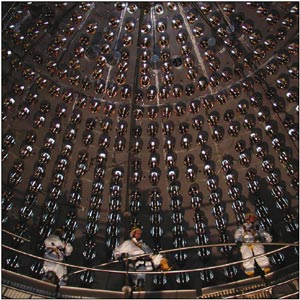
CCnew5_07_07

The experiment will detect neutrino–electron scattering in real time in its central volume of 300 tonnes of ultrapure liquid scintillator (100 tonnes of fiducial mass). This is shielded by 1000 tonnes of ultrapure quenched pseudocumene (1-2-4 trimethylbenzene) and 2400 tonnes of purified water. A stainless-steel sphere contains the pseudocumene and also supports 2200 photomultipliers to detect the light produced by neutrino interactions, while 200 phototubes facing into the shielding water provide a veto for muons.

Borexino will cast light on the low mixing-angle solution for neutrino oscillation, which is still to be confirmed at low energies, and should provide information on the electron–neutrino survival probability in the transition region (0.7–4.0 MeV) between vacuum and matter oscillations. With its very low threshold – well below 1 MeV – the experiment also has the potential to explore other solar neutrino signals for the first time, and to test the astrophysical model of the Sun at the level of a few per cent. In addition, Gran Sasso provides the ideal location for the study of geoneutrinos, thanks to the low level of backgrounds from nuclear reactors.

VIRGO opens up new astronomy

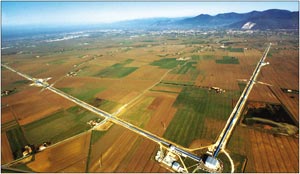
On 18 May, the Virgo laser interferometer for the detection of gravitational waves started its first science run at the European Gravitational Observatory, Pisa, marking a step forward towards a new astronomy. If Virgo and its counterparts, LIGO in the US and GEO600 in Germany, succeed in detecting gravitational waves, they will reveal new information about the universe.

Until now, astronomy has been based on photons – electromagnetic waves – originating from the accelerated motion of electric charges, as in a burning star. Gravitational waves originate instead in matter’s most intrinsic characteristic, its mass. A direct consequence of general relativity, gravitational waves are perturbations of the gravitational fields that are produced by the accelerated motion of masses, as in star collisions. According to general relativity, gravitational fields distort space–time and the passage of gravitational waves produces ripples, like on the surface of a pond. A light beam travelling through this perturbed space–time should be subject to tiny oscillations in the time it takes to bounce between two widely spaced mirrors.

CCnew3_07_07

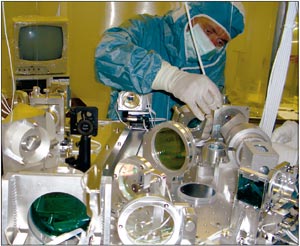
Laser interferometers, such as Virgo, are ideal instruments to detect these phenomena. They can compare with enormous accuracy the times that light takes to go back and forth along two perpendicular arms, 3–4 km long. Miniscule changes in these times caused by gravitational waves will appear as microscopic changes in the interference fringes.

Having reached a sensitivity close to the design value, and comparable to that of the LIGO interferometers, Virgo has now begun scientific operation. The data collected will complement data from other detectors, and improve the overall statistical significance.

In an important step that greatly increases the value of the data collected in Europe and the US, Virgo and the LIGO Science Collaboration have agreed to share their data. The constitution of a worldwide network of detectors, the data for which are analysed coherently, has several basic advantages. The coincidence between weak signals sensed in widely separated locations allows the rejection of spurious events from local noise. The arrival-time difference of a gravitational-wave signal of various detectors enables reconstruction by triangulation of the position of the source in the sky and measuring the wave-front at several points allows the determination of all of the parameters characterizing gravitational waves.

CCnew4_07_07

With the instruments close to their design sensitivities, researchers could detect gravitational waves in the coming four months of common data-taking, although the “discovery” probability is estimated to be only about 1%, even for binary neutron-star coalescence – one of the better known sources. To increase this probability, the researchers have set up a coordinated, two-stage improvement campaign. This will bring the overall detection probability into the range of one event a year for 2009–2010, and a few tens of events a year for 2013–2014. If attained, it will mark the birth of gravitational-wave astronomy.

• Virgo is funded on an equal basis by the Centre National de la Recherche Scientifique and the Istituto Nazionale di Fisica Nucleare.

DØ and CDF find same new baryon

After several years of independently gathering and analyzing data at Fermilab’s Tevatron, the DØ and CDF collaborations have reported the observation of the same new baryon within days of each other.

The DØ collaboration announced the first direct observation of the strange b baryon, Ξb, in a paper submitted to Physical Review Letters on 12 June. Then, at a packed Fermilab seminar on 15 June, no sooner had Eduard De La Cruz Burelo reported on DØ’s discovery than Dmitry Litvintsev from the CDF collaboration rose to present independent evidence for the very same particle. Consisting of three quarks – d, s and b – the Ξb is the first observed particle to be formed of quarks from all three generations.

CCnew2_07_07

The ALEPH and DELPHI experiments at LEP had previously found indirect evidence for the Ξb in the form of an excess of events with a Ξ and a lepton of the same sign. Now the two experiments at the Tevatron have been able to reconstruct fully the specific decay, Ξb → J/ΨΞ, where the products decay in their turn: J/Ψ → μ+μ, Ξ → Λ0π and Λ0 → pπ. While the Λ and Ξ have decay lengths of a few centimetres, the Ξb travels only a millimetre or so before it decays.

The analysis basically consists of searching for events with muon pairs that correspond to a J/Ψ together with a proton and two pions of the same sign. One pion and the proton must have a mass equivalent to the Λ and come from a vertex that is an appropriate distance from the origin of the second pion. The Λ and this pion should then have a mass equivalent to a Ξ and a common vertex corresponding to the Ξ’s decay point. The next step is to match the origins of the Ξ candidates with those of the J/Ψs to reconstruct the decay of the Ξb.

In an analysis of 1.3 fb–1 of data collected during 2002–2006, the DØ collaboration found 19 candidate events for Ξb while the CDF collaboration found 17 candidates in 1.9 fb–1. Both experiments measured the mass of the new particle, with consistent results. In their submitted paper, DØ gives the measured mass as 5.774 ± 0.011 (stat.) ± 0.015 (syst.) GeV/c2, and quotes a significance of 5.5 σ for the observed signal. At the seminar, CDF presented a preliminary mass value of 5.7929 ± 0.0024 (stat.) ± 0.0017 (syst.) GeV/c2, with a significance of 7.8 σ. DØ has also measured the ratio of the cross-section multiplied by the branching ratio of their observed Ξb events relative to that for the well-known Λb baryons. The measured ratio is 0.28 ± 0.13.

The discovery of the Ξb is the latest in a chain of discoveries made by CDF and DØ over the past few years. Last October, the CDF collaboration reported the observation of Σb particles, related to the Ξb. As the Tevatron delivers more and more data, the possibilities increase for the observation of even rarer processes.

…and Council approves additional resources

In another major development, Council approved a programme of additional activities together with the associated budget resources. This decision follows the definition of the European Strategy for Particle Physics adopted by Council last year. It makes it possible to start implementing the strategy as presented by CERN management last autumn. The approved resources amount to an extra SwFr240 million for 2008–2011. The host states, France and Switzerland, have committed to providing half of these additional funds.

The extra resources are essential to ensure full exploitation of the discovery potential of the LHC and to prepare CERN’s future. The programme consists of four priority themes: an increase in the resources dedicated to the experiments and to reliable operation of the LHC at its nominal luminosity; renovation of the injector complex; a minimum R&D programme on detector components and focusing magnets in preparation for an increase in the LHC luminosity and for enhancement of the qualifying programme for the Compact Linear Collider study; and activities of scientific importance for which contributions from other European organizations will be essential.

CERN announces new date for LHC start-up…

Speaking at the 142nd session of the CERN Council on 22 June, CERN’s director-general, Robert Aymar, announced that the LHC will start up in May 2008, taking the first steps towards studying physics at a new high-energy frontier. A low-energy run originally scheduled for 2007 has been dropped as the result of a number of minor delays accumulated over the final months of LHC installation and commissioning, including the failure in March of a pressure test in an inner-triplet magnet assembly.

CCnew1_07_07

The first cool-down of an eighth of the machine (sector 7-8) to the operating temperature of 1.9 K began earlier this year. While this took longer than scheduled, it provided important lessons, allowing the LHC’s operations team to iron out teething troubles and gain experience that will be applied to the other seven sectors. Now tests on powering up sector 7-8 are underway, and the cool-down of sector 4-5 has begun. At the same time, physicists and engineers are making modifications to the inner-triplet magnet assemblies.

The new schedule foresees successive cooling and powering of each of the LHC’s sectors in turn this year. Hardware commissioning will continue throughout the winter, allowing the LHC to be ready for high-energy running by the time CERN’s accelerators are switched on in the spring. Beams will be first injected at low energy and low intensity to give the operations team experience in driving the new machine, before the intensity and energy are slowly increased.

Installation of the large and equally innovative apparatus for experiments at this new and unique facility will continue at the same time, to be completed on a schedule consistent with that of the accelerator.

Wolfgang Gentner, Festschrift zum 100. Geburtstag

By Dieter Hoffmann and Ulrich Schmidt-Rohr, Springer. Hardback ISBN 9783540336990, €79.95 (£57.50, $109).

CCboo1_06_07

This book presents a collection of writings in honour of the late Wolfgang Gentner, which was prepared for a colloquium to celebrate the centenary of his birth (23 July 1906). It offers a unique opportunity for colleagues, pupils and friends who knew Gentner – and even more so for those who never met him – to read about his life as a scientist, naturalist, teacher, manager and politician. Readers can also learn more about the generation of scientists, including Gentner, who built a new Europe of scientific collaboration after the disaster of the Second World War. They can appreciate the great merit, vision and efforts of this co-founder of CERN and DESY, who was also the founding director of the Max Planck Institute (MPI) for Nuclear Physics at Heidelberg.

In the early 1950s, Gentner played a key role in Germany together with Otto Hahn and Werner Heisenberg. Through contributions by contemporaries, the book allows the reader to grasp how Gentner realized his vision of international collaboration on scientific research, through the foundation of CERN. It also makes clear how much we owe him for the restart in the early 1950s of fruitful scientific relations between Israel and Germany, and how enthusiastically he promoted scientific collaboration between CERN and the Soviet Union.

The book was conceived by Ulrich Schmidt-Rohr and Dieter Hoffmann, professors of physics and science history at the MPIs in Heidelberg and Berlin, respectively. Despite the untimely death in April 2006 of Schmidt-Rohr, who had been a close collaborator of Gentner at Heidelberg and was author of several books on the history of nuclear-physics laboratories and research in Germany, Hoffmann completed this remarkable overview of Gentner’s life, scientific work, and achievements, which spans more than five decades.

The four-part book is published in German, which is somewhat of a pity. Part I, Studien zu Leben und Werk von Wolfgang Gentner [Studies of the life and works of Wolfgang Gentner], includes, however, an original contribution in English by Sir John Adams, which is accessible to all interested readers at CERN (CERN/DOC 82-3 January 1982 p9). Adam’s appraisal of the man who was not only co-founder of CERN, but who was also at one time or another a CERN director, chair of the Scientific Policy Committee and president of the CERN Council, is worthwhile reading as an authentic record of the early years of CERN. Other chapters of Part I cover topics such as Gentner and big science, Gentner and the public, Gentner and the promotion of German–Israeli scientific relations, and Gentner’s “hobby”, Kosmochemie und Archäometrie [cosmochemistry and archaeometry].

Part II, Erinnerungen an Wolfgang Gentner [Memories of Wolfgang Gentner], contains a collection of personal recollections from collaborators, pupils, friends and family members. Here there are stories about his family life and about the typical working atmosphere in physics institutes of the time, including memories of Valentine Telegdi and Victor Weisskopf serenading Gentner on the occasion of his 60th birthday symposium. In short, the reader is taken back to the good old times and the reading is just fun!

Part III contains a collection of Gentner’s articles and speeches, for example, Aus der frühen Geschichte der gamma-strahlung [About the early history of gamma radiation] and Forschungs einst und jetzt [Research then and now]. This includes two talks related to his hobby, the application of scientific methods to solve questions of archaeology. Gentner was indeed in his later years much attracted by topics related to Kosmochemie and Archäometrie, fields at the intersection of natural and cultural science. Finally, Part IV provides the bibliographic collection of all of Gentner’s publications.

All in all, the book does a marvellous job of tracing the life and scientific achievements of one of the most remarkable and influential scientists and science politicians of post-war Germany and Europe.

bright-rec iop pub iop-science physcis connect