Comsol -leaderboard other pages

Topics

IceCube detects ultra-high-energy events and observes oscillations

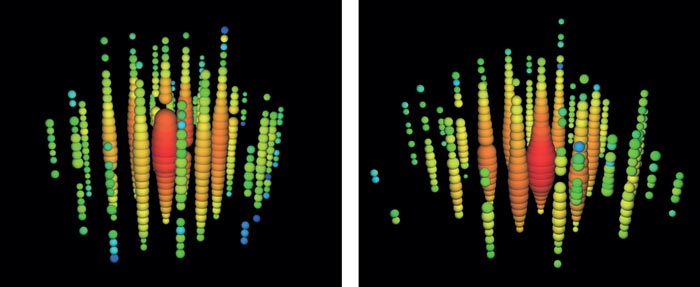
The two observed events

Neutrino experiments – thanks to the nature of the particles themselves – are notoriously difficult and experiments that make use of the natural source of particles within the cosmic radiation face problems of their own. In detecting cosmic neutrinos, the IceCube Neutrino Observatory at the South Pole successfully contends with both of these challenges, as two papers to appear in Physical Review Letters reveal. They illustrate the observatory’s capabilities in particle physics and in astroparticle physics.

The potential for IceCube to meet its aim of detecting neutrinos from astrophysical sources has been boosted by the observation of two neutrino events with the highest energies ever seen. The events have estimated energies of 1.04±0.16 and 1.14±0.17 PeV – hundreds of times greater than the energy of protons at the LHC. The expected number of atmospheric background events at these energies is 0.082±0.004 (stat.)+0.04–0.057 (syst.) and the probability that the two observed events are background is 2.9 × 10–3, giving the signal a significance of 2.8σ (Aartsen et al. 2013a). While this is not sufficient to indicate a first observation of astrophysical neutrinos, the closeness in energy of the two events is intriguing and is already attracting the attention of theorists.

The analysis revealed the disappearance of low-energy, upwards-moving muon neutrinos and rejected the non-oscillation hypothesis with a significance of more than 5σ

Meanwhile, measurements of lower-energy neutrinos produced in the atmosphere have enabled the IceCube collaboration to make the first statistically significant detection of neutrino oscillations in the high-energy region (20–100 GeV). The data used for this analysis were collected between May 2010 and May 2011 by the IceCube and DeepCore detectors, which together make up the IceCube Neutrino Observatory. The IceCube detector consists of an array with 86 strings of digital sensors deployed in Antarctica’s ice sheet at depths in the range 1450–24507 m. This main array defines the high-energy detector, designed to detect neutrinos with energies from hundreds to millions of giga-electron-volts – that is, up to the peta-electron-volts and more of the observed high-energy events. The DeepCore subdetector adds eight additional strings near the centre of this array, six of which were deployed during the period covered by this analysis. The denser core allows lowering the energy threshold to about 20 GeV.

The analysis revealed the disappearance of low-energy, upwards-moving muon neutrinos and rejected the non-oscillation hypothesis with a significance of more than 5σ. This result verifies the first, lower-significance indication reported by the ANTARES collaboration. Using a two-neutrino flavour formalism, the IceCube collaboration derived a new estimation of the oscillation parameters, |Δm223| = 2.3+0.6–0.5 × 10–3 eV2 and sin223 > 0.93, with maximum mixing favoured. These values are in good agreement with previous measurements by the MINOS and Super-Kamiokande experiments.

More efficient event-reconstruction methods are being tested, which together with new data sets will increase the sensitivity of the IceCube and DeepCore detectors to atmospheric neutrino oscillations. As a result of these improvements, the IceCube collaboration is expecting to set further constraints on the oscillation parameters in the coming months.

ISOLDE experiments: from a new magic number to the rarest element

CCnew2_06_13

Two teams working on experiments at CERN’s ISOLDE facility have published results that extend knowledge in different areas of nuclear and atomic physics. The ISOLTRAP collaboration has measured the masses of exotic calcium nuclei using the new multi-reflection time-of-flight (MR-TOF) instrument, while a team working at the resonant-ionization laser ion source (RILIS) has made the first determination of the ionization potential of the radioactive-element astatine. The results from the two experiments demonstrate well the versatility of the ISOLDE facility.

The ISOLTRAP team used the facility to make exotic isotopes of calcium, with the aim of finding out how their nuclear “shell structure” evolves with increasing numbers of neutrons. By integrating the MR-TOF system into the experiment, the team has made precise determinations of the masses of calcium isotopes up to 54Ca. While the new device has already been applied successfully as a mass separator, this first use as a mass spectrometer has already led to a key finding and promises further important results in the future.

The results strengthen the prominence in calcium of a “magic number” that was not foreseen in the original nuclear shell model, for which Maria Goeppert-Mayer and Hans Jensen received the Nobel prize in 1963, exactly 50 years ago. In this model, the protons and neutrons in a nucleus form independent “shells” that are similar to those of electrons in atoms. The magic numbers correspond to full nuclear shells, in which the constituents are bound more tightly, leading to greater stability and lighter masses. With 20 protons and 20 neutrons, standard calcium, 40Ca, is doubly magic, while the rare and naturally occurring, long-lived isotope 48Ca has 28 neutrons – another magic number. The measurements by the ISOLTRAP team indicate a new closed-shell structure in 52Ca and therefore a new magic number of 32 (Wienholtz et al. 2013). Its shell strength of about 4 MeV rivals that of the classic magic numbers.

CCnew3_06_13

These measurements cast light on how nuclei can be described in the context of the fundamental strong force, in particular in terms of predictions using state-of-the-art theory that includes three-body forces, from physicists at the Technical University of Darmstadt. Calcium is the heaviest isotopic chain for which three-nucleon forces – based on an effective field theory of QCD – have been applied. The ISOLTRAP results are in excellent agreement with the theoretical calculations and they show that a description of extremely neutron-rich nuclei can be closely connected to a deeper understanding of nuclear forces.

One of the strengths of the ISOLDE facility is the RILIS source, which produces many of the beams. At the source, bunches of protons at 1.4 GeV from CERN’s Proton Synchrotron Booster are fired at a thick target of uranium carbide or thorium dioxide. The collisions produce nuclei of many different elements, which diffuse inside a metal cavity held at around 2000°C. Shining overlapping laser beams of chosen wavelengths into this cavity results in the selective ionization of some of the neutral atoms inside. After electrostatic extraction and magnetic mass-separation, the result is a pure beam of one isotope that travels on to a detector.

The latest element to come under scrutiny at RILIS is astatine. With a half-life of just over eight hours for its longest-lived isotope, 210As, astatine is the rarest naturally occurring element and one of the least known. Now, a team at ISOLDE has measured the element’s ionization potential for the first time, giving a result of 9.31751 eV (Rothe et al. 2013).

The measurement fills a long-standing gap in the Periodic Table because astatine is the last element present in nature for which this fundamental property remained unknown. It is of particular interest because isotopes of astatine are candidates for the creation of radiopharmaceuticals for cancer treatment by targeted alpha-particle therapy. The experimental value for astatine also serves as a benchmark for theories that predict the atomic and chemical properties of super-heavy elements, in particular the recently discovered element 117, which is an astatine homologue.

These two results demonstrate beautifully the wealth of ISOLDE’s tool-box for exploring nuclear physics. They complement well the recent results on the shape of radon nuclei that were observed in post-accelerated beams.

CMS sees first direct evidence for γγ→WW

In a small fraction of proton collisions at the LHC, the two colliding protons interact only electromagnetically, radiating high-energy photons that subsequently interact or “fuse” to produce a pair of heavy charged particles. Fully exclusive production of such pairs takes place when quasi-real photons are emitted coherently by the protons rather than by their quarks, which survive the interaction. The ability to select such events opens up the exciting possibility of transforming the LHC into a high-energy photon–photon collider and of performing complementary or unique studies of the Standard Model and its possible extensions.

CCnew4_06_13

The CMS collaboration has made use of this opportunity by employing a novel method to select “exclusive” events based only on tracking information. The selection is made by requesting that two – and only two – tracks originate from a candidate vertex for the exclusive two-photon production. The power of this method, which was first developed for the pioneering measurement of exclusive production of muon and electron pairs, lies in its effectiveness even in difficult high-luminosity conditions with large event pile-up at the LHC.

CCnew5_06_13

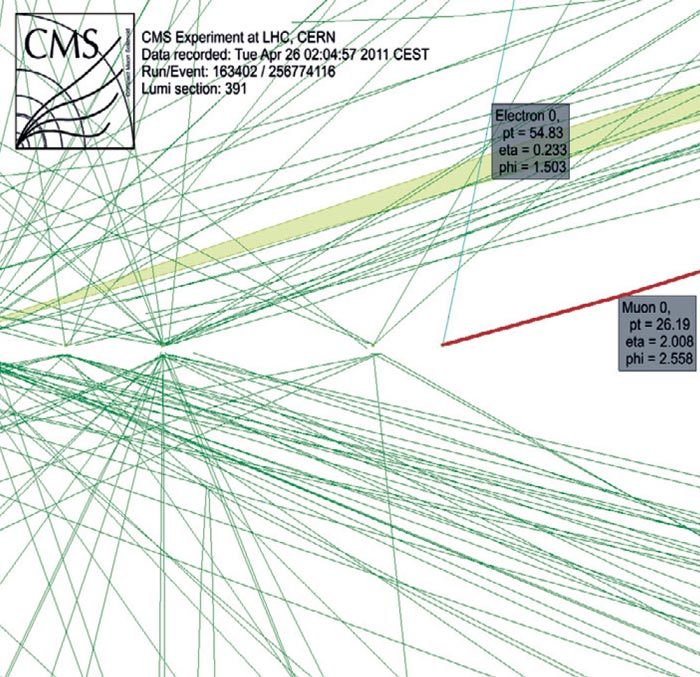
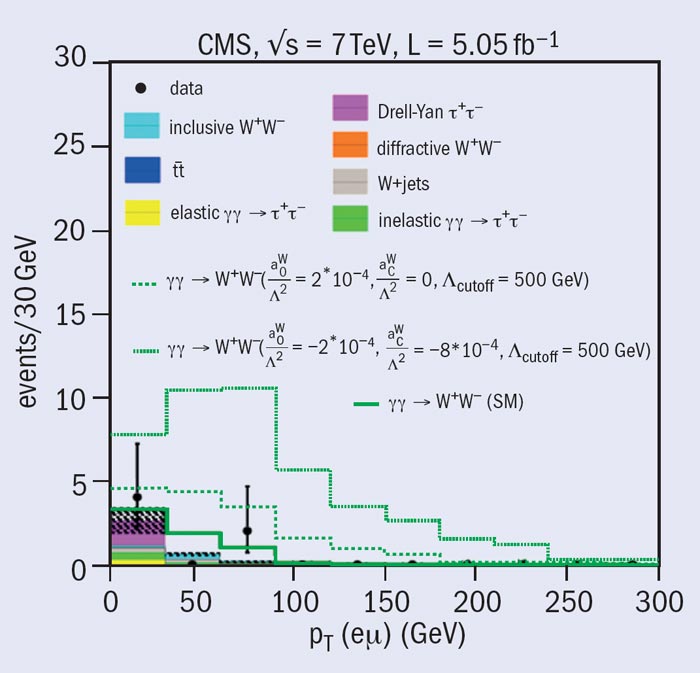
The collaboration has recently used this approach to analyse the full data sample collected at √s=7 TeV and to obtain the first direct evidence of the γγ→WW process. Fully leptonic W-boson decays have been measured in final states characterized by opposite-sign and opposite-flavour lepton pairs where one W decays into an electron and a neutrino, the other into a muon and a neutrino (both neutrinos leave undetected). The leptons were required to have: transverse momenta pT >20 GeV/c and pseudorapidity |η| < 2.1; no extra track associated with their vertex; and for the pair, a total pT >30 GeV/c. After applying all selection criteria, only two events remained – compared with an expectation of 3.2 events: 2.2 from γγ→WW and 1 from background (figure 2).

CCnew6_06_13

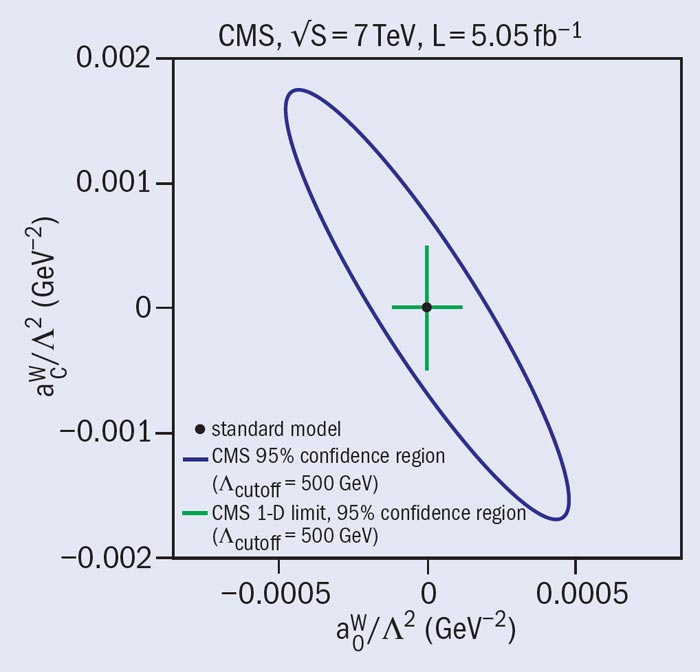
The lack of events observed at large values of transverse momentum for the pair, which would be expected within the Standard Model, allows stringent limits on anomalous quartic γγWW couplings to be derived. These surpass the previous best limits, set at the Large Electron–Positron collider and at the Tevatron, by up to two orders of magnitude (figure 3).

ALICE through a gamma-ray looking glass

The ALICE experiment is optimized to perform in the environment of heavy-ion collisions at the LHC, which can produce thousands of particles. Its design combines an excellent vertex resolution with a minimal thickness of material. It has excellent performance for particle identification in a large range of momenta as it employs essentially all of the known relevant techniques. Accurate knowledge of the geometry and chemical composition of the detectors is particularly important for tracking charged particles, for the calculation of energy loss and efficiency corrections, as well as for various physics analyses such as those involving the antiproton–proton ratio, direct photons and electrons from semileptonic decays of heavy-flavour hadrons.

The γ-rays produced in proton–proton collisions at the LHC (mainly from π0 decays), which undergo pair production in the ALICE experiment, provide a precise 3D image of the detector, including the inaccessible innermost parts. The process is almost exactly the same as in 1895 when Wilhelm Röntgen produced an X-ray image of his wife’s hand – the inner parts of the body could be seen for the first time without surgery. The main difference lies in the energy of the radiation – of the order of 100 keV for Röntgen’s X-rays compared with more than 1.02 MeV for the γ-rays from pair conversions. Importantly for the ALICE experiment, it allows the implementation of the detector geometry in GEANT Monte Carlo simulations to be checked.

To produce the γ-ray image, photons from pair conversions are reconstructed through the tracking of electron–positron pairs using a secondary vertex algorithm. Contamination from other secondary particles, such as K0S, Λ and Λ, is reduced by exploiting ALICE’s excellent capabilities for particle identification. In this case, the analysis uses the specific energy-loss signal in the time-projection chamber (TPC) as well as the signal in the time-of-flight (TOF)detector. Photons from pair conversions provide an accurate position for the conversion vertex, directional information and a momentum resolution given by that for the charged particles – an advantage over calorimeter measurements at low transverse momentum.

Figure 1 shows the γ-ray picture of the ALICE experiment, i.e. the Y-distribution versus X-distribution of the reconstructed photon conversion vertices, compared with the actual arrangement used in the 2012 run. The different layers of the inner tracking system and the TPC, as well as their individual components (ladders, thermal shields, vessels, rods and drift gas), are clearly visible up to a radius of 180 cm. To obtain a quantitative comparison, the radial distribution of reconstructed photon conversion vertices normalized by the number of charged particles in the acceptance is plotted together with the Monte Carlo distributions in figure 2.

This indicates an excellent knowledge of the material thickness of the ALICE experiment: up to a radius of 180 cm and in the pseudorapidity region |η| < 0.9, the thickness is 11.4±0.5(sys.)% of a radiation length. The systematic error is obtained from a quantitative comparison of the data with the Monte Carlo distributions, after taking into account the limited knowledge of the true photon sample, of the photon reconstruction efficiency and of the geometry and chemical composition of the detectors.

The accuracy achieved, as well as the full azimuthal acceptance of the central barrel, allows converted photons to be used in physics analyses. So far, photons from pair conversions have been used for the identification of neutral mesons in proton–proton collisions at 7 TeV down to a transverse momentum of 0.3 GeV/c – the first time in a collider experiment. Moreover, a direct photon signal observed in lead–lead collisions at √sNN = 2.76 TeV has been measured with the photon-conversion method. The latter measurement demonstrates that the quark–gluon plasma formed at the LHC is the hottest matter ever made in the laboratory (CERN Courier December 2012 p6).

New precision measurement of the Λb lifetime

The value of the Λb lifetime has long been controversial but the situation has recently been clarified by a new measurement from the LHCb experiment.

There are many ways in which the decays of b quarks are used to search for physics beyond the Standard Model. One strategy, used by the CKMfitter and UTfit teams, is to compare the consistency of various sets of measurements and for this a knowledge of the elements |Vcb| and |Vub| of the Cabibbo-Kobayashi-Maskawa (CKM) matrix is essential. One way of determining these from data is to use a theoretical framework called the heavy quark expansion (HQE).

An early prediction from this model was that the Λb lifetime was almost equal to that of the B0 meson but shorter by 1–2%. However, measurements from CERN’s Large Electron–Positron collider using the semileptonic decay Λb→ Λclν gave values of the ratio of the lifetimes, τ(Λb)/τ(B0), of around 0.8. This caused concern over the applicability of HQE and various attempts were made to explain the observations. More recent measurements of τ(Λb), from the CDF experiment at the Tevatron using Λb→Λc π (Aaltonen et al. 2002) and from ATLAS and CMS at the LHC using Λb→ J/ψΛ0 (Aad et al. 2013, Chatrchyan et al. 2013) have indicated larger values but with relatively large uncertainties.

CCnew12_06_13

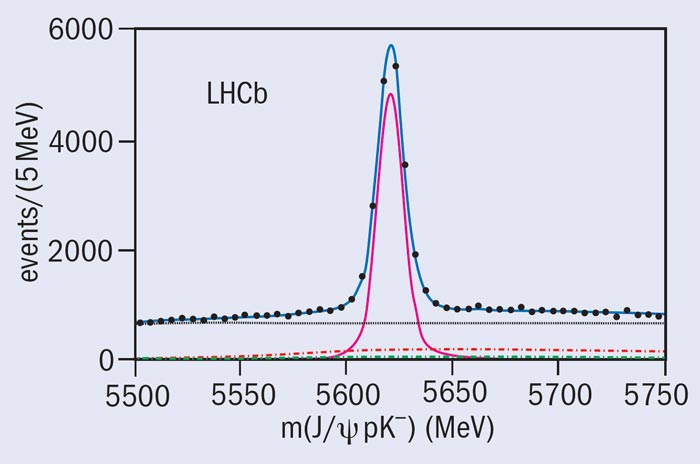
The LHCb collaboration has discovered a new decay mode Λb→ J/ψ pK that is ideally suited for measuring the lifetime, by determining it relative to that for the decays B0→ J/ψ K*0, K*0→K+π. In both the Λb and B0 decays, four charged tracks are produced at the position of the b-hadron’s decay. This minimizes systematic uncertainties in the ratio and provides excellent decay-time resolutions of around 40 fs in each mode. The figure shows the signal yield of more than 15,000 Λb decays in 1.0 fb–1 of LHCb data. Use of ring-imaging Cherenkov detectors in the experiment removes most of the backgrounds from Bs→ J/ψ K+ K and B0→ J/ψ K+π decays.

The collaboration finds τ(Λb)/τ(B0) = 0.976±0.012±0.006, where the first uncertainty is statistical and the second is systematic (LHCb collaboration 2013). The result demonstrates consistency with the original HQE prediction and should help to resolve issues involving measurements of the CKM parameters |Vcb| and |Vub|. Using the precisely measured value of τ(B0)=1519±7 fs from the Particle Data Group (Beringer et al. 2012) yields a value for τ(Λb)=1482±18±12 fs. This result is about twice as precise as the best previous measurement.

Much of the early work on the HQE was done by Nikolai Uraltsev, whose passing earlier this year is much lamented by the community.

Council updates European Strategy for Particle Physics

On 30 May, at a special meeting hosted by the European Commission in Brussels, the CERN Council formally adopted an update to the European Strategy for Particle Physics. Since the original European strategy was put into place seven years ago, the LHC has begun routine operation, producing its first major results at centre of mass energies of 7 TeV and 8 TeV, and the global particle-physics landscape has evolved with new neutrino and precision measurements. The updated strategy takes these changes into account and charts a leading role for Europe in a field that is increasingly globalized.

An important issue for the strategy is to ensure that Europe stays at the forefront of particle physics research, which pays dividends in terms of knowledge, innovation, education and training. CERN, in close collaboration with research institutions in its member states and under the guidance of the CERN Council, will co-ordinate future European engagement with global particle-physics projects in other regions.

The strategy emphasizes that Europe and the European particle-physics community should exploit the LHC to its full potential over many years via a series of planned upgrades. Alongside the LHC, the community should also be open to engaging in large particle-physics projects outside Europe and continuing to develop novel techniques for global future accelerator projects. European particle physics should maintain a healthy base in fundamental physics research, with universities and national laboratories contributing to a strong European focus through CERN. Last but not least, the community should continue to invest substantial effort in communication, education and outreach activities to engage global publics with science.

• The updated strategy is reproduced in full in a new brochure Accelerating science and innovation: societal benefits of European research in Particle Physics: http://cds.cern.ch/record/1551933. For the original statement, see http://council.web.cern.ch/council/en/EuropeanStrategy/ESParticlePhysics.html.

EC and CERN support major facility in Middle East

CCnew13_06_13

The European Commission (EC) and CERN have agreed to support the construction of the Synchrotron-light for Experimental Science and Applications in the Middle East (SESAME) facility, one of the most ambitious research initiatives in the Middle East. SESAME is a unique joint venture based in Jordan that brings together scientists from its members Bahrain, Cyprus, Egypt, Iran, Israel, Jordan, Pakistan, the Palestinian Authority and Turkey.

The SESAME synchrotron light source will allow researchers from the region to investigate the properties of advanced materials, biological processes and cultural artefacts. Alongside its scientific goals, the project aims to promote peace in the region through scientific co-operation.

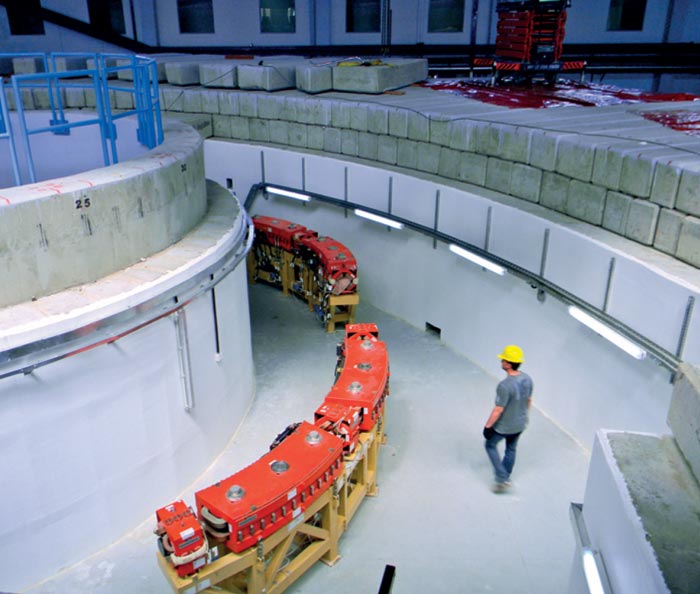
Through an agreement that was announced on 28 May, the EC will contribute €5 million, allowing CERN – working with SESAME – to supply SESAME with magnets for a new electron storage ring at the heart of the facility. This will pave the way for commissioning to begin in 2015. In addition, the EC has already contributed more than €3 million to the project through the European Neighbourhood and Partnership Instrument and by supporting the SESAME networking, computing and data-handling systems.

Construction started in 2003. Like CERN, SESAME was established under the auspices of UNESCO. A key impetus to launch was the donation of components from the BESSY laboratory in Berlin. Since then, a growing community of local scientists has been working closely with partner facilities from around the world and several other laboratories have contributed to making the SESAME facility world-class.

ILC Technical Design Report is published

A five-volume report containing the blueprint for the International Linear Collider (ILC) was published on 12 June. The authors of the Technical Design Report handed it over to the International Committee for Future Accelerators in three consecutive ceremonies in Tokyo, CERN and Fermilab, representing Asia, Europe and the Americas. Its publication marks the completion of many years of globally co-ordinated R&D and completes the mandate of the Global Design Effort for the ILC.

The ILC – a 31-km electron–positron collider with a total collision energy of 500 GeV – was designed to complement and advance LHC physics. The report contains all of the elements needed to propose the collider to collaborating governments, including the latest, most technologically advanced design and implementation plan optimized for performance, cost and risk.

Some 16,000 superconducting cavities will be needed to drive the particle beams. At the height of operation, bunches of 2 × 1010 electrons and positrons will collide roughly 7000 times a second. The report also includes details of two state-of-the-art detectors to record the collisions and an extensive outline of the geological and civil-engineering studies conducted for siting the ILC.

The design effort continues in the Linear Collider Collaboration. This combines the two most mature future particle-physics projects at the energy frontier – the ILC and the Compact Linear Collider (CLIC) – in an organizational partnership to co-ordinate and advance global development work for a linear collider. Some 2000 scientists worldwide – particle physicists, accelerator physicists and engineers – are involved in the ILC or in CLIC and often in both projects.

• For the report, see www.linearcollider.org/ILC/Publications/Technical-Design-Report.

Data centre opens

CCnew14_06_13

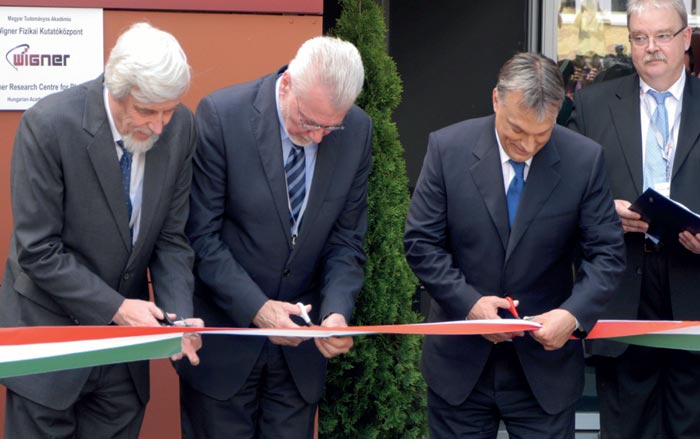
CERN and the Wigner Research Centre for Physics inaugurated the CERN Tier-0 data-centre extension in Budapest on 13 June, marking the completion of the facility. CERN’s director-general, Rolf Heuer, far left, joined József Pálinkás, president of the Hungarian Academy of Sciences, and Viktor Orbán, prime minister of Hungary, in the ceremonial “cutting the ribbon”, in the company of Péter József Lévai, far right, general director of the Wigner Research Centre for Physics (RCP). This extension adds up to 2.5 MW capacity to the 3.5 MW load of the data centre at CERN’s Meyrin site, which has already reached its limit. The dedicated and redundant 100 Gbit/s circuits connecting the two sites have been functional since February and about 20,000 computing cores, 500 servers and 5.5 PB of storage are already operational at the new facility.

Giant magnet ring makes epic journey

CCnew15_06_13

Muon g-2 is a new experiment to measure the anomalous magnetic moment of the muon – in other words, the difference of the value of its magnetic moment g from the simplest expectation of 2. However, before the experiment begins, its centrepiece – a complex electromagnet spanning more than 15 m in diameter – had to embark on a long, careful journey from Brookhaven National Laboratory (BNL) in New York to Fermilab in Illinois.

The magnet ring was built at Brookhaven in the 1990s for the E821 experiment, which ran there from 1997 until 2001. Its measurement of g-2 is still one of the few hints for new physics beyond the Standard Model. Constructed of aluminium and steel with superconducting coils inside, the magnet cannot be taken apart or twisted more than a few millimetres without irreparably damaging the coils. As a result, the Muon g-2 team devised a plan for a five-week journey of 5150 km over land and sea.

The journey began when the ring left Brookhaven on 22 June. It was loaded onto a specially prepared barge to be taken down the East Coast of the US, around the tip of Florida and up a series of rivers to Illinois. The ring was then attached to a truck built specially for the move and driven to Fermilab to arrive there in late July.

• For more information about Muon g-2, see http://muon-g-2.fnal.gov.

bright-rec iop pub iop-science physcis connect