
Comsol -leaderboard other pages

Topics

Antigravity matters at WAG 2013

WAG 2013

Aristotle said that ‘‘An iron ball of one hundred pounds, falling from a height of one hundred cubits [about 5.2 m], reaches the ground before a one-pound ball has fallen a single cubit.” Galileo Galilei replied, “I say that they arrive at the same time.” The universality of free fall illustrated by the latter’s legendary experiment at the tower of Pisa was formulated by Isaac Newton in his Principia and became, with Albert Einstein, the weak equivalence principle (WEP): the motion of any object under the influence of gravity does not depend on its mass or composition. This principle is the cornerstone of general relativity.

The WEP has been verified to incredible precision by dropping experiments and Eötvös-type torsion balances, the latter reaching an amazing accuracy of one part in 1013. The acceleration of the Earth and the Moon towards the Sun has also been determined to the same accuracy by measuring the transit time of laser pulses between the planet and the reflectors left on the Moon by the Apollo and Soviet space missions. But does the WEP also hold for antimatter for which no direct measurement has been performed, in particular for antimatter particles such as positrons or antiprotons? Or does antimatter even fall up?

The purpose of the 2nd International Workshop on Antimatter and Gravity, which took place on 13–15 November, was to review the experimental and theoretical aspects of antimatter interaction with gravity. The meeting was hosted by the Albert Einstein Center for Fundamental Physics of the University of Bern, following the success of the first workshop held in 2011 at the Institut Henri Poincaré in Paris. The highlights are summarized here.

Free-fall experiments with charged particles are notoriously difficult because they must be carefully shielded from electromagnetic fields

Free-fall experiments with charged particles are notoriously difficult because they must be carefully shielded from electromagnetic fields. For example, the sagging of the gas of free electrons in metallic shielding induces an electric field that can counterbalance the effect of gravity. Indeed, measurements based on dropping electrons led to a value of the acceleration of gravity, g, consistent with zero (instead of g = 9.8 m/s2). A free-fall experiment with positrons has not yet been performed, owing to the lack of suitable sources of slow positrons. In the 1980s, a team proposed a free-fall measurement of g with antiprotons at CERN’s Low Energy Antiproton Ring (LEAR), but it could not be performed before the closure of LEAR in 1996.

Using neutral antimatter such as antihydrogen can alleviate the disturbance from electromagnetic fields. The ALPHA collaboration at CERN’s Antiproton Decelerator (AD) has set the first free-fall limit on g with a few hundred antihydrogen atoms held for more than 400 ms in an octupolar magnetic field. The results exclude a ratio of antimatter to matter acceleration larger than 110 (normal gravity) and smaller than −65 (antigravity). Plans to measure this ratio at the level of 1% by using a vertical trap are under way.

Positronium matters

The AEgIS collaboration at the AD uses positronium produced by bombarding a nanoporous material with a positron pulse derived from a radioactive sodium source. Positronium (Ps) is then brought to highly excited states with lasers and mixed with captured antiprotons to produce antihydrogen (H) through the reaction Ps + p → e + H. The highly excited antihydrogen atoms possess large electric dipole moments and can be accelerated with inhomogeneous electric fields to form an antihydrogen beam. The sagging of the beam over a distance of typically 1 m is measured with a two-grating deflectometer by observing the intensity pattern with high-resolution (around 1 μm) nuclear emulsions. AEgIS is currently setting up, with antiprotons (around 105) and positrons (3 × 107) successfully stacked. A first measurement of g is planned in 2015 and the initial goal is to reach 1% uncertainty.

As a neutral system, positronium is also suitable for gravity measurements, but free-fall experiments are not easy because positronium lives for 140 ns only. Such studies require sufficiently cold positronium in long-lived, highly excited states and the appropriate atom optics. Preparations for a free-fall experiment at University College London are under way.

At ETH Zurich, a team is measuring the 1s → 2s atomic transition in positronium with a precision better than one part per billion (1 ppb) by using a high-intensity positron beam that traverses a solid neon moderator and impinges on a porous silica target. The positronium ejected from the target is laser-excited to the 2s state and the γ-decay rate is measured by scintillating crystals, as a function of laser frequency. The 1s → 2s frequency can be calculated from hydrogen data. For hydrogen, the frequency is redshifted in the gravitational potential of the Sun, but the shift cannot be observed because the clocks used to measure the frequency are equally redshifted. However, for positronium (equal amounts of matter and antimatter) and assuming antigravity, measurements should yield a higher frequency than is calculated from hydrogen. At the level of 0.1 ppb, such studies could even test the hypothesis of antigravity as the Earth revolves around the Sun.

A similar experiment with muonium – an electron orbiting a positive muon – is planned at PSI in Switzerland. Ultra-slow muon beams with sub-millimetre sizes and sub-electronvolt energy for re-acceleration could also be used in a free-fall experiment employing gratings (a Mach–Zehnder interferometer).

Free-fall experiments

At CERN, the AD delivers bunches of 5.3 MeV antiprotons (3 × 107) every 100 s. However, storing antiprotons requires lower energies, which are reachable by inserting thin foils, albeit at the expense of substantial losses and degradation in beam size. Prospects for improved experiments are now bright with ELENA, a 30 m circumference electron-cooled ring that decelerates the AD beam further to 100 keV (figure 1). ELENA will be installed in 2015 and will be available for physics in summer 2017.
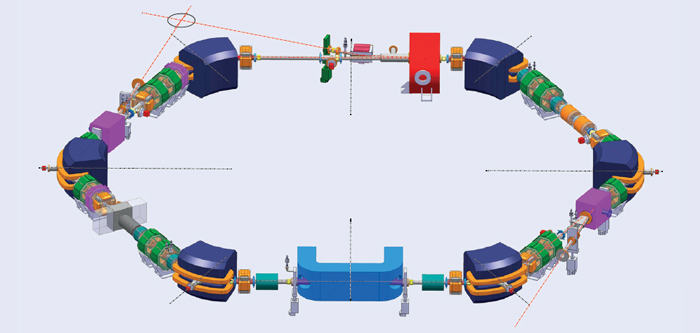
ELENA Ring

The first free-fall experiment to profit from this new facility will be GBAR. Antihydrogen atoms will be obtained by the interaction of antiprotons from ELENA with a positronium cloud. The positrons will be produced by a 4.3 MeV electron linac. In contrast to AEgIS, the antihydrogen atom will capture a further positron to become a positively charged ion, which can be transferred to an electromagnetic trap, cooled to 10 mK with cold beryllium ions and then transported to a launching trap where the additional positron will be photodetached. The mean velocity of the antihydrogen atoms will be around 1 m/s and the fall distance will be about 30 cm. GBAR will be commissioned in 2017 with the initial goal of reaching 1% accuracy on g.

The sensitivity of GBAR, limited by the velocity distribution of the antihydrogen atoms, could be improved substantially by using quantum reflection, a fascinating effect that was discussed at the workshop. Antihydrogen atoms dropped towards a surface experience a repulsive force, which leads to gravitational quantum states. A similar phenomenon was observed with cold neutrons at the Institut Laue–Langevin (ILL) in Grenoble. Now, the ILL team proposes to bounce the atoms in GBAR between two layers – a smooth lower surface to reflect slow enough antihydrogen atoms and a rough upper surface to annihilate the fast ones. Transition frequencies between the gravitational levels – which depend on g – could also be measured by recording the annihilation rate on the bottom surface. Provided that the lifetime of these antihydrogen levels is long enough, orders of magnitude improvements could be obtained on the determination of g.

Atom interferometers might be able to measure g to within 10–6. In a Ramsey–Bordé interferometer, the falling atom interacts with pulses from two counter-propagating vertical laser beams. Having absorbed a photon from the first beam, the atom is stimulated to emit another photon with the frequency of the second beam, thereby modifying its momentum. The signal from the annihilating antihydrogen atom, for example at the top of the interferometer, interferes with the one from another atom that has equal momentum but was not subject to the laser kick. The interference pattern will depend on the value of g.

At FLAIR the antiproton flux will be an order of magnitude higher than at ELENA

In the more distant future, the Facility for Low-energy Antiproton and Ion Research (FLAIR) will become operational at GSI. As an extension to the high-energy antiproton facility, FLAIR will consist of a low-energy storage ring decelerating antiprotons from 30 MeV to 300 keV, followed by an electrostatic ring capable of reducing the energy even further, down to 20 keV. At FLAIR the antiproton flux will be an order of magnitude higher than at ELENA, and slow extracted antiproton beams will be available for experiments in nuclear and particle physics.

The question of how large an effect these free-fall experiments could measure cannot be answered without theoretical assumptions, such as exact symmetry between matter and antimatter (the CPT theorem). However, string theory can break CPT. The standard model extension proposed by the Indiana/Carleton group involves Lorentz and CPT violation. Also, atoms and nuclei contain virtual antiparticles in amounts that depend on the atomic number. The calculable quantum corrections agree with measurements, arguing against antigravity. However, there is a huge discrepancy in the value of the cosmological constant estimated from vacuum particle–antiparticle pair fluctuations, which might question our understanding of the interaction between gravity and virtual particles. As pointed out at the workshop, if all of the theoretical assumptions are valid, then antimatter experiments should not expect to see discrepancies in g at a level larger than 10–7. Ultimately, the issue must be settled by experiments.

To compare with matter, a presentation was given on the 10–9 precision achievable on g at the Swiss Federal Institute of Metrology (METAS) using a free-fall interferometer. Together with improved measurements of Planck’s constant with a watt balance, this might lead to a re-definition of the kilogram based on natural units.

The workshop also included a session on antimatter in the universe. Is there any antimatter and could it repel matter (the Dirac–Milne universe) and provide the accelerating expansion? Can the excess of positrons observed above 10 GeV by balloon experiments, the PAMELA satellite experiment and, more recently, the Fermi Gamma-ray Space Telescope and the Alpha Magnetic Spectrometer (AMS-02), be explained by antimatter annihilation?

In his summary talk, Mike Charlton of Swansea University concluded that “the challenge of measuring gravity on antihydrogen remains formidable”, but that “in the past decade the prospects have advanced from the totally visionary to the merely very difficult”.

The workshop, with 28 plenary talks, was attended by 70 participants. A visit to the house where Einstein spent the years 1903–1905 and dinner at Altes Tramdepot were part of the social programme.
Greater than the sum of the parts

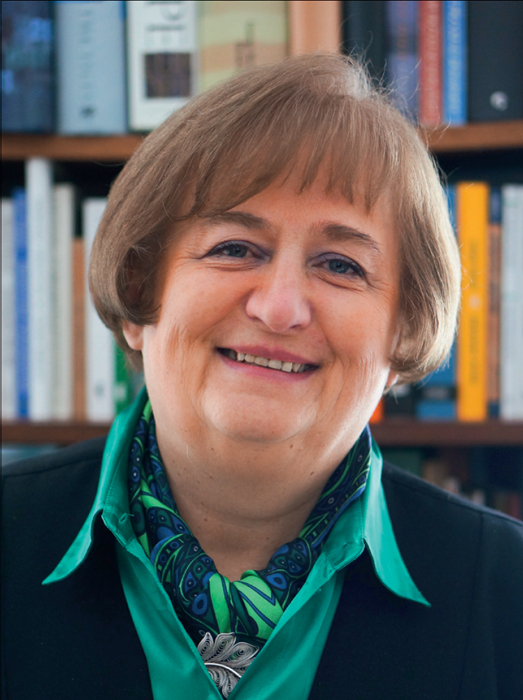
Agnieszka Zalewska

CERN was founded in 1954 with the aim of bringing European countries together to collaborate in scientific research after the horrors of the Second World War. After the end of the war, however, Europe had been divided politically by the “Iron Curtain”, and countries in the Eastern Bloc were not in a position to join CERN. Nevertheless, through personal contacts dating back to pre-war days, scientists on either side of the divide were able to keep in touch. From the start, CERN had schemes to welcome physicists from outside its member states. At the same time, the bubble-chamber experiments in particular provided a way that research groups in the East could contribute to physics at CERN from their home institutes. The groups could analyse bubble-chamber events with relatively few resources and make their mark by choosing specific areas of analysis.

In the case of my country, Poland, this contact with CERN from the 1950s provided a precious window on modern science, allowing us to maintain a good level in particle physics. The first Polish physicist was welcomed to the laboratory in 1959 and was soon followed by others when CERN awarded several scholarships to young researchers from Cracow and Warsaw. Collaboration between CERN and Polish institutes followed, and despite the difficult circumstances, physicists in Poland were able to make important contributions to CERN’s research programmes. In 1963, the country gained observer status at CERN Council, as the only country from Eastern Europe.

My association with CERN began when I was a student at the Jagellonian University in Cracow in the early 1970s, working on the analysis of events collected by the 2-m bubble chamber. During the 1960s, the experimental groups in Cracow and Warsaw had made the analysis of high-multiplicity events their speciality, and this was the topic for my doctoral thesis. The collaborative work with CERN gradually extended to electronic detectors, and from the 1970s Polish groups contributed hardware such as wire chambers to a number of experiments. The DELPHI experiment at the Large Electron–Positron (LEP) collider already used a variety of Polish contributions to both hardware and software.

It is hard today to imagine the world without the web. It was CERN’s gift to humanity

The start-up of LEP coincided with the big political changes in Eastern Europe at the end of the 1980s. Poland became the first former Eastern Bloc country to be invited to become a CERN member state, and in July 1991 my country became the 16th member of CERN – a moment of great pride. Hungary, the Czech Republic and Slovakia followed soon after.

The end of the 1980s also coincided with the development of the World Wide Web to help the large collaborations at LEP work together. It revolutionized the way we could work in our home institutions. In particular in Poland, a dedicated phone line set up in 1991 between CERN and the institutes in Cracow and Warsaw provided a “magic” link, allowing us, for example, to make changes remotely to software running underground at LEP.

It is hard today to imagine the world without the web. It was CERN’s gift to humanity – creating connections, allowing the exchange of ideas and communication between people all over the world. Developed in a scientific, non-commercial organization, the web’s international annual economic value is now estimated at €1.5 trillion. As Chris Llewellyn Smith, CERN’s director-general from 1994 to 1998, asked: how many yearly budgets of CERN have been saved because it was developed quickly in a non-commercial environment?

Now, after some four decades in particle physics, I have the enormous privilege to be president of CERN Council. I have already experienced the exceptional moment when the Israeli flag was raised for the first time at the Meyrin entrance to the laboratory, representing the first new member state to join the organization for 14 years. Other countries are at various stages in the process of accession to become member states or to attain associate membership. In discussions with the physicists from these countries, I recognize the same feelings that we had in countries like Poland in the 1960s or 1970s.

As one person said to me recently, it is not only CERN as the organization, but the idea of CERN that has such a strong appeal. It brings people together from different nationalities and cultures, people who have different ways of doing things – and this brings added value. CERN really is something where the whole is greater than the sum of the parts, as we all work together towards a common goal – a noble goal – to learn more about the universe that we inhabit.

During the past 60 years, the idea of CERN has succeeded in the goal of bringing European countries to work peacefully together, helping to bridge the divisions that existed between East and West. I sincerely believe that this “idea” will continue to inspire people around the world for years to come.

Quantum Field Theories in Two Dimensions: Collected Works of Alexei Zamolodchikov (2 volumes)/

By Alexander Belavin, Yaroslav Pugai and Alexander Zamolodchikov (ed.)
World Scientific
Hardback: £124

30594461z

These two volumes contain original contributions of Alexei Zamolodchikov (1952–2007), who was a prominent theoretical physicist of his time. Volume 1 contains his work on conformal field theories, 2D quantum gravity and Liouville theory. Volume 2 includes his pioneering work on non-perturbative methods in 2D quantum field theory and on integrable models. Both volumes can be used as an advanced textbook by graduate students specializing in string theory, conformal field theory and integrable models of quantum field theory. They are also highly relevant to experts in these fields.

The Conceptual Framework of Quantum Field Theory

By Anthony Duncan
Oxford University Press

Hardback: £77.50
Also available as an e-book

41qBd2VIlOL._SX347_BO1,204,203,200_

This book attempts to provide an introduction to quantum field theory by emphasizing conceptual issues. The aim is to build up the theory systematically from clearly stated foundations. The first section, “Origins”, consists of two historical chapters that situate quantum field theory in the larger context of modern physical theories. The three remaining sections follow a step-by-step reconstruction of this framework, beginning with a few basic assumptions: relativistic invariance, the basic principles of quantum mechanics, and the prohibition of physical action at a distance embodied in the clustering principle. Problems are included at the ends of the chapters and solutions can be requested via the publisher’s website.

Reminiscences: A Journey through Particle Physics

By Adrian Melissinos
World Scientific
Hardback: £28
E-book: £21

51R9AWWHuIL

A personal account as a research physicist for more than 50 years in areas of particle physics and related fields, Adrian Melissinos’s insights into the ways that general research was carried out and the evolution of particle physics from 1958 to 2008 will prove interesting to science-history enthusiasts and particle physicists alike. Through this mix of personal reminiscences and professional journey, readers can relive the joy and excitement of research and teaching in small groups during those early years, while gaining a partial historical perspective of particle physics since the late 1950s.

Exploring Quantum Mechanics: A Collection of 700+ Solved Problems for Students, Lecturers, and Researchers

By Victor Galitski, Boris Karnakov, Vladimir Kogan and Victor Galitski Jr
Oxford University Press
Hardback: £95 $165
Paperback: £45 $84.99
Also available as an e-book

41-MD1vq5SL._SX346_BO1,204,203,200_

Mastering quantum physics is a non-trivial task and a deep understanding can only be achieved through working out real-life problems and examples. It is notoriously difficult to come up with new quantum-mechanical problems that would be solvable with a pencil and paper, within a finite amount of time. This book presents more than 700 original problems in quantum mechanics, together with detailed solutions covering all aspects of quantum science. Collected during 60 years, first by the late Victor Galitski Sr, the material is largely new to an English-speaking audience. New problems were added and the material polished by Boris Karnakov. Finally, Victor Galitski Jr, has extended the material with problems relevant to modern science.

Silicon Solid State Devices and Radiation Detection

By Claude Leroy and Pier-Giorgio Rancoita
World Scientific
Hardback: £89
E-book: £67

51R1mvPZvWL._SX342_SY445_QL70_ML2_

Using their many years of experience both in research with silicon detectors and in giving lectures at various levels, Leroy and Rancoita address the fundamental principles of interactions between radiation and matter, together with working principles and the operation of particle detectors based on silicon solid-state devices. They cover a range of fields of application of radiation detectors based on these devices, from low- to high-energy physics experiments, including those in outer space and medicine. Their book also covers state-of-the-art detection techniques in the use of such radiation detectors and their read-out electronics, including the latest developments in pixellated silicon radiation detectors and their applications.

Effective Theories in Physics: From Planetary Orbits to Elementary Particle Masses

By James D Wells
Springer Verlag
Paperback: £44.99 €52.70 $49.95
E-book: £35.99 €41.64 $39.95

CCboo1_01_14

This remarkable and charming book introduces the idea of effective field theories from a novel point of view, making the concepts natural and – in retrospect – inevitable. As the author makes clear, all theories are effective theories. At just 73 pages, it is easily accessible to a graduate student or a bright undergraduate. It will also be welcomed by professional physicists for its readability and clear, compelling style.

In introducing the idea of effective theories, the author begins by considering Galileo’s law for falling bodies, neglecting air resistance. Keeping the symmetries assumed for the problem – here translational invariance – and the idea that the constant downward acceleration might be an approximation to a more complete theory that involves a dependence of g on height above the ground, Wells derives the form of the leading correction by taking into account Newton’s law of gravitation without explicitly invoking the inverse square law. Such an effective theory could have been used to search for an extension to Galileo’s law or to accommodate data, even in the absence of Newton’s more complete theory of gravity. The second chapter continues the discussion of gravity, this time assuming circular orbits (and the simple harmonic oscillator) and the sorts of deviations that might be allowed for, using the ideas of effective theories to analyse deviations from perfect circularity.

Chapter 3 considers effective theories of classical gravity, arguing for the general expectation of perihelion precession and that something like black holes could have been predicted and the Schwarzschild radius estimated before the discovery of general relativity. Using both Lagrangian and Hamiltonian formulations of the problem, this discussion is not only enlightening but a delight to read. The presentation of effective theories in these simple contexts – requiring neither field theory nor even quantum mechanics – makes their meaning, importance and universality clearer than the usual, more advanced introductions.

Assuming some knowledge of the Standard Model, chapter 4 shows how the Fermi theory can be thought of as an effective field theory that approximates it. Here the author considers in some detail the origin of mass and in particular neutrino masses beyond the Standard Model. He then concludes with a discussion of naturalness and the hierarchy problem – all from the viewpoint of effective theories.

The fifth and final chapter is more philosophical in nature, emphasizing how and why effective theories are more than truncations of more comprehensive theory. It also looks at how one can go about choosing between theories, before closing with implications for the LHC.

I was pleasantly surprised by this book. The approach is original and makes the whole concept of effective theories clear and natural. I will be urging all of my students to take an afternoon to read this wonderful introduction – and to think carefully and deeply about the many points that the author makes so well.

À la recherche du boson de Higgs

De Christophe Grojean et Laurent Vacavant
Librio
Broché : €3

CCboo2_01_14

Vous n’avez rien compris au boson de Higgs ? Alors ce petit livre est peut-être fait pour vous. Il faut saluer en effet le très grand effort des auteurs pour tenter de rendre accessible à tous les concepts qui se cachent derrière l’une des plus grandes découvertes de ces dernières années.

De la relativité au mécanisme qui donne leur masse aux particules, en passant par la physique quantique, cet ouvrage aborde le plus simplement possible les notions qui permettront à chacun d’appréhender le monde complexe des particules ainsi que les lois du Modèle standard. Les nombreuses analogies – souvent drôles – aident à rendre concrets des phénomènes le plus souvent abstraits que seul le formalisme mathématique est en mesure de réellement retranscrire. Vous découvrirez notamment dans cet ouvrage pourquoi le père Noël ne peut être qu’un objet quantique vu son comportement (c’est de saison), ou encore pourquoi la recherche du boson de Higgs revient à chercher un tibia de mammouth dans un immense cimetière d’éléphants !

Bien sûr, les spécialistes et les puristes trouveront certainement des défauts à certaines analogies : nul doute que nous n’avons pas terminé de discuter sur la meilleure manière de présenter simplement le mécanisme de Higgs… L’avantage de ce petit livre, c’est aussi qu’en moins d’une centaine de pages, il aborde les grandes étapes de l’aventure du LHC en les replaçant dans le contexte historique et international. Il rend également compte des stratégies et technologies mises en œuvre dans les expériences ATLAS et CMS pour enregistrer et traiter une quantité de données vraiment phénoménale.

Je recommande donc sans hésitation la lecture de cet ouvrage pour sa concision, sa simplicité et son approche légère qui devrait ravir tous ceux dont la vue d’une simple équation est en mesure de provoquer une indigestion.

Compound Semiconductor Radiation Detectors

By Alan Owens
CRC Press
Hardback: £82
Also available as an e-book

9781138199583

Bringing together information scattered across many disciplines, this book summarizes the status of research in compound semiconductor radiation detectors. It examines the properties, growth and characterization of compound semiconductors as well as the fabrication of radiation sensors, with emphasis on the X- and γ-ray regimes. It explores the limitations of compound semiconductors and discusses current efforts to improve spectral performances, pointing to where future discoveries might lie. A resource for the established researcher, this book serves as a comprehensive and illustrated reference on material science, crystal growth, metrology, detector physics and spectroscopy. It can also be used as a textbook for those who are new to the field.

bright-rec iop pub iop-science physcis connect